Beyond Tea: Kombucha SCOBY as a Starter Culture Across Food Matrices


Abstract
1. Introduction
1.1. Literature Search Strategy and Selection Criteria
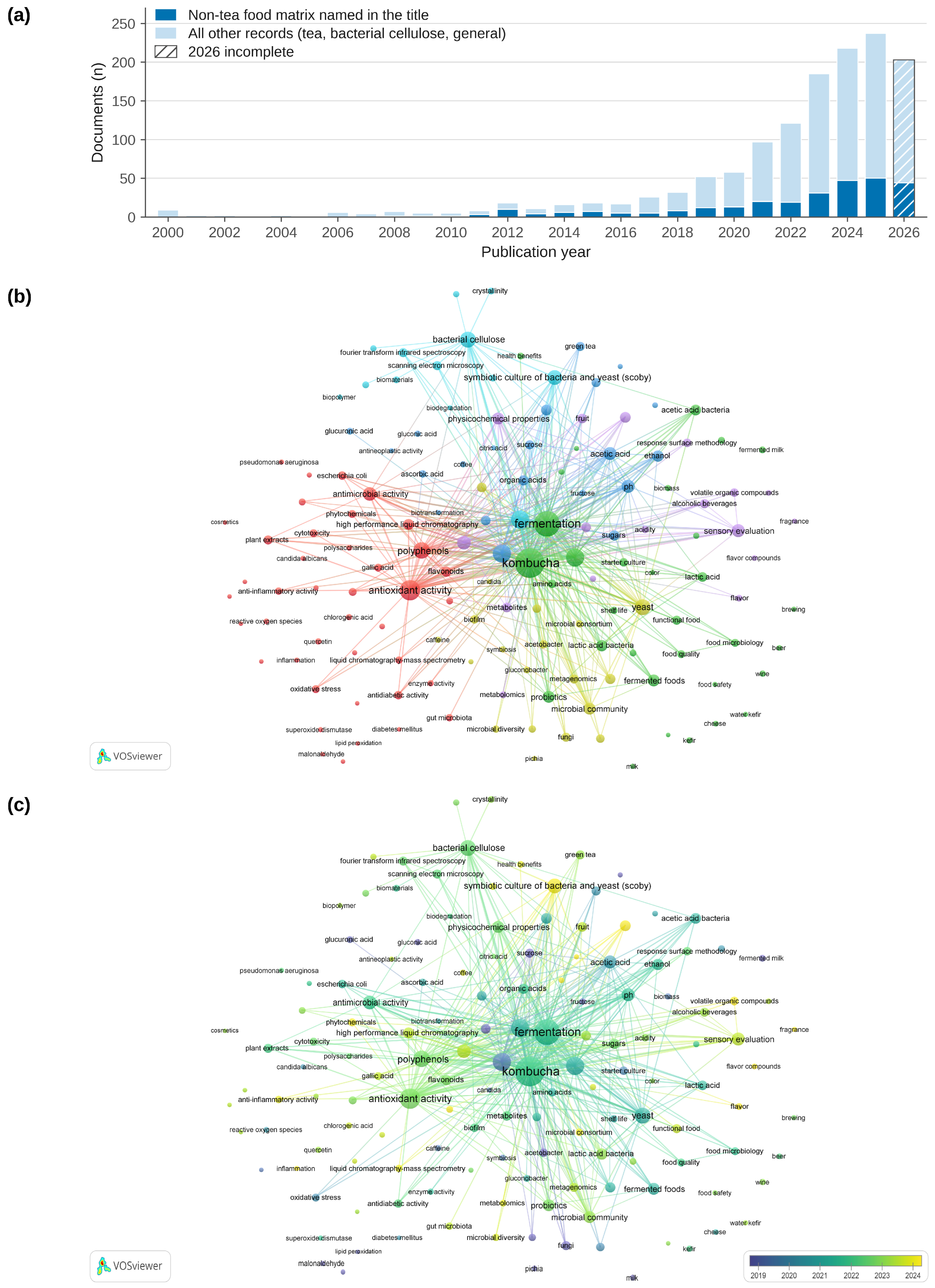
1.2. Bibliometric Overview
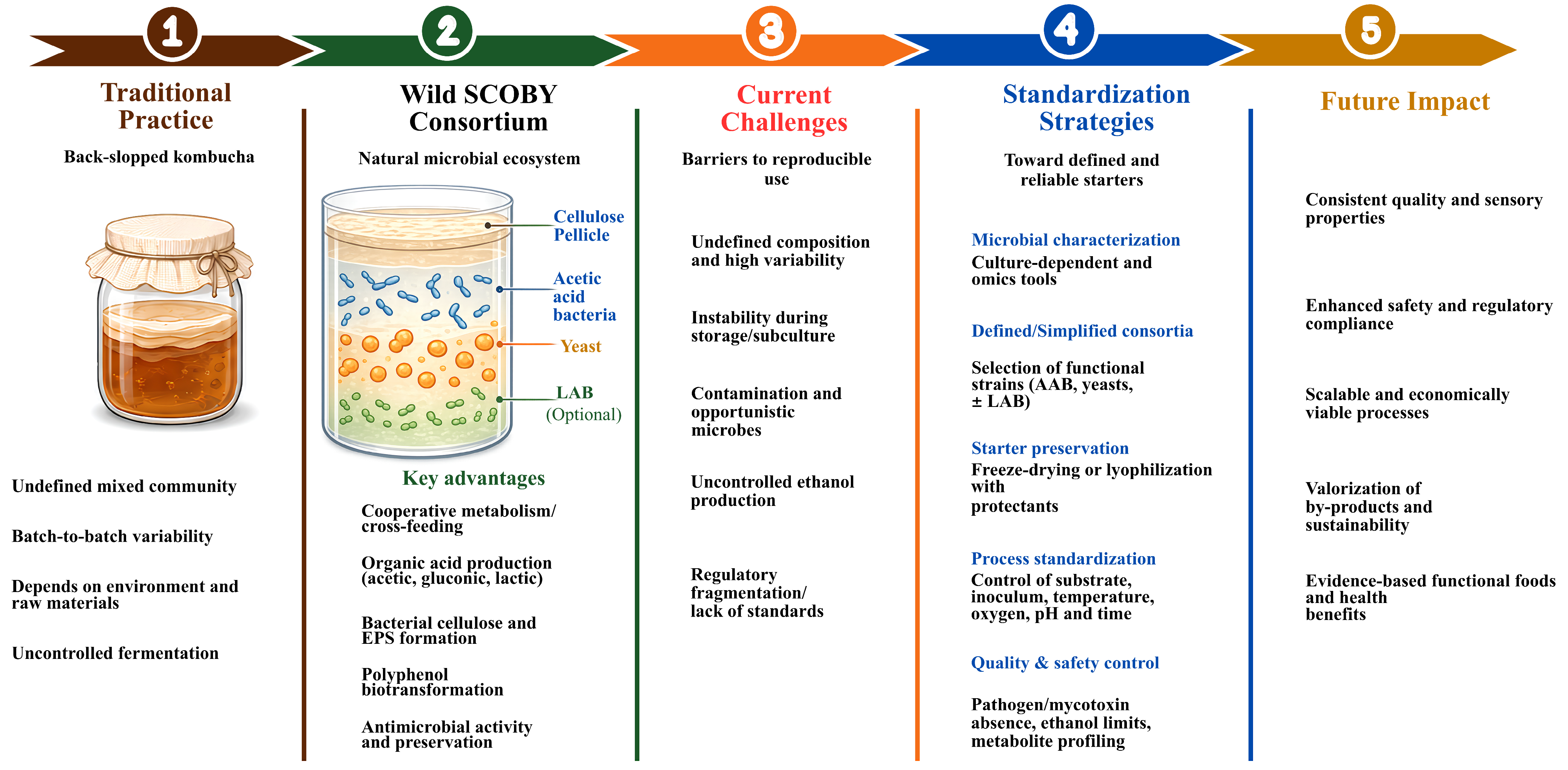
2. The SCOBY as a Microbial and Biochemical System
3. Chemical Analysis and Molecular Composition of Kombucha SCOBY Fermentations
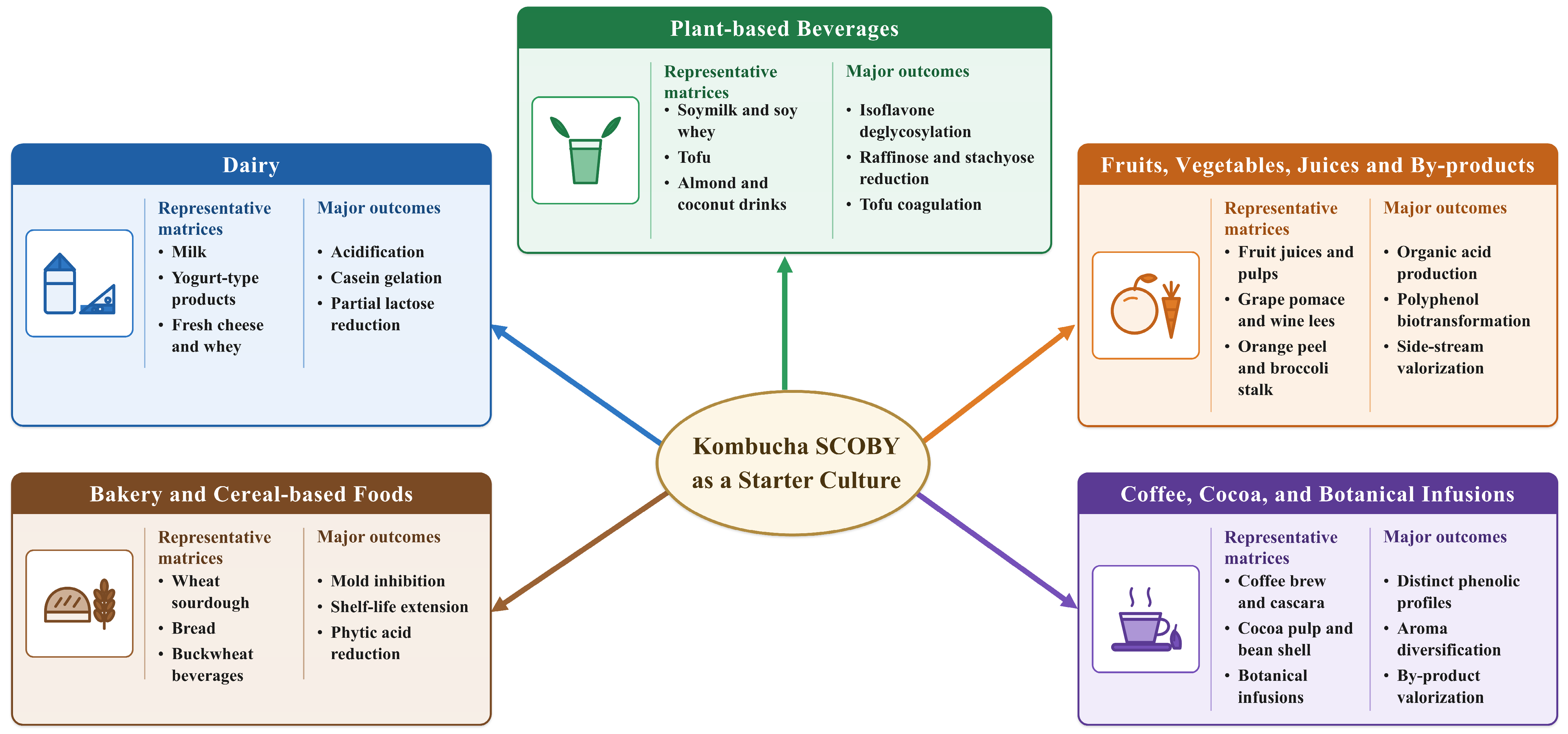
4. Dairy Fermentation Applications
4.1. Fermented Milk and Yogurt-Type Products

| Dairy Matrix | Inoculum Format | Fermentation Process | Principal Findings | Reference |
|---|---|---|---|---|
| Cow milk containing 1.0 or 2.2% fat | Black-tea kombucha liquid starter; 10–20% (v/v) | Fermentation at 42 °C to pH 4.4; yogurt-starter comparator | Kombucha fermentation required 130–455 min (approximately 2.2–7.6 h) to reach pH 4.4 and was slower than fermentation with the yogurt starter. Increasing the inoculum above 10% v/v provided little kinetic benefit; milk fat affected the chemical composition and sensory quality. | [37] |
| Cow milk containing 0.9–2.2% fat | Kombucha liquid starter, native, vacuum-concentrated, or previously propagated in milk; 10 or 15% (v/v) | Fermentation at 42–43 °C to pH 4.4–4.5 | Concentrated kombucha liquid starters reached pH 4.4 within 3–6.5 h. In a separate milk-adaptation study, traditional tea-derived inocula required approximately 12.5 h to reach pH 4.5, whereas milk-adapted inocula shortened fermentation by approximately two-fold and improved texture and sensory quality, particularly at 10% inoculum. | [38,41] |
| Cow milk containing 0.9–2.2% fat | Kombucha liquid starter, native, microfiltered, or evaporated; native: 10 or 15% (v/v); microfiltered: 10 or 15% (v/v); evaporated: 1.5 or 3.0% (v/v) | Fermentation at 42 °C to pH 4.5 | Lactose decreased by approximately 16–30%, whereas galactose accumulated. L-lactate predominated at 0.4–0.7 g 100 g−1, whereas D-lactate, acetate, and ethanol remained low. | [19,39] |
| Cow milk containing 2.0% fat | Black-tea kombucha liquid starter; 10% (v/v) | Fermentation at 42 °C; yogurt and commercial ABT-7 starter comparators; measurements during acidification | Kombucha initiates gelation at a comparatively high pH and produces a homogeneous casein network. At pH 4.6, several rheological properties were comparable to those of yogurt. | [45] |
| Cow milk containing 2.8% fat | Black-tea kombucha liquid starter; 10% (v/v) | Fermentation at 42 °C to pH 4.5; yogurt and commercial ABT-7 starter comparators; 14-day refrigerated storage | ACE inhibition increased from 46.27% after production to 63.4% after storage. Proteolysis, antioxidant activity, vitamin C content, and sensory properties were starter- and storage-dependent. | [49] |
| UHT cow milk | Green-tea kombucha liquid starter; 1% (v/v) | Fermentation at 37 °C for 72 h; LAB comparators; ultrafiltration and LC–MS/MS analysis | The <10-kDa filtrate exhibited 93% ACE inhibition. Twenty-one milk-derived peptides were identified, and three synthetic peptides derived from the kombucha culture fermentation exhibited IC50 values of 0.03–0.75 μM. | [50] |
| Cow milk containing 2.0% fat | Kombucha liquid starter; 10% (v/v) | Fermentation at 37 or 42 °C to pH 4.6 | Fermentation was performed for 13 h 40 min at 37 °C and 8 h 15 min at 42 °C. The lactose conversion kinetics were sigmoidal and strongly temperature-dependent. | [42] |
| Cow milk containing 2.8% fat | Kombucha liquid starter; 10% (v/v) | Yogurt and commercial ABT-7 starter comparators; 21-day refrigerated storage | All products were shear-thinning and thixotropic. Kombucha-fermented milk had a comparatively low firmness after gel disruption. | [40] |
4.2. Fortified and Co-Cultured Fermented Milks
4.3. Cheese Production
4.4. Whey Fermentation and Valorization
| Substrate | Inoculum Format | Fermentation System & Conditions | Key Biochemical Changes | Reported Bioactivity, Technological, and Sensory Outcomes | References |
|---|---|---|---|---|---|
| Cow milk containing 1.6% fat | Black-tea- or wild-thyme-derived kombucha liquid starter combined with commercial ABT-7 starter culture (co-culture) | A total of 90 mL of kombucha liquid starter and ABT-7 at 0.0935 g/L were added to 900 mL of milk; fermentation at 37–43 °C to pH 4.5; refrigerated storage for 10 days | Acidification required 3.5–4.5 h. Temperature and tea type jointly influenced L-lactic acid formation, while fermentation temperature had no significant effect on chemical characteristics | Tea type significantly affected the water-holding capacity and textural characteristics, specifically firmness, consistency, cohesiveness, and viscosity index, particularly during storage. | [57] |
| Cow milk blended 60:40 with green-tea, sage, or blackberry infusion | Preactivated commercial kombucha liquid starter; 10% (v/v) | Fermentation until pH 4.7/4.6; refrigerated storage for 30 days | Continued post-acidification reduced the pH to 4.1–4.7. The organic acids, sugars, phenolics, and antioxidant responses varied with the herbal matrix, with sage yielding the highest glucuronic acid concentration. | The blackberry formulation exhibited the highest antioxidant activity and received the highest sensory scores, while the unfortified kombucha-fermented milk was the least preferred. | [54] |
| Pasteurized cow milk (2.8% fat) for unripened fresh cheese | Black-tea kombucha liquid starter; 10% (v/v) | Chymosin added as the coagulating enzyme; fermentation at 35 °C to pH 4.5; XPL-1 starter used as comparator | Kombucha cheese reached pH 4.5 in 12 h 45 min, compared to 14 h for XPL-1. It had higher dry matter, protein, fat, ash, and total phenolic contents, reflecting differences in metabolic pathways and moisture retention. | Cheese exhibited acceptable values for all examined sensory attributes, although it had reduced sensory quality compared to the commercial XPL-1 standard. Artificially inoculated Escherichia coli and Listeria monocytogenes declined by 98.31% (1.77 log CFU/g) and 98.98%, respectively, during 30-day storage. | [60] |
| Fresh sweet, fresh acid, and reconstituted sweet cheese wheys | Black-tea-grown pellicle-associated biomass | Pellicle added at 20 g per 250 mL whey; static fermentation at 32 °C for 96 h | Sweet whey reached a pH of approximately 3.3 and a total acidity of 0.07 mol/L. The residual lactose decreased to below 12 g/L, while lactate, acetate, and approximately 5 g/L ethanol accumulated, and lactose-utilizing microorganisms were enriched. | Fermentation produced strongly sour, salty, non-carbonated beverages with limited sensory appeal. | [67] |
| Sweet and acid wheys from Cheddar, Gouda, queso-fresco, and Greek-yogurt production | Serially propagated, whey-adapted kombucha liquid starter containing Brettanomyces anomalus | Repeated serial propagation in dairy whey; microbial communities and metabolites were characterized by metabarcoding and 1H NMR | During serial whey propagation, B. anomalus displaced B. bruxellensis and became the dominant fungal taxon. Cultures acidified whey to below pH 4 and utilized an average of 47.7% of the available sugars, producing acetate and ethanol. | Serially propagated cultures supported low-lactose, but not lactose-free, whey beverages. Ethanol was generally below 0.5% ABV, although some batches reached 1.6%. Butyrate formation indicates a potential off-flavor risk. | [35] |
5. Plant-Based Milks and Soy-Derived Foods
5.1. Soymilk, Soy Whey, and Tofu
| Substrate | Inoculum Format | Fermentation System & Conditions | Key Biochemical Changes | Reported Bioactivity, Technological, and Sensory Outcomes | References |
|---|---|---|---|---|---|
| Soymilk | Kombucha liquid starter; 5% (v/v) | Kombucha starter culture; 28 °C and 37 °C | Raffinose was not detected after fermentation; stachyose was substantially reduced; isoflavone aglycone content increased; total phenolics, ferulic acid, chlorogenic acid, and ascorbic acid increased | Higher in vitro α-glucosidase and α-amylase inhibition and higher chemical antioxidant assay values at 37 °C than at 28 °C; sensory quality was also rated higher at 37 °C | [15] |
| Soy whey (tofu by-product) | Liquid starter:soy whey; 1:10 (v/v) | Kombucha consortium (Pichia, Brettanomyces, Acetobacter, Lactobacillus); 6 days | pH: 4.89 to 3.28 (day 3); acetic acid 5.786 g/L; formic acid 2.496 g/L; total flavonoids: 111.61 ± 2.94 to 268.45 ± 2.20 mg RE/mL (day 6); glycitein ↑ 6.2×, genistein ↑ 3.2× vs. unfermented | Antimicrobial activity against Staphylococcus aureus, Bacillus subtilis, Escherichia coli; DPPH EC50 1.66 mg/mL; FRAP 681.03 µM FeSO4; fruity ester aroma (nonanal, undecanal) at day 6; over-acidification by day 8 (score 4) | [32] |
| Soymilk | Co-culture: liquid kombucha starter + LAB; 4% (v/v) | LAB:kombucha 1:1; 32 °C, 42 h | Dominant bacteria: Lactobacillus 41.58%, Acetobacter 42.39%; dominant fungi: Zygosaccharomyces 38.89%, Saccharomyces 35.86%; LAB 7.48, yeast 6.68, AAB 6.83 log CFU/mL | Hexanol: 30.16% to 8.74% of total volatiles; linalool and 2,5-dimethylbenzaldehyde produced; beany off-flavor substantially reduced | [22] |
| Soymilk | Liquid starter | Kombucha + FOS (prebiotic); up to 96 h; optimal 84 h | β-Glucosidase activity ↑ 68.10 mU/mL; genistein ↑ 612.41%; DPPH scavenging ↑ 25.02%; hexanal reduced; citric acid and linalool produced | FOS intensified sour taste; promoted yeast and LAB co-growth | [72] |
| Soymilk | Liquid + pellicle | SCOBY fermentation | DPPH and PCL antioxidant activity ↑ (p < 0.05); SFA ↓, MUFA ↑ (p < 0.05); most minerals (copper, magnesium, calcium, sodium, and potassium) ↓ (p < 0.05); iron, zinc, phosphorus, and manganese ↑ (p < 0.05) | Thicker yogurt-like consistency; more intense taste and aroma rated favorably by 10-person trained panel | [73] |
| Fermented soy whey as tofu coagulant | Liquid, kombucha-fermented soy whey used as a coagulant | Kombucha-FSW; pH 3.78–4.50; 17.5–30% v/v; 35–85 °C | Optimal FSW parameters: pH 4.02, 22.5% v/v, 65 °C; SDS-PAGE reported β-conglycinin/glycinin co-aggregation; WHC and yield declined above 22.5% and 65 °C | Tofu with cohesive gel structure, optimal textural and sensory profile at identified optimum | [75] |
| Tofu soy whey | Liquid starter; 10% (v/v) | Kombucha consortium; 32 °C, 11 days; 8.5% sucrose, 10% inoculum | Bacterial cellulose (BC) yield: 4.20 g/100 mL DW; crystalline cellulose I structure; high water absorption | Suitable mechanical properties for food packaging and biomedical applications | [74] |
5.2. Other Plant-Based Milks
6. Fruits, Vegetables, Juices, and By-Products
6.1. Fruit and Vegetable Substrates
6.2. Agro-Industrial By-Products
7. Bakery and Cereal-Based Foods
7.1. Bread and Sourdough
7.2. Buckwheat Beverages
8. Coffee, Cocoa, and Botanical Infusions
8.1. Coffee
8.2. Cocoa
8.3. Botanical Infusions
9. Reproducibility and Process Control
10. Safety and Regulatory Considerations
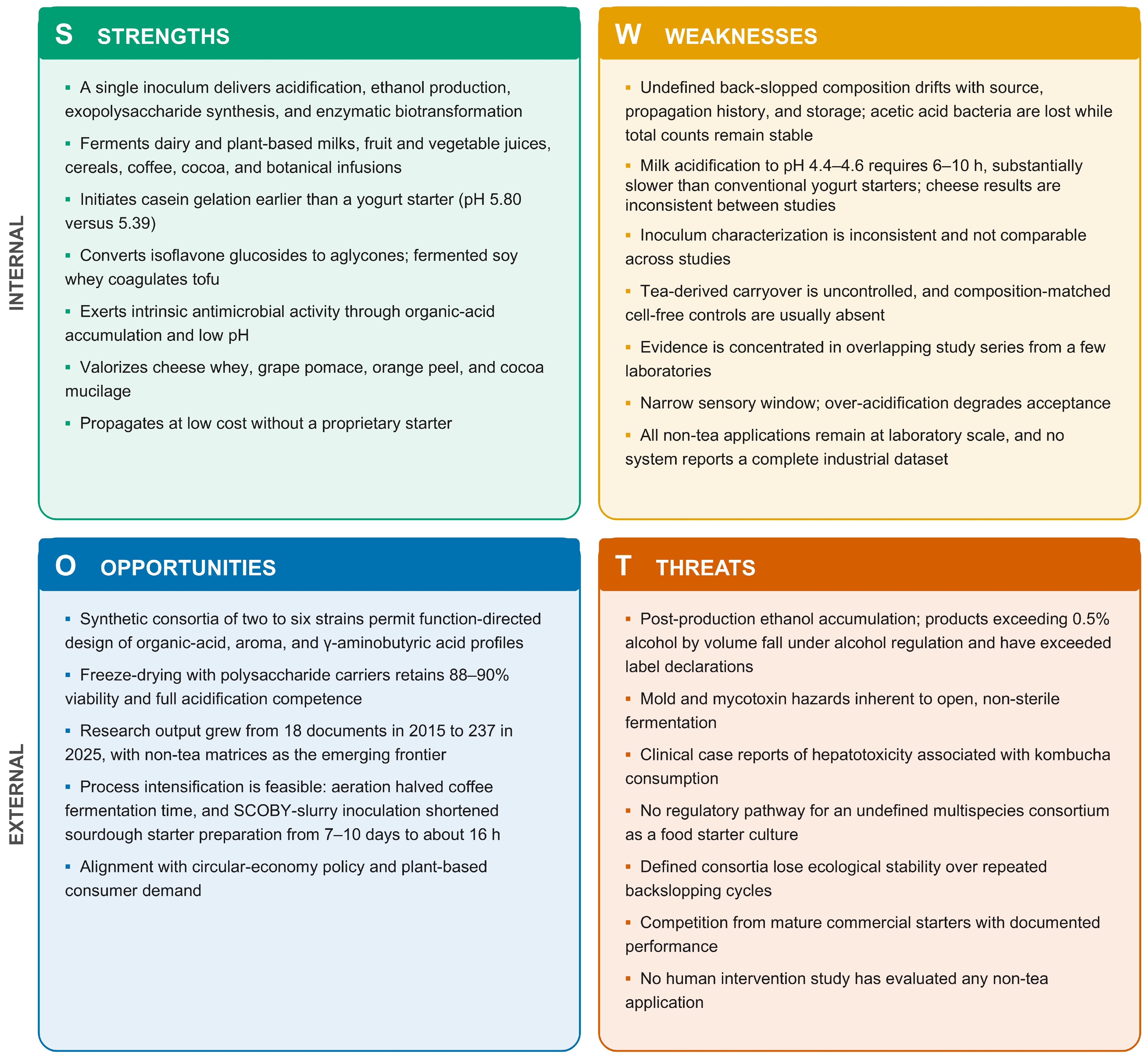
11. Conclusions and Future Directions
Author Contributions
Funding
Institutional Review Board Statement
Informed Consent Statement
Data Availability Statement
Conflicts of Interest
References
- Villarreal-Soto, S.A.; Beaufort, S.; Bouajila, J.; Souchard, J.P.; Taillandier, P. Understanding Kombucha Tea Fermentation: A Review. J. Food Sci. 2018, 83, 580–588. [Google Scholar] [CrossRef] [Scilit] [PubMed]
- de Miranda, J.F.; Ruiz, L.F.; Silva, C.B.; Uekane, T.M.; Silva, K.A.; Gonzalez, A.G.M.; Fernandes, F.F.; Lima, A.R. Kombucha: A review of substrates, regulations, composition, and biological properties. J. Food Sci. 2022, 87, 503–527. [Google Scholar] [CrossRef] [Scilit] [PubMed]
- Jayabalan, R.; Marimuthu, S.; Swaminathan, K. Changes in content of organic acids and tea polyphenols during kombucha tea fermentation. Food Chem. 2007, 102, 392–398. [Google Scholar] [CrossRef] [Scilit]
- Teoh, A.L.; Heard, G.; Cox, J. Yeast ecology of Kombucha fermentation. Int. J. Food Microbiol. 2004, 95, 119–126. [Google Scholar] [CrossRef] [Scilit] [PubMed]
- Battikh, H.; Bakhrouf, A.; Ammar, E. Antimicrobial effect of Kombucha analogues. LWT-Food Sci. Technol. 2012, 47, 71–77. [Google Scholar] [CrossRef] [Scilit]
- Grassi, A.; Cristani, C.; Palla, M.; Di Giorgi, R.; Giovannetti, M.; Agnolucci, M. Storage time and temperature affect microbial dynamics of yeasts and acetic acid bacteria in a kombucha beverage. Int. J. Food Microbiol. 2022, 382, 109934. [Google Scholar] [CrossRef] [Scilit] [PubMed]
- Ferremi Leali, N.; Binati, R.L.; Martelli, F.; Gatto, V.; Luzzini, G.; Salini, A.; Slaghenaufi, D.; Fusco, S.; Ugliano, M.; Torriani, S.; et al. Reconstruction of Simplified Microbial Consortia to Modulate Sensory Quality of Kombucha Tea. Foods 2022, 11, 3045. [Google Scholar] [CrossRef] [Scilit] [PubMed]
- Tran, T.; Grandvalet, C.; Verdier, F.; Martin, A.; Alexandre, H.; Tourdot-Marechal, R. Microbial Dynamics between Yeasts and Acetic Acid Bacteria in Kombucha: Impacts on the Chemical Composition of the Beverage. Foods 2020, 9, 963. [Google Scholar] [CrossRef] [Scilit] [PubMed]
- Emiljanowicz, K.E.; Malinowska-Pańczyk, E. Kombucha from alternative raw materials—The review. Crit. Rev. Food Sci. Nutr. 2020, 60, 3185–3194. [Google Scholar] [CrossRef] [Scilit] [PubMed]
- Liu, Y.; Zheng, Y.; Yang, T.; Mac Regenstein, J.; Zhou, P. Functional properties and sensory characteristics of kombucha analogs prepared with alternative materials. Trends Food Sci. Technol. 2022, 129, 608–616. [Google Scholar] [CrossRef] [Scilit]
- Barakat, N.; Beaufort, S.; Rizk, Z.; Bouajila, J.; Taillandier, P.; El Rayess, Y. Kombucha analogues around the world: A review. Crit. Rev. Food Sci. Nutr. 2023, 63, 10105–10129. [Google Scholar] [CrossRef] [Scilit] [PubMed]
- Freitas, A.; Sousa, P.; Wurlitzer, N. Alternative raw materials in kombucha production. Int. J. Gastron. Food Sci. 2022, 30, 100594. [Google Scholar] [CrossRef] [Scilit]
- Chandran, A.; Wyka, J.; Klein, G.R.; Stefanska, B.; Kolniak-Ostek, J. Shaping the Bioactive Properties of Kombucha Drinks by Using Raw Materials Alternative to Tea. Molecules 2026, 31, 1170. [Google Scholar] [CrossRef] [Scilit] [PubMed]
- Santiago-Santiago, R.M.; Michel, M.R.; Rodríguez-Herrera, R.; Aguilar-Zárate, P.; Ascacio-Valdés, J.A.; Flores-Gallegos, A.C. Symbiotic Culture of Bacteria and Yeast (SCOBY) in the Food Sector as a Source of Polysaccharides and Other Applications in the Food Sector. Polysaccharides 2025, 6, 97. [Google Scholar] [CrossRef] [Scilit]
- Xia, X.; Dai, Y.; Wu, H.; Liu, X.; Wang, Y.; Yin, L.; Wang, Z.; Li, X.; Zhou, J. Kombucha fermentation enhances the health-promoting properties of soymilk beverage. J. Funct. Foods 2019, 62, 103549. [Google Scholar] [CrossRef] [Scilit]
- Al-Wraikat, M.; Abubaker, M.A.; Liu, Y.; Shen, X.; He, Y.; Li, L.; Liu, Y. Microbial community and organic compounds composition analysis and the edible security of common buckwheat fermented via Kombucha consortium. Food Chem. 2025, 10, 100247. [Google Scholar] [CrossRef] [Scilit] [PubMed]
- Li, R.; Xu, Y.; Chen, J.; Wang, F.; Zou, C.; Yin, J. Enhancing the proportion of gluconic acid with a microbial community reconstruction method to improve the taste quality of Kombucha. LWT 2022, 155, 112937. [Google Scholar] [CrossRef] [Scilit]
- Chen, F.-I.; Chang, Y.-T.; Khoirunnida, F.L.; Pan, H.-Y.; Chuang, P.-Y.; Lu, Y.-C. The effect of different yeast and bacterial strain combinations on the physicochemical and metabolic profile of kombucha fermentation. Int. J. Gastron. Food Sci. 2025, 42, 101296. [Google Scholar] [CrossRef] [Scilit]
- Ilicic, M.; Milanovic, S.; Kanuric, K.; Vukic, V.; Popovic, S.; Vukic, D. Content of sugar, organic acids and ethanol in fermented milk beverages obtained with different types of kombucha inoculum. Acta Period. Technol. 2017, 48, 109–116. [Google Scholar] [CrossRef] [Scilit]
- Canovas, B.M.; Perez-Novas, I.; Garcia-Viguera, C.; Dominguez-Perles, R.; Medina, S. Assessment of Winery By-Products as Ingredients as a Base of “3S” (Safe, Salubrious, and Sustainable) Fermented Beverages Rich in Bioactive Anthocyanins. Foods 2025, 14, 2514. [Google Scholar] [CrossRef] [Scilit] [PubMed]
- Ivory, R.; Delaney, E.; Mangan, D.; McCleary, B.V. Determination of Ethanol Concentration in Kombucha Beverages: Single-Laboratory Validation of an Enzymatic Method, First Action Method 2019.08. J. AOAC Int. 2021, 104, 422–430. [Google Scholar] [CrossRef] [Scilit] [PubMed]
- Peng, X.; Yue, Q.; Chi, Q.; Liu, Y.; Tian, T.; Dai, S.; Yu, A.; Wang, S.; Wang, H.; Tong, X.; et al. Microbial Diversity and Flavor Regularity of Soy Milk Fermented Using Kombucha. Foods 2023, 12, 884. [Google Scholar] [CrossRef] [Scilit] [PubMed]
- Suffys, S.; Goffin, D.; Richard, G.; Francis, A.; Haubruge, E.; Fauconnier, M.L. Unveiling the Aromas and Sensory Evaluation of Hakko Sobacha: A New Functional Non-Dairy Probiotic Fermented Drink. Molecules 2023, 28, 6084. [Google Scholar] [CrossRef] [Scilit] [PubMed]
- Talebi, M.; Frink, L.A.; Patil, R.A.; Armstrong, D.W. Examination of the Varied and Changing Ethanol Content of Commercial Kombucha Products. Food Anal. Methods 2017, 10, 4062–4067. [Google Scholar] [CrossRef] [Scilit]
- de Noronha, M.C.; Cardoso, R.R.; Dos Santos D’Almeida, C.T.; Vieira do Carmo, M.A.; Azevedo, L.; Maltarollo, V.G.; Junior, J.I.R.; Eller, M.R.; Cameron, L.C.; Ferreira, M.S.L.; et al. Black tea kombucha: Physicochemical, microbiological and comprehensive phenolic profile changes during fermentation, and antimalarial activity. Food Chem. 2022, 384, 132515. [Google Scholar] [CrossRef] [Scilit] [PubMed]
- Cánovas, B.M.; García-Viguera, C.; Medina, S.; Domínguez-Perles, R. ‘Kombucha’-like Beverage of Broccoli By-Products: A New Dietary Source of Bioactive Sulforaphane. Beverages 2023, 9, 88. [Google Scholar] [CrossRef] [Scilit]
- Mohd Roby, B.H.; Muhialdin, B.J.; Abadl, M.M.T.; Mat Nor, N.A.; Marzlan, A.A.; Lim, S.A.H.; Mustapha, N.A.; Meor Hussin, A.S. Physical properties, storage stability, and consumer acceptability for sourdough bread produced using encapsulated kombucha sourdough starter culture. J. Food Sci. 2020, 85, 2286–2295. [Google Scholar] [CrossRef] [Scilit] [PubMed]
- Czarnowska-Kujawska, M.; Starowicz, M.; Paszczyk, B.; Klepacka, J.; Popielarczyk, M.; Tońska, E. The chemical, antioxidant and sensorial properties of milk and plant based kombucha analogues. LWT 2024, 206, 116610. [Google Scholar] [CrossRef] [Scilit]
- Chakravorty, S.; Bhattacharya, S.; Chatzinotas, A.; Chakraborty, W.; Bhattacharya, D.; Gachhui, R. Kombucha tea fermentation: Microbial and biochemical dynamics. Int. J. Food Microbiol. 2016, 220, 63–72. [Google Scholar] [CrossRef] [Scilit] [PubMed]
- Jakubczyk, K.; Kaldunska, J.; Kochman, J.; Janda, K. Chemical Profile and Antioxidant Activity of the Kombucha Beverage Derived from White, Green, Black and Red Tea. Antioxidants 2020, 9, 447. [Google Scholar] [CrossRef] [Scilit] [PubMed]
- Kilmanoglu, H.; Akbas, M.; Yigit Cinar, A.; Durak, M.Z. Kombucha as alternative microbial consortium for sourdough fermentation: Bread characterization and investigation of shelf life. Int. J. Gastron. Food Sci. 2024, 35, 100903. [Google Scholar] [CrossRef] [Scilit]
- Tu, C.; Tang, S.; Azi, F.; Hu, W.; Dong, M. Use of kombucha consortium to transform soy whey into a novel functional beverage. J. Funct. Foods 2019, 52, 81–89. [Google Scholar] [CrossRef] [Scilit]
- Kim, G.-H.; Baek, K.-R.; Lee, G.-E.; Lee, J.-H.; Moon, J.-H.; Seo, S.-O. Development of Starter Cultures for Precision Fermentation of Kombucha with Enriched Gamma-Aminobutyric Acid (GABA) Content. Fermentation 2025, 11, 17. [Google Scholar] [CrossRef] [Scilit]
- Sadok, I.; Rachwał, K.; Jonik, I.; Żukociński, G.; Kwiatkowska, O. Effect of temperature and time on mold growth, mycotoxin contamination, phytochemicals and microbiological characteristics of kombucha tea during fermentation. Food Control 2025, 175, 111296. [Google Scholar] [CrossRef] [Scilit]
- Thibodeau, A.; Reardon, P.; Bartlett, B.; Curtin, C. Changes in microbial community structure during adaptation of kombucha symbiotic culture of bacteria and yeast to fermentation of sweet and acid whey. J. Dairy Sci. 2025, 108, 4761–4784. [Google Scholar] [CrossRef] [Scilit] [PubMed]
- CXS 243-2003; Standard for Fermented Milks. Codex Alimentarius Commission: Rome, Italy, 2024.
- Milanovic, S.; Loncar, E.; Djuric, M.; Malbasa, R.; Tekic, M.; Ilicic, M.; Durakovic, K. Low energy Kombucha fermented milk-based beverages. Acta Period. Technol. 2008, 37–46. [Google Scholar] [CrossRef] [Scilit]
- Malbaša, R.V.; Milanović, S.D.; Lončar, E.S.; Djurić, M.S.; Carić, M.Đ.; Iličić, M.D.; Kolarov, L. Milk-based beverages obtained by Kombucha application. Food Chem. 2009, 112, 178–184. [Google Scholar] [CrossRef] [Scilit]
- Iličić, M.; Kanurić, K.; Milanović, S.; Lončar, E.; Djurić, M.; Malbaša, R. Lactose fermentation by Kombucha—A process to obtain new milk-based beverages. Rom. Biotechnol. Lett. 2012, 17, 7013–7021. [Google Scholar]
- Vukic, D.V.; Vukic, V.R.; Milanovic, S.D.; Ilicic, M.D.; Kanuric, K.G. Modeling of rheological characteristics of the fermented dairy products obtained by novel and traditional starter cultures. J. Food Sci. Technol. 2018, 55, 2180–2188. [Google Scholar] [CrossRef] [Scilit] [PubMed]
- Malbasa, R.; Loncar, E.; Milanovic, S.; Kolarov, L. Use of milk-based kombucha inoculum for milk fermentation. Acta Period. Technol. 2009, 40, 47–52. [Google Scholar] [CrossRef] [Scilit]
- Kanuric, K.G.; Milanovic, S.D.; Ikonic, B.B.; Loncar, E.S.; Ilicic, M.D.; Vukic, V.R.; Vukic, D.V. Kinetics of lactose fermentation in milk with kombucha starter. J. Food Drug Anal. 2018, 26, 1229–1234. [Google Scholar] [CrossRef] [Scilit] [PubMed]
- Kruk, M.; Trzaskowska, M.; Scibisz, I.; Pokorski, P. Application of the “SCOBY” and Kombucha Tea for the Production of Fermented Milk Drinks. Microorganisms 2021, 9, 123. [Google Scholar] [CrossRef] [Scilit] [PubMed]
- Vukic, V.; Kanuric, K.; Milanovic, S.; Ilicic, M.; Hrnjez, D.; Ranogajec, M. Correlation of the microstructure with viscosity and textural properties during milk fermentation by kombucha inoculum. Acta Period. Technol. 2014, 45, 89–98. [Google Scholar] [CrossRef] [Scilit]
- Vukic, V.R.; Hrnjez, D.V.; Kanuric, K.G.; Milanovic, S.D.; Iličic, M.D.; Torbica, A.M.; Tomic, J.M. The Effect of Kombucha Starter Culture on the Gelation Process, Microstructure and Rheological Properties during Milk Fermentation. J. Texture Stud. 2014, 45, 261–273. [Google Scholar] [CrossRef] [Scilit]
- Ilicic, M.; Milanovic, S.; Kanuric, K.; Vukic, V.; Vukic, D. Improvement of physicochemical and rheological properties of kombucha fermented milk products by addition of transglutaminase and whey protein concentrate. Acta Period. Technol. 2016, 47, 11–18. [Google Scholar] [CrossRef] [Scilit]
- Iličić, M. Improving the texture and rheology of set and stirred kombucha fermented milk beverages by addition of transglutaminase. Mljekarstvo 2021, 71, 155–164. [Google Scholar] [CrossRef] [Scilit]
- Iličić, M.; Degenek, J.; Vukić, V.; Dokić, L.; Kanurić, K.; Popović, R.; Vukić, D. Transglutaminase Effects on Texture and Flow Behaviour of Fermented Milk During Storage Using Concentrated Kombucha Inoculum. Processes 2025, 13, 3598. [Google Scholar] [CrossRef] [Scilit]
- Hrnjez, D.; Vaštag, Ž.; Milanović, S.; Vukić, V.; Iličić, M.; Popović, L.; Kanurić, K. The biological activity of fermented dairy products obtained by kombucha and conventional starter cultures during storage. J. Funct. Foods 2014, 10, 336–345. [Google Scholar] [CrossRef] [Scilit]
- Elkhtab, E.; El-Alfy, M.; Shenana, M.; Mohamed, A.; Yousef, A.E. New potentially antihypertensive peptides liberated in milk during fermentation with selected lactic acid bacteria and kombucha cultures. J. Dairy Sci. 2017, 100, 9508–9520. [Google Scholar] [CrossRef] [Scilit] [PubMed]
- Malbasa, R.; Vitas, J.; Loncar, E.; Milanovic, S. Physical and textural characteristics of fermented milk products obtained by kombucha inoculums with herbal teas. Acta Period. Technol. 2012, 43, 51–59. [Google Scholar] [CrossRef] [Scilit]
- Vitas, J.; Malbasa, R.; Grahovac, J.; Loncar, E. The antioxidant activity of kombucha fermented milk products with stinging nettle and winter savory. Chem. Ind. Chem. Eng. Q. 2013, 19, 129–139. [Google Scholar] [CrossRef] [Scilit]
- Malbaša, R.; Vitas, J.; LonČAr, E.; Grahovac, J.; MilanoviĆ, S. Optimisation of the antioxidant activity of kombucha fermented milk products. Czech J. Food Sci. 2014, 32, 477–484. [Google Scholar] [CrossRef] [Scilit]
- Sarkaya, P.; Akan, E.; Kinik, O. Use of kombucha culture in the production of fermented dairy beverages. LWT 2021, 137, 110326. [Google Scholar] [CrossRef] [Scilit]
- Zahirović, M.; Brčina, T.; Vilušić, M. Sensory Properties and Acceptability of Kombucha Fermented Milk Drink. Technol. Acta 2026, 18, 55–60. [Google Scholar] [CrossRef] [Scilit]
- Kanuric, K.; Hrnjez, D.; Ranogajec, M.; Milanovic, S.; Ilicic, M.; Vukic, V.; Milanovic, M. The effect of fermentation temperature on the functional dairy product quality. Acta Period. Technol. 2011, 42, 63–70. [Google Scholar] [CrossRef] [Scilit]
- Milanović, S. Physicochemical and textural properties of kombucha fermented dairy products. Afr. J. Biotechnol. 2012, 11, 2320. [Google Scholar] [CrossRef] [Scilit]
- Nurliyani; Indratiningsih; Widodo; Sukarno, A.S.; Suciati, F. Characteristics of fermented goat milk using combination of kombucha and Lactobacillus casei starters. IOP Conf. Ser. Earth Environ. Sci. 2019, 387, 012077. [Google Scholar] [CrossRef] [Scilit]
- Ilicic, M.; Bjekic, M.; Milanovic, S.; Vukic, V.; Kanuric, K.; Vukic, D. Comparison characteristics of fresh cheese made with kombucha inoculum and traditional starter. Acta Period. Technol. 2019, 50, 86–92. [Google Scholar] [CrossRef] [Scilit]
- Vukić, V.; Iličić, M.; Vukić, D.; Kocić-Tanackov, S.; Pavlić, B.; Bjekić, M.; Kanurić, K.; Degenek, J.; Zeković, Z. The application of kombucha inoculum as an innovative starter culture in fresh cheese production. LWT 2021, 151, 112142. [Google Scholar] [CrossRef] [Scilit]
- Bjekić, M. Protein characterisation and antioxidant potential of fresh cheese obtained by kombucha inoculum. Mljekarstvo 2021, 71, 215–225. [Google Scholar] [CrossRef] [Scilit]
- Vukic, D.; Pavlic, B.; Vukic, V.; Ilicic, M.; Kanuric, K.; Bjekic, M.; Zekovic, Z. Antioxidative capacity of fresh kombucha cheese fortified with sage herbal dust and its preparations. J. Food Sci. Technol. 2022, 59, 2274–2283. [Google Scholar] [CrossRef] [Scilit] [PubMed]
- Degenek, J.; Kanurić, K.; Iličić, M.; Vukić, D.; Mrkonjić, Ž.; Pavlić, B.; Zeković, Z.; Vukić, V. Fortification of fresh kombucha cheese with wild thyme (Thymus serpyllum L.) herbal dust and its influence on antioxidant activity. Food Biosci. 2023, 56, 103161. [Google Scholar] [CrossRef] [Scilit]
- Vukic, V.; Vukic, D.; Pavlic, B.; Ilicic, M.; Kocic-Tanackov, S.; Kanuric, K.; Bjekic, M.; Zekovic, Z. Antimicrobial potential of kombucha fresh cheese with the addition of sage (Salvia officinalis L.) and its preparations. Food Funct. 2023, 14, 3348–3356. [Google Scholar] [CrossRef] [Scilit] [PubMed]
- Vukić, V.; Degenek, J.; Kanurić, K.; Vukić, D.; Pavlić, B.; Iličić, M.; Kocić-Tanackov, S.; Mrkonjić, Ž.; Bulut, S.; Zeković, Z. The Effect of Thymus serpyllum L. and Its Preparations on Reduction of L. monocytogenes and S. aureus in Kombucha Fresh Cheese. Processes 2024, 12, 1187. [Google Scholar] [CrossRef] [Scilit]
- Degenek, J. Changes in textural parameters and microstructure of kombucha fresh cheese initiated by the addition of wild thyme. Mljekarstvo 2025, 75, 28–40. [Google Scholar] [CrossRef] [Scilit]
- Belloso-Morales, G.; Hernández-Sánchez, H. Manufacture of a beverage from cheese whey using a “tea fungus” fermentation. Rev. Latinoam. DE. Microbiol. 2003, 45, 5–11. [Google Scholar]
- Suciati, F.; Nurliyani, N.; Indratiningsih, I. Physicochemical, Microbiological and Sensory Properties of Fermented Whey using Kombucha Inoculum. Bul. Peternak. 2019, 43, 52–57. [Google Scholar] [CrossRef] [Scilit]
- Sfoglia, N.M.; Rossi, D.M.; Sant’Anna, V.; Fabricio, M.F.; Ayub, M.A.Z.; Hickert, L.R. Milk Whey Fermented by Kombucha SCOBY: Effect of Sugar on the Physicochemical and Microbiological Properties of the New Beverage. Waste Biomass Valorization 2024, 16, 1795–1803. [Google Scholar] [CrossRef] [Scilit]
- Hatami, M.; Fadaei, V. Microbial Properties Evaluation of a Yogurt Whey-Based Orange Beverage Fermented with Kombucha as a Starter Culture. J. Hum. Environ. Health Promot. 2023, 9, 224–228. [Google Scholar] [CrossRef] [Scilit]
- Suciati, F.; Mukminah, N.; Fathurohman, F.; Permadi, E. Effect of Various Types of Sugars on Antioxidant Activity and Physico-chemical Properties of Kombucha Fermented Whey. J. Peternak. 2024, 21, 105–114. [Google Scholar] [CrossRef] [Scilit]
- Peng, X.; Yang, S.; Liu, Y.; Ren, K.; Tian, T.; Tong, X.; Dai, S.; Lyu, B.; Yu, A.; Wang, H.; et al. Application of kombucha combined with fructo-oligosaccharides in soy milk: Colony composition, antioxidant capacity, and flavor relationship. Food Biosci. 2023, 53, 102527. [Google Scholar] [CrossRef] [Scilit]
- Popielarczyk, M.; Czarnowska-Kujawska, M.; Paszczyk, B.; Starowicz, M. WŁaŚciwoŚci Chemiczne, PrzeciwutleniajĄce I Sensoryczne Napoju Sojowego Typu Kombucha. Zywn. Nauka Technol. Jakosc/Food Sci. Technol. Qual. 2024, 31, 115–128. [Google Scholar] [CrossRef] [Scilit]
- Feng, X.; Ge, Z.; Wang, Y.; Xia, X.; Zhao, B.; Dong, M. Production and characterization of bacterial cellulose from kombucha-fermented soy whey. Food Prod. Process. Nutr. 2024, 6, 20. [Google Scholar] [CrossRef] [Scilit]
- Baghdady, G.; Wang, J.; Dai, Y.; Yuxin, C.; Ziyin, H.; Cai, Y.; Dong, M.; Wang, D.; Xiudong, X. Effect of Physical and Chemical Properties of Kombucha-Fermented Soy Whey on the Quality of Tofu. Cereal Chem. 2026, 103, 473–486. [Google Scholar] [CrossRef] [Scilit]
- Gülhan, A. Evaluation of some physicochemical, nutritional, and microbiological properties and sensory profiles of green tea and almond milk kombucha beverages. J. Food Meas. Charact. 2024, 18, 9879–9889. [Google Scholar] [CrossRef] [Scilit]
- Göksu, F.; Bölek, S. Development of a functional kombucha using almond whey from plant-based cheese production. Int. J. Gastron. Food Sci. 2025, 42, 101322. [Google Scholar] [CrossRef] [Scilit]
- Araujo Filho, A.A.L.; Sousa, P.H.M.d.; Vieira, I.G.P.; Fernandes, V.B.; Cunha, F.E.T.; Magalhaes, F.E.A.; Silva, L.M.R.d. Kombucha and kefir fermentation dynamics on cashew nut beverage (Anacardium occidentale L.). Int. J. Gastron. Food Sci. 2023, 33, 100778. [Google Scholar] [CrossRef] [Scilit]
- Ayed, L.; Ben Abid, S.; Hamdi, M. Development of a beverage from red grape juice fermented with the Kombucha consortium. Ann. Microbiol. 2016, 67, 111–121. [Google Scholar] [CrossRef] [Scilit]
- Watawana, M.I.; Jayawardena, N.; Gunawardhana, C.B.; Waisundara, V.Y. Enhancement of the antioxidant and starch hydrolase inhibitory activities of king coconut water (Cocos nucifera var. aurantiaca) by fermentation with kombucha ‘tea fungus’. Int. J. Food Sci. Technol. 2015, 51, 490–498. [Google Scholar] [CrossRef] [Scilit]
- Zubaidah, E.; Dewantari, F.J.; Novitasari, F.R.; Srianta, I.; Blanc, P.J. Potential of snake fruit (Salacca zalacca (Gaerth.) Voss) for the development of a beverage through fermentation with the Kombucha consortium. Biocatal. Agric. Biotechnol. 2018, 13, 198–203. [Google Scholar] [CrossRef] [Scilit]
- Morales, D.; Gutiérrez-Pensado, R.; Bravo, F.I.; Muguerza, B. Novel kombucha beverages with antioxidant activity based on fruits as alternative substrates. LWT 2023, 189, 115482. [Google Scholar] [CrossRef] [Scilit]
- Suhre, T.; Fabricio, M.F.; Tischer, B.; Záchia Ayub, M.A.; Evans, J.D.; Frazzon, J.; Kothe, C.I. Fermentation of native Brazilian fruits with kombucha: A novel opportunity for producing low-alcohol beverages. Food Biosci. 2025, 65, 106122. [Google Scholar] [CrossRef] [Scilit]
- Susilowati, A.; Aspiyanto; Mulyani, H.; Lotulung, P.D.; Maryati, Y. Difference in Characteristic of Beetroot (Beta Vulgaris L.) Biomass through Microfiltration Technique to Prevent Natural Infection. In Proceedings of the 16th ASEAN Food Conference 16th AFC; Science and Technology Publications, Lda.: Setúbal, Portugal, 2019; pp. 301–311. [Google Scholar] [CrossRef] [Scilit]
- Salek, R.N.; Pleva, P.; Sumczynski, D.; Vinter, Š.; Kopečková, J.; Rejdlová, A.; Lorencová, E. Sauerkraut juice fermented with different symbiotic starter cultures: Comprehensive assessment of physicochemical, rheological, antioxidant, and microbiological characteristics. Front. Sustain. Food Syst. 2025, 9, 1570465. [Google Scholar] [CrossRef] [Scilit]
- Camara, G.B.; do Prado, G.M.; de Sousa, P.H.M.; Viera, V.B.; de Araujo, H.W.C.; Lima, A.R.N.; Filho, A.; Vieira, I.G.P.; Fernandes, V.B.; Oliveira, L.S.; et al. Biotransformation of Tropical Fruit By-Products for the Development of Kombucha Analogues with Antioxidant Potential. Food Technol. Biotechnol. 2024, 62, 361–372. [Google Scholar] [CrossRef] [Scilit] [PubMed]
- Cánovas, B.M.; Fuentes, D.; Bodea, I.M.; Garre, A.; García-Viguera, C.; Medina, S. New Fermented Beverage from Orange Peel By-Products Containing Bioactive Flavanones. Beverages 2026, 12, 50. [Google Scholar] [CrossRef] [Scilit]
- Chaudhary, K.; Khalid, S.; Alomar, T.S.; AlMasoud, N.; Ansar, S.; Ghazal, A.F.; Ait-Kaddour, A.; Aadil, R.M. Ultrasound assisted natural deep eutectic solvents based sustainable extraction of Spirulina platensis and orange peel extracts for the development of strawberry-cantaloupe based novel clean-label functional drink. Ultrason. Sonochem. 2025, 118, 107357. [Google Scholar] [CrossRef] [Scilit] [PubMed]
- Barakat, N.; Bouajila, J.; Beaufort, S.; Rizk, Z.; Taillandier, P.; El Rayess, Y. Development of a New Kombucha from Grape Pomace: The Impact of Fermentation Conditions on Composition and Biological Activities. Beverages 2024, 10, 29. [Google Scholar] [CrossRef] [Scilit]
- Balmaseda, A.; Romeu, E.; Mas, A.; Portillo, M.C. Production of grape marc kombucha: Valorization of a wine by-product. LWT 2024, 210, 116882. [Google Scholar] [CrossRef] [Scilit]
- Vukmanović, S.; Vitas, J.; Malbaša, R. Valorization of winery effluent using kombucha culture. J. Food Process. Preserv. 2020, 44, e14627. [Google Scholar] [CrossRef] [Scilit]
- Vukmanović, S.; Vitas, J.; Ranitović, A.; Cvetković, D.; Tomić, A.; Malbaša, R. Certain production variables and antimicrobial activity of novel winery effluent based kombucha. LWT 2022, 154, 112726. [Google Scholar] [CrossRef] [Scilit]
- Vitas, J.; Vukmanović, S.; Malbaša, R. Antioxidant Potential and Composition of Winery Effluent Based Kombucha Products. Waste Biomass Valorization 2023, 14, 4187–4200. [Google Scholar] [CrossRef] [Scilit]
- Xu, R.; Chaudhary, K.; Altemimi, A.B.; Khalid, S.; Ansar, S.; Abid, N.; Abdi, G.; Aadil, R.M. Ultrasound-assisted extraction with deep eutectic solvents for valorization of agro-food waste: A sustainable and eco-friendly approach. Ultrason. Sonochem. 2025, 120, 107500. [Google Scholar] [CrossRef] [Scilit] [PubMed]
- Shahrampour, D.; Naji-Tabasi, S.; Modiri-Dovom, A. Kombucha sourdough as a novel biopreservative in bread: Characteristics and its effect on the quality and shelf-life of Lavash-bread. Heliyon 2026, 12, e45049. [Google Scholar] [CrossRef] [Scilit]
- Tanveer, J.; Banerjee, D.; Dey, B.; Sahu, D.; Sivaraman, J.; Jarzebski, M.; Flores, F.; Kim, D.; Kim, H.; Balasubramanian, P.; et al. Selected materials techniques for evaluation of attributes of sourdough bread with Kombucha SCOBY. Rev. Adv. Mater. Sci. 2025, 64, 20250133. [Google Scholar] [CrossRef] [Scilit]
- Watawana, M.I.; Jayawardena, N.; Waisundara, V.Y. Enhancement of the Functional Properties of Coffee Through Fermentation by “Tea Fungus” (Kombucha). J. Food Process. Preserv. 2015, 39, 2596–2603. [Google Scholar] [CrossRef] [Scilit]
- Bueno, F.; Chouljenko, A.; Sathivel, S. Development of coffee kombucha containing Lactobacillus rhamnosus and Lactobacillus casei: Gastrointestinal simulations and DNA microbial analysis. LWT 2021, 142, 110980. [Google Scholar] [CrossRef] [Scilit]
- Błaszak, B.; Dorawa, P.; Sudoł, P.; Fabiszak, K.; Świadek, M.; Witucka, K.; Zimnicka, J.; Brudnicki, M.; Maciejewski, B.; Bovkun, D.; et al. Kombucha Fermentation in Coffee: Application of Constant Air Flow Reactor. Processes 2024, 12, 2159. [Google Scholar] [CrossRef] [Scilit]
- Kim, H.; Jeon, J.; Lee, J.; Song, C.; Gu, B.; Kim, N.M.; Yang, T.H.; Oh, S.; Park, S.; Pal, K.; et al. Utilizing kombucha culture for coffee fermentation and biochemical characteristic analysis. Curr. Res. Food Sci. 2025, 10, 100996. [Google Scholar] [CrossRef] [Scilit] [PubMed]
- Karyantina, M.; Surulloh, A.; Suhartatik, N. Antioxidant activity kombucha coffee (Coffee spp) with variation concentration and type. BIO Web Conf. 2024, 99, 02009. [Google Scholar] [CrossRef] [Scilit]
- Sales, A.L.; Cunha, S.C.; Morgado, J.; Cruz, A.; Santos, T.F.; Ferreira, I.; Fernandes, J.O.; Miguel, M.A.L.; Farah, A. Volatile, Microbial, and Sensory Profiles and Consumer Acceptance of Coffee Cascara Kombuchas. Foods 2023, 12, 2710. [Google Scholar] [CrossRef] [Scilit] [PubMed]
- Hartini, S.; Cahyanti, M.N.; Safira, A.D. Optimization of Spent Coffee Ground Extraction for Kombucha Production: Effect of Temperature on Fermentation Dynamics and Antioxidant Activity. J. Tek. Pertan. Lampung (J. Agric. Eng.) 2025, 14, 1611–1618. [Google Scholar] [CrossRef] [Scilit]
- Yuliana, N.; Sari, G.W.; Widiastuti, E.L.; Suharyono; Setiawan, T. The Sensory of Kombucha Cacao Pulp (Theobroma cacao) Fermented Using Symbiotic Culture of Bacteria and Yeast (SCOBY) as a Starter. In Proceedings of the The 1st International Conference on Agricultural, Nutraceutical, and Food Science, ICANFS 2022; Faculty of Agriculture of Universitas: Tidar, Indonesia, 2022; pp. 16–21. [Google Scholar]
- Rodriguez-Castro, R.; Guerrero, R.; Valero, A.; Franco-Rodriguez, J.; Posada-Izquierdo, G. Cocoa Mucilage as a Novel Ingredient in Innovative Kombucha Fermentation. Foods 2024, 13, 1636. [Google Scholar] [CrossRef] [Scilit] [PubMed]
- de Oliveira Duarte, F.A.; Ramos, K.K.; Gini, C.; Morasi, R.M.; Silva, N.C.C.; Efraim, P. Microbiological characterization of kombucha and biocellulose film produced with black tea and cocoa bean shell infusion. Food Res. Int. 2024, 190, 114568. [Google Scholar] [CrossRef] [Scilit] [PubMed]
- Vitas, J.; Vukmanovic, S.; Cakarevic, J.; Popovic, L.; Malbasa, R. Kombucha fermentation of six medicinal herbs: Chemical profile and biological activity. Chem. Ind. Chem. Eng. Q. 2020, 26, 157–170. [Google Scholar] [CrossRef] [Scilit]
- Czarnowska-Kujawska, M.; Klepacka, J.; Starowicz, M.; Lesinska, P. Functional Properties and Sensory Quality of Kombucha Analogs Based on Herbal Infusions. Antioxidants 2024, 13, 1191. [Google Scholar] [CrossRef] [Scilit] [PubMed]
- Adiegwu, E.; Carneiro, R.; Hurley, K.; Sandbrook, A.; O’Keefe, S. Assessing White Hibiscus Calyces as a Potential Ingredient for Kombucha. Beverages 2026, 12, 25. [Google Scholar] [CrossRef] [Scilit]
- Reguigui, A.; Bouajila, J.; Juppeau, A.; Beaufort, S.; Gorai, M.; Taillandier, P.; Debouba, M.; Romdhane, M. Changes in the chemical profile and bioactive potentialities of Kombucha fermented Salvia aegyptiaca tea. Food Biosci. 2023, 56, 103024. [Google Scholar] [CrossRef] [Scilit]
- Bayliak, M.; Abrat, O.; Vorochylo, K. The Content of Biologically Active Substances and Total Antioxidant Activity of Black Tea Drinks and Decoctions of Medicinal Plants Fermented with Kombucha. J. Vasyl Stefanyk Precarpathian Natl. Univ. Biol. 2023, 10, 20–33. [Google Scholar] [CrossRef] [Scilit]
- Geraris Kartelias, I.; Karantonis, H.C.; Giaouris, E.; Panagiotakopoulos, I.; Nasopoulou, C. Kombucha Fermentation of Olympus Mountain Tea (Sideritis scardica) Sweetened with Thyme Honey: Physicochemical Analysis and Evaluation of Functional Properties. Foods 2023, 12, 3496. [Google Scholar] [CrossRef] [Scilit] [PubMed]
- Tran, T.; Billet, K.; Torres-Cobos, B.; Vichi, S.; Verdier, F.; Martin, A.; Alexandre, H.; Grandvalet, C.; Tourdot-Marechal, R. Use of a Minimal Microbial Consortium to Determine the Origin of Kombucha Flavor. Front. Microbiol. 2022, 13, 836617. [Google Scholar] [CrossRef] [Scilit] [PubMed]
- Fabricio, M.F.; Vargas, B.K.; Tischer, B.; Wagner, R.; Ribeiro, S.R.; Cordeiro, N.; Flôres, S.H.; Záchia Ayub, M.A. Revamping kombucha production: Achieving consistency and probiotic potential through a tailor-made microbial consortium. Int. J. Gastron. Food Sci. 2023, 34, 100844. [Google Scholar] [CrossRef] [Scilit]
- Liao, T.; Li, L.; Yang, J.R.; Shao, S.T.; Zheng, W.M.; Cheng, L.H.; Fan, L. Reconstitution of dominant kombucha strains to enhance functional properties and product quality. Front. Nutr. 2025, 12, 1687776. [Google Scholar] [CrossRef] [Scilit] [PubMed]
- Venegas, C.A.; Saona, L.A.; Urbina, K.; Quintrel, P.; Pena, T.A.; Mardones, W.; Cubillos, F.A. Addition of Saccharomyces eubayanus to SCOBY fermentations modulates the chemical and volatile compound profiles in kombucha. Food Microbiol. 2023, 116, 104357. [Google Scholar] [CrossRef] [Scilit] [PubMed]
- Signorello, L.; Brugnoli, M.; Arena, M.P.; Gullo, M. Isolation and Reassembly of Cultivable Bacteria and Yeasts for Kombucha Tea Fermentation. Fermentation 2026, 12, 100. [Google Scholar] [CrossRef] [Scilit]
- Daval, C.; Tran, T.; Verdier, F.; Martin, A.; Alexandre, H.; Grandvalet, C.; Tourdot-Marechal, R. Identification of Key Parameters Inducing Microbial Modulation during Backslopped Kombucha Fermentation. Foods 2024, 13, 1181. [Google Scholar] [CrossRef] [Scilit] [PubMed]
- Correia Santana, D.; Danieleto, F.B.; Oliveira Valdo, K.; Arpini-Costa, C.M.; Carneiro Kalil, I.; Ugerre de Andrade, T.; Azevedo Bertolazi, A.; Gonçalves Santos Passos, H.; Mileib Vasconcelos, C. Kombucha and its dehydrated and freeze-dried derivatives: Physicochemical and microbiological characterization and in vivo toxicity evaluation. Rev. Cienc. Tecnol. 2024, 41, 54–63. [Google Scholar] [CrossRef] [Scilit]
- Phan Van, T.; Nguyen, Q.D.; Nguyen, N.N.; Do, A.D. Efficiency of freeze- and spray-dried microbial preparation as active dried starter culture in kombucha fermentation. J. Sci. Food Agric. 2024, 104, 8707–8719. [Google Scholar] [CrossRef] [Scilit] [PubMed]
- Lima, A.S.L.; Felipe, A.T.M.; Cruz, M.; Junior, L.; de Sousa Junior, F.C.; Medeiros, F.G.M.; Pedrini, M. Kombucha Fermentation With Dried Starter Cultures: A Strategy for Microbial Stabilization via Spray and Freeze Drying. J. Food Sci. 2025, 90, e70474. [Google Scholar] [CrossRef] [Scilit] [PubMed]
- Chaudhary, K.; Khalid, S.; Lin, M.; Abdi, G. Emerging applications of non-thermal ultrasound technology in functional beverages processing, a comprehensive review. Ultrason. Sonochem. 2026, 133, 108026. [Google Scholar] [CrossRef] [Scilit] [PubMed]
- Murphy, T.E.; Walia, K.; Farber, J.M. Safety Aspects and Guidance for Consumers on the Safe Preparation, Handling and Storage of Kombucha, A Fermented Tea Beverage. Food Prot. Trends 2018, 38, 329–337. [Google Scholar]
- Cullinan, S.; Mahida, M.; Raad, R.; Ingmundson, K.; Bryan, A.; Critzer, F.; Trinetta, V.; Bastos, L.; Hardeman, R.; Moore, J.; et al. Determining Critical Food Safety Factors for Safely Homebrewing Kombucha: A Study on Microbial Survivability. Food Prot. Trends 2025, 45, 92–102. [Google Scholar] [CrossRef] [Scilit]
- de Oliveira, P.V.; da Silva Júnior, A.H.; de Oliveira, C.R.S.; Assumpção, C.F.; Ogeda, C.H. Kombucha benefits, risks and regulatory frameworks: A review. Food Chem. Adv. 2023, 2, 100288. [Google Scholar] [CrossRef] [Scilit]
- Kovacevic, Z.; Davidovic, G.; Vuckovic-Filipovic, J.; Janicijevic-Petrovic, M.A.; Janicijevic, K.; Popovic, A. A Toxic Hepatitis Caused the Kombucha Tea—Case Report. Maced. J. Med. Sci. 2014, 7, 128–131. [Google Scholar] [CrossRef] [Scilit]
- Sannapaneni, S.; Philip, S.; Desai, A.; Mitchell, J.; Feldman, M. Kombucha-Induced Massive Hepatic Necrosis: A Case Report and a Review of Literature. Gastro Hep Adv. 2023, 2, 196–198. [Google Scholar] [CrossRef] [Scilit] [PubMed]
- Kole, A.S.; Jones, H.D.; Christensen, R.; Gladstein, J. A Case of Kombucha Tea Toxicity. J. Intensive Care Med. 2009, 24, 205–207. [Google Scholar] [CrossRef] [Scilit] [PubMed]
- Țacu, Ș.; Jude, C.; Moiș, E.; Deleanu, D. A Review of Side Effects of Kombucha. Arch. Clin. Gastroenterol. 2023, 9, 8–11. [Google Scholar] [CrossRef] [Scilit]
- Kapp, J.M.; Sumner, W. Kombucha: A systematic review of the empirical evidence of human health benefit. Ann. Epidemiol. 2019, 30, 66–70. [Google Scholar] [CrossRef] [Scilit] [PubMed]
- Fraiz, G.M.; Bonifácio, D.B.; de Paulo, R.S.; Teixeira, C.M.; Martino, H.S.D.; Barros, F.A.R.d.; Milagro, F.I.; Bressan, J. Benefits of Kombucha Consumption: A Systematic Review of Clinical Trials Focused on Microbiota and Metabolic Health. Fermentation 2025, 11, 353. [Google Scholar] [CrossRef] [Scilit]


| Substrate | Inoculum Format | Fermentation System & Conditions | Key Biochemical Changes | Reported Bioactivity, Technological, and Sensory Outcomes | References |
|---|---|---|---|---|---|
| Almond milk (with green tea) | Liquid starter; 10% (v/v) | 25 °C; 14 days | pH 6.96 to 3.39; acetic acid 21.22 g/L; glucuronic acid 2.84 g/L; lactic acid 2.30 g/L; gluconic acid 3.70 g/L (peak day 7); citric acid 0.83 g/L; ethanol 0.62–0.74 g/L; TSS 7.0 to 4.7 °Brix; TA increased 3–3.5× vs. control | TPC 611.66 mg GAE/L; DPPH 96.90% (5× vs. green tea kombucha); CUPRAC 1.28 mmol Trolox/g (2.5×); AAB 7.99, yeast 7.23, day 7 LAB 7.44 log CFU/mL; sensory acceptability evaluated on a 9-point scale | [76] |
| Almond whey in black tea (5–15% w/v) | NR, reported only as “SCOBY” | SCOBY; 25 °C; 12 days | pH 2.85–3.31 (concentration-dependent); enhanced LAB, AAB, and yeast counts vs. control | TPC 426.22 mg GAE/L (15% whey, day 12); DPPH 83.43%; ABTS 83.70 µM Trolox/mL; sensory acceptability > 3/5 | [77] |
| Almond and coconut drinks | Liquid + pellicle | SCOBY; room temperature; ~56 h (to pH 4.6 endpoint) | Folate ↑ 4× in almond (2.16–9.02 µg/100 g); folate ↓ in coconut; Mn content changed significantly; pH-driven acid accumulation | DPPH ↑ 3× (plant drinks); total PCL highest in coconut kombucha; sensory acceptability score was −0.6 for coconut | [28] |
| Cashew nut beverage | Liquid starter | 5 mL kombucha inoculum per 100 mL beverage; 28 °C; 72 h | pH 4.75; glucuronic acid concentration decreased to 2.9788 mg/mL; acetic acid ~3.0 mg/mL | Anxiolytic-like response reported in a zebrafish model; no acute toxicity observed under the tested conditions | [78] |
| Matrix | Inoculum Format | Kombucha System | Fermentation Conditions & pH | Key Metabolites & Bioactive Compounds | Reported Bioactivity, Technological, and Sensory Outcomes | References |
|---|---|---|---|---|---|---|
| Wheat sourdough bread | Liquid starter (black-tea kombucha beverage) | Black tea kombucha (14 d, 28–30 °C) as sourdough starter | SD: 24 h, 30 °C; Bread: 200 °C, 25 min; pH 2.83 (kombucha beverage), initial kombucha SD lower than TS, final SD pH 4.20–4.31. | Acetic acid 9.44 g/L; Glucuronic acid 2.06 g/L (day 7 peak); TPC 416.77 mg GAE/L | Mold delayed to day 5 vs. day 4 (control); inhibition of A. niger, A. flavus; lyophilization improved acceptability 9–13%; vinegary aroma noted | [31] |
| White wheat sourdough bread | Encapsulated dried starter (EKSS) | Encapsulated kombucha sourdough starter (EKSS); spray-dried with gum Arabic; 90.27% LAB, 89.52% yeast survival | Dough Leavening: 8 h, room temperature (28 ± 2 °C); Baking: 180 °C, 20 min; pH 5.10 (EKSS bread), 6.06 (BY control bread) | Acetic acid 0.18 mmol/L; Gluconic acid 0.10 mmol/L; Ethanol (0.14 mmol/L); Trehalose; Riboflavin, Pyridoxine, Tryptophan, Alanine, Anserine, and α-aminobutyric acid (0.04 mmol/L) unique to the kombucha starter (LKSS) | Loaf volume 976.7 mL; specific vol. 4.38 mL/g; firmness 116.07 g vs. 316.67 g (LTSS); Penicillium sp. growth was delayed to day 10; shelf-life + 2 day; highest taste & overall acceptability (p < 0.05) | [27] |
| Whole-wheat lavash bread | Refreshed kombucha sourdough starter (liquid-derived); 20% (w/w) | Green tea kombucha sourdough (GKS); 3-stage refreshment to robust dominant flora | SD: 24 h × 3 stages, 30 °C; Bread: 180 °C, 15–20 s; pH 3.8 (SD), 5.46 (dough) | TPC 164.36 mg GAE/100 g (SD), 21.22 mg gallic acid/100 g (bread); DPPH: 86.94% (SD), 58.61% (bread); Phytic acid 32.46 mg/100 g (compared with 39.05 control); TA (SD): 0.77 g/100 mL | TVC (Day 3): 4.59 log CFU/g (vs 6.28 control); Shelf-life: Extended by 1 day (5 day vs. 4-day control); Antifungal: High inhibition compared with Aspergillus niger and Aspergillus flavus; highest sensory scores for taste, colour, odour, and overall acceptance | [95] |
| Whole-wheat sourdough bread | 9.1% (w/w) Pellicle-associated biomass + 23% (w/w) Mature starter per dough | Ground SCOBY (Komagataeibacter xylinus + Brettanomyces bruxellensis) slurry as inoculant | Starter: 16 h at 32 °C; Dough: 120 min fermentation; Oven: 200 °C for 5 min, then 200 °C for 55 min; pH: SCOBY was pH 2.5 (Bread pH NR); Hydration: 70–90% tested | TPC was 1.34 mg/g for 70% hydration (SB70) and reached 1.54 mg/g for 75% hydration (SB75); higher hydrations (80–90%) had similar, elevated TPC values; moisture content may enhance phenolic solubility and extractability | Optimal at 80% hydration; fermentation time reduced from 7–10 d to 16 h; FTIR reported hydration affected gluten structure and starch gelatinization; SB80 showed the highest initial resistance to deformation and enhanced apparent porosity/texture; sensory analysis NR | [96] |
| Common buckwheat beverage | Liquid + pellicle/biofilm; 3% (w/v) | SCOBY (Komagataeibacter dominant; D. bruxellensis, prevailing among fungi) | Aerobic, day 10, 25 °C | Citric acid 16.82 mg/mL; L-lactic acid 8.65 mg/mL; Acetic acid 7.14 mg/mL; Catechin 441.77 mg/100 mL; Caffeic acid 60.44 mg/100 mL; Chlorogenic acid 56.56 mg/100 mL; Rutin 38.61 mg/100 mL | Antibacterial: C. sakazakii 96.5%, E. coli 94.7%, S. aureus 81.1% reduction; histological findings consistent with gastrointestinal and hepatic protection in a murine model; taste profile altered by grain fermentation | [16] |
| Roasted buckwheat beverage (Hakko Sobacha; 10 and 50 g/L kasha) | 10% (w/w) Liquid starter + 1% (w/w) SCOBY pellicle | Commercial SCOBY (Fairment, Germany); two-stage fermentation (aerobic F1 + anaerobic F2) | F1: 10 days, 25 °C (aerobic); F2: 15 day, 25 °C (anaerobic); pH 5.76–3.18 (50 g/L) | Acetic acid 7.13 g/L; Lactic acid 0.33 g/L; Ethanol 0.89% v/v (50 g/L, day 25); 54 VOCs; final 4-ethylguaiacol 116.18 ppm; final esters 335.34 ppm | SCOBY pellicle 12.47 g wet (50 g/L); ethanol below EU non-alcoholic limit; 57% consumer preference for 50 g/L; 80% willing to substitute daily for soft drinks; hazelnut–pineapple–spicy aroma | [23] |
Disclaimer/Publisher’s Note: The statements, opinions and data contained in all publications are solely those of the individual author(s) and contributor(s) and not of MDPI and/or the editor(s). MDPI and/or the editor(s) disclaim responsibility for any injury to people or property resulting from any ideas, methods, instructions or products referred to in the content. |
© 2026 by the authors. Licensee MDPI, Basel, Switzerland. This article is an open access article distributed under the terms and conditions of the Creative Commons Attribution (CC BY) license.
Share and Cite
Farid, M.S.; Sienkiewicz, M.; Łopusiewicz, Ł. Beyond Tea: Kombucha SCOBY as a Starter Culture Across Food Matrices. Molecules 2026, 31, 3309. https://doi.org/10.3390/molecules31183309
Farid MS, Sienkiewicz M, Łopusiewicz Ł. Beyond Tea: Kombucha SCOBY as a Starter Culture Across Food Matrices. Molecules. 2026; 31(18):3309. https://doi.org/10.3390/molecules31183309
Chicago/Turabian StyleFarid, Muhammad Salman, Monika Sienkiewicz, and Łukasz Łopusiewicz. 2026. "Beyond Tea: Kombucha SCOBY as a Starter Culture Across Food Matrices" Molecules 31, no. 18: 3309. https://doi.org/10.3390/molecules31183309
APA StyleFarid, M. S., Sienkiewicz, M., & Łopusiewicz, Ł. (2026). Beyond Tea: Kombucha SCOBY as a Starter Culture Across Food Matrices. Molecules, 31(18), 3309. https://doi.org/10.3390/molecules31183309