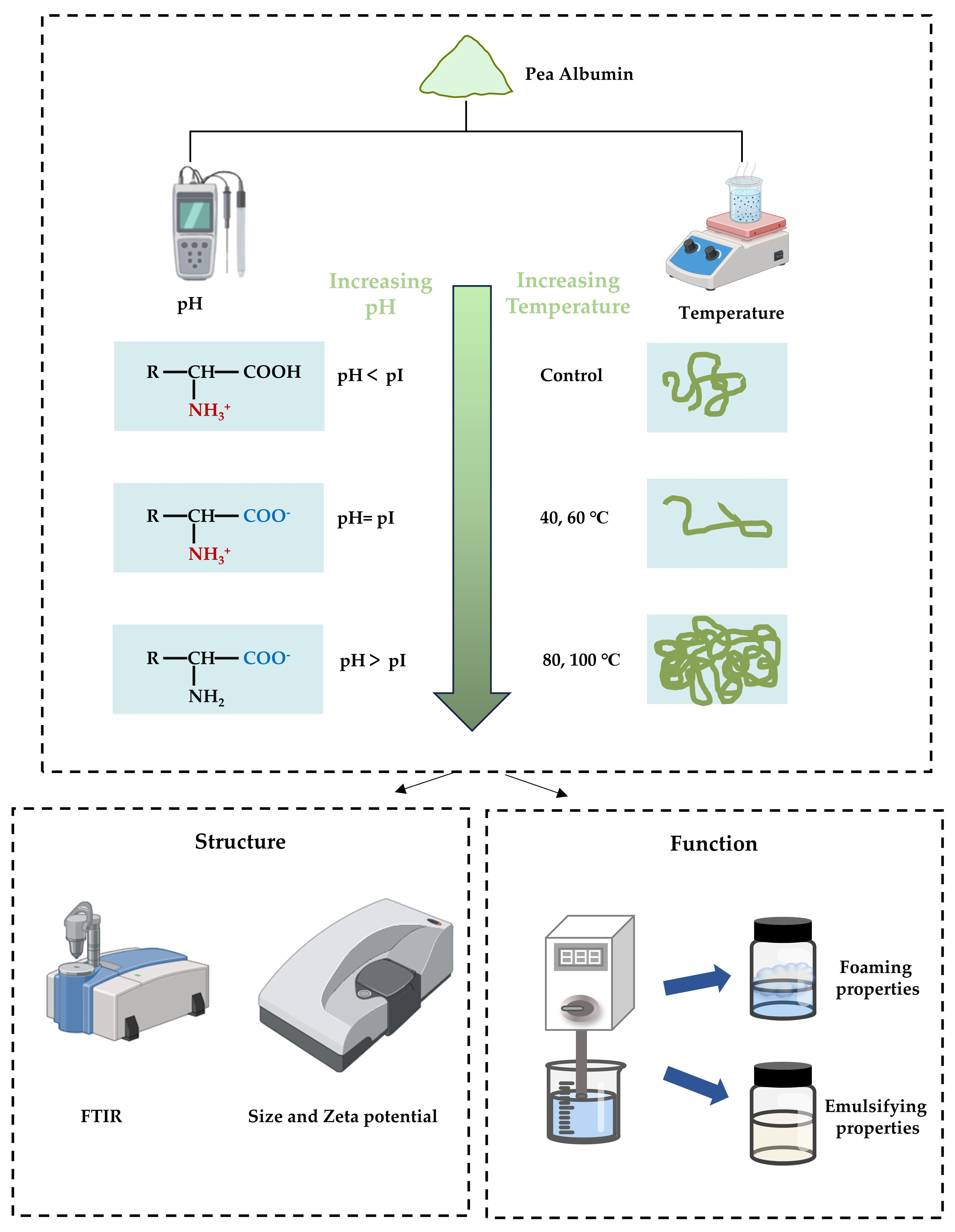
Effects of pH and Temperature on the Structure and Function of Pea Albumin


 , and
, and
Abstract
1. Introduction
2. Results and Discussion
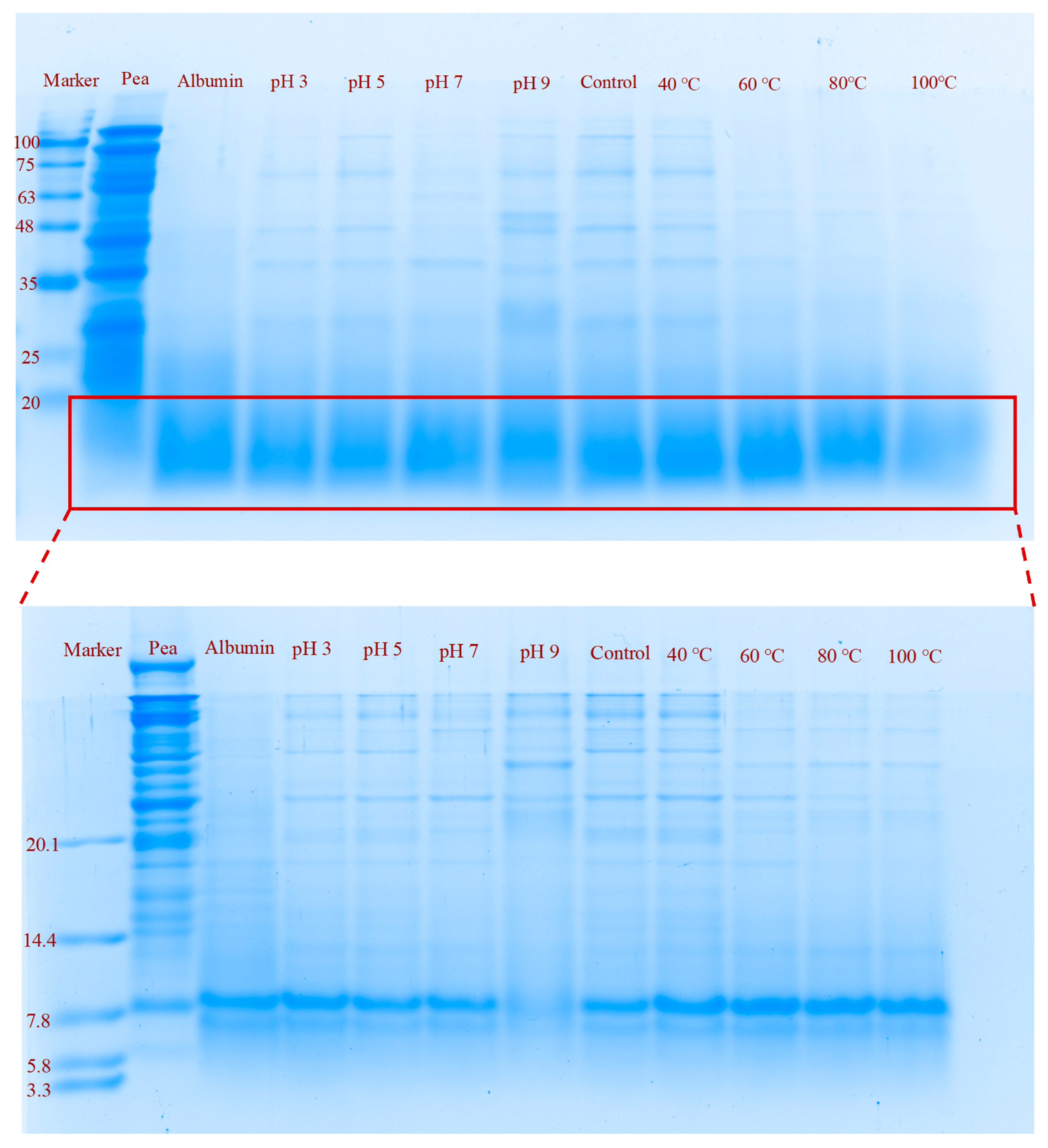
2.1. Sodium Dodecyl Sulfate–Polyacrylamide Gel Electrophoresis (SDS-PAGE)
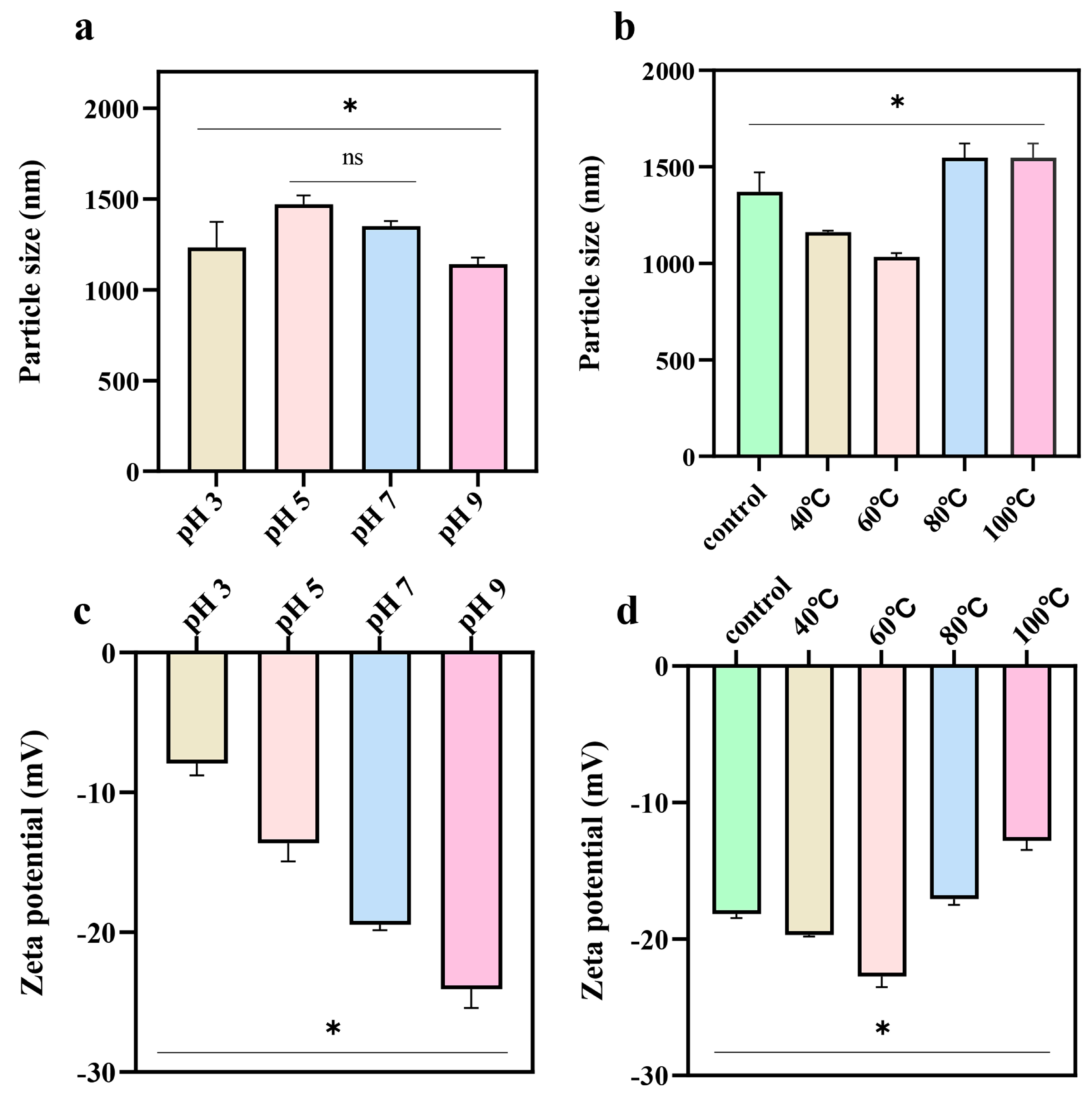
2.2. Particle Charge and Size
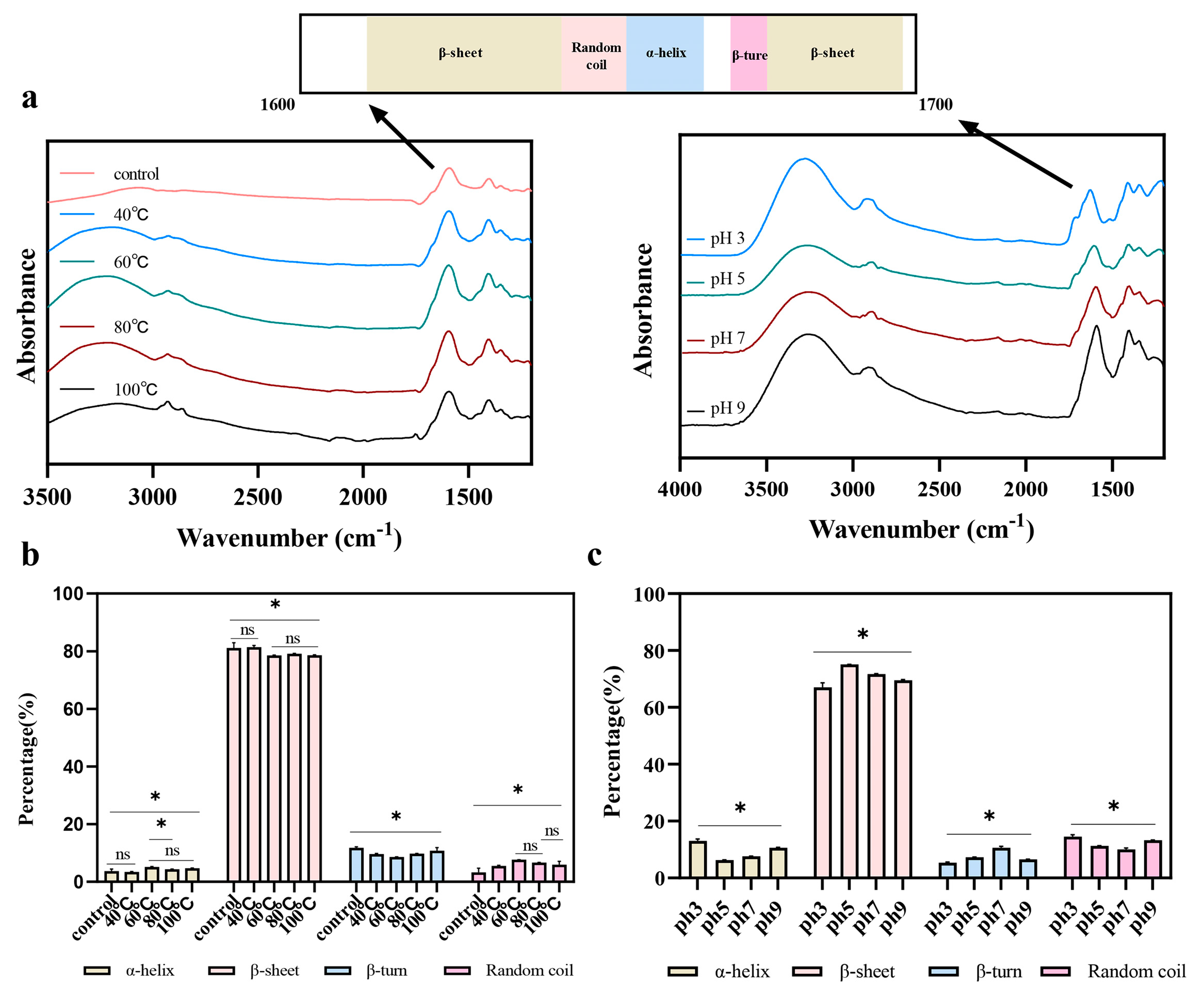
2.3. Secondary Structure

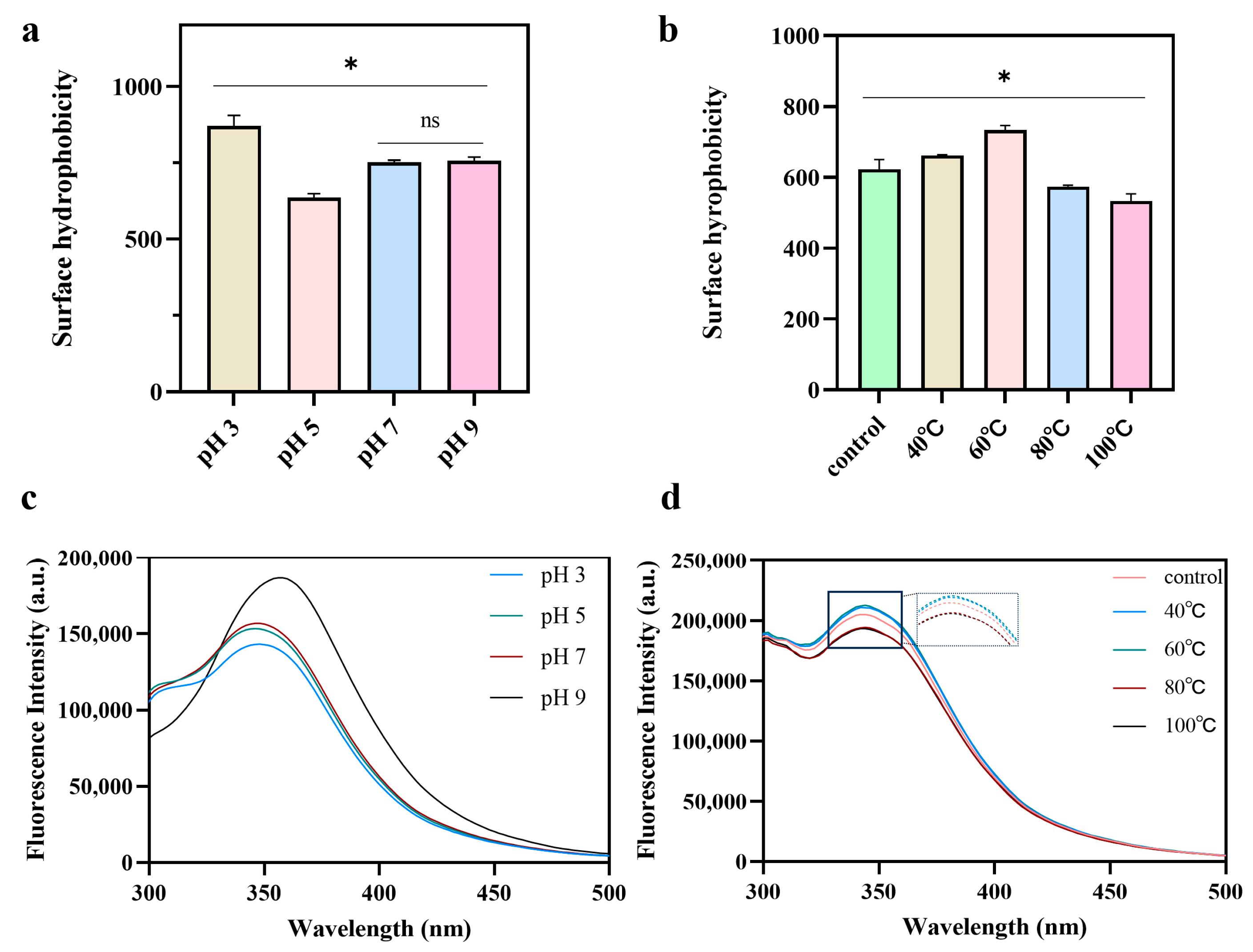
2.4. Surface Hydrophobicity (H0)
2.5. Intrinsic Tryptophan Fluorescence Spectroscopy
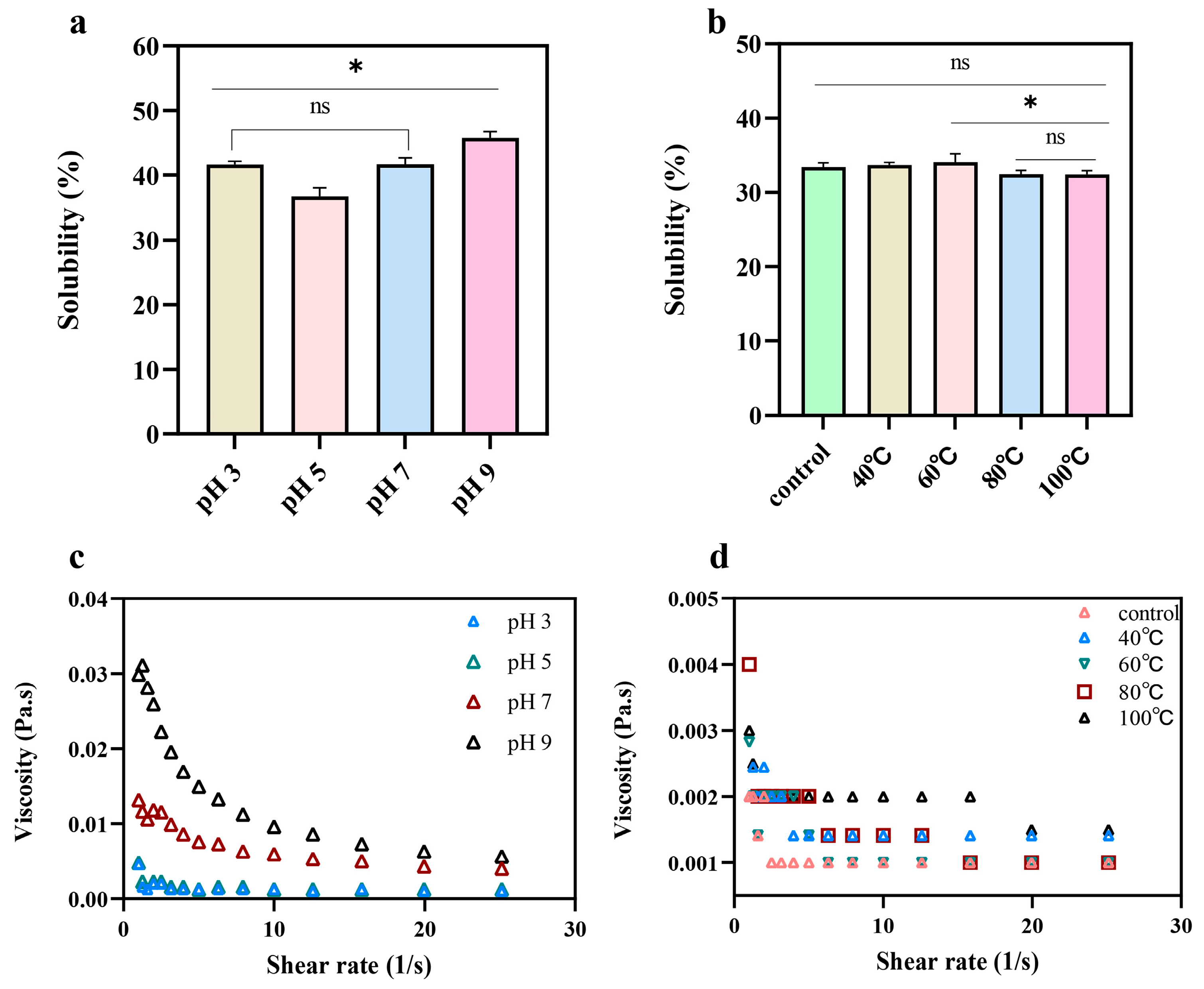
2.6. Solubility

2.7. Steady Shear
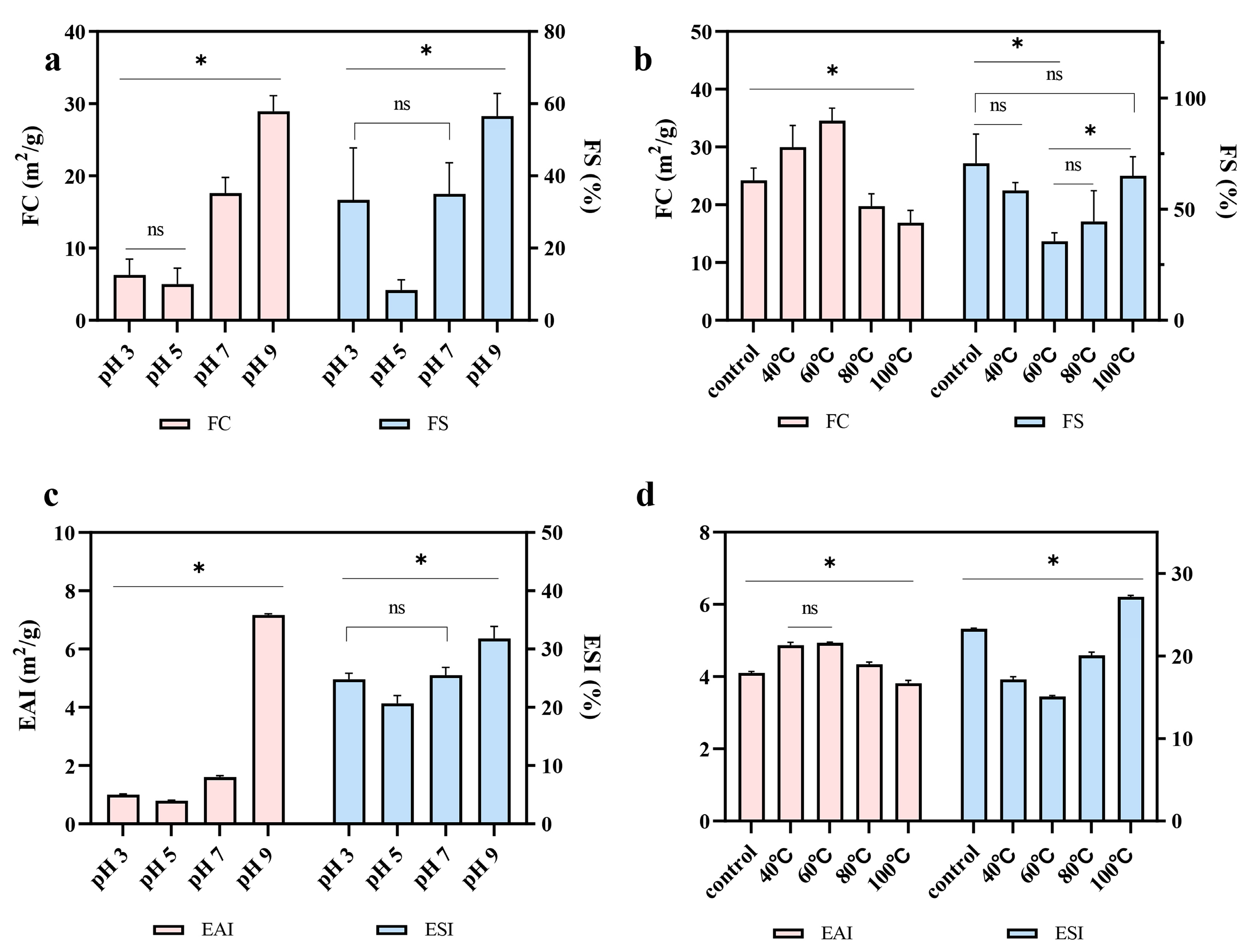
2.8. Foaming Properties
2.9. Emulsifying Properties

3. Materials and Methods
3.1. Materials
3.2. Extraction of Pea Albumin
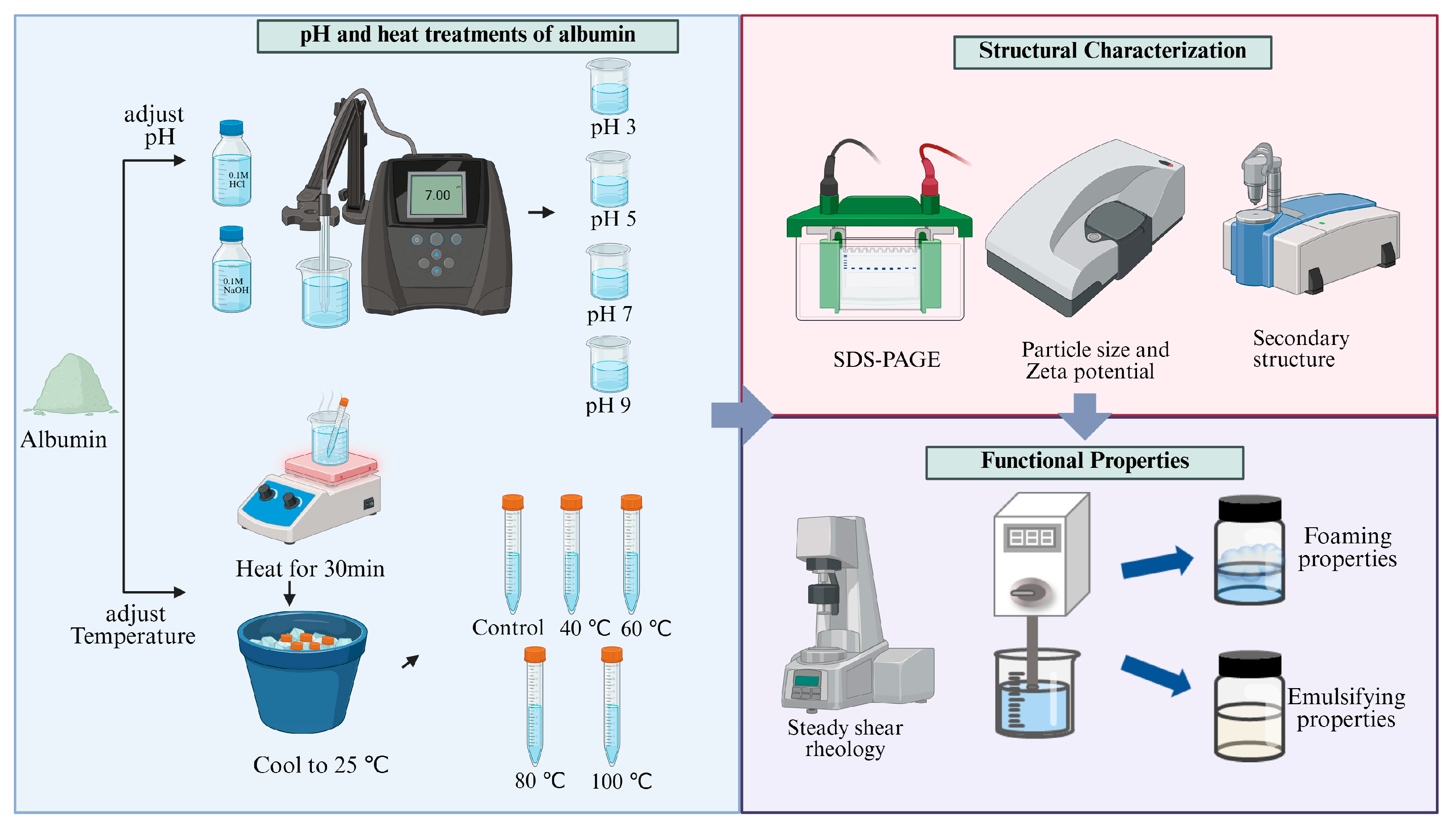
3.3. pH and Heat Treatments of Albumin
3.4. SDS-PAGE
3.5. Particle Charge and Size Measurements
3.6. Surface Hydrophobicity (H0) Measurement
3.7. Secondary Structure Measurement
3.8. Intrinsic Tryptophan Fluorescence Spectroscopy Measurement
3.9. Solubility Measurement
3.10. Steady Shear Rheology Measurement
3.11. Foaming Properties Measurement
3.12. Emulsifying Properties Measurement
3.13. Statistical Analysis
4. Conclusions
Author Contributions
Funding
Institutional Review Board Statement
Informed Consent Statement
Data Availability Statement
Conflicts of Interest
References
- Tanger, C.; Engel, J.; Kulozik, U. Influence of extraction conditions on the conformational alteration of pea protein extracted from pea flour. Food Hydrocoll. 2020, 107, 105949. [Google Scholar] [CrossRef]
- Yan, C.; Zhu, X.; Chen, B.; Guan, H.; Gu, K.; Liu, H. Protein/peptide-polyphenol interactions: Molecular mechanisms, functional synergy, and emerging applications. Trends Food Sci. Technol. 2025, 163, 105194. [Google Scholar] [CrossRef]
- Fiorentini, M.; Kinchla, A.J.; Nolden, A.A. Role of sensory evaluation in consumer acceptance of plant-based meat analogs and meat extenders: A scoping review. Foods 2020, 9, 1334. [Google Scholar] [CrossRef]
- Farshi, P.; Mirmohammadali, S.N.; Rajpurohit, B.; Smith, J.S.; Li, Y. Pea protein and starch: Functional properties and applications in edible films. J. Agric. Food Res. 2024, 15, 100927. [Google Scholar] [CrossRef]
- Chuchuca Moran, G.; Grossmann, L. Milling energy impacts the co-extraction of globulins, albumins, and anti-nutritional factors of peas. Food Bioprocess Technol. 2025, 18, 1534–1548. [Google Scholar] [CrossRef]
- Djemaoune, Y.; Cases, E.; Saurel, R. The effect of high-pressure microfluidization treatment on the foaming properties of pea albumin aggregates. J. Food Sci. 2019, 84, 2242–2249. [Google Scholar] [CrossRef] [PubMed]
- An, N.; Li, X.; Ji, G.; Liu, J.; Zhu, X.; Li, N.; Wang, Z.; Mu, Z.; Liu, H. A comprehensive review on composition to application of pea protein and its components. Int. J. Biol. Macromol. 2024, 282, 137273. [Google Scholar] [CrossRef]
- Li, R.; Neofytos, D.; Kirkensgaard, J.J.K.; Pal, A.; Pedersen, J.S.; Corredig, M. In-depth exploration of the structure of pea albumin, its fractions and their heating and foaming properties. J. Colloid. Interface Sci. 2025, 692, 137507. [Google Scholar] [CrossRef] [PubMed]
- Kornet, C.; Venema, P.; Nijsse, J.; van der Linden, E.; van der Goot, A.J.; Meinders, M. Yellow pea aqueous fractionation increases the specific volume fraction and viscosity of its dispersions. Food Hydrocoll. 2020, 99, 105332. [Google Scholar] [CrossRef]
- Tanger, C.; Müller, M.; Andlinger, D.; Kulozik, U. Influence of pH and ionic strength on the thermal gelation behaviour of pea protein. Food Hydrocoll. 2022, 123, 106903. [Google Scholar] [CrossRef]
- Othmeni, I.; Karoui, R.; Blecker, C. Impact of pH on the structure, interfacial and foaming properties of pea protein isolate: Investigation of the structure–function relationship. Int. J. Biol. Macromol. 2024, 278, 134818. [Google Scholar] [CrossRef]
- Higa, F.; Nickerson, C.; Nickerson, M.T. Effect of pH shifting and temperature on the functional properties of a commercial pea protein isolate. Cereal Chem. 2025, 102, 89–101. [Google Scholar] [CrossRef]
- Li, R.; Kirkensgaard, J.J.K.; Corredig, M. Structural evolution of pea-derived albumins during pH and heat treatment studied with light and X-ray scattering. Food Res. Int. 2024, 186, 114380. [Google Scholar] [CrossRef]
- Lan, Y.; Chen, B.; Rao, J. Pea protein isolate–high methoxyl pectin soluble complexes for improving pea protein functionality: Effect of pH, biopolymer ratio and concentrations. Food Hydrocoll. 2018, 80, 245–253. [Google Scholar] [CrossRef]
- Chen, J.; Chen, S.; Zheng, Q.; Ye, Z.; Guo, L.; Lin, J.; Zou, Y. Structure and functionality of Pleurotus geesteranus protein isolate as a function of pH. J. Food Sci. 2024, 89, 8969–8982. [Google Scholar] [CrossRef]
- Zheng, X.; Ren, C.; Wei, Y.; Wang, J.; Xu, X.; Du, M.; Wu, C. Soy protein particles with enhanced anti-aggregation behaviors under various heating temperatures, pH, and ionic strengths. Food Res. Int. 2023, 170, 112924. [Google Scholar] [CrossRef] [PubMed]
- Zhong, X.; Li, Y.Q.; Sun, G.J.; Wang, C.Y.; Liang, Y.; Zhao, X.Z.; Hua, D.L.; Chen, L.; Mo, H.Z. Structure, functional and physicochemical properties of lotus seed protein under different pH environments. J. Sci. Food Agric. 2024, 104, 7335–7346. [Google Scholar] [CrossRef]
- Hall, A.E.; Moraru, C.I. Structure and function of pea, lentil and faba bean proteins treated by high pressure processing and heat treatment. LWT 2021, 152, 112349. [Google Scholar] [CrossRef]
- Liu, Z.; Li, X.; Dong, Y.; Lan, T.; Xu, Z.; Jiang, L.; Zhang, Y.; Wang, J.; Sui, X. Influence of different heat treatments on the emulsifying properties of the composite of soy protein isolate and konjac glucomannan. Food Hydrocoll. 2025, 172, 112009. [Google Scholar] [CrossRef]
- Hao, L.; Sun, J.; Pei, M.; Zhang, G.; Li, C.; Li, C.; Ma, X.; He, S.; Liu, L. Impact of non-covalent bound polyphenols on conformational, functional properties and in vitro digestibility of pea protein. Food Chem. 2022, 383, 132623. [Google Scholar] [CrossRef]
- Huang, X.; Li, Y.; Cui, C.; Sun-Waterhouse, D. Structural, functional properties, and in vitro digestibility of sunflower protein concentrate as affected by extraction method: Isoelectric precipitation vs ultrafiltration. Food Chem. 2024, 439, 138090. [Google Scholar] [CrossRef]
- Xi, C.; Kang, N.; Zhao, C.; Liu, Y.; Sun, Z.; Zhang, T. Effects of pH and different sugars on the structures and emulsification properties of whey protein isolate-sugar conjugates. Food Biosci. 2019, 33, 100507. [Google Scholar] [CrossRef]
- Chen, H.; Zhao, G.; Yu, X.; Zhang, Q.; Zhu, C.; Tong, L.; Hao, J. Exploring in vitro gastrointestinal digestion of myofibrillar proteins at different heating temperatures. Food Chem. 2023, 414, 135694. [Google Scholar] [CrossRef]
- Güneş, R.; Gülseren, İ. FT-IR spectroscopy based investigation of stability in wheat germ oil body emulsions as affected by general processing treatments. J. Food Meas. Charact. 2021, 15, 3026–3035. [Google Scholar] [CrossRef]
- Zhang, J.; Mao, X.; Zhang, J.; Liu, Q. Structural changes and functional characteristics of common vetch isolate proteins altered by different pH-shifting treatments. Int. J. Biol. Macromol. 2024, 282, 136887. [Google Scholar] [CrossRef]
- Zhao, C.; Chu, Z.; Mao, Y.; Xu, Y.; Fei, P.; Zhang, H.; Xu, X.; Wu, Y.; Zheng, M.; Liu, J. Structural characteristics and acid-induced emulsion gel properties of heated soy protein isolate–soy oligosaccharide glycation conjugates. Food Hydrocoll. 2023, 137, 108408. [Google Scholar] [CrossRef]
- Jiang Jiang, J.J.; Chen Jie, C.J.; Xiong, Y. Structural and emulsifying properties of soy protein isolate subjected to acid and alkaline pH-shifting processes. J. Agric. Food Chem. 2009, 57, 7576–7583. [Google Scholar] [CrossRef] [PubMed]
- Ma, W.; Wang, J.; Wu, D.; Xu, X.; Du, M.; Wu, C. Effects of preheat treatment on the physicochemical and interfacial properties of cod proteins and its relation to the stability of subsequent emulsions. Food Hydrocoll. 2021, 112, 106338. [Google Scholar] [CrossRef]
- Huang, L.; Ding, X.; Li, Y.; Ma, H. The aggregation, structures and emulsifying properties of soybean protein isolate induced by ultrasound and acid. Food Chem. 2019, 279, 114–119. [Google Scholar] [CrossRef]
- Khati, P.; Le Parc, R.; Chevalier-Lucia, D.; Picart-Palmade, L. High pressure and heat-induced potato protein aggregates: A comparison of aggregation kinetics, structure modifications, and protein interactions. Food Hydrocoll. 2024, 151, 109838. [Google Scholar] [CrossRef]
- Chang, C.; Tu, S.; Ghosh, S.; Nickerson, M. Effect of pH on the inter-relationships between the physicochemical, interfacial and emulsifying properties for pea, soy, lentil and canola protein isolates. Food Res. Int. 2015, 77, 360–367. [Google Scholar] [CrossRef]
- Peng, Y.; Kyriakopoulou, K.; Rahmani, A.; Venema, P.; van der Goot, A.J. Isochoric moisture heating as a tool to control the functionality of soy protein. LWT 2021, 150, 111979. [Google Scholar] [CrossRef]
- Chai, L.; Shi, W.; Tan, Y.; Che, X.; Lu, J.; Bai, B.; Zhang, C. Effect of pH-Shifted Compound Heating Treatment on the Structure and Properties of Walnut Protein Isolate. Foods 2025, 14, 1754. [Google Scholar] [CrossRef]
- Yan, X.; Jia, Y.; Man, H.; Sun, S.; Huang, Y.; Qi, B.; Li, Y. Tracking the driving forces for the unfolding and folding of kidney bean protein isolates: Revealing mechanisms of dynamic changes in structure and function. Food Chem. 2023, 402, 134230. [Google Scholar] [CrossRef] [PubMed]
- Zhou, S.; Liu, X.; Cui, Y.; Chen, S.; Zhong, F.; Lu, J.; Kong, C. Molecular investigation of soybean protein for improving the stability of quinoa (Chenopodium quinoa willd.) milk substitute. Food Chem. 2024, 461, 140829. [Google Scholar] [CrossRef] [PubMed]
- Zhao, R.; Fu, W.; Li, D.; Dong, C.; Bao, Z.; Wang, C. Structure and functionality of whey protein, pea protein, and mixed whey and pea proteins treated by pH shift or high-intensity ultrasound. J. Dairy Sci. 2023, 107, 726–741. [Google Scholar] [CrossRef]
- Kelleher, C.M.; Aydogdu, T.; Murphy, K.M.; O’Mahony, J.A.; Kelly, A.L.; O’Callaghan, D.J.; McCarthy, N.A. The effect of protein profile and preheating on denaturation of whey proteins and development of viscosity in milk protein beverages during heat treatment. Int. J. Dairy Technol. 2020, 73, 494–501. [Google Scholar] [CrossRef]
- Zhang, X.; Sun, X.; Gao, F.; Wang, J.; Wang, C. Systematical characterization of physiochemical and rheological properties of thermal induced polymerized whey protein. J. Sci. Food Agric. 2018, 99, 923–932. [Google Scholar] [CrossRef]
- Ma, W.; Wang, T.; Wang, J.; Wu, D.; Wu, C.; Du, M. Enhancing the thermal stability of soy proteins by preheat treatment at lower protein concentration. Food Chem. 2020, 306, 125593. [Google Scholar] [CrossRef]
- de Carvalho, M.D.; Cavallieri, Â.L.F.; Sato, A.C.K. Plant proteins in structuring gelled emulsions for saturated fat substitutes: Challenges and opportunities. Food Res. Int. 2025, 202, 115753. [Google Scholar] [CrossRef]
- Krichanã, D.; Rigolon, T.C.B.; Santos, T.A.; Renhe, I.R.T.; Felisberto, M.H.F.; de Araújo Bezerra, J.; Stringheta, P.C.; Martins, E.; Campelo, P.H. Effects of ohmic heating on interfacial, rheology and structure of aquafaba proteins and products. Innov. Food Sci. Emerg. Technol. 2025, 104, 104081. [Google Scholar] [CrossRef]
- Wang, Y.; Zhu, L.; Zhu, Z.; Liu, M.; Zhao, X. Effects of different pH levels on the structural and functional properties of proteins of Phaeodactylum tricornutum. Molecules 2024, 29, 3139. [Google Scholar] [CrossRef]
- Chavan, U.; Shahidi, F.; Bal, A.; McKenzie, D. Physico-chemical properties and nutrient composition of beach pea (Lathyrus maritimus L.). Food Chem. 1999, 66, 43–50. [Google Scholar] [CrossRef]
- Kudre, T.G.; Benjakul, S. Physicochemical and functional properties of beany flavour-free bambara groundnut protein isolate. J. Sci. Food Agric. 2014, 94, 1238–1247. [Google Scholar] [CrossRef]
- He, X.; Wang, B.; Zhao, B.; Meng, Y.; Chen, J.; Yang, F. Effect of hydrothermal treatment on the structure and functional properties of quinoa protein isolate. Foods 2022, 11, 2954. [Google Scholar] [CrossRef]
- Hu, Y.; Wang, L.; Li, Z. Modification of protein structure and dough rheological properties of wheat flour through superheated steam treatment. J. Cereal Sci. 2017, 76, 222–228. [Google Scholar] [CrossRef]
- Li, C.; Yang, J.; Yao, L.; Qin, F.; Hou, G.; Chen, B.; Jin, L.; Deng, J.; Shen, Y. Characterisation, physicochemical and functional properties of protein isolates from Amygdalus pedunculata Pall seeds. Food Chem. 2020, 311, 125888. [Google Scholar] [CrossRef]
- Gao, H.; Ma, L.; Li, T.; Sun, D.; Hou, J.; Li, A.; Jiang, Z. Impact of ultrasonic power on the structure and emulsifying properties of whey protein isolate under various pH conditions. Process Biochem. 2019, 81, 113–122. [Google Scholar] [CrossRef]
- Ngui, S.P.; Nyobe, C.E.; Bakwo Bassogog, C.B.; Nchuaji Tang, E.; Minka, S.R.; Mune Mune, M.A. Influence of pH and temperature on the physicochemical and functional properties of Bambara bean protein isolate. Heliyon 2021, 7, e07824. [Google Scholar] [CrossRef]
- Zhu, J.; Zhu, X.; Yan, B.; Ren, F.; Chen, B.; Han, Z.; Yao, X.; He, S.; Liu, H. Evaluation and categorization of various pea cultivars utilizing near-infrared spectroscopy in conjunction with multivariate statistical techniques. Food Chem. 2025, 474, 143268. [Google Scholar] [CrossRef] [PubMed]
- Benimana, F.; Alila, N.; Kawata, K.; Roy, A.; Kucha, C.; Mohan, A. Proteomic Profiling of Broccoli Flower Proteins for Potential Applications in the Food Industry. LWT 2025, 220, 117457. [Google Scholar] [CrossRef]
- Chang, K.; Liu, J.; Jiang, W.; Zhang, R.; Zhang, T.; Liu, B. Ferulic acid-ovalbumin protein nanoparticles: Structure and foaming behavior. Food Res. Int. 2020, 136, 109311. [Google Scholar] [CrossRef]
- Chen, Q.; Zhang, J.; Liu, H.; Li, T.; Wang, Q. Mechanism of high-moisture extruded protein fibrous structure formation based on the interactions among pea protein, amylopectin, and stearic acid. Food Hydrocoll. 2022, 136, 108254. [Google Scholar] [CrossRef]
- Ye, J.; Shi, N.; Rozi, P.; Kong, L.; Zhou, J.; Yang, H. A comparative study of the structural and functional properties of chickpea albumin and globulin protein fractions. Food Bioprocess Technol. 2024, 17, 3253–3266. [Google Scholar] [CrossRef]
- Sui XiaoNan, S.X.; Sun HongBo, S.H.; Qi BaoKun, Q.B.; Zhang Min, Z.M.; Li Yang, L.Y.; Jiang LianZhou, J.L. Functional and conformational changes to soy proteins accompanying anthocyanins: Focus on covalent and non-covalent interactions. Food Chem. 2018, 245, 871–878. [Google Scholar] [CrossRef] [PubMed]


Disclaimer/Publisher’s Note: The statements, opinions and data contained in all publications are solely those of the individual author(s) and contributor(s) and not of MDPI and/or the editor(s). MDPI and/or the editor(s) disclaim responsibility for any injury to people or property resulting from any ideas, methods, instructions or products referred to in the content. |
© 2026 by the authors. Licensee MDPI, Basel, Switzerland. This article is an open access article distributed under the terms and conditions of the Creative Commons Attribution (CC BY) license.
Share and Cite
Li, X.; Ji, G.; Chen, B.; Li, W.; Li, X.; Liu, J.; Mu, Z.; Wang, Z.; Liu, H. Effects of pH and Temperature on the Structure and Function of Pea Albumin. Molecules 2026, 31, 381. https://doi.org/10.3390/molecules31020381
Li X, Ji G, Chen B, Li W, Li X, Liu J, Mu Z, Wang Z, Liu H. Effects of pH and Temperature on the Structure and Function of Pea Albumin. Molecules. 2026; 31(2):381. https://doi.org/10.3390/molecules31020381
Chicago/Turabian StyleLi, Xinxin, Guozhi Ji, Bingyu Chen, Wenhui Li, Xiaomin Li, Jie Liu, Zhishen Mu, Ziyuan Wang, and Hongzhi Liu. 2026. "Effects of pH and Temperature on the Structure and Function of Pea Albumin" Molecules 31, no. 2: 381. https://doi.org/10.3390/molecules31020381
APA StyleLi, X., Ji, G., Chen, B., Li, W., Li, X., Liu, J., Mu, Z., Wang, Z., & Liu, H. (2026). Effects of pH and Temperature on the Structure and Function of Pea Albumin. Molecules, 31(2), 381. https://doi.org/10.3390/molecules31020381