Probiotic and Bioactive Compounds in Foods: From Antioxidant Properties to Gut Microbiota Modulation

 ,
,  ,
,  ,
, 
 , and
, and 
Abstract
1. Introduction
2. Fruits and Vegetables Rich in Bioactives

| Food Specie | Bioactive Compounds | Average Content |
|---|---|---|
| Vegetables | ||
| Spinach | Lutein + Zeaxanthin | 12.2 mg/100 g |
| Broccoli | Glucoraphanin | 0.2–0.3 mg/100 g |
| Kale | Kaempferol | 1.0–1.5 mg/100 g |
| Cabbage | Sinigrin | 0.5–1.0 mg/100 g |
| Carrot | Beta-carotene | 8.0–10.0 mg/100 g |
| Collard greens | Quercetin | 0.5–1.0 mg/100 g |
| Onion | Quercetin | 0–91.0 mg/100 g |
| Tomato | Lycopene | 19.41 mg/100 g |
| Fruits | ||
| Apple | Quercetin | 0.13–3.32 mg/100 g |
| Blueberry | Anthocyanins | 6.0–8.0 mg/100 g |
| Cherry | Quercetin + Kaempferol | 5.14–17.4 mg/100 g |
| Strawberry | Ellagic Acid | 2.0–3.0 mg/100 g |
| Raspberry | Ellagic Acid | 2.5–3.5 mg/100 g |
| Blackberry | Anthocyanins | 5.0–7.0 mg/100 g |
| Goji Berry | Zeaxanthin | 0.5–1.0 mg/100 g |
| Orange | Vitamin C | 53.2 mg/100 g |
| Lemon | Vitamin C | 53.0 mg/100 g |
| Grapefruit | Vitamin C | 31.2 mg/100 g |
| Kiwi | Vitamin C | 92.7–161.3 mg/100 g |
| Lime | Vitamin C | 29.0 mg/100 g |
3. Whole Grains, Nuts, and Seeds Rich in Bioactives
| Class of Bioactive/Phytochemical | Representative Examples | Key Foods | References |
|---|---|---|---|
| Phenolic acids | Chlorogenic acid, syringic acid, ferulic acid, and gallic acid | Wheat | [92] |
| Phenolic acids | p-hydroxybenzoic acid, caffeic acid, syringic acid, vanillic acid, and p-coumaric acid | Oat | [92] |
| Phenolic acids | p-coumaric acid, o-coumaric acid, and gallic acid | Corn | [92] |
| Flavonoids | isorhamnetin-3-O-rutinoside and isorhamnetin-3-O-glucoside (in combination), catechin, kaempferol-3-O-rutinoside, epicatechin, quercetin-3-O-galactoside, and isorhamnetin-3-O-galactoside | Almond | [93] |
| Lignans | Secoisolariciresinol, secoisolariciresinol diglucoside, matairesinol | Flaxseed | [94] |
| Phytosterols | β-sitosterol, campesterol, ergosterol, and stigmasterol | Nuts (almond, Brazil nut, cashew, hazelnut, macadamia, peanut, pecan, pine nut, pistachio, and walnut) | [95] |
| Tocols (Vitamin E forms) | α- and γ-Tocopherol, Tocotrienols | Sunflower seed, hazelnut, almond, wheat germ, barley | [96,97] |
| Omega-3 fatty acids | Alpha-linolenic acid (ALA) | Walnut, flaxseed, chia seed | [98,99] |
| Carotenoids | Lutein, Zeaxanthin, β-Carotene | Maize, pumpkin seed | [100,101] |
| Dietary fibers (prebiotics) | β-Glucans, Arabinoxylans | Oat, barley, wheat | [78,102] |
| Saponins | Soyasaponins, Avenacosides | Soybean, oat | [103,104] |
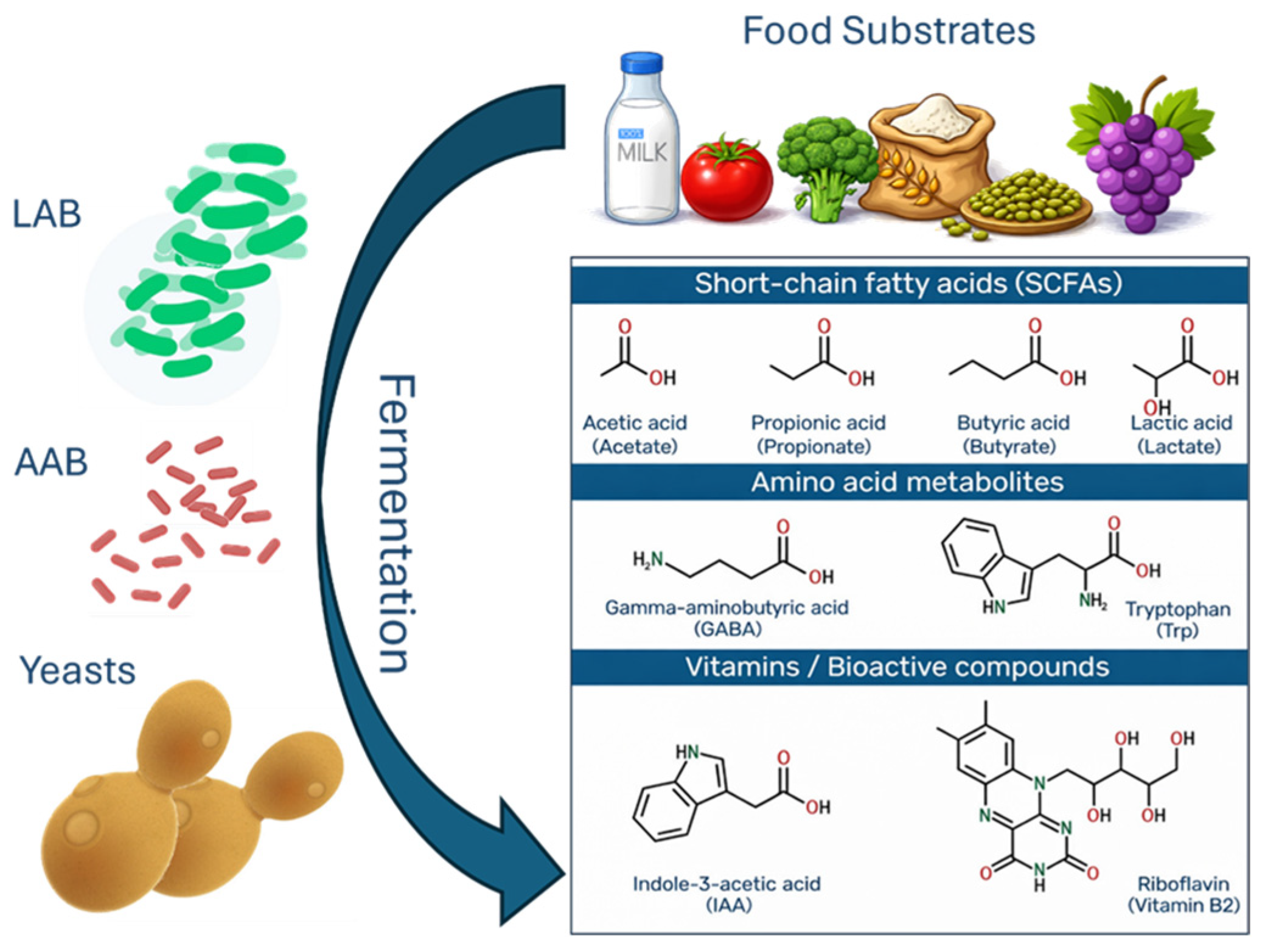
4. Fermented Foods as a Source of Probiotic and Bioactive Metabolites
4.1. Microbial Communities and Metabolism Across Fermented Foods
4.2. The Case Study of Wine and Wine Vinegar
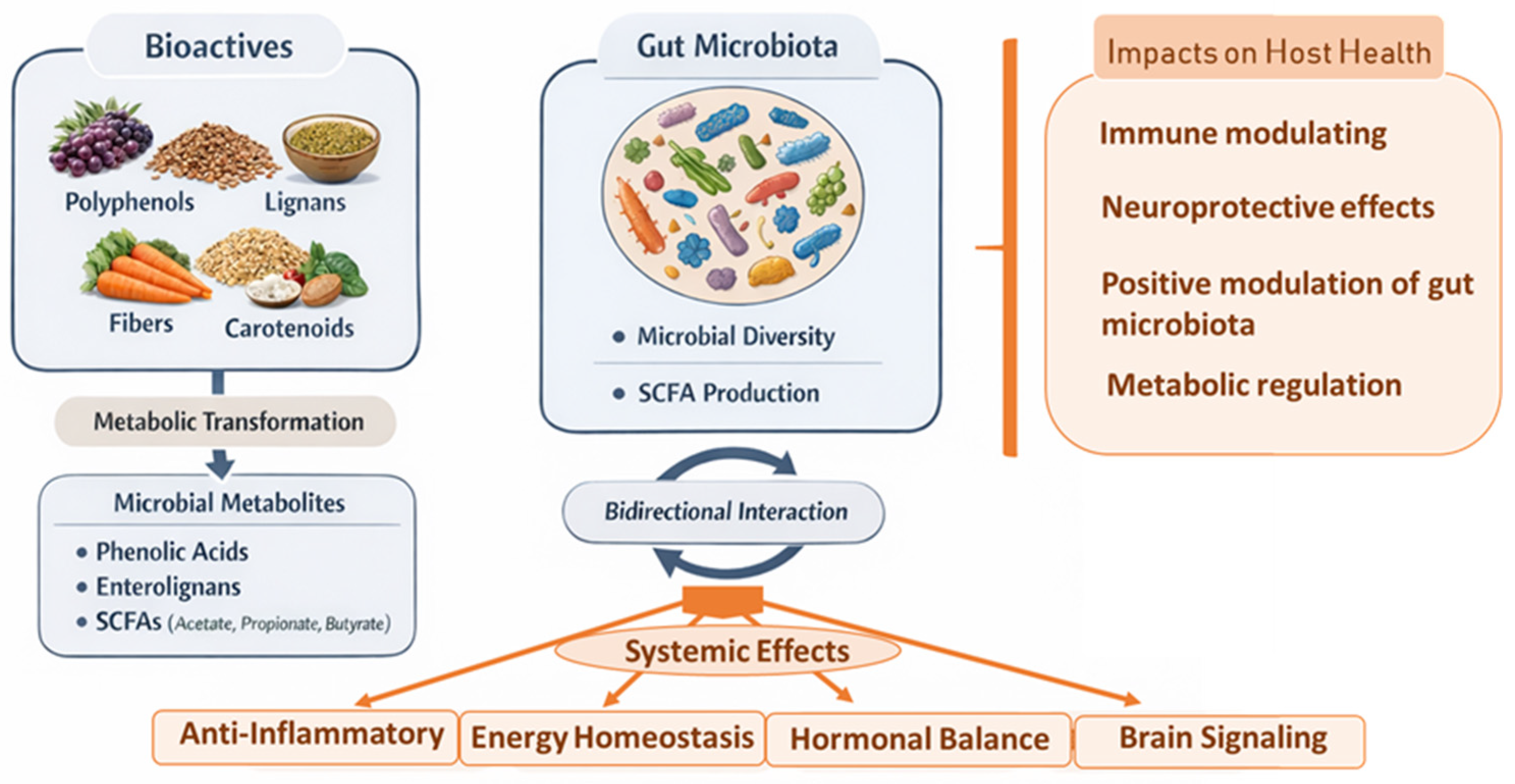
5. Gut Microbiota Modulation by Bioactive Compounds
5.1. Gut Microbiome: Diversity, Dysbiosis, and Health Implications
5.2. Bioactive Compounds and Their Primary Sources
5.3. Mechanisms of Gut Microbiota Modulation by Bioactive Compounds
5.4. Dietary FODMAPs as Additional Modulators of the Gut Microbiota
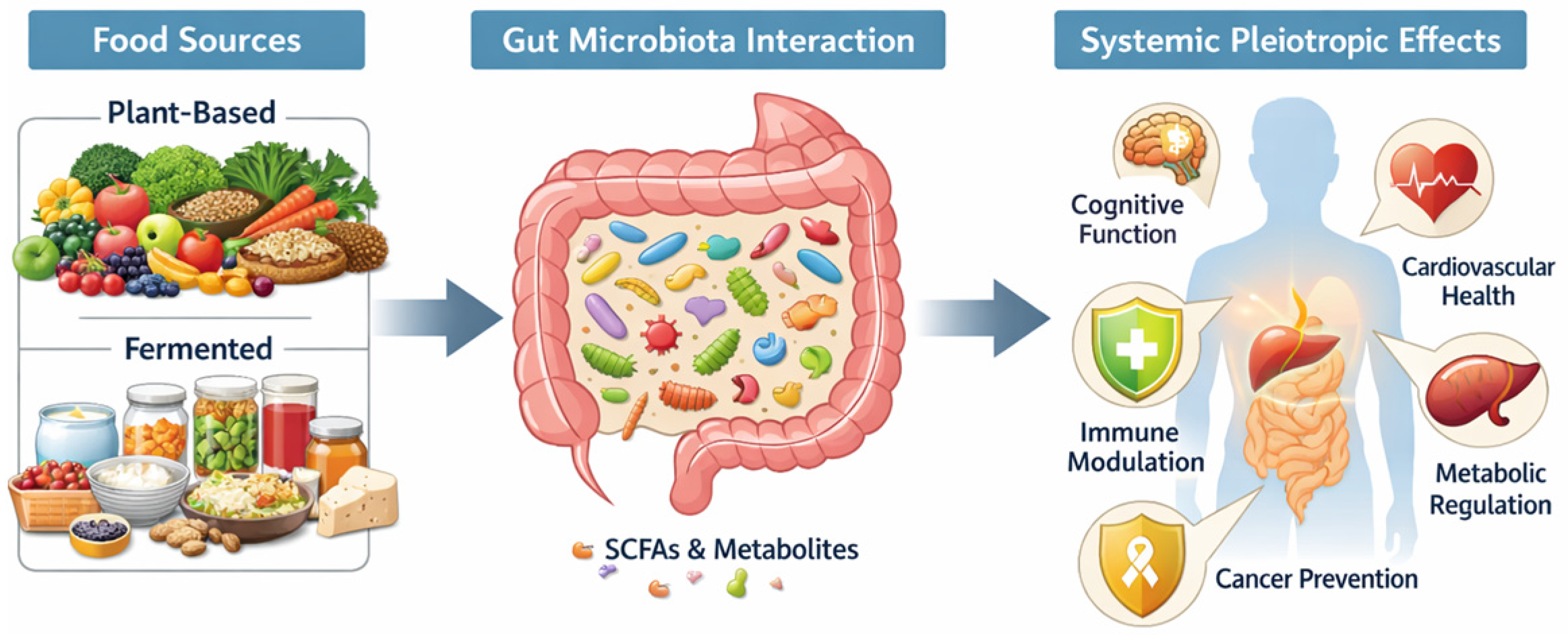
6. Mechanisms of Action in Human Health
6.1. Anti-Inflammatory and Redox Mechanisms
6.2. Metabolic Regulation and Anti-Diabetic Effects
6.3. Cardioprotective Mechanisms
6.4. Epigenetic Regulation and Antitumor Activity
6.5. Immunomodulation and Neuroprotection
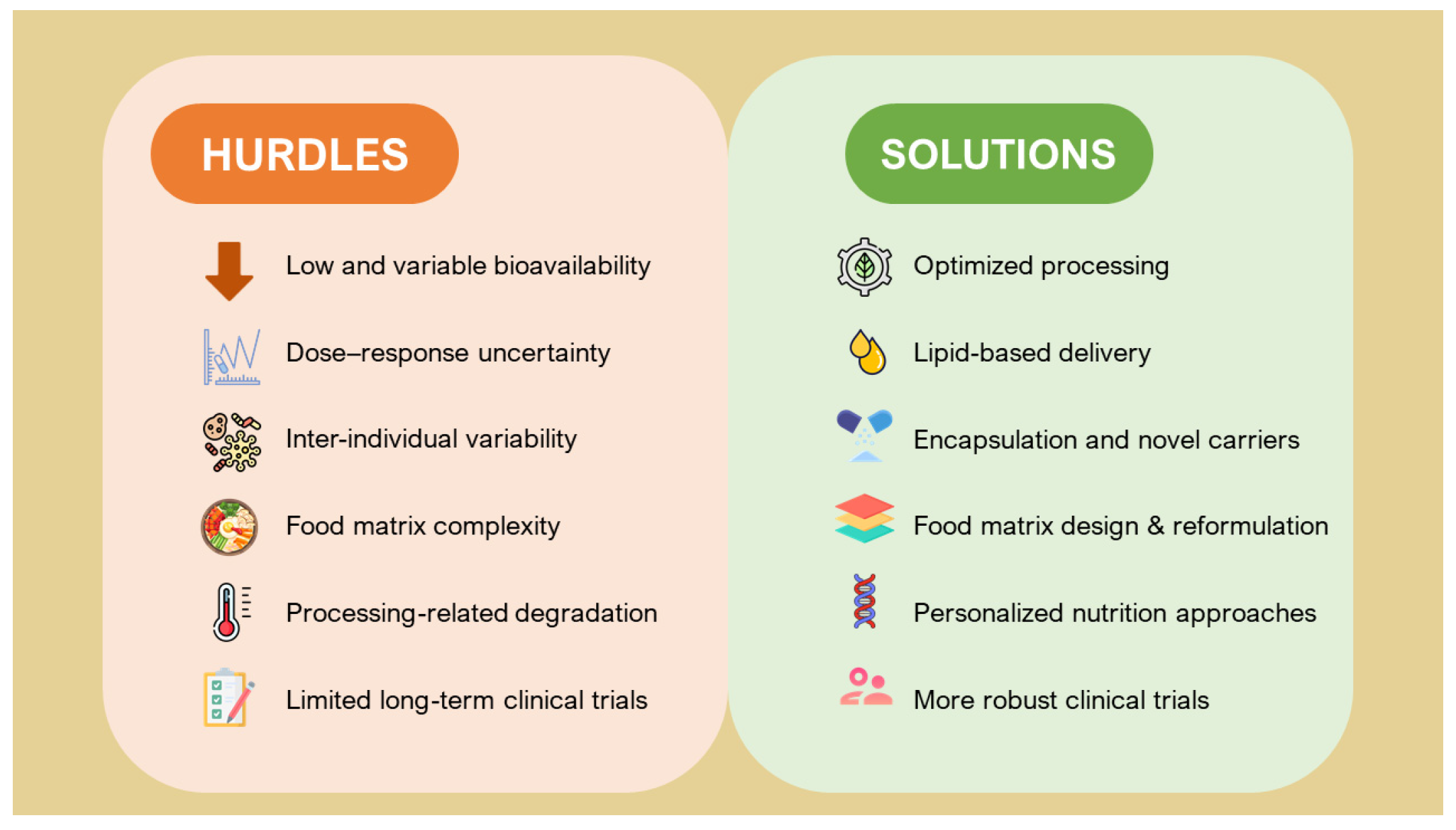
6.6. Processing, Bioavailability, and Translational Relevance
7. Conclusions and Future Perspectives
Funding
Institutional Review Board Statement
Informed Consent Statement
Data Availability Statement
Conflicts of Interest
References
- Gupta, C.; Prakash, D. Phytonutrients as therapeutic agents. J. Complement. Integr. Med. 2014, 11, 151–169. [Google Scholar] [CrossRef] [Scilit]
- Zhang, Y.-J.; Gan, R.-Y.; Li, S.; Zhou, Y.; Li, A.-N.; Xu, D.-P.; Li, H.-B. Antioxidant phytochemicals for the prevention and treatment of chronic diseases. Molecules 2015, 20, 21138–21156. [Google Scholar] [CrossRef] [Scilit]
- Nahar, L.; Xiao, J.; Sarker, S.D. Introduction of phytonutrients. In Handbook of Dietary Phytochemicals; Springer: Singapore, 2020; pp. 1–17. [Google Scholar] [CrossRef] [Scilit]
- Sorrenti, V.; Burò, I.; Consoli, V.; Vanella, L. Recent advances in health benefits of bioactive compounds from food wastes and by-products: Biochemical aspects. Int. J. Mol. Sci. 2023, 24, 2019. [Google Scholar] [CrossRef] [Scilit]
- Xavier, J.R.; Sanjay, B.S.; Gupta, D.; Mehta, S.; Chauhan, O.P. Bioactive compounds of foods: Phytochemicals and peptides. Food Humanit. 2024, 3, 100354. [Google Scholar] [CrossRef] [Scilit]
- Bousdouni, P.; Kandyliari, A.; Koutelidakis, A.E. Probiotics and phytochemicals: Role on gut microbiota and efficacy on irritable bowel syndrome, functional dyspepsia, and functional constipation. Gastrointest. Disord. 2022, 4, 30–48. [Google Scholar] [CrossRef] [Scilit]
- Santacroce, L.; Bottalico, L.; Charitos, I.A.; Castellaneta, F.; Gaxhja, E.; Topi, S.; Palmirotta, R.; Jirillo, E. Exploitation of Natural By-Products for the Promotion of Healthy Outcomes in Humans: Special Focus on Antioxidant and Anti-Inflammatory Mechanisms and Modulation of the Gut Microbiota. Antioxidants 2024, 13, 796. [Google Scholar] [CrossRef] [Scilit] [PubMed]
- Munteanu, C.; Schwartz, B. Interactions between Dietary Antioxidants, Dietary Fiber and the Gut Microbiome: Their Putative Role in Inflammation and Cancer. Int. J. Mol. Sci. 2024, 25, 8250. [Google Scholar] [CrossRef] [Scilit] [PubMed]
- Hsu, C.-N.; Lin, Y.-J.; Hou, C.-Y.; Chen, Y.-W.; Chang-Chien, G.-P.; Lin, S.-F.; Tain, Y.-L. Antioxidants, Gut Microbiota, and Cardiovascular Programming: Unraveling a Triad of Early-Life Interactions. Antioxidants 2025, 14, 1049. [Google Scholar] [CrossRef] [Scilit] [PubMed]
- Granato, D.; Barba, F.J.; Bursać Kovačević, D.; Lorenzo, J.M.; Cruz, A.G.; Putnik, P. Functional foods: Product development, technological trends, efficacy testing, and safety. Annu. Rev. Food Sci. Technol. 2020, 11, 93–118. [Google Scholar] [CrossRef] [Scilit]
- Temple, N.J. A rational definition for functional foods: A perspective. Front. Nutr. 2022, 9, 957516. [Google Scholar] [CrossRef] [Scilit]
- Essa, M.M.; Bishir, M.; Bhat, A.; Chidambaram, S.B.; Al-Balushi, B.; Hamdan, H.; Govindarajan, N.; Freidland, R.P.; Qoronfleh, M.W. Functional foods and their impact on health. J. Food Sci. Technol. 2023, 60, 820–834. [Google Scholar] [CrossRef] [Scilit]
- Pap, N.; Fidelis, M.; Azevedo, L.; do Carmo, M.A.V.; Wang, D.; Mocan, A.; Pereira, E.P.R.; Xavier-Santos, D.; Sant’Ana, A.S.; Yang, B.; et al. Berry polyphenols and human health: Evidence of antioxidant, anti-inflammatory, microbiota modulation, and cell-protecting effects. Curr. Opin. Food Sci. 2021, 42, 167–186. [Google Scholar] [CrossRef] [Scilit]
- P., N.P.V.; Joye, I.J. Dietary Fibre from Whole Grains and Their Benefits on Metabolic Health. Nutrients 2020, 12, 3045. [Google Scholar] [CrossRef] [Scilit]
- Bellikci-Koyu, E.; Sarer-Yurekli, B.P.; Karagozlu, C.; Aydin-Kose, F.; Ozgen, A.G.; Buyuktuncer, Z. Probiotic kefir consumption improves serum apolipoprotein A1 levels in metabolic syndrome patients: A randomized controlled clinical trial. Nutr. Res. 2022, 102, 59–70. [Google Scholar] [CrossRef] [Scilit] [PubMed]
- Bellikci-Koyu, E.; Sarer-Yurekli, B.P.; Akyon, Y.; Aydin-Kose, F.; Karagozlu, C.; Ozgen, A.G.; Brinkmann, A.; Nitsche, A.; Ergunay, K.; Yilmaz, E.; et al. Effects of regular kefir consumption on gut microbiota in patients with metabolic syndrome: A parallel-group, randomized, controlled study. Nutrients 2019, 11, 2089. [Google Scholar] [CrossRef] [Scilit]
- Anumudu, C.K.; Miri, T.; Onyeaka, H. Multifunctional applications of lactic acid bacteria: Enhancing safety, quality, and nutritional value in foods and fermented beverages. Foods 2024, 13, 3714. [Google Scholar] [CrossRef] [Scilit] [PubMed]
- Dahiya, D.; Terpou, A.; Dasenaki, M.; Nigam, P.S. Current Status and Future Prospects of Bioactive Molecules Delivered through Sustainable Encapsulation Techniques for Food Fortification. Sustain. Food Technol. 2023, 1, 500–510. [Google Scholar] [CrossRef] [Scilit]
- Mekinić, I.G.; Šimat, V. Bioactive Compounds in Foods: New and Novel Sources, Characterization, Strategies, and Applications. Foods 2025, 14, 1617. [Google Scholar] [CrossRef] [Scilit]
- Bilawal, A.; Ishfaq, M.; Gantumur, M.-A.; Qayum, A.; Shi, R.; Fazilani, S.A.; Anwar, A.; Jiang, Z.; Hou, J. A review of the bioactive ingredients of berries and their applications in curing diseases. Food Biosci. 2021, 44, 101407. [Google Scholar] [CrossRef] [Scilit]
- Abdel-Aal, E.-S.M.; Akhtar, H.; Zaheer, K.; Ali, R. Dietary sources of lutein and zeaxanthin carotenoids and their role in eye health. Nutrients 2013, 5, 1169–1185. [Google Scholar] [CrossRef] [Scilit]
- Ali Redha, A.; Torquati, L.; Langston, F.; Nash, G.R.; Gidley, M.J.; Cozzolino, D. Determination of glucosinolates and isothiocyanates in glucosinolate-rich vegetables and oilseeds using infrared spectroscopy: A systematic review. Crit. Rev. Food Sci. Nutr. 2023, 64, 8248–8264. [Google Scholar] [CrossRef] [Scilit]
- Peterson, J.J.; Beecher, G.R.; Bhagwat, S.A.; Dwyer, J.T.; Gebhardt, S.E.; Haytowitz, D.B.; Holden, J.M. Flavanones in grapefruit, lemons, and limes: A compilation and review of the data from the analytical literature. J. Food Compos. Anal. 2006, 19, S74–S80. [Google Scholar] [CrossRef] [Scilit]
- Rein, M.J.; Renouf, M.; Cruz-Hernandez, C.; Actis-Goretta, L.; Thakkar, S.K.; da Silva Pinto, M. Bioavailability of bioactive food compounds: A challenging journey to bioefficacy. Br. J. Clin. Pharmacol. 2013, 75, 588–602. [Google Scholar] [CrossRef] [Scilit]
- Favari, C.; Rinaldi de Alvarenga, J.F.; Sánchez-Martínez, L.; Tosi, N.; Mignogna, C.; Cremonini, E.; Manach, C.; Bresciani, L.; Del Rio, D.; Mena, P. Factors driving the inter-individual variability in the metabolism and bioavailability of (poly)phenolic metabolites: A systematic review of human studies. Redox Biol. 2024, 71, 103095. [Google Scholar] [CrossRef] [Scilit]
- Shahidi, F.; Pan, Y. Influence of food matrix and food processing on the chemical interaction and bioaccessibility of dietary phytochemicals: A review. Crit. Rev. Food Sci. Nutr. 2022, 62, 6421–6445. [Google Scholar] [CrossRef] [Scilit] [PubMed]
- Călinoiu, L.F.; Vodnar, D.C. Whole Grains and Phenolic Acids: A Review on Bioactivity, Functionality, Health Benefits and Bioavailability. Nutrients 2018, 10, 1615. [Google Scholar] [CrossRef] [Scilit]
- Khan, J.; Khan, M.Z.; Ma, Y.; Meng, Y.; Mushtaq, A.; Shen, Q.; Xue, Y. Overview of the Composition of Whole Grains’ Phenolic Acids and Dietary Fibre and Their Effect on Chronic Non-Communicable Diseases. Int. J. Environ. Res. Public Health 2022, 19, 3042. [Google Scholar] [CrossRef] [Scilit] [PubMed]
- Guo, F.; Danielski, R.; Santhiravel, S.; Shahidi, F. Unlocking the Nutraceutical Potential of Legumes and Their By-Products: Paving the Way for the Circular Economy in the Agri-Food Industry. Antioxidants 2024, 13, 636. [Google Scholar] [CrossRef] [Scilit] [PubMed]
- Gervasi, T.; Barreca, D.; Laganà, G.; Mandalari, G. Health Benefits Related to Tree Nut Consumption and Their Bioactive Compounds. Int. J. Mol. Sci. 2021, 22, 5960. [Google Scholar] [CrossRef] [Scilit]
- Khan, J.; Gul, P.; Rashid, M.T.; Li, Q.; Liu, K. Composition of Whole Grain Dietary Fiber and Phenolics and Their Impact on Markers of Inflammation. Nutrients 2024, 16, 1047. [Google Scholar] [CrossRef] [Scilit]
- Shahidi, F.; De Camargo, A.C. Tocopherols and Tocotrienols in Common and Emerging Dietary Sources: Occurrence, Applications, and Health Benefits. Int. J. Mol. Sci. 2016, 17, 1745. [Google Scholar] [CrossRef] [Scilit]
- Yan, X.; Huang, J.; Huang, L.; Luo, C.; Li, Z.; Xu, P.; Tan, K.; Cheong, K.-L.; Tan, K. Effects of Dietary Lipids on Bioaccessibility and Bioavailability of Natural Carotenoids. LWT 2024, 200, 116171. [Google Scholar] [CrossRef] [Scilit]
- Aune, D.; Keum, N.; Giovannucci, E.; Fadnes, L.T.; Boffetta, P.; Greenwood, D.C.; Tonstad, S.; Vatten, L.J.; Riboli, E.; Norat, T. Whole Grain Consumption and Risk of Cardiovascular Disease, Cancer, and All-Cause and Cause-Specific Mortality: Systematic Review and Dose–Response Meta-Analysis of Prospective Studies. BMJ 2016, 353, i2716. [Google Scholar] [CrossRef] [Scilit]
- Arnesen, E.K.; Thorisdottir, B.; Bärebring, L.; Söderlund, F.; Nwaru, B.I.; Spielau, U.; Dierkes, J.; Ramel, A.; Lamberg-Allardt, C.; Åkesson, A. Nuts and Seeds Consumption and Risk of Cardiovascular Disease, Type 2 Diabetes and Their Risk Factors: A Systematic Review and Meta-Analysis. Food Nutr. Res. 2023, 67, 8961. [Google Scholar] [CrossRef] [Scilit] [PubMed]
- Rinninella, E.; Raoul, P.; Cintoni, M.; Franceschi, F.; Miggiano, G.A.D.; Gasbarrini, A.; Mele, M.C. What is the healthy gut microbiota composition? A changing ecosystem across age, environment, diet, and diseases. Microorganisms 2019, 7, 10014. [Google Scholar] [CrossRef] [Scilit]
- Wang, Q.; Huang, H.; Yang, Y.; Yang, X.; Li, X.; Zhong, W.; Wen, B.; He, F.; Li, J. Reinventing gut health: Leveraging dietary bioactive compounds for the prevention and treatment of diseases. Front. Nutr. 2024, 11, 1491821. [Google Scholar] [CrossRef] [Scilit] [PubMed]
- Farias, D.P.; De Araújo, F.F.; Neri-Numa, I.A.; Pastore, G.M. Prebiotics: Trends in food, health and technological applications. Trends Food. Sci. Technol. 2019, 93, 23–35. [Google Scholar] [CrossRef] [Scilit]
- Louis, P.; Hold, G.L.; Flint, H.J. The gut microbiota, bacterial metabolites and colorectal cancer. Nat. Rev. Microbiol. 2014, 12, 661–672. [Google Scholar] [CrossRef] [Scilit]
- Dimidi, E.; Belogianni, K.; Whelan, K.; Lomer, M.C.E. Gut Symptoms during FODMAP Restriction and Symptom Response to Food Challenges during FODMAP Reintroduction: A Real-World Evaluation in 21,462 Participants Using a Mobile Application. Nutrients 2023, 15, 2683. [Google Scholar] [CrossRef] [Scilit]
- Staudacher, H.M.; Rossi, M.; Kaminski, T.; Dimidi, E.; Ralph, F.S.E.; Wilson, B.; Martin, L.D.; Louis, P.; Lomer, M.C.E.; Irving, P.M.; et al. Long-term personalized low FODMAP diet improves symptoms and maintains luminal Bifidobacteria abundance in irritable bowel syndrome. Neurogastroenterol. Motil. 2022, 34, e14241. [Google Scholar] [CrossRef] [Scilit]
- Panche, A.N.; Diwan, A.D.; Chandra, S.R. Flavonoids: An overview. J. Nutr. Sci. 2016, 5, e47. [Google Scholar] [CrossRef] [Scilit]
- Pandey, K.B.; Rizvi, S.I. Plant Polyphenols as Dietary Antioxidants in Human Health and Disease. Oxid. Med. Cell. Longev. 2009, 2, 270–278. [Google Scholar] [CrossRef] [Scilit]
- Murillo, E.; Meléndez-Martínez, A.J.; Portugal, F. Screening of vegetables and fruits from Panama for rich sources of lutein and zeaxanthin. Food Chem. 2010, 122, 167–172. [Google Scholar] [CrossRef] [Scilit]
- Traka, M.H.; Mithen, R.F. Plant science and human nutrition: Challenges in assessing health-promoting properties of phytochemicals. Plant Cell 2011, 23, 2483–2497. [Google Scholar] [CrossRef] [Scilit]
- Crozier, A.; Jaganath, I.B.; Clifford, M.N. Dietary phenolics: Chemistry, bioavailability and effects on health. Nat. Prod. Rep. 2009, 26, 1001–1043. [Google Scholar] [CrossRef] [Scilit] [PubMed]
- Alcorta, A.; López-Gómez, L.; Capasso, R.; Abalo, R. Vitamins and fatty acids against chemotherapy-induced intestinal mucositis. Pharmacol. Ther. 2024, 261, 108689. [Google Scholar] [CrossRef] [Scilit] [PubMed]
- van Schie, C.C.N.; Haring, M.A.; Schuurink, R.C. Tomato linalool synthase is induced in trichomes by jasmonic acid. Plant Mol. Biol. 2007, 64, 251–263. [Google Scholar] [CrossRef] [Scilit]
- Saini, R.K.; Ranjit, A.; Sharma, K.; Prasad, P.; Shang, X.; Gowda, K.G.M.; Keum, Y.-S. Bioactive Compounds of Citrus Fruits: A Review of Composition and Health Benefits of Carotenoids, Flavonoids, Limonoids, and Terpenes. Antioxidants 2022, 11, 239. [Google Scholar] [CrossRef] [Scilit] [PubMed]
- Marco, M.L.; Heeney, D.; Binda, S.; Cifelli, C.J.; Cotter, P.D.; Foligné, B.; Gänzle, M.; Kort, R.; Pasin, G.; Pihlanto, A.; et al. Health benefits of fermented foods: Microbiota and beyond. Curr. Opin. Biotechnol. 2017, 44, 94–102. [Google Scholar] [CrossRef] [Scilit]
- Jia, Y.P.; Sun, L.; Yu, H.S.; Liang, L.P.; Li, W.; Ding, H.; Song, X.B.; Zhang, L.J. The Pharmacological Effects of Lutein and Zeaxanthin on Visual Disorders and Cognition Diseases. Molecules 2017, 22, 610. [Google Scholar] [CrossRef] [Scilit]
- Connolly, E.L.; Sim, M.; Travica, N.; Marx, W.; Beasy, G.; Lynch, G.S.; Bondonno, C.P.; Lewis, J.R.; Hodgson, J.M.; Blekkenhorst, L.C. Glucosinolates from Cruciferous Vegetables and Their Potential Role in Chronic Disease: Investigating the Preclinical and Clinical Evidence. Front. Pharmacol. 2021, 12, 767975. [Google Scholar] [CrossRef] [Scilit]
- Chagas, M.D.S.S.; Behrens, M.D.; Moragas-Tellis, C.J.; Penedo, G.X.M.; Silva, A.R.; Gonçalves-de-Albuquerque, C.F. Flavonols and Flavones as Potential anti-Inflammatory, Antioxidant, and Antibacterial Compounds. Oxid. Med. Cell Longev. 2022, 2022, 9966750. [Google Scholar] [CrossRef] [Scilit]
- Ge, J.; Shelby, S.L.; Wang, Y.; Morse, P.D.; Coffey, K.; Li, J.; Geng, T.; Huang, Y. Cardioprotective properties of quercetin in fescue toxicosis-induced cardiotoxicity via heart-gut axis in lambs (Ovis aries). J. Hazard. Mater. 2023, 458, 131843. [Google Scholar] [CrossRef] [Scilit] [PubMed]
- Gao, Y.; Wang, B.; Qin, G.; Liang, S.; Yin, J.; Jiang, H.; Liu, M.; Li, X. Therapeutic potentials of allicin in cardiovascular disease: Advances and future directions. Chin. Med. 2024, 19, 93. [Google Scholar] [CrossRef] [Scilit] [PubMed]
- Fukushi, Y.; Mariya, Y.; Yamada, K.; Yoshida, K.; Sasa, A.; Saito, H.; Hirai, A.; Suzuki, S.; Aizawa, K.; Suganuma, H.; et al. Tomato Juice Consumption Could Improve Breast Skin Adverse Effects of Radiotherapy in Breast Cancer Patients. In Vivo 2020, 34, 3013–3021. [Google Scholar] [CrossRef] [Scilit] [PubMed]
- Tufail, T.; Bader Ul Ain, H.; Noreen, S.; Ikram, A.; Arshad, M.; Abdullahi, M. Nutritional Benefits of Lycopene and Beta-Carotene: A Comprehensive Overview. Food Sci. Nutr. 2024, 12, 8715–8741. [Google Scholar] [CrossRef] [Scilit]
- Pollo, L.A.E.; Bosi, C.F.; Leite, A.S.; Rigotto, C.; Jadel Kratz, J.; Simões, C.M.O.; Fonseca, D.E.P.; Coimbra, D.; Caramori, G.C.; Nepel, A.; et al. Polyacetylenes from the leaves of Vernonia scorpioides (Asteraceae) and their antiproliferative and antiherpetic activities. Phytochemistry 2013, 95, P375–P383. [Google Scholar] [CrossRef] [Scilit]
- Vlaicu, P.A.; Untea, A.E.; Varzaru, I.; Saracila, M.; Oancea, A.G. Designing Nutrition for Health—Incorporating Dietary By-Products into Poultry Feeds to Create Functional Foods with Insights into Health Benefits, Risks, Bioactive Compounds, Food Component Functionality and Safety Regulations. Foods 2023, 12, 4001. [Google Scholar] [CrossRef] [Scilit]
- Carbonell-Capella, J.M.; Buniowska, M.; Barba, F.J.; Esteve, M.J.; Frigola, A. Analytical Methods for Determining Bioavailability and Bioaccessibility of Bioactive Compounds from Fruits and Vegetables: A Review. Compr. Rev. Food Sci. Food Saf. 2014, 13, 155–171. [Google Scholar] [CrossRef] [Scilit] [PubMed]
- Dhalaria, R.; Verma, R.; Kumar, D.; Puri, S.; Tapwal, A.; Kumar, V.; Nepovimova, E.; Kuca, K. Bioactive Compounds of Edible Fruits with Their Anti-Aging Properties: A Comprehensive Review to Prolong Human Life. Antioxidants 2020, 9, 1123. [Google Scholar] [CrossRef] [Scilit]
- Dabeek, W.M.; Marra, M.V. Dietary Quercetin and Kaempferol: Bioavailability and Potential Cardiovascular-Related Bioactivity in Humans. Nutrients 2019, 11, 2288. [Google Scholar] [CrossRef] [Scilit]
- González-Aguilar, G.; Robles-Sánchez, R.M.; Martínez-Téllez, M.A.; Olivas, G.I.; Alvarez-Parrilla, E.; de la Rosa, L.A. Bioactive compounds in fruits: Health benefits and effect of storage conditions. Stewart Postharvest Rev. 2008, 4, 8. [Google Scholar] [CrossRef] [Scilit]
- Haytowitz, D.B.; Bhagwat, S.; Holden, J.M. Sources of Variability in the Flavonoid Content of Foods. Procedia Food Sci. 2013, 2, 46–51. [Google Scholar] [CrossRef] [Scilit]
- USDA National Nutrient Database for Standard Reference, Release 28 (Slightly Revised). Version: May 2016. US Department of Agriculture (USDA), Agricultural Research Service (ARS), Nutrient Data Laboratory, Beltsville (MD). Available online: http://www.ars.usda.gov/ba/bhnrc/ndl (accessed on 3 October 2025).
- Kevers, C.; Falkowski, M.; Tabart, J.; Defraigne, J.-O.; Dommes, J.; Pincemail, J. Evolution of Antioxidant Capacity during Storage of Selected Fruits and Vegetables. J. Agric. Food Chem. 2007, 55, 8596–8603. [Google Scholar] [CrossRef] [Scilit]
- Mieszczakowska-Frąc, M.; Dickinson, N.J.; Konopacka, D. Effect of Postharvest Ripening on the Phytochemical Composition and Antioxidant Properties of Fruits from Ten Plum (Prunus domestica L.) Cultivars. Agronomy 2025, 15, 1351. [Google Scholar] [CrossRef] [Scilit]
- Carmona, L.; Alquézar, B.; Diretto, G.; Sevi, F.; Malara, T.; Lafuente, M.T.; Peña, L. Curing and Low-Temperature Combined Post-Harvest Storage Enhances Anthocyanin Biosynthesis in Blood Oranges. Food Chem. 2021, 342, 128334. [Google Scholar] [CrossRef] [Scilit]
- Budiarto, R.; Mubarok, S.; Sholikin, M.M.; Sari, D.N.; Khalisha, A.; Sari, S.L.; Rahmat, B.P.N.; Ujilestari, T.; Adli, D.N. Vitamin C variation in citrus in response to genotypes, storage temperatures, and storage times: A systematic review and meta-analysis. Heliyon 2024, 10, e29125. [Google Scholar] [CrossRef] [Scilit]
- Deledda, A.; Annunziata, G.; Tenore, G.C.; Palmas, V.; Manzin, A.; Velluzzi, F. Diet-Derived Antioxidants and Their Role in Inflammation, Obesity and Gut Microbiota Modulation. Antioxidants 2021, 10, 708. [Google Scholar] [CrossRef] [Scilit] [PubMed]
- Cheng, N.; Bell, L.; Lamport, D.J.; Williams, C.M. Dietary Flavonoids and Human Cognition: A Meta-Analysis. Mol. Nutr. Food Res. 2022, 66, e2100976. [Google Scholar] [CrossRef] [Scilit]
- Adriouch, S.; Lampuré, A.; Nechba, A.; Baudry, J.; Assmann, K.; Kesse-Guyot, E.; Hercberg, S.; Scalbert, A.; Touvier, M.; Fezeu, L.K. Prospective Association between Total and Specific Dietary Polyphenol Intakes and Cardiovascular Disease Risk in the Nutrinet-Santé French Cohort. Nutrients 2018, 10, 1587. [Google Scholar] [CrossRef] [Scilit] [PubMed]
- Lu, Y.T.; Gunathilake, M.; Kim, J. The influence of dietary vegetables and fruits on endometrial cancer risk: A meta-analysis of observational studies. Eur. J. Clin. Nutr. 2023, 77, 561–573. [Google Scholar] [CrossRef] [Scilit]
- Lai, B.; Li, Z.; Li, J. Cruciferous vegetables intake and risk of colon cancer: A dose–response meta-analysis. BMC Gastroenterol. 2025, 25, 575. [Google Scholar] [CrossRef] [Scilit] [PubMed]
- Yip, C.S.C.; Chan, W.; Fielding, R. The Associations of Fruit and Vegetable Intakes with Burden of Diseases: A Systematic Review of Meta-Analyses. J. Acad. Nutr. Diet. 2019, 119, 464–481. [Google Scholar] [CrossRef] [Scilit] [PubMed]
- Okarter, N.; Liu, R.H. Health Benefits of Whole Grain Phytochemicals. Crit. Rev. Food Sci. Nutr. 2010, 50, 193–208. [Google Scholar] [CrossRef] [Scilit]
- Sławińska, N.; Olas, B. Selected Seeds as Sources of Bioactive Compounds with Diverse Biological Activities. Nutrients 2022, 15, 187. [Google Scholar] [CrossRef] [Scilit] [PubMed]
- Izydorczyk, M.S.; Dexter, J.E. Barley β-Glucans and Arabinoxylans: Molecular Structure, Physicochemical Properties, and Uses in Food Products—A Review. Food Res. Int. 2008, 41, 850–868. [Google Scholar] [CrossRef] [Scilit]
- Rawat, M.; Varshney, A.; Rai, M.; Chikara, A.; Pohty, A.L.; Joshi, A.; Binjola, A.; Singh, C.P.; Rawat, K.; Rather, M.A.; et al. A Comprehensive Review on Nutraceutical Potential of Underutilized Cereals and Cereal-Based Products. J. Agric. Food Res. 2023, 12, 100619. [Google Scholar] [CrossRef] [Scilit]
- Ariyarathna, P.; Mizera, P.; Walkowiak, J.; Dziedzic, K. Physicochemical and Functional Properties of Soluble and Insoluble Dietary Fibers in Whole Grains and Their Health Benefits. Foods 2025, 14, 2447. [Google Scholar] [CrossRef] [Scilit]
- Ros, E. Nuts and Novel Biomarkers of Cardiovascular Disease. Am. J. Clin. Nutr. 2009, 89, 1649S–1656S. [Google Scholar] [CrossRef] [Scilit]
- Olas, B. The Cardioprotective Properties of Selected Nuts: Their Functional Ingredients and Molecular Mechanisms. Foods 2024, 13, 242. [Google Scholar] [CrossRef] [Scilit]
- Arabi, S.M.; Rahnama, I.; Malek-Ahmadi, M.; Chambari, M.; Bahrami, L.S.; Milkarizi, N.; Sahebkar, A. The Impact of Nut Consumption on Vascular Endothelial Function: A GRADE-Assessed Systematic Review and Meta-Analysis of Data from Randomised Controlled Trials. Int. J. Food Sci. Nutr. 2025, 76, 381–393. [Google Scholar] [CrossRef] [Scilit] [PubMed]
- Al-Madhagy, S.; Ashmawy, N.S.; Mamdouh, A.; Eldahshan, O.A.; Farag, M.A. A Comprehensive Review of the Health Benefits of Flaxseed Oil in Relation to Its Chemical Composition and Comparison with Other Omega-3-Rich Oils. Eur. J. Med. Res. 2023, 28, 240. [Google Scholar] [CrossRef] [Scilit]
- Panthagada, S.; Nidadavolu, S.P.; Muppidi, S.; Palivela, T.S.C.; Somana, N.; Sangadi, S.; Pulukuri, M.S.R. Health Benefits of Nutritional Seeds—A Review. J. Pharmacogn. Phytochem. 2025, 14, 97–106. [Google Scholar] [CrossRef] [Scilit]
- Zio, S.; Tarnagda, B.; Sankara, S.; Tapsoba, F.; Zongo, C.; Savadogo, A. Nutritional and Therapeutic Interest of Most Widely Produced and Consumed Plant Oils by Humans: A Review. Appl. Food Res. 2025, 5, 101093. [Google Scholar] [CrossRef] [Scilit]
- Timm, M.; Offringa, L.C.; Van Klinken, B.J.-W.; Slavin, J. Beyond Insoluble Dietary Fiber: Bioactive Compounds in Plant Foods. Nutrients 2023, 15, 4138. [Google Scholar] [CrossRef] [Scilit] [PubMed]
- Hossain, M.S.; Wazed, M.A.; Asha, S.; Amin, M.R.; Shimul, I.M. Dietary Phytochemicals in Health and Disease: Mechanisms, Clinical Evidence, and Applications—A Comprehensive Review. Food Sci. Nutr. 2025, 13, e70101. [Google Scholar] [CrossRef] [Scilit] [PubMed]
- Li, T.Y.; Brennan, A.M.; Wedick, N.M.; Mantzoros, C.; Rifai, N.; Hu, F.B. Regular Consumption of Nuts Is Associated with a Lower Risk of Cardiovascular Disease in Women with Type 2 Diabetes. J. Nutr. 2009, 139, 1333–1338. [Google Scholar] [CrossRef] [Scilit]
- Gaesser, G.A. Whole Grains, Refined Grains, and Cancer Risk: A Systematic Review of Meta-Analyses of Observational Studies. Nutrients 2020, 12, 3756. [Google Scholar] [CrossRef] [Scilit]
- Bernacchia, R.; Preti, R.; Vinci, G. Chemical Composition and Health Benefits of Flaxseed. Austin J. Nutr. Food Sci. 2014, 2, 1045. [Google Scholar]
- Tariq, F.; Islam, F.; Atique, B.; Alawadi, A.; Ganesan, S.; Attique, S.; Chauhan, A.; Imran, A.; Shah, M.; Suleria, H. Bioavailability and Bioaccessibility of Grain Polyphenols: A Comprehensive Review. eFood 2025, 6, 70067. [Google Scholar] [CrossRef] [Scilit]
- Milbury, P.; Chen, O.; Dolnikowski, G.; Blumberg, J. Determination of Flavonoids and Phenolics and Their Distribution in Almonds. J. Agric. Food Chem. 2006, 54, 5027–5033. [Google Scholar] [CrossRef] [Scilit]
- Rodríguez-García, C.; Sánchez-Quesada, C.; Toledo, E.; Delgado-Rodríguez, M.; Gaforio, J.J. Naturally Lignan-Rich Foods: A Dietary Tool for Health Promotion? Molecules 2019, 24, 917. [Google Scholar] [CrossRef] [Scilit] [PubMed]
- Kornsteiner-Krenn, M.; Wagner, K.-H.; Elmadfa, I. Phytosterol Content and Fatty Acid Pattern of Ten Different Nut Types. Int. J. Vitam. Nutr. Res. 2014, 83, 263–270. [Google Scholar] [CrossRef] [Scilit] [PubMed]
- Aksöz, E.; Korkut, O.; Aksit, D.; Gokbulut, C. Vitamin E (α-, β+γ- and δ-Tocopherol) levels in Plant Oils. Flavour Fragr. J. 2020, 35, 504–510. [Google Scholar] [CrossRef] [Scilit]
- Szewczyk, K.; Górnicka, M. Dietary Vitamin E Isoforms Intake: Development of a New Tool to Assess Tocopherols and Tocotrienols Intake in Adults. Nutrients 2023, 15, 3759. [Google Scholar] [CrossRef] [Scilit]
- Rajaram, S. Health Benefits of Plant-Derived α-Linolenic Acid. Am. J. Clin. Nutr. 2014, 100, 443S–448S. [Google Scholar] [CrossRef] [Scilit]
- Sala-Vila, A.; Fleming, J.; Kris-Etherton, P.; Ros, E. Impact of α-Linolenic Acid, the Vegetable ω-3 Fatty Acid, on Cardiovascular Disease and Cognition. Adv. Nutr. 2022, 13, 1584–1602. [Google Scholar] [CrossRef] [Scilit]
- Hossain, A.; Jayadeep, P.A. Comparison of Total Carotenoids, Lutein, Zeaxanthin, and β-Carotene Content in Maize Employing Solvent Extraction and In Vitro Physiological Methods. J. Food Biochem. 2018, 42, e12653. [Google Scholar] [CrossRef] [Scilit]
- Ninčević Grassino, A.; Rimac Brnčić, S.; Badanjak Sabolović, M.; Šic Žlabur, J.; Marović, R.; Brnčić, M. Carotenoid Content and Profiles of Pumpkin Products and By-Products. Molecules 2023, 28, 858. [Google Scholar] [CrossRef] [Scilit]
- Mio, K.; Ogawa, R.; Tadenuma, N.; Aoe, S. Arabinoxylan as Well as β-Glucan in Barley Promotes GLP-1 Secretion by Increasing Short-Chain Fatty Acids Production. Biochem. Biophys. Rep. 2022, 32, 101343. [Google Scholar] [CrossRef] [Scilit]
- Sang, S.; Chu, Y. Whole Grain Oats, more than Just a Fiber: Role of Unique Phytochemicals. Mol. Nutr. Food Res. 2017, 61, 1600715. [Google Scholar] [CrossRef] [Scilit] [PubMed]
- Bljahhina, A.; Kuhtinskaja, M.; Kriščiunaite, T. Development of Extraction Method for Determination of Saponins in Soybean-Based Yoghurt Alternatives: Effect of Sample pH. Foods 2023, 12, 2164. [Google Scholar] [CrossRef] [Scilit]
- Terpou, A.; Dahiya, D.; Nigam, P. Evolving Dynamics of Fermented Food Microbiota and the Gut Microenvironment: Strategic Pathways to Enhance Human Health. Foods 2025, 14, 2361. [Google Scholar] [CrossRef] [Scilit]
- Park, I.; Mannaa, M. Fermented Foods as Functional Systems: Microbial Communities and Metabolites Influencing Gut Health and Systemic Outcomes. Foods 2025, 14, 2292. [Google Scholar] [CrossRef] [Scilit]
- Guo, Q.; Chen, P.; Chen, X. Bioactive Peptides Derived from Fermented Foods: Preparation and Biological Activities. J. Funct. Foods 2023, 105, 422. [Google Scholar] [CrossRef] [Scilit]
- Diez-Ozaeta, I.; Astiazaran, O. Fermented Foods: An Update on Evidence-Based Health Benefits and Future Perspectives. Food Res. Int. 2022, 156, 111133. [Google Scholar] [CrossRef] [Scilit]
- Peres Fabbri, L.; Cavallero, A.; Vidotto, F.; Gabriele, M. Bioactive Peptides from Fermented Foods: Production Approaches, Sources, and Potential Health Benefits. Foods 2024, 13, 3369. [Google Scholar] [CrossRef] [Scilit]
- Septembre-Malaterre, A.; Remize, F.; Poucheret, P. Fruits and vegetables, as a source of nutritional compounds and phytochemicals: Changes in bioactive compounds during lactic fermentation. Food Res. Int. 2018, 104, 86–99. [Google Scholar] [CrossRef] [Scilit]
- Chai, K.; Voo, A.; Chen, W. Bioactive peptides from food fermentation: A comprehensive review of their sources, bioactivities, applications, and future development. Compr. Rev. Food Sci. Food Saf. 2020, 19, 3825–3885. [Google Scholar] [CrossRef] [Scilit] [PubMed]
- Mathur, H.; Beresford, T.; Cotter, P. Health Benefits of Lactic Acid Bacteria (LAB) Fermentates. Nutrients 2020, 12, 1679. [Google Scholar] [CrossRef] [Scilit]
- Chourasia, R.; Phukon, L.; Abedin, M.; Padhi, S.; Singh, S.; Rai, A. Bioactive peptides in fermented foods and their application: A critical review. Syst. Microbiol. Biomanufacturing 2022, 3, 88–109. [Google Scholar] [CrossRef] [Scilit]
- Deveci, G.; Çelik, E.; Ağagündüz, D.; Bartkienė, E.; Rocha, J.; Özoğul, F. Certain Fermented Foods and Their Possible Health Effects with a Focus on Bioactive Compounds and Microorganisms. Fermentation 2023, 9, 923. [Google Scholar] [CrossRef] [Scilit]
- Melini, F.; Melini, V.; Luziatelli, F.; Ficca, A.; Ruzzi, M. Health-Promoting Components in Fermented Foods: An Up-to-Date Systematic Review. Nutrients 2019, 11, 1189. [Google Scholar] [CrossRef] [Scilit]
- Caffrey, E.; Sonnenburg, J.; Devkota, S. Our Extended Microbiome: The Human-Relevant Metabolites and Biology of Fermented Foods. Cell Metab. 2024, 36, 684–701. [Google Scholar] [CrossRef] [Scilit]
- Jimoh, A.; Adebo, O. Evaluation of Antiobesogenic Properties of Fermented Foods: In Silico Insights. J. Food Sci. 2025, 90, e70074. [Google Scholar] [CrossRef] [Scilit]
- Varsha, K.; Narisetty, V.; Brar, K.; Madhavan, A.; Alphy, M.; Sindhu, R.; Awasthi, M.; Varjani, S.; Binod, P. Bioactive metabolites in functional and fermented foods and their role as immunity boosters and anti-viral innate mechanisms. J. Food Sci. Technol. 2022, 60, 2309–2318. [Google Scholar] [CrossRef] [Scilit]
- Du, R.; Xiong, W.; Xu, L.; Xu, Y.; Wu, Q. Metagenomics reveals the habitat specificity of biosynthetic potential of secondary metabolites in global food fermentations. Microbiome 2023, 11, 115. [Google Scholar] [CrossRef] [Scilit] [PubMed]
- Owusu-Kwarteng, J.; Agyei, D.; Akabanda, F.; Atuna, R.; Amagloh, F. Plant-Based Alkaline Fermented Foods as Sustainable Sources of Nutrients and Health-Promoting Bioactive Compounds. Front. Sustain. Food Syst. 2022, 6, 885328. [Google Scholar] [CrossRef] [Scilit]
- Kunyeit, L.; Rao, R.; Anu-Appaiah, K. Yeasts originating from fermented foods, their potential as probiotics and therapeutic implication for human health and disease. Crit. Rev. Food Sci. Nutr. 2023, 64, 6660–6671. [Google Scholar] [CrossRef] [Scilit] [PubMed]
- Liang, H.; Zhu, Z.; Fan, Y.; Hu, J.; Wu, J.; Mu, Z.; Li, Y.; Wei, Q.; Yang, C.; Tian, J.; et al. Integrated Microbiomic and Metabolomic Dynamics of Yi Traditional Fermented Liquor. Food Chem. X 2024, 24, 102016. [Google Scholar] [CrossRef] [Scilit]
- Iarusso, I.; Mahony, J.; Pannella, G.; Lombardi, S.J.; Gagliardi, R.; Coppola, F.; Pellegrini, M.; Succi, M.; Tremonte, P. Diversity of Lactiplantibacillus plantarum in Wild Fermented Food Niches. Foods 2025, 14, 1765. [Google Scholar] [CrossRef] [Scilit] [PubMed]
- Lin, F.; Cai, F.; Luo, B.; Gu, R.; Ahmed, S.; Long, C. Variation of Microbiological and Biochemical Profiles of Laowo Dry-cured Ham, an Indigenous Fermented Food, During Ripening by GC-TOF-MS and UPLC-QTOF-MS. J. Agric. Food Chem. 2020, 68, 8925–8935. [Google Scholar] [CrossRef] [Scilit]
- Raghuvanshi, R.; Grayson, A.; Schena, I.; Amanze, O.; Suwintono, K.; Quinn, R. Microbial Transformations of Organically Fermented Foods. Metabolites 2019, 9, 165. [Google Scholar] [CrossRef] [Scilit] [PubMed]
- Dania, M.; Faraji, B.; Wachira, J. Micronutrient Biosynthesis Potential of Spontaneous Grain Fermentation Microbiomes. Int. J. Environ. Res. Public Health 2022, 19, 16621. [Google Scholar] [CrossRef] [Scilit] [PubMed]
- Sharma, R.; Garg, P.; Kumar, P.; Bhatia, S.; Kulshrestha, S. Microbial Fermentation and Its Role in Quality Improvement of Fermented Foods. Fermentation 2020, 6, 106. [Google Scholar] [CrossRef] [Scilit]
- Wu, Y.; Li, A.; Chen, L.; Chen, Q.; Li, J.; Xu, Y.; Huo, D. Deep Shotgun metagenomic and 16S rRNA analysis revealed the microbial diversity of lactic acid bacteria in traditional fermented foods of eastern Hainan, China. Food Funct. 2022, 13, 12938–12952. [Google Scholar] [CrossRef] [Scilit]
- Gautam, A.; Poopalarajah, R.; Ahmed, A.; Rana, B.; Denekew, T.; Ahn, N.; Utenova, L.; Kunwar, Y.; Bhandari, N.; Jha, A. Ecological factors that drive microbial communities in culturally diverse fermented foods. bioRxiv 2024. [Google Scholar] [CrossRef] [Scilit]
- Xu, M.; Su, S.; Zhang, Z.; Jiang, S.; Zhang, J.; Xu, Y.; Hu, X. Two sides of the same coin: Meta-analysis uncovered the potential benefits and risks of traditional fermented foods at a large geographical scale. Front. Microbiol. 2022, 13, 1045096. [Google Scholar] [CrossRef] [Scilit]
- Leech, J.; Cabrera-Rubio, R.; Walsh, A.; Macori, G.; Walsh, C.; Barton, W.; Finnegan, L.; Crispie, F.; O’Sullivan, O.; Claesson, M.; et al. Fermented-Food Metagenomics Reveals Substrate-Associated Differences in Taxonomy and Health-Associated and Antibiotic Resistance Determinants. mSystems 2020, 5, e00522-20. [Google Scholar] [CrossRef] [Scilit]
- Yao, Z.; Xie, T.; Deng, H.; Xiao, S.; Yang, T. Directed Evolution of Microbial Communities in Fermented Foods: Strategies, Mechanisms, and Challenges. Foods 2025, 14, 216. [Google Scholar] [CrossRef] [Scilit]
- Zhang, K.; Zhang, T.; Guo, R.; Ye, Q.; Zhao, H.; Huang, X. The regulation of key flavor of traditional fermented food by microbial metabolism: A review. Food Chem. X 2023, 19, 100871. [Google Scholar] [CrossRef] [Scilit]
- Sarkar, S.; Sha, S.; Ghatani, K. Metabolomics of ethnic fermented foods and beverages: Understanding new aspects through Omic techniques. Front. Sustain. Food Syst. 2023, 7, 1040567. [Google Scholar] [CrossRef] [Scilit]
- Mota, J.; Vilela, A. Exploring Microbial Dynamics: The Interaction between Yeasts and Acetic Acid Bacteria in Port Wine Vinegar and Its Implications on Chemical Composition and Sensory Acceptance. Fermentation 2024, 10, 421. [Google Scholar] [CrossRef] [Scilit]
- Mota, J.; Vilela, A. Aged to Perfection: The Scientific Symphony behind Port Wine, Vinegar, and Acetic Acid Bacteria. Fermentation 2024, 10, 200. [Google Scholar] [CrossRef] [Scilit]
- Gustaw, K.; Niedźwiedź, I.; Rachwał, K.; Polak-Berecka, M. New Insight into Bacterial Interaction with the Matrix of Plant-Based Fermented Foods. Foods 2021, 10, 1603. [Google Scholar] [CrossRef] [Scilit]
- Cheng, W.; Chen, X.; Lan, W.; Liu, G.; Xue, X.; Li, R.; Pan, T.; Li, N.; Zhou, D.; Chen, X. Insights into the influence of physicochemical parameters on the microbial community and volatile compounds during the ultra-long fermentation of compound-flavor Baijiu. Front. Microbiol. 2023, 14, 1272559. [Google Scholar] [CrossRef] [Scilit] [PubMed]
- Arrieta-Echeverri, M.; Fernandez, G.; Duarte-Riveros, A.; Correa-Álvarez, J.; Bardales, J.; Villanueva-Mejía, D.; Sierra-Zapata, L. Multi-omics characterization of the microbial populations and chemical space composition of a water kefir fermentation. Front. Mol. Biosci. 2023, 10, 1223863. [Google Scholar] [CrossRef] [Scilit]
- Palmnäs-Bédard, M.; De Santa Izabel, A.; Dicksved, J.; Landberg, R. Characterization of the Bacterial Composition of 47 Fermented Foods in Sweden. Foods 2023, 12, 3827. [Google Scholar] [CrossRef] [Scilit] [PubMed]
- Yasir, M.; Alkhaldy, A.; Soliman, S.; Turkistani, S.; Azhar, E. Metagenomic Insights into the Microbiome and Resistance Genes of Traditional Fermented Foods in Arabia. Foods 2023, 12, 3342. [Google Scholar] [CrossRef] [Scilit] [PubMed]
- Obafemi, Y.; Oranusi, S.; Ajanaku, K.; Akinduti, P.; Leech, J.; Cotter, P. African fermented foods: Overview, emerging benefits, and novel approaches to microbiome profiling. npj Sci. Food 2022, 6, 15. [Google Scholar] [CrossRef] [Scilit]
- Adesemoye, E.; Sanni, A.; Spano, G.; Capozzi, V.; Fragasso, M. Lactic Acid Bacteria Diversity in Fermented Foods as Potential Bio-Resources Contributing to Alleviate Malnutrition in Developing Countries: Nigeria as a Case Study. Fermentation 2025, 11, 103. [Google Scholar] [CrossRef] [Scilit]
- Diaz, M.; Kellingray, L.; Akinyemi, N.; Adefiranye, O.; Olaonipekun, A.; Bayili, G.; Ibezim, J.; Du Plessis, A.; Houngbédji, M.; Kamya, D.; et al. Comparison of the microbial composition of African fermented foods using amplicon sequencing. Sci. Rep. 2019, 9, 13863. [Google Scholar] [CrossRef] [Scilit]
- Tamang, J.; Watanabe, K.; Holzapfel, W. Review: Diversity of Microorganisms in Global Fermented Foods and Beverages. Front. Microbiol. 2016, 7, 377. [Google Scholar] [CrossRef] [Scilit] [PubMed]
- Deka, P.; Mehetre, G.; Lalnunmawii, E.; Upadhyaya, K.; Singh, G.; Hashem, A.; Al-Arjani, A.; Abd_Allah, E.; Singh, B. Metagenomic Analysis of Bacterial Diversity in Traditional Fermented Foods Reveals Food-Specific Dominance of Specific Bacterial Taxa. Fermentation 2021, 7, 167. [Google Scholar] [CrossRef] [Scilit]
- Cosme, F.; Inês, A.; Vilela, A. Consumers’ acceptability and health consciousness of probiotic and prebiotic of non-dairy products. Food Res. Int. 2022, 151, 110842. [Google Scholar] [CrossRef] [Scilit]
- Park, M.; Seo, J.; Kim, Y. Comparative study on metabolic changes of Aspergillus oryzae isolated from fermented foods according to culture conditions. Int. J. Food Microbiol. 2019, 307, 108270. [Google Scholar] [CrossRef] [Scilit]
- Di Donna, L.; Bartella, L.; De Vero, L.; Gullo, M.; Giuffré, A.; Zappia, C.; Capocasale, M.; Poiana, M.; D’Urso, S.; Caridi, A. Vinegar production from Citrus bergamia by-products and preservation of bioactive compounds. Eur. Food Res. Technol. 2020, 246, 1981–1990. [Google Scholar] [CrossRef] [Scilit]
- Hosseini, E.; Tsegay, Z.; Smaoui, S.; Varzakas, T. Lactic Acid Bacteria in Vinegar Fermentation: Diversity, Functionality and Health Benefits. Foods 2025, 14, 698. [Google Scholar] [CrossRef] [Scilit]
- Zhang, L.; Wang, M.; Song, H.; Liang, W.; Wang, X.; Sun, J.; Wang, D. Changes of microbial communities and metabolites in the fermentation of persimmon vinegar by bioaugmentation fermentation. Food Microbiol. 2024, 122, 104565. [Google Scholar] [CrossRef] [Scilit]
- Vilela, A. Microbial Dynamics in Sour–Sweet Wine Vinegar: Impacts on Chemical and Sensory Composition. Appl. Sci. 2023, 13, 7366. [Google Scholar] [CrossRef] [Scilit]
- Domżał-Kędzia, M.; Ostrowska, M.; Lewińska, A.; Łukaszewicz, M. Recent Developments and Applications of Microbial Levan, A Versatile Polysaccharide-Based Biopolymer. Molecules 2023, 28, 5407. [Google Scholar] [CrossRef] [Scilit]
- Yermagambetova, A.; Tazhibayeva, S.; Takhistov, P.; Tyussyupova, B.; Tapia-Hernández, J.; Musabekov, K. Microbial Polysaccharides as Functional Components of Packaging and Drug Delivery Applications. Polymers 2024, 16, 2854. [Google Scholar] [CrossRef] [Scilit]
- Kumar, L.; Tyagi, P.; Lucia, L.; Pal, L. Innovations in Edible Packaging Films, Coatings, and Antimicrobial Agents for Applications in Food Industry. Compr. Rev. Food Sci. Food Saf. 2025, 24, e70217. [Google Scholar] [CrossRef] [Scilit] [PubMed]
- Nešić, A.; Cabrera-Barjas, G.; Dimitrijević-Branković, S.; Davidović, S.; Radovanović, N.; Delattre, C. Prospect of Polysaccharide-Based Materials as Advanced Food Packaging. Molecules 2020, 25, 135. [Google Scholar] [CrossRef] [Scilit]
- Fleet, G.H. Yeasts in foods and beverages: Impact on product quality and safety. Curr. Opin. Biotechnol. 2007, 18, 170–175. [Google Scholar] [CrossRef] [Scilit] [PubMed]
- Terhaag, M.M.; Spinosa, W.A.; Prudencio, S.H. Probiotic lychee wine fermented by Saccharomyces boulardii: Addition influence of yerba mate on physicochemical and sensory characteristics. J. Food Sci. Technol. 2025, 62, 976–988. [Google Scholar] [CrossRef] [Scilit]
- Jung, S.; Lee, Y.; Park, Y.K.; Park, E. Effects of lyophilized Korean rice wine (Makgeolli) on intestinal function and bowel activity in loperamide-induced constipation in rats. Food Funct. 2025, 16, 7617–7628. [Google Scholar] [CrossRef] [Scilit]
- Todorov, S.D.; Alves, V.F.; Popov, I.; Weeks, R.; Pinto, U.M.; Petrov, N.; Ivanova, I.V.; Chikindas, M.L. Antimicrobial Compounds in Wine. Probiotics Antimicrob. Proteins 2024, 16, 763–783. [Google Scholar] [CrossRef] [Scilit]
- Vilela, A. The Importance of Yeasts on Fermentation Quality and Human Health-Promoting Compounds. Fermentation 2019, 5, 46. [Google Scholar] [CrossRef] [Scilit]
- Vilela, A.; Cosme, F.; Inês, A. Wine and Non-Dairy Fermented Beverages: A Novel Source of Pro- and Prebiotics. Fermentation 2020, 6, 113. [Google Scholar] [CrossRef] [Scilit]
- Planells-Cárcel, A.; Kazakova, J.; Pérez, C.; Gonzalez-Ramirez, M.; García-Parrilla, M.; Guillamón, J. A consortium of different Saccharomyces species enhances the content of bioactive tryptophan-derived compounds in wine fermentations. Int. J. Food Microbiol. 2024, 2, 110681. [Google Scholar] [CrossRef] [Scilit]
- Planells-Cárcel, A.; Quintas, G.; Pardo, J.; García-Ríos, E.; Guillamón, J. Exploring Proteomic and Metabolomic Interactions in a Yeast Consortium Designed to Enhance Bioactive Compounds in Wine Fermentations. Food Front. 2025, 6, 1544–1557. [Google Scholar] [CrossRef] [Scilit]
- Samuel, S.M.; Thirunavukkarasu, M.; Penumathsa, S.V.; Paul, D.; Maulik, N. Akt/FOXO3a/SIRT1-Mediated Cardioprotection by n-Tyrosolagainst Ischemic Stress in Rat in Vivo Model of Myocardial Infarction: Switching Gears toward Survival and Longevity. J. Agric. Food Chem. 2008, 56, 9692–9698. [Google Scholar] [CrossRef] [Scilit] [PubMed]
- Casadey, R.; Challier, C.; Altamirano, M.; Spesia, M.B.; Criado, S. Antioxidant and Antimicrobial Properties of Tyrosol and Derivative Compounds in the Presence of Vitamin B2: Assays of Synergistic Antioxidant Effect with Commercial Food Additives. Food Chem. 2021, 335, 127576. [Google Scholar] [CrossRef] [Scilit] [PubMed]
- Agarbati, A.; Canonico, L.; Marini, E.; Zannini, E.; Ciani, M.; Comitini, F. Potential Probiotic Yeasts Sourced from Natural Environmental and Spontaneous Processed Foods. Foods 2020, 9, 287. [Google Scholar] [CrossRef] [Scilit]
- Allende, A.; Alvarez-Ordóñez, A.; Bortolaia, V.; Bover-Cid, S.; De Cesare, A.; Dohmen, W.; Guillier, L.; Jacxsens, L.; Nauta, M.; Mughini-Gras, L.; et al. Update of the list of qualified presumption of safety (QPS) recommended microbiological agents intentionally added to food or feed as notified to EFSA 21: Suitability of taxonomic units notified to EFSA until September 2024. EFSA J. 2025, 23, e9169. [Google Scholar] [CrossRef] [Scilit]
- Alp-Baltakesmez, D.; Ertürkmen, P.; Bulantekin, Ö. Diversity and Functional Roles of Microorganisms in Anatolian Black Pine Cone Vinegar Fermentation. Food Sci. Nutr. 2025, 13, e70155. [Google Scholar] [CrossRef] [Scilit] [PubMed]
- Marques, C.; Correia, E.; Aires, A.; Dinis, L.-T.; Vilela, A. A Comprehensive Study on the Amino Acids and Tryptophan-Derived Molecules in Iberian Wine Vinegar. Foods 2024, 13, 3384. [Google Scholar] [CrossRef] [Scilit]
- Kelebek, H.; Kadiroğlu, P.; Demircan, N.; Selli, S. Screening of bioactive components in grape and apple vinegars: Antioxidant and antimicrobial potential. J. Inst. Brew. 2017, 123, 407–416. [Google Scholar] [CrossRef] [Scilit]
- Zhao, S.; Tang, F.; Zhang, Y.; Cai, W.; Zhang, Q.; Zhao, X.; Shan, C. Study on changes of bioactive substances and flavour characteristics during fermentation of jujube vinegar. Int. J. Food Sci. Technol. 2024, 59, 9009–9019. [Google Scholar] [CrossRef] [Scilit]
- Pérez-Burillo, S.; Rajakaruna, S.; Pastoriza, S.; Paliy, O.; Rufián-Henares, J. Bioactivity of food melanoidins is mediated by gut microbiota. Food Chem. 2020, 316, 126309. [Google Scholar] [CrossRef] [Scilit]
- Da Silva Monteiro Wanderley, B.; De Lima, N.; Deolindo, C.; Ansiliero, R.; Kempka, A.; Moroni, L.; Louredo, F.; Gonzaga, L.; Costa, A.; Amboni, R.; et al. Orange passion fruit (Passiflora caerulea L.) as a new raw material for acetic fermentation: Evaluation of organic acids and phenolic profile, in vitro digestion, and biological activities. J. Sci. Food Agric. 2024, 104, 8275–8289. [Google Scholar] [CrossRef] [Scilit]
- Hou, K.; Wu, Z.-X.; Chen, X.-Y.; Wang, J.-Q.; Zhang, D.; Xiao, C.; Zhu, D.; Koya, J.B.; Wei, L.; Li, J.; et al. Microbiota in Health and Diseases. Signal Transduct. Target. Ther. 2022, 7, 135. [Google Scholar] [CrossRef] [Scilit]
- Craig, W.J. Health effects of vegan diets. Am. J. Clin. Nutr. 2009, 89, 1627s–1633s. [Google Scholar] [CrossRef] [Scilit]
- Bäckhed, F.; Ley, R.E.; Sonnenburg, J.L.; Peterson, D.A.; Gordon, J.I. Host-bacterial mutualism in the human intestine. Science 2005, 307, 1915–1920. [Google Scholar] [CrossRef] [Scilit]
- Yonekura, S.; Terrisse, S.; Alves Costa Silva, C.; Lafarge, A.; Iebba, V.; Ferrere, G.; Goubet, A.G.; Fahrner, J.E.; Lahmar, I.; Ueda, K.; et al. Cancer Induces a Stress Ileopathy Depending on β-Adrenergic Receptors and Promoting Dysbiosis that Contributes to Carcinogenesis. Cancer Discov. 2022, 12, 1128–1151. [Google Scholar] [CrossRef] [Scilit] [PubMed]
- Smits, S.A.; Leach, J.; Sonnenburg, E.D.; Gonzalez, C.G.; Lichtman, J.S.; Reid, G.; Knight, R.; Manjurano, A.; Changalucha, J.; Elias, J.E.; et al. Seasonal cycling in the gut microbiome of the Hadza hunter-gatherers of Tanzania. Science 2017, 357, 802–806. [Google Scholar] [CrossRef] [Scilit] [PubMed]
- Weiss, G.A.; Hennet, T. Mechanisms and consequences of intestinal dysbiosis. Cell Mol. Life Sci. 2017, 74, 2959–2977. [Google Scholar] [CrossRef] [Scilit] [PubMed]
- Thingholm, L.B.; Rühlemann, M.C.; Koch, M.; Fuqua, B.; Laucke, G.; Boehm, R.; Bang, C.; Franzosa, E.A.; Hübenthal, F.M.; Rahnavard, A.; et al. Obese Individuals with and without Type 2 Diabetes Show Different Gut Microbial Functional Capacity and Composition. Cell Host Microbe 2019, 26, 252–264.e10. [Google Scholar] [CrossRef] [Scilit]
- Fan, Y.; Pedersen, O. Gut microbiota in human metabolic health and disease. Nat. Rev. Microbiol. 2021, 19, 55–71. [Google Scholar] [CrossRef] [Scilit]
- Nóbrega, R.; Costa, C.F.F.A.; Cerqueira, O.; Inês, A.; Carrola, J.S.; Gonçalves, C. Association between gut microbiota and pediatric obesity: A systematic review. Nutrition 2025, 140, 112875. [Google Scholar] [CrossRef] [Scilit]
- Artemev, A.; Naik, S.; Pougno, A.; Honnavar, P.; Shanbhag, N.M. The Association of Microbiome Dysbiosis with Colorectal Cancer. Cureus 2022, 14, e22156. [Google Scholar] [CrossRef] [Scilit]
- Liu, S.; Gao, J.; Zhu, M.; Liu, K.; Zhang, H.L. Gut Microbiota and Dysbiosis in Alzheimer’s Disease: Implications for Pathogenesis and Treatment. Mol. Neurobiol. 2020, 57, 5026–5043. [Google Scholar] [CrossRef] [Scilit] [PubMed]
- Shabbir, U.; Arshad, M.S.; Sameen, A.; Oh, D.H. Crosstalk between Gut and Brain in Alzheimer’s Disease: The Role of Gut Microbiota Modulation Strategies. Nutrients 2021, 13, 690. [Google Scholar] [CrossRef] [Scilit]
- Lista, S.; Munafò, A.; Caraci, F.; Imbimbo, C.; Emanuele, E.; Minoretti, P.; Pinto-Fraga, J.; Merino-País, M.; Crespo-Escobar, P.; López-Ortiz, S.; et al. Gut microbiota in Alzheimer’s disease: Understanding molecular pathways and potential therapeutic perspectives. Ageing Res. Rev. 2025, 104, 102659. [Google Scholar] [CrossRef] [Scilit]
- Herselman, M.F.; Bailey, S.; Bobrovskaya, L. The Effects of Stress and Diet on the “Brain–Gut” and “Gut–Brain” Pathways in Animal Models of Stress and Depression. Int. J. Mol. Sci. 2022, 23, 2013. [Google Scholar] [CrossRef] [Scilit] [PubMed]
- Liu, L.; Wang, H.; Chen, X.; Zhang, Y.; Zhang, H.; Xie, P. Gut microbiota and its metabolites in depression: From pathogenesis to treatment. EBioMedicine 2023, 90, 104527. [Google Scholar] [CrossRef] [Scilit]
- Kawabata, K.; Yoshioka, Y.; Terao, J. Role of intestinal microbiota in the bioavailability and physiological functions of dietary polyphenols. Molecules 2019, 24, 370. [Google Scholar] [CrossRef] [Scilit]
- NavaneethaKrishnan, S.; Rosales, J.L.; Lee, K.Y. ROS-Mediated Cancer Cell Killing through Dietary Phytochemicals. Oxid. Med. Cell. Longev. 2019, 14, 9051542. [Google Scholar] [CrossRef] [Scilit] [PubMed]
- Mahnashi, M.H.; Alyami, B.A.; Alqahtani, Y.S.; Jan, M.S.; Rashid, U.; Sadiq, A.; Alqarni, A.O. Phytochemical Profiling of Bioactive Compounds, Anti-Inflammatory and Analgesic Potentials of Habenaria Digitata Lindl.: Molecular Docking Based Synergistic Effect of the Identified Compounds. J. Ethnopharmacol. 2021, 273, 113976. [Google Scholar] [CrossRef] [Scilit]
- Kang, H.; Kim, B. Bioactive Compounds as Inhibitors of Inflammation, Oxidative Stress and Metabolic Dysfunctions via Regulation of Cellular Redox Balance and Histone Acetylation State. Foods 2023, 12, 925. [Google Scholar] [CrossRef] [Scilit]
- Conlon, M.A.; Bird, A.R. The impact of diet and lifestyle on gut microbiota and human health. Nutrients 2014, 7, 17–44. [Google Scholar] [CrossRef] [Scilit]
- Pinto, T.; Aires, A.; Cosme, F.; Bacelar, E.; Morais, M.C.; Oliveira, I.; Anjos, R.; Vilela, A.; Gonçalves, B. Bioactive (Poly)phenols, Volatile Compounds from Vegetables, Medicinal and Aromatic Plants. Foods 2021, 10, 106. [Google Scholar] [CrossRef] [Scilit] [PubMed]
- Ahn, K.S.; Noh, E.J.; Cha, K.-H.; Kim, Y.S.; Lim, S.S.; Shin, K.H.; Jung, S.H. Inhibitory Effects of Irigenin from the Rhizomes of Belamcanda Chinensis on Nitric Oxide and Prostaglandin E(2) Production in Murine Macrophage RAW 264.7 Cells. Life Sci. 2006, 78, 2336–2342. [Google Scholar] [CrossRef] [Scilit]
- Siriwardhana, N.; Kalupahana, N.S.; Cekanova, M.; LeMieux, M.; Greer, B.; Moustaid-Moussa, N. Modulation of Adipose Tissue Inflammation by Bioactive Food Compounds. J. Nutr. Biochem. 2013, 24, 613–623. [Google Scholar] [CrossRef] [Scilit] [PubMed]
- Santos, D.I.; Saraiva, J.M.A.; Vicente, A.A.; Moldão-Martins, M. Methods for Determining Bioavailability and Bioaccessibility of Bioactive Compounds and Nutrients. In Innovative Thermal and Non-Thermal Processing, Bioaccessibility and Bioavailability of Nutrients and Bioactive Compounds; Barba, F.J., Saraiva, J.M.A., Cravotto, G., Lorenzo, J.M., Eds.; Elsevier: Amsterdam, The Netherlands, 2019; pp. 23–54. [Google Scholar] [CrossRef] [Scilit]
- Rodríguez-Daza, M.C.; Pulido-Mateos, E.C.; Lupien-Meilleur, J.; Guyonnet, D.; Desjardins, Y.; Roy, D. Polyphenol-Mediated Gut Microbiota Modulation: Toward Prebiotics and Further. Front. Nutr. 2021, 8, 689456. [Google Scholar] [CrossRef] [Scilit]
- Wang, X.; Qi, Y.; Zheng, H. Dietary Polyphenol, Gut Microbiota, and Health Benefits. Antioxidants 2022, 11, 1212. [Google Scholar] [CrossRef] [Scilit]
- Corrêa, T.A.F.; Rogero, M.M.; Hassimotto, N.M.A.; Lajolo, F.M. The Two-Way Polyphenols-Microbiota Interactions and Their Effects on Obesity and Related Metabolic Diseases. Front. Nutr. 2019, 6, 188. [Google Scholar] [CrossRef] [Scilit]
- Liu, Z.; Lin, X.; Huang, G.; Zhang, W.; Rao, P.; Ni, L. Prebiotic effects of almonds and almond skins on intestinal microbiota in healthy adult humans. Anaerobe 2014, 26, 1–6. [Google Scholar] [CrossRef] [Scilit] [PubMed]
- Anhê, F.F.; Varin, T.V.; Le Barz, M.; Desjardins, Y.; Levy, E.; Roy, D.; Marette, A. Gut Microbiota Dysbiosis in Obesity-Linked Metabolic Diseases and Prebiotic Potential of Polyphenol-Rich Extracts. Curr. Obes. Rep. 2015, 4, 389–400. [Google Scholar] [CrossRef] [Scilit]
- Xiong, H.-H.; Lin, S.-Y.; Chen, L.-L.; Ouyang, K.-H.; Wang, W.-J. The Interaction between Flavonoids and Intestinal Microbes: A Review. Foods 2023, 12, 320. [Google Scholar] [CrossRef] [Scilit]
- Qiao, Y.; Sun, J.; Xia, S.; Tang, X.; Shi, Y.; Le, G. Effects of Resveratrol on Gut Microbiota and Fat Storage in a Mouse Model with High-Fat- Induced Obesity. Food Funct. 2014, 5, 1241–1249. [Google Scholar] [CrossRef] [Scilit] [PubMed]
- Larrosa, M.; Luceri, C.; Vivoli, E.; Pagliuca, C.; Lodovici, M.; Moneti, G.; Dolara, P. Polyphenol metabolites from colonic microbiota exert anti-inflammatory activity on different inflammation models. Mol. Nutr. Food Res. 2009, 53, 1044–1054. [Google Scholar] [CrossRef] [Scilit]
- Kawabata, K.; Sugiyama, Y.; Sakano, T.; Ohigashi, H. Flavonols Enhanced Production of Anti-Inflammatory Substance(s) by Bifidobacterium Adolescentis: Prebiotic Actions of Galangin, Quercetin, and Fisetin: Prebiotic Actions of Flavonols to B. adolescentis. Biofactors 2013, 39, 422–429. [Google Scholar] [CrossRef] [Scilit]
- Sung, M.M.; Kim, T.T.; Denou, E.; Soltys, C.-L.M.; Hamza, S.M.; Byrne, N.J.; Masson, G.; Park, H.; Wishart, D.S.; Madsen, K.L.; et al. Improved Glucose Homeostasis in Obese Mice Treated with Resveratrol Is Associated with Alterations in the Gut Microbiome. Diabetes 2017, 66, 418–425. [Google Scholar] [CrossRef] [Scilit]
- Tain, Y.-L.; Lee, W.-C.; Wu, K.L.H.; Leu, S.; Chan, J.Y.H. Resveratrol prevents the development of hypertension programmed by maternal plus post-weaning high-fructose consumption through modulation of oxidative stress, nutrient-sensing signals, and gut microbiota. Mol. Nutr. Food Res. 2018, 62, e1800066. [Google Scholar] [CrossRef] [Scilit]
- Wang, L.; Gao, M.; Kang, G.; Huang, H. The Potential Role of Phytonutrients Flavonoids Influencing Gut Microbiota in the Prophylaxis and Treatment of Inflammatory Bowel Disease. Front. Nutr. 2021, 8, 798038. [Google Scholar] [CrossRef] [Scilit]
- Masyita, A.; Mustika Sari, R.; Dwi Astuti, A.; Yasir, B.; Rahma Rumata, N.; Emran, T.B.; Nainu, F.; Simal-Gandara, J. Terpenes and Terpenoids as Main Bioactive Compounds of Essential Oils, Their Roles in Human Health and Potential Application as Natural Food Preservatives. Food Chem. 2022, 13, 100217. [Google Scholar] [CrossRef] [Scilit] [PubMed]
- Koh, A.; De Vadder, F.; Kovatcheva-Datchary, P.; Bäckhed, F. From Dietary Fiber to Host Physiology: Short-Chain Fatty Acids as Key Bacterial Metabolites. Cell 2016, 165, 1332–1345. [Google Scholar] [CrossRef] [Scilit] [PubMed]
- Makki, K.; Deehan, E.C.; Walter, J.; Bäckhed, F. The Impact of Dietary Fiber on Gut Microbiota in Host Health and Disease. Cell Host Microbe 2018, 23, 705–715. [Google Scholar] [CrossRef] [Scilit]
- Bamberger, C.; Rossmeier, A.; Lechner, K.; Wu, L.; Waldmann, E.; Fischer, S.; Stark, R.G.; Altenhofer, J.; Henze, K.; Parhofer, K.G. A Walnut-Enriched Diet Affects Gut Microbiome in Healthy Caucasian Subjects: A Randomized, Controlled Trial. Nutrients 2018, 10, 244. [Google Scholar] [CrossRef] [Scilit]
- Alrafas, H.R.; Busbee, P.B.; Nagarkatti, M.; Nagarkatti, P.S. Resveratrol Modulates the Gut Microbiota to Prevent Murine Colitis Development through Induction of Tregs and Suppression of Th17 Cells. J. Leukoc. Biol. 2019, 106, 467–480. [Google Scholar] [CrossRef] [Scilit]
- Maioli, T.U.; Borras-Nogues, E.; Torres, L.; Barbosa, S.C.; Martins, V.D.; Langella, P.; Azevedo, V.A.; Chatel, J.-M. Possible Benefits of Faecalibacterium Prausnitzii for Obesity-Associated Gut Disorders. Front. Pharmacol. 2021, 12, 740636. [Google Scholar] [CrossRef] [Scilit]
- Sánchez-Gloria, J.L.; Rada, K.M.; Juárez-Rojas, J.G.; Sánchez-Lozada, L.G.; Rubio-Gayosso, I.; Sánchez-Muñoz, F.; Osorio-Alonso, H. Role of Sulfur Compounds in Garlic as Potential Therapeutic Option for Inflammation and Oxidative Stress in Asthma. Int. J. Mol. Sci. 2022, 23, 15599. [Google Scholar] [CrossRef] [Scilit] [PubMed]
- De Cossío, L.F.; Fourrier, C.; Sauvant, J.; Everard, A.; Capuron, L.; Cani, P.D.; Layé, S.; Castanon, N. Impact of prebiotics on metabolic and behavioral alterations in a mouse model of metabolic syndrome. Brain Behav. Immun. 2017, 64, 33–49. [Google Scholar] [CrossRef] [Scilit]
- Parada Venegas, D.; De la Fuente, M.K.; Landskron, G.; González, M.J.; Quera, R.; Dijkstra, G.; Harmsen, H.J.M.; Faber, K.N.; Hermoso, M.A. Corrigendum: Short Chain fatty acids (SCFAs)-mediated gut epithelial and immune regulation and its relevance for inflammatory bowel diseases. Front. Immunol. 2019, 10, 277. [Google Scholar] [CrossRef] [Scilit]
- Salehi, B.; Mishra, A.P.; Nigam, M.; Sener, B.; Kilic, M.; Sharifi-Rad, M.; Fokou, P.V.T.; Martins, N.; Sharifi-Rad, J. Resveratrol: A double-edged sword in health benefits. Biomedicines 2018, 6, 30091. [Google Scholar] [CrossRef] [Scilit]
- Bode, L.M.; Bunzel, D.; Huch, M.; Cho, G.S.; Ruhland, D.; Bunzel, M.; Bub, A.; Franz, C.M.; E Kulling, S. In vivo and in vitro metabolism of trans-resveratrol by human gut microbiota. Am. J. Clin. Nutr. 2013, 97, 295–309. [Google Scholar] [CrossRef] [Scilit]
- Adlercreutz, H. Lignans and human health. Crit. Ver. Clin. Lab. Sci. 2007, 44, 483–525. [Google Scholar] [CrossRef] [Scilit] [PubMed]
- Corona, G.; Kreimes, A.; Barone, M.; Turroni, S.; Brigidi, P.; Keleszade, E.; Costabile, A. Impact of lignans in oilseed mix on gut microbiome composition and enterolignan production in younger healthy and premenopausal women: An in vitro pilot study. Microb. Cell Factories 2020, 19, 82. [Google Scholar] [CrossRef] [Scilit] [PubMed]
- Wan, F.; Zhong, R.; Wang, M.; Zhou, Y.; Chen, Y.; Yi, B.; Hou, F.; Liu, L.; Zhao, Y.; Chen, L.; et al. Caffeic acid supplement alleviates colonic inflammation and oxidative stress potentially through improved gut microbiota community in mice. Front. Microbiol. 2021, 12, 784211. [Google Scholar] [CrossRef] [Scilit]
- Hu, R.; Wu, S.; Li, B.; Tan, J.; Yan, J.; Wang, Y.; Tang, Z.; Liu, M.; Fu, C.; Zhang, H.; et al. Dietary ferulic acid and vanillic acid on inflammation, gut barrier function and growth performance in lipopolysaccharide-challenged piglets. Anim. Nutr. 2022, 8, 144–152. [Google Scholar] [CrossRef] [Scilit]
- Alasalvar, C.; Chang, S.K.; Kris-Etherton, P.M.; Sullivan, V.K.; Petersen, K.S.; Guasch-Ferré, M.; Jenkins, D.J. Dried Fruits: Bioactives, Effects on Gut Microbiota, and Possible Health Benefits—An Update. Nutrients 2023, 15, 1611. [Google Scholar] [CrossRef] [Scilit]
- Borgonovi, T.F.; Virgolin, L.B.; Janzantti, N.S.; Casarotti, S.N.; Penna, A.L.B. Fruit bioactive compounds: Effect on lactic acid bacteria and on intestinal microbiota. Food Res. Int. 2022, 161, 111809. [Google Scholar] [CrossRef] [Scilit]
- Peerakietkhajorn, S.; Jeanmard, N.; Chuenpanitkit, P.; K-Da, S.; Khuituan, P. Effects of Plant Oligosaccharides Derived from Dragon Fruit on Gut Microbiota in Proximal and Distal Colon of Mice. Sains Malays. 2020, 49, 603–611. [Google Scholar] [CrossRef] [Scilit]
- Blaak, E.E.; Canfora, E.E.; Theis, S.; Frost, G.; Groen, A.K.; Mithieux, G.; Nauta, A.; Scott, K.; Stahl, B.; van Harsselaar, J.; et al. Short chain fatty acids in human gut and metabolic health. Benef. Microbes 2020, 11, 411–455. [Google Scholar] [CrossRef] [Scilit]
- Walter, J. Murine gut microbiota-diet trumps genes. Cell Host Microbe 2015, 1, 3–5. [Google Scholar] [CrossRef] [Scilit]
- Venkataraman, A.; Sieber, J.R.; Schmidt, A.W.; Waldron, C.; Theis, K.R.; Schmidt, T.M. Variable responses of human microbiomes to dietary supplementation with resistant starch. Microbiome 2016, 4, 33. [Google Scholar] [CrossRef] [Scilit]
- Zheng, Y.; Qin, C.; Wen, M.; Zhang, L.; Wang, W. The Effects of Food Nutrients and Bioactive Compounds on the Gut Microbiota: A Comprehensive Review. Foods 2024, 13, 1345. [Google Scholar] [CrossRef] [Scilit] [PubMed]
- Gibson, P.R.; Halmos, E.P.; Muir, J.G. Review article: FODMAPS, prebiotics and gut health—The FODMAP hypothesis revisited. Aliment. Pharmacol. Ther. 2020, 52, 233–246. [Google Scholar] [CrossRef] [Scilit] [PubMed]
- Valk, R.; Valk, M.J. The FODMAP diet for Gut Microbiome Restoration in Patients with Irritable Bowel Syndrome: A Narrative Review. Iran. J. Color. Res. 2025, 13, 38–50. [Google Scholar] [CrossRef]
- Nordin, E.; Hellström, P.M.; Dicksved, J.; Pelve, E.; Landberg, R.; Brunius, C. Effects of FODMAPs and Gluten on Gut Microbiota and Their Association with the Metabolome in Irritable Bowel Syndrome: A Double-Blind, Randomized, Cross-Over Intervention Study. Nutrients 2023, 15, 3045. [Google Scholar] [CrossRef] [Scilit] [PubMed]
- Sikaroudi, M.K.; Soltani, S.; Ghoreishy, S.M.; Ebrahimi, Z.; Shidfar, F.; Dehnad, A. Effects of a low FODMAP diet on the symptom management of patients with irritable bowel syndrome: A systematic umbrella review with the meta-analysis of clinical trials. Food Funct. 2024, 15, 5195–5208. [Google Scholar] [CrossRef] [Scilit]
- van Lanen, A.S.; de Bree, A.; Greyling, A. Efficacy of a low-FODMAP diet in adult irritable bowel syndrome: A systematic review and meta-analysis. Eur. J. Nutr. 2021, 60, 3505–3522. [Google Scholar] [CrossRef] [Scilit]
- Hahn, J.; Choi, J.; Chang, M.J. Effect of Low FODMAPs Diet on Irritable Bowel Syndromes: A Systematic Review and Meta-Analysis of Clinical Trials. Nutrients 2021, 13, 2460. [Google Scholar] [CrossRef] [Scilit] [PubMed]
- Staudacher, H.M.; Lomer, M.C.E.; Farquharson, F.M.; Louis, P.; Fava, F.; Franciosi, E.; Scholz, M.; Tuohy, K.M.; Lindsay, J.O.; Irving, P.M.; et al. A Diet Low in FODMAPs Reduces Symptoms in Patients with Irritable Bowel Syndrome and a Probiotic Restores Bifidobacterium Species: A Randomized Controlled Trial. Gastroenterology 2017, 153, 936–947. [Google Scholar] [CrossRef] [Scilit]
- Whelan, K.; Martin, L.D.; Staudacher, H.M.; Lomer, M.C.E. The low FODMAP diet in the management of irritable bowel syndrome: An evidence-based review of FODMAP restriction, reintroduction and personalisation in clinical practice. J. Hum. Nutr. Diet. 2018, 31, 239–255. [Google Scholar] [CrossRef] [Scilit] [PubMed]
- Thomas, A.; Thomas, A.; Butler-Sanchez, M. Dietary Modification for the Restoration of Gut Microbiome and Management of Symptoms in Irritable Bowel Syndrome. Am. J. Lifestyle Med. 2021, 16, 608–621. [Google Scholar] [CrossRef] [Scilit]
- Li, Y.; Wang, X.; Ren, Y.; Han, B.-Z.; Xue, Y. Exploring the health benefits of food bioactive compounds from a perspective of NLRP3 inflammasome activation: An insight review. Crit. Rev. Food Sci. Nutr. 2025, 65, 6645–6670. [Google Scholar] [CrossRef] [Scilit]
- Alu’datt, M.H.; Rababah, T.; Al-ali, S.; Tranchant, C.C.; Gammoh, S.; Alrosan, M.; Kubow, S.; Tan, T.C.; Ghatasheh, S. Current perspectives on fenugreek bioactive compounds and their potential impact on human health: A review of recent insights into functional foods and other high value applications. J. Food Sci. 2024, 89, 1835–1864. [Google Scholar] [CrossRef] [Scilit]
- Yang, Y.; Hassan, S.H.; Awasthi, M.K.; Gajendran, B.; Sharma, M.; Ji, M.-K.; Salama, E.-S. The recent progress on the bioactive compounds from algal biomass for human health applications. Food Biosci. 2023, 51, 102267. [Google Scholar] [CrossRef] [Scilit]
- Garza, M.C.; Pérez-Calahorra, S.; Rodrigo-Carbó, C.; Sánchez-Calavera, M.A.; Jarauta, E.; Mateo-Gallego, R.; Gracia-Rubio, I.; Lamiquiz-Moneo, I. Effect of aromatic herbs and spices present in the Mediterranean diet on the glycemic profile in type 2 diabetes subjects: A systematic review and meta-analysis. Nutrients 2024, 16, 756. [Google Scholar] [CrossRef] [Scilit]
- Maina, S.; Misinzo, G.; Bakari, G.; Kim, H.Y. Human, Animal and Plant Health Benefits of Glucosinolates and Strategies for Enhanced Bioactivity: A Systematic Review. Molecules 2020, 25, 3682. [Google Scholar] [CrossRef] [Scilit]
- Ali, M.Y.; Sina, A.A.; Khandker, S.S.; Neesa, L.; Tanvir, E.M.; Kabir, A.; Khalil, M.I.; Gan, S.H. Nutritional Composition and Bioactive Compounds in Tomatoes and Their Impact on Human Health and Disease: A Review. Foods 2020, 10, 45. [Google Scholar] [CrossRef] [Scilit] [PubMed]
- Bosso, H.; Barbalho, S.M.; de Alvares Goulart, R.; Otoboni, A. Green coffee: Economic relevance and a systematic review of the effects on human health. Crit. Rev. Food Sci. Nutr. 2023, 63, 394–410. [Google Scholar] [CrossRef] [Scilit]
- Poulsen, N.B.; Lambert, M.N.T.; Jeppesen, P.B. The Effect of Plant Derived Bioactive Compounds on Inflammation: A Systematic Review and Meta-Analysis. Mol. Nutr. Food Res. 2020, 64, e2000473. [Google Scholar] [CrossRef] [Scilit] [PubMed]
- Zhao, Q.; Zhu, L.; Wang, S.; Gao, Y.; Jin, F. Molecular mechanism of the anti-inflammatory effects of plant essential oils: A systematic review. J. Ethnopharmacol. 2023, 301, 115829. [Google Scholar] [CrossRef] [Scilit] [PubMed]
- Pezantes-Orellana, C.; German Bermúdez, F.; Matías De la Cruz, C.; Montalvo, J.L.; Orellana-Manzano, A. Essential oils: A systematic review on revolutionizing health, nutrition, and omics for optimal well-being. Front. Med. 2024, 11, 1337785. [Google Scholar] [CrossRef] [Scilit]
- Ghasemi Fard, S.; Wang, F.; Sinclair, A.J.; Elliott, G.; Turchini, G.M. How does high DHA fish oil affect health? A systematic review of evidence. Crit. Rev. Food Sci. Nutr. 2019, 59, 1684–1727. [Google Scholar] [CrossRef] [Scilit]
- Rivero-Pino, F.; Millan-Linares, M.C.; Villanueva-Lazo, A.; Fernandez-Prior, Á.; Montserrat-de-la-Paz, S. In vivo evidences of the health-promoting properties of bioactive compounds obtained from olive by-products and their use as food ingredient. Crit. Rev. Food Sci. Nutr. 2024, 64, 8728–8740. [Google Scholar] [CrossRef] [Scilit]
- del Saz-Lara, A.; Saz-Lara, A.; Cavero-Redondo, I.; Pascual-Morena, C.; Mazario-Gargoles, C.; Visioli, F.; de Las Hazas, M.-C.L.; Davalos, A. Association between olive oil consumption and all-cause, cardiovascular and cancer mortality in adult subjects: A systematic review and meta-analysis. Food Funct. 2024, 15, 11640–11649. [Google Scholar] [CrossRef] [Scilit]
- Martini, D.; Marino, M.; Venturi, S.; Tucci, M.; Klimis-Zacas, D.; Riso, P.; Porrini, M.; Del Bo’, C. Blueberries and their bioactives in the modulation of oxidative stress, inflammation and cardio/vascular function markers: A systematic review of human intervention studies. J. Nutr. Biochem. 2023, 111, 109154. [Google Scholar] [CrossRef] [Scilit] [PubMed]
- Zhao, B.; Gan, L.; Yu, K.; Männistö, S.; Huang, J.; Albanes, D. Relationship between chocolate consumption and overall and cause-specific mortality, systematic review and updated meta-analysis. Eur. J. Epidemiol. 2022, 37, 321–333. [Google Scholar] [CrossRef] [Scilit] [PubMed]
- Gouveia, H.; Urquiza-Martínez, M.V.; Manhães-de-Castro, R.; Costa-de-Santana, B.J.R.; Villarreal, J.P.; Mercado-Camargo, R.; Torner, L.; de Souza Aquino, J.; Toscano, A.E.; Guzmán-Quevedo, O. Effects of the Treatment with Flavonoids on Metabolic Syndrome Components in Humans: A Systematic Review Focusing on Mechanisms of Action. Int. J. Mol. Sci. 2022, 23, 8344. [Google Scholar] [CrossRef] [Scilit]
- Imaizumi, V.M.; Laurindo, L.F.; Manzan, B.; Guiguer, E.L.; Oshiiwa, M.; Otoboni, A.; Araujo, A.C.; Tofano, R.J.; Barbalho, S.M. Garlic: A systematic review of the effects on cardiovascular diseases. Crit. Rev. Food Sci. Nutr. 2023, 63, 6797–6819. [Google Scholar] [CrossRef] [Scilit]
- Pena, M.; Guzman, A.; Martinez, R.; Mesas, C.; Prados, J.; Porres, J.M.; Melguizo, C. Preventive effects of Brassicaceae family for colon cancer prevention: A focus on in vitro studies. Biomed. Pharmacother. 2022, 151, 113145. [Google Scholar] [CrossRef] [Scilit]
- Costa-Perez, A.; Nunez-Gomez, V.; Baenas, N.; Di Pede, G.; Achour, M.; Manach, C.; Mena, P.; Del Rio, D.; Garcia-Viguera, C.; Moreno, D.A. Systematic review on the metabolic interest of glucosinolates and their bioactive derivatives for human health. Nutrients 2023, 15, 1424. [Google Scholar] [CrossRef] [Scilit] [PubMed]
- Fabiani, R.; Vella, N.; Rosignoli, P. Epigenetic modifications induced by olive oil and its phenolic compounds: A systematic review. Molecules 2021, 26, 273. [Google Scholar] [CrossRef] [Scilit]
- Mitra, S.; Paul, S.; Roy, S.; Sutradhar, H.; Bin Emran, T.; Nainu, F.; Khandaker, M.U.; Almalki, M.; Wilairatana, P.; Mubarak, M.S. Exploring the immune-boosting functions of vitamins and minerals as nutritional food bioactive compounds: A comprehensive review. Molecules 2022, 27, 555. [Google Scholar] [CrossRef] [Scilit]
- Vieira, C.P.; Rosario, A.I.L.; Lelis, C.A.; Rekowsky, B.S.S.; Carvalho, A.P.A.; Rosário, D.K.A.; Elias, T.A.; Costa, M.P.; Foguel, D.; Conte-Junior, C.A. Bioactive compounds from kefir and their potential benefits on health: A systematic review and meta-analysis. Oxid. Med. Cell. Longev. 2021, 2021, 9081738. [Google Scholar] [CrossRef] [Scilit]
- Soveid, N.; Barkhidarian, B.; Moradi, S.; Gholami, F.; Rasaei, N.; Himmerich, H.; Mirzaei, K. The potential effect of blueberry on cognitive health and mood state based on human intervention studies: Systematic review and mini meta-analysis. CNS Neurol. Disord. Drug Targets 2023, 22, 1090–1101. [Google Scholar] [CrossRef] [Scilit] [PubMed]
- Sharifi-Rad, J.; Quispe, C.; Herrera-Bravo, J.; Martorell, M.; Sharopov, F.; Tumer, T.B.; Kurt, B.; Lankatillake, C.; Docea, A.O.; Moreira, A.C.; et al. A pharmacological perspective on plant-derived bioactive molecules for epilepsy. Neurochem. Res. 2021, 46, 2205–2225. [Google Scholar] [CrossRef] [Scilit]
- Ingale, O.S.; Pravin, B.P.; Pawase, P.A.; Shams, R.; Dash, K.K.; Bashir, O.; Ray, S. Enhancing Bioactive Stability and Applications: Microencapsulation in Fruit and Vegetable Waste Valorization. Discov. Food 2025, 5, 148. [Google Scholar] [CrossRef] [Scilit]
- Agnihotri, C.; Singh, B.P.; Kamal, S.; Ram, H.; Oberoi, H.S.; Mostashari, P.; Khaneghah, A.M. Advancements in Extraction and Encapsulation of Immunomodulatory Mushroom Biomolecules for Enhanced Food Applications. Appl. Food Res. 2025, 5, 101322. [Google Scholar] [CrossRef] [Scilit]


| Class of Bioactive/Phytochemical | Representative Examples | Key Foods | References |
|---|---|---|---|
| Flavonoids | Flavonols, Flavanols, Flavanones, Anthocyanins | Berries, onions, apples, citrus fruits | [42] |
| Phenolic Acids | Hydroxycinnamic acids, Hydroxybenzoic acids | Coffee, grapes, cherries, whole grains | [43] |
| Carotenoids | Beta-carotene, Lycopene, Lutein, Zeaxanthin | Carrots, tomatoes, spinach, kale | [44] |
| Glucosinolates/Isothiocyanates | Sulforaphane, Indole-3-carbinol | Broccoli, cauliflower, kale, Brussels sprouts | [45] |
| Alkaloids | Solanine, Tomatine, Capsaicin | Potatoes, tomatoes, peppers | [46] |
| Vitamins (bioactive micronutrients) | Vitamin C, Vitamin E, Folate | Citrus fruits, bell peppers, leafy greens | [47] |
| Terpenoids | Limonene, Lycopene | Citrus fruits, tomatoes | [48,49] |
| Probiotics/Fermented-food bioactives | Lactic acid bacteria, bioactive peptides | Yogurt, kimchi, sauerkraut | [50] |
| Bioactive Compounds | Main Biological Effects | Reference |
|---|---|---|
| Phenolics, Anthocyanins | Antioxidant, anti-inflammatory, cardioprotective | [20] |
| Lutein, Zeaxanthin | Eye health, antioxidant, anti-inflammatory | [51] |
| Glucosinolates, Isothiocyanates | Anticancer, detoxification, anti-inflammatory | [52] |
| Vitamin C, Flavanones | Antioxidant, immune support, anti-inflammatory | [53] |
| Allicin, Quercetin | Cardioprotective, antimicrobial, anti-inflammatory | [54,55] |
| Lycopene, Beta-carotene | Antioxidant, cardioprotective, anticancer | [56,57] |
| Polyacetylenes | Antioxidant, anti-inflammatory, antiviral | [58] |
| Fermented Food Type | Dominant Microbes/Diversity | Notable Bioactive Activities | References |
|---|---|---|---|
| Dairy (e.g., yogurt, cheese, kefir) | Lactic acid bacteria (Lactobacillus, Streptococcus, Lactococcus), Acetobacter | Probiotic effects, vitamin synthesis, antimicrobial peptides | [131,140,141,142] |
| Plant-based (e.g., kimchi, sauerkraut, fermented vegetables) | Lactiplantibacillus plantarum, Leuconostoc, Lactobacillus fermentum, Enterobacteriaceae | Antioxidant activity, polyphenol transformation, and antimicrobial compounds | [123,125,128,140] |
| Cereal-based (e.g., ogi, fufu, sourdough) | Lactobacillus, Bacillus, Zymomonas, yeasts | Vitamin B-group production, improved digestibility, and antimicrobial activity | [143,144,145] |
| Legume-based (e.g., fermented soy, locust bean) | Bacillus, Lactobacillus, Staphylococcus | Protein hydrolysis, bioactive peptides, and potential probiotic effects | [144,145,146] |
| Fermented beverages (e.g., kombucha, kvass, water kefir, wine, vinegar) | Acetobacter, Gluconobacter, yeasts, Lactobacillus, Saccharomyces, and non-Saccharomyces yeasts. | Antioxidant, antimicrobial, and potential probiotic properties | [131,136,140,145,147] |
| Compound Type | Main Microbial Source | Key Functions/Benefits | References |
|---|---|---|---|
| Indole metabolites | Yeasts (wine) | Antioxidant, potential neuroactive | [163,164,170] |
| Polyphenols/flavonoids | Yeasts, bacteria (both) | Antioxidant, antimicrobial | [149,171,172] |
| Melanoidins | LAB, acetic acid bacteria | Gut microbiota modulation, antioxidant | [150,173] |
| Organic acids | Acetic acid bacteria, LAB | Antimicrobial, flavor, health effects | [135,150,152,169,172,174] |
| Statin-like compounds | Acetic acid bacteria | Cholesterol-lowering potential | [149] |
| Bioactive Compound/Subclass | Targeted Microbiota | Main Health Benefits | Sources | Reference |
|---|---|---|---|---|
| Polyphenols (general) | Biofidobacteria, Lactobacilli, Clostridia Bifidobacterium and Lactobacillus Faecalibacterium prausnitzii Roseburia species | Antioxidant and anti-inflammatory effects; positive modulation of gut microbiota | Green tea, blueberries, strawberries, raspberries, cocoa, red wine, apples, onions, curcumin (turmeric) | [196,197,198,199,200,201] |
| Flavonoids (polyphenol subclass) | Bifidobacterium spp. and Lactobacillus spp. | Antioxidant, anti-inflammatory, and prebiotic effects ↑ Bifidobacterium spp. and Lactobacillus spp.; ↓ pathogen Clostridium perfringens | Lemons, oranges, soybeans, parsley, Ginkgo biloba, Almonds | [196,202,203,204] |
| Anthocyanins (flavonoid subclass) | Physiological and functional benefits for health maintenance | Plant tissues, cranberries, raspberries, strawberries, red grapes | [196] | |
| Resveratrol (specific polyphenol) | Lactobacillus and Bifidobacterium, Firmicutes and Proteobacteria | Modulates gut microbiota; ↑ Lactobacillus and Bifidobacterium; ↑ Firmicutes/Proteobacteria; | Grapes, red wine, berries | [205] |
| Quercetin (specific flavonoid) | Bifidobacterium and Akkermansia | Prebiotic effect: ↑ Bifidobacterium and Akkermansia; ↓ harmful gut bacteria | Various fruits and vegetables (apples, onions, citrus fruits) | [206,207,208,209,210] |
| Carotenoids | Antioxidant properties; ↓ inflammation, oxidative stress, and metabolic disorders | Colored fruits and vegetables (carrots, tomatoes) | [197,198] | |
| Theanine (alkaloid) | Lactobacillus and Bifidobacterium | ↑ Lactobacillus and Bifidobacterium | Green tea | [200] |
| Terpenes and Terpenoids | Anticancer, antimicrobial, antioxidant, antiallergic, and anti-inflammatory properties | Essential oils from plants such as oregano, thyme, lavender, citrus peel, Echinacea, and ginseng | [211] | |
| Dietary fibers (e.g., inulin, oligosaccharides, resistant starch) | Bifidobacterium, Lactobacillus, and Faecalibacterium prausnitzii | Prebiotic effect: ↑ Bifidobacterium, Lactobacillus, and Faecalibacterium prausnitzii; ↑ short-chain fatty acids, regulate inflammation, support gut barrier integrity | Fiber-rich plant foods (grains, legumes, fruits, tubers) | [212,213,214,215,216] |
| Sulfur-containing compounds (e.g., allicin) | Antimicrobial effects; support beneficial gut bacteria; generation of bioactive metabolites in the gut | Garlic, onions, cruciferous vegetables (broccoli, cauliflower, kale) | [217] |
| Mechanism | Key Pathways/Targets | Examples of Bioactives | Main Health Outcomes | References |
|---|---|---|---|---|
| Antioxidant | Nrf2/ARE pathway; ↑ SOD, catalase, GPx; scavenging of ROS/RNS | Polyphenols (EGCG, resveratrol, quercetin), carotenoids (lycopene, β-carotene), vitamin C | Reduced oxidative stress; protection of DNA, proteins, and lipids | [247,252,253] |
| Anti-inflammatory | NF-κB downregulation; COX-2 inhibition; ↓ IL-6, TNF-α, IL-1β; inhibition of NLRP3 inflammasome | Curcumin, quercetin, lycopene, carotenoids, plant essential oils (PEOs) | Attenuation of chronic inflammation; reduced risk of non-communicable diseases | [242,245,250,251] |
| Epigenetic modulation | DNA methylation, histone acetylation, microRNA regulation | Resveratrol, EGCG, curcumin, sulforaphane (Brassicaceae), olive oil phenolics | Cancer prevention; modulation of aging and metabolism | [246,260,261] |
| Metabolic regulation | AMPK activation; mTOR inhibition; PI3K-eNOS/NO pathway; inhibition of α-amylase and α-glucosidase | Fenugreek bioactives (fibers, 4-HIL, diosgenin, trigonelline), black cumin, cinnamon, ginger, glucosinolates, lycopene, catechins, green coffee | Improved insulin sensitivity; enhanced glucose control; reduced metabolic syndrome risk | [243,244,245,246,247,248] |
| Cardiovascular protection | ↑ NO bioavailability; ↓ LDL oxidation; platelet aggregation inhibition; CETP modulation | Flavonoids (anthocyanins, hesperidin, quercetin, EGCG), nitrate-rich vegetables, omega-3 fatty acids (EPA, DHA), olive oil phenolics, garlic compounds, tomato bioactives | Reduced blood pressure, atherosclerosis, and thrombosis; improved lipid profile; lower cardiovascular mortality | [247,252,253,254,255,256,257,258] |
| Immunomodulation | NK cell activation; macrophage activity; Treg differentiation; antibody production | Polyphenols, β-glucans, carotenoids, algae extracts, kefir bioactives (kefiran, peptides) | Stronger immune defense; improved response to infection; reduced autoimmunity | [244,262,263] |
| Neuroprotection | Synaptic plasticity; antioxidant and anti-inflammatory effects; modulation of gut–brain axis; neurotransmitter receptor targets (GABA, NMDA) | Flavonoids, omega-3 fatty acids, blueberry anthocyanins, algae amino acids, terpenoids, alkaloids | Cognitive support; improved memory and learning; prevention of neurodegeneration and seizures | [244,264,265] |
| Ocular health | Singlet oxygen quenching; retinal protection | Lutein, zeaxanthin (from tomatoes and other vegetables) | Reduced risk of age-related macular degeneration (AMD) | [247] |
Disclaimer/Publisher’s Note: The statements, opinions and data contained in all publications are solely those of the individual author(s) and contributor(s) and not of MDPI and/or the editor(s). MDPI and/or the editor(s) disclaim responsibility for any injury to people or property resulting from any ideas, methods, instructions or products referred to in the content. |
© 2026 by the authors. Licensee MDPI, Basel, Switzerland. This article is an open access article distributed under the terms and conditions of the Creative Commons Attribution (CC BY) license.
Share and Cite
Gonçalves, B.; Vilela, A.; Aires, A.; Oliveira, I.; Gonçalves, C.; Pinto, T.; Cosme, F. Probiotic and Bioactive Compounds in Foods: From Antioxidant Properties to Gut Microbiota Modulation. Molecules 2026, 31, 345. https://doi.org/10.3390/molecules31020345
Gonçalves B, Vilela A, Aires A, Oliveira I, Gonçalves C, Pinto T, Cosme F. Probiotic and Bioactive Compounds in Foods: From Antioxidant Properties to Gut Microbiota Modulation. Molecules. 2026; 31(2):345. https://doi.org/10.3390/molecules31020345
Chicago/Turabian StyleGonçalves, Berta, Alice Vilela, Alfredo Aires, Ivo Oliveira, Carla Gonçalves, Teresa Pinto, and Fernanda Cosme. 2026. "Probiotic and Bioactive Compounds in Foods: From Antioxidant Properties to Gut Microbiota Modulation" Molecules 31, no. 2: 345. https://doi.org/10.3390/molecules31020345
APA StyleGonçalves, B., Vilela, A., Aires, A., Oliveira, I., Gonçalves, C., Pinto, T., & Cosme, F. (2026). Probiotic and Bioactive Compounds in Foods: From Antioxidant Properties to Gut Microbiota Modulation. Molecules, 31(2), 345. https://doi.org/10.3390/molecules31020345