


Abstract
The continuous emergence of SARS-CoV-2 variants, especially the Omicron strain with its heightened transmissibility, has posed ongoing challenges to the efficacy of existing vaccine and drug regimens. This situation highlights the pressing demand for antiviral drugs employing novel mechanisms of action. Pentacyclic triterpenoids (PTs), a structurally varied group of compounds derived from plants, exhibit both antiviral and anti-inflammatory activities, making them attractive candidates for further therapeutic development. These natural products, along with their saponin derivatives, show broad-spectrum inhibitory effects against multiple SARS-CoV-2 variants (from Alpha to Omicron) via interactions with multiple targets, such as the spike protein, main protease (Mpro), RNA-dependent RNA polymerase (RdRp), and inflammatory signaling pathways. This review consolidates recent findings on PTs and their saponins, emphasizing their influence on the key structural features required for inhibiting viral attachment, membrane fusion, reverse transcription, and protease function. We systematically summarized the structure–activity relationships and their antiviral results of PTs based on different target proteins in existing studies. Furthermore, this work points toward new strategies for designing multi-target PT-based inhibitors with improved efficacy against Omicron and future variants.
1. Introduction
Coronaviruses (CoVs), the largest family of RNA viruses, include several members responsible for widespread global infections, notably SARS-CoV, MERS-CoV, and the most recent outbreak of severe acute respiratory syndrome coronavirus 2 (SARS-CoV-2), posing a major public health threat [1,2,3]. The ongoing COVID-19 pandemic, caused by SARS-CoV-2, has severely impacted global health, resulting in over 778 million infections and 7 million deaths [4,5]. During the pandemic, the virus has continuously evolved, generating multiple variants (Alpha, Beta, Delta, Omicron), which present new risks and challenges to national epidemic responses [6,7,8]. To date, the worldwide proliferation of Omicron and its sub-variants has raised significant concerns due to significantly increased transmissibility and further enhanced immune evasion, weakening the effectiveness of vaccines and antibodies acquired from previous infections. Substantial efforts have been exerted to reuse approved anti-SARS-CoV-2 drugs to combat COVID-19. For instance, Remdesivir was the first drug approved for COVID-19 treatment, which can directly target the RNA-dependent RNA polymerase (RdRp) of SARS-CoV-2 to block viral replication [9]. Ritonavir in combination with Nirmatrelvir (marketed as Paxlovid) functions as a specific Mpro inhibitor, blocking the proteolytic cleavage and activation of viral polyproteins to curtail SARS-CoV-2 replication [10]. Moreover, while many new small-molecule inhibitors have been developed and tested in vitro and in vivo, only a small subset of these compounds is currently proceeding to clinical trials, such as Ensitrelvir [11], a 3CLPro inhibitor developed in Japan, and Plitidepsin (Aplidin) [12], a cyclic peptide derived from marine organisms that works by inhibiting eEF1A. Globally, the world continues to grapple with successive waves of COVID-19 triggered by emerging Omicron sub-variants, underscoring the urgency to develop novel, potent inhibitors with innovative mechanisms of action.
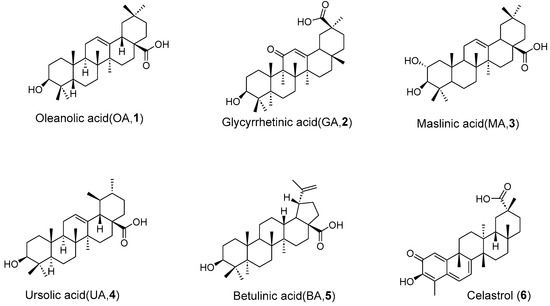
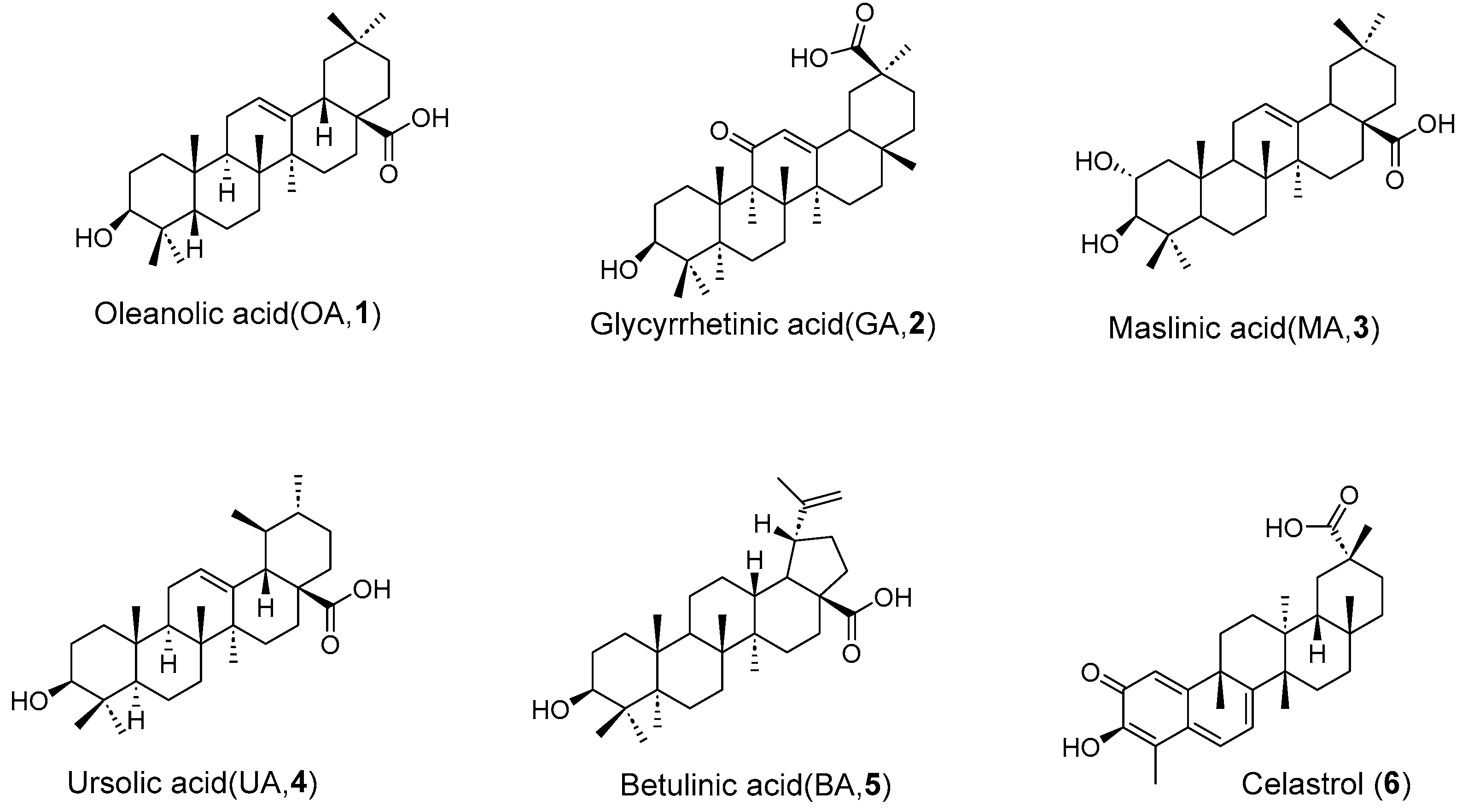
Natural products (NPs) are a class of naturally derived chemicals with complex structures and diverse pharmacological activities, which are composed of alkaloids, flavonoids, terpenes, phenylpropanoids, and other members [13]. Within this category, pentacyclic triterpenoids (PTs) emerge as a notable class of plant secondary metabolites, characterized by four six-membered rings (designated A, B, C, D) and a fifth ring (E) that can be either five-membered or six-membered [14]. They can be categorized into four primary types: (a) oleanane-type triterpenes such as oleanolic acid (OA, 1, Figure 1), glycyrrhetinic acid (GA, 2, Figure 1), and maslinic acid (MA, 3, Figure 1), (b) ursane type triterpenes represented by ursolic acid (UA, 4, Figure 1), (c) lupane type triterpenes including betulin and betulinic acid (BA, 5, Figure 1), (d) friedelane type triterpenes such as celastrol (6, Figure 1) based on the carbon skeleton.
Figure 1.
Chemical structures of representative natural PTs 1–6.
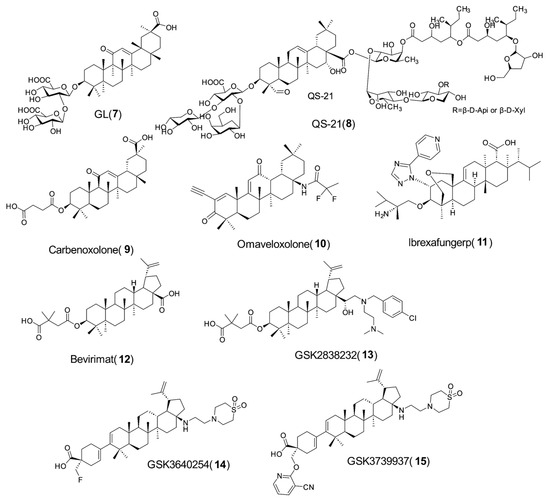
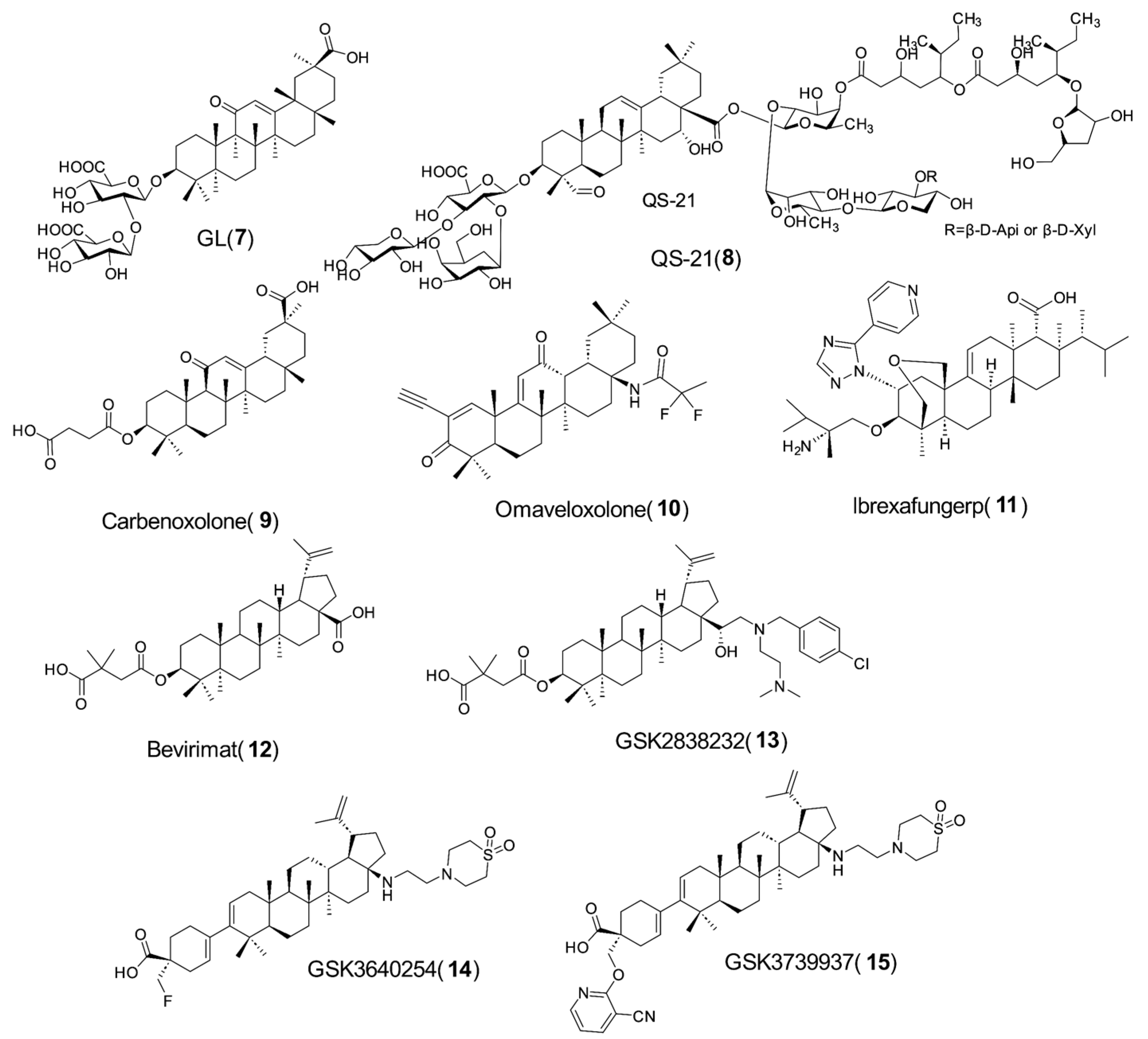
Structurally, PTs feature three typical functional groups: a C-3 hydroxyl group, a 12-ene, and either a C-17 or C-20 carboxylic acid. These structures exhibit distinct characteristics, including molecular rigidity, hydrogen bond donors/acceptors, and a significantly extensive hydrophobic surface area. Such attributes endow PTs with a unique and pivotal role in pharmaceutical research, highlighting their significance in drug discovery. Glycyrrhizinic acid (GL, 7, Figure 2) and OA have been used in traditional medicine for thousands of years and are now widely used around the world. More recently, several new PTs-based drugs have achieved significant breakthroughs and been used in the clinic, including a complex triterpene glycoside vaccine adjuvant QS-21 (mild local/systemic reactions, no severe adverse events (SAEs)) [15] (8, Figure 2), carbenoxolone (occasional mild gastrointestinal discomfort/hypokalemia, manageable via dose adjustment) [16] (9, Figure 2), omaveloxolone (grade 1–2 headache, nausea, reversible transaminase elevation) [17] (10, Figure 2), and ibrexafungerp (mild gastrointestinal symptoms, no treatment-related SAEs) [18] (11, Figure 2). For HIV inhibitors, bevirimat (12, Figure 2, phase I/II) has good tolerability (mild headache/gastrointestinal reactions, no Dose-Limiting Toxicity/SAEs) but development halted due to efficacy limitations [19]; its derivative GSK2838232 (13, Figure 2, phase 2a, +cobicistat) shows favorable tolerability and short-term efficacy without safety signals [20]. Optimized candidates GSK3640254 (14, Figure 2), and GSK3739937 (15, Figure 2), also exhibit mild grade 1–2 gastrointestinal adverse events and no SAEs [21,22]. These results suggest that PTs and their derivatives, featuring mild and reversible Adverse Events, can serve as privileged skeletons for new drug development in medicinal chemistry, with their favorable safety profiles supporting this role.
Figure 2.
Chemical structures of representative PTs-based drugs 7–15 approved in the clinical.
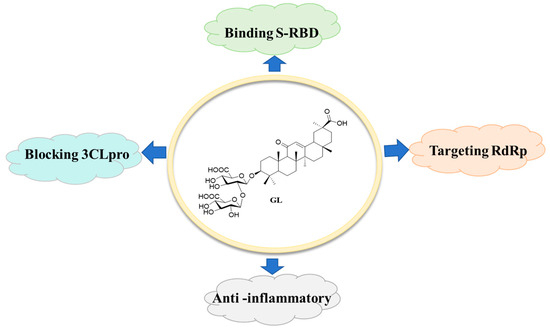
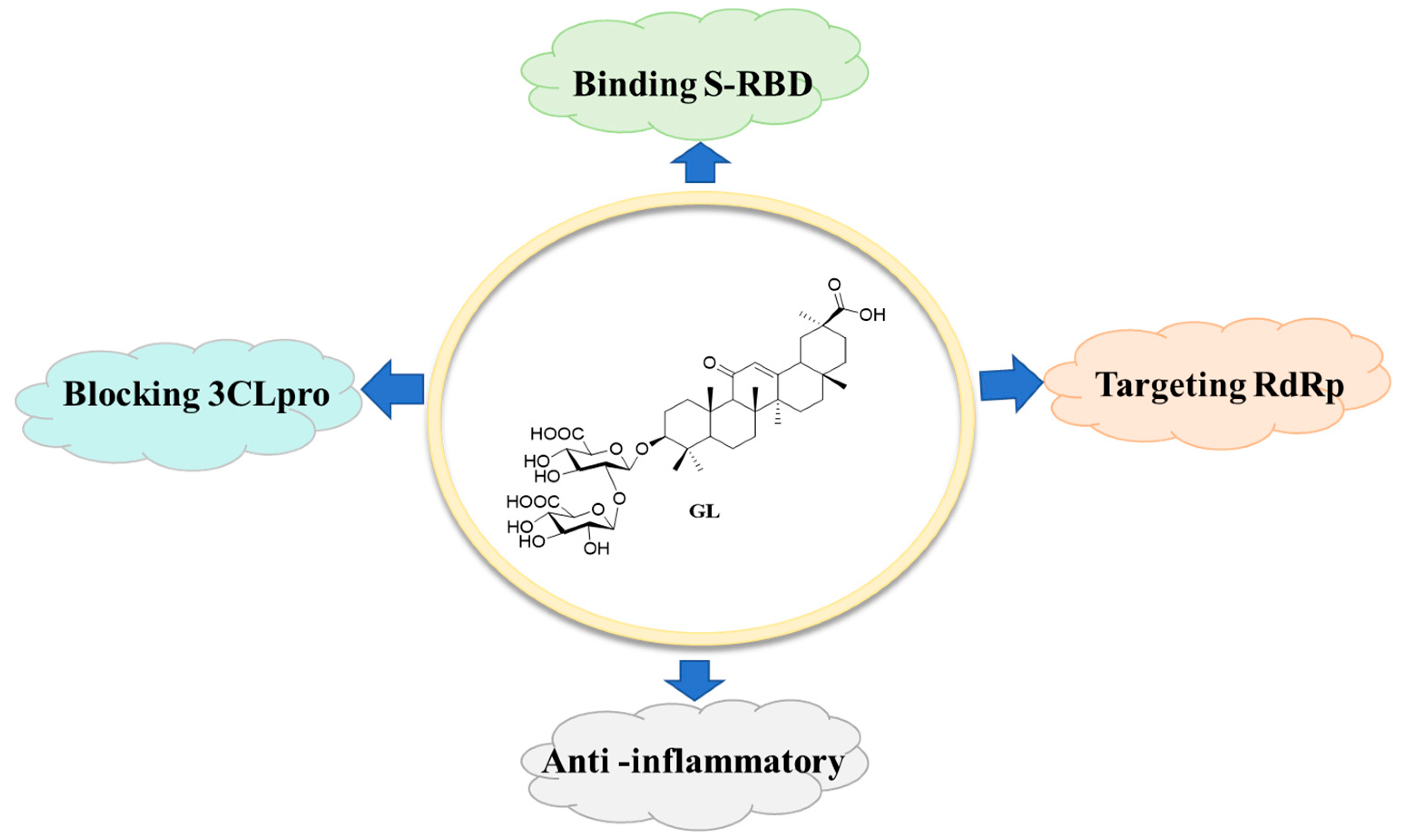
The broad array of antiviral activities—such as anti-HIV [23], anti-HCV [24,25], anti-IFV [26,27,28], and anti-SARS [29]—exhibited by PTs and their saponins has spurred investigations into PTs derivatives with greater structural diversity. These derivatives demonstrate the potential to further broaden the spectrum of therapeutic applications and optimize clinical outcomes across diverse viral infection contexts. These findings underscore that PTs and their derivatives offer multiple advantages. Notably, PTs and their saponins have demonstrated promising antiviral effects against SARS-CoV-2 and its variants in cell-based assays, which exhibit novel mechanisms of action to form both hydrogen bonds and tight hydrophobic interaction with key targets such as spike (S) protein, 3CLpro, and Mpro, thereby affecting the antiviral potency of the parent molecules. On the other hand, substitutions or modifications at different positions of the PT core structure were found to give rise to diverse PTs derivatives with better antiviral potency. Of significance, GL and other PTs have been proved to simultaneously target two or more pharmacological proteins of SARS-CoV-2 virus and even specific pathways on host cells to exhibit anti-inflammatory effects. Based on its proven efficacy against SARS-CoV and the high structural similarity among coronaviruses, GL shows promising antiviral activity against SARS-CoV-2, with multifaceted mechanisms including binding to the angiotensin-converting enzyme 2 (ACE2) receptor, disrupting the viral membrane, and modulating host immune responses, thus positioning it as a potential therapeutic and prophylactic agent against COVID-19 [30]. UA directly inhibits SARS-CoV-2 proliferation by targeting viral protease and disrupting virus-ACE2 binding. Furthermore, it alleviates COVID-19 complications—such as acute lung injury (ALI) in acute respiratory distress syndrome (ARDS)—by suppressing oxidative stress and modulating inflammatory cytokines [31]. Given that different structural types of PTs provide a rich space for chemical modification and optimization, PTs derivatives have emerged as promising scaffolds for multifunctional anti-SARS-CoV-2 drug development, owing to their capacity to engage with multiple pharmacological targets. This further reinforces the potential of PTs as a crucial privileged framework in designing potent single-molecule anti-SARS-CoV-2 inhibitors with polyvalent characteristics.
Although more than three anti-SARS-CoV-2 drugs have been FDA-approved, effective treatments for certain viral infections remain scarce, and existing therapies either show poor tolerance or limited efficacy. This underscores the need for continuous efforts in designing and developing novel anti-SARS-CoV-2 medications. Therefore, considering the broad-spectrum antiviral activities exhibited by PTs and saponins, many researchers have undertaken the development of a large number of PT derivatives as SARS-CoV-2 inhibitors with diverse targets. To date, and to the best of our knowledge, no review has comprehensively focused on the anti-SARS-CoV-2 activity of PTs. This gap in the literature hinders the efficient translation of PT research into practical drug development. To address this limitation, the present review—which represents, we believe, the first of its kind in this focused area—summarizes recent advances in the antiviral effects and mechanisms of PTs against SARS-CoV-2, providing insights for developing new inhibitors. The literature for this review was collected from multiple scientific databases, including PubMed, Web of Science, and Google Scholar, covering publications from January 2019 to December 2025. The search strategy employed key terms such as pentacyclic triterpenoids, SARS-CoV-2, antiviral, along with relevant compound names (e.g., oleanolic acid, glycyrrhizic acid) and their derivatives. It also examines the structure–activity relationships (SARs) and therapeutic potential of PTs, with a focus on structural modifications at different sites of the PT core. Furthermore, the article evaluates the application prospects of PTs and their saponins in COVID-19 management based on existing evidence, while exploring the rationale for designing multi-target PTs-derived anti-SARS-CoV-2 agents.
2. Anti-COVID-19 Potential of PTs by Targeting Key Viral Proteins During SARS-CoV-2 Infection
2.1. PTs-Based Entry Inhibitors
The infection mechanism of SARS-CoV-2 and its variants involves multiple steps, including viral attachment, coreceptor binding, and membrane fusion, which are all mediated by the S protein [32,33]. The RBDs within the S1 subunit play a crucial role in viral entry by interacting with the host cell receptor ACE2 [34,35]. Due to their essential function in viral invasion, RBDs have become key targets for antiviral drug development. However, the high mutability of RBDs poses a challenge in identifying broad-spectrum inhibitors. Recent studies have demonstrated that certain PT derivatives can block SARS-CoV-2 entry by targeting the S1 subunit, positioning them as potential viral entry inhibitors [36,37]. For example, Yu et al. [38] reported in 2020 that GL (Table 1), a natural pentacyclic triterpenoid-derived compound, acts as a SARS-CoV-2 entry inhibitor. It disrupts the interaction between the viral RBD and ACE2, with an IC50 of 22 µM as confirmed by NanoBit and surface plasmon resonance (SPR) assays. Notably, GL also directly targets the S proteins of MERS-CoV and SARS-CoV, suggesting its potential as a pan-coronaviral candidate. Subsequently, Li et al. [39] found that GL was able to block S-mediated cell attachment to inhibit pSARS-CoV-2 virus into cells, which could bind strongly to the S-RBD with a binding energy of -7.0 kcal/mol based on molecular docking. In continuation with ongoing studies, Yi et al. [40] (2022) confirmed that GA (Table 1) and GA-g (Table 1) (16, Figure 3) exhibited remarkably higher affinities with RBD of SARS-CoV-2 relative to GL with an IC50 value of 10.9 or 14.1 µM, respectively. It is worth noting that UA and BA (Table 1) were found to also exhibit comparable and even slightly stronger inhibitory potency compared to GA with an IC50 value of 9.0 or 15.1 µM [40], respectively, suggesting that diverse types of PTs are tolerated as privileged fragments of SARS-CoV-2 entry inhibitors. The preliminary SARs study indicated that removing the disaccharide fragment attached to the C-3 position of GL led to significantly enhanced inhibitory activity, and its simplification into only one monosaccharide residue was acceptable for inhibitory activity. Consistently, GA could remarkably block SARS-CoV-2 virus in a dose-dependent manner in Vero E6 cells with an IC50 value of 3.17 µM [40]. Molecular docking analysis indicated that Y453 is a critical residue mediating GA’s interaction with the spike RBD. Among the tested compounds, GA formed three hydrogen bonds with RBD residues, while GA-g and GL established two and one hydrogen bond(s), respectively. These results illustrate that modifications to GA may pave the way for further research into the rational development of PT-based SARS-CoV-2 inhibitors targeting S-RBD.
Figure 3.
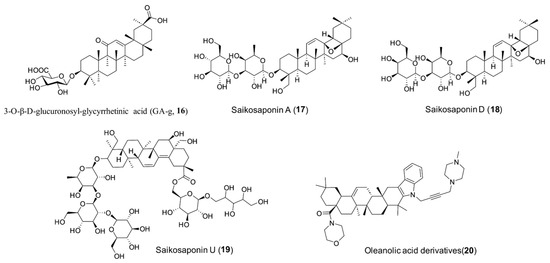
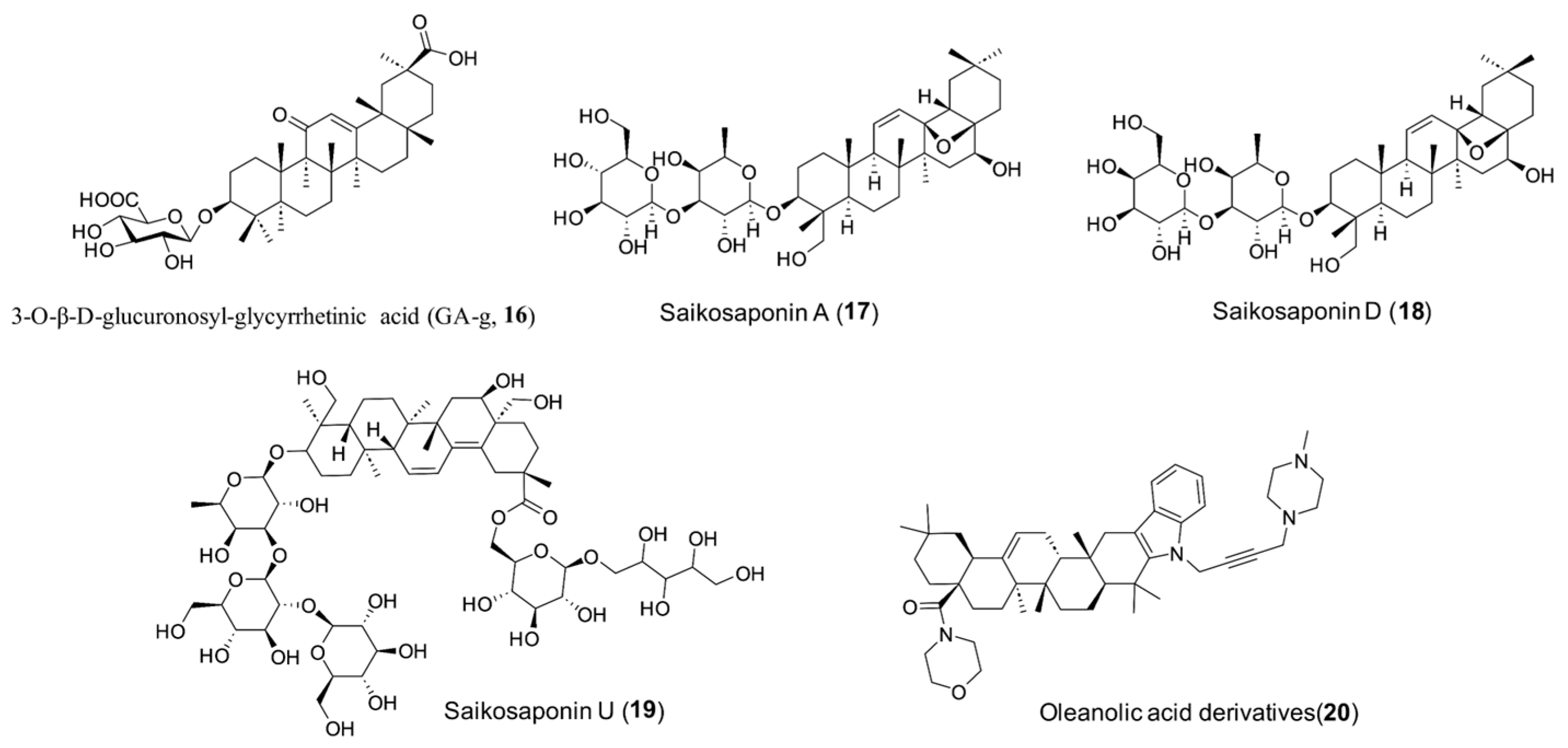
Chemical structures of representative PT saponins 16–20.
Saikosaponin, a member of oleanane saponins, has been previously reported to possess anti-coronavirus efficacy by interfering with early viral replication stages. Numerous studies have shown that saikosaponin A (17, Figure 3) exerts anti-inflammatory effects by modulating cytokine and reactive oxygen species (ROS) production as well as lipid metabolism, while saikosaponin D exerts (18, Figure 3) antitumor effects by inhibiting cell proliferation and inducing apoptosis and autophagy; additionally, the antiviral mechanisms of saikosaponins (SSs)—especially against SARS-CoV-2—have been partially elucidated [41]. Saurabh et al. [42] revealed that among a series of saikosaponin analogs, saikosaponin U (19, Figure 3) exhibits the highest binding affinity for the S protein, as demonstrated by molecular docking analysis. Through computational molecular docking simulations, saikosaponin U was found to fit snugly into the binding pocket formed by multiple amino acids, with a binding energy of −7.27 kcal/mol. This high affinity may be attributed to the presence of an additional oxygen heterocyclic ring, besides the octadehydrene and substituted oxane rings, which likely enables more effective engagement within the extensive binding pocket of the spike glycoprotein. However, the biological activities of these saponins require further investigation to confirm their anti-SARS-CoV-2 potential. More recently, Petrova et al. [43] reported that a set of indolo-oleanolic acid morpholine amide Mannich derivatives (20, Figure 3, Table 1) exhibited anti-SARS-CoV-2 pseudovirus activity (IC50 = 14.8 μM) and was studied for its interaction with the RBD of the SARS-CoV-2 spike glycoprotein.
Table 1.
Inhibitory potency of representative PTs against S-RBD and SARS-CoV-2.
2.2. PT-Based SARS-CoV-2 Fusion Inhibitors
During the life cycle of enveloped viruses, virus–host fusion is mediated by fusion proteins in viral envelopes, such as hemagglutinin (HA2) [44,45] of influenza, E2 of HCV [46], GP of EBOV [47], and GP41 of HIV [48,49]. Substantial evidence indicates that SARS-CoV-2 S2 is crucial in viral entry into host cells, mediating viral-cell membrane fusion. This function positions S2 as a promising target for inhibiting the virus [50,51,52,53]. The interaction between ACE2 and the S1 RBD triggers structural reorganization of the SARS-CoV-2 S2 subunit, transitioning from a prefusion to postfusion conformation. This transformation involves 6-HB formation between HR1 and HR2 domains, enabling viral-cell membrane fusion, which is a critical step for host cell entry [54,55,56,57]. Notably, the S2 subunit exhibits significantly higher sequence conservation compared to the RBD [58]. Thus, the S2 subunit can serve as a conserved and critical target for developing novel pan-viral drugs against Omicron and its variants, by inhibiting the conformational rearrangement of S2 subunits. Although there are currently no FDA-approved SARS-CoV-2 fusion inhibitors, several kinds of small-molecular fusion inhibitors have been reported by various research groups, such as niclosamide [59,60], clofazimine [61,62], salvianolic acid C (Sal-C) [63,64], and salinomycin [65,66]. Notable examples include EK1-peptides [67], a class of HR1-targeting fusion inhibitors currently in phase II trials, which demonstrate broad-spectrum activity against SARS-CoV-2 variants and other coronaviruses. Similarly, Braga et al. [68] reported that niclosamide exhibits potent antiviral effects by inhibiting TMEM16-mediated syncytia formation, supporting its potential COVID-19 therapeutic application.
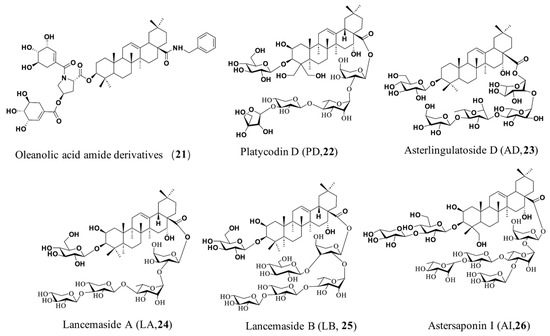
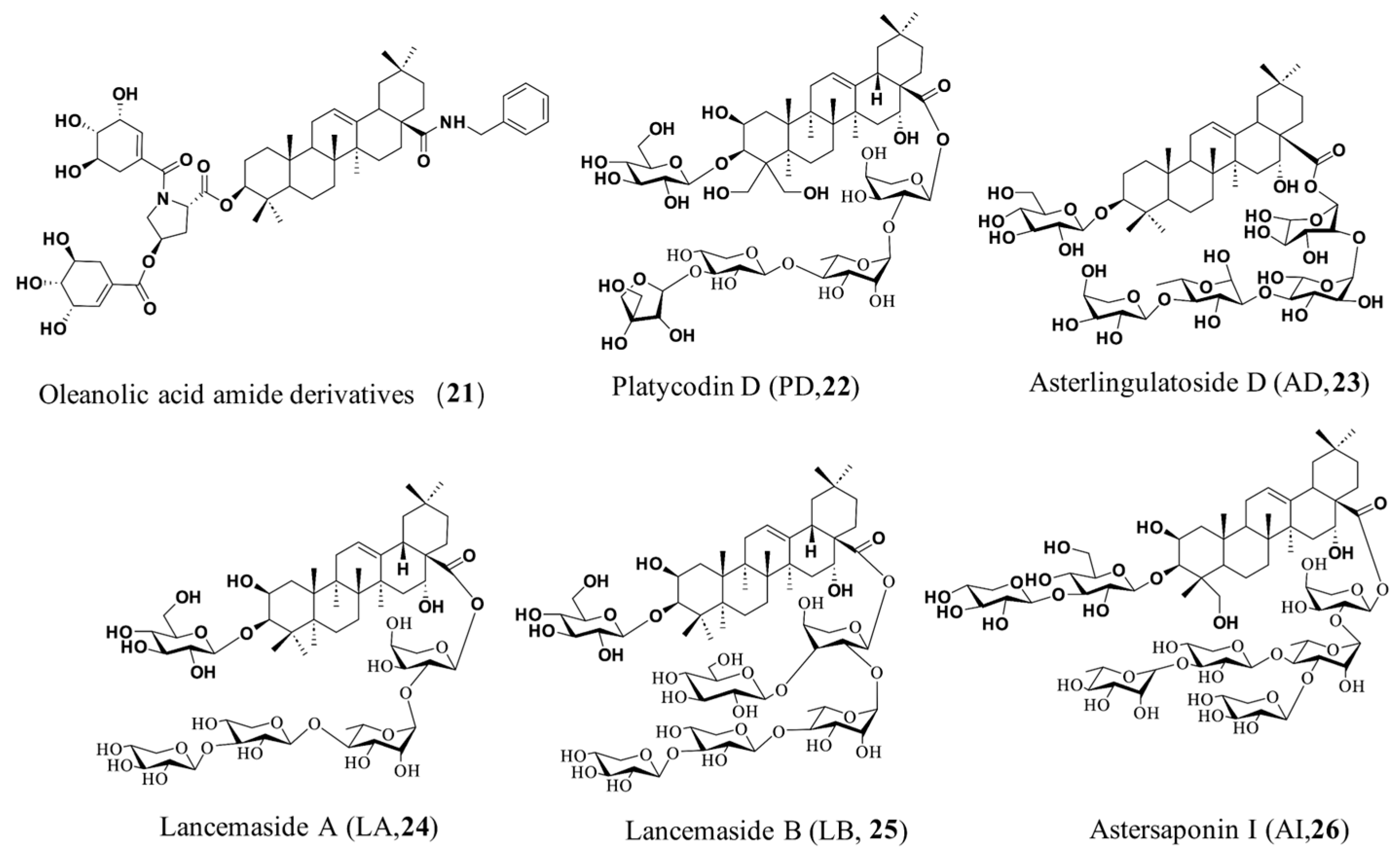
For highly pathogenic enveloped viruses such as HIV, influenza H5N1 virus, and CoVs including SARS-CoV and MERS-CoV, a surrogate pseudovirus (PsV) system assay has become an effective screening method for hit identification of entry inhibitors and for exploration of chemical diversity space in antiviral drug discovery due to its good safety and specificity [69,70]. To date, several classes of natural SARS-CoV-2 entry inhibitors bearing the PT skeleton have been reported. Cao et al. [71] demonstrated in their research that oleanonic acid was identified as a novel natural SARS-CoV-2 entry inhibitor, with potent antiviral activity against Alpha and Beta variants at the micromolar level. In cell-based assays, it exhibited an IC50 of 1.4 µM and a favorable selectivity index (SI = 39), highlighting its potential as a promising therapeutic candidate. Further investigations show that oleanonic acid inhibits SARS-CoV-2 entry by blocking membrane fusion, without affecting RBD binding. Our study identified a series of oleanolic acid amide derivatives as promising broad-spectrum SARS-CoV-2 entry inhibitors. The representative compound (21, Figure 4, Table 2), which features an N, O-disubstituted butterfly-shaped L-hydroxyproline scaffold at the C-3 position of OA, exhibited high binding affinity for the Omicron spike protein (KD = 5.36 µM) and potently inhibited the entry of pseudotyped SARS-CoV-2, Delta, and Omicron viruses (IC50 = 2.86–8.13 µM). Notably, compound 21 also showed potent activity against live Omicron virus in cellular models, with superior efficacy in a pre-treatment model (IC50 = 1.08 µM) versus a full-time treatment model (IC50 = 5.79 µM), indicating an early-stage mechanism. Mechanistic studies revealed that compound 21 does not block S1-ACE2 attachment but specifically inhibits S2-mediated membrane fusion. These findings establish compound 21 and its analogs as a novel class of viral fusion inhibitors targeting a critical step in Omicron entry [72].
Figure 4.
Chemical structures of representative PTs saponins 21–26.
Oleanane-type PT saponins from plant sources, on the other hand, also act as novel SARS-CoV-2 fusion inhibitors, which can target multiple stages of viral and cellular membrane fusion through different mechanisms of antiviral action. Othman et al. [73] isolated Oleanane-type PT saponins from the halophyte Anabasis setifera, which exhibited anti-SARS-CoV-2 activity with IC50 values ranging between 2.339 and 6.837 µg/mL. Kim et al. [74] identified platycodin D (PD, 22, Figure 4, Table 2), a major pentacyclic triterpenoid saponin in Platycodon grandiflorum (PG), as a dual-pathway inhibitor of SARS-CoV-2 entry, showing micromolar potency against both lysosomal and TMPRSS2-mediated infection routes. This inhibition occurs by redistributing membrane cholesterol to prevent viral-cell membrane fusion, presenting a promising novel therapeutic strategy against SARS-CoV-2 infection. Interestingly, the natural PT saponin asterlingulatoside D (23, Figure 4, Table 2)—originally isolated from Aster lingulatus whole plants—was shown to exhibit more potent inhibitory activity against SARS-CoV-2 entry, with an IC50 of 0.64 µM (PD, IC50 = 1.34 µM) [75]. The cell fusion assay demonstrated that asterlingulatoside D inhibits SARS-CoV-2 entry into host cells by blocking viral-host membrane fusion. The derivative of asterlingulatoside D exhibited broad-spectrum inhibition against multiple SARS-CoV-2 variants (Alpha, Beta, Gamma, Delta, Omicron) in Vero cells with micromolar efficacy, suggesting PT saponins’ potential against emerging variants [75]. Kim et al. [76] identified lancemasides A (LA, 24, Figure 4, Table 2) and B (LB, 25, Figure 4, Table 2) from Codonopsis lanceolata as potent SARS-CoV-2 entry inhibitors, exhibiting IC50 values of 1.77 µM and 4.97 µM, respectively, in a pseudovirus assay. These oleanane-type saponins, featuring a C-3 β-D-glucuronic acid moiety, exhibited comparable efficacy to platycodin D against multiple variants in pseudovirus assays. Their mechanism likely involves cholesterol modulation and membrane fusion inhibition, mirroring PD’s activity. Kim et al. [77] reported that Astersaponin I (AI, 26, Figure 4, Table 2)—a natural viral fusion inhibitor isolated from Aster koraiensis—bears a disaccharide chain at the C-3 position of its aglycone. In vitro studies showed that AI inhibits infection by pseudotyped SARS-CoV-2 variants and their ancestral virus, with comparable IC50 values (1.91–2.04 μM). The researchers proposed a mechanism whereby AI disrupts viral-cell membrane fusion by modulating membrane cholesterol and protruding sugar moieties at the aglycone’s C-28 position upon plasma membrane incorporation, thereby preventing SARS-CoV-2 infection. Collectively, preliminary SAR analyses indicated that the overall conformation of these natural pentacyclic triterpenoid (PT) saponins is critical for antiviral activity. The oleanane-type triterpene hydrophobic backbone, along with bound hydrophilic sugar moieties—such as β-monosaccharide or disaccharide units at the C-3 position or oligosaccharides at the C-28 position—are structurally indispensable for inhibitory potency against membrane fusion.
To clarify the importance of sugar moieties at the C-3 or C-28 position and identify critical oxidations in the triterpenoid backbone of PD that contribute to its therapeutic effects, Jang et al. [75] designed and synthesized a series of PD derivatives. The SARs of saponin-based antiviral agents against SARS-CoV-2 virus revealed that the β-D-glucose at the C-3 position, the oligosaccharide residue at the C-28 position that is composed of (→3)-β-D-Xyl-(1→4)-α-L-Rha-(1→2)-β-D-Ara-(1→) as the last three sugar units, and the hydroxyl group at the C-16 position of the aglycone are vital components of PT saponin-based SARS-CoV-2 fusion inhibitors. Among the synthesized saponins, the asterlingulatoside D derivative bearing an additional D-xylose moiety at the C-28 oligosaccharide exhibited a similar inhibitory potency as asterlingulatoside D (IC50 = 0.64 μM) and about 2-fold increased inhibition against pSARS-CoV-2 compared to PD. Further investigations revealed that the synthetic PT saponins effectively inhibit membrane fusion across multiple SARS-CoV-2 variants, which is a critical step shared by both endosomal and TMPRSS2-mediated viral entry pathways. This broad-spectrum activity highlights their potential as pan-coronavirus fusion inhibitors. The findings establish a foundation for developing optimized saponin-based therapeutics derived from PD, offering a promising approach not only against SARS-CoV-2 but also for future emerging coronaviruses.
Table 2.
Inhibitory activity against pSARS-CoV-2 entry of representative PTs saponins.
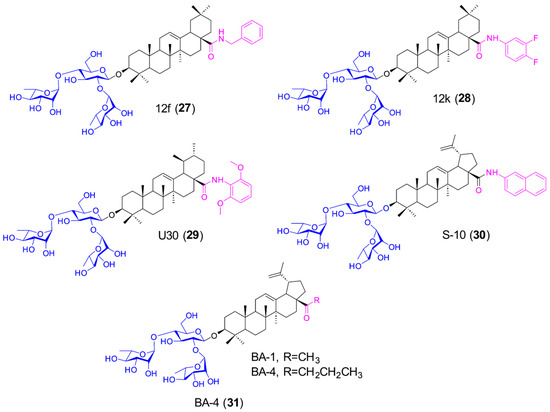
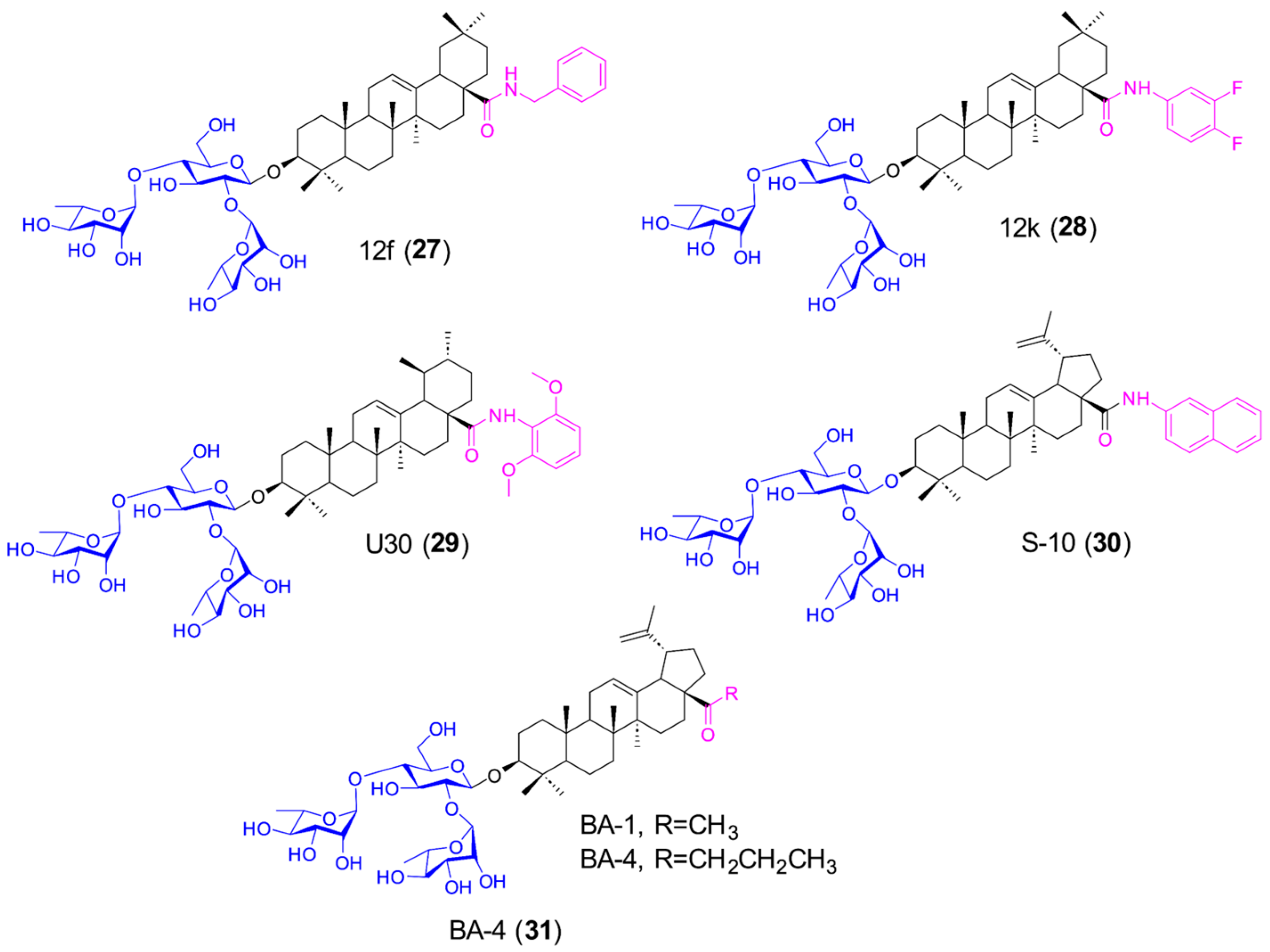
To identify potent PT saponin-derived SARS-CoV-2 fusion inhibitors, our group employed an S protein pseudovirus system to screen a semisynthetic PT saponin library, leading to the discovery of OA benzyl ester saponins as novel viral entry blockers. The chacotriose residue (α-L-rhamnopyranosyl-(1→2)-[α-L-rhamnopyranosyl-(1→4)]-β-D-glucopyranosyl) in these PT saponins has been a major focus of SAR research. Key modifications explored include the removal or repositioning of its sugar units, conjugation with different aglycones such as UA or BA, and the attachment of hydrophobic chains at the C-28 position through ester, amide, or ether linkers. Among the synthesized 3-O-β-chacotriosyl PT derivatives, compounds 12f (27, Figure 5, Table 3) and 12k (28, Figure 5, Table 3) [78] featuring C-17 amide linkers exhibited potent anti-SARS-CoV-2 activity, showing IC50 values of 4.37 μM and 5.68 μM with selectivity indices >23 and >18, respectively. Notably, the structurally related UA derivative UA-30 (29, Figure 5, Table 3) [79] demonstrated broad-spectrum inhibition against multiple variants (Alpha–Omicron), with IC50 values of 0.04–11.57 µM in pseudovirus assays. Additionally, our medicinal chemistry efforts showed the 3-O-β-chacotriosyl BA amide derivative S-10 [80] (30, Figure 5, Table 3) also demonstrated broad antiviral activity (IC50 = 0.82–5.45 μM) against Omicron and related variants, which showed appreciable pharmacokinetic properties in vitro. The 3-O-β-chacotriosyl PT amide derivatives specifically inhibited SARS-CoV-2 variant (including Omicron) spike-mediated entry, as demonstrated through dose-dependent pseudovirus (SARS-CoV-2 S/HIV-luciferase) and SPR assays.
Figure 5.
Chemical structures of PT saponins 27–31 as SARS-CoV-2 fusion inhibitors. Blue indicates the trisaccharide side chain, and red indicates the key substituent.
Table 3.
Inhibitory effects of representative PT saponins on the entry of SARS-CoV-2.
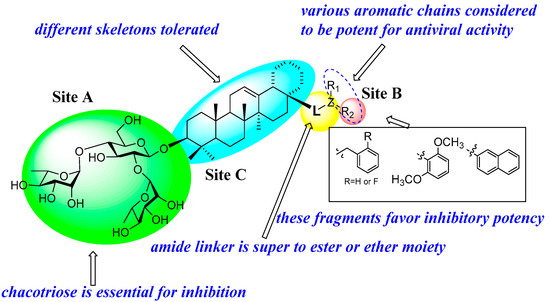
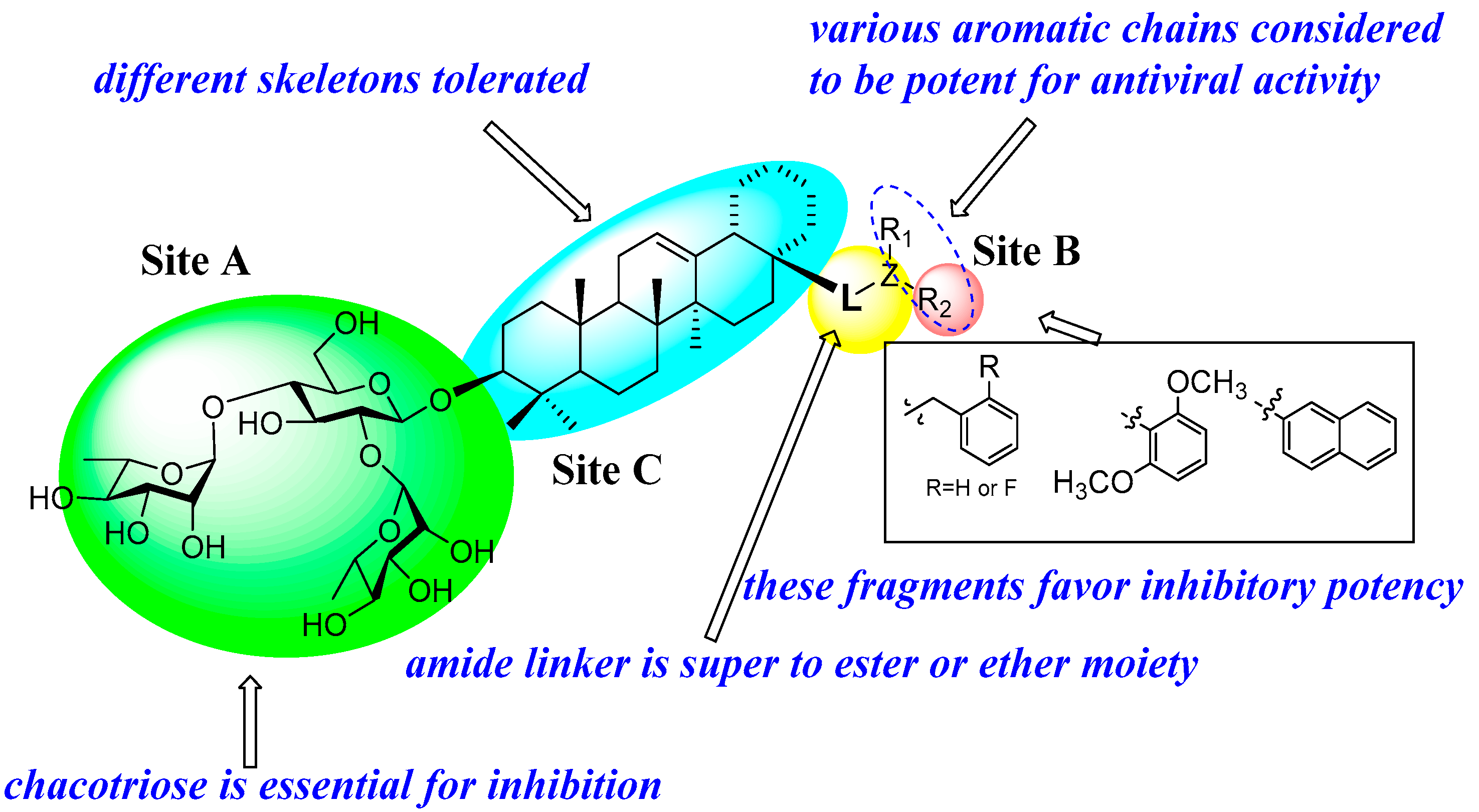
As shown in Figure 6, a SAR study was also performed [78,79,80], which illustrated that the chacotriose moiety is essential for inhibition, and different styles of aglycone may be tolerated, with the substituent at the C-28 position playing a critical role in potency. Moreover, the SAR study concluded that the presence of an amide linker at the C-17 position of the PT aglycone has been considered to be potent for inhibitory activity, of which replacement with ester moiety as its bioisostere can lead to increase in cytotoxicity, thus reducing selectivity index. Further SAR analysis revealed that substitution of the C-17 carboxyl group with a hydroxyl group led to a complete loss of inhibitory activity. In contrast, the benzyl ether derivative of the hydroxyl group exhibited significant inhibitory potency against pseudotyped SARS-CoV-2 entry compared to its benzyl amide analog. These findings suggest that potency enhancement correlates with the lipophilicity of C-17 substituents in PTs. SAR studies showed that introducing a chlorine atom at the C-28 position of the PT core structure enhanced inhibitory potency against pseudotyped SARS-CoV-2 entry. However, this modification caused high cytotoxicity, leading to poor SI. Structural analysis indicates that the C-28 substituent properties (type, size) significantly influence PTs’ anti-pSARS-CoV-2 activity, with optimal inhibition observed for either short linear chains (1–4 atoms) or cyclized aliphatic/aromatic groups (particularly benzyl, o-chlorophenyl, or naphthyl), underscoring the crucial role of C-17 hydrophobicity in maintaining potent antiviral effects against pseudotyped SARS-CoV-2. Building on these modifications, 3-O-β-chacotriosyl PT amide derivatives can be synthesized to gain insights for developing novel SARS-CoV-2 entry inhibitors with potent antiviral activity.
Figure 6.
SARs of 3-O-β-chacotriosyl PT saponins derivatives.
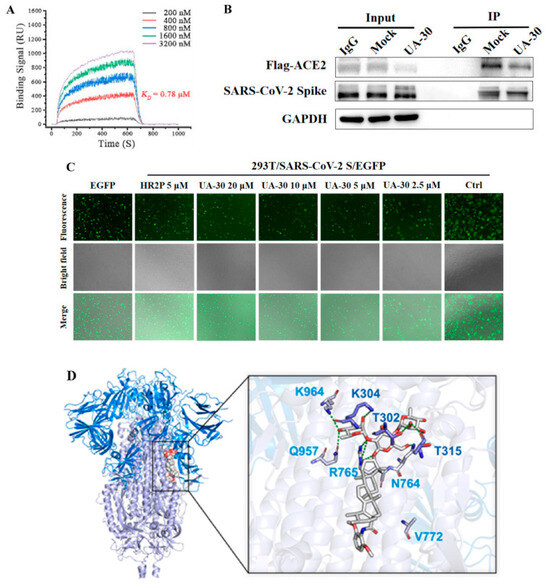
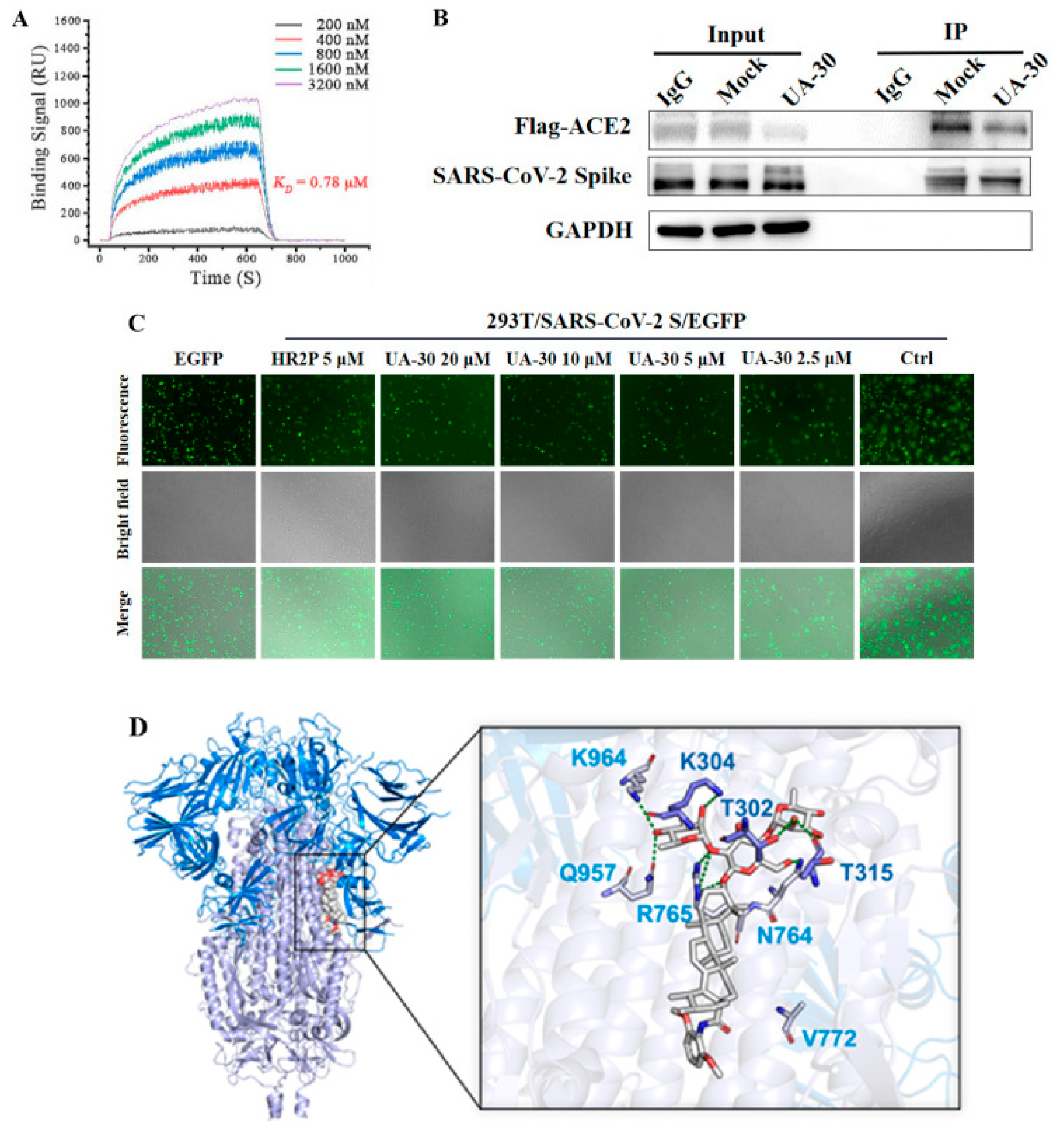
Figure 7 illustrates the antiviral mechanism of UA-30 [79], showing that it appears to block S-mediated membrane fusion at the prefusion stage by targeting the S2 subunit. This activity was validated by SPR analysis, Co-Immunoprecipitation (Co-IP) assay, cell–cell fusion assay, and circular dichroism (CD) spectroscopy, which collectively demonstrate that UA-30 prevents viral entry into host cells [79]. The 3-O-β-chacotriosyl PT amide derivatives inhibit SARS-CoV-2 through targeted binding at the S1/S2 subunit interface, stabilizing the spike protein’s prefusion conformation. Molecular docking and mutational studies demonstrate how the chacotriose moiety embeds within the S2 cavity, forming critical hydrogen bonds with Thr302, Lys304, Thr315, Asn764, Arg765, Gln957 and Lys964 to prevent membrane fusion. These structural interactions, particularly evident in compound U-30 (Figure 7D), provide a molecular basis for developing this saponin class as effective fusion inhibitors against SARS-CoV-2.
Figure 7.
(A) SPR analysis of the interaction between UA-30 with SARS-CoV-2 S-trimer. (B) The binding of SARS-CoV-2 S protein and ACE2 (Anti-Flag) in the presence or absence of UA-30 (40 μM) was detected by Co-IP assays. IgG was included as a negative control. (C) Green fluorescence labels HEK-293T effector cells transfected with the SARS-CoV-2 spike protein or the control vector. The dose-dependent inhibitory effect of UA-30 on SARS-CoV-2 S mediated cell–cell fusion. (D) Docking analysis of compound U-30 with S protein (7TF8). (A–C) were adapted from Reference [79], which is made available under Elsevier’s COVID-19 resource center permissions for unrestricted research reuse.
BA derivatives have also demonstrated considerable anti-SARS-CoV-2 activity. Liu et al. reported that these compounds effectively inhibit the entry of the Omicron variant into host cells. Among them, the BA amide derivative S-10 [80] exhibited broad-spectrum antiviral potency against Omicron and other variants, along with favorable pharmacokinetic properties. Similarly, BA saponin derivative BA-4 [81] (31, Figure 5, Table 3) showed inhibitory activity against pseudotyped Omicron and other variants, with IC50 values between 2.73 and 5.19 μM. Further mechanistic investigations—including pSARS-CoV-2 assays, SPR analysis, Co-IP, cell–cell fusion assays, molecular docking, and mutagenesis studies—revealed that BA-4 stabilizes the S protein in its prefusion conformation, thereby interfering with membrane fusion and inhibiting viral entry.
2.3. PTs-Based SARS-CoV-2 3CLpro Inhibitors
The SARS-CoV-2 3CL protease (3CLpro, Mpro) plays an essential role in viral replication by processing polyproteins pp1a and pp1b to generate 16 functional non-structural proteins (Nsp1-16) [82,83]. Many of these are components of viral replication and transcription complexes. For example, pp1a and pp1b must be cleaved by 3CLpro to release the Nsp protein, and the released Nsp, such as Nsp12 (RdRp) and Nsp14 (proofreading enzyme), are required for viral transcription and replication [84,85,86]. Without the function of 3CLpro, the virus cannot complete the replication and transcription steps. Blocking the function of 3CLpro can block the life cycle of the virus. Furthermore, 3CLpro exhibits high structural and sequence conservation in SARS-CoV-2 [87], limiting viral escape through mutation. This feature highlights its potential as a promising antiviral target.
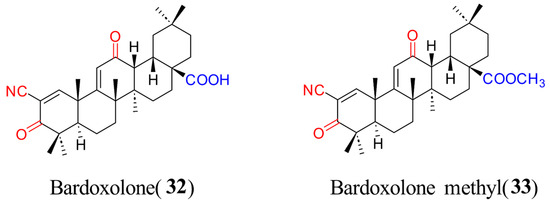
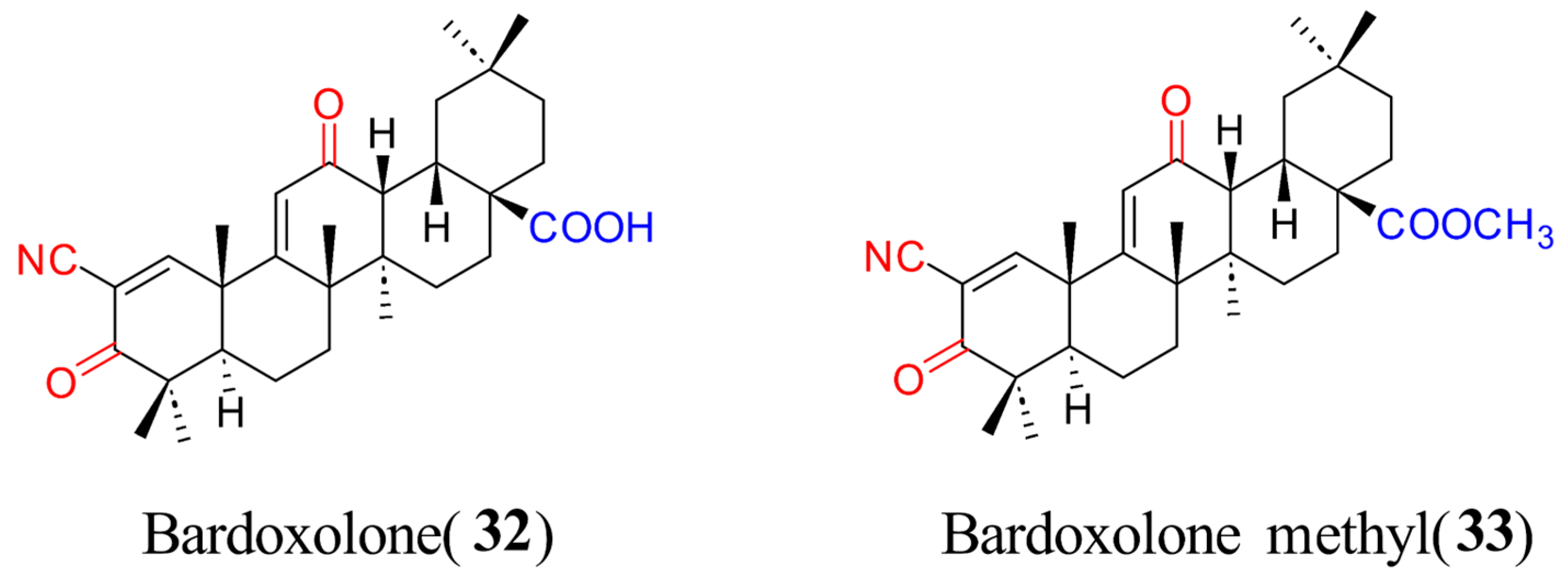
Recently, Sun et al. [88] reported that bardoxolone (32, Figure 8, Table 4) and bardoxolone methyl (33, Figure 8, Table 4) belonging to members of OA derivatives, two Nrf2 activators in clinical trials, could inhibit 3CLpro enzyme activity with an IC50 value of 27.99 μM or 5.81 μM, respectively, thereby blocking SARS-CoV-2 replication in a cell-based assay with an IC50 value of 0.43 μM or 0.29 μM, respectively. Preliminary SAR analysis revealed that C-17 methyl esterification in the PT core structure enhances inhibitory potency against both 3CLpro and the virus, though it also increases cytotoxicity. Further investigation revealed that bardoxolone could bind SARS-CoV-2 Mpro in a reversible covalent manner [88]. Interestingly, molecular docking reveals that bardoxolone methyl and bardoxolone bind at the Mpro domain I-II interface, forming hydrogen bonds with Arg40 and hydrophobic contacts with Phe181/Val186, while potentially establishing a covalent interaction with Cys85 [84]. Moreover, the methyl fragment at the C-28 position of bardoxolone methyl may neutralize the negative charge of bardoxolone, which is helpful in decreasing its electrostatic repulsion with Glu55 residue to improve its binding affinity with 3CLpro.
Figure 8.
Chemical structures of SARS-CoV-2 3CLPro inhibitors 32 and 33.
Table 4.
Antiviral activities of SARS-CoV-2 3CLPro inhibitors (32 and 33) in Vero cells.
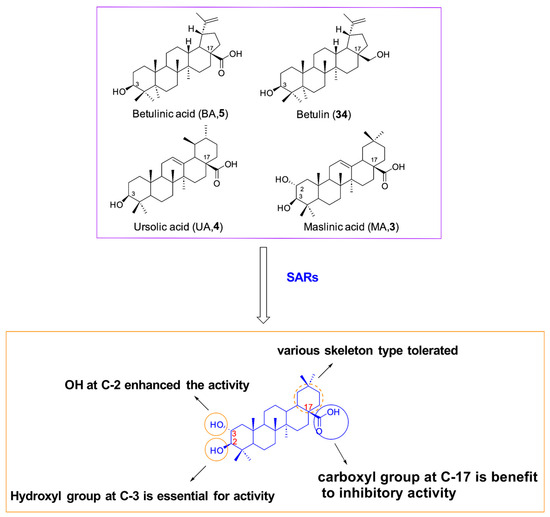
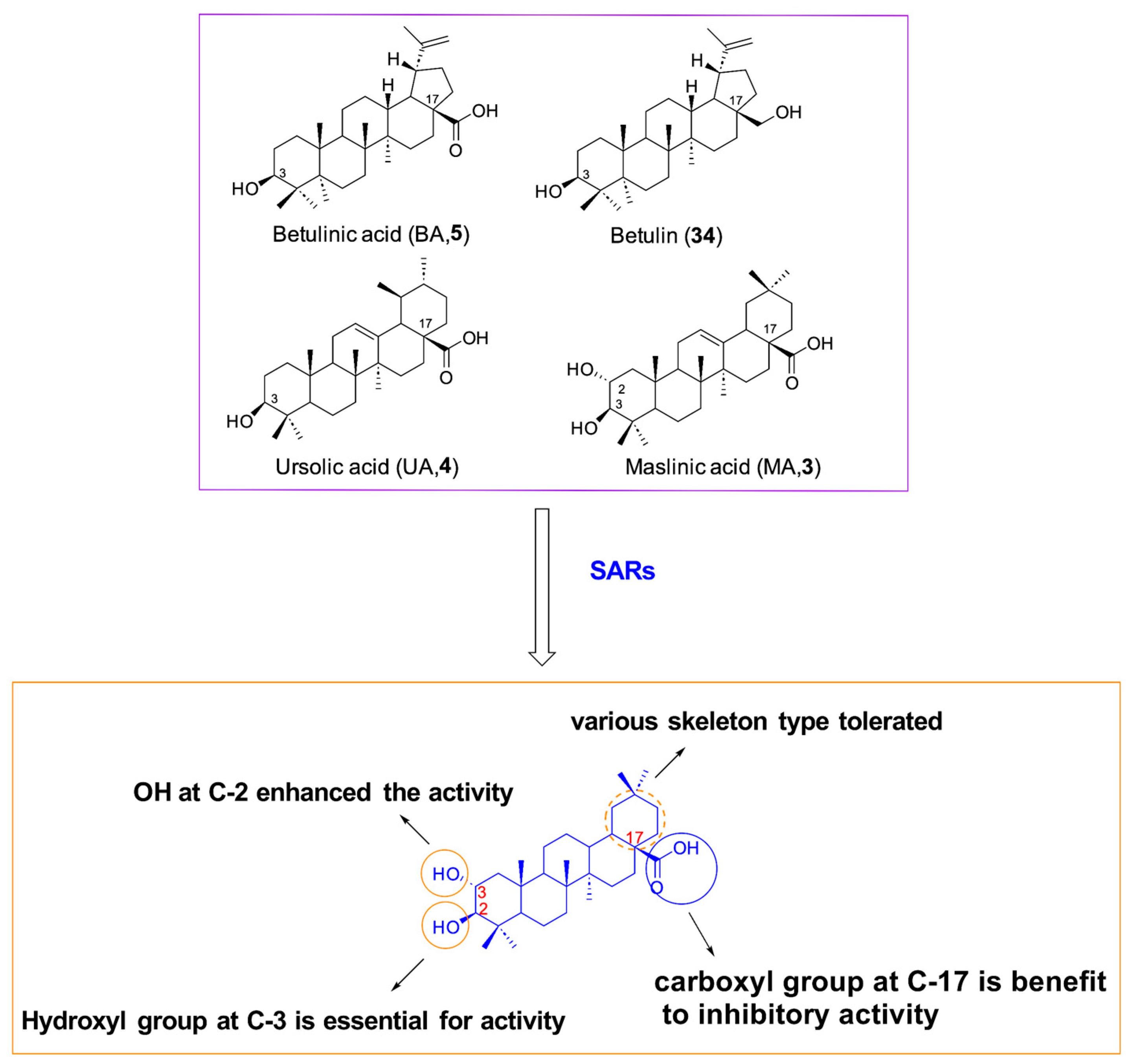
In continuation with the above research findings, Alhadrami and his team [89] found that BA, UA, and MA (Table 5) exhibited promising inhibition against SARS-CoV-2 Mpro protein with IC50 values of 10.0 µM, 12.57 µM, 3.22 µM, respectively, while betulin (34, Figure 9, Table 5) has much lower activity (IC50 = 89.67 µM). The SAR analysis demonstrated that C-2 and C-3 hydroxyl groups of the steroidal scaffold are critical for antiviral activity, forming essential hydrogen bonds with 3CLpro’s Thr25 and Ser46 residues. BA was found to form a stable hydrogen bond with His41 of 3CLpro, while MA could form more and stronger hydrogen bonds with His41, Ser46 residues based on molecular docking studies [89], which is consistent with the data on inhibitory enzymes. At the same time, Sand’s team [90] demonstrated GL could inhibit SARS-CoV-2 3CLpro with an IC50 value of 30 µM, thereby effectively blocking virus replication. These findings indicate that C-3 modifications of PTs could facilitate the development of novel PT derivatives with improved potency and SI, provided that glycosylation at this position is avoided.
Table 5.
Antiviral activities of representative PTs as inhibitors of SARS-CoV-2 3CLpro.
Figure 9.
SARs of natural PTs as SARS-CoV-2 3CLPro inhibitors.
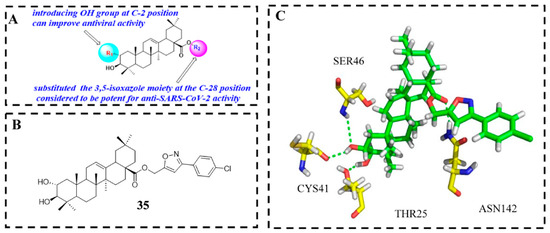
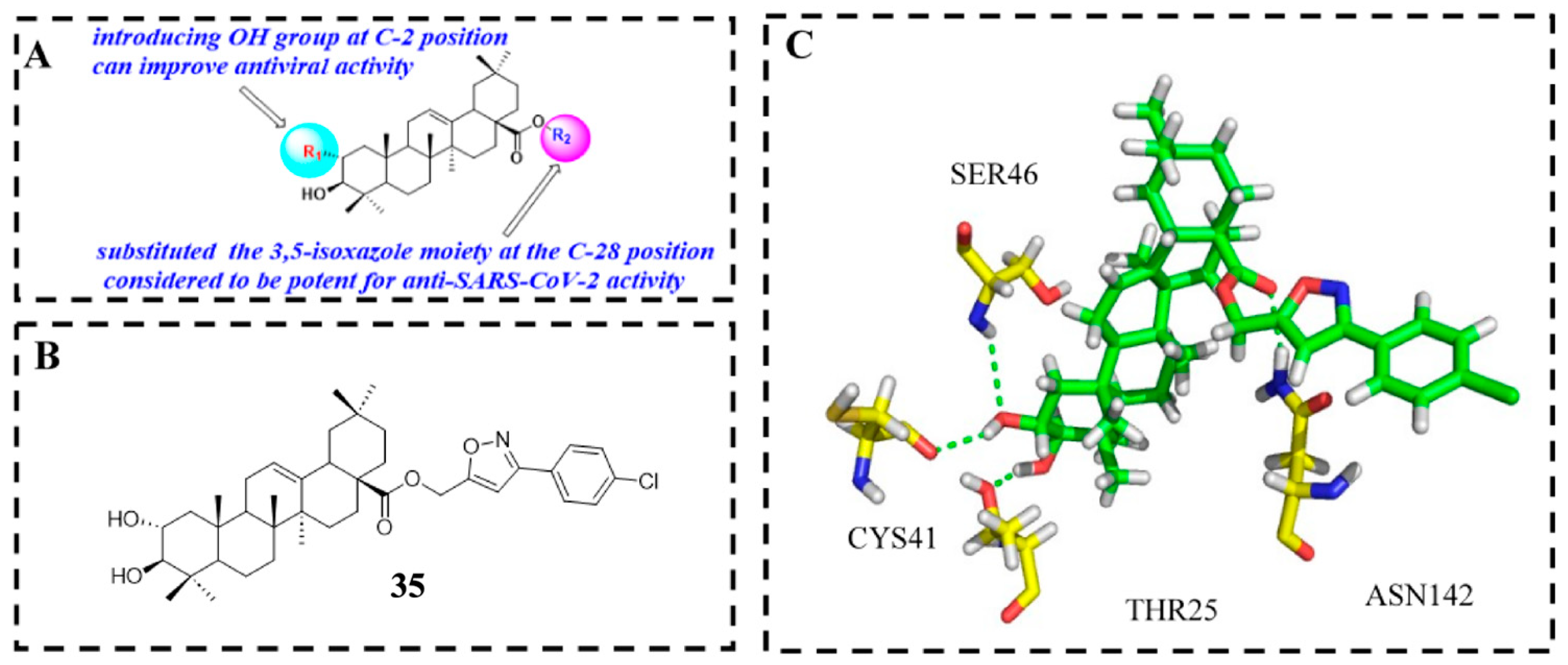
In addition, Soltane et al. [91] synthesized a variety of OA and MA derivatives bearing isoxazole at the C-28 position as novel SARS-CoV-2 Mpro inhibitors. The most active synthesized MA derivative was found to be the compound (35, Figure 10B), namely (3-(4-chlorophenyl) isoxazol-5-yl) methyl-(2α, 3β)-2, 3-dihydroxyolean-12-en-28-oate, which exhibited an IC50 value of 4.12 μM against wild SARS-CoV-2 with a satisfactory SI (≥7.5). Moreover compound 35 also displayed promising anti-MERS-CoV activity (IC50 = 6.25 μM) at non-toxic concentrations and strong inhibition against NRCE-HKU270 virus at micromolar concentrations [91], signifying that it has potential broad-spectrum anti-coronavirus activity. The SAR analysis revealed that 2- and 3-position hydroxyl groups on the steroidal core are essential for antiviral activity, forming key hydrogen bonds with Mpro’s Thr25 and Ser46 residues. On the other hand, a SAR study revealed that incorporation of the 3, 5-isoxazole side chain containing a p-chlorophenyl substitution at the C-28 position of MA has been considered to be potent for anti-SARS-CoV-2 activity. Docking analysis revealed derivative 35’s optimal positioning within Mpro’s branched pocket, forming key hydrogen bonds with Thr25, Ser46, Cys41, and Asn142 [91]. Further mechanism of action studies demonstrated that 35 efficiently impairs viral replication and adsorption despite its virucidal effect, signifying that 35 as a potential dual-target inhibitor can target both SARS-CoV-2 S and 3CLpro proteins.
Figure 10.
Antiviral mechanism of compound 35. (A) SARs of OA and MA derivatives as SARS-CoV-2 3CLPro inhibitors; (B) chemical structure of compound 35; (C) docking data of 35 with Mpro (6LU7), In the figure, blue bonds represent N, gray bonds represent H, red bonds represent O, green bonds represent C, and light green dashed lines represent hydrogen bonds.
2.4. PTs-Based SARS-CoV-2 nsp Inhibitors
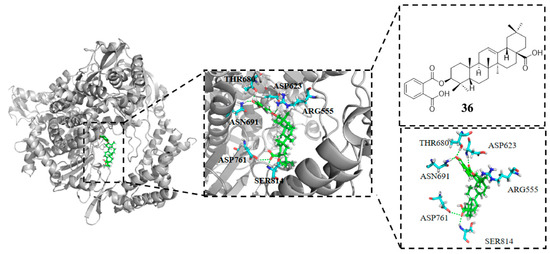
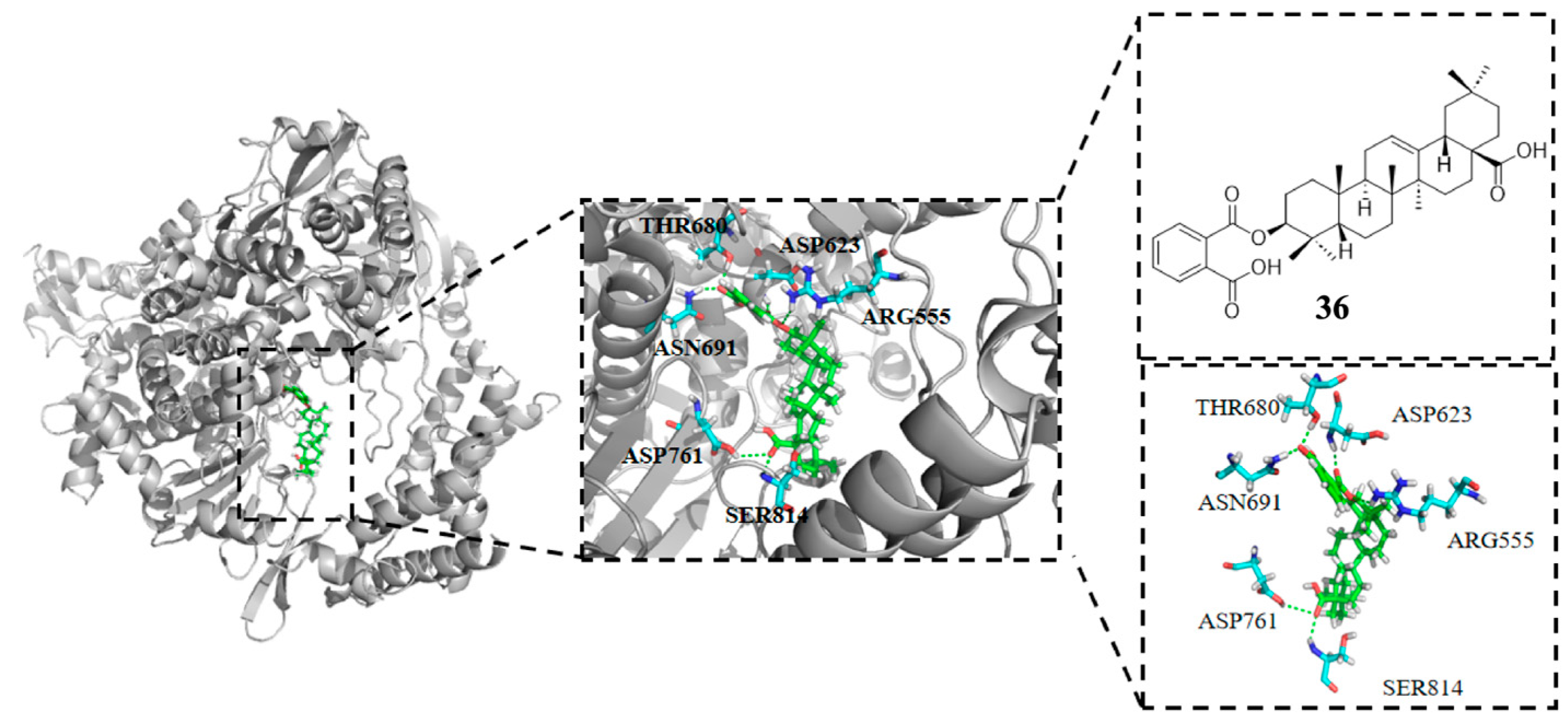
RNA-dependent RNA polymerase (RdRp, nsp12) is a core component of the SARS-CoV-2 viral replication and transcription complex [92], which produces viral mRNA through a discontinuous transcription mechanism to encode viral proteins, and interacts with nsp7, nsp8, and nsp14 to form an activity-enhancing complexes to ensure efficient RNA synthesis while reducing the error rate during replication [93]. Given their high conservation, SARS-CoV-2 nsp family members like RdRp and nsp7 serve as primary targets for antiviral drug development [94]. The research discussed in this subsection is based on computational approaches (such as molecular docking and in silico ADME predictions). Sharma et al. [95] reported that certain C-3-substituted ester derivatives of OA, such as 3-phthaloyl OA (36, Figure 11), exhibited strong binding affinity to RdRp (7BVE). In their molecular docking studies, the derivative achieved a MolDock score of –118.28 kcal/mol in silico, illustrating that PTs derivatives show potential for inhibiting SARS-CoV-2 RdRp to a certain extent. As depicted in Figure 11, compound 36 can form multiple hydrogen bonds with Ser841, Asp761, Asn691, Thr680, Arg555, Asp623 residues to stabilize the combination with RdRp, highlighting the importance of introducing phthalate esters at the C-3 position of OA.
Figure 11.
Chemical structure of 36 and docking data of 36 with SARS-CoV-2 RdRp (7bve).
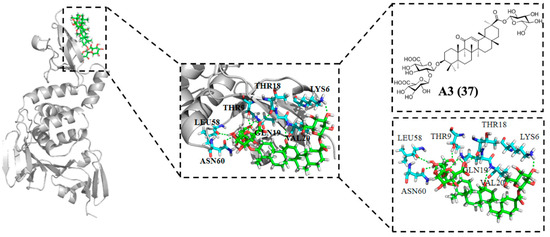
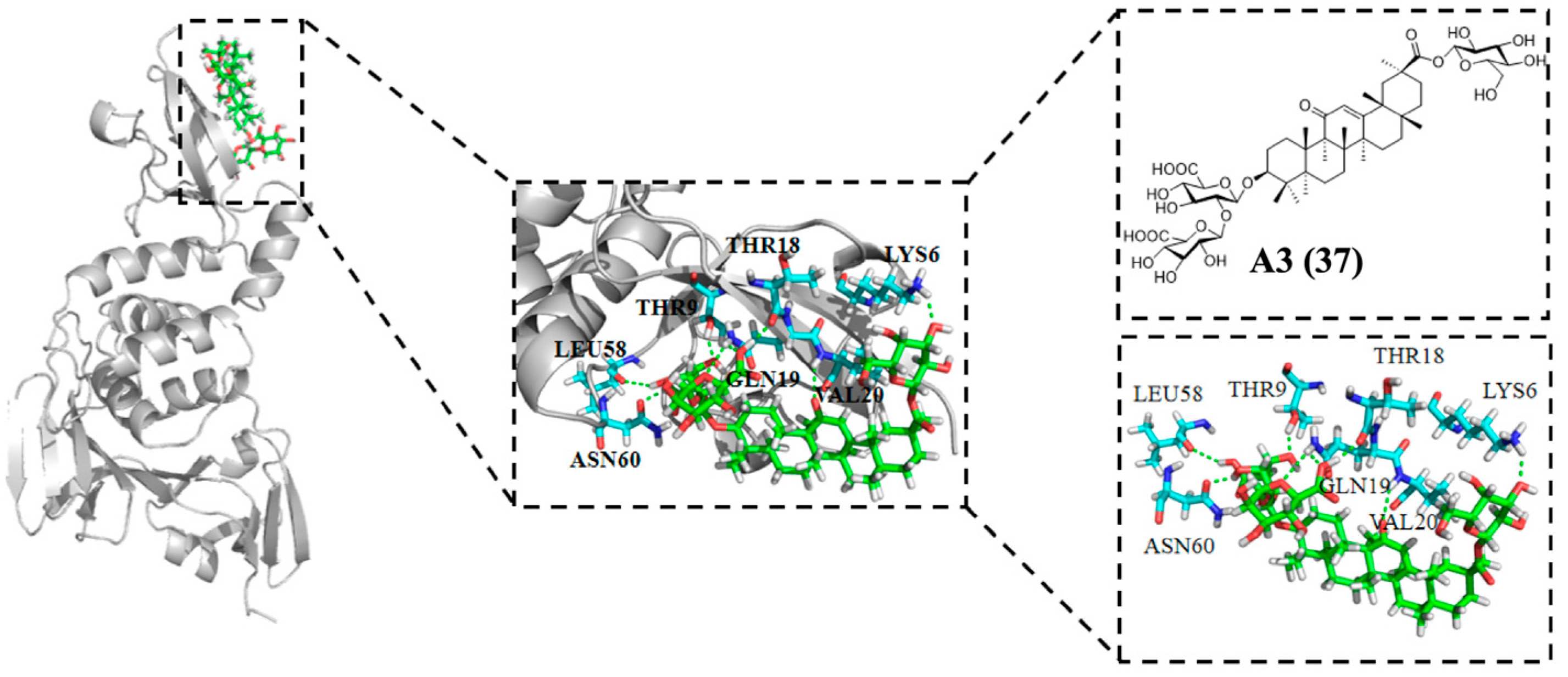
Interestingly, GL was found to occupy the binding pocket located between the NiRAN domain and β-hairpin structure of RdRp based on molecular docking, which may interfere with the polymerase activity [96]. However, additional in vitro and in vivo experiments are needed to validate the anti-SARS-CoV-2 activity of PTs, as current biological data remain limited. Yi et al. [40] reported that Licorice-saponin A3 (37, Figure 12)—a β-D-glucopyranosyl glycoside derivative of GL—potently inhibited SARS-CoV-2 infection in vitro, with an IC50 of 75 nM. Further studies revealed that A3 could strongly bind to nsp7 and also target S-RBD [96], suggesting that A3 can be regarded as a double-target SARS-CoV-2 inhibitor. Thus, A3 blocks SARS-CoV-2 infection by targeting both viral entry and replication. As shown in Figure 12, A3 can form important hydrogen bonds with Leu58, Thr9, Asn60, Gln19, Thr18, Val20, and Lys16 residues, respectively. Interestingly, GL can only target S protein without binding with nsp7, which is different from A3. These results demonstrate that modification of GL not only can improve antiviral activity but also have an important effect on their mechanism of action, which provides an opportunity for designing novel dual-target anti-SARS-CoV-2 inhibitors. Kumar et al. [97] reported that UA stably bound to SARS-CoV-2 nsp15, potentially disrupting viral replication as indicated by molecular docking analysis. However, in vitro and in vivo validation is needed to confirm these findings. Molecular docking demonstrated that UA could make multiple strong hydrogen bonds with Lys290, Gly248, Thr341, His250 and His235 residues in nsp15, and this is in agreement with the data of molecular dynamics (MD) studies. This result suggests that UA is a promising nsp15 inhibitor that can be considered as a promising lead phytochemical.
Figure 12.
Chemical structure of compound 37 and docking data of 37 with SARS-CoV-2 nsp7 (7JIT).
2.5. PTs-Based SARS-CoV-2 PLpro Inhibitors
PLpro has been shown to cleave polyproteins, deubiquitinate, and interfere with host immunity, making it a key protein in the virus replication process and for immunity evasion [98,99]. Some studies have confirmed that PTs have good binding ability to bind PLpro based on molecular docking. For example, Rudrapal et al. [100] demonstrated that saikosaponin A and betulinic acid exhibited strong binding affinity to PLpro via molecular docking, MD simulations, and ADMET analyses. These findings provide novel leads for identifying potential anti-COVID-19 drug candidates. Docking studies revealed distinct binding patterns: saikosaponin A formed hydrogen bonds with PLpro’s Asn109, Tyr112, Gln269, and Tyr273, while betulinic acid lacked such interactions. Computational analyses further predicted ursolic acid’s binding to catalytic residues His273 and Asp287, suggesting PLpro inhibitory potential. These results support further hit-to-lead optimization for anti-COVID-19 drug discovery, pending biological validation. Collectively, these findings provide a theoretical foundation for developing PTs-based SARS-CoV-2 PLpro inhibitors in subsequent biological research.
3. Anti-Inflammatory Pathways
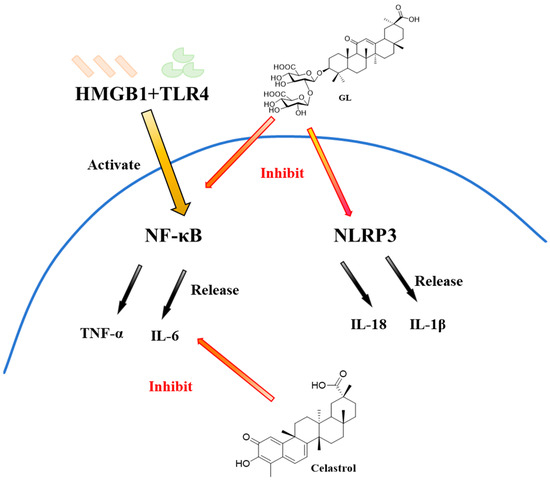
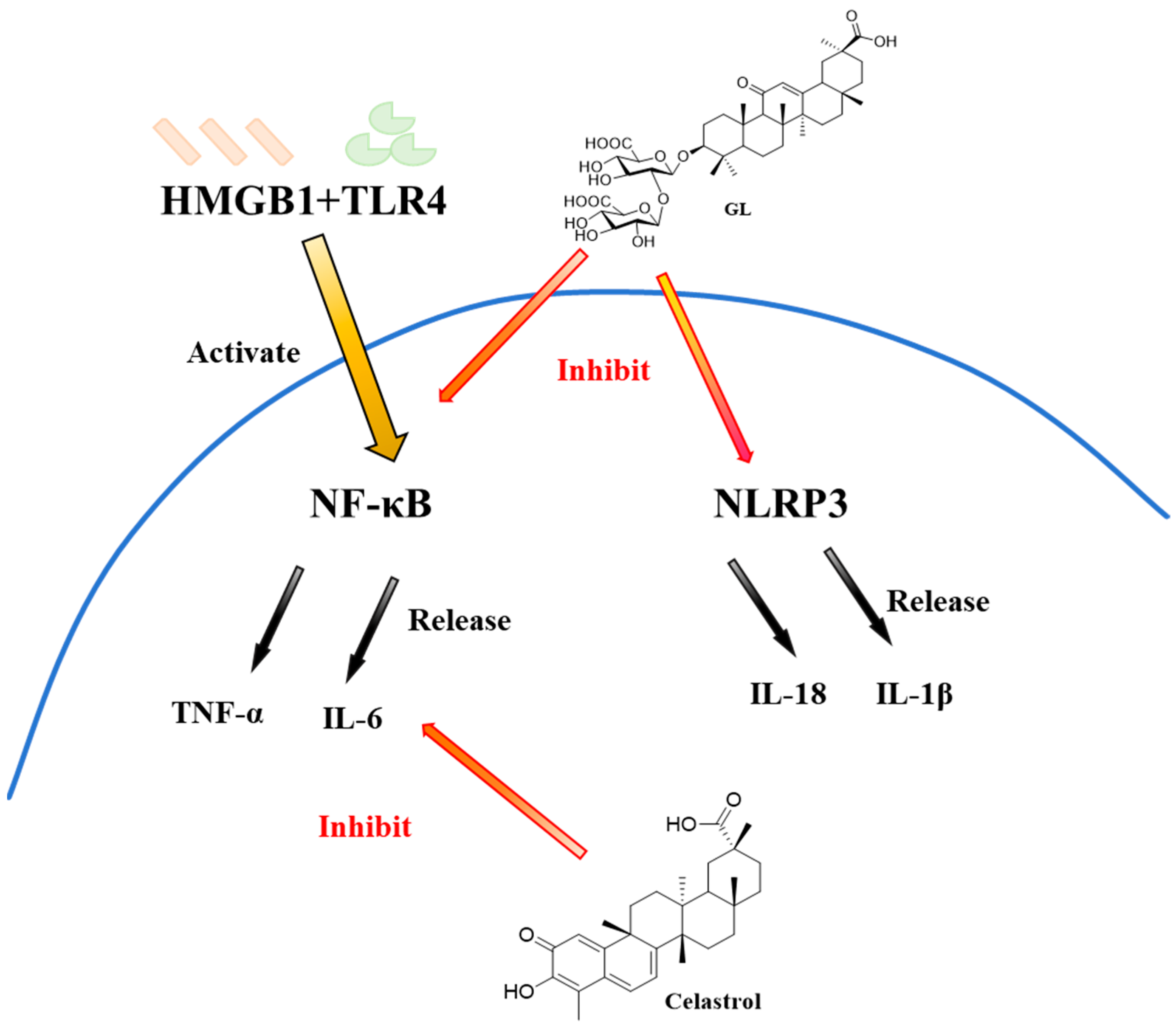
Clinical evidence strongly associates COVID-19 severity with elevated pro-inflammatory cytokines, indicating cytokine storm involvement in critical cases [101]. As shown in Figure 13, GL suppresses this inflammatory cascade by inhibiting TLR4-mediated NF-κB activation, thereby reducing production of IL-6, TNF-α and other cytokines linked to pulmonary damage and respiratory failure [102]. Therefore, the inhibition of TLR4 by GL is of great significance for alleviating cytokine storm and protecting lung tissue. Gowda et al. [103] further demonstrated that GL exhibits dual activity: it blocks viral entry into host cells by targeting the RBD, while suppressing pro-inflammatory mediators through direct binding to HMGB1, making it a key extracellular inflammation mediator that stimulates IL-1β and ferritin production, exacerbating SARS-CoV-2 infection severity. GL exerts anti-inflammatory effects by suppressing HMGB1 release from macrophages, thereby disrupting HMGB1-IL-1β and ferritin-IL-1β crosstalk and preventing macrophage hyperactivation.
Figure 13.
GL and celastrol showing anti-inflammatory ability.
Fuzo et al. [104] reported in 2022 that celastrol not only disrupted SARS-CoV-2 and variant replication but also reduced IL-6 secretion, which is a cytokine pivotal for host immune and inflammatory regulation. These findings indicate celastrol’s potential as an anti-SARS-CoV-2 agent, attributed to its dual anti-inflammatory and antiviral activities. Collectively, these results highlight that PT-based inhibitors with combined antiviral and anti-inflammatory potency may represent a promising therapeutic strategy for SARS-CoV-2 and variant infections.
5. Conclusions and Future Perspectives
Pentacyclic triterpenes and their derivatives have emerged as promising candidates for antiviral research, particularly against coronaviruses like SARS-CoV-2. Given the persistent threat posed by evolving coronaviruses to global health and economies, developing novel therapeutics targeting multiple viral components remains crucial. These natural scaffolds offer potential for creating next-generation anti-SARS-CoV-2 drugs with improved efficacy against variants.
This review, based on a comprehensive analysis of literature from 2019 to date, summarizes current progress and highlights the emerging role of PT-based SARS-CoV-2 inhibitors within antiviral drug discovery. In addition to GL, many PTs such as OA, UA, BA, and their saponins also show notable in vitro antiviral potential against SARS-CoV-2. The inhibitory effect of PTs on SARS-CoV-2 is suggested to be achieved through multi-target antiviral mechanism, which may be particularly relevant in the context of high mutation frequency in the viral spike protein. In addition, PTs also possess significant anti-inflammatory effects, and this dual activity could further support their potential utility in viral suppression and host protection.
Current antiviral development increasingly focuses on compounds with multiple mechanisms of action to overcome resistance challenges. Evidence indicates that certain PTs can simultaneously engage both spike proteins and viral proteases, suggesting their potential as scaffolds for developing broad-spectrum antiviral agents. Despite these promising in vitro observations, significant questions remain unanswered. Limited data exist regarding the in vivo efficacy and pharmacokinetic behavior of most PT derivatives. The translation of in vitro antiviral activity to clinical settings requires substantial investigation into bioavailability, metabolic stability, and tissue distribution. Furthermore, comprehensive structure–activity relationship studies are needed to guide rational optimization of these compounds.
Priority research directions should include advanced structural modification approaches to enhance potency while maintaining favorable drug-like properties; detailed mechanistic studies to elucidate interactions with both viral targets and host factors; development of formulations that improve solubility and metabolic stability; and rigorous assessment in physiologically relevant models, including animal infection systems.
In summary, pentacyclic triterpenoids represent a promising starting point for antiviral discovery efforts. Through continued investigation of their unique chemical and biological properties, these natural products could potentially contribute to therapeutic strategies addressing current and future coronavirus threats.
Author Contributions
Conceptualization, G.S. and W.C.; formal analysis, X.W. and X.C.; investigation, W.C. and G.S.; data curation, K.L., J.H., and K.C.; writing—original draft preparation, X.W. and X.C.; writing—review and editing, G.S. and W.C. All authors have read and agreed to the published version of the manuscript.
Funding
This research was funded by the Guangdong Basic and Applied Basic Research Foundation (grant number 2025A1515010495) and the Youth Innovative Talents Project from the Department of Education of Guangdong Province (2024KQNCX197).
Institutional Review Board Statement
Not applicable.
Informed Consent Statement
Not applicable.
Data Availability Statement
No new data were created or analyzed in this study. Data sharing is not applicable to this article.
Conflicts of Interest
The authors declare no conflicts of interest.
Abbreviations
The following abbreviations are used in this manuscript:
| CoVs | Coronaviruses |
| SARS-CoV-2 | Severe acute respiratory syndrome coronavirus 2 |
| RdRp | RNA-dependent RNA polymerase |
| NPs | Natural products |
| PT | Pentacyclic triterpenoid |
| OA | Oleanolic acid |
| GA | Glycyrrhetinic acid |
| MA | Maslinic acid |
| UA | Ursolic acid |
| BA | Betulinic acid |
| GL | Glycyrrhizinic acid |
| SAEs | Severe adverse events |
| S | Spike |
| ACE2 | Angiotensin-converting enzyme 2 |
| ALI | Acute lung injury |
| ARDS | Acute respiratory distress syndrome |
| SARs | Structure–activity relationships |
| RBDs | Receptor-binding domains |
| SPR | Surface plasmon resonance |
| ROS | Reactive oxygen species |
| SSs | Saikosaponins |
| Sal-C | Salvianolic acid C |
| PsV | Pseudovirus |
| PG | Platycodon grandiflorum |
| LA | Lancemasides A |
| AI | Astersaponin I |
| platycodin D | PD |
| Co-IP | Co-Immunoprecipitation |
| CD | Circular dichroism |
| 3CLpro | 3CL protease |
| Nsp | Non-structural proteins |
| MD | Molecular dynamics |
References
- Fung, T.S.; Liu, D.X. Human Coronavirus: Host-Pathogen Interaction. Annu. Rev. Microbiol. 2019, 73, 529–557. [Google Scholar] [CrossRef] [Scilit] [PubMed]
- Al-Tawfiq, J.A.; Al Johani, S.; Memish, Z.A. MERS-CoV remains a persistent threat amid global events. J. Infect. Public. Health 2024, 17, 102487. [Google Scholar] [CrossRef] [Scilit] [PubMed]
- V’kovski, P.; Kratzel, A.; Steiner, S.; Stalder, H.; Thiel, V. Coronavirus biology and replication: Implications for SARS-CoV-2. Nat. Rev. Microbiol. 2021, 19, 155–170. [Google Scholar] [CrossRef] [Scilit]
- Chen, N.S.; Zhou, M.; Dong, X.; Qu, J.M.; Gong, F.Y.; Han, Y.; Qiu, Y.; Wang, J.L.; Liu, Y.; Wei, Y.; et al. Epidemiological and clinical characteristics of 99 cases of 2019 novel coronavirus pneumonia in Wuhan, China: A descriptive study. Lancet 2020, 395, 507–513. [Google Scholar] [CrossRef] [Scilit]
- World Health Organization. WHO COVID-19 Dashboard. Available online: https://data.who.int/dashboards/covid19/cases (accessed on 12 October 2025).
- Walker, A.S.; Vihta, K.D.; Gethings, O.; Pritchard, E.; Jones, J.; House, T.; Bell, I.; Bell, J.I.; Newton, J.N.; Farrar, J.; et al. Tracking the emergence of SARS-CoV-2 Alpha variant in the United Kingdom. N. Engl. J. Med. 2021, 385, 2582–2585. [Google Scholar] [CrossRef] [Scilit]
- Sutton, M.; Radniecki, T.S.; Kaya, D.; Alegre, D.; Geniza, M.; Girard, A.M.; Carter, K.; Dasenko, M.; Sanders, J.L.; Cieslak, P.R.; et al. Detection of SARS-CoV-2 B.1.351 (Beta) variant through wastewater surveillance before case detection in a community, Oregon, USA. Emerg. Infect. Dis. 2022, 28, 1101–1109. [Google Scholar] [CrossRef] [Scilit]
- Zhan, Y.; Yin, H.; Yin, J.Y.B. 1.617. 2 (Delta) variant of SARS-CoV-2: Features, transmission and potential strategies. Int. J. Biol. Sci. 2022, 18, 1844–1851. [Google Scholar] [CrossRef] [Scilit]
- Grundeis, F.; Ansems, K.; Dahms, K.; Thieme, V.; Metzendorf, M.I.; Skoetz, N.; Benstoem, C.; Mikolajewska, A.; Griesel, M.; Fichtner, F.; et al. Remdesivir for the treatment of COVID-19. Cochrane Database Syst. Rev. 2023, 1, CD014962. [Google Scholar] [PubMed]
- Reis, S.; Metzendorf, M.I.; Kuehn, R.; Popp, M.; Gagyor, I.; Kranke, P.; Meybohm, P.; Skoetz, N.; Weibel, S. Nirmatrelvir combined with ritonavir for preventing and treating COVID-19. Cochrane Database Syst. Rev. 2023, 11, CD015395. [Google Scholar]
- Kiso, M.; Yamayoshi, S.; Iida, S.; Furusawa, Y.; Hirata, Y.; Uraki, R.; Imai, M.; Suzuki, T.; Kawaoka, Y. In vitro and in vivo characterization of SARS-CoV-2 resistance to ensitrelvir. Nat. Commun. 2023, 14, 4231. [Google Scholar] [CrossRef] [Scilit]
- Sachse, M.; Tenorio, R.; Fernández de Castro, I.; Muñoz-Basagoiti, J.; Perez-Zsolt, D.; Raïch-Regué, D.; Rodon, J.; Losada, A.; Avilés, P.; Cuevas, C.; et al. Unraveling the antiviral activity of plitidepsin against SARS-CoV-2 by subcellular and morphological analysis. Antivir. Res. 2022, 200, 105270. [Google Scholar] [CrossRef] [Scilit] [PubMed]
- Li, H.W.; Sun, J.Q.; Xiao, S.L.; Zhang, L.H.; Zhou, D.M. Triterpenoid-mediated inhibition of virus-host interaction: Is now the time for discovering viral entry/release inhibitors from nature? J. Med. Chem. 2020, 63, 15371–15388. [Google Scholar] [CrossRef] [Scilit]
- Xu, R.; Fazio, G.C.; Matsuda, S.P. On the origins of triterpenoid skeletal diversity. Phytochemistry 2004, 65, 261–291. [Google Scholar] [CrossRef] [Scilit]
- Didierlaurent, A.M.; Laupèze, B.; Di Pasquale, A.; Hergli, N.; Collignon, C.; Garçon, N. Adjuvant system AS01: Helping to overcome the challenges of modern vaccines. Expert. Rev. Vaccines 2017, 16, 55–63. [Google Scholar] [CrossRef] [Scilit]
- Volnova, A.; Tsytsarev, V.; Ganina, O.; Vélez-Crespo, G.E.; Alves, J.M.; Ignashchenkova, A.; Inyushin, M. The anti-epileptic effects of carbenoxolone in vitro and in vivo. Int. J. Mol. Sci. 2022, 23, 663. [Google Scholar] [CrossRef] [Scilit] [PubMed]
- Dayalan Naidu, S.; Dinkova-Kostova, A.T. Omaveloxolone (SkyclarysTM) for patients with friedreich’s ataxia. Trends Pharmacol. Sci. 2023, 44, 394–395. [Google Scholar] [CrossRef] [Scilit]
- Phillips, N.A.; Rocktashel, M.; Merjanian, L. Ibrexafungerp for the treatment of vulvovaginal candidiasis: Design, development and place in therapy. Drug Des. Devel Ther. 2023, 17, 363–367. [Google Scholar] [CrossRef] [Scilit]
- Wimmerová, M.; Bildziukevich, U.; Wimmer, Z. Selected Plant Triterpenoids and Their Derivatives as Antiviral Agents. Molecules 2023, 28, 7718. [Google Scholar] [CrossRef] [Scilit]
- DeJesus, E.; Harward, S.; Jewell, R.C.; Johnson, M.; Dumont, E.; Wilches, V.; Halliday, F.; Talarico, C.L.; Jeffrey, J.; Gan, J.J.; et al. A Phase IIa Study Evaluating Safety, Pharmacokinetics, and Antiviral Activity of GSK2838232, a Novel, Second-generation Maturation Inhibitor, in Participants With Human Immunodeficiency Virus Type 1 Infection. Clin. Infect. Dis. 2020, 71, 1255–1262. [Google Scholar] [CrossRef] [Scilit] [PubMed]
- Dicker, I.; Jeffrey, J.L.; Protack, T.; Lin, Z.Y.; Cockett, M.; Chen, Y.; Sit, S.Y.; Gartland, M.; Meanwell, N.A.; Regueiro-Ren, A.; et al. GSK3640254 is a novel HIV-1 maturation inhibitor with an optimized virology profile. Antimicrob. Agents Chemother. 2022, 66, e0187621. [Google Scholar] [CrossRef] [Scilit]
- Benn, P.D.; Zhang, Y.; Kahl, L.; Greene, T.J.; Bainbridge, V.; Fishman, C.; Wen, B.; Gartland, M. A phase I, first-in-human study investigating the safety, tolerability, and pharmacokinetics of the maturation inhibitor GSK3739937. Pharmacol. Res. Perspect. 2023, 11, e01093. [Google Scholar] [CrossRef] [Scilit]
- Ma, C.; Nakamura, N.; Hattori, M.; Kakuda, H.; Qiao, J.; Yu, H. Inhibitory effects on HIV-1 protease of constituents from the wood of Xanthoceras sorbifolia. J. Nat. Prod. 2000, 63, 238–242. [Google Scholar] [CrossRef] [Scilit] [PubMed]
- Xiao, S.L.; Wang, Q.; Si, L.L.; Zhou, X.S.; Zhang, Y.M.; Zhang, L.H.; Zhou, D.M. Synthesis and biological evaluation of novel pentacyclic triterpene α-cyclodextrin conjugates as HCV entry inhibitors. Eur. J. Med. Chem. 2016, 124, 1–9. [Google Scholar] [CrossRef] [Scilit]
- Xiao, S.L.; Wang, Q.; Si, L.L.; Shi, Y.Y.; Wang, H.; Yu, F.; Zhang, Y.M.; Li, Y.B.; Zheng, Y.X.; Zhang, C.L.; et al. Synthesis and anti-HCV entry activity studies of β-cyclodextrin-pentacyclic triterpene conjugates. ChemMedChem 2014, 9, 1060–1070. [Google Scholar] [CrossRef] [Scilit] [PubMed]
- Liang, S.B.; Ma, X.Y.; Li, M.; Yi, Y.L.; Gao, Q.Q.; Zhang, Y.M.; Zhang, L.H.; Zhou, D.M.; Xiao, S.L. Novel β-cyclodextrin-based heptavalent glycyrrhetinic acid conjugates: Synthesis, characterization, and anti-influenza activity. Front. Chem. 2022, 10, 836955. [Google Scholar] [CrossRef] [Scilit] [PubMed]
- Li, M.; Yuan, L.; Chen, Y.Y.; Ma, W.X.; Ran, F.X.; Zhang, L.H.; Zhou, D.M.; Xiao, S.L. Rhodamine B-based fluorescent probes for molecular mechanism study of the anti-influenza activity of pentacyclic triterpenes. Eur. J. Med. Chem. 2020, 205, 112664. [Google Scholar] [CrossRef] [Scilit]
- Li, H.W.; Li, M.; Xu, R.Y.; Wang, S.X.; Zhang, Y.M.; Zhang, L.H.; Zhou, D.M.; Xiao, S.L. Synthesis, structure activity relationship and in vitro anti-influenza virus activity of novel polyphenol-pentacyclic triterpene conjugates. Eur. J. Med. Chem. 2019, 163, 560–568. [Google Scholar] [CrossRef] [Scilit] [PubMed]
- Zhu, X.X.; Yi, Y.L.; Fan, Z.B.; Liu, R.W.; Chu, X.D.; Wang, M.Y.; Zhang, J.Y.; Tretyakova, E.; Zhang, Y.M.; Zhang, L.H.; et al. Novel mono-and multivalent N-acetylneuraminic acid glycoclusters as potential broad-spectrum entry inhibitors for influenza and coronavirus infection. Eur. J. Med. Chem. 2023, 260, 115723. [Google Scholar] [CrossRef] [Scilit]
- Chrzanowski, J.; Chrzanowska, A.; Graboń, W. Glycyrrhizin: An old weapon against a novel coronavirus. Phytother. Res. 2021, 35, 629–636. [Google Scholar] [CrossRef] [Scilit]
- Al-Kuraishy, H.M.; Al-Gareeb, A.I.; Negm, W.A.; Alexiou, A.; Batiha, G.E. Ursolic acid and SARS-CoV-2 infection: A new horizon and perspective. Inflammopharmacology 2022, 30, 1493–1501. [Google Scholar] [CrossRef] [Scilit]
- Yan, R.H.; Zhang, Y.Y.; Li, Y.N.; Xia, L.; Guo, Y.Y.; Zhou, Q. Structural basis for the recognition of SARS-CoV-2 by full-length human ACE2. Science 2020, 367, 1444–1448. [Google Scholar] [CrossRef] [Scilit]
- Shang, J.; Wan, Y.S.; Luo, C.M.; Ye, G.; Geng, Q.B.; Auerbach, A.; Li, F. Cell entry mechanisms of SARS-CoV-2. Proc. Natl. Acad. Sci. USA 2020, 117, 11727–11734. [Google Scholar] [CrossRef] [Scilit]
- Hoffmann, M.; Kleine-Weber, H.; Schroeder, S.; Krüger, N.; Herrler, T.; Erichsen, S.; Schiergens, T.S.; Herrler, G.; Wu, N.H.; Nitsche, A.; et al. SARS-CoV-2 cell entry depends on ACE2 and TMPRSS2 and is blocked by a clinically proven protease inhibitor. Cell 2020, 181, 271–280. [Google Scholar] [CrossRef] [Scilit]
- Hoffmann, M.; Kleine-Weber, H.; Pöhlmann, S. A multibasic cleavage site in the spike protein of SARS-CoV-2 is essential for infection of human lung cells. Mol. Cell. 2020, 78, 779–784. [Google Scholar] [CrossRef] [Scilit]
- Letarov, A.V.; Babenko, V.V.; Kulikov, E.E. Free SARS-CoV-2 spike protein S1 particles may play a role in the pathogenesis of COVID-19 infection. Biochemistry 2021, 86, 257–261. [Google Scholar] [CrossRef] [Scilit] [PubMed]
- He, M.F.; Liang, J.H.; Shen, Y.N.; Zhang, J.W.; Liu, Y.; Yang, K.Y.; Liu, L.C.; Wang, J.Y.; Xie, Q.; Hu, C.; et al. Glycyrrhizin inhibits SARS-CoV-2 entry into cells by targeting ACE2. Life 2022, 12, 1706. [Google Scholar] [CrossRef] [Scilit] [PubMed]
- Yu, S.P.; Zhu, Y.Y.; Xu, J.R.; Yao, G.T.; Zhang, P.; Wang, M.G.; Zhao, Y.F.; Lin, G.Q.; Chen, H.Z.; Chen, L.L.; et al. Glycyrrhizic acid exerts inhibitory activity against the spike protein of SARS-CoV-2. Phytomedicine 2021, 85, 153364. [Google Scholar] [CrossRef] [Scilit] [PubMed]
- Li, J.J.; Xu, D.G.; Wang, L.L.; Zhang, M.Y.; Zhang, G.H.; Li, E.; He, S.S. Glycyrrhizic acid inhibits SARS-CoV-2 infection by blocking spike protein-mediated cell attachment. Molecules 2021, 26, 6090. [Google Scholar] [CrossRef] [Scilit]
- Yi, Y.; Li, J.H.; Lai, X.Y.; Zhang, M.; Kuang, Y.; Ouyang, J.B.; Yu, R.; Hong, W.; Muturi, E.; Xue, H.; et al. Natural triterpenoids from licorice potently inhibit SARS-CoV-2 infection. J. Adv. Res. 2021, 36, 201–210. [Google Scholar] [CrossRef] [Scilit]
- Zhu, Y.C.; Lai, Y. Pharmacological properties and derivatives of saikosaponins-a review of recent studies. J. Pharm. Pharmacol. 2023, 75, 898–909. [Google Scholar] [CrossRef] [Scilit]
- Sinha, S.K.; Shakya, A.; Prasad, S.K.; Singh, S.; Gurav, N.S.; Prasad, R.S.; Gurav, S.S. An in-silico evaluation of different saikosaponins for their potency against SARS-CoV-2 using nsp15 and fusion spike glycoprotein as targets. J. Biomol. Struct. Dyn. 2021, 39, 3244–3255. [Google Scholar] [CrossRef] [Scilit] [PubMed]
- Petrova, A.; Tretyakova, E.; Khusnutdinova, E.; Kazakova, O.; Slita, A.; Zarubaev, V.; Ma, X.Y.; Jin, H.W.; Xu, H.; Xiao, S.L. Antiviral opportunities of mannich bases derived from triterpenic N-propargylated indoles. Chem. Biol. Drug Des. 2024, 103, e14370. [Google Scholar] [CrossRef] [Scilit] [PubMed]
- Gamblin, S.J.; Vachieri, S.G.; Xiong, X.L.; Zhang, J.; Martin, S.R.; Skehel, J.J. Hemagglutinin structure and activities. Cold Spring Harb. Perspect. Med. 2021, 11, a038638. [Google Scholar] [CrossRef] [Scilit] [PubMed]
- Li, T.T.; Chen, J.Y.; Zheng, Q.B.; Xue, W.H.; Zhang, L.M.; Rong, R.; Zhang, S.B.; Wang, Q.; Hong, M.Q.; Zhang, Y.Y.; et al. Identification of a cross-neutralizing antibody that targets the receptor binding site of H1N1 and H5N1 influenza viruses. Nat. Commun. 2022, 13, 5182. [Google Scholar] [CrossRef] [Scilit]
- Torrents de la Peña, A.; Sliepen, K.; Eshun-Wilson, L.; Newby, M.L.; Allen, J.D.; Zon, I.; Koekkoek, S.; Chumbe, A.; Crispin, M.; Schinkel, J.; et al. Structure of the hepatitis C virus E1E2 glycoprotein complex. Science 2022, 378, 263–269. [Google Scholar] [CrossRef] [Scilit]
- Pinski, A.N.; Messaoudi, I. To B or not to B: Mechanisms of protection conferred by rVSV-EBOV-GP and the roles of innate and adaptive immunity. Microorganisms 2020, 8, 1473. [Google Scholar] [CrossRef] [Scilit]
- Joshi, V.R.; Newman, R.M.; Pack, M.L.; Power, K.A.; Munro, J.B.; Okawa, K.; Madani, N.; Sodroski, J.G.; Schmidt, A.G.; Allen, T.M. Gp41-targeted antibodies restore infectivity of a fusion-deficient HIV-1 envelope glycoprotein. PLoS Pathog. 2020, 16, e1008577. [Google Scholar] [CrossRef] [Scilit]
- Sutherland, M.; Kwon, B.; Hong, M. Interactions of HIV gp41’s membrane-proximal external region and transmembrane domain with phospholipid membranes from 31P NMR. Biochim. Biophys. Acta Biomembr. 2021, 1863, 183723. [Google Scholar] [CrossRef] [Scilit]
- Guo, L.Y.; Lin, S.; Chen, Z.M.; Cao, Y.; He, B.; Lu, G.W. Targetable elements in SARS-CoV-2 S2 subunit for the design of pan-coronavirus fusion inhibitors and vaccines. Signal Transduct. Target. Ther. 2023, 8, 197. [Google Scholar] [CrossRef] [Scilit]
- Chen, Y.J.; Zhao, X.Y.; Zhou, H.; Zhu, H.Z.; Jiang, S.B.; Wang, P.F. Broadly neutralizing antibodies to SARS-CoV-2 and other human coronaviruses. Nat. Rev. Immunol. 2023, 23, 189–199. [Google Scholar] [CrossRef] [Scilit]
- Pang, W.; Lu, Y.; Zhao, Y.B.; Shen, F.; Fan, C.F.; Wang, Q.; He, W.Q.; He, X.Y.; Li, Z.K.; Chen, T.T.; et al. A variant-proof SARS-CoV-2 vaccine targeting HR1 domain in S2 subunit of spike protein. Cell Res. 2022, 32, 1068–1085. [Google Scholar] [CrossRef] [Scilit]
- Hsieh, C.L.; Leist, S.R.; Miller, E.H.; Zhou, L.; Powers, J.M.; Tse, A.L.; Wang, A.; West, A.; Zweigart, M.R.; Schisler, J.C.; et al. Prefusion-stabilized SARS-CoV-2 S2-only antigen provides protection against SARS-CoV-2 challenge. Nat. Commun. 2024, 15, 1553. [Google Scholar] [CrossRef] [Scilit] [PubMed]
- Xia, S.; Zhu, Y.; Liu, M.Q.; Lan, Q.S.; Xu, W.; Wu, Y.L.; Ying, T.L.; Liu, S.W.; Shi, Z.L.; Jiang, S.B.; et al. Fusion mechanism of 2019-nCoV and fusion inhibitors targeting HR1 domain in spike protein. Cell Mol. Immunol. 2020, 17, 765–767. [Google Scholar] [CrossRef] [Scilit]
- Walls, A.C.; Tortorici, M.A.; Snijder, J.; Xiong, X.L.; Bosch, B.J.; Rey, F.A.; Veesler, D. Tectonic conformational changes of a coronavirus spike glycoprotein promote membrane fusion. Proc. Natl. Acad. Sci. USA 2017, 114, 11157–11162. [Google Scholar] [CrossRef] [Scilit]
- Harrison, S.C. Viral membrane fusion. Virology 2015, 479–480, 498–507. [Google Scholar] [CrossRef] [Scilit]
- Lipskij, A.; Arbeitman, C.; Rojas, P.; Ojeda-May, P.; Garcia, M.E. Dramatic differences between the structural susceptibility of the S1 Pre- and S2 postfusion states of the SARS-CoV-2 spike protein to external electric fields revealed by molecular dynamics simulations. Viruses 2023, 15, 2405. [Google Scholar] [CrossRef] [Scilit]
- Shah, P.; Canziani, G.A.; Carter, E.P.; Chaiken, I. The case for S2: The potential benefits of the S2 subunit of the SARS-CoV-2 spike protein as an immunogen in fighting the COVID-19 pandemic. Front. Immunol. 2021, 12, 637651. [Google Scholar] [CrossRef] [Scilit]
- Singh, S.; Weiss, A.; Goodman, J.; Fisk, M.; Kulkarni, S.; Lu, I.; Gray, J.; Smith, R.; Sommer, M.; Cheriyan, J. Niclosamide-A promising treatment for COVID-19. J. Pharmacol. 2022, 179, 3250–3267. [Google Scholar] [CrossRef] [Scilit] [PubMed]
- Wotring, J.W.; McCarty, S.M.; Shafiq, K.; Zhang, C.J.; Nguyen, T.; Meyer, S.R.; Fursmidt, R.; Mirabelli, C.; Clasby, M.C.; Wobus, C.E.; et al. In vitro evaluation and mitigation of niclosamide’s liabilities as a COVID-19 treatment. Vaccines 2022, 10, 1284. [Google Scholar] [CrossRef] [Scilit]
- Ateya, A.M. Clofazimine: A potential therapeutic option for severe COVID-19. Med. Hypotheses 2021, 150, 110535. [Google Scholar] [CrossRef] [Scilit] [PubMed]
- Freidel, M.R.; Vakhariya, P.A.; Sardarni, S.K.; Armen, R.S. The dual-targeted fusion inhibitor clofazimine binds to the S2 segment of the SARS-CoV-2 spike protein. Viruses 2024, 16, 640. [Google Scholar] [CrossRef] [Scilit]
- Yang, C.; Pan, X.Y.; Xu, X.F.; Cheng, C.; Huang, Y.; Li, L.; Jiang, S.B.; Xu, W.; Xiao, G.F.; Liu, S.W. Salvianolic acid C potently inhibits SARS-CoV-2 infection by blocking the formation of six-helix bundle core of spike protein. Signal Transduct. Target. Ther. 2020, 5, 220. [Google Scholar] [CrossRef] [Scilit]
- Hu, S.L.; Wang, J.; Zhang, Y.J.; Bai, H.Y.; Wang, C.; Wang, N.; He, L.C. Three salvianolic acids inhibit 2019-nCoV spike pseudovirus viropexis by binding to both its RBD and receptor ACE2. J. Med. Virol. 2021, 93, 3143–3151. [Google Scholar] [CrossRef] [Scilit] [PubMed]
- Peng, H.; Ding, C.L.; Jiang, L.L.; Tang, W.D.; Liu, Y.; Zhao, L.J.; Yi, Z.G.; Ren, H.; Li, C.; He, Y.H.; et al. Discovery of potential anti-SARS-CoV-2 drugs based on large-scale screening in vitro and effect evaluation in vivo. Sci. China Life Sci. 2022, 65, 1181–1197. [Google Scholar] [CrossRef] [Scilit] [PubMed]
- Ju, X.H.; Zhu, Y.K.; Wang, Y.Y.; Li, J.R.; Zhang, J.X.; Gong, M.L.; Ren, W.L.; Li, S.; Zhong, J.; Zhang, L.Q.; et al. A novel cell culture system modeling the SARS-CoV-2 life cycle. PLoS Pathog. 2021, 17, e1009439. [Google Scholar] [CrossRef] [Scilit]
- Lan, Q.S.; Wang, C.; Zhou, J.; Wang, L.J.; Jiao, F.K.; Zhang, Y.B.; Cai, Y.X.; Lu, L.; Xia, S.; Jiang, S.B. 25-Hydroxycholesterol-Conjugated EK1 peptide with potent and broad-spectrum inhibitory activity against SARS-CoV-2, its variants of concern, and other human coronaviruses. Int. J. Mol. Sci. 2021, 22, 11869. [Google Scholar] [CrossRef] [Scilit]
- Braga, L.; Ali, H.; Secco, I.; Chiavacci, E.; Neves, G.; Goldhill, D.; Penn, R.; Jimenez-Guardeño, J.M.; Ortega-Prieto, A.M.; Bussani, R.; et al. Drugs that inhibit TMEM16 proteins block SARS-CoV-2 spike-induced syncytia. Nature 2021, 594, 88–93. [Google Scholar] [CrossRef] [Scilit]
- Li, Q.Q.; Liu, Q.; Huang, W.J.; Li, X.G.; Wang, Y.C. Current status on the development of pseudoviruses for enveloped viruses. Rev. Med. Virol. 2018, 28, e1963. [Google Scholar] [CrossRef] [Scilit] [PubMed]
- Nie, J.H.; Huang, W.J.; Liu, Q.; Wang, Y.C. HIV-1 pseudoviruses constructed in China regulatory laboratory. Emerg. Microbes Infect. 2019, 9, 32–41. [Google Scholar] [CrossRef] [Scilit]
- Cao, J.Y.; Liu, Y.; Zhou, M.M.; Dong, S.Q.; Hou, Y.X.; Jia, X.Y.; Lan, X.H.; Zhang, Y.L.; Guo, J.; Xiao, G.F.; et al. Screening of botanical drugs against SARS-CoV-2 entry reveals novel therapeutic agents to treat COVID-19. Viruses 2022, 14, 353. [Google Scholar] [CrossRef] [Scilit]
- Hong, C.J.; Su, H.; Lu, L.; Cui, X.X.; Wan, X.; Zhu, D.J.; Wen, Z.; Li, S.M.; Liu, S.W.; Song, G.P. Discovery and optimization of OA amide derivatives containing a trisubstituted l-hydroxyproline fragment as novel Omicron fusion inhibitors. Eur. J. Med. Chem. 2025, 299, 118058. [Google Scholar] [CrossRef] [Scilit]
- Othman, A.; Kutkat, O.; Mabrouk, S.S.; Amen, Y. Triterpene saponins from the halophyte Anabasis setifera exhibit anti-SARS-CoV-2 properties. RSC Adv. 2025, 15, 27623–27629. [Google Scholar] [CrossRef] [Scilit]
- Kim, T.Y.; Jeon, S.; Jang, Y.; Gotina, L.; Won, J.; Ju, Y.H.; Kim, S.; Jang, M.W.; Won, W.; Park, M.G.; et al. Platycodin D, a natural component of Platycodon grandiflorum, prevents both lysosome- and TMPRSS2-driven SARS-CoV-2 infection by hindering membrane fusion. Exp. Mol. Med. 2021, 53, 956–972. [Google Scholar] [CrossRef] [Scilit] [PubMed]
- Jang, Y.; Kim, T.Y.; Jeon, S.; Lim, H.; Lee, J.; Kim, S.; Lee, C.J.; Han, S. Synthesis and structure-activity relationship study of saponin-based membrane fusion inhibitors against SARS-CoV-2. Bioorg Chem. 2022, 127, 105985. [Google Scholar] [CrossRef] [Scilit]
- Kim, T.Y.; Jeon, S.; Ko, M.; Du, Y.E.; Son, S.R.; Jang, D.S.; Kim, S.; Lee, C.J. Lancemaside A from Codonopsis lanceolata: Studies on antiviral activity and mechanism of action against SARS-CoV-2 and its variants of concern. Antimicrob. Agents Chemother. 2022, 66, e0120122. [Google Scholar] [CrossRef] [Scilit]
- Kim, T.Y.; Kim, J.Y.; Kwon, H.C.; Jeon, S.; Lee, S.J.; Jung, H.; Kim, S.; Jang, D.S.; Lee, C.J. Astersaponin I from Aster koraiensis is a natural viral fusion blocker that inhibits the infection of SARS-CoV-2 variants and syncytium formation. Antivir. Res. 2022, 208, 105428. [Google Scholar] [CrossRef] [Scilit] [PubMed]
- Li, H.; Cheng, C.; Li, S.M.; Wu, Y.; Liu, Z.H.; Liu, M.J.; Chen, J.X.; Zhong, Q.Y.; Zhang, X.S.; Liu, S.W.; et al. Discovery and structural optimization of 3-O-β-chacotriosyl oleanane-type triterpenoids as potent entry inhibitors of SARS-CoV-2 virus infections. Eur. J. Med. Chem. 2021, 215, 113242. [Google Scholar] [CrossRef] [Scilit]
- Li, H.; Cheng, C.; Shi, S.S.; Wu, Y.; Gao, Y.F.; Liu, Z.H.; Liu, M.J.; Li, Z.D.; Huo, L.J.; Pan, X.Y.; et al. Identification, optimization, and biological evaluation of 3-O-β-chacotriosyl ursolic acid derivatives as novel SARS-CoV-2 entry inhibitors by targeting the prefusion state of spike protein. Eur. J. Med. Chem. 2022, 238, 114426. [Google Scholar] [CrossRef] [Scilit] [PubMed]
- Liu, M.J.; Wang, J.S.; Shi, S.S.; Gao, Y.F.; Zhang, Y.X.; Yuan, Z.Y.; Huang, E.; Li, S.M.; Liu, S.W.; Song, G.P. Optimization, and biological evaluation of 3-O-β-chacotriosyl betulinic acid amide derivatives as novel small-molecule Omicron. Eur. J. Med. Chem. 2023, 256, 115463. [Google Scholar] [CrossRef] [Scilit]
- Liu, M.J.; Wang, J.S.; Wan, X.; Li, B.X.; Guan, M.M.; Ning, X.Y.; Hu, X.J.; Li, S.M.; Liu, S.W.; Song, G.P. Discovery and structural optimization of 3-O-β-Chacotriosyl betulonic acid saponins as potent fusion inhibitors of Omicron virus infections. Bioorg Chem. 2023, 131, 106316. [Google Scholar] [CrossRef] [Scilit]
- Chen, Y.; Liu, Q.Y.; Guo, D.Y. Emerging coronaviruses: Genome structure, replication, and pathogenesis. J. Med. Virol. 2020, 92, 418–423. [Google Scholar] [CrossRef] [Scilit] [PubMed]
- Jo, S.; Kim, S.; Shin, D.H.; Kim, M.S. Inhibition of SARS-CoV 3CL protease by flavonoids. J. Enzyme Inhib. Med. Chem. 2020, 35, 145–151. [Google Scholar] [CrossRef] [Scilit]
- Yadav, R.; Chaudhary, J.K.; Jain, N.; Chaudhary, P.K.; Khanra, S.; Dhamija, P.; Sharma, A.; Kumar, A.; Handu, S. Role of structural and non-structural proteins and therapeutic targets of SARS-CoV-2 for COVID-19. Cells 2021, 10, 821. [Google Scholar] [CrossRef] [Scilit]
- Subissi, L.; Posthuma, C.C.; Collet, A.; Zevenhoven-Dobbe, J.C.; Gorbalenya, A.E.; Decroly, E.; Snijder, E.J.; Canard, B.; Imbert, I. One severe acute respiratory syndrome coronavirus protein complex integrates processive RNA polymerase and exonuclease activities. Proc. Natl. Acad. Sci. USA 2014, 111, E3900–E3909. [Google Scholar] [CrossRef] [Scilit]
- Biswal, M.; Diggs, S.; Xu, D.; Khudaverdyan, N.; Lu, J.W.; Fang, J.; Blaha, G.; Hai, R.; Song, J.K. Two conserved oligomer interfaces of NSP7 and NSP8 underpin the dynamic assembly of SARS-CoV-2 RdRP. Nucleic Acids Res. 2021, 49, 5956–5966. [Google Scholar] [CrossRef] [Scilit] [PubMed]
- O’Brien, A.; Chen, D.Y.; Hackbart, M.; Close, B.J.; O’Brien, T.E.; Saeed, M.; Baker, S.C. Detecting SARS-CoV-2 3CLpro expression and activity using a polyclonal antiserum and a luciferase-based biosensor. Virology 2021, 556, 73–78. [Google Scholar] [CrossRef] [Scilit]
- Sun, Q.; Ye, F.; Liang, H.; Liu, H.B.; Li, C.M.; Lu, R.J.; Huang, B.Y.; Zhao, L.; Tan, W.J.; Lai, L.H. Bardoxolone and bardoxolone methyl, two Nrf2 activators in clinical trials, inhibit SARS-CoV-2 replication and its 3C-like protease. Signal Transduct. Target. Ther. 2021, 6, 212. [Google Scholar] [CrossRef] [Scilit] [PubMed]
- Alhadrami, H.A.; Sayed, A.M.; Sharif, A.M.; Azhar, E.I.; Rateb, M.E. Olive-derived triterpenes suppress SARS-CoV-2 main protease: A promising scaffold for future therapeutics. Molecules 2021, 26, 2654. [Google Scholar] [CrossRef] [Scilit]
- van de Sand, L.; Bormann, M.; Alt, M.; Schipper, L.; Heilingloh, C.S.; Steinmann, E.; Todt, D.; Dittmer, U.; Elsner, C.; Witzke, O.; et al. Glycyrrhizin effectively inhibits SARS-CoV-2 replication by inhibiting the viral main protease. Viruses 2021, 13, 609. [Google Scholar] [CrossRef] [Scilit]
- Soltane, R.; Chrouda, A.; Mostafa, A.; Al-Karmalawy, A.A.; Chouaïb, K.; Dhahri, A.; Pashameah, R.A.; Alasiri, A.; Kutkat, O.; Shehata, M.; et al. Strong inhibitory activity and action modes of synthetic maslinic acid derivative on highly pathogenic coronaviruses: COVID-19 drug candidate. Pathogens 2021, 10, 623. [Google Scholar] [CrossRef] [Scilit]
- Ahn, D.G.; Choi, J.K.; Taylor, D.R.; Oh, J.W. Biochemical characterization of a recombinant SARS coronavirus nsp12 RNA-dependent RNA polymerase capable of copying viral RNA templates. Arch. Virol. 2012, 157, 2095–2104. [Google Scholar] [CrossRef] [Scilit]
- te Velthuis, A.J.W.; van den Worm, S.H.E.; Snijder, E.J. The SARS-coronavirus nsp7+nsp8 complex is a unique multimeric RNA polymerase capable of both de novo initiation and primer extension. Nucleic Acids Res. 2012, 40, 1737–1747. [Google Scholar] [CrossRef] [Scilit]
- Kirchdoerfer, R.N.; Ward, A.B. Structure of the SARS-CoV nsp12 polymerase bound to nsp7 and nsp8 co-factors. Nat. Commun. 2019, 10, 2342. [Google Scholar] [CrossRef] [Scilit] [PubMed]
- Sharma, A.; Kathuria, D.; Kolita, B.; Gohain, A.; Das, A.K.; Bhardwaj, G.; Simal-Gandara, J. Greener approach for the isolation of oleanolic acid from Nepeta leucophylla Benth. Its derivatization and their molecular docking as antibacterial and antiviral agents. Heliyon 2023, 9, e18639. [Google Scholar] [CrossRef] [Scilit]
- Vardhan, S.; Sahoo, S.K. In silico ADMET and molecular docking study on searching potential inhibitors from limonoids and triterpenoids for COVID-19. Comput. Biol. Med. 2020, 124, 103936. [Google Scholar] [CrossRef] [Scilit] [PubMed]
- Kumar, S.; Kashyap, P.; Chowdhury, S.; Kumar, S.; Panwar, A.; Kumar, A. Identification of phytochemicals as potential therapeutic agents that binds to Nsp15 protein target of coronavirus (SARS-CoV-2) that are capable of inhibiting virus replication. Phytomedicine 2021, 85, 153317. [Google Scholar] [CrossRef] [Scilit]
- Klemm, T.; Ebert, G.; Calleja, D.J.; Allison, C.C.; Richardson, L.W.; Bernardini, J.P.; Lu, B.G.; Kuchel, N.W.; Grohmann, C.; Shibata, Y.; et al. Mechanism and inhibition of the papain-like protease, PLpro, of SARS-CoV-2. EMBO J. 2020, 39, e106275. [Google Scholar] [CrossRef] [Scilit] [PubMed]
- Fu, Z.Y.; Huang, B.; Tang, J.L.; Liu, S.Y.; Liu, M.; Ye, Y.X.; Liu, Z.H.; Xiong, Y.X.; Zhu, W.N.; Cao, D.; et al. The complex structure of GRL0617 and SARS-CoV-2 PLpro reveals a hot spot for antiviral drug discovery. Nat. Commun. 2021, 12, 488. [Google Scholar] [CrossRef] [Scilit]
- Rudrapal, M.; Gogoi, N.; Chetia, D.; Khan, J.; Banwas, S.; Alshehri, B.; Alaidarous, M.A.; Laddha, U.D.; Khairnar, S.J.; Walode, S.G. Repurposing of phytomedicine-derived bioactive compounds with promising anti-SARS-CoV-2 potential: Molecular docking, MD simulation and drug-likeness/ADMET studies. Saudi J. Biol. Sci. 2022, 29, 2432–2446. [Google Scholar] [CrossRef] [Scilit]
- Subbarao, K.; Mahanty, S. Respiratory virus infections: Understanding COVID-19. Immunity 2020, 52, 905–909. [Google Scholar] [CrossRef] [Scilit]
- Murck, H. Symptomatic protective action of glycyrrhizin (licorice) in COVID-19 infection? Front. Immunol. 2020, 11, 1239. [Google Scholar] [CrossRef] [Scilit]
- Gowda, P.; Patrick, S.; Joshi, S.D.; Kumawat, R.K.; Sen, E. Glycyrrhizin prevents SARS-CoV-2 S1 and Orf3a induced high mobility group box 1 (HMGB1) release and inhibits viral replication. Cytokine 2021, 142, 155496. [Google Scholar] [CrossRef] [Scilit] [PubMed]
- Fuzo, C.A.; Martins, R.B.; Fraga-Silva, T.F.C.; Amstalden, M.K.; Canassa De Leo, T.; Souza, J.P.; Lima, T.M.; Faccioli, L.H.; Okamoto, D.N.; Juliano, M.A.; et al. Celastrol: A lead compound that inhibits SARS-CoV-2 replication, the activity of viral and human cysteine proteases, and virus-induced IL-6 secretion. Drug Dev. Res. 2022, 83, 1623–1640. [Google Scholar] [CrossRef] [Scilit]
- Bjørklund, G.; Antonyak, H.; Lysiuk, R.; Dzhura, N.; Gurgas, L.; Hangan, T. The Role of Traditional Chinese Medicine in COVID-19 Treatment: Integrating Ancient Wisdom with Modern Medicine. Curr. Med. Chem. 2025, 33. [Google Scholar] [CrossRef] [Scilit]
- Li, X.Q.; Li, X.W.; Liu, F.; Li, S.; Shi, D.Y. Rational multitargeted drug design strategy from the perspective of a medicinal chemist. J. Med. Chem. 2021, 64, 10581–10605. [Google Scholar] [CrossRef] [Scilit] [PubMed]
- Chen, Z.C.; Yu, J.; Wang, H.; Xu, P.Y.; Fan, L.Y.; Sun, F.X.; Huang, S.J.; Zhang, P.; Huang, H.; Gu, S.; et al. Flexible scaffold-based cheminformatics approach for polypharmacological drug design. Cell 2024, 187, 2194–2208.e22. [Google Scholar] [CrossRef] [Scilit] [PubMed]
- Liu, J. Oleanolic acid and ursolic acid: Research perspectives. J. Ethnopharmacol. 2005, 100, 92–94. [Google Scholar] [CrossRef] [Scilit] [PubMed]
- Wen, J.H. Ursolic acid: Pharmacokinetics process in vitro and in vivo, a mini review. Arch Pharm. 2019, 352, e1800222. [Google Scholar]
- Vargas de Oliveira, E.C.; Carneiro, Z.A.; de Albuquerque, S.; Marchetti, J.M. Development and evaluation of a nanoemulsion containing ursolic acid: A promising trypanocidal agent: Nanoemulsion with ursolic acid against T. cruzi. AAPS PharmSciTech 2017, 18, 2551–2560. [Google Scholar] [CrossRef] [Scilit]
- Nahak, P.; Karmakar, G.; Chettri, P.; Roy, B.; Guha, P.; Besra, S.E.; Soren, A.; Bykov, A.G.; Akentiev, A.V.; Noskov, B.A.; et al. Influence of lipid core material on physicochemical characteristics of an ursolic acid-loaded nanostructured lipid carrier: An attempt to enhance anticancer activity. Langmuir 2016, 32, 9816–9825. [Google Scholar] [CrossRef] [Scilit]
- Jamal, M.; Imam, S.S.; Aqil, M.; Amir, M.; Mir, S.R.; Mujeeb, M. Transdermal potential and anti-arthritic efficacy of ursolic acid from niosomal gel systems. Int. Immunopharmacol. 2015, 29, 361–369. [Google Scholar] [CrossRef] [Scilit] [PubMed]

Disclaimer/Publisher’s Note: The statements, opinions and data contained in all publications are solely those of the individual author(s) and contributor(s) and not of MDPI and/or the editor(s). MDPI and/or the editor(s) disclaim responsibility for any injury to people or property resulting from any ideas, methods, instructions or products referred to in the content. |
© 2026 by the authors. Licensee MDPI, Basel, Switzerland. This article is an open access article distributed under the terms and conditions of the Creative Commons Attribution (CC BY) license.