1. Introduction
HFD is a traditionally famous medicine of Guizhou Province, composed of 14 Chinese medicinal materials—including Perilla Leaf, Bombyx batryticatus, Scorpion, and Atractylodes, among others. It is listed in the National Compilation of Standards for Traditional Chinese Patent Medicines–Internal Medicine Volume, and was recognized in 1951 as one of the four famous traditional medicines protected by the State Council of China. Clinically, Huafeng Dan is commonly prescribed for the treatment of phlegm-wind obstruction syndrome, hemiplegia caused by stroke, and epilepsy. Yaomu, serving as the sovereign drug in the formula, mainly consists of
Typhonii Rhizoma (Baifuzi),
Pinelliae Rhizoma (Banxia),
Arisaematis Rhizoma (Tiannanxing),
Aconiti Radix (Chuanwu), and
Curcumae Radix (Yujin). These herbs are fermented together with bovine bile and
Massa Medicata Fermentata (Shenqu) to produce the final Yaomu preparation. The previous study conducted by our research group investigated the synergistic mechanism of fermented Yaomu in enhancing the therapeutic efficacy of HFD against ischemic stroke. Metabolomic analysis identified five key metabolic pathways involved in the therapeutic effect of HFD on ischemic stroke and revealed that fermentation of Yaomu primarily enhances the efficacy of HFD through modulation of the tryptophan metabolism pathway [
1]. Yaomu is not only the key component responsible for the primary therapeutic effects of Huafeng Dan, but its complex formulation and unique fermentation process also embody the wisdom of traditional Chinese medicine in toxicity reduction and efficacy enhancement. It serves as an essential material basis for the treatment of central nervous system diseases by Huafeng Dan. Therefore, it is of great significance to conduct in-depth research on the safety of Yaomu.
The primary objective of traditional Chinese medicine (TCM) processing, or
Paozhi, is to reduce or eliminate the toxicity and adverse effects of medicinal substances, as well as to alter their therapeutic properties. For centuries, this practice has been employed to mitigate the toxicity of alkaloid-rich herbs [
2]. Fermentation is a traditional processing method in Chinese medicine. China has a long history of fermentation technology spanning thousands of years. Building upon this foundation, extensive research has gradually revealed the potential of microbial metabolism to modify medicinal properties, leading to the systematic application of fermentation in TCM processing [
3]. Microbial fermentation can alter the properties and efficacy of herbal medicines, reduce their toxicity and adverse effects, and enhance the therapeutic efficacy of TCM decoctions, thereby improving their suitability for clinical applications. Under appropriate conditions, TCMs undergo fermentation through the metabolic activities of microorganisms [
4,
5]. Yaomu contains a complex mixture of components, many of which are highly irritating. Therefore, Yaomu is also processed through fermentation.
The unique fermentation process of Yaomu involves thoroughly mixing the raw medicinal materials with bovine bile, placing the mixture in a sealed container, and fermenting it under controlled conditions of 20–40 °C and 50–80% relative humidity for 30–35 days. After fermentation, the material is removed and dried to obtain the final product. During the fermentation of Huafeng Dan Yaomu, Cao et al. (2020) [
6] employed high-throughput sequencing to characterize the dynamic succession of microbial communities. At the initial stage of fermentation (day 0), Bacillus (≈58.38%), Enterobacter (≈16.05%), and Enterococcus (≈4.10%) were identified as the dominant bacterial genera. After 7 days of fermentation, Saccharomycopsis was increased to 90.84%. After 14 days of fermentation, Pichia became the main fungal genera in the fermentation process. Moreover, their correlation analysis revealed that 16 bacterial genera and 7 fungal genera were significantly associated with changes in toxic alkaloids during the fermentation process [
6]. However, critical knowledge gaps remain regarding the comprehensive chemical changes induced by fermentation and their associated toxicological profiles, which have yet to be systematically investigated.
UHPLC-QTOF-MS/MS is used for chemical characterization because it combines high chromatographic resolution (UPLC) with high-resolution, accurate-mass full-scan MS capability (Q-TOF), making it especially suited for untargeted metabolomics and comprehensive profiling of complex TCM matrices [
7,
8]. Hence, the main objective of the present study was to characterize the chemical profiles of Yaomu before and after fermentation using UHPLC-QTOF-MS/MS and to use multivariate statistical analysis to identify differential compounds. Given the limited reports on the quantitative changes of potential toxic components in Yaomu before and after fermentation, this study establishes an LC-MS/MS method for the simultaneous determination of these candidate toxic candidates, to provide quantitative evidence for the detoxification effect of fermentation. Moreover, recent advances in microfluidic Lab-on-a-chip (LOC) technologies have provided powerful platforms for preclinical toxicity evaluation by more closely resembling human physiological and microenvironmental conditions than traditional static 2D cultures. LOC devices integrate microfluidic flow and 3D tissue architecture to simulate dynamic organ-specific functions such as metabolic activity, shear stress exposure, and nutrient gradients, thereby improving the relevance of toxicity assessments to human biology [
9]. In particular, liver-on-a-chip models have demonstrated enhanced maintenance of hepatocellular function and drug metabolism capabilities, enabling the study of drug-induced liver injury and xenobiotic metabolism in vitro with higher physiological fidelity [
10,
11]. The continuous perfusion and microenvironmental control of these systems facilitate nutrient supply and waste removal, promote expression of key metabolic enzymes, and allow integration of drug biotransformation and toxic responses in a single platform [
11,
12]. Human organ-on-a-chip systems—such as liver chips—portray key aspects of human organ physiology, including metabolic function, microarchitecture, and cellular heterogeneity, under controlled microfluidic environments, thereby providing human-relevant mechanistic insights into drug metabolism and toxicity [
13,
14].
Herein, this study will unveil the toxicity reduction effect of the fermentation of Yaomu from two dimensions: component changes and toxicity mechanisms. Comprehensive analysis methods such as UHPLC-QTOF-MS/MS, multivariate statistical data processing methods, and UHPLC -QQQ– MS/MS quantification were employed to study the changes in chemical components and the transformation mechanism. The components of Yaomu are highly complex, and after oral administration most compounds undergo first-pass hepatic metabolism, making the liver a primary target for their toxic effects; therefore, systematic evaluation of hepatotoxicity is critically important for safe clinical use. A liver microfluidic chip was used to explore the different impacts on liver toxicity before and after processing. The possible mechanism of Yaomu’s liver toxicity was investigated from the aspect of molecular biology and the overall toxicity impacts before and after Yaomu fermentation were explored. The comprehensive results provide strong evidence for the rationality of the processing methods of ethnic medicines, and further provide strong evidence for the safe, effective, and clinically rational application of HFD.
3. Discussion
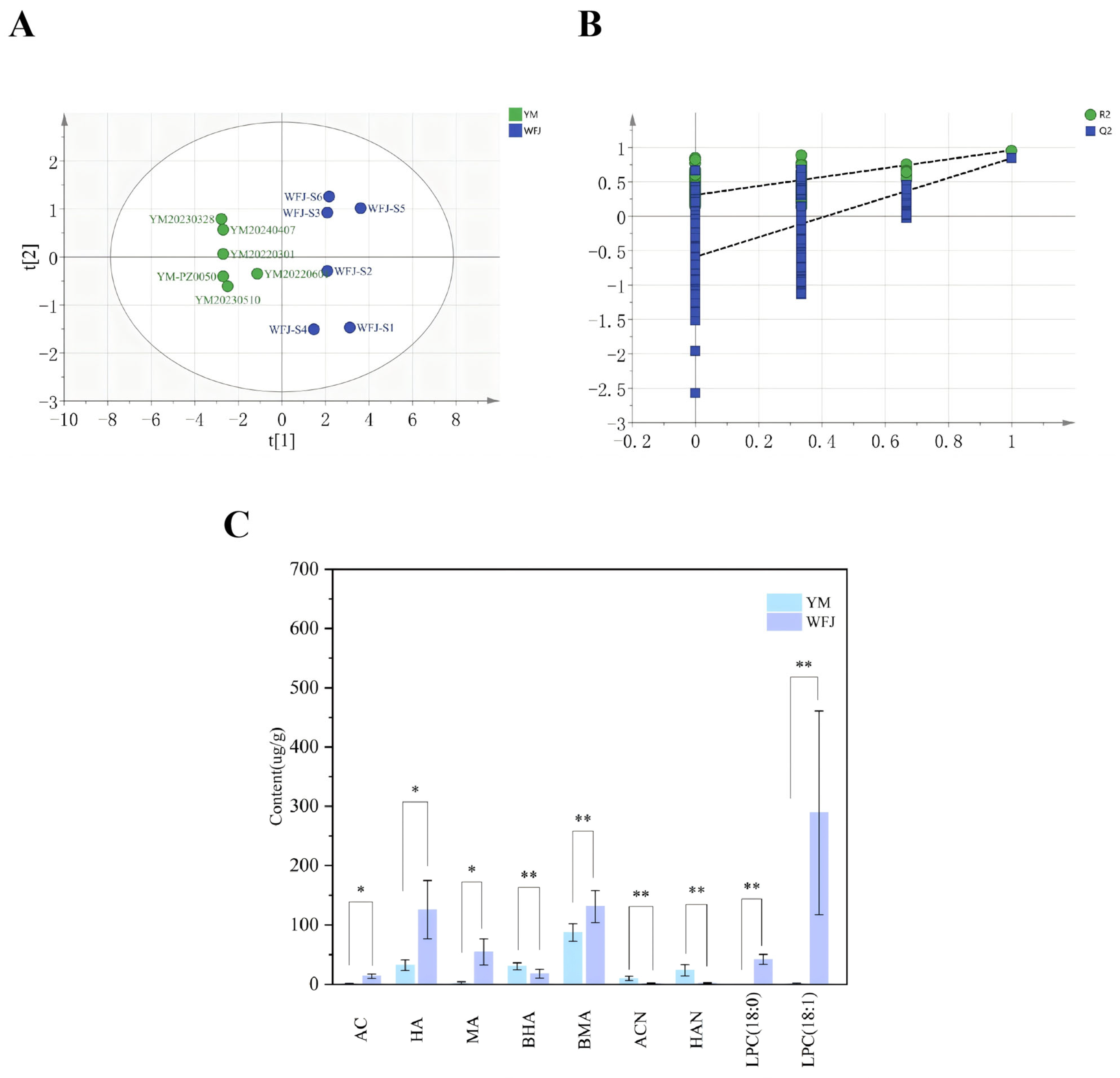
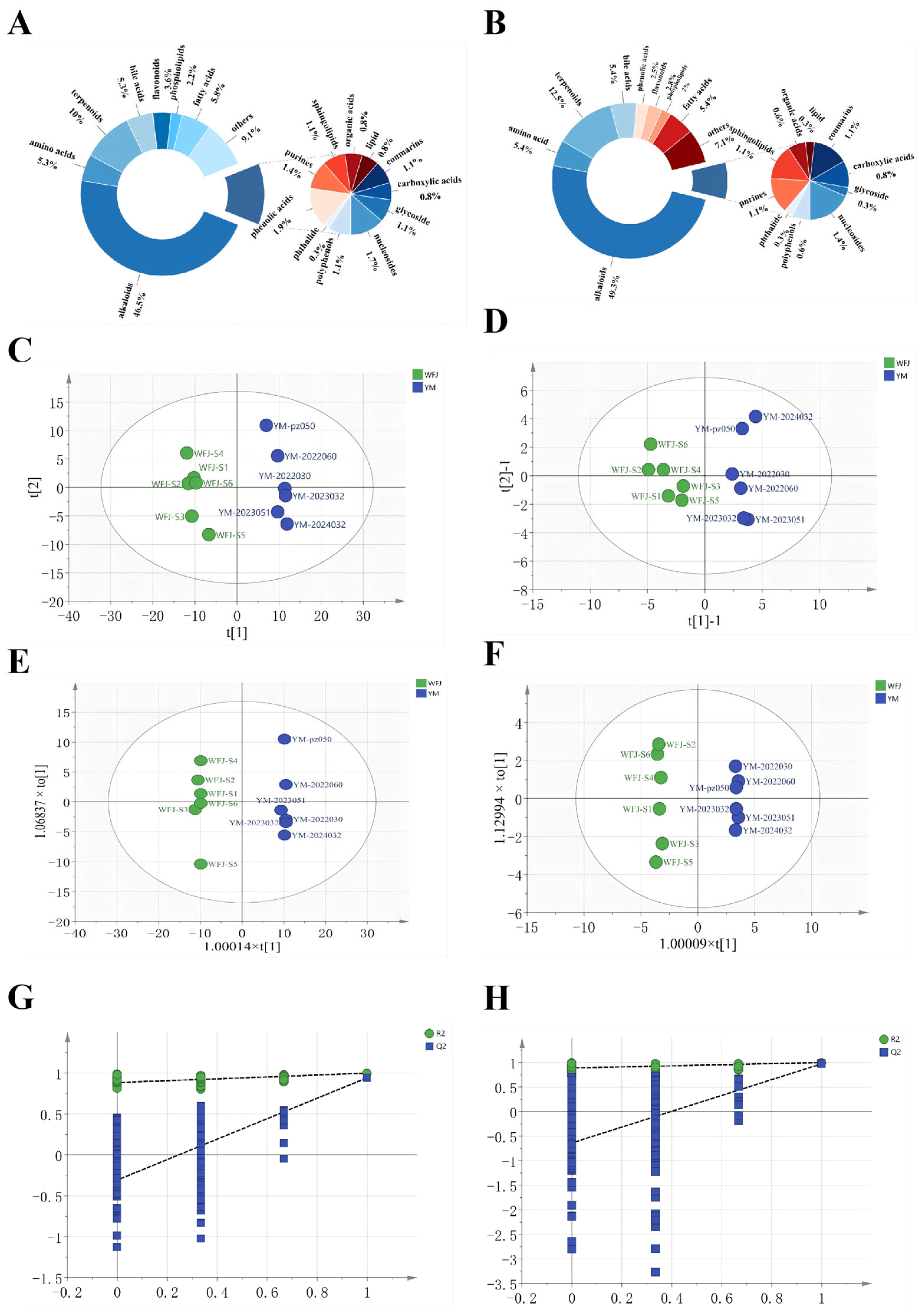
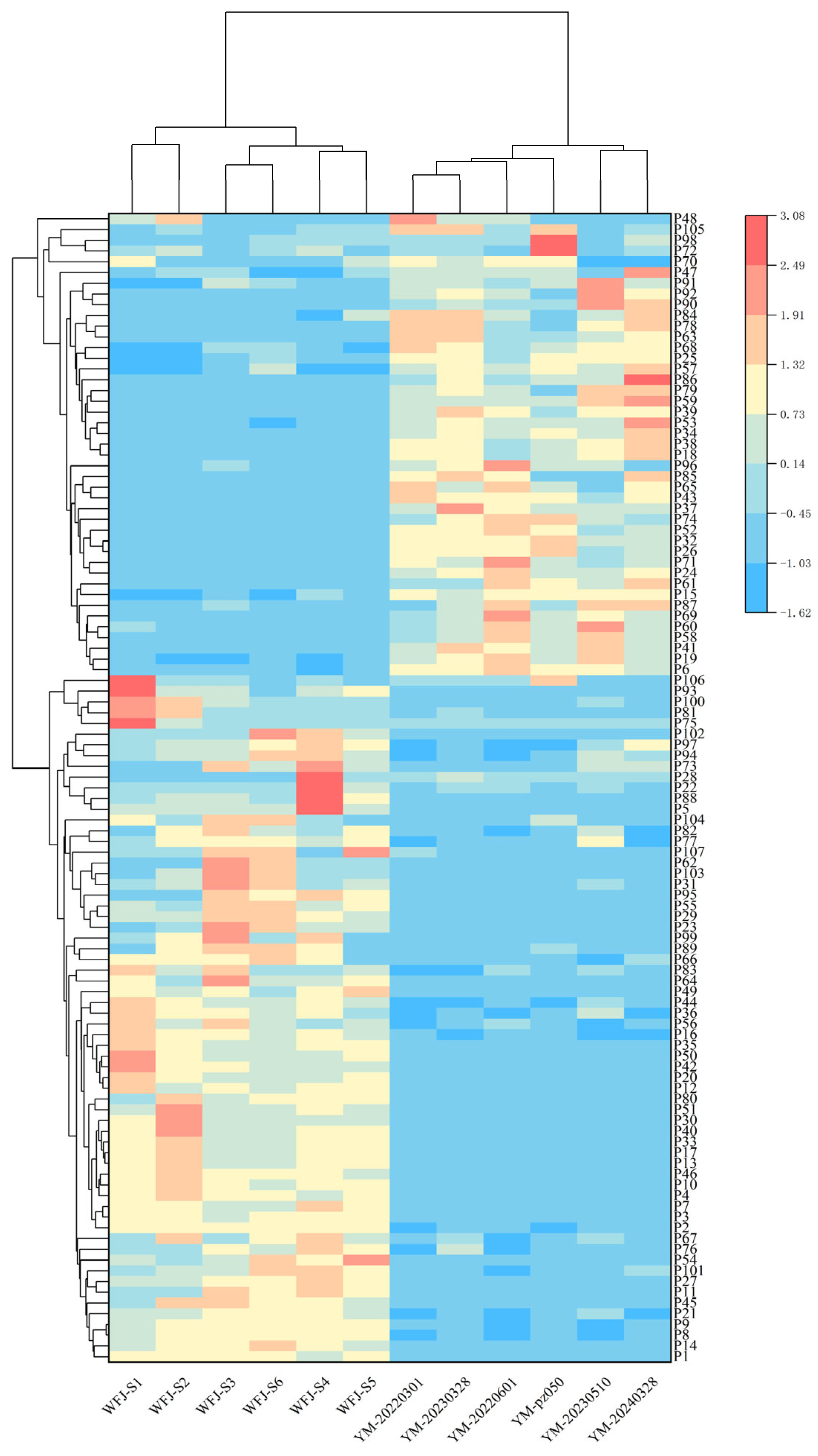
As the monarch drug of HFD, Yaomu is an important component for HFD to exert its therapeutic effects. It is a representative Ethnic medicine with both toxic and therapeutic effects. Since most of its components are toxic Chinese herbal medicines, its clinical application is restricted. Appropriate processing methods to reduce toxicity and preserve efficacy are the key to the safe use of Yaomu. The key to reducing toxicity lies in the change of chemical components before and after processing. This study is the first to systematically analyze the complex chemical composition of Huafeng Dan’s monarch drug, Yaomu, before and after bovine bile-mediated fermentation using a multi-dimensional UHPLC-Q/TOF-MS strategy. A total of 361 and 350 compounds were annotated before and after fermentation, respectively, with 107 differential compounds revealed through untargeted screening and multivariate analysis. In addition, based on statistical indicators (e.g., VIP values), low cost and easy accessibility, and literature evidence, nine chemical constituents were selected for LC-MS quantitative analysis, including two diester-type diterpenoid alkaloids, two monoester-type diterpenoid alkaloids, two alcoholamine-type diterpenoid alkaloids, and two LPCs. A rapid and sensitive LC-MS/MS method was established to simultaneously quantify these nine compounds in Yaomu extracts before and after fermentation. The developed analytical method demonstrated high specificity, sensitivity, precision, and accuracy in quantifying these nine target compounds. Comparative analysis of quantitative results revealed significant compositional differences between six batches of YM and six batches of WFJ. Post-fermentation, the contents of diester-type diterpenoid alkaloids (AC, HA and MA), monoester-type diterpenoid alkaloids (BMA), and LPCs (LPC (18:0) and LPC (18:1)) in six batches of YM were significantly lower than those in six batches of WFJ (* p < 0.05, ** p < 0.01, ** p < 0.01), while concentrations of monoester-type diterpenoid alkaloids (BHA) and alcoholamine-type diterpenoid alkaloids (ACN and HAN) showed a statistically significant increase (** p < 0.01, ** p < 0.01). This result indicates that fermentation has a significant regulatory effect on the chemical composition of Yaomu, effectively reducing the proportion of highly toxic components. These observations do not explicitly prove a detoxification mechanism but rather elucidate the step-wise bioconversion pathway: diester-type diterpenoid alkaloids undergo bovine bile-mediated fermentation to form less toxic monoester-type derivatives, which are subsequently transformed into minimally toxic alcoholamine-type alkaloids. These findings provide key insights into the transformation process of Yaomu during fermentation.
LPCs are endogenous phospholipid derivatives that are widely present in plasma and cell membranes and play important roles in lipid transport and signal transduction processes. Different from aconitine-type diterpenoid alkaloids, which have well-defined intrinsic toxicity, LPC substances are not the inherent toxic components of Yao medicines. However, increasing evidence suggests that changes in LPC levels reflect the disorder of membrane phospholipid metabolism during cell stress, inflammation, and oxidative damage [
45]. In this context, LPCs may participate as downstream mediators of inflammatory signaling and membrane remodeling rather than as major toxic substances. Therefore, in this study, LPC (18:0) and LPC (18:1) were interpreted as toxicity-related metabolic indicators or co-mediators, reflecting the biochemical responses to toxic exposure and fermentation-induced metabolic reprogramming rather than the direct toxic components of Yaomu themselves. This distinction provides a more mechanistically consistent framework for understanding the observed lipidomic changes.
Given the complex chemical composition of Yaomu, in which aconitine-type alkaloids represent only one of the major constituent classes among numerous coexisting components, a comprehensive toxicity evaluation is required. Because the liver serves as the major site of first-pass metabolism, it is frequently the primary target organ for drug-induced toxicity, highlighting the importance of physiologically relevant liver models for safety evaluation. A microfluidic liver-on-a-chip platform was established in this study to evaluate hepatotoxicity before and after fermentation. The liver-on-a-chip system provides continuous perfusion, enabling physiologically relevant shear stress, enhanced oxygen and nutrient delivery, and efficient metabolic waste removal, thereby supporting prolonged maintenance of hepatocyte viability and function. Increasing evidence has shown that microfluidic liver-chip platforms maintain higher albumin secretion, improved cell polarity, and enhanced cytochrome P450 enzyme activities compared with static cultures, reflecting a more in vivo-like metabolic competency essential for reliable hepatotoxicity assessment [
46,
47]. Collectively, these advantages highlight liver-on-a-chip technology as a more physiologically relevant and predictive in vitro platform, bridging the gap between traditional culture models and in vivo studies.
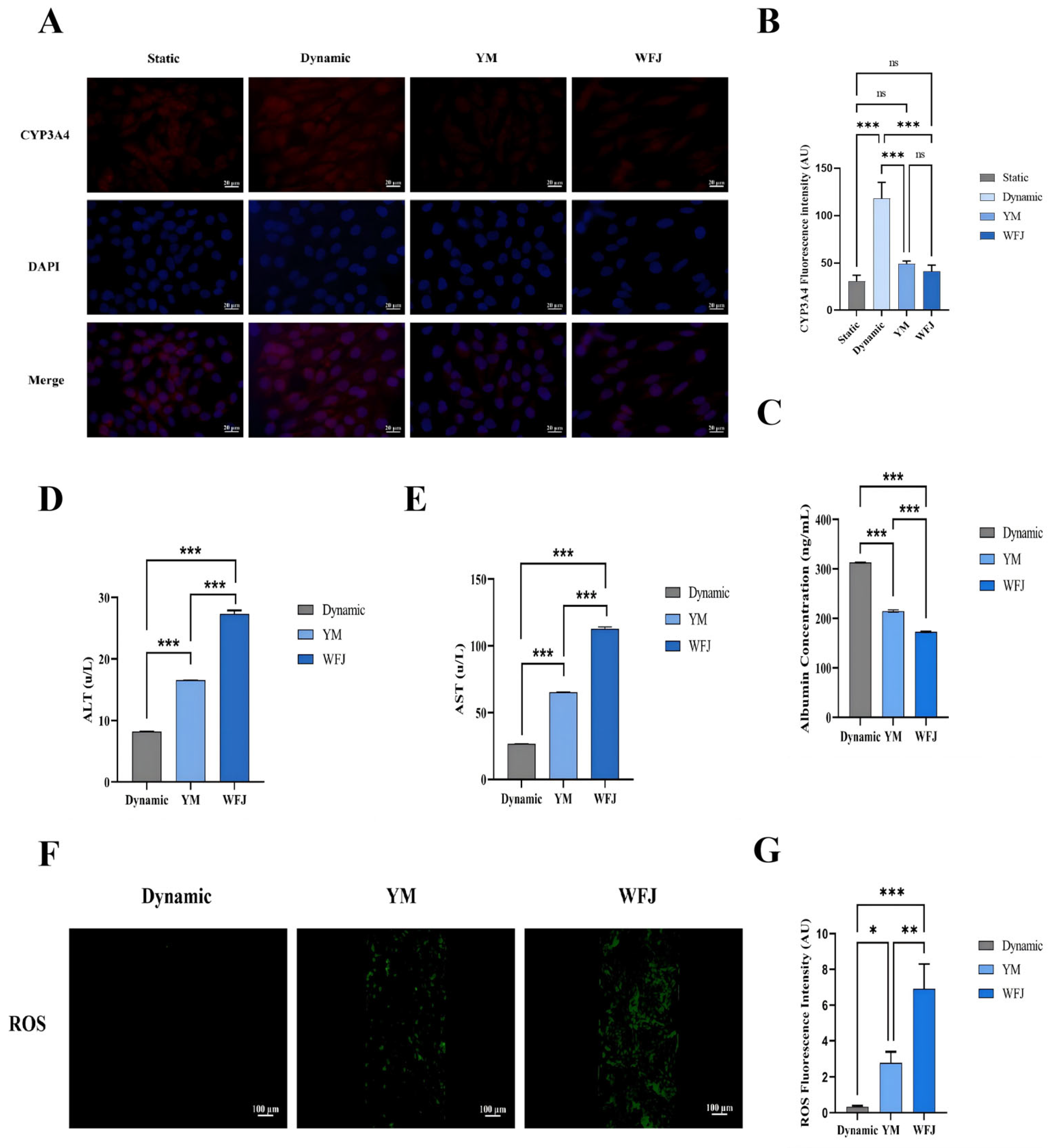
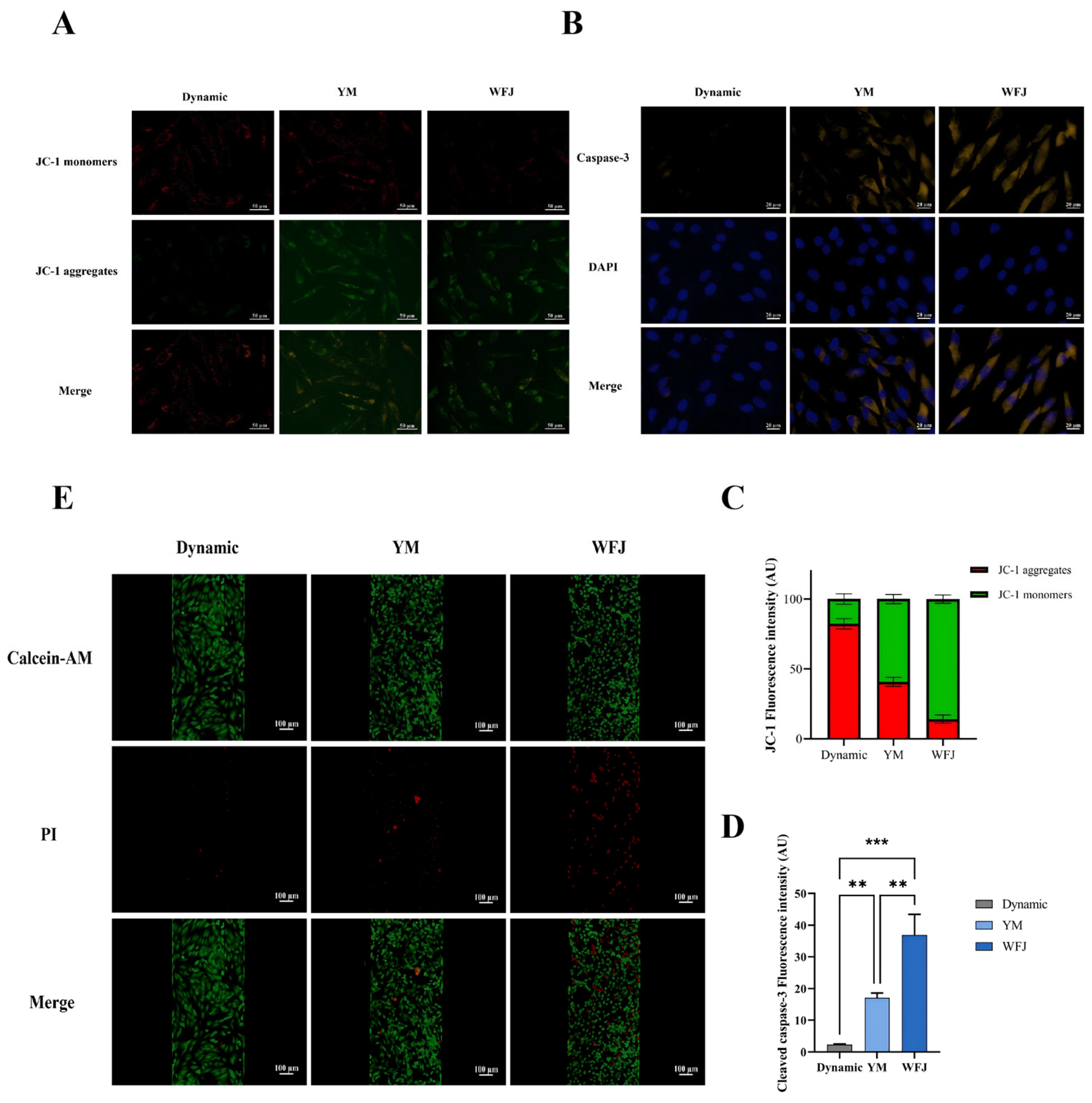
Using this platform, fermentation with bovine bile was associated with attenuated hepatotoxic responses compared with unfermented materials. Under dynamic perfusion alone, liver chips maintained low ALT levels (<10 U/L), reflecting preserved membrane integrity and stable hepatic function, whereas drug exposure induced enzyme leakage in a preparation-dependent manner. Both ALT and AST levels were elevated following treatment, with markedly greater increases observed in the WFJ group compared with the YM group, indicating more severe hepatocellular damage induced by the unfermented materials. Consistent with these biochemical alterations, hepatocytes in the WFJ group exhibited a constellation of injury phenotypes, including reduced albumin secretion, excessive ROS accumulation, loss of mitochondrial membrane potential as indicated by JC-1 staining, increased caspase-3 activation, and higher proportions of dead cells in live/dead assays. These observations are consistent with oxidative stress-associated mitochondrial dysfunction and activation of apoptosis-related pathways; however, the present data do not establish a direct causal sequence linking individual chemical components to specific toxicity mechanisms.
CYP3A4 expression and albumin secretion, commonly used indicators of hepatocyte metabolic competence, were reduced in the WFJ group, further suggesting impaired hepatocellular function under these conditions. In contrast, fermented samples were associated with comparatively milder alterations in biochemical, oxidative stress, and apoptosis-related endpoints. Collectively, the current results should be interpreted cautiously as associative observations rather than definitive mechanistic proof. Given the limited number of targeted markers and the absence of dedicated mechanistic validation experiments, the present study should be regarded as providing hypothesis-generating evidence supporting a potential relationship between fermentation-induced chemical transformation and altered hepatotoxic responses.
4. Materials and Methods
4.1. Chemicals and Reagents
Methanol (HPLC grade) was purchased from Shanghai Xingke High Purity Solvents Co., Ltd. (Shanghai, China). Formic acid (HPLC grade) was purchased from Aladdin Biochemical Technology Co., Ltd. (Shanghai, China). Acetonitrile (LC-MS grade) was purchased from Merck (Darmstadt, Germany). Deionized water was further purified using a Milli-Q system (Millipore, Billerica, MA, USA). For alkaloid determination, aconitine (No. BBP03866, 98%), hypaconitine (No. BBP03972, 98%), mesaconitine (No. BBP04014, 98%), benzoylhypaconine (No. BBP60533, 98%), benzoylmesaconine (No. BBP60534, 98%), aconine (No. BBP60412, 98%), hypaconine (No. BBP60695, 98%), and berberine (No. BBP01161, 98%) were purchased from Yunnan Xili Biotechnology Co., Ltd. (Yunnan, China). For phospholipid determination, LPC (18:0) (No. 24W110-L3, 95.11%), LPC (18:1) (No. 24W139-V3, 99.5%), and Miltefosine (No. 24W216-Y6) were purchased from Shanghai Zhenzhun Biological Technology Co., Ltd. (Shanghai, China). APAP (No. AFCC1554, 98%) was purchased from Chengdu Efa Biotechnology Co., Ltd. (Chengdu, China). All analytical standards were stored at −20 °C. A total of 12 Yaomu samples were kindly provided by Zunyi Liaoyuan Hetang Pharmaceutical Co., Ltd. (Zunyi, China), including six samples before fermentation and six samples after fermentation (No. YM20220301, No. YM20230510, No. YM20220601, No. YM20230328, No. YM-PZ0050, No. YM20240407, No. WFJ-S1, No. WFJ-S2, No. WFJ-S3, No. WFJ-S4, No. WFJ-S5, No. WFJ-S6).
The THLE-2 cell line and the dedicated culture medium were acquired from Shanghai EK-Bioscience Biotechnology Co., Ltd. (Shanghai, China). The organ-on-a-chip was self-made within the research group. The human albumin ELISA Kit (J1876) was purchased from Wuhan Jilide Biotechnology Co., Ltd. (Wuhan, China). The CYP3A4 rabbit polyclonal antibody (pAb) was purchased from Abclonal (Cat. No. A2544), the Cy3-conjugated goat anti-rabbit IgG secondary antibody was obtained from Absin (Cat. No. abs20024), and the cleaved caspase-3 polyclonal antibody was purchased from Proteintech (Cat. No. 25128-1-AP). 6-Carboxy-2′,7′-dichlorodihydrofluorescein (DCFH-DA) diacetate was purchased from Thermo Fisher (Waltham, MA, USA). Type I mouse tail collagen was purchased from Shanghai Yuanye Bio-Technology Co., Ltd. (Shanghai, China). Calcein AM/PI (Cat. No. C1371M), JC-1 (Cat. No. C2006), 4′,6-Diamidino-2-phenylindole dihydrochloride (DAPI) (Cat. No. C1006), Amplex Red Aspartate Aminotransferase Activity Assay Kit (Cat. No. P2715S) and Amplex Red Alanine Aminotransferase Activity Assay Kit (Cat. No. P2711S) were both purchased from Beyotime Biotechnology Co., Ltd. (Shanghai, China).
4.2. Laboratory Apparatus
Chromatographic separation was achieved using a Shimadzu LC system (Shimadzu Corporation, Kyoto, Japan). High-resolution mass spectrometric data were acquired on an AB Sciex X500R quadrupole time-of-flight mass spectrometer (AB Sciex LLC, Framingham, MA, USA). Quantification was performed on an AB Sciex 4500 triple quadrupole mass spectrometer (AB Sciex LLC, Framingham, MA, USA). Enzyme-labeled detector (Model: VarioskanFlash; Manufacturer: ThermoScientific). An enzyme-labeled detector (Model: Varioskan™ Flash, Thermo Fisher Scientific, Waltham, MA, USA) was used for absorbance measurements. Sample extraction was performed using an ultrasonic cleaner (Model: KQ-500DE, Kunshan Ultrasonic Instruments Co., Ltd., Beijing, China). Samples were freeze-dried using a stoppering-type freeze dryer (Model: LGJ-18, Manufacturer: Beijing Sihuan Scientific Instrument Factory Co., Ltd., Beijing, China). A microcentrifuge (Model: Fresco™ 21, Manufacturer: Thermo Fisher Scientific, Waltham, MA, USA) was used for sample centrifugation. Chip perfusion was performed using a syringe pump (Model LSP02-2Y, Baoding Rongbai Constant Flow Pump Manufacturing Co., Ltd., Hebei, China). Images were acquired using an automated inverted fluorescence microscope (Model: Axio Observer 7, Manufacturer: Zeiss, Jena, Germany) equipped with a digital camera and ZEN imaging software (version 3.8, Carl Zeiss Microscopy GmbH, Jena, Germany).
4.3. Sample Preparation
Twelve samples were pulverized and passed through a No. 5 mesh sieve. Exactly 5.0 g of each sample was weighed and placed into a conical flask, followed by the addition of 50 mL of 70% Methanol in Water (v/v). After recording the weight and mixing thoroughly, the mixture was ultrasonicated at 80 W for 30 min. The samples were cooled to room temperature, and the lost weight was replenished. The solution was transferred to a centrifuge tube and centrifuged at 5000 r/min for 10 min. The supernatant was filtered through a 0.22 μm microporous membrane, with the first three drops discarded. The remaining filtrate was collected into HPLC vials and stored at 4 °C for further analysis.
4.4. Multivariate Statistical Analysis
4.4.1. UHPLC-Q-TOF-MS Analysis
The instrument used was UPLC-Q-TOF-MS with an Acquity™ UPLC HSS T3 column (dimensions: 150 mm × 2.1 mm, and 1.8 μm particle size; Milford, MA, USA). The column oven temperature was maintained at 35 °C with a temperature limit of 90 °C to ensure optimal separation conditions. The mobile phase composition comprised a mixture of H2O (A, containing 0.1% formic acid) and acetonitrile (B) with a gradient of mobile phase as follows: 0–15 min, 98%~90% A; 15–30 min, 90%~80% A; 30–40 min, 80%~70% A; 40–50 min, 70%~50% A; 50–55 min, 50%~35% A; 55–58 min,35%~30% A; 58–64 min, 30–10% A; 64–66 min, 10–10% A.
4.4.2. Mass Spectrometry Conditions
Sampling was performed using an electrospray ionization (ESI) source in full scan mode under both positive and negative ion modes. The ion spray voltages were set at 5500 V for positive mode and −4500 V for negative mode. The ion source temperature was maintained at 550 °C. The nebulizer gas (N2) and drying gas (N2) pressure were set at 55 psi, and the curtain gas (N2) pressure was 35 psi. In TOF-MS mode, the scan range was m/z 50–1500 Da, with a declustering potential (DP) of 80 V (positive ion mode) or −80 V (negative ion mode), and a collision energy (CE) of 10 V (positive) or −10 V (negative). In TOF-MS/MS mode, the scan range remained m/z 50–1500 Da, with the same declustering potential settings (DP: 80 V/−80 V), while the collision energy was set to 35 V (positive) or −35 V (negative).
4.4.3. Analysis of Differential Compounds Before and After Fermentation
Samples of Yaomu before and after fermentation from were analyzed by UHPLC-Q-TOF-MS under the chromatographic and mass spectrometric conditions described in
Section 4.4.1 and
Section 4.4.2. The SCIEX OS software’s predicted molecular formula function was employed to predict molecular formulas and match them with characteristic fragment ions for chemical structure identification. The mass spectrometry data of Yaomu before and after fermentation were processed using MS Convert and MS-DIAL software. The processed data were subsequently imported into SIMCA 14.1 for PCA and OPLS-DA analyses.
4.4.4. Qualitative Data Analysis
MS/MS fragmentation data were manually interpreted and compiled using Microsoft Word 365 (Microsoft Corp., Redmond, WA, USA), including retention times, fragment ions, and structural annotations. Multivariate statistical analysis including principal components analysis (PCA) and orthogonal partial least-squares discriminant analysis (OPLS-DA) was performed to visualize the metabolic variations using SIMCA-P v.14.1 (Umetrics, Umeå, Sweden). Extracted ion chromatograms (EICs), a pie chart, and hierarchical cluster analysis (HCA) were generated using OriginPro® 2025 (Origin Lab Corporation, Northampton, MA, USA).
4.5. Quantitative Method Validation
This study did not involve quantitative analysis in biological matrices. All calibration and quantitative analyses were performed using traditional herbal extract solutions rather than biomaterials such as plasma, tissue, or other biological fluids.
4.5.1. Standard and Sample Solutions
Optimization Solution: An optimization solution containing 500 ng/mL of AC, HA, MA, BHA, BMA, ACN, HAN, LPC (18:0), and LPC (18:1) was prepared in 70% Methanol in Water (v/v). BBR and MF were selected as internal standards (IS), with BBR serving as the internal standard for AC, HA, MA, BHA, BMA, ACN, and HAN, and MF for LPC (18:0) and LPC (18:1). A standard optimization solution (500 ng/mL) containing all target analytes and internal standards was infused into the mass spectrometer to optimize MRM parameters, including mass spectrometry parameters such as Q1, Q3, DP, CE, EP, and CXP.
Standard solution: A primary stock solution containing all reference standards was prepared by dissolving 1.0 mg of each standard compound in methanol. According to records from PubChem and Pharmacopoeia of the People’s Republic of China, aconitum alkaloids are described as readily soluble in methanol and ethanol (>100 mg/mL). The LIPID MAPS database classifies LPC lipids as soluble in methanol (5–50 mg/mL). To establish calibration curves with concentrations ranging from 1 to 750 ng/mL, the stock solution was serially diluted with 70% methanol (v/v). This process generated nine calibration points. The primary stock solution was stored at −20 °C for future use. No precipitation or phase separation was observed during storage within the study period.
Quality Control (QC) Samples: QC samples were prepared from the primary stock solution. Appropriate aliquots of the stock solution were diluted appropriately with 70% Methanol (v/v) to prepare low, medium, and high QC samples at final concentrations of 5 ng/mL, 50 ng/mL, and 500 ng/mL, respectively.
Test Samples: Test samples were prepared as described in
Section 4.3.
4.5.2. LC-MS Analysis of Yaomu
The UPLC-QQQ-MS/MS systems consisted of an HPLC separation system (Shimadzu, Kyoto, JPN) and an API 4500 Qtrap mass spectrometer equipped with an ESI interface (AB Sciex, Framingham, MA, USA). Chromatographic separation was conducted using an ACQUITYTM Premier BEH C18 column (2.1 × 100 mm, and 1.7 μm particle size, Waters Corp., Milford, MA, USA) with column temperature maintained at 35 °C. Mobile phase A consisted of 0.1% formic acid in water (v/v), and mobile phase B was acetonitrile. The injection volume was set to 3 μL, and the column was re-equilibrated at initial gradient conditions for 10 min. The gradient elution program with a flow rate of 0.3 mL/min was used as follows: 0–1 min, 10%~20% B; 1–8 min, 20%~35% B; 8–10 min, 35%~60% B; 10–15 min, 60%~90%. The analysis was performed using electrospray ionization (ESI) in positive ion mode. Quantification was carried out using the multiple reaction monitoring (MRM) mode. The source parameters were set as follows: curtain gas (CUR), 35 psi; collision gas (CAD), 9; ion spray voltage (IS), 5500 V; nebulizer gas (GS1) and auxiliary gas (GS2), 45 psi each; and source temperature (TEM), 500 °C.
4.5.3. Method Validation
This study evaluated key analytical parameters including linearity (R2), limit of quantification (LOQ), limit of detection (LOD), accuracy, stability, repeatability, extraction recovery (%), and relative standard deviation (RSD).
Linearity and Calibration Curve: The linearity of the method was evaluated by analyzing a series of standard solutions at concentrations ranging from 1 to 750 ng/mL. Calibration curves were constructed by plotting the peak area ratio to internal standard versus the known concentrations. A least-squares linear regression analysis was performed. The linearity was considered acceptable when the correlation coefficient (R2) exceeded 0.99.
Sensitivity: The limit of detection (LOD) and limit of quantification (LOQ) were determined based on the signal-to-noise ratio (S/N). LOD was defined as the concentration with an S/N ratio of 3:1, while LOQ was defined as the concentration with an S/N ratio of 10:1.
Precision, Accuracy and Stability: Intra-day precision was determined by analyzing QC samples at three different concentrations within a single day, while inter-day precision was assessed by analyzing the same QC samples on three different days. Sample stability was conducted by storing the QC samples in an autosampler at 15 °C, with injections performed at 0, 2, 4, 8, 12, and 24 h.
Repeatability: To evaluate the repeatability of the method, a single batch of sample was divided into six aliquots and each aliquot was analyzed independently under identical conditions. The relative standard deviation (RSD%) of the measured results was used to assess repeatability.
Extraction Recovery: Extraction recovery was assessed by comparing the peak areas of analytes extracted from samples with those of post-extraction spiked samples at equivalent concentrations. Recovery (%) = (Measured value of Spiked Sample − Measured value of non-spiked Sample/Nominal spiked concentration) × 100.
4.5.4. Quantitative Data Analysis
All analytical data were processed using Analyst® software 1.7 (SCIEX, Framingham, MA, USA). Results were organized using Microsoft Excel 365 (Microsoft Corporation, Redmond, WA, USA), and expressed as the mean (±SD). Statistical analysis was performed using SPSS version 27 (IBM Corp., Armonk, NY, USA). When the data satisfied the assumption of normal distribution, an independent samples t-test was performed; otherwise, the Mann–Whitney U test was applied to assess the statistical significance of differences in the same compounds between the pre- and post-fermentation groups. A p-value of less than 0.05 was considered statistically significant.
4.6. Liver On-a-Chip
4.6.1. Preparation of Yaomu Before and After Fermentation for Liver On-a-Chip Experiment
After multivariate statistical analysis one representative batch each of the pre-fermentation and post-fermentation Yaomu samples showing the greatest differences was selected for subsequent LOC experiments. The Yaomu extracts were prepared according to the procedure described in
Section 4.4, and the resulting extracts were concentrated under reduced pressure until no residual methanol odor was detectable. The concentrated unfermented Yaomu (WFJ) and fermented Yaomu (YM) samples were then subjected to freeze-drying for subsequent organ-on-a-chip experiments. The yields of WFJ and YM were 19.68% and 6.71%, respectively. Since the yields of YM and WFJ differ significantly, all subsequent experiments will be uniformly converted into crude drug concentration for analysis.
4.6.2. Cytotoxicity Assay
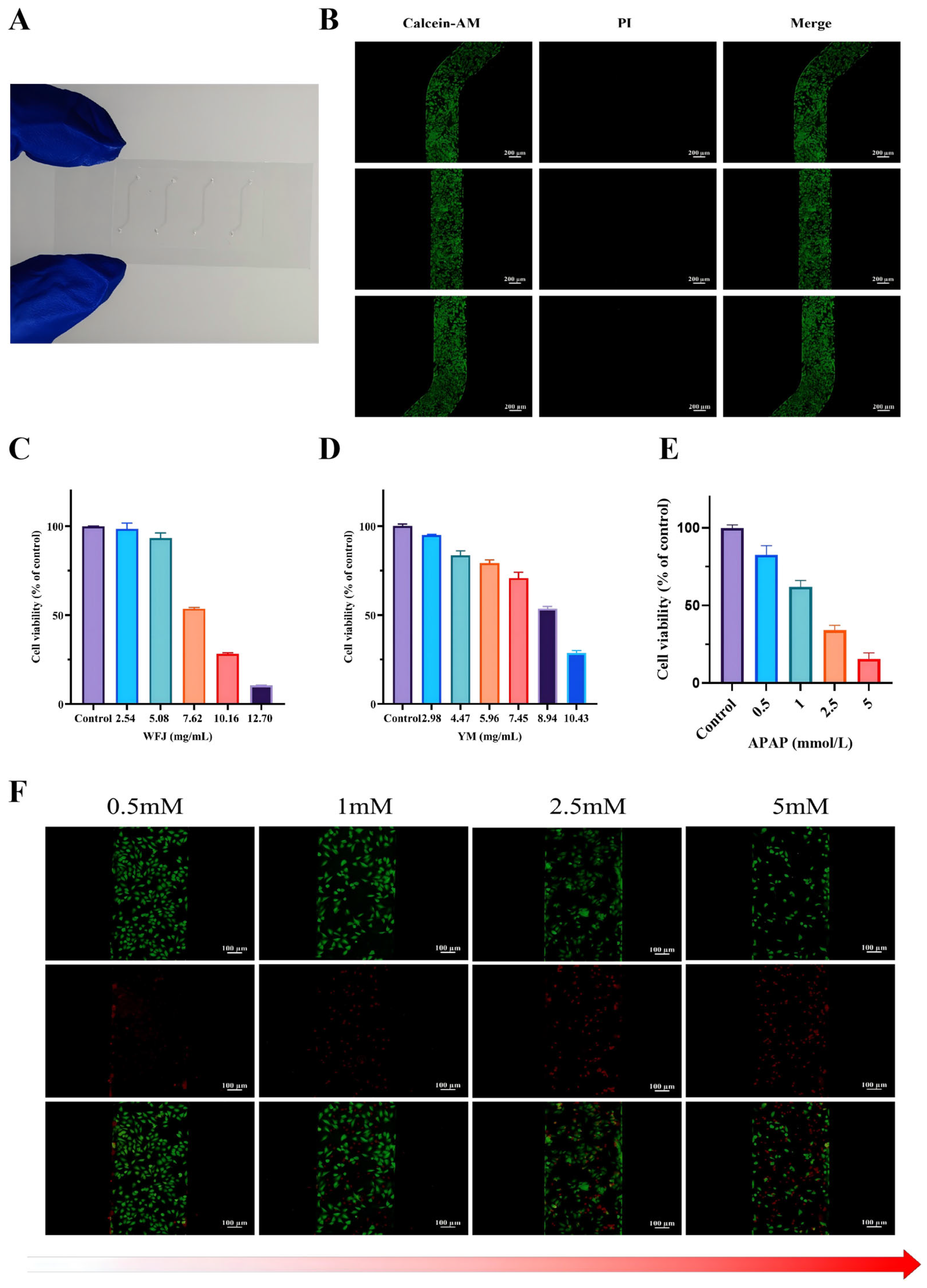
THLE-2 cells in the logarithmic growth phase were harvested by trypsinization and resuspended to obtain a single-cell suspension. The cell suspension was transferred into centrifuge tubes and centrifuged at 1000 rpm for 5 min, after which the supernatant was discarded. Complete culture medium was added to the tubes, and the cells were gently resuspended by pipetting to obtain a uniform cell suspension for cell counting. Cells were seeded into 96-well plates at a density of 8000 cells per well, with three replicates for each group, and incubated at 37 °C in a humidified atmosphere containing 5% CO2 for 24 h. After cell attachment, the culture medium was aspirated and replaced with medium containing the prepared drug solutions at different concentrations, followed by incubation for an additional 24 h. After treatment, the drug-containing medium was removed, and blank culture medium supplemented with 10% CCK-8 reagent was added to each well. The plates were incubated for 40 min in the incubator, and absorbance was measured using a microplate reader to determine the appropriate concentrations for subsequent treatments.
4.6.3. 3D Cell Culture in the Liver-on-a-Chip Mode
One day prior to cell seeding, the organ-on-a-chip devices were coated with Matrigel diluted in serum-free medium and incubated overnight in a cell culture incubator. The THLE-2 cell line was maintained in its specific complete medium at 37 °C in a humidified atmosphere containing 5% CO2. THLE-2 cells in the logarithmic growth phase were digested with 0.25% trypsin and diluted with complete medium to a final cell density of 1 × 10⁷ cells/mL. Subsequently, 4 μL of the cell suspension was carefully injected into the pre-coated microchannels of the chip. The chips were then placed in the incubator and kept static to allow cell attachment. After cell adhesion was achieved, culture medium was added dropwise to both ends of the channel to prevent evaporation of the medium within the channel. The culture medium was replaced daily.
4.6.4. Perfusion
Set up four groups: a static group, a dynamic group, a YM group, and a WFJ group. Place the chips in an incubator and perform perfusion culture at a flow rate of 2 μL/min using a microfluidic syringe pump for 12 h. Subsequently, perfuse the drug solution diluted with the culture medium at a flow rate of 1 μL/min. After 12 h of perfusion, collect the chips and the effluent from the chips for subsequent analysis.
4.6.5. Validation of Drug Hepatotoxicity Test
To verify the feasibility of drug toxicity testing on the chip, APAP was used to verify liver toxicity on the chip. After 12 h of perfusion culture, culture media containing different concentrations of APAP (0, 0.5, 1, 2.5, 5 mM) were added. After 12 h of perfusion, the supernatant was removed, and the cells were washed three times with PBS. The Calcein AM/PI double-staining kit was used to detect the survival/death status of THLE-2 cells, and the morphology of the cells was observed using a fully motorized inverted fluorescence microscope.
4.6.6. Immunofluorescence
After completion of perfusion drug administration, the samples were fixed with methanol for 20 min and washed three times with PBS. Cell permeabilization was performed by incubation with Triton™ X-100 for 10 min at room temperature, followed by three washes with PBS. The samples were then blocked with QuickBlock™ Blocking Buffer for Immunofluorescence Staining for 10 min. The primary antibody was injected into the chip channels and incubated at 4 °C overnight. On the following day, the samples were washed three times with PBS, and a Cy3-conjugated goat anti-rabbit IgG (H+L), cross-adsorbed secondary antibody diluted 1:500 in immunofluorescence secondary antibody dilution buffer was added. After incubation at 4 °C for 1 h in the dark, the samples were washed three times with PBS. Subsequently, the samples were counterstained with DAPI for 5 min, washed three times with PBS, and finally imaged using a fully automated inverted fluorescence microscope. Image analysis was performed using ImageJ software (version 1.54p, National Institutes of Health (NIH), Bethesda, MD, USA).
4.6.7. Measurement of Albumin, ALT and AST
After the drug administration and perfusion are completed, collect the culture medium flowing out of the chips in each group. Albumin levels in the liver-on-a-chip culture supernatants were determined using an ELISA kit. Samples were diluted according to the manufacturer’s instructions and incubated in antibody-coated 96-well plates at 37 °C, followed by incubation with enzyme conjugate and TMB substrate. After stopping the reaction, absorbance was measured at 450 nm, and albumin concentrations were calculated from the standard curve. ALT and AST activities were measured using commercial biochemical assay kits according to the manufacturer’s protocols. Measurements were conducted using a multifunctional microplate reader, and the results were expressed as U/L.
4.6.8. Measurement of Intracellular ROS and ΔΨm
After stimulating the liver-on-a-chip with different concentrations of WFJ (7.8 mg/mL) and YM (7.8 mg/mL) for 12 h, they were incubated with DCFH-DA diluted 1000-fold at 37 °C for 20 min to determine the presence of ROS. Mitochondrial membrane potential was evaluated using the JC-1 probe. Cells were washed with PBS, incubated with 1× JC-1 working solution at 37 °C for 20 min, and washed three times with JC-1 buffer. Fluorescence was recorded using a fluorescence microscope. The red/green fluorescence ratio was calculated to assess mitochondrial functional status.
4.6.9. Detection of Cell Apoptosis
To specifically evaluate apoptosis in the liver microfluidic chip induced by fermented and unfermented Yaomu extracts, immunofluorescence staining for cleaved caspase-3 was performed. The fluorescence intensity and the proportion of cleaved caspase-3-positive cells were analyzed to assess apoptotic responses induced by fermented and unfermented Yaomu under dynamic perfusion conditions. In addition, after extracts of WFJ (7.8 mg/mL) and YM (7.8 mg/mL) treatment for 12 h, apoptosis was detected with the calcein-AM/PI double-staining kit. The fluorescent probe incubated the cells in darkness at 37 °C for 20 min. The image was analyzed using ImageJ software.
4.6.10. Liver-on-a-Chip Data Analysis
Fluorescence intensity was semi-quantitatively analyzed using ImageJ software (National Institutes of Health, Bethesda, MD, USA). The statistical analysis was performed in GraphPad Prism 9.1.0 (GraphPad Software, LLC, Boston, MA, USA). All data are presented as mean ± standard deviation (SD). Differences among multiple groups were analyzed using one-way analysis of variance (ANOVA), followed by appropriate post hoc multiple comparison tests when applicable.