1. Introduction
Cervical squamous cell carcinoma (CSCC) is correlated to high-risk HPV strains such as HPV-16 and HPV-18 which lead to persistent high-risk human papillomavirus (HPV) infections that cause cancer to develop in the ectocervix near the squamocolumnar junction [
1]. The introduction of prophylactic HPV vaccines, commonly known as Gardasil 9, has shown promise in reducing the prevalence of HPV infections and related precancerous lesions. Gardasil 9 is a recombinant vaccine that contains virus-like particles resembling the outer shell of nine different HPV strains but does not contain any viral DNA [
2]. Yet, cervical cancer remains a significant global public health challenge, with it being the fourth most common cancer in women globally [
3]. In low- and middle-income countries where access to screening and medical therapies may be limited, the burden of disease remains high. Therefore, there is an ongoing need for the development of effective therapeutic agents for patients who develop invasive disease such as personalized peptide cancer vaccines. In a study by Panahi et al., multiepitope peptide cancer vaccines were designed for a murine model from four types of high-risk HPVs using bioinformatics tools. Both prophylactic and therapeutic scenarios were studied and were successful in the complete rejection of tumors within mice [
4]. Further advancement of this study requires analysis and assessment of applicability in human models.
Another cancer that is prevalent amongst women is breast carcinoma (BC). BC can be categorized by the presence of specific hormone receptors, with triple-negative breast cancer (TNBC) lacking expression of estrogen receptors (ER), progesterone receptors (PR), and human epidermal growth factor receptor 2 (HER2) [
4]. TNBC remains the most aggressive form of BC and the most challenging to treat. Cancer staging, tumor genetic profiles, and patient premenopausal or postmenopausal status largely contribute to prognosis and treatment options [
4]. Ultrasounds and mammograms serve as the mainstay for identifying suspicious masses, with tissue biopsies used to confirm the diagnosis. The 5-year survival rate for BC is between 93 and 98%, dependent on patient demographics (e.g., race, ethnicity, age, socioeconomic status, etc.) and tumor morphological properties (e.g., tumor size, local or regional invasion, hormone receptor status, etc.), among other factors.
Clinical standards of care for BC are generally wide and dependent on breast cancer type, but may include neoadjuvant chemotherapy to shrink the tumor before lumpectomy or mastectomy [
4]. Treatment depends on the specific staging and classification and may include agents such as selective estrogen receptor modulators (SERMs), selective estrogen receptor downregulators (SERDs), aromatase inhibitors (AIs), etc. There are currently no vaccines used as first-line therapy for the treatment of breast cancer. Still, there is interest in targeting tumor-associated genes to elicit an immune response specific to breast tumor cells [
5]. In addition, ongoing clinical trials aim to identify new target proteins on cancer cells to treat and improve patient outcomes. Immunotherapies, especially checkpoint inhibitors like pembrolizumab, have shown promise by producing lasting responses in advanced disease [
6]. Additionally, recent advancements in molecular biology and genomics have resulted in high-throughput sequencing technologies, enabling the identification of key genetic alterations and pathways involved in carcinogenesis. The product of such sequence technologies offers potential targets for personalized therapeutic interventions. Our study incorporates human samples of CSCC and BC to demonstrate the highly effective genetic analysis and epitope optimization capabilities of AutoEpiCollect 2.0.
Personalized peptide vaccine design involves sequencing RNA from tumor samples and identification of somatic mutations that act as highly specific targets for an individual’s cancer. Studies have shown that high-throughput sequencing technologies have directly influenced advancements seen in personalized peptide vaccine development [
7,
8,
9]. In our previous study using IntegralVac, an integrated machine learning framework, we demonstrated rapid, accurate, and scalable identification of immunogenic, major histocompatibility complex-binding (MHC-binding) epitopes against evolving pathogens and cancer antigens. This was achieved through its native DeepVacPred, MHCSeqNet, and HemoPI capabilities [
10]. We then developed machine learning models for the in silico prediction of non-toxic, non-allergenic epitopes capable of activating tumor-infiltrating lymphocytes, namely AutoEpiCollect and AutoPepVax [
11,
12]. Using these models, we designed pan-cancer vaccines targeting missense mutations commonly found across several cancer types. However, traditional peptide vaccine development requires the practical identification of carcinogenic variants that create neoantigens. In addition, peptide vaccine development is extremely time-consuming due to the meticulous gene analysis needed to identify these variants [
7]. While AutoEpiCollect automates the collection of physicochemical properties and immunological data, there remains an opportunity to improve genetic variant analysis. In this study, we integrate the key findings from our previous studies and introduce an unprecedented approach by developing an end-to-end automated vaccine design process using AutoEpiCollect 2.0. AutoEpiCollect 2.0 integrates Partek Flow, a next generation RNA sequencing tool, and automates the manual analysis of genetic variants from a specified cancer sample involved in peptide cancer vaccine design. This analysis generates a list of ranked epitopes used for designing an effective personalized peptide cancer vaccine.
Our primary goal in this study is to demonstrate the flexibility of the personalized vaccine development process using two methods: peptide vaccine development through the identification of generalized variants known to cause cancer (module 1) and peptide vaccine development through cancer-specific variants (module 2). The generalized variants refers to variants that are known to cause nonspecific cancer whereas cancer-specific variants refers to variants that have an established association to a specific cancer. Furthermore, we achieved a secondary goal of improved latency times in the previously manual genetic analysis process by automating this in AutoEpiCollect 2.0. We used AutoEpiCollect 2.0 to design peptide vaccines for a CSCC case designated as case 1 and a BC case designated as case 2. Case 1 uses module 1, while case 2 follows module 2 as outlined above. In addition, we study the future implications that personalized cancer vaccines provide for a generalized population vaccine as well as a vaccine designed to address individuals who are clinically healthy but have high-risk gene variants.
3. Discussion
In this study, we designed personalized peptide cancer vaccines for CSCC and BC using the innovative data integration capability in AutoEpiCollect 2.0. We successfully identified our top epitopes for MHC class I and MHC class II based on the antigens synthesized by the carcinogenic variants in our cervical carcinoma and BC samples. These antigens form the basis for our peptide cocktail vaccine that can then be used to prime the adaptive immune system and mount highly specific immune responses against all cancer cells expressing these neoantigens.
The ability to identify and prioritize these epitopes was significantly improved by the features of AutoEpiCollect 2.0. The most transformative improvement in AutoEpiCollect 2.0 compared to its predecessor is the introduction of two distinct processes for gene selection. The separate gene selection processes improve the flexibility of epitope identification for personalized vaccine development. As described in
Section 2.1, users now have the ability to choose between selecting epitopes with general carcinogenic potential and cancer-specific genes. This update allows for more targeted vaccine formulation strategies, a critical step toward personalized medicine and the development of more effective cancer immunotherapies. In addition to this major improvement, AutoEpiCollect 2.0 also offers several other enhancements over AutoEpiCollect 1.0. The transition to a cloud-based platform hosted on Streamlit is a key change that improves the tool’s accessibility and usability. Unlike the previous version, which required users to manually redownload updates and bug fixes, users now automatically receive updates for AutoEpiCollect 2.0. This transition guarantees that all users operate on the most current and stable version of AutoEpiCollect 2.0.
Another major upgrade is the ability to process larger datasets using Streamlit’s cloud infrastructure. AutoEpiCollect 2.0 can now handle millions of genetic variants from Partek Flow without relying on the user’s local computing resources. This frees the user’s system for other tasks and prevents interruptions from background processing. The introduction of two distinct processes for gene selection further enhances the tool’s flexibility. By integrating a more user-driven approach to epitope selection, AutoEpiCollect 2.0 supports greater specificity in cancer vaccine design. This improvement advances the development of more targeted and effective immunotherapies.
Using the new upgrades for AutoEpiCollect 2.0, we determined the potential for all MHC class I and II epitopes to bind T cell receptors and initiate immune responses. The top-ranked epitope for MHC class I in case 1 was heparan sulfate proteoglycan 2 (HSPG2), a protein that HPV preferentially recognizes and attaches itself to (
Table 3). According to Xie et al., high expression of HSPG2 always indicates the disease invasion, metastasis, and angiogenesis of solid tumors [
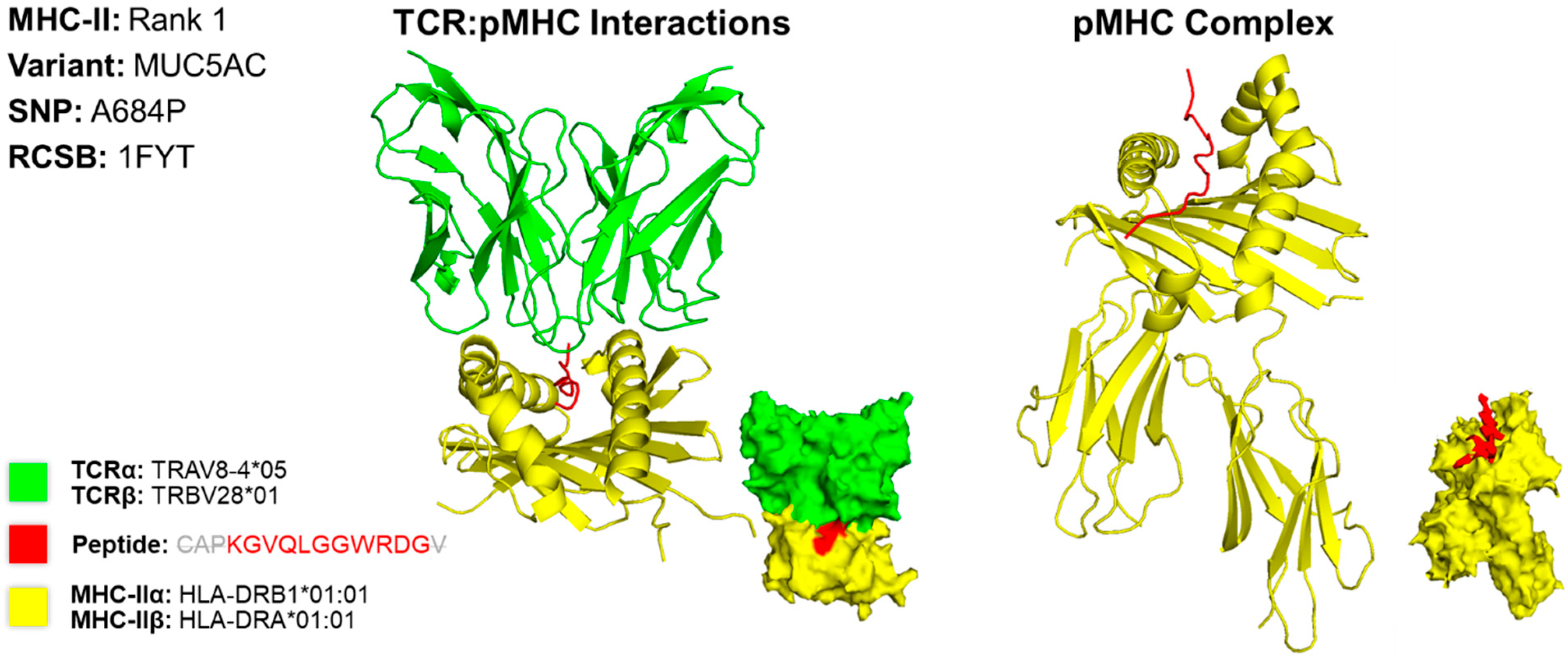
21]. Additionally, the top-ranked MHC class II epitope for the CIN3 sample of case 1, as captured by
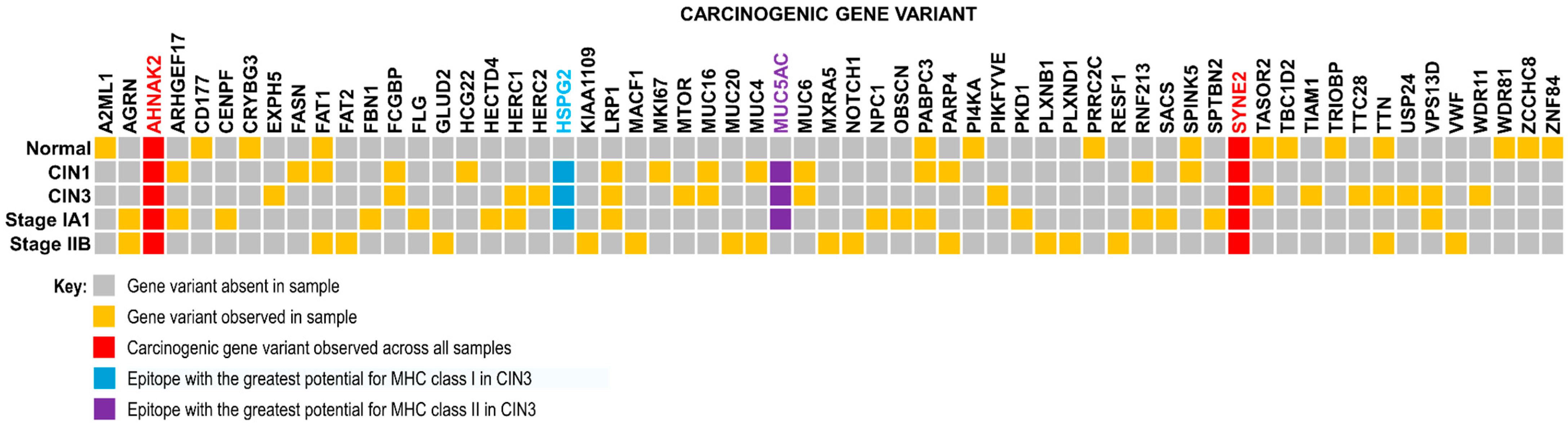
Table 1, was mucin 5AC (MUC5AC). Interestingly, HPV may be upregulating the top MHC class I infection-permissive HSPG2 variant while downregulating the top MHC class II infection-protective MUC5AC variant.
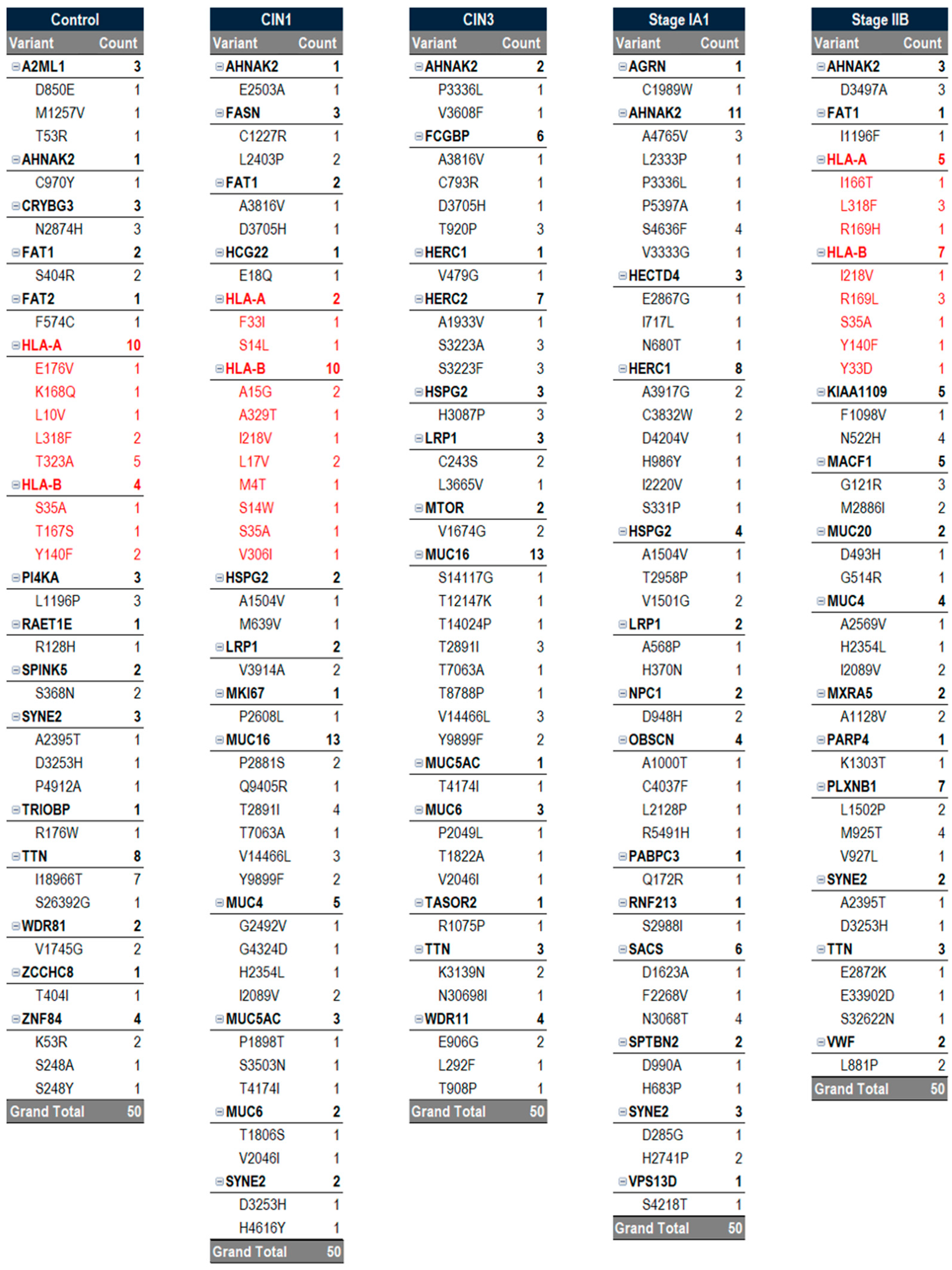
The morphologically normal tissue sample in case 1 exhibited eight missense mutations within the TTN gene, producing the titin protein. The TTN variant was seen to be a highly recurring variant appearing in three out of five samples for case 1 (
Figure 6). Other studies have found significant recurrent mutations in TTN to the point that the most frequently mutated gene in cervical cancer has been identified as TTN [
22]. Additionally, increased mutational burden within the same gene serves as an indicator for genomic instability and defective DNA repair mechanisms. With its composition of 34,350 amino acids, the titin protein has a higher probability of incurring missense mutations in the scenario of genomic instability [
23]. Hence, TTN may be used as a marker for genomic instability as the gene acquires increased tumor mutation burden, a hallmark of many aggressive cancers [
23]. This suggests that the several mutations observed in the TTN variant of our morphologically normal control sample also demonstrate genomic instability and inevitably lead to the development of cancer in the future.
HPV has been widely accepted by the scientific community as the etiological agent for cervical cancer. With Gardasil 9 providing prophylactic protection against HPV infection, cases of cervical cancer caused by chronic HPV infection are expected to decline. Therefore, the need for a personalized peptide vaccine targeting cervical cancer may seem redundant and unnecessary. However, there is still the possibility of acquiring high-risk mutations leading to spontaneous cervical cancer development. These spontaneous cases may have been confounded or obscured by HPV-related cervical cancer cases before the introduction of prophylactic HPV vaccines. Pertaining to our study, we found TTN mutations in CIN3 and stage IIB samples, as well as our health control sample. Therefore, an acquired mutation in the TTN gene may still result in a spontaneous case of cervical cancer. Evidence of a TTN variant in the control sample suggests that some individuals may currently have high-risk mutations, but are otherwise healthy and do not present diagnostically with cancer. Therefore, we believe that there is still a niche requirement for the personalized peptide vaccine in the spontaneously acquired cancer population, as well as the population of healthy individuals who currently have high-risk mutations. More information on the need for personalized peptide cancer vaccines for cervical cancer can be found in
Supplementary File S13.
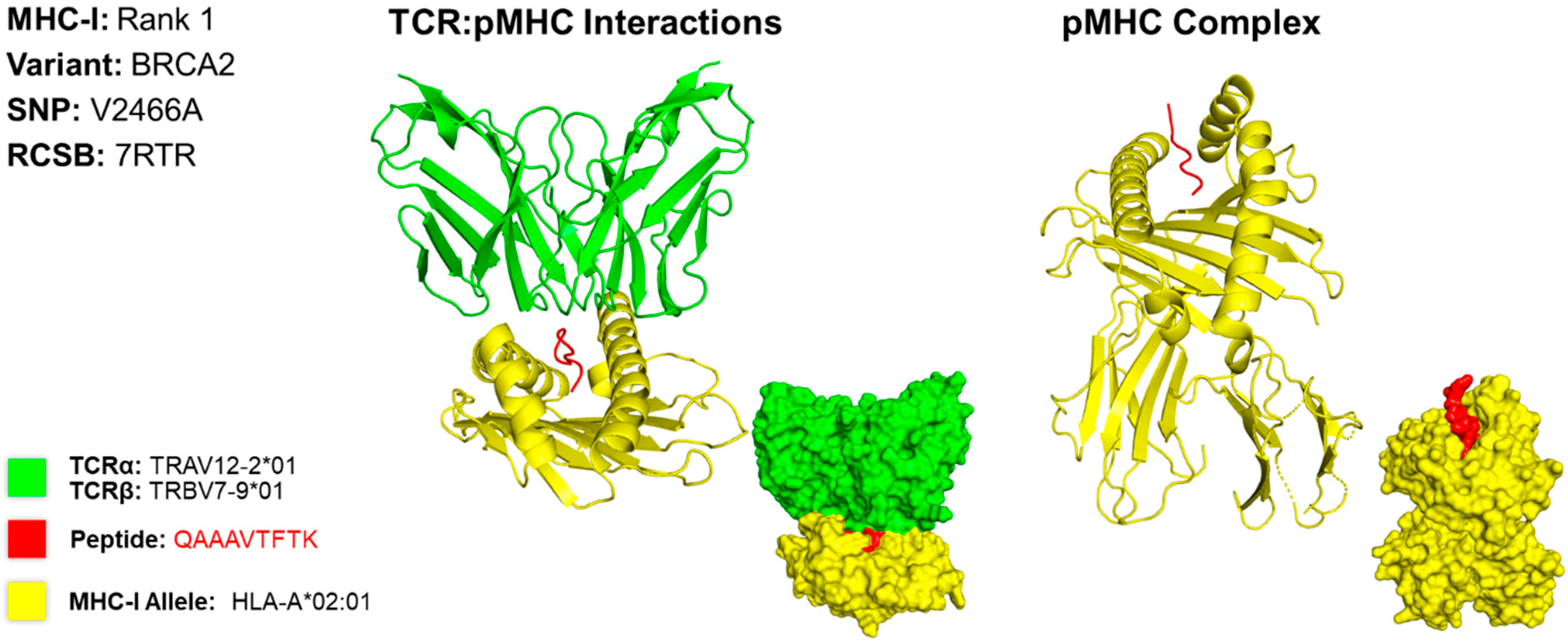
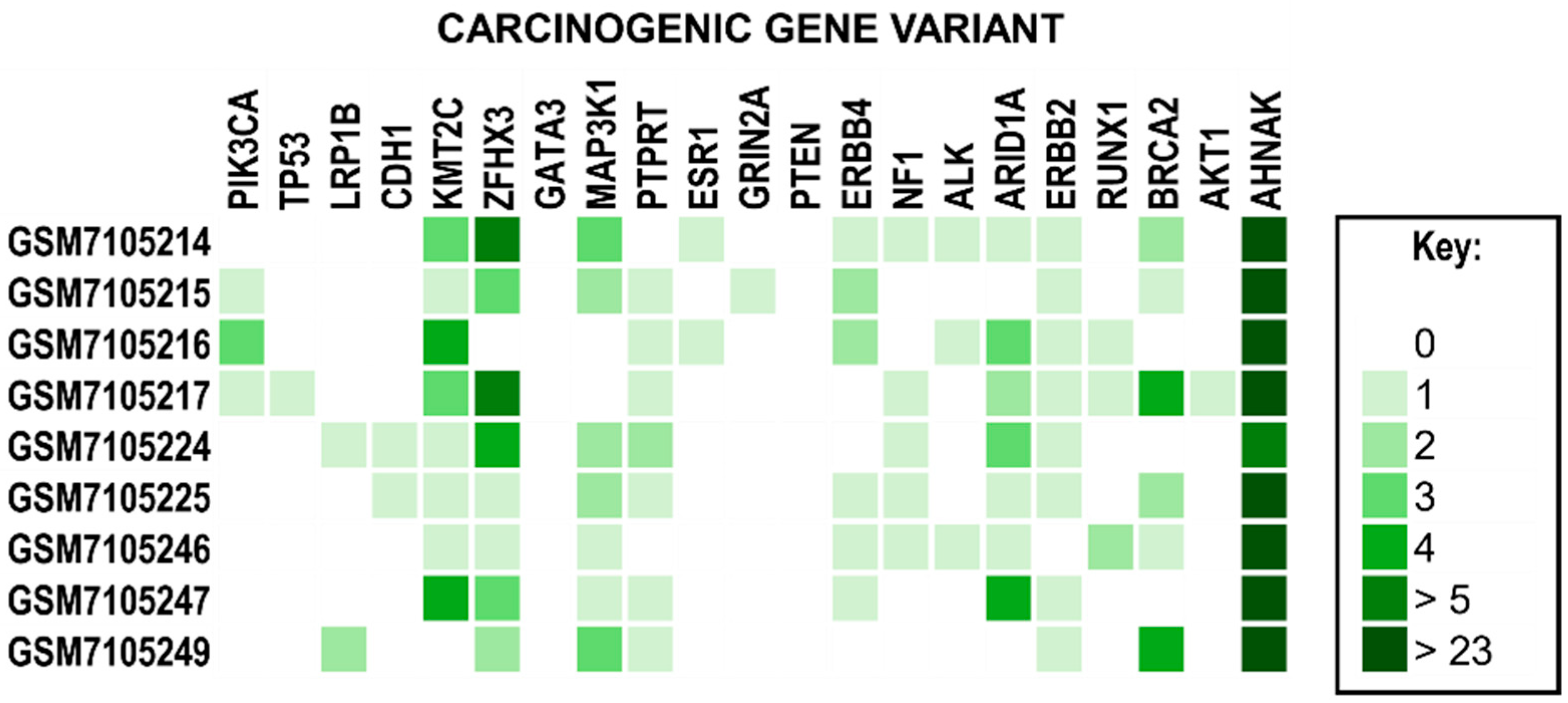
Case 2 resulted in three out of the five analyzed tumor samples with the genetic profiles of premenopausal HER2(−)/ER(+)/PR(+), post-menopausal HER2(−)/ER(+)/PR(+) and pre-menopausal TNBC having the top ranked epitope for MHC class I as BRCA2 (
Figure 7). BRCA2 is a tumor suppressor gene involved in DNA replication and, specifically, homologous recombination DNA repair. BRCA2 protein promotes and stabilizes Radiation sensitive 51 (RAD51) onto single-strand DNA (ssDNA) at the damaged site [
24]. Cells expressing a mutation in this protein will facilitate genomic instability and allow for replication of mutated DNA in subsequent generations. As the name of the gene suggests, this gene has been known to serve as a prognostic marker for breast cancer. The current standard of care screens for women who may inherit this mutant gene [
25]. Additionally, the sample GSM7105225 had the top-ranked epitope for MHC class I of erythroblastic oncogene B (ERBB2), which is a receptor tyrosine-protein kinase now known as HER2. This gene is a protooncogene that aids particularly in the proliferation of breast cancer by upregulating expression on the surface of tumor cells [
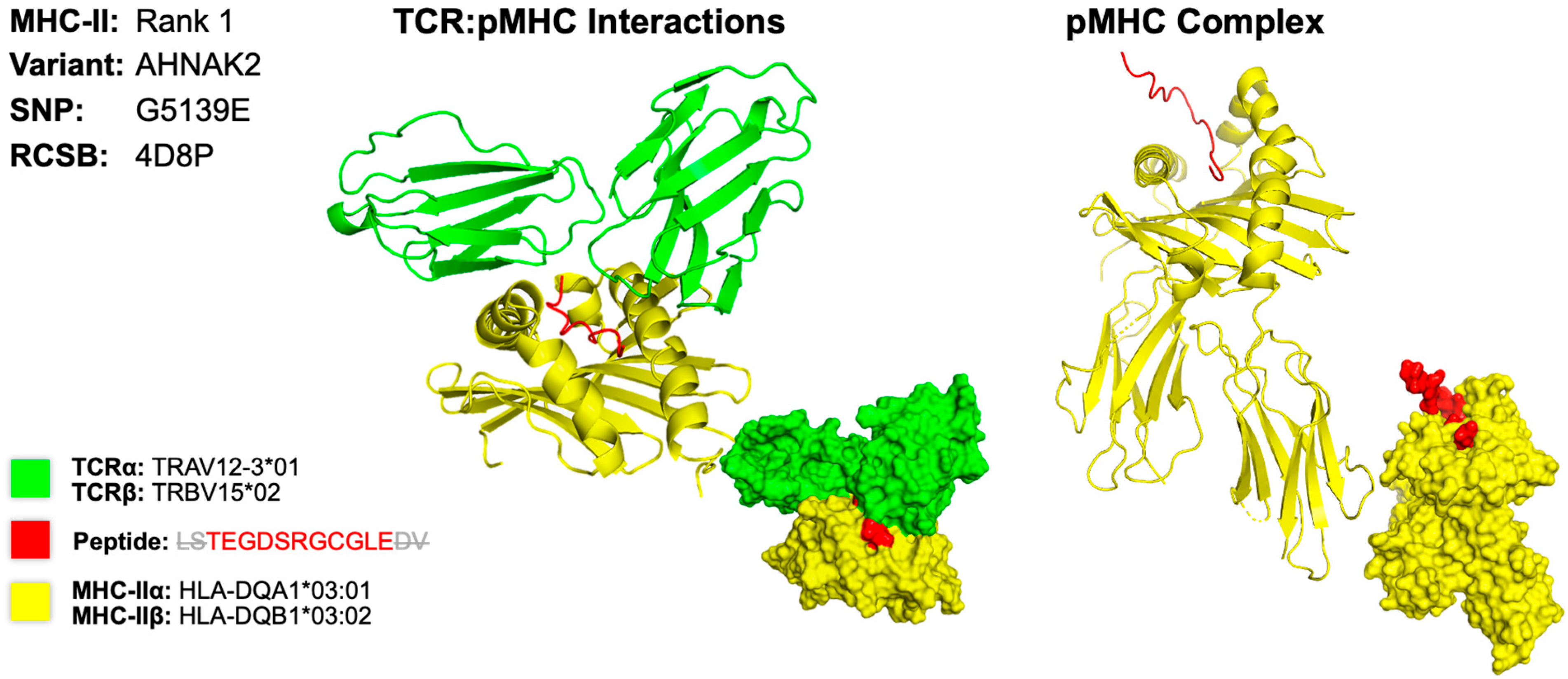
26]. HER2 is also a known prognostic marker for the development of breast cancer. BRCA2 and HER2, both being broadly known to be associated with breast cancer, serve as a point of confirmation of the efficacy of AutoEpiCollect 2.0. The MHC class II top-ranked epitope for all five samples showed AHNAK2, which is the novel protein that we identified as the most frequently mutated throughout all samples, as well as in case 1. This protein plays a role in many different functions, particularly with the fibroblast growth factor 1 (FGF1) gene function in cell growth and tumor invasion [
27].
AHNAK2 is a gene that is still being understood, but has been shown to be closely associated with cancer biology. AHNAK2 shows promise as a target likely for its role in cell structure and migration, as well as cell signaling pathways related to cell growth, differentiation, and survival [
28]. A study by Xu et al. suggests that AHNAK2 not only serves as a biomarker for adenocarcinoma but may also serve as a potential therapeutic target [
28]. In addition, AHNAK2 is highly expressed in glandular tissues, which include both cervical cancer and breast cancer [
28]. The prevalent nature of AHNAK2 in glandular tissue provides the potential opportunity to use AHNAK2 neoantigens as a target for multisystem adenocarcinomas. Notably, the knockout of the AHNAK2 gene showed a diminished tumor progression, further confirming AHNAK2’s role in tumorigenesis. It is of significance that all tumor samples in case 2 not only included this gene as the highest frequency of mutation but also shared many of the exact same mutations. This may suggest AHNAK2 plays a larger role in tumorigenesis. Given its critical role in proliferation, migration, DNA replication, and apoptosis, we have chosen to include this gene in our analysis as an auxiliary target for a peptide vaccine. It was the highest frequency of mutations in case 2, and the observed mutational prevalence across different cancer types. Our findings suggest that the addition of epitopes derived from AHNAK2 variants will improve personalized peptide vaccine efficacy and serve as the starting line for the development of a pan-cancer vaccine.
Furthermore, tumor microenvironments and tumor heterogeneity may cause the downregulation or loss of HLA class I antigens in cancer cells, which allows evasion from T cell surveillance. In a study by Giatromanolaki et al., a third of BCs suffer from the coordinated loss of HLA class I, β2-microglobulin, and TAP1 expression. These are all components necessary for antigen presentation [
29]. Consequently, peptide cancer vaccines must be administered early when tumor heterogeneity is minimal and microenvironmental conditions are less aggressive.
Tumor heterogeneity also adds complexity by rendering ICIs effective in some tumor cells more than others due to changes in protein expression. Patients may see initial cancer regression, but tumor heterogeneity leads to the selection of resistant tumor cells and the inevitable progression of cancer. Personalized peptide vaccines provide a solution to this problem by leveraging a peptide cocktail of antigens that targets multiple mutant proteins on cancer cells simultaneously. Using AutoEpiCollect 2.0, we produced a robust list of ranked antigens expressed on tumor cells, serving as multiple potential targets. For example, in our study, the top antigens were BRCA2, ERBB4 and AHNAK2 in sample GSM7105215. This confirms these antigens as not only cancer-associated but also effective candidates as therapeutic targets. This multi-antigen approach would include several of our top antigens to produce a peptide cocktail of antigens. This competes with the ability of these resistant tumors to hide immune targets. This overwhelms their ability to adaptively respond by downregulation of specific proteins. As a form of active immunotherapy, peptide vaccines leverage the body’s immune system to train and invoke a focused de novo immune response against selected tumor-specific antigens (TSAs). As a result, the immune system can eliminate targeted pathogens while developing long-term humoral immunity [
30]. maintained by memory B cells. Additionally, the targeted therapeutic approach of peptide vaccines spares healthy cells, unlike traditional chemotherapy, which indiscriminately destroys both healthy and tumorigenic cells.
When considering vaccine efficacy, we must consider when mutations occur relative to the abnormal cell replication process. Whole genome doubling (WGD) is associated with the development of cancer as cells undergo polyploidization. Cells may enter a tetraploid state rather than the normal diploid state resulting in chromosomal instability. This instability enables genetic plasticity which leads to the evolution of cancer [
31]. Furthermore, pre-WGD mutations result in the multiplication of mutations across the multiple copies of chromosomes and permitting these mutations to be more resilient. In contrast, post-WGD mutations are present on a single copy of the duplicated genome [
32]. Therefore, pre-WGD mutations serve as more reliable targets for vaccines due to being found in all cancer cells. Future cancer vaccines should focus on neoantigens formed from pre-WGD mutations to minimize the risk of immune escape by cancer cells. If our peptide vaccine targets pre-WGD events, we may be able to slow down or stop the progression of genetic plasticity, thereby inhibiting cancer cell evolution and increasing patient prognosis. Mutations that occur in certain genes involved in genomic stability, such as BRCA2 and ERBB2 found in GSM7105215 and GSM7105225, respectively, may predispose individuals from initiating an WGD event. Therefore, inclusion of these antigens in the peptide cocktail vaccine would prevent carcinogenic progression due to cell polyploidization. We can expect an amplified response to the personalized vaccine as there is an increase in the overall neoantigen load.
Personalized peptide vaccines are designed with the individual patient in mind and customized to the vaccine based on the specific missense mutations observed within their carcinogenic variants. However, the identification of carcinogenic gene variants and the development of personalized peptide vaccines are dependent on tumor biopsy and RNA sequencing becoming a part of the normal protocol. If we consider our CIN3 sample from case 1, the vertical columns represent personalized peptide vaccines for any given patient (
Figure 8). The peptide cocktail would have to contain 50 distinct epitopes derived from missense mutations across 13 carcinogenic gene variants. This data should be deidentified and aggregated to enable deeper studies on mutational patterns observed across the population. In case 2, we observed all 5 tumor samples and non-tumor samples had mutations in many of the same genes such as AHNAK2, ZFHX3, KMT2C and MAP3K1 (
Figure 7). Implementing a protocol to sequence all breast tumor biopsies will provide more information on what mutational trends are prevalent amongst this population. Collection of tumor RNAseq data leads to the formation of big data, which can be processed, integrated, and analyzed by machine learning algorithms for deeper trends and insights than would otherwise be possible. Using this information, we can curate a peptide vaccine targeting these prevalent mutations for all breast cancer patients. RNAseq data collection and aggregation may ultimately lead to a concept of a generalized population peptide vaccine as more tumor samples are sequenced.
While chemotherapy is effective at eliminating proliferating tumor cells, recurrence remains a significant clinical challenge. One explanation for this is tumor dormancy, a state in which cancer cells remain in the body but persist as clinically undetectable and non-proliferating for an extended period of time. Therefore, cytotoxic chemotherapy efficacy is reliant on regimented drug administration as well as active tumor cell proliferation. In cases where breast cancer progresses to requiring systemic therapy, chemotherapy remains the standard of care. However, instances of recurrence or resistance to chemotherapy remains a challenge, reinforcing the need for adjuvant strategies. In our sample GSM7105215, using a personalized peptide vaccine targeting cells that expresses mutant variants of BRCA2, AHNAK2, ERBB2, or other neoantigens determined using AutoEpiCollect 2.0 could be used following chemotherapy or radiation treatments to target residual tumorigenic cells. Hence, the inclusion of personalized peptide vaccines in cancer treatment regimens could improve the therapeutic efficacy of standard cancer treatments by preventing cancer recurrence via targeted destruction of non-proliferative tumor cells at risk for acquiring a tumor suppressor gene mutation. We propose that augmenting chemotherapy with the personalized peptide vaccine could allow for a two-pronged approach towards targeting both prolific and non-prolific tumor cells, further enhancing therapeutic efficacy. Through its ability to identify the highest potential epitopes, AutoEpiCollect 2.0 allows users to select for only the most potent epitopes capable of generating an effective immunoresponse and thereby improving patient outcomes.
4. Materials and Methods
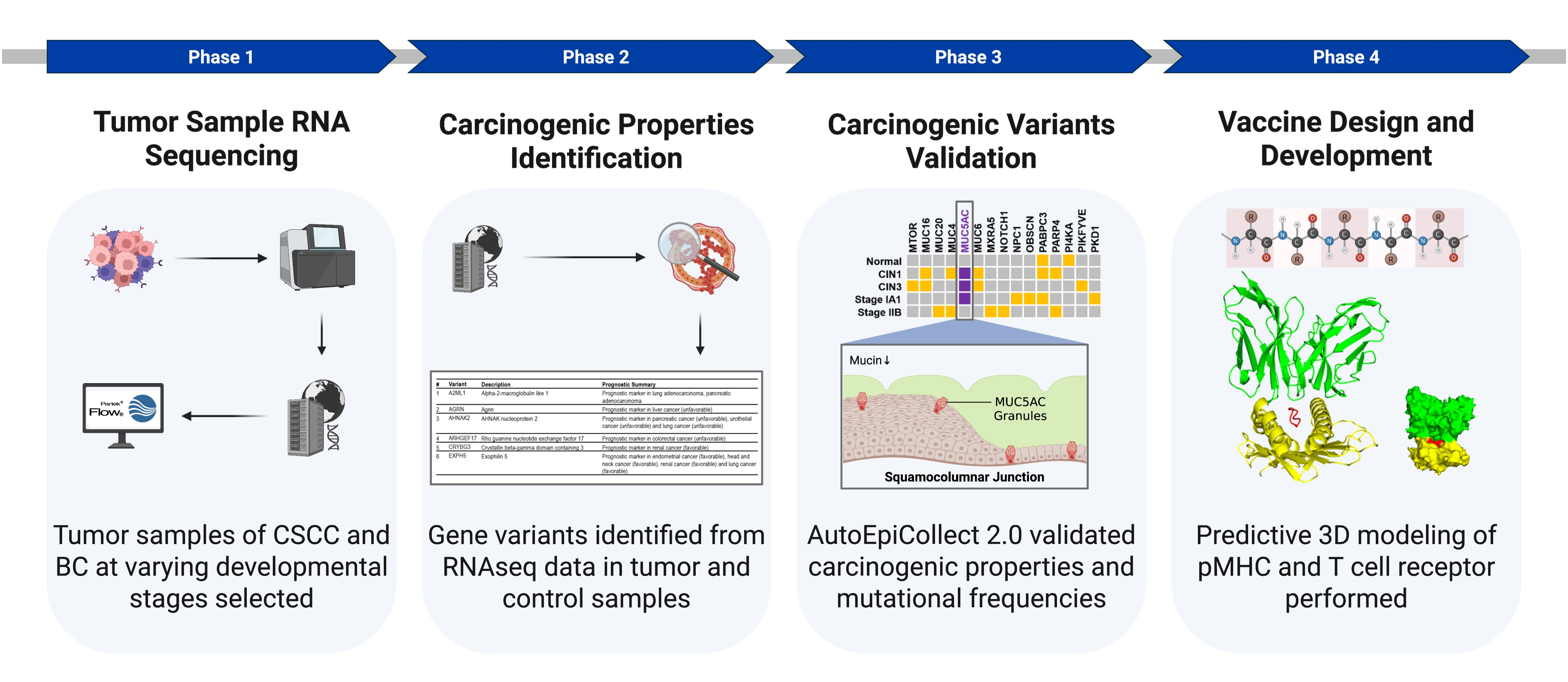
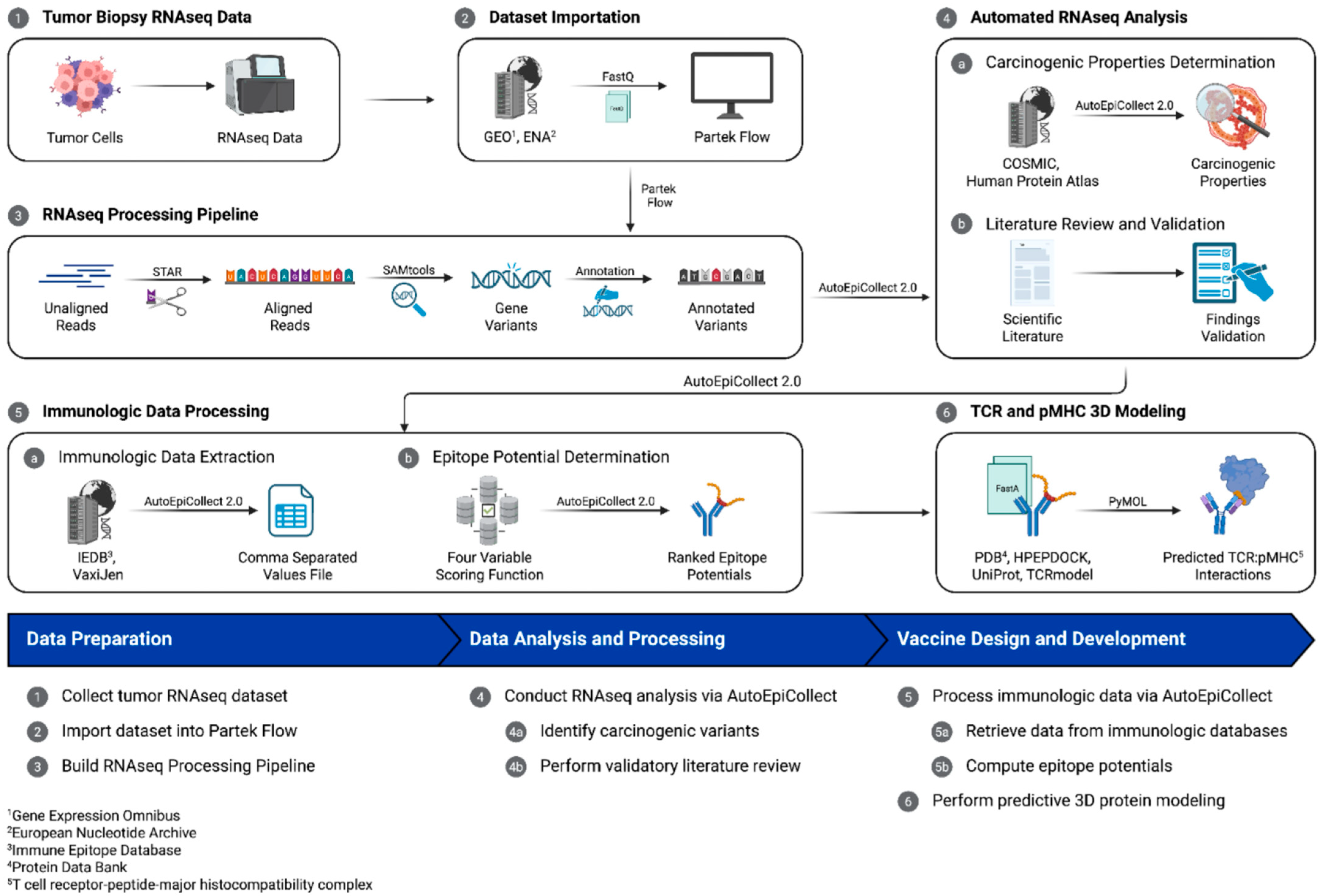
To demonstrate the flexibility of the personalized vaccine design process, a generalized six-step workflow was implemented for both case 1 and case 2. While the overall process was the same for both cases, each case had distinct features within its respective workflow (
Figure 9).
4.1. Collecting and Processing Samples of Patient Tumor Data
Patient tumor data containing tissue samples of CSCC were identified and collected from the Gene Expression Omnibus (GEO). We selected datasets GSE223804 [GEO Accession Viewer] and GSE227679 [GEO Accession Viewer] for case 1 and case 2, respectively, because they include samples from different stages or subtypes of CSCC and breast cancer. GSE223804 was a study that explored the molecular differences between high-grade CIN and early-stage invasive CSCC. In this study, RNA sequencing of HPV-positive CIN lesions, CSCC, and normal cervical tissue showed apparent differences in immune responses. GSE227679 refers to the SAGES study, which utilizes structural analysis and bioinformatics to identify genes and proteins associated with breast cancer. Both studies used bulk gene expression profiles for their analyses.
The dataset within GSE223804 comprised 16 surgically obtained tissue samples, encompassing all grades of CSCC. We selected five samples for case 1 from the tumor dataset: CIN1, CIN3, stage IA1, stage IIB, and a morphologically normal control tissue sample. Although the samples used were limited, samples were intentionally selected to be heterogeneous to facilitate the identification of high-risk gene variants present across all samples. Moreover, the use of a limited heterogeneous sample set was sufficient in demonstrating AutoEpiCollect 2.0’s automated genetic analysis capabilities as a proof of concept.
Similarly, we collected breast tumor tissue samples from GSE227679. We chose this dataset because it included a wide range of genetic profiles, menopausal statuses, and treatment records. These were factors relevant to our analysis. Tumor types included HER2(+)/ER(−)/PR(−), HER2(−)/ER(+)/PR(+), and HER2(−)/ER(−)/ER(−). Menopausal status was also considered, as hormone levels could affect immune response and peptide effectiveness. The dataset contained 44 samples total, with 22 from tumor tissue. Of these 22, 10 had no genetic profile listed, two were TNBC, one was HER2(+)/ER(−)/ER(−), and nine were HER2(−)/ER(+)/PR(+).
To analyze the RNAseq data from our samples, we used the NGS capabilities of Partek Flow (San Diego, CA, USA) to build a pipeline that processes our data and identifies the gene variants found within our selected samples. The sample data from GEO were in FASTQ format, a text-based file that contains transcript sequences along with quality scores for each nucleotide. After patient data was imported, the reads were aligned using the Spliced Transcripts Alignment to a Reference (STAR) aligner. The STAR aligner capability is integrated into Partek Flow and functions to align RNAseq data to a common reference genome.
Typically, data is trimmed to remove short sequences attached to RNAseq data in preparation for NGS. Also known as RNA adaptors, these short sequences are oligonucleotides included in RNAseq data to ligate the ends of RNA fragments [
33]. Sequencing without trimming RNA sequences may result in the inclusion of these oligonucleotides during RNA sequencing, ultimately leading to a loss of data integrity. However, trimming the data in Partek Flow for our samples resulted in no change in sequence length. Therefore, we determined that the data had already been trimmed and proceeded to align the reads.
Next, we added SAMtools to our pipeline, a bioinformatics software toolkit that is integrated into Partek Flow. SAMtools manages aligned reads by sorting, analyzing, and filtering the data in sequence alignment/map (SAM) format. In addition, SAMtools allows users to identify variations found within genomic data by comparing reads to a reference genome containing normal RNA data. Filtering via SAMtools also removed low-quality reads within our data to ensure that the identified gene variants were accurate and meaningful. In simple terms, SAMtools enabled the pinpointing of the exact locations of variants within our sequence data.
After SAMtools identified the gene variants, the Annotate Variants capability was added to the pipeline to provide more context on the variants identified by SAMtools. Specifically, the Annotate Variants function classifies gene variants by their location (e.g., intron or exon) and the type of change that caused them (e.g., SNPs, insertions, deletions, missense, or nonsense mutations). We then used RefSeq Transcripts 96 to provide standardized and annotated human reference sequences, which include data on genes, transcripts, and proteins. RefSeq Transcripts 96 is a comprehensive database of reference sequences that is maintained by the National Center for Biotechnology Information (NCBI). This provided the basis for our filtering criteria used to analyze the data output by Partek Flow. The final Partek Flow output files for cases 1 and 2 are included in
Supplementary Materials Files S1 and S2, respectively.
4.2. New Updates in the Development of AutoEpiCollect 2.0
Our previous version of AutoEpiCollect was available as a free, locally downloadable graphical user interface (GUI) software [
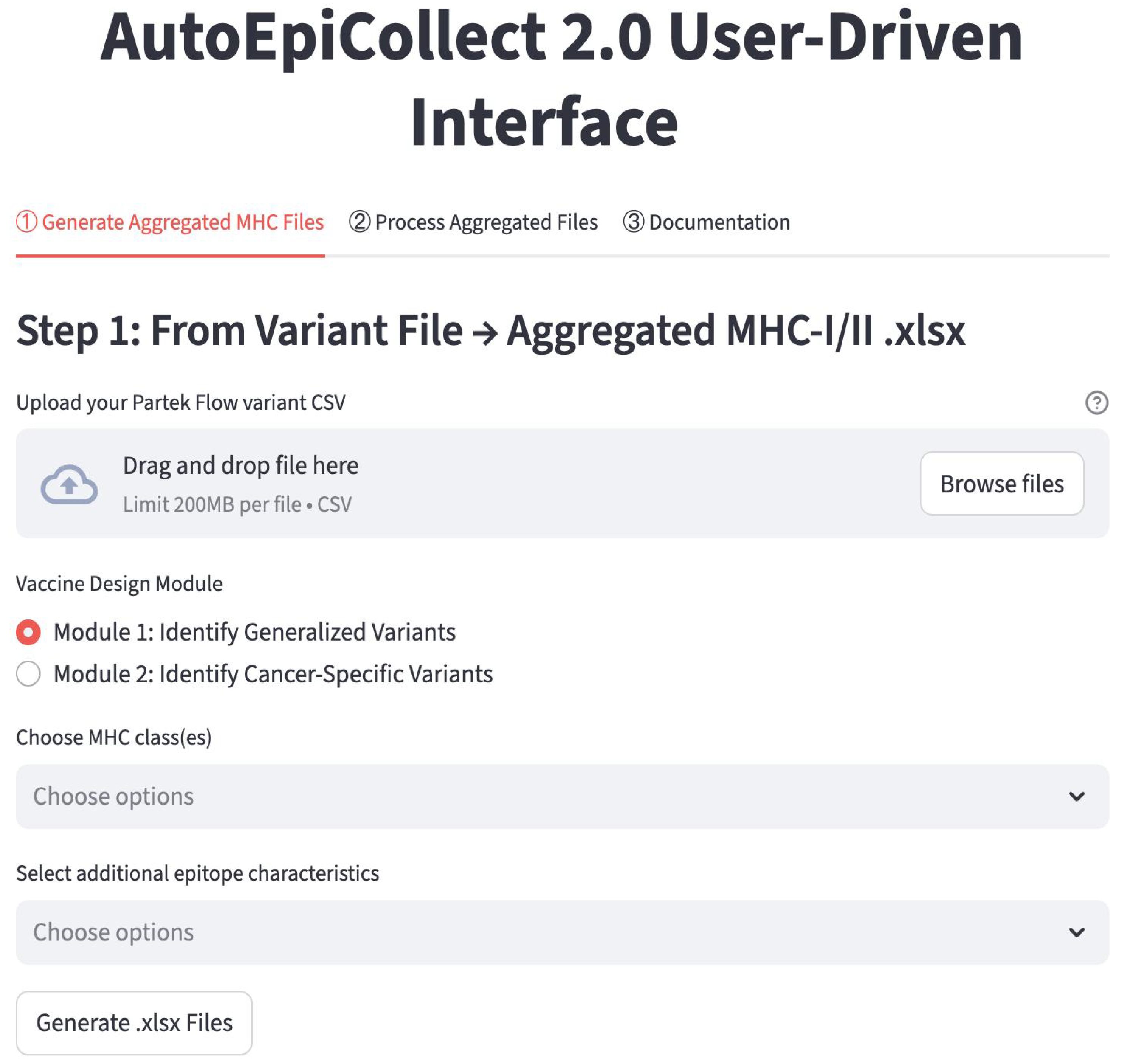
11]. However, any bug fixes or updates required users to manually redownload the software, making it difficult to stay up to date with the latest improvements. To improve accessibility, usability, and overall appearance, we developed a new web-based version using Streamlit (San Francisco, CA, USA), an open-source Python 3.10 framework. This website is hosted on Streamlit’s cloud, ensuring that all users automatically receive updates as soon as they are deployed. The majority of the back-end functionality for AutoEpiCollect 2.0 is the same as 1.0; however, there are some differences, particularly in the beginning of the workflow to process the raw data from Partek Flow. Before epitope selection, Partek Flow outputs a .csv file listing gene variants with multiple attributes, including gene ID, gene section, and amino acid changes. The updated AutoEpiCollect 2.0 first filters for gene variants located in exons, the protein-coding regions of genes, and then retains only those with missense mutations, excluding other types such as nonsense mutations. Although nonsense mutations can contribute to cancer, we exclude them because they result in premature stop codons, which could trigger unintended autoimmune responses when used in vaccine design. Once filtered, AutoEpiCollect 2.0 processes the Partek Flow output by ranking gene variants according to their frequency, from highest to lowest. The software retains key data such as gene ID, exon number, and missense mutations in standard notation (e.g., A313S). These variants are then sorted by their frequency and categorized into two distinct workflows for epitope identification.
After finishing the Partek Flow data processing, AutoEpiCollect 2.0 now follows two distinct processes that further reduce the number of prospective target genes. These two processes are chosen by the user and labeled as modules 1 and 2, corresponding to cases 1 and 2 defined in this study. Module 1 draws on immunologic data from the Human Protein Atlas to confirm variants and rank those most correlated with carcinogenic mutations in each sample. We chose to keep the top 50 genes with the largest number of carcinogenic variants. Module 2 cross-references variants with the COSMIC database. This allows for the identification of variants specifically associated with particular cancer subtypes. AutoEpiCollect 2.0 web-scrapes the top 20 most frequently mutated genes from COSMIC for a given cancer subtype and retains only those variants that overlap with the Partek Flow list. After identifying the target genes and mutations, AutoEpiCollect 2.0 proceeds to the next stage: the epitope selection process.
4.3. AutoEpiCollect Epitope Selection Process
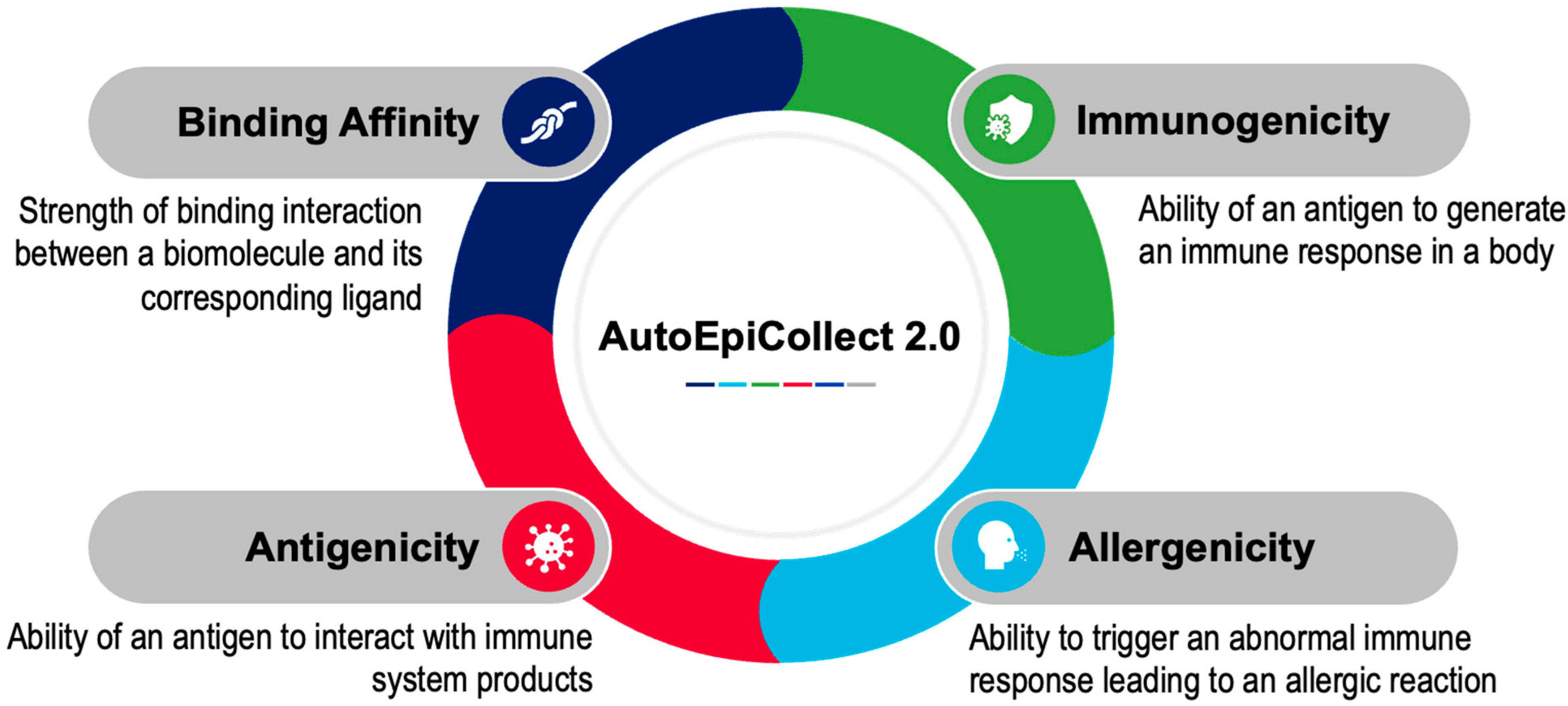
The epitope selection process in AutoEpiCollect 2.0 remains essentially the same as in the previous iteration, with one small change in the workflow that affects the user. This modification is discussed at the end of this paragraph. After obtaining a list of peptides predicted to be epitopes from IEDB, multiple epitope characteristics are collected from various databases. Four characteristics in particular—binding affinity, immunogenicity, antigenicity, and allergenicity—serve as input features for a machine learning-based ranking model that scores each epitope. These factors were selected because they are consistently associated with epitope immunogenicity in prior literature and are accessible through widely used immunoinformatics tools (
Figure 10). Binding affinity values are obtained from NetMHCpan-4.1 and NetMHCIIpan-4.1, which were selected for their high performance in community benchmarks. Immunogenicity scores are collected from IEDB’s immunogenicity prediction modules, antigenicity values are sourced from VaxiJen (Headington, Oxford UK), and allergenicity predictions are obtained from AlgPred (Class I) and NetAllergen (Class II). These tools were chosen for their extensive experimental validation and broad adoption in computational vaccinology. The only change to the epitope selection process in AutoEpiCollect 2.0 is that antigenicity values are no longer automatically web scraped from VaxiJen, as VaxiJen now employs a reCAPTCHA system that blocks automated data retrieval. Although this does not affect the machine learning workflow, users must now obtain antigenicity results manually using the preliminary output generated by AutoEpiCollect 2.0. More information on how this step is carried out is provided in
Section 2.1, which discusses the new website’s usability.
Before model training and prediction, the four main epitope characteristics are normalized to make their scales comparable. Immunogenicity, antigenicity, and allergenicity values undergo z-scoring followed by min–max scaling to a 0–1 range. Binding affinity values, which span multiple orders of magnitude, are log-transformed before normalization to reduce the influence of extreme values. These normalized features constitute the input data for each epitope processed by the machine learning model. The machine learning framework used for ranking is a probabilistic logistic regression model. This model was trained on binary T cell assay outcomes from NEPdb for MHC Class I epitopes and from IEDB for MHC Class II epitopes. Logistic regression was selected because its probability output aligns with our goal of producing an interpretable immunogenicity likelihood and because it outperformed the linear model previously tested. In cross-validation experiments performed during the development of AutoEpiCollect 1.0, the logistic model demonstrated higher accuracy than the linear model and produced more stable and biologically consistent rankings. Using the learned regression weights, AutoEpiCollect 2.0 computes a probability for each epitope that reflects how likely it is to serve as an effective immunogenic candidate. Only the top-ranking epitopes proceed to the downstream filtering step, which applies cutoff values to characteristics such as instability, half-life, and toxicity. A complete description of the epitope selection process—including how each epitope characteristic was obtained, the design and final weights of the logistic regression model, and the specific exclusion criteria used during manual filtration—is provided in the AutoEpiCollect 1.0 manuscript [
11].
4.4. Using AutoEpiCollect 2.0 for Personalized Vaccine Design
For the personalized vaccine design performed in this study, we began with Partek Flow output files containing gene variants for each patient sample. AutoEpiCollect 2.0 first filtered these variants to include only missense mutations in coding regions, as detailed above. After filtering, AutoEpiCollect 2.0 ranked the remaining missense variants by their frequency and retained essential information including gene ID, exon number, and the specific amino acid substitutions. Our study used the two gene filtering methods implemented within AutoEpiCollect 2.0, modules 1 and 2. Modules 1 and 2 were used for cases 1 and 2, respectively. After selecting the relevant genes and mutations for each case, AutoEpiCollect 2.0 automatically generated all possible Class I and Class II peptides surrounding the mutations and collected the four parameters used to compute epitope potentials: binding affinity, immunogenicity, allergenicity, and antigenicity. These parameters were normalized within the software so that each characteristic contributed proportionately to the potential calculation. Using these normalized characteristics, AutoEpiCollect 2.0’s machine learning model scored and ranked each epitope. The top 50 Class I and top 50 Class II epitopes were retained for downstream evaluation. For case 1, epitopes were filtered further to exclude those derived from HLA-A and HLA-B proteins. This ensures that the final list of epitopes is tailored to the specific samples under study. The CIN3 sample was used as proof of concept for the analysis. For case 2, each tumor sample was analyzed to identify SNPs within tumorigenic genes, ranking them by the number of commonly mutated genes and total SNPs per gene. This approach also accounted for genetic diversity and excluded treated samples to avoid confounding factors. We selected 5 sample profiles for the study with differing menopausal status and therapeutic interventions (
Table 8). Finally, AutoEpiCollect 2.0 generated a detailed output containing an aggregated spreadsheet of all filtered and ranked epitopes, along with population coverage results.
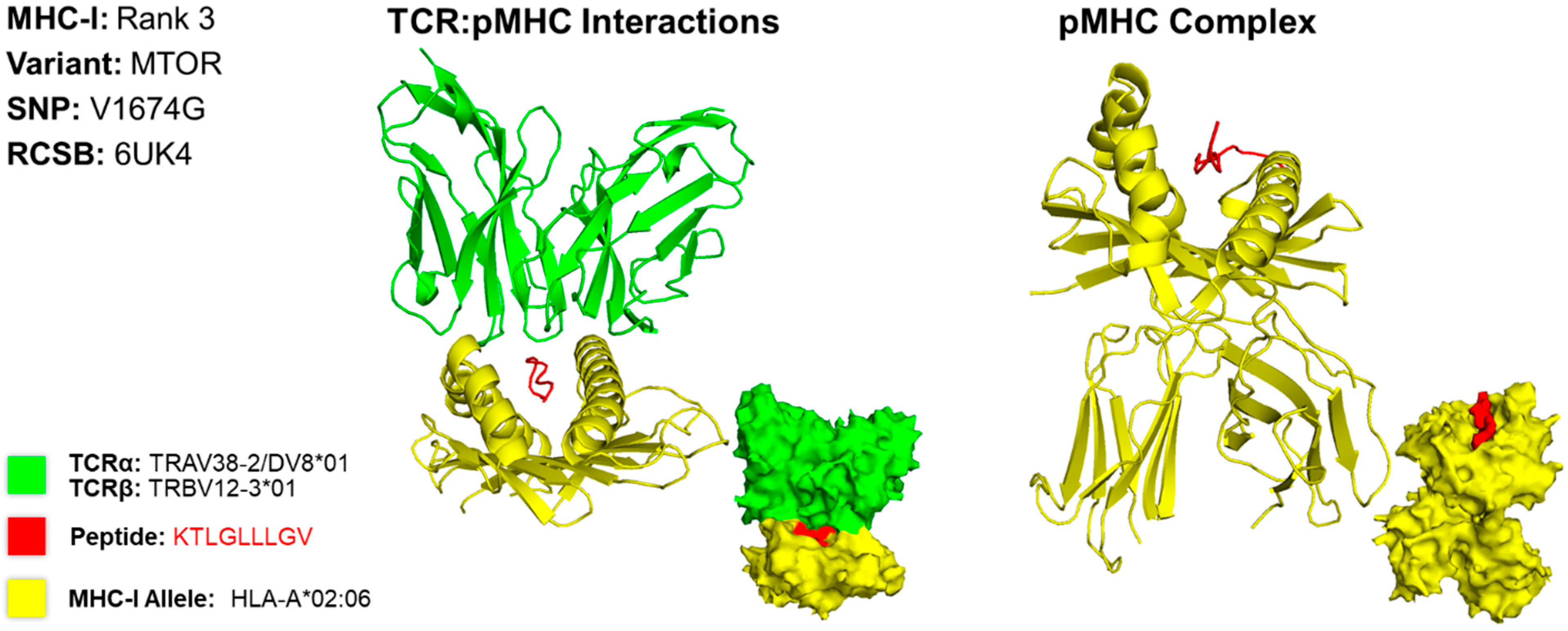
4.5. Three-Dimensional Modeling of Top Epitopes
We performed peptide-protein three-dimensional (3D) modeling and docking using HPEPDOCK 2.0 (Zhongshan District, Wuhan, China) [
34], a web server that uses molecular docking algorithms to determine biomolecular interactions. This allows for the prediction of the structure and docking of the tumor protein to both MHC classes I and II (pMHC-I/II). HPEPDOCK 2.0 uses receptor input by sequences in fasta format or by Protein Data Bank (PDB) files. We also used TCRmodel (Rockville, MD, USA) [
35], a web server that predicts and models TCR structures and docking, to visualize the TCR and pMHC interactions and anticipate their structures based on TCR alpha-chain, beta-chain, peptide, and MHC class I and II sequences. Similarly to HPEPDOCK 2.0, TCRmodel also allows the uploading of FASTA files that contain sequences. In essence, 3D modeling was performed to demonstrate the close relationship between the MHC class I and II molecules, TCR, and their corresponding epitopes.
5. Conclusions
The purpose of this study was to investigate case studies on the development of a personalized peptide vaccine for two distinct types of cancer using the innovative data integration capability of AutoEpiCollect 2.0. AutoEpiCollect 2.0 improves upon its predecessor through two new gene selection modules that let users import data directly from Partek Flow and choose between different types of gene analysis. AutoEpiCollect 2.0 automates the analysis of genetic variants from a specified cancer sample and generates a list of ranked epitopes. Epitopes with the highest potential are then curated for inclusion into the design of the personalized peptide cancer vaccine. The transition to a cloud-based Streamlit platform additionally removes the need for manual installation or updates. It also enables the software to handle large genomic datasets without straining the user’s computing power. Together, these updates make AutoEpiCollect 2.0 more flexible, user-friendly, and scalable for larger and more diverse datasets.
Personalized peptide vaccines are also still a relatively new therapy option. While AutoEpiCollect 1.0 shortened immunogenic data collection and determination of optimal epitopes, the development of custom peptides requires time. When pitted against more aggressive forms of cancer, peptide cancer vaccines become a race against survival. Currently, peptide vaccine development still takes longer than the simple administration of traditional cancer therapies such as chemotherapy, immunotherapeutic agents, or surgical excision. AutoEpiCollect 2.0 shortens vaccine development timelines even further by automating the variant analysis and carcinogenic gene identification process.
Efficacy of AutoEpiCollect 2.0 was assessed through the development of personalized peptide vaccines for CSCC and BC which both have their own unique and distinct pathogenesis, progression, and treatments. The CSCC studied in case 1 was selected for its indolent progression, making it a suitable option for exploring the fundamental capabilities of protein engineering in peptide vaccine development. Case 1 leveraged module 1 in AutoEpiCollect 2.0 which identified and prioritized gene variants known to cause cancer. We found HSPG2 and MUC5AC variants for MHC class I and II, respectively. As the etiologic agent for CSCC, HPV may upregulate the top MHC class I infection-permissive HSPG2 variant while downregulating the top MHC class II infection-protective MUC5AC variant. Additionally, we were able to confirm that the top epitopes we identified were indeed high fidelity due to the inclusion of a TTN variant, a gene that has been identified in scientific literature as the most frequently mutated gene in cervical cancer.
In comparison, the breast cancer studied in case 2 was selected for its predictability and the potential to impact one of the more heavily studied cancers within the scientific community. Case 2 leveraged module 2 in AutoEpiCollect 2.0 which identified variants specifically associated with particular cancer subtypes. We observed BRCA2 and AHNAK2 variants for MHC class I and II, respectively. The BRCA2 variant is a known carcinogenic tumor suppressor gene biomarker that normally involves DNA replication machinery. AHNAK2 is the novel protein that we identified as the most frequently mutated throughout all samples, as well as in case 1. In all CSCC and BC samples, MHC class I and MHC class II top epitopes were successfully identified. Furthermore, we identified the highest potential epitopes synthesized by carcinogenic gene variants using our personalized cancer vaccine design.
Our two complementary approaches, using broad prognostic markers in case 1 and cancer-subtype-specific markers in case 2, demonstrated the flexibility and novelty of AutoEpiCollect 2.0 as an automated genetic analysis and epitope-ranking framework. Although the tool successfully identified high-potential epitopes in both cancers, a key limitation of this study is that patient-specific HLA allele expression data were not available. All binding predictions relied on IEDB reference alleles, which do not represent the full diversity of HLA types across global populations. Incorporating patient HLA specificity and expanding allele representation will be essential for increasing vaccine personalization and improving predictive accuracy in future studies. It is also important to note that this work focuses on validating AutoEpiCollect 2.0 as a functional methodology rather than validating the biological efficacy of individual epitopes. The 3D structural models included here serve as illustrations of potential interactions but do not confirm dynamic stability. Molecular dynamics simulations remain the appropriate next step for evaluating epitope viability, and these will be incorporated into future outcome-based studies once a refined shortlist of top candidates is selected. This study also highlights broader methodological considerations. AutoEpiCollect 2.0 currently relies on Partek Flow for preprocessing and variant calling, which may limit accessibility for users without bioinformatics training or access to proprietary tools. Although this reliance ensured high-quality upstream processing in the present work, we recognize the importance of broadening accessibility. In future iterations, we plan to incorporate a fully open-source preprocessing pipeline, using tools such as STAR or HISAT2 for alignment, GATK or Mutect2 for variant calling, and VEP or SnpEff for annotation, to eliminate the need for Partek Flow and allow users to process raw FASTQ files directly within an open framework.
Our case studies focus on the conceptual understanding of how peptide vaccines may function as therapeutics. Concepts such as tumor dormancy may impact peptide vaccine efficacy, as dormant tumor cells containing carcinogenic gene variants remain latent and prevent the active synthesis of altered proteins. This suggests that there may be minimal maintenance of humoral immunity by memory B cells if and when these dormant tumor cells transition to a prolific state. Further in vivo studies are required to explore the potential of peptide vaccines as an alternative option for cancer therapy. Next steps would be to collaborate with translational medicine to put our methodology into medical practice.
Moreover, the peptides selected for incorporation into the peptide vaccines in both cases were not identified as being either pre-WGD or post-WGD. As discussed earlier in
Section 5, pre-WGD mutations are more reliable targets for vaccine therapies due to their stability. Pre-WGD mutations are clonal and found in all cancer cells, making them less prone to deletion. Meanwhile, post-WGD mutations exhibit instability and are more easily lost, which leads to therapy resistance. Therefore, pre-WGD mutations would serve as more reliable neoantigen targets in personalized cancer vaccine design. According to Bakir et al., it is possible to identify mutations that are pre-WGD or post-WGD using various analysis techniques including computational timing models such as COrrecting Noise In PHylogenetic Evaluation and Reconstruction (CONIPHER), PyClone, and CNApy [
32]. CONIPHER utilizes phylogenetic modeling to infer cancer evolutionary history while PyClone and CNApy uses variant allele frequency analysis and copy number analysis, respectively. With this in mind, expansion of capabilities in AutoEpiCollect 2.0 to include filtration for pre-WGD mutations would allow for the development and design of more persistent and effective neoantigen targets.
Finally, understanding the role of drug delivery systems in enhancing delivery and immunogenicity are critical for improving outcomes associated with cancer peptide vaccines. Advanced drug delivery models allow for innovative strategies to overcome intrinsic limitations of peptide vaccines, such as low immunogenicity, in vivo peptide instability, and rapid elimination and metabolism [
36]. One advanced system to note is the use of nanoparticle carriers which encapsulate peptides to protect them from degradation and facilitate targeted delivery to APCs found in lymphoid tissues [
37]. Albumin-binding amphiphiles is another modern system used to conjugate peptides to promote lymphatic drainage and accumulation in lymphatic tissues, where immunogenicity occurs. This drug delivery system enhances both protein integrity and serum half-life to prolong antigen presentation and ultimately amplifies T cell priming [
38]. Future studies should consider advanced drug delivery models to optimize peptide vaccine efficacy and boost immunogenicity.




 ,
,