Hybrid Green Materials Obtained by PCL Melt Blending with Diatomaceous Earth

 , ,
, ,  and
and 
Abstract
1. Introduction
2. Results and Discussion
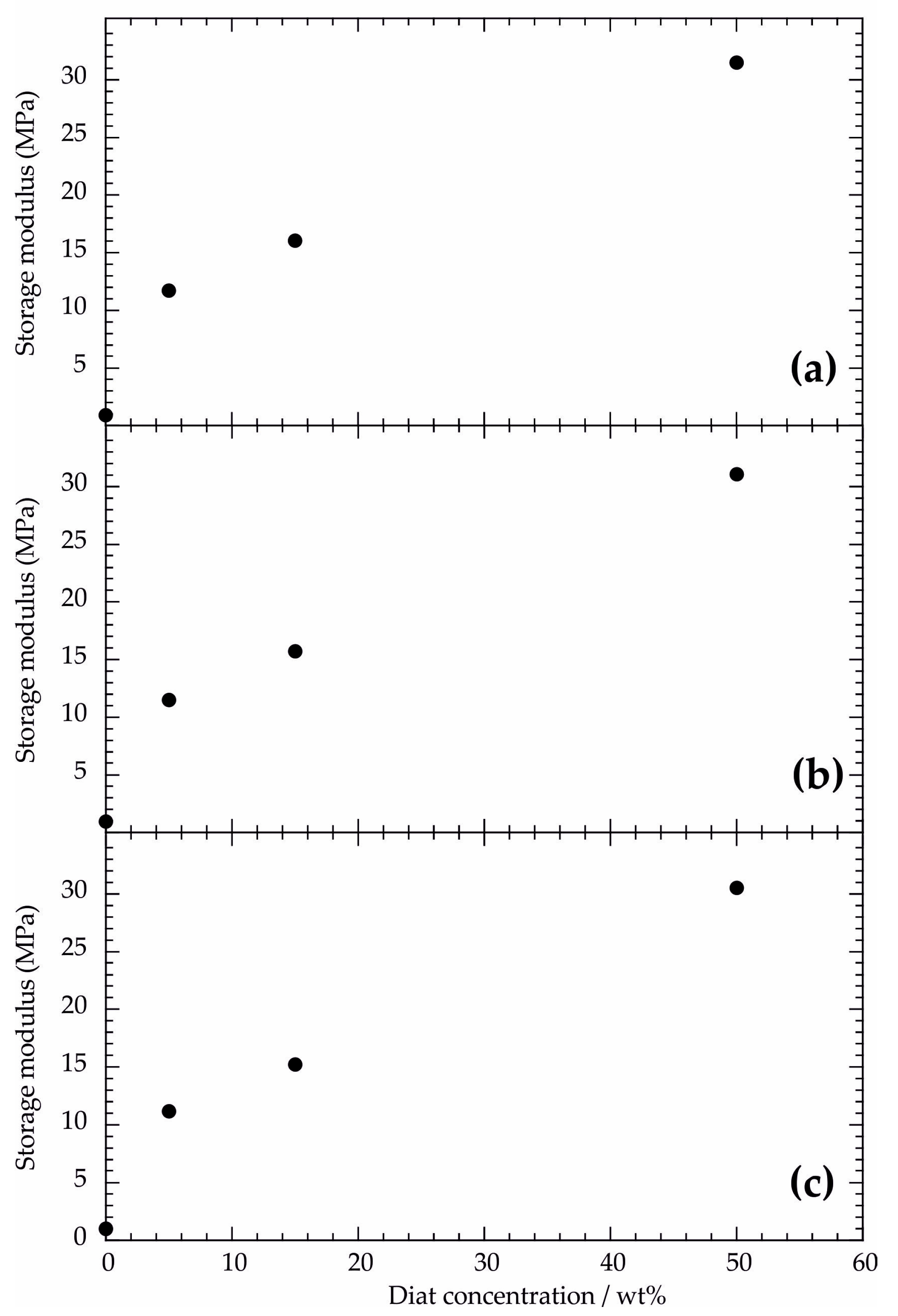
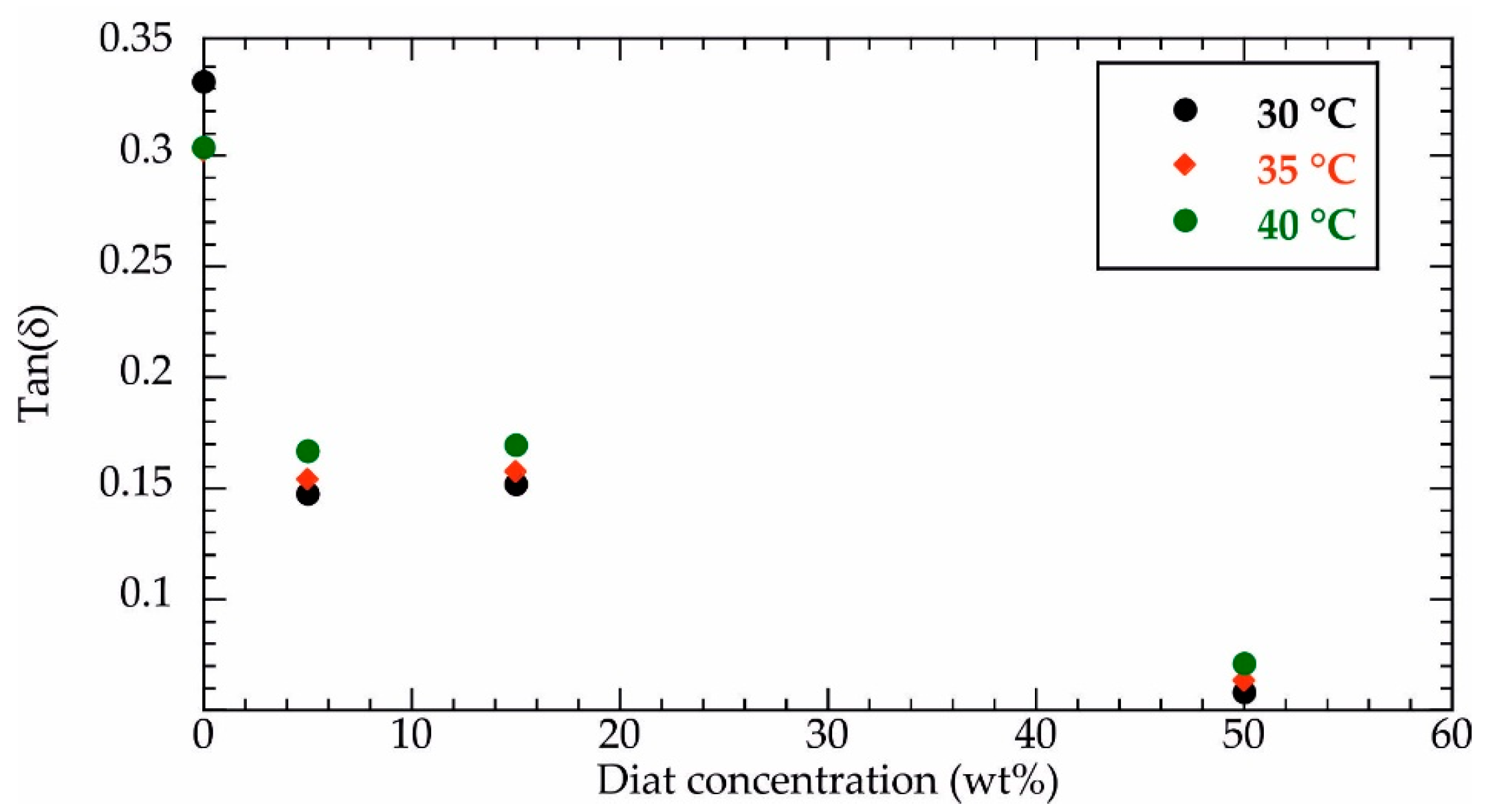
2.1. Viscoelastic Properties of PCL/Diat Composites
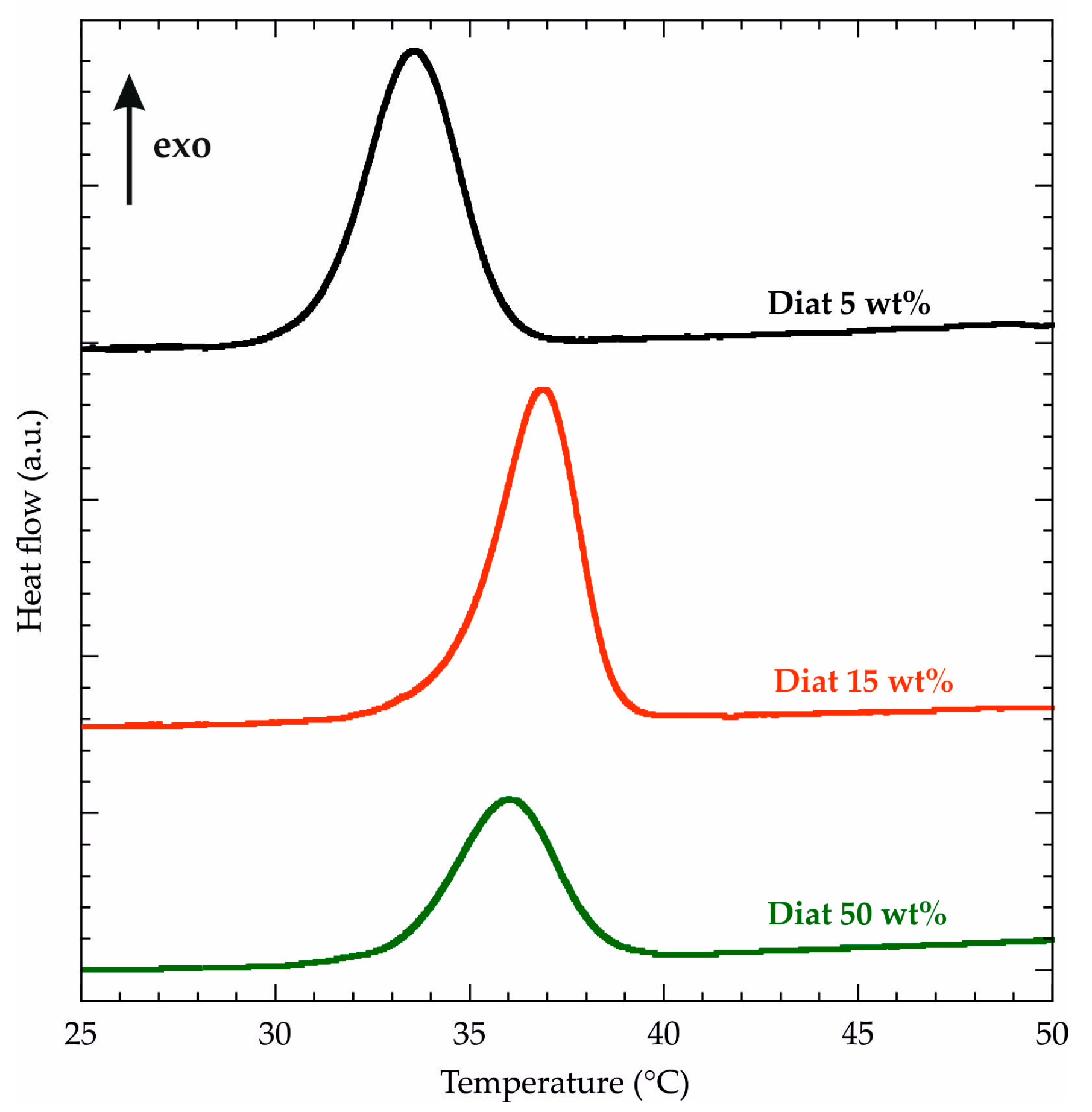
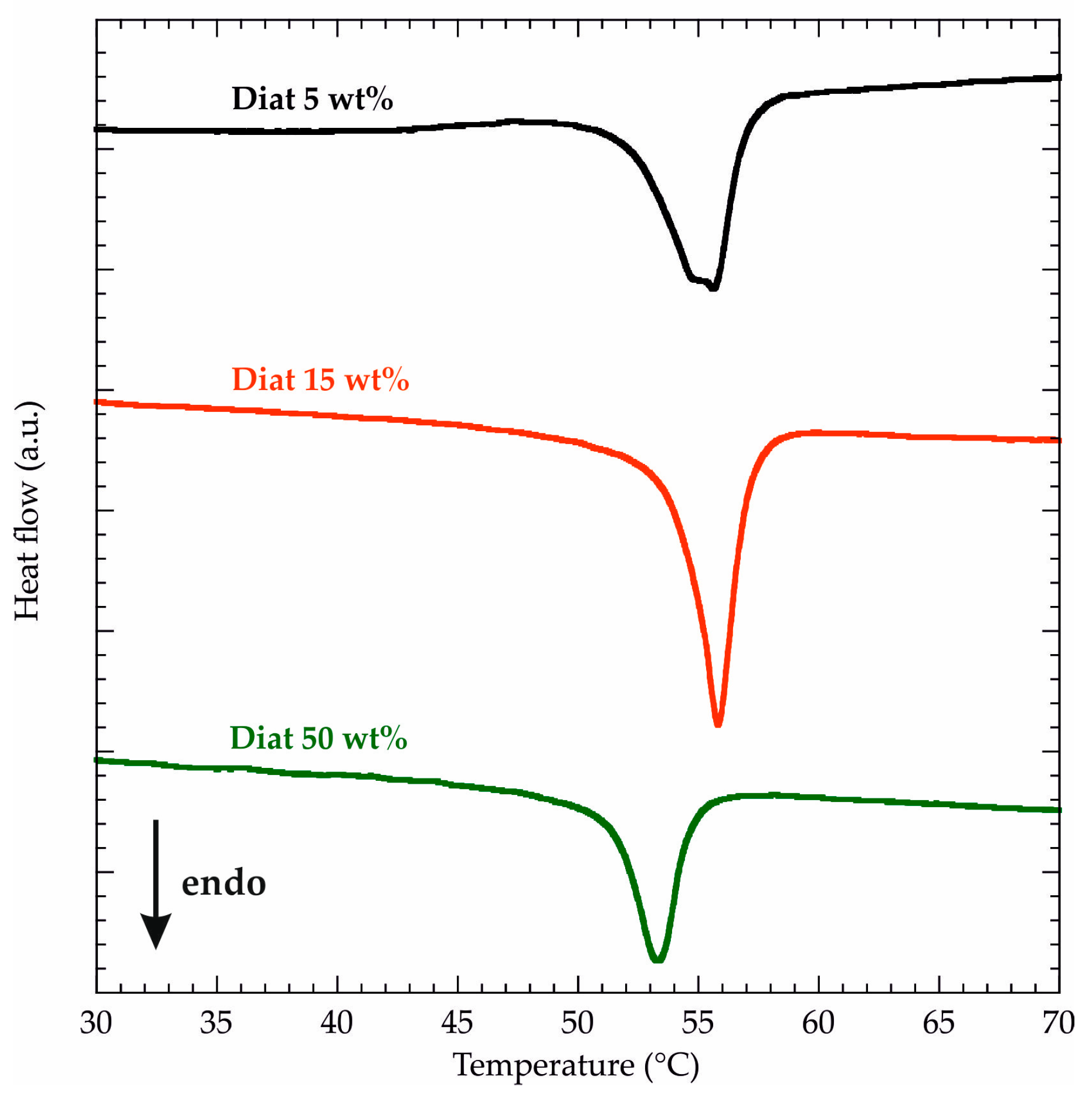
2.2. Effects of Diat Addition on the Melting and Crystallization Processes of PCL
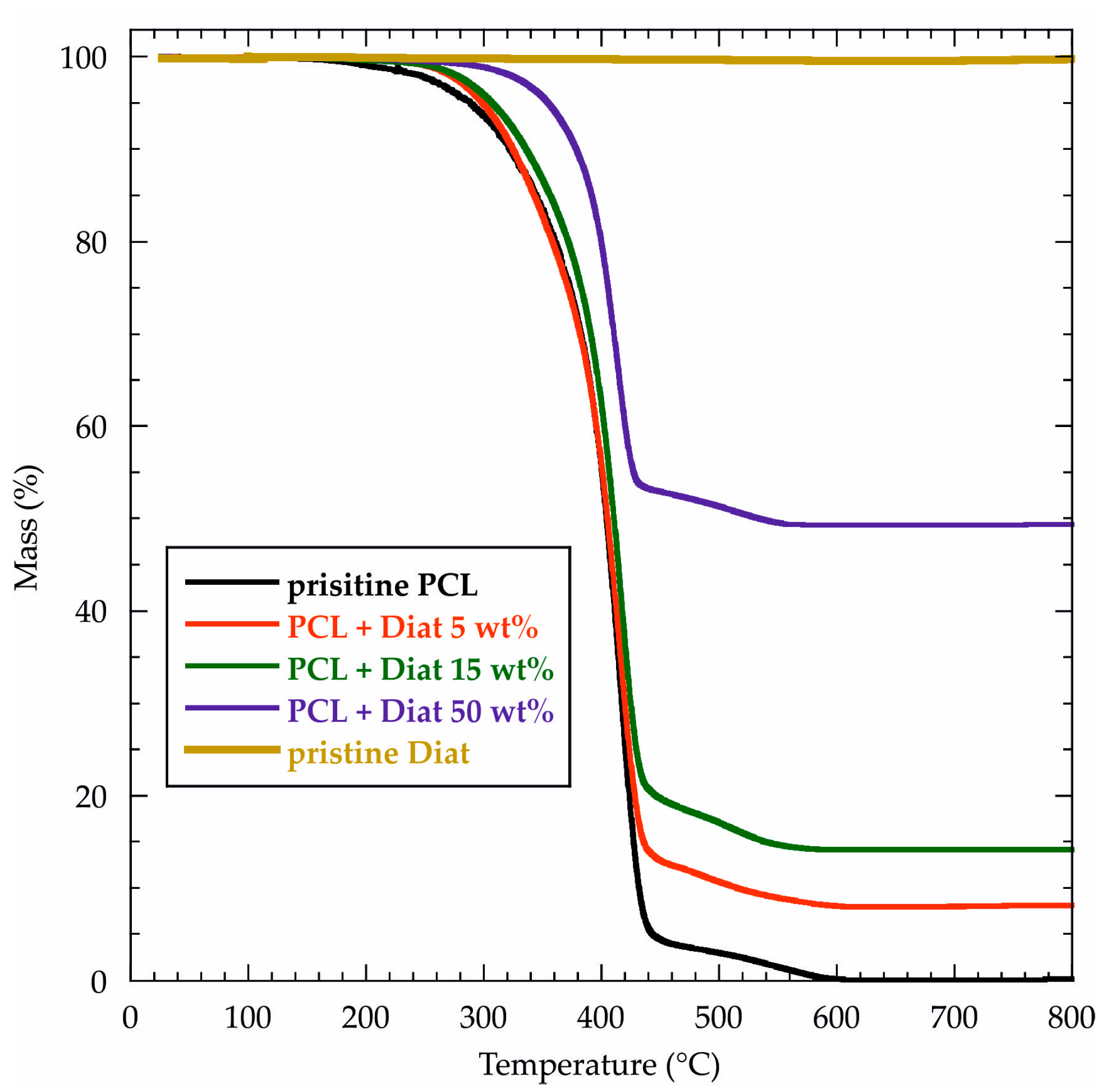
2.3. Thermal Stability of PCL/Diat Composites
3. Materials and Methods
3.1. Chemicals
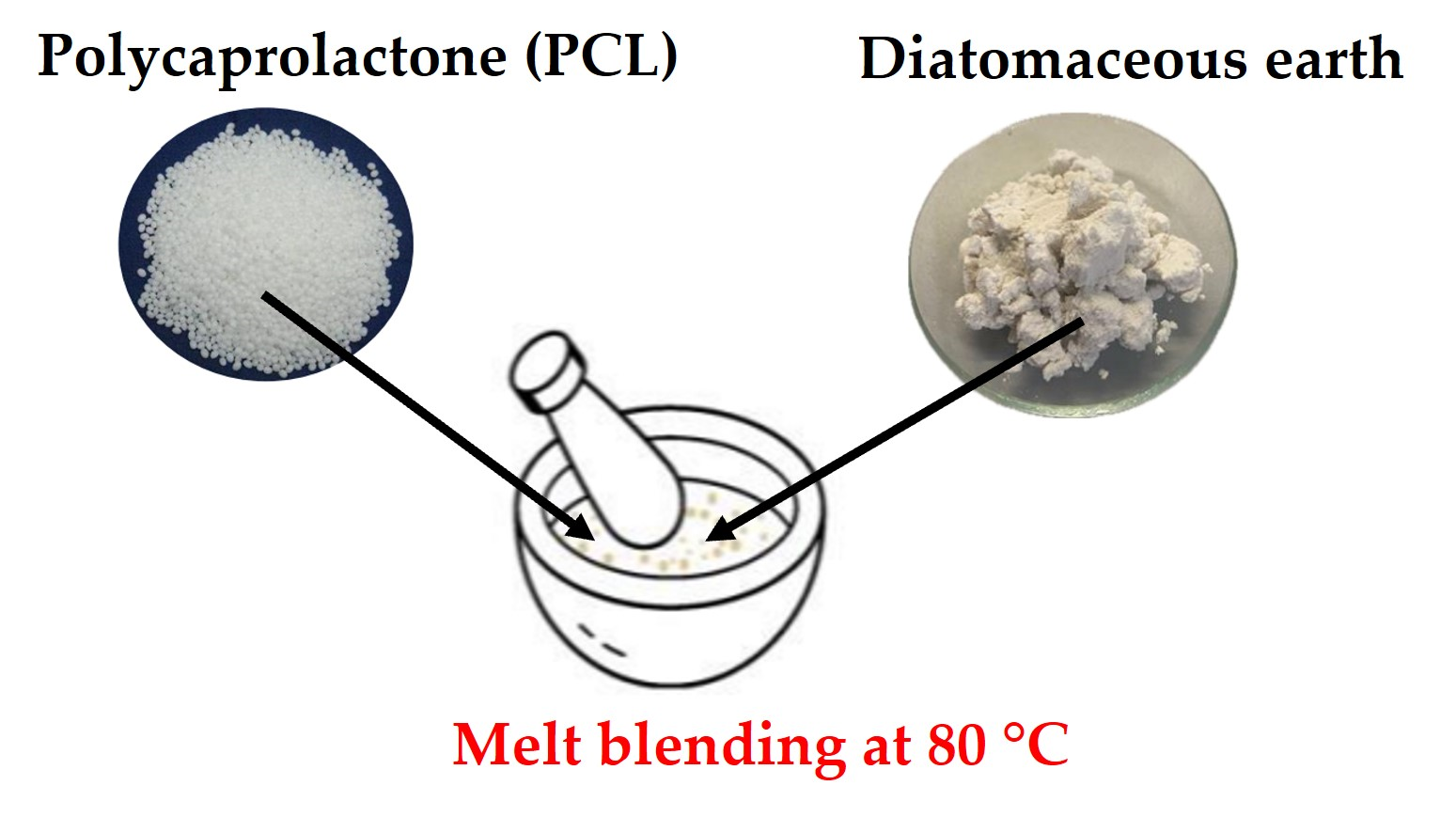
3.2. Preparation of PCL/Diat Composites
3.3. Characterization of PCL/Diat Composites
3.3.1. Dynamic Mechanical Analysis (DMA)
3.3.2. Differential Scanning Calorimetry (DSC)
3.3.3. Thermogravimetric Analysis (TGA)
4. Conclusions
Supplementary Materials
Author Contributions
Funding
Institutional Review Board Statement
Informed Consent Statement
Data Availability Statement
Acknowledgments
Conflicts of Interest
References
- Aggrey, P.; Nartey, M.; Kan, Y.; Cvjetinovic, J.; Andrews, A.; Salimon, A.I.; Dragnevski, K.I.; Korsunsky, A.M. On the Diatomite-Based Nanostructure-Preserving Material Synthesis for Energy Applications. RSC Adv. 2021, 11, 31884–31922. [Google Scholar] [CrossRef] [Scilit]
- Tsai, W.T.; Hsien, K.J.; Yang, J.M. Silica Adsorbent Prepared from Spent Diatomaceous Earth and Its Application to Removal of Dye from Aqueous Solution. J. Colloid Interface Sci. 2004, 275, 428–433. [Google Scholar] [CrossRef] [Scilit] [PubMed]
- Benkacem, T.; Hamdi, B.; Chamayou, A.; Balard, H.; Calvet, R. Physicochemical Characterization of a Diatomaceous upon an Acid Treatment: A Focus on Surface Properties by Inverse Gas Chromatography. Powder Technol. 2016, 294, 498–507. [Google Scholar] [CrossRef] [Scilit]
- Reka, A.A.; Pavlovski, B.; Fazlija, E.; Berisha, A.; Pacarizi, M.; Daghmehchi, M.; Sacalis, C.; Jovanovski, G.; Makreski, P.; Oral, A. Diatomaceous Earth: Characterization, Thermal Modification, and Application. Open Chem. 2021, 19, 451–461. [Google Scholar] [CrossRef] [Scilit]
- Dobrosielska, M.; Dobrucka, R.; Brząkalski, D.; Frydrych, M.; Kozera, P.; Wieczorek, M.; Jałbrzykowski, M.; Kurzydłowski, K.J.; Przekop, R.E. Influence of Diatomaceous Earth Particle Size on Mechanical Properties of PLA/Diatomaceous Earth Composites. Materials 2022, 15, 3607. [Google Scholar] [CrossRef] [Scilit] [PubMed]
- Uthappa, U.T.; Sriram, G.; Brahmkhatri, V.; Kigga, M.; Jung, H.-Y.; Altalhi, T.; Neelgund, G.M.; Kurkuri, M.D. Xerogel Modified Diatomaceous Earth Microparticles for Controlled Drug Release Studies. New J. Chem. 2018, 42, 11964–11971. [Google Scholar] [CrossRef] [Scilit]
- Łępicka, M.; Rodziewicz, M.; Kawalec, M.; Nowicka, K.; Tsybrii, Y.; Kurzydłowski, K.J. Diatomaceous Earth as a Drug-Loaded Carrier in a Glass-Ionomer Cement. J. Mech. Behav. Biomed. Mater. 2022, 133, 105324. [Google Scholar] [CrossRef] [Scilit] [PubMed]
- Uthappa, U.T.; Brahmkhatri, V.; Sriram, G.; Jung, H.-Y.; Yu, J.; Kurkuri, N.; Aminabhavi, T.M.; Altalhi, T.; Neelgund, G.M.; Kurkuri, M.D. Nature Engineered Diatom Biosilica as Drug Delivery Systems. J. Control. Release 2018, 281, 70–83. [Google Scholar] [CrossRef] [Scilit] [PubMed]
- Semenkova, A.; Belousov, P.; Rzhevskaia, A.; Izosimova, Y.; Maslakov, K.; Tolpeshta, I.; Romanchuk, A.; Krupskaya, V. U(VI) Sorption onto Natural Sorbents. J. Radioanal. Nucl. Chem. 2020, 326, 293–301. [Google Scholar] [CrossRef] [Scilit]
- Belousov, P.; Semenkova, A.; Egorova, T.; Romanchuk, A.; Zakusin, S.; Dorzhieva, O.; Tyupina, E.; Izosimova, Y.; Tolpeshta, I.; Chernov, M.; et al. Cesium Sorption and Desorption on Glauconite, Bentonite, Zeolite, and Diatomite. Minerals 2019, 9, 625. [Google Scholar] [CrossRef] [Scilit]
- Zglobicka, I.; Joka-Yildiz, M.; Molak, R.; Kawalec, M.; Dubicki, A.; Wroblewski, J.; Dydek, K.; Boczkowska, A.; Kurzydlowski, K.J. Poly(Lactic Acid) Matrix Reinforced with Diatomaceous Earth. Materials 2022, 15, 6210. [Google Scholar] [CrossRef] [Scilit]
- Cacciotti, I.; Rinaldi, M.; Fabbrizi, J.; Nanni, F. Innovative Polyetherimide and Diatomite Based Composites: Influence of the Diatomite Kind and Treatment. J. Mater. Res. Technol. 2019, 8, 1737–1745. [Google Scholar] [CrossRef] [Scilit]
- Dobrosielska, M.; Dobrucka, R.; Brząkalski, D.; Kozera, P.; Martyła, A.; Gabriel, E.; Kurzydłowski, K.J.; Przekop, R.E. Polyamide 11 Composites Reinforced with Diatomite Biofiller—Mechanical, Rheological and Crystallization Properties. Polymers 2023, 15, 1563. [Google Scholar] [CrossRef] [Scilit] [PubMed]
- Barinova, S.; Mamanazarova, K. Diatom Algae-Indicators of Water Quality in the Lower Zarafshan River, Uzbekistan. Water 2021, 13, 358. [Google Scholar] [CrossRef] [Scilit]
- Agdi, K.; Bouaid, A.; Esteban, A.M.; Hernando, P.F.; Azmani, A.; Camara, C. Removal of Atrazine and Four Organophosphorus Pesticides from Environmental Waters by Diatomaceous Earth–Remediation Method. J. Environ. Monit. 2000, 2, 420–423. [Google Scholar] [CrossRef] [Scilit]
- Pornaroonthama, P.; Thouchprasitchai, N.; Pongstabodee, S. CO2 Adsorption on Diatomaceous Earth Modified with Cetyltrimethylammonium Bromide and Functionalized with Tetraethylenepentamine: Optimization and Kinetics. J. Environ. Manag. 2015, 157, 194–204. [Google Scholar] [CrossRef] [Scilit] [PubMed]
- Sosa, G.L.; Fernández Morantes, C.; Flores, F.M.; Torres Sánchez, R.M.; Zalts, A.; Ramirez, S.A. Characterization of Diatomaceous Earth Modified by Organic Ligands for Enhanced Zinc Adsorption. J. Environ. Chem. Eng. 2019, 7, 103197. [Google Scholar] [CrossRef] [Scilit]
- Terzopoulou, Z.; Papageorgiou, D.G.; Papageorgiou, G.Z.; Bikiaris, D.N. Effect of Surface Functionalization of Halloysite Nanotubes on Synthesis and Thermal Properties of Poly(ε-Caprolactone). J. Mater. Sci. 2018, 53, 6519–6541. [Google Scholar] [CrossRef] [Scilit]
- Rahimkhoei, V.; Padervand, M.; Hedayat, M.; Seidi, F.; Dawi, E.A.; Akbari, A. Biomedical Applications of Electrospun Polycaprolactone-Based Carbohydrate Polymers: A Review. Int. J. Biol. Macromol. 2023, 253, 126642. [Google Scholar] [CrossRef] [Scilit]
- Tolba, E.; Salama, A.; Saleh, A.K.; Cruz-Maya, I.; Guarino, V. Sodium Alginate- and Cationic Cellulose-Functionalized Polycaprolactone Nanofibers for In Vitro and Antibacterial Applications. Molecules 2023, 28, 7305. [Google Scholar] [CrossRef] [Scilit]
- Alyamani, A.A.; Al-Musawi, M.H.; Albukhaty, S.; Sulaiman, G.M.; Ibrahim, K.M.; Ahmed, E.M.; Jabir, M.S.; Al-Karagoly, H.; Aljahmany, A.A.; Mohammed, M.K.A. Electrospun Polycaprolactone/Chitosan Nanofibers Containing Cordia Myxa Fruit Extract as Potential Biocompatible Antibacterial Wound Dressings. Molecules 2023, 28, 2501. [Google Scholar] [CrossRef] [Scilit]
- Baburaj, M.S.; Veeran, M.G.; Painuly, D.; Sreelekshmi, S.; Rajkumar, R.J.; Aprem, A.S. Fabrication and Characterisation of Polycaprolactone/Gelatin/Chitosan (PCL/GEL/CHI) Electrospun Nano-Membranes for Wastewater Purification. Desalination 2023, 563, 116709. [Google Scholar] [CrossRef] [Scilit]
- Körpınar, B.; Erdem Yayayürük, A.; Yayayürük, O.; Akat, H. Thiol–Ended Polycaprolactone: Synthesis, Preparation and Use in Pb(II) and Cd(II) Removal from Water Samples. Mater. Today Commun. 2021, 29, 102908. [Google Scholar] [CrossRef] [Scilit]
- Hani, A.; Haikal, R.R.; El-Mehalmey, W.A.; Safwat, Y.; Alkordi, M.H. Durable and Recyclable MOF@polycaprolactone Mixed-Matrix Membranes with Hierarchical Porosity for Wastewater Treatment. Nanoscale 2023, 15, 19617–19628. [Google Scholar] [CrossRef] [Scilit]
- Lv, D.; Zhu, M.; Jiang, Z.; Jiang, S.; Zhang, Q.; Xiong, R.; Huang, C. Green Electrospun Nanofibers and Their Application in Air Filtration. Macromol. Mater. Eng. 2018, 303, 1800336. [Google Scholar] [CrossRef] [Scilit]
- Rao, C.; Gu, F.; Zhao, P.; Sharmin, N.; Gu, H.; Fu, J. Capturing PM2.5 Emissions from 3D Printing via Nanofiber-Based Air Filter. Sci. Rep. 2017, 7, 10366. [Google Scholar] [CrossRef] [Scilit] [PubMed]
- Gnedenkov, A.S.; Filonina, V.S.; Sinebryukhov, S.L.; Gnedenkov, S.V. A Superior Corrosion Protection of Mg Alloy via Smart Nontoxic Hybrid Inhibitor-Containing Coatings. Molecules 2023, 28, 2538. [Google Scholar] [CrossRef] [Scilit] [PubMed]
- Kumar, P.; Kumar, M.; Roopa, C.P. Natural Nano-Fillers Materials for the Bio-Composites: A Review. J. Indian Chem. Soc. 2022, 99, 100715. [Google Scholar] [CrossRef] [Scilit]
- Boccalon, E.; Viscusi, G.; Lamberti, E.; Fancello, F.; Zara, S.; Sassi, P.; Marinozzi, M.; Nocchetti, M.; Gorrasi, G. Composite Films Containing Red Onion Skin Extract as Intelligent pH Indicators for Food Packaging. Appl. Surf. Sci. 2022, 593, 153319. [Google Scholar] [CrossRef] [Scilit]
- Viscusi, G.; Bugatti, V.; Gorrasi, G. Active Packaging Based on Cellulose Trays Coated with Layered Double Hydroxide as Nano-Carrier of Parahydroxybenzoate: Application to Fresh-Cut Iceberg Lettuce. Packag. Technol. Sci. 2021, 34, 353–360. [Google Scholar] [CrossRef] [Scilit]
- Lisuzzo, L.; Cavallaro, G.; Lazzara, G.; Milioto, S. Supramolecular Systems Based on Chitosan and Chemically Functionalized Nanocelluloses as Protective and Reinforcing Fillers of Paper Structure. Carbohydr. Polym. Technol. Appl. 2023, 6, 100380. [Google Scholar] [CrossRef] [Scilit]
- Cavallaro, G.; Lazzara, G.; Milioto, S. Nanocomposites Based on Halloysite Nanotubes and Sulphated Galactan from Red Seaweed Gloiopeltis: Properties and Delivery Capacity of Sodium Diclofenac. Int. J. Biol. Macromol. 2023, 234, 123645. [Google Scholar] [CrossRef] [Scilit]
- Kalay, S.; Stetsyshyn, Y.; Donchak, V.; Harhay, K.; Lishchynskyi, O.; Ohar, H.; Panchenko, Y.; Voronov, S.; Çulha, M. pH-Controlled Fluorescence Switching in Water-Dispersed Polymer Brushes Grafted to Modified Boron Nitride Nanotubes for Cellular Imaging. Beilstein J. Nanotechnol. 2019, 10, 2428–2439. [Google Scholar] [CrossRef] [Scilit] [PubMed]
- Sadjadi, S.; Malmir, M.; Heravi, M.M.; Kahangi, F.G. Biocompatible Starch-Halloysite Hybrid: An Efficient Support for Immobilizing Pd Species and Developing a Heterogeneous Catalyst for Ligand and Copper Free Coupling Reactions. Int. J. Biol. Macromol. 2018, 118, 1903–1911. [Google Scholar] [CrossRef] [Scilit] [PubMed]
- Mitomo, H.; Sasada, K.; Nishimura, K.; Yoshii, F.; Nagasawa, N. Radiation Effects on Blends of Poly(ε-Caprolactone) and Diatomites. J. Polym. Environ. 2004, 12, 95–103. [Google Scholar] [CrossRef] [Scilit]
- Han, G.; Oh, S.; Yeo, S.J.; Lee, J.; Lim, H. Eco-Friendly Polycaprolactone-Bound Diatomite Filter for the Removal of Metal Ions and Micro/Nanoplastics from Water. Sci. Total Environ. 2023, 905, 166956. [Google Scholar] [CrossRef] [Scilit] [PubMed]
- Lin, X.; Feng, Y.; He, Y.; Ding, S.; Liu, M. Engineering Design of Asymmetric Halloysite/Chitosan/Collagen Sponge with Hydrophobic Coating for High-Performance Hemostasis Dressing. Int. J. Biol. Macromol. 2023, 237, 124148. [Google Scholar] [CrossRef] [Scilit] [PubMed]
- Caruso, M.R.; D’Agostino, G.; Milioto, S.; Cavallaro, G.; Lazzara, G. A Review on Biopolymer-Based Treatments for Consolidation and Surface Protection of Cultural Heritage Materials. J. Mater. Sci. 2023, 58, 12954–12975. [Google Scholar] [CrossRef] [Scilit]
- Cavallaro, G.; Lazzara, G.; Milioto, S.; Parisi, F.; Ruisi, F. Nanocomposites Based on Esterified Colophony and Halloysite Clay Nanotubes as Consolidants for Waterlogged Archaeological Woods. Cellulose 2017, 24, 3367–3376. [Google Scholar] [CrossRef] [Scilit]
- Akinyi, C.; Iroh, J.O. Thermal Decomposition and Stability of Hybrid Graphene–Clay/Polyimide Nanocomposites. Polymers 2023, 15, 299. [Google Scholar] [CrossRef] [Scilit]
- Erceg, M.; Krešić, I.; Jakić, M.; Andričić, B. Kinetic Analysis of Poly(Ethylene Oxide)/Lithium Montmorillonite Nanocomposites. J. Therm. Anal. Calorim. 2017, 127, 789–797. [Google Scholar] [CrossRef] [Scilit]
- Lisuzzo, L.; Cavallaro, G.; Milioto, S.; Lazzara, G. Halloysite Nanotubes Filled with Salicylic Acid and Sodium Diclofenac: Effects of Vacuum Pumping on Loading and Release Properties. J. Nanostructure Chem. 2021, 11, 663–673. [Google Scholar] [CrossRef] [Scilit]
- Lisuzzo, L.; Cavallaro, G.; Milioto, S.; Lazzara, G. Coating of Silk Sutures by Halloysite/Wax Pickering Emulsions for Controlled Delivery of Eosin. Appl. Clay Sci. 2024, 247, 107217. [Google Scholar] [CrossRef] [Scilit]
- Taroni, T.; Cauteruccio, S.; Vago, R.; Franchi, S.; Barbero, N.; Licandro, E.; Ardizzone, S.; Meroni, D. Thiahelicene-Grafted Halloysite Nanotubes: Characterization, Biological Studies and pH Triggered Release. Appl. Surf. Sci. 2020, 520, 146351. [Google Scholar] [CrossRef] [Scilit]
- Tennent, N.H.; Baird, T. The Deterioration of Mollusca Collections: Identification of Shell Efflorescence. Stud. Conserv. 1985, 30, 73–85. [Google Scholar] [CrossRef] [Scilit]
- Kanth, A.P.; Soni, A.K. Application of Nanocomposites for Conservation of Materials of Cultural Heritage. J. Cult. Herit. 2023, 59, 120–130. [Google Scholar] [CrossRef] [Scilit]
- Seiß, V.; Thiel, S.; Eichelbaum, M. Preparation and Real World Applications of Titania Composite Materials for Photocatalytic Surface, Air, and Water Purification: State of the Art. Inorganics 2022, 10, 139. [Google Scholar] [CrossRef] [Scilit]
- Papananou, H.; Perivolari, E.; Chrissopoulou, K.; Anastasiadis, S.H. Tuning Polymer Crystallinity via the Appropriate Selection of Inorganic Nanoadditives. Polymer 2018, 157, 111–121. [Google Scholar] [CrossRef] [Scilit]
- Cavallaro, G.; Milioto, S.; Parisi, F.; Lazzara, G. Halloysite Nanotubes Loaded with Calcium Hydroxide: Alkaline Fillers for the Deacidification of Waterlogged Archeological Woods. ACS Appl. Mater. Interfaces 2018, 10, 27355–27364. [Google Scholar] [CrossRef] [Scilit]
- Maio, E.D.; Iannace, S.; Sorrentino, L.; Nicolais, L. Isothermal Crystallization in PCL/Clay Nanocomposites Investigated with Thermal and Rheometric Methods. Polymer 2004, 45, 8893–8900. [Google Scholar] [CrossRef] [Scilit]
- Nam, J.Y.; Sinha Ray, S.; Okamoto, M. Crystallization Behavior and Morphology of Biodegradable Polylactide/Layered Silicate Nanocomposite. Macromolecules 2003, 36, 7126–7131. [Google Scholar] [CrossRef] [Scilit]
- Lisuzzo, L.; Cavallaro, G.; Milioto, S.; Lazzara, G. Effects of Halloysite Content on the Thermo-Mechanical Performances of Composite Bioplastics. Appl. Clay Sci. 2020, 185, 105416. [Google Scholar] [CrossRef] [Scilit]
- Lazzara, G.; Milioto, S.; Gradzielski, M.; Prevost, S. Small Angle Neutron Scattering, X-Ray Diffraction, Differential Scanning Calorimetry, and Thermogravimetry Studies to Characterize the Properties of Clay Nanocomposites. J. Phys. Chem. C 2009, 113, 12213–12219. [Google Scholar] [CrossRef] [Scilit]
- Hasier, J.; Riolo, M.A.; Nash, P. Curie Temperature Determination via Thermogravimetric and Continuous Wavelet Transformation Analysis. EPJ Tech. Instrum. 2017, 4, 5. [Google Scholar] [CrossRef] [Scilit]
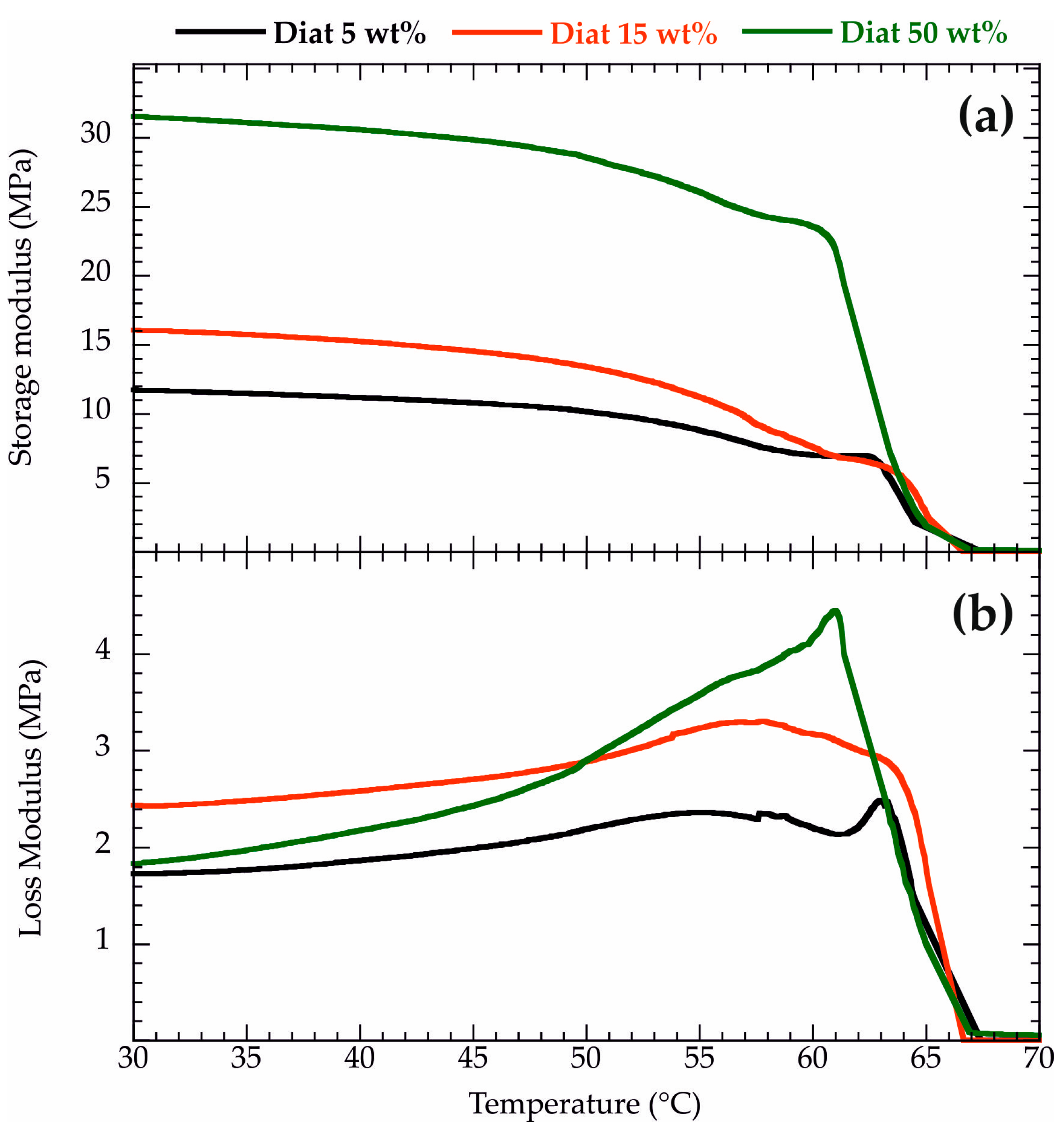


| Sample | TG′inf (°C) |
|---|---|
| PCL | 66.0 |
| PCL/Diat 5 wt% | 65.2 |
| PCL/Diat 15 wt% | 65.3 |
| PCL/Diat 50 wt% | 65.6 |
| Sample | Tm (°C) | ΔHm (J gPCL−1) |
|---|---|---|
| PCL | 57.3 | 68.0 |
| PCL/Diat 5 wt% | 55.6 | 69.2 |
| PCL/Diat 15 wt% | 55.8 | 76.6 |
| PCL/Diat 50 wt% | 53.3 | 78.1 |
| Sample | Tc (°C) | ΔHc (J gPCL−1) |
|---|---|---|
| PCL | 36.7 | −68.4 |
| PCL/Diat 5 wt% | 33.6 | −72.3 |
| PCL/Diat 15 wt% | 36.9 | −72.1 |
| PCL/Diat 50 wt% | 36.0 | −76.1 |
| Sample | Tons (°C) | MR800 (%) |
|---|---|---|
| PCL | 311 | 0 |
| PCL/Diat 5 wt% | 322 | 8.07 |
| PCL/Diat 15 wt% | 330 | 14.1 |
| PCL/Diat 50 wt% | 362 | 49.3 |
| Diat | / | 99.5 |
| Sample | Mass PCL/g | Mass Diat/g |
|---|---|---|
| PCL | 5.00 | 0 |
| PCL/Diat 5 wt% | 5.00 | 0.26 |
| PCL/Diat 15 wt% | 5.00 | 0.88 |
| PCL/Diat 50 wt% | 5.00 | 5.00 |
Disclaimer/Publisher’s Note: The statements, opinions and data contained in all publications are solely those of the individual author(s) and contributor(s) and not of MDPI and/or the editor(s). MDPI and/or the editor(s) disclaim responsibility for any injury to people or property resulting from any ideas, methods, instructions or products referred to in the content. |
© 2024 by the authors. Licensee MDPI, Basel, Switzerland. This article is an open access article distributed under the terms and conditions of the Creative Commons Attribution (CC BY) license (https://creativecommons.org/licenses/by/4.0/).
Share and Cite
Carotenuto, M.R.; Cavallaro, G.; Chinnici, I.; Lazzara, G.; Milioto, S. Hybrid Green Materials Obtained by PCL Melt Blending with Diatomaceous Earth. Molecules 2024, 29, 1203. https://doi.org/10.3390/molecules29061203
Carotenuto MR, Cavallaro G, Chinnici I, Lazzara G, Milioto S. Hybrid Green Materials Obtained by PCL Melt Blending with Diatomaceous Earth. Molecules. 2024; 29(6):1203. https://doi.org/10.3390/molecules29061203
Chicago/Turabian StyleCarotenuto, Maria Rosalia, Giuseppe Cavallaro, Ileana Chinnici, Giuseppe Lazzara, and Stefana Milioto. 2024. "Hybrid Green Materials Obtained by PCL Melt Blending with Diatomaceous Earth" Molecules 29, no. 6: 1203. https://doi.org/10.3390/molecules29061203
APA StyleCarotenuto, M. R., Cavallaro, G., Chinnici, I., Lazzara, G., & Milioto, S. (2024). Hybrid Green Materials Obtained by PCL Melt Blending with Diatomaceous Earth. Molecules, 29(6), 1203. https://doi.org/10.3390/molecules29061203