Article

Relationships between Molecular Characteristics of Novel Organic Selenium Compounds and the Formation of Sulfur Compounds in Selenium Biofortified Kale Sprouts

by
Paweł Zagrodzki
1,
Agnieszka Wiesner
1,
Monika Marcinkowska
2,
Marek Jamrozik
2,
Enrique Domínguez-Álvarez
3,
Katarzyna Bierła
4,
Ryszard Łobiński
4,5,
Joanna Szpunar
4,
Jadwiga Handzlik
6,
Agnieszka Galanty
7,
Shela Gorinstein
8 and
Paweł Paśko
1,*
1
Department of Food Chemistry and Nutrition, Faculty of Pharmacy, Medical College, Jagiellonian University, Medyczna 9, 30-688 Kraków, Poland
2
Department of Medicinal Chemistry, Faculty of Pharmacy, Jagiellonian University Medical College, 9 Medyczna Str., 30-688 Cracow, Poland
3
Instituto de Química Orgánica General (IQOG), CSIC, Juan de la Cierva 3, 28006 Madrid, Spain
4
IPREM—Institute of Analytical and Physical Chemistry for the Environment and Materials, CNRS-UPPA UMR 5254, Hélioparc, 64053 Pau, France
5
Department of Chemistry, Warsaw University of Technology, ul. Noakowskiego 3, 00-664 Warsaw, Poland
6
Department of Technology and Biotechnology of Drugs, Faculty of Pharmacy, Medical College, Jagiellonian University, Medyczna 9, 30-688 Kraków, Poland
7
Department of Pharmacognosy, Faculty of Pharmacy, Medical College, Jagiellonian University Medyczna 9, 30-688 Kraków, Poland
8
Institute for Drug Research, School of Pharmacy, Faculty of Medicine, The Hebrew University of Jerusalem, Jerusalem 9112001, Israel
*
Author to whom correspondence should be addressed.
Molecules 2023, 28(5), 2062; https://doi.org/10.3390/molecules28052062

Submission received: 31 December 2022 / Revised: 15 February 2023 / Accepted: 20 February 2023 / Published: 22 February 2023
(This article belongs to the Special Issue Physicochemical Interactions in Food)

Abstract

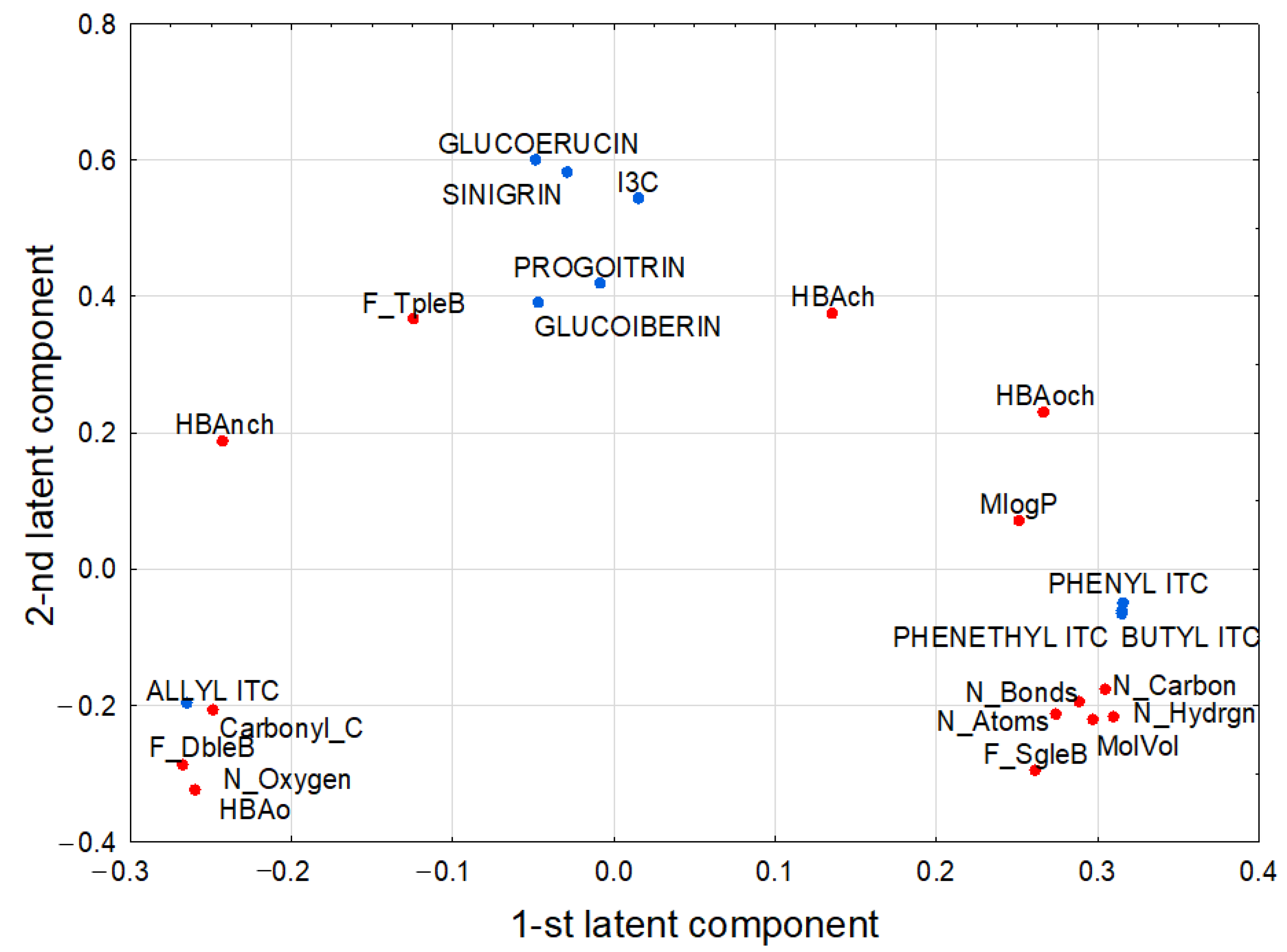
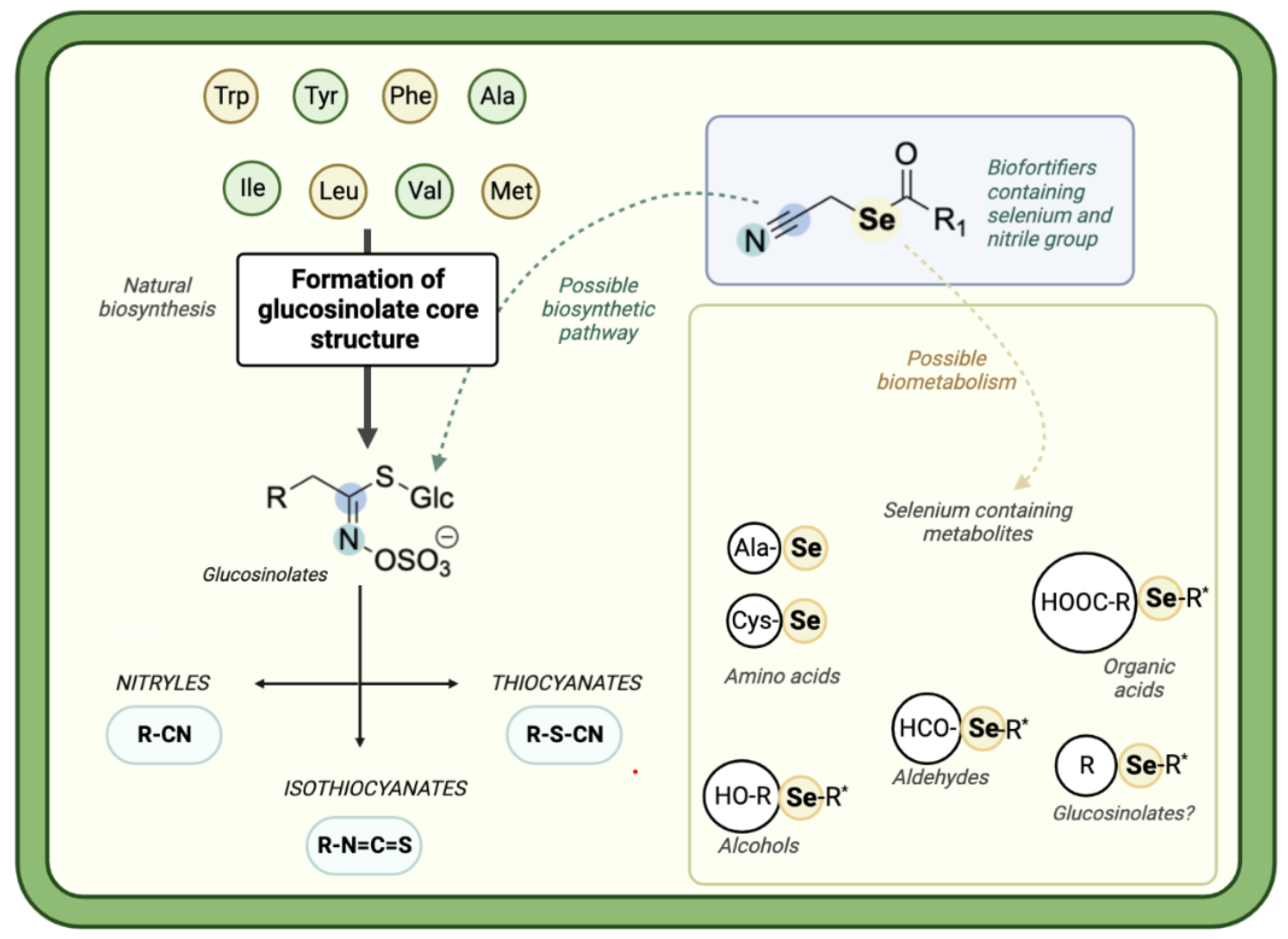
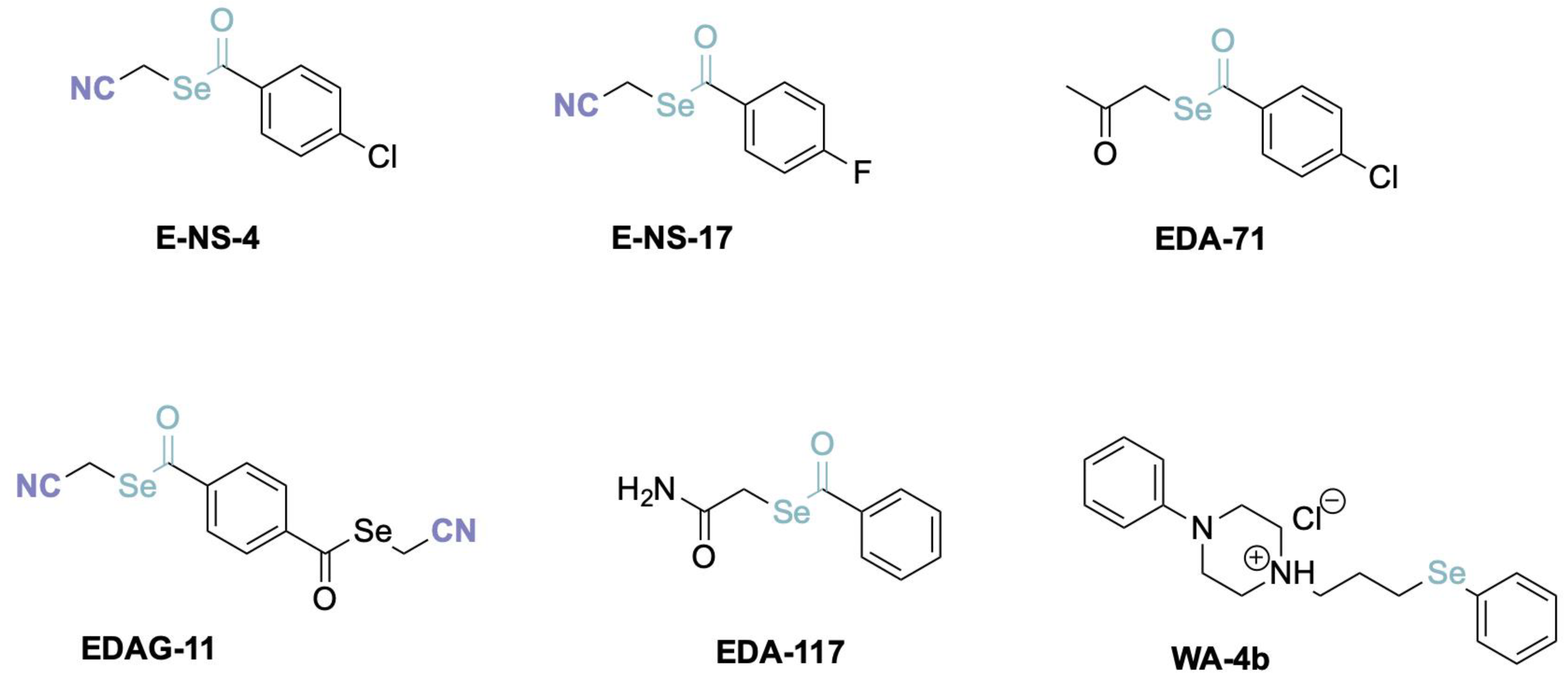
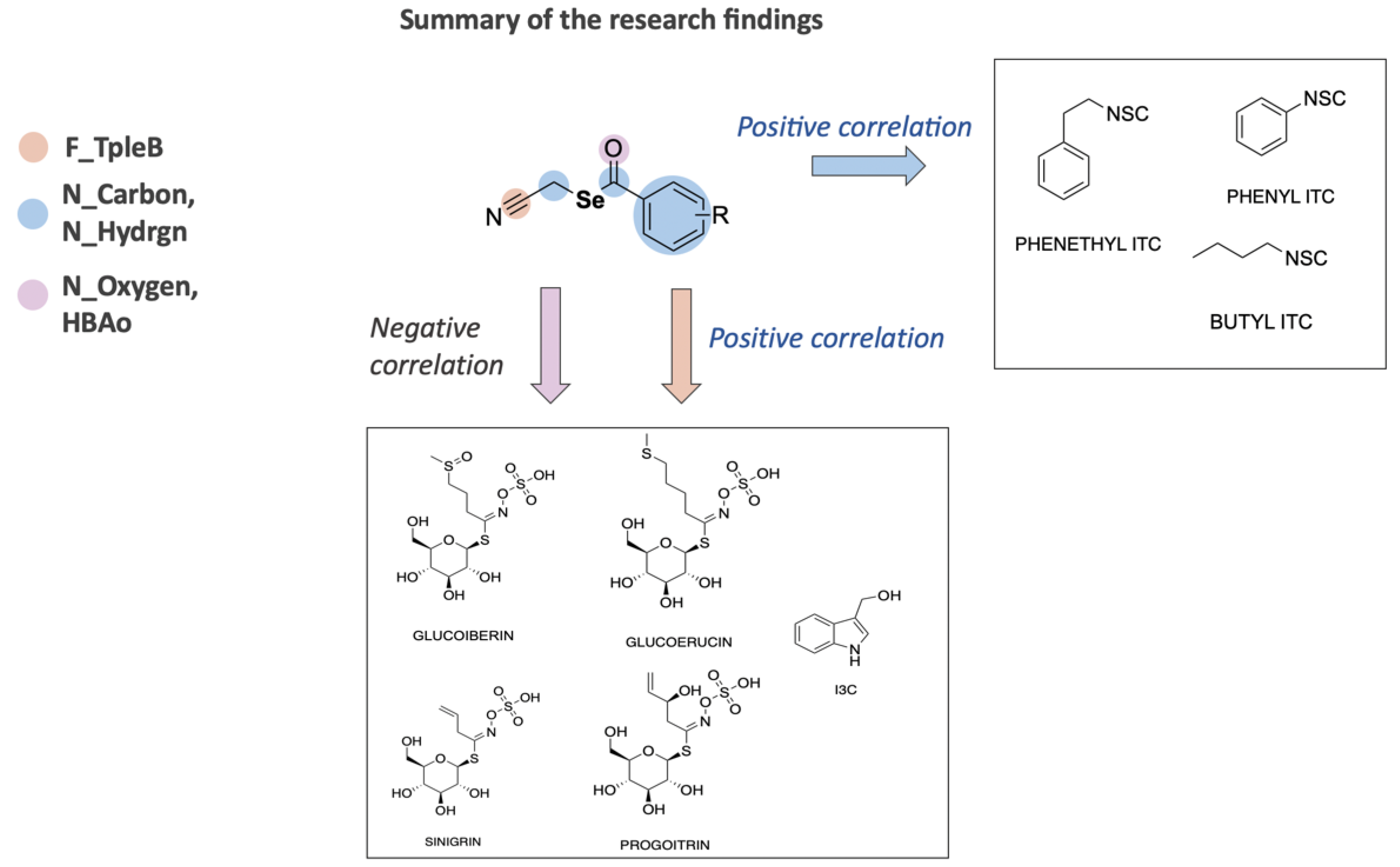
Due to problems with selenium deficiency in humans, the search for new organic molecules containing this element in plant biofortification process is highly required. Selenium organic esters evaluated in this study (E-NS-4, E-NS-17, E-NS-71, EDA-11, and EDA-117) are based mostly on benzoselenoate scaffolds, with some additional halogen atoms and various functional groups in the aliphatic side chain of different length, while one compound contains a phenylpiperazine moiety (WA-4b). In our previous study, the biofortification of kale sprouts with organoselenium compounds (at the concentrations of 15 mg/L in the culture fluid) strongly enhanced the synthesis of glucosinolates and isothiocyanates. Thus, the study aimed to discover the relationships between molecular characteristics of the organoselenium compounds used and the amount of sulfur phytochemicals in kale sprouts. The statistical partial least square model with eigenvalues equaled 3.98 and 1.03 for the first and second latent components, respectively, which explained 83.5% of variance in the predictive parameters, and 78.6% of response parameter variance was applied to reveal the existence of the correlation structure between molecular descriptors of selenium compounds as predictive parameters and biochemical features of studied sprouts as response parameters (correlation coefficients for parameters in PLS model in the range—0.521 ÷ 1.000). This study supported the conclusion that future biofortifiers composed of organic compounds should simultaneously contain nitryl groups, which may facilitate the production of plant-based sulfur compounds, as well as organoselenium moieties, which may influence the production of low molecular weight selenium metabolites. In the case of the new chemical compounds, environmental aspects should also be evaluated.
Keywords: selenium; sulfur compounds; biofortification; brassica sprouts; chemometric analysis selenium; sulfur compounds; biofortification; brassica sprouts; chemometric analysis