Article

Magnetic ε-Phosphorene for Sensing Greenhouse Gas Molecules

1
Engineering Science Programme, Faculty of Engineering, National University of Singapore, Singapore 117575, Singapore
2
Department of Mechanical Engineering, National University of Singapore, Singapore 117575, Singapore
3
Science, Mathematics and Technology, Singapore University of Technology and Design, 8 Somapah Road, Singapore 487372, Singapore
*
Author to whom correspondence should be addressed.
These authors contributed equally to this work.
Molecules 2023, 28(14), 5402; https://doi.org/10.3390/molecules28145402

Submission received: 10 June 2023 / Revised: 8 July 2023 / Accepted: 12 July 2023 / Published: 14 July 2023
(This article belongs to the Special Issue Physical Chemistry in Novel Two-Dimensional Nanomaterials)

Abstract

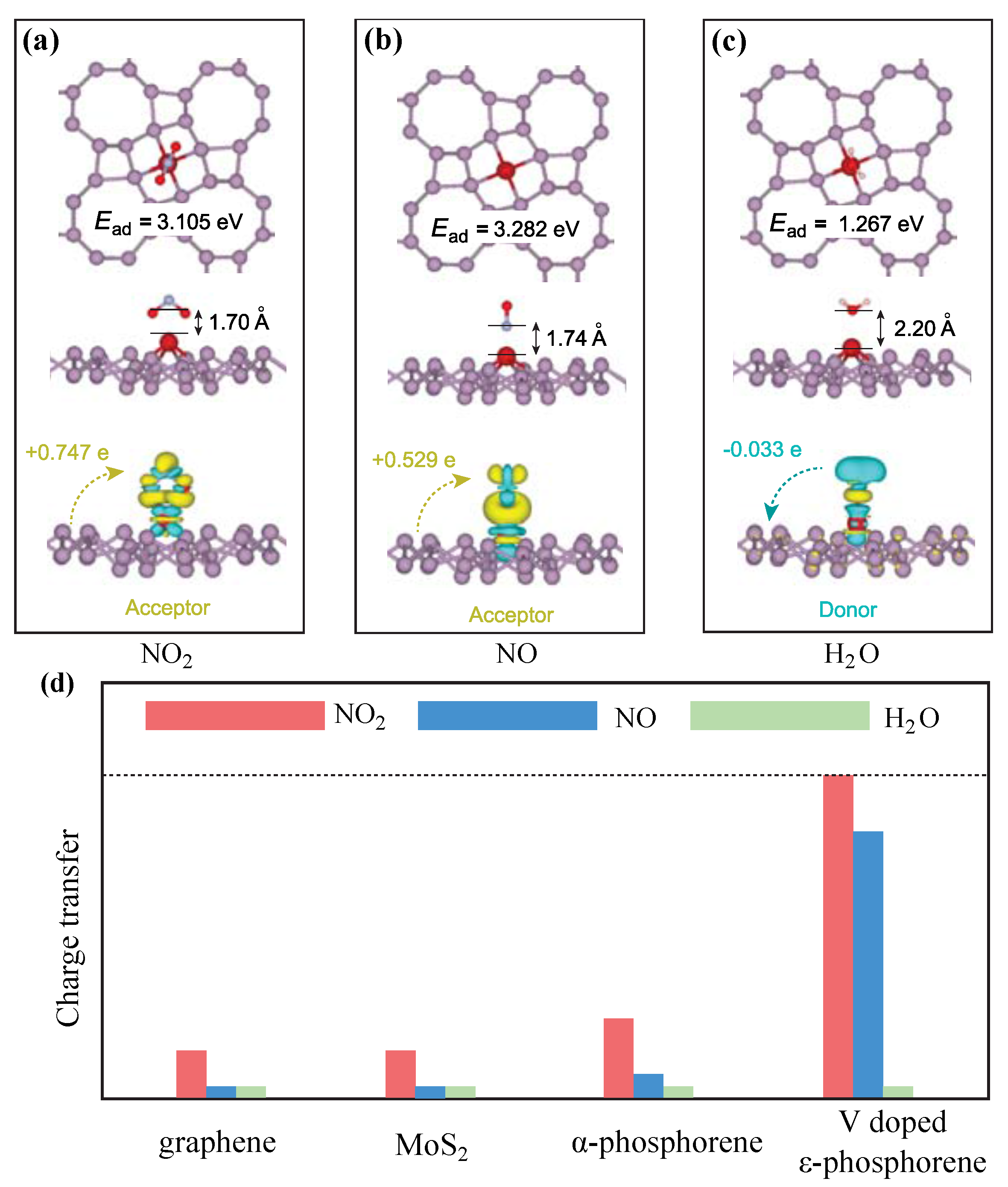
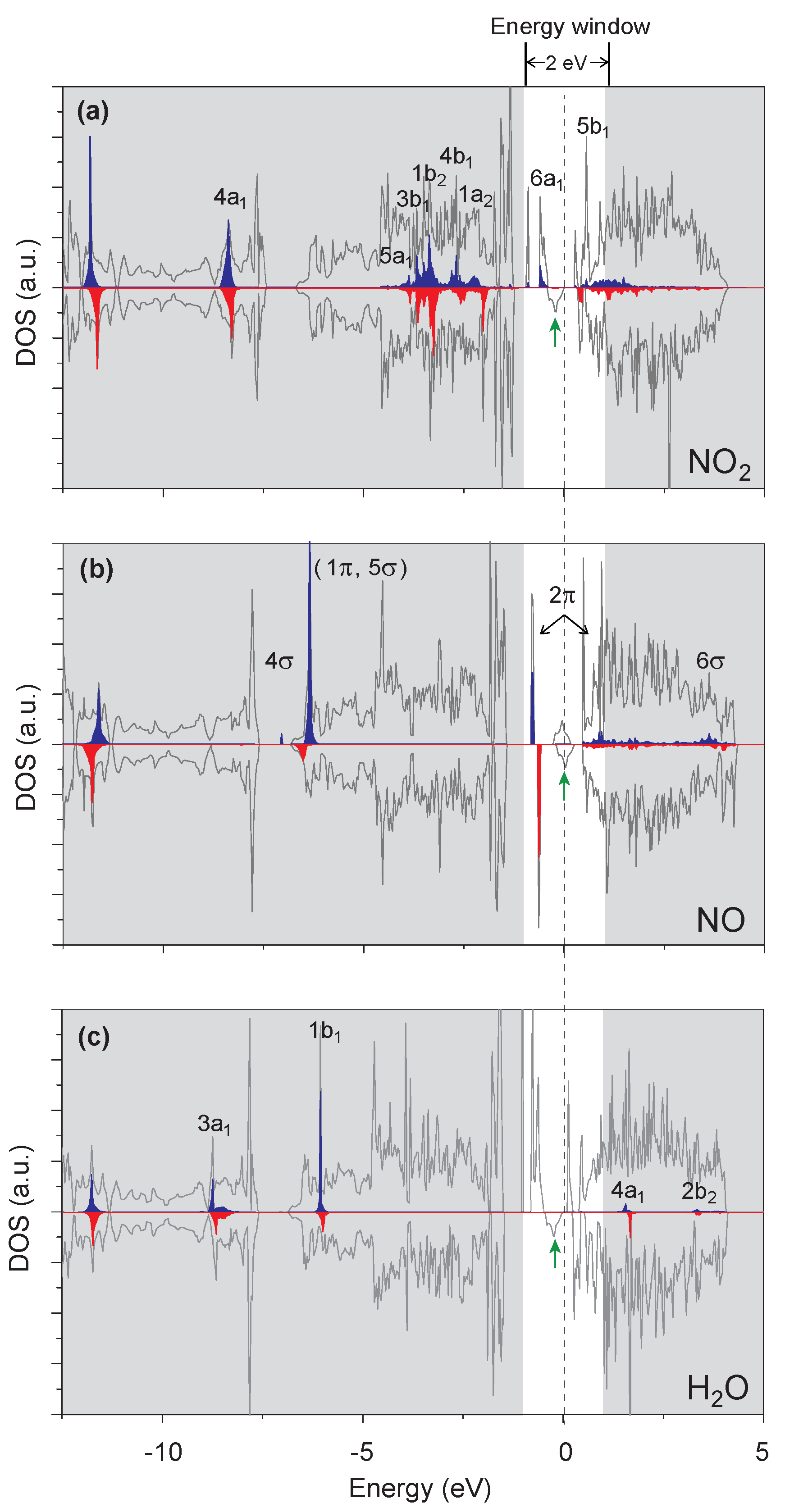
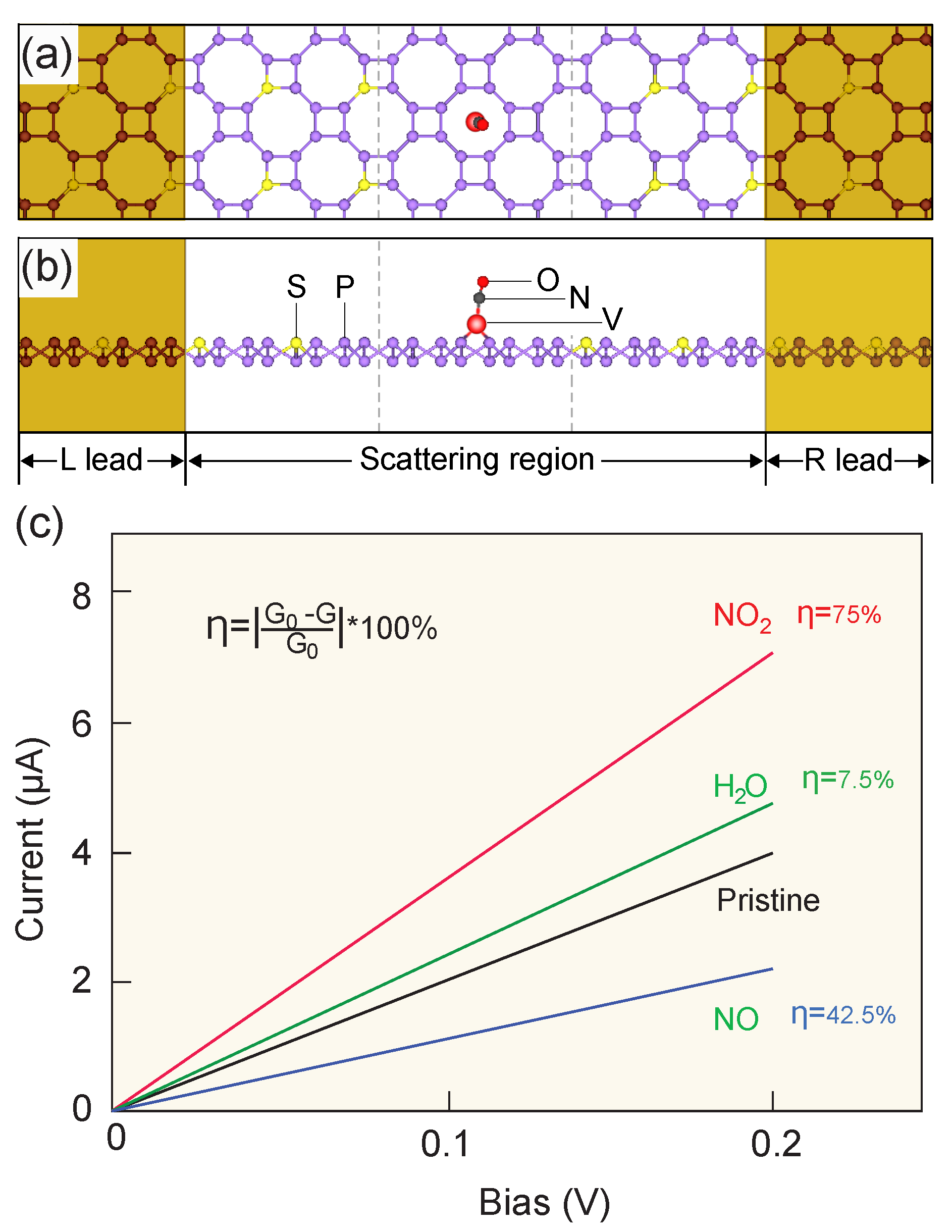
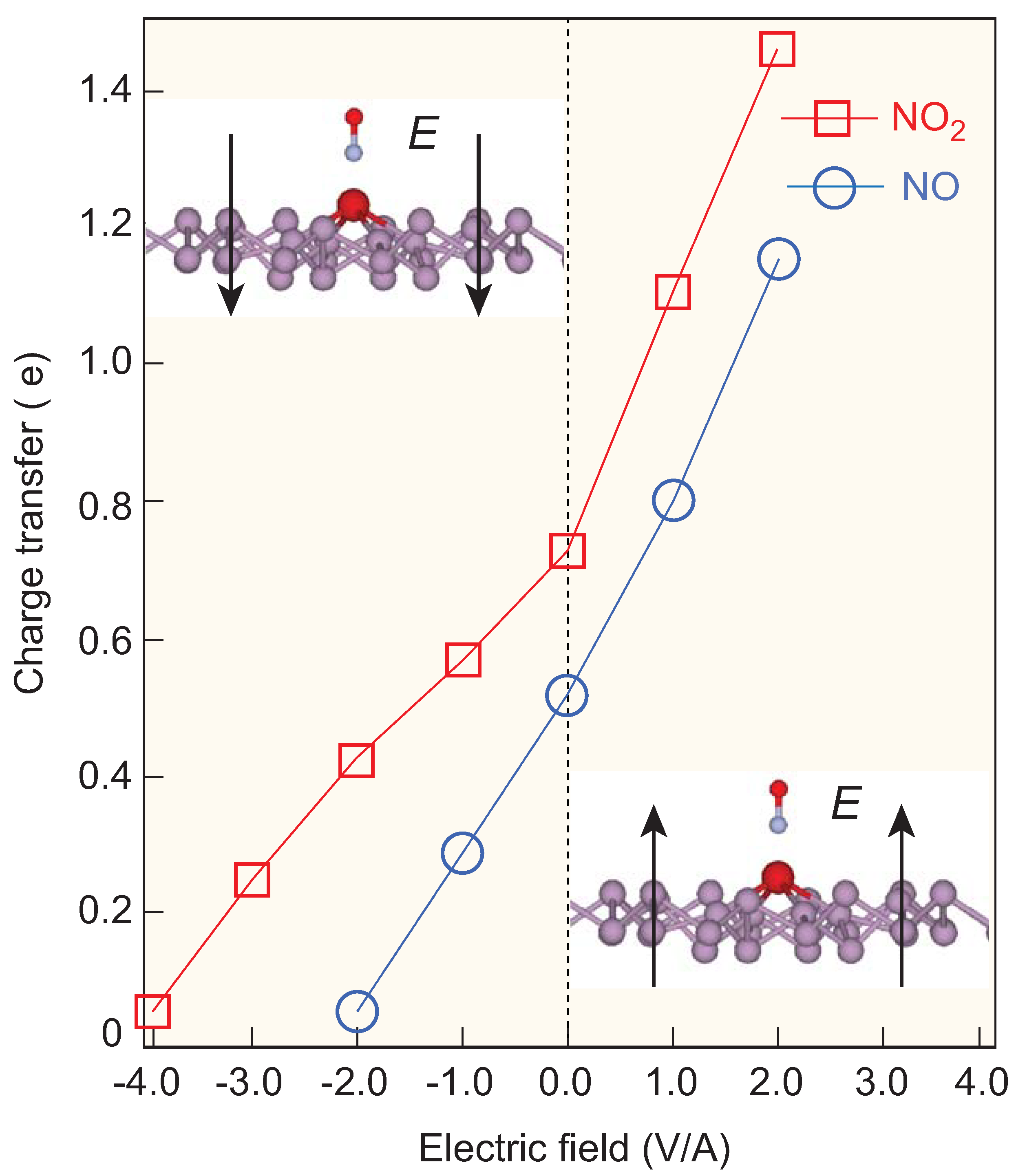
It is critical for gas sensors that sense greenhouse gas molecules to have both good sensitivity and selectivity for water molecules in the ambient environment. Here, we study the charge transfer, IV curves, and electric field tuning of vanadium-doped monolayer ϵ-phosphorene as a sensor for NO, NO2, and H2O gas molecules via first-principle and transport calculations. We find that the paramagnetic toxic molecules of NO and NO2 have a high adsorption energy on V-ϵ-phosphorene, which originates from a large amount of charge transfer driven by the hybridisation of the localised spin states of the host with the molecular frontier orbital. Using the non-equilibrium Green’s function, we investigate the IV responses with respect to the adsorption of different molecules to study the performance of gas molecule sensors. Our IV curves show a larger amount of changes in resistance of the paramagnetic NO and NO2 than nonmagnetic H2O gas molecules, suggesting both sensitivity and selectivity. Moreover, our calculations show that an applied external electric field (gate voltage) can effectively tune the amount of charge transfer. More charge transfer makes the sensor more sensitive to the molecule, while less charge transfer can reduce the adsorption energy and remove the adsorbed molecules, allowing for the repeated use of the sensor.
Keywords: gas sensor; toxic gases; phosphorene; 2D materials; DFT calculations gas sensor; toxic gases; phosphorene; 2D materials; DFT calculations