Review

Middle East Medicinal Plants in the Treatment of Diabetes: A Review
by
Alaa M. Abu-Odeh
1 and
Wamidh H. Talib
2,*
1
Department of pharmaceutical sciences, Faculty of Pharmacy, The University of Jordan, Amman 11942, Jordan
2
Department of Clinical Pharmacy and Therapeutics, Applied Science Private University, Amman 11931-166, Jordan
*
Author to whom correspondence should be addressed.
Molecules 2021, 26(3), 742; https://doi.org/10.3390/molecules26030742

Submission received: 7 December 2020 / Revised: 8 January 2021 / Accepted: 17 January 2021 / Published: 31 January 2021
(This article belongs to the Special Issue Natural Products for the Treatment of Diabetes and Obesity)

Abstract

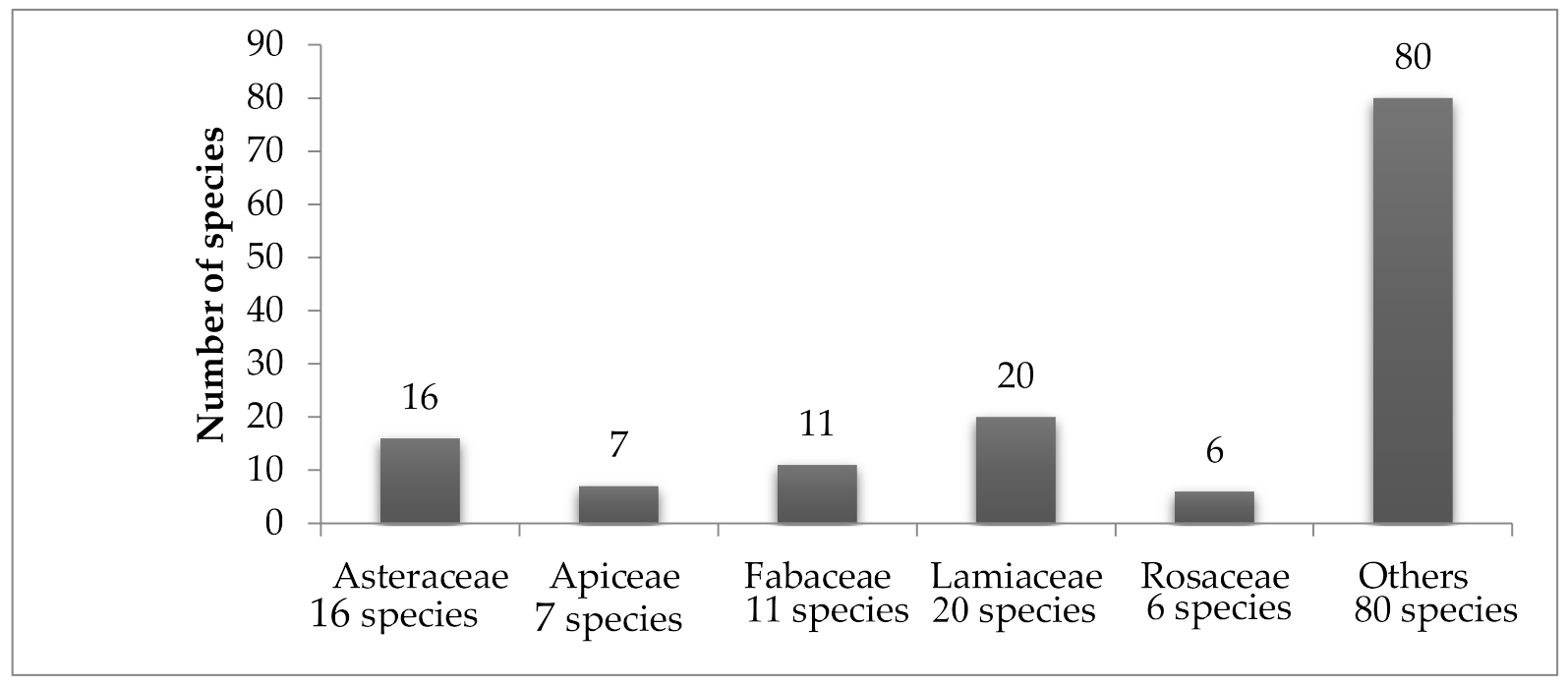
Diabetes is a global health problem, and the number of diabetic patients is in continuous rise. Conventional antidiabetic therapies are associated with high costs and limited efficiency. The use of traditional medicine and plant extracts to treat diabetes is gaining high popularity in many countries. Countries in the Middle East region have a long history of using herbal medicine to treat different diseases, including diabetes. In this review, we compiled and summarized all the in vivo and in vitro studies conducted for plants with potential antidiabetic activity in the Middle East region. Plants of the Asteraceae and Lamiaceae families are the most investigated. It is hoped that this review will contribute scientifically to evidence the ethnobotanical use of medicinal plants as antidiabetic agents. Work has to be done to define tagetes, mechanism of action and the compound responsible for activity. In addition, safety and pharmacokinetic parameters should be investigated.
Keywords: antidiabetic plants; natural products; hyperglycemia; plant extracts antidiabetic plants; natural products; hyperglycemia; plant extracts