


Literature-Wide Association Studies (LWAS) for a Rare Disease: Drug Repurposing for Inflammatory Breast Cancer


Abstract
1. Introduction
2. Results
2.1. PubMed Abstracts on “Cancer” Collection
2.2. Corpus Preparation and Word Embedding
2.3. Prediction of Drugs for IBC Based on Drug Similarity and Disease Similarity Analyses
2.4. Literature Validation
3. Discussion
3.1. Disease-Disease Similarity Analysis
3.2. Drug Candidates for Repurposing
3.3. Literature Validation
4. Methods
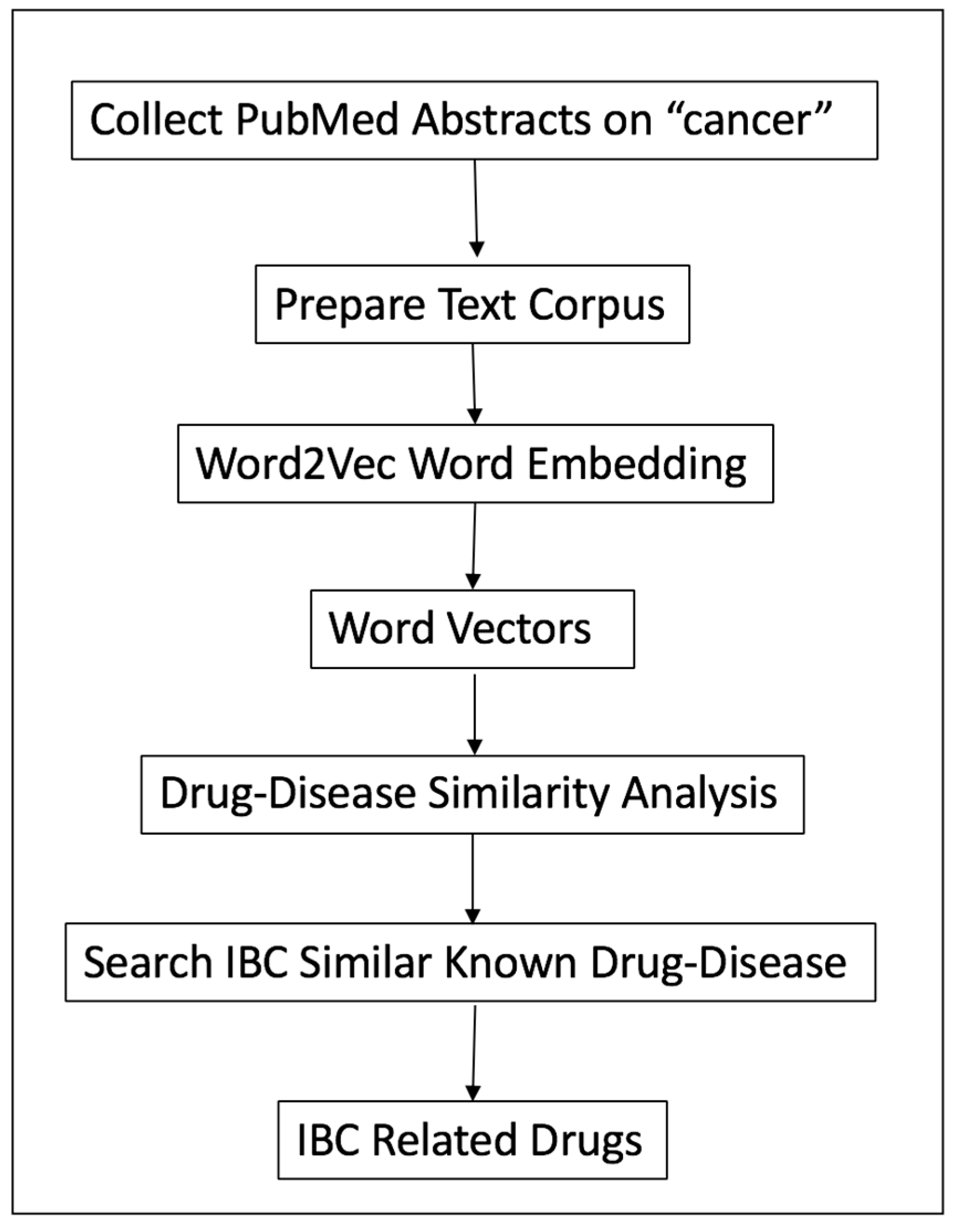
4.1. The Overall Design
4.2. Collecting and Preprocessing PubMed Abstracts
4.3. Preparing the Text Corpus
4.4. Performing Word Embedding
4.5. Generating Drug Similarity and Disease Similarity Maps
4.6. Preparing a Reference Set of Known Drug-Disease Pairs
5. Conclusions
Supplementary Materials
Author Contributions
Funding
Acknowledgments
Conflicts of Interest
Abbreviations
| FDA | Food and Drug Administration |
| IBC | Inflammatory Breast Cancer |
| LWAS | Literature-Wide Association Studies |
| NCE | new chemical entities |
| QSAR | quantitative structure-activity relationship |
| TN | triple negative |
| t-SNE | t-Distributed Stochastic Neighbor Embedding |
References
- Macarron, R.; Banks, M.N.; Bojanic, D.; Burns, D.J.; Cirovic, D.A.; Garyantes, T.; Green, D.V.S.; Hertzberg, R.P.; Janzen, W.P.; Paslay, J.W.; et al. Impact of high-throughput screening in biomedical research. Nat. Rev. Drug Discov. 2011, 10, 188–195. [Google Scholar] [CrossRef] [PubMed]
- da Silva Rocha, S.F.L.; Olanda, C.G.; Fokoue, H.H.; Sant’Anna, C.M.R. Virtual Screening Techniques in Drug Discovery: Review and Recent Applications. Curr. Top. Med. Chem. 2019, 19, 1751–1767. [Google Scholar] [CrossRef] [PubMed]
- Pizzorno, A.; Padey, B.; Terrier, O.; Rosa-Calatrava, M. Drug Repurposing Approaches for the Treatment of Influenza Viral Infection: Reviving Old Drugs to Fight Against a Long-Lived Enemy. Front. Immunol. 2019, 10, 531. [Google Scholar] [CrossRef]
- Pushpakom, S.; Iorio, F.; Eyers, P.A.; Escott, K.J.; Hopper, S.; Wells, A.; Doig, A.; Guilliams, T.; Latimer, J.; McNamee, C.; et al. Drug repurposing: Progress, challenges and recommendations. Nat. Rev. Drug Discov. 2019, 18, 41–58. [Google Scholar] [CrossRef] [PubMed]
- Xue, H.; Li, J.; Xie, H.; Wang, Y. Review of Drug Repositioning Approaches and Resources. Int. J. Biol. Sci. 2018, 14, 1232–1244. [Google Scholar] [CrossRef] [PubMed]
- Masuda, T.; Tsuruda, Y.; Matsumoto, Y.; Uchida, H.; Nakayama, K.I.; Mimori, K. Drug repositioning in cancer: The current situation in Japan. Cancer Sci. 2020, 111, 1039–1046. [Google Scholar] [CrossRef]
- Yella, J.K.; Yaddanapudi, S.; Wang, Y.; Jegga, A.G. Changing Trends in Computational Drug Repositioning. Pharmaceuticals 2018, 11, 57. [Google Scholar] [CrossRef]
- Wishart, D.S.; Feunang, Y.D.; Guo, A.C.; Lo, E.J.; Marcu, A.; Grant, J.R.; Sajed, T.; Johnson, D.; Li, C.; Sayeeda, Z.; et al. DrugBank 5.0: A major update to the DrugBank database for 2018. Nucleic Acids Res. Spec. Publ. 2018, 46, D1074–D1082. [Google Scholar] [CrossRef]
- Seiler, K.P.; George, G.A.; Happ, M.P.; Bodycombe, N.E.; Carrinski, H.A.; Norton, S.; Brudz, S.; Sullivan, J.P.; Muhlich, J.; Serrano, M.; et al. ChemBank: A small-molecule screening and cheminformatics resource database. Nucleic Acids Res. Spec. Publ. 2008, 36, D351–D359. [Google Scholar] [CrossRef]
- Hamosh, A.; Scott, A.F.; Amberger, J.S.; Bocchini, C.A.; McKusick, V.A. Online Mendelian Inheritance in Man (OMIM), a knowledgebase of human genes and genetic disorders. Nucleic Acids Res. Spec. Publ. 2005, 33, D514–D517. [Google Scholar] [CrossRef]
- KEGG DISEASE Database. Available online: https://www.genome.jp/kegg/disease/ (accessed on 25 February 2019).
- PubMed: US National Library of Medicine National Institutes of Health. Available online: https://www.ncbi.nlm.nih.gov/pubmed/ (accessed on 20 March 2019).
- Fleuren, W.W.; Alkema, W. Application of text mining in the biomedical domain. Methods 2015, 74, 97–106. [Google Scholar] [CrossRef] [PubMed]
- Li, J.; Zhu, X.; Chen, J.Y. Building disease-specific drug-protein connectivity maps from molecular interaction networks and PubMed abstracts. PLoS Comput. Biol. 2009, 5, e1000450. [Google Scholar] [CrossRef] [PubMed]
- Jang, G.; Lee, T.; Lee, B.M.; Yoon, Y. Literature-based prediction of novel drug indications considering relationships between entities. Mol. Biosyst. 2017, 13, 1399–1405. [Google Scholar] [CrossRef] [PubMed]
- Kuusisto, F.; Steill, J.; Kuang, Z.; Thomson, J.; Page, D.; Stewart, R. A Simple Text Mining Approach for Ranking Pairwise Associations in Biomedical Applications. AMIA Jt. Summits Transl. Sci. Proc. 2017, 2017, 166–174. [Google Scholar]
- Mikolov, T.; Chen, K.; Corrado, G.; Dean, J. Efficient Estimation of Word Representations in Vector Space. Available online: https://arxiv.org/abs/1301.3781 (accessed on 15 May 2019).
- Sosa, D.N.; Derry, A.; Guo, M.; Wei, E.; Brinton, C.; Altman, R.B. A Literature-Based Knowledge Graph Embedding Method for Identifying Drug Repurposing Opportunities in Rare Diseases. Pac. Symp. Biocomput. 2020, 25, 463–474. [Google Scholar]
- Ngo, D.L.; Yamamoto, N.; Tran, V.A.; Nguyen, N.G.; Phan, D.; Lumbanraja, F.R.; Kubo, M.; Satou, K. Application of word embedding to drug repositioning. J. Biomed. Sci. Eng. 2016, 9, 7–16. [Google Scholar] [CrossRef]
- Houchens, N.W.; Merajver, S.D. Molecular determinants of the inflammatory breast cancer phenotype. Oncology (Williston Park) 2008, 22, 1556–1561. [Google Scholar]
- Chang, S.; Parker, S.L.; Pham, T.; Buzdar, A.U.; Hursting, S.D. Inflammatory breast carcinoma incidence and survival: The surveillance, epidemiology, and end results program of the National Cancer Institute, 1975–1992. Cancer 1998, 82, 2366–2372. [Google Scholar] [CrossRef]
- Hance, K.W.; Anderson, W.F.; Devesa, S.S.; Young, H.A.; Levine, P.H. Trends in inflammatory breast carcinoma incidence and survival: The surveillance, epidemiology, and end results program at the National Cancer Institute. J. Natl. Cancer Inst. 2005, 97, 966–975. [Google Scholar] [CrossRef]
- Woodward, W.A. Inflammatory breast cancer: Unique biological and therapeutic considerations. Lancet Oncol. 2015, 16, e568–e576. [Google Scholar] [CrossRef]
- Ueno, N.T.; Fernandez, J.R.E.; Cristofanilli, M.; Overmoyer, B.; Rea, D.; Berdichevski, F.; El-Shinawi, M.; Bellon, J.; Le-Petross, H.T.; Lucci, A. International Consensus on the Clinical Management of Inflammatory Breast Cancer from the Morgan Welch Inflammatory Breast Cancer Research Program 10th Anniversary Conference. J. Cancer 2018, 9, 1437–1447. [Google Scholar] [CrossRef] [PubMed]
- Devi, G.R.; Hough, H.; Barrett, N.; Cristofanilli, M.; Overmoyer, B.; Spector, N.; Ueno, N.T.; Woodward, W.; Kirkpatrick, J.; Vincent, B.; et al. Perspectives on Inflammatory Breast Cancer (IBC) Research, Clinical Management and Community Engagement from the Duke IBC Consortium. J. Cancer 2019, 10, 3344–3351. [Google Scholar] [CrossRef] [PubMed]
- Rosenbluth, J.M.; Overmoyer, B.A. Inflammatory Breast Cancer: A Separate Entity. Curr. Oncol. Rep. 2019, 21, 86. [Google Scholar] [CrossRef] [PubMed]
- Menta, A.; Fouad, T.M.; Lucci, A.; Le-Petross, H.; Stauder, M.C.; Woodward, W.A.; Ueno, N.T.; Lim, B. Inflammatory Breast Cancer: What to Know About This Unique, Aggressive Breast Cancer. Surg. Clin. 2018, 98, 787–800. [Google Scholar] [CrossRef]
- Fantini, D. Retrieving and Processing PubMed Records Using easyPubMed. Available online: https://cran.rproject.org/web/packages/easyPubMed/vignettes/getting_started_with_easyPubMed.html (accessed on 16 May 2019).
- Models.word2vec-Word2vec Embeddings. Available online: https://radimrehurek.com/gensim/models/word2vec.html (accessed on 18 July 2019).
- Yamashita, Y.; Tanaka, Y.; Kono, S.; Nishimura, M.; Mukohara, T.; Morinaga, Y.; Hara, S.; Takaoa, S. Effectiveness of Pertuzumab, Trastuzumab, and Docetaxel Combination Neoadjuvant Chemotherapy for HER2-Positive Inflammatory Breast Cancer: A Case Report. Breast Care 2017, 12, 45–47. [Google Scholar] [CrossRef]
- Shigematsu, H.; Nakamura, Y.; Tanaka, K.; Shiotani, S.; Koga, C.; Kawaguchi, H.; Nishimura, S.; Taguchi, K.; Nishiyama, K.; Ohno, S. A case of HER-2-positive advanced inflammatory breast cancer with invasive micropapillary component showing a clinically complete response to concurrent trastuzumab and paclitaxel treatment. Int. J. Clin. Oncol. 2010, 15, 615–620. [Google Scholar] [CrossRef]
- Shimizu, T.; Hirano, A.; Watanabe, O.; Kinoshita, J.; Kimura, K.; Kamimura, M.; Domoto, K.; Kim, N.; Ogawa, K.; Fujibayashi, M. Successful neoadjuvant therapy with trastuzumab, paclitaxel and epirubicin for an elderly patient with inflammatory breast cancer. Anticancer Res. 2010, 30, 581–585. [Google Scholar]
- Kashiwagi, S.; Ishihara, S.; Ishii, M.; Asano, Y.; Watanabe, M.; Morisaki, T.; Aomatsu, N.; Noda, S.; Kawajiri, H.; Nakano, T.; et al. Case of a patient with inflammatory breast cancer who responded to preoperative chemotherapy with paclitaxel plus bevacizumab and could subsequently undergo surgery. Gan To Kagaku Ryoho 2013, 40, 2384–2386. [Google Scholar]
- Palazzo, A.; Dellapasqua, S.; Munzone, E.; Bagnardi, V.; Mazza, M.; Cancello, G.; Ghisini, R.; Iorfida, M.; Montagna, E.; Goldhirsch, A.; et al. Phase II Trial of Bevacizumab Plus Weekly Paclitaxel, Carboplatin, and Metronomic Cyclophosphamide With or Without Trastuzumab and Endocrine Therapy as Preoperative Treatment of Inflammatory Breast Cancer. Clin. Breast Cancer 2018, 18, 328–335. [Google Scholar] [CrossRef]
- Ogawa, L.; Lindquist, D. Dual HER2 Suppression with Lapatinib plus Trastuzumab for Metastatic Inflammatory Breast Cancer: A Case Report of Prolonged Stable Disease. Case Rep. Oncol. 2018, 11, 855–860. [Google Scholar] [CrossRef]
- Boussen, H.; Cristofanilli, M.; Zaks, T.; DeSilvio, M.; Salazar, V.; Spector, N. Phase II study to evaluate the efficacy and safety of neoadjuvant lapatinib plus paclitaxel in patients with inflammatory breast cancer. J. Clin Oncol. 2010, 28, 3248–3255. [Google Scholar] [CrossRef] [PubMed]
- Gurney, H.; Harnett, P.; Kefford, R.; Boyages, J. Inflammatory breast cancer: Enhanced local control with hyperfractionated radiotherapy and infusional vincristine, ifosfamide and epirubicin. Aust. N. Z. J. Med. 1998, 28, 400–402. [Google Scholar] [CrossRef] [PubMed]
- Dawood, S.; Cristofanilli, M. IBC as a Rapidly Spreading Systemic Disease: Clinical and Targeted Approaches Using the Neoadjuvant Model. J. Natl. Cancer Inst. Monogr. 2015, 2015, 56–59. [Google Scholar] [CrossRef] [PubMed]
- Inflammatory Breast Cancer. Available online: https://clinicaltrials.gov/ct2/results?cond=inflammatory+breast+cancer (accessed on 15 December 2019).
- Yadav, B.S.; Sharma, S.C.; Patel, F.D.; Rai, B.; Ghoshal, S. Gynecological Cancer as a Second Malignancy in Patients with Breast Cancer. Int. J. Gynecol. Cancer 2017, 27, 1298–1304. [Google Scholar] [CrossRef]
- Valeri, A.; Fournier, G.; Morin, V.; Morin, J.F.; Drelon, E.; Mangin, P.; Teillac, P.; Berthon, P.; Cussenot, O. Early onset and familial predisposition to prostate cancer significantly enhance the probability for breast cancer in first degree relatives. Int. J. Cancer 2000, 86, 883–887. [Google Scholar] [CrossRef]
- Rojas, K.; Stuckey, A. Breast Cancer Epidemiology and Risk Factors. Clin. Obstet. Gynecol. 2016, 59, 651–672. [Google Scholar] [CrossRef]
- Gompel, A. [Hormone and breast cancer]. Presse. Med. 2019, 48, 1085–1091. [Google Scholar] [CrossRef] [PubMed]
- Anderson, W.F.; Schairer, C.; Chen, B.E.; Hance, K.W.; Levine, P.H. Epidemiology of inflammatory breast cancer (IBC). Breast Dis. 2005, 22, 9–23. [Google Scholar] [CrossRef] [PubMed]
- Robertson, F.M.; Bondy, M.; Yang, W.; Yamauchi, H.; Wiggins, S.; Kamrudin, S.; Krishnamurthy, S.; Le-Petross, H.; Bidaut, L.; Player, A.; et al. Inflammatory breast cancer: The disease, the biology, the treatment. CA Cancer J. Clin. 2010, 60, 351–375. [Google Scholar] [CrossRef] [PubMed]
- Hattori, S.; Kajiyama, H.; Fuji, U.; Furui, Y.; Ishibashi, Y.; Hattori, Y.; Takahashi, N.; Kikkawa, F.; Misawa, T. Clinical characteristics of primary peritoneal carcinoma patients: A single-institution experience involving 8 patients. Nagoya J. Med. Sci. 2016, 78, 407–414. [Google Scholar] [CrossRef]
- Kleer, C.G.; van Golen, K.L.; Braun, T.; Merajver, S.D. Persistent E-cadherin expression in inflammatory breast cancer. Mod. Pathol. 2001, 14, 458–464. [Google Scholar] [CrossRef] [PubMed]
- Silvera, D.; Arju, R.; Darvishian, F.; Levine, P.; Zolfaghari, L.; Goldberg, J.; Hochman, T.; Formenti, S.; Schneider, R. Essential role for eIF4GI overexpression in the pathogenesis of inflammatory breast cancer. Nat. Cell Biol. 2009, 11, 903–908. [Google Scholar] [CrossRef] [PubMed]
- Van Golen, K.L.; Wu, Z.F.; Qiao, X.T.; Bao, L.W.; Merajver, S.D. RhoC GTPase, a novel transforming oncogene for human mammary epithelial cells that partially recapitulates the inflammatory breast cancer phenotype. Cancer Res. 2000, 60, 5832–5838. [Google Scholar] [PubMed]
- Jhaveri, K.; Teplinsky, E.; Silvera, D.; Valeta-Magara, A.; Arju, R.; Giashuddin, S.; Sarfraz, Y.; Alexander, M.; Darvishian, F.; Levine, P.; et al. Hyperactivated mTOR and JAK2/STAT3 pathways: Molecular drivers and potential therapeutic targets of inflammatory and invasive ductal breast cancers after neoadjuvant chemotherapy. Clin. Breast Cancer 2015, 16, 113–122. [Google Scholar] [CrossRef]
- Oladapo, H.O.; Tarpley, M.; Sauer, S.J.; Addo, K.A.; Ingram, S.M.; Strepay, D.; Ehe, B.K.; Chdid, L.; Trinkler, M.; Roques, J.R.; et al. Pharmacological targeting of GLI1 inhibits proliferation, tumor emboli formation and in vivo tumor growth of inflammatory breast cancer cells. Cancer Lett. 2017, 411, 136–149. [Google Scholar] [CrossRef]
- Williams, K.P.; Allensworth, J.L.; Ingram, S.M.; Smith, G.R.; Aldrich, A.J.; Sexton, J.Z.; Devi, G.R. Quantitative high-throughput efficacy profiling of approved oncology drugs in inflammatory breast cancer models of acquired drug resistance and re-sensitization. Cancer Lett. 2013, 337, 77–89. [Google Scholar] [CrossRef]
- Van der Maaten, L.; Hinton, G. Visualizing Data Using t-SNE. J. Mach. Learn. Res. 2008, 9, 2579–2605. [Google Scholar]
- Scikit-Learn. Available online: https://scikit-learn.org/stable (accessed on 15 May 2020).
Sample Availability: Samples of the compounds are not available from the authors. |
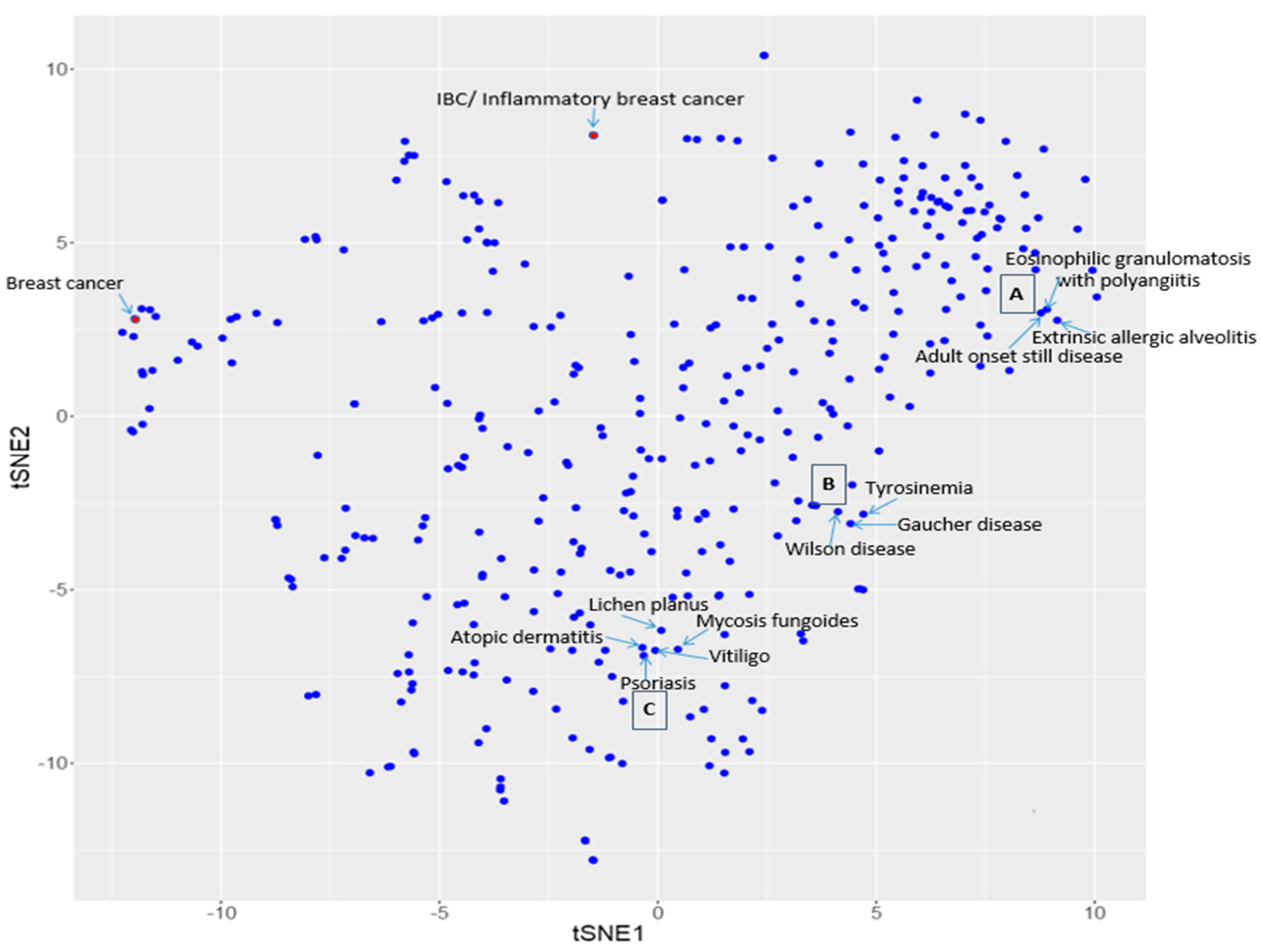
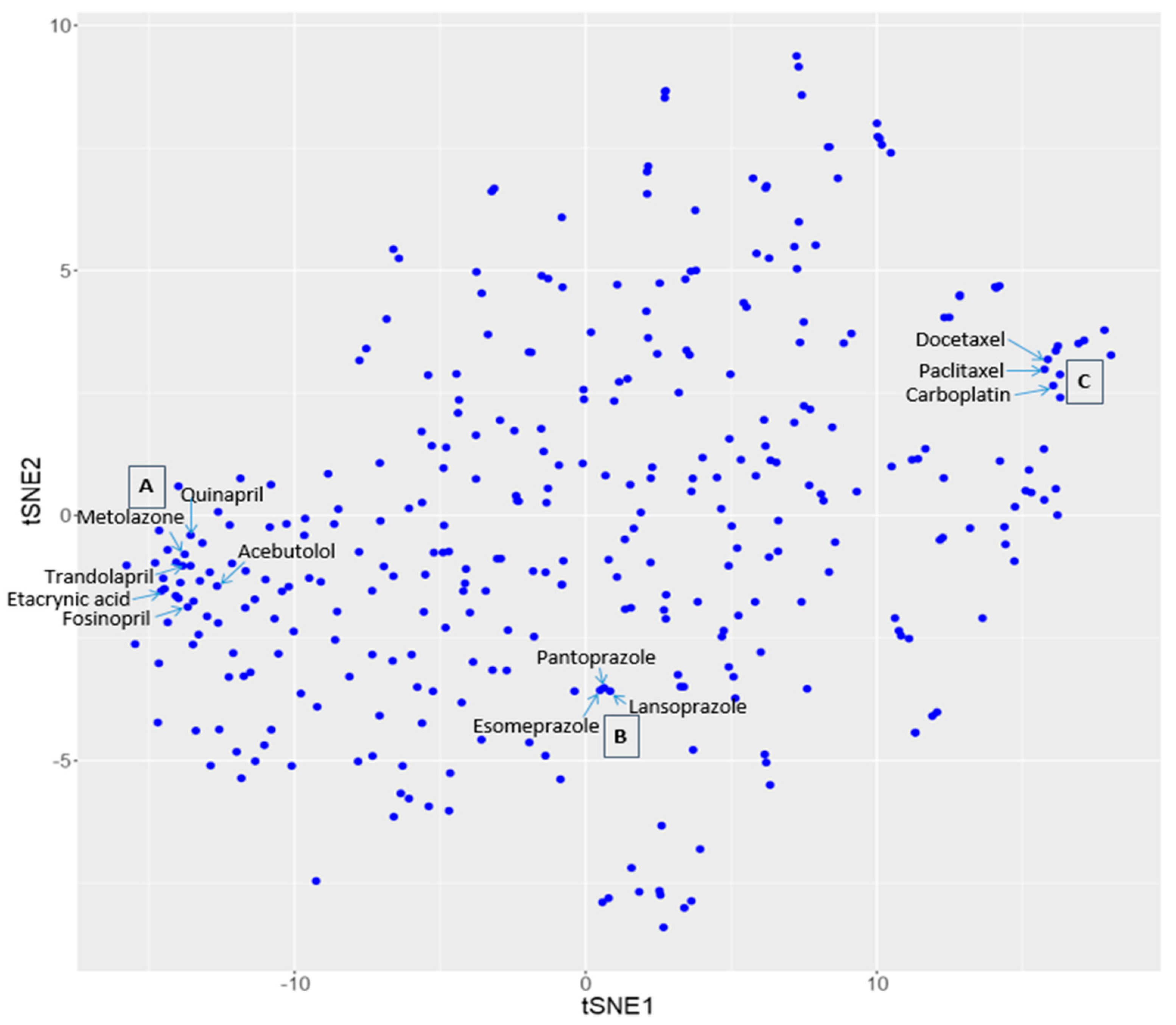
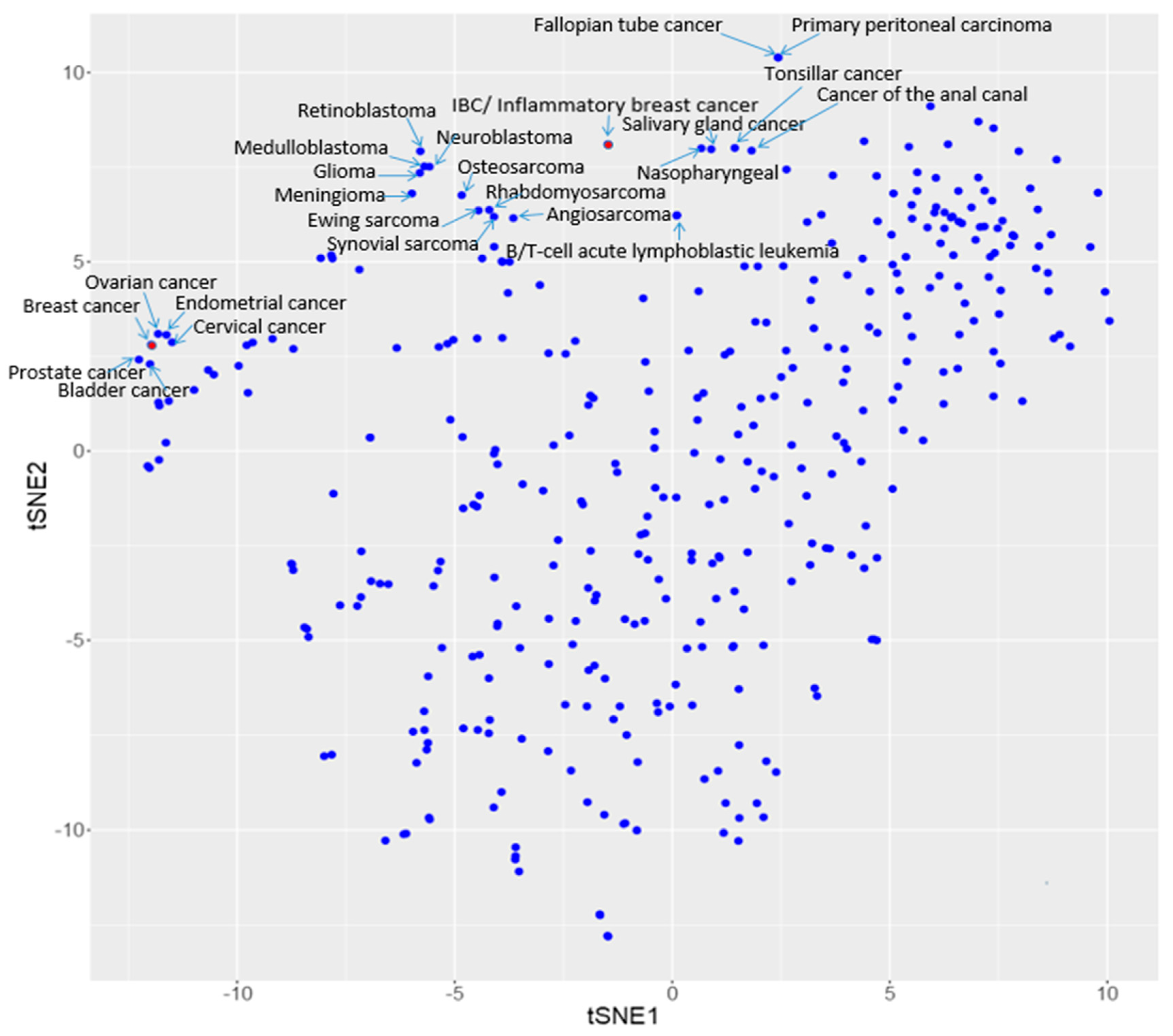
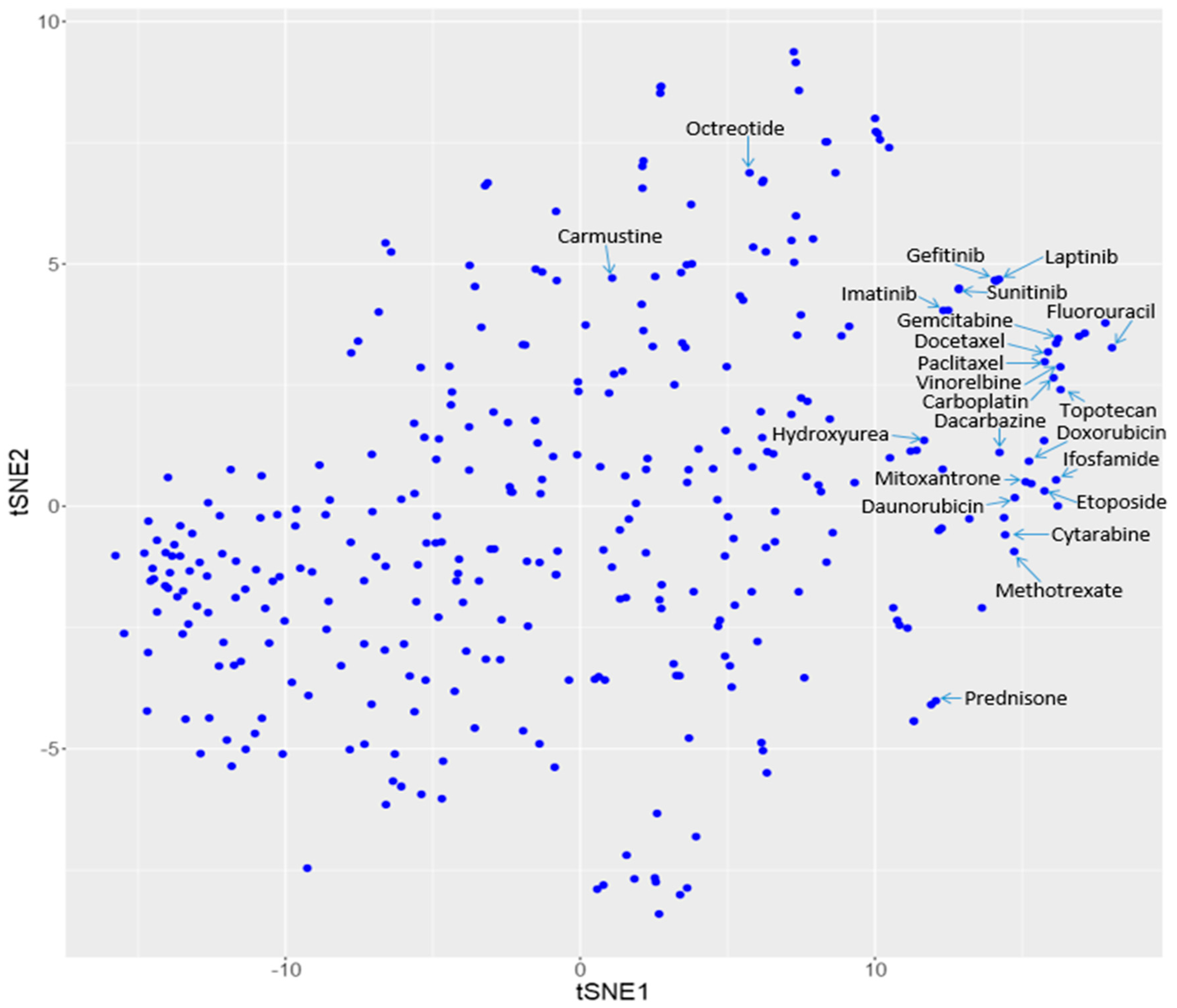

| Disease ID (KEGG) | Disease Name | Drugs |
|---|---|---|
| H01513 | Retinoblastoma | carboplatin, etoposide, vincristine |
| H00043 | Neuroblastoma | doxorubicin, etoposide |
| H01667 | Medulloblastoma | carboplatin, topotecan, vincristine |
| H00042 | Glioma | carmustine, vincristine |
| H01556 | Meningioma | hydroxyurea, imatinib, octreotide |
| H00036 | Osteosarcoma | doxorubicin, ifosfamide, methotrexate |
| H00035 | Ewing sarcoma | dacarbazine, doxorubicin, etoposide, ifosfamide, vincristine |
| H00037 | Rhabdomyosarcoma | dacarbazine, doxorubicin, ifosfamide, imatinib, sunitinib |
| H00050 | Synovial sarcoma | dacarbazine, doxorubicin, ifosfamide, imatinib, sunitinib |
| H01666 | Angiosarcoma | doxorubicin, ifosfamide, paclitaxel |
| H00001 | B-cell acute lymphocytic leukemia | cytarabine, daunorubicin, doxorubicin, methotrexate, prednisone, vincristine |
| H00002 | T-cell acute lymphocytic leukemia | cytarabine, daunorubicin, doxorubicin, methotrexate, prednisone, vincristine |
| H00054 | Nasopharyngeal cancer | carboplatin, docetaxel, fluorouracil, paclitaxel |
| H01508 | Salivary gland cancer | gefitinib, gemcitabine, imatinib, lapatinib, mitoxantrone, paclitaxel, vinorelbine |
| H01509 | Tonsillar cancer | carboplatin, docetaxel, fluorouracil, paclitaxel |
| H00044 | Cancer of the anal canal | doxorubicin, fluorouracil |
| H01554 | Fallopian tube cancer | carboplatin, paclitaxel |
| H01665 | Primary peritoneal carcinoma | carboplatin, paclitaxel |
| Drug ID (Drug Bank) | Drug Name |
|---|---|
| DB00958 | Carboplatin |
| DB00262 | Carmustine |
| DB00987 | Cytarabine |
| DB00851 | Dacarbazine |
| DB00694 | Daunorubicin |
| DB01248 | Docetaxel |
| DB00997 | Doxorubicin |
| DB00773 | Etoposide |
| DB00544 | Fluorouracil |
| DB00317 | Gefitinib |
| DB00441 | Gemcitabine |
| DB01005 | Hydroxyurea |
| DB01181 | Ifosfamide |
| DB00619 | Imatinib |
| DB01259 | Lapatinib |
| DB00563 | Methotrexate |
| DB01204 | Mitoxantrone |
| DB00104 | Octreotide |
| DB01229 | Paclitaxel |
| DB00635 | Prednisone |
| DB01268 | Sunitinib |
| DB01030 | Topotecan |
| DB00541 | Vincristine |
| DB00361 | Vinorelbine |
| Predicted Drugs for IBC | PubMed | ClinicalTrials.gov |
|---|---|---|
| Carboplatin | Yes | Yes |
| Carmustine | Yes | No |
| Cytarabine | No | No |
| Dacarbazine | No | No |
| Daunorubicin | Yes | No |
| Docetaxel | Yes | Yes |
| Doxorubicin | Yes | Yes |
| Etoposide | Yes | Yes |
| Fluorouracil | Yes | Yes |
| Gefitinib | Yes | No |
| Gemcitabine | Yes | Yes |
| Hydroxyurea | No | No |
| Ifosfamide | Yes | No |
| Imatinib | Yes | No |
| Lapatinib | Yes | Yes |
| Methotrexate | Yes | Yes |
| Mitoxantrone | Yes | No |
| Octreotide | Yes | No |
| Paclitaxel | Yes | Yes |
| Prednisone | Yes | No |
| Sunitinib | No | Yes |
| Topotecan | No | No |
| Vincristine | Yes | No |
| Vinorelbine | Yes | Yes |
© 2020 by the authors. Licensee MDPI, Basel, Switzerland. This article is an open access article distributed under the terms and conditions of the Creative Commons Attribution (CC BY) license (http://creativecommons.org/licenses/by/4.0/).
Share and Cite
Ji, X.; Jin, C.; Dong, X.; Dixon, M.S.; Williams, K.P.; Zheng, W. Literature-Wide Association Studies (LWAS) for a Rare Disease: Drug Repurposing for Inflammatory Breast Cancer. Molecules 2020, 25, 3933. https://doi.org/10.3390/molecules25173933
Ji X, Jin C, Dong X, Dixon MS, Williams KP, Zheng W. Literature-Wide Association Studies (LWAS) for a Rare Disease: Drug Repurposing for Inflammatory Breast Cancer. Molecules. 2020; 25(17):3933. https://doi.org/10.3390/molecules25173933
Chicago/Turabian StyleJi, Xiaojia, Chunming Jin, Xialan Dong, Maria S. Dixon, Kevin P. Williams, and Weifan Zheng. 2020. "Literature-Wide Association Studies (LWAS) for a Rare Disease: Drug Repurposing for Inflammatory Breast Cancer" Molecules 25, no. 17: 3933. https://doi.org/10.3390/molecules25173933
APA StyleJi, X., Jin, C., Dong, X., Dixon, M. S., Williams, K. P., & Zheng, W. (2020). Literature-Wide Association Studies (LWAS) for a Rare Disease: Drug Repurposing for Inflammatory Breast Cancer. Molecules, 25(17), 3933. https://doi.org/10.3390/molecules25173933

