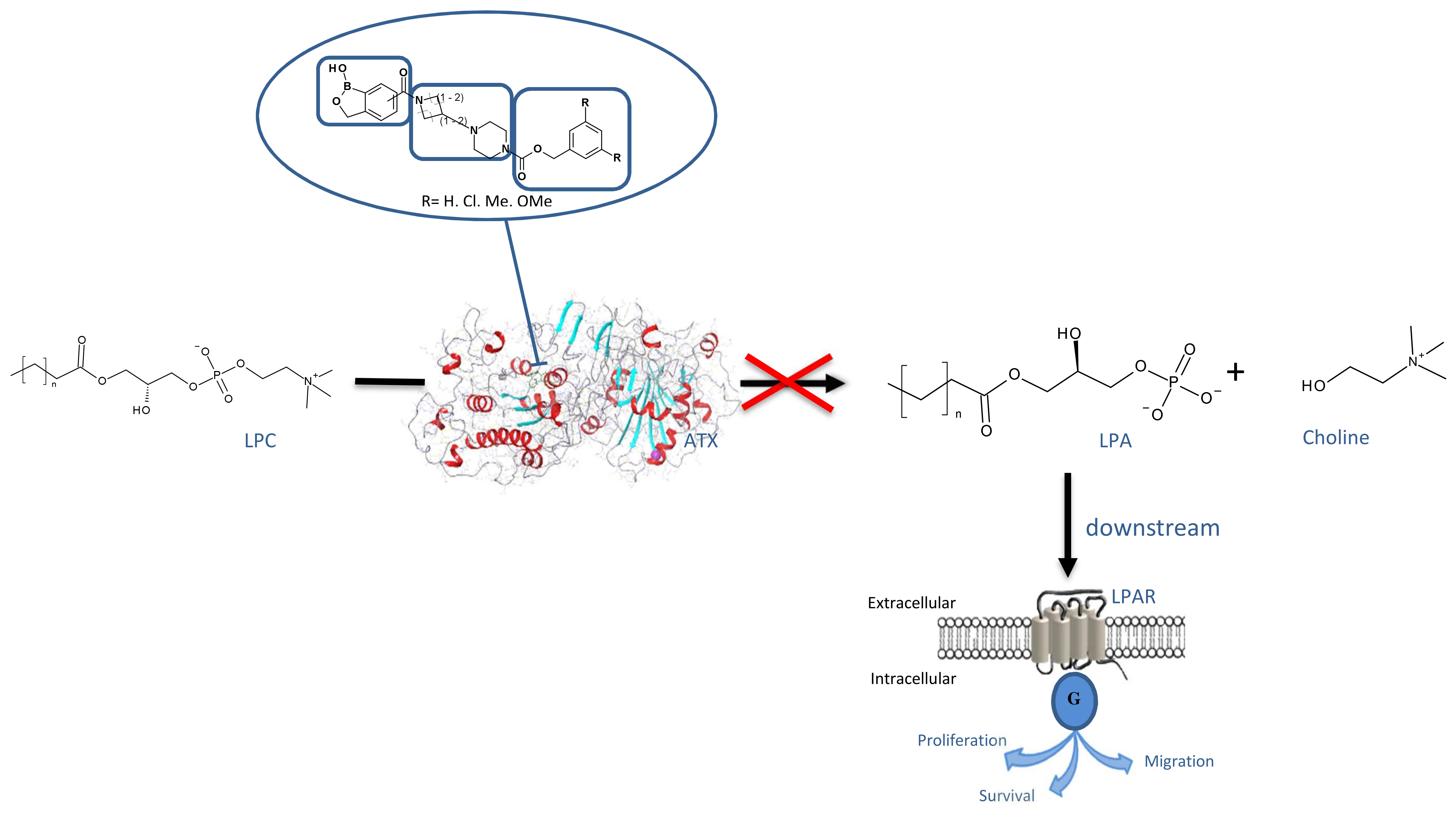
Benzoxaboroles—Novel Autotaxin Inhibitors

Abstract
1. Introduction
2. Results
2.1. ATX Inhibition
2.2. ADME Properties
3. Discussion
4. Experimental Section
4.1. Materials and Instruments
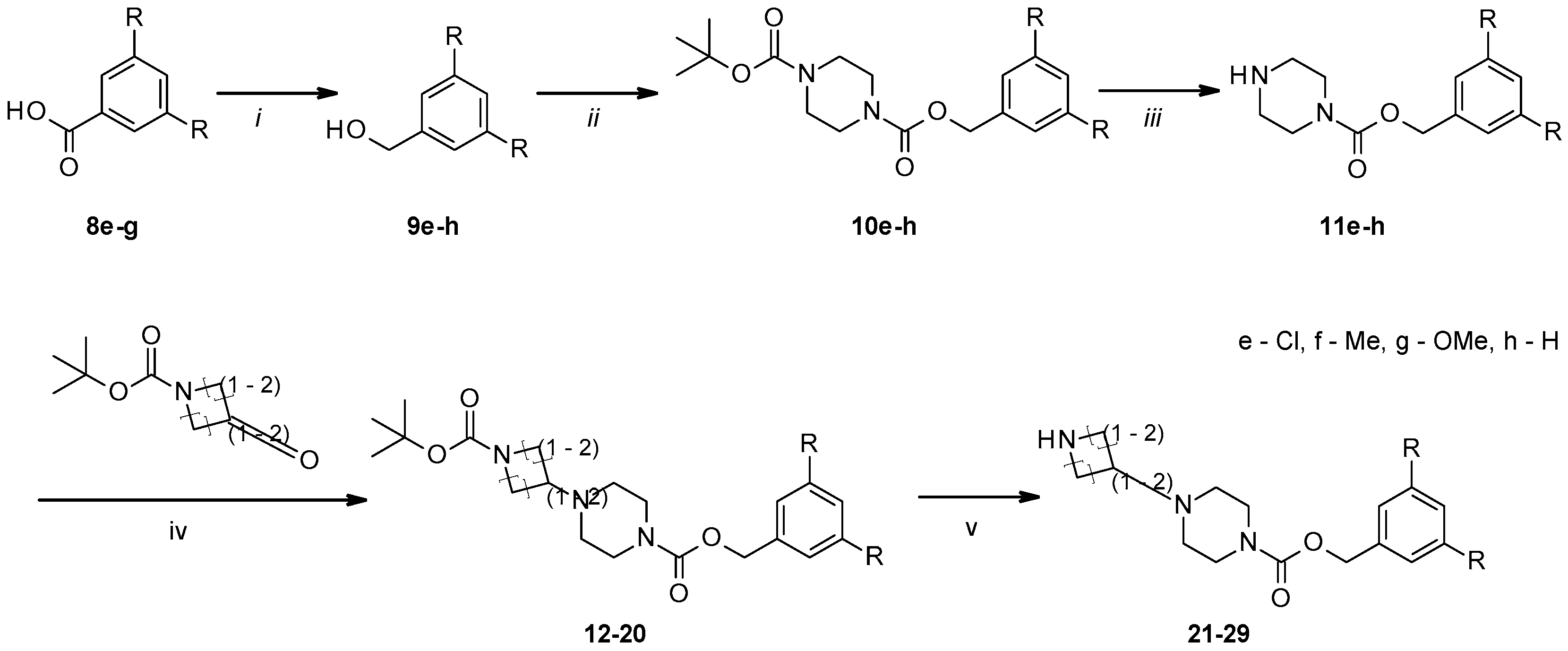
4.2. Synthesis
4.2.1. General Procedure for the Preparation of Benzoxaborolic Acids
4.2.2. General Procedure for the Preparation of Carbamate Intermediates
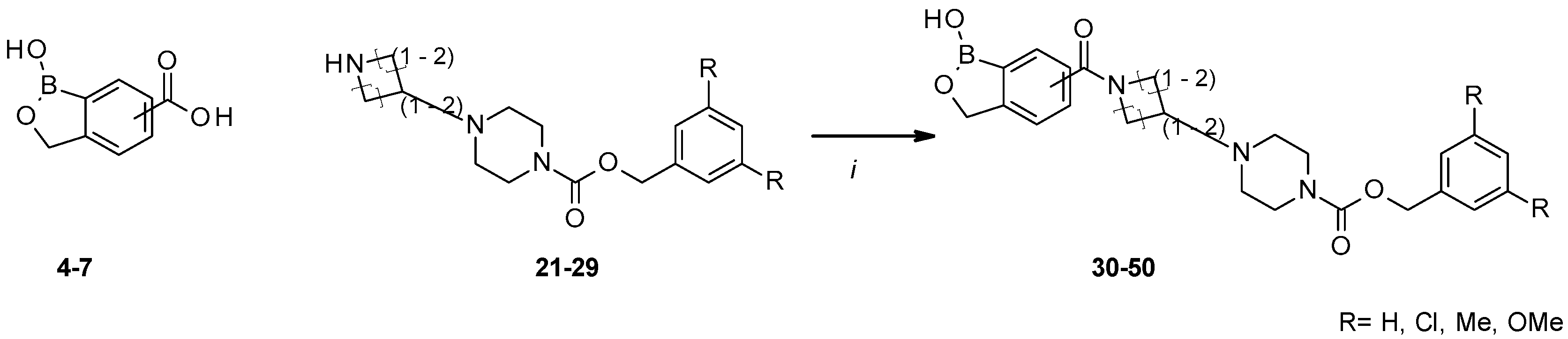
4.2.3. General Procedure for the Preparation of Novel Autotaxin Inhibitors
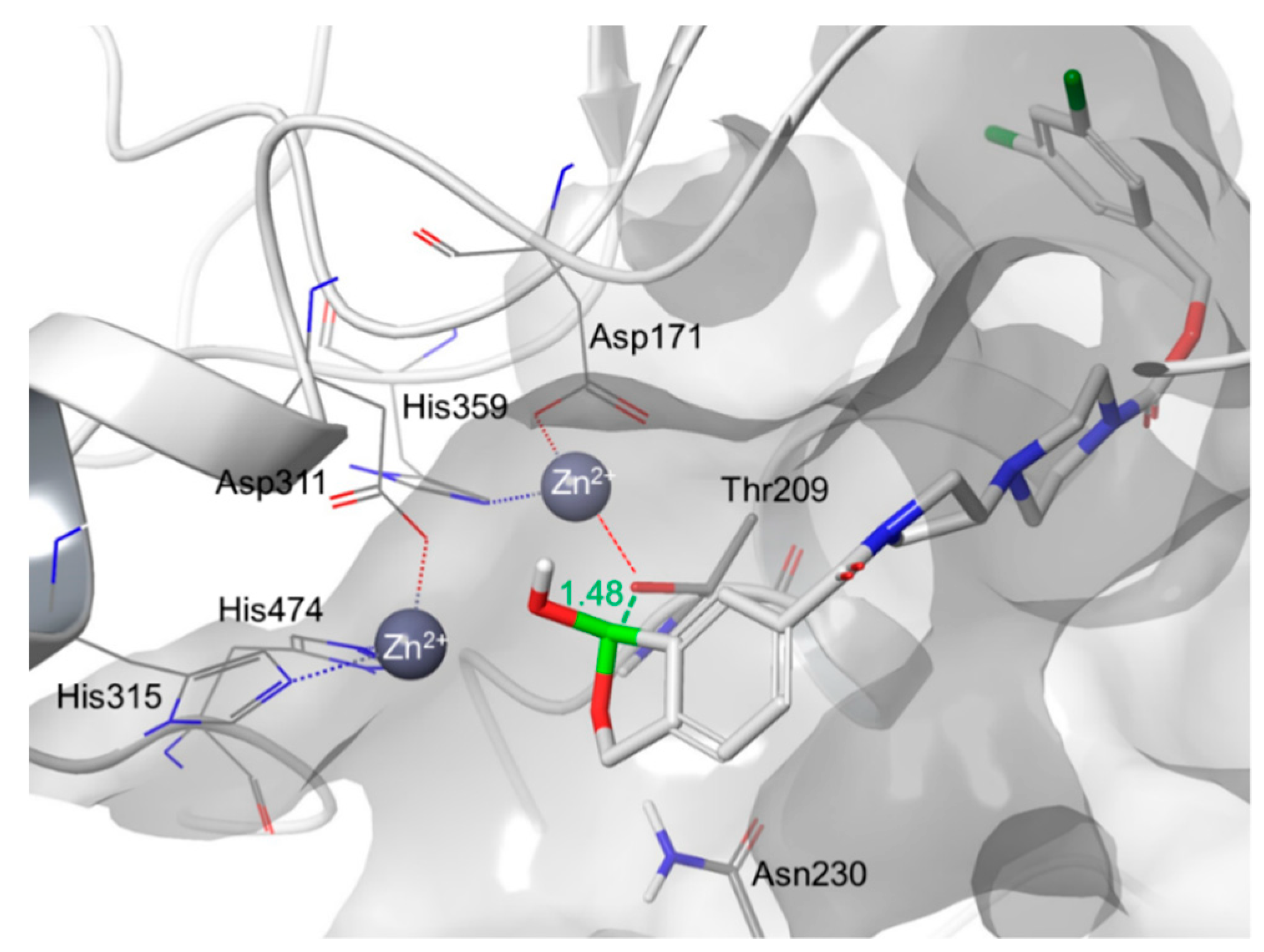
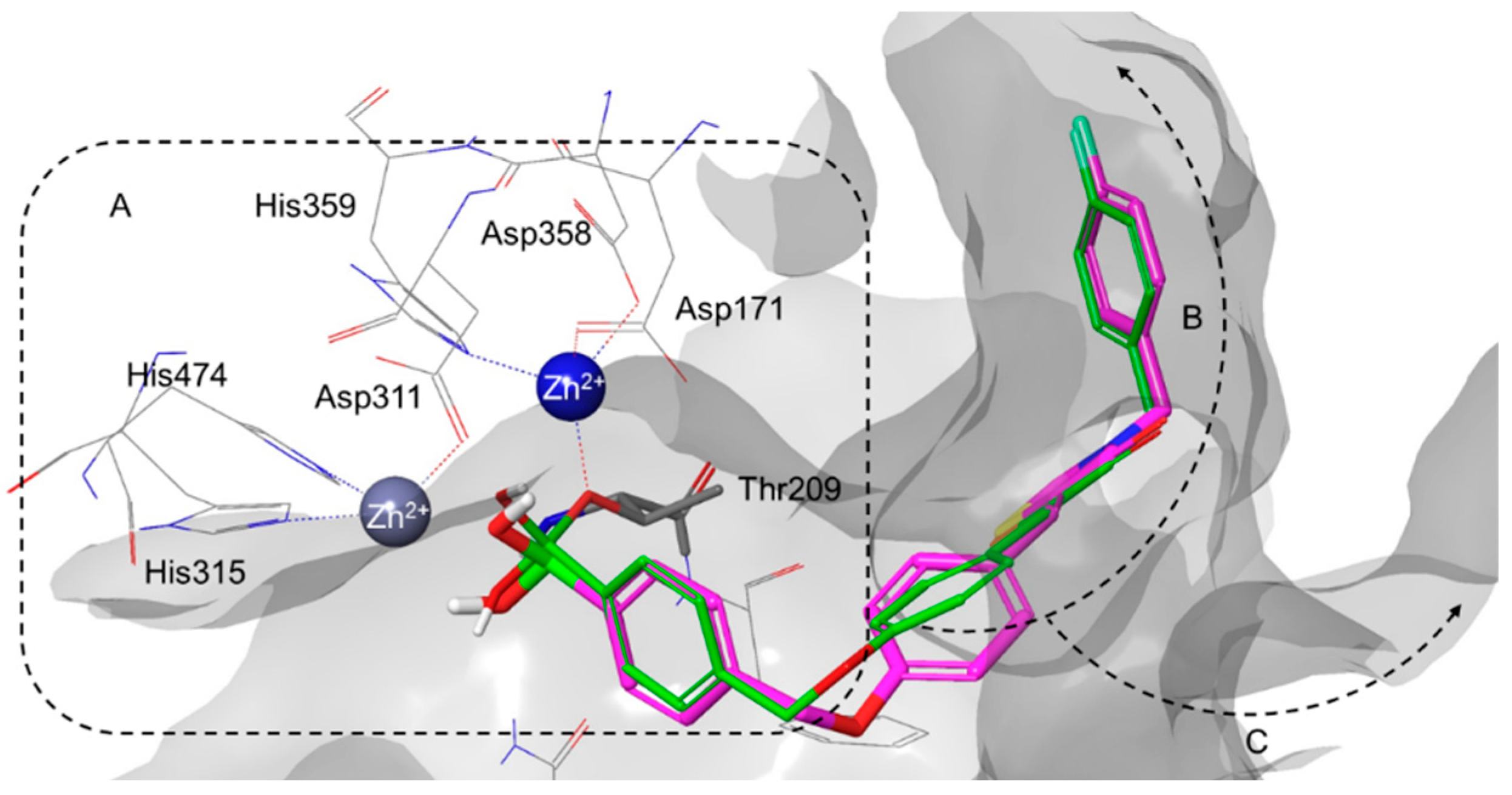
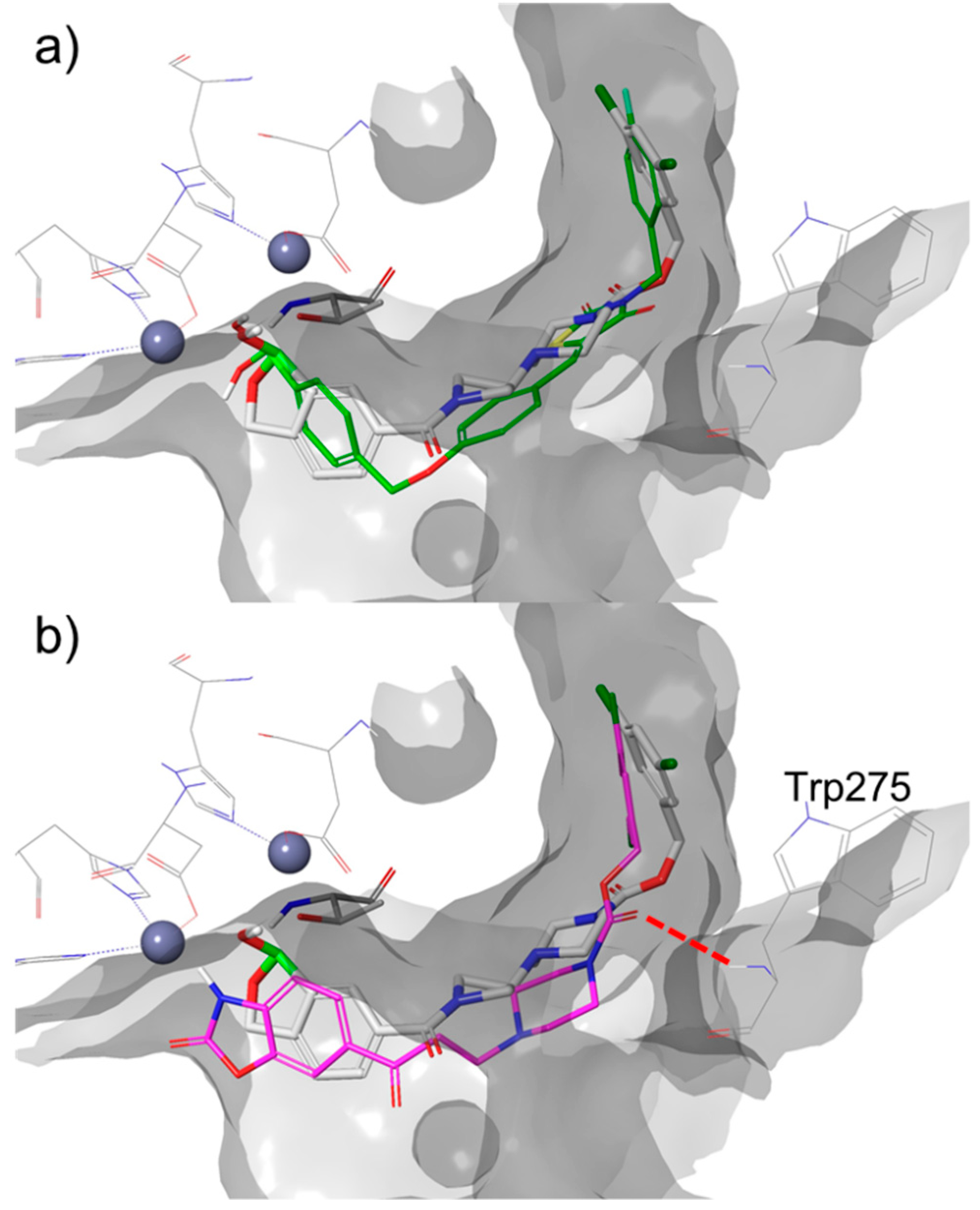
4.3. Molecular Modelling Studies
4.4. Biochemical Enzyme Assay
4.5. Lipophilicity Determination
4.6. Kinetic Solubility
4.7. Plasma Stability
4.8. In Vitro Metabolic Stability in Rat and Liver Human Microsomes
4.9. Plasma Protein Binding Assay
5. Conclusions
Author Contributions
Funding
Conflicts of Interest
References
- Barbayianni, E.; Magrioti, V.; Moutevelis-Minakakis, P.; Kokotos, G. Autotaxin inhibitors: A patent review. Expert Opin. Ther. Pat. 2013, 23, 1123–1132. [Google Scholar] [CrossRef] [Scilit] [PubMed]
- Fotopoulou, S.; Oikonomou, N.; Grigorieva, E.; Nikitopoulou, I.; Paparountas, T.; Thanassopoulou, A.; Zhao, Z.; Xu, Y.; Kontoyiannis, D.L.; Remboutsika, E.; et al. ATX expression and LPA signalling are vital for the development of the nervous system. Dev. Biol. 2010, 339, 451–464. [Google Scholar] [CrossRef] [Scilit] [PubMed]
- Mills, G.B.; Moolenaar, W.H. The emerging role of lysophosphatidic acid in cancer. Nat. Rev. Cancer 2003, 3, 582–591. [Google Scholar] [CrossRef] [Scilit] [PubMed]
- Stoddard, N.C.; Chun, J. Promising pharmacological directions in the world of lysophosphatidic acid signaling. Biomol. Ther. 2015, 23, 1–11. [Google Scholar] [CrossRef] [Scilit] [PubMed]
- Jeong, K.J.; Park, S.Y.; Cho, K.H.; Sohn, J.S.; Lee, J.; Kim, Y.K.; Kang, J.; Park, C.G.; Han, J.W.; Lee, H.Y. The Rho/ROCK pathway for lysophosphatidic acid-induced proteolytic enzyme expression and ovarian cancer cell invasion. Oncogene 2012, 31, 4279–4289. [Google Scholar] [CrossRef] [Scilit] [PubMed]
- Leblanc, R.; Peyruchaud, O. New insights into the autotaxin/LPA axis in cancer development and metastasis. Exp. Cell Res. 2015, 333, 183–189. [Google Scholar] [CrossRef] [Scilit] [PubMed]
- Kawaguchi, M.; Okabe, T.; Okudaira, S.; Nishimasu, H.; Ishitani, R.; Kojima, H.; Nureki, O.; Aoki, J.; Nagano, T. Screening and X-ray crystal structure-based optimization of autotaxin (ENPP2) inhibitors, using a newly developed fluorescence probe. ACS Chem. Biol. 2013, 8, 1713–1721. [Google Scholar] [CrossRef] [Scilit]
- Matralis, A.N.; Afantitis, A.; Aidinis, V. Development and therapeutic potential of autotaxin small molecule inhibitors: From bench to advanced clinical trials. Med. Res. Rev. 2019, 39, 976–1013. [Google Scholar] [CrossRef] [Scilit]
- Hausmann, J.; Kamtekar, S.; Christodoulou, E.; Day, J.E.; Wu, T.; Fulkerson, Z.; Albers, H.M.H.G.; van Meeteren, L.A.; Houben, A.J.S.; van Zeijl, L.; et al. Structural basis of substrate discrimination and integrin binding by autotaxin. Nat. Struct. Mol. Biol. 2011, 18, 198–204. [Google Scholar] [CrossRef] [Scilit]
- Albers, H.M.H.G.; Dong, A.; van Meeteren, L.A.; Egan, D.A.; Sunkara, M.; van Tilburg, E.W.; Schuurman, K.; van Tellingen, O.; Morris, A.J.; Smyth, S.S.; et al. Boronic acid-based inhibitor of autotaxin reveals rapid turnover of LPA in the circulation. Proc. Natl. Acad. Sci. USA 2010, 107, 7257–7262. [Google Scholar] [CrossRef] [Scilit]
- Albers, H.M.H.G.; Hendrickx, L.J.D.; van Tol, R.J.P.; Hausmann, J.; Perrakis, A.; Ovaa, H. Structure-based design of novel boronic acid-based inhibitors of autotaxin. J. Med. Chem. 2011, 54, 4619–4626. [Google Scholar] [CrossRef] [Scilit] [PubMed]
- Lanier, M.; Cole, D.C.; Istratiy, Y.; Klein, M.G.; Schwartz, P.A.; Tjhen, R.; Jennings, A.; Hixon, M.S. Repurposing Suzuki coupling reagents as a directed fragment library targeting serine hydrolases and related enzymes. J. Med. Chem. 2017, 60, 5209–5215. [Google Scholar] [CrossRef] [Scilit] [PubMed]
- Tomsho, J.W.; Pal, A.; Hall, D.G.; Benkovic, S.J. Ring structure and aromatic substituent effects on the pKa of the benzoxaborole pharmacophore. ACS Med. Chem. Lett. 2012, 3, 48–52. [Google Scholar] [CrossRef] [Scilit] [PubMed]
- Adamczyk-Woźniak, A.; Borys, K.M.; Sporzyński, A. Recent developments in the chemistry and biological applications of benzoxaboroles. Chem. Rev. 2015, 115, 5224–5247. [Google Scholar] [CrossRef] [Scilit] [PubMed]
- Zhu, K.; Borrelli, K.W.; Greenwood, J.R.; Day, T.; Abel, R.; Farid, R.S.; Harder, E. Docking covalent inhibitors: A parameter free approach to pose prediction and scoring. J. Chem. Inf. Model. 2014, 54, 1932–1940. [Google Scholar] [CrossRef] [Scilit] [PubMed]
- Castagna, D.; Budd, D.C.; Macdonald, S.J.F.; Jamieson, C.; Watson, A.J.B. Development of autotaxin inhibitors: An overview of the patent and primary literature: Miniperspective. J. Med. Chem. 2016, 59, 5604–5621. [Google Scholar] [CrossRef] [Scilit] [PubMed]
- Dokmanić, I.; Šikić, M.; Tomić, S. Metals in proteins: Correlation between the metal-ion type, coordination number and the amino-acid residues involved in the coordination. Acta Crystallogr. Sect. D Biol. Crystallogr. 2008, 64, 257–263. [Google Scholar] [CrossRef] [Scilit] [PubMed]
- Perrakis, A.; Moolenaar, W.H. Autotaxin: Structure-function and signaling. J. Lipid Res. 2014, 55, 1010–1018. [Google Scholar] [CrossRef] [Scilit] [PubMed]
- Schrödinger LLC. Schrödinger Release 2018-1: Maestro; Schrödinger LLC: New York, NY, USA, 2018. [Google Scholar]
- Katsamakas, S.; Papadopoulos, A.; Hadjipavlou-Litina, D. Boronic acid group: A cumbersome false negative case in the process of drug design. Molecules 2016, 21, 1185. [Google Scholar] [CrossRef] [Scilit]
- Jones, S.B.; Pfeifer, L.A.; Bleisch, T.J.; Beauchamp, T.J.; Durbin, J.D.; Klimkowski, V.J.; Hughes, N.E.; Rito, C.J.; Dao, Y.; Gruber, J.M.; et al. Novel autotaxin inhibitors for the treatment of osteoarthritis pain: Lead optimization via structure-based drug design. ACS Med. Chem. Lett. 2016, 7, 857–861. [Google Scholar] [CrossRef] [Scilit]
- Dowdell, S.E.; Eidam, H.S.; Elban, M.; Fox, R.M.; Hammond, M.; Hilfiker, M.A.; Hoang, T.H.; Kallander, L.S.; Lawhorn, B.G.; Manns, S.; et al. Hydroxy Formamide Derivatives and Their Use. W.O. Patent 2015104684, 15 July 2015. [Google Scholar]
- Lee, M.H.; Lee, D.-Y.; Balupuri, A.; Jeong, J.-W.; Kang, N.S. Pharmacophoric site identification and inhibitor design for autotaxin. Molecules 2019, 24, 2808. [Google Scholar] [CrossRef] [Scilit]
- Imamura, S.; Horiuti, Y. Enzymatic determination of phospholipase D activity with choline oxidase. J. Biochem. 1978, 83, 677–680. [Google Scholar] [CrossRef] [Scilit] [PubMed]
- ACD/Percepta, ADC/Labs Release, Version 17.2; Advanced Chemistry Development, Inc.: Toronto, ON, Canada, 2017.
- Albers, H.M.H.G.; Ovaa, H. Chemical evolution of autotaxin inhibitors. Chem. Rev. 2012, 112, 2593–2603. [Google Scholar] [CrossRef] [Scilit]
- Akgun, B.; Hall, D.G. Fast and tight boronate formation for click bioorthogonal conjugation. Angew. Chem. Int. Ed. 2016, 55, 3909–3913. [Google Scholar] [CrossRef] [Scilit] [PubMed]
- Bian, H.; Chevalier, K.M.; Connolly, P.J.; Flores, C.M.; Lin, S.C.; Liu, L.; Mabus, J.; Macielag, M.J.; Mcdonnell, M.E.; Pitis, P.M.; et al. Azetidinyl Diamides as Monoacylglycerol Lipase Inhibitors. W.O. Patent WO2010124086, 28 October 2010. [Google Scholar]
- Lumeras, W.; Caturla, F.; Vidal, L.; Esteve, C.; Balagué, C.; Orellana, A.; Domínguez, M.; Roca, R.; Huerta, J.M.; Godessart, N.; et al. Design, synthesis, and structure−activity relationships of aminopyridine N -oxides, a novel scaffold for the potent and selective inhibition of p38 mitogen activated protein kinase. J. Med. Chem. 2009, 52, 5531–5545. [Google Scholar] [CrossRef] [Scilit] [PubMed]
- Wuttke, A.; Geyer, A. Self-assembly of peptide boroxoles on cis-dihydroxylated oligoamide templates in water: Self-assembly of peptide boroxoles in water. J. Pept. Sci. 2017, 23, 549–555. [Google Scholar] [CrossRef] [Scilit] [PubMed]
- Kazmierski, W.M.; De La Rosa, M.; Samano, V. Inhibitors od Indoleamine 2,3-Dioxygenase. W.O. Patent 2017002078, 5 January 2017. [Google Scholar]
- Kuttruff, C.A.; Ferrara, M.; Bretschneider, T.; Hoerer, S.; Handschuh, S.; Nosse, B.; Romig, H.; Nicklin, P.; Roth, G.J. Discovery of BI-2545: A novel autotaxin inhibitor that significantly reduces LPA levels in vivo. ACS Med. Chem. Lett. 2017, 8, 1252–1257. [Google Scholar] [CrossRef] [Scilit] [PubMed]
- Zhou, J.; Ji, M.; Zhu, Z.; Cao, R.; Chen, X.; Xu, B. Discovery of 2-substituted 1 H -benzo[d]immidazole-4-carboxamide derivatives as novel poly(ADP-ribose)polymerase-1 inhibitors with in vivo anti-tumor activity. Eur. J. Med. Chem. 2017, 132, 26–41. [Google Scholar] [CrossRef] [Scilit]
- Keune, W.-J.; Potjewyd, F.; Heidebrecht, T.; Salgado-Polo, F.; Macdonald, S.J.F.; Chelvarajan, L.; Abdel Latif, A.; Soman, S.; Morris, A.J.; Watson, A.J.B.; et al. Rational design of autotaxin inhibitors by structural evolution of endogenous modulators. J. Med. Chem. 2017, 60, 2006–2017. [Google Scholar] [CrossRef] [Scilit]
- Mori, M.; Dasso Lang, M.C.; Saladini, F.; Palombi, N.; Kovalenko, L.; De Forni, D.; Poddesu, B.; Friggeri, L.; Giannini, A.; Malancona, S.; et al. Synthesis and evaluation of bifunctional aminothiazoles as antiretrovirals targeting the HIV-1 nucleocapsid protein. ACS Med. Chem. Lett. 2019, 10, 463–468. [Google Scholar] [CrossRef] [Scilit]
- Crew, A.P.; Hornberger, K.R.; Snyder, L.B.; Zimmermann, K.; Wang, J.; Berlin, M.; Crews, C.M.; Dong, H. Compounds and Methods for the Targeted Degradation of Androgen Receptor. U.S. Patent 2018099940, 12 April 2018. [Google Scholar]
- Fairhurst, R.A.; Taylor, R.J. Purine Derivatives Acting as A2A Receptors Agonists. W.O. Patent 2006074925A1, 20 July 2006. [Google Scholar]
- Banks, J.L.; Beard, H.S.; Cao, Y.; Cho, A.E.; Damm, W.; Farid, R.; Felts, A.K.; Halgren, T.A.; Mainz, D.T.; Maple, J.R.; et al. Integrated Modeling Program, Applied Chemical Theory (IMPACT). J. Comput. Chem. 2005, 26, 1752–1780. [Google Scholar] [CrossRef] [Scilit] [PubMed]
- Young, R.J.; Green, D.V.S.; Luscombe, C.N.; Hill, A.P. Getting physical in drug discovery II: The impact of chromatographic hydrophobicity measurements and aromaticity. Drug Discov. Today 2011, 16, 822–830. [Google Scholar] [CrossRef] [Scilit] [PubMed]
- Valkó, K.L. Lipophilicity and biomimetic properties measured by HPLC to support drug discovery. J. Pharm. Biomed. Anal. 2016, 130, 35–54. [Google Scholar] [CrossRef] [Scilit] [PubMed]
Sample Availability: Samples of the compounds are not available from the authors. |
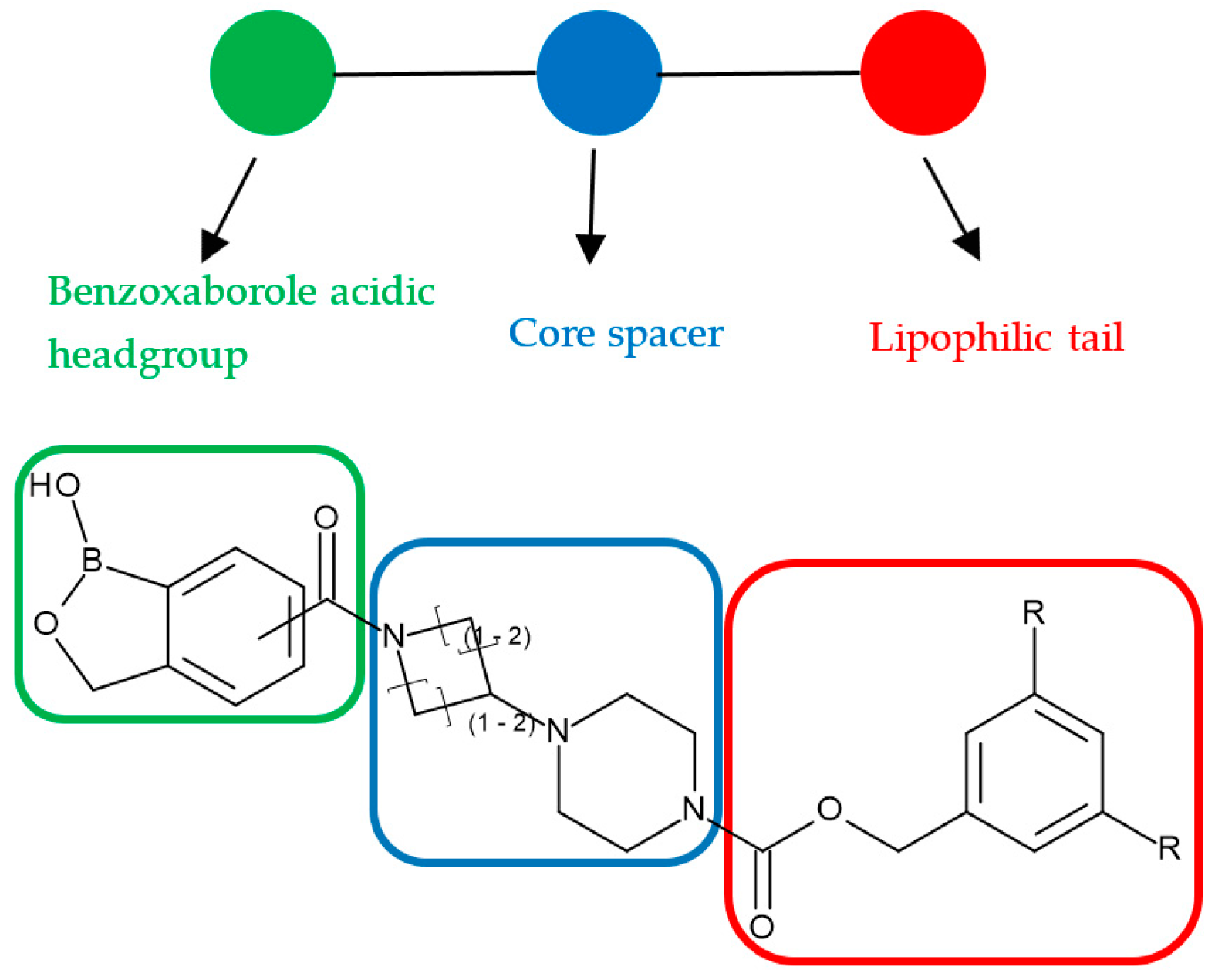
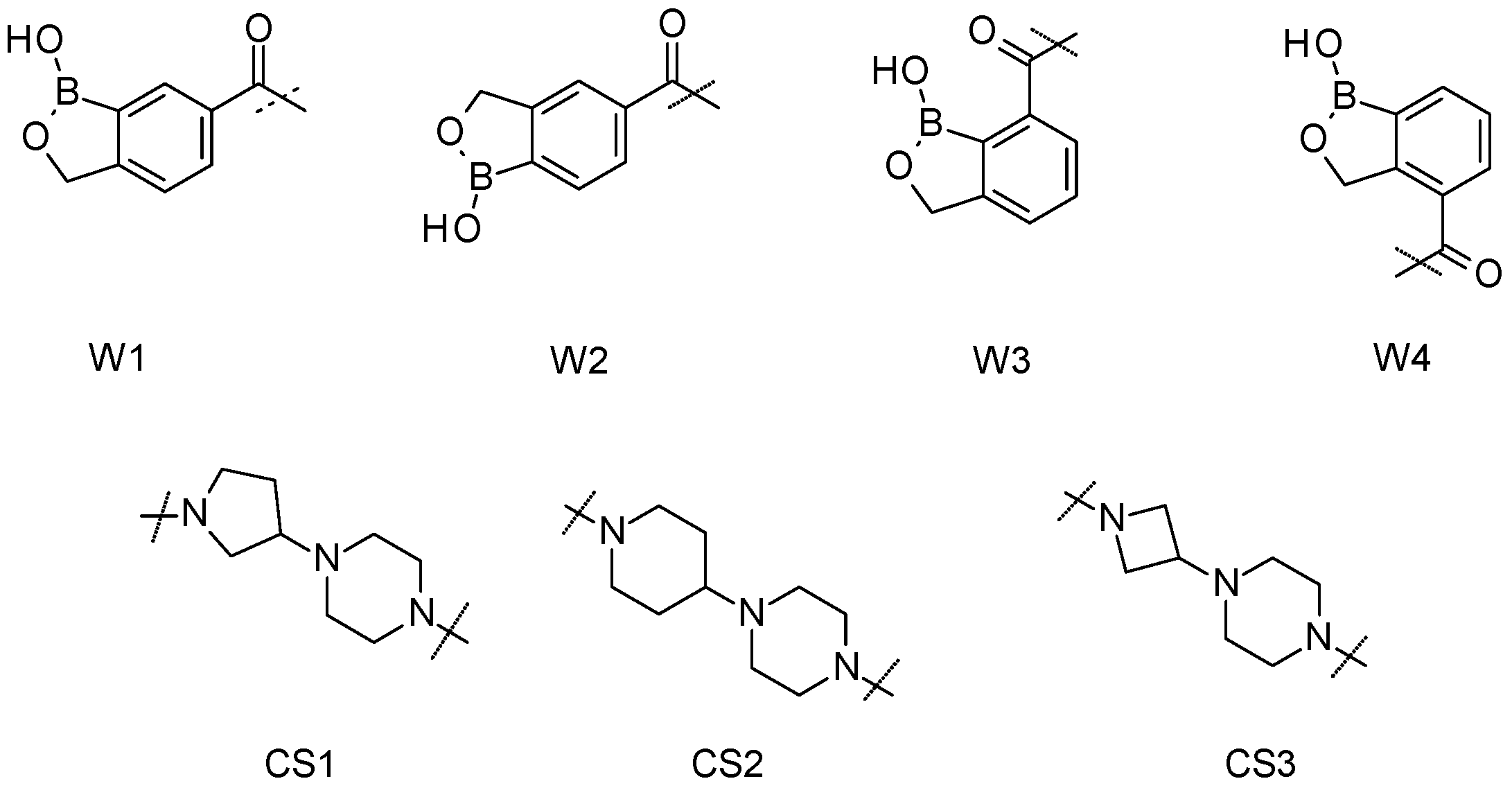



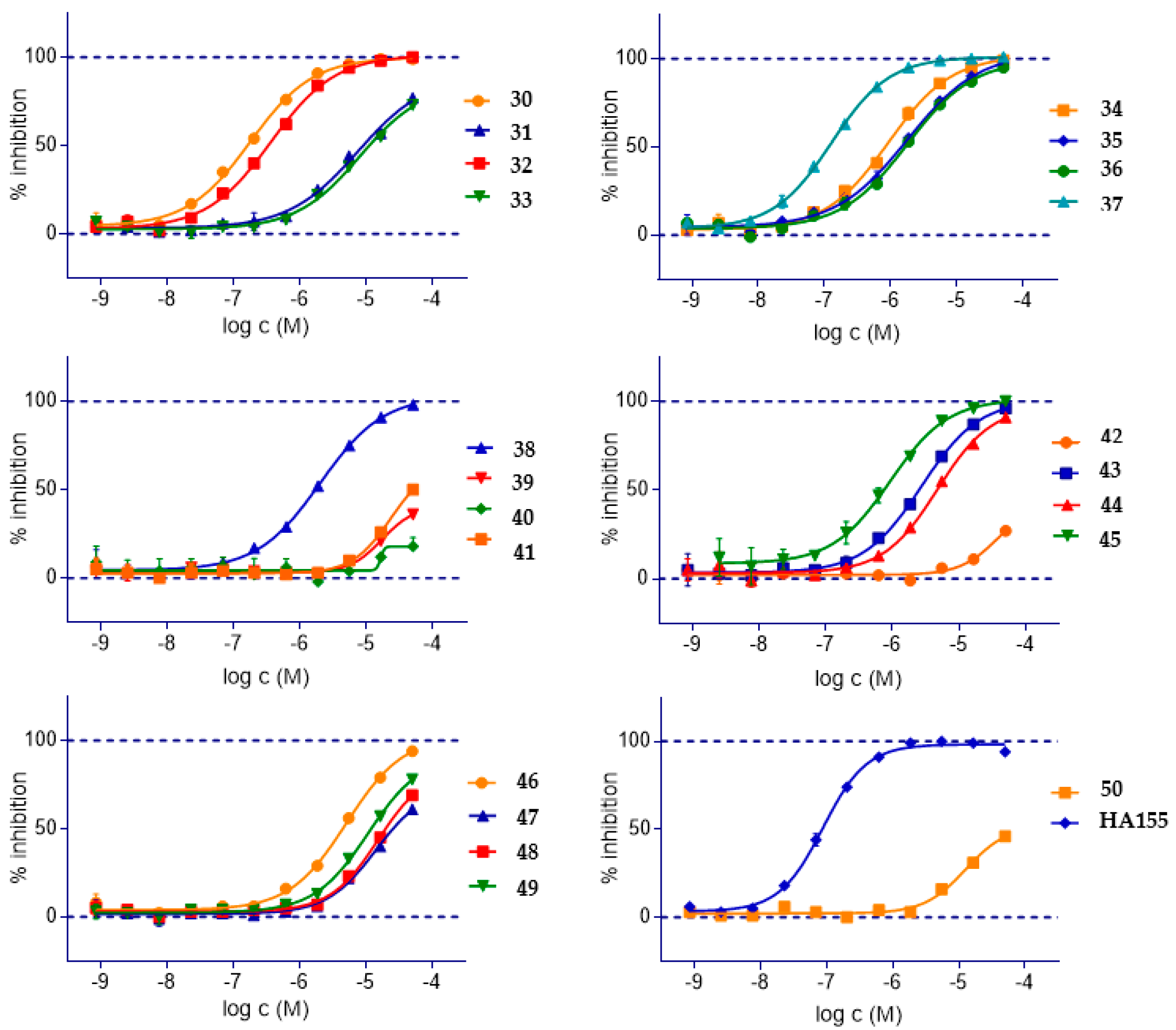

| Compound | Structure | a IC50 Value (µM) | b clog P | c Chrom logD | ||
|---|---|---|---|---|---|---|
| Warhead | Core | Lipophilic Tail | ||||
| W | CS | R | ||||
| 30 | W 1 | CS 1 | Cl | 0.18 ± 0.04 | 3.82 | 4.52 |
| 31 | W 4 | CS 1 | Cl | 7.5 ± 5.60 | 3.61 | 4.63 |
| 32 | W 2 | CS 1 | Cl | 0.37± 0.35 | 3.82 | 4.38 |
| 33 | W 3 | CS 1 | Cl | 8.0 ± 2.58 | 3.61 | 5.40 |
| 34 | W 1 | CS 2 | Cl | 0.92 ± 0.82 | 4.02 | 5.49 |
| 35 | W 2 | CS 2 | Cl | 1.8 ± 1.75 | 4.02 | 4.58 |
| 36 | W 4 | CS 2 | Cl | 1.8 ± 1.52 | 3.99 | 4.58 |
| 37 | W 1 | CS 3 | Cl | 0.13 ± 0.12 | 3.60 | 4.58 |
| 38 | W 2 | CS 3 | Cl | 2.0 ± 1.73 | 3.60 | 4.46 |
| 39 | W 1 | CS 1 | H | >50 ± 4.20 | 2.75 | 3.05 |
| 40 | W 2 | CS 1 | H | >50 ± 3.08 | 2.75 | 2.90 |
| 41 | W 1 | CS 3 | H | 23 ± 1.18 | 2.40 | 3.07 |
| 42 | W 2 | CS 3 | H | >50 ± 32.84 | 2.40 | 2.90 |
| 43 | W 1 | CS 1 | CH3 | 2.7 ± 2.11 | 3.17 | 4.13 |
| 44 | W 2 | CS 1 | CH3 | 4.7 ± 1.14 | 3.17 | 3.99 |
| 45 | W 1 | CS 3 | CH3 | 1.0 ± 1.15 | 2.90 | 4.17 |
| 46 | W 2 | CS 3 | CH3 | 5.1 ± 2.75 | 2.90 | 4.01 |
| 47 | W 1 | CS 1 | OCH3 | 14 ± 5.50 | 2.51 | 3.19 |
| 48 | W 2 | CS 1 | OCH3 | 15 ±6.07 | 2.51 | 3.03 |
| 49 | W 1 | CS 3 | OCH3 | 11 ± 4.59 | 2.48 | 3.21 |
| 50 | W 2 | CS 3 | OCH3 | 13 ± 3.26 | 2.48 | 3.07 |
| HA155 |  | 0.088 ± 0.04 0.0057 d | 3.76 | NA | ||
| Compound | a Solubility | b PS (rat/human) | c LMS (rat/human) | d PPB (rat/human) |
|---|---|---|---|---|
| 30 | >100 | 64.5/66.5 | 86/82 | 98.8/98.4 |
| 31 | >100 | 67.9/71.6 | 86/85 | NA e/97.8 |
| 34 | >100 | 61.6/70.6 | 77/89 | NA e/99.2 |
| 35 | >100 | 63.0/59.2 | 86/89 | NA e/98.3 |
| 37 | 30–100 | 72.2/79.1 | 62/85 | 98.4/97.9 |
| 38 | 30–100 | 60.1/79.1 | 82/79 | NA e |
| 43 | >100 | 59.5/79.2 | 80/85 | 96.1/97.8 |
| 45 | >100 | 68.6/72.8 | 61/84 | 94.4/95.9 |
| HA155 | 3–10 f 6.8 | 65.7/42.9 | <30/54 | 99.9/>99.9 |
© 2019 by the authors. Licensee MDPI, Basel, Switzerland. This article is an open access article distributed under the terms and conditions of the Creative Commons Attribution (CC BY) license (http://creativecommons.org/licenses/by/4.0/).
Share and Cite
Kraljić, K.; Jelić, D.; Žiher, D.; Cvrtila, A.; Dragojević, S.; Sinković, V.; Mesić, M. Benzoxaboroles—Novel Autotaxin Inhibitors. Molecules 2019, 24, 3419. https://doi.org/10.3390/molecules24193419
Kraljić K, Jelić D, Žiher D, Cvrtila A, Dragojević S, Sinković V, Mesić M. Benzoxaboroles—Novel Autotaxin Inhibitors. Molecules. 2019; 24(19):3419. https://doi.org/10.3390/molecules24193419
Chicago/Turabian StyleKraljić, Kristina, Dubravko Jelić, Dinko Žiher, Adam Cvrtila, Snježana Dragojević, Verona Sinković, and Milan Mesić. 2019. "Benzoxaboroles—Novel Autotaxin Inhibitors" Molecules 24, no. 19: 3419. https://doi.org/10.3390/molecules24193419
APA StyleKraljić, K., Jelić, D., Žiher, D., Cvrtila, A., Dragojević, S., Sinković, V., & Mesić, M. (2019). Benzoxaboroles—Novel Autotaxin Inhibitors. Molecules, 24(19), 3419. https://doi.org/10.3390/molecules24193419