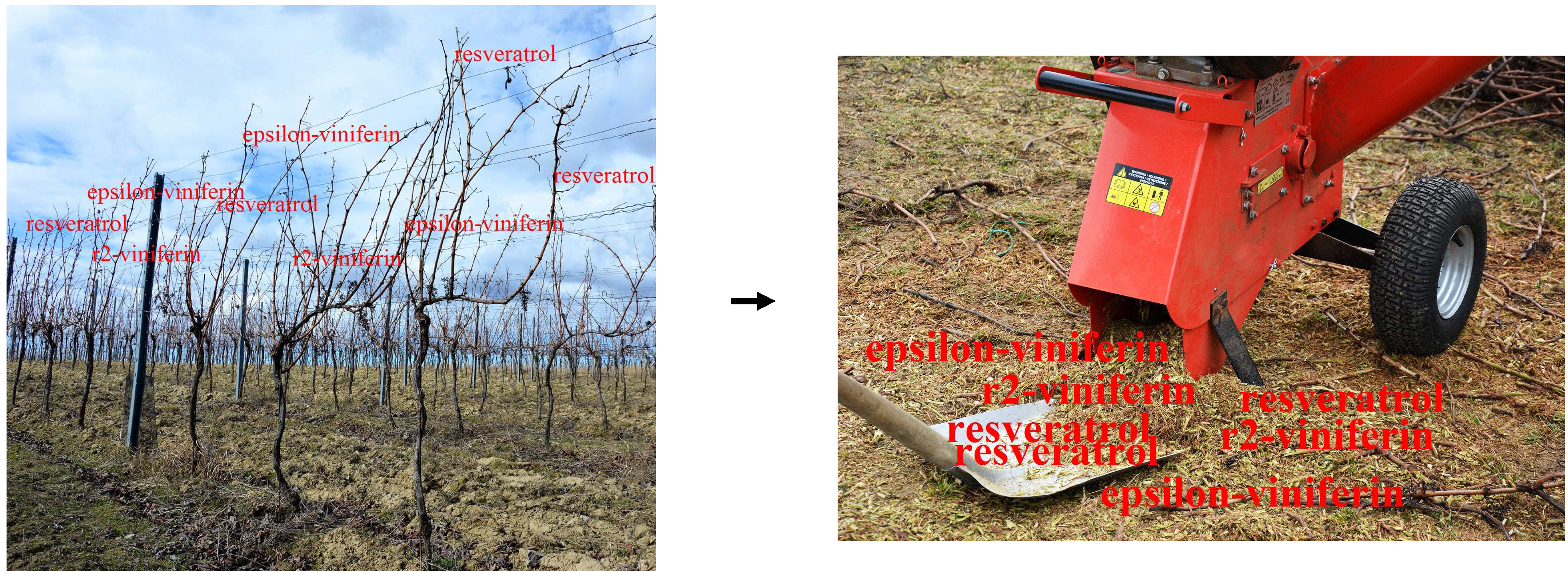
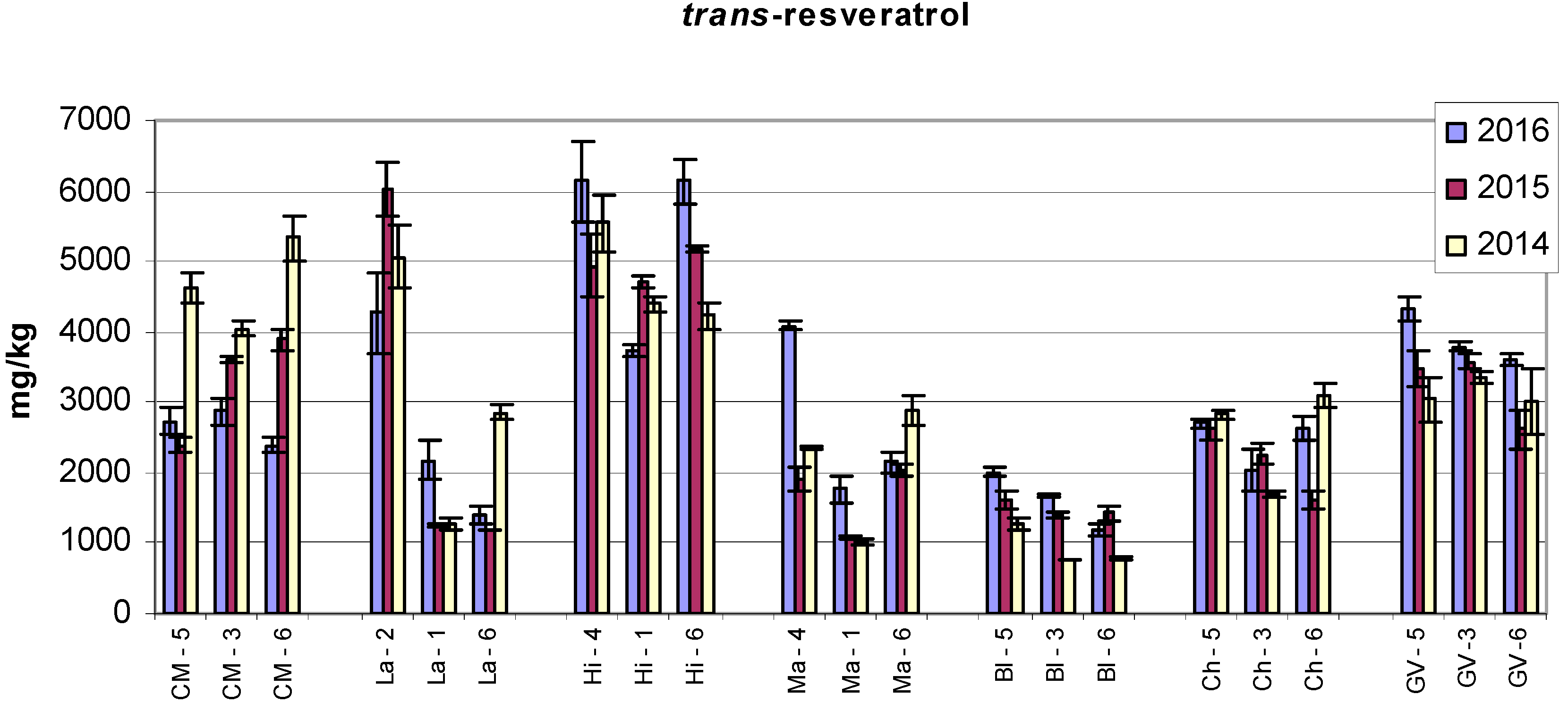
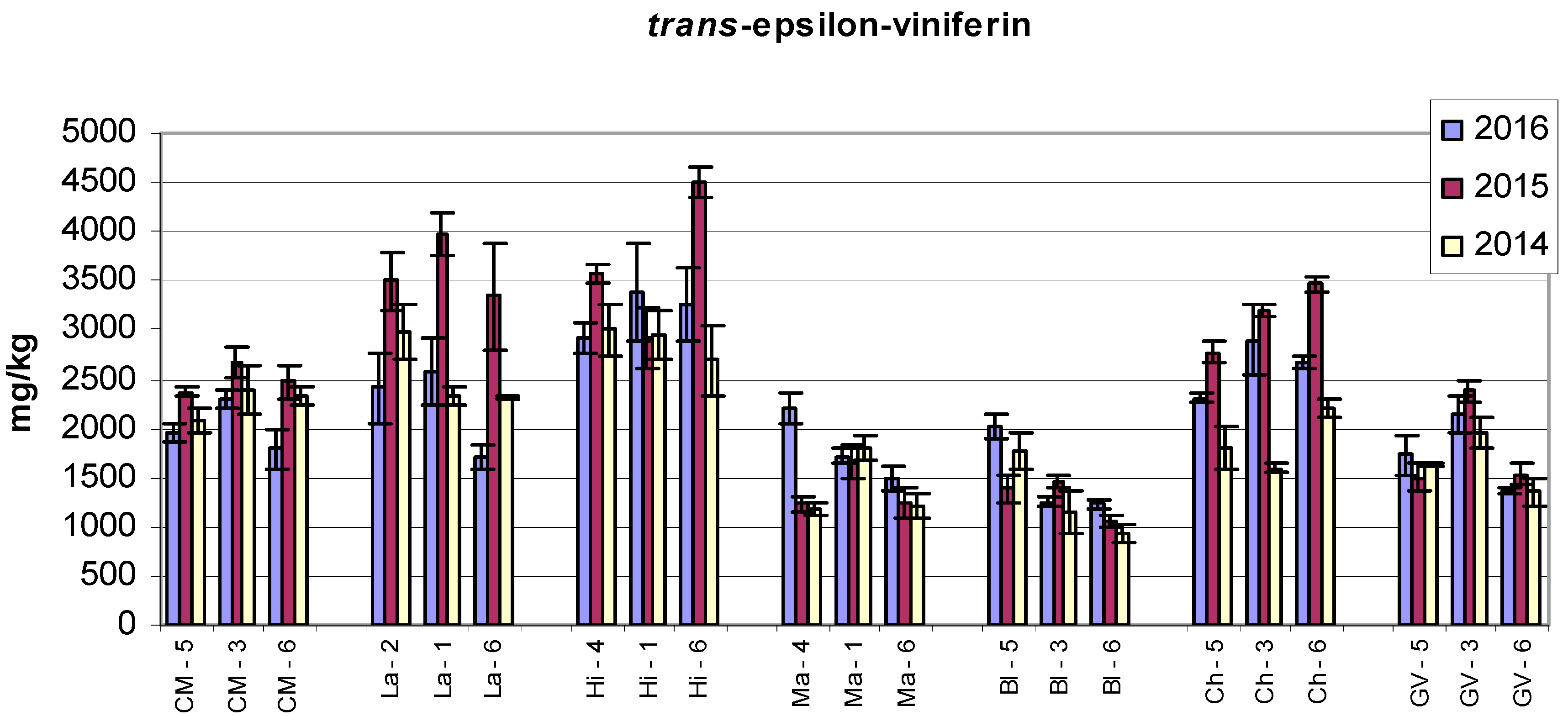
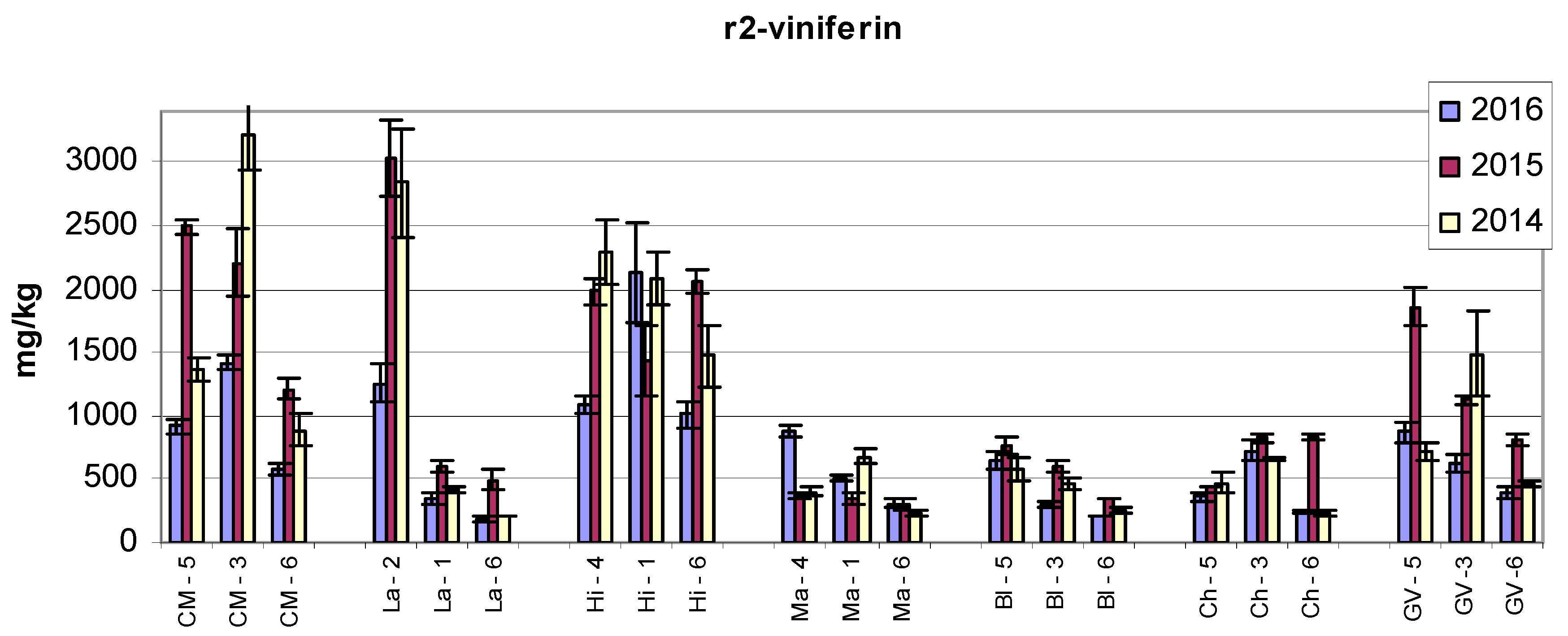
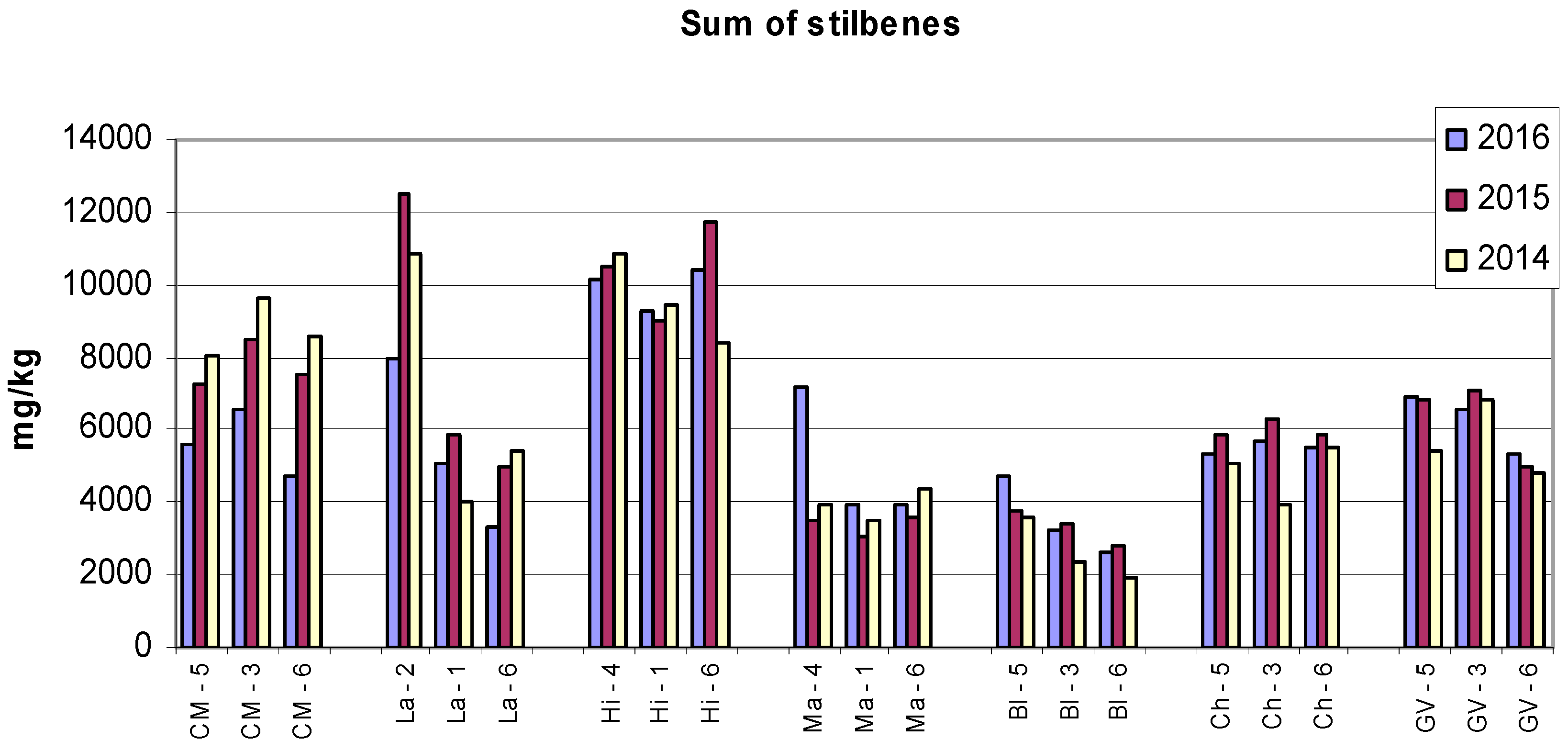
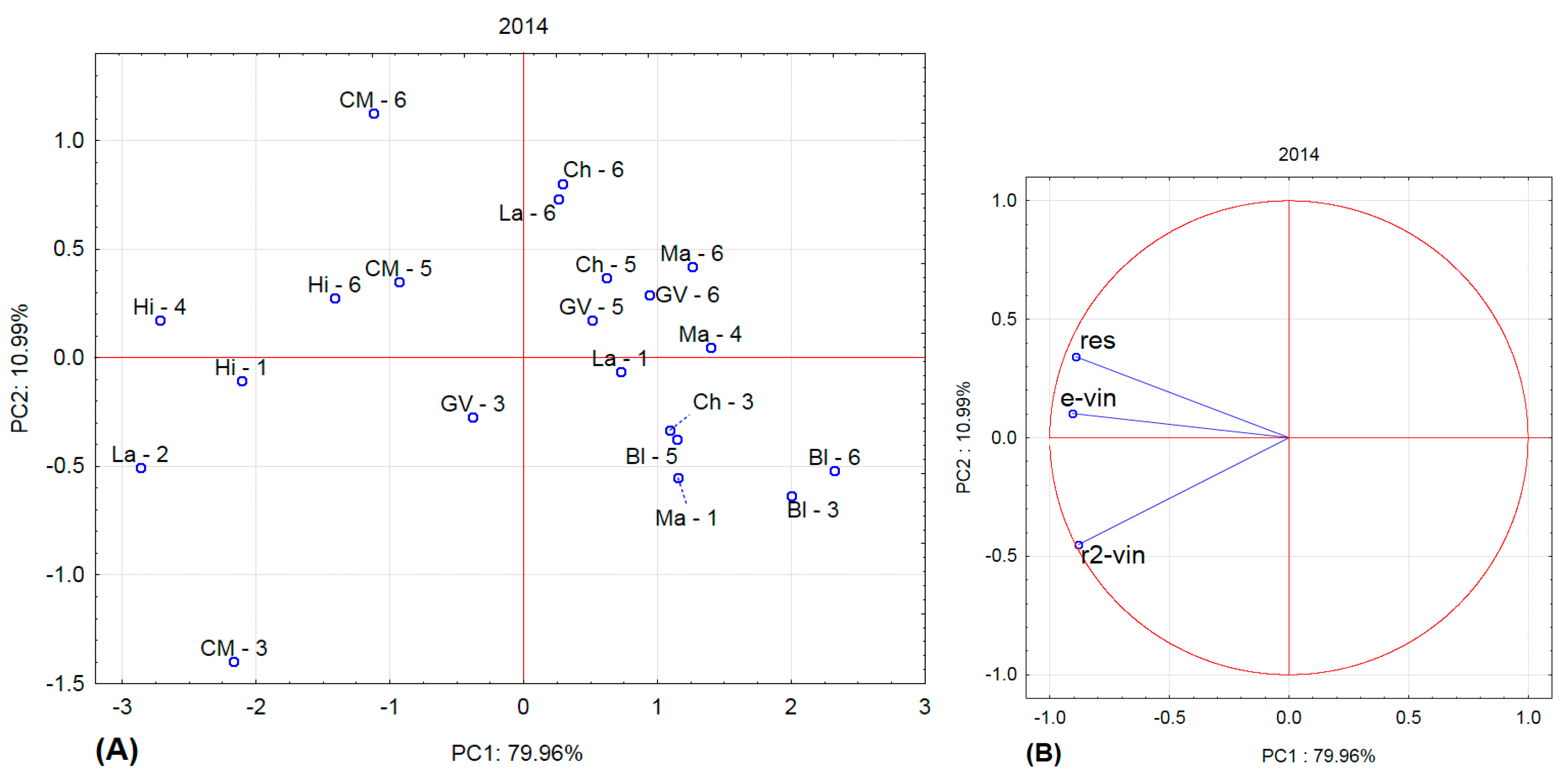
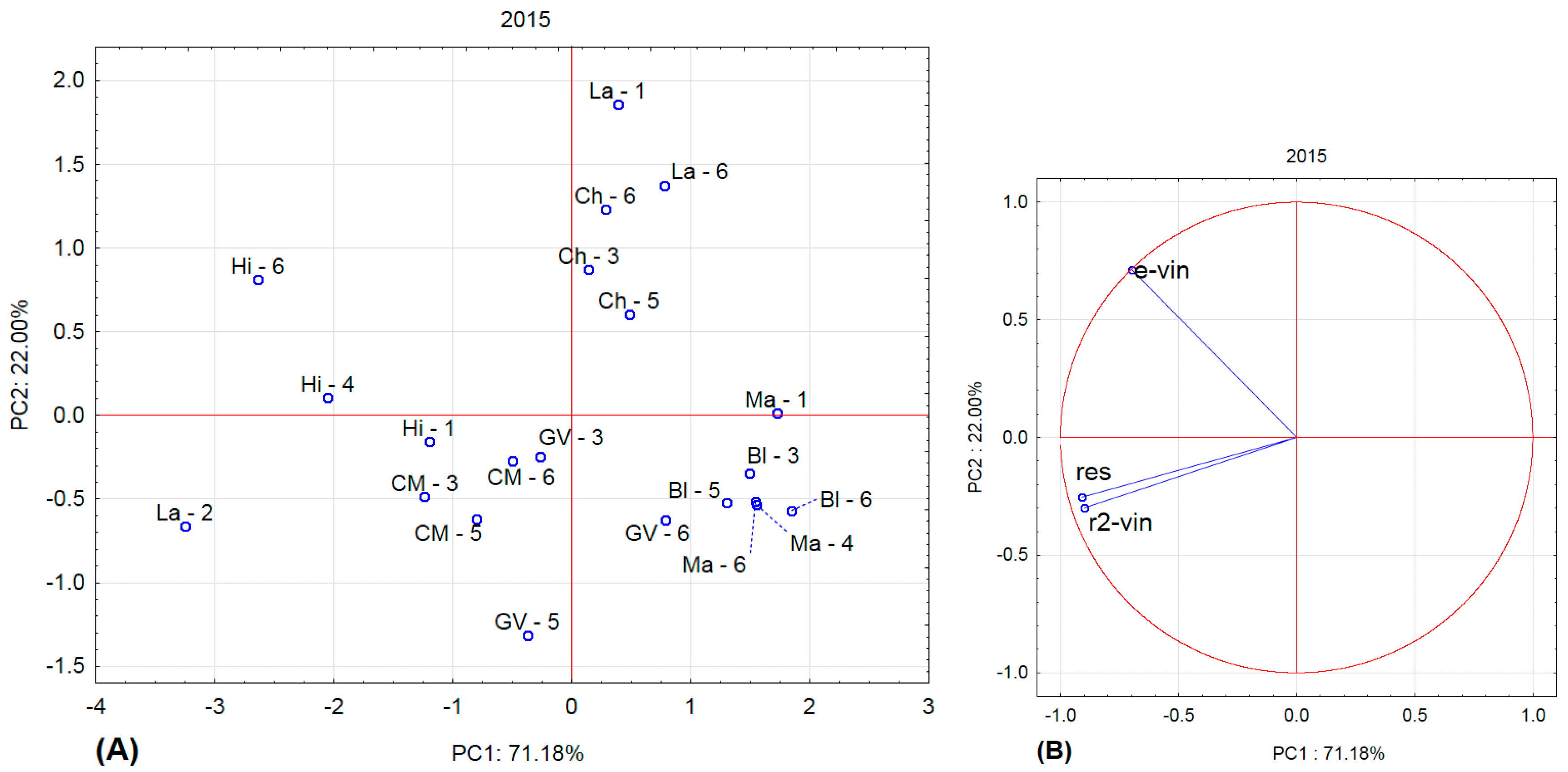
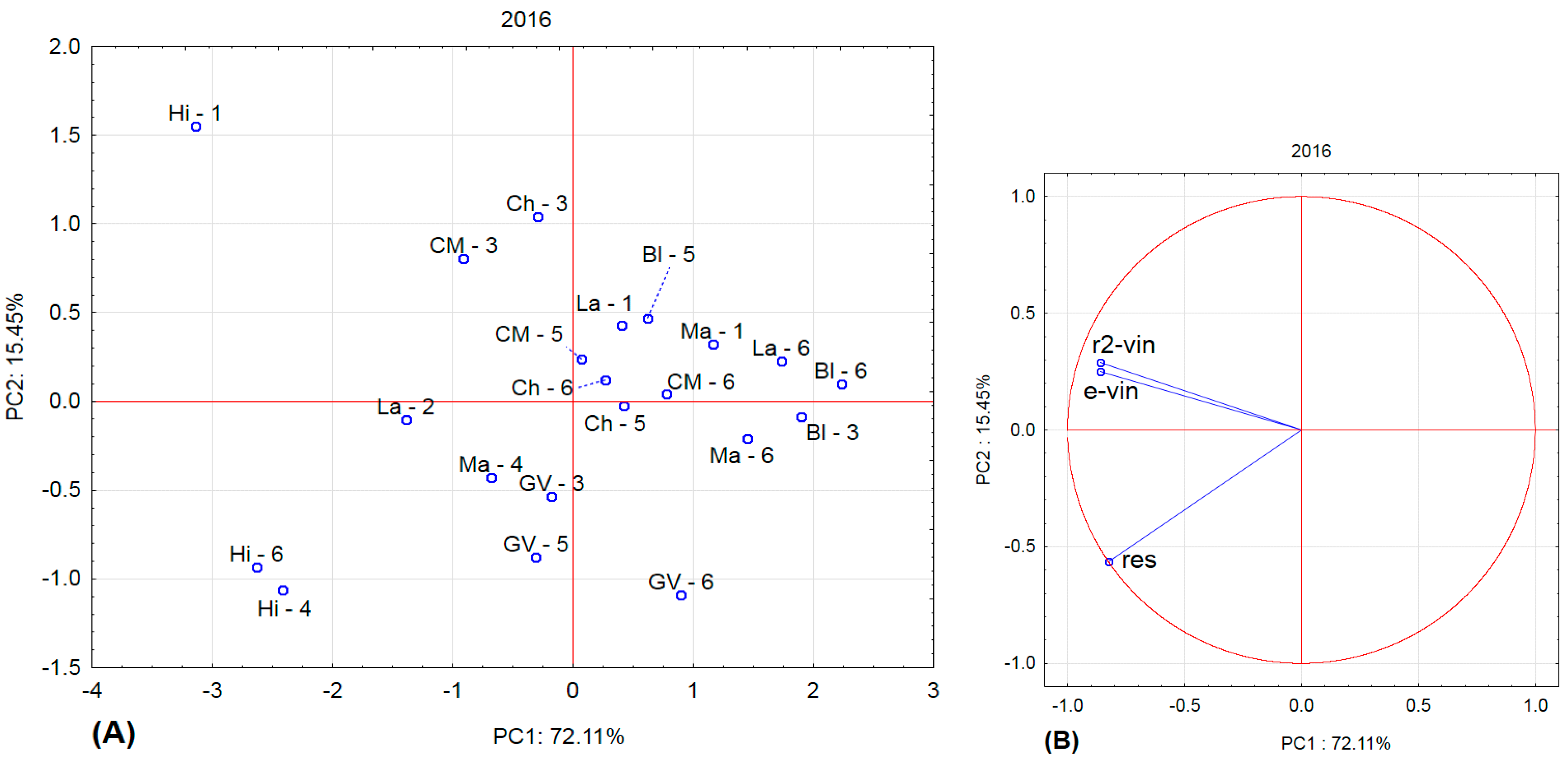
Variability in the Content of Trans-Resveratrol, Trans-ε-Viniferin and R2-Viniferin in Grape Cane of Seven Vitis vinifera L. Varieties during a Three-Year Study
Abstract
Share and Cite
Tříska, J.; Vrchotová, N.; Balík, J.; Soural, I.; Sotolář, R. Variability in the Content of Trans-Resveratrol, Trans-ε-Viniferin and R2-Viniferin in Grape Cane of Seven Vitis vinifera L. Varieties during a Three-Year Study. Molecules 2017, 22, 928. https://doi.org/10.3390/molecules22060928
Tříska J, Vrchotová N, Balík J, Soural I, Sotolář R. Variability in the Content of Trans-Resveratrol, Trans-ε-Viniferin and R2-Viniferin in Grape Cane of Seven Vitis vinifera L. Varieties during a Three-Year Study. Molecules. 2017; 22(6):928. https://doi.org/10.3390/molecules22060928
Chicago/Turabian StyleTříska, Jan, Naděžda Vrchotová, Josef Balík, Ivo Soural, and Radek Sotolář. 2017. "Variability in the Content of Trans-Resveratrol, Trans-ε-Viniferin and R2-Viniferin in Grape Cane of Seven Vitis vinifera L. Varieties during a Three-Year Study" Molecules 22, no. 6: 928. https://doi.org/10.3390/molecules22060928
APA StyleTříska, J., Vrchotová, N., Balík, J., Soural, I., & Sotolář, R. (2017). Variability in the Content of Trans-Resveratrol, Trans-ε-Viniferin and R2-Viniferin in Grape Cane of Seven Vitis vinifera L. Varieties during a Three-Year Study. Molecules, 22(6), 928. https://doi.org/10.3390/molecules22060928