Article

Structural Fire Protection of Steel Structures in Arctic Conditions

Civil Engineering Institute, Peter the Great St. Petersburg Polytechnic University, 195251 St. Petersburg, Russia
*
Author to whom correspondence should be addressed.
Buildings 2021, 11(11), 499; https://doi.org/10.3390/buildings11110499

Submission received: 17 September 2021 / Revised: 17 October 2021 / Accepted: 20 October 2021 / Published: 22 October 2021
(This article belongs to the Collection Buildings and Fire Safety)

Abstract

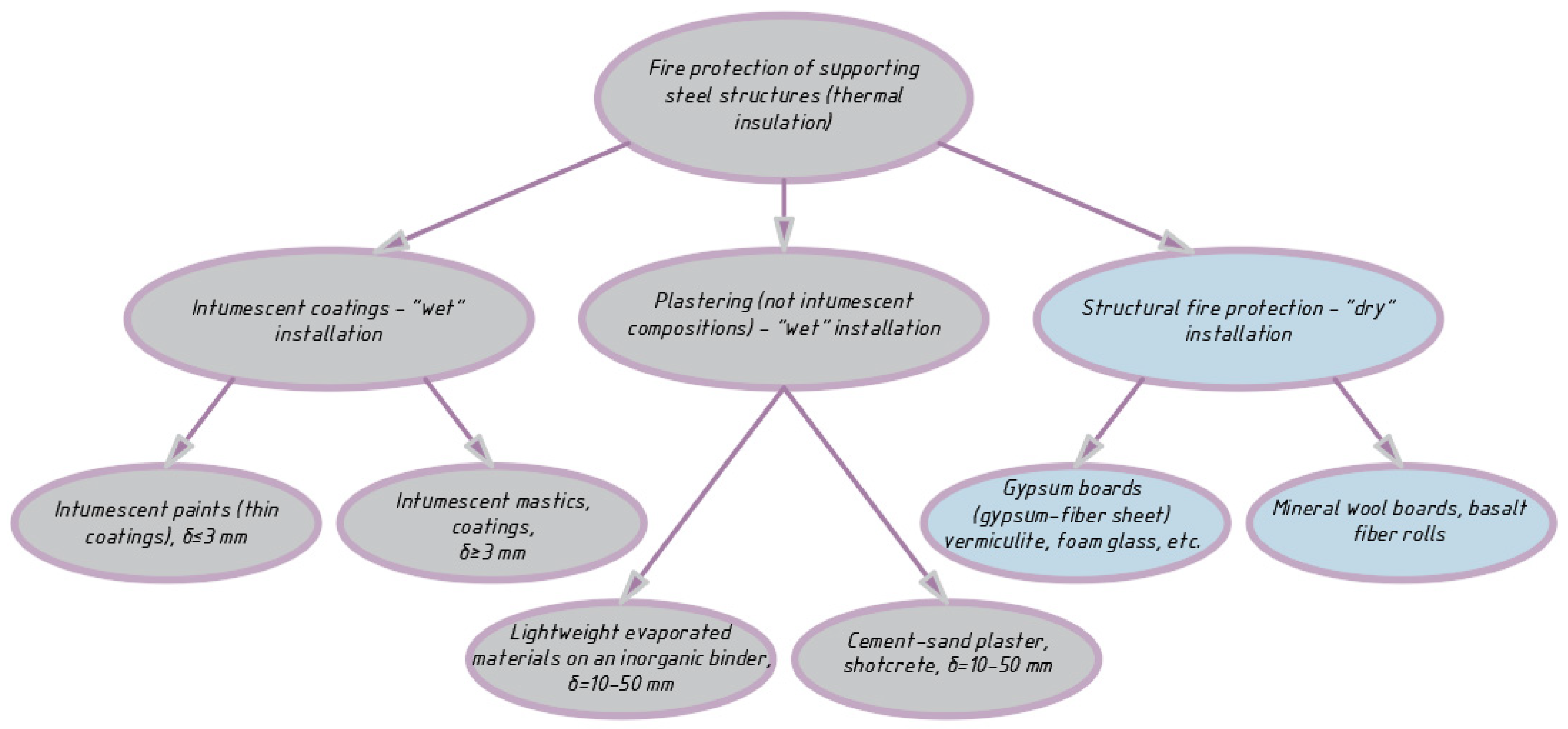
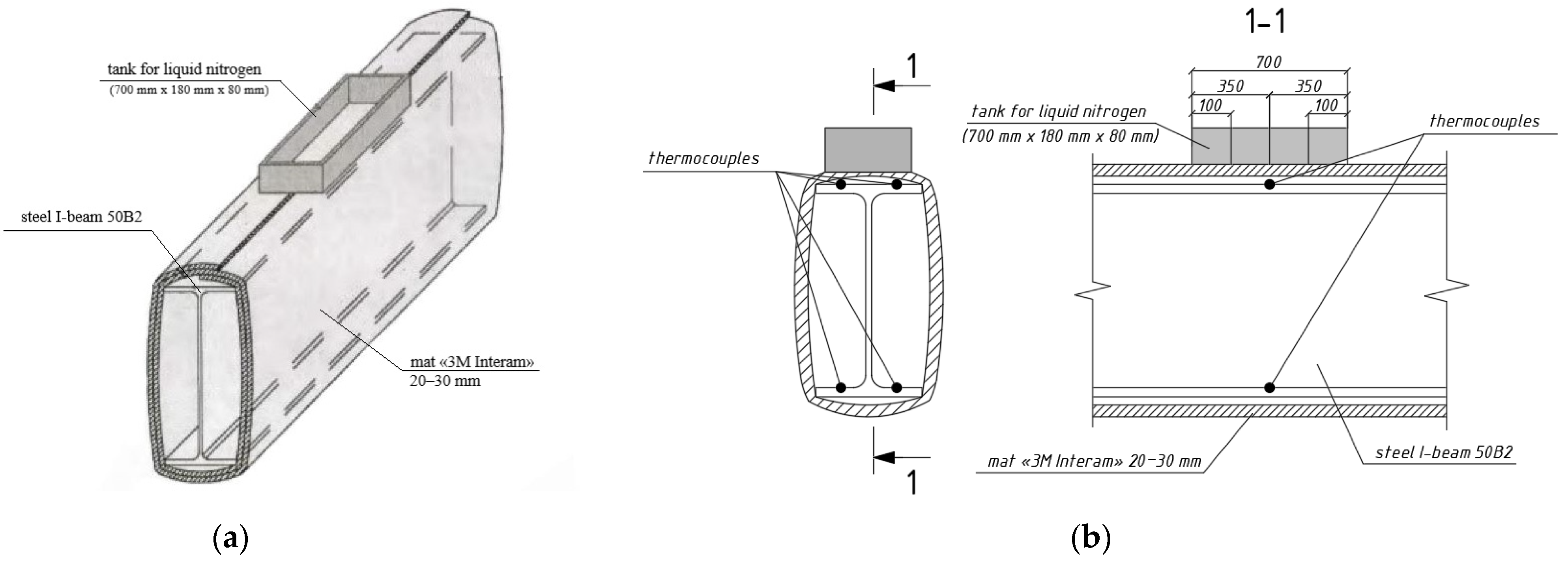
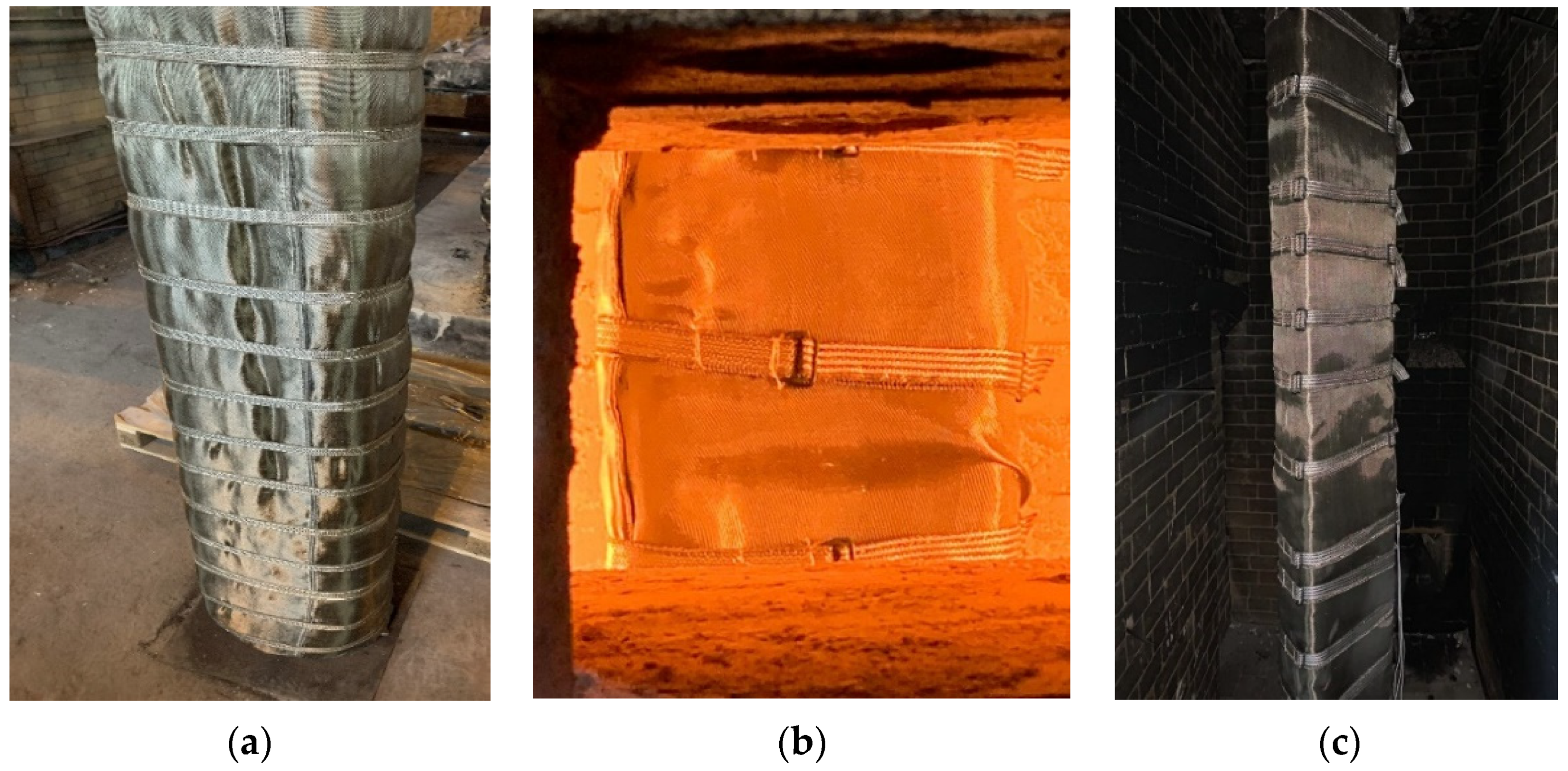
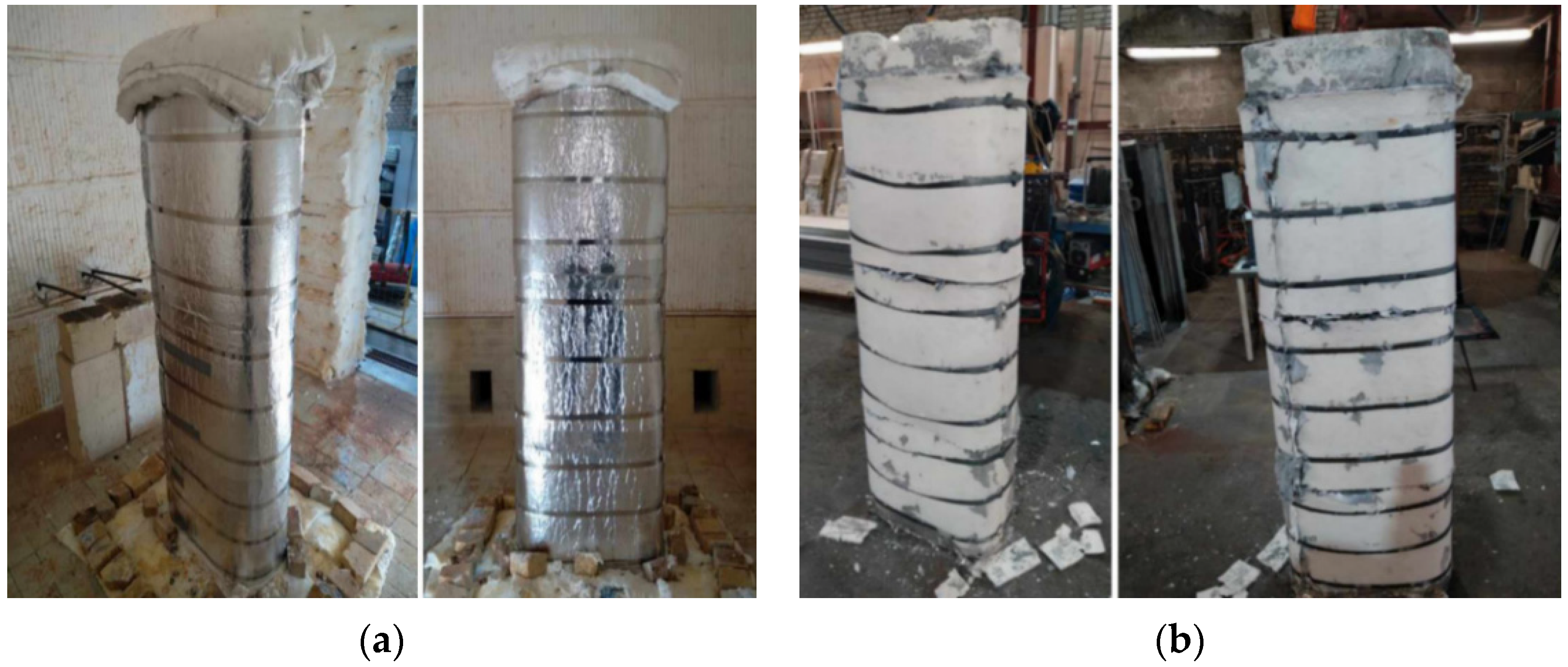
Most structures in the Arctic and Antarctic for oil and gas production are offshore stations, tankers, modules, steel supporting, and enclosing structures, which need to be protected against both cryogenic spills and fire exposure. Oil and gas industry facilities have products of high flammability and explosiveness, which in the case of ignition make it possible to develop a fire along the hydrocarbon curve, accompanied by a sharp jump in temperature and the formation of excessive pressure. This article discusses possible structural fire protection for metal structures in the Arctic region. Three different structural fireproofing materials are presented using super-thin basalt fiber (STBF) as an example. Tests of steel structures with fire protection are demonstrated, as a result of which the time from the beginning of cryogenic exposure to the limit state of samples is determined, and after the time from the beginning of thermal exposure to the limit state of samples under the hydrocarbon temperature regime is determined. An assessment of various flame retardants with values up to 120 min, which can be used in arctic climate conditions, was carried out. It was found that the most effective coatings are materials prepared on the basis of STBF.
Keywords: steel structure; oil and gas facility; super-thin basalt fiber (STBF); hydrocarbon fire; endothermic mat; cryogenic and fire exposure steel structure; oil and gas facility; super-thin basalt fiber (STBF); hydrocarbon fire; endothermic mat; cryogenic and fire exposure