Article

Impact of Integrated Agronomic Practices on Soil Fertility and Respiration on the Indo-Gangetic Plain of North India


by
Rama Kant Dubey
1,
Pradeep Kumar Dubey
1,
Rajan Chaurasia
1,
Ch Srinivasa Rao
2 and
Purushothaman Chirakkuzhyil Abhilash
1,*
1
Institute of Environment and Sustainable Development, Banaras Hindu University, Varanasi 221005, India
2
ICAR National Academy of Agricultural Research and Management, Rajendranagar, Hyderabad 500030, India
*
Author to whom correspondence should be addressed.
Agronomy 2021, 11(2), 402; https://doi.org/10.3390/agronomy11020402

Submission received: 7 January 2021 / Revised: 14 February 2021 / Accepted: 21 February 2021 / Published: 23 February 2021
(This article belongs to the Section Farming Sustainability)

Abstract

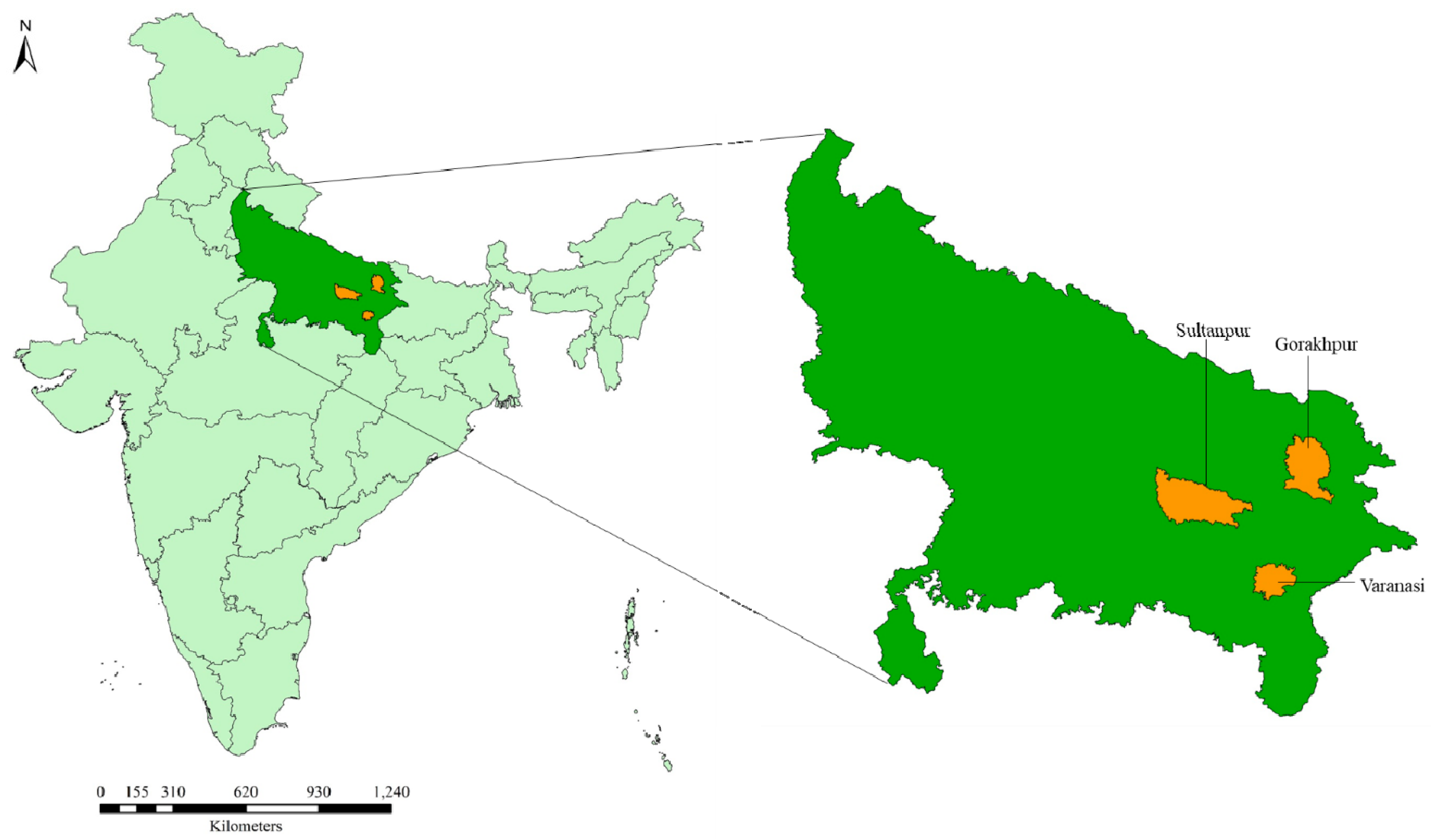
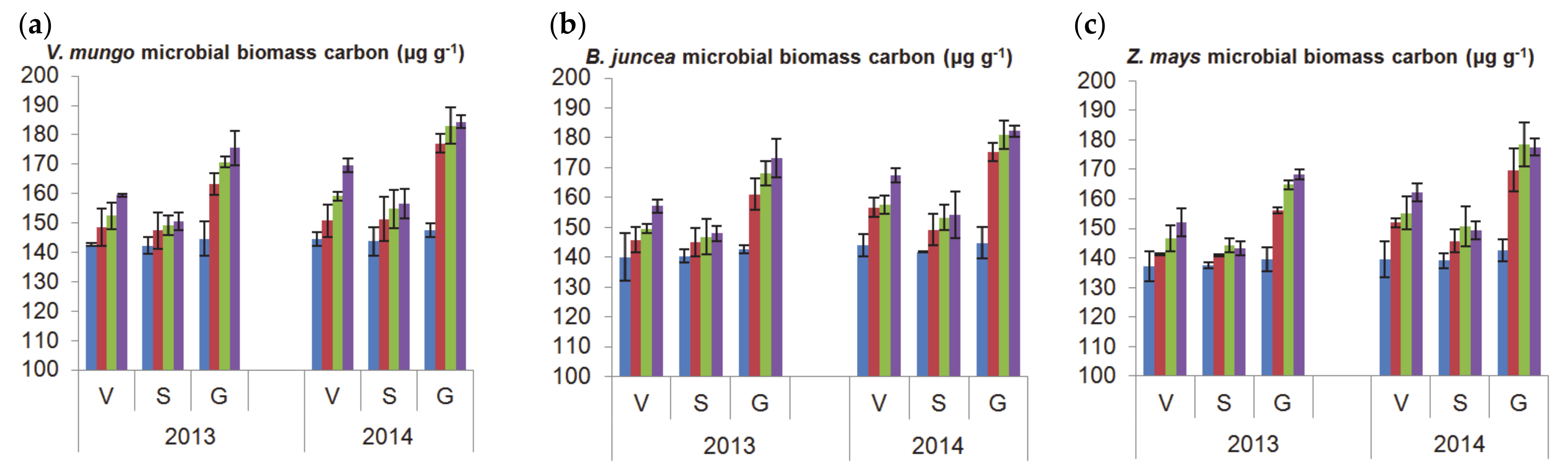
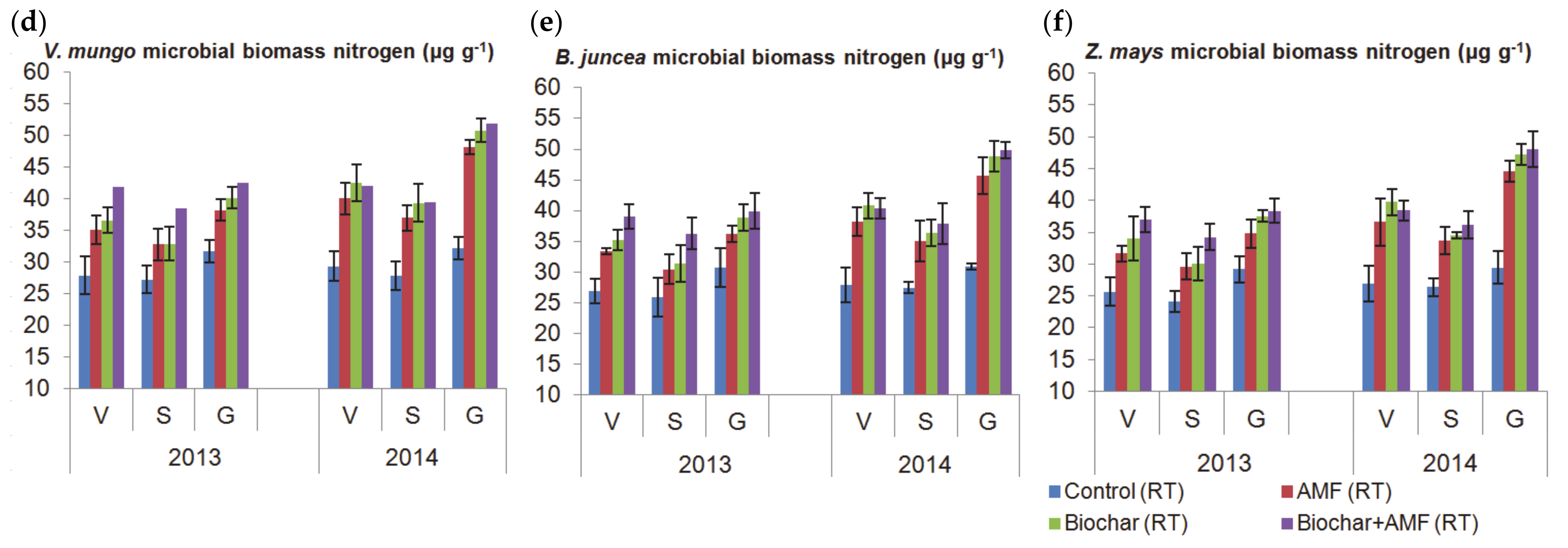
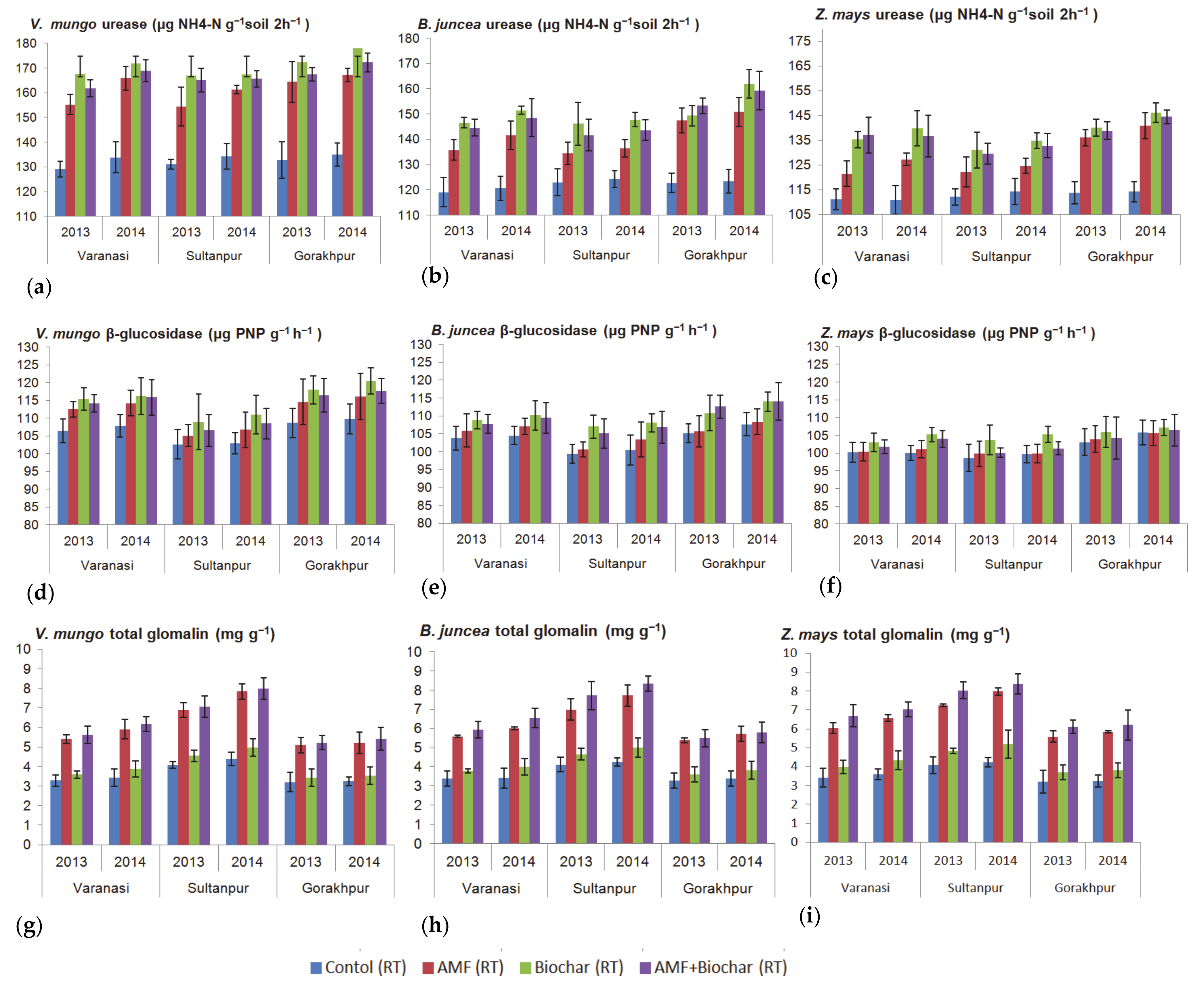
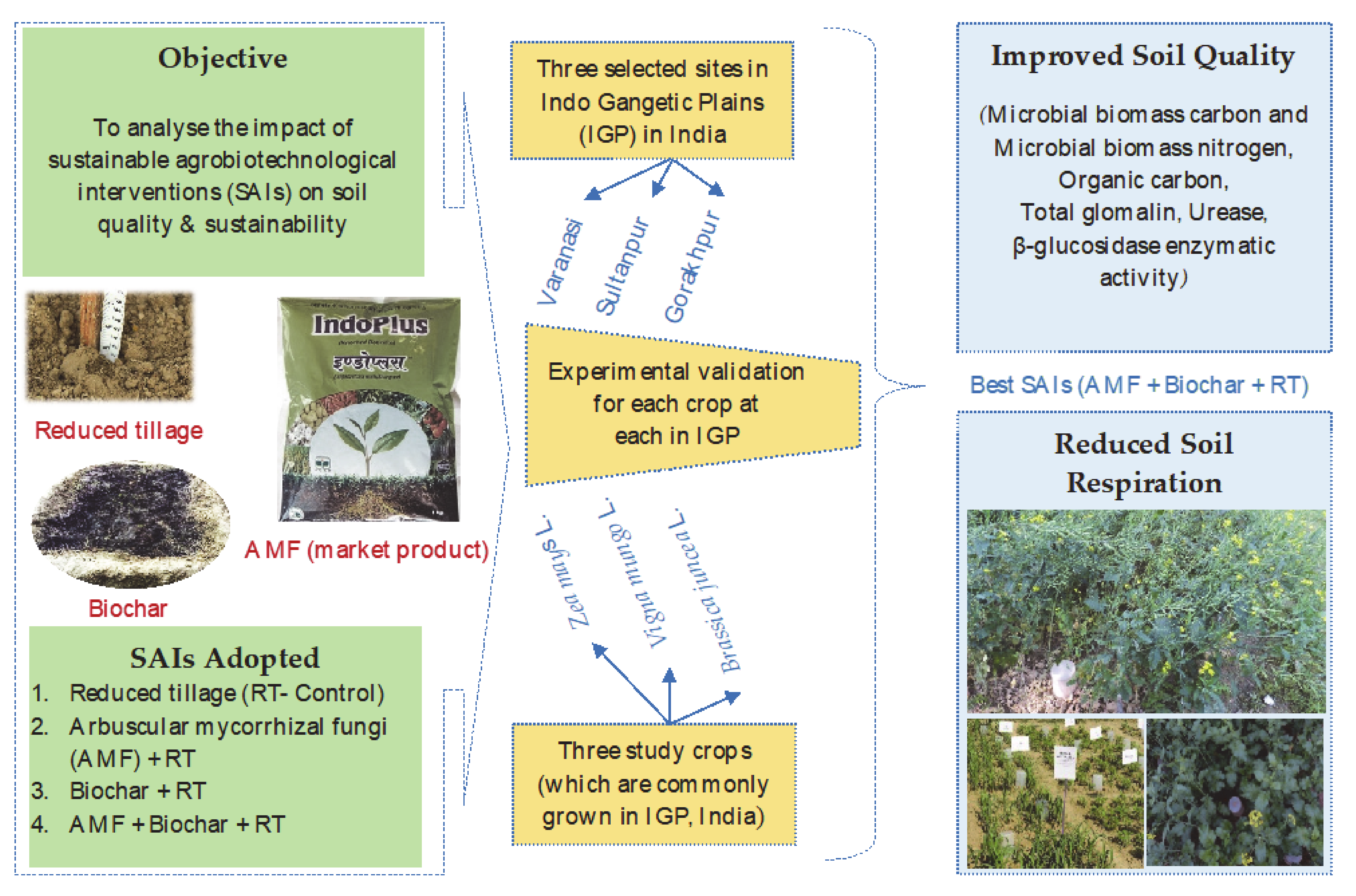
Global agricultural production is accountable for the emission of ~30% of greenhouse gases. Therefore, the wide-scale adoptions of low-input, soil-friendly, and resource-conserving agronomic practices are imperative for the ‘planet healthy food production’ and also for reducing the carbon emissions from agricultural soil. In this context, the present study aimed to analyze the impacts of integrated agronomic interventions i.e., the application of arbuscular mycorrhizal fungi (AMF) + reduced tillage (RT), biochar + RT, and AMF + biochar + RT, on spatiotemporal variations in soil-quality and soil-sustainability indicators, including microbial and soil respiration, in the Indo-Gangetic Plain (IGP) of North India. For this, field experiments on the above-mentioned agronomic interventions were employed using three different staple crops (Zea mays, Vigna mungo, and Brassica juncea) growing in three different agro-climatic zones of IGP (Varanasi, Sultanpur, and Gorakhpur) in a randomized block design. Periodic data collection was done to analyze the changes in physiochemical, biological, and biochemical properties of the soil, and statistical analyses were done accordingly. Irrespective of the sites, the experimental results proved that the integrated application of AMF + biochar + RT in V. mungo resulted in the highest soil organic carbon (i.e., 135% increment over the control) and microbial biomass carbon (24%), whereas the same application (i.e., AMF + biochar + RT) in Z. mays had the maximum reduction in microbial (32%) and soil (44%) respiration. On the other hand, enhanced occurrence of glomalin activity (98%) was noted in Z. mays cropping for all the sites. Significant negative correlation between soil respiration and glomalin activity under AMF + biochar + RT (−0.85), AMF + RT (−0.82), and biochar + RT (−0.62) was an indication of glomalin’s role in the reduced rate of soil respiration. The research results proved that the combined application of AMF + biochar + RT was the best practice for enhancing soil quality while reducing respiration. Therefore, the development of suitable packages of integrated agronomic practices is essential for agricultural sustainability.
Keywords: agricultural sustainability; carbon sequestration; farming practices; integrated agronomic practices; microbial respiration; soil respiration; soil sustainability indicators agricultural sustainability; carbon sequestration; farming practices; integrated agronomic practices; microbial respiration; soil respiration; soil sustainability indicators