Abstract
This study examines the relationships among digitalization awareness, perceived risk, platform trust, and consumer outcomes in e-commerce platforms. Consumer outcomes are conceptualized as a higher-order construct comprising perceived value, engagement, purchase intention, and loyalty. Drawing on technology readiness and trust-based exchange theories, we test a mediation model using survey data collected from 370 online shoppers in China and structural equation modeling. The results show that digitalization awareness is negatively associated with perceived risk and positively associated with platform trust. Platform trust positively predicts consumer outcomes and serves as the dominant mediator. Although perceived risk is negatively related to platform trust, it unexpectedly shows a positive direct association with consumer outcomes, indicating a theoretically nuanced role of risk as both a source of vulnerability and a possible trigger of evaluative engagement. Digitalization awareness also retains a significant direct association with consumer outcomes, supporting a partial mediation framework. These findings highlight observed relationships among digitalization awareness, risk appraisal, platform trust, and multidimensional consumer outcomes in the Chinese e-commerce context.
1. Introduction
The rapid advancement of digital technologies has fundamentally reshaped the structure and functioning of contemporary commerce. E-commerce platforms increasingly rely on algorithmic recommendation systems, artificial intelligence, mobile payment integration, and data-driven personalization to facilitate transactions and enhance user experiences [1,2]. While these technological developments have improved efficiency and accessibility, they have simultaneously intensified concerns regarding privacy protection, data security, algorithmic opacity, and platform governance [3,4,5]. As digital infrastructures become more deeply embedded in everyday consumption activities, understanding how consumers cognitively interpret and respond to digitalization has become an essential research issue [2,6].
Existing research on digital commerce has largely focused on technology adoption frameworks, emphasizing perceived usefulness, ease of use, and behavioral intention [7]. Although these perspectives offer valuable insights, they pay limited attention to consumers’ broader awareness of digitalization as a platform-level condition. In this study, digitalization awareness refers to consumers’ perceived awareness and experiential recognition of the digitalization of e-commerce platforms, including their exposure to digital technologies, perceived changes in platform intelligence, active use of digital features, and consideration of platform digitalization when making platform-use decisions [2]. Rather than capturing objective technical knowledge or deep system-level understanding, this construct reflects consumers’ subjective awareness and experiential familiarity with digitalized platform features in everyday online shopping contexts. It differs from digital literacy, which emphasizes practical digital skills; algorithm awareness, which focuses specifically on algorithmic operations; transparency perceptions, which concern the perceived clarity of platform information disclosure; and technology readiness, which reflects a general predisposition toward new technologies [8,9]. Thus, digitalization awareness is conceptualized as a consumer-level perceptual and experiential orientation toward the digitalized platform environment.
Uncertainty remains a defining characteristic of digital platform environments [10]. Transactions typically occur without physical inspection, direct interpersonal contact, or complete information transparency. Under such conditions, consumers engage in cognitive appraisal processes to evaluate potential risks, including concerns related to financial loss, privacy leakage, and opportunistic behavior [11,12]. Perceived risk has therefore been widely recognized as a critical determinant of online decision-making [13]. At the same time, platform trust functions as a relational governance mechanism that is associated with lower uncertainty and greater willingness to engage in exchange. Trust may reduce the perceived vulnerability inherent in digital transactions and support consumers’ confidence under incomplete information [14,15].
Prior e-commerce studies have extensively examined perceived risk and trust as important predictors of behavioral outcomes. However, they often treat risk and trust as parallel or independent factors, leaving insufficient attention to how consumers’ awareness of digitalized platform operations is linked to risk appraisal and trust formation within the same framework [16,17]. From a socio-cognitive perspective, consumers may evaluate potential risks associated with digital systems before forming trust judgments toward the platform [11,18]. Greater awareness of digitalized platform operations may also reduce uncertainty and enhance predictability, thereby relating to both risk appraisal and trust formation [19,20]. This study therefore examines perceived risk and platform trust as interrelated evaluative mechanisms rather than isolated predictors.
Importantly, consumer outcomes in digital contexts are multidimensional. Beyond immediate transactional behavior, outcomes include experiential evaluations such as perceived value and engagement, as well as behavioral responses such as purchase intention and loyalty [21,22]. Treating these dimensions as isolated indicators risks overlooking their conceptual integration. A higher-order conceptualization of overall consumer outcome provides a more comprehensive representation of how cognitive and relational mechanisms translate into both experiential and behavioral consequences [22]. While these outcome dimensions capture distinct experiential and behavioral aspects, prior research suggests that consumers tend to integrate these responses into a holistic evaluation of platform interactions. In digital platform environments, experiential perceptions such as value and engagement are closely linked to downstream behavioral responses, forming an interconnected outcome domain [23]. Accordingly, modeling these dimensions as first-order components of a higher-order construct allows for capturing their shared variance while preserving their conceptual distinctiveness. This specification is theoretically grounded in the integrative nature of consumer evaluation processes rather than being adopted merely to accommodate empirical overlap between the dimensions.
Accordingly, the research gap addressed in this study is not the absence of trust–risk research in e-commerce, but the limited integration of digitalization awareness, perceived risk, platform trust, and multidimensional consumer outcomes in a unified model. Existing studies tend to focus either on technological acceptance variables or on trust and risk independently, without modeling their dynamic interdependence [16,17]. By incorporating digitalization awareness as a consumer-level perceptual antecedent and modeling perceived risk and platform trust as connected mechanisms, this study extends standard trust–risk approaches from a framework centered on outcome prediction to one that also considers how consumers’ perceived recognition of and use-related familiarity with digitalized platform features are associated with risk and trust evaluations.
To address this gap, the present study develops and tests a structural model in which digitalization awareness influences overall consumer outcomes through the sequential roles of perceived risk and platform trust [11,14]. Drawing upon cognitive appraisal theory [24], risk–trust evaluation perspectives [25], and relationship marketing theory [26], we propose that digitalization awareness shapes consumer responses both directly and indirectly through interconnected evaluative and relational mechanisms. Using structural equation modeling [27], this study empirically examines these pathways and evaluates whether trust serves as the dominant mediating channel linking digitalization awareness to downstream outcomes [11]. The study contributes to the literature by clarifying the conceptual role of digitalization awareness, situating it within a refined trust–risk framework for e-commerce platforms, and offering practical insight into how consumers’ awareness, familiarity, and use-related recognition of digitalized platform features are associated with risk concerns, platform trust, and broader consumer responses.
The remainder of the paper is organized as follows. The literature review examines prior research on e-platform digitalization, risk appraisal, and trust formation, and develops the research hypotheses. The Empirical Section presents the data, measurement validation, and structural modeling results. The conclusion discusses theoretical contributions, practical implications, and directions for future research.
2. Literature Review
2.1. E-Platform Digitalization
E-commerce platforms have evolved from simple online storefronts into digitally governed infrastructures in which transactions, information flows, and user experiences are increasingly shaped by data-intensive technologies [28,29]. Prior research generally characterizes e-platform digitalization as the embedding of algorithmic recommendation systems, big data analytics, artificial intelligence, cloud-based architectures, and integrated mobile payment systems into the core operational logic of platform marketplaces [30,31]. This technological embedding does not merely improve operational efficiency; it also reconstitutes the exchange environment by transforming how market information is produced, curated, and allocated across participants [32]. In this sense, digitalization is better understood as an infrastructural and governance shift that reorganizes market coordination in platform ecosystems [33].
At the macro level, platform commerce reflects a move from product-centric exchange to ecosystem-based coordination enabled by network effects and digital governance arrangements [34]. At the meso level, firms implement digitally mediated organizational mechanisms such as automated customer service, dynamic pricing, and predictive demand analytics, which continuously optimize platform performance through real-time data feedback [35]. At the micro level, digitalization is directly experienced through interface design, algorithmic personalization, search and ranking systems, and frictionless payment processes that structure consumer journeys [36]. These perspectives indicate that digitalization constitutes a systemic transformation of platform exchange conditions rather than a set of isolated technological features.
It is necessary to distinguish between platform-level digitalization as an objective environmental condition and digitalization awareness as an individual-level perceptual construct [2,31]. While platform digitalization reflects the structural and technological characteristics embedded in the marketplace infrastructure [32,33], consumers do not directly respond to these conditions per se; rather, their responses are shaped by how such conditions are cognitively interpreted [2,24]. This distinction highlights the need to identify an appropriate micro-level mechanism that links external digitalization to internal consumer evaluation processes [2,36].
Building on this distinction, prior research increasingly emphasizes the dual consequences of digitalization: value creation and structural opacity [32,37]. On the value creation side, personalization and automation reduce search costs, increase relevance, and enhance convenience by aligning platform content and product offerings with consumer preferences in real time [38]. Digital payment infrastructures and automated verification mechanisms further reduce transaction friction and support large-scale, low-cost exchange [39].
On the opacity side, however, algorithmic mediation and intensive data extraction can render the platform environment less transparent to users [37]. The logic by which information is ranked and recommended, the scope of data collection and profiling, and the automated rules governing transactions may be partially invisible to consumers [40]. This opacity is not merely technical but also cognitive: it alters the informational conditions under which consumers evaluate platform interactions, intensifying concerns about privacy, fairness, manipulation, and accountability [41]. Accordingly, digitalization does not uniformly reduce uncertainty; it may simultaneously enhance efficiency while increasing perceived vulnerability [32,37,41].
Within such digitally governed environments, consumers do not respond only to service outcomes; they also respond to the digital features they perceive, encounter, and use during platform interactions [42]. Building on this view, this study adopts digitalization awareness as a micro-level construct capturing consumers’ perceived awareness, experiential familiarity, and use-related recognition of digitalized platform features in online shopping [43]. Digitalization awareness is therefore conceptualized as a broader awareness-and-use orientation rather than objective technical knowledge or deep system-level understanding. It differs from digital literacy, transparency perception, and technology readiness, which respectively emphasize practical skills, perceived disclosure, or general predisposition toward technology [8,9,43].
This awareness-and-use orientation provides the conceptual bridge between platform-level digitalization and individual consumer evaluation. Specifically, macro- and meso-level technological features become meaningful to consumers when they are experienced and interpreted through everyday platform interactions [42,43]. When digitalized platform features are familiar and perceived as useful or manageable, uncertainty may decrease and expectations may become more structured [44,45,46]. However, greater exposure to and awareness of digitalized features may also make consumers more sensitive to issues such as data use, algorithmic personalization, or loss of control, thereby increasing concern [41,47]. This dual effect suggests that digitalization awareness should not be understood merely as a technical knowledge construct, but a consumer-level orientation that may both reduce uncertainty and increase sensitivity to digital-platform risks [44,45,46,47].
Because platform transactions often occur under information asymmetry and limited observability, consumers must infer the predictability and controllability of the platform environment [44,45]. In this context, digitalization awareness shapes how consumers perceive digitalized platform environments and evaluate platform-related uncertainty [46,47,48]. Accordingly, digitalization awareness can function as an antecedent perceptual orientation associated with subsequent evaluations of risk and trust, while also forming part of the broader consumer orientation through which individuals engage with digital platforms [32,49].
2.2. Risk Appraisal in Digital Platform Environments
Perceived risk has long been recognized as a central construct in consumer decision-making under conditions of uncertainty [11]. In digital platform environments, where transactions are mediated by technological infrastructures rather than direct interpersonal interaction, risk appraisal becomes particularly consequential [44]. Prior research consistently emphasizes that the absence of physical inspection, limited transparency regarding seller credibility, and restricted visibility into platform governance mechanisms intensify consumers’ reliance on system-based evaluations [50]. Under such conditions of information asymmetry, perceived risk functions as a primary evaluative filter shaping consumers’ engagement with online platforms.
Existing studies conceptualize perceived risk in digital commerce as a multidimensional construct, commonly including financial risk, privacy risk, performance risk, and security risk [51]. These dimensions reflect structural features of platform-mediated exchange. Algorithmic intermediation, automated decision-making, and data-driven personalization introduce layers of abstraction between consumers and market actors, complicating direct verification and increasing perceived vulnerability [52,53]. The limited transparency surrounding ranking systems, recommendation algorithms, and data processing practices further reinforces uncertainty regarding how outcomes are generated and governed [54].
From a cognitive appraisal perspective, risk perception is not solely determined by objective hazards but emerges from individuals’ subjective interpretations of probability, severity, and controllability [55]. Research in digital contexts suggests that when technological processes appear opaque or unpredictable, consumers are more likely to interpret ambiguity as threat, thereby elevating perceived risk [56,57]. Conversely, when system operations are perceived as understandable and rule-based, uncertainty becomes more cognitively manageable, reducing vulnerability perceptions [58]. This interpretive dimension is particularly relevant in highly digitalized environments, where technological complexity directly shapes how consumers construe uncertainty [59].
Notably, the relationship between digitalization awareness and perceived risk is not theoretically unidirectional. While greater awareness of digital systems may enhance interpretive clarity and perceived controllability, thereby reducing uncertainty and vulnerability [58,59], it may also increase sensitivity to potential risks embedded in digital environments. In particular, awareness of data collection practices, algorithmic profiling, and automated decision-making may heighten concerns regarding privacy threats, surveillance, manipulation, and algorithmic bias [56,57].
This dual perspective suggests that the negative relationship between awareness and perceived risk is theoretically arguable rather than self-evident [58]. Depending on how digital processes are interpreted, awareness may either attenuate uncertainty by improving understanding or amplify perceived risk by making potential vulnerabilities more salient [56,57,58,59]. This tension reflects the broader ambivalence observed in digital platform research, where transparency and awareness can simultaneously reduce uncertainty and increase concern [58].
Importantly, scholars increasingly argue that perceived risk should not be treated merely as a direct predictor of behavioral intention but as a precursor to relational judgments [60]. Because digital platform transactions require consumers to accept institutional vulnerability, risk appraisal conditions whether trust in the platform can emerge [61]. Elevated perceived risk undermines confidence in platform safeguards and governance structures, whereas reduced risk perceptions facilitate the development of institutional trust [62]. Thus, risk appraisal can be understood as a foundational stage within a broader evaluative sequence linking technological interpretation to relational commitment and, ultimately, consumer outcomes [63].
2.3. Platform Trust Formation and Consumer Outcomes
Trust has long been regarded as a fundamental governance mechanism that enables exchange under conditions of uncertainty [64]. In platform-based commerce, where transactions are mediated by digital infrastructures rather than direct interpersonal relationships, trust primarily assumes an institutional rather than interpersonal form [50,65]. Research on online and platform markets consistently indicates that consumers rely on system-level safeguards such as rule enforcement, payment protection, dispute resolution procedures, and data security mechanisms to mitigate vulnerability [66]. In this study, platform trust is defined as consumers’ overall confidence in the platform as an institutional intermediary, encompassing beliefs about its reliability, fairness, and governance capability, rather than trust in individual sellers or isolated technological features. Platform trust therefore reflects confidence in the platform’s ability to facilitate reliable and fair exchange [50,65].
The formation of platform trust differs from traditional dyadic trust in that it is grounded primarily in system-based evaluations [50]. Drawing from institutional trust and relationship marketing perspectives, trustworthiness is commonly conceptualized in terms of competence, integrity, and benevolence [26]. In digital platform environments, competence refers to the platform’s technical and operational capability to deliver stable and effective services; integrity concerns the consistency and fairness of governance procedures; benevolence reflects the perceived commitment of the platform to protecting user interests [26,49]. Importantly, although these dimensions are conceptually distinct, prior research suggests that users integrate them into a unified trust judgment when forming an overall willingness to rely on the platform [25]. In this sense, platform trust can be understood as a higher-order construct that synthesizes multiple evaluative dimensions into a single, global assessment of trustworthiness. Platform trust should therefore be distinguished from related constructs. While perceived security reflects beliefs about transaction safety [67], and competence or fairness represent specific evaluative dimensions [25], platform trust represents a higher-order integrative judgment that synthesizes these perceptions into an overall willingness to rely on the platform [50]. These evaluations are shaped by accumulated interaction experience as well as by the transparency and predictability of platform operations [59]. In highly digitalized contexts, where key processes such as information filtering, algorithmic recommendation, and transaction verification are automated and only partially observable, perceived predictability and controllability become central to trust formation [68].
Empirical evidence positions trust as a proximal determinant of consumer responses in digital markets. By reducing perceived vulnerability and lowering the cognitive costs associated with monitoring and verification, trust increases willingness to share information, engage in repeat purchasing, and develop long-term relational commitment [65,69]. This influence operates through two complementary mechanisms. At the experiential level, trust reduces uncertainty-related cognitive burden, allowing consumers to focus on perceived value and engagement during platform interactions [70]. At the behavioral level, trust increases consumers’ willingness to rely on the platform in future transactions, thereby strengthening purchase intention and loyalty. Consequently, platform trust functions as a key driver of broader consumer responses in e-commerce settings [70,71].
However, much of the existing literature treats trust as an independent predictor of behavioral intention or loyalty, often modeled alongside perceived risk as parallel determinants of outcomes [71,72,73]. Such approaches provide valuable insight into outcome formation but offer limited explanation of how trust itself emerges from upstream cognitive evaluations in highly digitalized environments. In particular, insufficient attention has been devoted to the sequential process through which consumers interpret technological infrastructures, appraise associated vulnerabilities, and subsequently form relational judgments toward the platform.
Positioning trust within a sequential evaluation framework addresses this limitation. In platform environments, consumers first interpret technological systems and assess associated uncertainty before forming relational judgments about the platform as an institutional actor [44,49]. Within this process logic, platform trust represents the relational stage that translates technological interpretation and risk appraisal into downstream responses. Specifically, trust serves as a mediating mechanism that converts cognitive evaluations (e.g., understanding of digital systems and perceived risk) into experiential outcomes such as perceived value and engagement, as well as behavioral outcomes such as purchase intention and loyalty [74]. Conceptualizing trust in this manner extends beyond static predictor models and clarifies its role as a mediating mechanism linking digitalization-related cognition to overall consumer outcomes.
2.4. Sequential Evaluation Mechanisms in Digital Platform Adoption
Research on digital platform adoption has traditionally modeled consumer responses as the direct outcome of cognitive beliefs (e.g., perceived usefulness) or as the independent effects of discrete perceptions such as risk and trust [75,76]. While these approaches have generated substantial insight, they tend to treat evaluative constructs as parallel predictors, offering limited explanation of how they are cognitively and relationally connected. In highly digitalized platform environments characterized by algorithmic intermediation and data-driven governance, consumer judgment is more plausibly understood as unfolding through a sequential evaluation process rather than through isolated perceptual effects [77].
Notably, alternative causal structures have also been proposed in prior research. Some studies conceptualize perceived risk and trust as parallel determinants of behavior, while others suggest reciprocal or mutually reinforcing relationships between the two constructs [71,72,73]. These perspectives suggest that multiple structural arrangements are theoretically possible, and that the relationship between risk and trust is not inherently fixed.
A process-oriented perspective conceptualizes relational commitment as emerging through a structured progression from technological interpretation to vulnerability appraisal and institutional trust formation [49]. Platform interactions require users to make sense of how data are collected, how recommendations are generated, and how transactions are governed. These interpretations shape subsequent appraisals of uncertainty embedded in platform systems [78,79]. Risk appraisal thus represents an intermediate cognitive stage in which consumers assess the likelihood and severity of potential adverse outcomes under conditions of limited transparency and information asymmetry. Such vulnerability assessments condition whether trust in the platform can emerge [44,80].
Building on this perspective, the sequential ordering of risk and trust is theoretically preferable in digital platform contexts for several reasons. First, from a cognitive appraisal standpoint, evaluations of uncertainty logically precede relational judgments, as individuals must first assess potential vulnerability before forming confidence in an exchange partner [24]. Second, the limited transparency and information asymmetry inherent in platform environments make risk appraisal a necessary interpretive step that shapes subsequent trust formation [44]. Third, empirical and theoretical work consistently suggests that perceived risk constrains or enables trust, indicating a directional influence from vulnerability assessment to relational evaluation [81].
Within this sequential logic, perceived risk and platform trust are better conceptualized as interdependent stages rather than parallel determinants of behavior. Elevated perceived risk weakens confidence in institutional safeguards, constraining trust formation [81]. Reduced risk perceptions, by contrast, create the psychological conditions necessary for trust formation to the platform as a reliable intermediary [75]. Trust then functions as the proximal relational mechanism that translates prior cognitive evaluations into downstream consequences, including perceived value, engagement, purchase intention, and loyalty [82].
While alternative models such as parallel or reciprocal structures remain plausible, the sequential framework provides greater conceptual coherence by explicitly specifying the directional linkage between technological interpretation, vulnerability appraisal, and relational commitment. Rather than treating risk and trust as independent predictors, this approach explains how they are cognitively connected within a unified evaluative process [83].
Digitalization awareness serves as the consumer-level starting point of this sequence. As a broader awareness-and-use orientation toward digitalized platform features, digitalization awareness reflects consumers’ exposure to, familiarity with, and use-related recognition of digital technologies in online shopping [84,85]. Greater awareness of digitalized platform features may reduce ambiguity and increase perceived manageability, thereby attenuating risk appraisal and facilitating trust formation [86,87]. At the same time, awareness may exert a direct influence on consumer outcomes by enhancing perceived platform sophistication, interaction fluency, and willingness to use digitalized platform features [88].
A sequential evaluation framework integrates digitalization awareness, risk appraisal, and relational trust into a coherent process model [84]. Rather than viewing consumer outcomes as the additive result of independent perceptual factors, this perspective conceptualizes them as the product of a structured progression from perceived recognition of digitalized platform features to vulnerability assessment and ultimately to relational commitment. By articulating the directional logic underlying this progression, the proposed framework offers a more theoretically grounded and empirically testable explanation of how digitalization-related cognition is translated into consumer outcomes in e-commerce platforms [89,90].
3. Hypothesis Development
Technology readiness theory posits that individuals differ in their cognitive preparedness to engage with technological systems [91]. Individuals with greater awareness of and familiarity with digitalized platform features are more likely to interpret system features as manageable rather than threatening [92]. In digital platform environments, transactions are mediated by algorithmic processes, automated verification mechanisms, and data-driven personalization systems. When users have limited familiarity with such digitalized features, technological complexity may be perceived as opacity and unpredictability, thereby heightening perceived vulnerability [59].
From a cognitive appraisal perspective, perceived risk reflects subjective evaluations of uncertainty and controllability rather than objective hazards alone [93]. When consumers lack clarity regarding how personal data are processed, how products are ranked, or how disputes are resolved, ambiguity is more likely to be interpreted as potential threat [94]. At the same time, greater digitalization awareness may also increase consumers’ awareness of data collection, algorithmic profiling, and potential privacy vulnerabilities, thereby heightening sensitivity to digital risks. Thus, awareness may have dual implications for risk perception [3].
However, in the context of platform-based services, digitalization awareness can enhance consumers’ experiential familiarity with digitalized platform features and help them form more structured expectations about platform interactions. When digital features are frequently encountered, perceived as increasingly intelligent, and actively used in purchase decisions, consumers may perceive platform interactions as more familiar and manageable. As a result, perceptions of financial, privacy, and performance risks are expected to decline [88]. Therefore, greater cognitive familiarity with digital infrastructures is expected to attenuate consumers’ subjective risk evaluations in platform-based services [95].
H1:
(Digitalization Awareness → Perceived Risk)—Digitalization awareness is negatively associated with perceived risk toward platform-based digital services.
Institutional trust theory suggests that trust in digital platforms develops when users perceive the system as competent, reliable, and fair [96]. In highly digitalized environments, many governance processes are automated and not directly observable [97]. As a result, trust formation depends not only on prior interaction but also on consumers’ ability to infer system from available institutional and technological cues [98].
Digitalization awareness may strengthen this inferential capacity, but it should be distinguished from related constructs such as perceived transparency, institutional assurances, and digital literacy. Perceived transparency refers to the extent to which platforms disclose information about their operations, whereas institutional assurances refer to formal safeguards, rules, certifications, or protection mechanisms provided by the platform [96]. Digital literacy captures users’ general ability to use digital technologies effectively [87]. By contrast, digitalization awareness reflects consumers’ perceived recognition of digitalized platform features and their experiential familiarity with how these digital features are embedded in online shopping, including AI recommendations, digital search tools, automated customer service, and platform intelligence [3]. When users frequently encounter and interact with such digital features, they are more likely to perceive the platform as technologically capable, adaptive, and procedurally reliable [47]. These perceptions reinforce may reinforce beliefs regarding platform competence and reliability. Conversely, limited awareness or unfamiliarity may foster skepticism, as digitalized platform features can be perceived as complex, opaque, or difficult to evaluate [99].
Familiarity with digitalized platform features may also enhance perceptions of platform sophistication and procedural consistency. When consumers perceive digital features as consistently embedded in platform operations, outcomes such as product recommendations, search results, or service responses are more likely to be interpreted as systematic rather than arbitrary. Such perceptions can strengthen institutional confidence in the platform as a reliable institutional intermediary [100].
H2:
(Digitalization Awareness → Platform Trust)—Digitalization awareness is positively associated with platform trust.
Risk–trust evaluation perspectives conceptualize trust as a willingness to accept vulnerability under uncertainty [101]. Trust presupposes that the anticipated benefits of reliance outweigh perceived potential losses. In digital platform contexts, transactions are mediated by institutional safeguards rather than interpersonal assurances. Consumers must rely on the platform’s competence in securing payments, protecting personal data, enforcing governance rules, and resolving disputes. When perceived risk is elevated, potential loss becomes salient, intensifying concerns about system malfunction, opportunistic behavior, or governance failure [49,102].
Institutional trust theory further indicates that trust is grounded in beliefs about competence, integrity, and reliability [96]. Perceived risk directly challenges these foundational beliefs. Among different risk dimensions, privacy risk, financial/security risk, and performance risk are particularly likely to undermine platform trust. Privacy risk weakens confidence in the platform’s ability to protect personal data and govern data use responsibly. Financial and security risks undermine belief in payment protection and transaction safety. Performance risk reflects uncertainty regarding product quality, service reliability, and fulfillment outcomes. As vulnerability appraisal intensifies, consumers become less willing to rely on the platform as a dependable intermediary [61].
Conversely, when perceived exposure to harm appears manageable and safeguards are viewed as effective, reliance becomes psychologically feasible. Trust formation therefore depends in part on prior vulnerability assessment, and variations in perceived risk should systematically influence relational judgments [65].
H3:
(Perceived Risk → Platform Trust)—Perceived risk is negatively associated with platform trust.
Trust-based exchange theory argues that trust reduces the need for costly monitoring and verification, thereby facilitating more efficient and value-oriented exchange relationships [26]. In digitally mediated transactions, where interactions are governed by algorithmic systems rather than direct interpersonal contact, reliance on institutional safeguards becomes particularly important. When consumers trust the platform, perceived vulnerability declines, and fewer cognitive resources are allocated to uncertainty management. This reduction in psychological burden allows consumers to focus more on experiential enjoyment and functional benefits, enhancing perceived value and engagement [20,50].
From a relationship marketing perspective, trust further supports relational continuity under uncertainty. Confidence in the platform’s competence and integrity lowers resistance to repeated interaction and strengthens commitment intentions [89]. Trust not only increases immediate transactional participation but also fosters long-term relational orientation, including repeat purchase and loyalty. By stabilizing expectations and reducing relational uncertainty, trust transforms episodic transactions into sustained exchange relationships [20].
In this framework, overall consumer outcome integrates experiential evaluations (e.g., perceived value and engagement) and behavioral responses (e.g., purchase intention and loyalty) into a higher-order construct. A single path from platform trust to overall consumer outcome is theoretically justifiable because trust serves as a common relational foundation for both dimensions [20]. At the attitudinal level, trust enhances perceived value and engagement by reducing uncertainty and improving the quality of platform experience [70]. At the behavioral level, trust strengthens purchase intention and loyalty by increasing consumers’ willingness to rely on the platform in future transactions. Thus, trust may help explain the shared variance underlying both attitudinal and behavioral outcomes. Platform trust operates as a proximal mechanism through which institutional confidence translates into attitudinal and behavioral consequences [74].
H4:
(Platform Trust → Consumer Outcome)—Platform trust is positively associated with overall consumer outcomes.
Perceived risk is typically regarded as a deterrent to online participation, as heightened vulnerability may weaken behavioral intention [13]. However, risk–benefit evaluation perspectives suggest that risk appraisal does not necessarily lead only to avoidance. Under certain conditions, perceived risk may stimulate greater cognitive involvement. When consumers encounter uncertainty in digital platform contexts, they may engage in more deliberate information processing, including intensified search, comparison, and evaluative scrutiny. This logic is consistent with the diagnosticity perspective, which suggests that uncertainty increases consumers’ motivation to seek, compare, and process information that can reduce ambiguity and support decision-making. In e-commerce platforms, perceived risk may therefore encourage consumers to attend more carefully to diagnostic cues such as product reviews, seller ratings, platform guarantees, return policies, and transaction safeguards [12,44].
This logic does not imply that perceived risk is generally beneficial. Rather, the proposed positive direct association is theoretically bounded by three conditions. First, perceived risk should remain manageable rather than being experienced as uncontrollable or severe enough to trigger withdrawal. According to the extended parallel process model, threat perceptions are more likely to generate adaptive responses when individuals perceive sufficient efficacy to manage the threat; otherwise, high threat combined with insufficient efficacy may lead to defensive avoidance or withdrawal [103]. Second, consumers should have access to diagnostic information, such as reviews, ratings, product descriptions, and seller credibility cues, that enables them to reduce ambiguity [82]. Third, platform safeguards, including payment protection, return policies, and dispute-resolution mechanisms, should be visible and credible enough to support consumers’ sense of control [62]. When these conditions are present, perceived risk may stimulate greater evaluative engagement rather than immediate avoidance.
Accordingly, perceived risk may operate through two distinct mechanisms. On the one hand, it can undermine platform trust by making vulnerability salient, as proposed in H3. On the other hand, when perceived risk remains manageable, it may encourage transactional-level scrutiny and more active use of platform information, thereby strengthening perceived value, engagement, and subsequent outcome-related responses. Therefore, H5 is proposed as a context-bound expectation rather than a universal claim that perceived risk improves consumer outcomes.
H5:
(Perceived Risk → Consumer Outcome)—Manageable perceived risk is positively associated with overall consumer outcomes.
Beyond its indirect influence through risk appraisal and platform trust, digitalization awareness may exert a direct impact on consumer outcomes. This direct path is conceptually distinct from the mediation logic involving platform trust. Whereas platform trust reflects relational confidence in the platform as a reliable intermediary, digitalization awareness reflects consumers’ perceived awareness, experiential familiarity, and use-related recognition of digitalized platform features in online shopping contexts [2]. Technology readiness and experiential learning perspectives suggest that technological understanding enhances interaction fluency and evaluative efficiency. In digitally mediated environments characterized by algorithmic filtering and automated governance, users who are more familiar with platform digitalization features are better equipped to navigate platform functionalities efficiently [76,104].
This mechanism should also be distinguished from self-efficacy and perceived control. Self-efficacy refers to consumers’ belief in their ability to perform digital tasks, while perceived control concerns the extent to which consumers feel able to manage a specific platform interaction [88]. By contrast, digitalization awareness improves consumers’ ability to interpret platform signals, understand recommendation logic, and evaluate digital safeguards. When consumers can interpret algorithmic rankings, manage privacy settings, and evaluate platform signals, they experience less cognitive friction and greater interaction fluency. Such fluency and evaluative efficiency contributes directly to experiential evaluations by increasing perceived value and engagement, independent of relational confidence [7,105].
Digitalization awareness may also foster more informed decision-making. Perceived awareness of and familiarity with digitalized platform features can support more efficient search, comparison, and evaluation during online shopping. These awareness- and use-related mechanisms suggest that digitalization awareness directly shapes consumer experience and behavioral outcomes [42,106].
H6:
(Digitalization Awareness → Consumer Outcome)—Digitalization awareness is positively associated with overall consumer outcomes.
Trust transfer and mediation perspectives conceptualize trust as a relational mechanism through which cognitive interpretations acquire behavioral relevance. In digitally mediated exchanges, awareness of and familiarity with digitalized platform features alone do not automatically translate into sustained engagement; rather, consumers rely on relational judgments that determine whether reliance is psychologically acceptable [107,108]. Platform trust is expected to serve as the dominant mediator because it represents the most proximal relational condition linking digitalization awareness to consumer outcomes. While digitalization awareness reflects consumers’ awareness of, familiarity with, and use-related recognition of digitalized platform features, trust determines whether these perceptions are translated into perceived value, engagement, purchase intention, and loyalty [74].
Digitalization awareness enhances individuals’ familiarity with digitalized platform environments and their interaction with digital features during online shopping [2]. When this awareness and familiarity develops into confidence in the platform as a dependable intermediary, consumers become more willing to rely on the platform, complete transactions, and maintain ongoing interaction [59]. Through this process, perceived digitalization is transformed into experiential value and behavioral commitment.
Trust therefore functions as a mediating mechanism that channels awareness-driven evaluations into concrete consumer outcomes.
H7:
(Trust Mediation)—Platform trust mediates the relationship between digitalization awareness and overall consumer outcomes.
Consumer evaluation in digital platform contexts can be understood as an ordered socio-cognitive process rather than a collection of isolated perceptions [7,44]. Sequential appraisal perspectives suggest that individuals first interpret environmental conditions, then assess vulnerability, and subsequently form relational judgments that enable engagement. In algorithmically governed markets, such progression becomes particularly salient because opacity and information asymmetry require active interpretation before reliance [47,109].
Digitalization awareness provides the initial perceptual foundation of this process. By shaping consumers’ awareness and familiarity with platform digitalization, awareness influences the way uncertainty is construed. Reduced perceived risk facilitates relational confidence, and strengthened trust subsequently supports experiential value and sustained behavioral commitment [73,110]. Perceived risk is expected to operate primarily through trust because risk appraisal concerns consumers’ perceived vulnerability when relying on the platform [61]. Higher perceived risk weakens confidence in the platform’s ability to protect users, secure transactions, and enforce rules, whereas lower perceived risk makes reliance on the platform more psychologically acceptable [62]. Thus, risk influences consumer outcomes mainly by shaping the formation of platform trust.
This ordered logic indicates that the influence of digitalization awareness on consumer outcomes unfolds through a structured chain linking interpretation, vulnerability appraisal, and relational confidence.
H8:
(Sequential Mediation)—Digitalization awareness indirectly influences overall consumer outcomes through a sequential pathway involving perceived risk and platform trust.
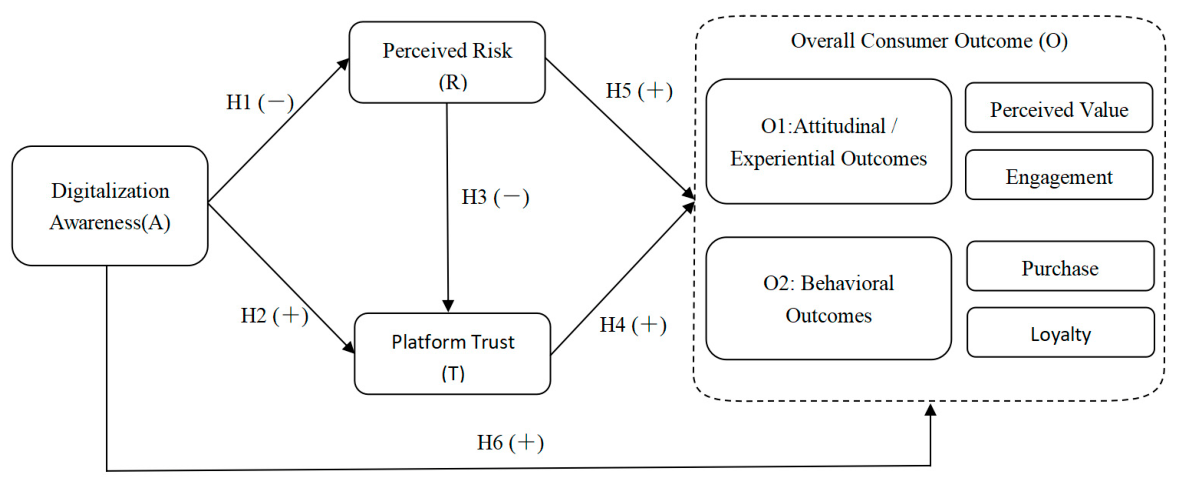
Figure 1 presents the structural model outlining the hypothesized relationships among the study variables. Digitalization awareness influences overall consumer outcome directly and indirectly through perceived risk and platform trust. The model specifies both single and sequential mediation pathways. The following section describes the measurement model, data collection, and analytical procedures used to test H1–H8.
Figure 1.
Structural Model of the Relationships among Key Variables. H7 and H8 indicate indirect-effect paths: H7 = A → T → O; H8 = A → R → T → O.
4. Empirical Section
4.1. Data Description
Data were collected through an online survey administered at a comprehensive university in China, located in an urban area where major e-commerce platforms and digital shopping services are widely accessible. The questionnaire was distributed through Wenjuanxing, a professional online survey platform widely used for academic data collection in China. The survey link was circulated through university-related online communication channels, including student groups, staff networks, and personal social networks. Most respondents were university students, while a small number were staff members and other general online shoppers. Participation was voluntary and anonymous, and each participant received a 20 RMB incentive after completing the questionnaire.
To ensure the relevance of the sample, a screening question was placed at the beginning of the questionnaire: “Have you used any digital features (e.g., AI recommendations, live-streaming, AI customer service) while shopping online in the past 6 months?” A total of 380 responses were initially collected. Ten respondents answered “No” to the screening question and were excluded. The final valid sample therefore consisted of 370 respondents. Missing data were handled during the screening process. The online questionnaire required responses to the main measurement items before submission; therefore, no missing values existed for the key constructs used in the SEM analysis. The final sample size of 370 was considered adequate for the proposed SEM analysis, given the limited number of latent constructs and the study’s focus on testing direct, mediation, and sequential mediation relationships. The retained respondents were also appropriate for the research context because all had recent experience using digital features in online shopping.
To reduce potential common method bias, several procedural safeguards were implemented during questionnaire design and survey administration. The survey was administered anonymously, respondents were informed that there were no right or wrong answers, the items were worded neutrally, and constructs were presented in separate sections to reduce respondents’ ability to infer the hypothesized relationships. In addition, Harman’s single-factor test showed that the first unrotated factor accounted for 46.27% of the total variance, below the commonly used 50% threshold, suggesting that common method variance was unlikely to be a severe concern.
The demographic characteristics of the respondents are summarized in Table 1. The sample consisted predominantly of female participants (66.2%), with respect to generational composition, the sample was strongly concentrated among younger consumers. Gen Z respondents accounted for the largest share of the sample (82.4%), followed by Gen Y (12.4%), Gen X (3.8%), and Baby Boomers (1.4%). This distribution is consistent with the university-based recruitment context and reflects the strong representation of digitally active younger consumers in the sample.
Table 1.
Sample Characteristics of Respondents (N = 370).
In terms of educational attainment, the sample was highly educated, with the majority holding a bachelor’s degree (80.0%), followed by associate or vocational degrees (9.7%) and postgraduate qualifications (7.6%). Only a small proportion reported a high school education or below (2.7%). Regarding geographic distribution, most respondents resided in economically developed urban environments, with Tier 2 (38.6%) and Tier 3 cities (43.8%) accounting for the largest shares, followed by Tier 1 metropolitan areas (7.6%) and rural regions (10.0%).
Participants generally demonstrated substantial experience with online shopping activities. More than two-thirds reported at least four years of online shopping experience, including 35.7% with four to six years and 34.1% with seven years or more. Monthly e-commerce expenditures were concentrated in lower spending categories, with nearly half of respondents spending less than 500 RMB per month (49.5%), while only 5.1% reported expenditures exceeding 2000 RMB.
Shopping frequency further indicates active engagement with digital platforms, as the majority of participants reported purchasing online at least monthly, including 47.0% shopping one to three times per month and 38.4% shopping weekly. Platform usage patterns show that Pinduoduo (38.9%) and Taobao (33.8%) were the most frequently used platforms, followed by Douyin (18.9%), JD.com (7.0%), and Xiaohongshu (1.4%).
The reliability and convergent validity of the measurement model were evaluated using standardized factor loadings, Cronbach’s alpha (α), composite reliability (CR), and average variance extracted (AVE), as presented in Table 2. The results indicate that the measurement model demonstrates satisfactory psychometric quality across all constructs. The measurement items are provided in Appendix A.
Table 2.
Measurement Model Reliability and Convergent Validity.
Standardized factor loadings ranged from 0.717 to 0.923, indicating strong relationships between observed indicators and their corresponding latent constructs. These values suggest that the measurement items adequately capture the intended conceptual domains. Internal consistency reliability was also supported, as Cronbach’s alpha values ranged from 0.831 to 0.899, exceeding the recommended threshold of 0.70. Composite reliability values showed a similar pattern, ranging from 0.833 to 0.898, further confirming the stability and consistency of the measurement scales.
Evidence of convergent validity was observed, with AVE values ranging from 0.587 to 0.724, all surpassing the recommended cutoff value of 0.50. These findings indicate that each construct explains a substantial proportion of variance in its associated indicators.
The two outcome dimensions also exhibited strong measurement properties. Outcome Dimension 1 (O1), reflecting perceived value and engagement derived from digital platform interactions, and Outcome Dimension 2 (O2), capturing behavioral responses such as purchase intention and platform loyalty, both demonstrated high reliability and convergent validity. The strong performance of these first-order dimensions supports the conceptualization of overall consumer outcome as a higher-order construct.
Before testing the structural model, the measurement model was evaluated separately. The results provided reasonable support for the measurement structure, with acceptable comparative fit (CFI = 0.946, TLI = 0.936) and acceptable residual-based fit (SRMR = 0.071). Although the RMSEA was higher than the commonly recommended threshold (RMSEA = 0.119), the overall pattern of fit indices, together with the reliability, convergent validity, and subsequent discriminant validity evidence, supported the use of the measurement model for subsequent structural analysis. Therefore, the measurement results were retained and interpreted with appropriate caution.
Discriminant validity was assessed using the heterotrait–monotrait (HTMT) ratio of correlations, as presented in Table 3A. Most construct pairs exhibited HTMT values below the recommended threshold of 0.90, generally indicating acceptable levels of discriminant validity among the antecedent constructs [111]. In particular, Digitalization Awareness, Perceived Risk, and Platform Trust remained empirically distinguishable, supporting their conceptual independence.
Table 3.
(A) HTMT Ratio. (B) Fornell–Larcker Criterion (diagonal = ).
At the same time, several construct pairs exhibit relatively high HTMT values (e.g., A–T = 0.811, A–O2 = 0.893, T–O1 = 0.857), indicating that some constructs are closely related within the context of digital platform evaluations [112]. Therefore, discriminant validity should be interpreted cautiously rather than treated as fully established across all construct pairs. These relatively high associations suggest that some constructs may capture overlapping aspects of consumers’ evaluations of digitalized platform environments.
However, the association between Outcome Dimension 1 (O1) and Outcome Dimension 2 (O2) exceeded the conservative 0.90 threshold (HTMT = 0.954), indicating a high degree of empirical overlap between the two dimensions. This pattern is theoretically understandable because experiential evaluations, such as perceived value and engagement, are closely related to behavioral responses, such as purchase intention and platform loyalty, in digital platform contexts. At the same time, the high overlap indicates that the empirical distinction between the two outcome dimensions should be interpreted cautiously. We therefore acknowledge this as a measurement-related limitation of the present study.
To further examine the nature of this overlap, an additional analysis was conducted in which O1 and O2 were modeled as separate dependent variables. The results indicate that both dimensions are influenced by the key predictors in a highly consistent manner, supporting their interpretation as closely related facets of a common outcome domain.
Accordingly, O1 and O2 were modeled as first-order dimensions loading onto a higher-order Outcome construct. This second-order specification was retained because the study conceptualizes consumer outcomes as an integrated domain that includes both experiential evaluations and behavioral responses, rather than because the two dimensions showed strong empirical overlap. In this framework, O1 represents perceived value and engagement, whereas O2 represents purchase intention and platform loyalty. Their overlap is therefore interpreted as reflecting the close connection between experiential and behavioral consumer responses in digital platform contexts, not as evidence that the two dimensions are theoretically redundant. At the same time, given the high empirical overlap between the two dimensions, the higher-order specification should be interpreted cautiously, and their strong empirical association is acknowledged as a measurement-related limitation of the present study.
Discriminant validity was further evaluated using the Fornell–Larcker criterion, as reported in Table 3B. In general, the square root of the average variance extracted () for each construct exceeded most of the corresponding inter-construct correlations, indicating satisfactory discriminant validity among the antecedent constructs. Digitalization Awareness, Perceived Risk, and Platform Trust demonstrated clear empirical separation, supporting their conceptual distinctiveness within the proposed framework.
In contrast, the correlation between Outcome Dimension 1 (O1) and Outcome Dimension 2 (O2) approached unity and exceeded the respective values of both constructs. This pattern indicates a substantial degree of shared variance between experiential outcome evaluations and behavioral response outcomes. This strong association is theoretically understandable because perceived experiential value and subsequent behavioral engagement are closely connected in digital platform environments. Nevertheless, it suggests that the empirical distinction between the two outcome dimensions is limited in the present data and should therefore be acknowledged as a measurement-related limitation.
In light of these findings, the two outcome dimensions were specified as complementary manifestations of a broader latent Outcome construct. Modeling O1 and O2 as first-order dimensions loading onto a higher-order factor allows the shared variance between the dimensions to be captured explicitly while maintaining their substantive interpretability. This specification provides a parsimonious and theoretically coherent representation of consumer outcome responses in the digital transformation context.
To further examine the discriminant validity concern, alternative measurement models were estimated, including a single-factor model and a correlated-factor model in which O1 and O2 were specified as correlated first-order factors. The single-factor model exhibited slightly inferior fit (e.g., RMSEA = 0.089) compared to both the correlated-factor and second-order models, suggesting that collapsing the two dimensions into a single construct is not optimal. The results further indicate that the second-order model provides a comparable fit to the correlated-factor model (e.g., CFI = 0.998, RMSEA = 0.084 vs. CFI = 0.998, RMSEA = 0.081), suggesting that the higher-order specification is theoretically defensible, although the empirical distinction between O1 and O2 remains limited.
Importantly, although O1 and O2 share substantial variance, they are not conceptually redundant. Additional analyses indicate that the two dimensions respond in a similar but not identical manner to key predictors. Specifically, perceived risk shows a positive association with both O1 (Estimate = 0.366) and O2 (Estimate = 0.413), while platform trust exhibits strong positive effects on O1 (Estimate = 1.049) and O2 (Estimate = 1.059). Because these coefficients are unstandardized estimates, values slightly above 1.0 should not be interpreted as standardized path coefficients. Given the high empirical overlap between O1 and O2, these results should be interpreted as a supplementary check suggesting that the two dimensions represent closely related facets of a shared consumer outcome domain.
To further examine whether the two outcome dimensions represent a unified higher-order construct, a second-order confirmatory factor analysis was conducted. As shown in Table 4, both Outcome Dimension 1 (O1) and Outcome Dimension 2 (O2) exhibited very strong standardized loadings on the higher-order Overall Consumer Outcome factor (λ = 0.983 and λ = 0.976, respectively). These coefficients substantially exceed the commonly recommended threshold of 0.70, indicating that both dimensions are highly representative indicators of a shared underlying construct.
Table 4.
Second-Order Factor Loadings.
The magnitude and consistency of these loadings suggest that experiential evaluations and subsequent behavioral responses are closely connected manifestations of consumer outcome formation. The higher-order specification captures this shared variance and is consistent with the theoretical view that consumer outcomes in digital platform contexts include both experiential and behavioral components. However, the very high second-order loadings also suggest that the empirical distinction between O1 and O2 should be interpreted cautiously. Accordingly, the strong association between these two dimensions is acknowledged as a measurement-related limitation of this study.
All structural equation modeling (SEM) analyses were conducted using the R statistical environment with the lavaan package [113,114]. The models were estimated using the weighted least squares mean and variance adjusted (WLSMV) estimator, which is appropriate for ordinal survey data. The following section presents the empirical results of the SEM analysis.
4.2. Empirical Results
The structural model comparison results are presented in Table 5. Because the measurement items were assessed using seven-point Likert-type scales, the SEM models were estimated using the WLSMV estimator, which is appropriate for ordinal indicators. Accordingly, global fit was evaluated by considering CFI, TLI, RMSEA, and SRMR together, rather than relying on a single cutoff, as RMSEA may be sensitive to model complexity and categorical estimation conditions. To assess possible localized misspecification, residual correlations and modification indices were inspected. No clear theoretically justified localized misspecification was identified, and no purely data-driven re-specification was adopted. Both the full mediation and partial mediation models demonstrated generally acceptable but not optimal overall model fit [115]. The full mediation model yielded fit indices of CFI = 0.990, TLI = 0.989, RMSEA = 0.102, and SRMR = 0.072, whereas the partial mediation model showed slightly improved fit (CFI = 0.991, TLI = 0.989, RMSEA = 0.100, SRMR = 0.071). While the CFI and TLI values indicate excellent fit, the RMSEA values around 0.10 suggest a moderate level of model fit and therefore warrant cautious interpretation [116]. Although the incremental differences in global fit indices were modest, the scaled chi-square difference test indicated that the partial mediation specification provided a significantly better representation of the data than the full mediation model (Δχ2(1) = 61.71, p < 0.001). This result suggests that allowing direct paths from Digitalization Awareness to the overall consumer outcome significantly improves model explanatory power beyond the indirect pathways operating through perceived risk and platform trust. Accordingly, the partial mediation model was retained for subsequent hypothesis testing and interpretation of structural relationships.
Table 5.
Structural Model Comparison.
The structural relationships estimated under the structural model are presented in Table 6. Digitalization awareness exhibited a significant negative association with perceived risk (β = −0.182, p < 0.001), indicating that greater familiarity with or understanding of digitalization reduces users’ risk perceptions toward platform-based services. At the same time, digitalization awareness showed a strong positive effect on platform trust (β = 0.750, p < 0.001), suggesting that perceived recognition of and familiarity with digitalized platform features is associated with stronger confidence in platform reliability and governance mechanisms.
Table 6.
Structural Model Results (Partial Mediation).
Perceived risk was negatively related to platform trust (β = −0.281, p < 0.001), supporting the notion that risk perceptions undermine institutional confidence in digital environments. This finding highlights the interdependent relationship between evaluative risk judgments and trust formation within platform ecosystems.
With respect to outcome formation, platform trust exerted a strong positive influence on the overall consumer outcome (β = 0.495, p < 0.001), confirming the central role of trust as a key driver of value realization and downstream behavioral engagement. Perceived risk also demonstrated a significant positive direct association with the outcome construct (β = 0.184, p < 0.001). This result should be interpreted with caution, as a positive association between perceived risk and consumer outcomes is theoretically counterintuitive. One theoretically plausible explanation is that moderate or manageable levels of perceived risk may stimulate more active information processing and evaluative engagement in digital environments [117]. This interpretation is consistent with the proposed risk–benefit and diagnostic-processing logic, but it should be treated as context-dependent rather than universal. Alternative explanations, including suppression effects, model-specific dynamics, or the higher-order specification of the outcome construct, cannot be ruled out. Therefore, this finding should not be interpreted as evidence that perceived risk is inherently beneficial, but as an empirically observed, context-bound association that requires independent replication.
Importantly, digitalization awareness retained a substantial direct effect on the overall consumer outcome (β = 0.529, p < 0.001) even after accounting for mediating pathways through perceived risk and platform trust. This result indicates that digitalization awareness is associated with consumer outcomes through broader cognitive or experiential processes beyond the risk–trust pathway. Given the cross-sectional survey design, these structural paths should be interpreted as observed associations rather than definitive causal effects. The overall consumer outcome was modeled as a second-order construct capturing shared variance between perceived value and behavioral engagement dimensions.
The indirect effects estimated from the structural mediation model are presented in Table 7. Digitalization awareness exerted a significant indirect influence on the overall consumer outcome through platform trust (A → T → O; β = 0.405, p < 0.001, 95% CI [0.328, 0.482]), indicating that enhanced understanding of digital technologies promotes favorable consumer outcomes primarily by strengthening institutional confidence in the platform environment. This finding suggests a relatively stronger mediating role of trust in translating technological awareness into downstream value realization and behavioral engagement.
Table 7.
Indirect Effects.
A sequential mediation pathway was also supported. Digitalization awareness reduced perceived risk, which in turn increased platform trust and subsequently improved the overall consumer outcome (A → R → T → O; β = 0.028, p < 0.001, 95% CI [0.013, 0.042]). Although smaller in magnitude, this chain effect highlights how risk evaluation operates as an intermediate cognitive mechanism shaping trust formation before influencing consumer responses.
In contrast, the indirect pathway operating solely through perceived risk (A → R → O) was negative but statistically significant (β = −0.037, p = 0.001, 95% CI [−0.058, −0.015]). This pattern suggests that reductions in perceived risk alone do not fully account for positive outcome formation and may capture a distinct evaluative process independent of relational trust mechanisms. These results indicate that platform trust plays a relatively stronger mediating role, while risk perceptions contribute primarily through their interaction with trust rather than functioning as a standalone mediator. These mediation effects should be interpreted with caution given the cross-sectional design of the study.
Table 8 summarizes the hypothesis testing results by presenting different levels of support across the proposed hypotheses, thereby distinguishing supported relationships from findings that require more cautious interpretation. Consistent with expectations derived from technology readiness and cognitive appraisal perspectives, digitalization awareness significantly reduced perceived risk (H1 supported) while simultaneously strengthening platform trust (H2 supported). These findings suggest that greater technological understanding helps users manage uncertainty and develop confidence in digital platform environments. In line with risk–trust evaluation theory, perceived risk exhibited a significant negative association with platform trust (H3 supported), highlighting the interdependence between cognitive risk assessment and relational confidence formation.
Table 8.
Hypothesis Support Summary.
The results further confirmed the central role of trust in outcome formation. Platform trust demonstrated a strong positive effect on the overall consumer outcome (H4 supported), supporting relationship marketing and trust-based exchange perspectives that emphasize trust as a key mechanism driving value realization and behavioral engagement. However, perceived risk also showed a significant positive direct association with consumer outcomes (H5 supported). Although perceived risk showed a statistically significant positive direct association with consumer outcomes, this result is theoretically more complex and less straightforward than the other supported hypotheses. Rather than indicating that perceived risk is generally beneficial, the result may reflect a manageable-risk condition in which risk awareness stimulates diagnostic information processing, comparison, and evaluative engagement. Alternative explanations, including suppression effects, model-dependent patterns, or the higher-order specification of the outcome construct, should also be considered. Therefore, H5 is treated as statistically supported but theoretically cautious.
Consistent with the partial mediation framework, digitalization awareness retained a substantial direct influence on consumer outcomes even after accounting for mediating mechanisms (H6 supported). This finding indicates that awareness of and familiarity with digitalized platform features contributes to value perception and behavioral engagement not only through evaluative and relational pathways but also through broader experiential or cognitive processes. Mediation analyses further demonstrated that platform trust served as a dominant transmission mechanism linking digitalization awareness to downstream outcomes (H7 supported), while a sequential pathway through perceived risk and platform trust was also significant (H8 supported). However, given the cross-sectional self-reported design, these mediation results should be interpreted as evidence consistent with the proposed theoretical pathway rather than definitive proof of a causal or fully sequential process. The findings provide stronger and more theoretically robust support for the digitalization awareness–trust–outcome relationships, while the positive direct role of perceived risk requires a more nuanced and cautious interpretation.

5. Conclusions
5.1. Discussion
This study examined the relationships among digitalization awareness, perceived risk, platform trust, and consumer outcomes in e-commerce platforms, with particular attention to the roles of risk appraisal and platform trust. The findings provide empirical support that is consistent with the proposed socio-cognitive framework, indicating that digitalization awareness is associated with consumer engagement both directly and through interconnected evaluative and relational mechanisms. In particular, digitalization awareness was significantly associated with lower perceived risk and higher platform trust, suggesting that consumers with greater awareness of and familiarity with digitalized platform features tend to perceive platform interactions as more predictable and manageable. Rather than amplifying uncertainty, technological familiarity may function as a cognitive resource that helps consumers interpret algorithmically mediated environments.
The negative relationship between perceived risk and platform trust further indicates a close association between consumer risk evaluation and relational confidence in digital platforms. Trust does not appear to operate independently of uncertainty; instead, it is closely related to consumers’ assessments of vulnerability embedded in system-based interactions. When consumers perceive the platform as opaque or potentially harmful, confidence in its institutional safeguards tends to weaken. Conversely, lower risk perceptions are associated with more favorable conditions for trust formation. This finding is consistent with the view that risk appraisal represents an important cognitive consideration in platform engagement, although the present cross-sectional design does not allow the temporal order of these evaluations to be definitively established.
The results also highlight the central role of trust in consumer outcome formation. Platform trust showed a strong positive association with both experiential value and behavioral engagement, underscoring its potential function as a relational mechanism that may reduce transaction-related anxiety and support sustained interaction. By modeling consumer outcomes as a higher-order construct, the analysis further suggests that perceived value and behavioral commitment are closely intertwined dimensions of consumer responses rather than entirely separate processes. This integrative perspective helps explain why institutional confidence is closely related to both immediate interaction quality and longer-term platform loyalty.
At the same time, the positive direct association between perceived risk and consumer outcomes offers a more nuanced view of risk in digital environments. Although risk is commonly treated as a barrier, this finding is conditionally consistent with H5 and should be interpreted cautiously as a context-bound association. Specifically, perceived risk may encourage consumers to engage in more deliberate information processing, comparison, and use of platform safeguards when the risk is perceived as manageable. Consumers who recognize potential vulnerabilities may pay closer attention to product information, reviews, ratings, seller credibility, return policies, and platform protection mechanisms. Such evaluative effort may strengthen platform engagement and outcome-related responses rather than leading directly to avoidance. Therefore, the positive association observed in this study suggests that manageable perceived risk can be linked to more active evaluative engagement in digital platform contexts. However, this interpretation should be understood within the limits of the present cross-sectional SEM design. The result does not imply that all forms of perceived risk are beneficial; rather, it indicates that, in the Chinese e-commerce context examined here, perceived risk may have a conditional and engagement-oriented role when consumers are able to process risk-related information and rely on available platform safeguards.
The persistence of a direct association between digitalization awareness and consumer outcomes further indicates that awareness of and familiarity with digitalized platform features is related to engagement beyond its links with risk and trust. Consumers who are more familiar with such features may experience stronger perceptions of control, efficiency, and fluency when navigating platform systems, which may enhance both experiential satisfaction and behavioral commitment. This suggests that digitalization awareness may function not only as a perceptual orientation associated with uncertainty evaluation but also as an experiential familiarity factor related to interaction quality.
The mediation findings are consistent with a layered evaluation logic in digital platform environments. Digitalization awareness is associated with how consumers interpret uncertainty, perceived risk is negatively related to platform trust, and platform trust is positively associated with consumer outcomes. Rather than operating as isolated perceptual factors, these constructs appear to be interconnected within the proposed SEM framework. Nevertheless, because this study relies on cross-sectional self-reported survey data collected from a single Chinese sample, the findings should be interpreted as observed associations rather than conclusive evidence of causal or fully sequential processes.
5.2. Theoretical Implications
This study contributes to digital platform research by extending existing explanations of online consumer behavior through a more specific focus on digitalization awareness and its relationship with risk appraisal, platform trust, and consumer outcomes. Although digital commerce scholarship has examined technology adoption, perceived risk, and institutional trust extensively, and related trust–risk process models have been developed in adjacent literature, much prior work in platform-based consumer research treats these constructs as parallel predictors of behavioral intention. Against this background, the present research positions digitalization awareness within a risk–trust pathway and examines how it is associated with consumer outcomes through both direct and mediated relationships.
First, the study foregrounds digitalization awareness as a distinct construct capturing consumers’ awareness-and-use orientation toward digitalized platform features. Unlike usefulness/ease-of-use evaluations or dispositional technology readiness, digitalization awareness emphasizes how consumers perceive, encounter, and use digitalized platform features in everyday online shopping contexts. This adds to existing technology and trust research by highlighting infrastructural cognition as an important antecedent associated with uncertainty management and institutional confidence in digital platform contexts.
Second, the findings extend risk–trust research by integrating digitalization awareness into an established risk–trust logic. Rather than suggesting that risk and trust have not been connected in prior research, this study shows that digitalization awareness can be positioned as an upstream cognitive factor associated with both perceived risk and platform trust. In this sense, the study clarifies how consumers’ understanding of digital platform mechanisms may be linked to risk appraisal and relational confidence within an algorithmically mediated commerce setting.
Third, the results offer a more nuanced interpretation of perceived risk in the present empirical context. Perceived risk was negatively associated with platform trust while also showing a positive direct association with consumer outcomes. This pattern suggests that perceived risk may have a dual role: it can be associated with weaker institutional confidence, while under manageable-risk conditions it may also be linked to more active deliberation and evaluative engagement. This contribution should be understood as context-specific and exploratory, rather than as evidence that perceived risk is generally beneficial across all platform settings.
Fourth, by testing a sequential mediation specification, the study provides empirical evidence of a partial mediation pattern within the specific Chinese e-commerce context examined here. The results suggest that digitalization awareness is related to consumer outcomes both directly and indirectly through perceived risk and platform trust. Rather than definitively demonstrating a universal sequential process, this finding refines existing platform research by showing how digitalization awareness, vulnerability appraisal, and relational confidence may operate together within one integrated SEM framework.
Finally, the study highlights the cognitive consequences of technological opacity in contemporary platforms. As algorithmic decision-making and data-driven coordination intensify, consumer outcomes depend not only on service features but also on how users interpret the platform’s less visible governance architecture. Foregrounding digitalization awareness therefore helps advance a more precise understanding of consumers’ awareness, familiarity, and use-related recognition of digitalized platform features as relevant factors in trust and engagement formation, while leaving room for future research to test the generalizability of this relationship across different platform, cultural, and regulatory contexts.
5.3. Practical Implications
Beyond theoretical contributions, the findings offer useful managerial implications for e-commerce platforms operating in highly algorithmic environments. The negative association between digitalization awareness and perceived risk, together with its positive association with platform trust and overall consumer outcomes, indicates that platform managers may benefit from making digital platform mechanisms more understandable to users. In practice, this means that recommendation logic, data use, payment protection, and automated governance rules should not remain hidden behind complex technical systems or lengthy policy documents. Instead, platforms can provide concise and accessible explanations at relevant decision points, such as product pages, recommendation panels, privacy settings, and checkout interfaces. These explanations may help users form clearer expectations about how the platform operates and reduce uncertainty during online shopping.
The mixed role of perceived risk also has important managerial implications. Perceived risk was negatively associated with platform trust but positively associated with overall consumer outcomes, suggesting that risk should not be treated only as something to be concealed or eliminated. Rather, platforms may manage risk by emphasizing clarity, controllability, and visible protection. Managers can help consumers understand what kinds of risks may exist and how the platform addresses them. Refund guarantees, seller credibility indicators, dispute resolution procedures, transaction protection policies, and data security notices can be presented in a more visible and user-friendly manner. Such practices may help consumers evaluate potential vulnerabilities more systematically and make platform-related risks feel more manageable.
The strong positive association between platform trust and overall consumer outcomes highlights the practical importance of platform governance. Trust-building should therefore be treated as a governance issue rather than only a marketing issue. Promotional campaigns or interface improvements may attract users temporarily, but stable consumer engagement depends more fundamentally on whether users perceive the platform as reliable, fair, and procedurally consistent. Platforms can strengthen trust by applying rules consistently, communicating policy changes clearly, providing timely responses during disputes, and explaining automated decisions when users may perceive them as unclear or arbitrary. This is especially important in algorithmically mediated environments, where users often cannot directly observe how platform decisions are made.
The mediation results further suggest that transparency, risk communication, and governance practices should be coordinated rather than treated as separate managerial initiatives. Platform trust served as the dominant transmission channel, while the sequential pathway through perceived risk and platform trust was also significant. Accordingly, user education can improve consumers’ awareness of and familiarity with digitalized platform features, visible safeguards can support risk evaluation, and consistent governance can reinforce platform trust. Aligning these practices across the consumer journey may help platforms manage digital consumer experience more systematically, particularly in e-commerce contexts where algorithmic recommendations, data-driven personalization, mobile payments, and automated dispute handling are deeply embedded in everyday transactions. The applicability of these implications may vary across platform types and market environments.
5.4. Limitations and Future Research
Despite its contributions, this study has several limitations that provide directions for future research. The empirical analysis relies on survey-based measures, which inherently reflect respondents’ subjective evaluations of digital platform environments. Although the measurement model demonstrates satisfactory reliability and validity, reliance on perceptual data constrains the strength of causal inference and may introduce shared method variance. Because all core variables were measured using self-reported responses collected from the same survey source, the results may be affected by self-report bias and common method variance. Although the empirical results reveal meaningful associations among digitalization awareness, perceived risk, platform trust, and consumer outcomes, they should not be interpreted as definitive evidence of causal relationships.
A related limitation concerns the cross-sectional research design and the interpretation of mediation effects. The proposed model specifies risk appraisal and platform trust as mediating mechanisms, but cross-sectional SEM cannot fully establish temporal ordering among the constructs. Therefore, the mediation results should be understood as evidence consistent with the proposed theoretical pathway rather than as conclusive proof of a sequential causal process. Future research could strengthen causal inference by using longitudinal designs that track changes in digitalization awareness, perceived risk, platform trust, and consumer outcomes over time, or experimental designs that manipulate digital transparency, risk information, or trust cues in controlled settings. Multi-source data, such as behavioral platform records, transaction histories, or observed engagement metrics, would also help complement self-reported perceptions and provide more robust evidence.
Furthermore, the study is situated within a specific national and institutional context characterized by rapid digitalization and high platform penetration. Cultural norms, regulatory environments, and levels of digital maturity may shape how consumers interpret algorithmic systems and institutional safeguards. In markets with stronger privacy regulations or lower platform concentration, the relationship between digitalization awareness, risk perception, and trust may differ. Cross-national comparative research would therefore help clarify the contextual boundary conditions of the proposed socio-cognitive framework. Accordingly, the external validity of the findings should be considered in light of the Chinese e-commerce context examined in this study. Future studies could test whether the proposed relationships hold across different countries, regulatory systems, platform types, and consumer segments.
In addition, the sample composition may limit the generalizability of the findings. Data were collected in a university-based context, and most respondents were university students, with a smaller number of staff members and other general online shoppers. The sample was also highly educated and strongly concentrated among Gen Z consumers. Although this group is relevant because younger consumers are active users of digital shopping services, the findings may not fully represent older, less educated, or more occupationally diverse consumer groups. Future research should test the proposed model using more heterogeneous samples.
The conceptualization of consumer outcome as a higher-order construct integrating experiential evaluations and behavioral responses remains theoretically meaningful, because consumer outcomes in digital platform contexts often involve both perceived value and engagement as well as purchase intention and platform loyalty. In this study, O1 represents perceived value and engagement, whereas O2 represents purchase intention and platform loyalty; together, they capture complementary aspects of overall consumer response. The observed overlap between O1 and O2 may therefore reflect the close connection between experiential and behavioral responses in this context, rather than conceptual redundancy. Nevertheless, the higher-order specification may mask finer-grained distinctions between short-term experiential evaluations and longer-term behavioral commitment. The discriminant validity results also show a high empirical overlap between O1 and O2, suggesting that the distinction between the two dimensions should be interpreted cautiously. This issue is therefore acknowledged as a measurement-related limitation of the present study. Future research should further validate this distinction using alternative samples, refined measurement items, longitudinal designs, or separate outcome specifications. This measurement-related limitation is also relevant to the interpretation of H5, where perceived risk showed a positive direct association with overall consumer outcomes. Although this result is consistent with the argument that manageable perceived risk may stimulate evaluative engagement, it may also be sensitive to model specification, the higher-order measurement structure of consumer outcomes, or suppression-related patterns among the predictors. Future research should examine this relationship using alternative model specifications, separate outcome dimensions, and robustness checks to determine whether the positive association remains stable across analytical approaches.
Finally, although this study positions risk appraisal and platform trust as the primary mediating mechanisms, additional psychological processes may also shape how digitalization awareness translates into outcomes. Constructs such as perceived control, algorithmic fairness perceptions, technological anxiety, or data privacy concern may interact with or moderate the sequential pathway identified here. Expanding the model to incorporate these constructs would deepen understanding of how consumers navigate increasingly complex digital infrastructures. These limitations do not diminish the value of the present findings but define a set of opportunities for more rigorous follow-up studies. Future research using longitudinal, experimental, cross-national, and multi-source designs would be especially valuable for strengthening causal inference, testing generalizability, and refining the theoretical boundary conditions of the proposed framework.
Author Contributions
Conceptualization, S.P.S. and J.M.K.; methodology, S.P.S. and J.M.K.; software, S.P.S. and J.M.K.; validation, S.P.S. and J.M.K.; formal analysis, J.M.K.; investigation, S.P.S.; resources, S.P.S.; data curation, X.B.; writing—original draft preparation, S.P.S. and J.M.K.; writing—review and editing, S.P.S., X.B. and J.M.K.; visualization, S.P.S.; supervision, J.M.K.; project administration, J.M.K. All authors have read and agreed to the published version of the manuscript.
Funding
This research received no external funding.
Institutional Review Board Statement
The study was conducted in accordance with the Declaration of Helsinki and approved by the Ethics Committee of Linyi University (protocol code LYUIRB2025-135 and date of approval 24 December 2025).
Informed Consent Statement
Informed consent was obtained from all subjects involved in the study.
Data Availability Statement
The data presented in this study are available on request from the corresponding author due to privacy and ethical restrictions.
Conflicts of Interest
The authors declare no conflicts of interest.
Abbreviations
The following abbreviations are used in this manuscript:
| A | Digitalization Awareness |
| R | Perceived Risk |
| T | Platform Trust |
| O | Overall Consumer Outcome |
| O1 | Outcome Dimension 1 (Perceived Value and Engagement) |
| O2 | Outcome Dimension 2 (Purchase Intention and Platform Loyalty) |
| CFA | Confirmatory Factor Analysis |
| SEM | Structural Equation Modeling |
| CR | Composite Reliability |
| AVE | Average Variance Extracted |
| HTMT | Heterotrait–Monotrait Ratio |
| WLSMV | Weighted Least Squares Mean and Variance Adjusted |
| CFI | Comparative Fit Index |
| TLI | Tucker–Lewis Index |
| RMSEA | Root Mean Square Error of Approximation |
| SRMR | Standardized Root Mean Square Residual |
Appendix A
Appendix A.1
Before assessing reliability and validity, the specific measurement items used for each construct are reported in Table A1 to improve transparency regarding construct operationalization, content validity, and replicability. All items were measured using a seven-point Likert scale ranging from 1 = strongly disagree to 7 = strongly agree, with 4 indicating a neutral response. The measurement model included digitalization awareness, perceived risk, platform trust, and two first-order outcome dimensions. Outcome Dimension 1 (O1) captured perceived value and engagement, whereas Outcome Dimension 2 (O2) captured purchase intention and platform loyalty. All constructs were modeled reflectively because the items were conceptualized as observable manifestations of their corresponding latent constructs.
The questionnaire was initially developed in English and then translated into Chinese for data collection. To ensure semantic consistency and conceptual equivalence, a translation and back-translation procedure was implemented. The English questionnaire was first translated into Chinese by a bilingual researcher familiar with e-commerce and consumer behavior research, and another bilingual researcher independently translated the Chinese version back into English. The back-translated version was compared with the original English questionnaire, and discrepancies were discussed and revised. In addition, the Chinese questionnaire was reviewed by bilingual academic experts and pilot tested with respondents who had online shopping experience before the formal survey. Minor wording adjustments were made to improve readability and comprehension.
Table A1.
Measurement Items.
Appendix A.2
Table A2 summarizes the theoretical foundations and adaptation basis for the measurement items used in this study. Each construct was developed with reference to a representative theoretical framework or validated scale. The items were contextually adapted to the setting of digitalized e-commerce platforms, covering consumers’ digitalization awareness, perceived risk, platform trust, perceived value, engagement, purchase intention, and platform loyalty.
Table A2.
Scale Sources and Adaptation Basis.
References
- Vlačić, B.; Corbo, L.; Silva, S.C.E.; Dabić, M. The evolving role of artificial intelligence in marketing: A review and research agenda. J. Bus. Res. 2021, 128, 187–203. [Google Scholar] [CrossRef]
- Sun, Y.; Yang, C.; Shen, X.L.; Wang, N. When digitalized customers meet digitalized services: A digitalized social cognitive perspective of omnichannel service usage. Int. J. Inf. Manag. 2020, 54, 102200. [Google Scholar] [CrossRef]
- Shin, D.; Kee, K.F.; Shin, E.Y. Algorithm awareness: Why user awareness is critical for personal privacy in the adoption of algorithmic platforms? Int. J. Inf. Manag. 2022, 65, 102494. [Google Scholar] [CrossRef]
- Akter, S.; McCarthy, G.; Sajib, S.; Michael, K.; Dwivedi, Y.K.; D’Ambra, J.; Shen, K.N. Algorithmic bias in data-driven innovation in the age of AI. Int. J. Inf. Manag. 2021, 60, 102387. [Google Scholar] [CrossRef]
- Jovanovic, M.; Sjödin, D.; Parida, V. Co-evolution of platform architecture, platform services, and platform governance: Expanding the platform value of industrial digital platforms. Technovation 2022, 118, 102218. [Google Scholar] [CrossRef]
- Paul, J.; Ueno, A.; Dennis, C.; Alamanos, E.; Curtis, L.; Foroudi, P.; Wirtz, J. Digital transformation: A multidisciplinary perspective and future research agenda. Int. J. Consum. Stud. 2024, 48, e13015. [Google Scholar] [CrossRef]
- Zerbini, C.; Bijmolt, T.H.; Maestripieri, S.; Luceri, B. Drivers of consumer adoption of e-Commerce: A meta-analysis. Int. J. Res. Mark. 2022, 39, 1186–1208. [Google Scholar] [CrossRef]
- Liu, B. In AI we trust? Effects of agency locus and transparency on uncertainty reduction in human–AI interaction. J. Comput.-Mediat. Commun. 2021, 26, 384–402. [Google Scholar] [CrossRef]
- Park, K.; Yoon, H.Y. Beyond the code: The impact of AI algorithm transparency signaling on user trust and relational satisfaction. Public Relat. Rev. 2024, 50, 102507. [Google Scholar] [CrossRef]
- Sarwar, Z.; Gao, J.; Khan, A. Nexus of digital platforms, innovation capability, and strategic alignment to enhance innovation performance in the Asia Pacific region: A dynamic capability perspective. Asia Pac. J. Manag. 2024, 41, 867–901. [Google Scholar] [CrossRef]
- Ma, D.; Dong, J.; Lee, C.C. Influence of perceived risk on consumers’ intention and behavior in cross-border e-commerce transactions: A case study of the Tmall Global platform. Int. J. Inf. Manag. 2025, 81, 102854. [Google Scholar] [CrossRef]
- Meier, Y.; Krämer, N.C. The privacy calculus revisited: An empirical investigation of online privacy decisions on between-and within-person levels. Commun. Res. 2024, 51, 178–202. [Google Scholar] [CrossRef]
- Phamthi, V.A.; Nagy, Á.; Ngo, T.M. The influence of perceived risk on purchase intention in e-commerce—Systematic review and research agenda. Int. J. Consum. Stud. 2024, 48, e13067. [Google Scholar] [CrossRef]
- Ahmad, A.; Ghani, N.A.; Hamid, S. Examining the predictors of consumer trust and social commerce engagement: A systematic literature review. J. Theor. Appl. Electron. Commer. Res. 2025, 20, 247. [Google Scholar] [CrossRef]
- Hipólito, F.; Dias, Á.; Pereira, L. Influence of consumer trust, return policy, and risk perception on satisfaction with the online shopping experience. Systems 2025, 13, 158. [Google Scholar] [CrossRef]
- Dwivedi, Y.K.; Rana, N.P.; Jeyaraj, A.; Clement, M.; Williams, M.D. Re-examining the unified theory of acceptance and use of technology (UTAUT): Towards a revised theoretical model. Inf. Syst. Front. 2019, 21, 719–734. [Google Scholar] [CrossRef]
- Mou, J.; Shin, D.H.; Cohen, J.F. Trust and risk in consumer acceptance of e-services. Electron. Commer. Res. 2017, 17, 255–288. [Google Scholar] [CrossRef]
- Jadil, Y.; Rana, N.P.; Dwivedi, Y.K. Understanding the drivers of online trust and intention to buy on a website: An emerging market perspective. Int. J. Inf. Manag. Data Insights 2022, 2, 100065. [Google Scholar] [CrossRef]
- Kocarslan, H.; Stoycheva, B. The effect of digital literacy on online purchase intention: The mediating role of social media use. J. Theor. Appl. Electron. Commer. Res. 2025, 20, 355. [Google Scholar] [CrossRef]
- Singh, N.; Misra, R.; Quan, W.; Radic, A.; Lee, S.M.; Han, H. An analysis of consumer’s trusting beliefs towards the use of e-commerce platforms. Humanit. Soc. Sci. Commun. 2024, 11, 899. [Google Scholar] [CrossRef]
- Cao, N.; Isa, N.M.; Perumal, S.; Chen, C. Perceived value, consumer engagement, and purchase intention in virtual influencer marketing: The role of source credibility and generational cohort. J. Theor. Appl. Electron. Commer. Res. 2025, 20, 150. [Google Scholar] [CrossRef]
- Moriuchi, E.; Takahashi, I. The role of perceived value, trust and engagement in the C2C online secondary marketplace. J. Bus. Res. 2022, 148, 76–88. [Google Scholar] [CrossRef]
- Oliver, R.L. Whence consumer loyalty? J. Mark. 1999, 63, 33–44. [Google Scholar] [CrossRef]
- Lazarus, R.S. Emotion and Adaptation; Oxford University Press: Oxford, UK, 1991; Volume 557. [Google Scholar]
- Mayer, R.C.; Davis, J.H.; Schoorman, F.D. An integrative model of organizational trust. Acad. Manag. Rev. 1995, 20, 709–734. [Google Scholar] [CrossRef]
- Morgan, R.M.; Hunt, S.D. The commitment-trust theory of relationship marketing. J. Mark. 1994, 58, 20–38. [Google Scholar] [CrossRef]
- Hair, J.F., Jr.; Black, W.C.; Babin, B.J.; Anderson, R.E. Multivariate Data Analysis; McGraw-Hill: New York, NY, USA, 2010; p. 785. [Google Scholar]
- Sharma, D.; Yadav, N.; Dwivedi, Y.K.; Giannakis, M. Digital transformation of incumbent pipeline firms through platformization. Int. J. Electron. Commer. 2024, 28, 186–216. [Google Scholar] [CrossRef]
- He, D.; Cai, Y.; Zhao, H.; Wang, Z. Regulatory innovation for digital platforms in the data-intelligence era and its implications for e-commerce. J. Theor. Appl. Electron. Commer. Res. 2025, 21, 2. [Google Scholar] [CrossRef]
- He, X.; Liu, Y. Knowledge evolutionary process of artificial intelligence in e-commerce: Main path analysis and science mapping analysis. Expert Syst. Appl. 2024, 238, 121801. [Google Scholar] [CrossRef]
- Vial, G. Understanding digital transformation: A review and a research agenda. In Managing Digital Transformation; Springer: Cham, Switzerland, 2021; pp. 13–66. [Google Scholar]
- Verhoef, P.C.; Broekhuizen, T.; Bart, Y.; Bhattacharya, A.; Dong, J.Q.; Fabian, N.; Haenlein, M. Digital transformation: A multidisciplinary reflection and research agenda. J. Bus. Res. 2021, 122, 889–901. [Google Scholar] [CrossRef]
- Kretschmer, T.; Leiponen, A.; Schilling, M.; Vasudeva, G. Platform ecosystems as meta-organizations: Implications for platform strategies. Strateg. Manag. J. 2022, 43, 405–424. [Google Scholar] [CrossRef]
- Hein, A.; Schreieck, M.; Riasanow, T.; Setzke, D.S.; Wiesche, M.; Böhm, M.; Krcmar, H. Digital platform ecosystems. Electron. Mark. 2020, 30, 87–98. [Google Scholar] [CrossRef]
- Mikalef, P.; Krogstie, J.; Pappas, I.O.; Pavlou, P. Exploring the relationship between big data analytics capability and competitive performance: The mediating roles of dynamic and operational capabilities. Inf. Manag. 2020, 57, 103169. [Google Scholar] [CrossRef]
- Schweidel, D.A.; Bart, Y.; Inman, J.J.; Stephen, A.T.; Libai, B.; Andrews, M.; Rosario, A.B.; Chae, I.; Chen, Z.; Kupor, D.; et al. How consumer digital signals are reshaping the customer journey. J. Acad. Mark. Sci. 2022, 50, 1257–1276. [Google Scholar] [CrossRef]
- Rai, A. Explainable AI: From black box to glass box. J. Acad. Mark. Sci. 2020, 48, 137–141. [Google Scholar] [CrossRef]
- Hallikainen, H.; Luongo, M.; Dhir, A.; Laukkanen, T. Consequences of personalized product recommendations and price promotions in online grocery shopping. J. Retail. Consum. Serv. 2022, 69, 103088. [Google Scholar] [CrossRef]
- Rangaswamy, A.; Moch, N.; Felten, C.; Van Bruggen, G.; Wieringa, J.E.; Wirtz, J. The role of marketing in digital business platforms. J. Interact. Mark. 2020, 51, 72–90. [Google Scholar] [CrossRef]
- de Laat, P.B. Algorithmic decision-making employing profiling: Will trade secrecy protection render the right to explanation toothless? Ethics Inf. Technol. 2022, 24, 17. [Google Scholar] [CrossRef]
- Puntoni, S.; Reczek, R.W.; Giesler, M.; Botti, S. Consumers and artificial intelligence: An experiential perspective. J. Mark. 2021, 85, 131–151. [Google Scholar] [CrossRef]
- Liu, Y.; Sun, X. Towards more legitimate algorithms: A model of algorithmic ethical perception, legitimacy, and continuous usage intentions of e-commerce platforms. Comput. Hum. Behav. 2024, 150, 108006. [Google Scholar] [CrossRef]
- Zarouali, B.; Boerman, S.C.; de Vreese, C.H. Is this recommended by an algorithm? The development and validation of the algorithmic media content awareness scale (AMCA-scale). Telemat. Inform. 2021, 62, 101607. [Google Scholar] [CrossRef]
- Tang, Y.; Zhang, Y.; Ning, X. Uncertainty in the platform market: The information asymmetry perspective. Comput. Hum. Behav. 2023, 148, 107918. [Google Scholar] [CrossRef]
- Chen, X.; Wei, S.; Ding, R.; Li, Y. Managing users’ uncertainty in social commerce: The moderating role of cultural tightness. Ind. Manag. Data Syst. 2024, 124, 666–697. [Google Scholar] [CrossRef]
- Guesmi, M.; Chatti, M.A.; Joarder, S.; Ain, Q.U.; Siepmann, C.; Ghanbarzadeh, H.; Alatrash, R. Justification vs. transparency: Why and how visual explanations in a scientific literature recommender system. Information 2023, 14, 401. [Google Scholar] [CrossRef]
- Ning, X.; Lu, Y.; Li, W.; Gupta, S. How transparency affects algorithmic advice utilization: The mediating roles of trusting beliefs. Decis. Support Syst. 2024, 183, 114273. [Google Scholar] [CrossRef]
- Shao, Z.; Zhang, L.; Brown, S.A.; Zhao, T. Understanding users’ trust transfer mechanism in a blockchain-enabled platform: A mixed methods study. Decis. Support Syst. 2022, 155, 113716. [Google Scholar] [CrossRef]
- Oesterreich, T.D.; Anton, E.; Hettler, F.M.; Teuteberg, F. What drives individuals’ trusting intention in digital platforms? An exploratory meta-analysis. Manag. Rev. Q. 2025, 75, 3615–3667. [Google Scholar] [CrossRef]
- Lu, B.; Wang, Z.; Zhang, S. Platform-based mechanisms, institutional trust, and continuous use intention: The moderating role of perceived effectiveness of sharing economy institutional mechanisms. Inf. Manag. 2021, 58, 103504. [Google Scholar] [CrossRef]
- Handoyo, S. Purchasing in the digital age: A meta-analytical perspective on trust, risk, security, and e-WOM in e-commerce. Heliyon 2024, 10, e22567. [Google Scholar] [CrossRef]
- Wulfert, T.; Woroch, R.; Strobel, G.; Seufert, S.; Möller, F. Developing design principles to standardize e-commerce ecosystems: A systematic literature review and multi-case study of boundary resources. Electron. Mark. 2022, 32, 1813. [Google Scholar] [CrossRef]
- Kollmer, T.; Eckhardt, A.; Reibenspiess, V. Explaining consumer suspicion: Insights of a vignette study on online product reviews. Electron. Mark. 2022, 32, 1221–1238. [Google Scholar] [CrossRef]
- Wu, W.; Huang, Y.; Qian, L. Social trust and algorithmic equity: The societal perspectives of users’ intention to interact with algorithm recommendation systems. Decis. Support Syst. 2024, 178, 114115. [Google Scholar] [CrossRef]
- Li, J.B.; Yang, A.; Dou, K.; Wang, L.X.; Zhang, M.C.; Lin, X.Q. Chinese Public’s Knowledge, Perceived Severity, and Perceived Controllability of COVID-19 and Their Associations with Emotional and Behavioural Reactions, Social Participation, and Precautionary Behaviour: A National Survey. BMC Public Health 2020, 20, 1589. [Google Scholar] [CrossRef] [PubMed]
- Koester, N.; Cichy, P.; Antons, D.; Salge, T.O. Perceived Privacy Risk in the Internet of Things: Determinants, Consequences, and Contingencies in the Case of Connected Cars. Electron. Mark. 2022, 32, 2333–2355. [Google Scholar] [CrossRef]
- Glikson, E.; Woolley, A.W. Human Trust in Artificial Intelligence: Review of Empirical Research. Acad. Manag. Ann. 2020, 14, 627–660. [Google Scholar] [CrossRef]
- Wanner, J.; Herm, L.V.; Heinrich, K.; Janiesch, C. The Effect of Transparency and Trust on Intelligent System Acceptance: Evidence from a User-Based Study. Electron. Mark. 2022, 32, 2079–2102. [Google Scholar] [CrossRef]
- Yuan, Y.P.; Liu, L.; Tan, G.W.H.; Ooi, K.B. Do Consumers’ Perceptions of Algorithms and Trusting Beliefs in Providers Affect Perceived Structural Assurances of AI-Powered Applications? Telemat. Inform. 2024, 94, 102188. [Google Scholar] [CrossRef]
- Abbasi, M.; Mamdoohi, A.R.; Ciari, F.; Sierpiński, G. An Investigation of Perceived Risk Dimensions in Acceptability of Shared Autonomous Vehicles: A Mediation-Moderation Analysis. Sci. Rep. 2024, 14, 23276. [Google Scholar] [CrossRef]
- Jiang, Y.; Lau, A.K. Roles of Consumer Trust and Risks on Continuance Intention in the Sharing Economy: An Empirical Investigation. Electron. Commer. Res. Appl. 2021, 47, 101050. [Google Scholar] [CrossRef]
- Marth, S.; Hartl, B.; Penz, E. Sharing on Platforms: Reducing Perceived Risk for Peer-to-Peer Platform Consumers through Trust-Building and Regulation. J. Consum. Behav. 2022, 21, 1255–1267. [Google Scholar] [CrossRef]
- Xia, H.; Lu, D.; Lin, B.; Nord, J.H.; Zhang, J.Z. Trust in Fintech: Risk, Governance, and Continuance Intention. J. Comput. Inf. Syst. 2023, 63, 648–662. [Google Scholar] [CrossRef]
- Zou, T.; Ertug, G.; Cuypers, I.R.; Ferrin, D.L. Trust across Borders: A Review of the Research on Interorganizational Trust in International Business. J. Int. Bus. Stud. 2023, 54, 1379–1401. [Google Scholar] [CrossRef]
- Lu, B.; Yi, X. Institutional Trust and Repurchase Intention in the Sharing Economy: The Moderating Roles of Information Privacy Concerns and Security Concerns. J. Retail. Consum. Serv. 2023, 73, 103327. [Google Scholar] [CrossRef]
- Xu, H.; Li, J. How Can Users Be Confident About Self-Disclosure in Mobile Payment? From Institutional Mechanism Perspective. J. Theor. Appl. Electron. Commer. Res. 2026, 21, 10. [Google Scholar] [CrossRef]
- Xu, Y.; Chen, L. Personalized recommendations and consumer trust: The role of perceived control and locus of control. Acta Psychol. 2025, 261, 105936. [Google Scholar] [CrossRef]
- Shin, D.; Park, Y.J. Role of Fairness, Accountability, and Transparency in Algorithmic Affordance. Comput. Hum. Behav. 2019, 98, 277–284. [Google Scholar] [CrossRef]
- Hassan, N.; Abdelraouf, M.; El-Shihy, D. The Moderating Role of Personalized Recommendations in the Trust–Satisfaction–Loyalty Relationship: An Empirical Study of AI-Driven E-Commerce. Future Bus. J. 2025, 11, 66. [Google Scholar] [CrossRef]
- Yum, K.; Kim, J. The Influence of Perceived Value, Customer Satisfaction, and Trust on Loyalty in Entertainment Platforms. Appl. Sci. 2024, 14, 5763. [Google Scholar] [CrossRef]
- Wang, J.; Shahzad, F.; Ahmad, Z.; Abdullah, M.; Hassan, N.M. Trust and Consumers’ Purchase Intention in a Social Commerce Platform: A Meta-Analytic Approach. SAGE Open 2022, 12, 21582440221091262. [Google Scholar] [CrossRef]
- Al-Adwan, A.S.; Alrousan, M.K.; Yaseen, H.; Alkufahy, A.M.; Alsoud, M. Boosting Online Purchase Intention in High-Uncertainty-Avoidance Societies: A Signaling Theory Approach. J. Open Innov. Technol. Mark. Complex. 2022, 8, 136. [Google Scholar] [CrossRef]
- Alrawad, M.; Lutfi, A.; Almaiah, M.A.; Elshaer, I.A. Examining the Influence of Trust and Perceived Risk on Customers’ Intention to Use NFC Mobile Payment System. J. Open Innov. Technol. Mark. Complex. 2023, 9, 100070. [Google Scholar] [CrossRef]
- Wu, Y.; Huang, H. Influence of Perceived Value on Consumers’ Continuous Purchase Intention in Live-Streaming E-Commerce—Mediated by Consumer Trust. Sustainability 2023, 15, 4432. [Google Scholar] [CrossRef]
- Belanche, D.; Guinalíu, M.; Albás, P. Customer adoption of P2P mobile payment systems: The role of perceived risk. Telemat. Inform. 2022, 72, 101851. [Google Scholar] [CrossRef]
- Neves, C.; Oliveira, T.; Santini, F.; Gutman, L. Adoption and use of digital financial services: A meta-analysis of barriers and facilitators. Int. J. Inf. Manag. Data Insights 2023, 3, 100201. [Google Scholar] [CrossRef]
- Sharma, P.; Ueno, A.; Dennis, C.; Turan, C.P. Emerging digital technologies and consumer decision-making in retail sector: Towards an integrative conceptual framework. Comput. Hum. Behav. 2023, 148, 107913. [Google Scholar] [CrossRef]
- Shin, D.; Lim, J.S.; Ahmad, N.; Ibahrine, M. Understanding user sensemaking in fairness and transparency in algorithms: Algorithmic sensemaking in over-the-top platform. AI Soc. 2024, 39, 477–490. [Google Scholar] [CrossRef]
- Aysolmaz, B.; Müller, R.; Meacham, D. The public perceptions of algorithmic decision-making systems: Results from a large-scale survey. Telemat. Inform. 2023, 79, 101954. [Google Scholar] [CrossRef]
- Senali, M.G.; Iranmanesh, M.; Ghobakhloo, M.; Foroughi, B.; Asadi, S.; Rejeb, A. Determinants of trust and purchase intention in social commerce: Perceived price fairness and trust disposition as moderators. Electron. Commer. Res. Appl. 2024, 64, 101370. [Google Scholar] [CrossRef]
- Gupta, P.; Hooda, A.; Jeyaraj, A.; Seddon, J.J.; Dwivedi, Y.K. Trust, risk, privacy and security in e-government use: Insights from a MASEM analysis. Inf. Syst. Front. 2025, 27, 1089–1105. [Google Scholar] [CrossRef]
- Hanaysha, J.R.; Ramadan, H.I.; Alhyasat, K.M. Exploring the impact of customer reviews, website quality, perceived service quality, and product assortment on online purchase intention: Mediating role of trust. Telemat. Inform. Rep. 2025, 19, 100236. [Google Scholar] [CrossRef]
- Kenesei, Z.; Kökény, L.; Ásványi, K.; Jászberényi, M. The central role of trust and perceived risk in the acceptance of autonomous vehicles in an integrated UTAUT model. Eur. Transp. Res. Rev. 2025, 17, 8. [Google Scholar] [CrossRef]
- Shin, D. The effects of explainability and causability on perception, trust, and acceptance: Implications for explainable AI. Int. J. Hum.-Comput. Stud. 2021, 146, 102551. [Google Scholar] [CrossRef]
- Bucher, T. The algorithmic imaginary: Exploring the ordinary affects of Facebook algorithms. In The Social Power of Algorithms; Routledge: London, UK, 2019; pp. 30–44. [Google Scholar]
- Alsadoun, A.A.; Tangiisuran, B.; Iskandar, Y.H.P. The effect of perceived risk, technology trust, and technology awareness on the consumer’s behavioural intention to adopt online pharmacy. Int. J. Electron. Healthc. 2023, 13, 33–56. [Google Scholar] [CrossRef]
- Shahzad, M.F.; Xu, S.; Javed, I. ChatGPT awareness, acceptance, and adoption in higher education: The role of trust as a cornerstone. Int. J. Educ. Technol. High. Educ. 2024, 21, 46. [Google Scholar] [CrossRef]
- Nguyen, T.T.; Tran, T.N.H.; Do, T.H.M.; Dinh, T.K.L.; Nguyen, T.U.N.; Dang, T.M.K. Digital literacy, online security behaviors and E-payment intention. J. Open Innov. Technol. Mark. Complex. 2024, 10, 100292. [Google Scholar] [CrossRef]
- Wistedt, U. Consumer purchase intention toward POI-retailers in cross-border E-commerce: An integration of technology acceptance model and commitment-trust theory. J. Retail. Consum. Serv. 2024, 81, 104015. [Google Scholar] [CrossRef]
- Duong, N.T.; Lin, H.H.; Wu, T.L.; Wang, Y.S. Understanding consumer trust dynamics and purchase intentions in a multichannel live streaming e-commerce context: A trust transfer perspective. Int. J. Hum.–Comput. Interact. 2025, 41, 9123–9136. [Google Scholar] [CrossRef]
- Parasuraman, A. Technology Readiness Index (TRI) a multiple-item scale to measure readiness to embrace new technologies. J. Serv. Res. 2000, 2, 307–320. [Google Scholar] [CrossRef]
- Venkatesh, V.; Davis, F.D. A model of the antecedents of perceived ease of use: Development and test. Decis. Sci. 1996, 27, 451–481. Available online: https://onlinelibrary.wiley.com/doi/abs/10.1111/j.1540-5915.1996.tb00860.x (accessed on 24 May 2026). [CrossRef]
- Slovic, P. Perception of risk. Science 1987, 236, 280–285. [Google Scholar] [CrossRef]
- Grimmelikhuijsen, S. Explaining why the computer says no: Algorithmic transparency affects the perceived trustworthiness of automated decision-making. Public Adm. Rev. 2023, 83, 241–262. [Google Scholar] [CrossRef]
- Habib, S.; Hamadneh, N.N. Impact of perceived risk on consumers technology acceptance in online grocery adoption amid COVID-19 pandemic. Sustainability 2021, 13, 10221. [Google Scholar] [CrossRef]
- Pavlou, P.A.; Gefen, D. Building effective online marketplaces with institution-based trust. Inf. Syst. Res. 2004, 15, 37–59. [Google Scholar] [CrossRef]
- Haug, N.; Dan, S.; Mergel, I. Digitally-induced change in the public sector: A systematic review and research agenda. Public Manag. Rev. 2024, 26, 1963–1987. [Google Scholar] [CrossRef]
- Hochstein, R.E.; Harmeling, C.M.; Perko, T. Toward a theory of consumer digital trust: Meta-analytic evidence of its role in the effectiveness of user-generated content. J. Acad. Mark. Sci. 2025, 53, 1034–1054. [Google Scholar] [CrossRef]
- Cabiddu, F.; Moi, L.; Patriotta, G.; Allen, D.G. Why do users trust algorithms? A review and conceptualization of initial trust and trust over time. Eur. Manag. J. 2022, 40, 685–706. [Google Scholar] [CrossRef]
- Ochmann, J.; Michels, L.; Tiefenbeck, V.; Maier, C.; Laumer, S. Perceived algorithmic fairness: An empirical study of transparency and anthropomorphism in algorithmic recruiting. Inf. Syst. J. 2024, 34, 384–414. [Google Scholar] [CrossRef]
- Hamm, J.A.; Möllering, G.; Darcy, K. Integrating focal vulnerability into trust research. J. Trust Res. 2024, 14, 237–255. [Google Scholar] [CrossRef]
- Sun, Y.; Qu, Q. Platform governance, institutional distance, and seller trust in cross-border E-commerce. Behav. Sci. 2025, 15, 183. [Google Scholar] [CrossRef]
- Kim Witte Witte, K. Putting the Fear Back into Fear Appeals: The Extended Parallel Process Model. Commun. Monogr. 1992, 59, 329–349. [Google Scholar] [CrossRef]
- Mehrvarz, M.; Salimi, G.; Abdoli, S.; McLaren, B.M. How does students’ perception of ChatGPT shape online learning engagement and performance? Comput. Educ. Artif. Intell. 2025, 9, 100459. [Google Scholar] [CrossRef]
- Joshi, S.; Sharma, M.; Bisht, P.; Singh, S. Explaining the factors influencing consumer perception, adoption readiness, and perceived usefulness toward digital transactions: Online retailing experience of millennials in India. J. Oper. Strateg. Plan. 2021, 4, 202–223. [Google Scholar] [CrossRef]
- Van Deursen, A.J.; Van Dijk, J.A. The first-level digital divide shifts from inequalities in physical access to inequalities in material access. New Media Soc. 2019, 21, 354–375. [Google Scholar] [CrossRef]
- Shih, I.T.; Silalahi, A.D.K.; Eunike, I.J. Engaging audiences in real-time: The nexus of socio-technical systems and trust transfer in live streaming e-commerce. Comput. Hum. Behav. Rep. 2024, 13, 100363. [Google Scholar] [CrossRef]
- Chang, Y.H.; Silalahi, A.D.K.; Eunike, I.J.; Riantama, D. Socio-technical systems and trust transfer in live streaming e-commerce: Analyzing stickiness and purchase intentions with SEM-fsQCA. Front. Commun. 2024, 9, 1305409. [Google Scholar] [CrossRef]
- Orbán, F.; Stefkovics, Á. Trust in artificial intelligence: A survey experiment to assess trust in algorithmic decision-making. AI Soc. 2025, 40, 4955–4969. [Google Scholar] [CrossRef]
- Kim, J.; Yum, K. Enhancing continuous usage intention in e-commerce marketplace platforms: The effects of service quality, customer satisfaction, and trust. Appl. Sci. 2024, 14, 7617. [Google Scholar] [CrossRef]
- Henseler, J.; Ringle, C.M.; Sarstedt, M. A new criterion for assessing discriminant validity in variance-based structural equation modeling. J. Acad. Mark. Sci. 2015, 43, 115–135. [Google Scholar] [CrossRef]
- Voorhees, C.M.; Brady, M.K.; Calantone, R.; Ramirez, E. Discriminant validity testing in marketing: An analysis, causes for concern, and proposed remedies. J. Acad. Mark. Sci. 2016, 44, 119–134. [Google Scholar] [CrossRef]
- Tierney, L. The R statistical computing environment. In Statistical Challenges in Modern Astronomy V; Springer: New York, NY, USA, 2012; pp. 435–447. [Google Scholar] [CrossRef]
- Rosseel, Y. lavaan: An R package for structural equation modeling. J. Stat. Softw. 2012, 48, 1–36. [Google Scholar] [CrossRef]
- Hu, L.T.; Bentler, P.M. Cutoff criteria for fit indexes in covariance structure analysis: Conventional criteria versus new alternatives. Struct. Equ. Model. 1999, 6, 1–55. [Google Scholar] [CrossRef]
- Browne, M.W.; Cudeck, R. Alternative ways of assessing model fit. In Testing Structural Equation Models; Bollen, K.A., Long, J.S., Eds.; Sage: Newbury Park, CA, USA, 1993; pp. 136–162. [Google Scholar]
- Murray, K.B. A test of services marketing theory: Consumer information acquisition activities. J. Mark. 1991, 55, 10–25. [Google Scholar] [CrossRef]
- Featherman, M.S.; Pavlou, P.A. Predicting e-services adoption: A perceived risk facets perspective. Int. J. Hum.-Comput. Stud. 2003, 59, 451–474. [Google Scholar] [CrossRef]
- McKnight, D.H.; Choudhury, V.; Kacmar, C. Developing and validating trust measures for e-commerce: An integrative typology. Inf. Syst. Res. 2002, 13, 334–359. [Google Scholar] [CrossRef]
- Sweeney, J.C.; Soutar, G.N. Consumer perceived value: The development of a multiple item scale. J. Retail. 2001, 77, 203–220. [Google Scholar] [CrossRef]
- Bhattacherjee, A. Understanding information systems continuance: An expectation-confirmation model. MIS Q. 2001, 25, 351–370. [Google Scholar] [CrossRef]
Disclaimer/Publisher’s Note: The statements, opinions and data contained in all publications are solely those of the individual author(s) and contributor(s) and not of MDPI and/or the editor(s). MDPI and/or the editor(s) disclaim responsibility for any injury to people or property resulting from any ideas, methods, instructions or products referred to in the content. |
© 2026 by the authors. Licensee MDPI, Basel, Switzerland. This article is an open access article distributed under the terms and conditions of the Creative Commons Attribution (CC BY) license.