Skip to Content
  • 4.1
    Impact Factor
  • 8.9
    CiteScore
  • 17 days
    Submission to First Decision
  • 4 days
    Acceptance to Publication

Sustainability

Sustainability is an international, peer-reviewed, open-access journal on environmental, cultural, economic, and social sustainability of human beings, published semimonthly online by MDPI. The Canadian Urban Transit Research & Innovation Consortium (CUTRIC), International Council for Research and Innovation in Building and Construction (CIB) and Urban Land Institute (ULI) are affiliated with Sustainability and their members receive discounts on the article processing charges.

Get Alerted

Add your email address to receive forthcoming issues of this journal.

All Articles (110,164)

  • Article
  • Open Access

Forest carbon projects have become increasingly relevant for climate mitigation, yet integrated evidence regarding their territorial distribution, governance arrangements, carbon-market performance, and environmental integrity remains limited in Peru. This study provides an integrated assessment of carbon projects implemented between 2010 and 2026 using a mixed-methods approach that combined carbon-registry records, institutional documentation, supplementary project information, and the scientific literature. The analysis evaluated project scope, geographic distribution, governance structures, land tenure, carbon-credit dynamics, co-benefits, and integrity-related risks. The results indicate that Peru’s carbon project portfolio is strongly concentrated in forest-based mitigation pathways, particularly REDD+, ecological restoration, afforestation, and agroforestry initiatives located in the Amazon region. Most projects are implemented in Indigenous territories, private lands, and forest concessions, while private and Indigenous governance arrangements predominate over collaborative or multi-stakeholder models. Patterns of carbon-credit generation and retirement indicate substantial participation in voluntary carbon markets, although market activity is highly concentrated in a small number of large Amazonian REDD+ projects. Furthermore, projects reported biodiversity conservation, ecological restoration, livelihoods, and capacity-building benefits, while concerns related to additionality, leakage, permanence, safeguard implementation, and market transparency persist. Overall, the findings suggest that the long-term effectiveness and credibility of forest carbon projects depend not only on carbon performance but also on governance quality, environmental integrity, territorial rights, transparency, and equitable benefit-sharing mechanisms.

Sustainability

19 October 2026
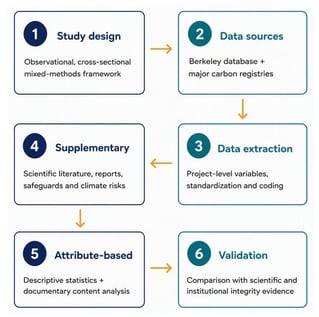
Methodological workflow for assessing carbon projects in Peru.
  • Article
  • Open Access

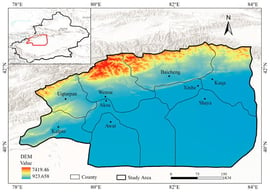
Scientific and rational agricultural land suitability assessment is essential for improving land resource use efficiency and promoting sustainable agricultural development. In arid and ecologically fragile regions, agricultural production is jointly constrained by climatic conditions, water availability, soil properties, and existing land-use patterns. This study employed the Maximum Entropy (MaxEnt) model to evaluate the spatial distribution and future evolution of agricultural land suitability in the Aksu region from 2021 to 2080 under three future climate scenarios, namely SSP-126, SSP-245, and SSP-585. The evaluation framework integrated climatic variables, topographical factors, soil properties, land use, and hydrological conditions, while climatic indicators were further screened through correlation analysis. The results showed that the MaxEnt model achieved high predictive accuracy and stability across different climate scenarios and periods, with AUC values for both the training and testing datasets consistently exceeding 0.90, indicating good model applicability and discriminatory ability. Feature importance analysis revealed that land use, temperature-related variables (bio1, bio4, and bio10), precipitation seasonality (bio15), and soil factors were the main variables influencing agricultural land suitability. These findings highlight the important roles of land-use patterns, thermal conditions, precipitation stability, and soil properties in determining agricultural suitability in arid oasis regions. Furthermore, future climate scenarios did not substantially alter the overall spatial distribution pattern of agricultural land suitability, but more pronounced local improvements and degradation were observed under higher-emission scenarios. This study provides insights into future changes in agricultural land suitability and offers scientific support for climate-adaptive agricultural management and sustainable land resource utilization in arid regions.

Sustainability

19 October 2026
The area of study.
  • Article
  • Open Access

A Conceptual Framework and Ontological Classification for the Intelligent Design of Agri-Food SME Plant Layouts Under Industry 5.0

  • Israel D. Herrera-Granda,
  • María del Mar Eva Alemany Díaz and
  • Diego H. Peluffo-Ordóñez

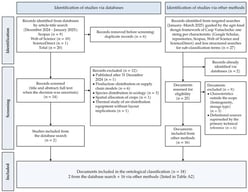
Facility layout planning (FLP) in the agri-food sector faces unique complexities due to product perishability, biosafety regulations, and Industry 5.0 (I5.0) requirements. The reviewed literature is skewed toward static formulations that overlook detailed layout, demand uncertainty, and social sustainability. In response, a targeted review, reported following PRISMA 2020, and expert judgement yielded an ontological classification of ten characteristics influencing detailed agri-food layouts, whose relevance and relationships were supported by five external experts (S-CVI/Ave = 0.96); the system roles proposed by the authors were not reproduced in a blind assignment and remain modelling hypotheses. We then develop an eight-pillar conceptual framework addressing dynamic multi-period planning, stochastic uncertainty, multi-objective optimisation, comprehensive sustainability, human-centric ergonomics, operation-level routing, a bottom-up approach, and perishability as an endogenous variable. A diagnostic case study of an agri-food small and medium-sized enterprise (SME) illustrates how the classification structures the diagnosis of layout inefficiencies, such as products reaching customers with reduced shelf life. Aligned with I5.0 principles, this research provides a conceptual basis for models that treat perishability and human well-being as core design variables. The classification applies mainly to agri-food SMEs operating under make-to-order and just-in-time strategies; large make-to-stock manufacturers should also consider product homogeneity and storage-based product types.

Sustainability

19 October 2026

PRISMA 2020 flow diagram of the identification and selection of documents via databases and via other methods.
  • Systematic Review
  • Open Access

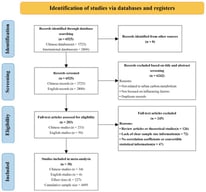
Identifying the key factors associated with urban carbon metabolism is essential for understanding the mechanisms underlying low-carbon urban transformation and achieving sustainable development goals. This study applies a meta-analysis approach to quantify the major factors influencing urban carbon metabolism in China. The literature search covered the period from 1 January 2010 to 5 March 2025 and was conducted using the China National Knowledge Infrastructure (CNKI), the Weipu database, the Wanfang database, Web of Science, Elsevier, Emerald, Scopus, and ScienceDirect. Based on 38 empirical studies, 227 effect sizes, and 4495 observations, 21 influencing factors were examined and classified into three dimensions: natural factors, socioeconomic factors, and land-use and landscape factors. The results indicate that these three dimensions were significantly associated with urban carbon metabolism, with socioeconomic factors having the greatest overall effect size. Specifically, the Largest Patch Index (LPI) and building land size showed the strongest correlations with urban carbon metabolism, whereas sunshine exhibited the weakest correlation among the examined factors. These findings highlight the importance of optimizing land-use structures and promoting green socioeconomic transformation, providing quantitative evidence and practical implications for improving urban carbon governance and supporting sustainable low-carbon development. The findings may inform urban planners, policymakers, and researchers in developing evidence-based strategies for urban carbon management and low-carbon development.

Sustainability

19 October 2026

PRISMA flow diagram of the literature screening and selection process.

Highly Accessed Articles

News & Conferences

Latest Issues

Open for Submission

Journal Sections

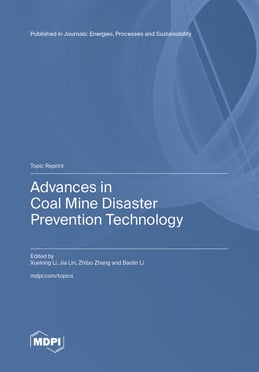
Advances in Coal Mine Disaster Prevention Technology
Reprint

Advances in Coal Mine Disaster Prevention Technology

Editors: Xuelong Li, Jia Lin, Zhibo Zhang, Baolin Li
Agriculture, Land and Farm Management
Reprint

Agriculture, Land and Farm Management

Editors: Kęstutis Venslauskas
XFacebookLinkedIn
Sustainability - ISSN 2071-1050