
Topic Editors


Beyond Green Analytical Chemistry: Designing Sustainable Analytical Laboratories of the Future
Topic Information
Dear Colleagues,
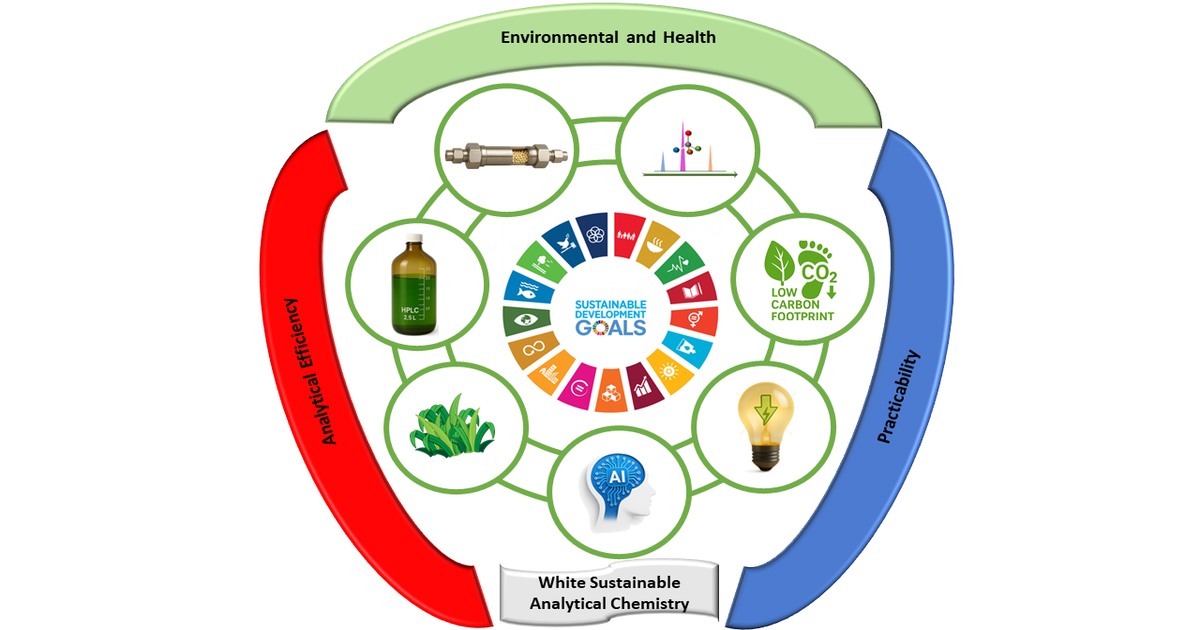
Analytical chemistry is central to decision-making in pharmaceutical development, environmental monitoring, food safety, clinical diagnostics, and materials science. Traditionally, “green analytical chemistry” has focused mainly on reducing toxic reagents and solvent consumption, minimizing waste, and improving safety at the method level. However, to truly support the United Nations 2030 Sustainable Development Goals (SDGs), analytical laboratories must evolve from using isolated “green methods” to the implementation of fully sustainable systems that integrate environmental, economic, and social dimensions.
This Topic will focus on emerging strategies that go beyond traditional green chemistry principles by integrating holistic sustainability frameworks, including social responsibility, energy efficiency, digital transformation, and regulatory alignment, into analytical science. The aim is to explore how analytical laboratories can transform into fully sustainable ecosystems that meet the expectations of the 2030 UN Sustainable Development Goals (SDGs) and beyond.
The Topic welcomes contributions addressing, but not limited to, the following subjects:
- Transitioning classical analytical methods into green, blue, and white analytical workflows;
- Greener alternatives for solvents, reagents, and materials;
- Sustainable instrumentation and energy-efficient laboratory operations;
- Life-cycle and sustainability assessment tools;
- Digital solutions supporting sustainability in method development;
- Applications in drug, food, and forensic analysis;
- Policy, education, and management perspectives in sustainable lab practices.
I firmly believe that this Topic will offer a timely and multidisciplinary platform for researchers to share innovative insights that advance sustainable development within analytical science.
Prof. Dr. Sami El Deeb
Prof. Dr. Maria Kristina Parr
Topic Editors
Keywords
- sustainable analytical laboratories
- green analytical chemistry (GAC)
- white analytical chemistry (WAC)
- analytical greenness metric
- energy-efficient instrumentation
- laboratory digitalization
- AI-assisted method development
- circular economy in laboratories
- sustainable chromatography and electrophoresis
- pharmaceutical analysis
- food analysis
Participating Journals
| Journal Name | Impact Factor | CiteScore | Launched Year | First Decision (median) | APC | |
|---|---|---|---|---|---|---|

Analytica
|
3.6 | 3.7 | 2020 | 20 Days | CHF 1200 | Submit |

Chemistry
|
2.4 | 3.9 | 2019 | 18.5 Days | CHF 1800 | Submit |

Molecules
|
4.6 | 8.6 | 1996 | 16.1 Days | CHF 2700 | Submit |

Pharmaceuticals
|
4.8 | 7.7 | 2004 | 14 Days | CHF 2900 | Submit |

Separations
|
2.7 | 4.5 | 2014 | 16.3 Days | CHF 2600 | Submit |

Sustainability
|
3.3 | 7.7 | 2009 | 19.3 Days | CHF 2400 | Submit |

Preprints.org is a multidisciplinary platform offering a preprint service designed to facilitate the early sharing of your research. It supports and empowers your research journey from the very beginning.
MDPI Topics is collaborating with Preprints.org and has established a direct connection between MDPI journals and the platform. Authors are encouraged to take advantage of this opportunity by posting their preprints at Preprints.org prior to publication:
- Share your research immediately: disseminate your ideas prior to publication and establish priority for your work.
- Safeguard your intellectual contribution: Protect your ideas with a time-stamped preprint that serves as proof of your research timeline.
- Boost visibility and impact: Increase the reach and influence of your research by making it accessible to a global audience.
- Gain early feedback: Receive valuable input and insights from peers before submitting to a journal.
- Ensure broad indexing: Web of Science (Preprint Citation Index), Google Scholar, Crossref, SHARE, PrePubMed, Scilit and Europe PMC.
