1. Introduction
Oral squamous cell carcinoma (OSCC) represents the dominant subtype of head and neck cancers and remains a critical global health burden. Despite advances in clinical management, including surgery, radiotherapy, immunotherapy, and platinum-based chemotherapy, survival outcomes have shown minimal improvement over the past decades. Tumor recurrence, metastasis, and treatment resistance continue to hinder therapeutic success, leaving the overall 5-year survival rate stagnating around 50–60% [
1,
2]. The high incidence of locoregional recurrence, treatment resistance, and metastatic progression significantly contributes to this dismal prognosis [
3]. In particular, the emergence of cisplatin resistance has become a central challenge in clinical oncology, urging the search for novel mechanisms and therapeutic strategies capable of circumventing drug resistance and enhancing tumor vulnerability.
Ferroptosis is a mechanistically distinct form of regulated cell death driven by iron accumulation and excessive lipid peroxidation. Unlike apoptosis or necroptosis, ferroptosis is defined by glutathione depletion, dysregulated antioxidant defenses, and inactivation of lipid peroxide–detoxifying enzymes such as GPX4. Increasing evidence suggests that ferroptosis plays a crucial role in cancer metabolism, therapeutic responses, and redox vulnerability [
4]. Unlike apoptosis or necroptosis, ferroptosis is driven by oxidative stress and impaired lipid metabolism, typically through inhibition of glutathione peroxidase 4 (GPX4) and the Cystine/Glutamate transporter solute carrier family 7 member 11 (SLC7A11). The resultant buildup of reactive lipid species leads to irreversible membrane damage and cell death. Importantly, cancer cells under metabolic stress or with altered redox homeostasis often exhibit increased susceptibility to ferroptosis, making it an attractive strategy for targeting drug-resistant tumors [
5,
6].
Natural compounds with the capacity to induce ferroptosis have garnered considerable attention for their potential as adjunct or alternative therapies in cancer. Among them, Triptolide (TPL)—a diterpenoid triepoxide isolated from
Tripterygium wilfordii—has demonstrated potent antitumor activity in various malignancies, including pancreatic, breast, lung, and hepatocellular cancers [
7,
8]. TPL has been shown to induce apoptosis, pyroptosis, and autophagy depending on context, but its role in modulating ferroptosis remains underexplored, especially in OSCC. In recent studies, TPL has been shown to suppress GPX4 expression and induce ferroptosis in cervical cancer and hepatocellular carcinoma [
9,
10], suggesting a conserved pathway that may extend to oral cancers.
Galectin-1 (Gal-1), a β-galactoside-binding lectin encoded by
LGALS1, is frequently overexpressed in a wide range of tumors, including OSCC [
11,
12]. Gal-1 plays multifaceted roles in cancer progression, immune escape, angiogenesis, and drug resistance. Of note, emerging evidence links Gal-1 to redox modulation and ferroptosis regulation. In hepatocellular carcinoma, Gal-1 was reported to enhance resistance to sorafenib by suppressing ferroptosis through hepatocyte growth factor receptor (MET)/ AXL receptor tyrosine kinase (AXL) signaling and antioxidant control [
13]. However, whether Gal-1 functions as a direct regulator of ferroptosis or simply modulates redox balance indirectly remains an open question. More importantly, its role in OSCC ferroptosis regulation has not been elucidated.
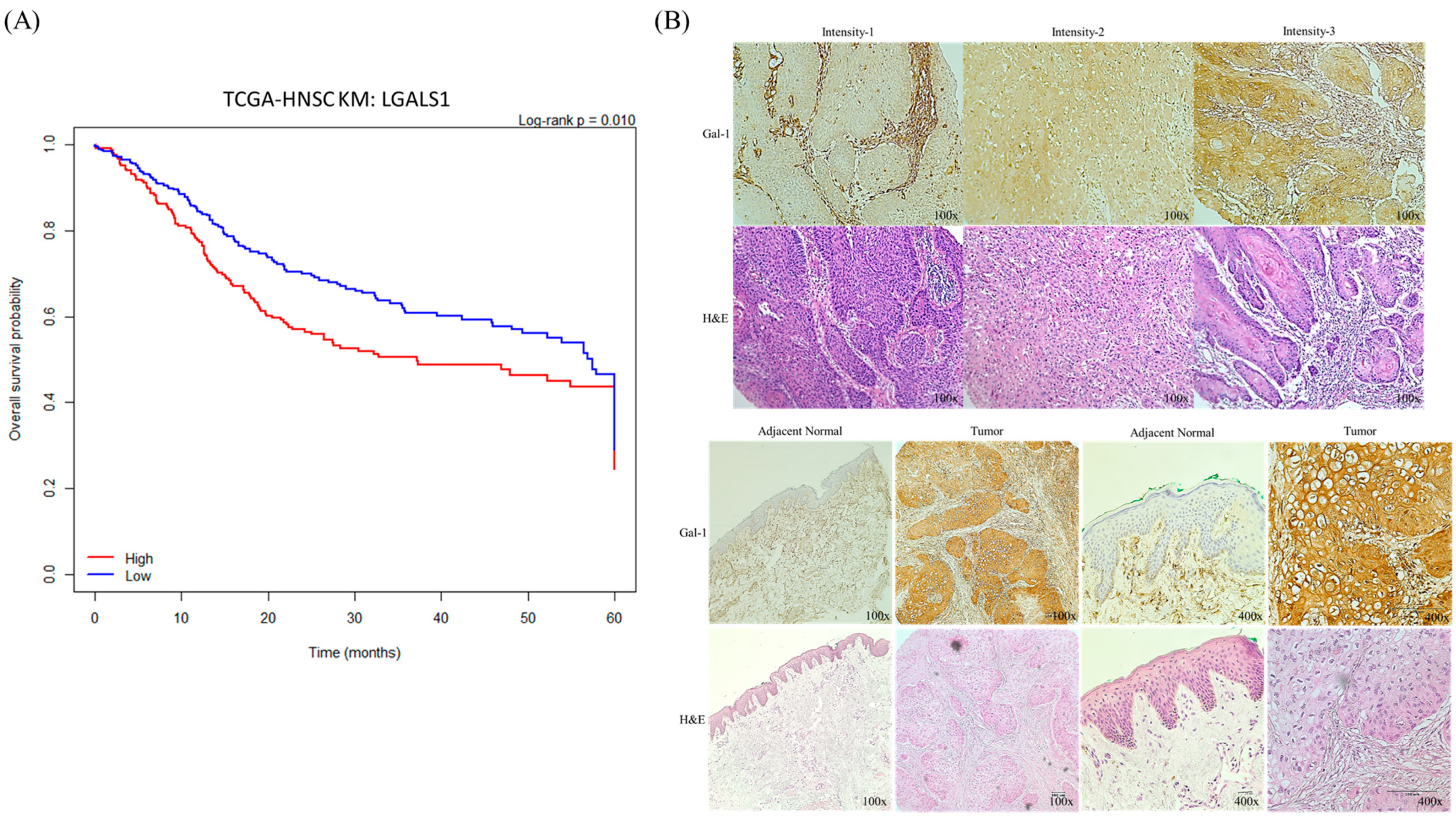
In our preliminary bioinformatics analyses using The Cancer Genome Atlas (TCGA), we observed that Gal-1 is highly expressed in OSCC tumors and its elevated expression correlates with significantly worse overall survival (log-rank p < 0.01), further supporting its clinical relevance as a prognostic marker. These findings underscore the importance of investigating Gal-1′s functional involvement in OSCC pathophysiology and treatment response.
Given this background, we hypothesize that Triptolide induces ferroptosis in OSCC cells via downregulation of Galectin-1. In this study, we employed a combination of molecular techniques—including cell viability assays, lipid ROS detection, Western blotting for GPX4, siRNA knockdown of LGALS1, and in vivo xenograft modeling—to determine whether Gal-1 serves as a functional mediator of TPL-induced ferroptosis. Our results reveal that Gal-1 suppression sensitizes OSCC cells to ferroptotic death, identifying it as a promising molecular target. This work expands the mechanistic understanding of TPL’s anticancer effects and supports the development of Gal-1–targeting ferroptosis strategies in OSCC.
2. Materials and Methods
2.1. TCGA Bioinformatics and Survival Analysis
Transcriptomic expression profiles quantified as transcripts per million (TPM) values and corresponding clinical metadata of the TCGA head and neck squamous cell carcinoma (TCGA-HNSC) cohort were obtained from the University of California, Santa Cruz, CA, USA (UCSC) Xena Browser (
https://xenabrowser.net/, accessed on 17 July 2023) [
14]. Data preprocessing and survival analyses were performed using R software (version 4.5.2; R Foundation for Statistical Computing, Vienna, Austria) within the RStudio environment (version 2025.09; Posit Software, Boston, MA, USA). Gene expression values were log2-transformed, and patients were stratified into high- and low-LGALS1 expression groups using maximally selected rank statistics implemented in the surv_cutpoint function of the survminer package, yielding an optimized cutoff value of TPM = 9.98.
Overall survival was analyzed using the Kaplan–Meier method, and differences between groups were assessed by the log-rank test. Survival time was truncated at 60 months (5 years) for survival visualization and comparison. UALCAN (University of Alabama at Birmingham CANcer data analysis Portal), an interactive web resource for cancer omics data analysis, was used to validate LGALS1 expression patterns and survival associations [
15,
16].
2.2. Clinical Specimens and Immunohistochemistry of Patient Tissues
Paired tumor and adjacent normal oral squamous cell carcinoma (OSCC) tissues (n = 73) were obtained from Tri-Service General Hospital (Taipei, Taiwan) with approval from the Institutional Review Board and written informed consent from all patients. Representative tumor and adjacent normal tissue cores were assembled into tissue microarrays (TMAs) using standard protocols. TMA sections (5 μm thick) were prepared from formalin-fixed, paraffin-embedded (FFPE) specimens. Sections were deparaffinized in xylene and rehydrated through a graded series of ethanol to distilled water. Antigen retrieval was performed by heating the sections in citrate buffer (10 mM, pH 6.0) using an electric heating device. After cooling to room temperature, endogenous peroxidase activity was quenched by incubation with 3% hydrogen peroxide for 10 min. The sections were then blocked to reduce nonspecific binding and incubated overnight at 4 °C with a primary antibody against Galectin-1 (1:500; GTX101566, GeneTex, Irvine, CA, USA). On the following day, sections were washed and incubated with an appropriate horseradish peroxidase–conjugated secondary antibody. Immunoreactivity was visualized using 3,3′-diaminobenzidine (DAB) as the chromogen, and nuclei were counterstained with hematoxylin. The stained sections were dehydrated, mounted, and examined under a light microscope. IHC evaluation was independently performed by a board-certified pathologist and a second observer trained in histopathologic assessment, both of whom were blinded to the clinical information. Staining intensity was scored on a scale of 0–3 (0, negative; 1, weak; 2, moderate; 3, strong), and the percentage of positively stained tumor cells was scored on a scale of 1–4 (1, 0–25%; 2, 26–50%; 3, 51–75%; 4, >75%). The final immunoreactivity score (I × P) was calculated by summing the intensity and percentage scores, yielding a total score ranging from 0 to 12. For statistical analyses, the average score of the two observers was used.
Clinical parameters were defined as follows: overall survival (OS) was defined as the time from diagnosis to death or last follow-up; local recurrence was defined as tumor reappearance at the primary site after treatment; and lymph node metastasis was defined as pathologically confirmed cervical lymph node involvement at the time of surgery. For clinicopathologic correlation and survival analyses, Galectin-1 expression was dichotomized into high and low expression groups using the mean I × P score (9.63) as the cutoff value.
2.3. Cell Lines and Culture Conditions
Human OSCC cell lines (SAS, SCC25, HSC-3) were obtained from authenticated biorepositories, including the Japanese Collection of Research Bioresources (JCRB, Osaka, Japan) and the Bioresource Collection and Research Center (BCRC, Hsinchu, Taiwan). Cells were grown in RPMI-1640 medium supplemented with 10% fetal bovine serum (FBS; biorion, Level Biotechnology, New Taipei City, Taiwan) and 1% antibiotic–antimycotic solution (containing 10,000 U/mL penicillin, 10 mg/mL streptomycin, and 25 µg/mL amphotericin B; Biological Industries, Beit HaEmek, Israel). Cultures were maintained at 37 °C in a humidified incubator with 5% CO2.
2.4. Drug Treatment and Reagents
Triptolide (TPL; Cayman Chemical, Ann Arbor, MI, USA) was dissolved in dissolved in dimethyl sulfoxide (DMSO) to prepare a stock solution and aliquots were stored at −20 °C to prevent degradation. Ferrostatin-1 (Fer-1; Cayman Chemical, Ann Arbor, MI, USA) was used as a ferroptosis rescue agent where indicated.
2.5. Cell Viability Assay
Cell viability was evaluated using a methylene blue-based colorimetric assay. Cells (5000/well) were treated with TPL for 24 or 48 h. Absorbance was measured at 570 nm, and viability was normalized to the vehicle control. Experiments were independently repeated three times (n = 3 biological replicates).
2.6. Lipid ROS Detection by Flow Cytometry
Lipid peroxidation was quantified using the oxidation-sensitive probe C11-BODIPY 581/591 (Thermo Fisher Scientific, Waltham, MA, USA). OSCC cells were exposed to TPL at the indicated concentrations for 48 h, followed by incubation with 2 µM C11-BODIPY in serum-free medium for 30 min at 37 °C in the dark. After staining, cells were washed with cold phosphate-buffered saline (PBS), resuspended in PBS containing 2% FBS, and analyzed immediately by flow cytometry (FACSCalibur, BD Biosciences, San Jose, CA, USA). A minimum of 20,000 events was collected for each sample. Lipid ROS induction was determined based on the characteristic fluorescence shift in oxidized C11-BODIPY from red (590 nm) to green (510 nm) emission. Flow cytometry data were processed using Kaluza Analysis Software (version1.2, Beckman Coulter, Brea, CA, USA). All experiments were performed in triplicate (n = 3 biological replicates).
2.7. Western Blotting and Densitometric Analysis
Total cellular protein was extracted using radioimmunoprecipitation assay (RIPA) lysis buffer supplemented with protease and phosphatase inhibitors (Thermo Fisher Scientific, Waltham, MA, USA). Equal protein amounts were separated by sodium dodecyl sulfate–polyacrylamide gel electrophoresis (SDS–PAGE) and transferred onto polyvinylidene difluoride (PVDF) membranes. After blocking, membranes were incubated overnight at 4 °C with primary antibodies against GPX4 (1:1000; ab125066, Abcam, Cambridge, UK), Galectin-1 (1:1000; GTX101566, GeneTex, Irvine, CA, USA), and glyceraldehyde-3-phosphate dehydrogenase (GAPDH) (1:10,000; ab181602, Abcam, Cambridge, UK) as the loading control. After washing, membranes were incubated with horseradish peroxidase (HRP)-conjugated secondary antibodies (1:5000; Abcam, Cambridge, UK) for 1 h at room temperature. Signals were detected using enhanced chemiluminescence (ECL; Thermo Fisher Scientific, Waltham, MA, USA). Band intensity was quantified using ImageJ (version 1.54r; National Institutes of Health, Bethesda, MD, USA). Target protein expression levels were normalized to GAPDH and expressed relative to the untreated control (defined as 1.0). Antibody dilutions were selected based on manufacturer recommendations and further optimized through preliminary titration experiments to ensure optimal signal-to-noise ratio. All Western blot analyses were performed using three independent biological replicates (n = 3).
2.8. Quantitative Real-Time PCR
Total RNA was extracted using TRIzol™ reagent (Invitrogen, Carlsbad, CA, USA), and RNA quality was assessed using a NanoDrop™ spectrophotometer (Thermo Fisher Scientific, Waltham, MA, USA). cDNA was synthesized from 1 μg RNA using the Maxima H Minus First Strand cDNA Synthesis Kit (Thermo Fisher Scientific, Waltham, MA, USA). qRT-PCR was performed using SYBR Green Master Mix (Thermo Fisher Scientific, Waltham, MA, USA) on a QuantStudio 5 system (Applied Biosystems, Foster City, CA, USA). Gene expression levels were calculated using the 2
−ΔΔCt method, with
GAPDH as the reference gene. All assays were conducted in three independent biological replicates (
n = 3). Primer sequences were designed using the Primer3-BLAST tool provided by the National Center for Biotechnology Information (NCBI,
https://blast.ncbi.nlm.nih.gov/Blast.cgi; accessed on 17 July 2023) and synthesized by Genomics (Taipei, Taiwan). The following primers were used: LGALS1: Forward: 5′-AGCAGCGGGAGGCTGTCTTTC-3′, Reverse: 5′-ATCCATCTGGCAGCTTGACGGT-3′; GPX4: Forward: 5′-ACAAGAACGGCTGCGTGGTGAA-3′, Reverse: 5′-GCCACACACTTGTGGAGCTAGA-3′; SLC7A11: Forward: 5′-TCCTGCTTTGGCTCCATGAACG-3′, Reverse: 5′-AGAGGAGTGTGCTTGCGGACAT-3′; FTH1: Forward: 5′-TGAAGCTGCAGAACCAACGAGG-3′, Reverse: 5′-GCACACTCCATTGCATTCAGCC-3′; GAPDH: Forward: 5′-GTCTCCTCTGACTTCAACAGCG-3′, Reverse: 5′-ACCACCCTGTTGCTGTAGCCAA-3′.
2.9. Galectin-1 Knockdown and Overexpression
Galectin-1 knockdown was conducted using LGALS1-targeting siRNA (Dharmacon, Lafayette, CO, USA), with scrambled siRNA as the negative control. SAS and HSC-3 cells were transfected with 50 nM siRNA using DharmaFECT™ 1 transfection reagent (Dharmacon, Lafayette, CO, USA) in serum-free Opti-MEM (Gibco, Waltham, MA, USA), according to the manufacturer’s instructions. After 6 h, the medium was replaced with complete culture medium, and cells were harvested 48 h post-transfection for RNA and protein analysis. For overexpression, cells were transfected with a pCMV-Galectin-1 plasmid (OriGene, Rockville, MD, USA) using jetPRIME® transfection reagent (Polyplus-transfection, Illkirch, France) following the manufacturer’s protocol. Expression efficiency for both knockdown and overexpression conditions was confirmed by qRT-PCR and Western blotting. All experiments were performed in three independent biological replicates (n = 3).
2.10. Ferroptosis Rescue and Mechanistic Experiments
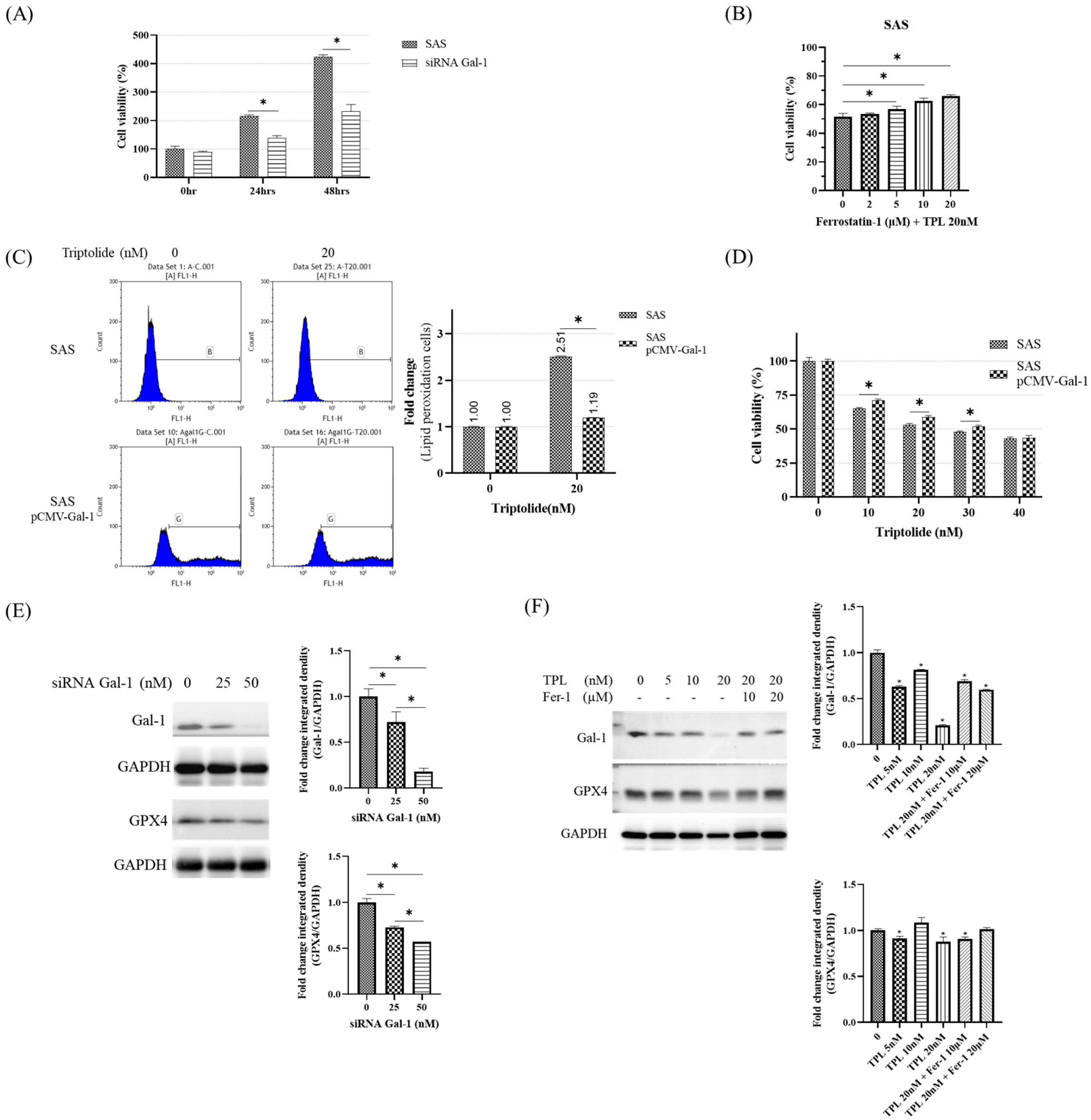
To assess whether TPL-induced cytotoxicity was ferroptosis-dependent, cells were treated with Triptolide (TPL, 20 nM) alone or in combination with the ferroptosis inhibitor Ferrostatin-1 (Fer-1, 10 μM). Fer-1 was administered 1 h prior to TPL treatment and maintained throughout the incubation period. Following treatment for 48 h, rescue effects were evaluated using cell viability assays, lipid ROS measurement (C11-BODIPY staining), and Western blot analysis of ferroptosis-related proteins. A reduction in lipid peroxidation and recovery of GPX4 expression in the presence of Fer-1 were interpreted as evidence of ferroptosis involvement. All mechanistic rescue experiments were performed using three independent biological replicates (n = 3).
2.11. Xenograft Mouse Model
All animal experiments were conducted in accordance with institutional ethical regulations and approved by the Institutional Animal Care and Use Committee (IACUC approval #21-128). Six-week-old NOD-SCID mice (
n = 5 per group) were subcutaneously injected with 2 × 10
6 SAS cells suspended in PBS. Tumor formation was monitored until measurable masses reached approximately 80–100 mm
3, after which mice were randomly assigned to either the control or treatment group. The treatment group received Triptolide (TPL, 0.15 mg/kg/day, intraperitoneally) for 14 consecutive days, while control mice received vehicle only. The dosing regimen was selected based on our previously reported OSCC xenograft model demonstrating therapeutic efficacy with acceptable systemic tolerance [
17]. Body weight and general health status were assessed every 2–3 days to monitor potential toxicity. Tumor dimensions were measured using calipers, and tumor volume was calculated according to the standard formula: Tumor volume = (length × width
2)/2. At study completion, mice were euthanized, and tumors were excised for subsequent histological and molecular analyses.
2.12. Immunohistochemistry of Xenograft Tissues
The immunohistochemistry procedure for xenograft tissues was performed separately from that used for human clinical specimens due to differences in tissue origin and antibody optimization conditions. Excised xenograft tumors were fixed in 10% neutral-buffered formalin for 24–48 h, embedded in paraffin, and sectioned at 5 μm thickness. Following deparaffinization and rehydration, antigen retrieval was performed by heating the sections in citrate buffer (10 mM, pH 6.0) using an electric heating device. Endogenous peroxidase activity was quenched using 3% hydrogen peroxide for 10 min. Sections were then blocked with 3% bovine serum albumin (BSA) and incubated overnight at 4 °C with primary antibodies against Galectin-1 (1:200; GeneTex) and GPX4 (1:200; Abcam). After washing, slides were incubated with an appropriate horseradish peroxidase–conjugated secondary antibody for 1 h at room temperature. Immunoreactivity was visualized using a DAB chromogenic substrate, and tissues were counterstained with hematoxylin, dehydrated, mounted, and imaged using a bright-field microscope (Olympus, Tokyo, Japan).
2.13. Statistical Analysis
All quantitative data are presented as mean ± standard deviation (SD) from at least three independent biological replicates. Statistical comparisons between two groups were performed using an unpaired two-tailed Student’s t-test, unless otherwise specified. For clinicopathological association analyses, chi-square (χ2) test or Fisher’s exact test was applied as appropriate. Kaplan–Meier survival analysis was performed using the log-rank test to compare survival differences between groups. A p value < 0.05 was considered statistically significant. All statistical analyses were conducted using GraphPad Prism (version 9; GraphPad Software, San Diego, CA, USA).
4. Discussion
Ferroptosis has gained increasing attention as a therapeutic vulnerability in several malignancies, including oral squamous cell carcinoma (OSCC), where treatment resistance and poor survival rates remain major clinical challenges [
5,
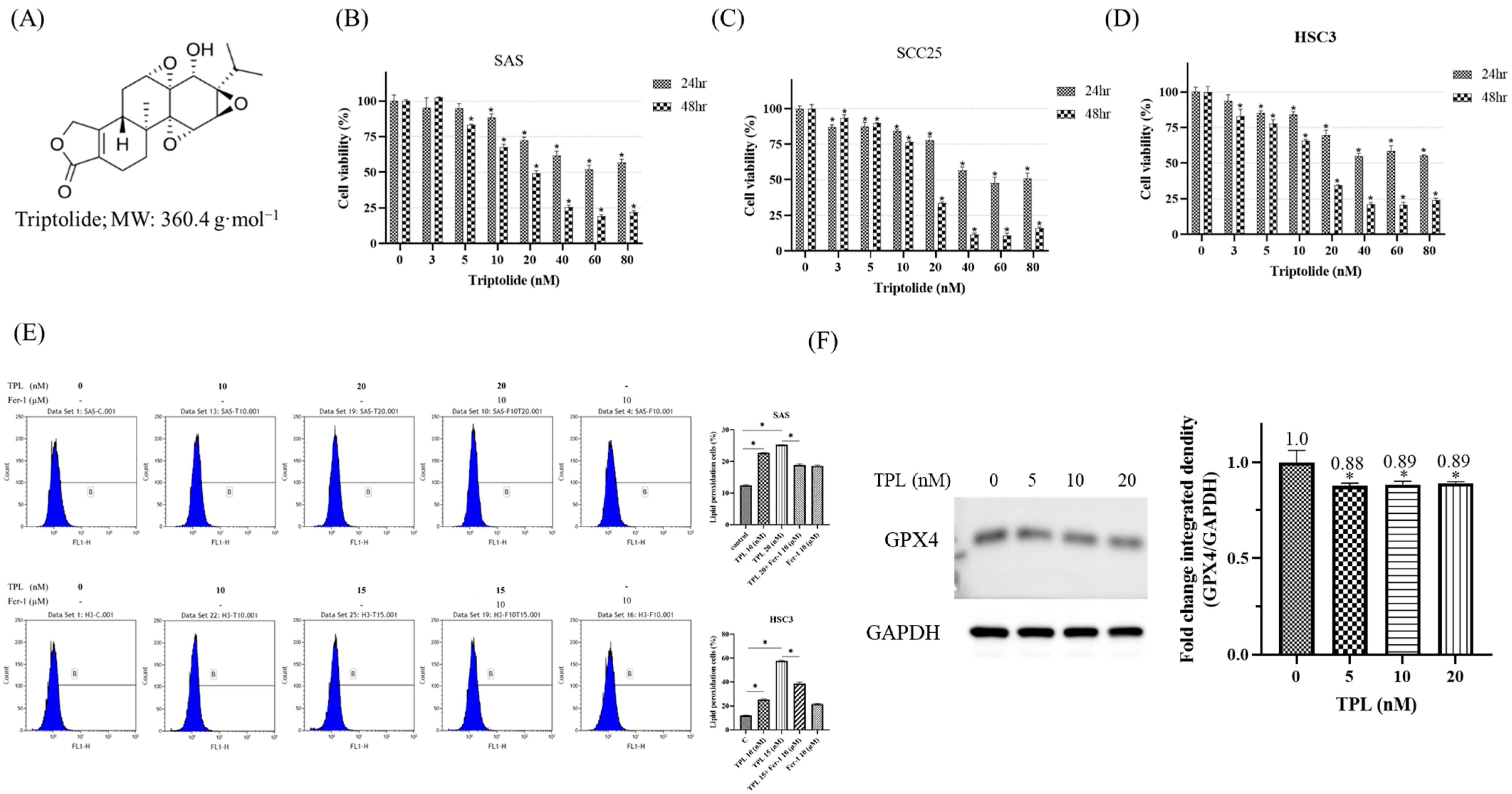
18]. In this study, we provide evidence that Triptolide (TPL) induces ferroptosis-associated responses in OSCC cells, as indicated by reduced cell viability, elevated lipid ROS levels, and suppression of the ferroptosis-defense enzyme GPX4. These observations are consistent with established models in which GPX4 depletion promotes lipid peroxidation-dependent cell death [
19].
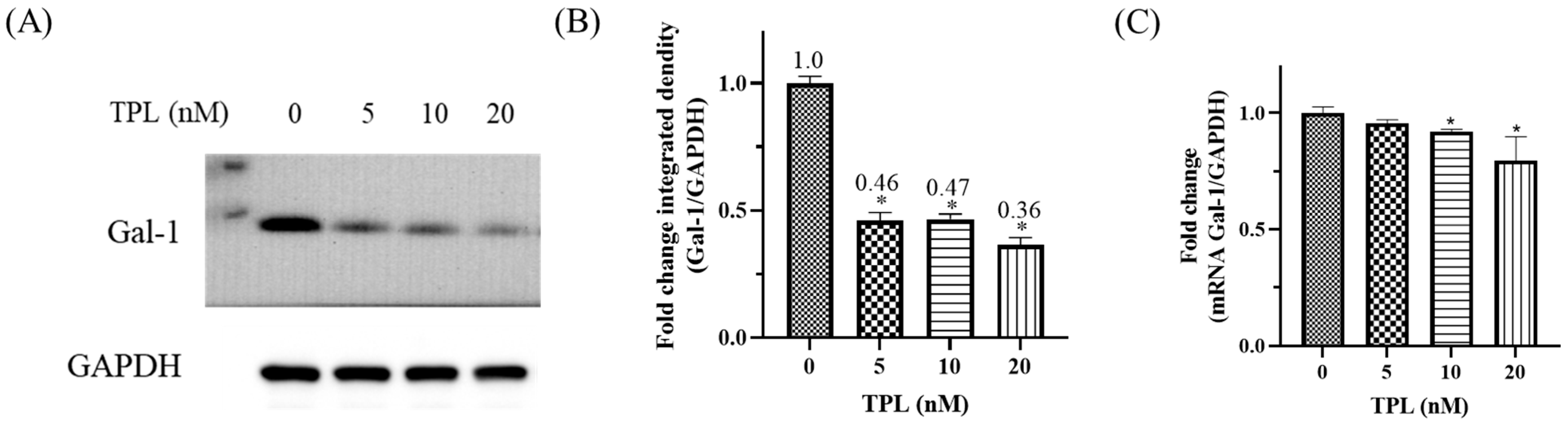
A key finding of this study is that TPL significantly downregulates Galectin-1 (Gal-1) expression at both mRNA and protein levels. Gal-1, a β-galactoside-binding lectin, has been implicated in tumor immune evasion, angiogenesis, metastasis, and therapeutic resistance across multiple cancer types [
20,
21,
22,
23,
24,
25]. Consistent with previous reports [
26], and our TCGA analyses, OSCC tissues with elevated Gal-1 expression exhibited poorer survival outcomes and were associated with more advanced tumor stages. These clinical correlations support the relevance of Gal-1 as a tumor-associated biomarker in OSCC.
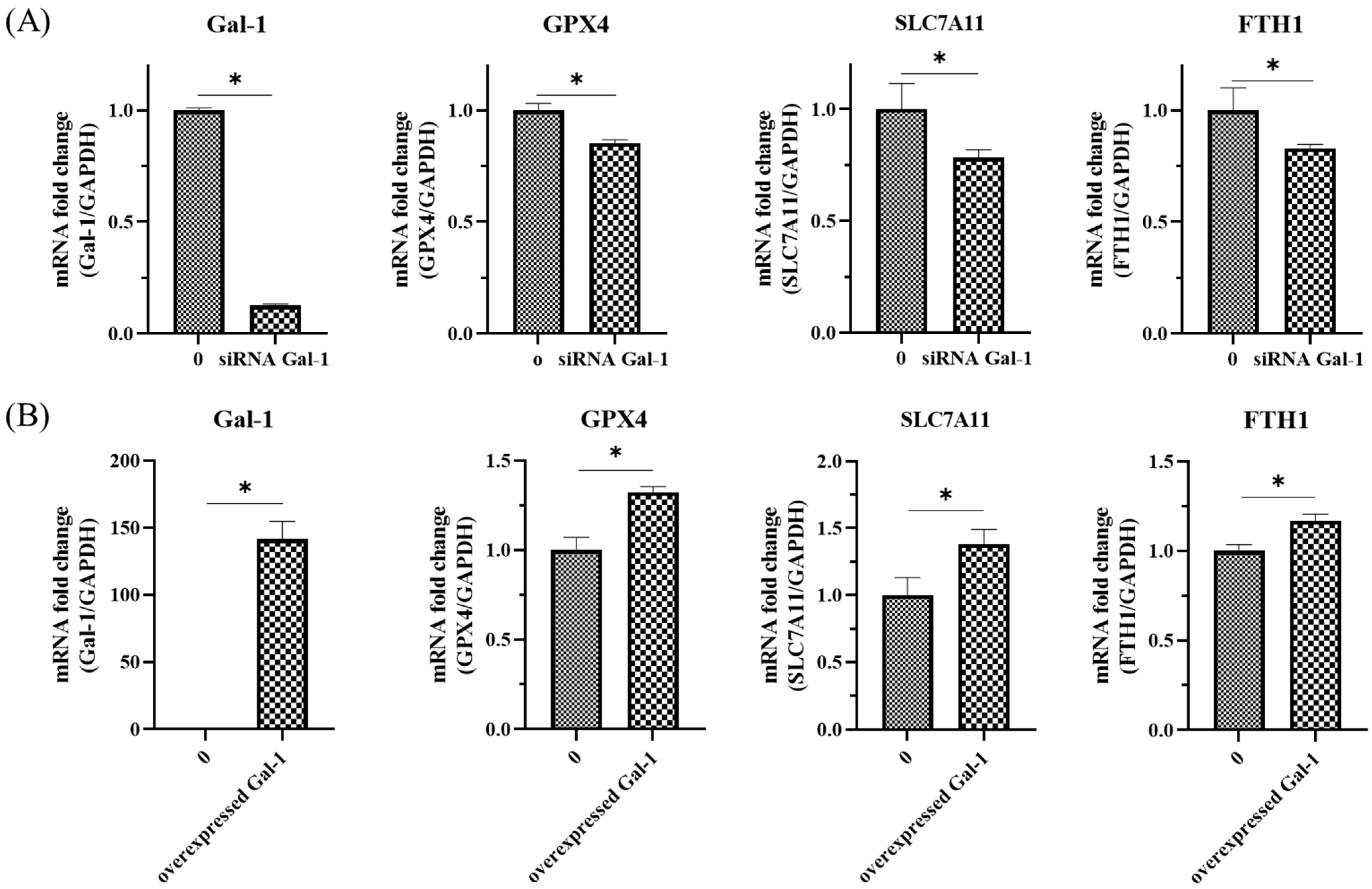
Mechanistically, our gain- and loss-of-function assays demonstrated that Gal-1 modulates the expression of multiple ferroptosis-associated genes, including GPX4, SLC7A11, and FTH1. Silencing Gal-1 reduced the expression of these antioxidant defense components, whereas Gal-1 overexpression increased their levels. Importantly, restoration of Gal-1 expression partially attenuated TPL-induced lipid ROS accumulation and cell death, providing functional evidence that Gal-1 downregulation contributes to ferroptosis susceptibility. These findings suggest that Gal-1 plays a modulatory role in maintaining redox homeostasis and ferroptosis resistance in OSCC cells.
The clinical association between high Gal-1 expression and advanced tumor stage observed in our cohort (
Table 1) suggests a potential functional role for Gal-1 in supporting tumor aggressiveness. OSCC progression is characterized by elevated oxidative stress, hypoxia, and metabolic imbalance within the tumor microenvironment. Under such conditions, cancer cells rely heavily on antioxidant defense mechanisms to preserve membrane integrity and prevent ferroptotic cell death. Given our findings that Gal-1 supports the expression of ferroptosis-protective genes, including GPX4, SLC7A11, and FTH1, it is plausible that elevated Gal-1 expression confers a selective survival advantage by limiting lipid peroxidation and ferroptosis. This ferroptosis-escape mechanism may contribute to tumor progression and help explain why tumors with high Gal-1 expression are more likely to develop advanced (T3–T4) disease.
Although the upstream regulatory mechanisms remain incompletely defined, prior studies suggest potential links between Gal-1 and NRF2-mediated antioxidant signaling [
20,
27]. NRF2 regulates several ferroptosis-protective genes, including GPX4, SLC7A11, and iron metabolism regulators [
28,
29]. Accordingly, a possible Gal-1–NRF2–GPX4/SLC7A11 regulatory axis may contribute to ferroptosis resistance in OSCC, although this hypothesis requires further experimental validation.
Notably, TPL has been reported to inhibit NRF2 signaling in other tumor models by reducing nuclear NRF2 levels and suppressing NRF2-dependent antioxidant genes [
9,
30,
31]. In this context, our findings raise a plausible model in which TPL reduces ferroptosis resistance through simultaneous suppression of Gal-1 expression and NRF2-controlled antioxidant pathways. While this model is biologically consistent with our observations, further studies—including direct NRF2 modulation and promoter binding assays—are required to establish mechanistic causality.
Our functional data further demonstrated that Ferrostatin-1 partially rescued TPL-induced cytotoxicity and restored GPX4 and Gal-1 protein levels. Consistent with reviewer feedback, this restoration is interpreted as a secondary consequence of improved cellular survival under ferroptosis inhibition rather than evidence of a direct regulatory feedback loop. Thus, although our results support a functional association between Gal-1 and ferroptosis regulation, definitive causal relationships remain to be fully elucidated.
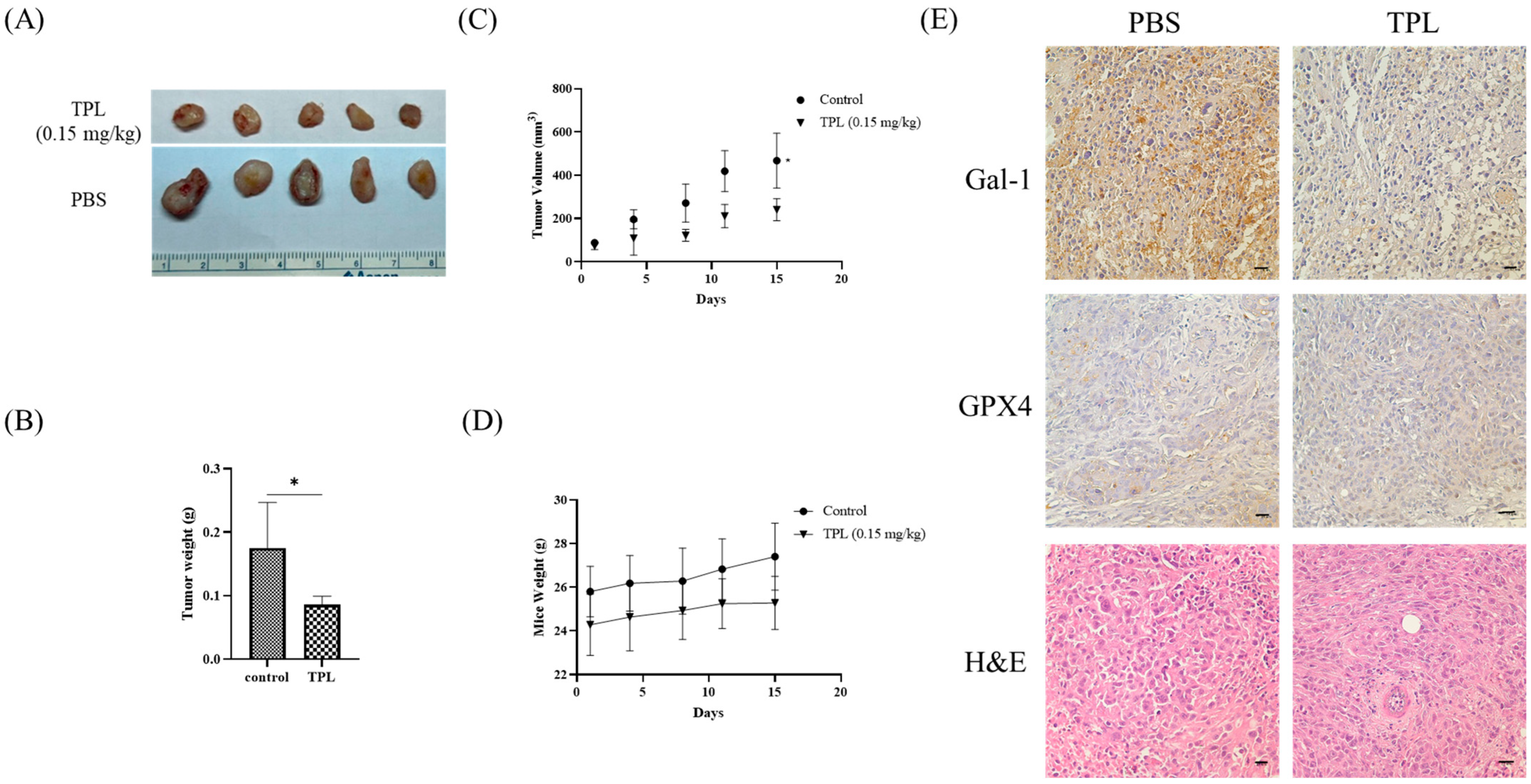
Our in vivo findings further support the relevance of this pathway. TPL significantly reduced tumor burden in OSCC xenograft models without detectable systemic toxicity, accompanied by decreased Gal-1 and GPX4 expression in tumor tissues. These results reinforce the translational relevance of Gal-1–associated ferroptosis regulation in OSCC.
These rescue effects were also validated in HSC-3 cells, supporting the robustness and reproducibility of the observed phenotype. Several limitations of this study should be acknowledged. First, ferroptosis was inferred primarily based on lipid ROS accumulation and GPX4 downregulation; additional biochemical and genetic approaches—such as iron chelation, lipid peroxidation assays, or GPX4 rescue—would further strengthen causal interpretation. Second, although key findings were validated in HSC-3 cells, most mechanistic experiments were performed in SAS cells; validation in additional OSCC models or patient-derived systems would improve generalizability. Finally, the relationship between Gal-1 and NRF2-regulated antioxidant pathways remains hypothetical and warrants targeted investigation.
Together, these findings suggest that TPL induces ferroptosis-associated vulnerability in OSCC and that Gal-1 functions as a molecular modulator influencing ferroptosis resistance. The proposed interaction among Gal-1, NRF2 signaling, and GPX4 regulation may represent a potential therapeutic axis for biomarker-guided ferroptosis-based strategies in OSCC.
5. Conclusions
In summary, this study provides evidence that Triptolide (TPL) induces ferroptosis-associated responses in oral squamous cell carcinoma (OSCC), characterized by lipid ROS accumulation, reduced cell viability, and suppression of the ferroptosis-related enzyme GPX4. We further show that TPL downregulates Galectin-1 at both transcriptional and protein levels, and that modulation of Galectin-1 influences the expression of key ferroptosis-associated genes, including GPX4, SLC7A11, and FTH1. These findings suggest that Galectin-1 may serve as a modulatory factor contributing to ferroptosis resistance mechanisms in OSCC.
Consistent with these mechanistic observations, TPL significantly suppressed tumor growth in OSCC xenograft models and reduced Galectin-1 and GPX4 expression in tumor tissues. Together with clinical dataset analyses demonstrating that elevated Galectin-1 expression correlates with poor survival and advanced disease stage, these results support the potential relevance of Galectin-1 as a prognostic biomarker and therapeutic target.
While these findings broaden the understanding of ferroptosis vulnerability in OSCC, additional studies—including pathway dissection, broader ferroptosis marker validation, and genetic rescue experiments—will be required to define the mechanistic hierarchy between Galectin-1, ferroptosis-related genes, and TPL responsiveness. Nonetheless, this work provides a rationale for further exploration of Galectin-1–directed ferroptosis sensitization strategies and supports continued investigation of TPL and related agents as candidates for ferroptosis-based therapeutic development in OSCC.




 ,
,