Endoscopic Ultrasound-Guided Versus Percutaneous Transhepatic Biliary Drainage After Failed Endoscopic Retrograde Cholangiopancreatography in Malignant Biliary Obstruction: A Single-Center Retrospective Cohort

 , , ,
, , ,  ,
,
Simple Summary
Abstract
1. Introduction
2. Materials and Methods
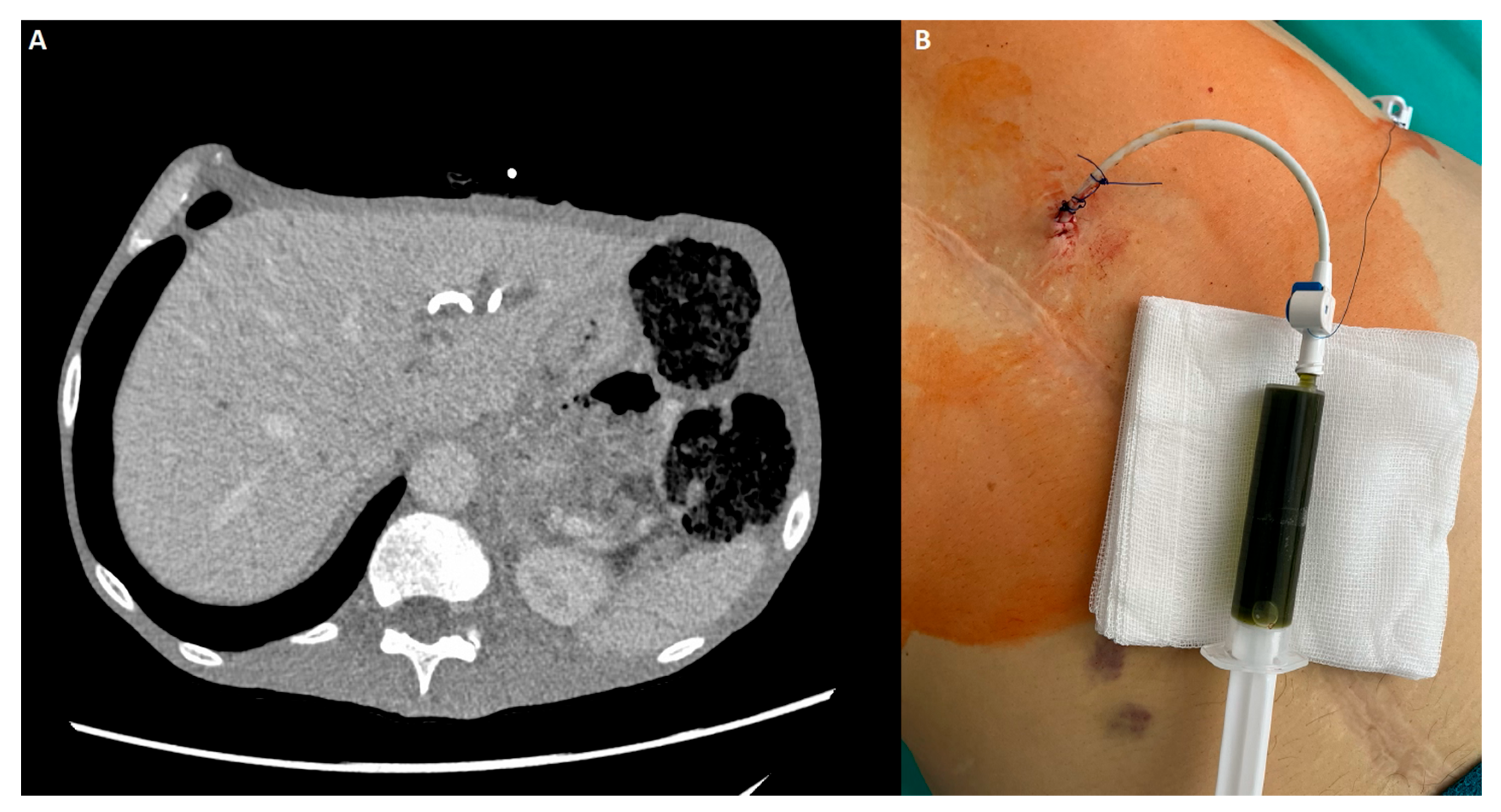
2.1. PTBD Technique
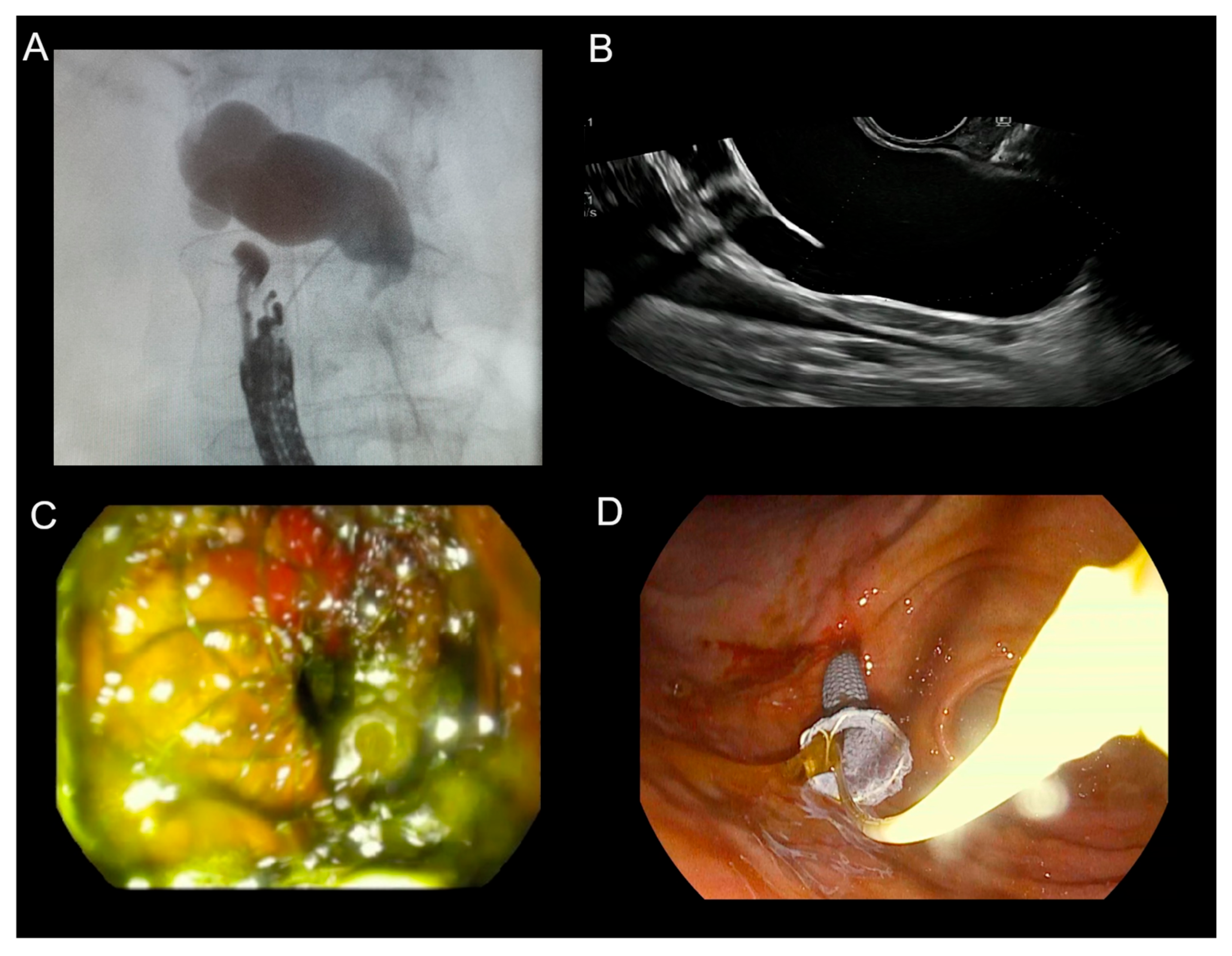
2.2. EUS-BD Technique
- Bleeding: any of the following within 7 days: intraprocedural hemorrhage requiring hemostasis; Hb drop ≥ 2.0 g/dL and clinical concern; transfusion; or intervention (endoscopic, radiologic, or surgical). Hemobilia was classified as bleeding if it met these criteria.
- Bile leak/biloma/bile peritonitis: bilious output from access tract or peritoneal signs plus a confirmation on imaging (US/CT) or need for drainage/intervention.
- Perforation/viscus injury: extraluminal air/contrast with peritoneal signs or need for endoscopic/radiologic/surgical management.
- Stent/drain maldeployment or migration: failure of intended position, need for rescue device, or secondary procedure for repositioning/replacement. (For EUS-BD: LAMS misdeployment and for PTBD: catheter malposition/dislodgement, tract loss).
- Cholangitis: fever ≥ 38.0 °C with cholestasis and systemic/inflammatory response requiring antibiotics (operationalized per Tokyo Guidelines criteria and adapted to post-drainage setting).
- Sepsis: infection with organ dysfunction consistent with Sepsis-3 (Sequential Organ Failure Assessment SOFA rise ≥ 2) requiring vasopressors or intensive care unit (ICU).
- Acute pancreatitis: new abdominal pain plus amylase/lipase ≥ 3× upper limit and/or imaging.
- Pneumoperitoneum/pneumothorax/subcutaneous emphysema: if symptomatic or requiring intervention (otherwise recorded as incidental).
- Access-site issues: pericatheter leakage causing skin breakdown/infection, tract infection/abscess, or need for unplanned exchange.
- Aspiration/event related to anesthesia: documented by anesthesiology and requiring treatment.
2.3. Statistical Analysis
3. Results
4. Discussion
4.1. Summary of the Results
4.2. Literature Review
4.3. Clinical Implications
4.4. Initial Condition of Patients in Both Cohorts
4.5. Limitations
4.6. Future Directions and Need for Further Research
5. Conclusions
Author Contributions
Funding
Institutional Review Board Statement
Informed Consent Statement
Data Availability Statement
Acknowledgments
Conflicts of Interest
References
- Stillman, A.E. Jaundice. In Clinical Methods: The History, Physical, and Laboratory Examinations, 3rd ed.; Walker, H.K., Hall, W.D., Hurst, J.W., Eds.; Butterworths: Boston, MA, USA, 1990; Chapter 87. [Google Scholar]
- Wang, B.; Cheng, J. Comparison of Efficacy and Safety of Endoscopic Retrograde Cholangiopancreatography in Choledocholithiasis Patients at Different Age Groups: A Meta-Analysis. Turk. J. Gastroenterol. 2025, 36, 398–407. [Google Scholar] [CrossRef] [Scilit]
- Huibregtse, K.; Haringsma, J.; Cohen, D.A. Endoscopic retrograde cholangiopancreatography. In Procedures in Hepatogastroenterology. Developments in Gastroenterology; Tytgat, G.N.J., Mulder, C.J.J., Eds.; Springer: Dordrecht, The Netherlands, 1997; Volume 15. [Google Scholar] [CrossRef] [Scilit]
- Khoury, T.; Sbeit, W.; Fumex, F.; Marasco, G.; Eusebi, L.H.; Fusaroli, P.; Chan, S.M.; Shahin, A.; Basheer, M.; Gincul, R.; et al. Endoscopic ultrasound- versus ERCP-guided primary drainage of inoperable malignant distal biliary obstruction: Systematic review and meta-analysis of randomized controlled trials. Endoscopy 2024, 56, 955–963. [Google Scholar] [CrossRef] [Scilit] [PubMed]
- Doyle, J.B.; Sethi, A. Endoscopic Ultrasound-Guided Biliary Drainage. J. Clin. Med. 2023, 12, 2736. [Google Scholar] [CrossRef] [Scilit] [PubMed]
- Cai, Y.; Fan, Z.; Yang, G.; Zhao, D.; Shan, L.; Lin, S.; Zhang, W.; Liu, R. Analysis of the efficacy of Percutaneous Transhepatic Cholangiography Drainage (PTCD) and Endoscopic Retrograde Cholangiopancreatography (ERCP) in the treatment of Malignant Obstructive Jaundice (MOJ) in palliative drainage and preoperative biliary drainage: A single-center retrospective study. BMC Surg. 2024, 24, 307. [Google Scholar] [CrossRef] [Scilit]
- Parıldar, Z.; Çınar, C.; Barutçuoğlu, B.; Başol, G.; Parıldar, M. Effects of percutaneous transhepatic biliary drainage on renal function in patients with obstructive jaundice. Diagn. Interv. Radiol. 2011, 17, 74–79. [Google Scholar] [CrossRef] [Scilit]
- Zafar, Y.; Azam, H.; Azhar, M.A.B.; Shaheen, F.; Javaid, S.S.; Manzoor, L.; Masood, M.; Krishnamoorthi, R. Efficacy of endoscopic ultrasound-guided biliary drainage of malignant biliary obstruction: A systematic review and meta-analysis of randomized controlled trials. Clin. Endosc. 2025, 58, 533–543. [Google Scholar] [CrossRef] [Scilit]
- Nennstiel, S.; Weber, A.; Frick, G.; Haller, B.; Meining, A.; Schmid, R.M.; Neu, B. Drainage-related Complications in Percutaneous Transhepatic Biliary Drainage: An Analysis Over 10 Years. J. Clin. Gastroenterol. 2015, 49, 764–770. [Google Scholar] [CrossRef] [Scilit] [PubMed]
- Itonaga, M.; Takenaka, M.; Shiomi, H.; Kitagawa, K.; Shintani, S.; Maruyama, H.; Sagami, R.; Ikeura, T.; Ogura, T.; Ishida, Y.; et al. Comparative Evaluation of Percutaneous Transhepatic Biliary Drainage and Endoscopic Ultrasound-Guided Biliary Drainage for Preoperative Management of Malignant Distal Bile Duct Obstruction After Failed ERCP: A Multicenter Retrospective Analysis. Dig. Endosc. 2025, 38, e70048. [Google Scholar] [CrossRef] [Scilit]
- Fabbri, C.; Scalvini, D.; Paolo, G.; Binda, C.; Mauro, A.; Coluccio, C.; Mazza, S.; Trebbi, M.; Torello Viera, F.; Anderloni, A. Complications and management of interventional endoscopic ultrasound: A critical review. Best Pract. Res. Clin. Gastroenterol. 2024, 69, 101888. [Google Scholar] [CrossRef] [Scilit]
- Molina, H.; Chan, M.M.; Lewandowski, R.J.; Gabr, A.; Riaz, A. Complications of Percutaneous Biliary Procedures. Semin. Interv. Radiol. 2021, 38, 364–372. [Google Scholar] [CrossRef] [Scilit]
- Colloca, G.; Venturino, A. Peripheral Blood Cell Variables Related to Systemic Inflammation in Patients with Unresectable or Metastatic Pancreatic Cancer: A Systematic Review and Meta-Analysis. Pancreas 2021, 50, 1131–1136. [Google Scholar] [CrossRef] [Scilit]
- Worapongpaiboon, R.; Siranart, N.; Pajareya, P.; Phutinart, S. Inflammatory markers in predicting survival in pancreatic cancer: A Systematic review and Meta-Analysis. Pancreatology 2025, 25, 385–395. [Google Scholar] [CrossRef] [Scilit]
- Maloney, S.; Pavlakis, N.; Itchins, M.; Arena, J.; Mittal, A.; Hudson, A.; Colvin, E.; Sahni, S.; Diakos, C.; Chan, D.; et al. The Prognostic and Predictive Role of the Neutrophil-to-Lymphocyte Ratio (NLR), Platelet-to-Lymphocyte Ratio (PLR), and Lymphocyte-to-Monocyte Ratio (LMR) as Biomarkers in Resected Pancreatic Cancer. J. Clin. Med. 2023, 12, 1989. [Google Scholar] [CrossRef] [Scilit]
- Iwai, N.; Okuda, T.; Sakagami, J.; Harada, T.; Ohara, T.; Taniguchi, M.; Sakai, H.; Oka, K.; Hara, T.; Tsuji, T.; et al. Neutrophil to lymphocyte ratio predicts prognosis in unresectable pancreatic cancer. Sci. Rep. 2020, 10, 18758. [Google Scholar] [CrossRef] [Scilit] [PubMed]
- Pointer, D.T., Jr.; Roife, D.; Powers, B.D.; Murimwa, G.; Elessawy, S.; Thompson, Z.J.; Schell, M.J.; Hodul, P.J.; Pimiento, J.M.; Fleming, J.B.; et al. Neutrophil to lymphocyte ratio, not platelet to lymphocyte or lymphocyte to monocyte ratio, is predictive of patient survival after resection of early-stage pancreatic ductal adenocarcinoma. BMC Cancer 2020, 20, 750. [Google Scholar] [CrossRef] [Scilit] [PubMed]
- Varzaru, B.; Iacob, R.A.; Bunduc, S.; Manea, I.; Sorop, A.; Spiridon, A.; Chelaru, R.; Croitoru, A.; Topala, M.; Becheanu, G.; et al. Prognostic Value of Circulating Cell-Free DNA Concentration and Neutrophil-to-Lymphocyte Ratio in Patients with Pancreatic Ductal Adenocarcinoma: A Prospective Cohort Study. Int. J. Mol. Sci. 2024, 25, 2854. [Google Scholar] [CrossRef] [Scilit]
- Hackner, D.; Merkel, S.; Weiß, A.; Krautz, C.; Weber, G.F.; Grützmann, R.; Brunner, M. Neutrophil-to-Lymphocyte Ratio and Prognostic Nutritional Index Are Predictors for Overall Survival after Primary Pancreatic Resection of Pancreatic Ductal Adenocarcinoma: A Single Centre Evaluation. Cancers 2024, 16, 2911. [Google Scholar] [CrossRef] [Scilit] [PubMed]
- Shen, Y.C.; Chu, C.H.; Chen, P.S.; Lin, C.F.; Liu, P.Y.; Lin, P.C.; Yen, C.J.; Shan, Y.S. The prognostic value of C-reactive protein/albumin ratio and platelet-lymphocyte ratio in patients with pancreatic cancer. J. Clin. Oncol. 2023, 41, 678. [Google Scholar] [CrossRef] [Scilit]
- Toledano-Fonseca, M.; Cano, M.T.; Inga, E.; Gómez-España, A.; Guil-Luna, S.; García-Ortiz, M.V.; Mena-Osuna, R.; De la Haba-Rodriguez, J.R.; Rodríguez-Ariza, A.; Aranda, E. The Combination of Neutrophil-Lymphocyte Ratio and Platelet-Lymphocyte Ratio with Liquid Biopsy Biomarkers Improves Prognosis Prediction in Metastatic Pancreatic Cancer. Cancers 2021, 13, 1210. [Google Scholar] [CrossRef] [Scilit]
- Song, W.; Tian, C.; Wang, K.; Zhang, R.J.; Zou, S.B. Preoperative platelet lymphocyte ratio as independent predictors of prognosis in pancreatic cancer: A systematic review and meta-analysis. PLoS ONE 2017, 12, e0178762. [Google Scholar] [CrossRef] [Scilit]
- Pretta, A.; Spanu, D.; Giampieri, R.; Lai, E.; Cimbro, E.; Pecci, F.; Balconi, F.; Lupi, A.; Pozzari, M.; Murgia, S.; et al. Lymphocyte to monocyte ratio in metastatic pancreatic ductal adenocarcinoma as a prognostic factor and its potential role in identifying a subset of patients with a favorable response to therapy. J. Clin. Oncol. 2022, 40, 4153. [Google Scholar] [CrossRef] [Scilit]
- Kubota, K.; Shimizu, A.; Notake, T.; Masuo, H.; Hosoda, K.; Yasukawa, K.; Hayashi, H.; Umemura, K.; Kamachi, A.; Goto, T.; et al. Preoperative Peripheral Blood Lymphocyte-to-Monocyte Ratio Predicts Long-Term Outcome for Patients with Pancreatic Ductal Adenocarcinoma. Ann. Surg. Oncol. 2022, 29, 1437–1448. [Google Scholar] [CrossRef] [Scilit] [PubMed]
- Shui, Y.; Li, M.; Su, J.; Chen, M.; Gu, X.; Guo, W. Prognostic and clinicopathological significance of systemic immune-inflammation index in pancreatic cancer: A meta-analysis of 2,365 patients. Aging 2021, 13, 20585–20597. [Google Scholar] [CrossRef] [Scilit] [PubMed]
- Li, X.; Lin, H.; Ouyang, R.; Yang, Y.; Peng, J. Prognostic significance of the systemic immune-inflammation index in pancreatic carcinoma patients: A meta-analysis. Biosci. Rep. 2021, 41, BSR20204401. [Google Scholar] [CrossRef] [Scilit]
- Fan, Z.; Luo, G.; Gong, Y.; Xu, H.; Qian, Y.; Deng, S.; Huang, Q.; Yang, C.; Cheng, H.; Jin, K.; et al. Prognostic Value of the C-Reactive Protein/Lymphocyte Ratio in Pancreatic Cancer. Ann. Surg. Oncol. 2020, 27, 4017–4025. [Google Scholar] [CrossRef] [Scilit] [PubMed]
- Iseda, N.; Iguchi, T.; Hirose, K.; Itoh, S.; Honboh, T.; Sadanaga, N.; Matsuura, H. Prognostic Impact of Lymphocyte-to-C-Reactive Protein Ratio in Patients Who Underwent Surgical Resection for Pancreatic Cancer. Am. Surg. 2023, 89, 4452–4458. [Google Scholar] [CrossRef] [Scilit]
- Yang, L.; Qiao, S.; Zhang, G.; Lu, A.; Li, F. Inflammatory Processes: Key Mediators of Oncogenesis and Progression in Pancreatic Ductal Adenocarcinoma (PDAC). Int. J. Mol. Sci. 2024, 25, 10991. [Google Scholar] [CrossRef] [Scilit]
- ASGE Standards of Practice Committee; Pawa, S.; Marya, N.B.; Thiruvengadam, N.R.; Ngamruengphong, S.; Baron, T.H.; Bun Teoh, A.Y.; Bent, C.K.; Abidi, W.; Alipour, O.; et al. American Society for Gastrointestinal Endoscopy guideline on the role of therapeutic EUS in the management of biliary tract disorders: Summary and recommendations. Gastrointest. Endosc. 2024, 100, 967–979, Erratum in Gastrointest. Endosc. 2025, 102, 311. [Google Scholar] [CrossRef] [Scilit]
- Lambin, T.; Leblanc, S.; Napoléon, B. Advances in EUS-Guided Biliary Drainage for the Management of Pancreatic Cancer. Cancers 2025, 17, 3428. [Google Scholar] [CrossRef] [Scilit]
- van der Merwe, S.W.; van Wanrooij, R.L.J.; Bronswijk, M.; Everett, S.; Lakhtakia, S.; Rimbas, M.; Hucl, T.; Kunda, R.; Badaoui, A.; Law, R.; et al. Therapeutic endoscopic ultrasound: European Society of Gastrointestinal Endoscopy (ESGE) Guideline. Endoscopy 2022, 54, 185–205. [Google Scholar] [CrossRef] [Scilit]
- Sahoo, B.; Mane, K.; Panigrahi, M.K.; Mishra, S.K.; Barik, S.K.; Majumdar, S.K.D.; Nayak, M.K.; Lohiya, A.; Swain, P.K.; Nayak, H.K.; et al. Clinical outcomes of percutaneous biliary drainage and quality of life assessment: A prospective observational study. Abdom. Radiol. 2025, 51, 939–953. [Google Scholar] [CrossRef] [Scilit] [PubMed]
- de Jong, M.J.P.; van Delft, F.; van Geenen, E.M.; Bogte, A.; Verdonk, R.C.; Venneman, N.G.; Vrolijk, J.M.; Straathof, J.A.; Voermans, R.P.; Bijlsma, R.A.; et al. Endoscopic ultrasound-guided choledochoduodenostomy results in fewer complications than percutaneous drainage following failed ERCP in malignant distal biliary obstruction. Endoscopy 2025, 57, 1004–1015. [Google Scholar] [CrossRef] [Scilit] [PubMed]

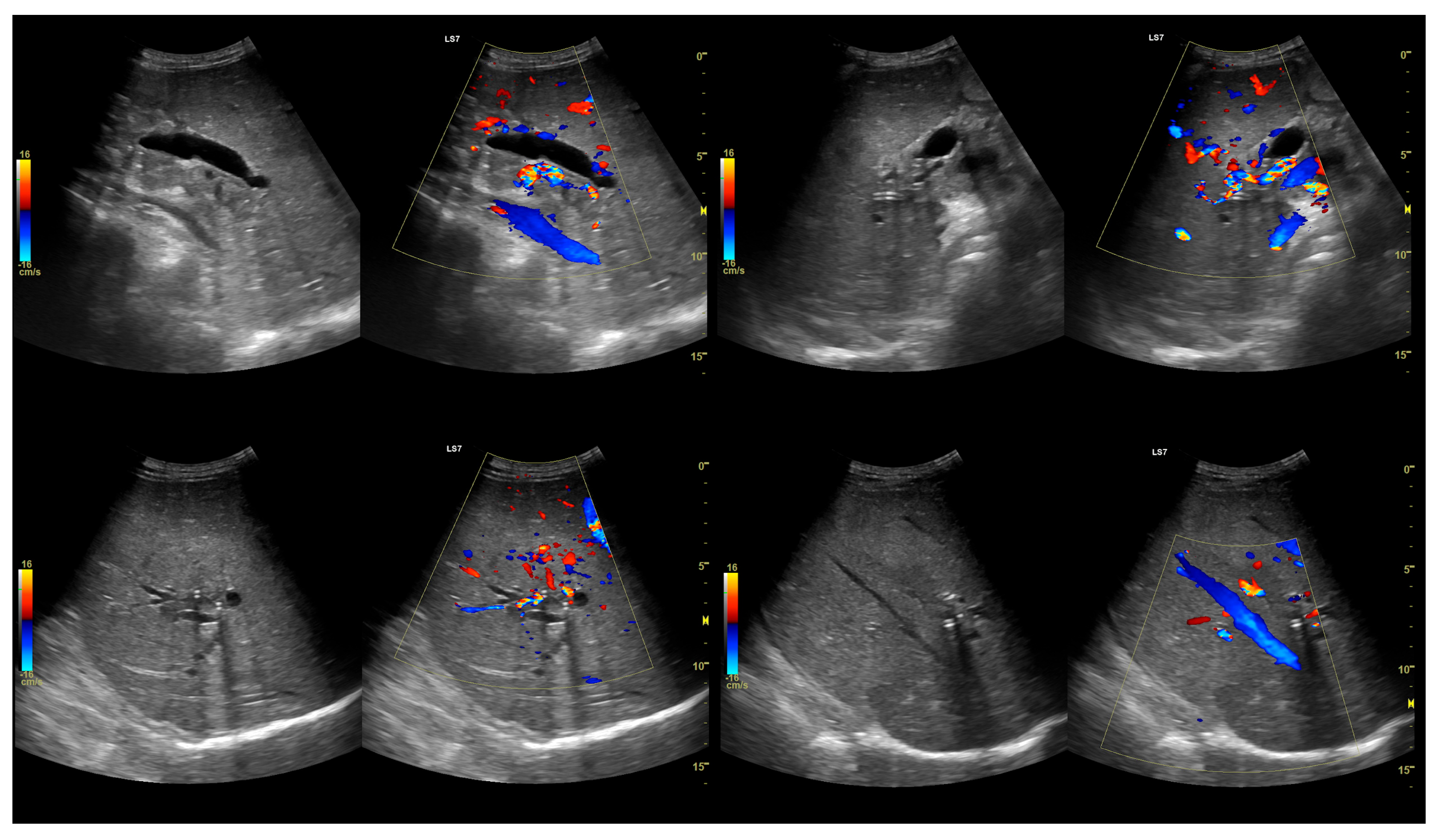

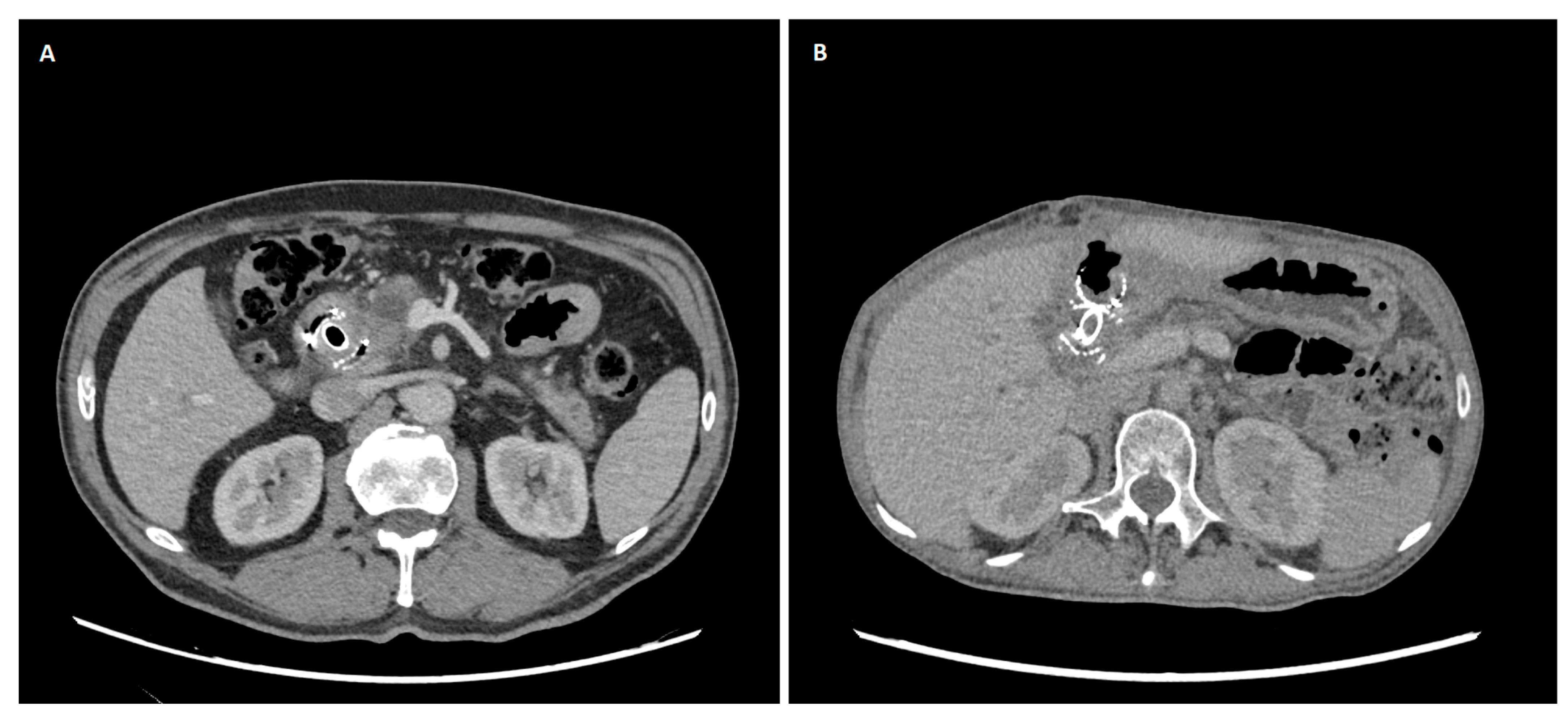



| Characteristic/Marker | EUS-BD | PTBD | p-Value |
|---|---|---|---|
| Sample size | 37 | 64 | — |
| Age | 70.0 (66.0–76.0) | 68.5 (61.2–72.2) | — |
| Female/Male | 24/13 | 37/27 | — |
| CRP (mg/L) | 37.7 (18–158) | 55.3 (23.9–111) | 0.795 |
| PLT (×109/L) | 237 (205–325) | 292 (210–367) | 0.206 |
| NLR | 5.64 (3.71–7.48) | 6.46 (2.87–9.42) | 0.889 |
| PLR | 209 (137–307) | 220 (157–311) | 0.624 |
| LMR | 1.92 (1.27–2.46) | 2.00 (1.18–3.00) | 0.955 |
| SII | 1.32 × 10³ (0.888–1.93 × 10³) | 1.43 × 10³ (0.718–3.74 × 10³) | 0.864 |
| SIRI | 3.29 (2.33–5.07) | 3.23 (1.71–7.10) | 0.858 |
| NPS | 0 (0–1) | 0 (0–1) | 0.603 |
| LCR | 0.0286 (0.0113–0.0832) | 0.0213 (0.0095–0.0616) | 0.505 |
| Total bilirubin (baseline) | 10.5 (5.59–19.1) | 16.5 (12.8–23.3) | 0.001 |
| Section/Subtype | N | Technical Success | Early Biochemical Response ≥ 5% (D+2) | Any Complication | Major Complication (Clavien ≥ III) | LOS, Days |
|---|---|---|---|---|---|---|
| EUS-BD | 37 | 37/37 (100%) | 32/37 (86.5%) | 11/37 (29.7%) | 4/37 (10.8%) | 4.0 (2.0–7.0) |
| PTBD | 64 | 64/64 (100%) | 50/64 (78.1%) | 8/64 (12.5%) | 0/64 (0.0%) | 3.5 (2.0–6.0) |
| p-value | — | n/a | 0.43 | 0.04 | 0.02 | 0.21 |
| EUS-BD subtypes | ||||||
| GBD | 6 | 6/6 (100%) | 4/6 (66.7%) | 1/6 (16.7%) | 0/1 (0.0%) | 7.0 (6.2–8.5) |
| CDS | 21 | 21/21 (100%) | 21/21 (100.0%) | 4/21 (19.0%) | 1/4 (25.0%) | 3.0 (2.0–6.0) |
| HGS | 10 | 10/10 (100%) | 7/10 (70.0%) | 6/10 (60.0%) | 3/6 (50.0%) | 5.0 (2.2–13.2) |
| p-value | — | — | 0.02 | 0.049 | 0.53 | 0.28 |
| PTBD subtypes | ||||||
| LHD | 40 | 40/40 (100%) | 31/40 (77.5%) | 6/40 (15.0%) | 0/6 (0.0%) | 4.0 (1.8–6.0) |
| RHD | 1 | 1/1 (100%) | 0/1 (0.0%) | 0/1 (0.0%) | n/a | 9.0 (9.0–9.0) |
| GB | 20 | 20/20 (100%) | 16/20 (80.0%) | 2/20 (10.0%) | 0/2 (0.0%) | 3.0 (1.8–5.2) |
| CBD | 3 | 3/3 (100%) | 3/3 (100.0%) | 0/3 (0.0%) | n/a | 8.0 (5.0–8.0) |
| p-value | — | — | 0.38 | 0.17 | n/a | 0.15 |
| AE Category | EUS (n, %) | PTBD (n, %) | Typical Management |
|---|---|---|---|
| Bleeding/anemization (incl. hemobilia, periliver hematoma) | 8/37 (21.6%) | 8/64 (12.5%) | Conservative measures ± transfusion; endoscopic/radiologic hemostasis if needed |
| Biloma/post-drain fluid collection | 1/37 (2.7%) | 0/64 (0.0%) | Percutaneous drainage and/or device revision |
| Gastrointestinal perforation | 2/37 (5.4%) | 0/64 (0.0%) | Endoscopic, radiologic, or surgical repair |
| Any AE (≥Clavien I) | 11/37 (29.7%) | 8/64 (12.5%) | — |
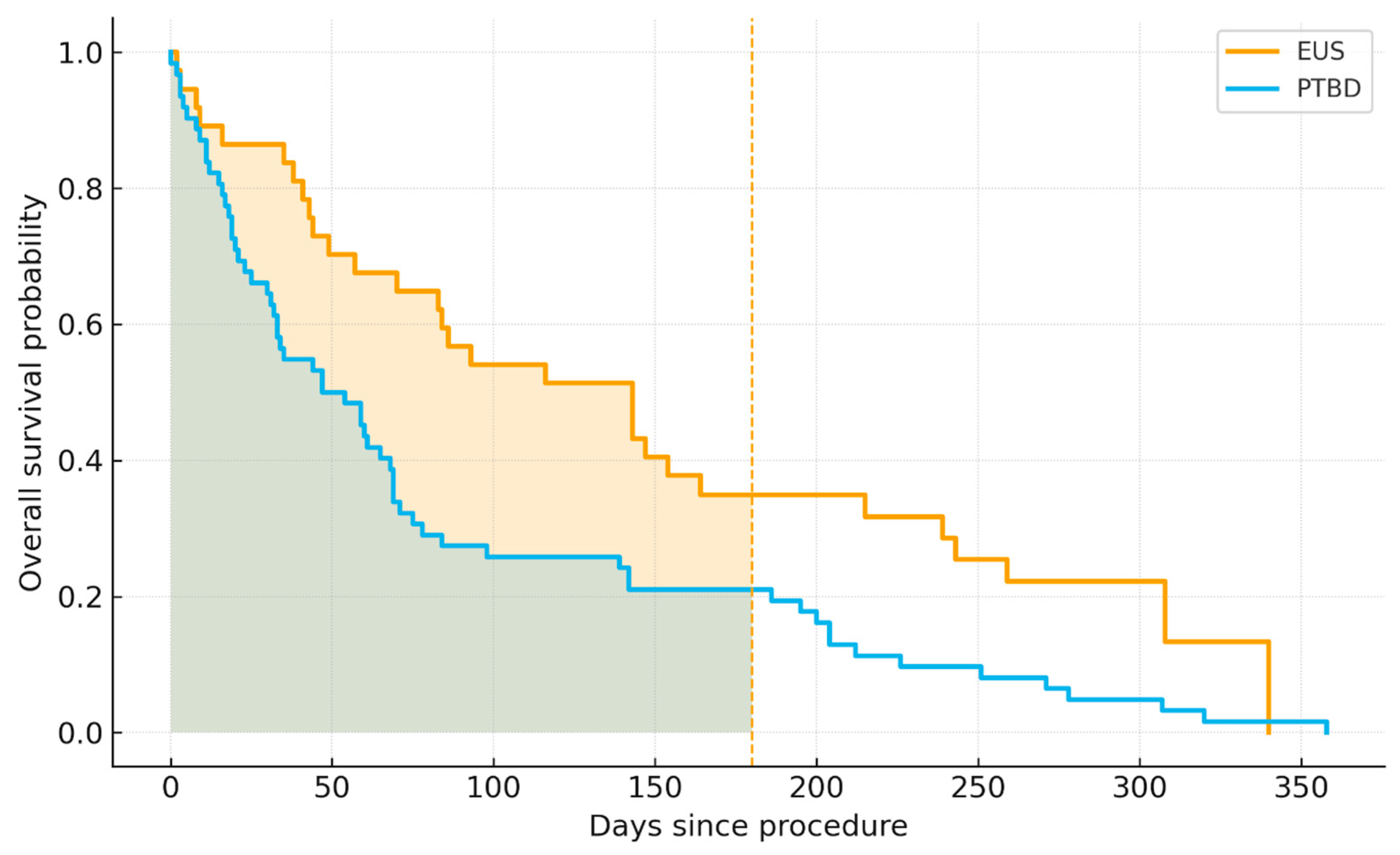
| Group (Baseline n) | 0 d | 30 d | 90 d | 180 d | 360 d |
|---|---|---|---|---|---|
| EUS-BD (n = 37) | 37 (100%) | 26 (70.3%) | 15 (40.5%) | 8 (21.6%) | 2 (5.4%) |
| PTBD (n = 64) | 64 (100%) | 42 (65.6%) | 20 (31.3%) | 8 (12.5%) | 2 (3.1%) |
Disclaimer/Publisher’s Note: The statements, opinions and data contained in all publications are solely those of the individual author(s) and contributor(s) and not of MDPI and/or the editor(s). MDPI and/or the editor(s) disclaim responsibility for any injury to people or property resulting from any ideas, methods, instructions or products referred to in the content. |
© 2026 by the authors. Licensee MDPI, Basel, Switzerland. This article is an open access article distributed under the terms and conditions of the Creative Commons Attribution (CC BY) license.
Share and Cite
Ciesielski, W.; Durko, Ł.; Stefańczyk, L.; Dobek, A.; Bulicz, A.; Wojnicka, A.; Sosnowska, Z.; Grochowska, A.; Strzelczyk, J.; Hogendorf, P.; et al. Endoscopic Ultrasound-Guided Versus Percutaneous Transhepatic Biliary Drainage After Failed Endoscopic Retrograde Cholangiopancreatography in Malignant Biliary Obstruction: A Single-Center Retrospective Cohort. Cancers 2026, 18, 783. https://doi.org/10.3390/cancers18050783
Ciesielski W, Durko Ł, Stefańczyk L, Dobek A, Bulicz A, Wojnicka A, Sosnowska Z, Grochowska A, Strzelczyk J, Hogendorf P, et al. Endoscopic Ultrasound-Guided Versus Percutaneous Transhepatic Biliary Drainage After Failed Endoscopic Retrograde Cholangiopancreatography in Malignant Biliary Obstruction: A Single-Center Retrospective Cohort. Cancers. 2026; 18(5):783. https://doi.org/10.3390/cancers18050783
Chicago/Turabian StyleCiesielski, Wojciech, Łukasz Durko, Ludomir Stefańczyk, Adam Dobek, Anna Bulicz, Amelia Wojnicka, Zuzanna Sosnowska, Agata Grochowska, Janusz Strzelczyk, Piotr Hogendorf, and et al. 2026. "Endoscopic Ultrasound-Guided Versus Percutaneous Transhepatic Biliary Drainage After Failed Endoscopic Retrograde Cholangiopancreatography in Malignant Biliary Obstruction: A Single-Center Retrospective Cohort" Cancers 18, no. 5: 783. https://doi.org/10.3390/cancers18050783
APA StyleCiesielski, W., Durko, Ł., Stefańczyk, L., Dobek, A., Bulicz, A., Wojnicka, A., Sosnowska, Z., Grochowska, A., Strzelczyk, J., Hogendorf, P., Durczyński, A., & Klimczak, T. (2026). Endoscopic Ultrasound-Guided Versus Percutaneous Transhepatic Biliary Drainage After Failed Endoscopic Retrograde Cholangiopancreatography in Malignant Biliary Obstruction: A Single-Center Retrospective Cohort. Cancers, 18(5), 783. https://doi.org/10.3390/cancers18050783