



Magnetic Fields and Activity in Stars: Origins and Evolution

A special issue of Universe (ISSN 2218-1997). This special issue belongs to the section "Solar and Stellar Physics".

Deadline for manuscript submissions: 21 April 2026 | Viewed by 1584
Special Issue Editor


E-Mail Website
Guest Editor
Institute of Astronomy and NAO, Bulgarian Academy of Sciences, 1040 Sofia, Bulgaria
Interests: stellar magnetic fields; dyanmo driven activity; stellar structure and evolution; late-type stars
Special Issues, Collections and Topics in MDPI journals

Special Issue Information

Dear Colleagues,

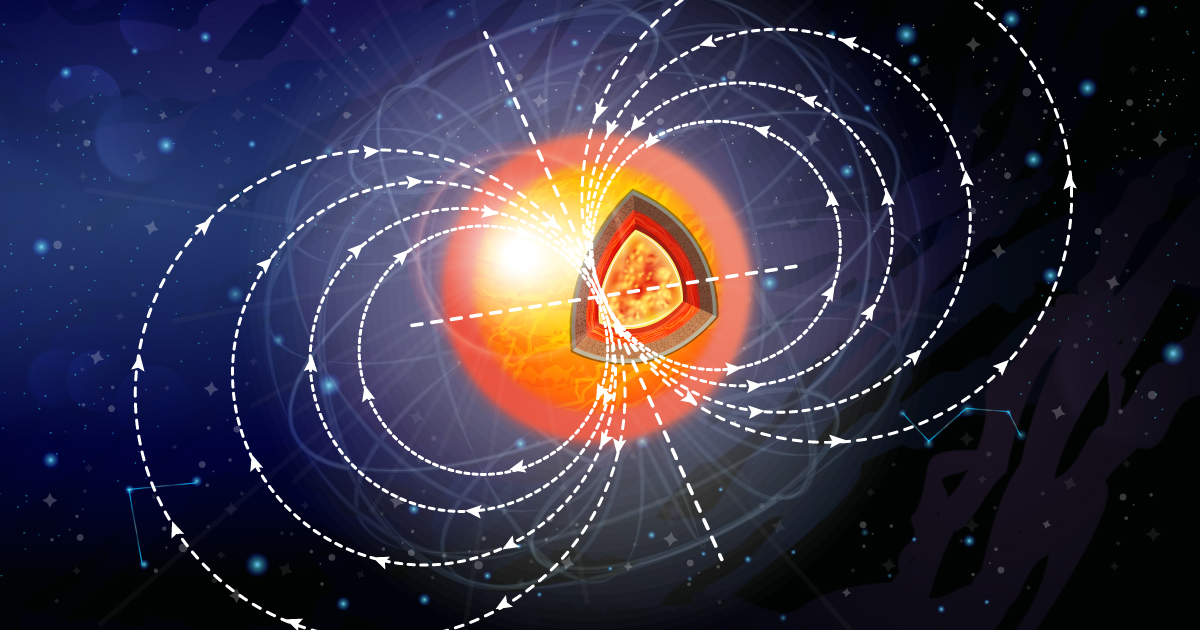
Magnetic fields occur everywhere in the Universe. They appear as a characteristic of matter and they accompany the whole life of a star—from birth to death. Recent findings point to their crucial role in stars and their planetary systems. The following topics are of prime interest in stellar physics: magnetic field transformations in the course of stellar evolution when the internal structure of stars changes, the different mechanisms for the generation and enhancement of magnetic fields and activity depending on the structure and rotation of a star, the role of magnetic fields and activity in mass transfer in close binary stars, and star–planet magnetic interactions.

This Special Issue is dedicated to publishing original research and review papers on magnetism and activity in stars during their whole life.

Scope:

  • Stellar magnetic fields and stellar activity;
  • Evolution, stellar structure, and magnetic activity;
  • Internal magnetic fields;
  • Binary stars and magnetic activity;
  • Stellar dynamos;
  • Starplanet interactions;
  • Stellar magnetic cycles.

Prof. Dr. Renada Konstantinova-Antova
Guest Editor

Manuscript Submission Information

Manuscripts should be submitted online at www.mdpi.com by registering and logging in to this website. Once you are registered, click here to go to the submission form. Manuscripts can be submitted until the deadline. All submissions that pass pre-check are peer-reviewed. Accepted papers will be published continuously in the journal (as soon as accepted) and will be listed together on the special issue website. Research articles, review articles as well as short communications are invited. For planned papers, a title and short abstract (about 250 words) can be sent to the Editorial Office for assessment.

Submitted manuscripts should not have been published previously, nor be under consideration for publication elsewhere (except conference proceedings papers). All manuscripts are thoroughly refereed through a single-blind peer-review process. A guide for authors and other relevant information for submission of manuscripts is available on the Instructions for Authors page. Universe is an international peer-reviewed open access monthly journal published by MDPI.

Please visit the Instructions for Authors page before submitting a manuscript. Submitted papers should be well formatted and use good English. Authors may use MDPI's English editing service prior to publication or during author revisions.

Keywords

  • magnetic fields
  • magnetic activity
  • stellar evolution
  • dynamos in stars
  • star–planet interaction
  • spectropolarimetry
  • asteroseismology
  • stellar atmospheres

Benefits of Publishing in a Special Issue

  • Ease of navigation: Grouping papers by topic helps scholars navigate broad scope journals more efficiently.
  • Greater discoverability: Special Issues support the reach and impact of scientific research. Articles in Special Issues are more discoverable and cited more frequently.
  • Expansion of research network: Special Issues facilitate connections among authors, fostering scientific collaborations.
  • External promotion: Articles in Special Issues are often promoted through the journal's social media, increasing their visibility.
  • Reprint: MDPI Books provides the opportunity to republish successful Special Issues in book format, both online and in print.

Further information on MDPI's Special Issue policies can be found here.

Published Papers (3 papers)

Order results
Result details
Select all
Export citation of selected articles as:

Research

Jump to: Review

15 pages, 414 KB  
Article
Evolution of the Magnetic Activity of the Single Giant OP Andromedae Between 1993 and 2025
by Stefan Georgiev, Renada Konstantinova-Antova, Ana Borisova, Rumen Bogdanovski, Dimitar Kolev, Michel Aurière, Pascal Petit, Dimitar Churalski, Alexander Kurtenkov, Maya Galabova, Nikolay Tomov, Haralambi Markov, Borislav Spassov, Radoslav Zamanov, Milen Minev and Miroslav Moyseev
Universe 2025, 11(12), 399; https://doi.org/10.3390/universe11120399 - 5 Dec 2025
Viewed by 121
Abstract
We investigate the long-term magnetic variability of OP And, a magnetically active single K giant, between 1993 and 2025. To track magnetic activity, we analyze the variability of the Hα line and two lines of the calcium infrared triplet. The variability of [...] Read more.
We investigate the long-term magnetic variability of OP And, a magnetically active single K giant, between 1993 and 2025. To track magnetic activity, we analyze the variability of the Hα line and two lines of the calcium infrared triplet. The variability of the Hα line reveals that the activity level of OP And is higher in the period 1993–2000, while during the period 2010–2016 it is lower, possibly close to an eventual minimum. Recent data (2020–2025) indicate an increase of the activity level again. The flare frequency rate and the calcium infrared triplet data (when available) follow the same behavior. In addition, the structure of the Hα line also changes with the activity level: when the activity is higher, we observe a blue-shifted component of this line, interpreted as an expanding hot area above the photosphere, but during the lower activity interval it is almost absent. Our results are in a good agreement with the idea that the magnetic field influences the mass outflow in this giant. Additionally, we examine how flare frequency correlates with overall activity. While a complete activity cycle remains undetermined, the recent upward trend suggests that the eventual activity cycle of OP And seems to be slightly longer than 30 years. More years of observations are necessary to reach the next maximum and to determine the exact duration of the cycle. Full article
(This article belongs to the Special Issue Magnetic Fields and Activity in Stars: Origins and Evolution)
Show Figures

Figure 1

23 pages, 11431 KB  
Article
Characterisation of Nearby Ultracool Dwarf Candidates with OSIRIS/GTC: First Detection of Balmer Line Emission from the Dwarf Carbon Star LSR J2105+2514
by Antoaneta Antonova, Peter Pessev, Valeri Golev and Dinko Dimitrov
Universe 2025, 11(10), 340; https://doi.org/10.3390/universe11100340 - 14 Oct 2025
Viewed by 395
Abstract
Based on low-resolution OSIRIS/GTC optical spectra, we assign spectral classes to 38 poorly studied ultracool/brown dwarf candidates from the 2MASS database. For almost all of the targets, this is the first optical spectral classification. For the dwarfs showing Hα emission, we calculate [...] Read more.
Based on low-resolution OSIRIS/GTC optical spectra, we assign spectral classes to 38 poorly studied ultracool/brown dwarf candidates from the 2MASS database. For almost all of the targets, this is the first optical spectral classification. For the dwarfs showing Hα emission, we calculate the ratio of Hα to bolometric luminosity, which is the most common characteristic of magnetic activity in cool stars. For the others, we give 3σ upper limits. We also include estimates of the effective temperatures and log g and distances from Gaia based on a comparison with models. For one of our targets—LSR J2105+2514, previously classified as a dwarf carbon star—we confirm this classification and report Hα and Hβ line emission in the spectrum for the first time. Dwarf carbon stars (dC) are low-mass main sequence stars that have undergone mass-transfer binary evolution. The Balmer line emission from these objects most likely indicates coronal activity of the dwarf, which in turn may be due to either intrinsic magnetic activity or spin-up from accretion or tidal locking. Full article
(This article belongs to the Special Issue Magnetic Fields and Activity in Stars: Origins and Evolution)
Show Figures

Figure 1

Review

Jump to: Research

18 pages, 2086 KB  
Review
Jets in Low-Mass Protostars
by Somnath Dutta
Universe 2025, 11(10), 333; https://doi.org/10.3390/universe11100333 - 9 Oct 2025
Viewed by 712
Abstract
Jets and outflows are key components of low-mass star formation, regulating accretion and shaping the surrounding molecular clouds. These flows, traced by molecular species at (sub)millimeter wavelengths (e.g., CO, SiO, SO, H2CO, and CH3OH) and by atomic, ionized, and [...] Read more.
Jets and outflows are key components of low-mass star formation, regulating accretion and shaping the surrounding molecular clouds. These flows, traced by molecular species at (sub)millimeter wavelengths (e.g., CO, SiO, SO, H2CO, and CH3OH) and by atomic, ionized, and molecular lines in the infrared (e.g., H2, [Fe II], [S I]), originate from protostellar accretion disks deeply embedded within dusty envelopes. Jets play a crucial role in removing angular momentum from the disk, thereby enabling continued mass accretion, while directly preserving a record of the protostar’s outflow history and potentially providing indirect insights into its accretion history. Recent advances in high-resolution, high-sensitivity observations, particularly with the James Webb Space Telescope (JWST) in the infrared and the Atacama Large Millimeter/submillimeter Array (ALMA) at (sub)millimeter wavelengths, have revolutionized studies of protostellar jets and outflows. These instruments provide complementary views of warm, shock-excited gas and cold molecular component of the jet–outflow system. In this review, we discuss the current status of observational studies that reveal detailed structures, kinematics, and chemical compositions of protostellar jets and outflows. Recent analyses of mass-loss rates, velocities, rotation, molecular abundances, and magnetic fields provide critical insights into jet launching mechanisms, disk evolution, and the potential formation of binary systems and planets. The synergy of JWST’s infrared sensitivity and ALMA’s high-resolution imaging is advancing our understanding of jets and outflows. Future large-scale, high-resolution surveys with these facilities are expected to drive major breakthroughs in outflow research. Full article
(This article belongs to the Special Issue Magnetic Fields and Activity in Stars: Origins and Evolution)
Show Figures

Figure 1

Back to TopTop