Thermodynamics Education Collection: Methods and Results
A topical collection in Thermo (ISSN 2673-7264).
Viewed by 1199
Share This Topical Collection
Editor
 Dr. Steve Lustig
Dr. Steve Lustig
E-Mail
Website
Collection Editor
Department of Chemical Engineering, Northeastern University, Boston, MA 02115, USA
Interests: design and manipulation of molecular/materials chemistry and structure for new property discovery, new functionality, and technology development by combining theoretical and experimental methods; high performance computing; quantum chemistry; statistical mechanics; polymer physics; materials and biomolecular engineering
Special Issues, Collections and Topics in MDPI journals
Topical Collection Information
Dear Colleagues,
This Topic Collection on thermodynamics education invites contributions from both students and educators. Educators are invited to share innovative pedagogy in the field of thermodynamics in areas including the following: course design; design for belonging, diversity, equity, and inclusion; special contemporary topics; open-source computational tools and example applications; open-source media and web-based resources; instructional methods; classroom demonstrations; assessment tools; evidence-based advancements in learning outcomes; textbook reviews; new pedagogical challenges, problems, and exercises; pedagogical advice and perspectives; and others. Since educators are also frequently researchers, this issue also invites new perspectives on the application of thermodynamics in new research frontiers. Both undergraduate and graduate students are invited to share innovative reports from their thermodynamics-related coursework and research projects. Student reports will be evaluated on the motivation, communication, and technical quality of the project. Reports should clearly define the purpose of the project, motivate interest in the subject, and accomplish the goals of the project. Reports should communicate ideas and technical concepts clearly and succinctly without grammatical, mechanical, spelling, or logical flaws. Reports should have impressive depth and originality; all important concepts and details should be covered to show thorough analysis and technical competence. Project reports are invited from individual students and teams.
Dr. Steve Lustig
Collection Editor
Manuscript Submission Information
Manuscripts should be submitted online at www.mdpi.com by registering and logging in to this website. Once you are registered, click here to go to the submission form. All submissions that pass pre-check are peer-reviewed. Accepted papers will be published continuously in the journal (as soon as accepted) and will be listed together on the collection website. Research articles, review articles as well as short communications are invited. For planned papers, a title and short abstract (about 250 words) can be sent to the Editorial Office for assessment.
Submitted manuscripts should not have been published previously, nor be under consideration for publication elsewhere (except conference proceedings papers). All manuscripts are thoroughly refereed through a single-anonymized peer-review process. A guide for authors and other relevant information for submission of manuscripts is available on the Instructions for Authors page. Thermo is an international peer-reviewed open access quarterly journal published by MDPI.
Please visit the Instructions for Authors page before submitting a manuscript.
The Article Processing Charge (APC) for publication in this open access journal is 1200 CHF (Swiss Francs).
Submitted papers should be well formatted and use good English. Authors may use MDPI's
English editing service prior to publication or during author revisions.
Keywords
- education
- course design
- computational tools
- classroom demonstrations
- assessment
- learning
- textbook
- student projects
Published Papers (2 papers)
2026
Open AccessArticle
Property Tables for Thermally Perfect Gases at Low Pressure
by
Travis J. Moore and Matthew R. Jones
Viewed by 245
Abstract
Tables giving gas properties at low pressure enable the efficient analysis of processes in which the gas is approximated as thermally perfect but not calorically perfect. In addition to specific enthalpy and specific internal energy, thermally perfect gas tables include special functions that
[...] Read more.
Tables giving gas properties at low pressure enable the efficient analysis of processes in which the gas is approximated as thermally perfect but not calorically perfect. In addition to specific enthalpy and specific internal energy, thermally perfect gas tables include special functions that depend only on temperature—relative pressure and relative specific volume. These functions may be used to determine pressure, volume, and temperature of thermally perfect gases undergoing hypothetical isentropic processes. However, the definitions of these functions included in widely used thermodynamics textbooks are vague, inconsistent, or incorrect. The intent of this work is to discuss common inaccuracies in the definitions and the tabulated values of relative pressure and relative specific volume. The origins of the tabulated data used in many engineering thermodynamics textbooks are reviewed and consistent definitions are proposed. A table listing thermally perfect gas properties for air at low pressure based on the proposed definitions is presented.
Full article
Open AccessFeature PaperArticle
Coupling Project-Based Learning with a Heat Exchanger Test Bench: Pedagogical Methodology, Design and Technical Capabilities
by
Andrés Hernández, Alanis Zeoli and Samuel Gendebien
Viewed by 528
Abstract
Bridging the gap between theoretical heat exchanger analysis and physical intuition remains a persistent challenge in engineering education, particularly when students are confronted with real-system effects such as pressure losses, measurement uncertainty, and deviations from simplified models. This work addresses this challenge through
[...] Read more.
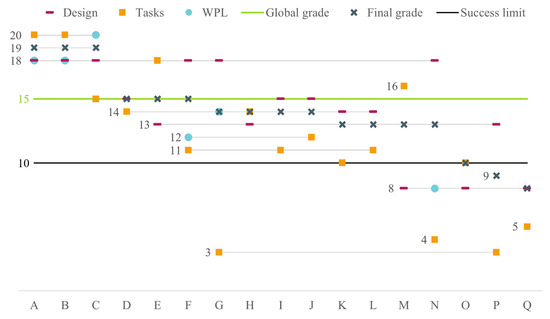
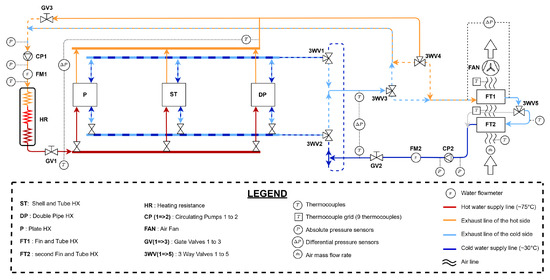
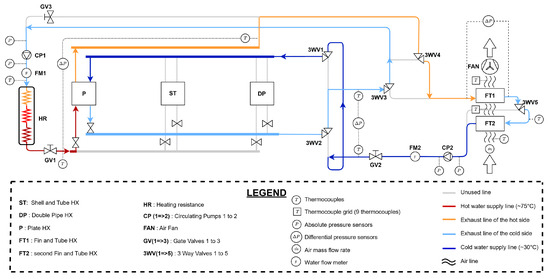
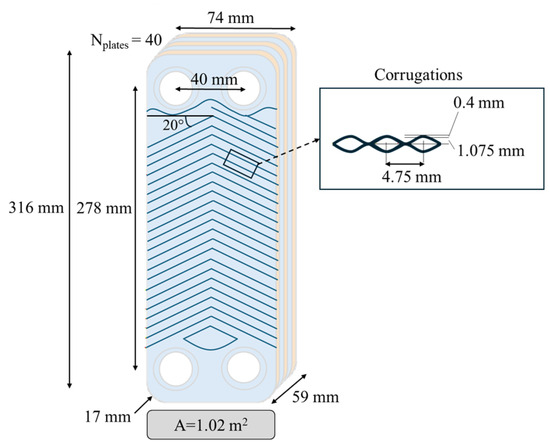
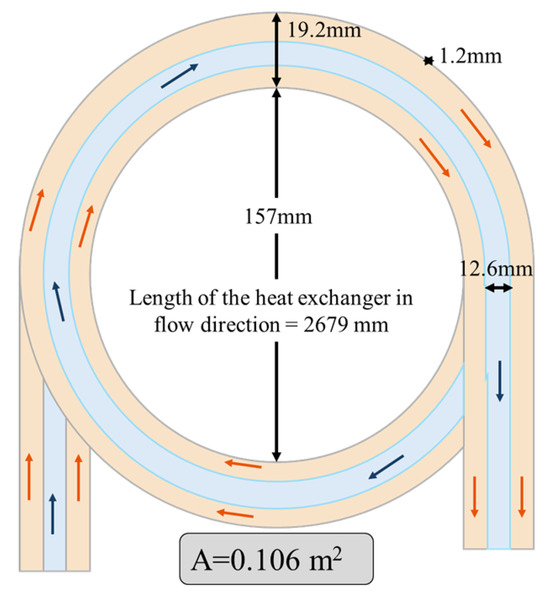
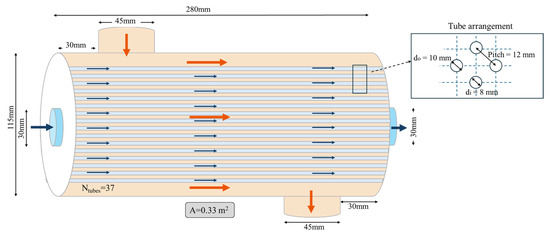
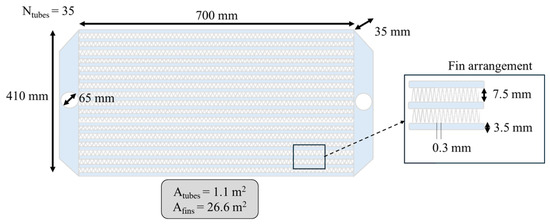
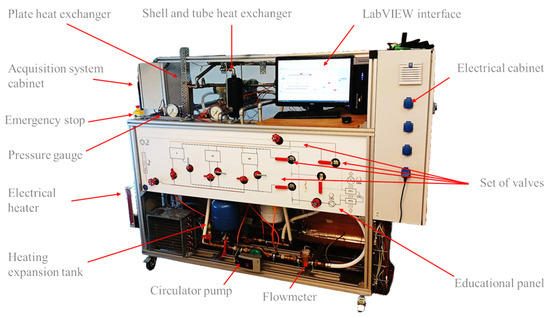
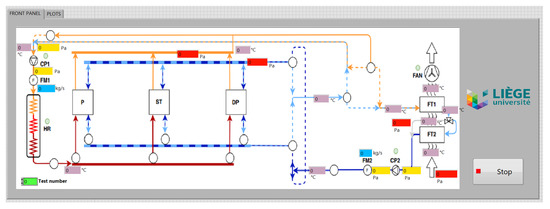
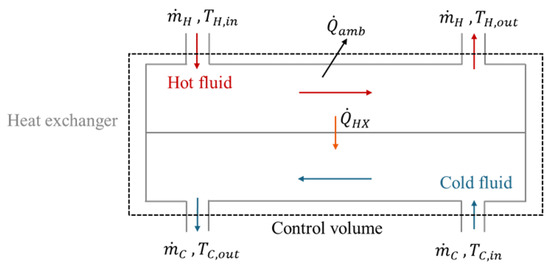
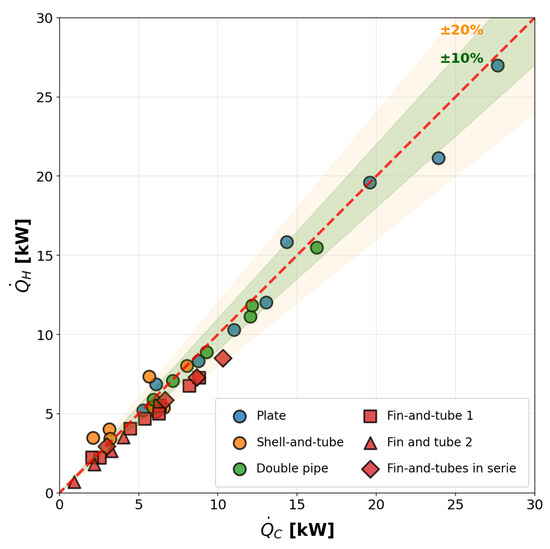
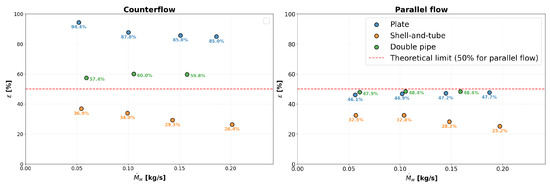
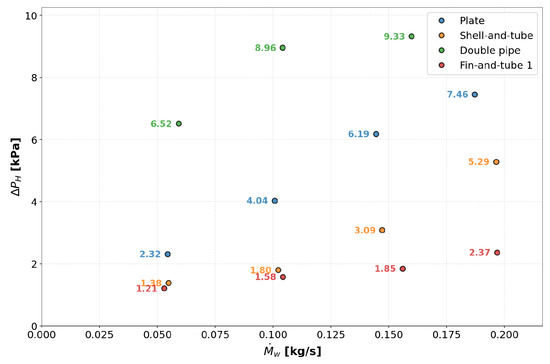
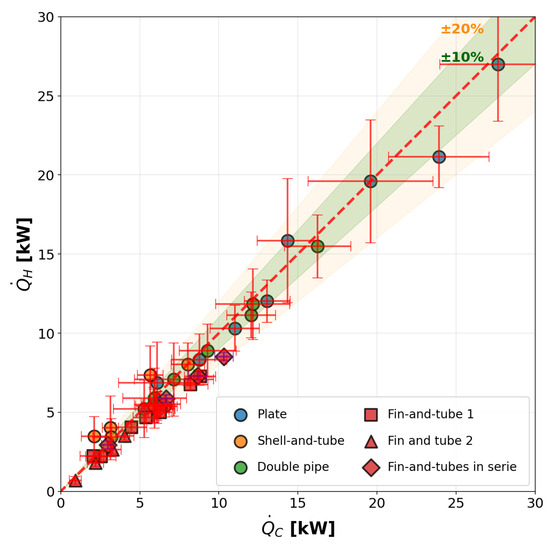
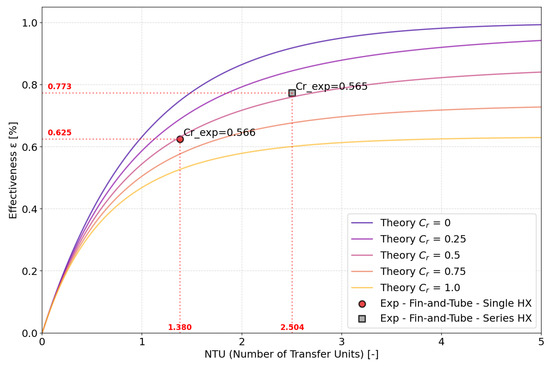
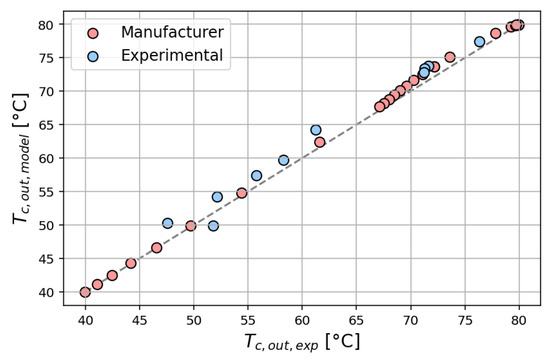
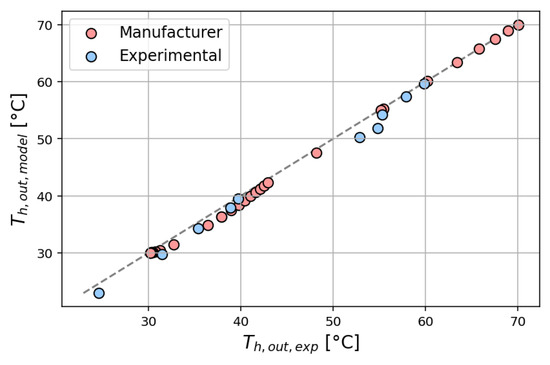
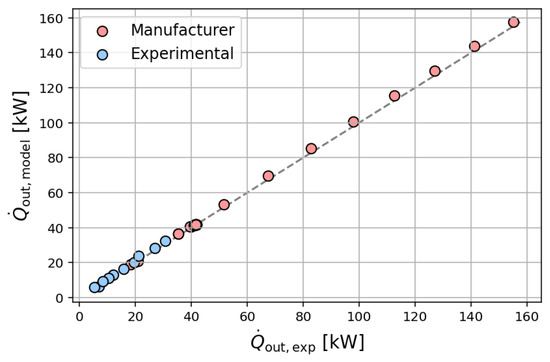
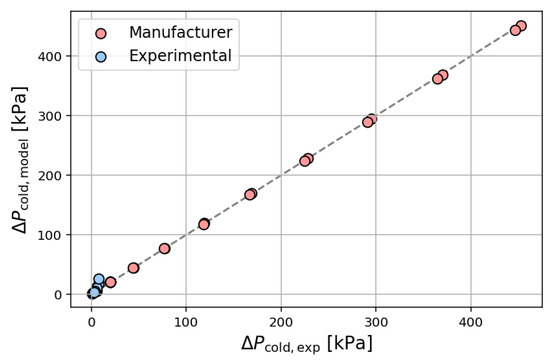
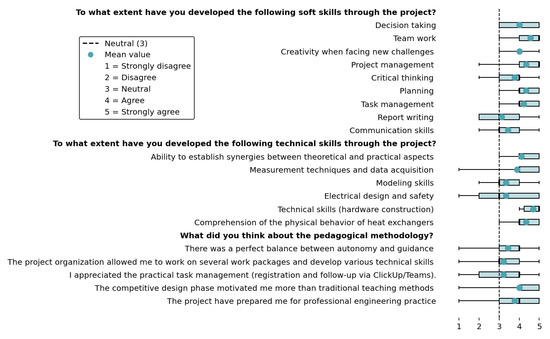
Bridging the gap between theoretical heat exchanger analysis and physical intuition remains a persistent challenge in engineering education, particularly when students are confronted with real-system effects such as pressure losses, measurement uncertainty, and deviations from simplified models. This work addresses this challenge through the coupled development of a pedagogical framework and an experimental platform. A modular heat exchanger test bench was conceived, designed, and constructed by graduate students within a structured project-based learning environment, in which competitive and cooperative phases were combined to emulate real engineering practice. This approach positions the test bench not only as a laboratory tool, but as the outcome of an active learning process that integrates system design, instrumentation, and modeling. The resulting platform enables the comparative study of multiple heat exchanger technologies—including three water-to-water heat exchangers (plate, shell-and-tube, and double-pipe) and one air-to-water fin-and-tube heat exchanger—under parallel, counterflow, and crossflow arrangements across a wide range of operating conditions. Comprehensive instrumentation (temperature, flow rate, and pressure measurements) supports rigorous energy balance analysis, effectiveness evaluation, and hydraulic performance assessment. Beyond undergraduate experimentation, the test bench provides a framework for advanced learning objectives, including uncertainty propagation,
-NTU analysis, model development, and experimental validation. The confrontation between model predictions and experimental data, including observed discrepancies, is shown to play a central role in developing critical engineering judgment. The proposed approach demonstrates how the integration of project-based learning with a reconfigurable experimental platform can create a sustainable and scalable environment for heat transfer education.
Full article
►▼
Show Figures