

Community-Based Rehabilitation and Community Rehabilitation

A topical collection in Societies (ISSN 2075-4698).

Viewed by 11043

Editor


E-Mail Website
Collection Editor
Community Rehabilitation and Disability Studies, Cumming School of Medicine, University of Calgary, Calgary, AB T2N 4N1, Canada
Interests: community empowerment; technology governance; disability studies; ability studies; ethics; sustainability; health systems; ecohealth
Special Issues, Collections and Topics in MDPI journals

Topical Collection Information

Dear Colleagues,

Community-based Rehabilitation (CBR) and Community Rehabilitation (CR) are two approaches that are similar in many aspects, but which differ in other aspects. This Special Issue invites theoretical and empirical papers that identify emerging and still persistent challenges for CBR and CR on conceptual, implementation, and stakeholder dynamic levels. A recent CBR matrix http://www.who.int/disabilities/cbr/cbr_matrix_11.10.pdf highlighted various aspects of CBR.

This Special Issue seeks authors to engage with CBR and CR through topics reflected in the education, livelihood, social, and empowerment pillars of the CBR matrix. Alternatively, the issue seeks papers concerning assistive devices and how they play out within the non-health pillars of the CBR matrix.

Papers that engage with CBR/CR through the lens of other discourses, such as disability studies, governance of technologies, occupational justice, occupational satisfaction, occupational sustainability, the Post-2015 development agenda, sustainability, eco-health, care ethics (and other ethics theories), cultural competency, global north-global south interaction, and various social theories (such as value, labeling, conflict, choice, identity, motivational, achievement, goal, self-determination, neo-institutional, body theories and social constructivism theories) are especially encouraged.

Prof. Dr. Gregor Wolbring
Collection Editor

Manuscript Submission Information

Manuscripts should be submitted online at www.mdpi.com by registering and logging in to this website. Once you are registered, click here to go to the submission form. Manuscripts can be submitted until the deadline. All papers will be peer-reviewed. Accepted papers will be published continuously in the journal (as soon as accepted) and will be listed together on the collection website. Research articles, review articles as well as short communications are invited. For planned papers, a title and short abstract (about 250 words) can be sent to the Editorial Office for assessment.

Submitted manuscripts should not have been published previously, nor be under consideration for publication elsewhere (except conference proceedings papers). All manuscripts are thoroughly refereed through a double-blind peer-review process. A guide for authors and other relevant information for submission of manuscripts is available on the Instructions for Authors page. Societies is an international peer-reviewed open access monthly journal published by MDPI.

Please visit the Instructions for Authors page before submitting a manuscript. Submitted papers should be well formatted and use good English. Authors may use MDPI's English editing service prior to publication or during author revisions.

Keywords

  • community-based Rehabilitation
  • community Rehabilitation
  • service providers
  • disability Studies
  • ability Studies
  • families
  • social theories
  • occupational justice
  • global south/global north
  • ethics

Published Papers (3 papers)

2026

Jump to: 2015

20 pages, 430 KB  
Article
“To Survive in This Society like a Normal Person”: Social Reintegration Challenges of Young People Who Use Drugs During Community-Based Drug Rehabilitation in China
by Zhihao Wei, Nazirah Hassan, Nur Saadah Mohamad Aun, Ezarina Zakaria, Sheng Chen and Xiaojin Liu
Societies 2026, 16(7), 202; https://doi.org/10.3390/soc16070202 (registering DOI) - 24 Jun 2026
Abstract
Youth drug abuse is a persistent public health concern in China. Community-based drug rehabilitation (CBDR), the final three-year stage of China’s official rehabilitation system, aims to help people who use drugs (PWUD) reintegrate into society, but reintegration remains limited, particularly among young PWUD. [...] Read more.
Youth drug abuse is a persistent public health concern in China. Community-based drug rehabilitation (CBDR), the final three-year stage of China’s official rehabilitation system, aims to help people who use drugs (PWUD) reintegrate into society, but reintegration remains limited, particularly among young PWUD. This study explores the social reintegration challenges faced by young PWUD aged 18 to 35 during the CBDR stage in Guangzhou, China. Semi-structured interviews were conducted with 16 participants and analyzed using reflexive thematic analysis (RTA). Three themes were identified: stigma and relational struggles, socioeconomic marginalization and daily life disruption, and limitations of the CBDR service model. These challenges were not separate but reinforced one another, with difficulties in one domain spilling into others and narrowing the space in which reintegration could occur. These findings suggest that addressing the reinforcing linkages between stigma, economic hardship, and service limitations requires a more coordinated approach to CBDR service provision, one that integrates vocational support into relapse prevention, builds flexibility into surveillance procedures, and provides participants and their families with realistic, evidence-based information about the prospects of recovery. Full article
22 pages, 1666 KB  
Article
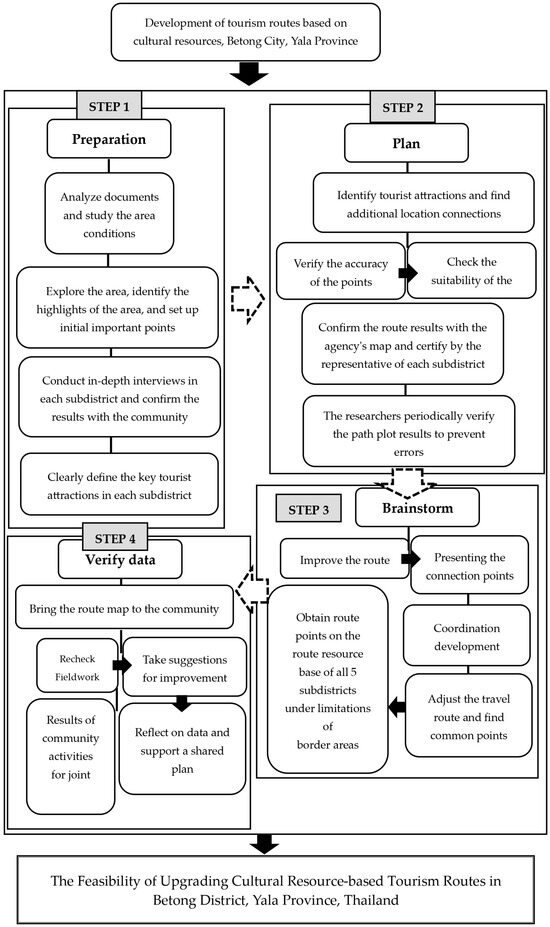
The Feasibility of Upgrading Cultural Resource Tourism Routes in Betong District, Yala Province, Thailand, Under the Limitations of Border Areas
by Sakawrat Boonwanno, Kasetchai Laeheem, Punya Tepsing, Pongtach Chitwiboon and Poranee Yeetin
Societies 2026, 16(6), 187; https://doi.org/10.3390/soc16060187 - 12 Jun 2026
Viewed by 271
Abstract
This study aimed to systematically categorize and critically analyze the feasibility of developing a cultural resource-based tourism route in Betong District, Yala Province, the southernmost area of Thailand, which is called “the city in the mist.” Research and development techniques were employed using [...] Read more.
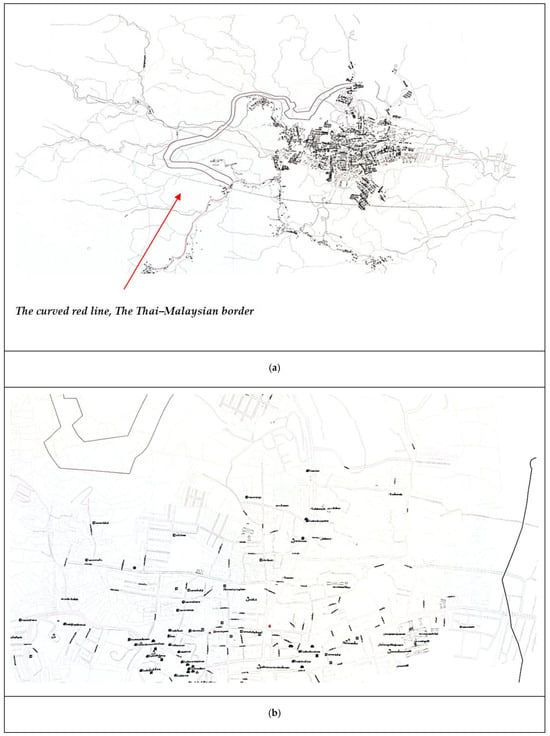
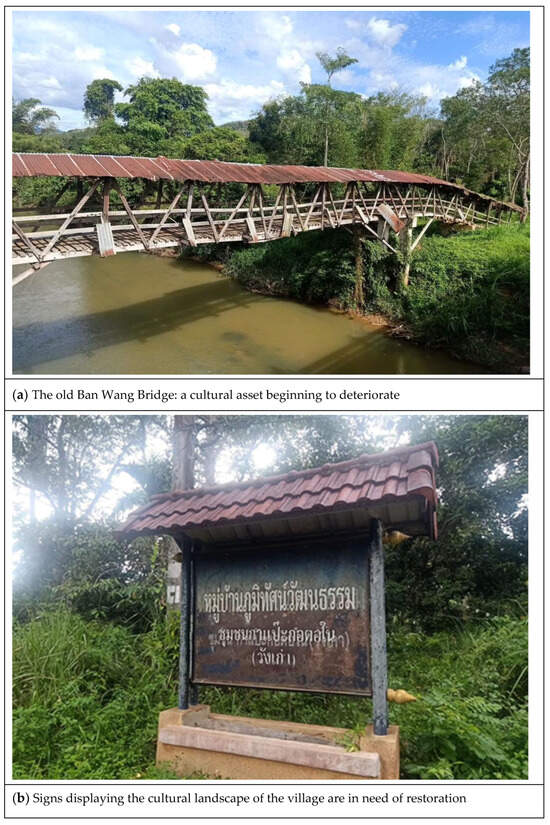
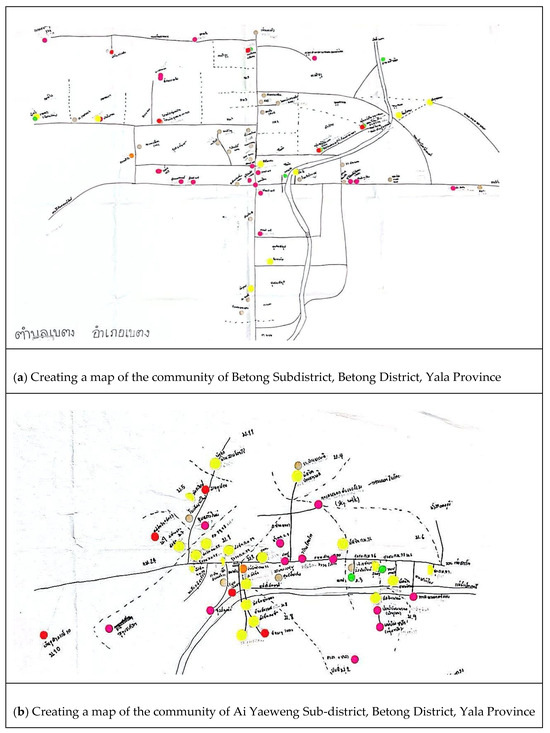
This study aimed to systematically categorize and critically analyze the feasibility of developing a cultural resource-based tourism route in Betong District, Yala Province, the southernmost area of Thailand, which is called “the city in the mist.” Research and development techniques were employed using a simulated map from an information system and community forums to create and revise a cultural resource-based tourism map in these areas: the Aiyoeweng, Tano Maero, Betong, and Than Nam Thip Subdistricts. The participants from five communities, 10 people per community, totaling 50 participants, were selected through purposive sampling to join in drafting a cultural resource map by pinpointing important areas in each subdistrict. The fieldwork data collected in each subdistrict were categorized and the content was analyzed to examine the feasibility of the approach to creating a map based on cultural resources. The results found that the tourism patterns resulting from a strong resource base could be divided into tangible and intangible cultural resources. The selected resources include local food, learning centers, tourist attractions, interesting entertainment activities, and community service centers. These were then used to create a simulated map, which was analyzed to determine the feasibility of a tourism route based on resource capital, abundant forests, cultural capital in historical sites, and social capital that were covered in community tourism policies, plans, and guidelines for tourism management to achieve maximum benefits, resulting from the community process that had to jointly design the process. The results of this study are part of the restoration of tourism based on resources for income management and for local organizations to expand and upgrade tourism to the regional economic zones in the southern border provinces. Full article
Show Figures

Figure 1

2015

Jump to: 2026

24 pages, 853 KB  
Review
The Applicability of eLearning in Community-Based Rehabilitation
by Karly Michelle Dagys, Amaal Popat and Heather Michelle Aldersey
Societies 2015, 5(4), 831-854; https://doi.org/10.3390/soc5040831 - 2 Dec 2015
Cited by 6 | Viewed by 7369
Abstract
Community-based rehabilitation (CBR) strives to enhance quality of life for individuals with disabilities and their families by increasing social participation and equalizing opportunities in the global south. Aligning with the Sustainable Development Goals, CBR also aims to address the high rates of poverty [...] Read more.
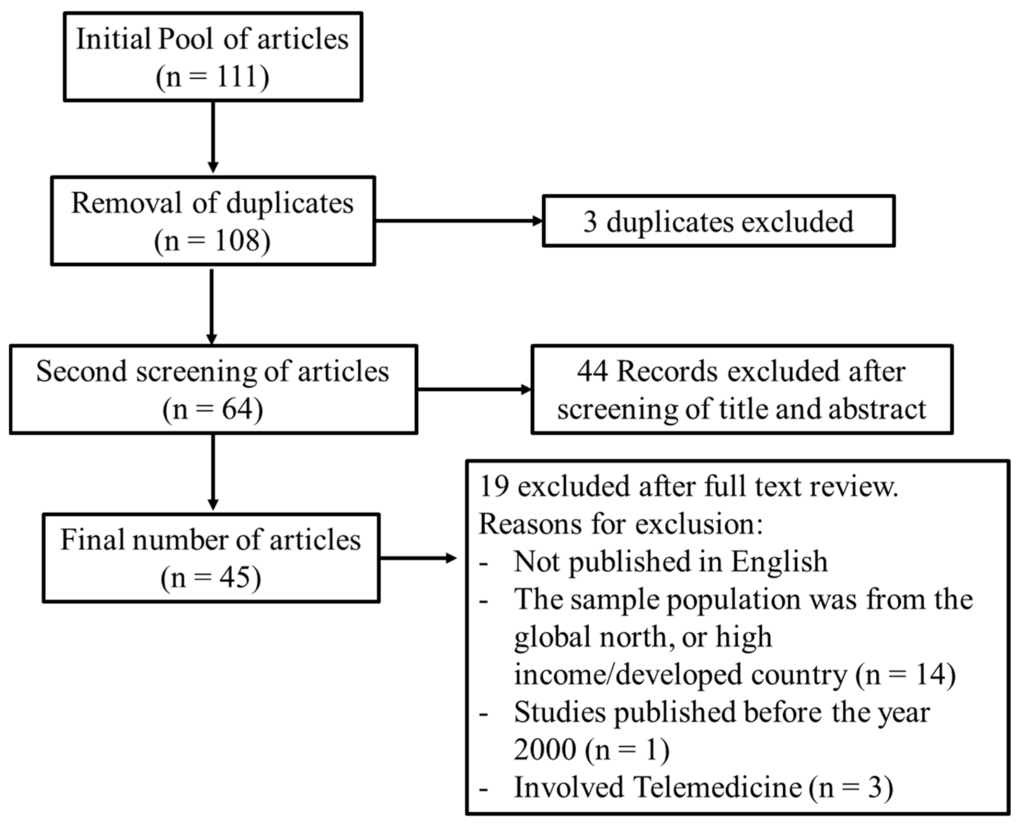
Community-based rehabilitation (CBR) strives to enhance quality of life for individuals with disabilities and their families by increasing social participation and equalizing opportunities in the global south. Aligning with the Sustainable Development Goals, CBR also aims to address the high rates of poverty faced by individuals with disability. Empowerment, a pillar of CBR, involves strengthening the capacity of people with disabilities, their families, and their communities to ensure reduction of disparities. This article outlines a scoping review that guided by the question: “What is known from the existing literature about the applicability of eLearning for capacity building in CBR?” This review did not uncover literature related to eLearning in CBR; however findings suggest that other disciplines, not explicitly tied to CBR, currently use eLearning to educate and empower professionals in the global south. We argue that eLearning technology could be an effective and sustainable solution for CBR programming in the global south for capacity development. Such technology could increase individuals with disabilities’ access to education and could provide opportunities for wider dissemination of knowledge, beyond typical funding cycles. With a goal of informing future CBR practice in eLearning, this article concludes by highlighting key lessons taken from other disciplines that have utilized eLearning in the global south. Full article
Show Figures

Figure 1

Back to TopTop