polymers-logo

Journal Browser

Journal Browser

Advances and Emerging Directions in Hydrogels

A topical collection in Polymers (ISSN 2073-4360). This collection belongs to the section "Polymer Networks and Gels".

Viewed by 1298

Editor


E-Mail Website
Collection Editor
Department of Chemistry, Drexel University, 3141 Chestnut Street, Disque 507, Philadelphia, PA 19104, USA
Interests: double network hydrogel; tough hydrogel; hydrogel sensor; inorganic hydrogel; hybrid hydrogel
Special Issues, Collections and Topics in MDPI journals

Topical Collection Information

Dear Colleagues,

Hydrogels represent a fascinating and rapidly expanding class of soft materials with broad impact across disciplines, ranging from biomedicine and tissue engineering to soft robotics, electronics, and environmental remediation. Defined by their high water content and tunable physical properties, hydrogels offer exceptional versatility for addressing scientific and technological challenges in both fundamental research and real-world applications.

This Topical Collection aims to provide a comprehensive platform for the presentation and discussion of the latest advances, emerging trends, and critical challenges in hydrogel science. We welcome contributions that explore the design, synthesis, characterization, and application of hydrogels—particularly those that demonstrate multifunctional behavior, stimuli responsiveness, biocompatibility, or integration with other systems.

Given the cross-disciplinary nature of hydrogel research, we especially encourage submissions that interlink with materials chemistry, physics, biology, medicine, engineering, and computational modeling. Topics may span smart and programmable hydrogels, conductive and electronic soft materials, drug and gene delivery systems, hydrogel-based sensors, sustainable and biodegradable platforms, and novel hydrogel formulations for unconventional environments.

This Topical Collection also seeks to highlight hybrid and nanocomposite hydrogels, data-driven materials design, and bioinspired architectures that are paving the way for next-generation applications.

We invite original research articles, reviews, short communications, and perspectives that contribute to shaping the future of hydrogel science through innovation, interdisciplinarity, and application-driven impact.

Prof. Dr. Hai-Feng (Frank) Ji
Collection Editor

Manuscript Submission Information

Manuscripts should be submitted online at www.mdpi.com by registering and logging in to this website. Once you are registered, click here to go to the submission form. Manuscripts can be submitted until the deadline. All submissions that pass pre-check are peer-reviewed. Accepted papers will be published continuously in the journal (as soon as accepted) and will be listed together on the collection website. Research articles, review articles as well as short communications are invited. For planned papers, a title and short abstract (about 250 words) can be sent to the Editorial Office for assessment.

Submitted manuscripts should not have been published previously, nor be under consideration for publication elsewhere (except conference proceedings papers). All manuscripts are thoroughly refereed through a single-blind peer-review process. A guide for authors and other relevant information for submission of manuscripts is available on the Instructions for Authors page. Polymers is an international peer-reviewed open access semimonthly journal published by MDPI.

Please visit the Instructions for Authors page before submitting a manuscript. The Article Processing Charge (APC) for publication in this open access journal is 2700 CHF (Swiss Francs). Submitted papers should be well formatted and use good English. Authors may use MDPI's English editing service prior to publication or during author revisions.

Keywords

  • hydrogels
  • stimuli-responsive materials
  • biocompatibility
  • drug and gene delivery
  • conductive hydrogels
  • soft robotics
  • nanocomposites
  • biosensors
  • sustainable materials
  • computational modeling

Published Papers (1 paper)

2025

36 pages, 6647 KB  
Review
Strategies for Incorporating Natural Therapeutic Agents into Hydrogel Dressings: Innovations in Wound Healing
by Ion Cosmin Călina, Anca Scărișoreanu, Maria Demeter, Elena Mănăilă and Gabriela Crăciun
Polymers 2025, 17(23), 3105; https://doi.org/10.3390/polym17233105 - 22 Nov 2025
Viewed by 888
Abstract
Effective wound management demands novel therapeutic strategies that overcome the limitations of medication by reducing inflammation, preventing infection, and accelerating tissue regeneration. The present review provides an extensive examination of natural therapeutic agents incorporated into polymeric hydrogels for wound healing purposes. Significant focus [...] Read more.
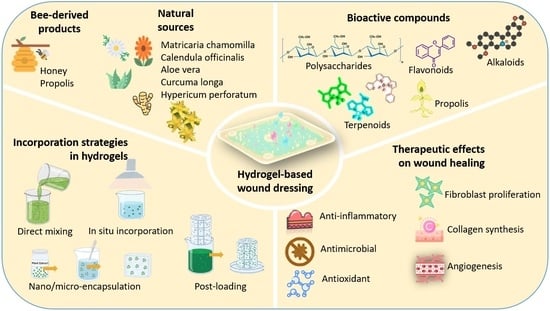
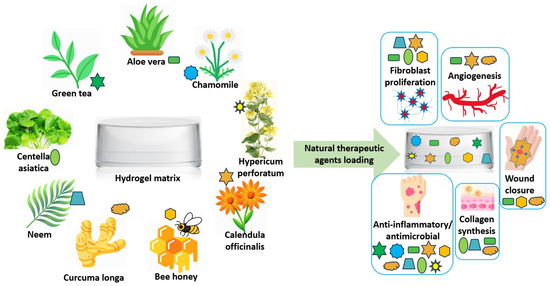
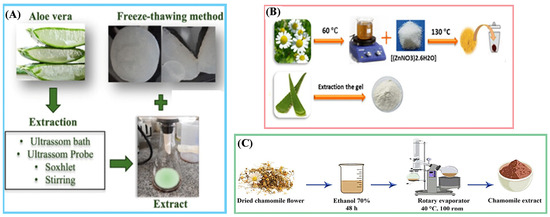
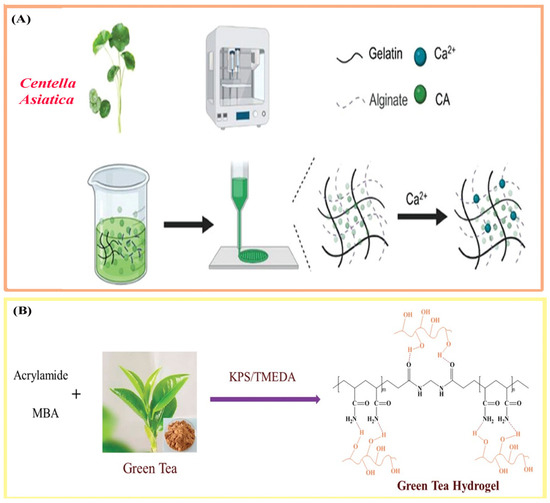
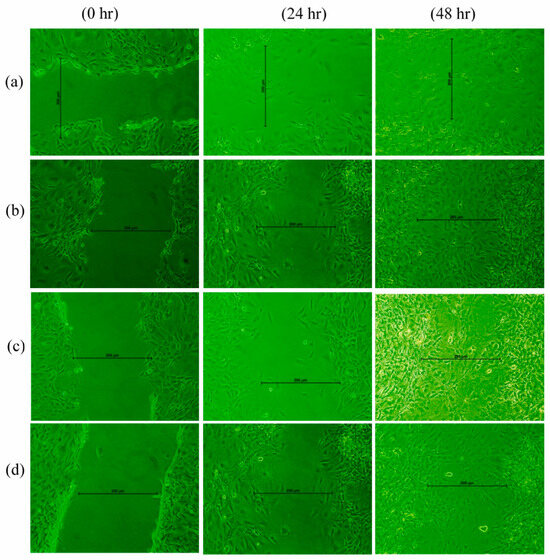
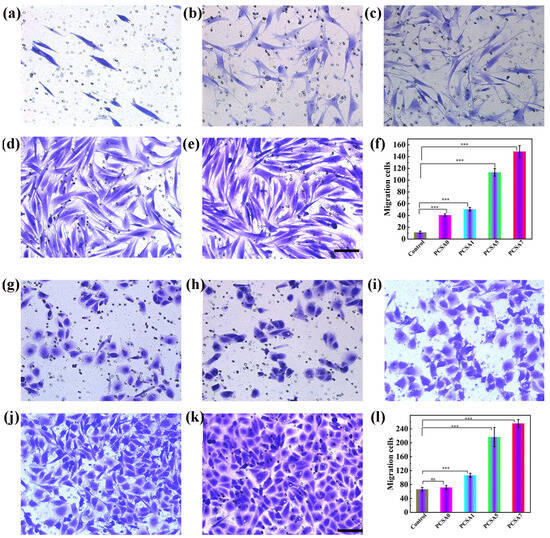
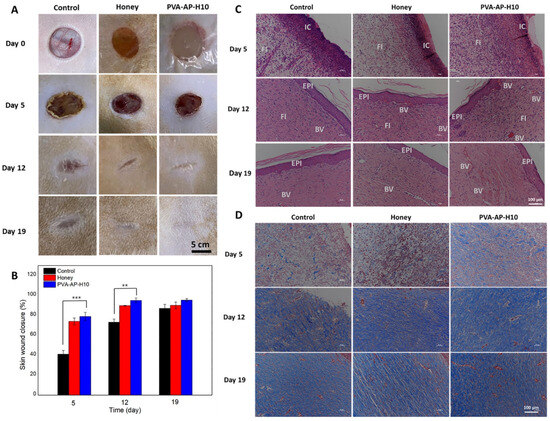
Effective wound management demands novel therapeutic strategies that overcome the limitations of medication by reducing inflammation, preventing infection, and accelerating tissue regeneration. The present review provides an extensive examination of natural therapeutic agents incorporated into polymeric hydrogels for wound healing purposes. Significant focus has been paid towards extraction techniques that validate the standardization, purity, and biological efficacy of natural compounds, alongside several principal incorporation strategies: direct mixing, in situ incorporation, post-loading, and nano/microencapsulation, aimed at optimizing the stability of bioactive molecules within hydrogel matrices. Representative in vitro and in vivo studies are summarized to highlight the bioactive and therapeutic effects of hybrid systems based on polymeric hydrogels. Collectively, reported evidence indicates that natural-extract-loaded hydrogels accelerate wound healing through multiple complementary mechanisms, including inflammation modulation, antimicrobial protection, moisture balance, and enhanced tissue regeneration. Furthermore, synergistic mixtures of bioactive compounds have demonstrated enhanced antimicrobial and regenerative efficacy compared to single-component formulations. Overall, bioactive hydrogels incorporating standardized or nano-encapsulated natural extracts represent a new generation of multifunctional, non-pharmaceutic wound dressings that provide excellent biocompatibility and enhanced tissue regeneration in both acute and chronic wound healing. Full article
Show Figures

Graphical abstract

Back to TopTop