
Review

Remediation of Soil Contaminated with Microplastics: Strategies and Practical Implications

by
Kuok Ho Daniel Tang
Department of Environmental Science, The University of Arizona, Tucson, AZ 85721, USA
Environ. Remediat. 2026, 1(1), 5; https://doi.org/10.3390/environremediat1010005
Submission received: 2 May 2026 / Revised: 28 May 2026 / Accepted: 29 May 2026 / Published: 3 June 2026

Abstract

Microplastic contamination in soils is an emerging environmental challenge requiring effective and scalable remediation strategies. This review synthesizes advances in physical, chemical, biological, and hybrid approaches, focusing on mechanisms, performance, and practical applicability. Physical methods, particularly adsorption using biochar, achieve removal efficiencies exceeding 86% for 1 μm polystyrene microplastics and maintain > 85% efficiency after multiple reuse cycles, demonstrating strong durability. Filtration and aggregation systems, such as permeable reactive barriers, reach up to 81.55% removal but are less effective in co-contaminated conditions. Chemical strategies exhibit the highest efficiencies. Dielectric barrier discharge plasma achieves 96.5–98.7% degradation within 30–60 min, while electrochemical coagulation reaches ~98% removal via flocculation. Thermal treatments, including pyrolysis, enable near-complete microplastic removal (~100%) at ≥400 °C, although high energy demands limit in situ application. Chemical amendments also improve soil quality, increasing organic matter by ~7.35% and enhancing nutrient availability. Biological approaches offer sustainable but slower remediation. Microbial degradation achieves up to ~60% breakdown within 21 days, while enzyme–microbe systems reach ~21.4% over 60 days. Earthworm activity enhances fragmentation and nutrient cycling (up to 36.1%), whereas phytoremediation alone shows minimal direct degradation (<1% over 12 months). Hybrid strategies, particularly biochar-based systems, provide the most practical solutions by combining adsorption, microbial stimulation, and soil restoration, but their effectiveness in degrading microplastics needs further verification. These systems enhance microbial biomass (up to 57.67%), nutrient availability (up to 66.02%), and crop yield (up to 81.41%). Overall, physicochemical methods ensure rapid removal (>90%), biological approaches support long-term degradation, and hybrid systems offer scalable, sustainable remediation for field applications.

1. Introduction

Microplastic pollution has emerged as a pervasive and persistent environmental challenge of global concern [1]. While early research predominantly focused on marine systems, there is now growing recognition that terrestrial environments, particularly soils, represent both a major sink and a significant source of microplastics [2]. Agricultural soils receive microplastics through multiple pathways, including the application of sewage sludge, plastic mulching, compost amendments, irrigation with contaminated water, and atmospheric deposition [3,4,5]. Unlike aquatic systems, where transport and dilution processes are relatively dynamic, soils tend to act as long-term reservoirs, enabling the accumulation and prolonged persistence of microplastics [6]. This raises critical concerns about their interactions with soil physicochemical properties, biota, and ecosystem functioning.
The severity of microplastic contamination in soils is underscored by increasing evidence of its widespread occurrence across diverse land-use systems, including agricultural fields, urban green spaces, and even remote regions [4,7,8]. Recent studies have reported microplastic concentrations in soils that rival or exceed those found in marine environments, challenging the long-held perception that oceans are the primary repository of plastic pollution. For instance, the average concentration of microplastics in Chinese agricultural soils was reported at approximately 2500 items kg−1, with peak levels reaching up to 4537 items kg−1 [9]. By comparison, dry soils in Southeast Spain exhibited a mean microplastic concentration of 2116 ± 1024 particles kg−1 [10]. These levels are higher than microplastics detected in aquatic environments, ranging from 0.038 items/L in the Ganges River [11] and 3.9 items/L to 25.8 items/L in Taihu Lake, China [12]. Furthermore, the heterogeneity of soil matrices complicates microplastic detection, quantification, and risk assessment, potentially leading to underestimation of the true scale of contamination [13,14]. The persistence of microplastics, coupled with their capacity to fragment into smaller particles such as nanoplastics, further amplifies their environmental significance due to enhanced mobility and bioavailability [15].
The impacts of microplastics on soil organisms and ecosystem processes are increasingly documented but remain insufficiently understood. Soil biota, ranging from microorganisms to invertebrates such as earthworms and nematodes, are directly exposed to microplastics through ingestion and physical contact [16]. These interactions can result in a range of adverse effects, including reduced growth, altered behavior, oxidative stress, and impaired reproduction [17,18]. At the microbial level, microplastics can influence community composition, enzymatic activity, and nutrient cycling processes [19]. They may also act as vectors for contaminants such as heavy metals, personal care products, and antibiotics, thereby exacerbating toxicity through combined or synergistic effects [20,21,22]. Notably, emerging evidence indicates that microplastics alter soil structure, porosity, and water retention capacity, which could adversely affect plant growth and agricultural productivity [23,24].
From an ecosystem viewpoint, microplastics in soil can interfere with essential ecological processes such as carbon storage, nutrient cycling, and soil structure [3,24]. These disturbances might lead to ripple effects that compromise ecosystem stability and resilience, especially in agricultural systems where soil health is vital for food security [25]. Moreover, the uptake and movement of microplastics within plants raise concerns about their infiltration into terrestrial food chains and possible impacts on human health [26]. These issues underscore the complex and varied challenges of soil microplastic pollution and call for a review of effective strategies to reduce microplastic contamination in soils.
Despite the growing body of literature, existing reviews have largely focused on removing microplastics from aquatic environments. For instance, Rasheed et al. [27] evaluated methods for aqueous removal of microplastics, without extending the scope to soil environments. The reviews of Cavazzoli et al. [28] and Iyare et al. [29] focus entirely on removing microplastics in the domestic wastewater treatment settings. Similarly, Shen et al. [30] reviewed advances in microplastic removal strategies for drinking water treatment, whereas the work of Zhang et al. [31] is limited to aquatic environments. Additionally, reviews addressing soil microplastics tend to emphasize distribution patterns and impacts, while comparatively less attention has been given to remediation strategies and their practical applicability [19,24,32]. The few reviews on removing microplastics from soil are disproportionately diluted with content on technologies for microplastic removal from water, due to significantly more studies available for the latter [33,34].
This narrative review aims to address these gaps by providing a comprehensive and critical synthesis of current strategies for the remediation of microplastic-contaminated soils. Specifically, the objectives are to (i) present the latest physical, chemical, biological, and hybrid remediation techniques, including emerging approaches such as phytoremediation, microbial degradation, and soil amendment technologies; and (ii) qualitatively assess the effectiveness, long-term stability, limitations, and scalability of these strategies under real-world conditions. In addition, this review seeks to identify key knowledge gaps and research priorities that must be addressed to advance the field.
The anticipated scientific contribution of this review lies in its integrative perspective, bridging the gap between fundamental research and practical application. By critically examining the practicality of various remediation strategies, this work aims to inform future research directions, guide policy development, and support evidence-based decision-making in soil management. Furthermore, by situating microplastic remediation within the broader context of soil health and environmental sustainability, this review contributes to a more holistic understanding of how to mitigate one of the most pressing pollution challenges of our time.

2. Review Methodology

This study adopts a narrative review approach to synthesize and critically evaluate existing knowledge on the remediation of soil contaminated with microplastics. A narrative review was selected due to the heterogeneity of the available literature, particularly in terms of study design, analytical methods, types of microplastics investigated, and remediation techniques assessed. This approach enables a more flexible and integrative examination of emerging concepts, interdisciplinary insights, and practical implications, which are essential for a rapidly evolving field such as microplastic remediation in soils.
A comprehensive literature search was conducted across major scientific databases, including Scopus, Web of Science, and ScienceDirect, to identify relevant peer-reviewed research articles and review papers, with priority given to the former. The search covered publications from 2016 to 2026. Keywords and search strings were developed to reflect the scope of the review and included combinations of terms such as “microplastics,” “soil contamination,” “terrestrial microplastics,” “soil remediation,” “plastic degradation,” “bioremediation,” “phytoremediation,” “soil amendments,” and “microplastic removal.” Boolean operators (AND, OR) were used to refine the search and ensure comprehensive coverage. In addition to database searches, backward and forward citation tracking was performed to identify additional relevant studies not captured in the initial search. Key review articles and highly cited papers were also examined to ensure inclusion of foundational and influential research in the field.
Studies were selected based on their relevance to microplastic contamination in soils and/or remediation strategies applicable to terrestrial environments. Inclusion criteria encompassed: (i) original research articles and reviews focusing on microplastics in soil systems; (ii) studies addressing physical, chemical, or biological remediation techniques; (iii) investigations examining the interaction between microplastics and soil properties, organisms, or co-contaminants where relevant to remediation; and (iv) publications in English.
Exclusion criteria included: (i) studies exclusively focused on aquatic environments without transferable relevance to soils; (ii) research addressing macroplastics without consideration of microplastic formation or behavior; (iii) conference abstracts lacking sufficient methodological detail; and (iv) non-scientific or anecdotal sources.
The review categorizes remediation strategies into three broad groups: (i) physical approaches (e.g., adsorption, density separation, filtration), (ii) chemical methods (e.g., oxidation, solvent-based extraction as in soil washing), and (iii) biological techniques (e.g., microbial degradation, enzymatic breakdown, phytoremediation). Emerging and hybrid approaches, including the use of biochar and engineered materials, are also discussed as they increasingly appear in the literature. These categories were selected because they represent the dominant and most extensively studied remediation pathways reported for microplastic-contaminated soils, providing sufficient experimental evidence for meaningful comparative evaluation. Each category is critically evaluated in terms of effectiveness, feasibility, scalability, environmental risks, and applicability under field conditions.

3. Remediation Strategies

Remediation of microplastic-contaminated soils encompasses a suite of physical, chemical, and biological strategies, as well as integrated approaches that combine these methods to enhance removal efficiency, mitigate ecological risks, and restore soil functionality under diverse environmental conditions [35]. Physical methods, such as adsorption and filtration, aim to directly remove microplastics from the soil matrix, whereas chemical approaches focus on polymer degradation or transformation through processes including oxidation and catalytic treatment, or chemically altering microplastic properties for removal [36,37]. Biological strategies, including microbial degradation and plant-assisted remediation, offer environmentally sustainable pathways for long-term attenuation, although their efficiency may be constrained by polymer recalcitrance and environmental factors [38]. Increasingly, hybrid systems that integrate multiple techniques or use materials that facilitate multiple pathways to mitigate microplastic pollution are being explored to overcome the limitations of individual methods, reflecting a growing emphasis on synergistic, scalable, and field-applicable solutions for microplastic remediation [39]. Biochar can act as an adsorbent and a soil conditioner to adsorb microplastics and improve the physicochemical and biological properties of soil [40]. Studies that employ biochar predominantly as an adsorbent for microplastics are categorized under physical remediation, while those using biochar to mitigate the negative physicochemical impacts of microplastics on soil and enhance biological activities for microplastic remediation are categorized under combined remediation strategies.

3.1. Physical Remediation

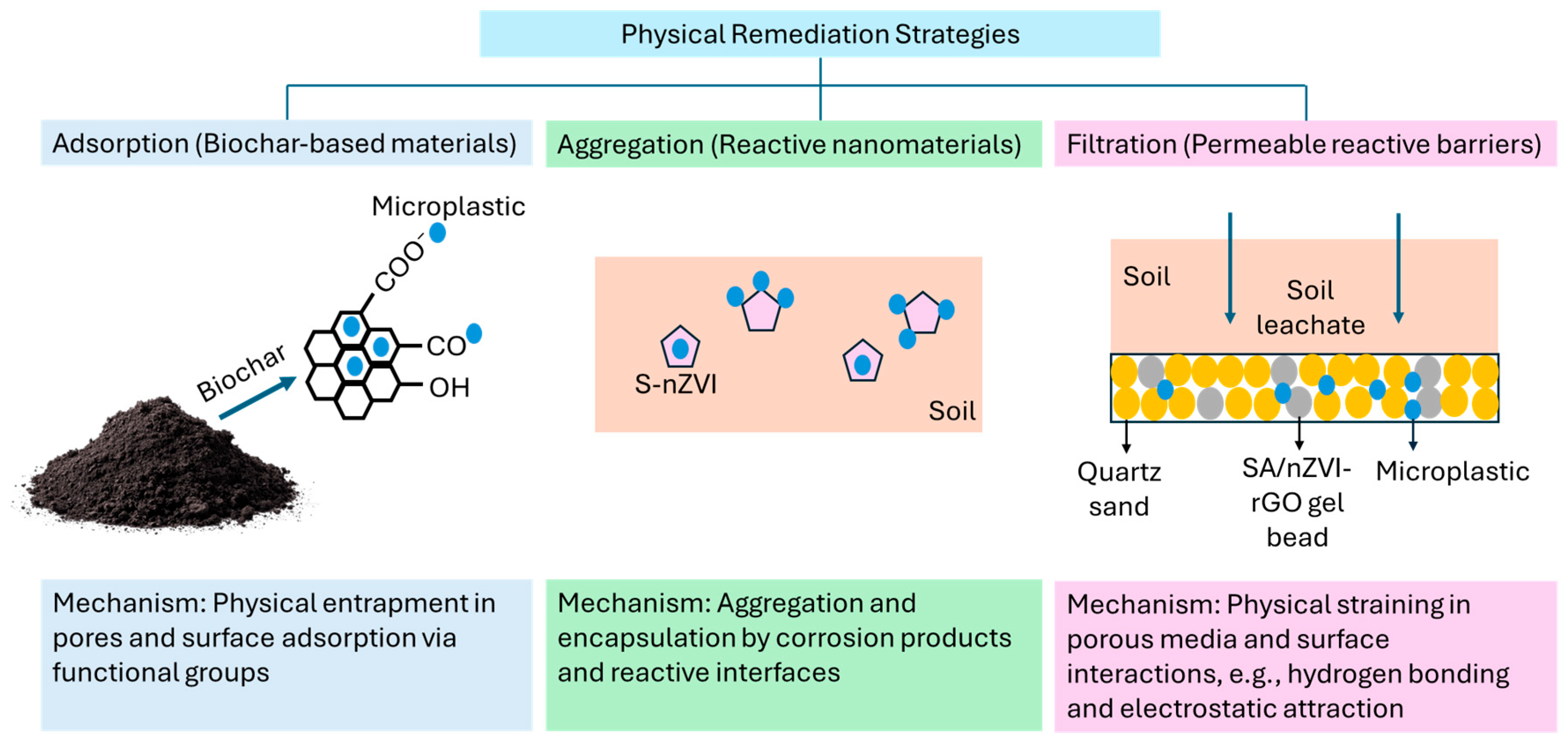
Physical strategies for the remediation of microplastic-contaminated soils remain comparatively underexplored relative to chemical and biological approaches, despite demonstrating promising removal efficiencies and mechanistic versatility. Existing studies primarily rely on adsorption, filtration, and aggregation processes to immobilize or remove microplastics from the soil matrix. For instance, biochar-based materials derived from wheat straw and cow dung have shown strong adsorption capacities for 1 μm polystyrene (PS) microplastics, achieving removal efficiencies exceeding 86% across different pyrolysis temperatures (Figure 1) [41,42]. The underlying mechanisms are dominated by physical entrapment within porous structures and surface adsorption facilitated by oxygen-containing functional groups (e.g., CO32− and COO), with removal kinetics influenced by environmental pH conditions. Notably, biochar performance remains stable over multiple reuse cycles, maintaining removal efficiencies above 85%, highlighting its potential as a reusable physical sorbent [41].
In addition to adsorption-based systems, engineered nanomaterials and reactive media have been employed to enhance the physical immobilization of microplastics. Sulfidated nanoscale zero-valent iron (S-nZVI), although primarily designed for chemical reduction of co-contaminants such as Cr(VI), also contributes to microplastic remediation through aggregation and encapsulation mechanisms (Figure 1) [43]. Microplastics interact with iron corrosion products to form heterogeneous aggregates, effectively reducing their mobility and bioavailability in soil. This aggregation is further enhanced by the high surface reactivity and modified physicochemical properties of S-nZVI, enabling simultaneous stabilization of both microplastics and associated contaminants [43,44].
Similarly, permeable reactive barrier systems incorporating quartz sand and sodium alginate/nano zero-valent iron–reduced graphene oxide (SA/nZVI-rGO) gel beads demonstrate the role of filtration and adsorption in microplastics removal (Figure 1) [45]. In such systems, microplastics are retained within porous media via physical straining and surface interactions, including π–π interactions, hydrogen bonding, and electrostatic attraction [46]. Removal efficiencies can reach up to 81.55% under favorable conditions (e.g., acidic pH), although competitive adsorption in co-contaminated systems may significantly reduce performance (e.g., to 38.92% in the presence of Cr(VI)) [45]. Overall, these findings suggest that physical remediation strategies, while currently limited in number, offer effective pathways for microplastic immobilization through adsorption, filtration, and aggregation, with performance strongly dependent on material properties and environmental conditions.
Comparisons across studies suggest that no single remediation material is universally superior, as performance depends strongly on soil chemistry and co-contaminant interactions. For example, wheat straw biochar showed slightly improved microplastic removal at higher pyrolysis temperatures (from 86.8 to 89.7%), whereas cow dung biochar exhibited reduced efficiency under the same conditions (from 92.4 to 88.1%), indicating that feedstock properties influence adsorption behavior. Soil pH also altered remediation mechanisms, with acidic conditions favoring pseudo-first-order adsorption kinetics and alkaline conditions promoting pseudo-second-order behavior [41]. In co-contaminated soils, remediation efficiency may further decline due to competition for adsorption sites. For instance, SA/nZVI-rGO gel beads achieved up to 81.55% microplastic removal under single-contaminant conditions, but efficiency decreased to 38.92% in the presence of Cr(VI) due to iron–chromium precipitates that blocked active adsorption sites [45]. In contrast, S-nZVI maintained high Cr(VI) removal (>98%) while simultaneously immobilizing microplastics through aggregate formation [43]. The existing evidence points to the greater suitability of hybrid iron-based systems for complex co-contaminated soils, given the lack of evidence on how co-contamination affects the adsorption of microplastics by biochar. Nonetheless, the costs and ecotoxicity potential of these systems require careful consideration. A comparison of remediation strategies is provided in Section 4.

3.2. Chemical Remediation

Chemical remediation strategies for microplastic-contaminated soils have received comparatively greater attention than physical approaches, owing to their ability to directly transform, degrade, or chemically stabilize both microplastics and co-occurring contaminants. These strategies encompass oxidative degradation, thermal decomposition, electrochemical processes, and soil amendments that modify physicochemical conditions to reduce contaminant bioavailability. The mechanisms involved are diverse, including reactive oxygen species (ROS)-mediated oxidation, polymer chain scission and mineralization, electrostatic coagulation, complexation, and pH-driven stabilization, with remediation performance varying widely depending on treatment intensity and environmental conditions [47].
Among the most effective chemical approaches, dielectric barrier discharge (DBD) plasma exhibits rapid, near-complete degradation of microplastics via ROS-driven oxidation. Plasma-generated reactive species (e.g., ·O and ·OH) initiate polymer chain cleavage, followed by progressive oxidation into aromatic intermediates and ultimately mineralization into CO2 and H2O [48]. High removal efficiencies of up to 96.5% within 30 min have been reported for mixed microplastics (polyethylene (PE), polypropylene (PP), PS, polyvinyl chloride (PVC)) in landfill soils [49] (Table 1), while targeted degradation of PS microplastics can reach 98.7% within 60 min under optimized voltage and airflow conditions [50] (Table 1). The performance of DBD systems is strongly influenced by operational parameters, including applied voltage, gas composition, and airflow rate, which collectively regulate ROS generation and reaction kinetics. Compared to other chemical methods, plasma-based techniques offer superior degradation efficiency and rapid treatment times, although their energy requirements and scalability remain important considerations.
Thermal treatment via fast pyrolysis represents another highly efficient chemical strategy, particularly for soils co-contaminated with microplastics and organic pollutants. Pyrolysis induces thermal decomposition of polymer chains and associated contaminants, with complete removal of microplastics achievable at relatively moderate temperatures (e.g., 400 °C within 5 min), and full remediation of both microplastics and petroleum hydrocarbons at 500 °C for 15 min [51] (Table 1). Removal efficiencies for total petroleum hydrocarbons reach up to 99%, accompanied by substantial reductions in toxic organic compounds and restoration of soil physicochemical properties. Mechanistically, pyrolysis involves sequential degradation of soil organic matter fractions and microplastics, with temperature playing a dominant role in overcoming inhibitory effects of microplastics at lower temperatures [52]. Compared to plasma treatment, pyrolysis achieves similarly high removal efficiencies but requires elevated temperatures and may adversely affect soil microbial diversity.
Electrochemical coagulation (ECC) offers an alternative chemical pathway that focuses on the aggregation and separation of microplastics in runoff from contaminated soil rather than on their complete degradation. During ECC, in situ-generated Fe3+ species hydrolyze to form positively charged hydroxides that electrostatically bind negatively charged microplastics, forming flocs that are subsequently removed via sedimentation or flotation [53] (Table 1). This process can achieve microplastic removal efficiencies of up to 98% within short treatment times (<45 min), demonstrating performance comparable to plasma-based systems in terms of removal efficiency, albeit through immobilization rather than mineralization. However, ECC may lead to the fragmentation of microplastics into smaller particles and the generation of sludge containing concentrated contaminants, which requires further management [53,54].
Chemical soil amendments further contribute to remediation by altering soil properties and reducing contaminant bioavailability. For example, kaolinite effectively mitigates the combined effects of microplastics and Cd contamination by increasing soil pH and cation exchange capacity (negatively affected by microplastics), thereby reducing Cd bioavailability by 23.70–35.74% and decreasing plant Cd uptake by up to 30.86% [55] (Table 1). Fucoxanthin (FX) amendment mitigates the chemical impacts of microplastics in soil primarily by restoring soil physicochemical balance rather than directly degrading the polymers. In PS-contaminated soils, microplastics lower pH, reduce organic matter (~3.03%), decrease nutrient availability (e.g., N, P, and K), and increase salinity, whereas FX counteracts these effects in a dose-dependent manner [56]. Mechanistically, microbial degradation of FX produces organic acids that buffer soil pH through interactions with alkaline minerals (e.g., Ca2+), while simultaneously enhancing nutrient cycling [57]. This leads to increased organic matter (up to ~7.35%) and improved nutrient availability (N, P, and K increases of up to 8.7%, 14.2%, and 3.2%, respectively) [56] (Table 1).
Integrated chemical treatments, such as soil washing combined with electrocoagulation, further enhance remediation performance by coupling extraction and separation processes. Soil washing using chelating agents (e.g., EDTA and oxalic acid) and natural reagents (e.g., Aloe vera gel) facilitates the mobilization and removal of microplastics and heavy metals, while subsequent electrocoagulation improves pollutant removal efficiency and water quality [58] (Table 1). Such integrated systems demonstrate improved overall remediation efficiency, although their effectiveness depends on reagent selection, operational conditions, and cost considerations.
Overall, chemical remediation strategies exhibit a broad spectrum of mechanisms and generally achieve high removal efficiencies, often exceeding 90% under optimized conditions. Plasma and pyrolysis techniques stand out for their ability to achieve near-complete degradation and mineralization of microplastics, whereas electrochemical and amendment-based approaches are more suitable for immobilization and risk reduction. Compared to physical strategies, chemical methods offer greater efficiency and versatility but may entail higher energy inputs, potential secondary pollution, or impacts on soil biological properties, highlighting the need for balanced, context-specific application. A summary of the chemical remediation strategies is provided below.
Table 1. Chemical remediation strategies for microplastic-contaminated soil.
Method/ReferenceKey Reagents/SystemMechanismRemediation TargetsPerformance Additional Effects
DBD plasma (soil treatment) [49]Dielectric barrier discharge plasma (air/N2, 17.5–24.1 kV)/ex situ; laboratory-scale plasma reactor systemROS oxidize microplastics, causing chain scission and mineralization (CO2, H2O)Microplastics (PE, PP, PS, and PVC)Up to 96.5% microplastic removal in 30 min; energy efficiency ~19.03 mg kJ−1Efficiency depends on voltage, airflow, and ROS residence time
DBD plasma (PS-specific degradation) [50]Plasma reactor (up to ~20 kV, controlled airflow)/ex situ; laboratory-scale plasma reactorTwo-stage oxidation: polymer fragmentation and ROS mineralizationPS microplasticsUp to 98.7% degradation in 60 min; ~90.6% converted to COxEfficiency decreases at high microplastic loading; airflow optimization critical
Fast pyrolysis [51]High temperature (400–500 °C)/ex situ; laboratory-scale thermal remediation systemThermal decomposition of microplastics and co-contaminants; breakdown of polymers and dissolved organic matter interactionsMicroplastics + petroleum hydrocarbons100% microplastic removal (≥400 °C); ~99% total petroleum hydrocarbon removal (500 °C, 15 min)Restores soil properties; reduces microbial diversity but enriches functional taxa
Electrochemical coagulation (ECC) [53]Fe electrodes (Fe3+ species)/ex situ; laboratory-scale electrochemical reactor treating runoffElectrocoagulation: Fe hydroxides adsorb and flocculate microplastics, leading to removal via precipitation/flotationMicroplastics in runoff/soil leachate~98% microplastic removal in <45 minProduces sludge containing microplastics; effective for fine particles
Kaolinite amendment [55]Kaolinite (1–2%)/in situ; greenhouse pot experimentIncreases soil pH and cation exchange capacity, reduces metal bioavailability; modifies soil chemistry to limit microplastic-induced mobilization of CdMicroplastics + Cd co-contaminationReduces bioavailable Cd by 23.70–35.74%; reduces plant Cd by 9.65–30.86%; increases crop biomass by 8.40–40.59%Restores pH (to ~7.79–8.03) and cation exchange capacity; mitigates microplastic-induced acidification
Fucoxanthin amendment [56]Natural pigment (0.5–3%)/in situ; pot experimentMicrobial degradation releases organic acids, leading to pH buffering and nutrient mobilizationMicroplastics (PS)Increases organic matter to ~7.35%; increases N, P, K by up to 8.7%, 14.2%, 3.2%Indirect remediation; enhances plant growth and soil fertility rather than degrading microplastics
Soil washing + electrocoagulation [58]EDTA, FeCl3, oxalic acid, Aloe vera gel + electrocoagulation/ex situ; pilot-scale systemChemical extraction of microplastics/heavy metals, followed by electrocoagulation to remove residualsMicroplastics + heavy metalsUp to 700 microplastics kg−1 removed (Aloe vera); high heavy metal removal (EDTA, FeCl3)Integrated chemical system; cost-effective (~0.779 USD m−3)
Note: In situ/ex situ here refers to the field application of the system rather than to the experimental conditions. An in situ system can be established at the contamination site, while an ex situ system requires the removal of contaminated soil for treatment in a facility.

3.3. Biological Remediation

Biological strategies for remediating microplastic-contaminated soils leverage living organisms, including earthworms, microorganisms, enzymes, microbial signaling compounds, and plant-assisted processes (phytoremediation), to promote biodegradation, fragmentation, and ecological restoration, although their remediation efficiency is generally lower and slower than that of chemical approaches. Earthworm-mediated remediation represents a key pathway, where species such as Lumbricus terrestris and Metaphire guillelmi enhance microplastic transformation through ingestion, mechanical fragmentation, and stimulation of microbial activity [59]. For example, significant size reduction in microplastics and partial depolymerization of biodegradable polymers (e.g., polylactic acid (PLA) reduced by 17.7% in molecular weight) have been observed in earthworm guts [60], while soil systems with earthworm activity show improved nutrient content (0.2–36.1%), enzyme activity (2.9–34.3%), and plant growth [61] (Table 2). However, these processes primarily facilitate fragmentation and indirect degradation rather than complete mineralization, and excessive microplastic exposure can negatively affect earthworm survival. Vermitechnology further enhances these effects by creating microbially enriched environments that accelerate degradation, outperforming conventional composting in efficiency and energy demand [62] (Table 2).
Microbial remediation strategies demonstrate more direct degradation capabilities, particularly when specialized strains or consortia are employed. Bacteria isolated from earthworm guts (e.g., Rhodococcus, Streptomyces, and Bacillus) achieved up to 60% degradation of low-density polyethylene (LDPE) within 21 days, accompanied by substantial fragmentation and formation of nanoplastics [63] (Table 2). Similarly, mixed microbial consortia, including Bacillus cereus and Aspergillus terreus, induce oxidative and structural modifications in PE, as evidenced by the formation of carbonyl functional groups and surface erosion [64] (Table 2). Composite microbial agents (CMA) further enhance field-scale applicability, reducing microplastic abundance by up to 8032 particles/kg and promoting degradation of additives and polymer stability through enzymatic pathways [65] (Table 2). Despite these advances, microbial degradation rates (typically <60% in weeks) remain lower than those of chemical treatments such as plasma or pyrolysis (>90%), reflecting limitations in the biodegradability of conventional plastics.
Enzyme-assisted and synergistic biological approaches offer improved performance by combining catalytic activity with microbial processes. The joint application of immobilized laccase and Pseudomonas putida achieved microplastic degradation rates of ~21.4% over 60 days, alongside significant improvements in soil enzyme activity, microbial biomass, and plant physiological performance [66] (Table 2). Although degradation efficiency is modest compared to purely chemical methods, these systems enhance soil health and ecological function, highlighting a trade-off between degradation rate and environmental compatibility.
Emerging biologically driven soil treatments, such as reductive soil disinfection (RSD) and signaling-molecule amendments, further underscore the importance of microbial community restructuring in microplastic remediation. RSD creates anaerobic conditions that stimulate microbial processes and improve soil quality indices, effectively restoring soil functionality despite limited direct microplastic degradation [67] (Table 2). Similarly, the addition of signaling compounds like indole enhances microbial diversity (e.g., Shannon index up to 7.07) and enriches functional taxa associated with pollutant degradation, thereby mitigating microplastic-induced ecological disturbances [68] (Table 2).
Phytoremediation introduces an additional biological pathway centered on plant–microbe interactions in the rhizosphere. Species such as Medicago sativa promote rhizodegradation by stimulating microbial activity and enzyme production, although direct microplastic degradation rates remain low (0.29–0.44% for polyethylene terephthalate (PET) and PP over 12 months), indicating that plant-driven processes are relatively slow [69] (Table 2). However, performance improves when combined with organic amendments (e.g., vermicompost) that enrich microbial communities. More effective outcomes were observed in bioaugmented systems, where plants such as Cymbopogon flexuosus combined with microbes (e.g., Micrococcus luteus) enhance co-metabolic degradation, as evidenced by increased oxidation of LDPE microplastics and substantial co-contaminant removal over 90 days (e.g., up to 79.16% petroleum hydrocarbon degradation) [70] (Table 2). Meanwhile, plant growth-promoting bacteria such as Bacillus sp. SL-413 and Enterobacter sp. VY-1 remediate soil through mitigating the negative impacts of microplastics on plants, thus improving plant growth (biomass increases up to ~46%), nutrient availability, and contaminant uptake, while reducing heavy metal bioavailability (up to 45.8%) in microplastic co-contaminated soils [71] (Table 2).
Collectively, biological strategies rely on mechanisms such as ingestion and fragmentation (earthworms), enzymatic depolymerization, oxidative transformation, modulation of microbial communities, and rhizosphere-driven co-metabolism. In terms of performance, microbial systems (up to ~60% degradation in weeks) outperform phytoremediation alone (<1% over months), while integrated plant–microbe systems provide intermediate efficiency with strong ecological benefits. Compared to chemical approaches (>90% removal), biological methods are slower and less efficient in direct microplastic elimination but offer superior sustainability, soil restoration, and long-term ecosystem recovery, making them particularly suitable for in situ and low-impact remediation. A summary of the biological remediation strategies is presented in Table 2.

3.4. Hybrid Remediation

Hybrid strategies for remediating microplastic-contaminated soils integrate physical, chemical, and biological processes to achieve synergistic improvements in contaminant stabilization, soil restoration, and ecological function [72]. Among these, biochar-based systems are particularly effective in mitigating the negative impacts of microplastics in multi-contaminant environments, rather than directly removing microplastics. For instance, modified biochar derived from Solidago canadensis significantly improved soil quality by increasing dissolved organic carbon, dissolved organic nitrogen, and nutrient availability, while boosting microbial biomass by up to 57.67% and enhancing enzyme activities associated with C, N, and P cycling. This reversed the negative impacts caused by PE and PLA on nutrient availability and microbial activity [73]. In microplastic-contaminated soils, biochar restored disrupted nutrient dynamics (e.g., increasing NH4+ and NO3 by up to 66.02%) and enriched functional microbial genes, effectively counteracting microplastic-induced suppression of soil biochemical processes [74]. However, its mitigation capacity is influenced by microplastic loading, with higher microplastic concentrations limiting effectiveness due to microbial inhibition and competition for sorption sites [75].
In more complex co-contaminated systems, biochar plays a critical role in attenuating the combined toxicity of microplastics and co-existing pollutants through adsorption, immobilization, and regulation of soil chemistry [76]. For example, in soils co-contaminated with microplastics and antibiotics, biochar reduced contaminant bioavailability and plant uptake, thereby alleviating phytotoxicity [77]. Microplastics increased the concentrations of antibiotics and antibiotic resistance genes (ARGs) in both soil and pak choi, with PE exerting a stronger influence. The incorporation of biochar lowered these concentrations. Nevertheless, microplastics, particularly PE, can compete with co-contaminants for biochar adsorption sites, partially constraining remediation efficiency, whereas biodegradable microplastics (e.g., PLA) may enhance co-adsorption and improve outcomes. PLA exhibited lower crystallinity and a greater tendency to adsorb onto biochar surfaces [77]. Similarly, in microplastic-heavy metal systems, biochar restored soil pH, improved nutrient status, and reduced bioavailable Cd by 14–15%, while enhancing enzyme activities and supporting plant growth [78]. Specifically, biochar reverses microplastic-induced declines in pH and electrical conductivity, restoring both to near-control levels. It also restores biochemical function, significantly elevating enzyme activities previously suppressed by microplastics, such as urease (up to ~183%) and sucrase (~77%). These findings collectively demonstrate that biochar-based hybrid strategies are especially valuable for mitigating microplastic-induced stress and stabilizing co-contaminants, even though their direct contribution to microplastic removal remains limited.
Biochar-based microbial hybrids further enhance remediation efficiency by coupling physicochemical adsorption with biological degradation. For example, biochar-supported microbial consortia (SynCom) significantly improved plant productivity (yield increased by 81.41%) and soil enzyme activity (dehydrogenase increased by 115.74%) under microplastic stress, while reducing oxidative damage and restoring nutrient cycling [79]. Mechanistically, biochar provides a porous habitat and adsorption matrix, while inoculated microbes drive nutrient transformation and biodegradation, resulting in improved plant–soil–microbe interactions [80]. Compared to biochar alone, these integrated systems demonstrate superior performance in restoring ecosystem functionality, although direct microplastic degradation remains limited.
Another emerging hybrid approach involves coupling reactive nanomaterials with phytoremediation. The use of carbon-supported nano zero-valent iron (C-nZVI) in combination with Lolium perenne significantly enhanced plant growth (biomass increase up to ~58.94%) and contaminant stabilization under microplastic stress, while increasing Cd accumulation in plants by up to 69.49% and transforming Cd into more stable residual fractions (increase up to 148.67%) [81]. This system operates through multiple mechanisms, including adsorption, co-precipitation, and rhizosphere stimulation [82]. It enhanced enzyme activity (e.g., urease activity increased by up to 85.01%) and microbial diversity, both of which were negatively impacted by microplastics [81,82]. Compared to standalone phytoremediation, this hybrid approach substantially improves both remediation efficiency and plant tolerance to microplastic-induced stress.
In a nutshell, hybrid strategies primarily remediate microplastic-contaminated soils by mitigating the adverse physicochemical and biological impacts of microplastics. They outperform single-method approaches in terms of soil quality restoration, nutrient cycling, and ecological resilience. However, their effectiveness in directly removing or mineralizing microplastics has not been explicitly measured and may be insignificant compared to high-intensity chemical treatments. Biochar-based systems excel in enhancing soil biochemical functions and mitigating microplastic-induced stress, while nano-enabled and microbe-assisted hybrids provide additional benefits in contaminant stabilization and plant growth promotion. However, their performance is highly context-dependent, influenced by microplastic type, concentration, and co-contaminants, underscoring the importance of tailored, system-specific design for optimal remediation outcomes. Table 3 presents a summary of the hybrid remediation strategies for microplastic-contaminated soil.

4. Practical Implications

The practical implications of the strategies are qualitatively evaluated in terms of their effectiveness, scalability, and limitations.

4.1. Effectiveness

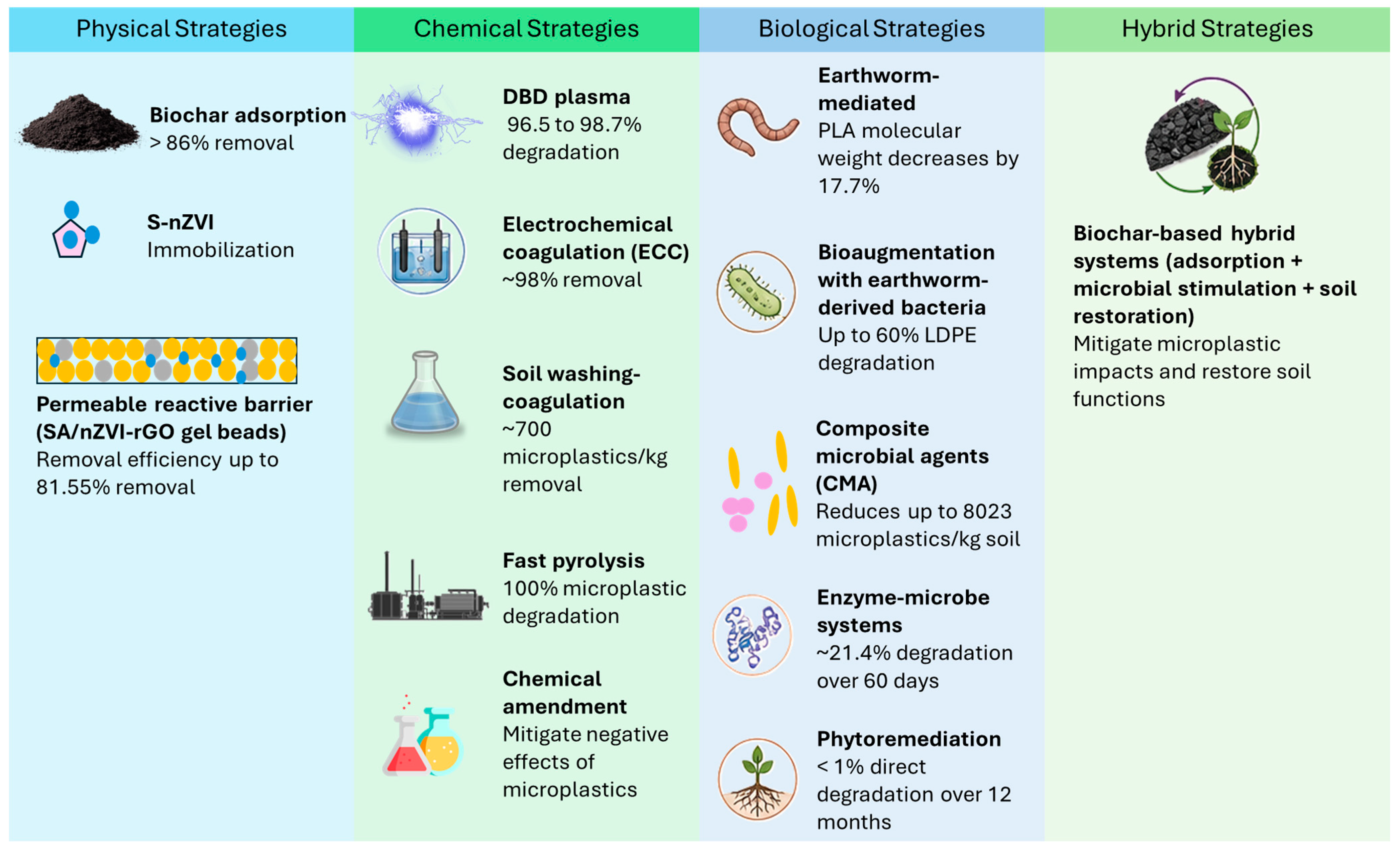
The effectiveness of remediation strategies for microplastic-contaminated soils varies widely depending on whether the approach directly removes microplastics, transforms them, or restores soil functionality. Among physicochemical approaches, adsorption- and degradation-based techniques demonstrate the highest direct removal efficiencies. For instance, biochar-derived adsorbents showed consistently strong performance, with removal efficiencies exceeding 86% for 1 μm polystyrene microplastics across different feedstocks and pyrolysis temperatures (Figure 2) [41]. Similarly, advanced treatments such as DBD plasma achieved up to 96.5–98.7% degradation of microplastics within short treatment times (30–60 min), indicating near-complete mineralization potential under optimized conditions (Figure 2) [49,50]. ECC and soil washing–coagulation systems also reported removal efficiencies approaching ~98%, particularly for fine microplastics, highlighting the robustness of coagulation–flocculation mechanisms in separating particulate contaminants (Figure 2) [53,58]. These findings collectively demonstrate that physicochemical methods are highly effective for rapid and substantial microplastic removal, especially in controlled or engineered systems.
Importantly, however, these high reported efficiencies are not directly comparable across studies due to substantial differences in experimental conditions, including microplastic type (e.g., polymer composition, size, aging state), soil properties (e.g., texture, organic matter content, pH), contaminant loading, and operational parameters (e.g., temperature, reaction time, dosage, and energy input). As a result, values such as “>90% removal” or “near-complete degradation” should be interpreted as condition-specific maxima rather than universally achievable performance benchmarks. Ex situ methods, particularly DBD plasma, fast pyrolysis, and soil washing, yield significantly different results from in situ methods such as adsorption, filtration, and microbial degradation. These methods are often characterized by very high or near-complete microplastic removal via mineralization and phase transfer, thus conferring long-term stability with minimal concern for microplastic desorption or fragmentation into nanoplastics. For soil washing, microplastics washed out can still reenter the environment if not properly contained or treated. This highlights a key limitation in the current literature: the lack of standardized testing frameworks for cross-study comparisons, which constrains the development of robust performance rankings of remediation technologies. Therefore, comparative interpretation should prioritize mechanistic understanding and operational context rather than absolute efficiency values alone.
Nano-enabled remediation strategies have comparatively lower microplastic removal and mainly aim to stabilize microplastics. Sulfidated nanoscale zero-valent iron (S-nZVI) achieved >98% removal of co-existing contaminants, while facilitating microplastic immobilization through aggregation with iron oxides, thereby reducing microplastic mobility and environmental exposure (Figure 2) [43]. Permeable reactive barrier systems using sodium alginate/nZVI–reduced graphene oxide gel beads achieved microplastic removal efficiencies up to 81.55% under optimal conditions (Figure 2) [45]. These systems leverage synergistic mechanisms, namely adsorption, reduction, and physical trapping, to effectively capture microplastics within soil matrices. Importantly, their performance remains consistently high across varying environmental conditions, demonstrating their suitability for in situ remediation scenarios.
Biological remediation strategies, while generally slower, are effective in transforming microplastics, though at lower efficiency. Earthworm-mediated processes represent a key pathway, with Lumbricus terrestris and Metaphire guillelmi facilitating microplastic fragmentation and depolymerization. For example, PLA molecular weight reductions of 17.7% and significant increases in smaller microplastic fractions confirmed active transformation (Figure 2) [60,61]. More notably, bioaugmentation using earthworm gut-derived bacteria achieved up to 60% degradation of LDPE microplastics within 21 days, demonstrating one of the highest biodegradation rates reported for soil systems (Figure 2) [63]. CMA further improves effectiveness, with field-scale reductions in microplastic abundance reaching 8032 particles kg−1 (Figure 2) [65]. Enzyme–microbe synergistic systems also contribute to measurable degradation (~21.4% over 60 days) (Figure 2), confirming the role of oxidative enzymes, such as laccase, in accelerating polymer breakdown [66]. These results indicate that biological strategies are effective in promoting microplastic transformation and long-term degradation through sustained microbial activity.
Hybrid remediation is primarily achieved with biochar systems through their multi-pronged actions, which combine adsorption, microbial stimulation, and soil restoration [83]. These systems have comparatively lower effectiveness in removing or degrading microplastics. Instead, they function to reduce the stress caused by microplastics. For example, modified biochar (SBM) significantly restored soil biochemical functioning negatively impacted by microplastics, increasing NH4+ and NO3 concentrations by 33.98% and 66.02%, respectively, while boosting microbial biomass by up to 57.67% (Figure 2) [73]. In parallel, biochar-supported microbial systems (SynCom) substantially mitigated oxidative stress, lipid peroxidation and enzyme suppression caused by microplastics, thus increasing crop yield by 81.41% and enhancing soil enzyme activities, which could indirectly contribute to microplastic degradation [79]. Field and incubation studies further show that biochar amendments can increase functional microbial populations by up to 958.7% and enhance nutrient cycling processes, creating favorable conditions for sustained microplastic breakdown [74]. Additionally, biochar–plant systems enhance rhizosphere-driven degradation processes, with significant increases in functional genes (e.g., phoD by 127.75%) and plant biomass (by 52.80%), compared to soils contaminated with microplastics [75]. These effects primarily restore soil ecosystem functionality under microplastic contamination or co-contamination.
All in all, the effectiveness of microplastic remediation strategies can be viewed along a gradient: physicochemical and nano-enabled methods provide rapid and high-efficiency microplastic removal (often >80–98%), biological approaches enable degradation and transformation at lower efficiency over longer timeframe (up to ~60% within weeks under optimized conditions), and hybrid systems mainly serve to restore long-term ecological functions with studies providing limited information on microplastic removal. Careful integration of adsorption, degradation, and biological stimulation mechanisms in hybrid strategies beyond biochar could offer a promising pathway to achieve both immediate and sustained remediation of microplastic-contaminated soils. Nonetheless, it should be noted that for controlled pot experiments, efficiencies reported under optimized laboratory conditions may substantially overestimate field-scale performance, where heterogeneity in soil structure, environmental fluctuations, and co-contaminant interactions can significantly reduce effectiveness.

4.2. Scalability

The scalability of remediation strategies for microplastic-contaminated soils is fundamentally governed by their operational complexity, resource requirements, adaptability to field conditions, and capacity for sustained performance over large spatial scales [84]. Current evidence indicates a clear distinction between highly efficient laboratory-scale technologies and those that can be realistically deployed at agricultural or landscape levels.
Physicochemical approaches, while demonstrating exceptional removal efficiencies, often face scalability constraints due to energy demand and infrastructure requirements. Techniques such as DBD plasma and fast pyrolysis achieve near-complete microplastic degradation (up to ~96–100%) within short timeframes, yet their reliance on high energy input (e.g., 17.5–24.1 kV for plasma, ≥400 °C for pyrolysis) limits their applicability to centralized or ex situ treatment systems [49,51]. Similarly, ECC and soil washing–electrocoagulation systems, despite achieving ~98% microplastic removal and relatively low treatment costs (~0.779 USD m−3), require water handling, electrode systems, and post-treatment sludge management, which complicate large-scale deployment in agricultural soils [53,58]. These methods are therefore more scalable in controlled environments, such as engineered soil-washing facilities, than in open-field conditions.
In contrast, adsorption-based amendments, particularly biochar, exhibit strong scalability potential due to their low cost, material availability, and compatibility with conventional soil management practices [85]. Biochar produced from agricultural residues (e.g., wheat straw and cow dung) achieves microplastic removal efficiencies exceeding 86% and maintains performance above 85% even after seven reuse cycles, demonstrating both durability and reusability [41]. The dependence of removal kinetics on pH and adsorption mechanisms does not hinder scalability, as soil pH can be managed agronomically. Importantly, biochar can be applied using existing fertilization infrastructure, enabling straightforward field-scale implementation. These characteristics position biochar as one of the most scalable solutions for microplastic remediation, particularly in agricultural systems where large volumes of soil must be treated economically.
Nano-enabled materials, such as sulfidated nanoscale zero-valent iron (S-nZVI), offer high reactivity and effectiveness but present intermediate scalability. S-nZVI can be applied at relatively low dosages (e.g., 0.5 wt%) while achieving high contaminant removal efficiencies (>98% for co-existing pollutants) and facilitating microplastic immobilization through aggregation processes [43]. The ability of microplastics to form stable aggregates with iron corrosion products further enhances in situ stabilization, reducing mobility without requiring complete removal. However, large-scale applications are constrained by production costs, potential nanoparticle aggregation during transport, and the need for controlled dosing to avoid unintended environmental effects [86]. Similarly, permeable reactive barrier systems using SA/nZVI–rGO gel beads demonstrate effective microplastic removal (up to 81.55%), but their implementation is largely limited to localized subsurface treatment zones (e.g., groundwater flow paths), making them less suitable for treating extensive agricultural soils [45]. Thus, while nano-materials are scalable in targeted remediation scenarios, their widespread field application remains more limited than that of bulk amendments like biochar.
Biological strategies represent the most inherently scalable approaches due to their self-sustaining nature and compatibility with natural soil processes. Earthworm-mediated remediation and vermicomposting can be readily integrated into agricultural systems, leveraging natural soil fauna to enhance microplastic fragmentation and transformation [60,62]. Similarly, microbial approaches, including bioaugmentation with microplastics-degrading bacteria and CMA, show strong scalability potential because microorganisms can proliferate and maintain activity in situ once established. For example, CMA applications have demonstrated significant reductions in microplastic abundance under field conditions, indicating feasibility beyond laboratory settings [65]. However, the scalability of purely biological degradation is influenced by environmental conditions such as temperature, moisture, and nutrient availability, which can affect microbial activity across heterogeneous field sites.
Hybrid strategies exhibit the highest practical scalability by combining the advantages of physicochemical stability and biological adaptability. Biochar-based hybrid systems are particularly notable for integrating adsorption capacity with microbial stimulation and soil restoration. For instance, biochar amendments significantly enhance microbial biomass (up to +57.67%) and nutrient cycling, creating favorable conditions for microplastic degradation while remaining compatible with large-scale soil management practices [73]. Similarly, biochar-supported microbial inoculants (SynCom) and biochar–plant systems can be applied using standard agricultural techniques, enabling seamless scaling from pot experiments to field applications [75,79]. These systems benefit from combined effects: biochar provides habitat and sorption sites, while microbes and plants drive degradation and ecological recovery.
Generally, the scalability of microplastic remediation strategies follows a clear hierarchy. High-energy physicochemical methods are best suited for localized or ex situ applications due to operational constraints, whereas adsorption-based amendments like biochar and biologically driven processes offer superior scalability for field-level implementation. Hybrid systems, especially those centered on biochar–microbe–plant interactions, represent the most scalable and practical solutions, as they combine ease of application, cost-effectiveness, and sustained remediation performance across large and heterogeneous soil environments.

4.3. Limitations and Future Directions

Despite rapid advances in remediation technologies, several critical limitations constrain the effectiveness, scalability, and long-term sustainability of strategies for microplastic-contaminated soils. These limitations stem from the physicochemical heterogeneity of microplastics, the complexity of soil matrices, and the incomplete understanding of microplastic–soil–biota interactions, all of which complicate translation from laboratory success to field-scale application.
A major limitation lies in the environmental sensitivity and mechanistic variability of adsorption-based systems, particularly biochar. Although biochar derived from wheat straw and cow dung achieved consistently high microplastic removal efficiencies (>86%) and maintained performance above 85% after multiple reuse cycles, its performance is strongly influenced by pyrolysis conditions, feedstock type, and soil chemistry [41,42]. For instance, increasing pyrolysis temperature enhanced removal efficiency for wheat straw biochar (86.8–89.7%) but reduced that of cow dung biochar (92.4–88.1%), highlighting inconsistent optimization pathways. This variability suggests that biochar selection cannot be generalized across soil systems, as feedstocks and pyrolysis conditions optimized for one soil type may perform poorly in others [87]. For example, highly porous, high-temperature biochar may be more suitable for coarse-textured soils with lower organic matter content, whereas its effectiveness may decline in clay-rich or highly alkaline soils, where aggregation and competition for adsorption sites are more pronounced [88]. Consequently, field applicability and transferability remain uncertain without site-specific optimization and validation under realistic soil conditions. Furthermore, the adsorption process is governed by pH-dependent kinetics, transitioning from pseudo-first-order under acidic conditions to pseudo-second-order under alkaline conditions, which introduces uncertainty under fluctuating field conditions [41]. Critically, adsorption immobilizes microplastics rather than degrading them, raising concerns about long-term stability and remobilization [89]. Future research should therefore focus on engineered biochar with stable binding mechanisms, multifunctional surface chemistry, and validated long-term field performance.
Advanced physicochemical approaches such as DBD plasma and fast pyrolysis demonstrate near-complete microplastic degradation (up to 96.5–100%), yet their scalability is constrained by energy intensity, operational complexity, and sensitivity to soil heterogeneity [50]. Plasma systems require precise control of voltage, airflow, and reactive oxygen species dynamics, while pyrolysis at ≥400 °C, although effective for complete microplastic removal, may disrupt soil microbial communities and requires significant energy input [49,51]. These limitations suggest that future developments should prioritize energy-efficient reactor designs, coupling with renewable energy sources, and integration with biological post-treatment to restore soil ecological functions.
Similarly, ECC and soil washing systems achieve high removal efficiencies (~98% or up to 700 microplastics kg−1) [53,58], but are largely limited to ex situ applications and generate secondary waste streams such as microplastic-containing sludge. Their dependence on chemical reagents (e.g., EDTA, FeCl3) and controlled conditions further constrain in situ scalability. Future innovation should focus on in situ electrochemical systems, reagent recycling, and sludge valorization pathways to enhance sustainability.
Biological strategies, while environmentally compatible, face intrinsic limitations related to slow degradation kinetics and incomplete mineralization. Microbial consortia, composite microbial agents, and enzyme–microbe systems typically achieve partial degradation (e.g., ~21.4% over 60 days or ~60% under optimized conditions), reflecting the recalcitrant nature of plastic polymers and environmental constraints on microbial activity [63,65,66]. Phytoremediation contributes primarily through indirect mechanisms such as rhizosphere stimulation, but exhibits minimal direct microplastic degradation (0.29–0.44% over 12 months) [69]. These findings indicate a need for advanced biotechnological approaches, including enzyme engineering, synthetic microbial consortia, and rhizosphere manipulation, to accelerate degradation rates and improve field applicability.
A critical limitation arises in fauna-mediated remediation, particularly involving earthworms. While earthworms enhance fragmentation and microbial activity, they can also facilitate the vertical transport and redistribution of microplastics, potentially increasing environmental risks [90]. For example, Lumbricus terrestris transported up to 73.5% of surface microplastics into burrow walls and increased the proportion of fine particles (≤50 μm) by 65%, thereby enhancing their mobility and potential for leaching into groundwater [91]. Similarly, nanoplastics have been shown to accumulate in the drilosphere through repeated ingestion and excretion, with transport rates exceeding predictions from conventional soil mixing models [92]. These findings highlight a key trade-off between biological processing and unintended contaminant redistribution, underscoring the need for risk-informed application of bioturbation-based strategies and their integration with immobilization technologies.
Hybrid and nanomaterial-based approaches provide promising avenues but introduce additional uncertainties. The use of sulfidated nanoscale zero-valent iron (S-nZVI) demonstrates effective immobilization of microplastics through aggregation with iron corrosion products, reducing mobility and stabilizing contaminants within the soil matrix [43]. Notably, microplastics actively participate in forming microplastic–iron oxide aggregates, which enhances immobilization but also introduces complexity in predicting long-term behavior. Likewise, permeable reactive barrier systems using sodium alginate/nZVI-reduced graphene oxide (SA/nZVI-rGO) gel beads achieve high microplastic removal under single-contaminant conditions (up to 81.55%), yet performance declines significantly in more complex systems due to competitive adsorption processes [45]. These limitations point to the need for eco-safe nanomaterials, improved understanding of nanoparticle fate, and optimization under realistic multi-contaminant and heterogeneous soil conditions.
Another overarching limitation is the lack of standardized methodologies for microplastic quantification, assessment of removal efficiency, and long-term monitoring [93]. Differences in particle size ranges, polymer types, and analytical techniques hinder cross-study comparisons and impede the development of regulatory benchmarks. Addressing this gap requires harmonized analytical protocols, advanced detection tools, and standardized reporting frameworks.
Future research should prioritize the development of integrated, multi-functional remediation systems that combine rapid removal with long-term degradation. For example, coupling adsorption (biochar), immobilization (nanomaterials), and biodegradation (microbial consortia) could address both immediate contamination and long-term persistence. Additionally, nature-based and circular approaches, such as waste-derived biochar and plant–microbe systems, offer scalable and sustainable solutions when properly optimized. Table 4 summarizes the practical implications of the main soil remediation strategies for microplastics.

5. Conclusions

In summary, no single remediation strategy fully optimizes efficiency, scalability, and sustainability for microplastic-contaminated soils. The most feasible solutions integrate complementary mechanisms. Among available approaches, adsorption-based amendments, particularly biochar, stand out as the most practical core technology due to their consistently high removal performance, reusability, low cost, and compatibility with conventional soil management. When combined with biological processes such as microbial consortia or plant–microbe systems, these approaches can move beyond immobilization toward gradual degradation and ecosystem recovery. Hybrid systems centered on biochar–microbe–plant interactions, therefore, represent the most viable large-scale solutions, balancing immediate stabilization with longer-term transformation and soil restoration.
High-efficiency physicochemical technologies, including plasma-based oxidation, electrochemical coagulation, and thermal treatments, can achieve near-complete removal or degradation of microplastics within short timeframes. However, their reliance on energy-intensive operations, specialized equipment, and controlled conditions limits their application to ex situ treatment or localized hotspots rather than broad agricultural landscapes. Nano-enabled materials offer effective in situ immobilization and moderate removal through aggregation and adsorption mechanisms, but their large-scale deployment is constrained by cost, delivery challenges, and uncertainties regarding long-term environmental behavior. Biological approaches remain inherently scalable and environmentally compatible, yet their slower degradation rates highlight the need for enhancement through bioaugmentation and engineered microbial systems.
From a practical perspective, large-scale remediation should prioritize low-cost, easily deployable amendments integrated with biological enhancement to ensure both feasibility and sustainability. High-efficiency technologies are better suited for targeted applications, such as hotspot treatment or pre-processing of contaminated soils. Risk-informed design is also essential, particularly where biological agents may inadvertently redistribute microplastics within the soil profile. These findings also carry important policy implications. Policymakers and environmental regulators should promote adaptive remediation frameworks that match remediation technologies with specific contamination scenarios and land-use priorities. Incentives for sustainable amendments derived from agricultural waste, support for field-scale pilot studies, and the establishment of standardized monitoring protocols would improve technology adoption and comparability across studies. In agricultural settings, integrating remediation into existing soil management and circular economy strategies may further enhance long-term feasibility and stakeholder acceptance.
Importantly, beyond remediation itself, these strategies can directly inform future soil management and monitoring practices. For instance, biochar- and amendment-based approaches can be integrated into routine soil conditioning programs to simultaneously improve soil fertility and reduce microplastic mobility. Microbial and plant–microbe systems can be incorporated into regenerative agriculture practices to enhance soil resilience while enabling gradual contaminant attenuation. In parallel, remediation frameworks can be linked with long-term soil monitoring programs that track microplastic abundance, size distribution, and co-contaminant interactions as part of standard soil health indicators. This integration enables a transition from one-off remediation actions toward continuous, management-based mitigation strategies, where soil quality improvement, pollution control, and monitoring are co-designed within sustainable land-use systems.
Future research should focus on developing integrated, multi-functional systems that combine rapid removal with sustained degradation. Advances in engineered materials and microbial technologies are needed to improve degradation rates and ensure long-term stability. Equally important is the establishment of standardized methods for microplastic detection and performance evaluation, alongside field-scale validation under realistic conditions. Future evidence-based frameworks should also incorporate life-cycle assessment, techno-economic analysis, and ecological risk assessment to guide remediation prioritization and policy development across different environmental contexts. Overall, scalable, hybrid, and nature-based solutions provide the most promising pathway for effective and sustainable remediation of microplastic-contaminated soils.

Funding

This research received no external funding.

Institutional Review Board Statement

Not applicable.

Informed Consent Statement

Not applicable.

Data Availability Statement

No new data were created or analyzed in this study. This review is based on previously published literature, which has been appropriately cited within the article. All data supporting the findings of this study are available from the corresponding references.

Acknowledgments

During the preparation of this manuscript/study, the author used Grammarly for editing the manuscript and correcting grammatical and sentence errors. The author has reviewed and edited the output and takes full responsibility for the content of this publication.

Conflicts of Interest

The author declares no conflicts of interest.

References

  1. Rochman, C.M. Microplastics research—From sink to source. Science 2018, 360, 28–29. [Google Scholar] [CrossRef]
  2. Zhu, F.; Zhu, C.; Wang, C.; Gu, C. Occurrence and Ecological Impacts of Microplastics in Soil Systems: A Review. Bull. Environ. Contam. Toxicol. 2019, 102, 741–749. [Google Scholar] [CrossRef] [PubMed]
  3. Tang, K.H.D. Microplastics in Soil: Uncovering Their Hidden Chemical Implications. Trop. Aquat. Soil Pollut. 2025, 5, 88–109. [Google Scholar] [CrossRef]
  4. Tang, K.H.D. Microplastics in agricultural soils in China: Sources, impacts and solutions. Environ. Pollut. 2023, 322, 121235. [Google Scholar] [CrossRef]
  5. Porterfield, K.K.; Hobson, S.A.; Neher, D.A.; Niles, M.T.; Roy, E.D. Microplastics in composts, digestates, and food wastes: A review. J. Environ. Qual. 2023, 52, 225–240. [Google Scholar] [CrossRef]
  6. Xu, B.; Liu, F.; Cryder, Z.; Huang, D.; Lu, Z.; He, Y.; Wang, H.; Lu, Z.; Brookes, P.C.; Tang, C.; et al. Microplastics in the soil environment: Occurrence, risks, interactions and fate—A review. Crit. Rev. Environ. Sci. Technol. 2020, 50, 2175–2222. [Google Scholar] [CrossRef]
  7. Tang, K.H.D. Microplastics in and Near Landlocked Countries of Central and East Asia: A Review of Occurrence and Characteristics. Trop. Aquat. Soil Pollut. 2023, 3, 120–130. [Google Scholar] [CrossRef]
  8. Liu, X.; He, S.; Tong, Y.; Liu, Z.; Li, W.; Xiayihazi, N.; Lu, J. Microplastic pollution in urban green-belt soil in Shihezi City, China. Environ. Sci. Pollut. Res. 2022, 29, 59403–59413. [Google Scholar] [CrossRef]
  9. Jin, T.; Tang, J.; Lyu, H.; Wang, L.; Gillmore, A.B.; Schaeffer, S.M. Activities of Microplastics (MPs) in Agricultural Soil: A Review of MPs Pollution from the Perspective of Agricultural Ecosystems. J. Agric. Food Chem. 2022, 70, 4182–4201. [Google Scholar] [CrossRef]
  10. Beriot, N.; Peek, J.; Zornoza, R.; Geissen, V.; Huerta Lwanga, E. Low density-microplastics detected in sheep faeces and soil: A case study from the intensive vegetable farming in Southeast Spain. Sci. Total Environ. 2021, 755, 142653. [Google Scholar] [CrossRef] [PubMed]
  11. Napper, I.E.; Baroth, A.; Barrett, A.C.; Bhola, S.; Chowdhury, G.W.; Davies, B.F.R.; Duncan, E.M.; Kumar, S.; Nelms, S.E.; Hasan Niloy, M.N.; et al. The abundance and characteristics of microplastics in surface water in the transboundary Ganges River. Environ. Pollut. 2021, 274, 116348. [Google Scholar] [CrossRef]
  12. Su, L.; Xue, Y.; Li, L.; Yang, D.; Kolandhasamy, P.; Li, D.; Shi, H. Microplastics in Taihu Lake, China. Environ. Pollut. 2016, 216, 711–719. [Google Scholar] [CrossRef] [PubMed]
  13. Mushtak, F.; Prakash, J.; Katoch, S.S. Microplastics in complex soil matrix: Recovery, identification and removal using micro nano techniques. Micro Nano Eng. 2024, 22, 100237. [Google Scholar] [CrossRef]
  14. Tang, K.H.D.; Luo, Y. Abundance and Characteristics of Microplastics in the Soil of a Higher Education Institution in China. Trop. Aquat. Soil Pollut. 2023, 3, 1–14. [Google Scholar] [CrossRef]
  15. Hossain, M.; Engelhardt, I. Global plastic footprint: Unveiling property trends, environmental fate, and emerging threats of microplastic and nanoplastics pollution across ecosystems. Energy Ecol. Environ. 2025, 10, 637–674. [Google Scholar] [CrossRef]
  16. Tang, K.H.D. Tracing Microplastic Pollution Through Animals: A Narrative Review of Bioindicator Approaches. Appl. Sci. 2026, 16, 1413. [Google Scholar] [CrossRef]
  17. de Souza Machado, A.A.; Kloas, W.; Zarfl, C.; Hempel, S.; Rillig, M.C. Microplastics as an emerging threat to terrestrial ecosystems. Glob. Change Biol. 2018, 24, 1405–1416. [Google Scholar] [CrossRef]
  18. Shafea, L.; Yap, J.; Beriot, N.; Felde, V.J.M.N.L.; Okoffo, E.D.; Enyoh, C.E.; Peth, S. Microplastics in agroecosystems: A review of effects on soil biota and key soil functions. J. Plant Nutr. Soil Sci. 2023, 186, 5–22. [Google Scholar] [CrossRef]
  19. Ya, H.; Jiang, B.; Xing, Y.; Zhang, T.; Lv, M.; Wang, X. Recent advances on ecological effects of microplastics on soil environment. Sci. Total Environ. 2021, 798, 149338. [Google Scholar] [CrossRef]
  20. Tang, K.H.D. Microplastics and Antibiotics in Aquatic Environments: A Review of Their Interactions and Ecotoxicological Implications. Trop. Aquat. Soil Pollut. 2024, 4, 60–78. [Google Scholar] [CrossRef]
  21. Tang, K.H.D. Microplastic sorption of personal care products in aquatic environments: Mechanisms and key factors. Acad. Environ. Sci. Sustain. 2026, 3. [Google Scholar] [CrossRef]
  22. Liu, G.; Dave, P.H.; Kwong, R.W.M.; Wu, M.; Zhong, H. Influence of Microplastics on the Mobility, Bioavailability, and Toxicity of Heavy Metals: A Review. Bull. Environ. Contam. Toxicol. 2021, 107, 710–721. [Google Scholar] [CrossRef]
  23. Lehmann, A.; Leifheit, E.F.; Gerdawischke, M.; Rillig, M.C. Microplastics have shape- and polymer-dependent effects on soil aggregation and organic matter loss—An experimental and meta-analytical approach. Microplastics Nanoplastics 2021, 1, 7. [Google Scholar] [CrossRef]
  24. Chia, R.W.; Lee, J.-Y.; Jang, J.; Kim, H.; Kwon, K.D. Soil health and microplastics: A review of the impacts of microplastic contamination on soil properties. J. Soils Sediments 2022, 22, 2690–2705. [Google Scholar] [CrossRef]
  25. Zhou, W.; Wang, Q.; Wei, Z.; Jiang, J.; Deng, J. Effects of microplastic type on growth and physiology of soil crops: Implications for farmland yield and food quality. Environ. Pollut. 2023, 326, 121512. [Google Scholar] [CrossRef]
  26. Lalrinfela, P.; Vanlalsangi, R.; Lalrinzuali, K.; Babu, P.J. Microplastics: Their effects on the environment, human health, and plant ecosystems. Environ. Pollut. Manag. 2024, 1, 248–259. [Google Scholar] [CrossRef]
  27. Rasheed, A.; Sharma, N.; Surampalli, R.Y.; Das, S. Evaluating treatment solutions: Critical review on technologies employed for microplastic removal from water matrices. Curr. Opin. Environ. Sci. Health 2023, 36, 100516. [Google Scholar] [CrossRef]
  28. Cavazzoli, S.; Murari, F.; Donegà, M.; Tirler, W.; Andreottola, G. Microplastic removal and environmental emissions from municipal wastewater treatment plants. J. Clean. Prod. 2025, 521, 146267. [Google Scholar] [CrossRef]
  29. Iyare, P.U.; Ouki, S.K.; Bond, T. Microplastics removal in wastewater treatment plants: A critical review. Environ. Sci. Water Res. Technol. 2020, 6, 2664–2675. [Google Scholar] [CrossRef]
  30. Shen, M.; Song, B.; Zhu, Y.; Zeng, G.; Zhang, Y.; Yang, Y.; Wen, X.; Chen, M.; Yi, H. Removal of microplastics via drinking water treatment: Current knowledge and future directions. Chemosphere 2020, 251, 126612. [Google Scholar] [CrossRef] [PubMed]
  31. Zhang, Y.; Jiang, H.; Wang, H.; Wang, C. Removal Strategies for Aquatic Microplastics. In Microplastic Sources, Fate and Solution; Khan, A., Wang, C., Asiri, A.M., Eds.; Springer Nature: Singapore, 2023; pp. 71–88. [Google Scholar]
  32. Shen, M.; Song, B.; Zhou, C.; Almatrafi, E.; Hu, T.; Zeng, G.; Zhang, Y. Recent advances in impacts of microplastics on nitrogen cycling in the environment: A review. Sci. Total Environ. 2022, 815, 152740. [Google Scholar] [CrossRef]
  33. Yang, J.W.; Park, C.; Jho, E.H. Removal technologies of microplastics in soil and water environments: Review on sources, ecotoxicity, and removal technologies. Appl. Biol. Chem. 2024, 67, 106. [Google Scholar] [CrossRef]
  34. Bhattacharjee, U.; Baruah, K.N.; Shah, M.P. Exploring sustainable strategies for mitigating microplastic contamination in soil, water, and the food chain: A comprehensive analysis. Environ. Chem. Ecotoxicol. 2025, 7, 453–461. [Google Scholar] [CrossRef]
  35. Xu, T.; Wang, X.; Shi, Q.; Liu, H.; Chen, Y.; Liu, J. Review of Soil Microplastic Degradation Pathways and Remediation Techniques. Int. J. Environ. Res. 2024, 18, 77. [Google Scholar] [CrossRef]
  36. Pondala, S.; Botsa, S.M. Physical, thermal, chemical and biological approaches for plastics degradation–A review. Clean. Chem. Eng. 2025, 11, 100162. [Google Scholar] [CrossRef]
  37. Ghasemi, S.; Parastesh, A.; Ramezani, H.; Padervand, M.; Dawi, E.A.; Hamzehlouyan, T.; Labidi, A.; Hajiahmadi, S.; Signoretto, M.; Lichtfouse, E.; et al. Microplastics Controlling Approaches: Removal Reaction Pathways, Kinetics, and Toxicity Evaluation of the Products. In Microplastic Pollutants in Biotic Systems: Environmental Impact and Remediation Techniques; ACS Symposium Series; American Chemical Society: Washington, DC, USA, 2024; Volume 1482, pp. 213–237. [Google Scholar]
  38. Yadav, P.; Kumar, A.; Ram, K.; Kumar, A.; Gupta, R.K.; Dufossé, L. Microbial degradation of microplastics: Effectiveness, challenges, and sustainable solutions. Curr. Res. Microb. Sci. 2025, 9, 100495. [Google Scholar] [CrossRef] [PubMed]
  39. Magalhães, S.; Alves, L.; Medronho, B.; Svanedal, I.; Norgren, M.; Rasteiro, M.G. Innovative Approaches to Mitigating Microplastic Pollution in Effluents and Soils. Sustainability 2025, 17, 9014. [Google Scholar] [CrossRef]
  40. Ji, H.; Zhou, C.; Li, P. Applications of biochar in the remediation of soil microplastic pollution: A review. Soil Sci. Soc. Am. J. 2025, 89, e70078. [Google Scholar] [CrossRef]
  41. Chai, B.; Xiao, T.; Xiao, E.; Du, S.; Yang, S.; Yin, H.; Dang, Z.; Pan, K. Enhancing microplastics removal from soils using wheat straw and cow dung-derived biochars. J. Clean. Prod. 2024, 470, 143288. [Google Scholar] [CrossRef]
  42. Tong, M.; He, L.; Rong, H.; Li, M.; Kim, H. Transport behaviors of plastic particles in saturated quartz sand without and with biochar/Fe3O4-biochar amendment. Water Res. 2020, 169, 115284. [Google Scholar] [CrossRef] [PubMed]
  43. Shi, S.; Chen, L.; Zhang, Y.; Cui, J.; Zhang, S.; Tang, C.; Hu, X. Sulfidated Nanoscale Zero-Valent Iron (S-nZVI) Facilitates Remediation and Safe Crop Production in Cr(VI) and Microplastics Co-contaminated Soil. ACS EST Eng. 2025, 5, 1513–1524. [Google Scholar] [CrossRef]
  44. Kumar, C.; Singh, H.; Kaur, M.; Arya, S.K.; Khatri, M. Remediation strategies for micro/nanoplastic pollution using magnetic nanomaterials. Environ. Sci. Pollut. Res. 2025, 32, 15574–15603. [Google Scholar] [CrossRef]
  45. Yang, Z.; Ma, Y.; Jing, Q.; Ren, Z. Comigration Behavior of Cr(VI) and Microplastics and Remediation of Microplastics-Facilitated Cr(VI) Transportation in Saturated Porous Media. Polymers 2024, 16, 3271. [Google Scholar] [CrossRef]
  46. Sun, C.; Wang, Z.; Zheng, H.; Chen, L.; Li, F. Biodegradable and re-usable sponge materials made from chitin for efficient removal of microplastics. J. Hazard. Mater. 2021, 420, 126599. [Google Scholar] [CrossRef]
  47. Xu, Y.; Zhang, P.; Zhang, R.; Qu, C.; Yuan, Y.; Hui, K.; Sun, J.; Tan, W. Separation and degradation techniques for microplastics in soil environments. J. Water Process Eng. 2025, 71, 107302. [Google Scholar] [CrossRef]
  48. Zhu, H.; Lan, C.; Liu, D.; Nie, L.; Lu, X. Advances in plasma-assisted degradation of plastic pollutants: From reaction mechanisms to engineering applications. J. Environ. Chem. Eng. 2026, 14, 120766. [Google Scholar] [CrossRef]
  49. Sima, J.; Wang, J.; Song, J.; Du, X.; Lou, F.; Pan, Y.; Huang, Q.; Lin, C.; Wang, Q.; Zhao, G. Dielectric barrier discharge plasma for the remediation of microplastic-contaminated soil from landfill. Chemosphere 2023, 317, 137815. [Google Scholar] [CrossRef]
  50. Sima, J.; Wang, J.; Song, J.; Du, X.; Lou, F.; Zhu, Y.; Lei, J.; Huang, Q. Efficient degradation of polystyrene microplastic pollutants in soil by dielectric barrier discharge plasma. J. Hazard. Mater. 2024, 468, 133754. [Google Scholar] [CrossRef]
  51. Hu, Z.-Y.; Jiang, H. Vital Threshold and Underlying Mechanism for the Complete Remediation of Oil and Microplastic Co-Contaminated Soil by Fast Pyrolysis. ACS EST Eng. 2024, 4, 2198–2208. [Google Scholar] [CrossRef]
  52. Qin, Y.; Wang, Z.; Yang, F.; Wang, D.; Liu, W.; Hanikai, D.; Liu, J.; Zhou, J.; Liu, D. Research progress on pyrolysis and resource utilisation of waste plastics: Methods, mechanisms, influencing factors, and future prospects. J. Anal. Appl. Pyrolysis 2026, 193, 107459. [Google Scholar] [CrossRef]
  53. Shivaswamy, M.; Gowda, N.K.; Mahesh, S. Identification and removal of microplastics from contaminated semi-urban agricultural soil using electrochemical treatment technology. Chem. Pap. 2023, 77, 2125–2139. [Google Scholar] [CrossRef]
  54. Zhou, T.; Song, S.; Min, R.; Liu, X.; Zhang, G. Advances in chemical removal and degradation technologies for microplastics in the aquatic environment: A review. Mar. Pollut. Bull. 2024, 201, 116202. [Google Scholar] [CrossRef]
  55. Song, X.; Jin, J.; Li, H.; Wang, F.; Liu, J.; Wang, X.; Huang, X.; Chai, C.; Song, N.; Zong, H. Kaolinite reduced Cd accumulation in peanut and remediate soil contaminated with both microplastics and cadmium. Ecotoxicol. Environ. Saf. 2023, 266, 115580. [Google Scholar] [CrossRef]
  56. Rassaei, F. Exploring the Potential of Fucoxanthin Treatment to Alleviate Microplastic Pollution Effects on Maize Growth. Soil Sediment Contam. Int. J. 2024, 33, 829–858. [Google Scholar] [CrossRef]
  57. Gong, B.; Ma, S.; Yan, Y.; Wang, Z. Progress on the biological characteristics and physiological activities of fucoxanthin produced by marine microalgae. Front. Mar. Sci. 2024, 11, 1357425. [Google Scholar] [CrossRef]
  58. Vairamuthu, M.; Nidheesh, P.V.; Anantha Singh, T.S. Treatment of unregulated open dumping site soil by combined Aloe vera gel washing and electrocoagulation for the removal of microplastics and heavy metals. J. Environ. Chem. Eng. 2025, 13, 115555. [Google Scholar] [CrossRef]
  59. Khatri, M.; Baniya, S.; Poudel, S.; Treichel, H.; Paudel, S.R. Chapter 11—Role of earthworms in the degradation of microplastics. In Environmental Hazards of Plastic Wastes; Kapoor, R.T., Treichel, H., Zdarta, J., Eds.; Elsevier: Amsterdam, The Netherlands, 2025; pp. 157–180. [Google Scholar]
  60. Meng, K.; Lwanga, E.H.; van der Zee, M.; Munhoz, D.R.; Geissen, V. Fragmentation and depolymerization of microplastics in the earthworm gut: A potential for microplastic bioremediation? J. Hazard. Mater. 2023, 447, 130765. [Google Scholar] [CrossRef]
  61. Li, Y.; Wang, J.; Shao, M.a.; Jia, H. Earthworm activity effectively mitigated the negative impact of microplastics on maize growth. J. Hazard. Mater. 2023, 459, 132121. [Google Scholar] [CrossRef]
  62. Sanchez-Hernandez, J.C.; Capowiez, Y.; Ro, K.S. Potential Use of Earthworms to Enhance Decaying of Biodegradable Plastics. ACS Sustain. Chem. Eng. 2020, 8, 4292–4316. [Google Scholar] [CrossRef]
  63. Huerta Lwanga, E.; Thapa, B.; Yang, X.; Gertsen, H.; Salánki, T.; Geissen, V.; Garbeva, P. Decay of low-density polyethylene by bacteria extracted from earthworm’s guts: A potential for soil restoration. Sci. Total Environ. 2018, 624, 753–757. [Google Scholar] [CrossRef]
  64. Zhang, H.; Liu, X.; Gao, Y.; Feng, Y.; Wu, Y. Microbial remediation of polyethylene microplastic-tetracycline combined contamination in soil: Interactions and ecological implications. Int. Biodeterior. Biodegrad. 2025, 205, 106165. [Google Scholar] [CrossRef]
  65. Jin, D.; Luo, X.-W.; Lu, J.-S.; Wu, J.; Xiang, X.-Y.; Girimpuhwe, D.; Liu, Y.; Xu, X.-F.; Liu, W.-S.; Wu, Q.-X. A New Approach for Remediating Polyethylene Microplastics Pollution in Agricultural Soils: The Combined Effects of Compound Microbial Agent. J. Agric. Food Chem. 2025, 73, 30196–30208. [Google Scholar] [CrossRef]
  66. Alshegaihi, R.M.; Alenezi, M.A.; Alghanem, S.M.S.; Alshaharni, M.O.; Alqurashi, M.; Alhelaify, S.S.; Alharthy, O.M.; Fayad, E. Synergistic Remediation of Microplastics-Contaminated Soil by Immobilized Laccase and Pseudomonas putida: Insights into Microbial Activity, Soil Enzymatic, and Molecular Responses in Maize (Zea mays L.). J. Soil Sci. Plant Nutr. 2025. [Google Scholar] [CrossRef]
  67. Liu, H.; Dong, L.; Wang, X.; Sun, Y.; Yang, K.; Chen, E.; Song, W.; Zhang, L. Effects of reductive soil disinfestation on remediating microplastic-polluted soils and restructuring microbial communities. J. Environ. Chem. Eng. 2025, 13, 119692. [Google Scholar] [CrossRef]
  68. Yang, T.; Yuan, R.; Zou, X.; Dai, M.; Dong, X.; Chen, H.; Guo, Z.; Jiao, H.; Yang, Y. Indole-mediated reconfiguration of soil microbial consortia in response to microplastic pollution. J. Environ. Chem. Eng. 2025, 13, 115961. [Google Scholar] [CrossRef]
  69. Rokni, M.; Ebrahimpour, K. Phytoremediation of polyethylene terephthalate (PET) and polypropylene (PP) microplastics by alfalfa (Medicago sativa L.). Int. J. Phytoremediat. 2025, 27, 1683–1694. [Google Scholar] [CrossRef]
  70. Mo Yang, K.; Poolpak, T.; Saengwilai, P.; Pokethitiyook, P.; Kruatrachue, M. Co-metabolic breakdown of LDPE microplastics in PGPR-Assisted phytoremediation of hydrocarbon-contaminated soil. Int. J. Phytoremediat. 2026, 28, 376–389. [Google Scholar] [CrossRef]
  71. Liu, Y.-Q.; Chen, Y.; Li, Y.-Y.; Ding, C.-Y.; Li, B.-L.; Han, H.; Chen, Z.-J. Plant growth-promoting bacteria improve the Cd phytoremediation efficiency of soils contaminated with PE–Cd complex pollution by influencing the rhizosphere microbiome of sorghum. J. Hazard. Mater. 2024, 469, 134085. [Google Scholar] [CrossRef]
  72. Khan, S.; Kalsoom, U.; Kashif, M.; Hussain, S.A.; Gul, M.; Azizi, S.; Maaza, M. Smart and Sustainable Microplastic Removal: Hybrid Systems, Bio-Inspired Technologies, Real-Time Sensing, and Policy Integration. Water Air Soil Pollut. 2025, 236, 900. [Google Scholar] [CrossRef]
  73. Iqbal, B.; Nazir, M.J.; Lou, J.; Wang, Y.; Jho, E.H.; Ye, M.; Sun, M.; Raheem, A.; Inamullah; Memon, M.S.; et al. Remediation of microplastics-contaminated agricultural soils by unmodified and modified biochar derived from Solidago canadensis L. Process Saf. Environ. Prot. 2025, 198, 107153. [Google Scholar] [CrossRef]
  74. Wu, C.; Ma, Y.; Shan, Y.; Song, X.; Wang, D.; Ren, X.; Hu, H.; Cui, J.; Ma, Y. Exploring the potential of biochar for the remediation of microbial communities and element cycling in microplastic-contaminated soil. Chemosphere 2024, 362, 142698. [Google Scholar] [CrossRef]
  75. Zhuang, Q.-L.; Yuan, H.-Y.; Sun, M.; Deng, H.-G.; Zama, E.F.; Tao, B.-X.; Zhang, B.-H. Biochar-mediated remediation of low-density polyethylene microplastic-polluted soil-plant systems: Role of phosphorus and protist community responses. J. Hazard. Mater. 2025, 486, 137076. [Google Scholar] [CrossRef]
  76. Li, P.; Liu, Y.; Sun, Y.; Zhang, C. Biochar Innovations for Organic Pollutant Remediation in Contaminated Soils. Molecules 2026, 31, 432. [Google Scholar] [CrossRef]
  77. Cheng, P.; Chen, J.; Tariq, M.; Tang, L.; Hong, Z.; Iqbal, B.; Khan, I.; Li, G.; Du, D.; Liu, T. Role of biochar in reducing polyethylene and polylactic acid microplastic co-contamination with antibiotics in soil-vegetable systems. Process Saf. Environ. Prot. 2025, 201, 107541. [Google Scholar] [CrossRef]
  78. Shi, J.; Pan, X.; Zhang, W.; Dong, J.; Zhao, Y.; Ran, J.; Zhou, D.; Li, G.; Zheng, Z. Remediation of Coastal Wetland Soils Co-Contaminated with Microplastics and Cadmium Using Spartina alterniflora Biochar: Soil Quality, Microbial Communities, and Plant Growth Responses. Agronomy 2025, 15, 877. [Google Scholar] [CrossRef]
  79. Yu, H.; Pu, Z.; Wang, S.; Chen, Y.; Wang, C.; Wan, Y.; Dong, Y.; Wang, J.; Wan, S.; Wang, D.; et al. Mitigating microplastic stress on peanuts: The role of biochar-based synthetic community in the preservation of soil physicochemical properties and microbial diversity. Sci. Total Environ. 2024, 932, 172927. [Google Scholar] [CrossRef] [PubMed]
  80. Bolan, S.; Hou, D.; Wang, L.; Hale, L.; Egamberdieva, D.; Tammeorg, P.; Li, R.; Wang, B.; Xu, J.; Wang, T.; et al. The potential of biochar as a microbial carrier for agricultural and environmental applications. Sci. Total Environ. 2023, 886, 163968. [Google Scholar] [CrossRef] [PubMed]
  81. Zhou, W.; Huang, D.; Chen, S.; Lei, Y.; Wang, G.; Xu, W.; Li, R.; Chen, H.; Xiao, R.; Cheng, M. Carboxymethylcellulose-modified nano-zero-valent iron (C-nZVI) promotes ryegrass phytoremediation of cadmium in sediments co-contaminated with multiple microplastics: Mechanisms revealed by PLS-PM. J. Environ. Manag. 2026, 399, 128650. [Google Scholar] [CrossRef]
  82. Liang, W.; Wang, G.; Peng, C.; Tan, J.; Wan, J.; Sun, P.; Li, Q.; Ji, X.; Zhang, Q.; Wu, Y.; et al. Recent advances of carbon-based nano zero valent iron for heavy metals remediation in soil and water: A critical review. J. Hazard. Mater. 2022, 426, 127993. [Google Scholar] [CrossRef] [PubMed]
  83. Yadav, R.; Ramakrishna, W. Biochar as an Environment-Friendly Alternative for Multiple Applications. Sustainability 2023, 15, 13421. [Google Scholar] [CrossRef]
  84. Chandel, R.; Singh, L.; Khan, N.A.; Thakur, S. Microbial remediation of microplastic-contaminated soil, focusing on mechanisms, benefits, and research gaps. npj Emerg. Contam. 2025, 1, 14. [Google Scholar] [CrossRef]
  85. Kumar, R.; Verma, A.; Rakib, M.R.J.; Gupta, P.K.; Sharma, P.; Garg, A.; Girard, P.; Aminabhavi, T.M. Adsorptive behavior of micro(nano)plastics through biochar: Co-existence, consequences, and challenges in contaminated ecosystems. Sci. Total Environ. 2023, 856, 159097. [Google Scholar] [CrossRef]
  86. Qian, Y.; Qin, C.; Chen, M.; Lin, S. Nanotechnology in soil remediation—Applications vs. implications. Ecotoxicol. Environ. Saf. 2020, 201, 110815. [Google Scholar] [CrossRef] [PubMed]
  87. Tang, K.H.D. Biochar Amendments for Soil Restoration: Impacts on Nutrient Dynamics and Microbial Activity. Environments 2025, 12, 425. [Google Scholar] [CrossRef]
  88. Bano, A.; Aziz, M.K.; Prasad, B.; Ravi, R.; Shah, M.P.; Lins, P.V.D.S.; Meili, L.; Prasad, K.S. The multifaceted power of biochar: A review on its role in pollution control, sustainable agriculture, and circular economy. Environ. Chem. Ecotoxicol. 2025, 7, 286–304. [Google Scholar] [CrossRef]
  89. Subair, A.; Meera, G.; Chellappan, S.; Sajithkumar, K.J.; Chinglenthoiba, C.; Priya, K.L.; Indu, M.S. Techniques for Removal and Degradation of Microplastics. In Microplastic Occurrence, Fate, Impact, and Remediation; Wang, C., Babel, S., Lichtfouse, E., Eds.; Springer Nature: Cham, Switzerland, 2023; pp. 127–153. [Google Scholar]
  90. Zhang, X.; Liu, Y.; He, D. Earthworms multifacetedly drive size- and type-dependent microplastic transport in soils. Environ. Pollut. 2025, 382, 126789. [Google Scholar] [CrossRef]
  91. Huerta Lwanga, E.; Gertsen, H.; Gooren, H.; Peters, P.; Salánki, T.; van der Ploeg, M.; Besseling, E.; Koelmans, A.A.; Geissen, V. Incorporation of microplastics from litter into burrows of Lumbricus terrestris. Environ. Pollut. 2017, 220, 523–531. [Google Scholar] [CrossRef]
  92. Heinze, W.M.; Mitrano, D.M.; Lahive, E.; Koestel, J.; Cornelis, G. Nanoplastic Transport in Soil via Bioturbation by Lumbricus terrestris. Environ. Sci. Technol. 2021, 55, 16423–16433. [Google Scholar] [CrossRef]
  93. Forgione, E.R.; Ferry, C.; Neumann, B.; Good, K.D. Initiating environmental microplastics analysis: A review and planning guide with practical insights from laboratory implementation. Sci. Total Environ. 2026, 1014, 181220. [Google Scholar] [CrossRef]
Figure 1. Physical remediation strategies for microplastic-contaminated soil.
Environremediat 01 00005 g001
Figure 2. Effectiveness of different remediation strategies for microplastic-contaminated soil. (https://commons.wikimedia.org/wiki/Main_Page, accessed 27 May 2026).
Environremediat 01 00005 g002
Table 2. Biological remediation strategies for microplastic-contaminated soil.
Method/ReferenceBiological Agent/SystemMechanismRemediation TargetsPerformanceAdditional Effects
Earthworm-mediated remediation [60,61]Lumbricus terrestris, Metaphire guillelmi/in situ; mesocosmIngestion, gut fragmentation, depolymerization, bioturbation, microbial stimulationLDPE, PLA, polybutylene adipate terephthalate (PBAT), PE, PVCPLA depolymerization (weight-average molar mass decreases by 17.7%); increased small microplastics (e.g., LDPE from 8.4% to 18.8%); improved nutrients (0.2–36.1%) and enzyme activity (2.9–34.3%)Enhances soil structure, fertility, microbial diversity, and plant growth
Vermicomposting [62]Earthworms (e.g., Eisenia fetida) + microbes/ex situ; compostingGut fragmentation + cast-associated microbial degradation; enrichment of polymer-degrading microbesBiodegradable plastics in organic waste systemsFaster and more efficient than conventional composting (conceptual and qualitative)Enriched with degraders (e.g., Streptomyces, Trichoderma) and enzymes
Earthworm gut bacteria bioaugmentation [63]Microbacterium, Rhodococcus, Mycobacterium, Streptomyces, Bacillus/in situ; laboratory-scale soil microcosm experimentEnzymatic biodegradation and metabolic breakdown (volatile organic compound production)LDPE microplastics (~150 µm)~60% degradation in 21 days; particle size reduced to ~23.6–35.4 µmProduces degradation metabolites (e.g., alkanes); confirms active polymer metabolism
Microbial consortia (bacteria + fungi) [64]Bacillus cereus, Lysinibacillus fusiformis, Aspergillus sp./in situ; laboratory-scale soil inoculation Oxidative degradation, polymer chain modification, surface erosionPE microplastics + tetracyclineFourier-transform infrared (FTIR)/X-ray diffraction (XRD) confirms oxidation; scanning electron microscopy (SEM) shows cracks and erosionCo-contaminants (e.g., antibiotics) may inhibit degradation and alter soil cation exchange capacity
Composite microbial agent (CMA) [65]Mixed bacteria & fungi (Bacillus, Trichoderma, etc.)/in situ; field-scale agricultural trialsEnzymatic depolymerization, additive degradation, microbial community restructuringPE microplastics (field soils)Reduces microplastic abundance by up to 8032 particles/kgEnhances soil function, nutrient cycling, and plant growth
Enzyme–microbe synergistic system [66]Immobilized laccase + Pseudomonas putida/in situ; greenhouse pot experimentEnzymatic oxidation + microbial degradationPE microplastics~21.38% degradation in 60 daysIncreases microbial biomass, enzyme activity, plant growth, and photosynthesis
Reductive soil disinfection (RSD) [67]Indigenous anaerobic microbes (stimulated)/In situ; pot experiment under controlled anaerobic incubationAnaerobic decomposition, microbial restructuring, enzyme stimulationPBAT, polybutylene succinate (PBS) microplasticsImproves Soil Quality Index; enhances enzyme activitiesShifts microbial community (Firmicutes increase); partial recovery after aeration
Microbial signaling (indole amendment) [68]Indole-stimulated microbial communities/in situ; laboratory-scale experimentModulates quorum sensing, enhances diversity and stabilityPE, PS microplasticsIncreases diversity (Shannon ~7.07); mitigates microplastic-induced dysbiosisDose-dependent effects; enriches degraders (e.g., Pseudomonas)
Phytoremediation (rhizodegradation) [69]Medicago sativa (alfalfa) + rhizosphere microbes/in situ; greenhouse pot experiment transitioning to semi-field conditionsRoot exudates stimulate microbial degradation of microplasticsPET, PP microplasticsLow degradation (0.29–0.44%) over 12 monthsEnhances microbial activity and soil enzymes
Plant–microbe bioaugmented phytoremediation [70]Cymbopogon flexuosus + Micrococcus luteus/in situ; pot-scale greenhouse experimentRhizosphere co-metabolism; enhanced oxidation of microplasticsLDPE microplastics + petroleum hydrocarbonsEnhanced oxidation (FTIR evidence); total petroleum hydrocarbon removal up to 79.16%Root exudates promote degradation hotspots
Plant growth-promoting bacteria-assisted remediation [71]Bacillus sp., Enterobacter sp./in situ; pot-scale experimentPlant growth promotion, stress alleviation, microbial community restructuring, Cd immobilizationPE microplastics + CdReduces bioavailable Cd up to 45.8%; increases biomass up to ~46%Improves nutrient availability and microbial stability
Table 3. Hybrid remediation strategies for microplastic-contaminated soil.
Method/ReferenceComponent/SystemMechanismRemediation TargetsPerformance Additional Effects
Biochar–microbial stimulation [73]Solidago canadensis-derived biochar—modified (SBM) and unmodified (SBU)/in situ; laboratory-scale experimentEnhances nutrient cycling, microbial biomass, enzyme activity; restores soil biochemical functionsPE, PLA-contaminated soilIncreases NH4+ by 33.98%; increases NO3 by 66.02%; increases microbial biomass up to 57.67%Improves C, N, P cycling and microbial metabolic efficiency (CUE)
Biochar–rhizosphere interaction [75]Straw biochar (2%) + plant system/in situ; field scale agricultural experimentStimulates microbial functional genes and enzyme activity; enhances nutrient cycling and plant uptakeLDPE microplastics (low vs high levels)Increases phoD abundance by 127.75%; increases alkaline phosphatase activity by 22.57%; increases root biomass by 52.80%More effective at low microplastic levels; reshapes protist communities and ecological networks
Biochar–microbial community restoration [74]Biochar + indigenous microbes/in situ; laboratory scale Restores microbial structure, functional genes, and nutrient cyclingMicroplastic-contaminated soilIncreases NH4+ & NO3 by 0.46–2.1×; increases dissolved organic carbon by 35.8–43.7%; increases functional microbes by up to 958.7%Reverses microplastic-induced disruption of microbial networks and functions
Biochar–pollutant co-contamination control [77]Biochar + microplastics + antibiotic (oxytetracycline)/in situ; controlled pot experimentAdsorption of antibiotics and microplastics; reduces bioavailability and ARGs; mitigates toxicityPE/PLA + oxytetracycline systemsReduces oxytetracycline in soil (to ~16.05–19.76 mg/kg); reduces plant accumulation (~2.79–3.65 mg/kg)PE competes for sorption sites; PLA enhances co-adsorption
Biochar–metal–plant system [78]Biochar + microplastics + Cd + plants (Suaeda salsa)/in situ; controlled pot and wetland simulation experiment Adsorption, ion exchange, microbial reshaping, phytostimulationPE/PLA + CdReduces bioavailable Cd by 14–15%; increases soil organic matter up to 130%; increases urease up to 183%Improves soil fertility, enzyme activity, and plant growth
Biochar-based microbial inoculant (SynCom) [79]Biochar + plant growth-promoting rhizobacteria (Pantoea, Pseudomonas, Bacillus)/in situ; pot-scale controlled greenhouseAdsorption + microbial colonization + nutrient cycling + stress alleviationRubber microplasticsIncreases yield by 81.41%; increases urease by 19.65%; increases dehydrogenase by 115.74%Enhances plant growth, reduces oxidative stress, and restores soil fertility
Nano-material–phytoremediation [81]C-nZVI + ryegrass (Lolium perenne)/in situ; controlled sediment pot experimentMetal stabilization + enhanced plant uptake + enzyme activation + microbial stimulationMicroplastics + Cd co-contaminationIncreases biomass up to 58.94%; increases Cd uptake up to 69.49%; increases residual Cd by 22.12–148.67%Improves plant tolerance, nutrient status, and soil enzymatic activity
Table 4. Comparison of the practical implications of soil remediation strategies for microplastics.
Remediation StrategyDegradation/Removal CapacityScalabilityEnergy RequirementField ApplicabilityRisk of Secondary PollutionLong-Term Sustainability
Adsorption using biocharModerate–high adsorption (>86% removal), but mainly immobilization rather than degradationHigh; compatible with agricultural practicesLowHigh; readily deployable in situPossible remobilization/desorption over time; incomplete mineralizationHigh if combined with biological degradation; reusable and low-cost
Nano-enabled remediation (S-nZVI, SA/nZVI-rGO barriers)Moderate–high immobilization/removal (up to 81.55%; >98% for co-contaminants)Moderate; constrained by material cost and dosing controlModerateSuitable for targeted in situ remediation and subsurface zonesPotential nanoparticle ecotoxicity and aggregation issuesModerate; stabilization effective but long-term nanoparticle fate uncertain
DBD plasma treatmentVery high; near-complete degradation/mineralization (96.5–98.7%)Low–moderate; mainly centralized or ex situ systemsVery high (high voltage plasma generation)Limited for open-field soils; more suitable for engineered facilitiesLow residual microplastics after mineralization, but potential disturbance to soil biota and high energy footprintModerate; effective removal but constrained by energy demand and infrastructure
Fast pyrolysisVery high; near-complete degradation/removalLow; requires centralized thermal reactorsVery high (≥400 °C heating)Primarily ex situPotential alteration of soil microbial communities and emissions if poorly managedModerate; efficient destruction but limited by energy intensity
ECC/soil washing–coagulationVery high (~98% removal)Moderate; feasible in engineered treatment systemsModerate–highMostly ex situ; difficult for large agricultural fieldsGenerates microplastic-containing sludge and chemical residues (e.g., EDTA and FeCl3)Moderate; effective removal, but waste management is required
Earthworm-mediated remediationLow–moderate; promotes fragmentation and partial depolymerizationHigh; self-sustaining biological processVery lowHigh in agricultural soilsHigh risk of fragmentation into nanoplastics and vertical redistribution/leachingModerate; environmentally compatible but may increase contaminant mobility
Microbial biodegradation/bioaugmentationModerate; up to ~60% degradation under optimized conditionsHigh; microorganisms proliferate in situLowHigh but dependent on environmental conditionsPossible formation of smaller plastic fragments during incomplete degradationHigh if stable microbial activity is maintained
Enzyme–microbe synergistic systemsModerate (~21.4% degradation over 60 days)ModerateLow–moderatePotentially suitable in situ, though still experimentalIncomplete mineralization may generate nanoplasticsHigh potential if enzyme engineering improves degradation efficiency
Phytoremediation/plant–rhizosphere systemsLow direct removal; mainly indirect degradation stimulationHighLowVery high for agricultural soilsLimited direct pollution risk, though fragmented plastics may persistHigh; improves soil ecological functions and supports long-term restoration
Biochar–microbe hybrid systems (e.g., SynCom)Low direct removal; mainly stress mitigation and indirect degradation enhancementVery highLowVery high; easily integrated into farming practicesLower risk than purely physicochemical methods, though microplastics may remain adsorbed to biocharVery high; enhances microbial activity, nutrient cycling, and soil resilience
Biochar–plant hybrid systemsLow direct removal; promotes rhizosphere-assisted transformationVery highLowVery high; compatible with field-scale agricultureLimited secondary pollution risk, though microplastics are not fully mineralizedVery high; supports ecological restoration and sustained soil functioning
Integrated hybrid systems (biochar + nanomaterials + microbes/plants)Moderate–high combined removal, immobilization, and degradation potentialHigh potential but still emergingModeratePromising for field-scale applications if optimizedRisk depends on nanomaterial use and incomplete degradation productsVery high potential due to combined rapid stabilization and long-term biodegradation
Disclaimer/Publisher’s Note: The statements, opinions and data contained in all publications are solely those of the individual author(s) and contributor(s) and not of MDPI and/or the editor(s). MDPI and/or the editor(s) disclaim responsibility for any injury to people or property resulting from any ideas, methods, instructions or products referred to in the content.