



Emerging Roles of Non-Essential Elements and Natural Compounds in High-Value Crop Growth and Stress Tolerance
A special issue of Agriculture (ISSN 2077-0472). This special issue belongs to the section "Crop Production".
Deadline for manuscript submissions: 25 May 2026 | Viewed by 14
Special Issue Editors

Interests: Cannabis; nootropics; Cannabis sativa L.; phytocannabinoids; hydroponics; plant nutrition; Pteridium aquilinum
Special Issues, Collections and Topics in MDPI journals

Interests: soil fertility; plant nutrition; environmental chemistry; contaminants behavior; soil bio- and phyto-remediation; agronomy
Special Issues, Collections and Topics in MDPI journals
Special Issue Information
Dear Colleagues,
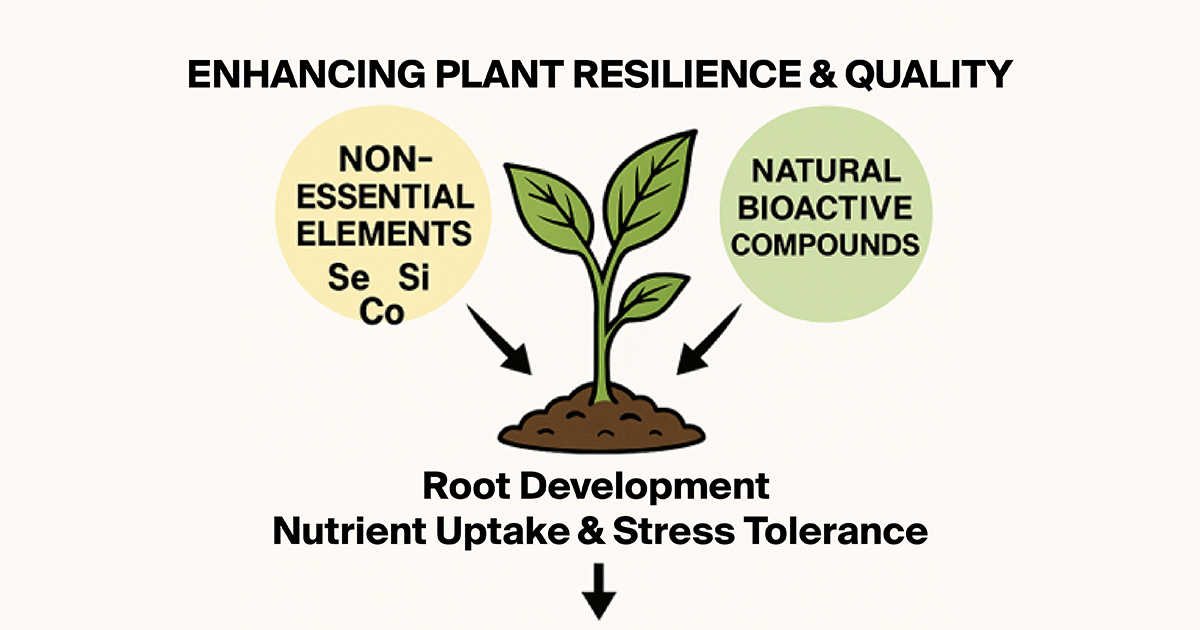
The cultivation of medicinal and aromatic plants, herbs, and other high-value crops is increasingly taking place across a continuum of production systems, ranging from open-field and greenhouse cultivation to controlled-environment and soilless systems, where yield must be balanced with metabolite quality and product safety. In recent years, it has become clear that several non-essential or conditionally beneficial elements and natural bioactive compounds can be additionally used to enhance growth, root development, nutrient uptake, and plant resilience. Their effects are particularly relevant under both abiotic and biotic stresses; however, practical, crop- and system-specific guidelines remain fragmented.
This Special Issue aims to collect contributions that clarify how these elements and natural compounds can be integrated into plant nutrition and root-zone management to improve the performance of high-value crops (including medicinal and aromatic species) grown in field, greenhouse, and soilless/controlled-environment systems. We especially welcome studies that (i) unravel the roles of beneficial elements in antioxidant and hormonal signaling, in the reinforcement of plant structures, and in interactions with soils, substrates, soilless media, and fertigation regimes; (ii) that demonstrate the effective and safe use of natural compounds and biostimulants in both soil-based and soilless systems; and (iii) that employ omics and advanced phenotyping to connect physiological responses with agronomic outcomes and quality traits.
We invite original research papers, short communications, and review articles that provide clear experimental designs and actionable agronomic relevance, such as optimization of dose and timing, description of interactions with mineral nutrition and soil/substrate/soilless media properties, development of stress-mitigation strategies for field, greenhouse, and controlled-environment conditions, or documentation of effects on the composition, quality, and standardization of plant products.
We look forward to your valuable contributions.
Dr. Matěj Malík
Prof. Dr. Pavel Tlustoš
Guest Editors
Manuscript Submission Information
Manuscripts should be submitted online at www.mdpi.com by registering and logging in to this website. Once you are registered, click here to go to the submission form. Manuscripts can be submitted until the deadline. All submissions that pass pre-check are peer-reviewed. Accepted papers will be published continuously in the journal (as soon as accepted) and will be listed together on the special issue website. Research articles, review articles as well as short communications are invited. For planned papers, a title and short abstract (about 250 words) can be sent to the Editorial Office for assessment.
Submitted manuscripts should not have been published previously, nor be under consideration for publication elsewhere (except conference proceedings papers). All manuscripts are thoroughly refereed through a single-blind peer-review process. A guide for authors and other relevant information for submission of manuscripts is available on the Instructions for Authors page. Agriculture is an international peer-reviewed open access semimonthly journal published by MDPI.
Please visit the Instructions for Authors page before submitting a manuscript. The Article Processing Charge (APC) for publication in this open access journal is 2600 CHF (Swiss Francs). Submitted papers should be well formatted and use good English. Authors may use MDPI's English editing service prior to publication or during author revisions.
Keywords
- field and horticultural crops
- medicinal and aromatic plants
- agronomic practices
- beneficial elements
- product quality and safety
- natural biostimulants
- precision farming
- soil management
- soilless growing
- herbs
Benefits of Publishing in a Special Issue
- Ease of navigation: Grouping papers by topic helps scholars navigate broad scope journals more efficiently.
- Greater discoverability: Special Issues support the reach and impact of scientific research. Articles in Special Issues are more discoverable and cited more frequently.
- Expansion of research network: Special Issues facilitate connections among authors, fostering scientific collaborations.
- External promotion: Articles in Special Issues are often promoted through the journal's social media, increasing their visibility.
- Reprint: MDPI Books provides the opportunity to republish successful Special Issues in book format, both online and in print.
Further information on MDPI's Special Issue policies can be found here.
