2.1. PDAC-Associated KRAS Signaling Initiates Early Variant-Specific Nuclear Regulatory Transcriptional Programs
To characterize how KRAS mutations initiate early nuclear remodeling, we performed RNA sequencing 24 h after inducing eight common PDAC-associated KRAS mutations (G12C, G12D, G12V, G12R, G13D, Q61H, Q61K, Q61R) and the dominant-negative S17N control in HPNE cells, a non-cancerous pancreatic ductal epithelial cell model. To ensure that downstream effects reflected mutational differences rather than expression levels, Western blot analysis confirmed equivalent expression of all induced KRAS variants at 24 h (
Figure S1A). Transcriptomic analysis likewise showed comparable KRAS mRNA levels across conditions, with no change in NRAS or HRAS expression (
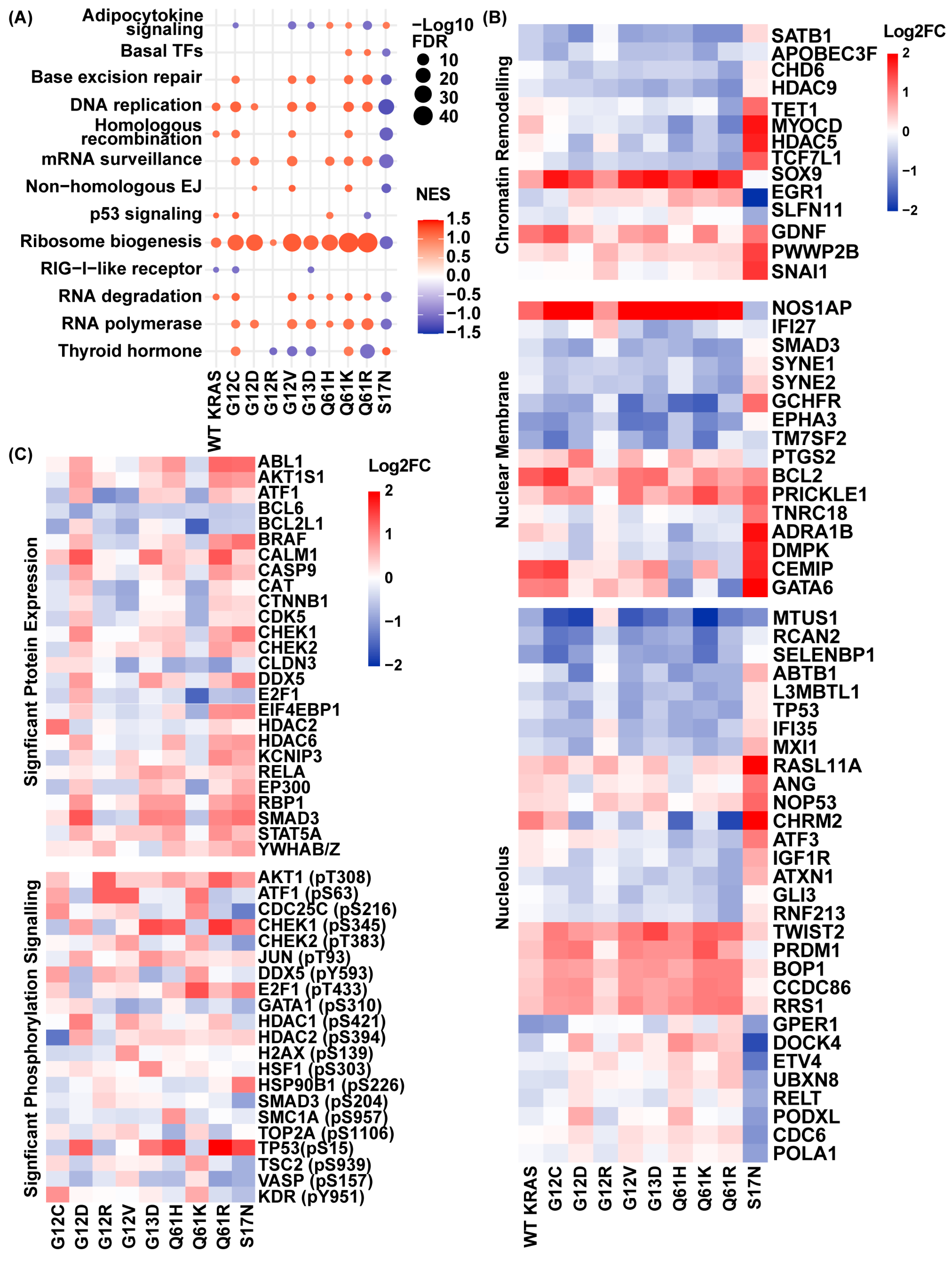
Figure S1B). Subsequently, we performed gene set enrichment analysis (GSEA) using KEGG pathways, which revealed pronounced, mutation-specific activation of nuclear transcriptional programs (
Figure 1A). Ribosome biogenesis, a hallmark of nucleolar remodeling, showed strong early enrichment across G12C (NES = 1.23), G12D (NES = 1.18), G12V (NES = 1.20), G13D (NES = 1.15), Q61H (NES = 1.20), Q61K (NES = 1.22), and Q61R (NES = 1.21). In contrast, G12R displayed minimal enrichment (NES = 1.02), comparable to WT KRAS (NES = 1.08), whereas S17N showed depletion (NES = −1.10). These data indicate that activation of nucleolar and ribosomal RNA programs constitutes a conserved early response to oncogenic KRAS signaling, with G12R showing activity closer to WT than to other oncogenic variants.
Beyond ribosome biogenesis, additional mutation-specific differences in pathways emerged. G12R selectively suppressed thyroid hormone signaling, whereas G12C and Q61K modestly activated this pathway, with other variants showing intermediate responses. DNA replication pathways were strongly enriched in G12C, G12D, G12V, G13D, Q61K, and Q61R, but not in WT KRAS or G12R. Base excision repair was active across most variants but notably absent in G12D, whereas non-homologous end-joining was selectively enriched in G12D, G12V, and Q61K. Additionally, homologous recombination was preferentially enriched in WT KRAS, G12C, G12D, and Q61R, highlighting variant-specific reliance on distinct DNA repair programs. The dominant-negative S17N mutant suppressed all replication and repair pathways, confirming their dependence on active KRAS signaling. RNA processing pathways also exhibited variant-specific patterns. RNA polymerase activation occurred broadly across oncogenic KRAS variants, with G12R as the notable exception. RNA degradation pathways were engaged in the presence of WT KRAS and most variants, but were absent in G12D and G12R (
Figure 1A). Collectively, these data demonstrate that most PDAC-associated KRAS variants activate coordinated nucleolar, transcriptional, replication, and DNA repair programs, whereas G12R consistently exhibits lower pathway engagement, often at or below WT KRAS levels, defining a divergent early transcriptional state.
To further dissect early nuclear remodeling, we analyzed transcriptional changes in a curated set of 60 genes associated with chromatin remodeling, nuclear membrane components, and nucleolar function based on Gene Ontology cellular component annotations (
Figure 1B and
Table S1). Most genes showed coordinated regulation across oncogenic KRAS variants, indicating a shared early nuclear remodeling transcriptional framework. G12R again diverged, eliciting a weaker overall response, whereas S17N showed an inverse regulatory pattern compared with oncogenic KRAS mutants. This supports a model in which the attenuated downstream signaling associated with G12R preserves nuclear regulatory states that other oncogenic variants actively remodel. For example, among chromatin remodelers,
HDAC5, a key negative regulator of transcription, was downregulated across most KRAS mutants with a log2 fold change (FC) of −0.73 in G12D, −0.87 in G12V, −0.90 in Q61H, −0.49 in Q61K, and -0.81 in Q61R relative to empty vector (+doxycycline). In contrast, WT KRAS (+0.17) and G12R (+0.16) maintained near-baseline
HDAC5 expression, and S17N showed strong upregulation (+1.73). Similarly,
SOX9, encoding a chromatin-associated transcription factor implicated in lineage specification and chromatin remodeling, was robustly induced across oncogenic KRAS variants (range +1.44 to +2.13), whereas WT KRAS and G12R showed more modest activation (+0.74 and +0.85, respectively) and S17N showed no induction (−0.05).
SATB1, a global chromatin organizer, followed a similar pattern, with substantial downregulation in G12D (−1.13), G12V (−0.88), G13D (−0.80), Q61K (−1.10), and Q61R (−1.09). WT KRAS showed only a modest reduction (−0.43), G12R exhibited minimal change (−0.05), and S17N demonstrated increased expression (+0.32). Genes associated with nuclear structure and nucleolar function showed analogous trends.
NOS1AP, a nucleoporin-associated gene linked to nuclear envelope organization, was strongly induced across most PDAC-associated KRAS mutants (G12C: +2.06, G12D: +2.06, G12V: +2.11, G13D: +2.01, Q61H: +2.19, Q61K: +2.61, Q61R: +1.90), reflecting coordinated remodeling of nuclear envelope dynamics, whereas G12R showed attenuated induction (+0.84) similar to WT KRAS (+1.21) while S17N repressed expression (−0.66). The nucleolar gene
CCD86 showed modest upregulation across most variants (G12C: +0.85, G12D: +0.89, G12V: +0.82, Q61K: +1.03, Q61R: +0.99), with a comparatively weaker induction in WT KRAS (+0.43) and G12R (+0.30) that closely resembled the S17N profile (+0.10). Similarly,
ABTB1, which encodes a zinc-finger nucleolar protein, was consistently repressed among most oncogenic KRAS variants (G12C: −0.37, G12D: −1.24, G12V: −0.80, Q61H: −1.00, Q61K: −0.78, Q61R: −0.78), with negligible change in WT KRAS (−0.04) and G12R (+0.03) and increased expression in the dominant-negative S17N control (+0.58) (
Figure 1B).
To quantify overall remodeling, we calculated the Nuclear Transcriptional Remodeling Score (NTRS) as the mean log2 FC in upregulated and downregulated nuclear-associated genes for each condition (
Figure S1C). G12D, G12V, G13D, Q61H, and Q61R showed comparable positive NTRS values (0.59 to 0.65) together with similarly strong negative scores (−0.52 to −0.72), consistent with coordinated bidirectional transcriptional reprogramming. G12C and Q61K exhibited the highest positive NTRS values (0.72 and 0.73, respectively), alongside pronounced negative scores, indicating robust remodeling capacity. WT KRAS demonstrated more modest bidirectional activity (positive NTRS 0.48; negative −0.37), lower than that of the oncogenic variants, consistent with a comparatively restrained transcriptional remodeling profile. G12R displayed further attenuation, with a reduced positive NTRS of 0.35 and a substantially weaker negative score of −0.19, reflecting even more limited nuclear transcriptional remodeling than WT KRAS. The dominant-negative S17N control produced the highest bidirectional NTRS values. However, as seen in
Figure 1B, these results reflect an inverted transcriptional program relative to oncogenic KRAS variants rather than enhanced activation of the typical nuclear transcriptional response. Together, this focused analysis reveals that most oncogenic KRAS variants drive coordinated early transcriptional remodeling of chromatin, nuclear envelope, and nucleolar regulators, whereas G12R remains comparatively muted, with activity at or below WT KRAS levels.
2.2. Phospho-Proteomic Profiling Reveals Divergent Nuclear Signaling Downstream of Oncogenic KRAS
Next, we performed phospho-proteomic profiling using an antibody-based array to quantify changes in protein abundance and phosphorylation across KRAS variants, comparing +doxycycline samples to their matched no doxycycline (−doxy) controls. To assess how variant-specific KRAS signaling is reflected at the level of nuclear regulatory proteins, we examined representative chromatin remodelers, RNA-binding factors, and transcriptional effectors. Analysis of nuclear-associated proteins revealed substantial heterogeneity in early protein abundance across KRAS variants. G12D and Q61R, together with S17N, exhibited the highest overall protein abundance following induction. G13D and Q61H also increased protein abundance, though to a lesser extent. By comparison, G12C, G12V, and Q61K displayed minimal induction or reduced abundance relative to their uninduced controls, underscoring divergence in early nuclear signaling outputs. DDX5, a DEAD-box RNA helicase central to RNA processing and nuclear regulation, displayed the strongest induction in G12D relative to pre-induction (−doxycycline) controls (+0.81 log2FC), followed by G13D (+0.79), Q61R (+0.48), and Q61H (+0.35). In contrast, G12C, G12V, and Q61K exhibited modest reductions (−0.29, −0.22, and −0.21, respectively), and G12R remained essentially unchanged (+0.01). The dominant-negative S17N displayed marked induction (+0.99). HDAC6 followed a similar pattern, with elevated abundance in G12D (+0.68) and Q61H (+0.66), modest increases in Q61R (+0.22), minimal change in G12R (+0.11) and Q61K (+0.08), and reduced abundance in G12C (−0.04), G12V (−0.25), and G13D (−0.17). Smad3, a TGF-β effector with nuclear roles in chromatin organization and transcriptional regulation, showed the most pronounced G12R-specific divergence. Smad3 abundance increased strongly in G12D (+1.34), G13D (+1.01), Q61H (+0.95), and Q61R (+0.98), with modest induction in G12C (+0.23) and a reduction in G12R (−0.50) (
Figure 1C). At the level of total protein abundance, these examples indicate that most oncogenic KRAS variants reinforce early nuclear RNA and chromatin regulatory capacity, while G12R shows limited engagement of these responses and divergence at specific nuclear effectors.
Building on these differences in protein abundance, we next examined phosphorylation to determine whether post-translational regulation of nuclear factors varied across KRAS mutants. HDAC1 phosphorylation at Ser421, a modification required for enzymatic activity and transcriptional repression [
1], displayed clear variant specificity (
Figure 1C). G12D showed the strongest induction (+1.03), followed by G12V (+0.73) and Q61R (+0.52), whereas G13D, Q61K, G12C, and Q61H exhibited minimal to modest changes (−0.08 to +0.32). G12R showed reduced phosphorylation (−0.15), closely resembling S17N (−0.37), indicating attenuated activation of this epigenetic regulator. A comparable pattern was found for HDAC2 phosphorylation at Ser394, which facilitates enzymatic activation, heterodimerization with HDAC1, and recruitment to transcriptionally active chromatin [
2]. HDAC2 Ser394 phosphorylation was highest in G12D (+0.68) and broadly elevated across G13D (+0.41), Q61H (+0.40), Q61R (+0.32), G12V (+0.25), and Q61K (+0.25) (
Figure 1C). In contrast, phosphorylation at this site was reduced in G12C (−1.33) and G12R (−0.36). Phosphorylation of DDX5 at Tyr593, a modification that regulates nuclear export and signaling activity [
3], showed a distinct variant-specific distribution (
Figure 1C). Q61K (+0.80), G12C (+0.78), and G13D (+0.78) exhibited the highest levels of Tyr593 phosphorylation, with intermediate increases in G12R (+0.65), G12V (+0.46) and Q61H (+0.41). Q61R showed a negligible change at this site (−0.03). Notably, G12D demonstrated reduced Tyr593 phosphorylation (−0.63), distinguishing it from other oncogenic KRAS variants. Lastly, phosphorylation of TP53 at Ser15, a canonical DNA damage response modification mediated by ATM and ATR kinases [
4], further distinguished mutant-specific nuclear stress signaling (
Figure 1C). The strongest induction of p53 Ser15 phosphorylation was found with Q61R (+2.39), with substantial increases also detected in Q61H (+1.45), G12D (+1.26), and G13D (+1.08). G12V and Q61R showed minimal changes at this site (+0.05 and +0.18, respectively), while G12C (−0.45) and Q61K (−0.39) demonstrated reduced phosphorylation. G12R showed the greatest repression (−0.62), consistent with diminished early DNA damage signaling and nuclear oncogenic stress relative to other KRAS mutants (
Figure 1C). These phosphorylation patterns indicate that oncogenic KRAS variants drive early nuclear regulation not only through changes in protein abundance, but also via variant-specific post-translational signaling. Across chromatin regulators, RNA-binding proteins, and DNA damage response effectors, most PDAC-associated KRAS mutants engage coordinated phosphorylation programs that reinforce nuclear regulatory activity within 24 h of activation. G12R consistently shows attenuated or divergent phosphorylation across multiple regulatory nodes, often resembling the dominant-negative control.
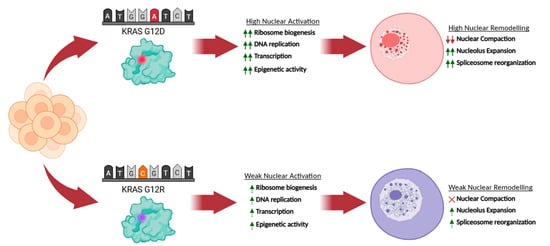
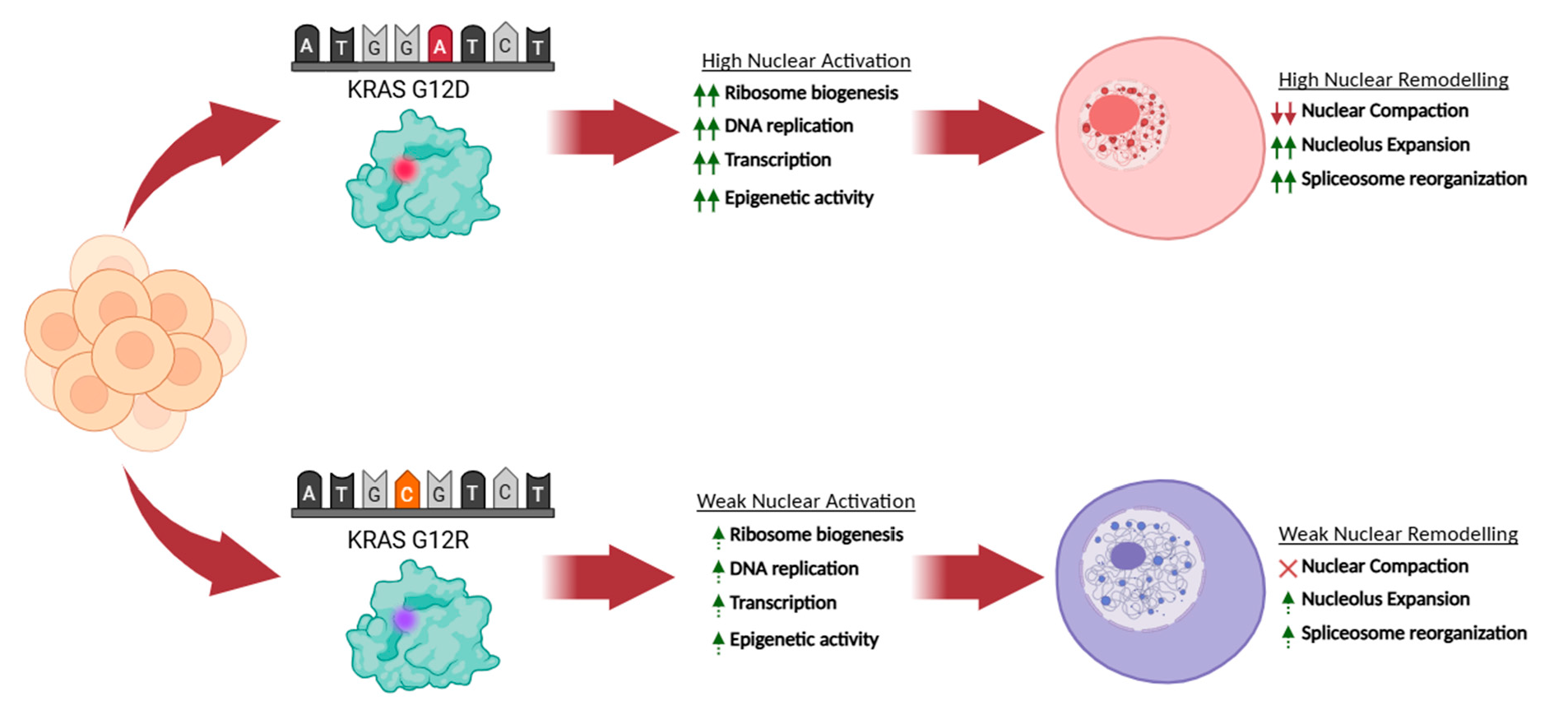
When integrated with the transcriptional and total protein abundance data, these results reveal that oncogenic KRAS mutations encode a spectrum of early nuclear regulatory states in non-cancerous pancreatic epithelial cells within 24 h, thereby priming the nucleus for progressive dysregulation as mutant KRAS expression persists. G12D and G12R occupy opposing ends of this spectrum, with G12D exhibiting broad engagement of nuclear regulatory and stress-response pathways, and G12R displaying attenuated or divergent signaling across transcriptional, proteomic, and phospho-proteomic layers. Intermediate variants such as G12C and Q61K show pathway-specific deviations within this continuum. Together, these findings support a model in which early mutant KRAS signaling establishes variant-specific nuclear trajectories that likely influence subsequent chromatin remodeling and nuclear architecture reorganization during PDAC initiation.
2.3. KRAS G12D and G12R Drive Distinct Nuclear and Subnuclear Remodeling in Pancreatic Epithelial Cells
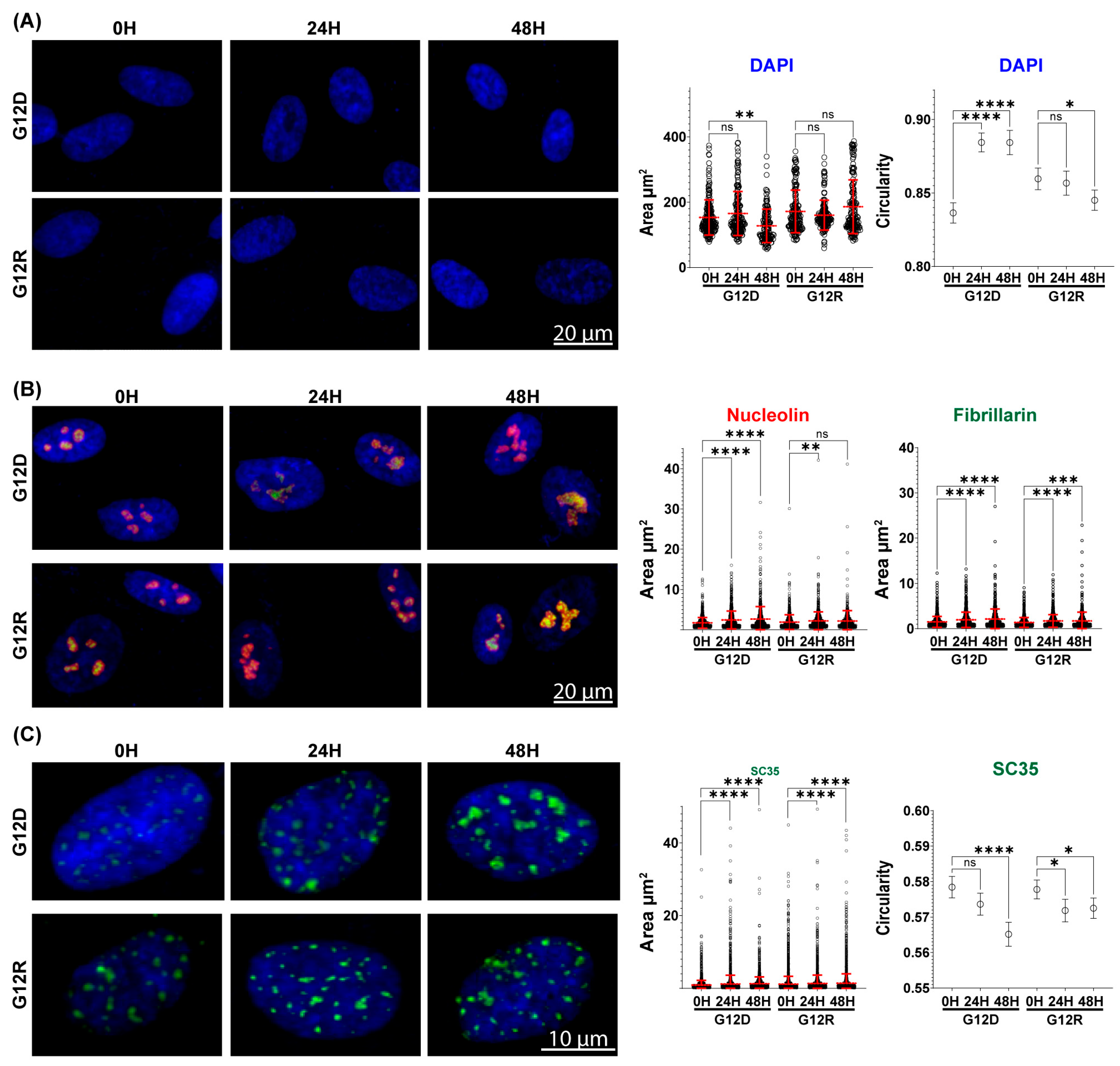
The preceding multi-omics analyses revealed substantial heterogeneity in early nuclear regulatory signaling across PDAC-associated KRAS variants, with KRAS G12D and G12R representing opposing extremes of transcriptional and proteomic remodeling. To determine whether these molecular differences translate into measurable changes in nuclear organization, we focused quantitative imaging analyses on G12D and G12R. Nuclear features were assessed at 24 and 48 h following KRAS induction to allow sufficient time for transcriptional changes to manifest morphologically. KRAS G12R expression did not significantly alter mean nuclear area at either 24 or 48 h relative to the 0 h control (
Figure 2A). G12D produced no change at 24 h but resulted in a 16% reduction in nuclear area by 48 h, indicating nuclear compaction over time. Nuclear shape was then assessed by circularity, where a value of 1 represents a maximally circular nucleus. G12D-expressing nuclei increased in circularity from 0.84 at baseline to 0.88 by 24 h, which was maintained at 48 h, consistent with progressive nuclear rounding accompanying compaction. By comparison, G12R expression showed no change at 24 h and only a limited decrease at 48 h (0.86 to 0.84) (
Figure 2A). These measurements indicate that G12D rapidly remodels nuclear architecture, whereas G12R induces minimal and delayed changes.
Given the enrichment of ribosome biogenesis pathways (
Figure 1A) and nucleolar-associated transcriptional programs (
Figure 1B), we next examined whether mutant KRAS alters nucleolar organization. Nucleolar size was quantified using nucleolin and fibrillarin to capture changes across functionally distinct nucleolar sub-compartments. Fibrillarin is enriched within the fibrillar center and at the fibrillar center–dense fibrillar component interface, while nucleolin localizes predominantly to the dense fibrillar and granular components and is often enriched at the dense fibrillar–granular component interface, enabling assessment of coordinated nucleolar remodeling. At baseline, G12D-expressing cells displayed comparable areas for individual nucleolar components, with nucleolin- and fibrillarin-positive areas averaging 1.72 ± 1.32 µm
2 and 1.51 ± 1.21 µm
2, respectively. Following 24 h of G12D induction, the nucleolin-positive area increased by 41% to 2.43 µm
2 and expanded further to 2.65 µm
2 by 48 h (54%). Fibrillarin-positive regions showed a similar trajectory, increasing to 1.97 µm
2 (30%) at 24 h and 2.14 µm
2 (41%) at 48 h. In contrast, G12R-expressing cells had similar baseline values (1.88 ± 1.82 µm
2 for nucleolin and 1.38 ± 1.09 µm
2 for fibrillarin) but showed limited expansion over time. After 24 h, nucleolin and fibrillarin areas increased by 16% (2.19 µm
2) and 25% (1.73 µm
2), respectively, and these values were largely retained at 48 h (
Figure 2B). Thus, G12D drives coordinated enlargement of nucleolar sub-compartments, consistent with elevated ribosome biogenesis, whereas G12R supports only limited nucleolar expansion.
Finally, we examined spliceosomal organization using SC-35 to quantify compartment area and circularity. In KRAS G12D-expressing HPNE cells, the mean spliceosomal area increased by 31% after 24 h and remained elevated at 48 h, reaching a total increase of 39% (
Figure 2C). G12R expression elicited a delayed and attenuated response, with only a 16% increase at 24 h and a total increase of 21% at 48 h. Analysis of SC-35 circularity revealed subtle but reproducible reorganization in spliceosomal architecture over time. Circularity decreased progressively following G12D induction, from a baseline mean of 0.58 to 0.57 at 24 h and 0.56 at 48 h (
Figure 2C), indicating an increase in structural complexity within nuclear speckles. By comparison, G12R induction was associated with a smaller reduction in circularity, decreasing from 0.58 at baseline to 0.57 at both 24 and 48 h without further progression. These measurements show that at 48 h, G12D drives an additional 18% expansion of spliceosomal compartments compared with G12R, supporting more robust and sustained remodeling of spliceosomal organization. Overall, quantitative imaging indicates that KRAS mutations differentially influence early nuclear organization. KRAS G12D exhibits pronounced changes in nuclear size, shape, and subnuclear compartment structure, whereas KRAS G12R shows more limited and delayed remodeling across these features. These findings establish variant-specific differences in nuclear organization and prompted further examination of nuclear architecture at greater spatial resolution.
2.4. KRAS G12D and G12R Differentially Shape Volumetric Nuclear Architecture
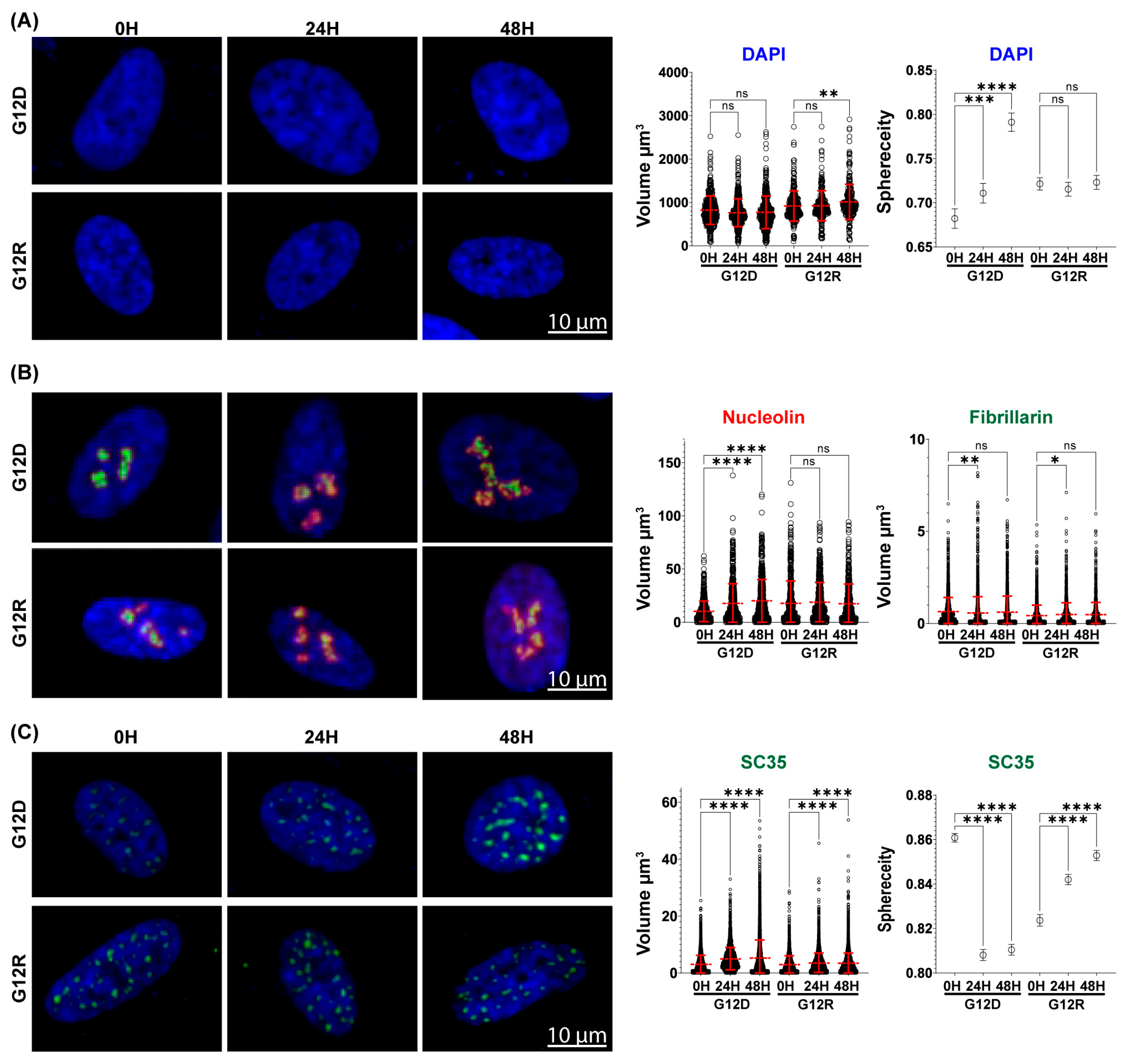
To extend our nuclear analyses beyond planar measurements, we employed high-resolution spinning disc confocal microscopy to generate depth-resolved volumetric reconstructions of nuclei and subnuclear compartments. This approach enabled assessment of nuclear remodeling across the full nuclear volume and allowed direct comparison with patterns identified by 2D imaging. In KRAS G12D-expressing HPNE cells, mean nuclear volume measured 823.0 µm
3 at baseline and decreased modestly to 762.2 µm
3 (−7.3%) after 24 h and 773.3 µm
3 (−6.0%) after 48 h. Although these changes did not reach statistical significance, the trend toward volumetric compaction parallels the reduction in nuclear area detected by 2D analysis, supporting consistent nuclear condensation following G12D induction. Relative to G12D, KRAS G12R-expressing cells exhibited larger nuclear volumes at baseline (917.9 µm
3), remained stable at 24 h (924.0 µm
3), and increased significantly to 1012.0 µm
3 (+10.2%) after 48 h. To further characterize nuclear shape across the nuclear volume, we quantified nuclear sphericity as a 3D analog of circularity. Nuclear sphericity increased progressively following G12D induction, rising from 0.68 at baseline to 0.71 at 24 h and further to 0.79 at 48 h, indicating progressive nuclear rounding. G12R expression did not significantly alter sphericity, which remained near baseline across all time points (0.72 at baseline, 0.71 at 24 h, and 0.72 at 48 h) (
Figure 3A). Thus, nuclear sphericity therefore diverges between G12D and G12R, reinforcing variant-specific differences.
Volumetric analysis was then extended to nucleolar compartments to determine whether KRAS-driven changes in nuclear organization were accompanied by alterations in subnuclear architecture. Nucleolar volume was quantified using nucleolin and fibrillarin to assess distinct nucleolar regions across the full nuclear volume. In KRAS G12D-expressing cells, nucleolin-defined nucleolar volume increased substantially, rising by 71% after 24 h and reaching a 95% increase by 48 h relative to baseline (
Figure 3B). Over the same time frame, fibrillarin-defined volume decreased by 11% at 24 h, returning to baseline by 48 h. A different pattern emerged in G12R-expressing cells. Nucleolin volume remained unchanged at both 24 h and 48 h, whereas fibrillarin volume increased modestly by 14% at 24 h and returned to baseline by 48 h (
Figure 3B). Consistent with the 2D results, volumetric analysis confirms nucleolar expansion following G12D induction and further reveals compartment-specific reorganization rather than uniform enlargement. G12R, in comparison, exhibits only modest and transient nucleolar remodeling.
Given the pronounced nucleolar reorganization identified downstream of KRAS G12D, we next determined whether changes in nuclear architecture extended to additional RNA-associated nuclear compartments. To address this, we examined the volumetric organization of the spliceosomal compartment using the SC-35 marker across the full nuclear volume. Following KRAS G12D induction, SC-35 volume increased significantly, rising by 60% at 24 h and further to 71% at 48 h relative to baseline (
Figure 3C). This expansion was accompanied by a decrease in sphericity, from 0.86 at baseline to 0.80 at 24 h and 0.81 at 48 h, reflecting altered spliceosomal speckle organization. G12R expression produced a more restrained response. SC-35 volume increased modestly, by 17% at 24 h and by 12% at 48 h, while spliceosomal sphericity increased slightly from 0.82 at baseline to 0.84 at 24 h and 0.85 at 48 h (
Figure 3C). Thus, KRAS G12D drives an additional 59% expansion of the spliceosomal compartment relative to G12R, accompanied by a decrease in sphericity that reflects altered speckle geometry. Overall, volumetric imaging refines the differences identified by 2D analysis by revealing how variant-specific nuclear changes are organized across the nuclear volume. KRAS G12D is associated with coordinated alterations in nuclear geometry, compartment-specific nucleolar reorganization, and sustained expansion of spliceosomal structures, whereas KRAS G12R maintains relatively stable architecture with only limited subnuclear adjustment. These depth-resolved measurements demonstrate that KRAS mutational context influences not only the magnitude but also the spatial organization of early nuclear remodeling, in a manner consistent with the transcriptional and proteomic programs defined earlier.
2.5. Macromolecular Architecture Reveals Mutation-Specific Reorganization of Nuclear Sub-Compartments
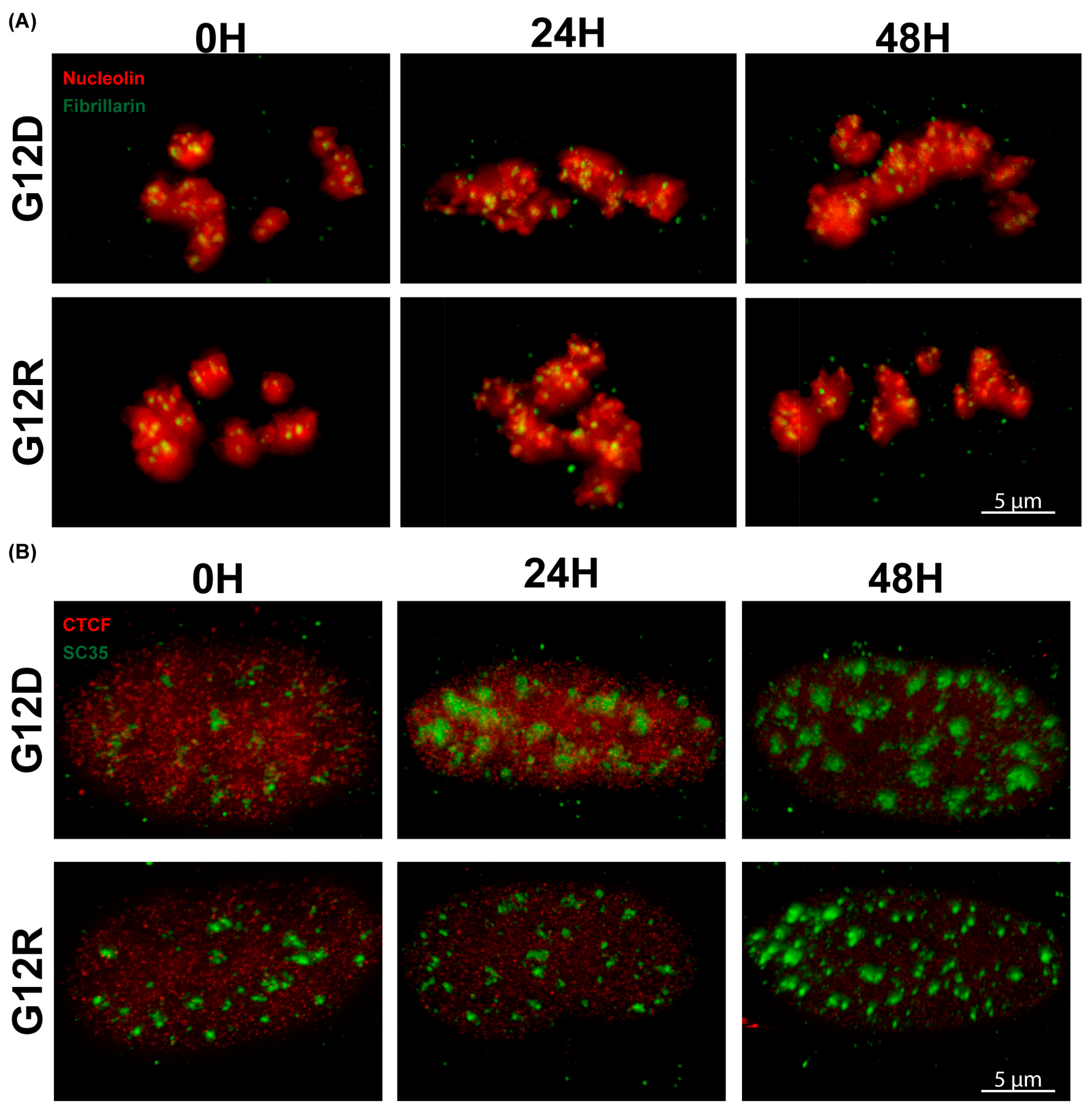
To examine nuclear remodeling at higher spatial resolution, we used three-dimensional super-resolution microscopy to visualize the macromolecular organization of nuclear sub-compartments following KRAS activation. Single-cell STED imaging was performed at 24 and 48 h, focusing on representative nuclei selected based on the nucleolar phenotypes identified in the preceding volumetric analyses for each KRAS variant. At 0 h, both G12D and G12R nuclei show several rounded, smoothly contoured nucleolin-positive domains with clearly separated fibrillarin puncta within each compartment, consistent with organized nucleolar subcompartments. By 24 h, both mutants display nucleolin structures that are slightly enlarged and more irregular, and in G12D, the fibrillarin signal looks less crisp and begins to cluster within the brightest nucleolin regions, whereas in G12R, the puncta aggregate but remain smaller and more distinctly separated. By 48 h, G12D nucleoli are clearly more elongated and expanded, with fibrillarin signal spread broadly throughout much of each nucleolin-defined compartment, while G12R nucleoli stay comparatively rounded with limited elongation and fibrillarin still concentrated in more compact foci within nucleolin-dense zones, reflecting more constrained nucleolar remodeling over time.
Spliceosomal organization displayed similarly mutation-dependent differences. At baseline, SC-35-positive speckles were small and sparsely distributed throughout the nucleoplasm (
Figure 4B). Following G12D induction, both speckle number and volume increased by 24 h, forming larger assemblies distributed across the nucleus. By 48 h, these structures appeared as densely packed clusters composed of multiple adjacent foci, indicating extensive reorganization of active splicing domains. This pattern is consistent with cooperative clustering of multiple spliceosomal subunits rather than uniform enlargement of individual speckles. Under G12R expression, spliceosomal architecture remained relatively stable at 24 h, with modest expansion of individual SC-35-positive foci evident at 48 h (
Figure 4B), suggesting limited reorganization relative to G12D.
At nanoscale resolution, super-resolution imaging places the transcriptional, proteomic, and volumetric differences identified earlier into a coherent architectural framework. Structural features such as nucleolin fragmentation, spatial dispersion of fibrillarin, and clustering of SC-35-positive speckles exemplify a coordinated nuclear reorganization program associated with KRAS G12D activation. In contrast, preservation of compact nucleolar organization and limited spliceosomal rearrangement under KRAS G12R reflects a more stable nuclear state. Together, these convergent structural signatures indicate that KRAS mutational context is translated into distinct nuclear organizational states early after activation, linking variant-specific signaling to the spatial patterning of nuclear compartments during early pancreatic epithelial transformation.




 ,
,