Sustainable Management of Organic Waste as Substrates in Constructed Wetlands: A Systematic Review

 , , ,
, , ,  and
and
Abstract
1. Introduction
2. Materials and Methods
2.1. Systematic Literature Review
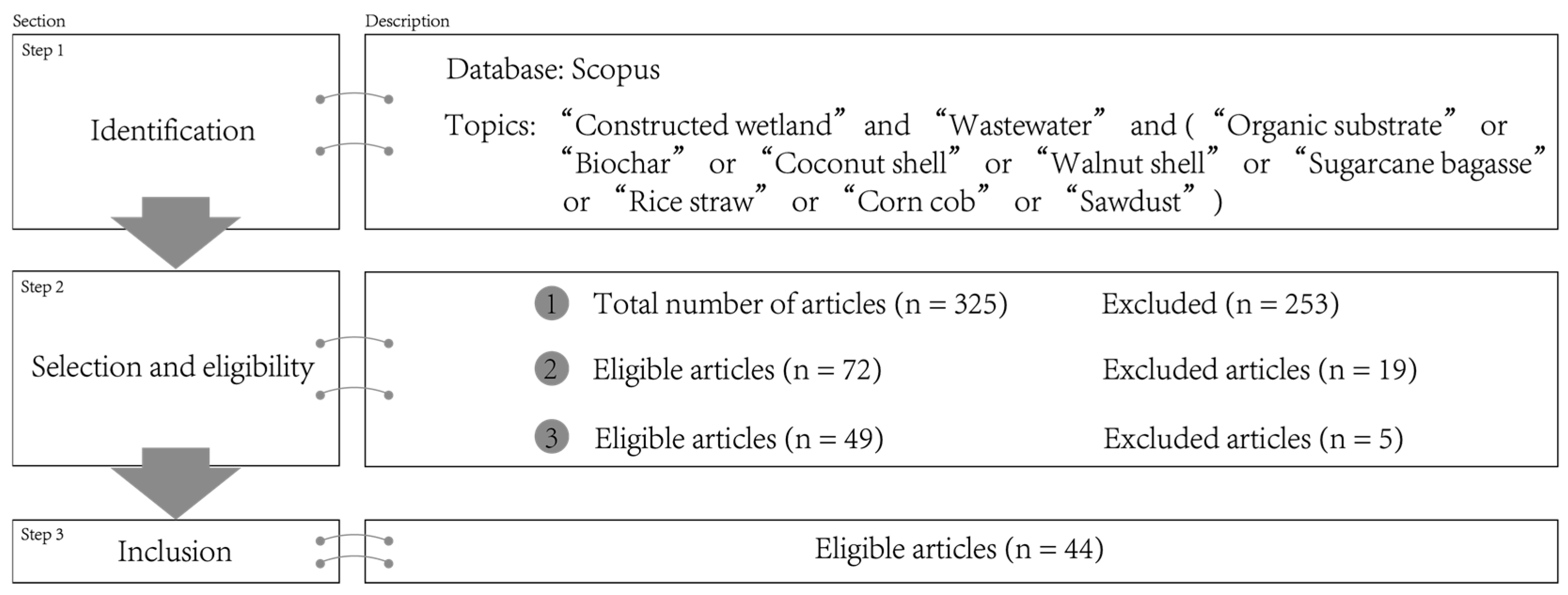
2.1.1. Keyword-Based Selection Process
2.1.2. Eligibility Criteria
2.2. Data Analysis
3. Results
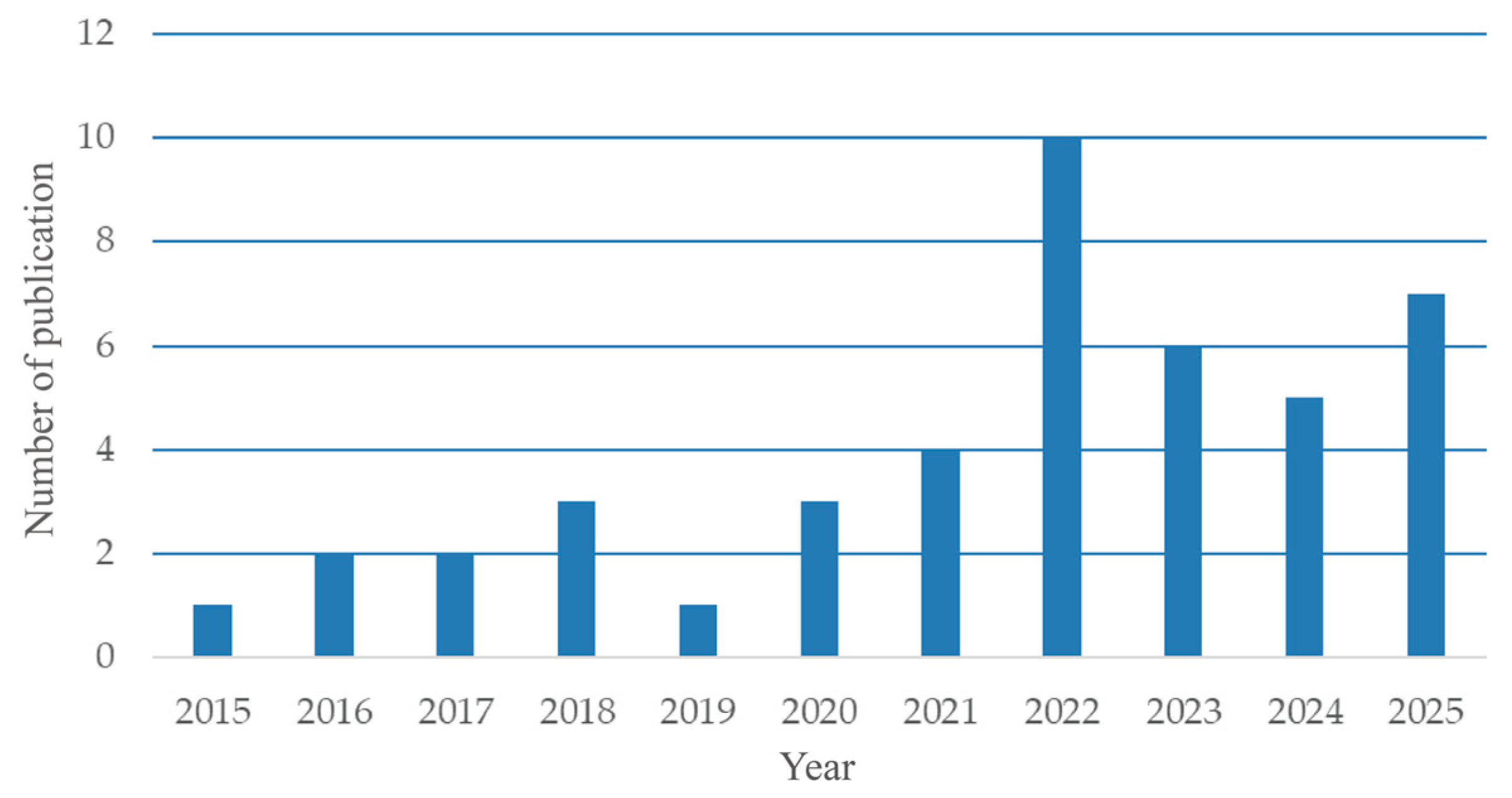
3.1. Publication Year
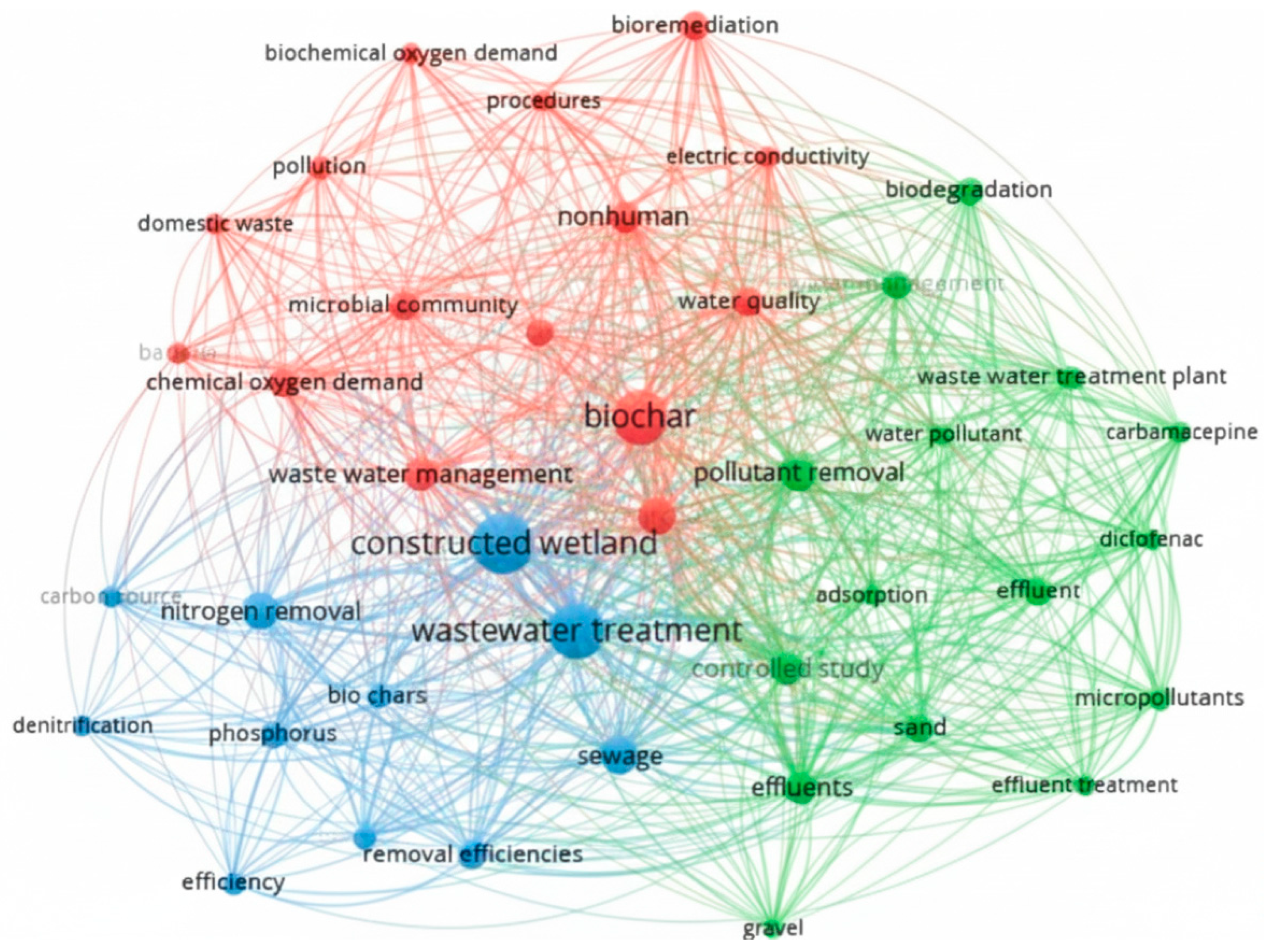
3.2. Topics Related to Organic Substrate in Constructed Wetlands
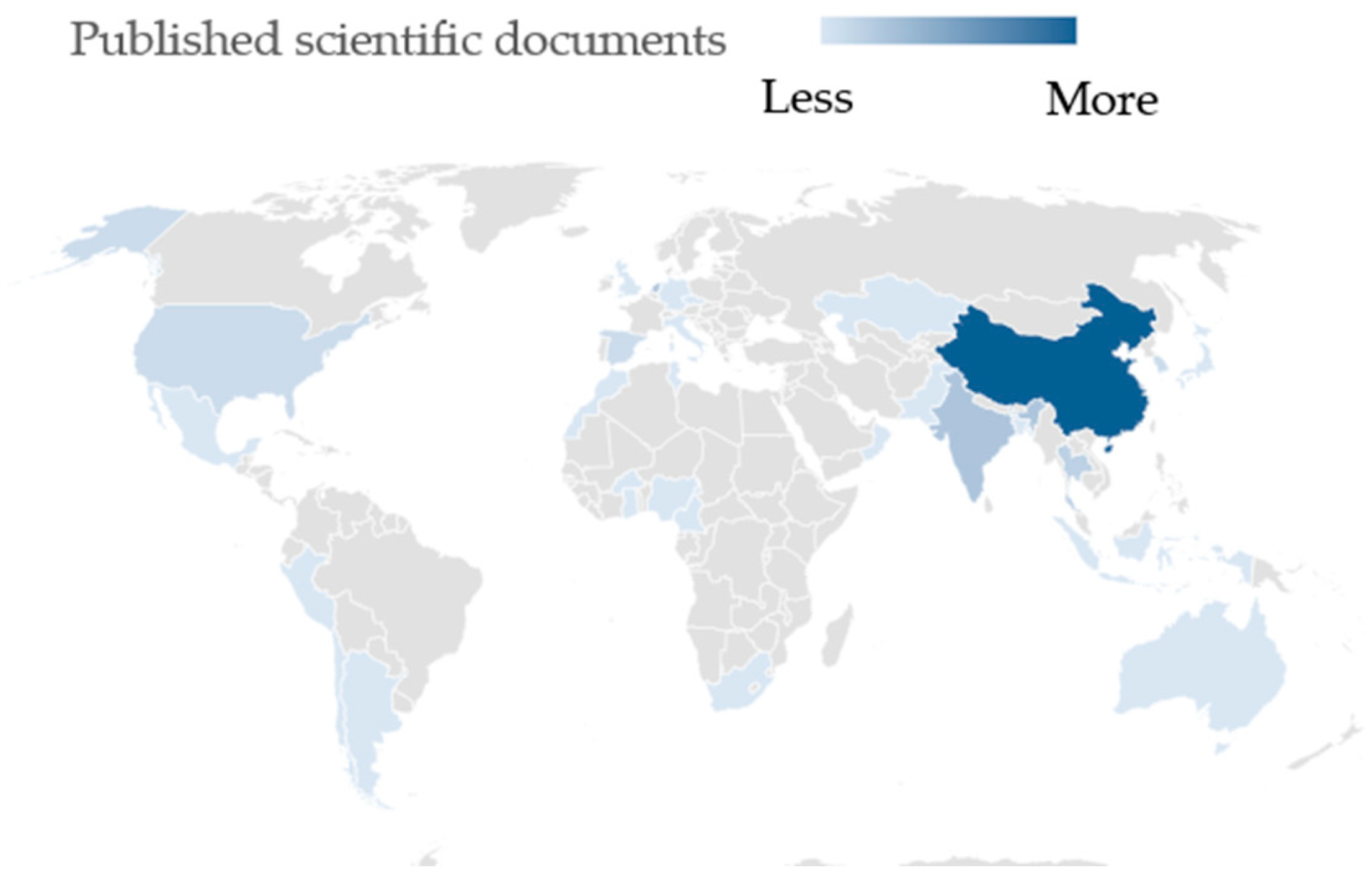
3.3. Global Productivity
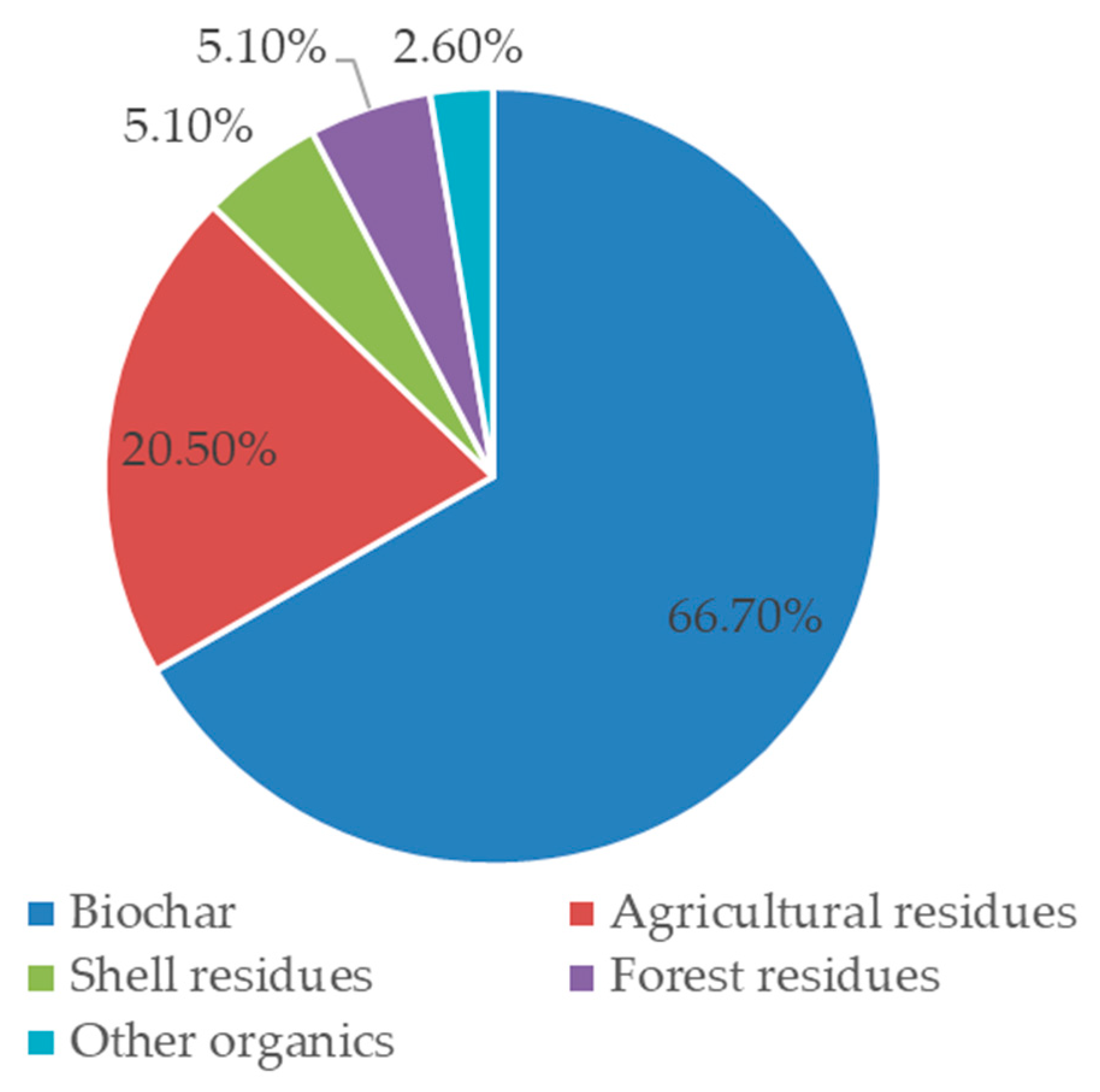
3.4. Classification of Organic Substrates in Constructed Wetlands
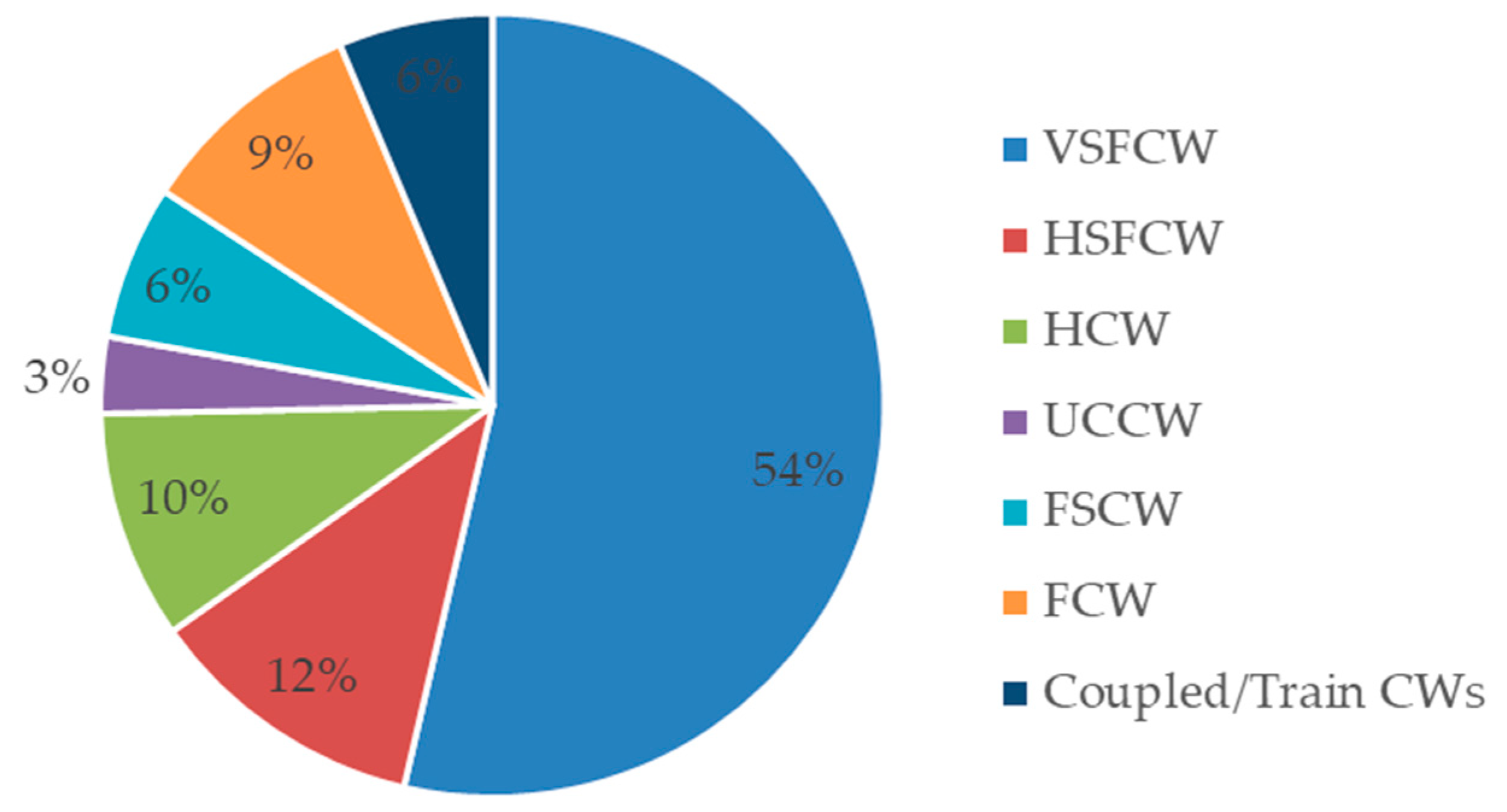
3.5. Types of Wetlands Constructed with Organic Waste as Substrate
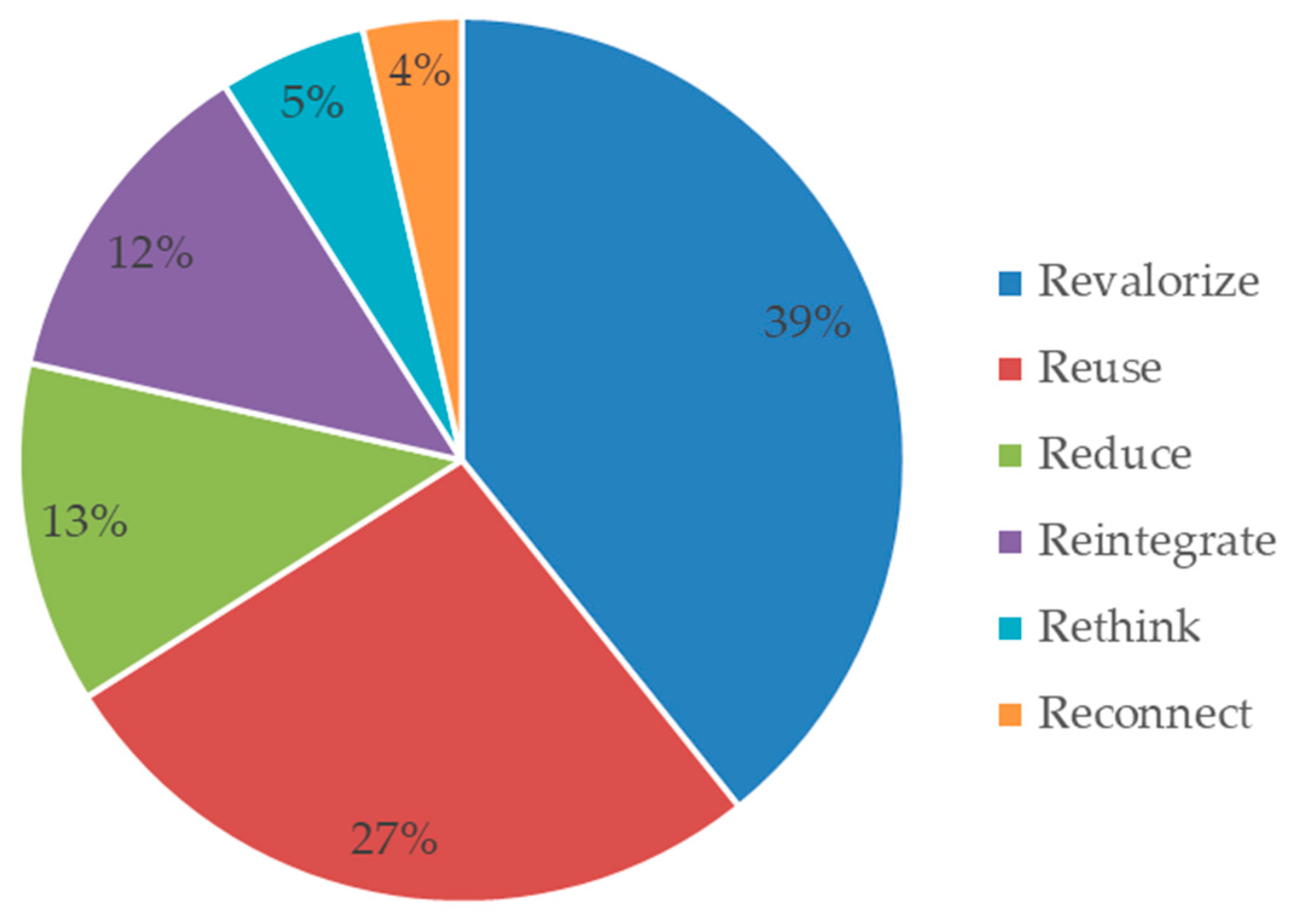
3.6. Circular Economy Strategies Applied in Constructed Wetlands
4. Discussion
4.1. Biochar
4.2. Agricultural Residues
4.3. Shell Residues
4.4. Forest Residues
4.5. Other Organic Substrates
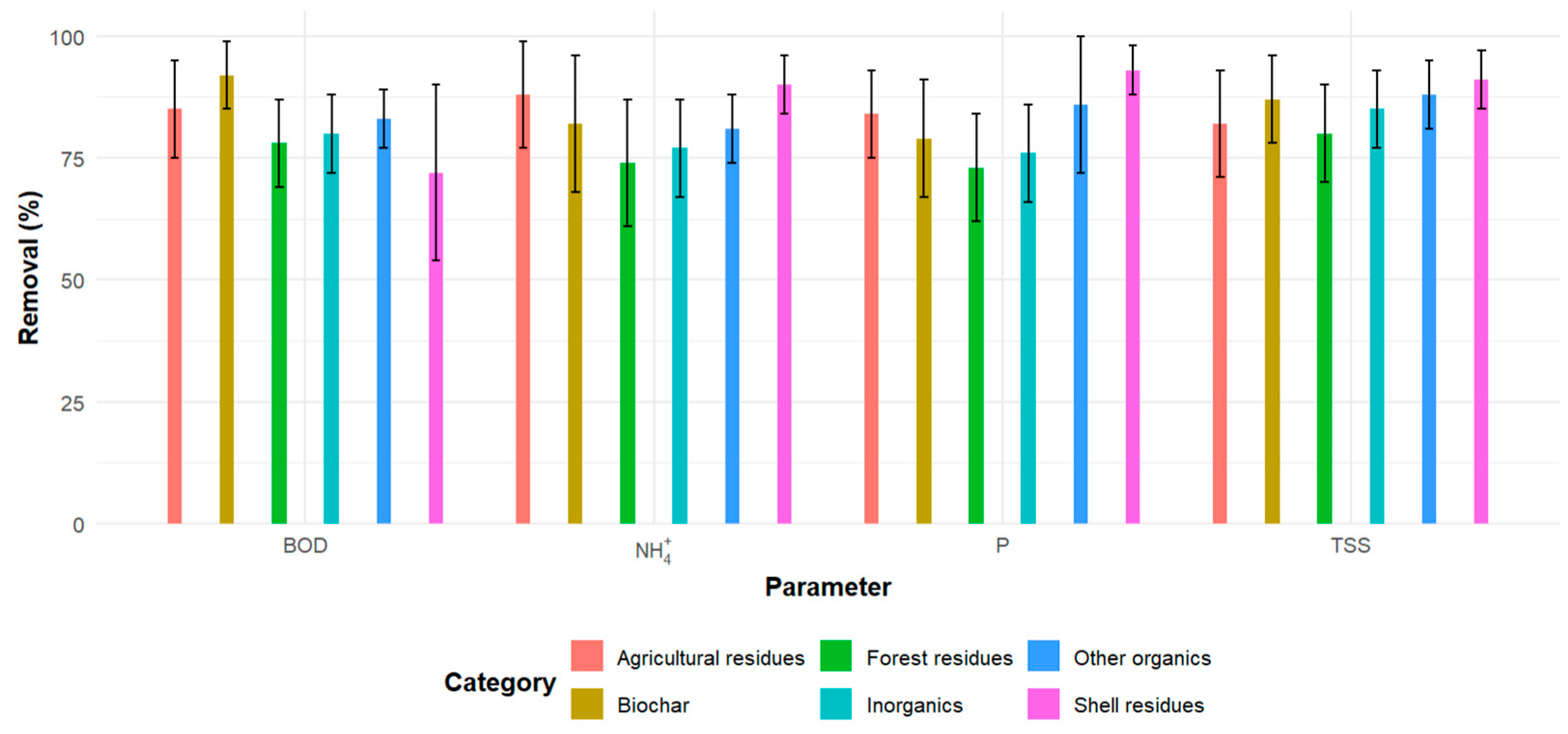
4.6. Comparative Perspective: Organic vs. Inorganic Substrates
4.7. Benefits and Recommendations
5. Conclusions
Author Contributions
Funding
Institutional Review Board Statement
Informed Consent Statement
Data Availability Statement
Conflicts of Interest
References
- Wu, H.; Wang, R.; Yan, P.; Wu, S.; Chen, Z.; Zhao, Y.; Cheng, C.; Hu, Z.; Zhuang, L.; Guo, Z.; et al. Constructed wetlands for pollution control. Nat. Rev. Earth Environ. 2023, 4, 218–234. [Google Scholar] [CrossRef]
- Waly, M.M.; Ahmed, T.; Abunada, Z.; Mickovski, S.B.; Thomson, C. Constructed Wetland for Sustainable and Low-Cost Wastewater Treatment: Review article. Land 2022, 11, 1388. [Google Scholar] [CrossRef]
- Ji, Z.; Tang, W.; Pei, Y. Constructed wetland substrates: A review on development, function mechanisms, and application in contaminants removal. Chemosphere 2021, 286, 131564. [Google Scholar] [CrossRef] [PubMed]
- Kurzbaum, E. The partial contribution of constructed Wetland components (Roots, gravel, microorganisms) in the removal of phenols: A mini review. Water 2022, 14, 626. [Google Scholar] [CrossRef]
- Obeng, E.; Essandoh, H.M.K.; Akodwaa-Boadi, K.; Taylor, T.S.; Kusi, I.; Appiah-Effah, E. Recycled clay bricks and palm kernel shell as constructed wetland substrate for wastewater treatment: An engineered closed circuit circular economy approach. Environ. Technol. Innov. 2023, 32, 103324. [Google Scholar] [CrossRef]
- Babatunde, A.O. Design concept and performance of a constructed wetland system engineered for the circular economy. In Circular Economy and Sustainability; Elsevier: Amsterdam, The Netherlands, 2021; pp. 199–214. [Google Scholar] [CrossRef]
- Mateus, D.M.R.; Pinho, H.J.O. Evaluation of solid waste stratified mixtures as constructed wetland fillers under different operation modes. J. Clean. Prod. 2020, 253, 119986. [Google Scholar] [CrossRef]
- Avellan, C.T.; Ardakanian, R.; Gremillion, P. The role of constructed wetlands for biomass production within the water-soil-waste nexus. Water Sci. Technol. 2017, 75, 2237–2245. [Google Scholar] [CrossRef]
- Sharma, M.; Sharma, N.R.; Kanwar, R.S. Assessment of agriwaste derived substrates to grow ornamental plants for constructed wetland. Environ. Sci. Pollut. Res. 2023, 30, 84645–84662. [Google Scholar] [CrossRef]
- Yang, Y.; Zhao, Y.; Liu, R.; Morgan, D. Global development of various emerged substrates utilized in constructed wetlands. Bioresour. Technol. 2018, 261, 441–452. [Google Scholar] [CrossRef]
- Tranfield, D.; Denyer, D.; Smart, P. Towards a methodology for developing Evidence-Informed management knowledge by means of systematic review. Br. J. Manag. 2003, 14, 207–222. [Google Scholar] [CrossRef]
- Haddaway, N.R.; Page, M.J.; Pritchard, C.C.; McGuinness, L.A. PRISMA2020: An R package and Shiny app for producing PRISMA 2020-compliant flow diagrams, with interactivity for optimised digital transparency and Open Synthesis. Campbell Syst. Rev. 2022, 18, e1230. [Google Scholar] [CrossRef]
- Lunny, C.; Brennan, S.E.; McDonald, S.; McKenzie, J.E. Toward a comprehensive evidence map of overview of systematic review methods: Paper 1—Purpose, eligibility, search and data extraction. Syst. Rev. 2017, 6, 231. [Google Scholar] [CrossRef]
- Chen, C.; Song, M. Visualizing a field of research: A methodology of systematic scientometric reviews. PLoS ONE 2019, 14, e0223994. [Google Scholar] [CrossRef] [PubMed]
- Muka, T.; Glisic, M.; Milic, J.; Verhoog, S.; Bohlius, J.; Bramer, W.; Chowdhury, R.; Franco, O.H. A 24-step guide on how to design, conduct, and successfully publish a systematic review and meta-analysis in medical research. Eur. J. Epidemiol. 2019, 35, 49–60. [Google Scholar] [CrossRef]
- Prill, R.; Karlsson, J.; Ayeni, O.R.; Becker, R. Author guidelines for conducting systematic reviews and meta-analyses. Knee Surg. Sports Traumatol. Arthrosc. 2021, 29, 2739–2744. [Google Scholar] [CrossRef]
- De Rozari, P.; Greenway, M.; Hanandeh, A.E. An investigation into the effectiveness of sand media amended with biochar to remove BOD5, suspended solids and coliforms using wetland mesocosms. Water Sci. Technol. 2015, 71, 1536–1544. [Google Scholar] [CrossRef]
- Gupta, P.; Ann, T.-W.; Lee, S.-M. Use of biochar to enhance constructed wetland performance in wastewater reclamation. Environ. Eng. Res. 2016, 21, 36–44. [Google Scholar] [CrossRef]
- De Rozari, P.; Greenway, M.; Hanandeh, A.E. Phosphorus removal from secondary sewage and septage using sand media amended with biochar in constructed wetland mesocosms. Sci. Total Environ. 2016, 569–570, 123–133. [Google Scholar] [CrossRef]
- Zhou, X.; Wang, X.; Zhang, H.; Wu, H. Enhanced nitrogen removal of low C/N domestic wastewater using a biochar-amended aerated vertical flow constructed wetland. Bioresour. Technol. 2017, 241, 269–275. [Google Scholar] [CrossRef]
- Vidya, M.; Sudarsan, J.; Nithiyanantham, S. Sustainability of constructed wetlands in using biochar for treating wastewater. Rasayan J. Chem. 2017, 10, 1056–1061. [Google Scholar] [CrossRef]
- Jia, L.; Wang, R.; Feng, L.; Zhou, X.; Lv, J.; Wu, H. Intensified nitrogen removal in intermittently-aerated vertical flow constructed wetlands with agricultural biomass: Effect of influent C/N ratios. Chem. Eng. J. 2018, 345, 22–30. [Google Scholar] [CrossRef]
- Zhou, X.; Liang, C.; Jia, L.; Feng, L.; Wang, R.; Wu, H. An innovative biochar-amended substrate vertical flow constructed wetland for low C/N wastewater treatment: Impact of influent strengths. Bioresour. Technol. 2017, 247, 844–850. [Google Scholar] [CrossRef]
- Saeed, T.; Muntaha, S.; Rashid, M.; Sun, G.; Hasnat, A. Industrial wastewater treatment in constructed wetlands packed with construction materials and agricultural by-products. J. Clean. Prod. 2018, 189, 442–453. [Google Scholar] [CrossRef]
- Soundaranayaki, K.; Gandhimathi, R. Performance of various media in vertical flow constructed wetland for the treatment of domestic wastewater. Desalination Water Treat. 2019, 146, 57–67. [Google Scholar] [CrossRef]
- Sha, N.-Q.; Wang, G.-H.; Li, Y.-H.; Bai, S.-Y. Removal of abamectin and conventional pollutants in vertical flow constructed wetlands with Fe-modified biochar. RSC Adv. 2020, 10, 44171–44182. [Google Scholar] [CrossRef] [PubMed]
- Guo, Z.; Kang, Y.; Hu, Z.; Liang, S.; Xie, H.; Ngo, H.H.; Zhang, J. Removal pathways of benzofluoranthene in a constructed wetland amended with metallic ions embedded carbon. Bioresour. Technol. 2020, 311, 123481. [Google Scholar] [CrossRef]
- Xu, J.; Liu, X.; Huang, J.; Huang, M.; Wang, T.; Bao, S.; Tang, W.; Fang, T. The contributions and mechanisms of iron-microbes-biochar in constructed wetlands for nitrate removal from low carbon/nitrogen ratio wastewater. RSC Adv. 2020, 10, 23212–23220. [Google Scholar] [CrossRef] [PubMed]
- Amirbekov, A.; Mamirova, A.; Sevcu, A.; Spanek, R.; Hrabak, P. HCH removal in a Biochar-Amended biofilter. Water 2021, 13, 3396. [Google Scholar] [CrossRef]
- Lei, Y.; Langenhoff, A.; Bruning, H.; Rijnaarts, H. Sorption of micropollutants on selected constructed wetland support matrices. Chemosphere 2021, 275, 130050. [Google Scholar] [CrossRef] [PubMed]
- Xing, C.; Xu, X.; Xu, Z.; Wang, R.; Xu, L. Study on the Decontamination Effect of Biochar-Constructed Wetland under Different Hydraulic Conditions. Water 2021, 13, 893. [Google Scholar] [CrossRef]
- Xu, G.; Li, Y.; Wang, J.; Yang, W.; Wang, S.; Kong, F. Effects of substrate combinations on greenhouse gas emissions and wastewater treatment performance in vertical subsurface flow constructed wetlands. Ecol. Indic. 2020, 121, 107189. [Google Scholar] [CrossRef]
- Visiy, E.B.; Djousse, B.M.K.; Martin, L.; Zangue, C.N.; Sangodoyin, A.; Gbadegesin, A.S.; Fonkou, T. Effectiveness of biochar filters vegetated with Echinochloa pyramidalis in domestic wastewater treatment. Water Sci. Technol. 2022, 85, 2613–2624. [Google Scholar] [CrossRef] [PubMed]
- Gotore, O.; Rameshprabu, R.; Itayama, T. Adsorption performances of corn cob-derived biochar in saturated and semi-saturated vertical-flow constructed wetlands for nutrient removal under erratic oxygen supply. Environ. Chem. Ecotoxicol. 2022, 4, 155–163. [Google Scholar] [CrossRef]
- Jampeetong, A.; Janyasupab, P. Effects of substrate types on nitrogen removal efficacy and growth of Canna indica L. Appl. Environ. Res. 2022, 44, 42–53. [Google Scholar] [CrossRef]
- Na-Ayuthaya, W.P.; Wongsontam, K.; Sangvichien, N.; Khaenamkaew, P. Ultrashort Hydraulic Retention Time of Aeration and Nonaeration Constructed Wetlands for a Large Volume of Primary-Treated Wastewater from a Medical Rubber Glove Factory. Int. J. Ecol. 2022, 2022, 2407435. [Google Scholar] [CrossRef]
- Osei, R.A.; Abagale, F.K.; Konate, Y. Exploitation of indigenous bamboo macrophyte species and bamboo biochar for faecal sludge treatment with constructed wetland technology in the Sudano-Sahelian ecological zone. Heliyon 2022, 8, e12386. [Google Scholar] [CrossRef]
- Parihar, P.; Chand, N.; Suthar, S. Septage effluent treatment using floating constructed wetland with Spirodela polyrhiza: Response of biochar addition in the support matrix. Nat.-Based Solut. 2022, 2, 100020. [Google Scholar] [CrossRef]
- Aguilar, L.; Pérez, L.M.; Gallegos, Á.; Fores, E.; Arias, C.A.; Bosch, C.; Verdum, M.; Jove, P.; De Pablo, J.; Morató, J. Effect of aeration on nitrogen removal-associated microbial community in an innovative vertical cork-based constructed wetland for winery wastewater treatment. Ecol. Eng. 2022, 185, 106781. [Google Scholar] [CrossRef]
- Lei, Y.; Rijnaarts, H.; Langenhoff, A. Mesocosm constructed wetlands to remove micropollutants from wastewater treatment plant effluent: Effect of matrices and pre-treatments. Chemosphere 2022, 305, 135306. [Google Scholar] [CrossRef]
- Hu, Y.; Xiao, R.; Kuang, B.; Hu, Y.; Wang, Y.; Bai, J.; Wang, C.; Zhang, L.; Wei, Z.; Zhang, K.; et al. Application of modified biochar in the treatment of pesticide wastewater by constructed wetland. Water 2022, 14, 3889. [Google Scholar] [CrossRef]
- Holly, M.A.; Sanford, J.R.; Forsythe, P.S.; Silva, M.R.; Lakich, D.D.; Swan, C.K.; Leonard, K.A. Common Buckthorn Engineered Biochar (Rhamnus Cathartica), Calcined Quagga Mussel Shells (Dreissena Rostriformis), Pickled Steel, and Steel Slag as Filter Media for the Sorption of Phosphorus from Agricultural Runoff. Conservation 2022, 2, 726–738. [Google Scholar] [CrossRef]
- Jin, Q.; Chen, L.; Yang, S.; Zhu, C.; Li, J.; Chen, J.; Li, W.; Peng, X. Carbon Reduction and Pollutant Abatement by a Bio–Ecological Combined Process for Rural Sewage. Int. J. Environ. Res. Public Health 2023, 20, 1643. [Google Scholar] [CrossRef]
- Janyasupab, P.; Brix, H.; Jampeetong, A. Effects of Longan Biochar as Filter Materials on Plant Responses and Wastewater Treatment by Typha angustifolia L. Nat. Life Sci. Commun. 2023, 22, e2023035. [Google Scholar] [CrossRef]
- Alam, M.K.; Islam, M.A.S.; Saeed, T.; Rahman, S.M.; Majed, N. Life Cycle Analysis of Lab-Scale Constructed Wetlands for the Treatment of Industrial Wastewater and Landfill Leachate from Municipal Solid Waste: A Comparative Assessment. Water 2023, 15, 909. [Google Scholar] [CrossRef]
- Lei, Y.; Wagner, T.; Rijnaarts, H.; De Wilde, V.; Langenhoff, A. The removal of micropollutants from treated effluent by batch-operated pilot-scale constructed wetlands. Water Res. 2022, 230, 119494. [Google Scholar] [CrossRef] [PubMed]
- Guadarrama-Pérez, O.; Bustos-Terrones, V.; Guadarrama-Pérez, V.H.; Guillén-Garcés, R.A.; Hernández-Romano, J.; Treviño-Quintanilla, L.G.; Estrada-Arriaga, E.B.; Moeller-Chávez, G.E. Variation of graphene/titanium dioxide concentration as electrocatalyst for an oxygen reduction reaction in constructed wetland-microbial fuel cells. Electrochem. Commun. 2023, 157, 107618. [Google Scholar] [CrossRef]
- Lam, T.; Yang, X.; Ergas, S.J.; Arias, M.E. Feasibility of landfill leachate reuse through adsorbent-enhanced constructed wetlands and ultrafiltration-reverse osmosis. Desalination 2022, 545, 116163. [Google Scholar] [CrossRef]
- Sacco, F.C.M.; Venditti, S.; Wilmes, P.; Steinmetz, H.; Hansen, J. Vertical-flow constructed wetlands as a sustainable on-site greywater treatment process for the decrease of micropollutant concentration in urban wastewater and integration to households’ water services. Sci. Total Environ. 2024, 946, 174310. [Google Scholar] [CrossRef] [PubMed]
- Zou, L.; Xu, J.; Liu, H.; Zhou, Z.; Chen, Y.; Wang, X.; Wang, H.; Zou, Y. The efficiency of enhanced nitrogen and phosphorus removal in a vertical flow constructed wetland using alkaline modified corn cobs as a carbon source. Environ. Technol. Innov. 2024, 35, 103690. [Google Scholar] [CrossRef]
- Almuktar, S.A.A.A.N.; Abed, S.N.; Scholz, M. Biomass Production and Metal Remediation by Salix alba L. and Salix viminalis L. Irrigated with Greywater Treated by Floating Wetlands. Environments 2024, 11, 44. [Google Scholar] [CrossRef]
- Ayadi, M.; Passaseo, D.; Bonaccorso, G.; Fichera, M.; Renai, L.; Venturini, L.; Colzi, I.; Fibbi, D.; Del Bubba, M. Biochar from co-pyrolysis of biological sludge and sawdust in comparison with the conventional filling media of vertical-flow constructed wetlands for the treatment of domestic-textile wastewater. Water Sci. Technol. 2024, 89, 1252–1263. [Google Scholar] [CrossRef]
- Guerrero-Brotons, M.; Perujo, N.; Romaní, A.M.; Gómez, R. Advantages of using a carbon-rich substrate in a constructed wetland for agricultural water treatment: Carbon availability and biota development. Agric. Ecosyst. Environ. 2023, 360, 108792. [Google Scholar] [CrossRef]
- Aslam, M.B.; Rehman, T.U.R.; Alavi, A.F.; Haleem, A.; Haq, A.; Ahmed, S.; Sajjad, W.; Bourhia, M.; Mahamat, O.B.; Almaary, K.S.; et al. Design, construction and efficiency analysis of bagasse-based charcoal packed horizontal lab-scale wetland for the removal of antibiotic-resistant bacteria. BMC Microbiol. 2025, 25, 418. [Google Scholar] [CrossRef]
- Laguna-Marín, C.; Escolà-Casas, M.; Subirats, J.; Matamoros, V. Biochar enhanced floating root mats to reduce recalcitrant contaminants of emerging concern from wastewater effluents. Bioresour. Technol. 2025, 436, 132960. [Google Scholar] [CrossRef] [PubMed]
- Lei, Y.; De Vos, J.; Rijnaarts, H.; Chen, W.-S. Quantifying global warming potential, land use and financial cost of constructed wetland as a post-treatment technology for removing micropollutants from municipal wastewater. Clean. Environ. Syst. 2025, 18, 100297. [Google Scholar] [CrossRef]
- Al-Jabri, K.; Al-Busaidi, A.; Ahmed, M.; Janke, R.R.; Stefanakis, A. Optimizing Oilfield-Produced water reuse for sustainable irrigation: Impacts on soil quality and mineral accumulation in plants. Water 2025, 17, 1497. [Google Scholar] [CrossRef]
- Naghoum, I.; Edahbi, M.; Melián, J.A.H.; Rodriguez, J.M.D.; Durães, N.; Pascual, B.A.; Salmoun, F. Passive treatment of acid mine drainage effluents using constructed wetlands: Case of an abandoned iron mine, Morocco. Water 2025, 17, 687. [Google Scholar] [CrossRef]
- Singh, S.; Suman, S.K.; Dutta, K.; Daverey, A. Comparison of Canna indica and Acorus calamus for surfactant removal in biochar augmented constructed wetlands. Environ. Chem. Ecotoxicol. 2024, 7, 130–140. [Google Scholar] [CrossRef]
- Maldonado, I.; Ramos, Y.M.; Vilca, F.Z. Electrochemical technologies and phytoremediation: Strategies for antibiotic waste removal, electricity generation, and water quality improvement. Environ. Eng. Res. 2025, 30, 240677. [Google Scholar] [CrossRef]
- Masi, F.; Rizzo, A.; Regelsberger, M. The role of constructed wetlands in a new circular economy, resource oriented, and ecosystem services paradigm. J. Environ. Manage 2017, 216, 275–284. [Google Scholar] [CrossRef]
- Chen, G.; Mo, Y.; Gu, X.; Jeppesen, E.; Xie, T.; Ning, Z.; Li, Y.; Li, D.; Chen, C.; Cui, B.; et al. Sustainability of global small-scale constructed wetlands for multiple pollutant control. NPJ Clean Water 2024, 7, 45. [Google Scholar] [CrossRef]
- Zamora-Castro, S.A.; Orduña, M.G.H.y.; Moreno-Seceña, J.C.; Martínez Escalante, G.A.; Sangabriel Lomeli, J.; Zitácuaro-Contreras, I.; Marín-Muñiz, J.L. Maximizing Value in Constructed Wetlands: A Review of Ornamental Plants for Wastewater Treatment and Artisanal Applications. Earth 2025, 6, 126. [Google Scholar] [CrossRef]
- Marcelino, G.R.; De Carvalho, K.Q.; De Lima, M.X.; Passig, F.H.; Belini, A.D.; Bernardelli, J.K.B.; Nagalli, A. Construction waste as substrate in vertical subsuperficial constructed wetlands treating organic matter, ibuprofenhene, acetaminophen and ethinylestradiol from low-strength synthetic wastewater. Sci. Total Environ. 2020, 728, 138771. [Google Scholar] [CrossRef]
- Hernández-Crespo, C.; Oliver, N.; Gil-Martínez, E.; Añó, M.; Fernández-Alba, S.; Benedito, V.; Montoya, T.; Martín, M. Integrating circular economy and biodiversity in upgrading full-scale constructed wetlands (LIFE Renaturwat). Ecol. Eng. 2024, 204, 107263. [Google Scholar] [CrossRef]
- Wang, S.; Teng, Y.; Cheng, F.; Lu, X. Application Potential of Constructed Wetlands on Different Operation Mode for Biologically Pre-Treatment of Rural Domestic Wastewater. Sustainability 2023, 15, 1799. [Google Scholar] [CrossRef]
- Bolton, L.; Joseph, S.; Greenway, M.; Donne, S.; Munroe, P.; Marjo, C.E. Phosphorus adsorption onto an enriched biochar substrate in constructed wetlands treating wastewater. Ecol. Eng. 2019, 142, 100005. [Google Scholar] [CrossRef]
- Feng, L.; Gao, Z.; Hu, T.; He, S.; Liu, Y.; Jiang, J.; Zhao, Q.; Wei, L. Performance and mechanisms of biochar-based materials additive in constructed wetlands for enhancing wastewater treatment efficiency: A review. Chem. Eng. J. 2023, 471, 144772. [Google Scholar] [CrossRef]
- Liang, Y.; Wang, Q.; Huang, L.; Liu, M.; Wang, N.; Chen, Y. Insight into the mechanisms of biochar addition on pollutant removal enhancement and nitrous oxide emission reduction in subsurface flow constructed wetlands: Microbial community structure, functional genes and enzyme activity. Bioresour. Technol. 2020, 307, 123249. [Google Scholar] [CrossRef]
- Cui, X.; Wang, J.; Wang, X.; Khan, M.B.; Lu, M.; Khan, K.Y.; Song, Y.; He, Z.; Yang, X.; Yan, B.; et al. Biochar from constructed wetland biomass waste: A review of its potential and challenges. Chemosphere 2021, 287, 132259. [Google Scholar] [CrossRef]
- Baaloudj, O.; Chiron, S.; Zizzamia, A.R.; Trotta, V.; Del Buono, D.; Puglia, D.; Rallini, M.; Brienza, M. Efficient biochar regeneration for a circular economy: Removing emerging contaminants for sustainable water treatment. Colloids Surf. A Physicochem. Eng. Asp. 2024, 705, 135730. [Google Scholar] [CrossRef]
- Zin, M.M.T.; Hussain, M.; Kim, D.-J.; Yang, J.E.; Choi, Y.J.; Park, Y.-K. Circular economy approach: Nutrient recovery and economical struvite production from wastewater sources by using modified biochars. Chemosphere 2024, 362, 142589. [Google Scholar] [CrossRef]
- Wang, Y.; Cai, Z.; Sheng, S.; Pan, F.; Chen, F.; Fu, J. Comprehensive evaluation of substrate materials for contaminants removal in constructed wetlands. Sci. Total Environ. 2019, 701, 134736. [Google Scholar] [CrossRef] [PubMed]
- Shen, S.; Li, X.; Cheng, F.; Zha, X.; Lu, X. Review: Recent developments of substrates for nitrogen and phosphorus removal in CWs treating municipal wastewater. Environ. Sci. Pollut. Res. 2020, 27, 29837–29855. [Google Scholar] [CrossRef]
- Tan, X.; Wang, H.; Guo, X.; Ho, S.-H. Customized High-Value Agricultural Residue Conversion: Applications in wastewater treatment. Catalysts 2023, 13, 1247. [Google Scholar] [CrossRef]
- Chong, Z.T.; Soh, L.S.; Yong, W.F. Valorization of agriculture wastes as biosorbents for adsorption of emerging pollutants: Modification, remediation and industry application. Results Eng. 2023, 17, 100960. [Google Scholar] [CrossRef]
- Nguyen, T.T.; Soda, S.; Horiuchi, K. Removal of Heavy Metals from Acid Mine Drainage with Lab-Scale Constructed Wetlands Filled with Oyster Shells. Water 2022, 14, 3325. [Google Scholar] [CrossRef]
- Li, J.; Liu, L.; Huang, X.; Liao, J.; Liu, C. Cross-effect of wetland substrates properties on anammox process in three single-substrate anammox constructed wetlands for treating high nitrogen sewage with low C/N. J. Environ. Manag. 2021, 304, 114329. [Google Scholar] [CrossRef]
- Wang, Z.; Dong, J.; Liu, L.; Zhu, G.; Liu, C. Screening of phosphate-removing substrates for use in constructed wetlands treating swine wastewater. Ecol. Eng. 2013, 54, 57–65. [Google Scholar] [CrossRef]
- Wang, R.; Zhao, X.; Liu, H.; Wu, H. Elucidating the impact of influent pollutant loadings on pollutants removal in agricultural waste-based constructed wetlands treating low C/N wastewater. Bioresour. Technol. 2018, 273, 529–537. [Google Scholar] [CrossRef] [PubMed]
- Lopopolo, L.; Herrera-Melián, J.A.; Arocha-Espiau, D.; Naghoum, I.; Ranieri, E.; Guedes-Alonso, R.; Sosa-Ferrera, Z. Upgrading a horizontal surface flow constructed wetland with forest waste and aeration. J. Environ. Manag. 2025, 376, 124468. [Google Scholar] [CrossRef]
- Miassi, Y.E.; Gélinas, N.; Dossa, K.F. The circular economy: A lever for the sustainable development of the wood and forestry sector in West Africa. Forests 2025, 16, 508. [Google Scholar] [CrossRef]
- Guo, J.; Zhang, Y.; Fang, J.; Ma, Z.; Li, C.; Yan, M.; Qiao, N.; Liu, Y.; Bian, M. Reduction and Reuse of Forestry and Agricultural Bio-Waste through Innovative Green Utilization Approaches: A Review. Forests 2024, 15, 1372. [Google Scholar] [CrossRef]
- Zhou, T.; Liu, J.; Lie, Z.; Lai, D.Y.F. Effects of applying different carbon substrates on nutrient removal and greenhouse gas emissions by constructed wetlands treating carbon-depleted hydroponic wastewater. Bioresour. Technol. 2022, 357, 127312. [Google Scholar] [CrossRef]
- Gomes, P.C.S.; Rochinha, I.d.S.P.; de Oliveira, J.N.d.A.; de Paiva, M.H.R.; Castro, A.L.P.d.; de Souza, T.D.; Mendes, M.A.d.S.A.; Santiago, A.d.F. Effects of Plant and Substrate Types on Turbidity Removal in Constructed Wetlands: Experimental and w-C* Model Validation. Water 2025, 17, 1921. [Google Scholar] [CrossRef]
- Mlih, R.; Bydalek, F.; Klumpp, E.; Yaghi, N.; Bol, R.; Wenk, J. Light-expanded clay aggregate (LECA) as a substrate in constructed wetlands—A review. Ecol. Eng. 2020, 148, 105783. [Google Scholar] [CrossRef]
- Swarnakar, A.K.; Bajpai, S.; Ahmad, I. Various Types of Constructed Wetland for Wastewater Treatment-A Review. IOP Conf. Ser. Earth Environ. Sci. 2022, 1032, 012026. [Google Scholar] [CrossRef]
- Benny, C.K.; Chakraborty, S. Dyeing wastewater treatment in horizontal-vertical constructed wetland using organic waste media. J. Environ. Manag. 2023, 331, 117213. [Google Scholar] [CrossRef] [PubMed]
- Bavithra, G.; Azevedo, J.; Oliveira, F.; Morais, J.; Pinto, E.; Ferreira, I.M.P.L.V.O.; Vasconcelos, V.; Campos, A.; Almeida, C.M.R. Assessment of Constructed Wetlands’ Potential for the Removal of Cyanobacteria and Microcystins (MC-LR). Water 2020, 12, 10. [Google Scholar] [CrossRef]
- Behera, D.; Fathima, J.; Saady, N.M.C.; Zendehboudi, S.; Albayati, T.M.; Al-Nayili, A.; Chatterjee, P.; Ponnusami, V.; Peach, B.; Espinoza, J.E.R. Sustainable agriculture through environmental adaptation engineering for waste management. Green Technol. Sustain. 2025, 4, 100242. [Google Scholar] [CrossRef]
- Bakan, B.; Bernet, N.; Bouchez, T.; Boutrou, R.; Choubert, J.-M.; Dabert, P.; Duquennoi, C.; Ferraro, V.; García-Bernet, D.; Gillot, S.; et al. Circular Economy Applied to organic Residues and wastewater: Research challenges. Waste Biomass Valorization 2021, 13, 1267–1276. [Google Scholar] [CrossRef]
- Beljin, J.; Đukanović, N.; Anojčić, J.; Simetić, T.; Apostolović, T.; Mutić, S.; Maletić, S. Biochar in the Remediation of Organic Pollutants in Water: A Review of Polycyclic Aromatic Hydrocarbon and Pesticide Removal. Nanomaterials 2025, 15, 26. [Google Scholar] [CrossRef]
- Barkaoui, S.E.; Mandi, L.; Aziz, F.; Del Bubba, M.; Ouazzani, N. A critical review on using biochar as constructed wetland substrate: Characteristics, feedstock, design and pollutants removal mechanisms. Ecol. Eng. 2023, 190, 106927. [Google Scholar] [CrossRef]
- Long, Y.; Yu, G.; Wang, J.; Zheng, D. Cadmium removal by constructed wetlands containing different substrates: Performance, microorganisms and mechanisms. Bioresour. Technol. 2024, 413, 131561. [Google Scholar] [CrossRef] [PubMed]
- Apolo-Romero, A.; García-Casarejos, N.; Gargallo, P. Circular Economy Assessment of Biochar-Enhanced compost in Viticulture using EcoCanvas. Agriculture 2025, 15, 1932. [Google Scholar] [CrossRef]



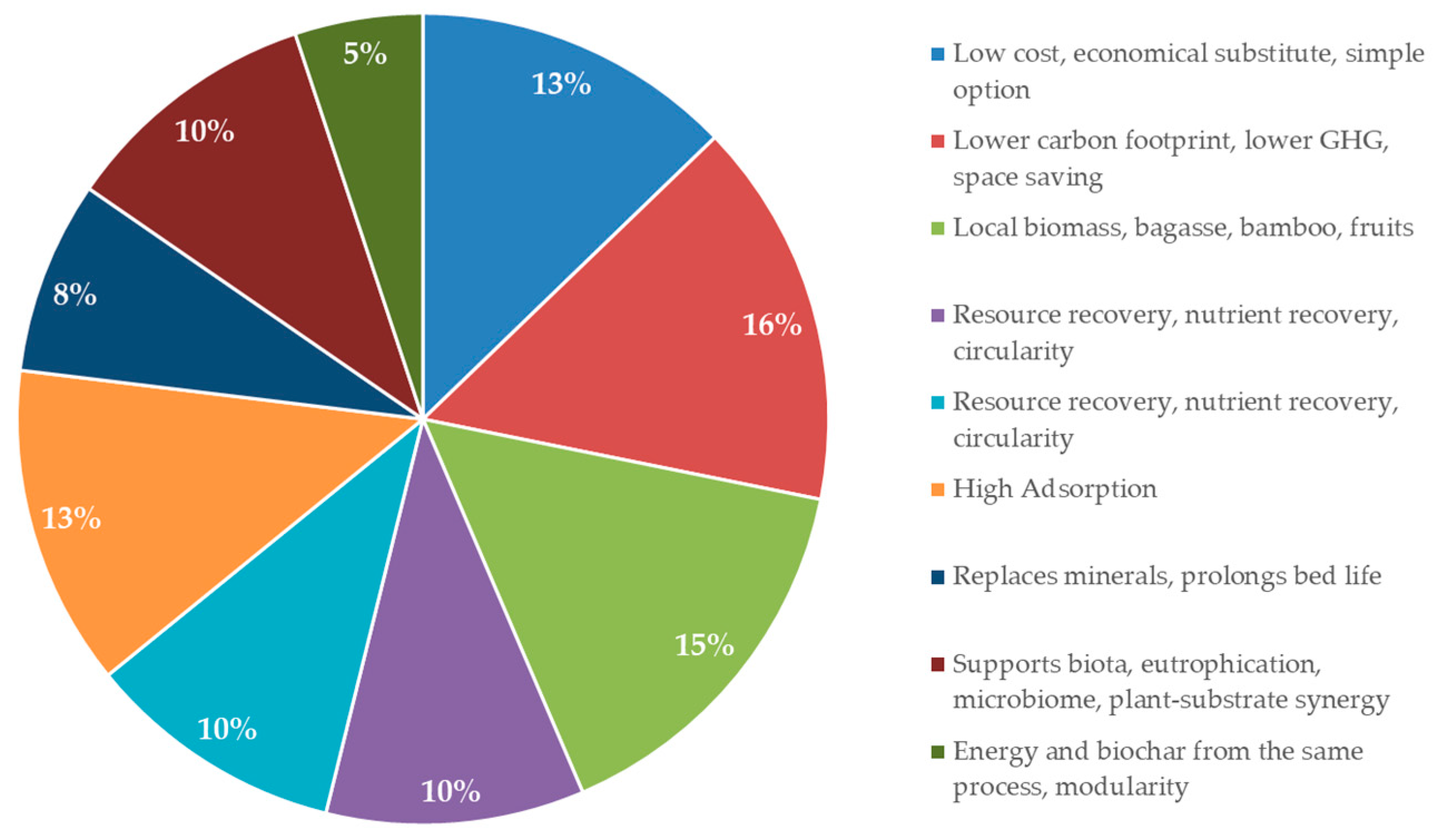

| Reference | Country | Type of CW (NBS) | Substrate | Circular Economy Strategy | Beneficios |
|---|---|---|---|---|---|
| [17] | Australia/Indonesia | Vertical Flow CW mesocosms | Biochar (woody) + sand | Revalorize, Reuse | Low cost, nutrient recovery, decentralization |
| [18] | Republic of Korea | Horizontal Flow CW | Biochar + gravel | Revalorize, Reduce | Lower carbon footprint, sustainable reuse |
| [19] | Australia/Indonesia | Vertical Flow CW (mesocosms) | Biochar (woody) + sand | Reuse, Revalorize | Use of local biomass, less transport |
| [20] | China | Vertical Flow CW (aerated and non-aerated) | Biochar (biomass pyrolysis) | Revalorize | Recovers resources, sustainable water management |
| [21] | India | Constructed Wetland | Coconut shell biochar | Reuse, Revalorize | Waste converted to biochar, accessible |
| [22] | China | Intermittently aerated VFCW (lab/pilot microcosms) | Agricultural biomass (wheat straw, apricot pits, walnut shells) | Reintegrate, Reuse | Extra carbon, improves natural denitrification |
| [23] | China | Vertical Flow CW | Biochar | Reduce, Revalorize | GHG decreases, sustainable closed cycle |
| [24] | Bangladesh | Hybrid (VF + HF) CW | Sugarcane bagasse | Reuse, Revalorize | Agricultural by-products as an alternative substrate |
| [25] | India | Vertical flow CW | Organic wastes (wood mulch, sugarcane bagasse, coir) | Revalorize | Agricultural Residues as CW Medium |
| [26] | China | Vertical up-flow CW | Fe-modified biochar (bamboo) | Reuse, Revalorize | Local bamboo and biochar, a sustainable option |
| [27] | China/Australia | CW microcosms | Biochar + activated carbon (Fe3+, Mn4+ modified) | Revalorize, Reconnect | High Adsorption, Promotes Microbial Pathways |
| [28] | China | Coupled CW (RDCW) | Biochar with iron and microbes | Revalorize, Reuse | Low cost, scalable, adaptable |
| [29] | Czech Republic/ Kazakhstan | Biochar-amended biofilter (CW-inspired) | Biochar (chamber inserts) | Reuse, Rethink | Modular, reusable, temporary option |
| [30] | The Netherlands | CW support-matrix screening (batch & columns aimed at CWs) | Biochar, bark, compost, cork (vs sand, gravel, LECA, lava) | Rethink, Reduce | Less mineral use, prolongs bed life |
| [31] | China | Biochar-constructed wetlands under varying hydraulics | Coconut-shell biochar and shell mixes | Reuse, Reduce | Energy saving, waste use |
| [32] | China | Vertical subsurface-flow CW (substrate combinations) | Walnut shell (+ Mn ore, + activated alumina) | Reuse, Reduce | Lower environmental footprint, waste as a substrate |
| [33] | Nigeria/Cameroon | Vertical-flow CW (planted with E. pyramidalis) | Corn-cob biochar; rice-husk biochar (vs sand) | Revalorize | Economical substitute, potential sand replacement |
| [34] | Japan/Thailand | Vertical-flow CWs (saturated & semi-saturated) | Corn-cob biochar | Reuse, Revalorize | Improved water, a simple and economical option |
| [35] | Thailand | CW growth/substrate assay (mesocosms with Canna indica) | Biochar and pumice vs. gravel | Reduce, Revalorize | Use of industrial minerals decreases |
| [36] | Thailand | Horizontal surface-flow CWs (aerated & non-aerated, pilot) | Coconut shells; oyster shells (+ activated carbon layer) | Reuse | Fast treatment, low hydraulic time |
| [37] | Burkina Faso/ Ghana | Vertical-flow CW (yard-scale) planted with bamboo | Bamboo biochar (as conditioner) | Reuse, Reintegrate | Local bamboo, ecological adaptation |
| [38] | India | Floating CW (multilayer) with Spirodela polyrhiza | Wood biochar mixed in sand matrix | Revalorize, Reuse | Biochar as carbon, decentralized |
| [39] | Argentina | Innovative vertical cork-based CW; aerated vs. non-aerated | Cork by-product (sole granular medium) | Revalorize, Reintegrate | Internal source of carbon, circularity |
| [40] | The Netherlands | Vertical-flow mesocosm CWs with pre-treatments | Bark–biochar mix vs. sand | Revalorize, Reuse | Renewable matrices, longer uptime |
| [41] | China/Chile | Reed-bed Constructed Wetland (HSFCW) | Modified biochar (sulfuric acid) | Revalorize, Reduce | Higher atrazine removal, low cost, high efficiency |
| [42] | United States | Edge-of-field CW (agricultural runoff) | Biochar (buckthorn), mussel shells, slag | Revalorize, Reuse | Phosphorus capture, eutrophication control, regional option |
| [43] | China | Bio–ecological train: pond → biofilter → SSF-CW → polishing pond | Added carbon sources: sludge-fermentate, rice straw | Reintegrate, Revalorize | Recover carbon, reduce emissions |
| [44] | Thailand/Denmark | Lab columns; planted/unplanted | Longan-wood biochar (vs gravel) | Revalorize | Fruits converted into filtering biochar |
| [45] | Republic of Korea/ Bangladesh | Lab & outdoor hybrid CWs (comparative LCA) | Natural/industrial media (sugarcane bagasse, coco-peat, brick, steel slag) | Revalorize, Reduce | Lower environmental footprint, low impact |
| [46] | The Netherlands | Batch-operated vertical CWs; aerated vs. not | Bark–biochar matrix vs. sand | Revalorize | Adsorption of contaminants, greater durability |
| [47] | Mexico | Constructed Wetland–Microbial Fuel Cell (CW-MFC) | Carbon felt | Rethink, Reconnect | Generates bioelectricity, improves water quality |
| [48] | United States | Hybrid Constructed Wetland (VSFCW + HSFCW) | Biochar + zeolite | Revalorize, Reintegration | Leachate pretreatment, cost savings, water reuse |
| [49] | Luxembourg/ Germany | VFCW (on-site greywater & WWTP polishing) | Biochar from plant residues & toilet-paper cellulose (with sand) | Reuse, Rethink | Replaces minerals, uses organic waste |
| [50] | China | Vertical-flow CW (intermittent aeration) | Alkali-modified corn cobs (slow-release C source) | Reintegrate, Revalorize | Extra carbon, promotes denitrification |
| [51] | UK/EU/ZA | Floating treatment wetlands irrigation | Willow biomass (for future biochar) | Revalorize, Reuse | Energy and biochar from the same process |
| [52] | Italy/Tunisia | Vertical-flow CW (planted & unplanted) | Biochar from co-pyrolysis of biological sludge + sawdust | Revalorize, Reuse | Sludge + sawdust in biochar, efficient adsorption |
| [53] | Spain | Subsurface-flow CW (field-scale) | Gravel + 10% biochar (also gravel + 30% wetland soil) | Revalorize, Reintegrate | Supports biota, controls eutrophication |
| [54] | Pakistan | Horizontal subsurface-flow CW (lab) planted (Typha, Phragmites) | Bagasse-based biochar (charcoal) | Revalorize, Reuse | Bagasse as biochar |
| [55] | Spain | Floating root mats (bench) | Biochar added to FRMs | Revalorize, Reconnect | Biochar Boosts Microbiome |
| [56] | The Netherlands | Post-treatment CWs (LCA/TEA) | Bark–biochar vs. sand | Reduce, Revalorize | Space-saving, lower environmental footprint |
| [57] | Oman | Large oilfield CW (existing), field irrigation trials | Buffelgrass biochar (soil amendment) | Reuse, Reintegrate | Local biomass in agricultural soils |
| [58] | Morocco | Vertical subsurface-flow (pilot) planted/unplanted | Peat moss + limestone + gravel | Reintegrate, Reuse | Neutralizes acidity, stabilizes metals |
| [59] | India | Vertical-flow CWs (biochar-augmented) | Wood biochar | Reuse, Revalorize | Maximum efficiency, plant-substrate synergy |
| [60] | Peru | Constructed Wetland–Microbial Fuel Cell (CW-MFC) | Biochar electrode (Lemna gibba) | Revalorize, Rethink | Antibiotics removal, additional electricity, biosafety |
Disclaimer/Publisher’s Note: The statements, opinions and data contained in all publications are solely those of the individual author(s) and contributor(s) and not of MDPI and/or the editor(s). MDPI and/or the editor(s) disclaim responsibility for any injury to people or property resulting from any ideas, methods, instructions or products referred to in the content. |
© 2025 by the authors. Licensee MDPI, Basel, Switzerland. This article is an open access article distributed under the terms and conditions of the Creative Commons Attribution (CC BY) license.
Share and Cite
Domínguez-Solís, D.; Martínez-Rodríguez, M.C.; Campos-Villegas, L.E.; Ramírez-Escamilla, H.G.; Bello-Yañez, X.V. Sustainable Management of Organic Waste as Substrates in Constructed Wetlands: A Systematic Review. Sustainability 2026, 18, 318. https://doi.org/10.3390/su18010318
Domínguez-Solís D, Martínez-Rodríguez MC, Campos-Villegas LE, Ramírez-Escamilla HG, Bello-Yañez XV. Sustainable Management of Organic Waste as Substrates in Constructed Wetlands: A Systematic Review. Sustainability. 2026; 18(1):318. https://doi.org/10.3390/su18010318
Chicago/Turabian StyleDomínguez-Solís, Diego, María Concepción Martínez-Rodríguez, Lorena Elizabeth Campos-Villegas, Héctor Guadalupe Ramírez-Escamilla, and Xochitl Virginia Bello-Yañez. 2026. "Sustainable Management of Organic Waste as Substrates in Constructed Wetlands: A Systematic Review" Sustainability 18, no. 1: 318. https://doi.org/10.3390/su18010318
APA StyleDomínguez-Solís, D., Martínez-Rodríguez, M. C., Campos-Villegas, L. E., Ramírez-Escamilla, H. G., & Bello-Yañez, X. V. (2026). Sustainable Management of Organic Waste as Substrates in Constructed Wetlands: A Systematic Review. Sustainability, 18(1), 318. https://doi.org/10.3390/su18010318