Article

Adaptive Redesign of Urban Industrial Landscapes: The Case of Komotini’s Technical Chamber Square, Greece

by
Varvara Toura
1,*,
Alexandros Mpantogias
2,* and
Neslihan Saban
3
1
Research Associate EHESS, Géographie-Cités, 5 Cours des Humanités, 93322 Aubervilliers, France
2
School of Architecture, Aristotle University of Thessaloniki, Campus of Aristotle University, 54124 Thessaloniki, Greece
3
Independent Researcher, 25 Mpizaniou Street, 69132 Komotini, Greece
*
Authors to whom correspondence should be addressed.
Submission received: 15 November 2025 / Revised: 15 December 2025 / Accepted: 18 December 2025 / Published: 4 January 2026

Abstract

Deindustrialization has left many industrial buildings inactive, raising questions about their role in contemporary urban life. This article explores how semiotics and psychogeography can reframe such structures as dynamic architectural happenings, shifting emphasis from preservation toward social value and collective experience. This research focuses on Komotini, Greece, where the Technical Chamber Square is reinterpreted through references to the adjacent Tobacco Warehouse. By integrating architectural traces of the past into new recreational and sporting functions, this study demonstrates how heritage can be embedded into everyday practices. Methodologically, this research employs qualitative approaches, including demographic and historical analysis of Komotini’s urban and industrial development, alongside psychogeographic drifting walks. Twenty interviews were conducted with local business owners, residents, and visitors, as well as psychogeographic walks, generating insights into how communities interact with industrial heritage. The findings indicate that semiotics and psychogeography are effective tools for activating public spaces near former industrial sites, enabling the built environment to be understood as a layered record of successive interventions. The study concludes that adaptive redesign offers designers a methodology that can embed industrial fragments into vibrant public realms that sustain diverse communities, catalyze local economies, and honor historical identity through lived practices.

1. Introduction

This article addresses the urgent need to rethink deindustrialized urban spaces, where former industrial buildings pose challenges for heritage, identity, and local regeneration. Small- and medium-sized cities, as exemplified by Komotini—a medium—sized city in Northeastern Greece—face legal, ownership, and resource constraints that often prevent public-led transformation of protected industrial sites. These constraints make it necessary to develop low-cost, replicable design approaches that reconnect communities with industrial legacies while delivering accessible urban amenities. We should also highlight the importance of research on industrial heritage in Greece and the regeneration of surrounding spaces. Although former industrial sites are protected by national law, their transformation is often hindered because ownership is typically held by private stakeholders rather than public authorities.
Grounded in a field research case study of the square in front of the Technical Chamber of Greece (a former tobacco warehouse), this article proposes a design strategy that integrates semiotics, psychogeographic methods, and industrial heritage preservation. It also incorporates elements from our design proposal presented at the Panhellenic Architectural Ideas Design Competition organized by the Regional Unit of Thrace of the Technical Chamber of Greece in spring 2025. The proposal received second place. The proposal, tested through participatory drifting walks and socio-historical analysis, aims to use architectural traces to guide movement, frame recreational activities, and generate new collective narratives. By producing an urban palimpsest that preserves tangible fabric and intangible memory, the study demonstrates how adaptive reuse focused on accessibility, affordable programming, and choreographed movement can reactivate industrial heritage as a resilient public resource that strengthens community identity and local economies.
Semiotics, psychogeography, and industrial heritage preservation form a complementary theoretical triad for reading former industrial landscapes. Semiotics supplies a vocabulary for decoding the material signs embedded in industrial buildings that communicate past functions and social relations. Psychogeography foregrounds the experiential dimensions of place by tracing how memory and perception produce meaning in everyday use. Its methods (drifting and mapping of emotional responses) reveal routes, points, and edges that conventional plans often miss. Industrial heritage preservation anchors these interpretive practices in the physical reality of surviving fabric, insisting on the conservation of tangible elements and the intangible narratives they carry. Together, these approaches enable designers and planners to treat industrial sites not as inert monuments but as legible texts with signs that can be read and reconfigured.
Applied to adaptive redesign, the three frameworks guide both diagnosis and intervention. Semiotic analysis identifies which industrial elements can act as spatial organizers, psychogeographic inquiry prioritizes routes and atmospheres that resonate with local users, and preservation principles set thresholds for intervention that retain authenticity and allow new uses. This synthesis supports low-intervention strategies that activate public life, encourage collective stewardship, and catalyze incremental economic activity. The result is an adaptive redesign model that privileges social value, accessibility, and the production of new everyday practices over purely aesthetic or market-driven outcomes.
Despite their generative potential, these theories face practical and epistemological limits when deployed in a specific domain, such as in the case study of paper, which focuses on the redesign of a public space in front of a former industrial building. In the case study, the use of semiotics and psychogeography techniques can be criticized for subjectivity and limited reproducibility, as affective mappings reflect particular participants and moments and do not capture broader experiences. At the same time, preservation constraints exist, for example, legal protection for the safeguarding of industrial buildings and ownership regimes that circumscribe a range of feasible interventions. This means that in the case study of the Technical Chamber Square in Komotini, it was necessary to interpret the theoretical framework with the institutional and technical capacity frameworks to use the above theories in the adaptive redesign of the public space in front of the Technical Chamber building.

1.1. The Semiotics Approach

Semiotics views material artifacts as active agents within networks of meaning, where significance is continually shaped and reshaped by cultural codes and interpretive acts [1]. Invoking Eco’s model of cultural codes, Barthes’s analysis of myth and signification, and Peirce’s triadic theory of the sign provides a semiotic toolkit for adaptive redesign, enabling designers to decode industrial fabric as layered systems of meaning and craft interventions that communicate new functions while preserving historical identity. Eco’s perspective emphasizes that signs operate within codes, allowing both direct reference and multiple layers of meaning. This insight is crucial for understanding how industrial sites communicate cultural identity [2]. Barthes illustrates that ordinary urban elements can acquire symbolic power, reinforcing dominant narratives. In industrial heritage, architectural details may, therefore, embody ideological significance beyond their practical function [3]. Peirce’s semiotic framework suggests that heritage meaning is not static but emerges through the interplay of symbols, their referents, and the interpretations communities construct around them. A Peircean perspective underscores the dynamic process by which stakeholders, former workers, municipal authorities, developers, and visitors generate successive interpretants that alter the relationship between object and meaning over time [4].
Combining the theories of Eco, Barthes, and Peirce highlights three essential steps for research and practice. First, integrate material with semiotic analysis: documentation should combine technical surveys and physical assessments with detailed catalogs of signs, inscriptions, and assemblages that influence how the public interprets a site [5]. Second, recognize multiplicity and contestation as important sources of insight: mapping different interpretations, such as workers’ memories, heritage tourism stories, or investor perspectives, uncovers tensions that policy must address rather than ignore [5]. Third, explore the temporality of interpretation through long-term methods such as archival research, oral histories, and repeated experiential walks, which demonstrate how meanings change, fade, or are intentionally redefined over time [2,4].
From a practical standpoint, these theoretical commitments suggest specific design and management strategies. Adaptive reuse should preserve the semiotic integrity of meaningful sign-vehicles, such as processual elements, circulation patterns, and vantage points, while programming activities that create new interpretants aligned with social utility and inclusivity [6]. Interpretation programs should deliberately expose ambivalence and multiplicity rather than smoothing pasts over single heritage myths [3]. In summary, treating industrial heritage as a semiotic field aligns material conservation with democratic meaning-making. The longevity and social significance of preserved industrial fabric depend on maintaining dialogic relations between the object and interpretant over time, allowing communities to continue to repurpose the semiotic resources of place [7]. Semiotic readings of industrial fabric are complemented by the psychogeographic theory in order to map how movement and affect animate those signs.

1.2. The Psychogeographic Approach

Debord defined psychogeography as the study of how geographical environments influence emotions and behaviors, a perspective that continues to inform contemporary urban design [8]. Debord’s psychogeographic theory, centered on dérive and detournement, is inscribed into adaptive redesign by revealing affective urban flows and latent routes within industrial ruins, thereby guiding interventions that reorient circulation, perception, and collective appropriation toward socially productive uses. According to Debord, a departure from the capitalist mechanism, a spectacle that transforms individuals into beings defined solely through consumerist fantasies and representations, can be realized only through a situationist revolution, the activation of creative and participatory methodologies that would ultimately restore authenticity to lived experience [9,10,11]. In our research, we primarily focus on its implementation in the architectural and urban design field. It would thus be a significant omission not to address the interconnection between spectacle, architecture, and urban design as articulated in Debord’s work. Within this context, Debord develops the notion of unitary urbanism, emerging from psychogeographical experiments that prefigured later and contemporary phenomena—such as cyberspace and the politics of simulation.
In Debord’s unified urbanism, urban space is conceived as a canvas of constraints upon which social and cultural components are inscribed. Central to his theory is the dérive—a form of exploratory wandering guided by atmospheres rather than planned routes, revealing hidden emotional geographies [12]. This approach demonstrates that industrial heritage sites can be reactivated by encouraging new forms of movement and perception, transforming them into spaces of collective exploration.
The legacy of Debord’s theory in architecture and artistic production lies in establishing the principle that, within a revolutionary and collectively driven framework, politics, art, and aesthetics must not be treated as distinct or autonomous domains. In other words, the individual pursuit of political and cultural subversion of the capitalist mode of societal organization can only take root if accompanied by a structural revolution and a parallel critique of everyday life—its production, architecture, art, and ethics alike. Hence, only through a holistic and collective approach—as emphasized in The Society of the Spectacle—can critique address the organization of “social time” and “spatial form” [13].
Perhaps more than anywhere else, this condition is reflected, on a secondary level of interpretation, in contemporary theoretical approaches to the reading and design of urban space. Today, the urban environment is no longer conceived merely as an empty or full space—as it was within earlier artistic and architectural movements such as Modernism or the Bauhaus—but rather as a complex structure: a network of social, ecological, and cultural interdependencies hosting the fundamental relationships between humans and their environments.
Human and social presence thus emerge as essential preconditions for the formation and production of space [14,15,16]. Contemporary artistic and urban design practices continue to engage with and shape the urban landscape through an ongoing process of co-becoming: a continuous invention of urban space and a redefinition of our nomadic selves through a multiplicity of ephemeral and transient encounters [17,18]. Within this spectral condition, an emergent subject is implied—cognitively transformative and epistemically subversive—formed through coexistence with other subjects and objects, whether social, architectural, or technological.
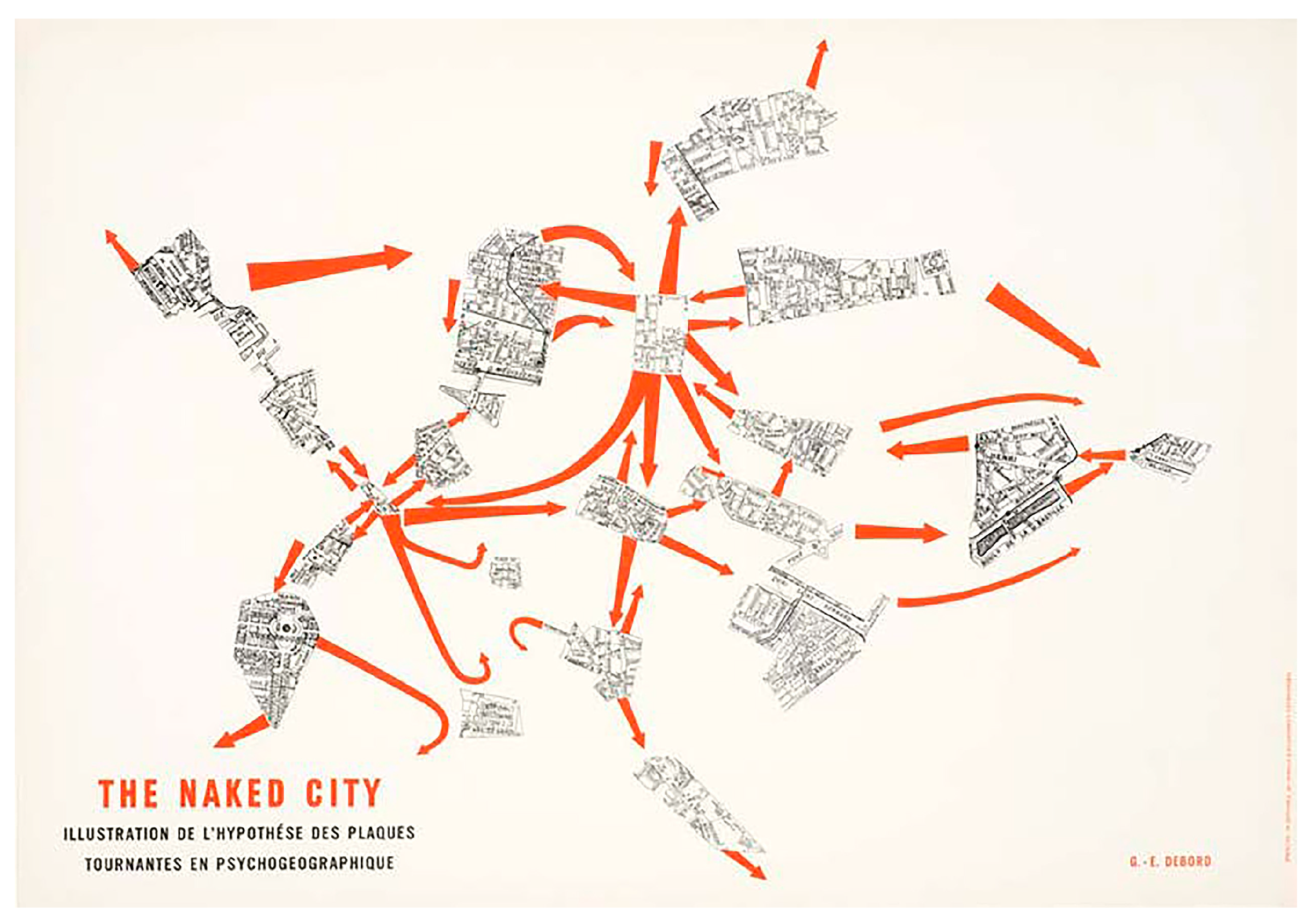
Guy Debord’s psychogeographic map of Paris, presented in the form of a book titled The Naked City, offers an evocative precedent for our approach [19]. Debord fractured the city into islands of experience, connected by red arrows that trace the dérive routes of urban explorers (Figure 1). Rather than a fixed blueprint, this map proposes the city as a dynamic palimpsest of emotions and behaviors. We adopted this mindset in Komotini, treating the city’s old tobacco warehouses and adjacent public spaces not as static artifacts but as living embodiments of collective memory, waiting to be reactivated through carefully choreographed movement and design. Decoded meanings and mapped affective flows derived from the semiotics and psychogeographic theories were complemented by industrial heritage preservation theories in order to anchor interventions in the tangible fabric and legal frameworks of the former industrial site.

1.3. Preservation of Tangible and Intangible Industrial Heritage

Preserving industrial heritage requires a dual focus on tangible structures and intangible legacies, as the value of these sites is created through an ongoing relationship between physical fabric and social meaning. In our study, industrial heritage preservation theories provide legal, material, and interpretive frameworks that safeguard significant fabric and intangible narratives, ensuring that the adaptive redesign interventions respect authenticity and anchor new uses within the historical urban landscape of Komotini. Material conservation preserves the reflective traces of production and patina, which support claims of authenticity and provide the spatial features necessary for reuse and interpretation [21,22]. Intangible elements, such as collective memories, mediate how communities and visitors interpret, inhabit, and repurpose industrial sites, shaping both the symbolic importance and the everyday functionality of interventions [23,24].
The balance between fabric and narrative is both methodological and ethical. Conservators and designers must document and stabilize physical conditions using established conservation science while simultaneously eliciting and recording living knowledge through ethnography, oral history, and participatory mapping. This mixed-methods approach permits preservation plans that treat fabric not as an inert relic but as a semiotic resource whose legibility depends on interpretive infrastructures that transmit meanings across generations [25,26]. Preserved industrial buildings and their surrounding spaces require active programming and community engagement; otherwise, they risk becoming isolated relics rather than integrated parts of the urban fabric. Adaptive reuse and redesign strategies that prioritize social utility create new interpretive layers, keeping the industrial fabric alive and meaningful [27]. However, reuse and redesign must avoid instrumentalizing heritage solely for economic ends; projects that privilege market narratives over workers’ memories or community attachments can produce symbolic displacement and social inequity [28]. Conservation ethics, therefore, require procedural justice: inclusive decision-making processes, transparency about trade-offs, and mechanisms for long-term stewardship co-managed by stakeholders [29].
Interpretation plays a mediating role in sustaining the dialogic relation between object and meaning in the adaptive redesign of former industrial landscapes. Interpretive programs should be reflexive: they must acknowledge multiple temporalities and conflicting histories and provide space for dissenting memories rather than producing a monologic heritage script [3,30]. Digital technologies, 3D scans, oral history repositories, and augmented reality could extend accessibility and enable dynamic layering of narratives, as long as they are integrated with site-based practices that preserve embodied knowledge and sensory engagement with material form [31].
Ultimately, securing sustainable futures for industrial sites through adaptive redesign requires an integrative conservation paradigm that treats material conservation and narrative activation as coequal aims. This paradigm privileges long-term social and ecological viability over short-term economic gain, embeds participatory governance in stewardship models, and recognizes that the endurance of industrial heritage rests not only on bricks and beams but on the continued circulation of meanings, practices, and attachments (derived from the semiotics and psychogeographic theories) that make those things worth preserving [23,32].

2. Materials and Methods

Our research examined how adaptive redesign can shape public space design in former industrial cities without reducing heritage to simple static relics. We introduced an integrated method that combined elements from the theories of semiotics, psychogeography, and industrial heritage preservation alongside technical necessary parameters for the design of public spaces, such as accessibility, materials, and vegetation. This approach revitalizes former industrial sites as active parts of modern urban environments. The study focused on the former tobacco warehouse in Komotini, which houses the offices of the Technical Chamber of Greece’s Thrace Department, and the nearby square. By grounding our theoretical analysis and field research in this specific urban context, we developed design proposals that address both historical narratives and current community needs.
First, we clarified key concepts that were necessary for our research and design strategy, such as industrial memory, deindustrialization, and public-space design. This ensured that our methodology rested on precise, operational definitions that were used as key elements during the phase of elaboration of plans for the Technical Chamber Square. In contemporary urbanism, adaptive redesign mobilizes industrial memory as a critical interpretive framework through which the spatial and socio-economic ruptures of deindustrialization are reconfigured into public-space typologies that both acknowledge historical materialities and enable new modalities of collective use. Industrial memory encompasses physical remnants of production, everyday routines, and the collective recollections that communities attach to industrial spaces [32]. Public-space design means the deliberate shaping of streets, squares, parks, and thresholds to support movement, interaction, and civic life [33]. Heritage preservation encompasses policies and interventions that safeguard material and immaterial values, while enabling adaptive use [34]. Psychogeography denotes methods that reveal how physical environments influence emotions, behavior, and daily mental maps [35]. Deindustrialized cities are places that have lost productive functions and now carry unique social, spatial, and economic legacies [36]. These definitions framed our descriptive-analytic method and guided the translation of memory into design.
In our study, we used archival research, on-site observation, stakeholder interviews, and psychogeographic walks. This produced a layered reading of the former tobacco warehouse and square. Architectural analysis, based on semiotics theory, interpreted the building’s structure, circulation, and material patina as active carriers of memory, not inert artifacts. Heritage assessment cataloged tangible elements and intangible attachments to reveal the values the community assigns to the place. The descriptive phase presented a detailed account of the overlapping histories, uses, and perceptions that make up the site’s urban narrative.
The analytic phase correlated those narrative layers with measurable indicators of contemporary need: accessibility, programmatic diversity, ecological performance, and social equity. Design interventions were proposed where memory values and present necessities overlap, ensuring that preservation becomes a vehicle for ongoing use rather than mere commemoration. This evidence-based approach produced interventions that are both narratively resonant and functionally effective, avoiding the pitfall of fossilizing the past behind glass.
From the combined analysis emerged several guiding principles: conserve defining structural elements while introducing flexible uses that generate regular encounters with history, reveal the site’s different historical layers through visible traces and interpretive inserts instead of isolating artifacts, engage community stakeholders in programming to align memory work with lived priorities, adopt sustainable retrofitting strategies that reduce resource demand while showcasing historic materiality, and restore spatial permeability to reconnect the warehouse with the square and invite informal social life. Implemented in Komotini, these principles produced a public realm where industrial memory functions as a generative asset, enlivening everyday civic practice and advancing ecological and social resilience. The resulting model offers a replicable strategy for deindustrialized cities seeking to reconcile past and present through humane, durable urban design.
To ground our study in the lived realities of Komotini, we pursued three complementary approaches that together produced a richly layered reading of place. The first approach combined cartography, photography, and sketching to document the city’s industrial remnants, its existing open spaces, and the networks of circulation that shape everyday movement. In this study, cartography inspired by the psychogeographic work of Debord in Paris is employed as an interpretive tool, translating spatial relationships into diagrams that clarify urban dynamics for analysis and design. Photography served to fix the textures, light, and material patina of former industrial buildings, while sketching allowed quick, interpretive translations of spatial sequences and thresholds that photographs alone cannot capture. Through this visual and graphic work, we built a morphological database of tangible elements that anchor the later analytical phases.
The second approach turned to an analysis of secondary quantitative data sets, focusing on official statistics to map Komotini’s socio-economic structure. This approach offered a necessary counterpoint to visual observation by situating the site within demographic patterns and employment structures. Mapping professional categories and population provided measurable indicators of pressure points and opportunities in the urban system. These statistical layers allowed us to read the former warehouse and its square not as isolated artifacts but as embedded within a city whose economic trajectories and social fabric shape what preservation and design can realistically achieve.
The third strand emphasized qualitative methods that attend to experience and meaning. Our methodology combined archival research, on-site observation, stakeholder interviews, and psychogeographic walks to capture both tangible and intangible dimensions of Komotini’s industrial heritage. The interviews (20 interviews) revealed how different stakeholders value the site and what uses they imagine for it. Stakeholder interview participants were selected based on the activities developed in the neighborhood where the Technical Chamber building is located. We can find small cafeterias and restaurants, a hotel, and the offices of the Technical Chamber, as well as certain offices of lawyers and engineers. The people who were interviewed work in these sectors and are also residents of the city of Komotini. The interviews were organized in two parts: the first one referred to the former uses of the square since 1993, when the offices of the Technical Chamber of Greece were installed in the former tobacco warehouse, while the second part referred to the new uses and technical dimensions of planning to be considered in the redesign of the square. This procedure provided a comprehensive image of the uses of the public space in front of the Technical Chamber building over the last thirty years, and the local expectations from the new adaptive redesign of the public space (uses, materials, and vegetation).
Complementing interviews, we employed psychogeographic walks, a practice of moving through the city with an open attentional frame to record affective responses and spontaneous encounters. We conducted five psychogeographic walks, each consisting of five people. The composition of every group varied to maximize the emotional data that could be derived from the walks. We had: 1. a group of residents who lived in the neighborhood of the Technical Chamber building, 2. a group of residents of the city of Komotini who lived in other neighborhoods of the city, 3. a group of visitors of the city, 4. a group of students from the local Democritus University of Thrace and 5. a group of people working in the neighborhood of the Technical Chamber building. Each psychogeographic walk lasted twenty minutes, while the route was around the perimeter of the current public space, located at the center of the neighborhood. We should mention that both for the stakeholders’ interviews and for the psychogeographic walks, we did not follow a certain recording protocol, and did not ask the participants for informed consent, as they are not mandatory in Greece when the research is conducted as part of a project for a public stakeholder (in our case the research was part of our design proposal for the architectural ideas design competition organized by the Technical Chamber of Greece).
We analyzed the emotional data generated through the psychogeographic walks using an inductive coding process that translated participants’ affective responses into spatial categories. Field notes, verbal reactions, and observed behaviors were coded for recurring emotional markers—such as attraction and discomfort—which were then mapped onto the physical perimeter of the square to form comparative emotive layers. These coded signals highlighted hotspots of positive engagement, zones of tension, and transitional edges with latent potential. By cross-referencing these spatialized emotional patterns with photographs and analysis of socio-economic data, we were able to triangulate subjective experience with material and demographic evidence. The diversity of the five walking groups allowed the coding process to capture a wide emotional spectrum, ensuring that the resulting analysis reflected the differentiated perceptions of residents, visitors, students, and workers who interact with the space in distinct ways.
The qualitative data analysis followed a sequential process that began with organizing the collected material—archival documents, on-site observations, stakeholder interviews, and psychogeographic walks—into a coherent corpus. Each material was first examined independently through method-appropriate coding: descriptive for archival sources, spatial coding for field observations, narrative coding for interviews, and affective and situational mapping for psychogeographic walks. This first-cycle coding allowed the tangible elements of Komotini’s industrial heritage (such as buildings and spatial configurations) and its intangible dimensions (memories, emotions, narratives, and sensory atmospheres) to emerge clearly within each method.
In the second phase, the analysis shifted toward cross-method synthesis. Pattern coding was used to identify convergences and tensions across the different data, linking historical trajectories with present-day spatial conditions and lived experiences. Spatial and temporal triangulation—overlaying historical photos with field observations, comparing interview narratives with psychogeographic impressions- helped reveal how industrial memory is distributed, perceived, and enacted across the city. This integrative process produced a layered understanding of Komotini’s industrial heritage, enabling the identification of meaningful themes and design-relevant insights for future adaptive redesign.
The three key methodological approaches (cartography/photography, official statistics, and analysis of qualitative data) together created a multi-scalar, multi-modal understanding of Komotini’s conditions. The visual documentation established the material baseline, the data analysis located the site within broader socio-economic structures, and the qualitative work revealed lived perceptions and aspirations. By integrating these strands, we avoided privileging any single type of knowledge; instead, we generated design propositions that are both evidence-based and sensitive to the affective dimensions of memory and use. This methodological layering ensured that design proposals for the Technical Chamber Square emerge from converging lines of observation, measurement, and lived testimony rather than from abstraction or nostalgia alone.

2.1. Geography and Socio-Economic Structure of Komotini

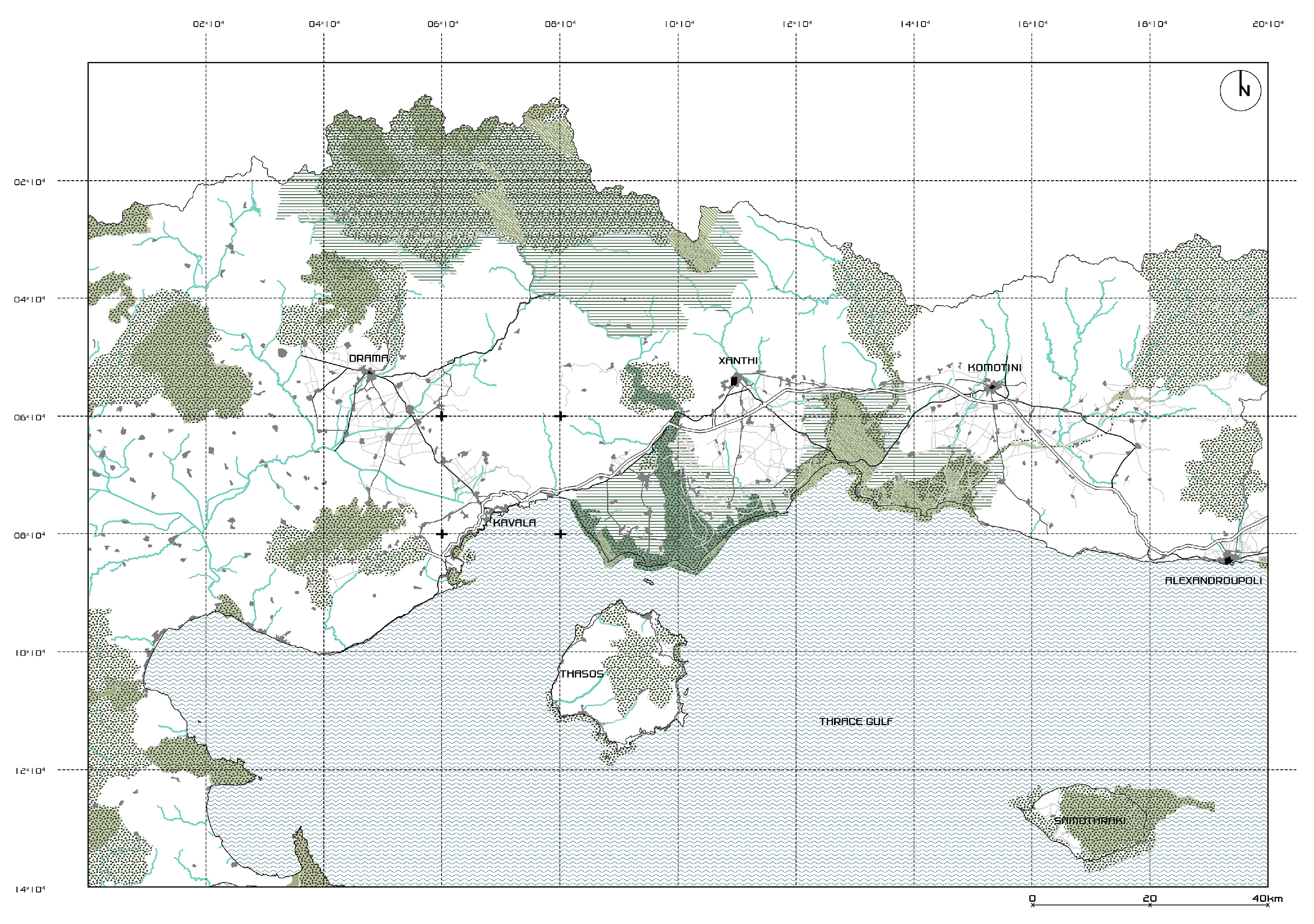
Komotini, the capital of East Macedonia and Thrace, is a regional hub whose geography, demography, and historical specificities determine both the constraints and possibilities for reimagining industrial heritage. The city’s demographic and spatial development underscores its role as a regional hub that links Balkan overland routes with the Aegean coast (Figure 2). The continued presence of a sizeable Muslim minority that was exempted from the 1923 population exchange between Turkey and Greece gives the urban fabric layered social and spatial logics that any heritage-driven adaptive redesign must acknowledge. These geographic and demographic conditions are not neutral backdrops but active factors that shape who uses the Technical Chamber Square, how they move through it, and what symbolic meanings the former tobacco warehouse carries for different groups.
Understanding the social composition of Komotini is essential to translating industrial memory into an inclusive, usable public space. The population divides into five socio-economic classes as summarized in the following table. This typology highlights differences in resources, daily rhythms, and place expectations that should inform programming, accessibility, and material interventions at the square in front of the former tobacco warehouse (Table 1).
This distribution foregrounds three design imperatives that we later used in our proposal for the redesign of the Technical Chamber Square. First, public-space interventions must be functionally diverse to serve both those with disposable resources and those whose engagement with place is constrained by time, mobility, or income. The Middle group, comprising roughly forty-four percent of residents, is especially salient: their daily patterns, shift work, and seasonal employment generate particular temporal rhythms for public life that adaptive redesign of public space should recognize. Second, the Lower Middle cohort, dominated by pension-dependent seniors, anchors family networks and intergenerational uses; the design must therefore prioritize safety, shade, seating, and proximate, low-cost activities to sustain social ties. Third, the presence of unemployed youth, immigrants, and persons with disabilities in the lower class argues for barrier-free circulation, low-threshold opportunities for participation, and adaptable spaces that can host vocational training, informal markets, or community enterprise.
Translating these social readings into concrete design strategies implies more than allocating amenities; it requires aligning heritage preservation tactics with everyday needs. Conservation of the tobacco warehouse’s material patina and structural logics should operate alongside adaptive redesign that creates micro-economies and social infrastructures, workspaces for small entrepreneurs, shaded nooks for elders, and flexible stages for youth cultural events. A programmatic mix that links heritage interpretation with livelihood opportunities leverages the building’s symbolic capital to produce tangible benefits across socio-economic strata. Mobility and permeability strategies must reflect Komotini’s role as a transport node: pedestrian routes and multimodal connections will expand the catchment of the square for travelers and locals alike.

2.2. Urban History of Komotini

The urban development of Komotini shows a succession of historical processes. We can identify two important architectural periods that allow us to understand the city’s historical palimpsest. The first one dates from the era of the Ottoman Empire to 1923. During the Ottoman period, Komotini became a significant commercial and administrative center. Its location along the Egnatia Road, the main east–west route in the Balkans, contributed to this. This advantageous position enabled the movement of goods. It supported the formation of an urban core organized around religious, commercial, and civic institutions [38]. The construction of mosques, markets, and caravanserais laid the foundation for the city’s built environment. The Eski Mosque, dating to the fifteenth century, remains a prominent example of the Ottoman architectural legacy [39].
The most profound transformation occurred after 1923, following the compulsory population exchange between Greece and Turkey and the parallel influx of refugees from Bulgaria. The settlement of displaced populations altered both the demographic composition and the spatial organization of the city. Refugee neighborhoods were rapidly constructed, often with modest housing that reflected both economic constraints and the cultural traditions of the newcomers [40]. These districts expanded the city beyond its Ottoman-era nucleus, creating a new urban geography that symbolized the integration of diverse populations into the Greek nation-state. The transformation of Komotini after 1923 also illustrates the broader processes of nation-building in northern Greece. The juxtaposition of Ottoman-era monuments with newly built Orthodox churches and civic institutions created a symbolic landscape in which competing historical narratives were inscribed [41]. In this sense, Komotini’s urban fabric became a site of negotiation between continuity and rupture, embodying both the persistence of Ottoman legacies and the assertion of a modern Greek identity.

2.3. Industrial Period of Komotini and Urban Heritage

In Komotini’s historical urban transformations, an important role is played by the development of economic activities related to tobacco production and commerce in the late nineteenth and early twentieth centuries. The cultivation and processing of tobacco not only underpinned local livelihoods but also drew Komotini into expansive trade routes spanning the Balkans and eastern Mediterranean. The city’s acclaim for fine tobacco spurred the construction of warehouses, storage spaces, and distribution hubs—physical markers that altered the cityscape and signaled new economic priorities [39,42]. Rather than being isolated in industrial zones, these facilities were woven into residential neighborhoods, a testament to how industrial enterprise and daily life became inextricably linked, imprinting a legacy still evident in the city’s fabric.
One of the most notable examples of this industrial architecture is the building of the Technical Chamber of Greece, which is inscribed in the spatial perimeter of our case study. The former brick warehouse on Parnassos Street, constructed between 1907 and 1910, was originally designed to store tobacco. Since 1993, the building has housed the offices of the Technical Chamber of Greece’s Thrace department. Its form and geometry illustrate the adaptability of industrial architecture and how commercial structures have been reconverted to host civic functions [40]. The warehouse embodies the intersection of commerce, architecture, and urban morphology, standing as a tangible reminder of Komotini’s industrial past while simultaneously participating in its contemporary institutional life. Scholars of industrial heritage emphasize that such buildings are not merely remnants of economic history but “active cultural assets” that contribute to collective memory and urban continuity [43,44].
The expansion of infrastructures related to the tobacco industry was closely tied to Komotini’s connectivity. The city’s railway line, completed in the early twentieth century, facilitated the export of tobacco and integrated Komotini into regional and international markets [38]. Tobacco warehouses clustered near transport routes and distributor roads, creating a spatial logic that linked production sites with circulation networks. At the same time, public spaces such as Eirini Square and the historic Palaia Agora remained central to civic life, highlighting the coexistence of industrial and social functions within the urban fabric [41].
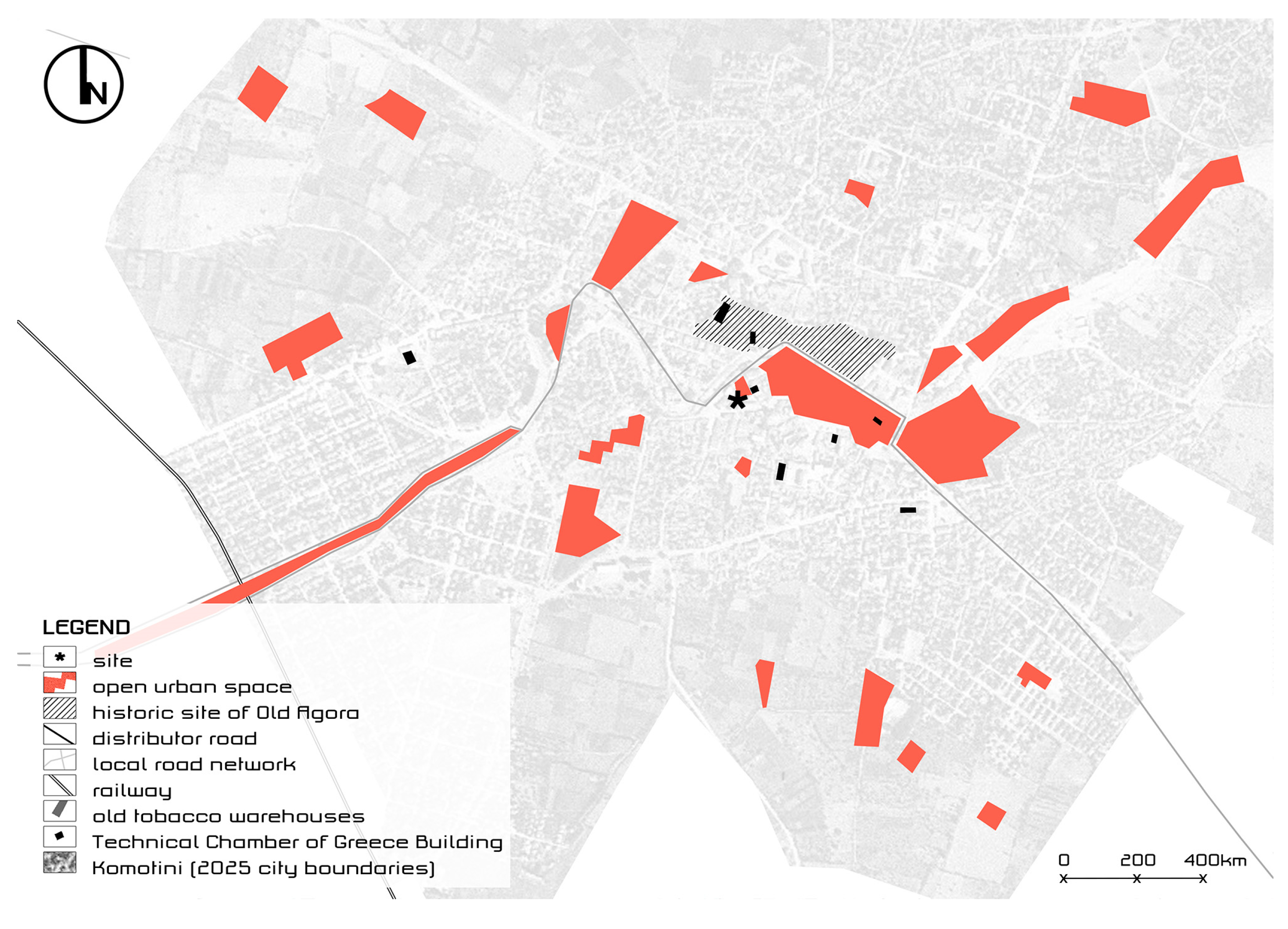
Today, the heritage dimension of the former industrial sites is increasingly recognized. The surviving warehouses, railway-related structures, and open urban spaces inside the city form a cultural landscape that embodies both the economic vitality of Komotini’s past and the challenges of integrating industrial heritage into contemporary urban planning. Our cartographic surveys revealed zones of disconnection where the industrial past and public life have diverged, underscoring the need for heritage-led interventions in the adaptive redesign (Figure 3). Industrial sites can serve as anchors of identity, offering opportunities to restore continuity between historical assets and everyday functions, according to the theories of industrial preservation and restoration [44]. In Komotini, the preservation and adaptive reuse of tobacco warehouses not only safeguard architectural memory but also provide a framework for reimagining the city’s future development.

2.4. The TEE Building (Technical Chamber of Greece) and Its Surrounding Area

The Technical Chamber of Greece building, located at 6 Parnassos Street, occupies a spot where Komotini’s small-scale commerce, leisure amenities, and traces of industrial heritage intersect. Around the main square of Komotini, Eirini Square, we can find several former industrial warehouses that are nowadays either restored and converted into office and commercial buildings or are abandoned, waiting for their restoration and new functions. Since the 19th century, the neighborhoods of TEE and Eirinis Square have been used for commercial and leisure activities combined with housing units [45]. The area features local shops, cafeterias, and restaurants that encourage intermittent public gatherings, particularly in the warmer seasons. Eirini Square, a hub for outdoor socializing and overflow from dining venues, imparts a seasonal tempo to the plaza before the TEE façade: vibrant during peak times but frequently quiet at others. This highlights a disconnect between the area’s historic built environment and its ongoing urban activity. While the chamber building remains a visual and historical landmark, the surrounding public space lacks the programming and flexible infrastructure needed for continuous community use. Interviews with business owners and users showed a clear interest in the redesign of the public space in front of the Technical Chamber building, focusing on more open-air events, exhibitions, and adaptable seating options to encourage activity during evenings and less busy seasons. Introducing simple infrastructure to support flexible programming was revealed as a strategy in our design proposal that could enhance both commercial life and the presently underused forecourt of the chamber.
The TEE building’s materiality and form physically embody Komotini’s industrial past. A former tobacco warehouse, it was purchased by the Technical Chamber of Greece and restored to house its offices in the region of Thrace. Its original owner, Ioannis Stergiou, was an influential tobacco merchant of Epirus origin active between 1875 and 1925. The building’s solid fired-brick walls, neoclassical ornamentation, and distinct façade form have been preserved under the Ministry of Culture’s designation as a historic monument (FEK 112/B/21-02-1992). In its original form, the warehouse was three-storied, with a semi-basement and double-pitched roof. The construction materials of the building were stone and wood for the floors and supports, while bricks were also used for the walls. The large windows ensured good natural lighting and ventilation of the warehouse. The tobacco warehouse was also called kapnomagazo, since it was not only a storage space but also a place for processing tobacco [46]. In the semi-basement of the building, the tobacco was dried (under humid conditions so that the leaves would not crumble), while on the upper floors, it was processed and packed into bundles. The company’s administration was also housed there on the third floor [47].
According to the architect Manos Anagnostidis, who worked on the restoration of the building and its conversion into an office building, the industrial traits of the Parnassos warehouse serve as architectural memory, a material archive of commercial production and storage practices that shaped the city’s economic landscape [48]. We should note that the preservation of the building as a historic monument affirms its symbolic value, but its potential to narrate the industrial past extends beyond preservation. In our research, elements of the building that were preserved in the restoration and conservation process dating from 1992, such as the building’s masonry, cornice lines, and fenestral proportions, become, based on our theoretical semiotics analysis, legible elements in a wider adaptive redesign strategy of the public space in front of the Technical Chamber building that makes historical processes visible in everyday space.
Our main design strategy to project the tobacco warehouse façade onto the square’s paving seeks to translate vertical architectural language dating from the industrial era into the new horizontal public ground. This intervention creates a visible continuity between building and plaza, reinforcing collective memory while providing cues for programming and movement. By echoing the building’s industrial geometry in paving patterns, seating layouts, and lighting, the new plaza could articulate zones for temporary markets, performances, and winter-proof seating, overcoming the seasonal lulls and dealing with residents’ and visitors’ expectations. Thus, the public space becomes a resilient, year-round civic threshold. The design proposal is aligned with industrial heritage preservation policies and tries to link the material resonance of the former tobacco warehouse with functional versatility: brick-like paving, modular benches, and discreet infrastructure for temporary stalls, which recall the industrial character of the neighborhood while supporting contemporary uses. In doing so, the project makes Komotini’s industrial past legible within its contemporary urban rhythms and supports a more continuous public life around a historically significant building.


3. Results

3.1. The New Identity of the Square

The redevelopment of TEE Square in Komotini was the main theme of an architectural ideas design competition organized by the Technical Chamber of Greece, Thrace department, in spring 2025. Our main theoretical analysis and methodological tools for identifying Komotini’s urban industrial heritage, with a particular focus on the TEE neighborhood, were combined with urban planning strategies to propose an adaptive redesign of the public space in front of the Technical Chamber building. By integrating architectural heritage, community input, and environmental responsiveness, the design proposal presented at the competition showed how adaptive redesign can transform a former industrial site (a square) into a dynamic civic gateway.

3.1.1. Representational Studies: Reading the Façade

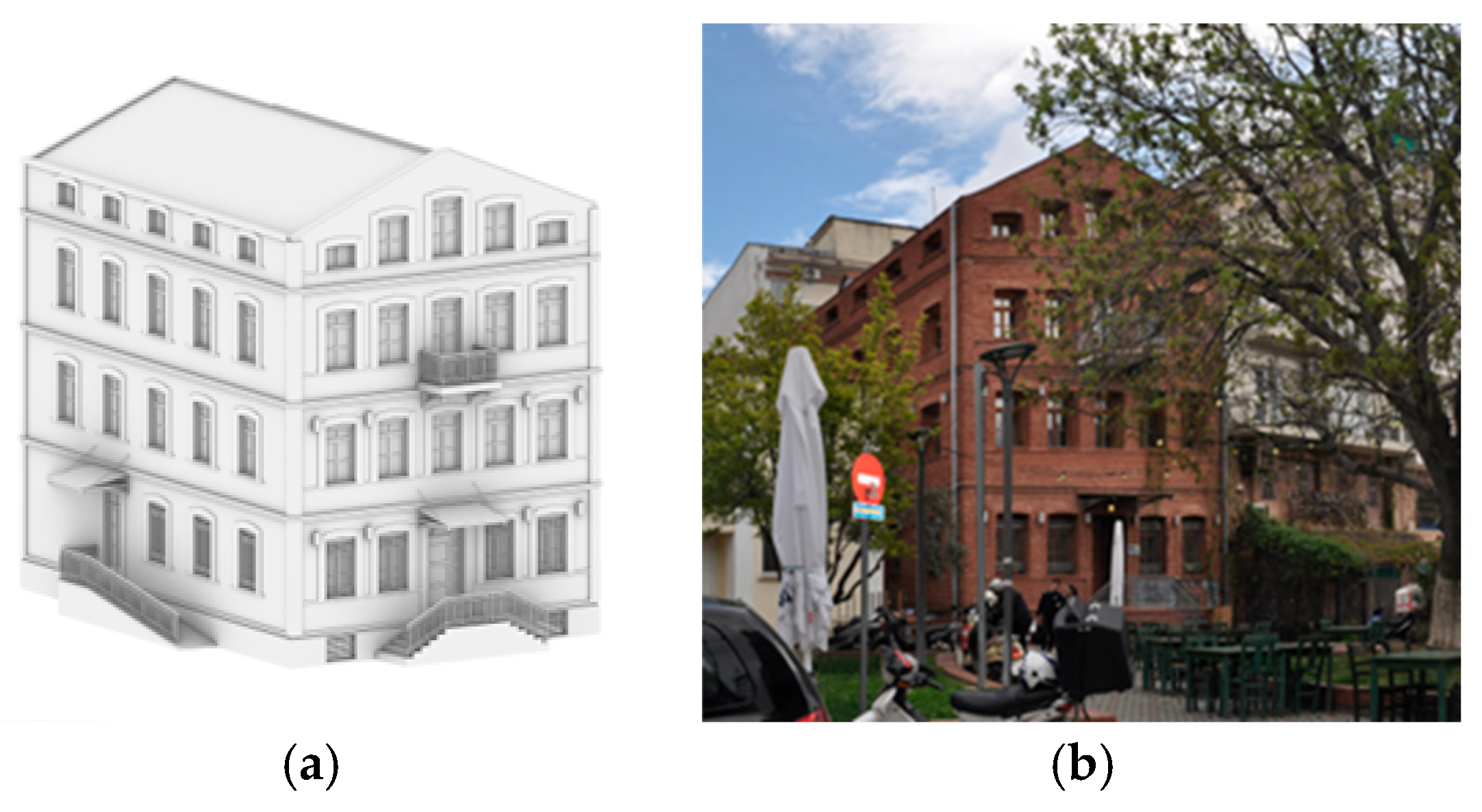
To integrate several architectural elements of the TEE building in our design proposal, echoing the semiotics theories, we used two visual records for their identification. The whole design proposal is based on the current state of the TEE building in accordance with its use as an office building and the design principles used by the architect who worked on its restoration. For these reasons, we did not use historical photos of the building and the neighborhood, but a grayscale 3D model and a color photograph of the building (Figure 4). The grayscale model highlighted structural characteristics, brickwork, fenestration, and ornamentation by removing color.
In contrast, the color photograph documented the building’s current social frame, showing outdoor seating and greenery that now soften the industrial façade. The juxtaposition of these two images revealed a dual identity: one rooted in the building’s material authenticity, and another emerging from its contemporary appropriation by residents and businesses. This duality provided the conceptual foundation for subsequent phases of analysis, suggesting that the design proposal should not erase traces of industrial heritage but rather reinterpret them as thresholds for civic life. By combining abstraction and realism, we were able to capture both the architectural essence of the building and its evolving role in the community.

3.1.2. Semiotic Analysis: Aligning Form and Use

The second phase applied semiotic analysis to the façade, treating architectural elements as signifiers that could be mapped onto zones of circulation and gathering in the plaza. Cornices and pilasters were read as vertical markers that naturally aligned with pedestrian flows, while window openings suggested pockets for pause and small-scale congregation.
The mapping exercise demonstrated that not all elements required literal preservation. Instead, their symbolic function could be translated into new spatial devices. For example, a redundant loading bay was reconceived as an amphitheater slice: its outline preserved as a memory trace, while its interior was transformed into stepped seating for performances and informal gatherings.
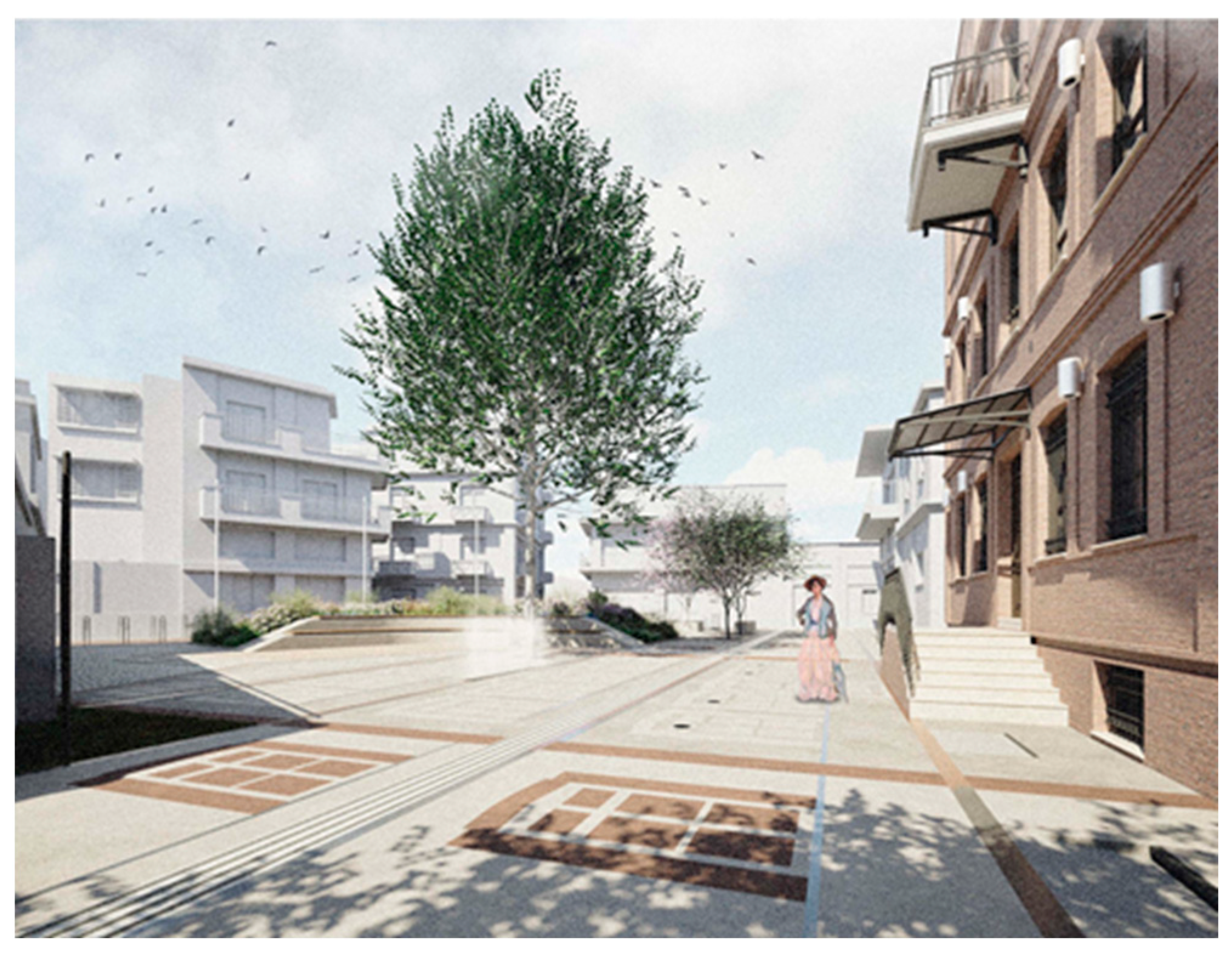
Semiotic analysis also revealed how industrial motifs could be re-coded to support contemporary uses. Pilasters, once structural supports, now act as visual anchors for circulation routes. Window recesses, originally designed for ventilation, become shaded niches for rest and conversation. In this way, the façade is not merely conserved but re-interpreted, allowing its historical language to speak in new social contexts (Figure 5).

3.1.3. Psychogeographic Testing: Embodied Responses

The third phase involved psychogeographic drift walks with residents and visitors of Komotini, complemented with walks with people working in the Technical Chamber building neighborhood, as well as with students of the local Democritus University of Thrace. Results showed three consistent attractors: shaded recesses beneath window bays, the triangular corner where Parnassos Street meets Eastern Thrace, and Tuntza Street’s frontages adjacent to active shops.
The drift walks also revealed the importance of microclimatic comfort in the design of the new public space. Participants consistently gravitated toward shaded areas and expressed the necessity for misting devices during the hot days of summer. This suggested that environmental responsiveness is not a secondary consideration, but a primary determinant of how an adaptive public space is designed and experienced. Moreover, the embodied responses highlighted the role of memory and familiarity: residents often paused at corners or recesses that reminded them of past encounters, underscoring the link between spatial form and collective memory.
Beyond comfort and memory, the drift walks revealed subtle behavioral patterns. For instance, participants tended to cluster near transitional thresholds, doorways, street corners, and façade recesses, suggesting that liminal spaces hold particular social value. These micro-observations were taken into consideration in our design proposal for the placement of seating and planting, ensuring that interventions amplified existing tendencies rather than imposed artificial ones.

3.1.4. Interpretation: Authenticity and Adaptation

The representational studies used in the first phase of development of the design proposal highlighted the tension between permanence and temporality in the adaptive redesign of the former industrial site. While the brickwork and ornamental motifs of the TEE building speak to the endurance of industrial craftsmanship, the outdoor seating and greenery illustrate the transient, seasonal rhythms of contemporary urban use. This tension underscores the importance of designing interventions that can accommodate both the permanence of heritage and the fluidity of everyday life, supporting Lowenthal’s claim that “the past must be re-presented before it can be re-imagined” [23].
The representational phase also revealed how perception shifts depending on the mode of representation. The grayscale model, stripped of color, encourages viewers to focus on geometry and proportion, while the photograph emphasizes atmosphere, social use, and environmental layering. This methodological duality mirrors Carmona’s observation that “urban design must balance the physical dimensions of space with the experiential dimensions of place” [49].
The semiotic phase underscored the importance of legibility in public space. As Lynch argued in The Image of the City, “urban environments must be readable to foster orientation and meaning” [50]. By aligning façade elements with zones of activity, the design ensured that interventions would be intuitive to users, reinforcing both spatial coherence and symbolic continuity. This interpretive method resonates with Lefebvre’s notion that “space is produced through the interplay of form and social practice” [51]. Furthermore, the reference to architectural elements of the converted industrial building of TEE exemplifies Jacobs’s insistence that “urban vitality depends on the adaptive layering of old and new” [52].
The psychogeographic method provided a fine-grained understanding of how public space is lived and perceived, complementing the more abstract insights of representational and semiotic analysis. As Whyte observed, “what attracts people most is other people” [53]. This principle was evident in our design strategy for the square’s activation, as social presence itself becomes a catalyst for civic engagement. The combination of the three methods showed that the use of architectural elements of the façade of the TEE building in our design proposal becomes not only a backdrop but an active participant in shaping social behavior, reinforcing the square’s role as a dynamic public space.
These insights align with international conservation guidelines that emphasize reversibility, minimal intervention, and compatibility of new uses within historic fabric [54]. By weaving industrial memory into contemporary urban life, the design proposal demonstrated that heritage preservation can be a catalyst for civic renewal rather than a constraint.
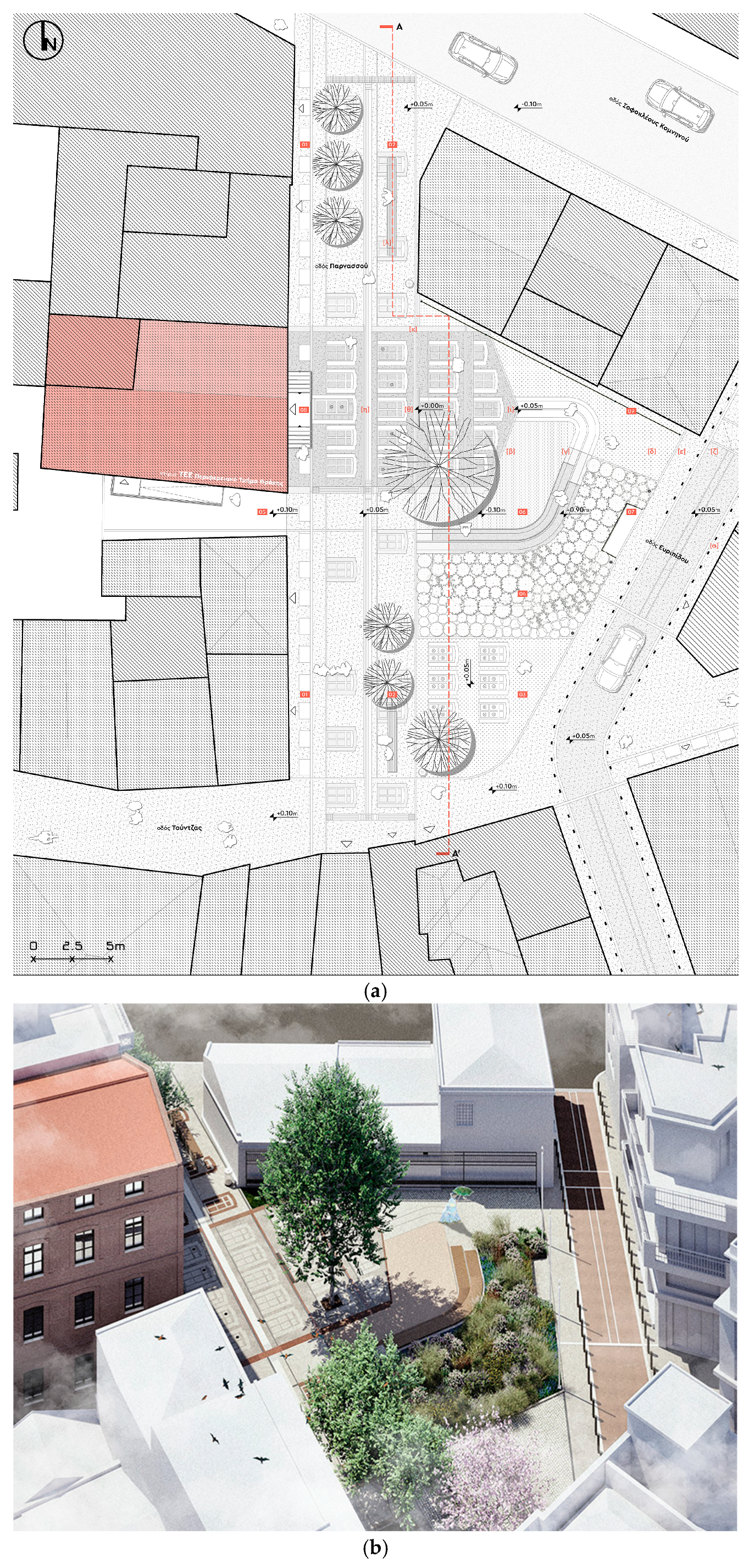
Based on the results from the theoretical analysis and field work observations, our master plan for the TEE Square recommended preserving key façade articulations, carving an amphitheater into a redundant loading bay, extending shop front seating from the plaza into the pedestrian streets in front of the shops, and implementing targeted planting and misting strategies. Each measure is low-impact, reversible, and responsive to both social and environmental data (Figure 6).

3.2. The Palimpsest

The redevelopment of TEE Square and its adjacent pedestrian streets was conceived as an adaptive urban project, aiming to unify historical eras with contemporary land uses while embedding environmental resilience and accessibility into the material and spatial fabric. By extending the previous theoretical analysis on the material and immaterial preservation of industrial heritage, our design proposal for the TEE square demonstrated how Komotini’s public spaces could function not only as physical environments but also as places of coexistence, where past and present converge to produce new forms of identity. This dual role, material and symbolic, positioned the square as a mediator between continuity and transformation, ensuring that heritage is not relegated to nostalgia but becomes an active component of civic life.

3.2.1. The Square as a Civic Stage

The square of TEE was designed as a multifunctional civic condenser, where the restored Technical Chamber building coexists with modern open-air activities (markets, cinema, and pop-up exhibitions). Field observations in the TEE neighborhood revealed that this layering of uses could generate a dynamic rhythm of occupation across different times of day and week. Interviews with long-time residents highlighted their attachment to heritage markers such as the TEE building, which they often used as meeting points or places of reflection, while students and newcomers emphasized the appeal of open urban spaces capable of hosting temporary cultural events. The overlap of these groups produced spontaneous encounters, validating the hypothesis that multifunctional programming fosters social cohesion [55]. The interpretation of these findings in our design proposal tended to reactivate urban industrial heritage through contemporary practices, reinforcing Komotini’s identity as a city of continuity and adaptation. The patterned pavement of the square functions as connective tissue between the urban industrial past and the contemporary city, guiding movement while emphasizing continuity across different architectural languages. The design of the new square blends elements that echo the industrial past of the neighborhood, such as the amphitheatrical configuration, with contemporary interventions like small gardens and tree plantations, generating a layered visual narrative of different historical eras (Figure 7).

3.2.2. Parnassos Street as a Pedestrian Street

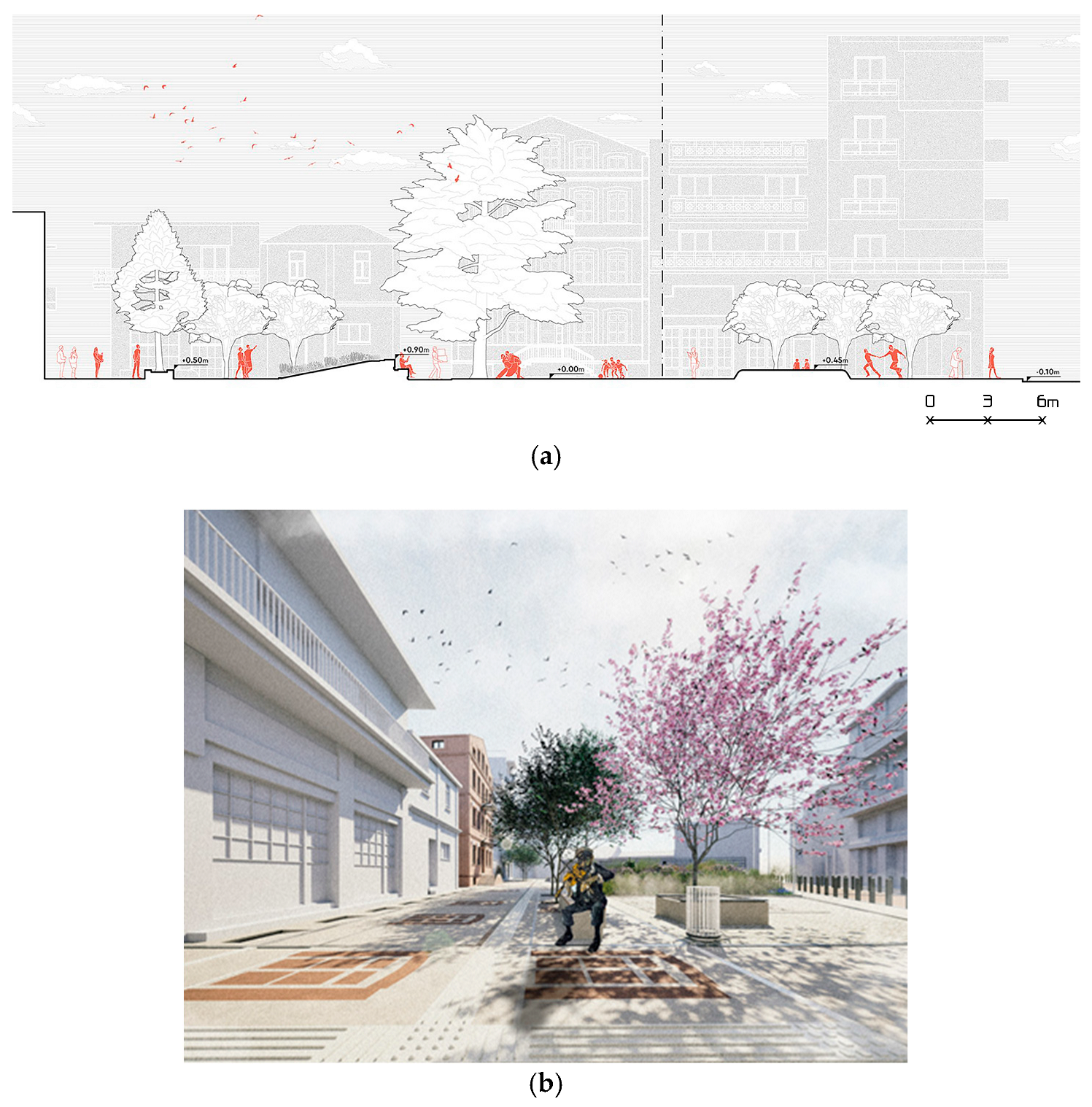
In our design proposal for the TEE Square, Parnassos Street was maintained as a pedestrian street while Tunza and Eastern Thrace streets were transformed into woonerfs (living streets), allowing the circulation of both vehicles and pedestrians. Interviews with residents and local business owners of the neighborhood and the psychogeographic walks revealed the necessity to promote pedestrian-friendly measures and a reduction in car use. According to these findings, we proposed that the central walkway of Parnassos Street be paved in patterned tiles and flanked by trees, offering comfort, accessibility, and visual permeability. The patterned paving provides tactile cues for visually impaired users, while the continuous walkway eliminates vehicular interruptions. The pink-blossomed specimen planted along the route was designed to become a focal point, attracting pauses and informal gatherings (Figure 8).

3.2.3. Environmental Resilience and Material Strategy

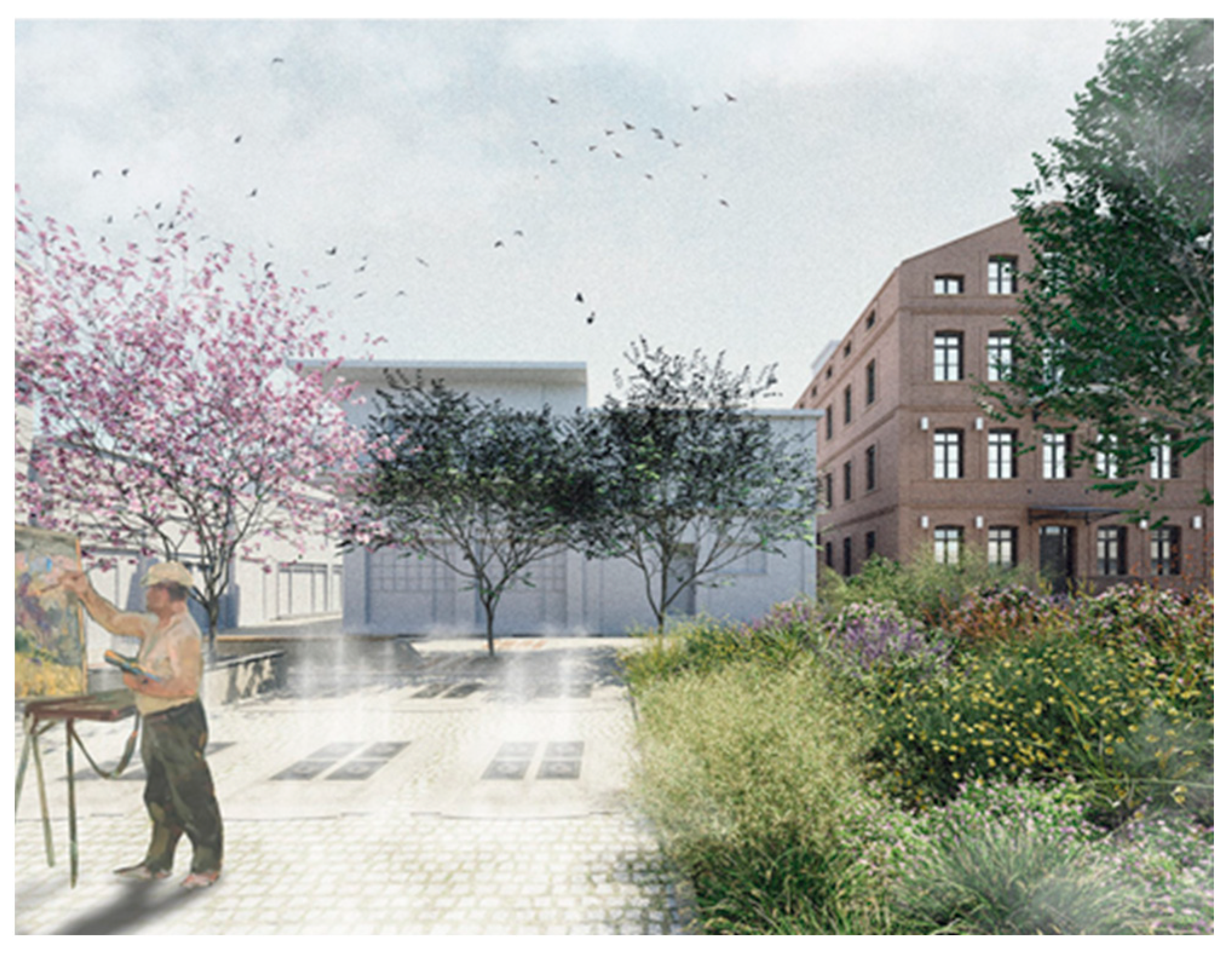
Environmental resilience was a central dimension of the design proposal for the TEE square. Humidity, hot summers, and cold winters were highlighted during the interviews and the psychogeographic walks were discussed as key characteristics of the city of Komotini, which demanded special treatment in our design proposal for the TEE square. The material palette and landscape strategy were decided by considering the above elements as well as the economic cost of the project, and for this reason, native plant species and measures such as cooling mists for the summer period were considered (Figure 9). Trees were strategically placed on the north side of the square to mitigate prevailing winds, creating sheltered microclimates that enhance pedestrian comfort, while wood, terracotta, and steel were used as materials in the pavement and urban furniture.
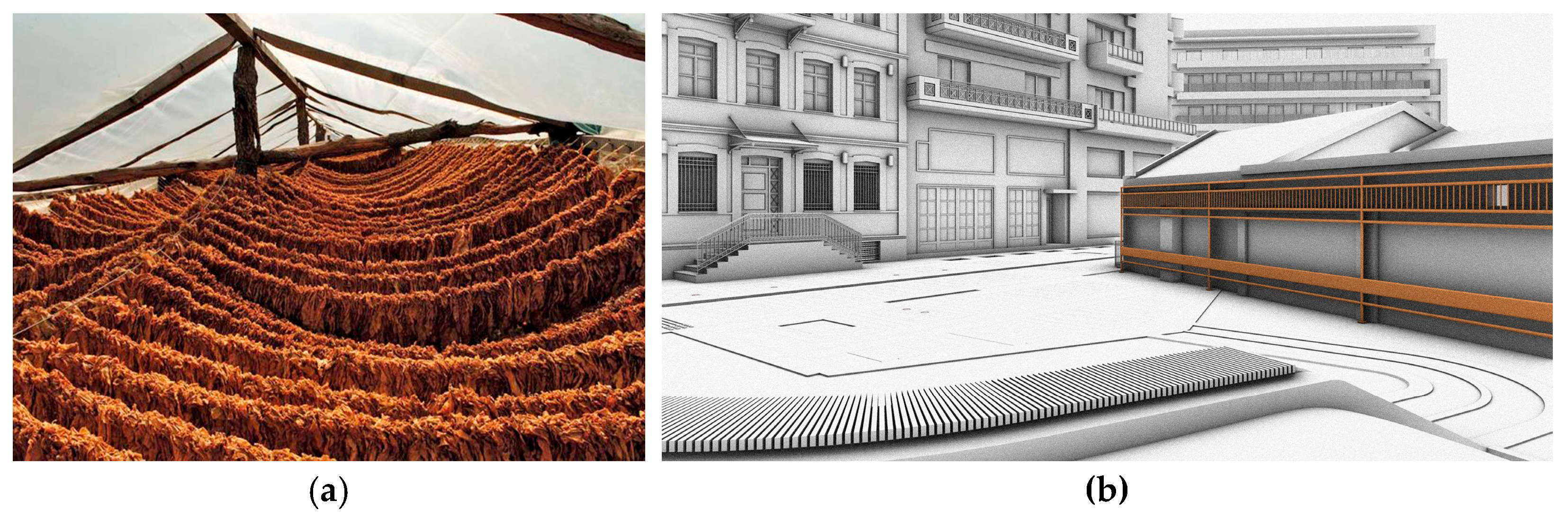
The urban furniture of the square echoed the perceptions of the residents of the neighborhood and people working in the offices of the Technical Chamber building as the industrial history of the neighborhood was maintained alongside new elements of the square proposed in the design, such as equipment for the production and conservation of tobacco. For this reason, panels that could be used for open-air exhibitions were inspired by the forms of equipment used in tobacco workhouses, demonstrating both structural stability and aesthetic coherence (Figure 10).

3.2.4. Interpretation: Heritage and Modernity

Taken together, the results of these interventions revealed a consistent pattern: heritage and modernity are not opposing but mutually reinforcing. The square, the pedestrian street, and the open pedestrian area each demonstrate that layering uses, materials, and references produces social cohesion, environmental resilience, and cultural continuity. The large windows of the surrounding buildings of the TEE Square enhance transparency, allowing interior activities to spill visually into the street and reinforce the sense of openness. For this reason, Parnassos Street was transformed into a place where greenery, open space, and accessibility were integrated into a coherent whole. Jane Jacobs’s insistence on the importance of everyday encounters and micro-landscapes is particularly relevant here, as the street’s success lies not in monumental gestures but in the subtle orchestration of pedestrian comfort and inclusivity [52].
On the social level, multifunctional programming fosters encounters across generations and backgrounds, weaving together long-time residents, students, and newcomers into a shared civic life. The urban project validates theories of adaptive redesign, where heritage gains renewed relevance by being embedded in daily urban life. John Ruskin’s insistence on the moral value of architecture as a living testimony of history finds resonance here, as does the more contemporary argument by Plevoets and Van Cleempoel that “adaptive reuse is not merely a technical practice but a cultural strategy for sustaining identity” [57,58].
On the environmental level, the use of native plant species and climate-responsive materials enhances resilience, reduces heat stress, and mitigates wind exposure. Native plant species achieve higher survival rates than imported ornamentals, confirming their suitability for long-term resilience. Evapotranspiration through paving materials and vegetation produces measurable cooling effects during peak summer hours, reducing surface temperatures in shaded zones.
On the cultural level, industrial heritage is not only conserved but actively promoted, ensuring that the city’s identity remains legible and relevant. Converted and restored industrial buildings find their place in the current urban landscape, resonating with Françoise Choay’s notion that “monuments acquire meaning not only through preservation but also through their integration into the living fabric of the city” [59]. At the same time, the connection between the design of urban furniture and industrial equipment reinforces the connection between contemporary life and industrial heritage, while the use of materials such as warm wood and terracotta stone in pavements and urban furniture softens the atmosphere and creates a sense of continuity between old and new. These findings suggest that environmental resilience is not only ecological but also cultural. By embedding industrial references into material choices, the design bridges ecological performance with heritage conservation, ensuring that the square remains both sustainable and contextually rooted [60].

4. Discussion

The study tested the hypothesis that a semiotic and psychogeography-informed, conservation-sensitive redesign of an underused industrial edge can render industrial memory legible, extend public use, and stimulate modest local economic activity. The TEE square in Komotini, focused on the former tobacco warehouse (now TEE building), produced convergent qualitative evidence supporting these claims. Three interrelated outcomes framed the discussion: (1) increased cultural visibility and communal recognition of industrial heritage, (2) improved everyday usability of the public realm via low-cost microclimatic and seating interventions, and (3) emergent localized economic opportunities anchored to flexible, reversible infrastructure. Interpreting these results against the working hypotheses and prior scholarship highlights both the potential and the constraints of small-scale adaptive redesign in peripheral postindustrial towns.
While the Komotini case study demonstrates the promise of semiotic and psychogeographic approaches in reactivating peripheral industrial heritage, its specificity also limits the universality of the main outcomes. Cultural visibility, extended public use, and emergent micro-economies are closely tied to the local governance context, ownership structures, and socio-economic conditions of Greek small towns. As such, the transferability of these findings to other settings remains contingent on institutional arrangements and community dynamics that may differ significantly. Moreover, the reliance on qualitative, semiotic, and psychogeographic methods, while capturing lived experience, constrains the ability to generalize behavioral change or economic impact beyond local evidence. This underscores the need for caution in generalizing from single-site interventions to broader policy frameworks without comparative validation.
Future research should therefore address the potential gap between the short-term effects of low-cost, reversible interventions and their long-term sustainability. While microclimatic improvements and flexible infrastructures can quickly activate public space, their durability in fostering social cohesion and economic resilience remains uncertain without longitudinal evaluation. Tracking patterns of use, vendor incomes, and property-market shifts over multiple years would help establish whether incremental interventions accumulate into lasting transformations or disappear once initial novelty fades. Comparative multi-site studies across diverse peripheries at the global level could further refine the semiotic–psychogeographic toolkit, testing its adaptability to varied governance and cultural contexts. Finally, policy experiments that operationalize temporary-use incentives and mediated stewardship models are essential to bridge the structural constraints of private ownership and ensure that community-centered activation does not remain isolated but evolves into a sustainable urban regeneration practice.

5. Conclusions

The Komotini case study illustrates the innovative potential of combining semiotics and psychogeography in the adaptive redesign of peripheral industrial heritage. Semiotic interventions, such as interpretive devices of material traces, enabled the public space in front of the tobacco warehouse to be re-perceived as a civic asset without requiring costly operations. This approach validated the hypothesis that heritage’s social value emerges from collective recognition and everyday use rather than monumentality [22,23], while psychogeographic methods, such as drifting walks, surfaced affective attachments, and movement patterns, are often missed by conventional analyses. Together, these strategies produce a “living” heritage, where meanings are continually negotiated, and industrial memory becomes legible within the urban fabric [61]. By grounding design in both symbolic resonance and lived experience, the project demonstrated how modest, conservation-sensitive interventions can foster cultural visibility, inclusivity, and community engagement in postindustrial contexts.
Equally significant was the project’s demonstration of how psychogeography and semiotics can catalyze modest economic activation through reversible, low-cost infrastructure. Microclimatic improvements and reconfigurable amenities extend the usability of the new square, while temporary open-air activities are anchored to flexible urban furniture-stimulated localized micro-economies. This incremental, community-first model resisted commodification pressures by prioritizing affordability and access, aligning with Jacobs’s notion of small-scale change accumulating into broader transformation [52,62]. The coupling of semiotics and the psychogeography approach, thus, offers a replicable toolkit for peripheral towns: it translates material traces into legible narratives while embedding interventions in lived movement and emotion. In doing so, it reframes industrial heritage not as a static resource or tourism commodity, but as an everyday infrastructural condition shaping identity, social interaction, and economic opportunity.
Key conclusions from the research are the following:
  • Semiotic amplification of material traces is an effective and low-impact strategy for making industrial heritage legible and socially valued. This approach conserves material authenticity while enabling new narratives and civic engagement.
  • Psychogeographic methods enhance the sensitivity of design to local experiences and affective attachments, but must be joined to longitudinal evaluation to establish causal impacts.
  • Microclimatic and amenity-focused interventions extend the temporal range of public space use and increase dwell times, supporting social cohesion and informal economies. Such interventions are often more feasible and immediate than a full redesign of public spaces.
  • Flexible, reversible infrastructures and community-first programming reduce barriers for small open-air activities, promoting equitable economic activation that resists commodification pressures.
  • Design strategies alone are insufficient; innovative governance structures must accompany them to ensure long-term sustainability and community ownership.
Nevertheless, this study revealed persistent structural constraints that temper optimism. Ownership fragmentation and the predominance of private stakeholders over public authorities in former industrial sites in Greece limit the scalability of public-space activation around legally protected industrial buildings. This governance reality resonates with broader European experiences where heritage protection does not automatically translate into public accessibility [26]. The case study in Komotini suggests that negotiated, incentive-based mechanisms (temporary-use agreements and mediated public–private stewardship) are essential preconditions for wider application. Without institutional innovations that align private ownership incentives with community objectives, the model risks remaining a series of isolated urban projects.

Author Contributions

Conceptualization, V.T., A.M. and N.S.; methodology, A.M.; software, N.S.; resources, V.T., A.M. and N.S.; writing—original draft preparation, V.T.; writing—review and editing, V.T., A.M. and N.S.; visualization, A.M.; supervision, V.T., A.M. and N.S.; project administration, V.T. and A.M. All authors have read and agreed to the published version of the manuscript.

Funding

This research received no external funding.

Institutional Review Board Statement

Ethical approval was waived for this study according to Greek national legislation (Law No. 4624/29 August 2019, articles 4 and 8). The study was conducted in accordance with the Declaration of Helsinki. To ensure confidentiality, all personal identifiers were removed from the dataset prior to analysis. Data were stored on secure, password-protected servers and were accessible only to the research team. Results are presented in aggregate form, and no information that could identify individual participants is disclosed.

Informed Consent Statement

Informed consent was obtained from all subjects involved in the study.

Data Availability Statement

The original contributions presented in this study are included in the article.

Acknowledgments

The authors have reviewed and edited the output and take full responsibility for the content of this publication.

Conflicts of Interest

The authors declare no conflicts of interest.

Abbreviations

The following abbreviations are used in this manuscript:
TEETechnical Chamber of Greece (in Greek Τεχνικό Επιμελητήριο Ελλάδος)
ELSTATHellenic Statistical Authority (in Greek Ελληνική Στατιστική Υπηρεσία)

References

  1. Batu, B. An Overview of the Field of Semiotics. Procedia Soc. Behav. Sci. 2012, 51, 464–469. [Google Scholar] [CrossRef]
  2. Eco, U. A Theory of Semiotics; Indiana University Press: Bloomington, IN, USA, 1976. [Google Scholar]
  3. Barthes, R. Mythologies; Lavers, A., Translator. Original work published 1957; Hill and Wang: New York, NY, USA, 1972. [Google Scholar]
  4. Peirce, C.S. Collected Papers of Charles Sanders Peirce; Hartshorne, C., Weiss, P., Burks, A.W., Eds.; Harvard University Press: Cambridge, MA, USA, 1934. [Google Scholar]
  5. Petr, C. Tourist Apprehension of Heritage: A Semiotic Approach to Behavior Patterns. Int. J. Arts Manag. 2002, 4, 25–38. [Google Scholar]
  6. Demaria, C.; Violi, P. For a Semiotics of Spaces of Memories Practices of Enunciation and Narratives from Monuments to Global Landscapes of Inheritance. In Reading Memory Sites through Signs Hiding into Landscape; Demaria, C., Violi, P., Eds.; Amsterdam University Press: Amsterdam, The Netherlands, 2023; pp. 11–30. [Google Scholar]
  7. Debord, G. The Society of the Spectacle; Nicholson-Smith, D., Translator. Original work published 1967; Zone Books: New York, NY, USA, 1994. [Google Scholar]
  8. Kolokotronis, I. History of Art Artistic Movements After 1945; University lecture notes; Democritus University of Thrace: Xanthi, Greece, 2023; Volume D. [Google Scholar]
  9. Babassakis, G. Information and Notes on The Society of the Spectacle. Notebooks Marxism 2018, 7. Available online: http://s.atcite.com/RUMu0MR4K (accessed on 5 November 2025).
  10. Vuger, D. Situacionistično mesto in situacija arhitekture. Phainomena 2018, 27, 187–207. [Google Scholar]
  11. O’Rourke, K. Psychogeography: A Purposeful Drift Through the City. Available online: https://thereader.mitpress.mit.edu/psychogeography-a-purposeful-drift-through-the-city/ (accessed on 5 November 2025).
  12. Kalampokas, G.; Kousouris, D.; Theodoropoulou, V. The Situationists Gave Us the Language for the Critique of Everyday Life. Marginalia. Available online: http://s.atcite.com/4PXJHfEW0 (accessed on 5 November 2025).
  13. Gourdoukis, D.; Mpantogias, A. Book of Abstracts, Architectural Education and Practice: International Challenges and Greece. In Architectural Education and Practice: International Challenges and Greece; Technical University of Crete Press: Chania, Greece, 2023; p. 77. Available online: http://s.atcite.com/s-5KuREfI (accessed on 5 November 2025).
  14. Mpantogias, A. Digital Reality and Landscape Architecture: The Virtual Space as an Opportunity for the Social Use of the Landscape. Master’s Thesis, Aristotle University of Thessaloniki, Thessaloniki, Greece, 2021. Available online: http://s.atcite.com/k14tucodW (accessed on 5 November 2025).
  15. Ananiadou-Tzimopoulou, M. Architectural Landscape and Urban Space Design Vol. A Criticism and Theory; Ziti Publications: Thessaloniki, Greece, 1997. [Google Scholar]
  16. Pinder, D. Arts of Urban Exploration. Cult. Geogr. 2005, 12, 383–411. [Google Scholar] [CrossRef]
  17. Pyyry, N. From psychogeography to hanging-out-knowing Situationist dérive in nonrepresentational urban research. Area 2018, 51, 315–323. [Google Scholar] [CrossRef]
  18. Giannopoulos, K. Guy Debord—Situationist, Activist, Radical, Libertarian. Periou.Gr. Available online: http://s.atcite.com/u5MWwEo1k (accessed on 5 November 2025).
  19. Sadler, S. The Naked City Guy Debord and Asger Jorn. In Companions to the History of Architecture Twentieth-Century Architecture Part IV Postwar Trends; Wiley: Hoboken, NJ, USA, 2017. [Google Scholar] [CrossRef]
  20. Demelza Design.com. Available online: https://demelzadesign.com/2021/11/12/psychogeography/ (accessed on 6 November 2025).
  21. Feilden, B.M. Conservation of Historic Buildings, 3rd ed.; Routledge: Oxfordshire, UK, 2003. [Google Scholar]
  22. Smith, L. Uses of Heritage; Routledge: London, UK, 2006. [Google Scholar]
  23. Lowenthal, D. The Past Is a Foreign Country; Cambridge University Press: Cambridge, UK, 1985. [Google Scholar]
  24. Harrison, R. Heritage: Critical Approaches; Routledge: London, UK, 2013. [Google Scholar]
  25. Waterton, E.; Smith, L. The Recognition and the Misrecognition of Community Heritage. Int. J. Herit. Stud. 2010, 16, 4–15. [Google Scholar] [CrossRef]
  26. Bullen, P.A.; Love, P.E.D. Adaptive Reuse of Heritage Buildings. Struct. Surv. 2011, 29, 411–421. [Google Scholar] [CrossRef]
  27. Logan, W.; Reeves, K. (Eds.) Places of Pain and Shame: Dealing with "Difficult Heritage"; Routledge: Abingdon, UK, 2009. [Google Scholar]
  28. Mason, J. Qualitative Researching, 2nd ed.; SAGE Publications: London, UK, 2002. [Google Scholar]
  29. Tunbridge, J.E.; Ashworth, G.J. Dissonant Heritage: The Management of the Past as a Resource in Conflict; John Wiley & Sons: Chichester, UK, 1996. [Google Scholar]
  30. Graham, B.; Ashworth, G.J.; Tunbridge, J.E. A Geography of Heritage: Power, Culture and Economy; Arnold: London, UK, 2000. [Google Scholar]
  31. Mason, R.; Avrami, E.; De la Torre, M. Values and Heritage conservation; The Getty Conservation Institute: Los Angels, CA, USA, 2000. [Google Scholar]
  32. Berger, S. (Ed.) Constructing Industrial Pasts Heritage Historical Culture and Identity in Regions Undergoing Structural Economic Transformation, 1st ed.; Berghahn Books: New York, NY, USA, 2020; Volume 38. [Google Scholar]
  33. Li, J.; Dang, A.; Song, Y. Defining the ideal public space A perspective from the publicness. J. Urban Manag. 2022, 11, 479–487. [Google Scholar] [CrossRef]
  34. Vafaie, F.; Remoy, H.; Gruis, V. Adaptive reuse of heritage buildings a systematic literature review of success factors. Habitat Int. 2023, 142, 102926. [Google Scholar] [CrossRef]
  35. Meier, S.; Glinka, K. Psychogeography in the Age of the Quantified Self Mental Map Modelling with Georeferenced Personal Activity Data. In Advances in Cartography and GIScience; Peterson, M., Ed.; Lecture Notes in Geoinformation and Cartography; Springer: Cham, Switzerland, 2017. [Google Scholar] [CrossRef]
  36. Fontaine, M.; Vigna, X. La désindustrialisation une histoire en cours. 20 21. Rev. D’histoire 2019, 144, 2–17. [Google Scholar] [CrossRef]
  37. Hellenic Statistical Authority. 2021 Population and Housing Census. Available online: https://www.statistics.gr/documents/20181/18409455/population_VORIA_ELLADA_EN.pdf/0b280656-2bfa-f2ed-de88-f75a53693e33 (accessed on 5 November 2025).
  38. Kiel, M. Art and Society of Bulgaria in the Turkish Period; Van Gorcum: Assen, The Netherlands, 1990. [Google Scholar]
  39. Çelik, Z. Empire, Architecture, and the City: Ottoman and European Visions of the Eastern Mediterranean; University of Washington Press: Seattle, WA, USA, 2008. [Google Scholar]
  40. Vermeulen, H. Migration, Refugees, and Ethnic Diversity in Modern Greece; Brill: Leiden, The Netherlands, 2015. [Google Scholar]
  41. Papadopoulos, A. Tobacco and Modernization in Northern Greece, 1880–1940; University of Macedonia Press: Thessaloniki, Greece, 2012. [Google Scholar]
  42. Pendlebury, J. Conservation and the City; Routledge: London, UK, 2013. [Google Scholar]
  43. Ashworth, G.J.; Graham, B. Senses of Place: Senses of Time; Ashgate: Aldershot, UK, 2005. [Google Scholar]
  44. Labadi, S. UNESCO, Cultural Heritage, and Outstanding Universal Value: Value-Based Analyses of the World Heritage and Intangible Cultural Heritage Conventions; AltaMira Press: Lanham, MD, USA, 2013. [Google Scholar]
  45. Dologlou, A. From Thrace to Macedonia: The Revival of the Ottoman Empire’s Trade Network through the Monuments of Northern Greece. Master’s Thesis, Aristotle University of Thessaloniki, Thessaloniki, Greece, 2014. Available online: https://ikee.lib.auth.gr/record/269770/files/GRI-2015-14654.pdf (accessed on 7 December 2025).
  46. Papastratis, T. From Gkioumultzina to Treblinka; Cultural Development Center of Thrace: Xanthi, Greece, 2010. [Google Scholar]
  47. Kahraman, S.A. Evliya Çelebi’s Book of Travels in Modern Turkish. Book 8, Volume 1: Komotini, Kavala, Thessaloniki, Trikala, Athens, Morea, Navarino, Crete Island, Chania, Heraklion, Elbasan, Ohrid, Tekirdağ; Yapı Kredi Publications: Istanbul, Turkey, 2017. [Google Scholar]
  48. Fasourakis, H. Tobacco Warehouse (Property of the Technical Chamber of Thrace). In Industrial Inventory Bulletins; Vakalopoulou, M., Daniil, M., Lampropoulos, C., Fasourakis, H., Eds.; Athens, Greece, 2017; Available online: www.vidarchives.gr/reports/2021_01_1057 (accessed on 7 December 2025).
  49. Carmona, M.; Heath, T.; Oc, T.; Tiesdell, S. Public Places Urban Spaces: The Dimensions of Urban Design; Architectural Press: Oxford, UK, 2003. [Google Scholar]
  50. Lynch, K. The Image of the City; MIT Press: Cambridge, MA, USA, 1960. [Google Scholar]
  51. Lefebvre, H. The Production of Space; Blackwell: Oxford, UK, 1991. [Google Scholar]
  52. Jacobs, J. The Death and Life of Great American Cities; Vintage Books: New York, NY, USA, 1961. [Google Scholar]
  53. Whyte, W.H. The Social Life of Small Urban Spaces; Project for Public Spaces: New York, NY, USA, 1980. [Google Scholar]
  54. Feilden, B.M.; Jokilehto, J. Management Guidelines for World Cultural Heritage Sites; ICCROM: Rome, Italy, 1993. [Google Scholar]
  55. Gehl, J. Cities for People; Island Press: Washington, DC, USA, 2010. [Google Scholar]
  56. Visit Thraki.gr. Available online: https://www.visitthraki.gr/ (accessed on 7 December 2025).
  57. Ruskin, J. The Seven Lamps of Architecture; Smith, Elder & Co.: London, UK, 1849. [Google Scholar]
  58. Plevoets, B.; Van Cleempoel, K. Adaptive Reuse of the Built Heritage: Concepts and Cases of an Emerging Discipline; Routledge: London, UK, 2019. [Google Scholar]
  59. Choay, F. The Invention of the Historic Monument; Cambridge University Press: Cambridge, UK, 1992. [Google Scholar]
  60. Spirn, A.W. The Language of Landscape; Yale University Press: New Haven, CT, USA, 1998. [Google Scholar]
  61. Pendlebury, J. Conservation in the Age of Consensus; Routledge: London, UK, 2013. [Google Scholar]
  62. Tuan, Y.-F. Space and Place: The Perspective of Experience; University of Minnesota Press: Minneapolis, MN, USA, 1977. [Google Scholar]
Figure 1. Cover of the book The Naked City by Guy Debord. The red arrows connect the different fractures of Paris. Source: [20], ©Demelzadesign.com.
Culture 02 00002 g001
Figure 2. Regional Unit of Rodopi and its surrounding area. Blue represents the rivers of the region, green represents regional parks, and gray represents urban agglomerations. The grid is used as a graphic scale. Source: ©Mpantogias, 2024.
Culture 02 00002 g002
Figure 3. Open urban spaces, historical buildings and landmarks in Komotini. Source: Authors creation, ©Toura, Mpantogias, Saban, 2025.
Culture 02 00002 g003
Figure 4. (a,b) 3D representation and photo of the TEE Building in Komotini. Source: Authors creation, ©Toura, Mpantogias, Saban, 2025.
Culture 02 00002 g004
Figure 5. The different phases of elaboration of the project’s main concept (TEE square). In red is represented the TEE building, in gray the present square in front of the TEE building, in black the projection of the building’s façade in the square’s floor while the lines represent the axes of organization of the new plan of the square that led to the square’s final plan represented in an abstract form in the right corner of the figure. Source: Authors creation, ©Toura, Mpantogias, Saban, 2025.
Culture 02 00002 g005
Figure 6. (a,b) The masterplan and panoramic view of the TEE square in Komotini. In the masterplan appear the names of streets surrounding the square and of the TEE building (κτίριο ΤΕΕ: TEE building, οδός Τούντζας: Tountza street, οδός Κομνηνού: Komninos street, οδός Παρνασσού: Parnassos street, οδός Ευριπίδου: Euripidou street) while the red points show places of interest in the new plan of the square and the orange line marks the position of a longitudinal section presented in Figure 8. Source: Authors creation, ©Toura, Mpantogias, Saban, 2025.
Culture 02 00002 g006
Figure 7. View of the new TEE square from the southern entrance. Source: Authors creation, ©Toura, Mpantogias, Saban, 2025.
Culture 02 00002 g007
Figure 8. (a,b) Section and visualization from the northeastern entrance of the new Parnassos Street. The line in the section figure is used in order to show that a part of the longitudinal section was not shown as its size was too long and refer to secondary data of the design project (vegetation and urban furniture). Source: Authors creation, ©Toura, Mpantogias, Saban, 2025.
Culture 02 00002 g008
Figure 9. View from the western entrance of the new TEE square. Source: Authors creation, ©Toura, Mpantogias, Saban, 2025.
Culture 02 00002 g009
Figure 10. (a,b) Industrial equipment used as an inspiration for urban furniture. Source: (a) [56], ©Visitthraki.gr (b) Authors creation, ©Toura, Mpantogias, Saban, 2025.
Culture 02 00002 g010
Table 1. Estimated socio-economic class distribution in Komotini, Greece.
Socio-Economic ClassEstimated Share
of Population % (65,243 Residents in Total)
Description
High~6Business owners,
High-income professionals, Real estate investors
Upper/Middle~20Public sector employees, Educators,
Small business owners
Middle~44Service workers, Manual laborers,
Seasonal tourism/agriculture jobs
Lower Middle~22Seniors relying on state pensions,
often central to family networks
Low~8Unemployed youth immigrants,
Disabled individuals, Low-income families
Source: [37], Authors creation ©Toura, Mpantogias, Saban, 2025 based on data from ELSTAT.
Disclaimer/Publisher’s Note: The statements, opinions and data contained in all publications are solely those of the individual author(s) and contributor(s) and not of MDPI and/or the editor(s). MDPI and/or the editor(s) disclaim responsibility for any injury to people or property resulting from any ideas, methods, instructions or products referred to in the content.