
Assisted Partner Notification Services Utilization, Barriers, and Facilitators Among People Living with HIV in Singida: A Mixed-Method Study

 , , and
Abstract
1. Introduction
2. Materials and Methods
2.1. Study Design
2.2. Study Setting
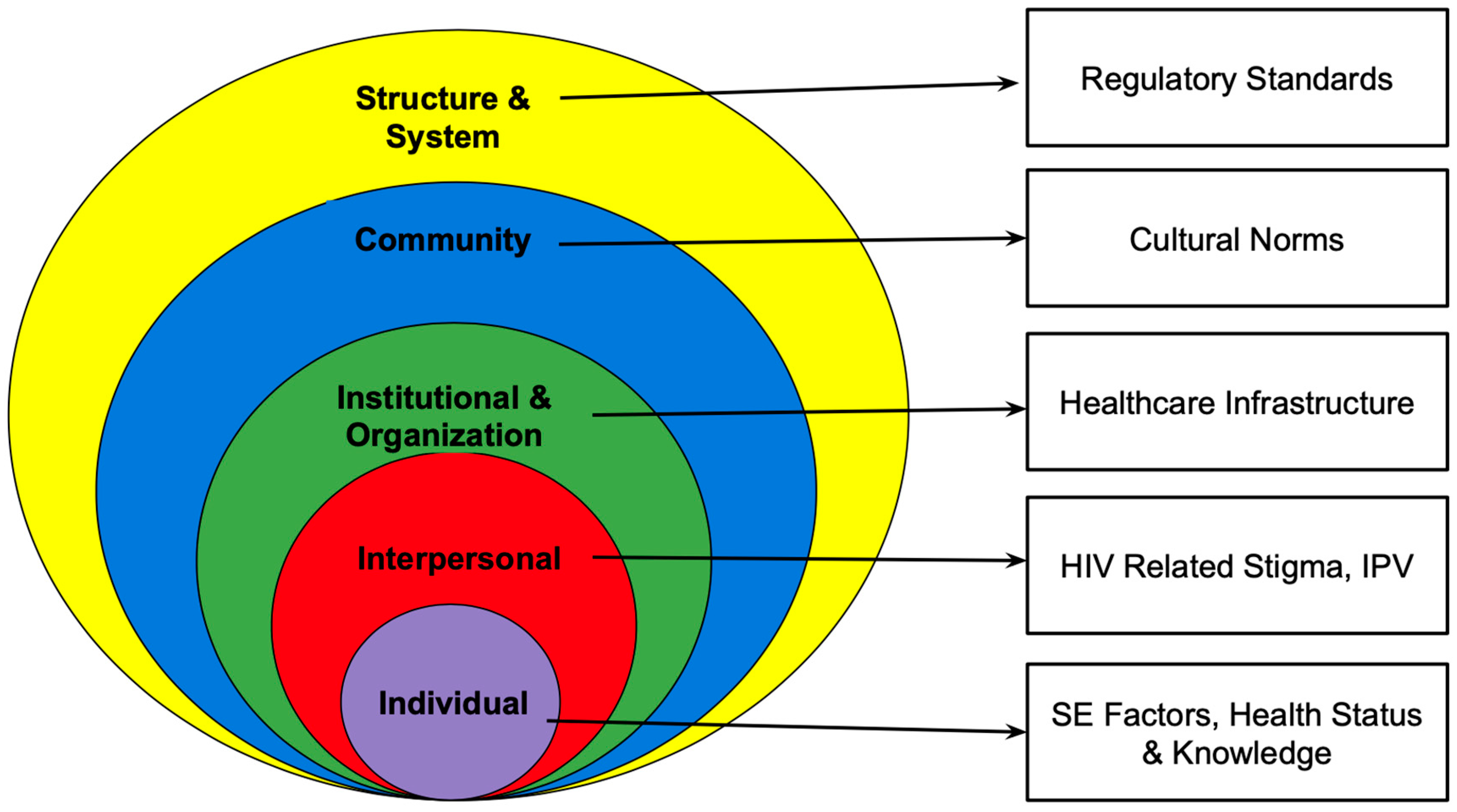
2.3. Conceptual Framework
2.4. Quantitative Component of the Study
2.4.1. Quantitative Study Population and Sampling
2.4.2. Quantitative Data Collection
2.4.3. Quantitative Measures
2.5. Quantitative Data Analysis
2.6. Qualitative Component of the Study
2.6.1. Qualitative Study Population and Sampling
2.6.2. Qualitative Data Collection Procedures
2.6.3. Qualitative Researcher Characteristics and Reflexivity
2.6.4. Qualitative Data Analysis
2.7. Ethical Consideration
3. Results
3.1. Quantitative Findings
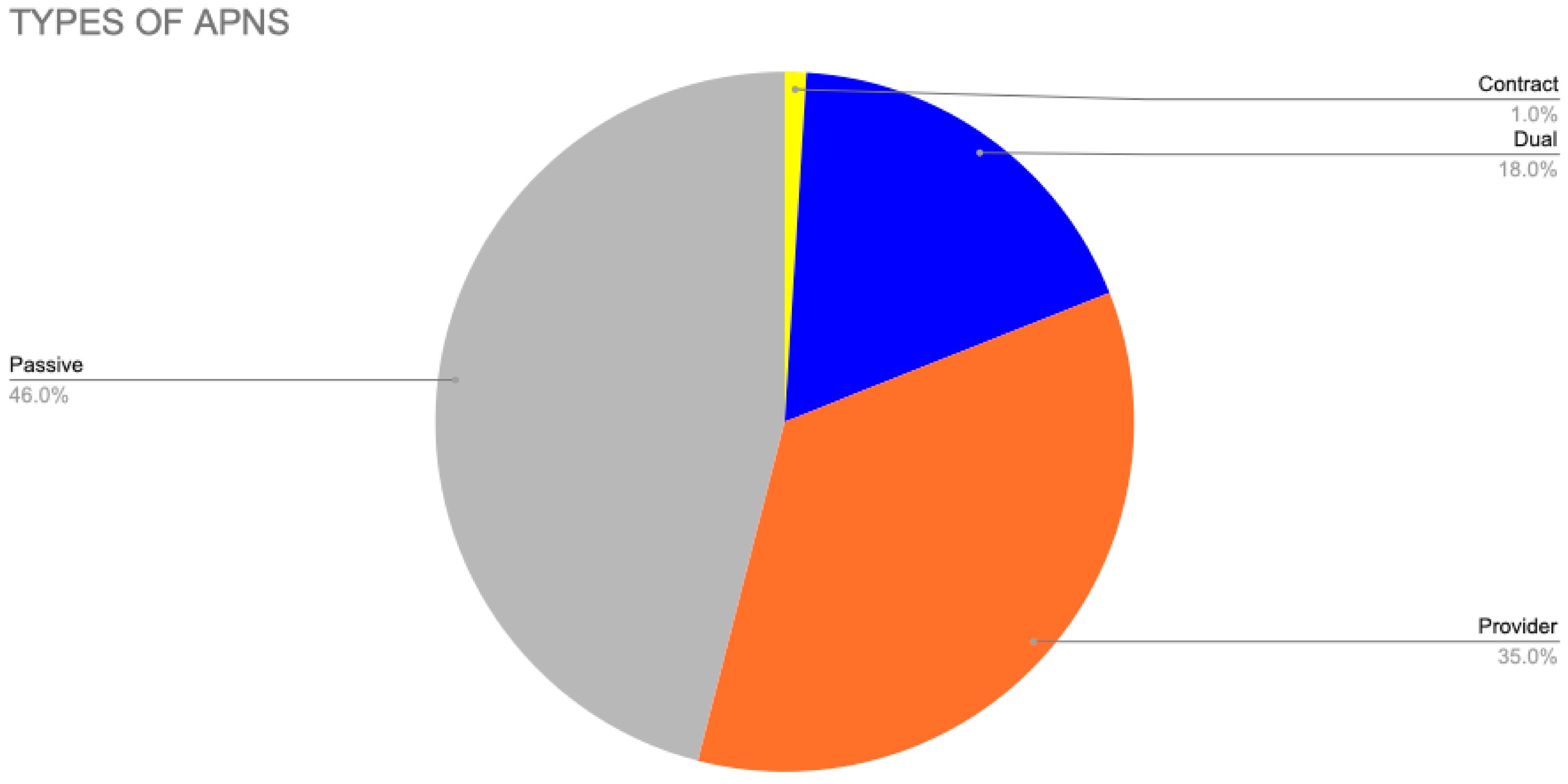
3.1.1. Types of APNS
3.1.2. Factors Associated with APNS Utilization
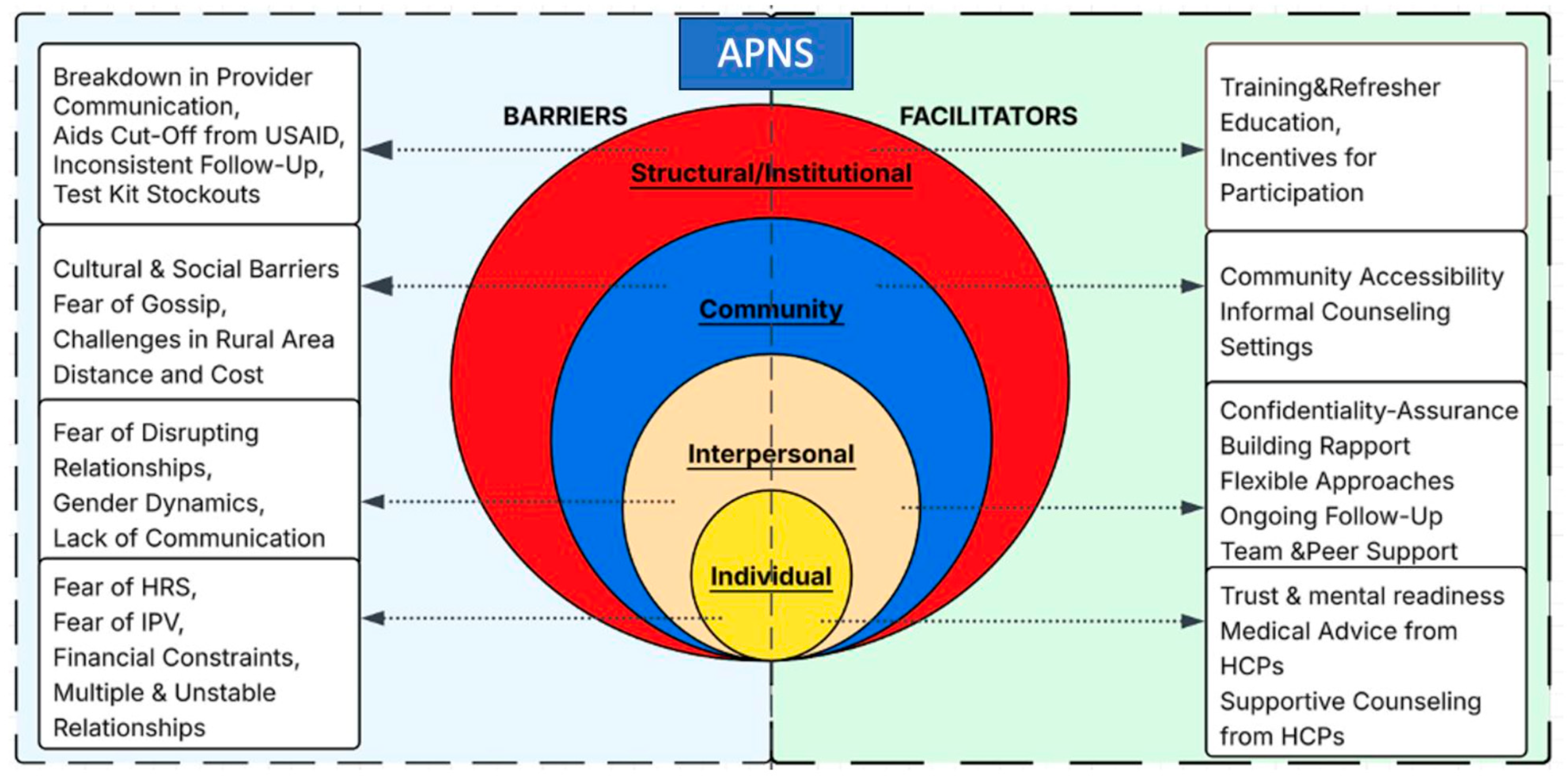
3.1.3. The Barriers to APNS Utilization
3.2. Qualitative Findings
3.2.1. Sociodemographic Characteristics of FGD Participants
3.2.2. Introduction to APNS
“For five years, I worked with the USAID Afya Yangu (My Health) project, which also included HIV index testing (APNS) as part of its activities.”(FGD2, Female PLWH)
“This process is known to be challenging. Many clients say they will inform their sexual partners, but when we follow up, they often report that they were unable to do so. For this reason, we have been providing continuous follow-up support.”(IDI2, Female nurse)
3.2.3. Understanding of APNS
“It means testing partners and letting them know their HIV status, whether it’s your spouse or even a casual partner… All your sexual partners should know your HIV status and get tested for their health.”(FGD2, female PLWH)
“I understood this service a little bit………. I had another wife who is not infected, so I had a little difficulty. In the sense of conveying information about my infection status to her. But later, after receiving instructions from health professionals, I took the responsibility of informing my partner.”(FGD 2, Male PLWH)
3.2.4. The Commonly Used APNS Methods
“Here, mostly we use the method where the index client goes to tell their sexual partners or I, the healthcare provider, go to follow the sexual partner.”(IDI1, Female Laboratory technician)
3.2.5. Barriers to APNS
3.2.6. Individual-Level Barriers
HIV-Related Stigma
“I was thinking about how society and my partner would perceive me, and how much they would stigmatize me.”(FGD1, female PLWH)
Fear of IPV
“When you tell someone you’re sick, your heart hesitates first. You know if you announce it directly, they might hit you, harm you. You’re afraid to say something like that, so you just stay quiet, silent.”(FGD3, Female PLWH)
Multiple or Unstable Sexual Relationships
“Young women may be sexually involved with three or even four different people, and they rely on them for financial or other forms of support…they fear that disclosing their status will cause them to lose these ‘channels of support’.”(IDI3, Male doctor)
Lack of Financial Support for Field Visits
“I personally do this work, but have not received payment for a long time.”(IDI2, Female nurse)
3.2.7. Interpersonal-Level Barriers
Fear of Disrupting the Current Relationships
“I can’t…He’s already married and has his own family, so it would be difficult for me to provide information.”(FGD1, Female PLWH)
Gender Dynamics
“When a woman is identified first and tested, she fails to explain to her husband because she thinks that when I go to tell my partner, either it is her husband or lover, it will seem like she caused it, but for men, it is easier, even if a man tests positive.”(ID2, Female nurse)
Lack of Current Communication
“We used to communicate by phone, but later his phone became unreachable… The other one, I’m not even sure what the name of his village is.”(IDI2, Female PLWH)
3.2.8. Community-Level Barriers
Presence of Traditional Malpractices
“You’ll find that an older brother has died, and the younger one inherits his wife. Now, she won’t tell the younger brother that ‘your older brother died with a certain condition and I’m also using certain medication,’ she doesn’t say anything.”(IDI1, Female lab technician)
Geographical Isolation and Limited Access to Healthcare Facilities
“On the other hand, these APNS services have been widely implemented in urban areas, but there is still a problem in rural areas.”(FGD4, Male PLWH)
“Some of our clients come from far, from other districts, so for a person to come from there to test here at the clinic, sometimes it is difficult…sometimes we have to follow up clients, so leaving work to follow a client where they are requires costs, transport issues. So, because some come from far, the cost becomes bigger.”(IDI2, Female nurse)
3.2.9. Structural and Institutional Barriers
Breakdowns in Communication with HCPs
“If they had told me back then, they would have helped me. But they didn’t. In those days, they didn’t tell you anything. When they called each other, I felt uneasy, like something was wrong.”(IDI2, Female PLWH)
Inconsistent Follow-Up from HCPs
“We don’t always follow up. We rarely go back to review and say, “Hey, let me call this client and ask if we can do partner notification and test again today.” I think the issue is a lack of structured follow-up for APNS; it’s not fully implemented… We tend to focus more on what happens on the day of the clinic visit.”(IDI3, Male doctor)
Test Kit Stockouts
“You may need to go test, but find a few kit supplies. You cannot go to the streets to do mobile testing or Index testing when kit supplies are few.”(IDI2, Female nurse)
The Withdrawal of USAID Support
“…After the funding was cut off, especially when that man, pulled out of the WHO, so many of us were shocked. Even though I don’t know much… we need to get clear answers from someone like you, who understands this situation deeply.”(FGD2, Female PLWH)
Facilitators for APNS
Individual Level
Medical Advice from Providers
“Later, after receiving instructions from health professionals, I took the responsibility of informing my partner.”(FGD4, Male PLWH)
Supportive and Non-Judgmental Counseling from HCPs
“If you’re judged, you won’t come back. But if treated with love and care, it gives you courage. Love is powerful.”(IDI2, Female PLWH)
Interpersonal Level
Assurance of Confidentiality
“There are laws and personal ethics. We take an oath never to disclose patient information… And we only inform someone if the tested individual authorizes it.”(IDI4, Female laboratory technician)
Building Rapport
“Sometimes you really try to sit down with a patient, ask them questions, befriend them, make them laugh, just so that they can open up and name someone.”(IDI1, Female nurse)
Flexible Approaches to Partner Engagement
“You’d have to go in person. Calling might not work; he might change numbers. If you go and talk face-to-face, he might accept.”(IDI4, Female PLWH)
“We help them, or they can bring their partner even here at the clinic to come test together… we pretend as if we don’t know them… this reduces the pressure.”(IDI2, Female nurse)
Ongoing Follow-Up
“We always follow up… we give them medicine for fourteen days, but we ask them if it is possible to bring their sexual partners within seven days.”(IDI2, Female Nurse)
Team and Peer Support Among Providers
“You might talk with the client and realize you have reached a limit… so you find a colleague counselor and you assist each other.”(IDI2, Female Nurse)
3.2.10. Community Level
Community Accessibility
“If a person wants us to follow them in the community, we follow them and test them there.”(IDI1, Female laboratory technician)
Organizational Level
Training and Refresher Education
“They teach us about partner notification. This motivates us to talk to our partners and encourage them to get tested.”(FGD2, Female PLWH)
Incentives for Participation
“The one who comes, even if late, if they come with their partner, we serve [them] first… to motivate the other.”(IDI2, Female nurse)
4. Discussion
4.1. Strengths and Limitations
4.2. Broader Implications
5. Conclusions
Supplementary Materials
Author Contributions
Funding
Institutional Review Board Statement
Informed Consent Statement
Data Availability Statement
Acknowledgments
Conflicts of Interest
Abbreviations
| APNS | Assisted Partner Notification Service |
| CDC | Centers for Disease Control |
| CTC | Care and Treatment Center |
| HIV | Human Immunodeficiency Virus |
| IPV | Intimate partner violence |
| MC | Municipal Council |
| NACP | National AIDS Control Program |
| PLWH | People Living with HIV |
| SEM | Social Ecological Model |
| SRRH | Singida Regional Referral Hospital |
References
- Global HIV & AIDS Statistics—Fact Sheet|UNAIDS. 2025. Available online: https://www.unaids.org/en/resources/fact-sheet (accessed on 12 July 2025).
- United Republic of Tanzania|UNAIDS 2025. Available online: https://www.unaids.org/en/regionscountries/countries/unitedrepublicoftanzania (accessed on 18 March 2026).
- Tanzania Commission for AIDS (TACAIDS); Zanzibar AIDS Commission (ZAC). Tanzania HIV Impact Survey (THIS) 2016–2017: Final Report. Dar es Salaam, Tanzania. 2018. Available online: https://www.nbs.go.tz/nbs/takwimu/this2016-17/THIS_2016-2017_Final_Report.pdf (accessed on 18 March 2026).
- PEPFAR. Tanzania Country Operational Plan COP 2019 Strategic Direction Summary; PEPFAR: Washington, DC, USA, 2019. [Google Scholar]
- Colombe, S.; Beard, J.; Mtenga, B.; Lutonja, P.; Mngara, J.; de Dood, C.J.; van Dam, G.J.; Corstjens, P.L.A.M.; Kalluvya, S.; Urassa, M.; et al. HIV-seroconversion among HIV-1 serodiscordant married couples in Tanzania: A cohort study. BMC Infect. Dis. 2019, 19, 518. [Google Scholar] [CrossRef]
- Yonah, G.; Fredrick, F.; Leyna, G. HIV serostatus disclosure among people living with HIV/AIDS in Mwanza, Tanzania. AIDS Res. Ther. 2014, 11, 5. [Google Scholar] [CrossRef]
- Damian, D.J.; Ngahatilwa, D.; Fadhili, H.; Mkiza, J.G.; Mahande, M.J.; Ngocho, J.S.; Msuya, S.E. Factors associated with HIV status disclosure to partners and its outcomes among HIV-positive women attending Care and Treatment Clinics at Kilimanjaro region, Tanzania. PLoS ONE 2019, 14, e0211921. [Google Scholar] [CrossRef] [PubMed]
- Alexander, A.G.; Relf, M.; Bosworth, H.B.; Mmbaga, B.T.; Muiruri, C. Disclosure of HIV Status to Sexual Partners Among People With HIV in Singida Regional Referral Hospital of Tanzania: A Cross-Sectional Study. J. Assoc. Nurses AIDS Care 2024, 35, 397–408. [Google Scholar] [CrossRef]
- Conserve, D.F.; Groves, A.K.; Maman, S. Effectiveness of Interventions Promoting HIV Serostatus Disclosure to Sexual Partners: A Systematic Review. AIDS Behav. 2015, 19, 1763–1772. [Google Scholar] [CrossRef]
- Laar, A.K.; DeBruin, D.A.; Craddock, S. Partner notification in the context of HIV: An interest-analysis. AIDS Res. Ther. 2015, 12, 15. [Google Scholar] [CrossRef]
- Chelogoi, E.; Magu, D.; Otieno, F.O.; Anangwe, M.S. Barriers to assisted partner notification services among HIV infected adults on HIV care in Seme and Kisumu West Sub Counties. Afr. J. Health Sci. 2021, 34, 672–680. [Google Scholar]
- Peng, W.; Song, X.; Zhang, C.; Chen, Y.; Zhou, Q.; Välimäki, M.A.; Li, X. The proportion of HIV disclosure to sexual partners among people diagnosed with HIV in China: A systematic review and meta-analysis. Front. Public Health 2022, 10, 1004869. [Google Scholar] [CrossRef] [PubMed]
- Brown, L.B.; Miller, W.C.; Kamanga, G.; Nyirenda, N.; Mmodzi, P.; Pettifor, A.; Dominik, R.C.; Kaufman, J.S.; Mapanje, C.; Martinson, F.; et al. HIV partner notification is effective and feasible in sub-Saharan Africa: Opportunities for HIV treatment and prevention. J. Acquir. Immune Defic. Syndr. 2011, 56, 437–442. [Google Scholar] [CrossRef] [PubMed]
- Mugisha, N.; Tirera, F.; Coulibaly-Kouyate, N.; Aguie, W.; He, Y.; Kemper, K.; Robinson, J.; N’Goran, L.; Tuho, M.; Kouyate, S.; et al. Implementation process and challenges of index testing in Côte d’Ivoire from healthcare workers’ perspectives. PLoS ONE 2023, 18, e0280623. [Google Scholar] [CrossRef]
- Monroe-Wise, A.; Maingi Mutiti, P.; Kimani, H.; Moraa, H.; Bukusi, D.E.; Farquhar, C. Assisted partner notification services for patients receiving HIV care and treatment in an HIV clinic in Nairobi, Kenya: A qualitative assessment of barriers and opportunities for scale-up. J. Int. AIDS Soc. 2019, 22, e25315. [Google Scholar] [CrossRef]
- Dalal, S.; Johnson, C.; Fonner, V.; Kennedy, C.E.; Siegfried, N.; Figueroa, C.; Baggaley, R. Improving HIV test uptake and case finding with assisted partner notification services. AIDS 2017, 31, 1867–1876. [Google Scholar] [CrossRef]
- Rahmalia, A.; Wisaksana, R.; Laga, M.; van Crevel, R.; Peeters Grietens, K. Facilitators and barriers to status disclosure and partner testing of women living with HIV in Indonesia: A mixed methods study. Sex. Reprod. Health Matters 2022, 30, 2028971. [Google Scholar] [CrossRef]
- Samson, A.M.; Magu, D.G.; Otieno, F.O. Factors associated with Assisted Partner Notification Services in Seme and Kisumu west sub-counties, Kenya. Int. J. Res. Publ. 2020, 60, 109–119. [Google Scholar]
- Wirawan, G.B.S.; Januraga, P.P.; Mahendra, I.G.A.A.; Harjana, N.P.A.; Mahatmi, T.; Luhukay, L.; Rewari, B.B.; Johnson, C.; Katz, D.A. Perspectives on voluntary assisted partner notification among providers, people with HIV and the general population in Indonesia: A formative qualitative study. BMC Public Health 2021, 21, 254. [Google Scholar] [CrossRef]
- Oljira, H.; Rata, A.; Mulatu, B.; Abera, T. Partner notification service utilization and associated factors among clients attending anti-retroviral therapy clinics of public health facilities in Gimbi Town, West Ethiopia, 2023: A facility-based mixed-method cross-sectional study. BMC Public Health 2024, 24, 687. [Google Scholar] [CrossRef]
- Kahabuka, C.; Plotkin, M.; Christensen, A.; Brown, C.; Njozi, M.; Kisendi, R.; Maokola, W.; Mlanga, E.; Lemwayi, R.; Curran, K.; et al. Addressing the First 90: A Highly Effective Partner Notification Approach Reaches Previously Undiagnosed Sexual Partners in Tanzania. AIDS Behav. 2017, 21, 2551–2560. [Google Scholar] [CrossRef] [PubMed]
- Lyamuya, F.; Muro, E.; Manongi, R.; Mushi, D.; Kiwelu, I.; Katzenstein, T.L.; Theilgaard, Z. Outcomes of and factors associated with partner notification and HIV testing in Northeastern Tanzania. Res. Sq. 2020. [Google Scholar] [CrossRef]
- Sanga, E.; Nampewo, Z.; PrayGod, G.; Wringe, A. HIV Positive status disclosure to sexual partners: A qualitative study to explore experiences and challenges among clients attending HIV care services in North-Western Tanzania. AIDS Care 2023, 35, 953–960. [Google Scholar] [CrossRef] [PubMed]
- Osinde, M.O.; Kaye, D.K.; Kakaire, O. Intimate partner violence among women with HIV infection in rural Uganda: Critical implications for policy and practice. BMC Womens Health 2011, 11, 50. [Google Scholar] [CrossRef]
- Medley, A.; Garcia-Moreno, C.; McGill, S.; Maman, S. Rates, barriers and outcomes of HIV serostatus disclosure among women in developing countries: Implications for prevention of mother-to-child transmission programmes. Bull. World Health Organ. 2004, 82, 299–307. [Google Scholar] [PubMed]
- Vermandere, H.; Aguilera-Mijares, S.; Martínez-Vargas, L.; Colchero, M.A.; Bautista-Arredondo, S. Developing HIV assisted partner notification services tailored to Mexican key populations: A qualitative approach. BMC Public Health 2021, 21, 555. [Google Scholar] [CrossRef]
- Goyette, M.; Wamuti, B.M.; Owuor, M.; Bukusi, D.; Maingi, P.M.; Otieno, F.A.; Cherutich, P.; Ng’ANg’A, A.; Farquhar, C. Understanding Barriers to Scaling Up HIV Assisted Partner Services in Kenya. AIDS Patient Care STDs 2016, 30, 506–511. [Google Scholar] [CrossRef]
- Adams, O.P.; Carter, A.O.; Redwood-Campbell, L. Understanding attitudes, barriers and challenges in a small island nation to disease and partner notification for HIV and other sexually transmitted infections: A qualitative study. BMC Public Health 2015, 15, 455. [Google Scholar] [CrossRef]
- Zhang, K.; Zhao, J.; Li, X.; Chen, X.; Wang, H.; Williams, A.B.; Fennie, K. Perceived Facilitators and Barriers regarding Partner Notification in People Living With HIV in Hunan, China: A Qualitative Study From the Patient Perspective. J. Assoc. Nurses AIDS Care JANAC 2019, 30, 658–667. [Google Scholar] [CrossRef]
- Yan, X.; Xu, Y.; Tucker, J.D.; Miller, W.C.; Tang, W. Facilitators and Barriers of HIV Partner Notification Services Among Men Who Have Sex With Men in China: A Qualitative Analysis Using a Socioecological Framework. Sex. Transm. Dis. 2022, 49, 541–545. [Google Scholar] [CrossRef] [PubMed]
- Passin, W.F.; Kim, A.S.; Hutchinson, A.B.; Crepaz, N.; Herbst, J.H.; Lyles, C.M. HIV/AIDS Prevention Research Synthesis Project Team. A systematic review of HIV partner counseling and referral services: Client and provider attitudes, preferences, practices, and experiences. Sex. Transm. Dis. 2006, 33, 320–328. [Google Scholar] [CrossRef]
- Tavakoli, F.; Dehghan, M.; Haghdoost, A.A.; Mirzazadeh, A.; Gouya, M.M.; Sharifi, H. A qualitative study exploring approaches, barriers, and facilitators of the HIV partner notification program in Kerman, Iran. BMC Health Serv. Res. 2024, 24, 570. [Google Scholar] [CrossRef]
- Tavakol, M.; Sandars, J. Twelve Tips for Using Phenomenology as a Qualitative Research Approach in Health Professions Education. Med. Teach. 2025, 47, 1441–1446. [Google Scholar] [CrossRef]
- Puleni, P.C.; Nyondo-Mipando, A.L. Strategies for Optimising Uptake of Assisted Partner Notification Services Among Newly Diagnosed HIV Positive Adults at Ndirande Health Centre, Malawi. Health Syst. Reform. 2022, 8, 2151697. [Google Scholar] [CrossRef]
- Kish, L. Survey Sampling. New York: John Wiley & Sons, Inc., 1965. xvi + 643 pp. Am. Political Sci. Rev. 1965, 59, 1025. [Google Scholar] [CrossRef]
- Kanyike, A.M.; Nakawuki, A.W.; Akech, G.M.; Kihumuro, R.B.; Kintu, T.M.; Nalunkuma, R.; Nakandi, R.M.; Mugabi, J.; Twijukye, N.; Bwayo, D.; et al. Prevalence, Awareness, and Factors Associated with Hypertension Among People Living with HIV in Eastern Uganda. A Multicentre Cross-Sectional Study. HIV/AIDS-Res. Palliat. Care 2024, 16, 325–335. [Google Scholar] [CrossRef]
- Wanjala, S.W.; Nyongesa, M.K.; Mwangi, P.; Mutua, A.M.; Luchters, S.; Newton, C.R.J.C.; Abubakar, A. Measurement characteristics and correlates of HIV-related stigma among adults living with HIV: A cross-sectional study from coastal Kenya. BMJ Open 2022, 12, e050709. [Google Scholar] [CrossRef]
- Reinius, M.; Wettergren, L.; Wiklander, M.; Svedhem, V.; Ekström, A.M.; Eriksson, L.E. Development of a 12-item short version of the HIV stigma scale. Health Qual. Life Outcomes 2017, 15, 115. [Google Scholar] [CrossRef]
- Hallberg, D.; Kimario, T.D.; Mtuya, C.; Msuya, M.; Björling, G. Factors affecting HIV disclosure among partners in Morongo, Tanzania. Int. J. Afr. Nurs. Sci. 2019, 10, 49–54. [Google Scholar] [CrossRef]
- Godin, G.; Gagné, C.; Naccache, H. Validation of a self-reported questionnaire assessing adherence to antiretroviral medication. AIDS Patient Care STDs 2003, 17, 325–332. [Google Scholar] [CrossRef]
- Chesney, M.A.; Ickovics, J.R.; Chambers, D.B.; Gifford, A.L.; Neidig, J.; Zwickl, B.; Wu, A.W. Self-reported adherence to antiretroviral medications among participants in HIV clinical trials: The AACTG adherence instruments. Patient Care Committee & Adherence Working Group of the Outcomes Committee of the Adult AIDS Clinical Trials Group (AACTG). AIDS Care 2000, 12, 255–266. [Google Scholar] [CrossRef]
- Wilson, I.B.; Fowler, F.J.; Cosenza, C.A.; Michaud, J.; Bentkover, J.; Rana, A.; Kogelman, L.; Rogers, W.H. Cognitive and Field Testing of a New Set of Medication Adherence Self-Report Items for HIV Care. AIDS Behav. 2014, 18, 2349–2358. [Google Scholar] [CrossRef] [PubMed]
- Badiee, J.; Riggs, P.K.; Rooney, A.S.; Vaida, F.; Grant, I.; Atkinson, J.H.; Moore, D.J. Approaches to Identifying Appropriate Medication Adherence Assessments for HIV Infected Individuals with Comorbid Bipolar Disorder. AIDS Patient Care STDs 2012, 26, 388–394. [Google Scholar] [CrossRef] [PubMed]
- Buma, D.; Bakari, M.; Fawzi, W.; Mugusi, F. The Influence of HIV-Status Disclosure on Adherence, Immunological and Virological Outcomes among HIV-Infected Patients Started on Antiretroviral Therapy in Dar-es-Salaam, Tanzania. J. HIV AIDS 2015, 1. [Google Scholar] [CrossRef]
- Dantic, D.E.; Jaya, R.S.; Gafoor, R.; Marston, L. Validated self-administered screening tools to identify depression among young adults (18 to 25-years-old) in East Asia and the Pacific Region low-and-middle income countries (LMICs): A systematic review. J. Affect. Disord. Rep. 2026, 23, 100999. [Google Scholar] [CrossRef]
- Fekih-Romdhane, F.; Al Mouzakzak, F.; Abilmona, G.; Dahdouh, O.; Hallit, S. Validation and optimal cut-off score of the World Health Organization Well-being Index (WHO-5) as a screening tool for depression among patients with schizophrenia. BMC Psychiatry 2024, 24, 391. [Google Scholar] [CrossRef]
- Topp, C.W.; Østergaard, S.D.; Søndergaard, S.; Bech, P. The WHO-5 Well-Being Index: A systematic review of the literature. Psychother. Psychosom. 2015, 84, 167–176. [Google Scholar] [CrossRef]
- Omani-Samani, R.; Maroufizadeh, S.; Almasi-Hashiani, A.; Sepidarkish, M.; Amini, P. The WHO-5 Well-Being Index: A Validation Study in People with Infertility. Iran. J. Public Health 2019, 48, 2058–2064. [Google Scholar] [CrossRef]
- Nolan, C.P.; O’Donnell, P.J.M.; Desderius, B.M.; Mzombwe, M.; McNairy, M.L.; Peck, R.N.; Kingery, J.R. Depression screening in HIV-positive Tanzanian adults: Comparing the PHQ-2, PHQ-9 and WHO-5 questionnaires. Glob. Ment. Health 2018, 5, e38. [Google Scholar] [CrossRef]
- Krieger, T.; Zimmermann, J.; Huffziger, S.; Ubl, B.; Diener, C.; Kuehner, C.; Holtforth, M.G. Measuring depression with a well-being index: Further evidence for the validity of the WHO Well-Being Index (WHO-5) as a measure of the severity of depression. J. Affect. Disord. 2014, 156, 240–244. [Google Scholar] [CrossRef]
- Domenech, A.; Kasujee, I.; Koscielny, V.; Griffiths, C.E.M. Systematic Review of the Use of the WHO-5 Well-Being Index Across Different Disease Areas. Adv. Ther. 2025, 42, 3657–3677. [Google Scholar] [CrossRef] [PubMed]
- Knettel, B.A.; Minja, L.; Chumba, L.N.; Oshosen, M.; Cichowitz, C.; Mmbaga, B.T.; Watt, M.H. Serostatus disclosure among a cohort of HIV-infected pregnant women enrolled in HIV care in Moshi, Tanzania: A mixed-methods study. SSM—Popul. Health 2019, 7, 100323. [Google Scholar] [CrossRef] [PubMed]
- Klabbers, R.E.; Muwonge, T.R.; Ayikobua, E.; Izizinga, D.; Bassett, I.V.; Kambugu, A.; Tsai, A.C.; Ravicz, M.; Klabbers, G.; O’lAughlin, K.N. Health Worker Perspectives on Barriers and Facilitators of Assisted Partner Notification for HIV for Refugees and Ugandan Nationals: A Mixed Methods Study in West Nile Uganda. AIDS Behav. 2021, 25, 3206–3222. [Google Scholar] [CrossRef] [PubMed]
- Abler, L.; Sikkema, K.J.; Watt, M.H.; Hansen, N.B.; Wilson, P.A.; Kochman, A. Depression and HIV Serostatus Disclosure to Sexual Partners Among Newly HIV-Diagnosed Men Who Have Sex with Men. AIDS Patient Care STDs 2015, 29, 550–558. [Google Scholar] [CrossRef]
- Liu, W.; Wamuti, B.M.; Owuor, M.; Lagat, H.; Kariithi, E.; Obong’o, C.; Mugambi, M.; Sharma, M.; Bosire, R.; Masyuko, S.; et al. “It is a process”—A qualitative evaluation of provider acceptability of HIV assisted partner services in western Kenya: Experiences, challenges, and facilitators. BMC Health Serv. Res. 2022, 22, 616. [Google Scholar] [CrossRef]
- Tavakoli, F.; Karamouzian, M.; Haghdoost, A.A.; Mirzazadeh, A.; Dehghan, M.; Bazrafshani, M.S.; Bazrafshan, A.; Sharifi, H. Barriers and facilitators of HIV partner status notification in low- and lower-middle-income countries: A mixed-methods systematic review. BMC Infect. Dis. 2024, 24, 1404. [Google Scholar] [CrossRef] [PubMed]
- Yin, Y.; Yang, H.; Xie, X.; Wang, H.; Nie, A.; Chen, H. Status and associated characteristics of HIV disclosure among people living with HIV/AIDS in Liangshan, China: A cross-sectional study. Medicine 2019, 98, e16681. [Google Scholar] [CrossRef] [PubMed]



| Variable | Category | Frequency (n)/ Mean ± SD | Percent (%) |
|---|---|---|---|
| Age | 18–25 | 11 | 3.3 |
| 26–35 | 59 | 17.5 | |
| 36–45 | 61 | 18.1 | |
| Above 45 years | 206 | 61.1 | |
| Gender | Male | 79 | 23.4 |
| Female | 258 | 76.6 | |
| Marital status | Single | 69 | 20.5 |
| Married/cohabiting | 111 | 32.9 | |
| Divorced/Separated | 70 | 20.8 | |
| Widowed | 87 | 25.8 | |
| Type of sexual relationship | Primary partner | 147 | 43.6 |
| Casual partner | 190 | 56.4 | |
| Residence | Rural | 59 | 17.5 |
| Urban | 278 | 82.5 | |
| Occupation | Self employed | 231 | 68.5 |
| Employed | 20 | 5.9 | |
| Unemployed | 86 | 25.5 | |
| Religion | Muslim | 203 | 60.2 |
| Roman catholic | 94 | 27.9 | |
| Protestant | 21 | 6.2 | |
| Sabbath | 19 | 5.6 | |
| Highest level of education | No formal education | 38 | 11.3 |
| Primary level | 249 | 73.9 | |
| Secondary level | 44 | 13.1 | |
| College/University level | 6 | 1.8 | |
| Current chronic illness apart from HIV | Yes | 21 | 6.2 |
| No | 316 | 93.8 | |
| Body mass index | Underweight | 38 | 11.3 |
| Normal weight | 193 | 57.3 | |
| Overweight | 69 | 20.5 | |
| Obese | 37 | 11.0 | |
| BP measurement | Normal BP | 256 | 76.2 |
| Elevated blood pressure | 81 | 23.8 | |
| Duration on ART medication (Month) | Mean ± SD | 132.26 ± 75 | |
| Viral Load | Viral load detected | 26 | 7.7 |
| Target not detected | 311 | 92.3 | |
| CD4 count | Less 500 | 137 | 40.7 |
| Above 500 | 200 | 59.3 | |
| Ever heard of PrEP before | No | 290 | 86.1 |
| Yes | 47 | 13.9 | |
| Medication Adherence | Adherent > 90% | 251 | 74.5 |
| Nonadherent | 86 | 25.5 | |
| Knowledge of HIV Disclosure | High knowledge | 255 | 75.7 |
| Moderate knowledge | 51 | 15.1 | |
| Low knowledge | 31 | 9.2 | |
| Depression | Possible Depression | 262 | 77.7 |
| No Depression | 75 | 22.3 | |
| Anxiety | No/mild | 185 | 54.9 |
| Moderate/severe | 152 | 45.1 | |
| Perceived HIV Related stigma | Mean ± (SD) | 25.3 ± 5.6 | |
| Variable | Category | COR (95%CI) | p-Value | AOR (95% CI) | p Value |
|---|---|---|---|---|---|
| Gender | Female | 1 | 1 | ||
| Male | 1.81 (1.05–3.12) | 0.032 * | 1.52 (0.84–2.75) | 0.17 | |
| Marital status | Never married | 1 | 1 | ||
| Married or cohabiting | 2.78 (1.38–5.59) | 0.004 * | 1.89 (0.88–4.05) | 0.10 | |
| Separated/Divorced | 0.81 (0.35–1.91) | 0.64 | 0.76 (0.31–1.88) | 0.56 | |
| Widowed | 0.89 (0.398–1.97) | 0.77 | 0.83 (0.34–2.04) | 0.67 | |
| Type of sexual relationship | Primary partner | 1 | 1 | ||
| Casual partner | 0.55 (0.34–0.89) | 0.02 * | 0.71 (0.41–1.23) | 0.22 | |
| Ever heard of PrEP before | No | 1 | 1 | ||
| Yes | 1.75 (0.91–3.36) | 0.09 | 1.42 (0.69–2.91) | 0.34 | |
| Knowledge on HIV disclosure | Low knowledge | 1 | 1 | ||
| Moderate knowledge | 0.98 (O.5–1.92) | 0.95 | 1.94 (1.06–3.58) | 0.03 * | |
| High knowledge | 2.28 (2.08–2.94) | 0.04 * | 2.65 (2.28–2.81) | 0.02 * | |
| Duration on ART medication | 1.004 (1.001–1.008) | 0.011 * | 1.003 (1.000–1.007) | 0.05 | |
| Depression | 0.94 (0.89–0.99) | 0.02 * | 0.95 (0.91–0.99) | 0.027 * | |
| Characteristics | Category | Frequency | Percent (%) |
|---|---|---|---|
| Fear of embarrassment/IPV | Yes | 62 | 30.4 |
| No | 141 | 69.6 | |
| Fear autonomy and emotional support loss | Yes | 57 | 28.3 |
| No | 146 | 71.7 | |
| Fear of stigma | Yes | 97 | 47.8 |
| No | 106 | 52.2 | |
| Not knowing a partner | Yes | 4 | 2.2 |
| No | 199 | 97.8 | |
| Unwillingness of a partner notification of partner | Yes | 31 | 15.2 |
| No | 172 | 84.8 | |
| Confidentiality | Yes | 26 | 13 |
| No | 177 | 87 | |
| Denial of HIV status. | Yes | 9 | 4.3 |
| No | 194 | 95.7 |
| Characteristic | Category | IDI (Clients) | IDI (HCPs) |
|---|---|---|---|
| Age | Median (IQR) | 48.5 (43–52) | 27 (26–38) |
| Sex | Female | 6 (60) | 5 (71.4) |
| Male | 4 (40) | 2 (28.6) | |
| Residence | Rural | 1 (10) | 0 |
| Urban | 9 (90) | 7 (100) | |
| Education level | Illiterate | 0 | 0 |
| primary | 8 (80) | 0 | |
| Secondary | 2 (20) | 0 | |
| College & university | 0 | 7 (100) | |
| Employment status | Employed | 0 | 7 (100) |
| Self-employed | 10 (100) | 0 |
| FGD No | Gender Proportion | Age Range | Occupation | Education Level | Range of Duration Since Diagnosis (Years) |
|---|---|---|---|---|---|
| FGD1 | 3 male, 2 female | 40–64 | 4 self-employed, 1 employed | 1 had no formal education, 4 had primary education | 3–20 |
| FGD2 | 3 male, 2 female | 38–57 | 4 self-employed, 1 employed | 4 primary, 1 college education | 16–28 |
| FGD3 | 2 male, 3 female | 21–61 | 4 self-employed, 1 employed | All primary education | 6–20 |
| FGD4 | 3 male, 2 female | 32–63 | 4 self-employed, 1 employed | 4primary, 1 secondary education | 3–30 |
| FGD5 | 3 male, 2 female | 47–58 | 3 self-employed, 2 employed | All primary education | 3–19 |
Disclaimer/Publisher’s Note: The statements, opinions and data contained in all publications are solely those of the individual author(s) and contributor(s) and not of MDPI and/or the editor(s). MDPI and/or the editor(s) disclaim responsibility for any injury to people or property resulting from any ideas, methods, instructions or products referred to in the content. |
© 2026 by the authors. Published by MDPI on behalf of the Oman Medical Association. Licensee MDPI, Basel, Switzerland. This article is an open access article distributed under the terms and conditions of the Creative Commons Attribution (CC BY) license.
Share and Cite
Alexander, A.G.; Mmbaga, B.T.; Paul, E.; Daniel, N.H.; Barabara, M.L.; Mlyomi, A.G.; Muro, F.J.; Barlett, J.A.; Muiruri, C. Assisted Partner Notification Services Utilization, Barriers, and Facilitators Among People Living with HIV in Singida: A Mixed-Method Study. J. Oman Med. Assoc. 2026, 3, 6. https://doi.org/10.3390/joma3010006
Alexander AG, Mmbaga BT, Paul E, Daniel NH, Barabara ML, Mlyomi AG, Muro FJ, Barlett JA, Muiruri C. Assisted Partner Notification Services Utilization, Barriers, and Facilitators Among People Living with HIV in Singida: A Mixed-Method Study. Journal of the Oman Medical Association. 2026; 3(1):6. https://doi.org/10.3390/joma3010006
Chicago/Turabian StyleAlexander, Alex Gabagambi, Blandina T. Mmbaga, Edna Paul, Noela H. Daniel, Mariam L. Barabara, Aloyce G. Mlyomi, Florida J. Muro, John A. Barlett, and Charles Muiruri. 2026. "Assisted Partner Notification Services Utilization, Barriers, and Facilitators Among People Living with HIV in Singida: A Mixed-Method Study" Journal of the Oman Medical Association 3, no. 1: 6. https://doi.org/10.3390/joma3010006
APA StyleAlexander, A. G., Mmbaga, B. T., Paul, E., Daniel, N. H., Barabara, M. L., Mlyomi, A. G., Muro, F. J., Barlett, J. A., & Muiruri, C. (2026). Assisted Partner Notification Services Utilization, Barriers, and Facilitators Among People Living with HIV in Singida: A Mixed-Method Study. Journal of the Oman Medical Association, 3(1), 6. https://doi.org/10.3390/joma3010006