Case Report

Spontaneous Resolution of a Post-Traumatic Distal Anterior Cerebral Artery Aneurysm

by
Venkatesh Govindaraju
1,
Rajeev Kariyattil
1,
Koshy Kochummen
1,
Ghusn Al Sideiri
1,
Sameer Raniga
2,
Faizal Al-Azri
2,
Noor Abdullah Al Shekaili
3 and
Abdullah Al Lawati
1,*
1
Neurosurgery Unit, Department of Surgery, Sultan Qaboos University Hospital, Muscat 123, Oman
2
Department of Radiology and Molecular Imaging, Sultan Qaboos University Hospital, Muscat 123, Oman
3
Radiology Residency Program, Oman Medical Specialty Board (OMSB), Muscat 132, Oman
*
Author to whom correspondence should be addressed.
J. Oman Med. Assoc. 2026, 3(1), 5; https://doi.org/10.3390/joma3010005
Submission received: 26 August 2025 / Revised: 23 February 2026 / Accepted: 30 March 2026 / Published: 31 March 2026

Abstract

Traumatic intracranial aneurysms are rare consequences of blunt or penetrating head injury, carrying significant morbidity and mortality. We report a 33-year-old male who sustained severe head trauma with base of skull fracture and subarachnoid hemorrhage following a motor vehicle accident. He underwent craniotomy with evacuation of an intracerebral hematoma and fixation of depressed fracture segments. During the third week, he deteriorated due to a re-bleed at the operated site. Cerebral digital subtraction angiography revealed a pseudoaneurysm from the proximal A2 segment of the left anterior cerebral artery, prompting re-exploration. This case highlights the importance of considering post-traumatic aneurysm in patients with delayed neurological decline after head injury associated with skull bone fracture and subarachnoid hemorrhage.

1. Introduction

Traumatic intracranial aneurysms (TICAs) occur as a result of blunt or penetrating head injury and are rare, constituting less than 1% of all intracranial aneurysms [1]. While relatively uncommon in adults, TICAs make up 10–39% of all intracranial aneurysms in children, reflecting a higher proportional incidence in the pediatric population [2]. They are associated with significant morbidity and mortality, with reports showing a mortality rate of about 30% for TICAs that are diagnosed late or left untreated, and 15–20% for those treated [2,3]. Many TICAs are not seen on initial imaging and usually show up later, most often with a catastrophic bleed days to weeks after the trauma. The median delay to diagnosis is about 15 days, and 73% are picked up only after the first week [4]. A high index of suspicion with timely repeat imaging and early treatment is therefore essential.
We report the clinical course of a young adult who developed a post-traumatic distal anterior cerebral artery aneurysm following a blunt head injury.

2. Case Presentation

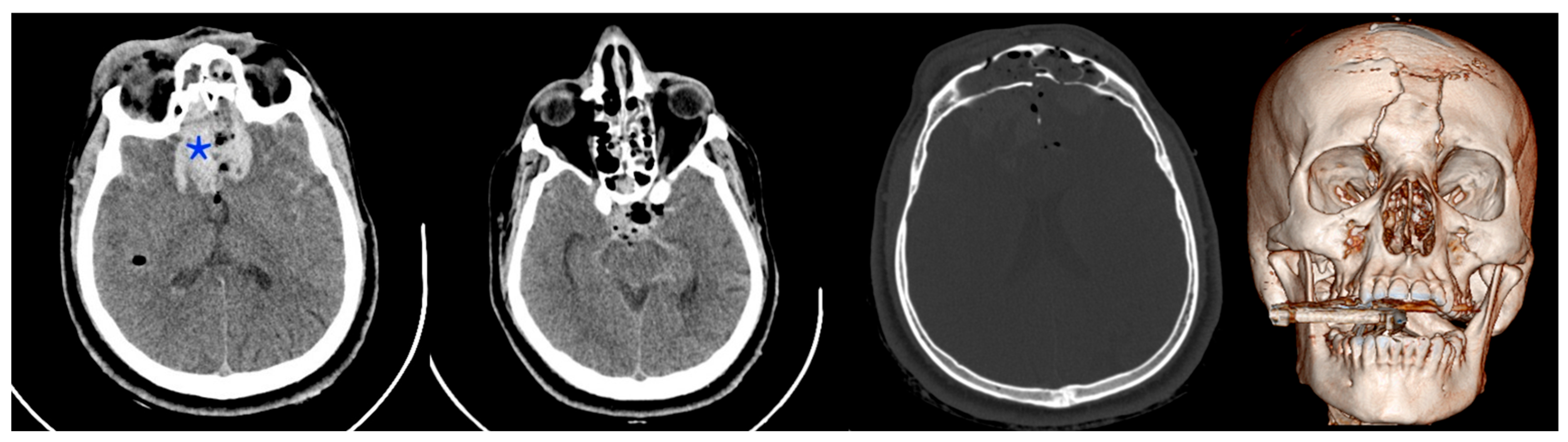
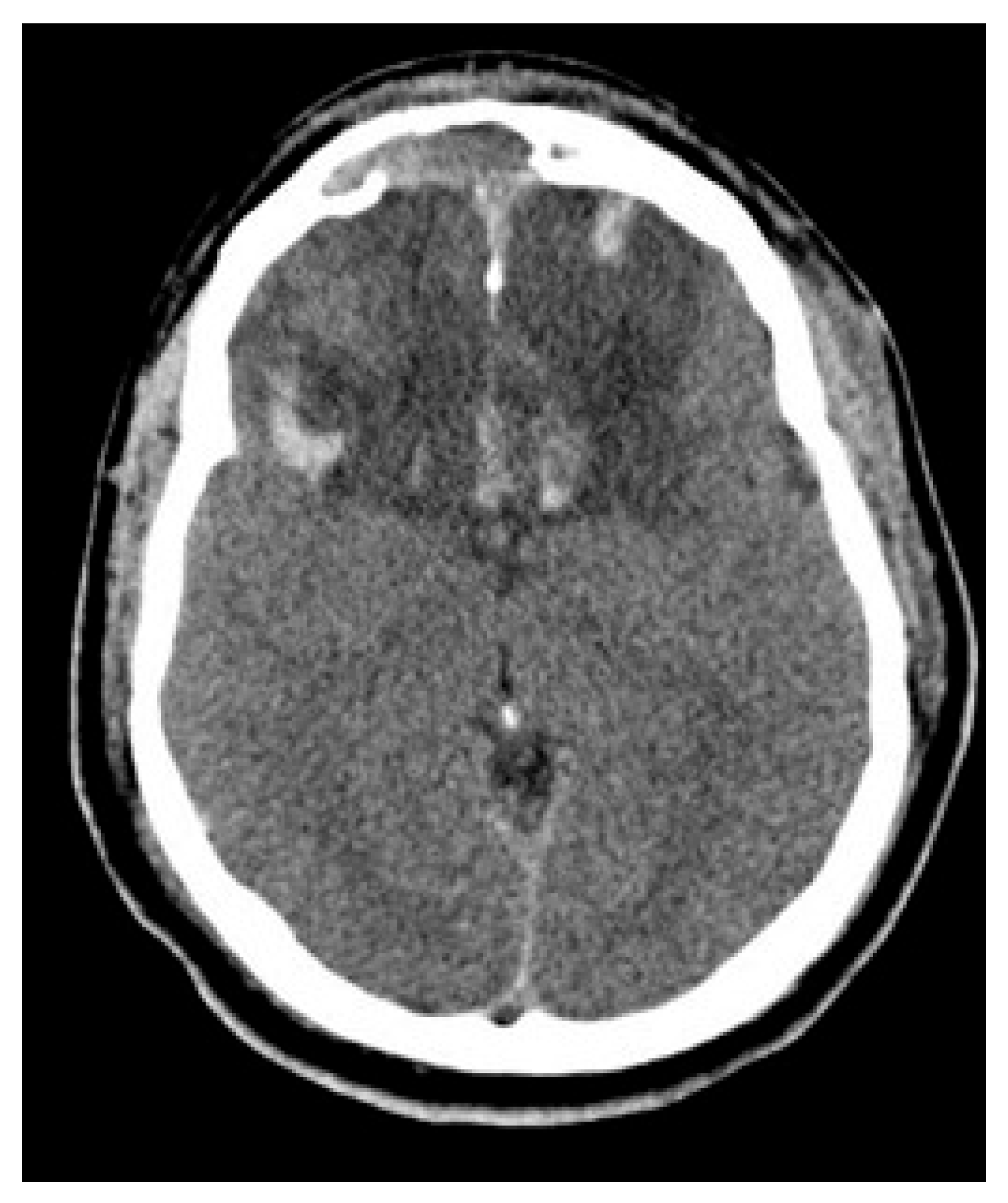
A 33-year-old male was brought to the emergency department after a severe head injury from a motor vehicle accident. On arrival, his Glasgow Coma Scale was 6 (E1V2M3). His pupils were bilaterally equal and reactive, and he had a forehead laceration with obvious frontal bone fractures. He was electively intubated and ventilated. Computed tomography (CT) revealed extensive maxillofacial and skull base fractures, bifrontal comminuted depressed frontal bone fractures, bilateral frontal hemorrhagic contusions, a large midline basifrontal hematoma, and basal subarachnoid hemorrhage (SAH). A small intraventricular bleed without ventricular dilatation was also seen, from left to right, in the first two axial CT images in Figure 1. The associated comminuted depressed frontal bone fractures involving both frontal sinuses are demonstrated on bone-window CT and 3D reconstruction (Figure 1, the third and forth CT images). Given the compound depressed fracture and large hematoma, he underwent craniotomy and evacuation of the right frontal hematoma with elevation and fixation of fracture segments (Figure 2). He was weaned off ventilation within a week after elective tracheostomy. By the second week, he was obeying simple commands and moving all limbs.
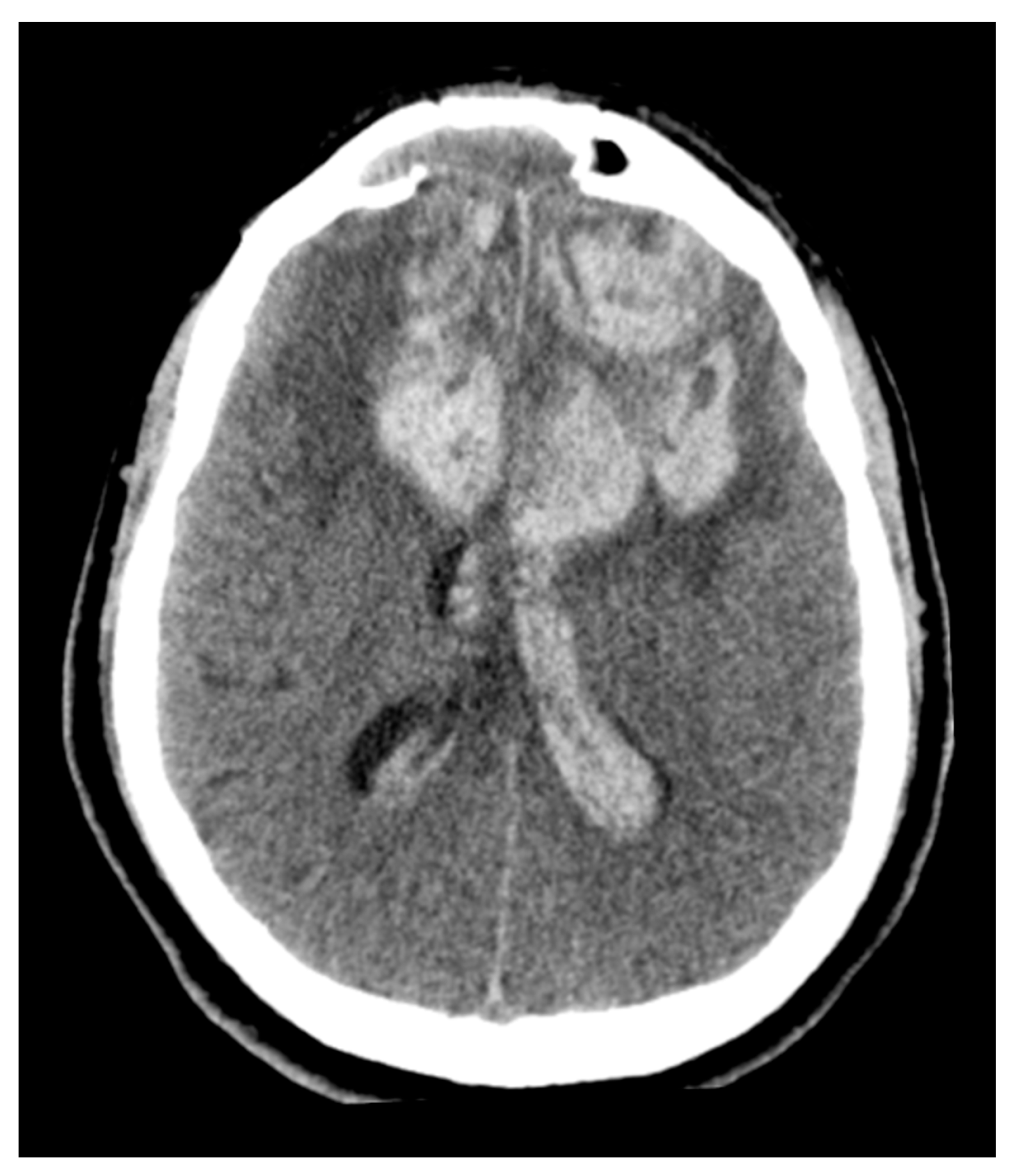
On day 23, he developed a rapid neurological decline (GCS 3). CT showed a large bifrontal re-bleed with intraventricular extension and ventriculomegaly (Figure 3). He was re-intubated, transferred to the ICU, and an external ventricular drain (EVD) was inserted.
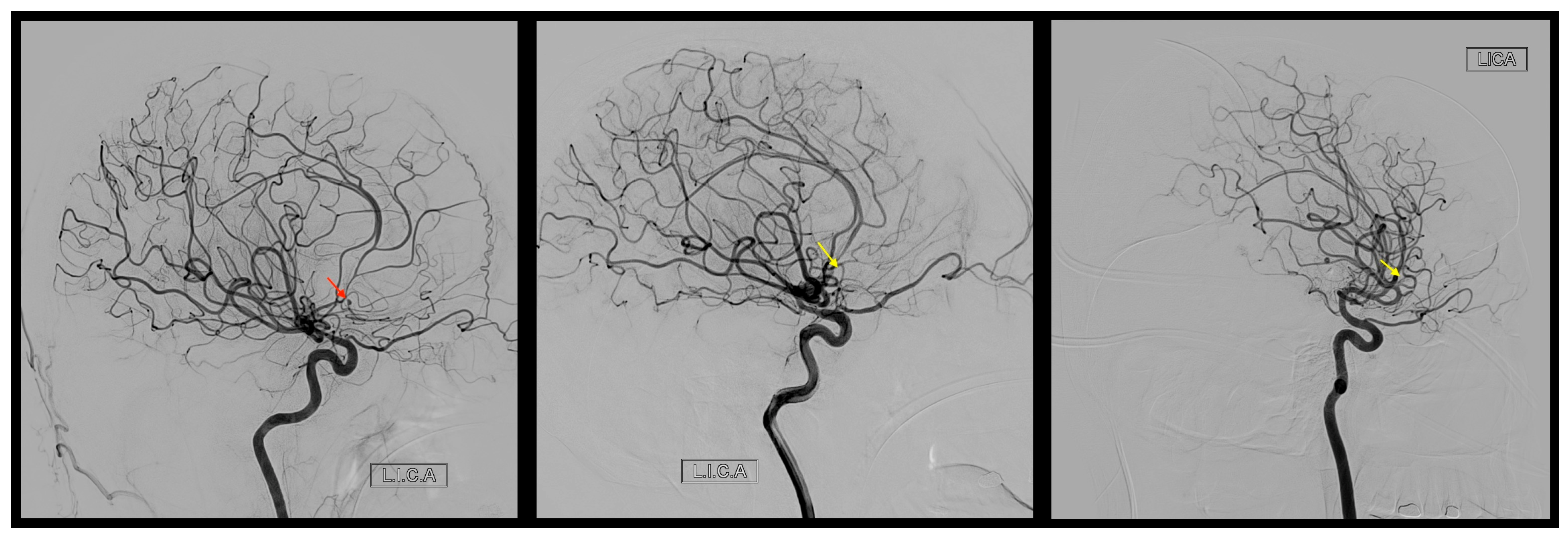
Digital subtraction angiography (DSA) demonstrated a lobulated pseudoaneurysm with a narrow neck (2.8 mm) from the proximal A2 segment of the left anterior cerebral artery (ACA) (Figure 4, from left to right, the first digital subtraction angiography image). Re-exploration and hematoma evacuation were performed. The aneurysm could not be identified intra-operatively due to altered post-traumatic and post-operative anatomy. A repeat DSA after two weeks showed complete disappearance of the aneurysm, with the small parent branch no longer visualized (Figure 4, the second digital subtraction angiography image).
The EVD was removed after 48 h of clamping and intracranial pressure monitoring. At eight weeks, CT showed communicating hydrocephalus, for which a right ventriculo-peritoneal shunt was placed. Neurological recovery was gradual, and he was discharged to rehabilitation conscious and communicative, with spastic Grade 4/5 power in all limbs. At two months, he remained communicative with mild cognitive impairment and occasional irritability. Six-month follow-up DSA confirmed no aneurysm recurrence (Figure 4, the third digital subtraction angiography image).

3. Discussion

TICAs result from either blunt or penetrating head injuries, with motor vehicle accidents being the most common cause of these injuries. TICAs are more common in children than in adults [2]⁠. In addition, iatrogenic traumatic aneurysm may occur after skull base surgery, endonasal sinus surgery, and endoscopic third ventriculostomy [2,5].
TICAs are caused either by direct injury to the cerebral vessels or the stretching of the vessel against the adjacent structures. The location of the aneurysm could indicate the possible mechanism. Distal subcortical aneurysms occur along the anterior cerebral artery and its branches, and this may be due to the movement of the vessels against the sharp free edge of the falx [6]. Infraclinoid and basilar artery aneurysms are associated with basal skull fractures. The supraclinoid segment of the carotid artery is at a transition zone from being a relatively fixed structure in the cavernous sinus region to a mobile segment at the cisternal space, making it vulnerable to stretching or contusion by the anterior clinoid process during trauma [6,7].
Histologically, TICAs are described as true, false (pseudo), mixed, or dissecting depending on the degree of arterial wall involvement [8]. While this is mechanistically useful, it has little bearing on clinical decision-making. More practical is the anatomical classification by Mao et al., dividing TICAs into skull base and peripheral types [9]. Skull base aneurysms were further categorized as infraclinoid, supraclinoid, and vertebrobasilar, whereas peripheral aneurysms included perifalx and distal cortical lesions. According to this scheme, our patient’s lesion corresponded to a peripheral ACA TICA.
Patients with TICAs can present in different ways. The most common is a delayed intracranial hemorrhage leading to sudden neurological deterioration. On average, the bleed occurs about 21 days after the initial trauma [10]. Our patient presented with a delayed intracerebral hematoma on day 23.⁠ Additionally, supraclinoid TICAs may present with cranial nerve deficits, sudden headache, or altered sensorium due to subarachnoid hemorrhage. Infraclinoid TICAs can present with recurrent or massive epistaxis, progressive cranial nerve palsy, or diabetes insipidus [9,11]. Per falx TICAs present with sudden severe headache or coma due to subarachnoid or intracerebral bleed. Distal cortical TICAs may present with growing skull fractures or seizures [9,11]. A CT scan usually demonstrates an acute intracranial hemorrhage, which may be subarachnoid, intraparenchymal, intraventricular, or subdural.
Diagnosis of TICAs requires a high index of suspicion. While post-traumatic subarachnoid hemorrhage is quite common, the presence of basal subarachnoid hemorrhage should raise suspicion of a vascular injury, prompting an early cerebral DSA. A follow-up angiogram should be considered if the initial angiogram is negative [4,9,11]. Mao et al. have suggested that patients with a history of blunt brain trauma with recurrent epistaxis, blurred vision, or progressive cranial nerve palsy should also undergo cerebral DSA as soon as possible [9]. Cerebral DSA should also be performed in patients with delayed neurological deterioration due to a re-bleed [4,9,11]⁠. If an aneurysm is seen, certain features on angiography, such as poorly defined neck, unusual site, irregular contour, and delayed filling or emptying, suggest that the aneurysm may be of traumatic origin [4,9,11].
The main goal in the management of traumatic intracranial aneurysms (TICAs) is to exclude the aneurysm from the general cerebral circulation by surgical or endovascular methods. Since mortality after rupture can reach 40–50%, treatment should be carried out as soon as the diagnosis is made [12]. Options include direct clipping, resection with or without bypass, or trapping when the anatomy allows. If these are not feasible, wrap-clipping with muscle or fascia is another alternative [13]. These aneurysms remain technically demanding because of their unusual locations (such as distal or deep Sylvian segments), their thin, fragile walls, and poorly defined necks. Intraoperative navigation may assist with localization, but in most cases, a standard pterional trans-Sylvian, proximal-to-distal exposure, while avoiding previous surgical corridors, remains the most reliable approach. In cases where surgical access is limited or risky, endovascular treatment, including coil or liquid embolization, with or without stents, should be strongly considered, especially as endovascular therapy is now a mainstay in managing ruptured aneurysms [14].
Spontaneous thrombosis of aneurysms has been reported but is rare. They are usually seen in giant primary aneurysms. The larger volume of the sac concerning the neck causes a more sluggish flow of blood inside the aneurysm and promotes thrombosis [12,13,14,15]⁠⁠. The disappearance of the aneurysm in this case, could have been due to inadvertent coagulation of the aneurysm or vessel branch during the second surgery or due to spontaneous thrombosis of the aneurysm along with the small branch from which it was arising, The small vessel caliber and vasospasm caused by the re-bleed and surgical manipulation could be a possible contributing factors.
In retrospect, certain surgical choices might have made localization easier. A larger fronto-temporal craniotomy with a standard trans-Sylvian, proximal-to-distal approach, rather than going back through the previous path, could have provided better exposure of the aneurysm. In addition, the use of intraoperative navigation may have aided in identifying the aneurysm despite distorted post-traumatic anatomy. Table 1 highlights previously reported cases of spontaneous thrombosis or regression of traumatic intracranial aneurysms, summarizing key patient and aneurysm characteristics, time to resolution, and outcomes [16,17,18,19,20]. Spontaneous regression/healing has also been reported in non-traumatic intracranial aneurysms (e.g., unruptured aneurysms and dissecting aneurysms); however, these reports are not included in the table, which is restricted to traumatic lesions.

4. Conclusions

A post-traumatic aneurysm should be considered in patients with severe head injury associated with skull base fracture and SAH who develop delayed neurological deterioration. Early cerebral DSA is warranted, particularly when basal SAH and a “clot within a clot” are present, as these may suggest an underlying vascular injury. Spontaneous thrombosis, although observed in our patient, represents an exceptional and unpredictable outcome and should not be used to justify conservative management. Timely diagnosis and appropriate intervention remain essential for improving outcomes.

Author Contributions

All authors were involved in the preparation of the manuscript, from initial conceptualization to the final write-up. Conceptualization, V.G., R.K., K.K., G.A.S., S.R. and F.A.-A.; methodology, V.G. and S.R.; software, S.R., F.A.-A. and N.A.A.S.; validation, S.R., F.A.-A. and N.A.A.S.; writing—original draft preparation, all authors; writing—review and editing, A.A.L. and V.G.; visualization, S.R., F.A.-A. and N.A.A.S.; project administration, A.A.L. All authors have read and agreed to the published version of the manuscript.

Funding

This research received no external funding.

Institutional Review Board Statement

The study was conducted in accordance with the Declaration of Helsinki.

Informed Consent Statement

Informed consent was obtained from all subjects involved in the study.

Data Availability Statement

The original contributions presented in this study are included in the article. Further inquiries can be directed to the corresponding author.

Conflicts of Interest

The authors declare no conflicts of interest.

Abbreviations

The following abbreviations are used in this manuscript:
ACAAnterior Cerebral Artery
AComAnterior Communicating Artery
CTComputed Tomography
DSADigital Subtraction Angiography
EVD External Ventricular Drain
GCS Glasgow Coma Scale
ICA Internal Carotid Artery
ICU Intensive Care Unit
SAH Subarachnoid Hemorrhage
TICA Traumatic Intracranial Aneurysm

References

  1. Emir, A.F.; Udin, N.; Othman, A.K.; Salim, N.N.; Mohamad Supi, N.A.L.; Abdullah, A.S. Traumatic intracranial aneurysm (TICA) following closed head injury in children: A case report. JSM Clin. Case Rep. 2022, 10, 1204. [Google Scholar]
  2. Livshits, I.M.; Berdinov, B.F.; Musa, G.; Chmutin, E.G.; Levov, V.A.; Chmutin, G.K.; Zokhidov, U.Z. Traumatic intracranial aneurysms (TICA) in children: A description of two clinical cases of successful treatment and review of literature. Childs Nerv. Syst. 2022, 38, 2063–2070. [Google Scholar] [CrossRef] [PubMed]
  3. Yamada, K.; Morimoto, T.; Fujimoto, K.; Nishioka, T.; Tokunaga, H. Traumatic intracranial aneurysm in a distal posterior cerebral artery: A case report and literature review. Surg. Neurol. Int. 2023, 14, 428. [Google Scholar] [CrossRef] [PubMed] [PubMed Central]
  4. Lefevre, E.; Fawaz, R.; Premat, K.; Lenck, S.; Shotar, E.; Degos, V.; Kalamarides, M.; Boch, A.L.; Carpentier, A.; Clarençon, F.; et al. Delayed traumatic intracranial aneurysms: Literature review and case series. Neurosurg. Rev. 2024, 47, 355. [Google Scholar] [CrossRef] [PubMed]
  5. Sumislawski, P.; Ludwig, C.; Rotermund, R.; Grzyska, U.; Flitsch, J. Internal carotid artery false aneurysm as a fatal complication of transsphenoidal surgery. J. Surg. Case Rep. 2021, 2021, rjab146. [Google Scholar] [CrossRef] [PubMed] [PubMed Central]
  6. Velz, J.; Esposito, G.; Regli, L. Traumatic distal anterior cerebral artery aneurysms: Pathomechanism and revascularisation strategies. J. Stroke Cerebrovasc. Dis. 2021, 30, 105578. [Google Scholar] [CrossRef] [PubMed]
  7. Policicchio, D.; Muggianu, G.; Dipellegrini, G.; Boccaletti, R. Delayed diagnosis of post-traumatic aneurysm of distal anterior cerebral artery. Surg. Neurol. Int. 2018, 9, 222. [Google Scholar] [CrossRef] [PubMed] [PubMed Central]
  8. Napoletano, G.; Di Fazio, N.; Delogu, G.; Del Duca, F.; Maiese, A. Traumatic aneurysm involving the posterior communicating artery. Healthcare 2024, 12, 192. [Google Scholar] [CrossRef] [PubMed] [PubMed Central]
  9. Mao, Z.; Wang, N.; Hussain, M.; Li, M.; Zhang, H.; Zhang, Q.; Zhang, P.; Zhi, X.; Ling, F. Traumatic intracranial aneurysms due to blunt brain injury: A single center experience. Acta Neurochir. 2012, 154, 2187–2193. [Google Scholar] [CrossRef] [PubMed]
  10. Panchariya, P.K.; Singhal, G.; Jagetia, A.; Srivastava, A.K. Traumatic distal anterior cerebral artery aneurysm in a 3-year-old child: An uncommon but notable case. J. Cerebrovasc. Sci. 2020, 8, 130–133. [Google Scholar] [CrossRef]
  11. Shi, Y.; Gao, Y.; Liu, Y.; Cui, W.; Zhou, G.; Wang, L.; Yu, J.; Zhang, T.; Qu, Y.; Deng, J.; et al. Treatment of traumatic intracranial pseudoaneurysms: A single-center experience. Front. Neurol. 2021, 12, 690284. [Google Scholar] [CrossRef] [PubMed] [PubMed Central]
  12. Larson, P.S.; Reisner, A.; Morassutti, D.J.; Abdulhadi, B.; Harpring, J.E. Traumatic intracranial aneurysms. Neurosurg. Focus. 2000, 8, e4. [Google Scholar] [CrossRef] [PubMed]
  13. Jang, T.; Kim, S.T.; Lee, J.; Lee, W.H.; Lee, K.S.; Pyo, S.Y.; Ko, J.; Lee, H.; Jeong, Y.G. Microsurgical treatment of distal middle cerebral artery aneurysm: A single-center review. J. Cerebrovasc. Endovasc. Neurosurg. 2024, 26, 37–45. [Google Scholar] [CrossRef] [PubMed] [PubMed Central]
  14. Deshmukh, A.S.; Priola, S.M.; Katsanos, A.H.; Scalia, G.; Costa Alves, A.; Srivastava, A.; Hawkes, C. The management of intracranial aneurysms: Current trends and future directions. Neurol. Int. 2024, 16, 74–94. [Google Scholar] [CrossRef] [PubMed] [PubMed Central]
  15. Khoa, T.V.; Thuong, T.M.; Quang, P.X.; Thang, T.Q.; Linh, N.N.; Ngan, P.T.; Van, P.D.; Duong, P.N.; Duc, N.M. Spontaneous thrombosis of a large unruptured intracranial aneurysm causing ischemic stroke due to occlusion of the parent artery: A case report and literature review. Radiol. Case Rep. 2024, 19, 3405–3410. [Google Scholar] [CrossRef] [PubMed] [PubMed Central]
  16. Morón, F.; Benndorf, G.; Akpek, S.; Dempsy, R.; Strother, C.M. Spontaneous thrombosis of a traumatic posterior cerebral artery aneurysm in a child. AJNR Am. J. Neuroradiol. 2005, 26, 58–60. [Google Scholar] [PubMed] [PubMed Central]
  17. Loevner, L.A.; Ting, T.Y.; Hurst, R.W.; Goldberg, H.I.; Schut, L. Spontaneous thrombosis of a basilar artery traumatic aneurysm in a child. AJNR Am. J. Neuroradiol. 1998, 19, 386–388. [Google Scholar] [PubMed] [PubMed Central]
  18. Shah, Q.; Friedman, J.; Mamourian, A. Spontaneous resolution of traumatic pseudoaneurysm of the middle meningeal artery. AJNR Am. J. Neuroradiol. 2005, 26, 2530–2532. [Google Scholar] [PubMed] [PubMed Central]
  19. de Jesus, A.S.; Mendonça, B.K.; Costa, C.C. Spontaneous resolution of a traumatic intracranial aneurysm. Arq. Bras. Neurocir. 2016, 35, 222–227. [Google Scholar] [CrossRef]
  20. Gu, J.; Li, J.; Zhao, Y. Spontaneous resolution of traumatic pseudoaneurysm: A case report. Medicine 2025, 104, e46184. [Google Scholar] [CrossRef] [PubMed] [PubMed Central]
Figure 1. From left to right, the first two axial CT images obtained at the time of injury demonstrate a large bifrontal hematoma (blue asterisk) with extensive subarachnoid hemorrhage involving the basal cisterns and bilateral Sylvian fissures. The third image (bone-window CT) and fourth image (3D reconstruction) demonstrate a comminuted depressed fracture of the frontal bone involving both frontal sinuses, associated with frontal hemosinus and adjacent intracranial pneumocephalus.
Joma 03 00005 g001
Figure 2. Axial CT scan one week after the surgical evacuation of the basifrontal hemorrhage showed near complete interval resolution of the hematoma with expected post-surgical changes.
Joma 03 00005 g002
Figure 3. Axial non-contrast CT demonstrates a large bifrontal intraparenchymal re-hemorrhage with intraventricular extension, associated vasogenic edema and significant mass effect.
Joma 03 00005 g003
Figure 4. From left to right, digital subtraction angiography (DSA) images of the left ICA in lateral view demonstrate a lobulated 2.8 mm aneurysm arising from the anterior cerebral artery (ACA)-proximal A2 segment at the time of re-bleed [red arrow]. The second and third images, obtained after 2 weeks and 6 months, respectively, show no aneurysm at the expected location [yellow arrows].
Joma 03 00005 g004
Table 1. Reported cases of spontaneous thrombosis or regression of traumatic intracranial aneurysms.
ReferencePatient Details/Aneurysm LocationType of AneurysmTime to ResolutionOutcome
Morón et al., 2005 [16]Child; posterior cerebral artery (PCA)Traumatic intracranial aneurysm (large)Not reportedComplete spontaneous thrombosis
Loevner et al., 1998 [17]Child; basilar arteryTraumatic aneurysmNot specified (on follow-up angiography)Spontaneous thrombosis
Shah et al., 2005 [18]Adult; middle meningeal arteryTraumatic pseudoaneurysmApproximately 1 month (on follow-up angiography)Complete spontaneous resolution
de Jesus et al., 2016 [19]45 years old; intracavernous internal carotid arteryTraumatic false aneurysm (pseudoaneurysm)26 daysSpontaneous resolution
Gu et al., 2025 [20]47 years old; ophthalmic segment of internal carotid artery (ICA)Traumatic pseudoaneurysm8 weeksComplete disappearance on CTA/DSA
Current case33-year-old male; proximal A2 segment of left anterior cerebral artery (ACA)Traumatic distal ACA pseudoaneurysm2 weeksDisappeared on DSA; no recurrence at 6 months
Disclaimer/Publisher’s Note: The statements, opinions and data contained in all publications are solely those of the individual author(s) and contributor(s) and not of MDPI and/or the editor(s). MDPI and/or the editor(s) disclaim responsibility for any injury to people or property resulting from any ideas, methods, instructions or products referred to in the content.