


Abstract
Permafrost extent and active layer thickness (ALT) have implications for polar-region infrastructure and communities. Much of the world’s permafrost is rich in ground ice and can become highly unstable during seasonal freeze–thaw cycling. Monitoring these dynamics is critical for quantifying infrastructure risk, informing new construction, and prioritizing essential repairs of existing infrastructure. Fiber optic distributed acoustic sensing (DAS) offers an alternative, providing high-resolution monitoring over large distances. This proof-of-concept study evaluates a surface-deployed DAS cable as a rapid, nondestructive tool for observing seasonal thaw in discontinuous permafrost in Fox, Alaska. During three field campaigns (May 2024, September 2024, and June 2025), a surface laid cable recorded active source sledgehammer strikes. Dispersion curves extracted from the surface wave data were aligned with theoretical curves using a simplified two-layer forward model, representing a seasonally thawed layer overlying hard frozen ground. Based on best fit estimates derived from this model, the active layer thickness was calculated at approximately 0.8 m in May 2024, thickening to 1.9 m in September 2024, and 0.65 m in June 2025. These results demonstrate that surface-deployed DAS can effectively observe changes in permafrost seasonal thaw. This technique could be used prior-to and/or in-addition-to performing more invasive, time-consuming subsurface investigation.
1. Introduction
1.1. Permafrost
Permafrost is any earth material frozen for two years or more [1,2] and is found throughout the polar regions and high-altitude zones of the planet. In Alaska, the percentage of frozen ground increases from Anchorage to Prudhoe Bay, from sporadic pockets of frozen ground in the south, to larger concentrations of discontinuous permafrost near Fairbanks, to continuous, deep permafrost on Alaska’s North Slope [3,4].
When analyzing near-surface structure and stability in permafrost regions, the ground is typically considered as a two-layer system: a dynamic active layer at the surface, which thaws and refreezes seasonally, overlying the permanently frozen permafrost below. The dynamic active layer typically reaches its greatest thaw depth in late summer, before refreezing in the winter. Changes in the permafrost, and the active layer itself, affect infrastructure, communities, and the geomorphology and hydrology of permafrost landscapes. Deepening of the active layer without sufficient winter refreeze can lead to the formation of taliks [5], which are pockets of unfrozen ground within the permafrost [6]. More dramatically, the thawing of ice-rich permafrost can trigger ground subsidence in a process known as thermokarst, which represents a major and abrupt risk to infrastructure [7]. Both gradual near-surface permafrost degradation [8] and abrupt freeze–thaw dynamics have significant impacts on cold-region infrastructure [9,10].
1.2. Distributed Fiber Optic Sensing (DFOS) in Cold Regions
Distributed fiber optic sensing (DFOS) is increasingly being applied for its monitoring applications in cold regions [11]. DFOS can turn a standard fiber optic cable into a temporally and spatially continuous sensor, capable of monitoring 10’s of kilometers at a resolution of one or more meters. To turn into a sensing system, DFOS pairs a fiber optic cable with a laser interrogator. The interrogator pulses light down the fiber optic cable. The interrogator captures backscattered light along the length of the fiber. A distributed acoustic sensing (DAS) interrogator unit (IU) senses Rayleigh scattering, proportional to vibrational strain acting on the cable along its length [12]. Modern DAS IU use phase-sensitive optical time domain reflectometers (Φ-OTDR) to interferometrically measure the phase of backscattered light to better characterize the strain rate in time and space along the fiber [13,14], providing the data structure required for traditional and novel seismic imaging techniques, including multi-channel analysis of surface waves (MASW).
DAS has emerged as monitoring and characterization tool for cold regions with applications including use on glaciers and ice sheets [15,16,17,18,19,20]. Seismic experiments utilizing DAS and surface wave analysis techniques have been used to characterize near-surface structure and integrity in discontinuous and continuous Alaskan permafrost [1,21,22].
1.3. Multi-Channel Analysis of Surface Waves
Multi-channel analysis of surface waves (MASW) is a non-invasive, seismic technique used for characterizing soil stratigraphy. MASW images the near-surface by generating phase velocity dispersion curves for surface waves based on the methodologies provided by [23]. In active MASW surveys, some type of seismic source is used to stimulate surface waves “in-line” or “end-fire” with a sensing array. Conventionally, the source is a sledgehammer striking a metal plate which is coupled to the ground surface. The surface waves propagate along the array, and their frequency components disperse with time (i.e., different wavelengths of the source impact will travel with different velocities). In general, low frequency/long wavelengths travel faster as they are sensitive to deeper, stiffer sediments, and higher frequency/shorter wavelengths travel slower as they are sensitive to the softer upper layers of the sediment. The time series data undergoes a dispersion transformation, providing a characteristic phase dispersion curve which depends on stiffness of stratified soil for the site at which the survey is taking place. When coupled with background data about the site’s geology and stratigraphy (i.e., density, compressional velocity, Poisson’s ratio of the soil layers), this dispersion curve can be inverted for a full 1D subsurface shear wave velocity profile, which can indicate stratigraphy.
Conventional MASW surveys use an array of geophones as the receivers [24]. However, DAS has proven to be a useful sensing tool in lieu of geophones for MASW surveys. While some work has explored the use of surface laid fiber optic arrays for subsurface imaging [25], most of the related research largely explores the use of DAS cables which are buried beneath the ground surface [1,26].
The research presented in this paper illustrates the viability of using DAS data collected from a nondestructively deployed fiber optic cable to rapidly observe changes in the dynamic active layer of permafrost. Active source MASW testing was performed and recorded on three separate DAS arrays deployed in May 2024, September 2024, and June 2025. Characteristic Rayleigh fundamental mode dispersion curves were obtained for the same test location in all three data collection efforts.
2. Materials and Methods
This multiyear field campaign occurred at the U.S. Army Corps of Engineers’ Engineering Research and Development Center’s Permafrost Tunnel Research Facility in Fox, Alaska (Figure 1). The area above the tunnel was selected for testing. Permafrost at the site comprises pore-ice cemented silt of high organic matter content. Large (10’s of meters tall) massive ice wedges are present. Permafrost in the region has been mapped to thicknesses of ~50 m with boreholes [27] and geophysical measurements [28]. Vegetation cover is typical of the northern boreal forest with conifer and birch stands, shrub ground cover, and a thick organic mat on the ground surface. This vegetation provides “ecosystem protection” for the permafrost in the area [29]; however, following ground disturbance, permafrost can degrade rapidly. A fiber optic cable was surface laid, nondestructively placed on existing footpaths (areas with minimum vegetation) for firm coupling to the ground surface. The footpaths typically have a light cover of grasses, as well as small birch and willow shrubs. Data collection on these nondestructively deployed DAS arrays occurred on 15 May 2024, 11 September 2024, and 20 June 2025.
Figure 1.
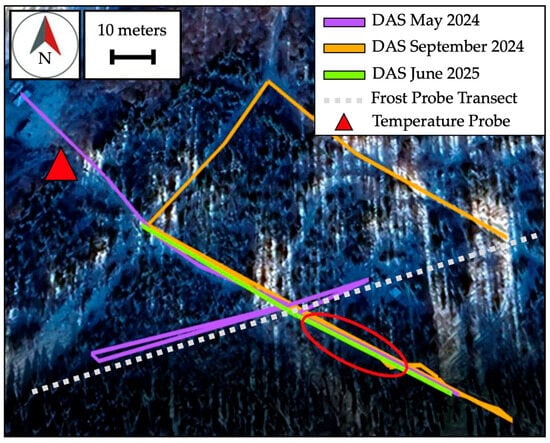
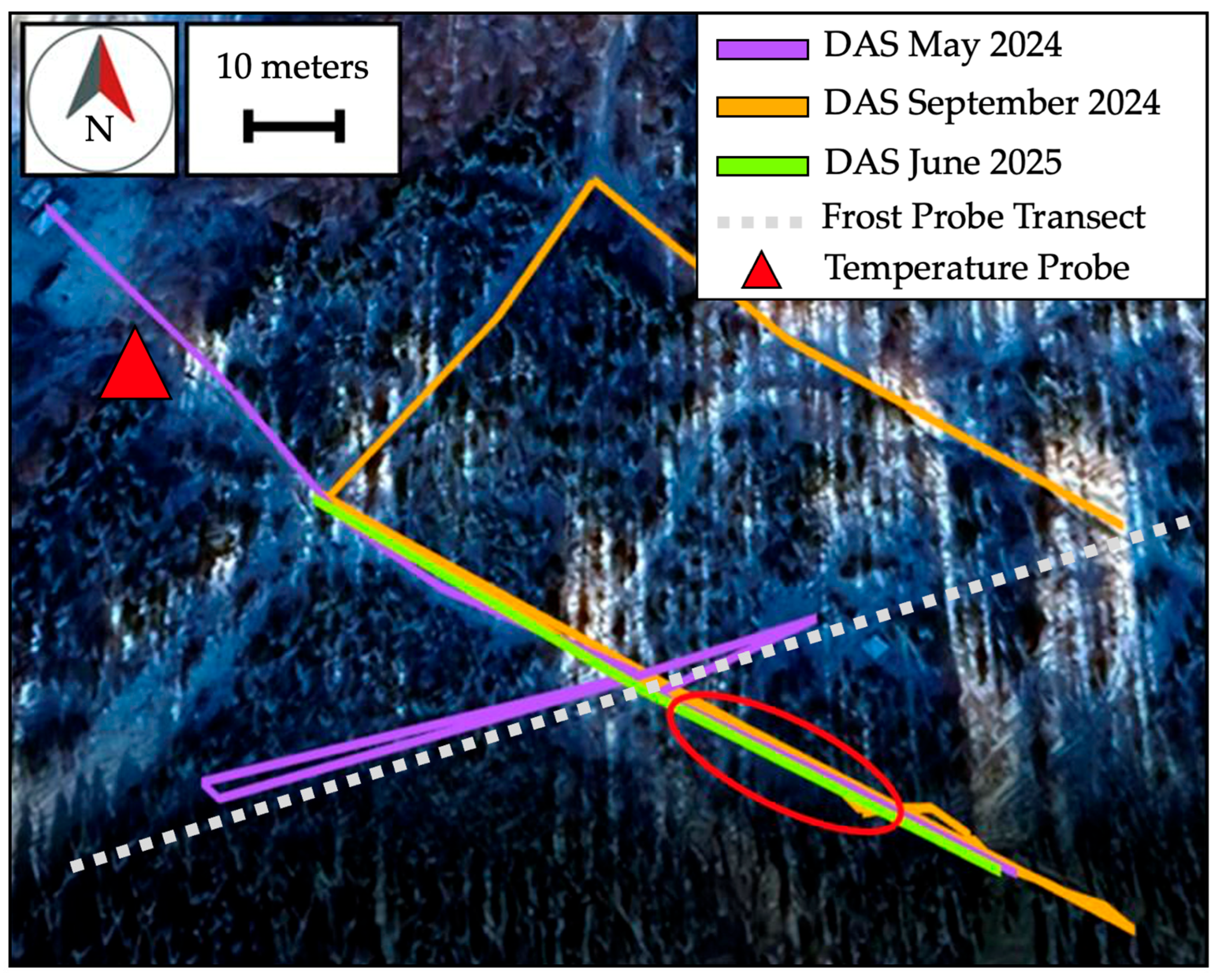
GPS layout of the nondestructive fiber optic cable arrays in Fox, Alaska, as well as locations of adjacent temperature and frost probe measurements [30]. The area selected for active source seismic testing for all field campaigns is circled in red. Background imagery obtained from [31].
During the May and September 2024 field efforts, several hundred meters of cable were deployed. Weights were placed atop a section of the cable to better couple the cable to the ground surface in a well traversed footpath where surface vegetation was minimal. In this area, the cable could be directly coupled to ground surface above the active permafrost. The June 2025 data collection focused on an isolated data collection along the same area of footpath and expanded the number and locations of active strikes performed. For each effort, a handheld GPS unit was used to map the array. The DAS fiber optic cable array deployment layouts are shown in Figure 1.
DAS Sintela (Bristol, UK) and Silixa (Elstree, UK) interrogators were used for these data collection efforts. DAS user settings such as gauge length and channel spacing were updated for each deployment based on lessons learned from reviewing the previous datasets. The same fiber optic cable was deployed in all three experiments, although different strands of fiber within that cable were utilized for data collection. The cable itself was 500 m of Silixa tactical fiber optic cable, which featured both standard single mode and Constellation fiber optic cable strands. The standard single mode strand is analogous to other commercially available single mode fiber optic strands, while the Constellation strand is Silixa’s engineered cable with enhanced sensing capabilities. A summary of the interrogators used, and their respective configuration settings, are shown in Table 1.
Table 1.
Interrogator setup and settings explored in each field effort.
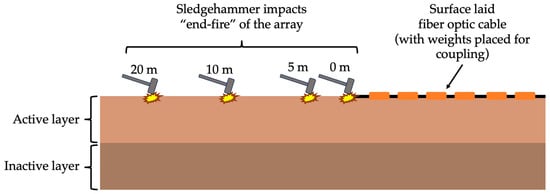
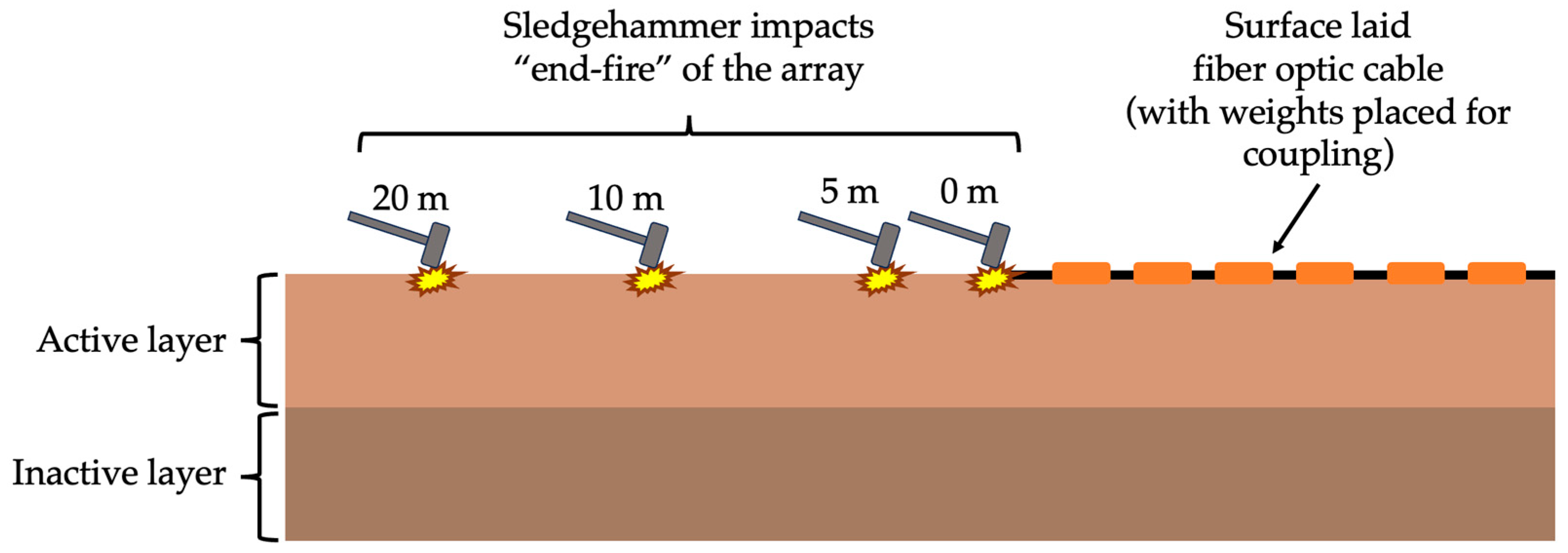
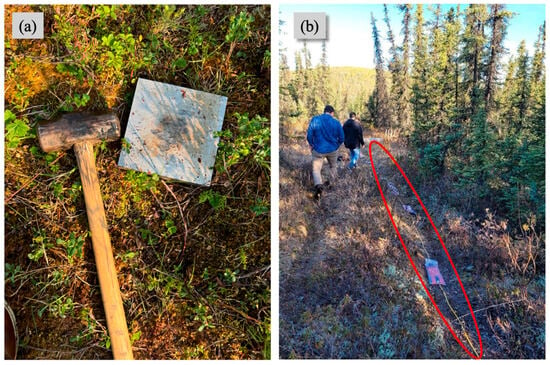
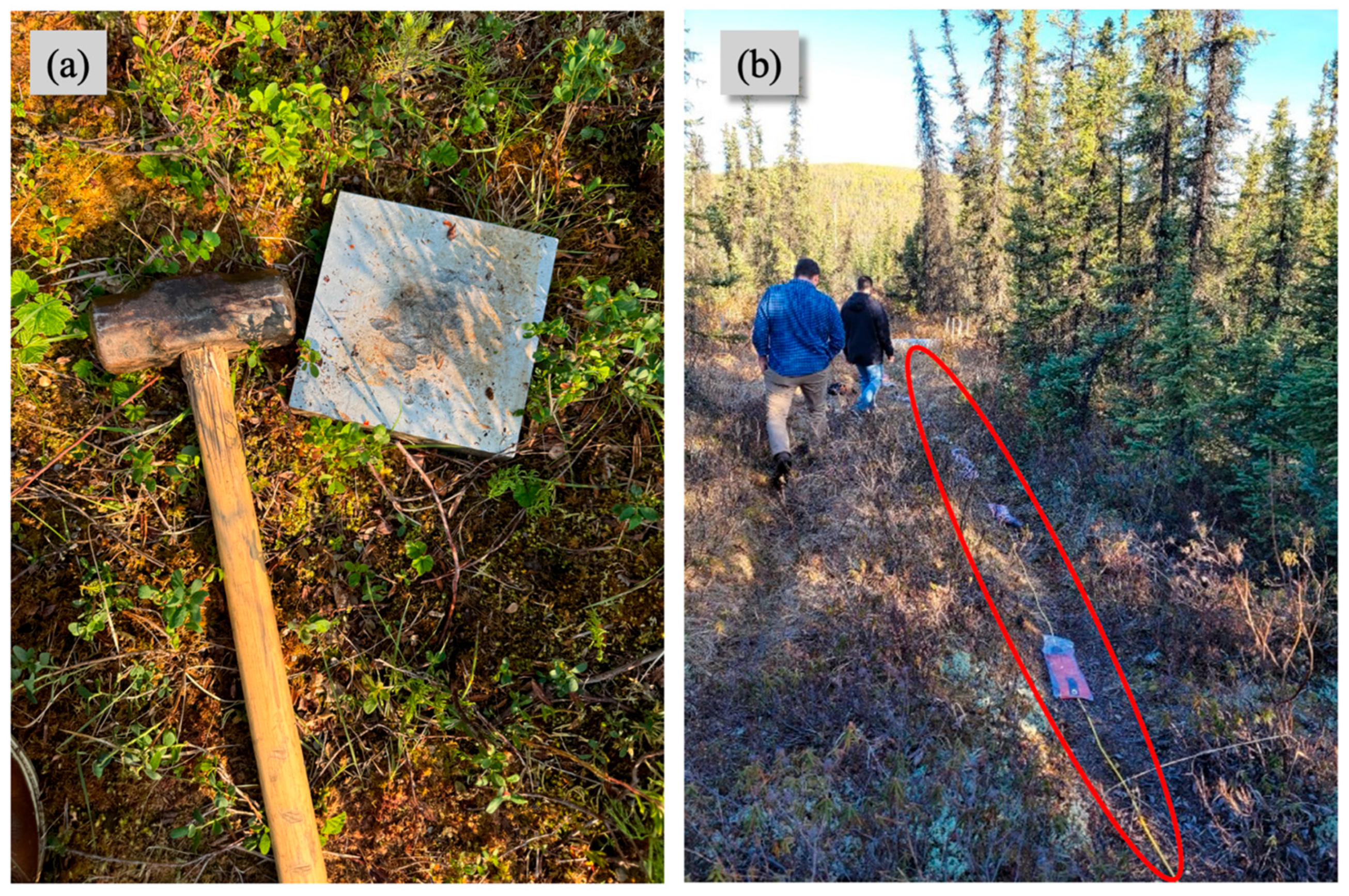
For the May and September 2024 data collections, strikes were performed in-line with the weighted portion of fiber optic cable at an offset distance of 0 m. For the June 2025 data collection, strikes were performed “in-line” with the first DAS channel in the weighted section of cable at offsets of 0, 5, 10, and 20 m. All active strikes used the same sledgehammer/metal plate pairing to generate surface waves. An illustration of the cable and offset strike locations is provided in Figure 2. A photo of the sledgehammer source, the metal strike plate, as well as a weighted portion of fiber optic cable from the May 2025 data collection is shown in Figure 3.
Figure 2.
Graphic illustration of active source sledgehammer strikes relative to the weighted portion of fiber optic cable for DAS interrogation (profile view). Active source strikes occurred on a metal plate placed on the ground at distances of 0, 5, 10, and 20 m offset from the end of the fiber.
Figure 3.
(a) Photograph of sledgehammer and metal plate utilized for active source impacts. (b) Photograph of the May 2025 weighted portion of fiber optic cable (circled in red) [32].
The analysis began by processing the measured time series data from each surface-deployed DAS array, which recorded the ground’s response to sledgehammer impacts. This processing, handled in MATLAB version R2024b, involved filtering the data from each impact and applying a detrending function to correct for long-term linear trends. Once the time series for individual strikes were isolated, they were converted into the frequency–wavenumber domain using the frequency domain beamforming (FDBF) transformation [33]. This FDBF method is particularly robust for near-surface imaging because it assumes that the waves from an active source spread out cylindrically. Following the FDBF transformation, the fundamental mode Rayleigh wave dispersion curve was manually picked by calculating the mean phase velocity across all shots in the selected frequency range. The standard deviation was simultaneously computed for each phase velocity measurement to quantify data variance, yielding a single, composite fundamental mode dispersion curve for each data collection campaign. For the purposes of this manuscript, measurement uncertainty was considered to be two times the calculated standard deviation.
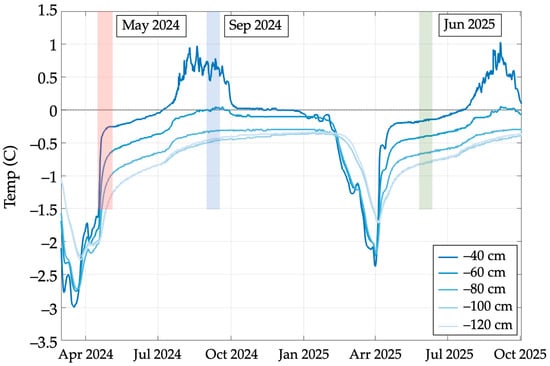
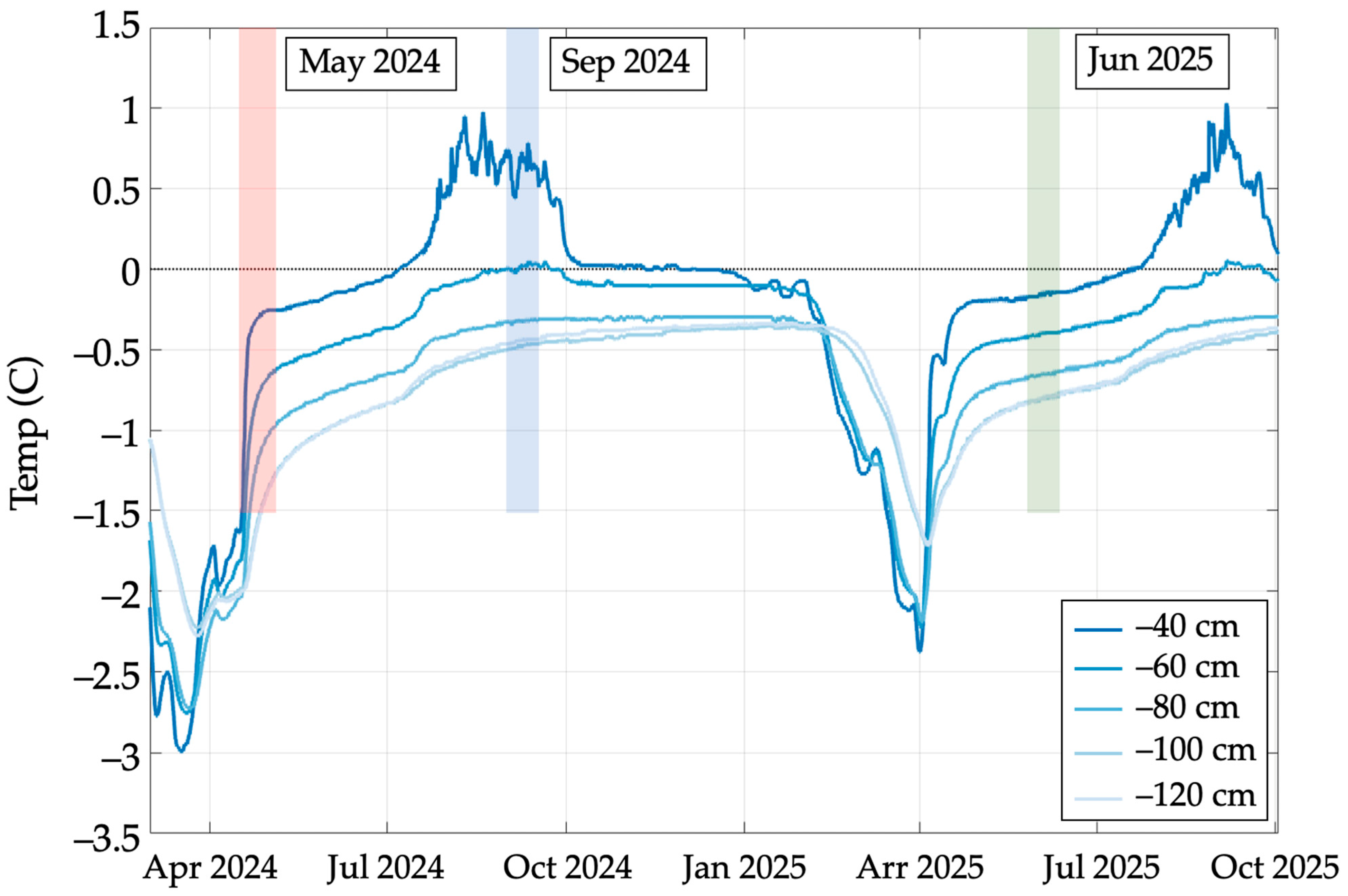
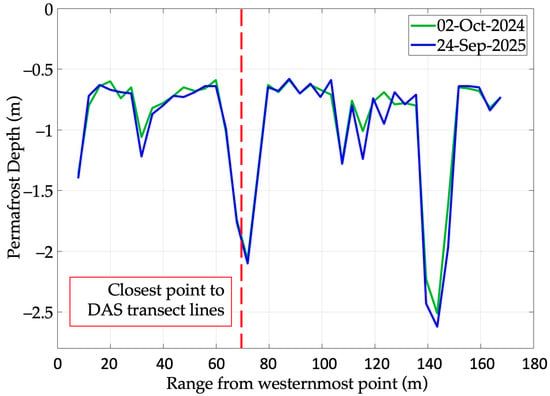
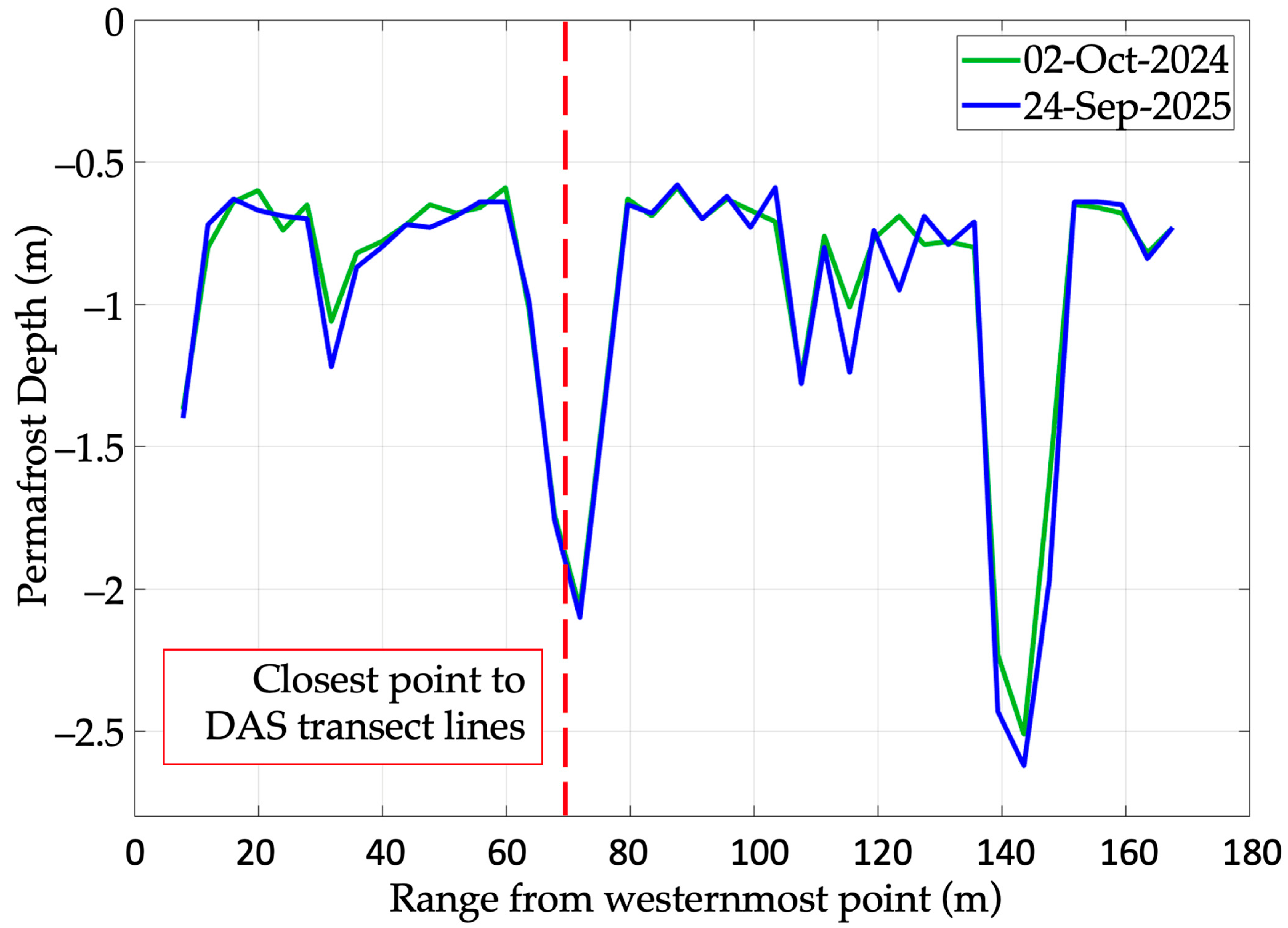
To ground the model in real-world conditions, the study incorporated on-site frost probe and temperature measurements from the area surrounding the DAS surveys at the locations previously highlighted in Figure 1. These direct measurements of seasonal thaw depth and in situ temperatures are part of a larger, decadal-scale survey tracking the evolution of active layer properties in interior Alaska [30]. Specifically, HOBO U23 thermistors, placed at regular depth intervals recorded the temperature profile (Figure 4), while a traditional steel frost probe was used to map the depth to frozen ground along a linear transect atop the permafrost (Figure 5). In this figure, attention is called to the point of the transect that most nearly intersects the area where the DAS arrays were deployed. There is a clear deepening of the active layer here, which is consistent with the known behavior of the traversed footpaths that were used for DAS deployment and testing. Together, these measurements provided reliable estimates for seasonal thaw depth, forming the foundation for the theoretical modeling. At undisturbed sites, the temperature data suggest that this depth should be <40 cm in May 2024 and June 2025, and approximately 60 cm thick in September 2024. However, the transects shown in Figure 5 show that disturbed ground can increase this thaw depth by as much as a factor of 5. The results are interpreted to indicate that the September 2024 dispersion data can be compared against the thickness recovered from the transect, but that the May 2024 and June 2025 data are not well constrained by the temperature data collected on undisturbed ground.
Figure 4.
Seasonal temperature measurements observed by the HOBO U23 thermistors [30]. A horizontal dotted line indicates 0 °C, and the solid color shaded bars indicate the DAS data collection times. See Figure 1 for the thermistor locations relative to the DAS arrays.
Figure 5.
Frost probe measurements indicating depth of the active layer along the permafrost transect [30]. Special attention is called to the point of the transect that intersected the disturbed footpath where the DAS arrays were deployed in all three efforts. The location of transect and deployed DAS arrays is shown in Figure 1.
The final step was to fit the experimental dispersion curves with theoretical data generated by a Rayleigh wave forward model [34,35]. The primary objective of employing this simplified two-layer model was to rapidly characterize seasonal changes in active layer thickness for engineering applications, rather than to perform a high-resolution geophysical survey and reconstruction of the true subsurface stratigraphy. With reasonable seasonal thaw depth already established from the field measurements, the model’s primary unknown variables were the shear wave velocity (Vs), compressional wave velocity (Vp), and density (ρ) in the surface (active) and subsurface layers. Values for these parameters were estimated from the work of existing research [1], which characterized the permafrost in areas near to this test site. The layer thicknesses derived through this process are best fit estimates, determined by calculating the normalized chi-squared misfit between the theoretical and experimental dispersion curves (as shown in Equation (1)).
In this equation, Oi and Ei are the experimental and theoretical phase velocities, respectively, σi is the measurement uncertainty, and ν is the total number of phase velocity measurements considered in a calculation. This work remains intrinsically dependent on the assumptions of the simplified two-layer model, rather than being direct physical observations. The resulting minimum misfit values calculated for the forward models were 2.1 in May 2024, 172.8 in September 2024, and 2.2 in June 2025. Note that the misfit associated with the September analysis is two orders of magnitude higher, indicating that a 2-layer model may be too simplistic to describe a deeper seasonal thaw. In all cases, the frozen permafrost half-space was held constant, while the parameters of the uppermost thawed layer were modified with the temporal changes in DAS response as evidenced by the data. Table 2 provides a complete summary of the parameters used to find the best fit for the forward model in all three DAS deployments.
Table 2.
Assumed forward model parameters for a simple, 2-layer permafrost profile.
3. Results
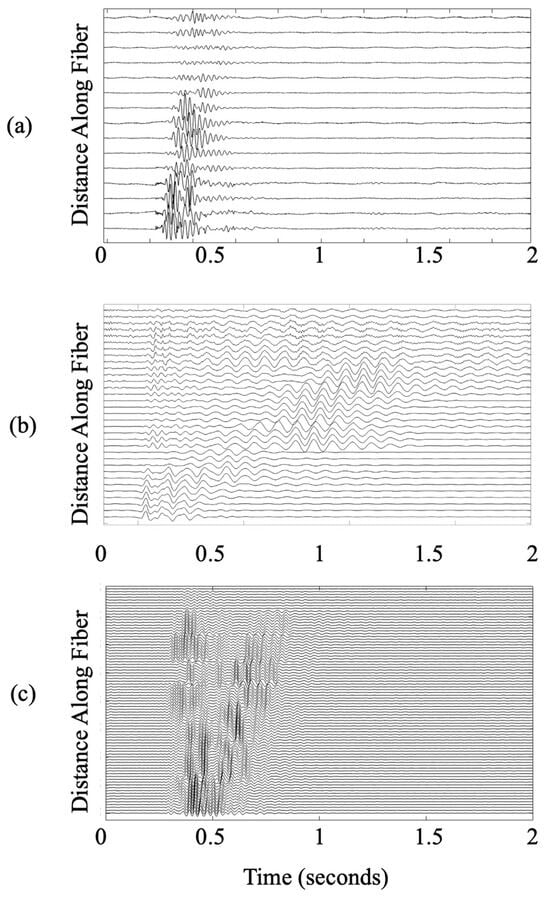
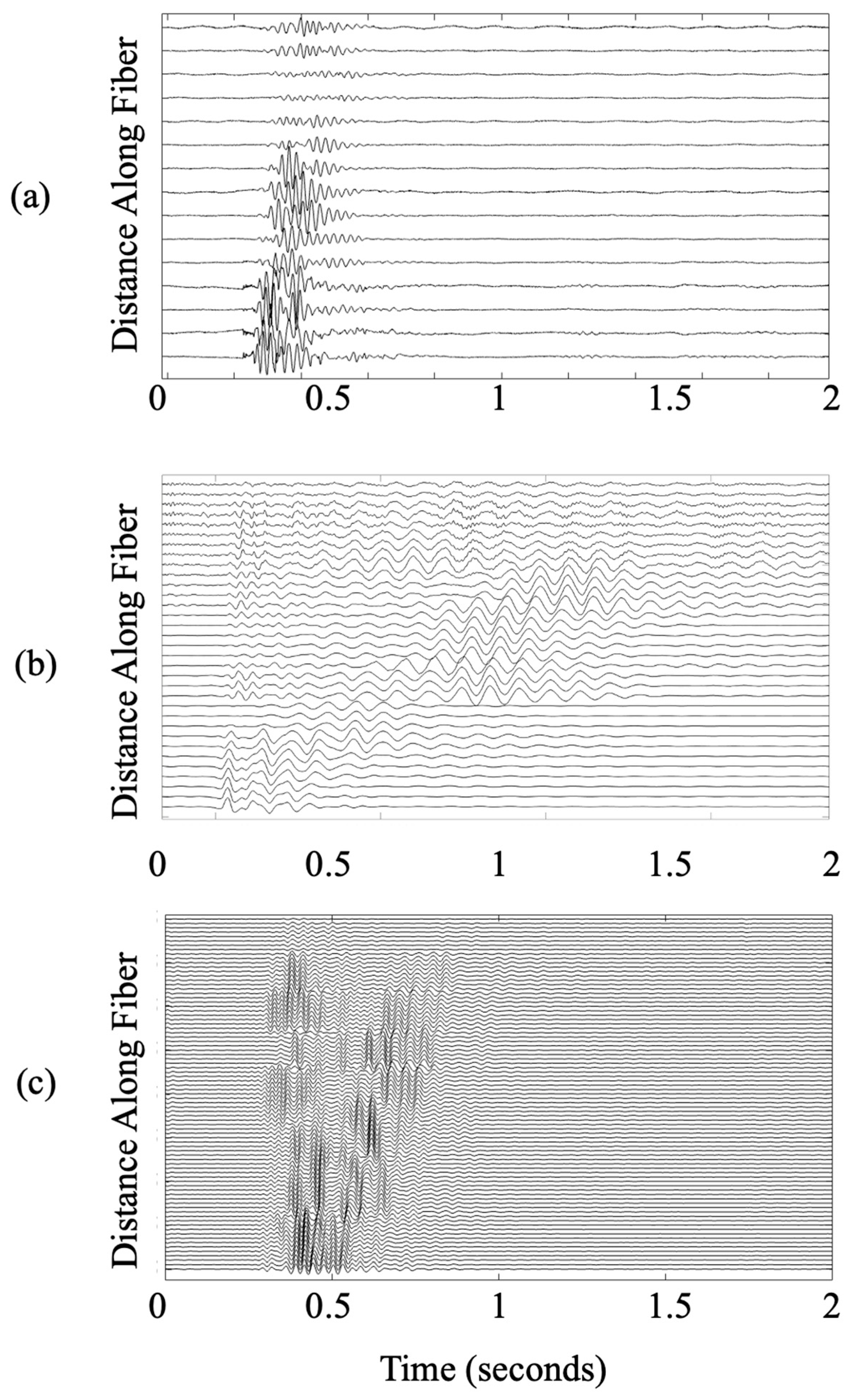
Results for all three DAS deployments are provided in this section. Figure 6 shows the DAS responses to an inline sledgehammer strike at 0 m offset for each of the three data collections, respectively.
Figure 6.
DAS response to a sledgehammer strike in (a) May 2024, (b) September 2024, and (c) June 2025. In each plot, signal amplitude is plotted against time. Data from each channel trace have been self-normalized to a maximum amplitude of 1 and are displaced offset by channel position. The density of lines in each plot reflects the channel spacing associated with each collection.
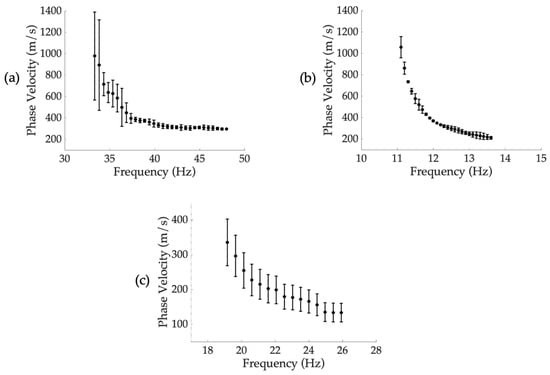
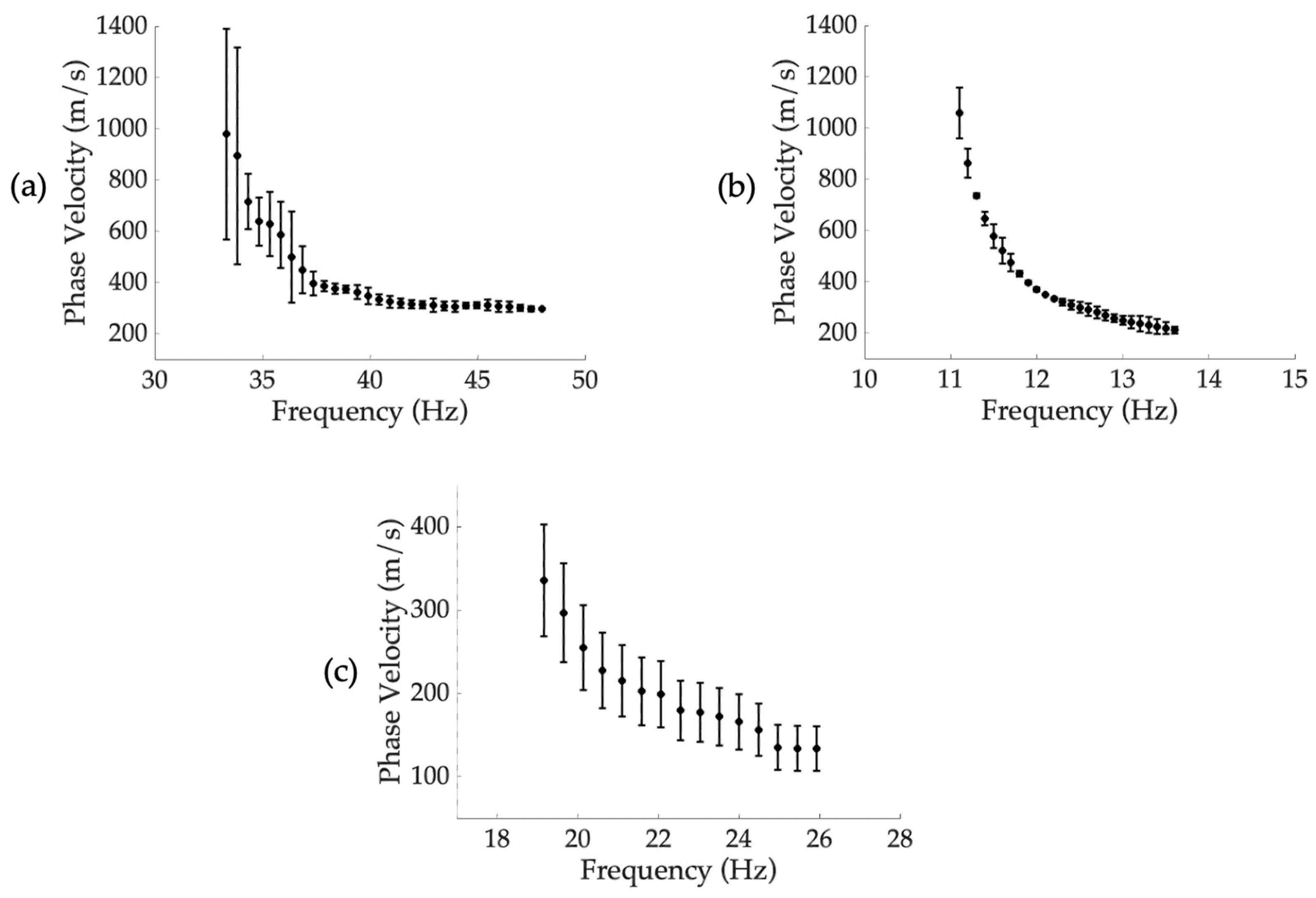
The Rayleigh phase velocity fundamental mode dispersion curves obtained from the strikes are shown in Figure 7. The May 2024 data exhibit a fundamental mode between 36 and 43 Hz with phase velocities calculated between 325 and 1000 m/s, respectively. The September 2024 data exhibit a fundamental mode between 11 and 14 Hz with phase velocities calculated between 200 and 1050 m/s. The June 2025 data exhibit a fundamental mode between 19 and 26 Hz, with phase velocities calculated between 130 and 340 m/s. The shift from higher frequency/velocity data to lower frequency/velocity data indicates that the seasonal thaw layer is deepest in September. The higher frequency components of the curves are fitting shallow structure (i.e., vegetation) while the lower frequency components of the curves are fitting deeper structure (i.e., permafrost). Standard deviation of the fundamental mode dispersion curves was calculated by considering phase velocity differences for individual shot records in each deployment. The calculated standard deviations of the phase velocities are shown to vary, which could reflect the magnitude of spatial changes in the heterogeneous disturbed footpath. The error bars shown for each dispersion curve in Figure 7 represent measurement uncertainty.
Figure 7.
Dispersion curves generated via the FDBF transform for sledgehammer strikes: (a) May 2024, (b) September 2024, and (c) June 2025. Vertical error bars represent the measurement uncertainty across multiple sledgehammer strike records for each collection period.
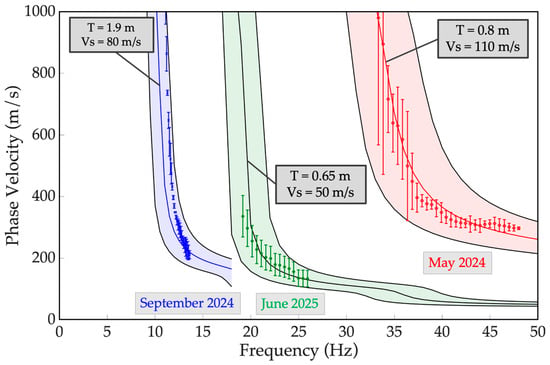
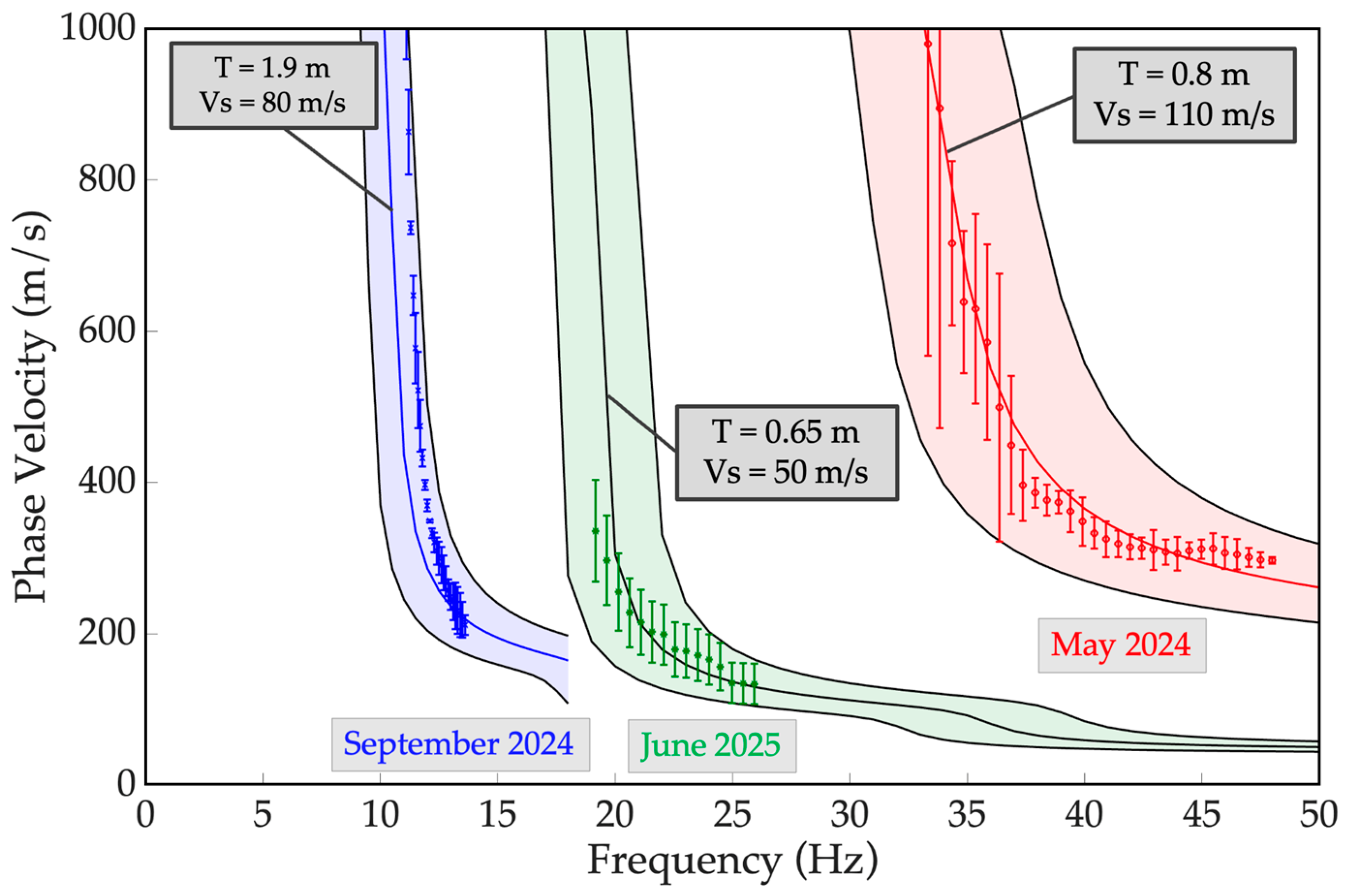
The results of the modeling suggest that there is variation in both the Vs and the depth of a seasonal thaw layer from month to month. In May 2024, the best fit seasonal thaw depth is 0.8 m with a Vs = 110 m/s. In September 2024, the best fit seasonal thaw depth is 1.9 m with a Vs of 80 m/s. Lastly, in June 2025, the best fit seasonal thaw depth is 0.65 m with a Vs of 50 m/s. Figure 8 shows each of these best fit fundamental mode dispersion curves (solid, colored lines) for each month, alongside the experimental data for that particular month. Bounds on the theoretical curves (indicated by the lightly shaded regions bound in black curves for each month) show ±10% variation in the seasonal thaw layer shear wave velocity for each month, respectively.
Figure 8.
Rayleigh dispersion curves fitting a 2-layer permafrost model for May 2024, September 2024, and June 2025 data. Along with experimental data, ranges of theoretical forward modeling are shown for ±10% variation in the active layer shear wave velocity. T = Seasonal thaw layer thickness (meters).
4. Discussion
Analysis of the monthly DAS deployments suggests a clear trend in the dispersion data, with a progression from higher to lower frequencies observed from the May through September surveys, which is consistent with the seasonal thawing in the uppermost part of the active layer and sensitivity of this layer to progressively longer wavelengths. While the forward models for June and September produced results consistent with the expected thaw depths based on local frost probe measurements of both disturbed and undisturbed ground, the May deployment showed some discrepancy. The May data did fit a stiffer seasonal thaw layer (i.e., faster Vs) consistent with notably stiffer, colder ground surface temperatures. However, the model suggested a seasonal thaw that extended deeper than expected. This inconsistency points to several key factors related to both model assumptions and field conditions. The two-layer assumption, for instance, may not adequately capture the true complexity of the region’s highly variable permafrost, which likely includes features such as taliks. While this simplified model is highly applicable for rapid, large-scale spatial assessments, it may be insufficient in environments exhibiting complex subsurface structure that significantly alters surface wave propagation. The higher calculated misfit for the September 2024 deployment (172.8, compared to ~2.2 for early-season data) further highlights the limitations of these assumptions when applied to a more deeply thawed, heterogeneous late season active layer. This two-layer forward modeling reveals a high sensitivity to shear wave velocity, where ±10% variation in shear wave velocity resulted in relatively large deviation in theoretical phase velocities. This suggests that the results are strongly influenced by local inconsistencies in the active layer structure along the sensing fiber. It is also important to acknowledge the inherent non-uniqueness of this geophysical modeling. The strong coupling between Vs and seasonal thaw layer thickness means that multiple parameter combinations could theoretically produce similar dispersion curves. Therefore, the results presented here represent best fit values for the assumed parameters rather than a strictly unique solution. A follow up study might pursue a formal minimum structure inversion [36] to investigate the appropriate number of model layers supported by the data.
The DAS arrays were deployed along a disturbed footpath, a choice made to maximize surface-to-cable coupling, i.e., limited vegetation between the cable and the solid ground surface. As demonstrated in frost depth transects by [30], such disturbed areas can have a significantly deeper thaw layer than the surrounding undisturbed, densely vegetated area. This spatial distinction is critical for understanding how the auxiliary data constrain the model across different seasons. For the September 2024 deployment, frost probe transects directly intersected the disturbed footpath, providing a site-specific physical measurement that strongly constrained the modeled thaw depth. In contrast, the primary auxiliary data available for the May 2024 and June 2025 early-season thaw periods were collected from thermistors located in undisturbed permafrost. Because the uninsulated footpath thaws more rapidly than the adjacent vegetated tundra, these undisturbed temperature measurements may not directly reflect the conditions beneath the DAS cable. It is therefore plausible that a fundamental mismatch exists between the geophysical properties of the footpath where the data were collected and the idealized assumptions of the forward model. Despite these challenges, each deployment served as an iteration to improve the data collection methodology. This process of improvement culminated in the June 2025 deployment, which was executed as a focused test with a significant reduction in the required time, effort, and personnel, demonstrating the efficacy of this expeditiously deployable DAS technique for rapid permafrost assessment. For this proof-of-concept to be used more widely by the engineering community, future studies will prioritize systematic validation against established geotechnical datasets.
5. Conclusions
This proof-of-concept nondestructive study indicates that a ground surface-deployed fiber optic cable could be used to estimate temporal changes in the dynamic active layer of permafrost. This research suggests that nondestructive DAS testing could be used to monitor large-scale geospatial changes in permafrost structure. A quick, simplified 2-layer model could be used to efficiently estimate the depth of seasonal thaw across kilometers of surface-deployed fiber optic cable, providing spatial resolution typically unattainable with point sensors. As these values are intrinsically dependent on the assumptions and parameters of the chosen forward model, they must be interpreted as estimated thicknesses rather than direct measurements. Nonetheless, nondestructive DAS holds promise for both short-term data collection and long-term continuous monitoring of permafrost across vast areas. Future research will build upon this proof-of-concept by conducting systematic comparisons and validations against traditional invasive and geophysical methods.
Author Contributions
Conceptualization, M.C.L.Q.; methodology, M.C.L.Q., A.K.D., G.R.P. and C.G.C.; validation, A.K.D., G.R.P. and C.G.C.; formal analysis, A.K.D., G.R.P. and C.G.C.; investigation, M.C.L.Q., A.K.D. and C.G.C.; resources, M.C.L.Q. and G.R.P.; data curation, A.K.D., G.R.P., L.J.C., H.A.T. and C.G.C.; writing—original draft preparation, M.C.L.Q., A.K.D., G.R.P., H.A.T., L.J.C. and C.G.C.; writing—review and editing, M.C.L.Q., A.K.D., G.R.P., T.A.D. and C.G.C.; visualization, M.C.L.Q., A.K.D., G.R.P., H.A.T. and C.G.C.; supervision, M.C.L.Q., A.K.D. and G.R.P.; project administration, M.C.L.Q.; funding acquisition, M.C.L.Q. All authors have read and agreed to the published version of the manuscript.
Funding
This work was supported by PE 0602144A Program Increase ‘Defense Resiliency Platform Against Extreme Cold Weather’. Any opinions, findings, conclusions, or recommendations expressed in this material are those of the authors and do not necessarily reflect the views of DoD or the US government. T.D. acknowledges the Department of War’s Strategic Environmental Research and Development Program (project RC18-1170) and Environmental Science and Technology Certification Program (project NH22-7408).
Institutional Review Board Statement
Not applicable.
Informed Consent Statement
Not applicable.
Data Availability Statement
The original contributions presented in this study are included in the article. Further inquiries can be directed to the corresponding author.
Conflicts of Interest
The authors declare no conflicts of interest.
References
- Cheng, F.; Lindsey, N.J.; Sobolevskaia, V.; Dou, S.; Freifeld, B.; Wood, T.; James, S.R.; Wagner, A.M.; Ajo-Franklin, J.B. Watching the cryosphere thaw: Seismic monitoring of permafrost degradation using distributed acoustic sensing during a controlled heating experiment. Geophys. Res. Lett. 2022, 49, e2021GL097195. [Google Scholar] [CrossRef] [Scilit]
- Debolskiy, M.V.; Nicolsky, D.J.; Hock, R.; Romanovsky, V.E. Modeling present and future permafrost distribution at the Seward Peninsula, Alaska. J. Geophys. Res. Earth Surf. 2020, 125, e2019JF005355. [Google Scholar] [CrossRef] [Scilit]
- Jorgenson, M.T.; Yoshikawa, K.; Kanevskiy, M.; Shur, Y.; Romanovsky, V.; Marchenko, S.; Grosse, G.; Brown, J.; Jones, B. Permafrost characteristics of Alaska. In Proceedings of the Ninth International Conference on Permafrost, Fairbanks, AK, USA, 28 June–3 July 2008; University of Alaska: Fairbanks, AK, USA, 2008; Volume 3, pp. 121–122. [Google Scholar]
- Zhao, Y.; Yang, Z.J.; Eibert, D.; Dutta, U. Permafrost Degradation and Seismic Hazard: Case Study of Northway Airport, Alaska. J. Cold Reg. Eng. 2024, 38, 05024001. [Google Scholar] [CrossRef] [Scilit]
- Farquharson, L.M.; Romanovsky, V.E.; Kholodov, A.; Nicolsky, D. Sub-aerial talik formation observed across the discontinuous permafrost zone of Alaska. Nat. Geosci. 2022, 15, 475–481. [Google Scholar] [CrossRef] [Scilit]
- Pastick, N.J.; Jorgenson, M.T.; Wylie, B.K.; Nield, S.J.; Johnson, K.D.; Finley, A.O. Distribution of near-surface permafrost in Alaska: Estimates of present and future conditions. Remote Sens. Environ. 2015, 168, 301–315. [Google Scholar] [CrossRef] [Scilit]
- Webb, H.; Fuchs, M.; Abbott, B.W.; Douglas, T.A.; Elder, C.D.; Ernakovich, J.G.; Euskirchen, E.S.; Göckede, M.; Grosse, G.; Hugelius, G.; et al. A review of abrupt permafrost thaw: Definitions, usage, and a proposed conceptual framework. Curr. Clim. Change Rep. 2025, 11, 7. [Google Scholar] [CrossRef] [Scilit]
- Li, G.; Zhang, M.; Pei, W.; Melnikov, A.; Khristoforov, I.; Li, R.; Yu, F. Changes in permafrost extent and active layer thickness in the Northern Hemisphere from 1969 to 2018. Sci. Total Environ. 2022, 804, 150182. [Google Scholar] [CrossRef] [Scilit]
- Guan, J.; Zhang, X.; Chen, X.; Ding, M.; Wang, W.; Yu, S. Influence of seasonal freezing-thawing soils on seismic performance of high-rise cap pile foundation in permafrost regions. Cold Reg. Sci. Technol. 2022, 199, 103581. [Google Scholar] [CrossRef] [Scilit]
- Ji, X. Understanding Seasonal Variations of In-Situ Thermal and Seismic Characteristics of Degrading Permafrost in the Arctic Based on Distributed Fiber Optic Sensing. Ph.D. Thesis, The Pennsylvania State University, University Park, PA, USA, 2025. [Google Scholar]
- Quinn, M.C.; Wagner, A.M.; Engel, C.S.; Winters, K.E.; Coclin, C.G.; Picucci, J.R. Distributed Fiber Optic Sensing in Cold Regions. In Proceedings of the Geo-Congress 2024, Vancouver, BC, Canada, 25–28 February 2024; pp. 536–544. [Google Scholar]
- He, Z.; Liu, Q. Optical fiber distributed acoustic sensors: A review. J. Light. Technol. 2021, 39, 3671–3686. [Google Scholar] [CrossRef] [Scilit]
- Lindsey, N.J.; Rademacher, H.; Ajo-Franklin, J.B. On the Broadband Instrument Response of Fiber-Optic DAS Arrays. J. Geophys. Res. Solid Earth 2020, 125, e2019JB018145. [Google Scholar] [CrossRef] [Scilit]
- Wang, Y.; Yuan, H.; Liu, X.; Bai, Q.; Zhang, H.; Gao, Y.; Jin, B. A Comprehensive Study of Optical Fiber Acoustic Sensing. IEEE Access 2019, 7, 85821–85837. [Google Scholar] [CrossRef] [Scilit]
- Walter, F.; Gräff, D.; Lindner, F.; Paitz, P.; Köpfli, M.; Chmiel, M.; Fichtner, A. Distributed Acoustic Sensing of Microseismic Sources and Wave Propagation in Glaciated Terrain. Nat. Commun. 2020, 11, 2436. [Google Scholar] [CrossRef] [Scilit]
- Booth, A.D.; Christoffersen, P.; Schoonman, C.; Clarke, A.; Hubbard, B.; Law, R.; Doyle, S.H.; Chudley, T.R.; Chalari, A. Distributed Acoustic Sensing of Seismic Properties in a Borehole Drilled on a Fast-Flowing Greenlandic Outlet Glacier. Geophys. Res. Lett. 2020, 47, e2020GL088148. [Google Scholar] [CrossRef] [Scilit]
- Fichtner, A.; Hofstede, C.; Kennett, N.B.L.; Nymand, N.F.; Lauritzen, M.L.; Zigone, D.; Eisen, O. Fiber-optic airplane seismology on the northeast Greenland ice stream. Seism. Rec. 2023, 3, 125–133. [Google Scholar] [CrossRef] [Scilit]
- Hudson, T.S.; Baird, A.F.; Kendall, J.M.; Kufner, S.K.; Brisbourne, A.M.; Smith, A.M.; Butcher, A.; Chalari, A.; Clarke, A. Distributed Acoustic Sensing (DAS) for Natural Microseismicity Studies: A Case Study from Antarctica. J. Geophys. Res. Solid Earth 2021, 126, e2020JB021493. [Google Scholar] [CrossRef] [Scilit]
- Zhou, W.; Butcher, A.; Brisbourne, A.M.; Kufner, S.K.; Kendall, J.M.; Stork, A.L. Seismic noise interferometry and distributed acoustic sensing (DAS): Inverting for the firn layer S-velocity structure on Rutford Ice Stream, Antarctica. J. Geophys. Res. Earth Surf. 2022, 127, e2022JF006917. [Google Scholar] [CrossRef] [Scilit]
- Quinn, M.; Doran, A.K.; Coclin, C.; Cass, L.; Turner, H. Freshwater Thin Ice Sheet Monitoring and Imaging with Fiber Optic Distributed Acoustic Sensing. Glacies 2025, 2, 7. [Google Scholar] [CrossRef] [Scilit]
- Tourei, A.; Ji, X.; dos Santos, G.R.; Czarny, R.; Rybakov, S.; Wang, Z.; Hallissey, M.; Martin, E.R.; Xiao, M.; Zhu, T.; et al. Mapping permafrost variability and degradation using seismic surface waves, electrical resistivity, and temperature sensing: A case study in Arctic Alaska. J. Geophys. Res. Earth Surf. 2024, 129, e2023JF007352. [Google Scholar] [CrossRef] [Scilit]
- Sun, H.; Cheng, F.; Xia, J.; Guan, J.; Li, Z.; Ajo-Franklin, J.B. Unveiling cryosphere dynamics by distributed acoustic sensing and data-driven hydro-thermo coupled simulation. Geophys. Res. Lett. 2025, 52, e2024GL111188. [Google Scholar] [CrossRef] [Scilit]
- Park, C.B.; Miller, R.D.; Xia, J. Multichannel analysis of surface waves. Geophysics 1999, 64, 800–808. [Google Scholar] [CrossRef] [Scilit]
- Vantassel, J.P.; Cox, B.R.; Hubbard, P.G.; Yust, M. Extracting high-resolution, multi-mode surface wave dispersion data from distributed acoustic sensing measurements using the multichannel analysis of surface waves. J. Appl. Geophys. 2022, 205, 104776. [Google Scholar] [CrossRef] [Scilit]
- Spikes, K.T.; Tisato, N.; Hess, T.E.; Holt, J.W. Comparison of geophone and surface-deployed distributed acoustic sensing seismic data. Geophysics 2019, 84, A25–A29. [Google Scholar] [CrossRef] [Scilit]
- Yust, M.B.; Cox, B.R.; Vantassel, J.P.; Hubbard, P.G. DAS for 2-D MASW imaging: A case study on the benefits of flexible subarray processing. Geophys. J. Int. 2024, 237, 1609–1623. [Google Scholar] [CrossRef] [Scilit]
- Chacho, E.; Arcone, S.; Delaney, A. Blair Lakes Target Facility Permafrost and Groundwater Study; Technical Report, 30; U.S. Army Cold Regions Research and Engineering Laboratory: Hanover, NH, USA, 1995.
- Douglas, T.A.; Jorgenson, M.T.; Sullivan, T.; Zhang, C. Comparing thaw probing, electrical resistivity tomography, and airborne lidar to quantify lateral and vertical thaw in rapidly degrading boreal permafrost. Cryosphere 2025, 19, 3991–4009. [Google Scholar] [CrossRef] [Scilit]
- Shur, Y.L.; Jorgenson, M.T. Patterns of permafrost formation and degradation in relation to climate and ecosystems. Permafr. Periglac. Process. 2007, 18, 7–19. [Google Scholar] [CrossRef] [Scilit]
- Brodylo, D.; Douglas, T.A.; Zhang, C. Quantification of active layer depth at multiple scales in Interior Alaska permafrost. Environ. Res. Lett. 2024, 19, 034013. [Google Scholar] [CrossRef] [Scilit]
- Google. Google Earth Pro (Airbus Imagery). 2025. Available online: https://www.google.com/earth/ (accessed on 4 May 2026).
- Quinn, M.C.; Wagner, A.M.; Doran, A.; Coclin, C.; Winters, K.E. Non-destructive distributed fiber optic sensing considerations. Geotech. Front. 2025, 2025, 366–376. [Google Scholar]
- Zywicki, D.J.; Rix, G.J. Mitigation of near-field effects for seismic surface wave velocity estimation with cylindrical beamformers. J. Geotech. Geoenviron. Eng. 2005, 131, 970–977. [Google Scholar] [CrossRef] [Scilit]
- Hisada, Y. An efficient method for computing Green’s functions for a layered half-space with sources and receivers at close depths. Bull. Seismol. Soc. Am. 1994, 84, 1456–1472. [Google Scholar] [CrossRef] [Scilit]
- Rix, G.J.; Lai, C.G. Simultaneous inversion of surface wave velocity and attenuation. In Geotechnical Site Characterization; Balkema: Rotterdam, The Netherlands; Volume 11998, pp. 503–508.
- Constable, S.C.; Parker, R.L.; Constable, C.G. Occam’s inversion: A practical algorithm for generating smooth models from electromagnetic sounding data. Geophysics 1987, 52, 289–300. [Google Scholar] [CrossRef] [Scilit]

Disclaimer/Publisher’s Note: The statements, opinions and data contained in all publications are solely those of the individual author(s) and contributor(s) and not of MDPI and/or the editor(s). MDPI and/or the editor(s) disclaim responsibility for any injury to people or property resulting from any ideas, methods, instructions or products referred to in the content. |
© 2026 by the authors. Licensee MDPI, Basel, Switzerland. This article is an open access article distributed under the terms and conditions of the Creative Commons Attribution (CC BY) license.