Article

From Local Disasters to Global Design Discourse: Interior Architecture Theses in Türkiye

by
Betül İrem Tarakçı
Department of Interior Architecture, Faculty of Architecture, Iskenderun Technical University, Iskenderun 31200, Hatay, Türkiye
Trends High. Educ. 2025, 4(4), 72; https://doi.org/10.3390/higheredu4040072
Submission received: 11 October 2025 / Revised: 7 November 2025 / Accepted: 18 November 2025 / Published: 26 November 2025

Abstract

Disaster is a multidimensional phenomenon affecting societies worldwide. Rising climate crises, mass migrations, and earthquake risks have made disaster awareness crucial in spatial design. In this context, interior architecture has evolved beyond esthetic and functional concerns into a discipline that contributes to post-disaster recovery and quality of life. This study examines disaster- and earthquake-themed postgraduate theses in interior architecture in Türkiye to identify academic trends and methodological orientations. Drawing on Türkiye’s distinctive disaster history, it highlights the need for a global perspective in post-disaster spatial design and disaster-conscious interior architecture education. Using a mixed-method approach combining both quantitative and qualitative analyses and a multiple case study model, data were collected through document analysis from the Council of Higher Education’s National Thesis Center. The sample includes 33 theses published between 2003 and 2024, analyzed by year, university, institute, advisor title, program level, research method, and thematic focus. Findings indicate a notable increase in disaster-oriented studies after 2021, particularly following the 6 February 2023 earthquakes. Most are master’s theses under Institutes of Science, dominated by qualitative methods. The analysis identifies temporary housing, modular systems, sustainability, and psychosocial recovery as recurrent themes, indicating an increasingly human-centered research focus in Türkiye.

1. Introduction

In recent years, the increasing frequency of natural disasters has brought this issue to the forefront of the global agenda. Located in a seismic zone with numerous active fault lines, Türkiye is a country highly susceptible to future disasters due to its history of devastating earthquakes [1]. Regardless of the type of disaster, the essential goal is to cope with these events effectively [2]. Minimizing loss of life and property and ensuring the safe continuation of social life is only possible through comprehensive, systematic, and high-quality research on disasters. In this context, a systematic review of disaster-oriented academic studies is crucial for evaluating the current state of research [3]. Postgraduate theses, as fundamental tools of academic knowledge production, enable the in-depth examination of specific topics and provide unique contributions to the literature. In Türkiye, the Council of Higher Education (YÖK) National Thesis Center serves as a reliable and accessible database that allows for a comprehensive analysis of disaster-oriented postgraduate studies. This study aims to reveal the current academic landscape of the field by examining postgraduate theses focused on disasters within the disciplines of interior architecture and architecture in Türkiye. Disasters not only cause physical destruction but also have profound social, economic, and psychological impacts on communities and individuals. Addressing post-disaster challenges such as housing, health, safety, and social well-being requires spatial designs that prioritize user needs, human scale, and quality, going beyond traditional engineering and infrastructural approaches. At this point, the discipline of interior architecture plays a critical role in post-disaster recovery, from reorganizing physical environments to developing spatial solutions that support psychological rehabilitation. However, the existing literature indicates that disaster-focused studies in interior architecture remain limited both quantitatively and qualitatively, and research trends have not been systematically defined. Postgraduate theses thus represent a vital resource for tracking academic development, evaluating methodological approaches, and identifying research gaps in the field. Accordingly, a comprehensive bibliometric and content analysis of disaster-themed theses can reveal which topics are prioritized, which methods are preferred, and which research areas should be explored in the future. In conclusion, this study seeks to examine disaster-themed postgraduate theses in the field of interior architecture in Türkiye, with the aim of uncovering the discipline’s current academic outlook, research trends, and development potential while providing a data-driven foundation for future academic and practical applications.
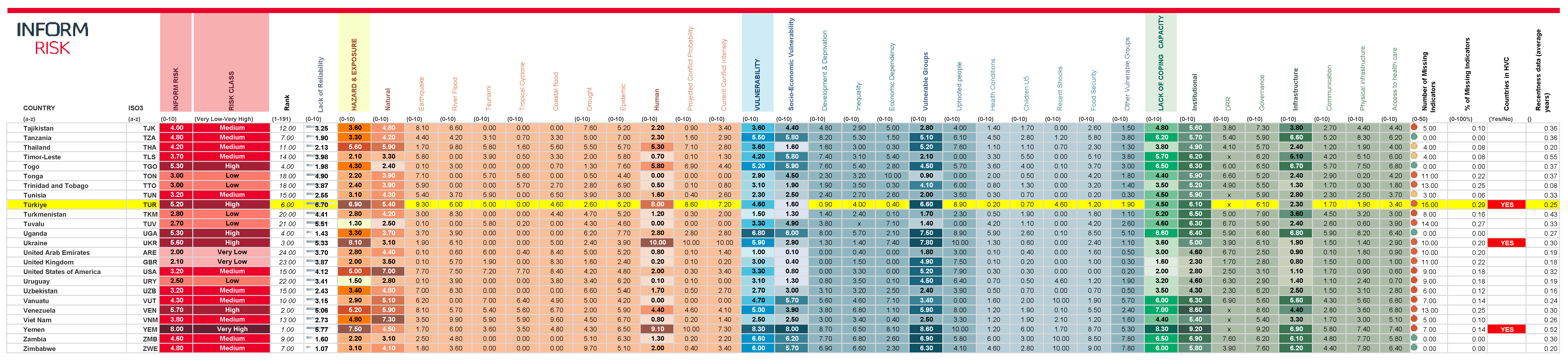
Throughout human history, various natural events have occurred, and different coping strategies have been developed in different periods to deal with these events. However, when adequate preparedness and response mechanisms are not established, these natural events have gradually turned into disasters, seriously affecting human life, the environment, and social order [2]. A disaster is defined as an event of natural, human, or technological origin that affects an entire community or a part of it, causes loss of life and injuries as well as social and economic losses, and disrupts the normal flow of daily life [4]. In recent years, natural hazards occurring on a global scale have made disasters a worldwide priority. Every year, millions of people in different parts of the world face the effects of disasters and are directly impacted by them. It is known that 21 out of 52 disaster types identified globally occur within the borders of Türkiye [5]. Türkiye has suffered severe destruction due to various disasters throughout history, and because of its geographical, geological, and climatic characteristics, it remains a country with a high risk of encountering similar natural hazards in the future. The earliest recorded earthquake in Türkiye is known to have occurred in 411 BC, and it has been reported that at least 20 major earthquakes with magnitudes above 7 have occurred since 1900 [6]. According to the reports of the Strategy and Budget Directorate [6] Türkiye is among the countries most affected by earthquakes, and the devastating earthquakes experienced throughout history clearly show that disaster risk management is a priority issue on the national agenda. One of the most destructive earthquakes in recent history, the Kahramanmaraş-centered earthquakes of 6 February 2023, have been a clear example of this situation. According to data from the Disaster and Emergency Management Authority (AFAD) and the Earthquake Department (DDB), the first earthquake occurred at 04:17 in the Pazarcık district with a magnitude of Mw 7.7, and the second major earthquake occurred at 13:24 in the Elbistan district with a magnitude of Mw 7.6 on the same day [7]. Following these devastating disasters, not only were many lives lost, but numerous buildings were also severely damaged or completely collapsed [8]. According to official data, the Kahramanmaraş-centered earthquakes that occurred on 6 February 2023 resulted in 50,783 deaths, 115,353 injuries, and the complete destruction of 37,984 buildings [9]. These figures make these earthquakes one of the deadliest and most destructive disasters in Türkiye’s history. For comparison, 32,968 people lost their lives in the 1939 Erzincan earthquake, while 17,480 deaths were recorded in the 1999 Kocaeli earthquake [10]. This situation demonstrates that the disaster’s severity was not only due to its magnitude but also directly related to the wide impact area, the weakness of the existing building stock, and the inadequacy of disaster management systems. This extensive destruction and loss highlight the necessity of further interdisciplinary research on topics such as post-disaster temporary housing, psychosocial support, spatial planning, access to healthcare services, and community resilience. There is a growing need for studies in the fields of interior architecture, urban planning, sociology, public administration, and disaster management. According to the Risk Management Index data, Türkiye’s disaster risk score was raised from 5.0 in 2021 to 5.2 by 2025, placing the country in the “high risk” category [11] (Figure 1).
This partial decrease does not indicate that disaster risk has been eliminated; on the contrary, it underscores the necessity of building disaster-resilient cities. In this context, enhancing both the quantity and quality of scientific research aimed at reducing disaster risks, increasing social resilience, and creating sustainable urban structures is of great importance. Disasters and pandemics affect not only many aspects of social life but also individuals’ daily habits and lifestyles. The impact of such extraordinary situations is also evident in the education system [12]. In recent years, the topic of disaster relief and the use of emergency shelters has attracted considerable attention across various disciplines. Researchers, academics, and practitioners in the field of interior architecture are also part of this growing interest [13]. Following the 2012 international call for temporary shelter design, the American Society of Interior Designers (ASID) organized a student design competition titled “Shelter” in 2013. Architectural education has been slow and limited in integrating resilience principles into the core of its curriculum [14]. Kahvecioğlu and Selçuk aim to systematically reveal how “reuse strategies” are addressed in the literature on post-disaster architecture and temporary housing, identifying existing thematic and methodological gaps to develop future-oriented research and practical recommendations [15]. Similarly, Barmina et al. compile social–scientific approaches that conceptualize “natural disasters” not merely as physical natural events but as phenomena shaped by social relations, inequalities, and the interaction between space and society [16]. Their study provides a comprehensive evaluation of the main trends and conceptual gaps in this field. The goal of this initiative—which included designers, industry representatives, educators, and students—was to encourage the development of creative and responsive interior design solutions that transform existing vacant buildings into temporary shelters to support the health, safety, and well-being of communities during crises. Such international initiatives highlight the importance of incorporating disaster-related topics into the curriculum of interior architecture education. Subjects such as post-disaster housing, spatial organization, user needs analysis, ergonomics, and sustainability offer an interdisciplinary platform for interior architecture students to explore both theoretically and practically. This approach fosters not only students’ esthetic and functional design skills but also their sense of social responsibility and crisis management awareness. Therefore, addressing disaster-related themes not only in undergraduate design studios but also in postgraduate theses will contribute to strengthening the academic body of knowledge specific to the field. Examining postgraduate studies on disasters conducted in Türkiye is meaningful for identifying existing academic trends and research gaps, as well as for promoting disaster-oriented research within the discipline of interior architecture. Consequently, integrating disaster awareness and resilience perspectives into interior architecture education will become more deeply embedded at both theoretical and practical levels.

2. Materials and Methods

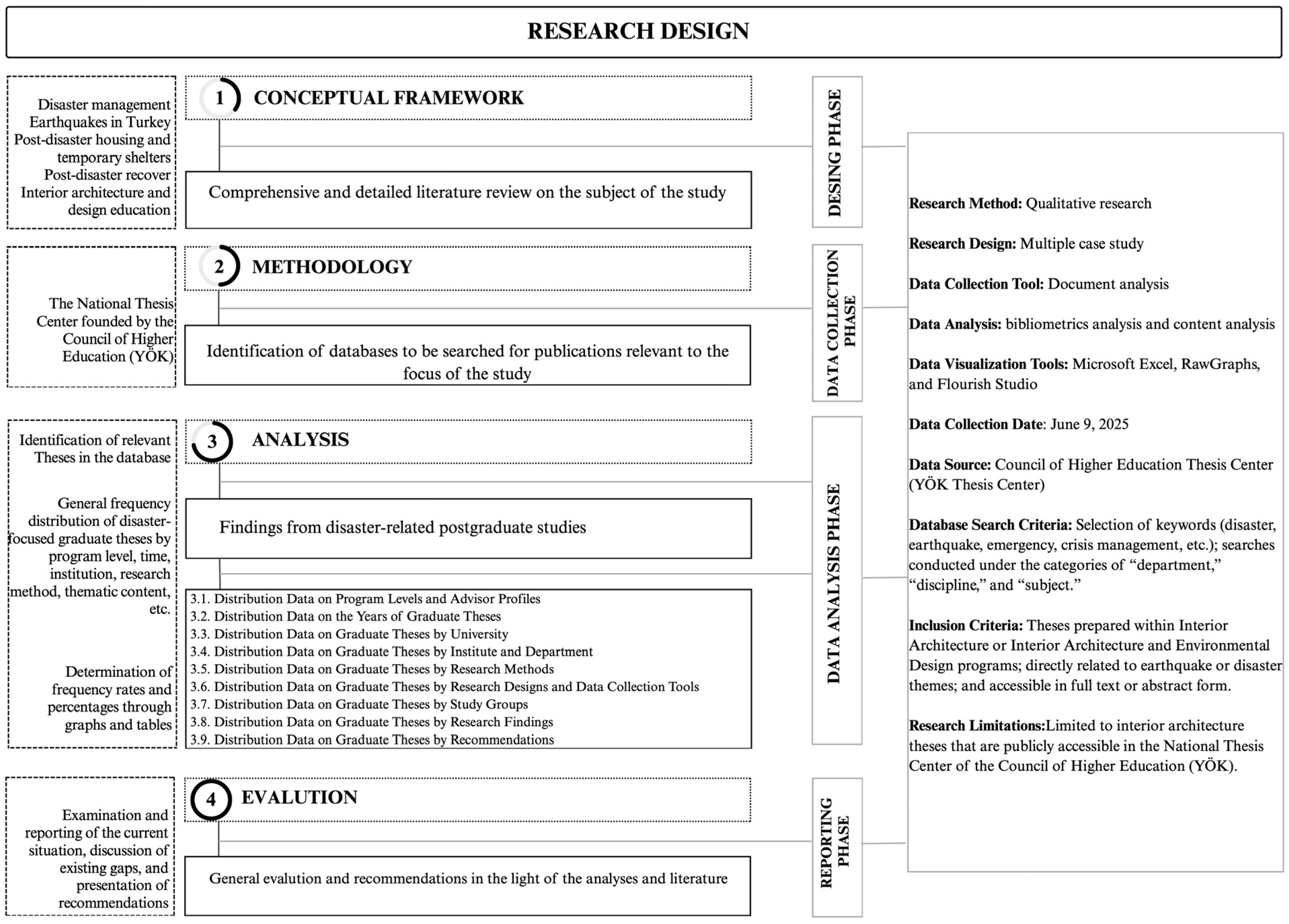
According to Karasar, a model is a structure that represents the essential characteristics of a phenomenon or system, includes variables suitable for the research purpose, and reflects reality in a simplified form [17]. Based on this definition, this study was designed as an analytical model aiming to reveal the thematic and content-oriented tendencies of postgraduate theses in the field of interior architecture in Türkiye that focus on earthquakes and disasters. The research was structured within the framework of a qualitative research approach. Qualitative studies aim to deeply understand a specific phenomenon within its context and are based on the interpretation of data that are difficult to measure directly (such as text, discourse, or documents) [18]. Within this framework, the multiple case study method was adopted. A total of 33 postgraduate theses in interior architecture in Türkiye that focus on earthquake and disaster-related topics were analyzed as case studies. Each thesis was treated as an independent “case” in terms of how it addresses the relationship between disaster and interior space, its methodological approach, conceptual framework, and thematic orientation. Therefore, the research is not limited to a single phenomenon but is based on multiple cases with similar characteristics, clearly exhibiting the nature of a multiple case study. The research design was constructed in line with the four-stage framework proposed by Yin design, data collection, data analysis, and reporting [19] (Figure 2).
The systematic approach conducted based on Robert K. Yin’s [19] four-stage case study methodology strengthened the methodological integrity and scientific validity of the research [19]. During the design phase, the study was structured around the central question: “How are earthquake and disaster themes addressed in postgraduate theses in interior architecture in Türkiye, within which conceptual frameworks are they examined, and how do these theses contribute to disaster awareness?” In the Turkish higher education context, the term ‘postgraduate theses’ refers to master’s, doctoral, and proficiency in art dissertations. In line with the research objective, the study aimed to determine the tendencies in the field by examining both the quantitative distribution trends and the qualitative content structures of earthquake- and disaster-oriented theses produced in the discipline of interior architecture. Accordingly, the sub-questions of the research were structured as follows.
  • What is the distribution of disaster-oriented postgraduate theses by program level, and what is their proportion within the total number of theses? What are the academic titles of the advisors involved in these theses, and how does the advisor profile relate to the program level?
  • What is the production trend of disaster-themed theses over the years? In which years is the increase, particularly after 2021, more pronounced?
  • In which universities are disaster-themed theses concentrated, and what are the institutional differences?
  • Under which institutes and departments are the theses conducted?
  • Which research methods are preferred in disaster-themed theses?
  • What research designs are used in the theses? Which data collection tools are preferred in disaster-themed theses?
  • What study groups are included in the theses?
  • Which themes stand out in the results of disaster-oriented theses? How are these themes distributed across technical, social, and design dimensions?
  • Under which themes are the recommendations presented in the theses grouped? These questions were designed to comprehensively support the quantitative (frequency–percentage distributions) and qualitative (content–theme analysis) components of the research.
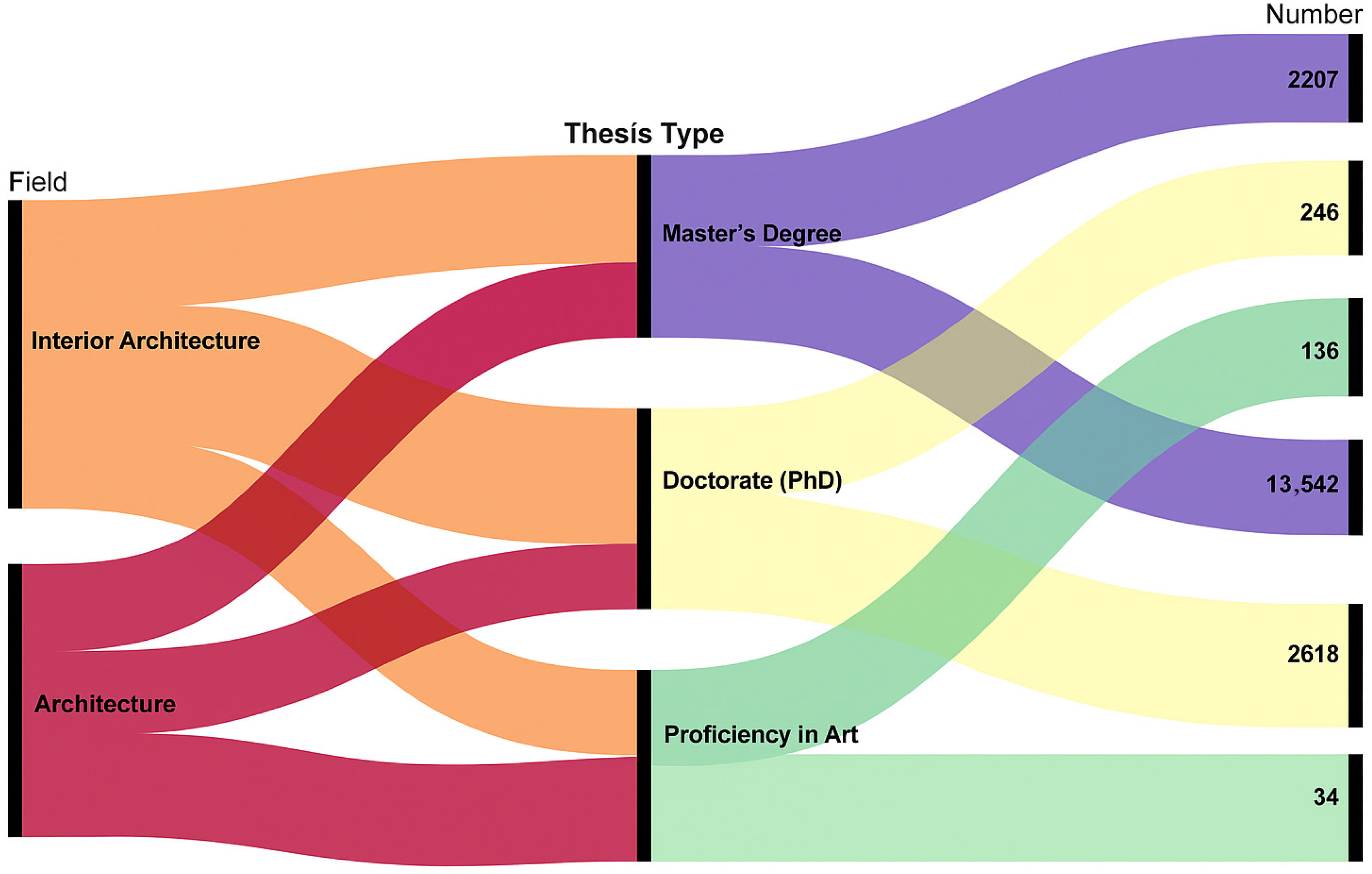
During the data collection phase, the document analysis method was employed. According to Bowen, document analysis is the process of systematically reviewing and evaluating printed or electronic materials [20]. This method enables the analysis of written materials related to the phenomenon being studied [21]. The research data were obtained from the Council of Higher Education (YÖK) National Thesis Center electronic archive. Postgraduate theses are tangible outputs of scientific research [22]. They contribute to the literature through interdisciplinary topics and support academic diversity. Thesis analyses are frequently used to reveal the scope, depth, and development trends within a given field [23]. The process of scientific production draws from past studies while guiding future research. In this context, a comprehensive examination of academic production within a specific discipline is essential for identifying the field’s tendencies, gaps, and development lines [24]. Postgraduate theses are one of the main instruments of academic communication and scientific knowledge generation [25]. In addition to supporting systematic knowledge production, they also shed light on socially significant issues. Therefore, as in many other countries, such theses are archived and made accessible by authorized institutions in Türkiye [26]. In Türkiye, the archiving and access of postgraduate theses are managed by the National Thesis Center, established in 1987 under the Council of Higher Education (YÖK). The Center records master’s, doctoral, proficiency in art, and medical specialization theses, making them available to researchers. As of June 2025, the system contains 8268 theses in total: 6044 master’s (2855 in preparation, 1828 in process, 1361 approved), 2161 doctoral (1059 in preparation, 419 in process, 683 approved), and 63 proficiency in art (30 in preparation, 5 in process, 28 approved) [22]. According to thesis distribution data in the fields of architecture and interior architecture in Türkiye, there are 16,194 theses in architecture, of which 83.69% are master’s (f = 13,541), 16.2% doctoral (f = 2618), and 0.2% proficiency in art (f = 34). In interior architecture, there are 2589 theses in total; 85.4% are master’s (f = 2207), 9.5% doctoral (f = 246), and 5.3% proficiency in art (f = 136), (Figure 3).
The population of the research consists of postgraduate theses produced in the field of interior architecture in Türkiye. Among these, 33 theses focusing on earthquakes and disasters were selected using a purposive sampling method and included in the study. This sample represents the academic tendencies in the field of interior architecture regarding the disaster theme. The inclusion criteria were defined as follows: the thesis must have been prepared within an Interior Architecture or Interior Architecture and Environmental Design program, its topic must be directly related to the theme of earthquakes or disasters, and the full text or abstract must be accessible. The analyzed theses were published between 2003 and 2024, covering the earliest studies on the subject. Theses excluded from the research were those prepared in disciplines other than interior architecture, restricted in access, or addressing the disaster theme only indirectly.
The data collection process was conducted using a multi-layered search strategy to prevent potential data loss and ensure comprehensive data access. In this context, separate searches were carried out within the “department,” “discipline,” and “subject” categories in the YÖK National Thesis Center archive [22]. The keywords used in the study were determined in both Turkish and English, including the terms: “disaster, earthquake, emergency, crisis management.” As a result of this comprehensive search, 33 theses were identified and included in the analysis process. Among these, 27 are master’s theses, 4 are proficiency in art theses, and 2 are doctoral dissertations (Table 1). The selected theses were examined in detail in terms of title, abstract, index terms, and keywords. Theses that were not directly related to the theme of disaster or earthquake were excluded from the study. Data obtained from the validated theses were systematically organized into the Thesis Dataset.
The data collection process was completed on 9 June 2025, and is limited to Interior Architecture theses available in the Council of Higher Education (YÖK) National Thesis Center as of that date [22]. The obtained data formed the basis for the next stage of the research the data analysis process. In this dataset, each thesis was coded for the following variables: year of publication, university, institute, department, advisor title, program level, research method, design, data collection tool, study group, and thematic trends.
The data analysis phase was conducted on two levels in line with the research questions. Questions 1–7 were analyzed through bibliographic (bibliometric) analysis, one of the qualitative research methods, while questions 8 and 9 were evaluated using content analysis. Thus, the conceptual, thematic, and methodological tendencies of the theses were revealed from a holistic perspective. Bibliometric analysis is an approach that provides the quantitative examination of continuously evolving literature [27] and is sometimes defined as a form of document analysis [28]. This method aims to quantitatively present the existing body of knowledge through the systematic review, classification, and interpretation of the literature in each field. In this study, the scientific publications related to the selected topic were transformed into quantitative data, and trends in the field were determined while preserving their original structure [29,30]. During the analysis, data obtained from each thesis were categorized based on the research questions, and frequency (f) and percentage (%) distributions were calculated. The findings were visualized using tables and charts. The graphs were prepared with Microsoft Excel (Microsoft 365), RawGraphs (v2.0 beta), and Flourish Studio (online version, accessed 2025) software. This stage aimed to statistically illustrate the temporal, institutional, and methodological tendencies of the theses. In the content analysis phase, the abstracts and full texts of the theses were systematically examined, and data were analyzed using a theme-based coding method. Coding refers to the process of classifying meaningful expressions in texts under specific themes [31]. The coding process was conducted by the researcher and verified for reliability by an independent group consisting of a faculty member, a graduate student, and a research assistant. Inter-coder reliability was calculated to determine the level of agreement among different observers; according to Hartmann’s criterion [32], reliability coefficients of 75% or higher were considered valid. Finally, the identified themes were structured using Yin’s pattern matching approach, and the relationships among key concepts and topics in the theses were identified, integrating these themes under interconnected codes [19].
The reporting phase encompasses the systematic presentation, interpretation, and contextualization of the data obtained during the research process. As the final step of Yin’s case study model, this stage aims to ensure that the findings are presented in an organized manner and that the conclusions reached are given a meaningful and holistic structure [19]. Accordingly, the data derived from the descriptive and content analyses conducted in previous stages were reported within a thematic framework. The findings were presented through graphs, tables, and thematic maps that directly addressed the research questions, with each finding explained and interpreted in its specific context. These visual tools enabled a clearer and more comparable understanding of the patterns, distributions, and relationships observed in the theses. In interpreting the findings, the results were compared with the existing literature to discuss how disaster and earthquake themes are academically positioned within the field of interior architecture, which research trends have strengthened, and in which areas deficiencies remain. Thus, the reporting phase served not only to present the results but also to provide a comprehensive evaluation revealing the research’s potential contribution to the existing body of knowledge in the field.

3. Results

Postgraduate theses in the field of interior architecture in Türkiye that focus on disaster-related themes were analyzed in terms of program level, advisor profile, year, university, institute, department, method, research design, data collection tool, study group, results, and recommendations. The findings are presented under the corresponding subheadings.

3.1. Distribution Data on Program Levels and Advisor Profiles

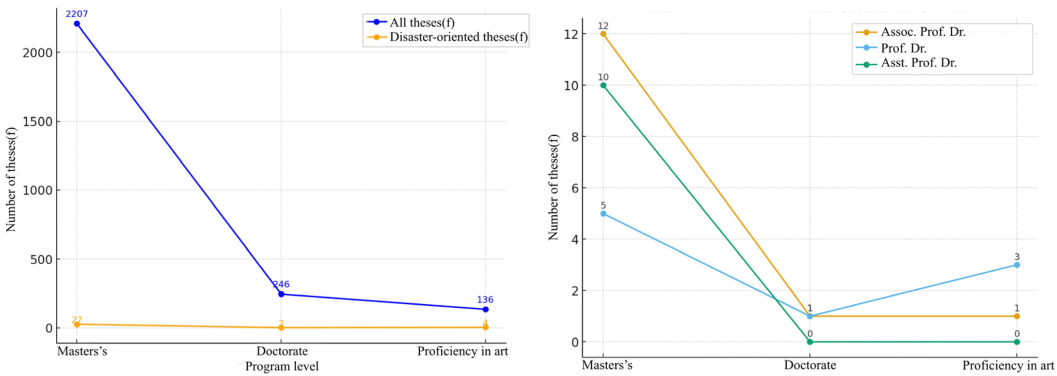
A percentage–frequency analysis was conducted to determine the distribution of disaster-themed postgraduate theses within the field of interior architecture according to program level. The obtained data are presented in Table 2, which displays the distribution regarding program levels and advisor profiles.
When the distribution by program level is examined, most of all theses are master’s theses (f = 2207; 85.25%). These are followed by doctoral theses (f = 246; 9.50%) and proficiency in art theses (f = 136; 5.25%). The proportion of disaster-focused theses within the total is quite low (f = 33; 1.27%). Most disaster-focused theses are at the master’s level (f = 27; 1.04%), while doctoral (f = 2; 0.81%) and proficiency in art (f = 4; 0.15%) theses are very limited. Regarding the advisor profiles of disaster-focused theses, it is observed that Associate Professors have the highest proportion (f = 14; 42.42%). They are followed by Professors (f = 9; 27.27%) and Assistant Professors (f = 10; 30.30%). Disaster-focused doctoral theses were supervised only by Professors (f = 1; 3.03%) and Associate Professors (f = 1; 3.03%). In proficiency in art theses, Professors (f = 3; 9.09%) were predominantly the advisors.

3.2. Distribution Data on the Years of Postgraduate Theses

A percentage–frequency analysis was conducted to reveal the distribution of postgraduate theses with disaster themes within the field of interior architecture. The obtained data are presented in Table 3.
When the distribution by year is examined, it is observed that disaster-focused theses were produced most intensively in 2024 (f = 9; 27.27%). This is followed by 2021 and 2023 (f = 6; 18.18%). In 2019 and 2020, two theses were written in each year (f = 2; 6.06%). In earlier years, the number of theses is quite limited only one thesis was produced in 2003, 2008, 2011, 2013, 2018, and 2022 (f = 1; 3.03%). The year 2016 stands out with a total of two theses one master’s and one proficiency in art thesis (f = 2; 6.06%). Overall, there has been a noticeable increase in disaster-focused theses since 2021, with 2024 being the peak year for production.

3.3. Distribution Data on Postgraduate Theses by University

To reveal the distribution of disaster-themed postgraduate theses within the field of interior architecture according to the universities where they were written, a percentage–frequency analysis was applied; the obtained data are presented in Table 4.
When the distribution of disaster-oriented theses by universities is examined, it is observed that the highest number of these were conducted at Hacettepe University (f = 6; 18.18%). This is followed by Bahçeşehir University (f = 5; 15.15%) and Mimar Sinan Fine Arts University (f = 4; 12.12%). Additionally, Akdeniz University and Atılım University stand out with two theses each (f = 2; 6.06%). In other universities, the number of disaster-oriented theses is more limited—only one thesis (f = 1; 3.03%) was produced at Kocaeli University, Karadeniz Technical University, Istanbul Technical University, Izmir University of Economics, Marmara University, Istanbul Commerce University, Çankaya University, Işık University, Yaşar University, Başkent University, and Istanbul Kültür University.

3.4. Distribution Data on Postgraduate Theses by Institute and Department

To reveal the distribution of disaster-themed postgraduate theses by institute and department, a percentage–frequency analysis was conducted, and the obtained data are presented in Table 5.
When the distribution by institutes is examined, it is observed that the majority of disaster-oriented theses were prepared within the Institute of Science (f = 14; 42.42%). This is followed by the Graduate Education Institute (f = 11; 33.33%), the Institute of Fine Arts (f = 7; 21.21%), and the Institute of Social Sciences (f = 3; 9.09%). This finding indicates that disaster-oriented theses are predominantly concentrated in institutes that emphasize technical and applied research. When analyzed according to departments, it was determined that the highest number of theses were produced within the Department of Interior Architecture (f = 15; 45.45%). This is followed by the Department of Interior Architecture and Environmental Design (f = 10; 30.30%) and the Department of Interior Design (f = 3; 9.09%). A smaller number of these were conducted in the Department of Architecture (f = 1; 3.03%), Department of Interior Architectural Design (f = 1; 3.03%), Department of Design Studies (f = 1; 3.03%), and Department of Interior Architecture (Art Major) (f = 1; 3.03%).

3.5. Distribution Data on Postgraduate Theses by Research Methods

To reveal the distribution of research methods used in disaster-themed postgraduate theses within the field of interior architecture, a percentage–frequency analysis was conducted. The findings obtained are presented in Table 6.
When the distribution according to research methods is examined, it is observed that the majority of these were conducted using the qualitative research method (f = 24; 72.73%). MA4, MA12, and MA15 can be identified as examples of qualitative research. These studies primarily employed document analysis. The qualitative research method, often combined with mixed-method approaches, was preferred in a total of eight theses (f = 8; 24.24%). For instance, in the MA25 thesis, an action research and case study were conducted concurrently, incorporating demographic information forms, interviews, and surveys, along with t-tests, correlation, and ANOVA analyses. Similarly, in the MA10 thesis, spatial modeling and simulation were utilized in combination with document and archival analysis, integrating experimental and case study approaches. Only one thesis was found to use the quantitative method (f = 1; 3.03%). The MA18 thesis serves as an example of this approach. Surveys and interviews were conducted, and the situation assessment was expressed through quantitative methods. This indicates that qualitative methods are predominantly preferred in disaster-themed postgraduate theses, showing that these studies are mainly carried out through in-depth analysis and interpretation.

3.6. Distribution Data on Postgraduate Theses by Research Designs and Data Collection Tool

To reveal the distribution of research designs and data collection tools in disaster-themed postgraduate theses within the field of interior architecture, a percentage–frequency analysis was conducted; the obtained data are presented in Table 7.
The classifications and design definitions presented in this section were derived directly from the terminology used in the theses themselves. When the distribution by research design is examined, it is observed that more than half of the disaster-themed postgraduate theses in interior architecture were conducted using a descriptive + case study design (%51.52; f = 17). This finding indicates that researchers working on disaster-related topics mostly preferred qualitative approaches aimed at understanding and describing situations in depth. These are followed by theses employing descriptive (f = 4; %12.12) and action research (f = 4; %12.12) designs. Additionally, case study (f = 3; %9.09) and single case analysis (f = 3; %9.09) designs also hold a certain share. At a more limited level, descriptive + field study (f = 1; %3.03) and experimental + case study (f = 1; %3.03) designs were identified. In terms of data collection tools, the most frequently used method in disaster-themed theses within the field of interior architecture was document analysis (%32.25; f = 30). This finding reveals that most studies were conducted through a qualitative and document-based approach. It was followed by observation (%16.12; f = 15) and interview (%12.90; f = 12) methods. The use of survey (%6.45; f = 6) and modeling/design (%8.60; f = 8) methods was also notable. However, technical methods such as SWOT analysis, GIS software, and statistical tests were found to be used at a considerably lower rate (around %2.15 each). Overall, this distribution indicates that disaster-related theses in interior architecture predominantly rely on qualitative and descriptive data collection techniques, with empirical and quantitative analyses being limited. Moreover, the inclusion of modeling/design as a method suggests that these studies also contain a practical and design-oriented dimension.

3.7. Distribution Data on Postgraduate Theses by Study Groups

To reveal the distribution of data collection tools used in disaster-themed postgraduate theses, a percentage–frequency analysis was conducted; the obtained data are presented in Table 8.
When the distribution by study groups is examined, it is seen that the most frequently represented group in disaster-themed interior architecture postgraduate theses is earthquake survivors (17.0%; f = 8). This is followed by temporary–permanent housing users (14.9%; f = 7) and post-disaster field cases (14.9%; f = 7). In addition, academics, architects, and designers (12.8%; f = 6) and students (8.5%; f = 4) were included at notable rates. On a more limited scale, municipality representatives (4.3%; f = 2), competition/project participants (4.3%; f = 2), healthcare-related groups (4.3%; f = 2), and refugee families (2.1%; f = 1) constituted the remaining study groups.

3.8. Distribution Data on Postgraduate Theses by Research Findings

A content analysis was conducted to reveal the distribution of the findings of disaster-themed graduate theses. As a result of the analysis, themes, codes, and the percentage–frequency analysis of these codes were obtained; the resulting data are presented in Table 9.
Disaster-themed interior architecture postgraduate theses mainly focus on temporary housing systems, user experience, and sustainability. The most frequent theme is temporary and modular housing (f = 13). These studies emphasize parameters such as rapid post-disaster installation, portability, and reusability, while identifying cultural mismatch, lack of privacy, and infrastructure issues as key limitations. Other frequently addressed themes include psychological and social recovery (f = 11), sustainability and energy autonomy (f = 8), education and awareness (f = 8), design–planning proposals (f = 7), and ease of production–installation (f = 7), reflecting ongoing efforts toward spatial and technological improvement after disasters. Less frequently observed themes include interdisciplinary approaches, interior quality, technology–innovation, policy governance, and structural resilience (f = 4–6). Overall, the theses tend to focus on social and design aspects, while technical content remains more limited. Based on the theme–code analysis, the Technical Axis (f = 53; 44.54%) has the highest proportion, followed by the Social Axis (f = 37; 31.09%) and the Design Axis (f = 29; 24.37%). This indicates that the studies predominantly concentrate on technical issues such as structural safety, energy, infrastructure, and regulations, while topics like user experience, psychological recovery, and spatial quality remain secondary.

3.9. Distribution Data of Postgraduate Theses by Recommendations

Content analysis was conducted to reveal the distribution of recommendations in disaster-themed postgraduate theses. The resulting themes, codes, and their percentage–frequency analyses are presented in Table 10.
The distribution of recommendation themes in disaster-focused interior architecture theses shows that the most common theme is user-centered design (f = 14), emphasizing the need for flexible, modular, customizable, and accessible solutions. This is followed by interdisciplinary collaboration and planning (f = 12) and design improvements and ergonomics (f = 11), which highlight cooperation among architects, engineers, urban planners, and sociologists, as well as creating functional, esthetic, and psychologically supportive interior environments. Further key themes include policy, standards, and governance (f = 10), disaster-oriented/temporary housing design (f = 10), and planning and site selection (f = 10) all focusing on strengthening regulations, developing post-disaster housing strategies, and climate-adaptive planning. Other frequently cited recommendations include education and awareness (f = 9) and sustainability and energy use (f = 9), which propose integrating disaster literacy into curricula, expanding renewable energy systems, and promoting energy–water efficiency. Themes such as psychological and social comfort (f = 8) and material and detail improvements (f = 8) emphasize privacy, belonging, comfort, and the use of eco-friendly and durable components. Under logistics and infrastructure management (f = 7), suggestions involve developing portable systems, stock management, and temporary infrastructure kits, while storage and furniture design (f = 6) focuses on fixed, modular, and secure furnishing solutions. Less frequent themes include disaster safety and evacuation planning (f = 5) and cultural and local adaptation (f = 5), stressing safe escape routes, clear wayfinding, and context-sensitive design. Themes with moderate emphasis spatial privacy and security, curriculum development, green technology policies, and inclusive design (each f = 4) point toward user safety, environmental responsibility, and accessibility. Finally, structural resilience, standardized assembly, knowledge sharing, energy performance (each f = 3), and health infrastructure, logistics optimization, material–energy enhancement, certification, and adaptive planning (each f = 2) offer technical and operational recommendations. The rarest themes, such as 72-h emergency operations, modular micro-units, micro-infrastructure kits, open-source design guides, and participatory modular grids (f = 1), propose short-term, user-participatory, and adaptable design frameworks for disaster response and recovery.

4. Conclusions and Recommendations

This study comprehensively examined disaster-themed postgraduate theses produced in the field of interior architecture in Türkiye, revealing the disciplinary tendencies, research methods, and thematic orientations within the field. The findings indicate a significant increase in academic interest in post-disaster spatial design, particularly after 2021 and following the 6 February 2023 earthquakes centered in Kahramanmaraş. This rise reflects the impact of the disaster on collective memory and demonstrates the growing sensitivity within the discipline of interior architecture toward themes such as post-disaster housing, temporary shelter design, sustainable space production, and psychological recovery. The process experienced in Türkiye shows that disasters are not merely local issues but global phenomena affecting all societies. Therefore, expanding post-disaster spatial design and educational approaches beyond the national level to contribute to international knowledge sharing and educational models is of great importance.
The data obtained show that disaster-themed theses are predominantly at the master’s level, while doctoral and proficiency in art studies remain limited. This highlights the need to enhance theoretical depth in the field. The fact that most supervisors hold the title of Associate Professor suggests that involving advisors from different ranks and disciplines would strengthen both the theoretical and practical dimensions of research. The distribution by year shows a marked increase in disaster-themed theses after 2021, peaking in 2024, a trend closely related to the heightened social awareness following the 2023 earthquakes. However, ensuring the continuity of this interest requires long-term academic strategies rather than short-term reactive studies. It is recommended to establish “Post-Disaster Spatial Design” laboratories at universities, support theses with national databases, and open postgraduate programs in disaster-affected regions. Most theses were conducted under Institutes of Science, reflecting a technical and structural focus. The limited number of studies in Fine Arts and Social Sciences Institutes indicates that the cultural and psychological dimensions of disasters have not been sufficiently explored. Interdisciplinary programs and collaboration networks are needed to address both the technical and human aspects of disasters holistically. From a methodological perspective, most theses employ qualitative methods, with few using quantitative or mixed approaches. This shows the dominance of interpretive analyses but also highlights that the lack of quantitative studies limits generalizability. Increasing quantitative and mixed-method research would allow for the scientific investigation of measurable variables such as spatial performance, user satisfaction, and ergonomics. Descriptive and case study designs are predominant, while experimental or design-based research remains limited, indicating a focus on analyzing existing conditions. Future studies should encourage innovative, solution-oriented, and applied research. The prevalence of document analysis and observation methods reinforces the qualitative tendency, but expanding the use of tools such as surveys, simulations, and GIS would enhance scientific depth. Most study groups consist of earthquake survivors and temporary or permanent housing users, reflecting the human-centered approach of interior architecture. However, the limited representation of municipal officials, public institutions, and refugee communities indicates a lack of diversity in decision-making processes. Conducting joint field studies with local governments in the future will strengthen participatory structures in post-disaster planning. Among the result themes, temporary housing, modular structures, sustainability, energy autonomy, and psychological recovery are the most prominent. This demonstrates that post-disaster interior spaces are regarded not only as shelters but also as environments for safety and social rehabilitation. Nevertheless, the limited focus on cultural adaptation, regulations, and user diversity reveals shortcomings in the social dimension. Research focuses are distributed across three main axes: technical (44.5%), social (31.1%), and design (24.4%). This distribution shows that interior architecture positions itself within the human–space–environment unity in the context of disasters. Among the recommendations, user-centered design, interdisciplinary collaboration, sustainability, energy management, and education stand out. It is recommended to expand the use of mixed methods, establish new programs in universities located in disaster regions, conduct projects with local authorities, and prioritize cultural adaptation and accessibility. Additionally, integrating renewable energy, green materials, and modular production systems into design represents a critical research area for sustainable disaster management.
In conclusion, disaster-themed academic studies in the field of interior architecture in Türkiye demonstrate the growing strength of the discipline’s social responsibility awareness and human-centered approach. These findings are consistent with previous studies emphasizing the predominance of qualitative approaches in disaster-related design research [15,16]. However, unlike these studies, the present research provides a systematic overview of postgraduate theses in interior architecture, highlighting a growing focus on human-centered methodologies. However, disasters are not solely Türkiye’s concern but a shared global reality. Climate crises, mass migrations, and the increasing frequency of natural disasters make it imperative to bring this topic to the forefront of global educational agendas. In this context, it is suggested to integrate disaster-themed modules into interior architecture curricula, develop international joint studio and thesis programs, and conduct comparative analyses of disaster scenarios across different geographies. The research body emerging from Türkiye’s disaster experiences has the potential to make an original global contribution to the field of post-disaster spatial design. Future studies that balance technical knowledge production with social sensitivity and adopt a human- and environment-centered approach will provide a strong academic foundation for improving the quality of post-disaster life, both in Türkiye and worldwide.

Funding

This research received no external funding.

Institutional Review Board Statement

Not applicable.

Informed Consent Statement

Not applicable.

Data Availability Statement

The data presented in this study were derived from publicly available resources in the Council of Higher Education Thesis Center (TezYÖK), accessible at https://tez.yok.gov.tr (accessed on 10 October 2025).

Acknowledgments

The author sincerely thanks her spouse and family for their patience, motivation, and support throughout the completion of this work.

Conflicts of Interest

The author declares no conflicts of interest.

References

  1. Ulay, G. Analyses of Interior Furnishings Against Earthquakes. In Proceedings of the 2nd National Furniture Congress, Denizli, Türkiye, 11–13 April 2013; pp. 618–627. [Google Scholar]
  2. Tarakçı, B.İ.; Ertaş Beşir, Ş.; Seyfettinoğlu, M. The Effectiveness of Disaster Management and Temporary Shelter Units: Examples from Around the World and Turkey. In Proceedings of the 9th International Social Sciences Congress, Ankara, Türkiye, 27–29 September 2024; pp. 1048–1068. [Google Scholar]
  3. Diktaş Yerli, G. Bibliometric and Thematic Analysis of Postgraduate Studies on Disaster in the Field of Social Sciences. J. Disaster Risk 2023, 6, 961–976. [Google Scholar]
  4. Disaster and Emergency Management Authority (AFAD). Glossary of Disaster Management Terms with Explanations; Republic of Turkey Prime Ministry: Ankara, Türkiye, 2014. [Google Scholar]
  5. Işık, Ö.; Aydınlıoğlu, H.M.; Koç, S.; Gündoğdu, O.; Korkmaz, G.; Ay, A. Disaster Management and Disaster-Oriented Health Services. Okmeydanı Med. J. 2012, 28, 82–123. [Google Scholar] [CrossRef]
  6. Presidency of Strategy and Budget (SBB). Report on the Kahramanmaraş and Hatay Earthquakes. 2023. Available online: https://www.sbb.gov.tr/wp-content/uploads/2023/03/2023-Kahramanmaras-ve-Hatay-Depremleri-Raporu.pdf (accessed on 10 October 2025).
  7. Disaster and Emergency Management Authority, Earthquake Department (AFAD-DDB). General Directorate of Earthquake and Risk Reduction. 2023. Available online: https://deprem.afad.gov.tr/ (accessed on 10 October 2025).
  8. Ertaş Beşir, Ş.; Tarakçı, B.İ.; Seyfettinoğlu, M. The Effects of Disasters on Cultural Heritage: An Evaluation in Hatay. In Proceedings of the International Urban Landscape and Art Congress-V, Paris, France, 25–27 October 2024; pp. 879–895. [Google Scholar]
  9. Tarakci, B.I.; Kavut, I.E. Problems Experienced in Post-Disaster Temporary Shelter Units: The Case of Hatay/Iskenderun. Turk Deprem Arast. Derg. 2025, 7, 321–334. [Google Scholar]
  10. Ministry of Interior Disaster and Emergency Management Presidency [AFAD]. Disaster management and natural disaster statistics in Türkiye. 2018. Available online: https://www.afad.gov.tr/kurumlar/afad.gov.tr/35429/xfiles/turkiye_de_afetler.pdf (accessed on 25 May 2024).
  11. Inform Risk. INFORM Risk Index. 2025. Available online: https://drmkc.jrc.ec.europa.eu/inform-index (accessed on 10 October 2025).
  12. Noraslı, M. Evaluation of Distance Education in Applied Courses by Interior Architecture Department Students in Pandemic and Post-Earthquake Practices. Turk. Online J. Des. Art Commun. 2024, 14, 386–397. [Google Scholar] [CrossRef]
  13. Boehm, S.; Kopec, D. Interior Design as a Post-Disaster Team Partner. Int. J. Disaster Resil. Built Environ. 2016, 7, 276–289. [Google Scholar] [CrossRef]
  14. Butt, A.N.; Salama, A.M.; Rigoni, C. Agile by Design: Embracing Resilient Built Environment Principles in Architectural and Urban Pedagogy. Architecture 2025, 5, 45. [Google Scholar] [CrossRef]
  15. Kahvecioğlu, B.; Selçuk, S.A. Review of sustainable temporary housing and reuse strategy for post-disaster architectures: Current trends and strategic gaps. J. Eng. Appl. Sci. 2025, 72, 8. [Google Scholar] [CrossRef]
  16. Barmina, A.; Veselov, F.; Alieva, A.; Verkeev, A. There is No Such Thing as Natural Disasters: Key Approaches in Social Studies of Disasters. Laboratorium 2025, 17, 176–215. [Google Scholar]
  17. Karasar, N. Scientific Research Method, 19th ed.; Nobel Publishing: Ankara, Turkey, 2009. [Google Scholar]
  18. Glesne, C. Becoming Qualitative Researchers: An Introduction, 4th ed.; Pearson Education: Boston, MA, USA, 2011. [Google Scholar]
  19. Yin, R.K. Case Study Research: Design and Methods, 4th ed.; SAGE Publications: Thousand Oaks, CA, USA, 2009; Volume 5. [Google Scholar]
  20. Bowen, G.A. Document Analysis as a Qualitative Research Method. Qual. Res. J. 2009, 9, 27–40. [Google Scholar] [CrossRef]
  21. Yıldırım, A.; Şimşek, H. Qualitative Research Methods in Social Sciences, 5th ed.Seçkin Publishing: Ankara, Türkiye, 2005. [Google Scholar]
  22. Council of Higher Education (YÖK). National Thesis Center. 2025. Available online: https://tez.yok.gov.tr/ (accessed on 10 October 2025).
  23. Karadağ, E. Thematic Analysis of Doctoral Dissertations in the Field of Educational Sciences. Ahi. Evran. Univ. J. Kırşehir Educ. Fac. 2009, 10, 75–87. [Google Scholar]
  24. Aksöz, E.O.; Yücel, E. Bibliometric Analysis of Postgraduate Theses in the Field of Disability Tourism. J. Turk. Tour. Res. 2020, 4, 388–404. [Google Scholar]
  25. Al, U.; Doğan, G. Citation Analysis of Theses in the Department of Information and Records Management at Hacettepe University. Turk. Librariansh. 2012, 26, 349–369. [Google Scholar]
  26. Çakır, M. Discourse of Democracy: A Study on Postgraduate Theses. Mehmet Akif Ersoy Univ. J. Soc. Sci. 2017, 9, 312–326. [Google Scholar]
  27. Lopes, R.M.; Santos de Faria, F.; Fidalgo-Neto, A.; Mota, F.B. Facebook in Educational Research: A Bibliometric Analysis. Scientometrics 2017, 111, 1591–1621. [Google Scholar] [CrossRef]
  28. Coşkun, İ.; Dündar, Ş.; Parlak, C. Examination of Postgraduate Theses in the Field of Special Education in Turkey in Terms of Various Variables. Ege J. Educ. 2014, 15, 375–396. [Google Scholar]
  29. Kasemodel, M.G.C.; Makishi, F.; Souza, R.C.; Silva, V.L. Following the Trail of Crumbs: A Bibliometric Study on Consumer Behavior in the Food Science and Technology Field. Int. J. Food Studies 2016, 5, 73–83. [Google Scholar] [CrossRef]
  30. Gürbüz, S.; Şahin, F. Research Methods in Social Sciences; Seçkin Publishing: Ankara, Türkiye, 2018. [Google Scholar]
  31. Karataş, Z. Qualitative Research Methods in Social Sciences. J. Spirit. Based Soc. Work. Res. 2015, 1, 62–80. [Google Scholar]
  32. Hartmann, D.P. Considerations in the Choice of Interobserver Reliability Measures. J. Appl. Behav. Anal. 1977, 10, 103–116. [Google Scholar] [CrossRef] [PubMed]
Figure 1. Türkiye’s 2025 INFORM Risk Index results [11].
Higheredu 04 00072 g001
Figure 2. Research design.
Higheredu 04 00072 g002
Figure 3. Postgraduate theses in interior architecture and architecture in Türkiye.
Higheredu 04 00072 g003
Table 1. Data on interior architecture theses.
Program LevelAll ThesesDisaster-Oriented ThesesHigheredu 04 00072 i001
f%f%
Masters’s (MA)220785.25271.04
Doctorate (PhD)2469.5020.81
Proficiency in Art (PA)1365.2540.15
Total2589100331.27
DISASTER-ORIENTED POSTGRADUATE THESES (f = 33)
NoThesis Information
MA1Analysis of the living conditions of families whose homes were damaged in the August 17, 1999 İzmit earthquake, in terms of building and furniture aspects/17 Ağustos 1999 İzmit depreminde evi zarar gören ailelerin geçici ve kalıcı konutlardaki yaşamlarının bina-mobilya açısından incelenmesi ve sonuçları247p.
MA2Security analysis and solution proposals for interior spaces in earthquake zone housing/Deprem bölgesi konutları için iç mekanların güvenlik analizi ve çözüm önerileri118p.
MA3Examination of the interior design of mobile houses in terms of visual perception: Case of temporary disaster housing/Mobil konutların iç mekân tasarımlarının görsel algı açısından irdelenmesi: Geçici afet konutları örneği206p.
MA4Examination of post-earthquake temporary housing units through visual and competition project examples/Deprem sonrası geçici barınma ünitelerinin görsel ve yarışma proje örnekleri üzerinden incelenmesi172p.
MA5Spatial analysis of Sarıçam camp as an example of temporary housing design in refugee camps in Türkiye/Türkiye’deki mülteci kamplarında geçici konut tasarım örneği olarak sarıçam kampının mekânsal analizi 183p.
MA6On the housing problems of refugees in Turkey: Analysis of refugee settlement area in Erzincan/Türkiye’de mültecilerin barınma sorunları üzerine: Erzincan’da mülteci yerleşim alanı analizi 147p.
MA7Analysis of post-disaster emergency housing projects in terms of interior space quality parameters/Afet sonrası acil konut projelerinin iç mekan kalite parametreleri açısından analizi142p.
MA8Participatory approach proposals examining living conditions in prefabricated temporary housing during post-disaster reconstruction/Afet sonrası yeniden yapılanma döneminde prefabrike geçici konutlardaki yaşam şartlarını irdeleyen katılımcı yaklaşım önerileri 168p.
MA9Earthquake-resistant traditional houses: The case of Sakarya-Hendek/Depreme dayanıklı geleneksel konutlar: Sakarya- Hendek örneği 106p.
MA10Risk management for disasters and emergencies in studio apartment interior design: An earthquake modeling example/İç mekân tasarımında stüdyo daireler için afet ve acil durumlara yönelik risk yönetimi: depreme yönelik modelleme örneği (Berk, 2021)218p.
MA11A study on the flexible use of residential-type shelters in Türkiye/Türkiye’deki konut tipi sığınakların esnek kullanımına ilişkin bir araştırma137p.
MA12Evaluation of post-disaster temporary settlements through the concept of mass production/Afet sonrası geçici yerleşim alanlarının seri üretim kavramı ile değerlendirilmesi 162p.
MA13Transformation of hospitals through the COVID-19 pandemic/Transformation of hospitals through COVID-19 pandemic 153p.
MA14Development of digital internship design based on Bologna program competencies in architecture, planning, and design education during and after pandemic/disaster conditions/Pandemi/afet durumu ve sonrasında mimarlık, planlama ve tasarım eğitiminde bologna program yeterlilikleri üzerinden dijital staj kurgusunun gelişmesi 136p.
MA15Use of containers as temporary housing and development of spatial design solutions/Konteynerlerin geçici konut olarak kullanımı ve mekânsal çözüm önerileri geliştirilmesi 69p.
MA16Smart homes from the perspective of disaster resilience and their effects on the real estate sector in Istanbul/Afete karşı dirençlilik perspektifinden akıllı konutlar ve İstanbul’da gayrimenkul sektörü üzerindeki etkileri 140p.
MA17Proposal of an educational model addressing hazards and risks caused by non-structural elements during earthquakes/Deprem sürecinde yapısal olmayan elemanların neden olduğu tehlike ve risklere yönelik eğitim modelinin önerilmesi 220p.
MA18Creating space according to changing needs: Post-disaster temporary housing units/Değişen ihtiyaçlara göre mekan yaratma: Afet sonrası geçici konut birimleri 88p.
MA19Interior design principles for post-disaster temporary housing in Istanbul/İstanbul’da afet sonrası geçici konut iç mekan tasarım ilkeleri 127p.
MA20User satisfaction analysis of post-disaster permanent housing: Case of Elazığ/Afet sonrası kalıcı konutlarda kullanıcı memnuniyeti analizi: Elazığ örneği 104p.
MA21Examination of interior ergonomics of buildings constructed during the post-earthquake temporary settlement period/Deprem sonrası geçici yapılanma döneminde inşa edilen yapıların iç mekan ergonomilerinin incelenmesi 211p.
MA22Proposal for modular housing design for post-earthquake use/Deprem sonrası kullanıma yönelik modüler konut tasarımı önerisi 112p.
MA23Mobile home applications and post-disaster temporary housing potentials/Mobil ev uygulamaları ve afet sonrası geçici barınma potansiyelleri111p.
MA24Classification of requirements in post-earthquake temporary housing units and their impact on design/Deprem sonrası kullanılan geçici barınma ünitelerindeki gereksinimlerin sınıflandırılması ve tasarıma etkisi230p.
MA25Determining the relationship between project risk scores related to non-structural elements and students’ knowledge and awareness levels: The case of Akdeniz University/Yapısal olmayan elemanlara yönelik proje risk puanları ile öğrencilerin bilgi ve farkındalık düzeyleri arasındaki ilişkinin belirlenmesi: Akdeniz Üniversitesi örneği136p.
MA26Pop-up as a form of temporary spatial intervention and interior space analysis/Geçici mekânsal müdahale biçimi olarak pop up ve iç mekân analizleri118p.
MA27Causes of damage in earthquake zone housing and proposals for reducing earthquake effects/Deprem bölgesi konutlarının hasar alma sebepleri ve deprem etkilerinin azaltılması için öneriler 157p.
PhD28Development of a fast, easy, and repeatable installation model and service infrastructure for an emergency module usable in disaster management/Afet yönetiminde kullanılabilir acil durum modülü için hızlı-kolay-tekrarlanabilir bir kurulum modeli geliştirilmesi ve hizmet alt yapısının kurgulanması 194p.
PhD29Proposal for a temporary housing design model in emergencies: The case of Türkiye/Acil durumlarda geçici konut tasarım model önerisi: Türkiye örneği255p.
PA30The role of disaster and emergency risk planning in determining interior design criteria/İç mekan tasarım kriterlerinin belirlenmesinde afet ve acil durum risk planlamasının rolü 333p.
PA31Green building project from containers; A health unit modeling example/Konteynerlerden yeşil yapı projesi; Sağlık ünitesi modelleme örneği 181p.
PA32Concepts of flexibility and adaptability in disaster housing/Afet konutlarında esneklik ve değişebilirlik kavramları 168p.
PA33Proposal for a micro-scale mobile space model for emergency situations/Olağanüstü durumlara yönelik mikro ölçekte mobil mekân modeli önerisi 95p.
Table 2. Distribution data by program level and advisor profile.
Program LevelAll ThesesDisaster-Focused ThesesAdvisor Profile of Disaster-Focused Theses
Prof. Dr.Assoc. Prof. Dr.Asst. Prof. Dr.
f%f%f%f%f%
Master’s Degree220785.25271.04515.151236.361030.30
Doctorate (PhD)2469.5020.8113.0313.0300
Proficiency in Art1365.2540.1539.0913.0300
Total2589100331.27927.271442.421030.30
Higheredu 04 00072 i002
The total values were obtained by combining the numerical data for each program level and the frequencies of advisor titles.
Table 3. Distribution data of postgraduate theses by year of completion.
Distribution Data by YearDisaster-Focused Theses
Master’s DegreeDoctorate (PhD)Proficiency in ArtTotal
f%f%f%f%
200313.0300.0000.0013.03
200813.0300.0000.0013.03
201100.0000.0013.0313.03
201313.0300.0000.0013.03
201613.0300.0013.0326.06
201800.0000.0013.0313.03
201926.0600.0000.0026.06
202026.0600.0000.0026.06
2021618.1800.0000.00618.18
202213.0300.0000.0013.03
2023515.1513.0300.0066.06
2024721.2113.0313.03927.27
Higheredu 04 00072 i003
The total values were obtained by combining the frequency data derived from the distribution values for each year.
Table 4. Distribution data of postgraduate theses by universities.
Universities
Akdeniz U.Atılım U.Bahçeşehir U.Başkent U.Çankaya U.Erciyes U.Hacettepe U.İstanbul Kültür U.İstanbul Ticaret U.İstanbul Teknik U.İzmir Ekonomi U.KTUKocaeli U.Marmara U.MSGSUYaşar U.Işık U.
MAf32411121111210321
%9.096.0612.13.033.033.036.060.093.033.033.036.063.030.009.096.063.03
PhDf00000010000000100
%0.000.000.000.000.000.003.030.000.000.000.000.000.000.003.030.000.00
PAf00000030000001000
%0.000.000.000.000.000.000.090.000.000.000.000.000.003.030.000.000.00
Tf32411161111211421
%9.096.0612.13.033.033.0318.13.033.033.033.036.063.033.0312.16.063.03
Higheredu 04 00072 i004
Total values are obtained by combining the frequencies of numerical data collected at each program level.
Table 5. Distribution data of postgraduate theses by institute and department.
Distribution by InstituteDistribution by Department
Institute of ScienceGraduate Education InstituteInstitute of Fine ArtsInstitute of Social SciencesDepartment of Interior ArchitectureDepartment of Interior Architecture and Environmental DesignDepartment of Interior DesignDepartment of ArchitectureDepartment of Interior Architectural DesignDepartment of Design StudiesDepartment of Interior Architecture (Art Major)
Tf141173151031111
%42.4233.3321.219.0945.4530.309.093.033.033.033.03
Higheredu 04 00072 i005
The total values were obtained by combining the frequencies of the numerical data derived from the total number of theses (f = 33)
Table 6. Distribution Data of Postgraduate Theses by Research Methods.
MethodAll Theses
f%
Qualitative2472.73
Quantitative124.24
Mixed83.03
Total33100
Higheredu 04 00072 i006
The total values were obtained by combining the frequencies of the numerical data derived from the total number of theses (f = 33)
Table 7. Postgraduate Theses Distribution by Research Designs and Data Collection Tools.
Research DesignAll ThesesData Collection ToolAll Theses
f%f%
Descriptive + Case Study1751.52Document Analysis3032.25
Descriptive412.12Observation1516.12
Action Research412.12Interview1212.90
Case Analysis39.09Questionnaire/Survey66.45
Descriptive + Field Research13.03Modeling/Design88,60
Case Study39.09Content Analysis55.37
Experimental + Case Study13.03Search Conference33.22
Total33100SWOT Analysis22.15
Higheredu 04 00072 i007Visual Analysis22.15
GIS Software11.07
Demographic Information Form33.22
Statistical Tests22.15
Spatial Analysis44.30
Total93100
Higheredu 04 00072 i008
Total values were obtained by combining tool counts and thesis data frequencies.
Table 8. Distribution data of postgraduate theses by study groups.
Study GroupsAll Theses
f%
Earthquake Survivors/Disaster Victims817.0
Academics/Experts612.8
Students (Interior Architecture/Architecture)48.
Municipal Officials/Public Representatives24.3
Competition/Project Participants24.3
Temporary–Permanent Housing Users714.9
Healthcare Facilities/Hospitals24.3
Refugees/Migrant Families12.1
Post-Disaster Field Cases714.9
Institutional Experts36.4
Others (Technical Team, Mentor Group)36.4
Total47100
Higheredu 04 00072 i009
Since a single thesis may include more than one group, the table shows the total number of occurrences, not the total number of theses.
Table 9. Distribution Data of Postgraduate Theses by Results.
ThemesCodes/Findingsf
Temporary Housing / Modular StructuresTemporary housing units exhibit rapid assembly and mobility features.13
The modular production approach offers potential for reuse.
Designs fail to adapt to cultural differences and adequately address privacy needs.
There are deficiencies in infrastructure components such as water, electricity, and heating.
Mobility, container, and portable solution approaches are widely used.
Psychological and Social RecoveryUsers often fail to experience a sense of belonging or ‘home’.11
Spatial arrangements need to support post-traumatic recovery.
Common spaces for social interaction are insufficient.
Small and cramped spaces increase stress levels.
Sustainability and Energy AutonomyEnergy generation through photovoltaic and wind systems is feasible.8
The use of recycled materials is becoming more widespread.
Water and waste management systems strengthen environmental sustainability.
Off-grid energy management is targeted.
Education and AwarenessUsers who receive earthquake training demonstrate increased risk awareness.8
Awareness of non-structural elements remains low.
Drill-based and practice-oriented training remains insufficient.
There is a need for interdisciplinary education modules.
Design and Planning ProposalsFlexible and modular planning approaches are recommended.7
Functional and adaptable furniture solutions are proposed.
Ergonomic and accessibility criteria are central to the design.
Color, lighting, wayfinding, and privacy arrangements need improvement.
Production, Installation, and Logistical EfficiencyMass production and prefabricated systems accelerate processes.7
Quick-assembly and portable building components enhance installation efficiency.
Container logistics and storage processes provide operational ease.
Interdisciplinary Approach and ParticipationCollaboration among architecture, engineering, sociology, and psychology disciplines is required.6
User participation processes remain limited.
Interdisciplinary coordination needs persist.
Interior Quality and FunctionalityParameters of storage, kitchen, and esthetic quality are often inadequate.6
Ergonomic arrangements remain insufficient.
Heating and cooling performance is inadequate.
Spatial satisfaction levels are low.
Technology and InnovationSmart home systems are lacking in most examples.5
Digital design and software-based analytical approaches are utilized.
Technology-based disaster awareness solutions are being developed.
Technology and InnovationDeficiencies exist in regulatory and governance structures.4
Inconsistencies are observed in implementation processes.
Risk reduction policies remain weak.
Structural Resilience and Technical IssuesGround conditions, short-column effects, and low concrete strength increase damage levels.4
Workmanship errors and irregular structural forms negatively affect performance.
Inspection processes are inadequate.
Economic and Circular UseReuse and modular production approaches reduce costs.3
Reutilization of idle building elements provides economic efficiency.
Cultural and Social AdaptationExisting solutions fail to align with local habits and social bonds.3
Housing expectations compatible with cultural contexts are unmet.
Requirements for social integration remain unfulfilled.
The Role of Interior Architecture and Scale ApproachComfort, privacy, and safety needs are decisive in interior environments.3
Ethical responsibility and user-centered design principles remain essential.
Micro-scale solution development represents a core contribution of the field.
User Diversity and AccessibilityThe needs of disabled, elderly, and child users are insufficiently considered in design decisions.3
Universal design principles are limited in application.
Inclusive planning approaches are not widespread.
User Diversity and AccessibilityKnowledge exchange between theory and practice is weak.3
Experience sharing and data transfer are insufficient.
Regulation and SupervisionCompliance with regulations remains low.2
Effective supervision is not achieved in implementation processes.
Furniture and Fixture SafetyUnsecured furniture increases the risk of injury and damage.2
Furniture placement occasionally obstructs evacuation routes.
Field Structures / Health ModulesField hospitals and mobile modules are used during emergencies.2
Temporary health structures can be adapted for long-term use.
Climatic Adaptation and Structural FlexibilityElevated configurations provide advantages under different climatic conditions.2
Modules with structural flexibility enhance climatic adaptability.
Limitations of Participatory ApproachFactors such as time, language, and hesitation limit participation.2
Community-based processes are not sufficiently implemented.
Land and Site SelectionPlanning decisions do not align adequately with topography and climate data.2
Site selection and accessibility criteria remain limited in practice.
Planning and AccessibilityContinuity of access between building, environment, and interior space is not ensured.1
Evacuation routes are not comprehensively planned.
Evacuation and Wayfinding SystemsReadability of escape routes and wayfinding systems remains weak.1
Interior Components (Horizontal/Vertical)Surface, material, and detail choices increase risks of collapse or falling.1
Installation Systems and IntegrationThere is a lack of integration among electrical, gas, and HVAC systems.1
Disaster Type–Space MatchingSpatial requirements for earthquake, flood, fire, and chemical disasters remain undefined.1
Operational ContinuityPlans for post-disaster operational continuity are not established.1
Data and TraceabilityRecording and monitoring systems remain insufficient.1
Ethics and ResponsibilitySafety criteria are not central to design decisions.1
Sustainability Performance and Regulatory ComplianceCompliance with health regulations and sustainability standards is achievable.1
Intellectual Property and CommercializationPatent potential and entrepreneurial opportunities are emerging.1
Social Benefit and Multipurpose UseShelter, logistics, and aid functions can be integrated within the same modular setup.1
Micro-Mobile Space ApproachRapid installation needs during the first 72 h after a disaster are critical.1
Micro-scale solutions based on environment–user–space relationships are emphasized.
User-Oriented Flexibility and Adaptive PlanningMovable panels and customizable modules enhance user-oriented flexibility.1
Universal design principles and low-maintenance requirements support long-term usability.
Non-load-bearing interior partitions allow safe adaptation.
Higheredu 04 00072 i010
Frequencies reflect repetitions rather than thesis count.
Table 10. Distribution Data of postgraduate theses by Recommendations.
ThemesCodes/Recommendationsf
User-Centered DesignIt is recommended to develop flexible and user-oriented modular designs.14
Interdisciplinary Participation/PlanningPost-disaster housing and interior design require coordinated interdisciplinary work.12
Design Improvements/ErgonomicsInterior layouts should be designed to provide functional, esthetic, and psychological support.11
Policy, Standards and GovernanceDeveloping design-phase regulations and control systems is essential.10
Disaster/Temporary Housing DesignIt is recommended to develop planned, sustainable, and user-oriented post-disaster housing strategies.10
Planning and Settlement/Site SelectionPlanning should address micro-zoning, modular layouts, and climate adaptation.10
Education and Awareness/CurriculumTo raise disaster awareness, curriculum integration, assessment, and practical training should be expanded.9
Sustainability and Energy UseRecyclable solutions with PV and micro-wind systems for energy and water efficiency are recommended.9
Psychological and Social Comfort Living spaces that strengthen privacy, spaciousness, belonging, and community support should be designed.8
Material and Detail EnhancementLocal, durable, and eco-friendly systems should be promoted to enhance spatial quality.8
Logistics and Infrastructure ManagementStock planning and portable system design should be improved for temporary sheltering.7
Storage and Furniture DesignModular storage and standardized fastening systems are essential.6
Disaster Safety and Evacuation PlanningSolutions ensuring safe escape routes and infrastructure should be implemented.5
Cultural and Local AdaptationDesigns should align with local lifestyles and principles of cultural sustainability.5
Spatial Privacy and SecurityLighting, circulation, and partition elements should be arranged to ensure safe transitions.4
Curriculum Development and Educational ReformRisk-based studio practices and project-based learning models should be integrated into higher education curricula.4
Sustainability Policies/Green TechnologyIt is recommended to integrate green technologies such as energy efficiency, environmental planning, and microgrid systems into designs.4
Accessible/Inclusive DesignAccess routes and module adaptations should be improved in line with universal design principles.4
Structural Resilience and ReinforcementSeismic anchoring, FRP, and steel jacketing reinforcement methods should be applied in disaster housing.3
Standardized InstallationModule standardization enabling rapid assembly and tool-free installation should be developed.3
Knowledge Sharing and Digital GuideIt is recommended to prepare and share typology matrices and checklists through digital platforms.3
Energy and Building Envelope PerformanceEnergy efficiency should be enhanced using high R-value panels and HVAC recovery systems.3
Functional Packages (Healthcare Facilities)Developing healthcare packages with clinical, triage, and sterilization units is recommended.2
Logistics OptimizationLogistical processes should be optimized through palletizing, stock management, and RFID/QR systems.2
Material & Energy Improvements Eco-friendly healthcare facilities should use PV-battery systems and low-VOC materials.2
Certification & TestingIt is recommended to make field drills mandatory through IEC/EN compliance tests.2
Supply & Production StrategyLocal supply chains and quality control should be strengthened through DFMA.2
Settlement Guide and Micro-PlanningIt is recommended to standardize circulation, drainage, and insulation plans through guideline documents.2
Adaptability and Scenario PlanningVariant modular designs suitable for disaster and refugee scenarios should be developed.2
Pilot and User TestingIt is recommended to measure user experience through field tests and update designs accordingly.2
72-Hour Operational PlanningOperational plans for the first 72 h after a disaster should focus on supply and stabilization1
Modular Transformable InteriorsIt is recommended to create plug-and-play systems with foldable structures and multifunctional modules.1
Micro-Infrastructure and Rapid Installation PackageInfrastructure solutions that can be activated within 60 min using PV, battery, greywater, and chemical WC systems should be developed.1
Open Model/Graphic GuideOpen guides with visual standards and disaster-specific appendices are recommended.1
Participatory Needs Program and Modular GridModular grid standards including panel systems, accessibility sets, and maintenance guides based on socio-cultural profiles should be developed.1
Higheredu 04 00072 i011
A thesis may include multiple themes and codes; frequencies show occurrences, not total theses.
Disclaimer/Publisher’s Note: The statements, opinions and data contained in all publications are solely those of the individual author(s) and contributor(s) and not of MDPI and/or the editor(s). MDPI and/or the editor(s) disclaim responsibility for any injury to people or property resulting from any ideas, methods, instructions or products referred to in the content.