Article

Great Expectations: Studying at a Regional Campus in Northwest Tasmania—A Pilot Study


1
Tasmanian School of Medicine, Rural Clinical School, University of Tasmania, Burnie, TAS 7320, Australia
2
School of Humanities and Social Sciences, Cradle Coast Campus, University of Tasmania, Burnie, TAS 7320, Australia
3
School of Education, Cradle Coast Campus, University of Tasmania, Burnie, TAS 7320, Australia
4
School of Nursing, Cradle Coast Campus, University of Tasmania, Burnie, TAS 7320, Australia
*
Author to whom correspondence should be addressed.
Trends High. Educ. 2025, 4(4), 73; https://doi.org/10.3390/higheredu4040073
Submission received: 29 October 2025 / Revised: 24 November 2025 / Accepted: 25 November 2025 / Published: 27 November 2025

Abstract

Studying at a university regional campus presents unique opportunities, challenges, and experiences for students. People who live in rural and regional areas are less likely to gain a tertiary degree, and barriers include access, cost, and competing priorities and aspirations. Students are often from lower socio-economic status backgrounds, first in family, and have diverse caring responsibilities, needing a different approach to support when entering higher education. Many studies focus on transitions to higher education for a commencing student. However, student expectations of and engagement in their studies at a regional university are under-researched. Four cross-discipline researchers conducted a pilot study to determine the feasibility of a larger project investigating students’ expectations and experiences of studying at University of Tasmania’s regional Cradle Coast Campus to identify how to better support students in the first two years of their degrees. An online survey collected responses from students commencing a degree through on-campus study. Data were thematically analysed using recurrent abstraction. Five themes emerged under the overarching theme of great expectations. Data contributes to understanding the relevance of Kahu and Nelson’s framework, of student engagement in a regional context. Consideration of these findings will assist in supporting and engaging regional people in higher education.

1. Introduction

Australia’s Higher Education (HE) sector has undergone significant growth, evolving from singular major metropolitan campuses to a broader presence across regional areas. This expansion reflects a national commitment to improving educational equity and access for communities throughout the country. Pinheiro et al. [1] describe the spread in their comparison of HE in three countries, and explain that “in short, the Australian HE landscape is characterised by a rather complex picture of a state and nationally framed system with a common funding system and with most universities having a mix of metropolitan and regional campuses” (p. 316). Rossi and Goglio [2] suggest that regional campuses are distinctly placed to respond to the needs of the local context, and thus although they are often limited with their resources, valuably contribute to the area in a different operating manner to the parent university. Universities with regional campuses provide opportunities for people to study at the tertiary level without additional time constraints and expenses often incurred from relocation or travel. They also assist in building the local regional workforce by providing accessible opportunities for retraining and upskilling. However, despite Australia having more than 20 universities based in regional areas, or with regional campuses, across all states and territories, as well as many Regional University Centres, the numbers of university-educated people aged 25–34 years is still almost twice as high in metropolitan areas (48.6%) when compared to regional areas (26.9%) [3]. Similarly, participation and attainment rates for regional, rural, and remote students continue to lag behind metropolitan areas, with higher attrition rates and lower completion rates than students studying in city centres [4].
Regional university campuses in Australia play a crucial role in supporting regional students [5], but a lack of resourcing means their capacity to do so is often undermined. For example, regional university campuses are sometimes seen as failing to provide a viable alternative to metropolitan campuses for regional young people, many of whom still move to capital city campuses to study or opt out of study altogether [6]. This is unsurprising in Australia’s thin regional markets, where campuses can only afford to offer a limited range of course options and thus limited choice. Indeed, a recent Regional Universities Network (RUN) [7] report provides a stark contrast between the education levels in regional areas and metropolitan Australia, as well as those of other countries. Data from the report suggested that if ‘regional Australia’ were a country, it would rank 35th out of 38 OECD nations for bachelor’s degree attainment for 25–34-year-olds, while ‘metropolitan Australia’ would rank 8th [7]. These concerns are reflected in the recent Australian Universities Accord Final Report [8] with the report recommending, amongst other things, expanding participation for under-represented groups, including regional students, and introducing a fairer funding model [8,9]. Due to smaller economies of scale, regional university campuses struggle with limited resources and are highly vulnerable to changes in policy settings and fundings cuts. In addition, work by Schmidt, Aberdeen, Carlon and Eversole [5,10] has found that students studying on regional university campuses are characterised by a high level of intersectional diversity and they argue that “Cuts to courses and services on regional campuses impact some of our most marginalised students and undermine the efforts of [regional campuses] these campuses and their staff to provide quality study opportunities in place” [10]. It is crucial that a new and fairer funding model takes into account that any serious attempt at university reform must consider the needs of regional university campuses. To address such issues, the government has recently introduced the demand-driven Needs-based Funding to support students from underrepresented backgrounds. From 2026, universities will be provided with additional per-student funding contributions to better support students from underrepresented backgrounds, including students studying on regional university campuses [11].
Regional campuses across Australia are generally characterised by higher rates of mature age students, first in family (to attend university), low socio-economic status (SES), and low tertiary admission rank (ATAR) scores [12,13]. This combination of factors means that these students have particular needs in terms of support and service availability. Higher education research has demonstrated that student success is affected by many factors, but the most commonly reported barriers are related to personal issues, academic challenges, and financial difficulties [14,15]. Academic difficulties are especially pertinent to regional students, as Baik et al. found that low-ATAR students are “less prepared for university, less able to cope with university study, and have lower levels of academic engagement than other students” [16] (p. 535), coupled with lower commitment to their studies, and thus are at a higher risk of attrition than other students. Other research suggested that regional students aspire for tertiary study but are not sure how to realise this aspiration [17,18,19,20]. A study by Barnes et al. [21] investigated a range of indicators of regional and remote students’ access, participation and success in higher education. They found that while there were differences between each community regarding the assets and attitudes relating to higher education, positive education attitudes by the community and campus proximity (including connections between the campus and community) were key factors in student participation, retention, and success in regional and remote areas.
The characteristics of the regional student cohort described above tend to feed into deficit discourses about rural communities and how they are lacking in infrastructure, knowledge, skills and qualifications. In their article ‘Rural cultural wealth: dismantling deficit ideologies of rurality’, Crumb, Chambers, Azano, Hands, Cuttrell and Avent challenge the rural deficit lens that is often applied to rural communities and argue that this discourse perpetuates inequalities [12]. The authors posit that rural places have come to be characterised as ‘white, monolithic, monolingual and conservative’ when in fact they are ‘a vital component of cultural diversity’. They use a rural cultural wealth conceptual framework which is grounded in asset-based ideology that highlights ‘rural residents’ multiple strengths and resiliency strategies’ and propose four constructs which characterise rural cultural wealth: rural resourcefulness, rural ingenuity, rural familism and rural community unity. Crumb et al. urge educators and researchers to develop deeper understandings of and appreciation for the rural communities they engage with to better support rural students [12]. Drawing on a similar strength framework, the findings of a previous study [10] highlight the importance of acknowledging the social and cultural context of rural communities and the challenges facing regional university campuses. The study found that regional students studying on three separate small rural campuses in Australia showed exceptional motivation and resilience in overcoming the structural barriers that often characterise tertiary education on regional campuses such as limited course options, limited support and student services and online learning. The work of Delahunty [22] also connected with an asset-based framework in her finding that enablers for persistence and completion of university included rural community dynamics such as communities, belongingness and connectedness. This body of literature confirms the relevance of the concept of rural cultural wealth and the general benefits of a focus on regionality for students. Support stages of students’ tertiary education is essential for helping them achieve positive short and long-term outcomes. Baik et al. [16] and Christie et al. [23] suggested that an essential aim of tertiary educators is to help students develop their self-efficacy and motivation regarding their tertiary studies. These characteristics work in tangent to help achievement, which then strengthens self-efficacy and motivation. Christie et al.’s [23] study found that while students better develop their autonomy and student identity in the latter years of their degrees, the foundations from the early years are the building blocks to learn skills that are later able to be reflected on and developed, helping students be successful learners during the ‘harder’ parts of the degree during their final years. Further, Transition Pedagogy [24] suggests that the first year of higher education needs to focus on students’ experience through pedagogy, curriculum design and leaning and teaching practice in both the physical and online classrooms. If educators can help students develop these strong foundations, they are better equipped to handle their tertiary studies and cope with increasing difficulty during their degree progression. This is especially important for students who have never studied at a tertiary level. First-year students have suggested that they were unaware of the demands of tertiary study and its independent nature, and those coming from senior secondary contexts were surprised by the difference in learning requirements [23]. This demonstrates how supporting students in their first year of tertiary study is not only important for developing students’ self-belief and abilities initially but is providing the foundation for successful studies in later years once they can reflect on and consolidate these skills to help them complete their degrees. Considering the higher rates of mature age students, first in family, low socio-economic status (SES), and low tertiary admission rank (ATAR) scores in regional areas, support programmes are especially important for regional university campuses.
The need for targeted support upon entering tertiary study has created a strong focus on the transition phase. Christie et al. [23] highlighted that retention improvement has become the key focus around the transition phase as student engagement is critical to success in the first year of tertiary education when students are most vulnerable to attrition [25]. This approach to reduce attrition rates has seen much research published about better support mechanisms for new university students in their first few weeks of study, such as research emphasising the role of creating a sense of belonging to university amongst first year students [26] and the need for a knowledge-centred approach which focuses on student engagement with disciplinary knowledge [27]. This evidence suggest that support services make a difference during this time, but there is limited evidence as to how this support influences student experience and then how this experience influences academic outcomes, especially in regional Australia.
Despite the need for place based targeted support and previous studies [9,28,29] reporting that satellite campuses need to have their local context taken into consideration by the main campus, staff and students have reported feeling an authoritarian pressure to follow the metropolitan model despite different experiences between regional/offshore contexts and their main counterparts. Furthermore, access to resources including social activities can be limited on regional campuses throughout Australia, despite regional university campuses being described as the economic, social, and cultural hubs of their regions [30]. This highlights the urgent need for serious funding reform and the need for the demand-driven Needs-based Funding to successfully support regional university students and their campuses.
Despite these insights, research on the lived experiences, including expectations and needs, of regional university campus students are sparse. A more in-depth understanding of how these factors intersect to shape university students’ experiences of the transition to first-year study will help to identify ways in which to support this group and potentially increase equity and outcomes for this important student cohort. This project aims to investigate the expectations and experiences of first-year tertiary students who are studying at the University of Tasmania’s Cradle Coast Campus in Burnie, a small town in North-West Tasmania. In particular, we aim to explore and understand the student experience from the perspective of a sociocultural context, building on Kahu and Nelson’s comprehensive student engagement framework [31].

Framework

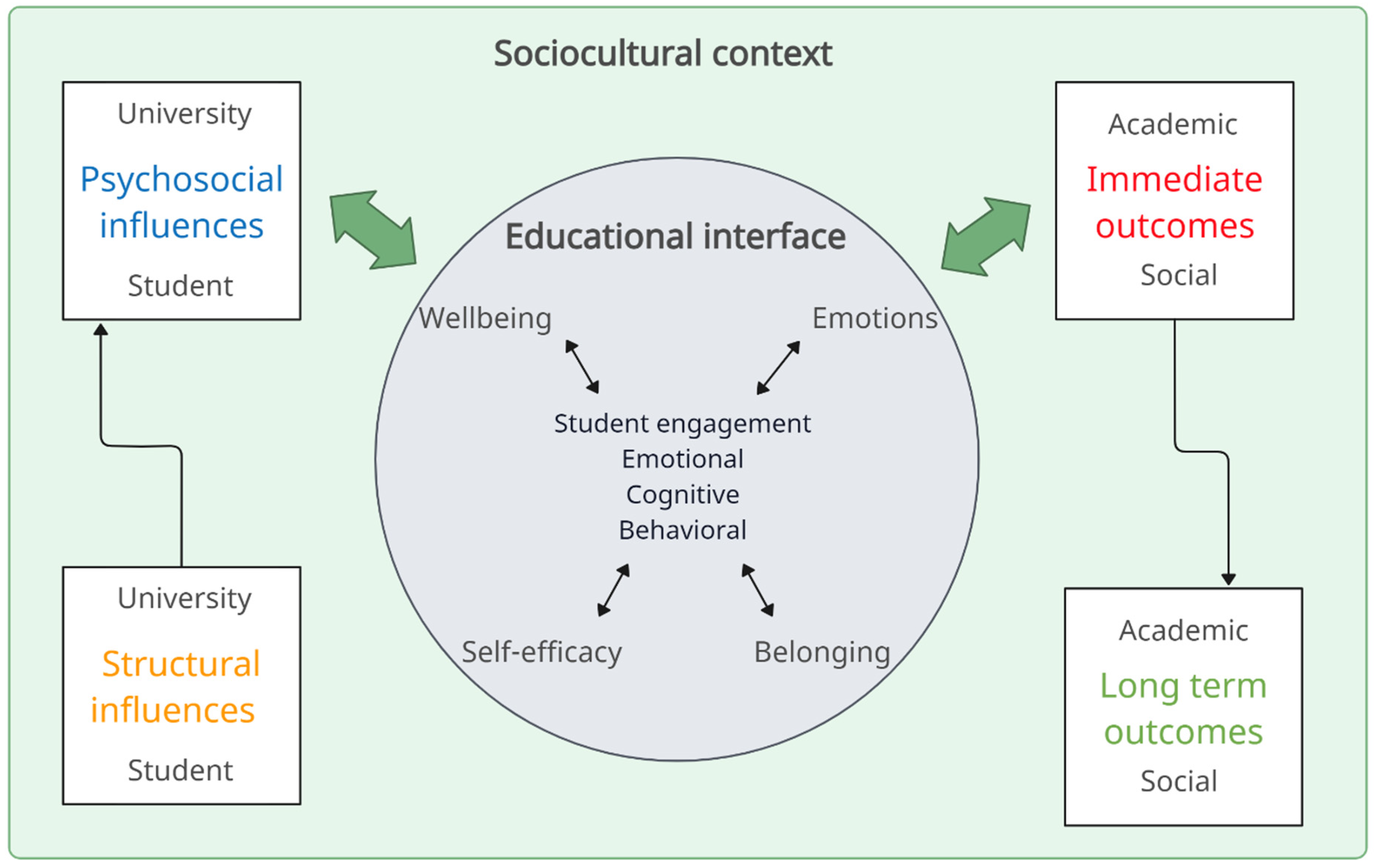
To explore and understand the complexity of regional university campus student experience, this study utilises Kahu and Nelson’s [31] comprehensive student engagement framework (Figure 1) to conceptualise and analyse the factors underpinning individual and collective experience. The updated framework, refined from Kahu’s [32] earlier conceptualisation, focuses on the educational interface, described as the “psychosocial space within which the individual student experiences their education” [31] (p. 63), and is critical to understanding the lived experiences of university students in regional areas. This framework combines the many factors influencing student engagement, embedding these in a wider socio-cultural context to highlight the individual nature of student experience [33].
In our paper, we seek to understand how the complex interplay of various factors from the framework plays out on a regional university campus in Tasmania, Australia. Kahu proposed that “‘lifeload’, the sum of all the pressures a student has in their life, including university, is a critical factor influencing student engagement” [32] (p. 767). Therefore, a more holistic model and approach is needed when considering student experience and engagement with tertiary education in rural Australia where students are more likely to experience a range of barriers to their studies. As argued by Zhoc et al., “student engagement is not simply a measure of how involved students are in their learning, but also an indication of how involved institutions are for their students” [34] (p. 223), suggesting that actions of universities are also an essential factor in developing and supporting student engagement. Considering the expectations of regional students starting their tertiary studies can help understand their needs and desires and thus put support in place to meet these. Therefore, this study aims to answer the following research questions.
  • What are first-year students’ expectations of face-to-face study on the Cradle Coast campus?
  • What are first-year students’ experiences of face-to-face study on the Cradle Coast campus?
  • How are these expectations and experiences shaped by living in a regional area?
  • Do students’ expectations and experiences change as they transition to their second year of study?
  • What impact does developing this understanding of face-to-face CCC students, and subsequent actions, have on first- and second-year students’ experiences?

2. Materials and Methods

2.1. Study Design

This pilot study reports the early results of an online student survey to explore and understand regional student experience and engagement. This is part of a larger cross-disciplinary project on engagement, which aims to investigate students’ expectations and experiences of studying at a regional university campus. To alleviate any issues of student-teacher power relationships, the researchers split into discipline-specific teams and only handled data pertaining to the other disciplines, not their own. This ensured participant confidentiality was maintained, as no researcher knew who of their own students participated in the study. Enrolments lists for on-campus first-year students were generated by a university professional staff member with access to this data. Using the survey software REDCap (Version 15.4.40) [35], each student was emailed a link to an online pre-survey at the start of their 2022 study period. Due to a delay in obtaining ethical approval for the study, students in the Nursing discipline and the Accelerated Business degree received their study invite with the survey link halfway through their 13-week study period; all other students received the email in Week 2 of their study period. The survey was open for 3 weeks, and a reminder email was sent in the second and third week. Where possible, students were reminded of the survey invitation during these weeks by in-class reminders by other the discipline researchers, or discipline staff not in the research team.

2.2. Study Population

Participants included all first-year students enrolled in an on-campus (face-to-face) course or unit at the University of Tasmania’s Cradle Coast Campus, in Northwest Tasmania region, in all courses in 2022 and 2023 (N = 188). Table 1 shows the commencing and continuing students enrolled at the Cradle Coast Campus.

2.3. Setting

The University of Tasmania Cradle Coast Campus is located in Northwest Tasmania, an area servicing approximately 120,000 people [36]. This region is well known for a range of industries including agriculture, mining, and healthcare, although it is classified as a low socio-economic area, with less people living in areas of advantage than the rest of Tasmania. The small University campus (Cradle Coast Campus) is centrally located in Burnie and currently facilitates 27 higher education courses face to face and supports up to a further 30 courses in an online capacity. A total of 190 staff (98 casual, 37 fixed term, 55 continuing) are currently based at the Cradle Coast Campus (2023), including academic staff undertaking teaching and research roles, professional staff, and support services roles.

2.4. Instrument

An anonymous online survey was created and deployed using REDCap and comprising 31 questions (if answering ‘yes’ to all skip logic) which included Likert scale, closed, and open-ended question types. Survey questions were designed in alignment with the specific research questions for this study as well as the experience of the authors working with first year students at a regional campus. The questions were grouped into four categories, described below.
  • Demographic data
    These questions focussed on the individual traits of each student including age group, degree type, previous study, and distance to campus.
  • Motivations
    This group of questions asked students to reflect on why they chose to study, why at a regional campus, and what regional study means to them.
  • Study Structure and Process
    These questions asked students to consider how the processes around regional study affected their experience and whether the current University structure was beneficial or problematic.
  • Expectations and Challenges
    Through these questions, what students expected from the University, both from their courses and from academic staff, was explored.

2.5. Data Analysis

The qualitative data analysis technique recursive abstraction [37] was used to develop a thematic network [38] to analyse the participants’ text responses in the surveys. This involved the six primary steps described by Polkinghorne and Arnold [37] which compact the data to identify patterns. Moving sequentially through the steps, data is grouped from each question into a table and then reduced to concise paraphrased responses. This is performed for each respondent, and questions on similar topics can be combined to create themes. Steps 4 and 5 aim to combine themes and condense data to enable comparison and common links. Step 6 involves observing patterns and returning to the original data to ensure validity of meaning [37].
Kahu and Nelson’s student engagement framework [31] was applied as an interpretive lens during the thematic analysis to ensure that findings were situated within a comprehensive understanding of student engagement. After initial coding and theme development using recursive abstraction, each theme was mapped against the framework’s core constructs—structural influences, psychosocial influences, and the educational interface—to identify how these factors interacted in shaping student experience.
The framework guided interpretation in three main ways.
  • Alignment of Themes to Constructs
    • Themes such as educational achievement were linked to academic self-efficacy within the educational interface.
    • Social interaction was associated with the construct of belonging, highlighting the role of interpersonal relationships in engagement.
    • Infrastructure and resources and unmet desires and needs were mapped to structural influences, reflecting institutional factors impacting engagement.
    • Personal challenges aligned with emotions and well-being, illustrating how life load pressures influenced engagement.
  • Contextualisation of Findings
    • The framework’s emphasis on socio-cultural context allowed us to interpret responses beyond individual factors, considering how regionality, resource constraints, and institutional practices shaped students’ expectations and experiences.
  • Identification of Mechanisms
    • By using the framework, we were able to explore mediating mechanisms such as motivation, self-efficacy, and belonging, and how these interacted with structural and personal influences to affect engagement outcomes.
This approach ensured that the analysis moved beyond descriptive themes to a theoretically informed interpretation, providing insights into how institutional actions and student characteristics collectively influence engagement in a regional campus setting.

3. Results

3.1. Participant Characteristics

A total of 40 participants (21%) completed the online survey, 32 in 2022 and 8 in 2023. Of those, 4 participants did not answer all questions. The majority of participants were under 46 years of age, as shown in Table 2, with 18% aged 36–45, 20% aged 26–35, and 38% aged 18–25. Most participants (25%) were enrolled in the “Other” category which included Business Accounting, Science, Living with Sustainability, Pharmacy and University Preparation Program. This was followed by Education (20%) and Diploma of University Studies (15%).
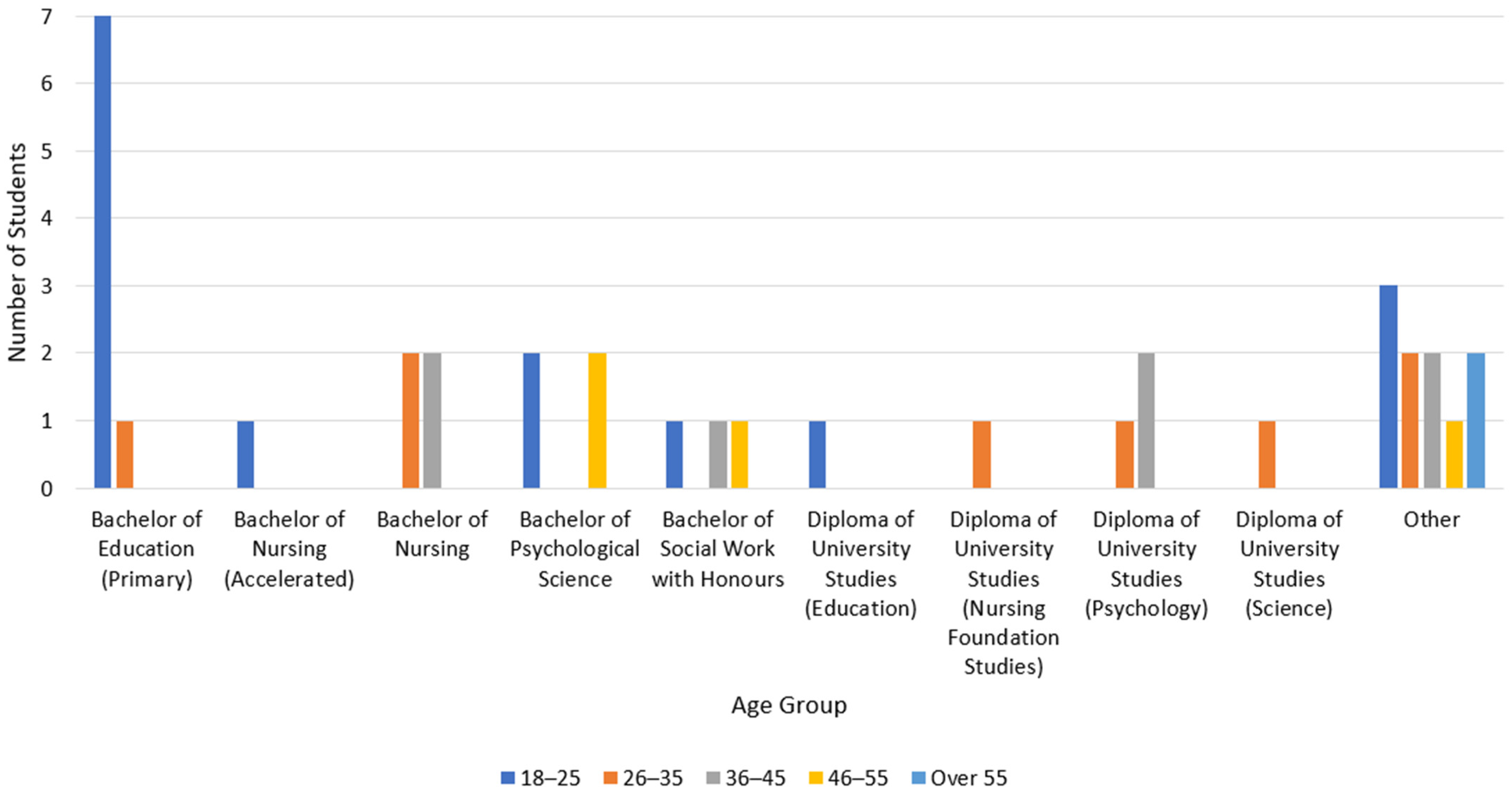
The age breakdown across degrees is shown in Figure 2, with Education having the highest number of students in the 18–25 years age group. Students over 55 years in the “Other” category were studying Business Accounting and Psychological Science.

3.2. Thematic Analysis

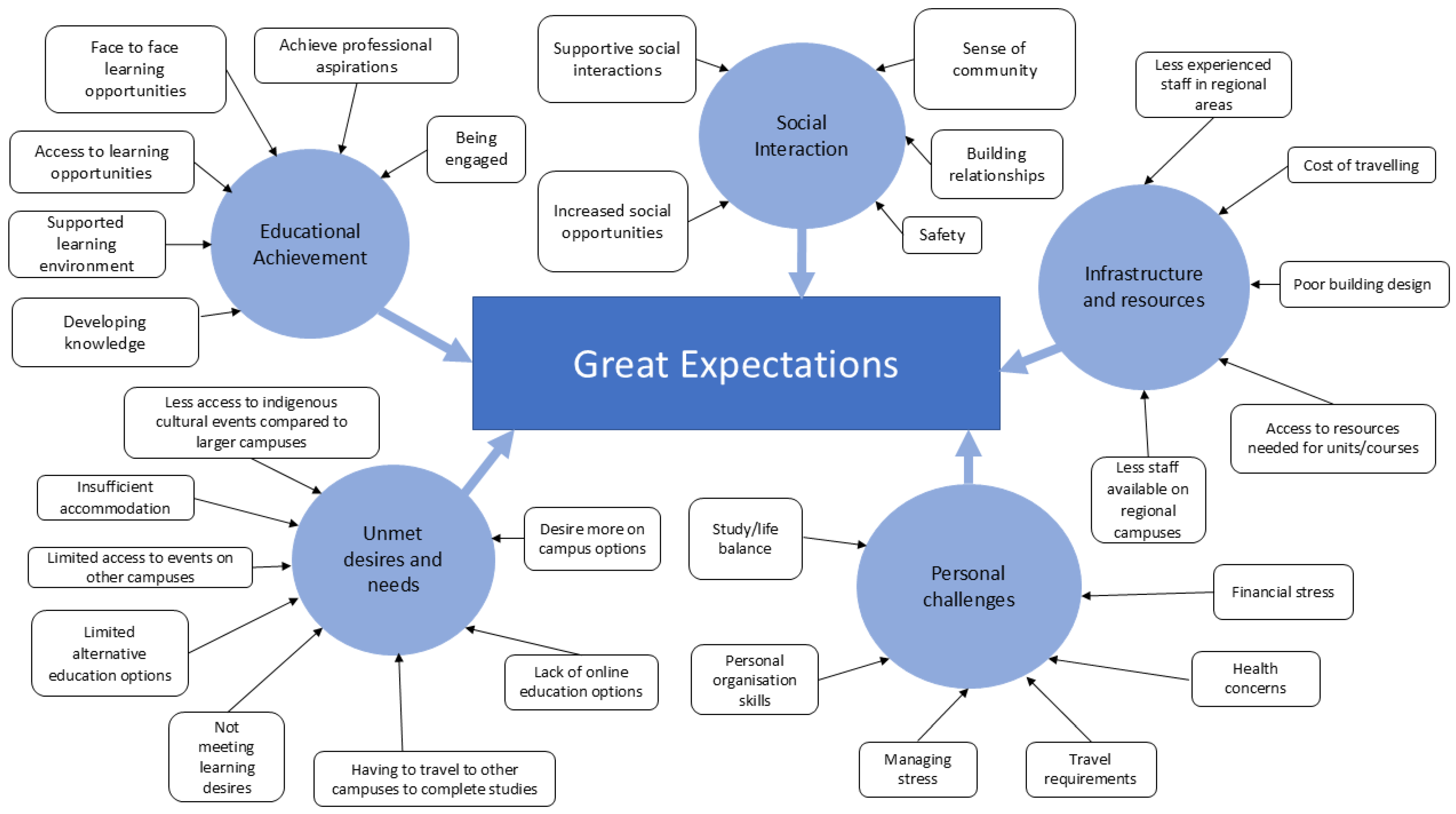
This section explores the thematic network through the five key themes, highlighting participants’ responses and considering the alignment of the data to Kahu and Nelson’s [31] framework, as well as other literature. Five key themes emerged from the survey results: educational achievement, social interaction, infrastructure and resources, personal challenges, and unmet desires and needs. Each of these themes represents a combination of structural and psychosocial influences identified within Kahu and Nelson’s [31] framework. At both university level and student level, a range of influences contributed to overall engagement and experience that each student had with the university (educational interface) and aligned to a range of immediate and long-term outcomes. The overarching global theme to emerge completing the thematic network was Great Expectations. The resultant thematic network is illustrated by Figure 3, and each theme is described and discussed below.

3.2.1. Theme 1: Educational Achievement

Background and discipline influences played a significant role in the decision, or opportunity, to attend university in this regional area. The greatest emphasis of responses related to educational achievement when considering engaging in tertiary study. Responses focussed on having access to learning opportunities and the professional aspirations driving this, for example,
“to gain the skills and knowledge to continue my studies for several years and become a high-level professional in my chosen field”
(Participant 5)
Relationships with academic staff and support were highlighted as expectations of participants, with a focus on educational opportunities delivered in a supportive learning environment. This is illustrated by the following responses:
“I expect it to be a professional yet slightly relaxed environment where I have the best opportunities to learn”
(Participant 9)
“effective teaching methods and polite teachers”
(Participant 8)
Participants acknowledged the need to develop appropriate academic and social skills for successful learning, such as time management and organisational skills, along with adjusting to a different style of learning and different forms of assessment. As one participant explained,
“I feel academic writing for assignments will be my biggest challenge as it is something that I have not any experience with”
(Participant 14)
For another, engagement in learning following the disruption of normal study patterns due to COVID-19 was an acknowledged challenge,
“Adjusting to being on campus again after studying online for the majority of the past two years will be a struggle, one that I hope can be overcome easily”
(Participant 9)
Having access to all curriculum components to complete their studies whether online or on campus was seen as a positive. However, responses also highlighted the perceived benefit from studying on campus through improved relationships and motivation to do well,
“to be able to study face to face with lecturers and tutors as that is the only way that I can perform well”
(Participant 7)
In general, participant responses were very positive regarding their expectations related to tertiary study on a regional university campus. The only discordant views to this occurred when educational desires were not met through online or locally delivered content options, as noted in one of the subsequent themes. Consistent with the student engagement framework proposed by Kahu and Nelson [31], the theme of educational achievement readily aligns with the academic self-efficacy construct used in the framework. It has been postulated that lower academic self-efficacy of non-traditional students may lead to them being less engaged, resulting in poorer academic results and increased risk of attrition [31].
The positive participant responses regarding expectations of tertiary study on a regional university campus connect with the tension in the literature, where one study found higher attrition rates in rural areas [16], with other studies finding significant levels of aspirations [17,18,19,20]. The participants’ acknowledgement of the need to develop appropriate academic skills for successful learning, such as time management and organisational skills, indicates their aspirations to be successful in their study and employment, as well as an understanding of how to achieve this. There are similarities here to Kahu et al.’s [39] findings for participants who were prepared for the demands of university life, although with a larger sample size they suggested that there was also a sense of “naive optimism” (p. 8) which showed less awareness of possible risks, which was not evident in this study.

3.2.2. Theme 2: Social Interaction

The organising theme of social interactions related to the opportunity to meet new people, build new relationships, feel safe and supported as an individual, and commonly referenced the advantage of being based on a smaller campus, creating a stronger sense of community. This sentiment is highlighted by the following participant response.
“I am attending a regional campus primarily for the close-knit community and support”
(Participant 10)
The theme of social interaction in this pilot study resonated strongly with the construct of ‘belonging’ in Kahu and Nelson’s [31] student engagement framework, in which belonging is perceived to contribute to student engagement. Studying locally enhances a sense of belonging. Eversole [6] argued that regional campuses provide a “safe space to try out a university experience” (p. 194) particularly for those who worry about not ‘fitting in’. This positions regional campuses as a strong way to attract and retain students who would not usually pursue higher education. The high value placed on social interaction by the participants in our study is important in a regional resource-restrained environment where teaching and learning are increasingly being moved online and opportunities for face-to-face interaction are limited. The theme of social interaction from this study correlates with findings from Kahu et al. [39], in which many regional university participants in their study cited the expectation of meeting new people and making friends. The view that social interaction contributes more broadly to learning indicates a strong need for face-to-face interaction for first-year cohorts studying at regional universities. The characteristics of this group of students, which include first in family, low SES, mature aged and multiple caring responsibilities [16,40] means that their success at university is more likely to be dependent on the guidance and support provided by on-campus staff than more traditional cohorts of university students. This has been demonstrated by Pearce and Down’s [41] study with regional students, as the importance of positive relationships with teaching staff emerged as a key theme. Inviting interaction with students was seen to be an excellent way of supporting students’ learning, as students felt comfortable to ask questions and approach teaching staff with concerns [41]. Positive relationships with staff were also recognised as a key theme in Kahu et al.’s study [39], with participants expecting that this would help them enjoy the class more and encourage their attendance and participation. Our study expands this observation in a regional context as it indicates that the sense of optimism students felt about university study was directly linked to studying on a regional campus, with some students indicating that they were attending a regional campus for the particular kinds of ‘close-knit relations’, relaxed environment’ and ‘support’ small campuses can provide. This aligns with findings from other studies focused on regional nursing students [29,42]. In this way our regional participants highlighted a perception that choosing to study at a regional campus was a way to address and mitigate the effects of social disadvantage that characterise this equity group. In contrast, online study was not seen to provide the same benefits or have the same appeal as some students felt “forced” (Participant 12) into online study because of limited on-campus courses. The disadvantage of being on a small regional campus in relation to some specific social activities is highlighted later, in the theme related to unmet desires and needs.

3.2.3. Theme 3: Infrastructure and Resources

Participants identified clear expectations related to the physical environment and student amenities such as access to purchase food and drinks, car parking, and library services. Some concern was expressed about navigating a new environment,
“I was nervous and confused about where to go”
(Participant 2)
This theme illustrates the framework’s mediating mechanisms of emotions and well-being. Kahu and Nelson [31] described stress as representing the opposite of well-being. Transition to any new environment elicits a degree of uncertainty, so it is not surprising that navigation and access to practical resources in a new environment was identified by several participants. The physical space of a university campus is an important factor in students feeling safe and welcome, which are essential emotions for student attendance. As participants in this study highlights the importance of attending classes in-person, the campus environment must encourage students to want to be present. This aligns with the above theme of social interaction, which can be fostered in class, but also from the social culture created by the university. Student engagement in social activities at regional campuses can be difficult to achieve, as many are non-traditional students and have work, family and caring responsibilities which results in them staying on-site only for required class times. Although participants spoke of physical expectations relating to amenities, none highlighted social events as an expectation of studying at a regional campus.

3.2.4. Theme 4: Personal Challenges

The personal challenges identified were not specifically related to studying on a regional campus, but generic to the issue of pursuing tertiary education. Health concerns, the need to travel long distances to attend campus, financial and emotional stress, plus maintaining a healthy study/life balance were all discussed. An example of such responses follows,
“I live 85 km from campus and live with a medical condition that sometimes makes driving long distances difficult”
(Participant 6)
Kahu and Nelson [31] highlighted that non-traditional students may experience more negative emotions due to a greater gap between their personal identity and institutional expectations and experiences. Both emotion and well-being are identified as important components of the framework, with obvious synergies and nuanced differences. The emergent themes of personal challenges and unmet desires and needs were differentiated during analysis of the pilot study data, demonstrating the synergies and nuances within these components of the student engagement framework.

3.2.5. Theme 5: Unmet Desires and Needs

Apart from the desire for more on-campus learning opportunities, the responses incorporated in this theme were presented at an individual level, rather than commonly identified. These ranged from belief that the new campus building was poorly designed, to the paucity of Indigenous staff and Indigenous events, plus difficulty in accessing social events staged at other campuses. Lack of student accommodation was also noted as a limitation to studying in this regional area. These responses are situated in the ‘Structural influences’ element of Kahu and Nelson’s framework [31].
For several participants the principal deficit with studying at this regional campus was that they could not complete their course locally and would have to move to another campus in the future if face to face teaching was not made available for full degrees (or certain units), or if they were
“forced to do units online”
(Participant 12)
The lack of specific courses and units delivered via face-to-face mode on campus was a common concern. One participant highlighted the limited options available for to engage with study faced by those living regionally:
“many students are essentially forced into studying at [this university] because they don’t have the resources to study elsewhere”
(Participant 8)
While it is unrealistic to expect that any university can meet all the needs and desires of all people, this theme reinforces the idea that many regional students wish to remain in place while completing tertiary studies. O’Rourke and Baldwin [43] explained that creating a sense of place is important at a university campus to promote a welcoming and inclusive environment. This is often referred to at the ‘third space’ [44], a place outside work and home where people feel comfortable and come to socialise. This relates to both the role of the university regarding ‘Structural influences’ and the educational interface component of ‘belonging’ in Kahu and Nelson’s framework of student engagement [31]. Having a local regional campus allows students to attend physically and create a sense of place, which when coupled with a strong sense of community, can boost their engagement with their learning [43]. Participants’ responses indicate a preference that education be delivered in-person on campus, and where this is not possible, an online option is expected where engagement can occur directly with teaching staff and peers. Frustration, as illustrated by the emotive language evident in the accompanying quotes, was the emotion most evident in the data.

3.3. Global Theme: Great Expectations

The global theme connecting the organising themes in this pilot study reflects the generally positive response to engaging with learning on a regional campus. Participants anticipated academic success with the supported environment that a small campus is perceived to provide. Participants expected to have an appropriate social environment along with resources and infrastructure to achieve academic success. Personal challenges that may influence this are acknowledged; however, these do not specifically relate to studying at a regional campus. Even perceived deficits of studying at a regional campus reflect the high expectations of how and what study opportunities should be available locally. The concern for several participants that they may not be able to complete their course locally and would have to move to another campus in the future if online units were not made available, further highlights the disadvantage experienced by regional students. This finding speaks directly to Pinheiro et al.’s [1] argument that “the biggest challenge for Australian HE institutions is to meet the needs of regional communities through the existing network of small campuses whilst operating within a demand-driven neoliberal (competitive) system” (p. 319). With regional university students experiencing a range of intersecting inequalities [9,16], moving away from their local area is simply not an option for many of these students. This uncertainty about the future of their studies further compounds the disadvantage experienced by many regional students and resonates with Eversole’s point that regional campuses attract and retain “non-traditional students who would not otherwise engage with university education” [6] (p. 914).

4. Discussion

In exploring the expectations of university students at regional campuses this study contributes to the current knowledge base around Kahu and Nelson’s framework [31] by strengthening the understanding of how the complex interplay of various factors plays out on a regional university campus in Australia. Drawing on our findings, it is clear that university reform is important for the sustainability of regional university campuses and successful student experiences and outcomes in terms of the provision of courses and on-campus staff. The introduction of the demand-driven Needs-based Funding to support students from underrepresented backgrounds is a timely initiative, but as the Regional Universities Network (RUN) points out ‘per student regional loading should [not] be seen within the narrow scope of existing to meet the costs of learning teaching delivery alone [45]. Appropriate and equitable regional service provision extends into many other aspects of tertiary experience that would otherwise go unfunded’. There are still many questions about how exactly needs based funding will support regional students and positioning that support within research prioritising the voices of university students studying on regional university campuses is critical to the success of the funding arrangements.
However, the participants’ perceptions of regional campuses as characterised by high levels of social interaction and a sense of belonging make these spaces ideal for “change at more immediate levels” [32] (p. 768). Our findings go some way towards understanding what engagement looks like from the perspective of students studying regionally. Current understandings of engagement, which predominantly focuses on procedures and progression [46,47], seem to be only part of the participants’ understandings of successful transitions to university study. Rather, their focus on interpersonal relationships, community, and face-to-face teaching, learning and support point to an understanding that engagement embedded in human interaction is necessary for progression and successful outcomes. This understanding of engagement may be linked to the regional participant cohort of this study where many are non-traditional students. As our study progresses, we will continue to investigate these dynamics further in exploring the concept of engagement in a regional context.
Our findings strongly align with Kahu and Nelson’s educational interface framework [31] which conceptualises student engagement as being shaped by structural and psychosocial influence and mediating mechanisms within a socio-cultural context. Participants’ emphasis on gaining skills and knowledge reflects the framework’s construct of academic self-efficacy. The expectation of supportive teaching and access to resources demonstrates how institutional actions influence confidence and motivation, key mediating mechanisms for engagement. Further, the desire for close-knit relationships and community resonates with the framework’s psychosocial influences, particularly belonging. This sense of belonging enhances motivation and persistence, reinforcing the importance of face-to-face learning opportunities in regional contexts.
Participants raised concerns around the campus amenities and campus navigation highlighting structural influences within the framework. These factors affect emotions and well-being, which mediate engagement. A safe, well-equipped campus environment fosters positive emotional states that support learning. Challenges such as health issues, travel, and financial stress align with the concept of life load—the cumulative pressures students face. The framework emphasises that life load interacts with institutional support to shape engagement outcomes, underscoring the need for flexible policies and targeted support. Frustration over limited course offerings and online delivery reflects structural constraints that disrupt the educational interface. These findings suggest that institutional responsiveness is critical for sustaining engagement among regional students. The overarching optimism expressed by participants illustrates the mediating role of motivation and self-efficacy in the framework and also speaks to the relevance of the concept of rural cultural wealth and rural resilience. However, unmet expectations risk negative emotions and disengagement, reinforcing the framework’s assertion that engagement is dynamic and context dependent.
By mapping our themes to the framework, we demonstrate here that engagement for regional students is not only about academic processes but also deeply embedded in social, structural, and emotional contexts. This theoretical integration strengthens the argument for policy and practice reforms that address both institutional and individual factors to improve equity and outcomes.
Our recommendations in relation to improving the educational experiences and outcomes for students studying at regional university campuses relate predominantly to the provision of courses and face-to-face teaching on these campuses. To support the strong and positive aspirations for university study of students living in regional Australia, it is essential to provide face-to-face on-campus courses. This student cohort, which belongs to multiple equity groups, is at particular risk of poor transition experiences and attrition without face to face, on-campus education. Students in our study were explicit about their expectation that face-to-face teaching and contact with university staff and peers were key to their success at university. Structural reform is on the way in Australian Higher Education with the release of the Australian Universities Accord Final Report [8], the acknowledgement of serious inequalities in the higher education system in relation to key equity groups and the introduction of needs-based funding. However, there is an urgent need to listen to the voices of regional university students themselves to make sure effective and relevant support is implemented for this equity group to create ‘lasting solutions’ and avoid “treating systemic issues as individual problems” [9] (p. 3). The role of regional campuses to be place-based and attend to the needs of the local context is highlighted more than ever in this changing policy environment.

Limitations

Key limitations identified in this pilot approach included poor student uptake and sustained engagement in the research process. Therefore, caution is required when generalising the findings to other regional universities. To improve the strength of our findings we are planning to undertake a longitudinal study with a greater number of participants at the Cradle Coast Campus. The campus continues to grow in terms of course offerings and student numbers and building on our pilot approach will provide a more robust overview of the barriers and enablers for undertaking higher education in regional areas.

5. Conclusions

Regional university students face many sociocultural, and often intersecting, challenges that affect their ability to undertake tertiary study, their educational outcomes, and access to relevant courses. This pilot study has demonstrated that the expectations of regional higher education students align with five main areas of influence. Consideration of these factors for higher education reform in relation to regional students and ongoing research into the student experience is crucial for engaging people living in regional areas in university study and building a workforce that meets the needs of the future.

Author Contributions

Conceptualization, S.J.P., M.S., S.R. and D.G.; methodology S.J.P., M.S., S.R. and D.G.; validation, S.J.P., M.S., S.R. and D.G.; formal analysis, S.J.P., M.S., S.R. and D.G.; investigation, S.J.P., M.S., S.R. and D.G.; resources, M.S. and S.R.; writing—original draft preparation, S.J.P., M.S., S.R. and D.G.; writing—review and editing, S.J.P., M.S., S.R. and D.G.; project administration, S.J.P. and M.S. All authors have read and agreed to the published version of the manuscript.

Funding

This research received no external funding.

Institutional Review Board Statement

The study was conducted in accordance with the Declaration of Helsinki and approved by the Tasmanian Human Research Ethics Committee on 4 August 2023 (Reference: H0023967).

Informed Consent Statement

Informed consent was obtained from all participants involved in the study.

Data Availability Statement

The data presented in this study are available on request from the corresponding author due to ethical approvals.

Acknowledgments

The authors would like to acknowledge the students who participated in this project and thank them for their valuable time.

Conflicts of Interest

The authors declare no conflicts of interest.

Abbreviations

The following abbreviations are used in this manuscript:
ATARAustralian Tertiary Admission Rank
CCCCradle Coast Campus
HEHigher Education
RUNRegional Universities Network
UTASUniversity of Tasmania

References

  1. Pinheiro, R.; Charles, D.; Jones, G.A. Equity, institutional diversity and regional development: A cross-country comparison. High. Educ. 2016, 72, 307–322. [Google Scholar] [CrossRef]
  2. Rossi, F.; Goglio, V. Satellite university campuses and economic development in peripheral regions. Stud. High. Educ. 2018, 45, 34–54. [Google Scholar] [CrossRef]
  3. Australian Bureau of Statistics. Regional and Remote Higher Education: A Quick Guide. 2022. Available online: https://www.aph.gov.au/About_Parliament/Parliamentary_Departments/Parliamentary_Library/pubs/rp/rp2122/Quick_Guides/RegionalRemoteHigherEducation#:~:text=According%20to%20the%20ABS%2C%20in,remote%20and%20very%20remote%20areas (accessed on 15 September 2024).
  4. Department of Education and Training. 2015 Liability Status Categories. Table 5.5; 2016. Available online: https://www.education.gov.au/higher-education-statistics/resources/2015-liability-status-categories (accessed on 29 October 2024).
  5. Schmidt, M.; Aberdeen, L.; Carlon, C.; Eversole, R. Invisible innovation: Intellectual labour on regional university campuses in Australia. J. Sociol. 2024, 1–21. [Google Scholar] [CrossRef]
  6. Eversole, R. Regional campuses and invisible innovation: Impacts of non-traditional students in ‘Regional Australia’. Reg. Stud. 2022, 56, 909–920. [Google Scholar] [CrossRef]
  7. Regional Universities Network. The Regional Universities Network Submission to the Australian Universities Accord Discussion Paper. 2023. Available online: https://www.education.gov.au/system/files/documents/submission-file/2023-04/AUA_tranche1_Regional%20Universities%20Network.pdf (accessed on 10 December 2024).
  8. Department of Education. Australian Universities Accord Final Report. 2024. Available online: https://www.education.gov.au/australian-universities-accord/resources/final-report (accessed on 10 December 2024).
  9. Schmidt, M.; Aberdeen, L.; Carlon, C.; Eversole, R. Submission to the Australian Universities Accord Interim Report. 31 August 2023. Available online: https://www.education.gov.au/system/files/2023-09/AUA_inter_tranche6_124%20Merete%20Schmidt.pdf (accessed on 15 September 2024).
  10. Carlon, C.; Aberdeen, L.; Eversole, R.; Schmidt, M.; Congues, J.; Wrigley, K. Cinderella on the path at midnight: Students on regional university campuses and equity. High. Educ. Res. Dev. 2025, 1–15. [Google Scholar] [CrossRef]
  11. Australian Government Department of Education. Demand-Driven Needs-Based Funding. Australian Universities Accord; 2024. Available online: https://www.education.gov.au/australian-universities-accord/accord-202425-budget-and-myefo-measures/demanddriven-needsbased-funding (accessed on 19 November 2025).
  12. Crumb, L.; Chambers, C.; Azano, A.; Hands, A.; Cuthrell, K.; Avent, M. Rural cultural wealth: Dismantling deficit ideologies of rurality. J. Multicult. Educ. 2024, 17, 125–138. [Google Scholar] [CrossRef]
  13. Productivity Commission. The Demand Driven University System: A Mixed Report Card. Commission Research Paper, Canberra; 2019. Available online: https://www.pc.gov.au/research/completed/university-report-card (accessed on 12 September 2024).
  14. Cameron, J.; Roxburgh, M.; Taylor, J.; Lauder, W. An integrative literature review of student retention in programmes of nursing and midwifery education: Why do students stay? J. Clin. Nurs. 2011, 20, 1372–1382. [Google Scholar] [CrossRef]
  15. Lancia, L.; Petrucci, C.; Giorgi, F.; Dante, A.; Cifone, M.G. Academic success or failure in nursing students: Results of a retrospective observational study. Nurse Educ. Today 2013, 33, 1501–1505. [Google Scholar] [CrossRef]
  16. Baik, C.; Naylor, R.; Arkoudis, S.; Dabrowski, A. Examining the experiences of first-year students with low tertiary admission scores in Australian universities. Stud. High. Educ. 2019, 44, 526–538. [Google Scholar] [CrossRef]
  17. Hawkins, C. Do Aspirations Really Matter? Aust. Int. J. Rural Educ. 2017, 27, 39–54. [Google Scholar] [CrossRef]
  18. Quinn, F.; Lyons, T. Rural first year university science students: As engaged, aspirational and motivated as anyone but different science ‘choices’ in Year 12 and university. Aust. Int. J. Rural Educ. 2016, 26, 42–53. [Google Scholar] [CrossRef]
  19. Schmidt, M. ‘No one cares in the city’: How young people’s gendered perceptions of the country and the city shape their educational decision making. Aust. Int. J. Rural Educ. 2017, 27, 25–38. [Google Scholar] [CrossRef]
  20. Schmidt, M.; Ooi, C.S.; Shelley, B. “School is not for me”: Young people’s perceptions of being a self-directed learner in a small rural Tasmanian town. J. Appl. Learn. Teach. 2022, 5, 95–105. [Google Scholar]
  21. Barnes, R.K.; Kilpatrick, S.; Woodroffe, J.; Crawford, N.; Emery, S.; Burns, G.; Noble, M. Regional Communities’ Influences on Equity Participation in Higher Education; National Centre for Student Equity in Higher Education, Curtin University: Perth, WA, Australia, 2019; Available online: https://www.ncsehe.edu.au/wp-content/uploads/2019/12/Barnes-et-al.Report-Final.pdf (accessed on 8 August 2024).
  22. Delahunty, J. ‘You Going to Uni?’ Exploring How People from Regional, Rural and Remote Areas Navigate into and Through Higher Education; National Centre for Student Equity in Higher Education (NCSEHE), Curtin University: Perth, WA, Australia, 2022; Available online: https://www.ncsehe.edu.au/app/uploads/2022/02/Delahunty_UOW_EquityFellowship_FINAL.pdf (accessed on 19 November 2025).
  23. Christie, H.; Tett, L.; Cree, V.E.; McCune, V. ‘It all just clicked’: A longitudinal perspective on transitions within university. Stud. High. Educ. 2016, 41, 478–490. [Google Scholar] [CrossRef]
  24. Kift Sally, M.; Nelson, K.J.; Clarke, J.A. Transition pedagogy: A third-generation approach to FYE: A case study of policy and practice for the higher education sector. Int. J. First Year High. Educ. 2010, 1, 1–20. [Google Scholar]
  25. Tertiary Education Quality and Standards Agency. Good Practice Note: Improving Retention and Completion of Students in Australian Higher Education. 2020. Available online: https://www.teqsa.gov.au/latest-news/publications/good-practice-note-improving-retention-and-completion-students-australian (accessed on 15 August 2024).
  26. Leonard, R.D. Stigma, Sense of Belonging, and Educational Outcomes: A Quantitative Approach to Understanding the Internal Lateral Transfer Student Experience. 2024. Available online: http://ezproxy.utas.edu.au/login?url=https://www.proquest.com/dissertations-theses/stigma-sense-belonging-educational-outcomes/docview/3067277191/se-2 (accessed on 19 November 2025).
  27. Felby, L.C.; Ashwin, P. Reimagining the first year experience in higher education through a focus on knowledge engagement. Teach. High. Educ. 2025, 1–12. [Google Scholar] [CrossRef]
  28. Smith, L. Sinking in the sand? Academic work in an offshore campus of an Australian university. High. Educ. Res. Dev. 2009, 28, 467–479. [Google Scholar] [CrossRef]
  29. Wirihana, L.; Welch, A.; Williamson, M.; Christensen, M.; Bakon, S.; Craft, J. The provision of higher education in regional areas: An integrative review of the literature. J. High. Educ. Policy Manag. 2017, 39, 307–319. [Google Scholar] [CrossRef]
  30. Robinson, B. Regional Universities Network: Engaging with Regions, Building a Stronger Nation; Regional Universities Network: Canberra, Australia, 2013; Available online: https://apo.org.au/node/71149 (accessed on 15 August 2024).
  31. Kahu, E.R.; Nelson, K. Student engagement in the educational interface: Understanding the mechanisms of student success. High. Educ. Res. Dev. 2018, 37, 58–71. [Google Scholar] [CrossRef]
  32. Kahu, E.R. Framing student engagement in higher education. Stud. High. Educ. 2013, 38, 758–773. [Google Scholar] [CrossRef]
  33. Picton, C.; Kahu, E.R. I knew I had the support from them’: Understanding student support through a student engagement lens. High. Educ. Res. Dev. 2022, 41, 2034–2047. [Google Scholar] [CrossRef]
  34. Zhoc, K.C.; Webster, B.J.; King, R.B.; Li, J.C.; Chung, T.S. Higher Education Student Engagement Scale (HESES): Development and psychometric evidence. Res. High. Educ. 2019, 60, 219–244. [Google Scholar] [CrossRef]
  35. Harris, P.A.; Taylor, R.; Thielke, R.; Payne, J.; Gonzalez, N.; Conde, J.G. Research electronic data capture (REDCap)—A metadata-driven methodology and workflow process for providing translational research informatics support. J. Biomed. Inform. 2009, 42, 377–381. [Google Scholar] [CrossRef]
  36. State Growth Tasmania. Northwest Tasmania: Estimated Resident Population (ERP). 2022. Available online: https://www.stategrowth.tas.gov.au/policies_and_strategies/population-strategy/appendix (accessed on 15 August 2024).
  37. Polkinghorne, M.; Arnold, A. A Six-Step Guide to Using Recursive Abstraction Applied to the Qualitative Analysis of Interview Data; Bournemouth University: Poole, UK, 2014. [Google Scholar]
  38. Attride-Stirling, J. Thematic networks: An analytic tool for qualitative research. Qual. Res. 2001, 1, 385–405. [Google Scholar] [CrossRef]
  39. Kahu, E.; Nelson, K.; Picton, C. “I’m excited!” Student Expectations Prior to Starting Their First Year at University [Paper Presentation]. In Proceedings of the STARS 2016 Conference, Perth, Australia, 29 June–2 July 2016; Available online: http://unistars.org/papers/STARS2016/10A.pdf (accessed on 18 September 2024).
  40. Regional Education Expert Advisory Group. National Regional, Rural and Remote Education Strategy Framing Paper. Department of Education and Training; 2018. Available online: https://www.education.gov.au/higher-education-reviews-and-consultations/national-regional-rural-and-remote-education-strategy (accessed on 15 September 2024).
  41. Pearce, J.; Down, B. Relational pedagogy for student engagement and success at university. Aust. Educ. Res. 2011, 38, 483–494. [Google Scholar] [CrossRef][Green Version]
  42. Hays, C.; Devine, S.; Glass, B.D. Exploring the nursing student experience at a remote Australian university campus: A qualitative study. BMC Nurs. 2022, 21, 211. [Google Scholar] [CrossRef]
  43. O’Rourke, V.; Baldwin, C. Student engagement in placemaking at an Australian university campus. Aust. Plan. 2016, 53, 103–116. [Google Scholar] [CrossRef]
  44. Mehta, V.; Bosson, J.K. Third places and the social life of streets. Environ. Behav. 2010, 42, 779–805. [Google Scholar] [CrossRef]
  45. Regional Universities Network. Response to the Needs-Based Funding Implementation Consultation Paper. Regional Universities Network. 2024. Available online: https://run.edu.au/wp-content/uploads/2025/04/RUN-Response-to-the-Needs-based-Funding-Implementation-Consultation-Paper_v3.pdf (accessed on 19 November 2025).
  46. Mann, S.J. Alternative perspectives on the student experience: Alienation and engagement. Stud. High. Educ. 2001, 26, 7–19. [Google Scholar] [CrossRef]
  47. McMahon, B.; Portelli, J.P. Engagement for what? Beyond popular discourses of student engagement. Leadersh. Policy Sch. 2004, 3, 59–76. [Google Scholar] [CrossRef]
Figure 1. The educational interface framework adapted from Kahu and Nelson [31].
Higheredu 04 00073 g001
Figure 2. Degree by age group.
Higheredu 04 00073 g002
Figure 3. Thematic network.
Higheredu 04 00073 g003
Table 1. Commencing and continuing students at Cradle Coast Campus 2019–2023.
201820192020202120222023
Commencing students249277228279183188
Continuing students110133156141178195
Table 2. Demographic data.
VariableSurvey
n (%)
N = 40
All Commencing Students (2022)
n (%)
N = 183
All Commencing Students (2023)
n (%)
N = 188
Age Group
  18–2515 (38%)99 (54%)100 (53%)
  26–358 (20%)30 (16%)35 (19%)
  36–457 (18%)34 (19%)35 (19%)
  46–554 (10%)14 (8%)16 (9%)
  Over 552 (5%)6 (3%)2 (1%)
  No Answer/Incomplete4 (10%)00
Degree
  Education8 (20%)8 (4%)16 (9%)
  Nursing5 (13%)78 (43%)77 (41%)
  Psychological Science4 (10%)13 (7%)6 (3%)
  Social Work3 (7%)4 (2%)4 (2%)
  Diploma University Studies6 (15%)26 (14%)27 (14%)
  Other10 (25%)54 (30%)58 (31%)
  No Answer/Incomplete4 (20%)00
Mode of Study
  On Campus8 (20%)94 (51%)100 (53%)
  On Campus and Online7 (18%)93 (49%)88 (47%)
  No Answer/Incomplete5 (13%)00
Previous Study
  Yes10 (25%)**
  No10 (25%)**
  No Answer/Incomplete4 (10%)**
* Information not available.
Disclaimer/Publisher’s Note: The statements, opinions and data contained in all publications are solely those of the individual author(s) and contributor(s) and not of MDPI and/or the editor(s). MDPI and/or the editor(s) disclaim responsibility for any injury to people or property resulting from any ideas, methods, instructions or products referred to in the content.