Article

Experimental Study of the TVOC Distribution in a Car Cabin

Air Quality Group, Department of Mechanical and Environmental Engineering, ESTACA, Paris Saclay Campus, 78180 Montigny-le-Bretonneux, France
*
Author to whom correspondence should be addressed.
Air 2023, 1(3), 184-195; https://doi.org/10.3390/air1030014
Submission received: 16 May 2023 / Revised: 10 July 2023 / Accepted: 2 August 2023 / Published: 9 August 2023
(This article belongs to the Special Issue Indoor Air Quality: Risk Assessment and Public Health)

Abstract

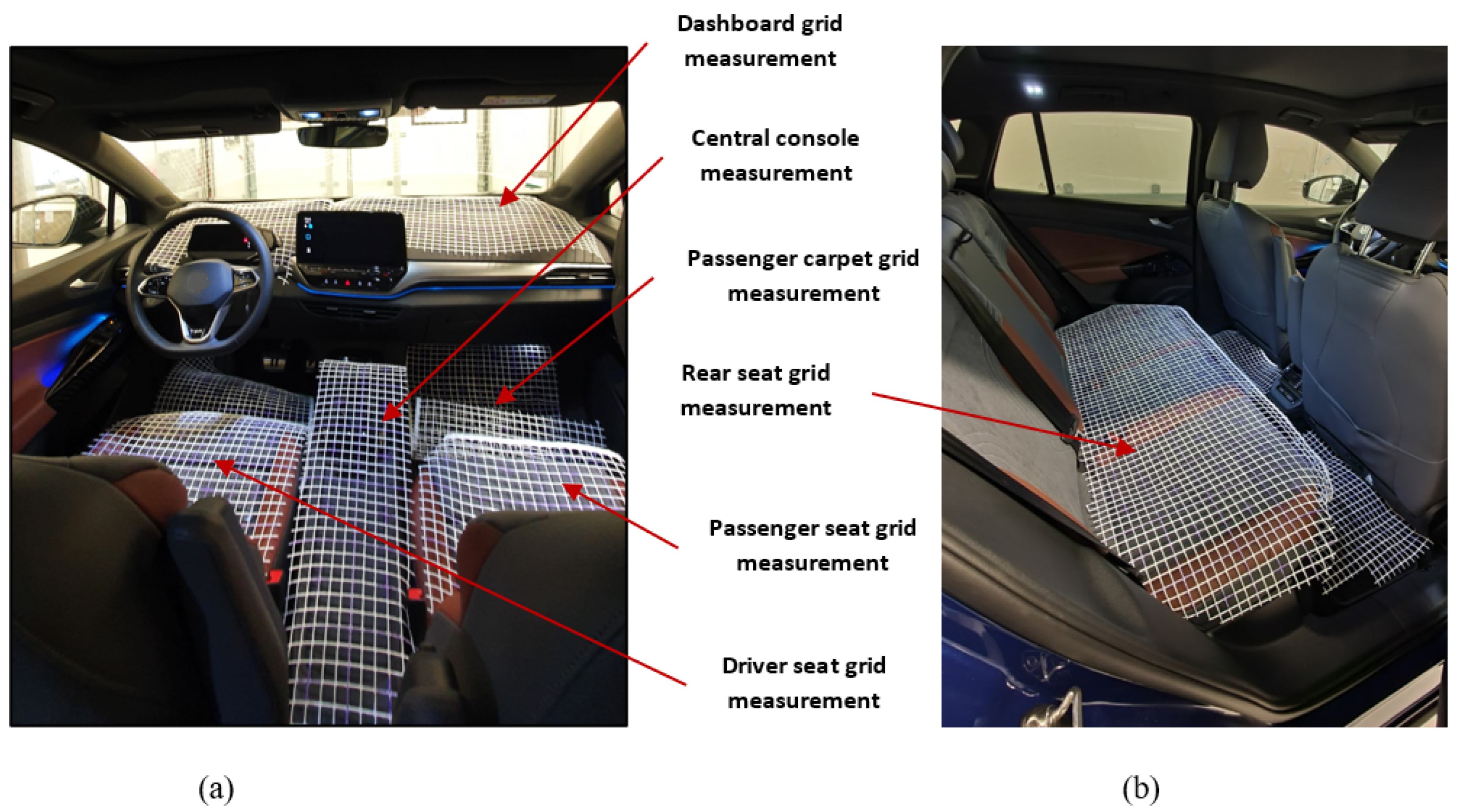
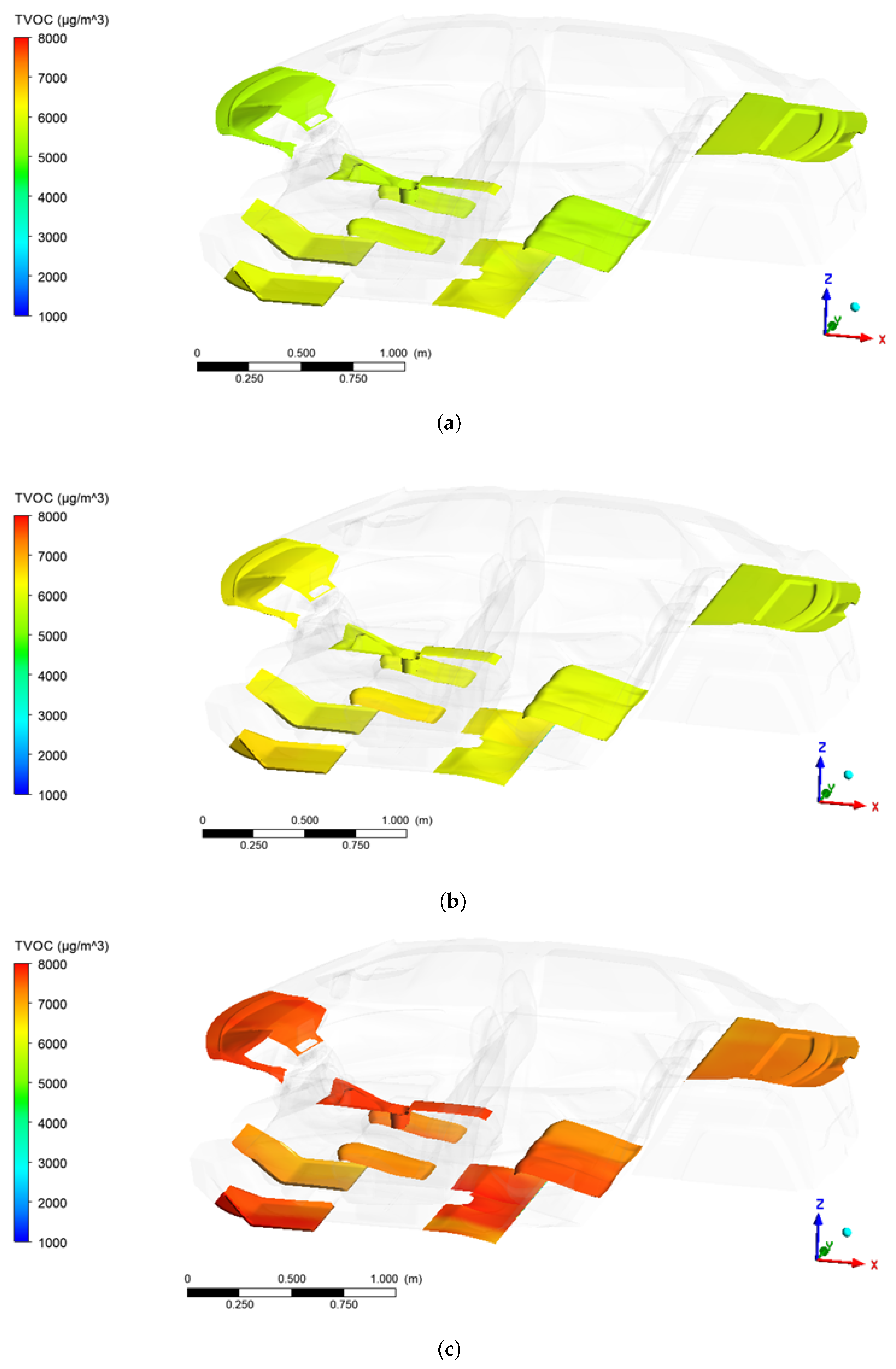
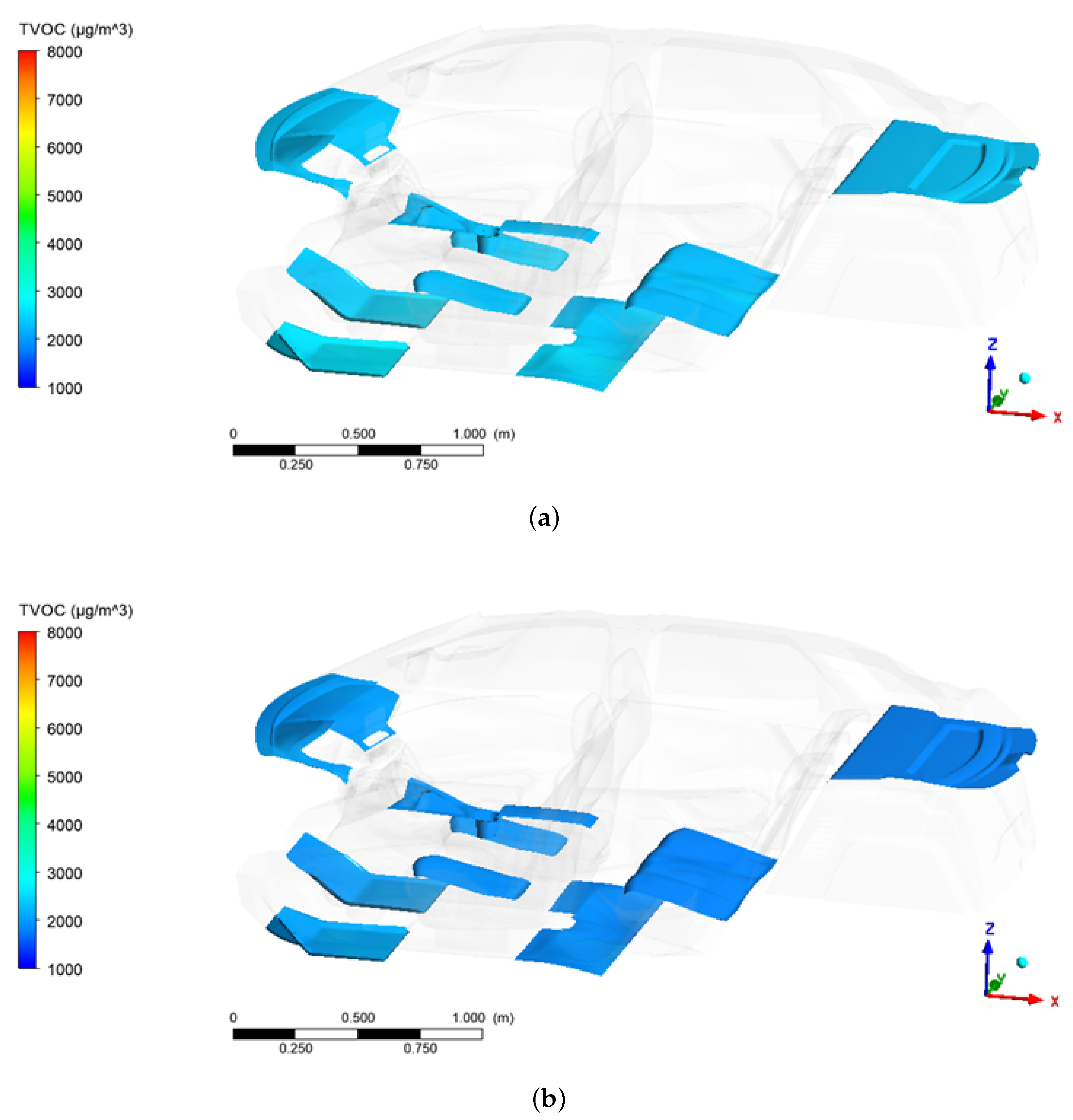
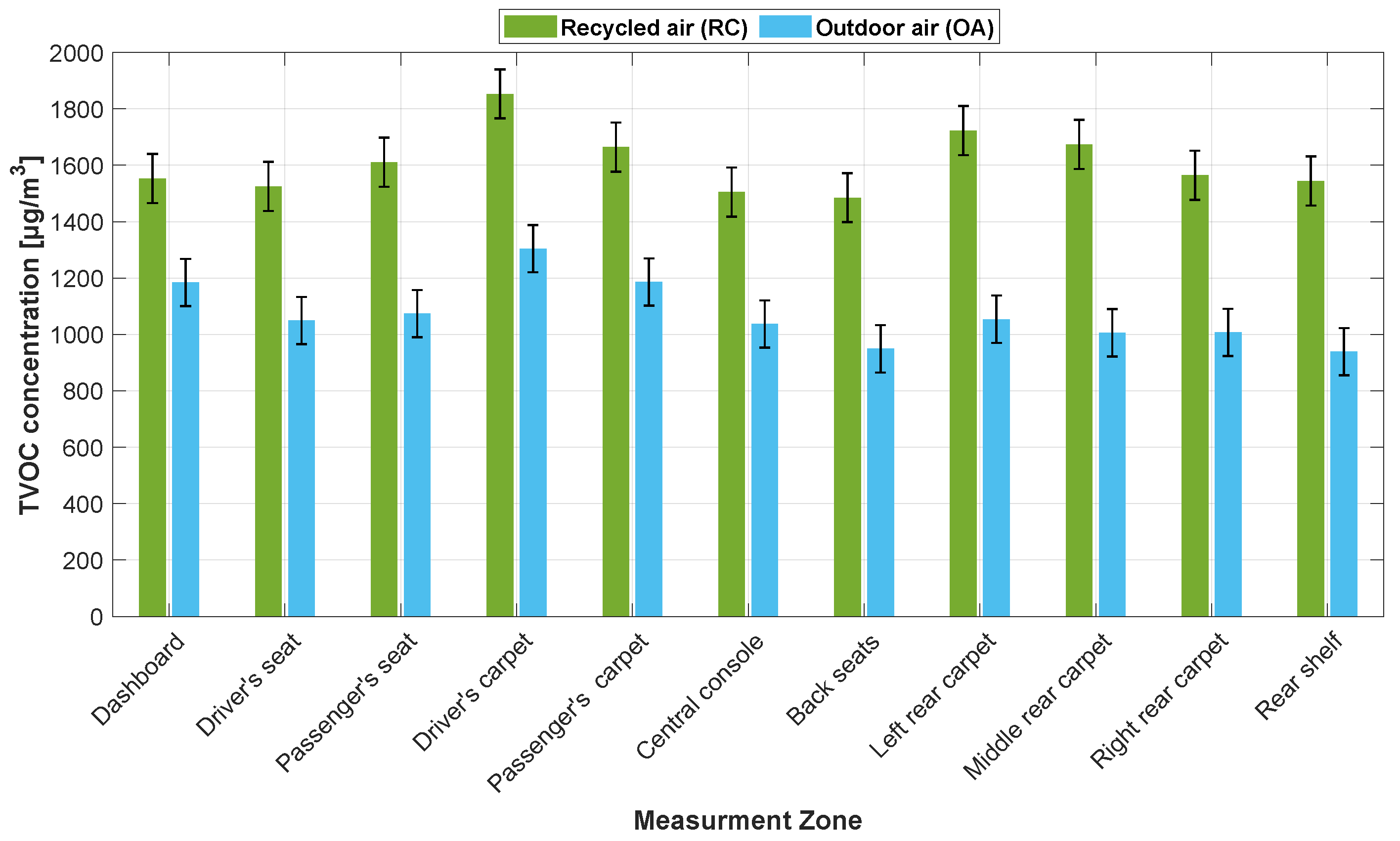
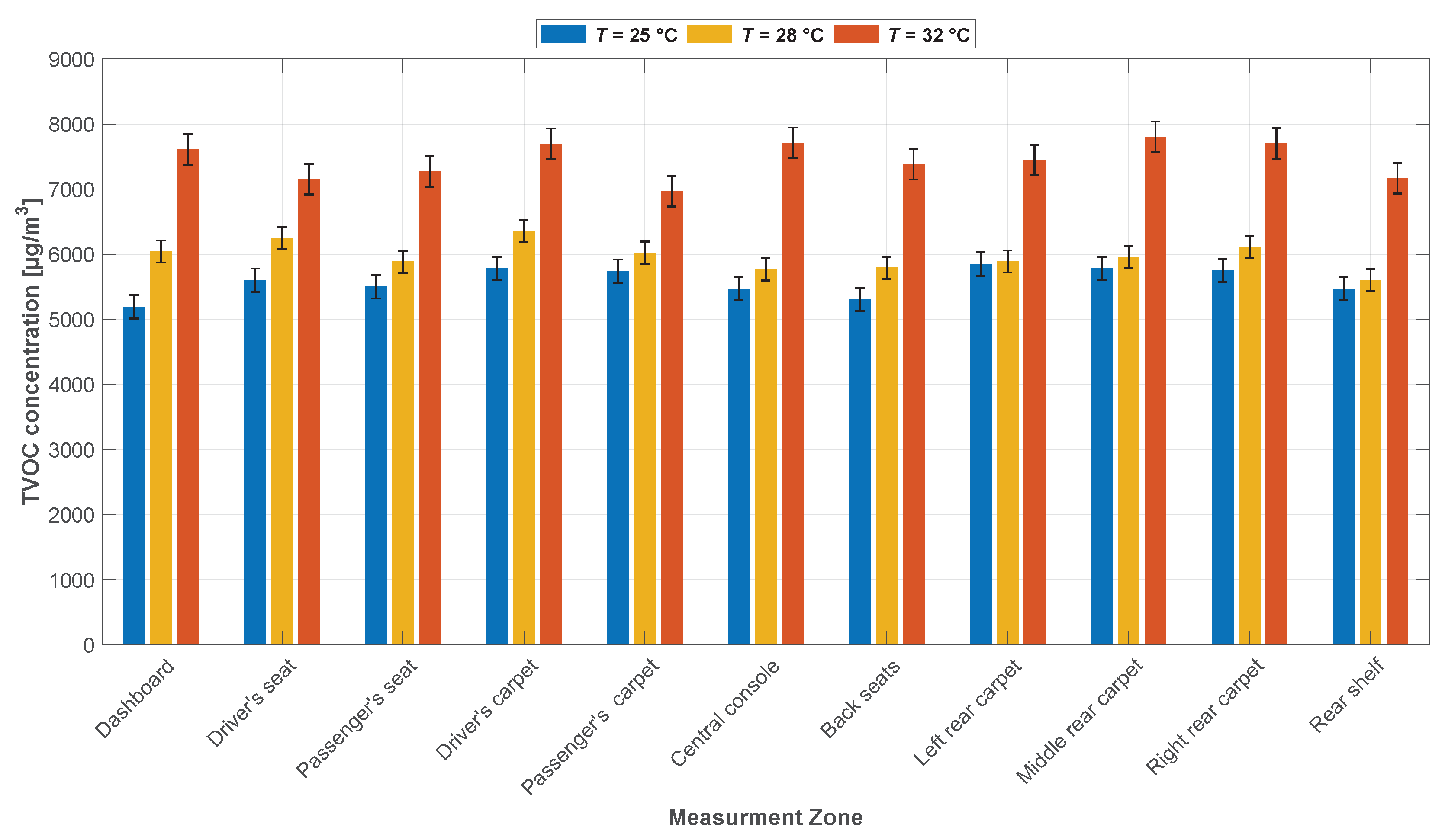
The vehicle in-cabin is subject to several types of pollutants infiltrating from the outdoors or emitted directly inside it, such as Volatile Organic Compounds (VOCs). The concentration of TVOC (total volatile organic compounds) is the result of the emission from different equipment surfaces that compose the car cabin. In the present study, the experimental characterization of TVOC emission from the interior surfaces of a car cabin is discussed by considering the influence of two parameters: the temperature and ventilation modes. A measurement location grid was used to measure TVOC’s emissions from 267 points on all surfaces of the car’s interior equipment. Three different temperatures and two ventilation modes (recirculation and outdoor air) were investigated. The results indicate that the concentration of TVOC increases with the temperature inside the cabin with a contribution that varies with the type of cabin equipment including the dashboard, center console, seats, and carpets. On the other hand, the concentration distributions of TVOC showed relative differences of 10–13% and 2–5% for surface and volumetric measurements, respectively. This implies no preferential positioning of the in-cabin probe for TVOC volumetric concentration measurements. In addition, the recirculation ventilation mode results in a higher accumulation of TVOC; therefore, higher concentrations are measured.
Keywords: TVOC; car cabin; air quality; HVAC; surface emission concentration; temperature TVOC; car cabin; air quality; HVAC; surface emission concentration; temperature