Article

Bioinformatic Investigation of Regulatory Elements in the Core Promoters of CK2 Genes and Pseudogene


by
Nicholas G. Wilson
1,
Jesse S. Basra
2 and
Isabel Dominguez
1,*
1
Hematology-Oncology Section, Department of Medicine, Boston University Chobanian & Avedisian School of Medicine, Boston, MA 02118, USA
2
Department of Medicine, Georgetown University School of Medicine, Washington, DC 20007, USA
*
Author to whom correspondence should be addressed.
Kinases Phosphatases 2025, 3(4), 22; https://doi.org/10.3390/kinasesphosphatases3040022
Submission received: 8 October 2025 / Revised: 28 October 2025 / Accepted: 29 October 2025 / Published: 4 November 2025
(This article belongs to the Special Issue Past, Present and Future of Protein Kinase CK2 Research—2nd Edition)

Abstract

Protein kinase CK2 is an important regulator of cell, embryo, and organism function whose transcript levels are often dysregulated in disease. Previous studies have primarily focused on the regulation of CK2 gene expression via the proximal promoter. Here, we analyzed the core promoter of the CK2 genes and pseudogene to assess the structure and potential regulatory elements. Our analysis showed that CSNK2A1 contained 14 exons, rather than 13 exons as previously reported. Using FANTOM5 and DBTTS data, we found that transcription start sites were broadly distributed across a 100-nucleotide region in the CK2 gene core promoters, consistent with “broad” class promoter architecture. Using these databases, we found a dissimilar transcription start site usage between adult and cancer tissues compared to fetal tissues for each of the CK2 gene promoters. A further analysis of the CK2 gene core promoter subregions showed instances of core promoter subregion switching. All CK2 gene core promoters contained canonical and non-canonical initiator motifs, suggesting their potential as dual-initiator core promoters, while CSNK2A3 only had canonical initiator motifs. Additionally, all CK2 gene core promoters contain DCE motifs and pause buttons. In contrast, Wnt/β-catenin target genes c-MYC and CCND1 had DPEs, which can be regulated by protein kinase CK2. Collectively, our data provides new insights into the transcriptional regulation of CK2 genes and opens new avenues for research.

Graphical Abstract

1. Introduction

Protein kinase CK2 is a highly conserved regulatory enzyme involved in crucial cellular processes, including cell proliferation [1], survival [1,2], and yeast viability [3]. Protein kinase CK2 is also essential for biological processes such as embryonic development in mammals and other species [4,5,6,7], and it is deregulated in diseases such as cancer [8,9,10,11]. Protein kinase CK2 is a tetrameric holoenzyme composed of two CK2 kinase isoforms that act as catalytic subunits (CK2α and/or CK2α′) and two regulatory subunits (CK2β) [12]. The genes that code for these proteins have been identified in diverse species [13,14,15,16,17,18]. In humans, the CK2 genes are located in different chromosomes: CSNK2A1 (CK2α, Human Chr 20:472498–543790, (-) strand), CSNK2A2 (CK2α, Human Chr 16:58157907–58198106, (-) strand), and CSKN2B (CK2α, Human Chr 6:31666080–31670067). There is also an intronless CK2α pseudogene (CSNK2A3, Chr 11:11351942–11353250) which is transcribed but not translated with an uncharacterized function. Due to the importance of the protein kinase CK2 genes and pseudogene in cell function and disease, several studies have investigated how these genes are expressed [19,20,21,22,23,24].
Gene expression is controlled by several mechanisms, including transcription regulation. At the most basic, transcription is regulated by different DNA elements and proteins. One of the most studied regions is the proximal promoter, which contains cis-regulatory sequences (transcription factor binding motifs), followed by more distal regulatory elements such as enhancers, insulators, locus control regions, and silencing elements [25]. Previous studies have investigated CK2 gene and pseudogene expression via their proximal promoters to identify transcription factors that could regulate and/or co-regulate the expression of the CK2 genes [19,20,21,22,23,24]. These studies also show that the core promoters for CSNK2A1, CSNK2A2, and CSNK2B do not contain a TATA box or standard positioned CAAT box [18,24,26,27].
Recently, the core or basal promoter has been the focus of much investigation [28]. The core promoter contains several classical and novel identified elements that regulate the binding of the preinitiation complex (PIC) to initiate transcription. RNA Polymerase II (Pol II) does not recognize core promoter sequences and relies on general transcription factors (GTFs) for its recruitment to core promoters. Traditionally, TATA-binding protein (TBP), binding to the TATA box sequence element in the core promoter, recruits the rest of the TAF subunits of transcription factor IID (TFIID) components, which promotes the binding of its subunits TAF1/TAF2 to the core promoter. This complex forms the scaffold utilized to form Pol II PICs at the transcriptional start site (TSS). The PIC is composed of Pol II and general transcription factors (transcription factor (TF) IIA, TFIIB, TFIID, TFIIE, TFIIF, and TFIIH). The current research classifies genes into two different classes depending on the TSS: (1) Genes with “dispersed/broad” initiation, where the transcription initiation happens from multiple TSSs over a broad DNA region. Genes in this category represent the majority of mammalian genes and are generally broadly expressed in diverse tissues/cell types (including housekeeping genes). (2) Genes with “focused/sharp” initiation, where there is a single TSS. These genes typically are tightly regulated during embryonic development and/or have tissue-specific expression [29,30].
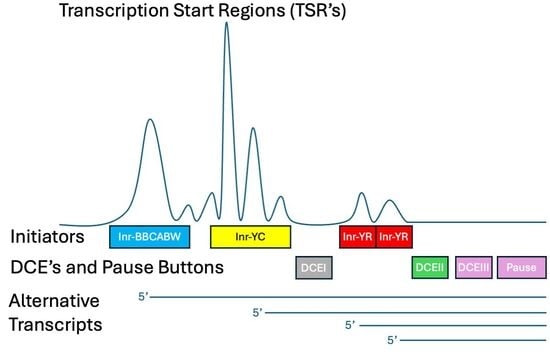
A novel motif was identified in many genes without a TATA box: the initiator (Inr) motif. It is proposed that subunit TAF1, in conjunction with TAF2, binds the Inr and recruits TFIID to the promoter [31]. In mammals, there two initiator (Inr) motifs described in the literature, YR (−1 to +1) and BW (−3 to +3), both overlapping transcriptional starts which happen at the purine in YR (R) and in A in BBCABW. Importantly, an estimated 30–40% of human core promoters contain the consensus INR (YYANWYY) [32,33]. A non-canonical initiator element has also been described, with consensus sequence YC (−1 to +1) [34]. These non-canonical initiators are termed 5′-TOP (Terminal OligoPyrimidine) elements in mammals and TCT initiators in Drosophila [34]. In Drosophila, the TCT-containing core promoters analyzed are bound by TBP-related factor 2 (a TBP family member) and are recognized independently of TFIID [34]. These non-canonical initiators produce 5′TOP mRNAs which contain a C residue at the cap site, followed by a 4–15 pyrimidine sequence containing a similar proportion of C and U residues, a CG-rich region immediately downstream of the 5′TOP motifs, and a very high conservation of the 5′TOP motif and its adjacent transcribed sequence of a given member among mammals [34,35]. Peculiarly, genes associated with the translation machinery, including translation initiation and elongation factors, contain polypyrimidine initiator (5′-TOP or TCT) elements [36,37]. Overall, the most preferred and active TSSs have CG, CA, and TG initiator sequences [30].
Newly discovered core promoter elements can also bind GTF subunits. The Downstream Core Element (DCEI, DCEII, DCEIII) is a core promoter element identified in the β-globin gene [38] as containing three subelements separated by a few nucleotides. The DCE motif is typically bound by the TAF1 subunit of TFIID. DCEs are found in many promoters, with a high incidence in promoters containing a TATA motif [39,40]. The Downstream Promoter Element (DPE) is proposed to be bound by the TAF6 and TAF9 subunits of TFIID. Specifically, TFIID will bind the Inr and DPE motifs to facilitate the recruitment of Pol II to the core promoter [41]. In contrast to DCEs, DPEs are typically found in promoters which do not have TATA boxes. The TFIIB Recognition Elements (BREd; BREu) are core promoter motifs which flank the TATA box upstream (BREu) and downstream (BREd). TFIIB binds directly to BRE motifs, which helps position Pol II at the TSS [42]. In short, DCEI-III, DPEs, and BREs provide mechanisms to recruit or stabilize the classical transcription machinery in core promoters.
Once a short nascent RNA has been synthesized, Pol II then pauses before continuing synthesizing the transcript [43]. In Drosophila, the pause button is typically located 25 to 35 nucleotides upstream of the initiator [43]. The pause button motif, a highly enriched for a GC-rich sequence motif identified in Drosophila, is involved in the proximal promoter pausing of Pol II which may be utilized to produce dynamic and rapid responses of developmental patterning genes [44,45]. A recent study in human cells identified GC-rich sequence motifs involved in promoter-proximal pausing [46,47]. Furthermore, Watts et al. demonstrated that, in human cells, the majority of pause sites consist of cytosines followed by a purine occurring within a GC-rich “9-mer” sequence motif. In addition, they demonstrated that the 50 nucleotide regions around the pause sites are rich in GC content at around 70%, and there is GC skewing around the pause sites, indicating G-rich RNA [47].
Here, we used new bioinformatic tools and high-throughput sequencing data that are publicly available to analyze these newly discovered elements present in CK2 gene and pseudogene core promoters. We compared these core promoter elements across tissues and species whenever possible. Our overall aim is to update the description of the CK2 gene and pseudogene core promoters to better understand the regulation of their expression.

2. Results

2.1. Human CK2 Gene Structure

We first reexamined the gene structure for human CK2 genes utilizing publicly available data accessible in different browsers (Table S1). To do this, we compared the current NCBI reference sequences for CSNK2A1, CSNK2A2, and CSNK2B (including their intron/exon organization) (Table S1) with their previous descriptions in the literature [18,24,26]. The CSNK2A1 gene encoding CK2α was described in NCBI and Ensembl to span approximately 71 kb, and the mRNA had 12,984 nucleotides (coding sequence length is 1176 nucleotides). We provide an update to the previous literature by reporting that CSNK2A1 contained 14 exons separated by 13 introns (Figure 1). The current exon 2 was not reported in the previous literature, which described CSNK2A1 as having 13 exons [24]. This is probably because exon 2 was present in a subset of the transcripts, as depicted in Ensembl. Of note, exons 1 and 2 are entirely untranslated, with protein translation beginning 110 nucleotides into exon 3 (the previous exon 2) [24]. The CSNK2A2 gene encoding CK2α′ spans 40 kb and contains 12 exons separated by 11 introns (mRNA had 1887 nucleotides; coding sequence length was 1053 nucleotides). In contrast to CSNK2A1, the CSNK2A2 exon 1 contains the protein start codon [26]. The published exon 1 is 246 nucleotides and does not contain the 228 nucleotides at the 5′ end compared to the current reference sequence (474 nucleotides); the translation start ATG is 370 nucleotides into exon 1 in the reference sequence. The CSNK2B gene encoding CK2β spans around 40 kb and contains seven exons separated by six introns (mRNA had 929 nucleotides; cDNA length was 648 nucleotides). The CSNK2B exon 1 is untranslated, with translation beginning in exon 2 [18]. The published exon 1 is 329 nucleotides long, containing an additional 200 nucleotides at the 5′ end compared to the reference sequence. The CSNK2A3 (also denoted CSNK2A1P; mRNA had 1309 nucleotides) is an untranslated intronless CK2α pseudogene, as it is 99% homologous to the coding region of the CSNK2A1 cDNA [48].
In this research, we utilize the consensus transcription start site for the reference sequence for each human gene, which is “defined” in the NCBI, Ensembl, and UCSC browsers.

2.2. Transcriptional Start Region (TSR) Instead of Transcription Start Site (TSS)

Here, we utilize two publicly available sequencing databases, FANTOM5 and DBTSS, to assess the transcription start activity for the CK2 genes and pseudogene to determine their type of promoter initiation.

2.2.1. FANTOM5 Results

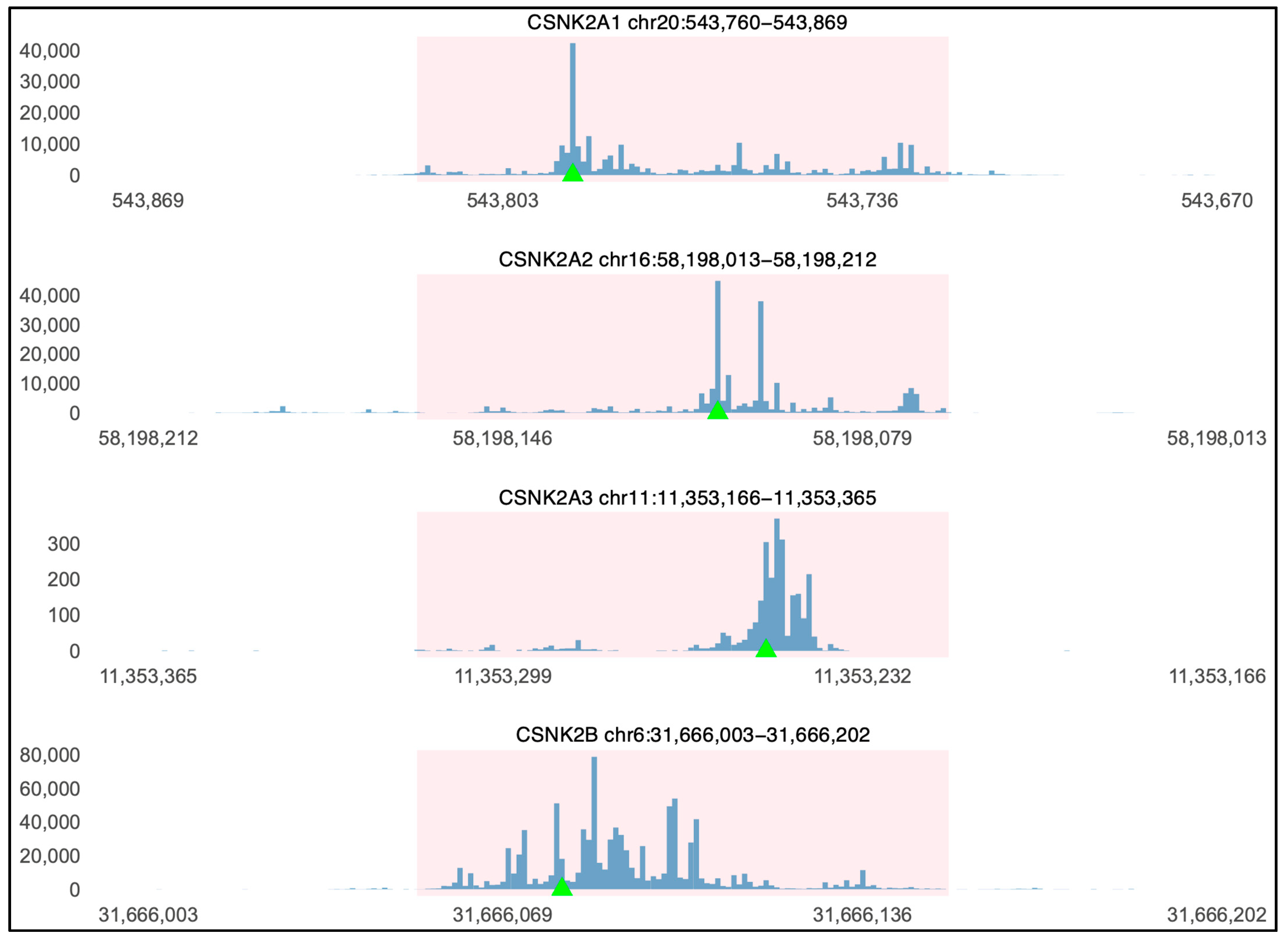
FANTOM5 is a project which maps TSS to a single nucleotide resolution across the human and mouse genomes and monitors their frequency with Cap Analysis of Gene Expression (CAGE) [49,50]. We selected human data from the FANTOM5 project as detailed in the methods (i.e., excluding disease states and treated samples) to analyze the CK2 gene transcription start site frequency in 851 samples of human and fetal tissues and cancer cell lines (Table S2A). First, we found the average number of transcripts per sample for each cell line (Table S2B). Next, the top five 100-nucleotide regions of maximal transcription activity based on CAGE tag counts were determined for each CK2 gene (Table 1). These regions were located around the start of exon 1 of each CK2 gene and the start of the pseudogene.
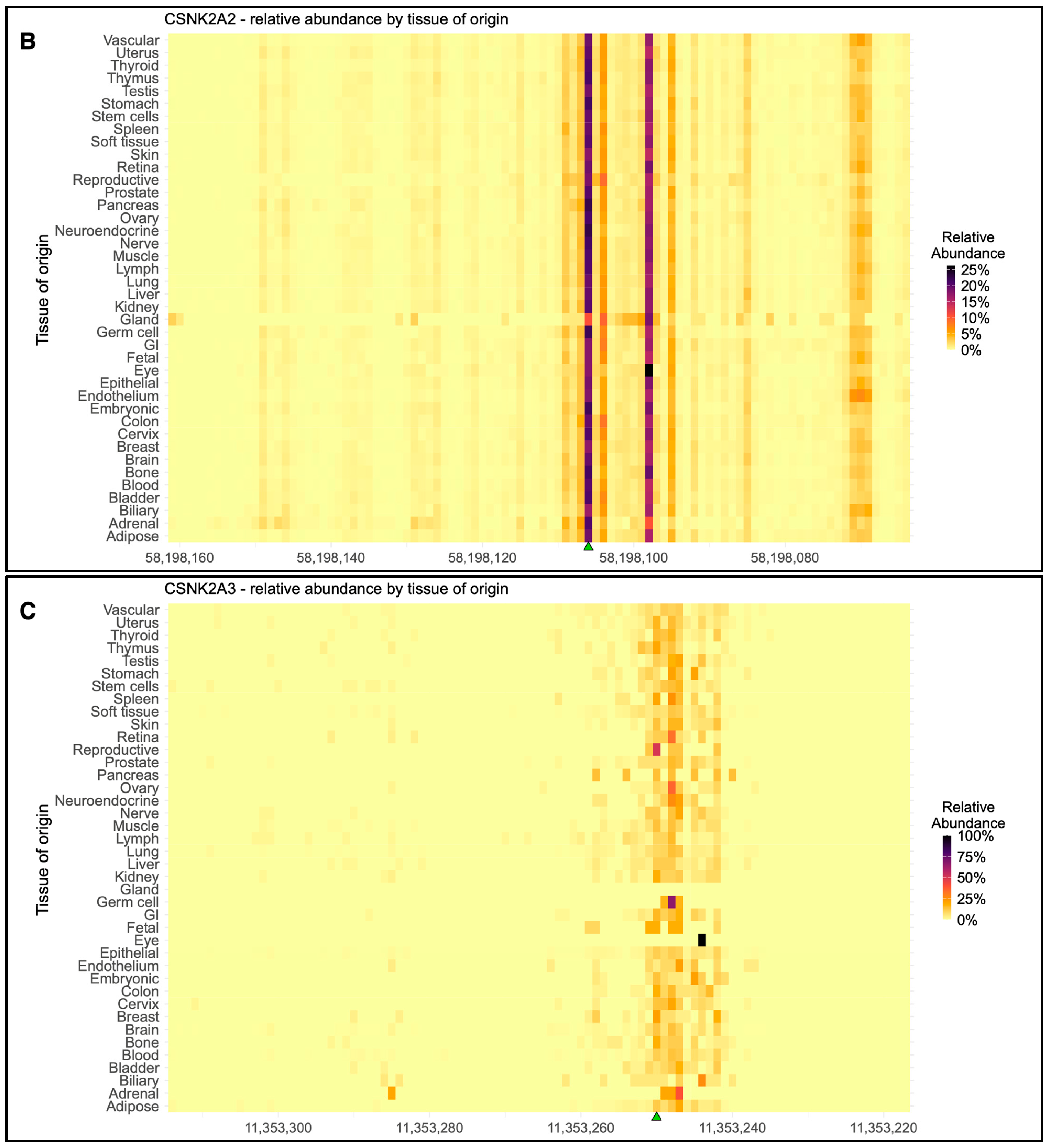
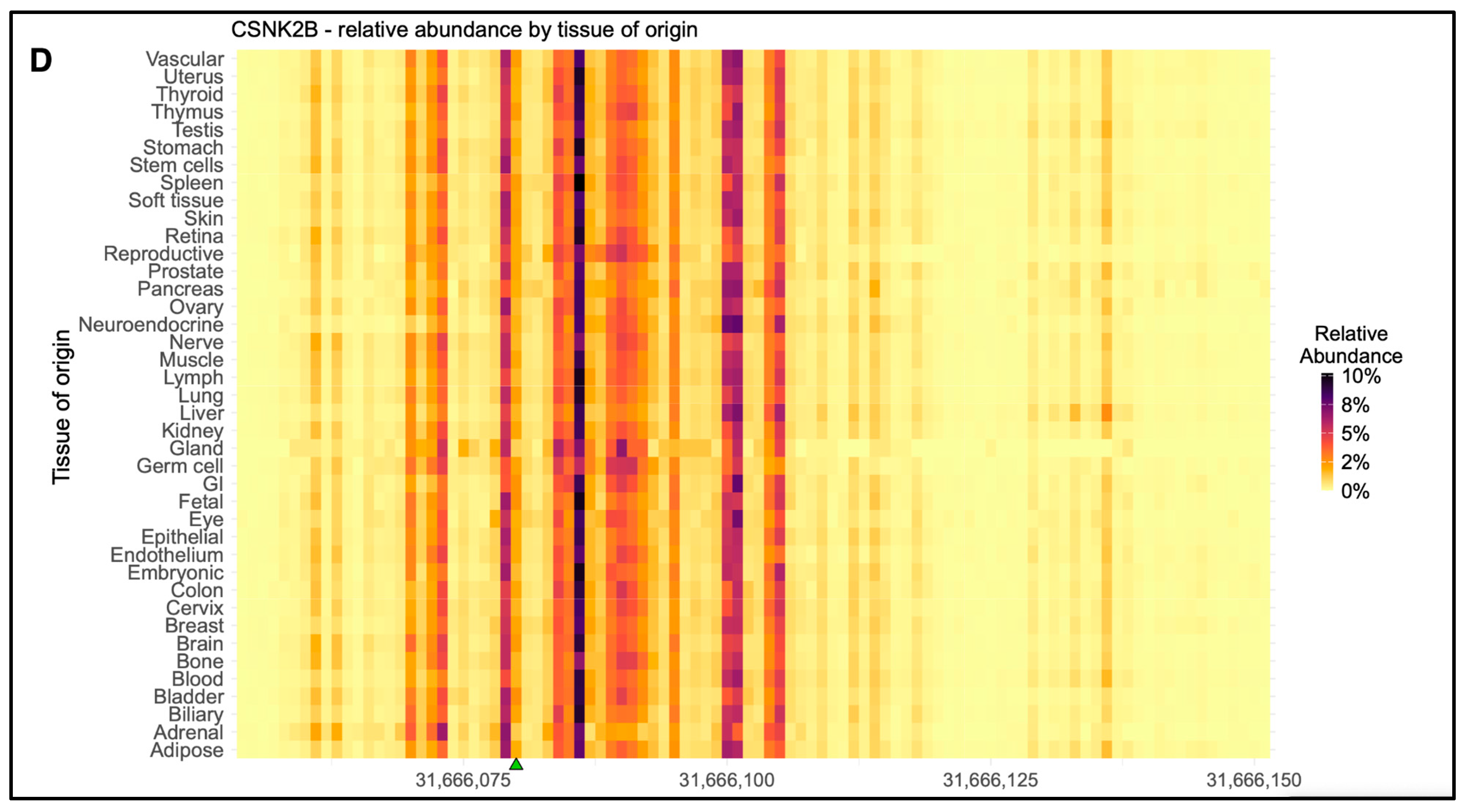
The analysis of the selected FANTOM 5 data showed that, for each CK2 gene, most of the transcription start activity was contained within a 100-nucleotide region surrounding each gene’s consensus transcription start site in cancer, embryo, and adult tissues (Figure S1). These 100-nucleotide regions of maximal transcription activity showed multiple transcription start sites in adult, embryo, and adult tissues. Therefore, to continue the analysis, we pull together all the data from cancer, embryo, and adult tissues. Histogram representation showed that CSNK2A1 and CSNK2A2 contained one and two peaks, respectively, of dominant transcription start activity. CSNK2A3 and CSNK2B showed multiple transcriptional start activity peaks along a large region, with high transcription start activity (Figure 2, Table S2C).
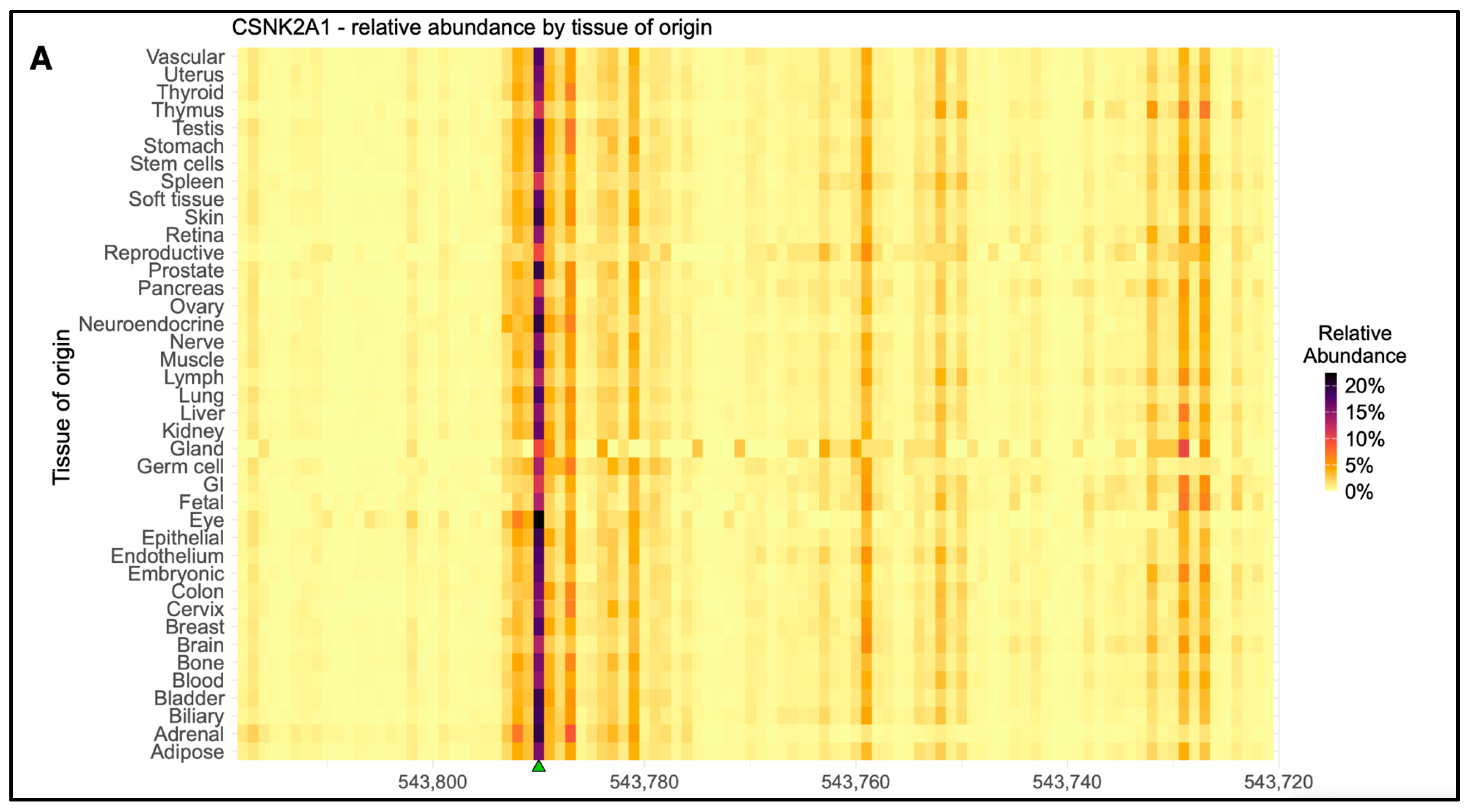
We next analyzed whether the transcription start site activity distribution was consistent across different tissue types in the selected FANTOM5 dataset. Heatmap visualization showed that the distribution was highly consistent for all three CK2 genes, and fairly consistent for CSNK2A3 (Figure 3).
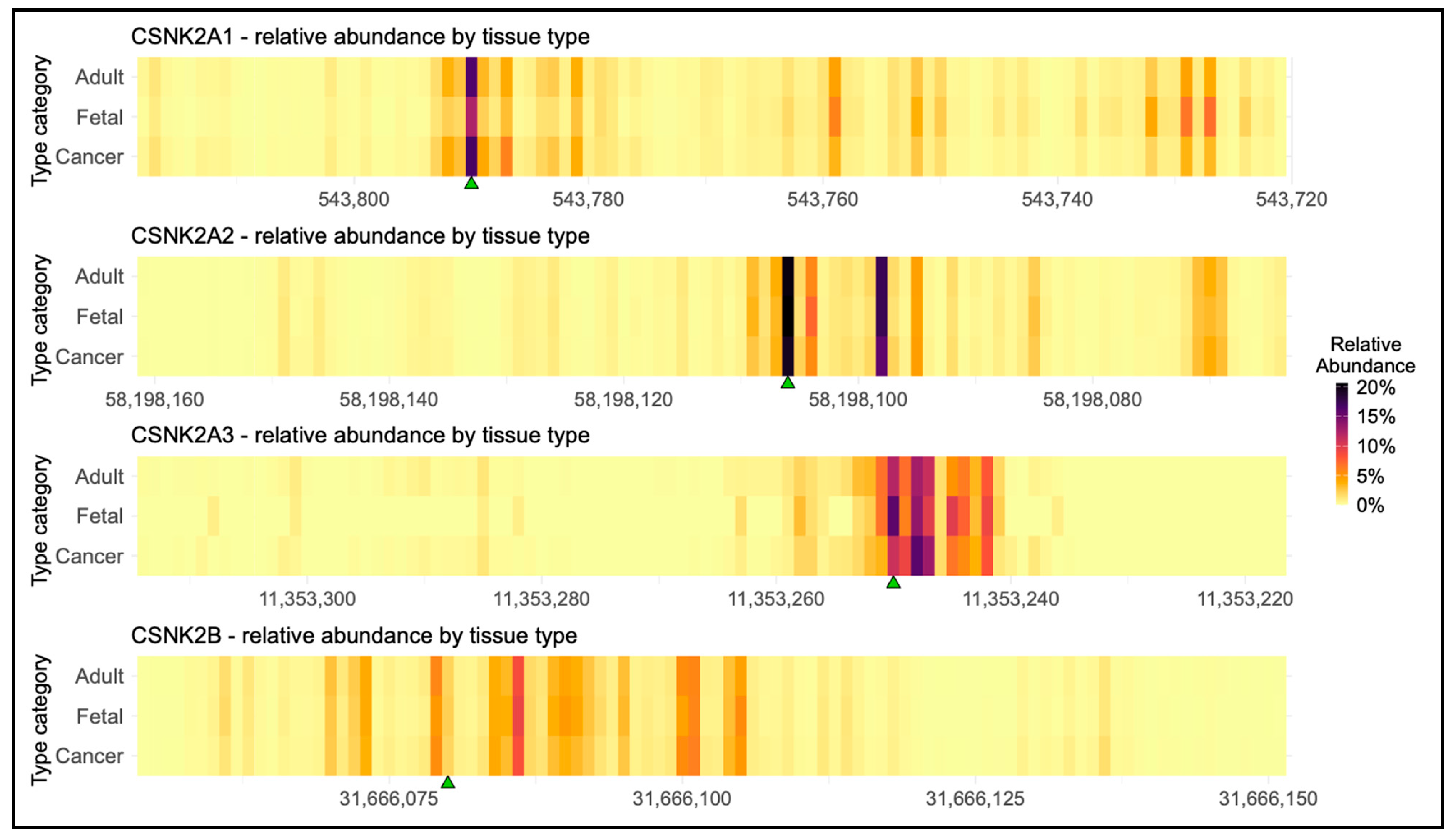
We next assessed the potential differences between adult and fetal tissues and cancer cell lines. This could not be assessed directly in the figures above, since the number of samples differs in adult (559) and fetal (43) tissues and cancer cell lines (249). For this analysis, we calculated the proportion of each transcriptional start compared to the total sum of starts for each gene and type of sample. We represented the relative proportion of each transcriptional start utilizing heatmap visualization (Figure 4). The analysis showed that adult and fetal tissues and cancer cell lines exhibited similar distributions of transcription start sites across each of the CK2 gene promoters. The main difference was that the relative proportions of transcription start site usage differed somehow in fetal cells from adult and cancer tissues.

2.2.2. DataBase of Transcriptional Start Sites (DBTSS) Results

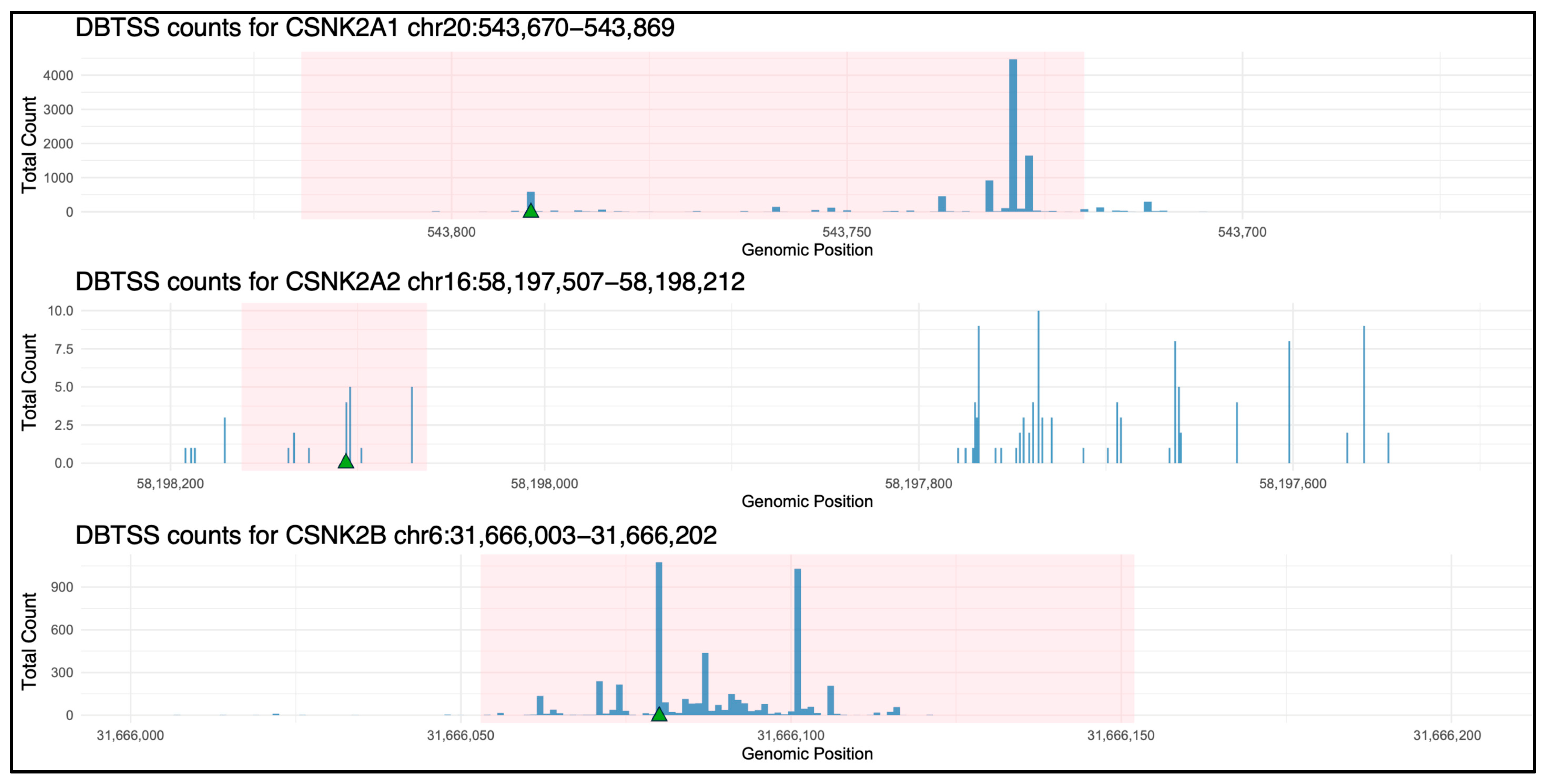
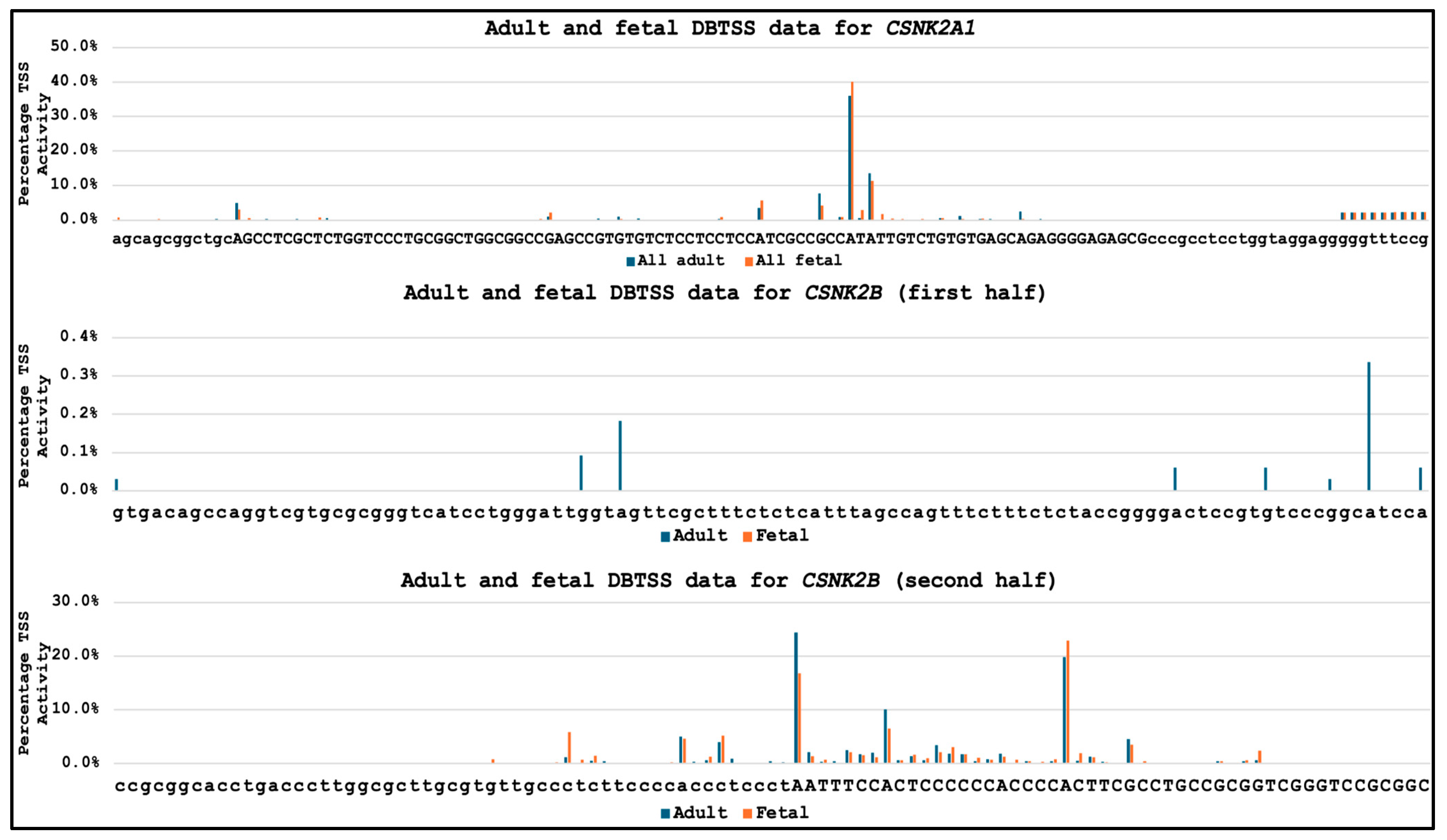
DBTSS is an integrative platform that provides information about the exact positions of TSSs across the genome using TSS-seq, a unique experimentally validated TSS sequencing method [51]. We utilized DBTSS project data to analyze the CK2 gene transcription start site frequency in 19 human adult and 5 fetal tissue samples across 250 nucleotide genomic sequences in their promoter regions. DBTSS analysis showed that all three CK2 genes had multiple TSSs in adult and fetal tissues. To determine the overall transcription start site distribution, we added all the counts across all adult and fetal tissues (Figure 5, Table S2D). These regions of maximal transcription activity showed similar multiple transcription start sites. CSNK2A1 showed one major TSS peak (9186 adult tissue counts and 669 fetal tissue counts). CSNK2B showed two major TSS peaks (3594 adult tissue counts and 1801 fetal tissue counts). CSNK2A2 had low counts, which limited our ability to identify peaks (100 adult tissue counts and 24 fetal tissue counts). Nonetheless, DBTSS data showed two regions of transcriptional activity (Figure 5), one that overlapped with the FANTOM5 data (Figure 2) and another one in the latter portion of exon 1 overlapping the coding sequence start site (ATG), which was also found in FANTOM 5 as a minor peak (Table S2C,D). CSNK2A3 had very limited data and was not analyzed.
We next assessed potential differences between adult and fetal tissues from the two genes with high tag counts, CSNK2A1 and CSNK2B (Figure 6). As reported above for FANTOM5, adult and fetal tissues exhibited a somewhat dissimilar usage of transcription start sites across each of the CK2 gene promoters.
As shown in the FANTOM 5 data, there were slight differences in the transcriptional start activity among tissues in the DBTSS data (e.g., an example for CSNK2A1) (Figure S2). The DBTSS database also contains mouse fetal data, and, for mouse fetal tissues, Csnk2a1 and Csnk2b genes showed multiple TSSs (data can be found at https://dbtss.hgc.jp/, accessed on 6 April 2025). There was no data for Csnk2a2 and Csnk2a3 in embryo tissues, and the database does not contain adult mouse tissues.
The data from FANTOM5 and DBTSS showed that each of the CSNK2A1, CSNK2A2, and CSNK2B core promoters was characterized by having transcriptional start regions (TSRs) instead of unique transcriptional start sites (TSSs). This result was consistent with the architecture of “broad” class promoters [30,52]. The core promoter of genes with “dispersed/broad” initiation differs from the “sharp” class in the composition and arrangement of regulatory elements [29], which we will explore below.

2.2.3. TSS Utilization in FANTOM5 Human Time Course Experiments

We found indications of a potential alternative utilization of start sites for the CK2 genes and pseudogene during embryo development in the FANTOM5 and DBTSS data. Previous studies show that certain genes switch TSS preference during embryonic development and cell differentiation [53]. For example, a TSS switch is identified for maternal-to-zygotic transition in Zebrafish embryos [54], development in a marine chordate [55], and differentiation of a mouse myoblast cell line [56]. Zhang et al. demonstrated a significant number of TSS switching events in mouse cerebellar development, as well as the epithelial-to-mesenchymal transition and adipocyte differentiation [57]. To investigate possible TSS switching events in the CK2 genes, we utilized FANTOM5 data on time course experiments with human cells.
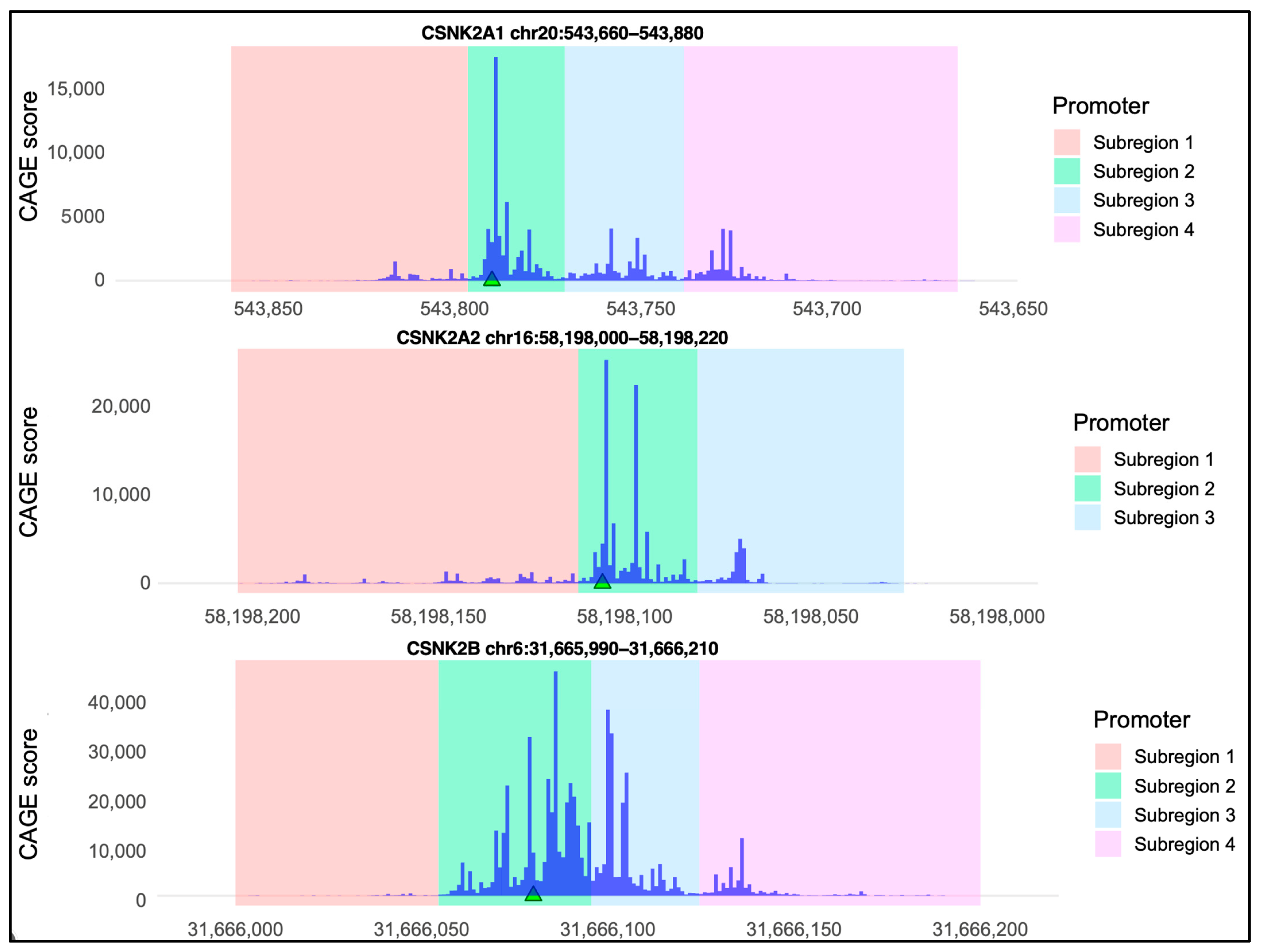
First, we divided up the CK2 gene promoters into separate subregions based on local peaks and valleys in TSS activity, creating four, three, and four subregions for CSNK2A1, CSNK2A2, and CSNK2B, respectively (Figure 7).
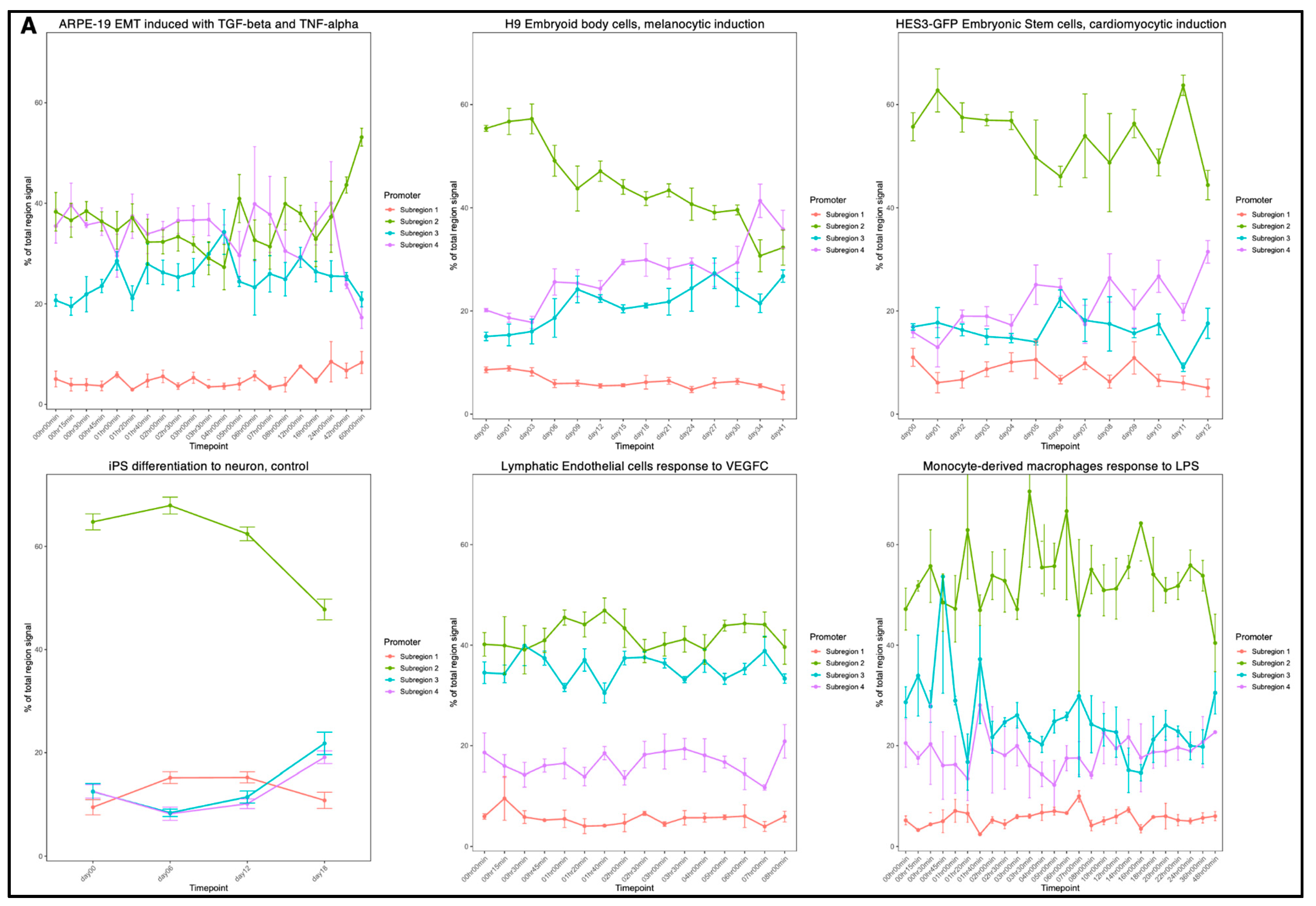
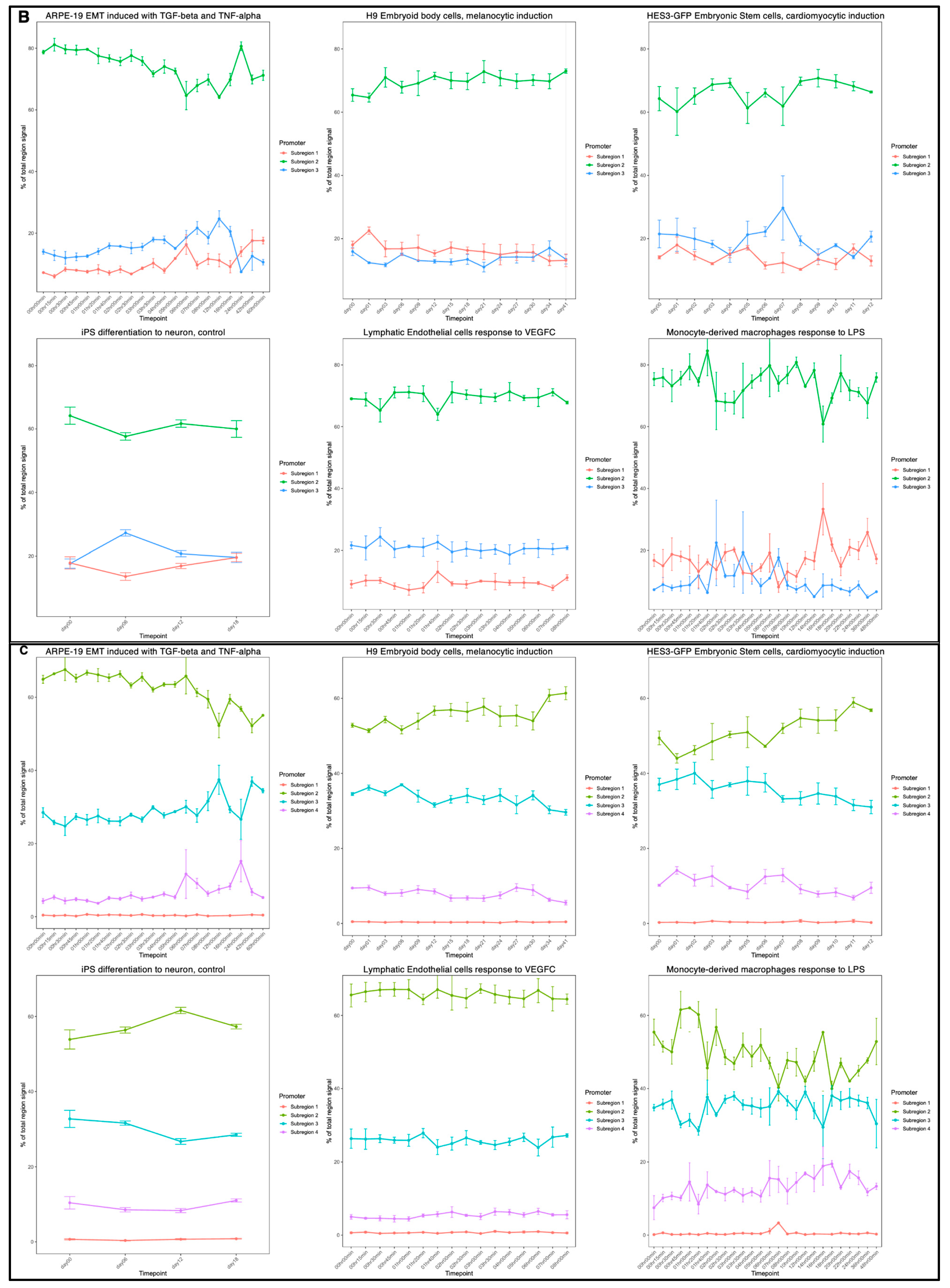
Next, we used FANTOM5 data from different time course experiments and plotted the percentage of TSS activity within each subregion relative to the entire core promoter region within each experimental set. Then, we assessed whether TSS utilization changed within these promoter subregions for the CK2 genes. Below, we present our findings for CSNK2A1 TSS promoter subregions utilizing six FANTOM5 time course experiments: ARPE-19 epithelial–mesenchymal transition (EMT) induced with TGF-beta and TNF-alpha; H9 Embryoid body cells, melanocytic induction; HES3-GFP Embryonic Stem cells, cardiomyocytic induction; iPS differentiation to neurons, control; lymphatic endothelial cell response to VEGFC; and Monocyte-derived macrophage response to LPS (Figure 8).
For CSNK2A1, subregion 2, containing the dominant TSS peak, is generally the dominant subregion in the core promoter across experiments, followed by either subregion 3 or 4 (Figure 8A). The relative activities of each subregion varied substantially between experiments and over time. Across the different experiments, subregions 1, 2, 3, and 4 demonstrated relative activities between around 5 and 10%, 30 and 70%, 10 and 40%, and 10 and 40%, respectively (we exclude timepoint 00 h 45 min in the macrophage experiment, where subregion 1 activity was much higher than all other timepoints at 55% with a large standard error). We found substantial changes in subregion utilization over time. In the melanocytic induction and differentiation to neuron experiments, subregion 2 is initially the dominant subregion, but its relative activity decreases substantially over time, even reaching a similar utilization with subregions 3 and 4 by the end of the melanocytic induction experiment. The opposite occurs in the ARPE-19 EMT experiments, where subregion 2’s initial activity is similar to subregions 3 and 4 in all but the final two timepoints, where it becomes the dominant subregion. Subregions 3 and 4 tend to have opposite trends up or down and have a somehow similar preference (except for a clear preference for subregion 3 in the lymphatic endothelial cell experiment and more subtle preference for subregion 4 in the ARPE-19 EMT and melanocytic induction experiments).
For CSNK2A2, subregion 2, containing the two dominant TSS peaks, is the preferred subregion across all experiments (Figure 8B). The relative activities of each subregion varied between experiments and over time, though less so compared to the CSNK2A1 core promoter subregions. Across the different experiments, subregions 1, 2, and 3 demonstrated relative activities between around 5 and 25%, 55 and 85%, and 5 and 25%, respectively (we exclude timepoint day07 in the cardiomyocytic induction experiment, where subregion 3 activity was higher than all other timepoints at 30% with a large standard error). We found changes in the CSNK2A2 subregion utilization which were less substantial compared to CSNK2A1, primarily in the utilization of the upstream subregion 1 (slight preference in melanocytic induction and macrophages experiments) and downstream subregion 3 (slight preference in ARPE-19 EMT, differentiation to neurons, and lymphatic endothelial experiments). However, in the ARPE-19 EMT experiment, there was a switch to a preference for subregion 1 over 3 in the final two timepoints, and in the differentiation to neurons experiment, we initially see a similar preference for subregion 1 and 3, with a strong increase in subregion 3 preference, and eventual return to a similar preference for subregion 1 and 3 over time.
For CSNK2B, subregion 2, containing the dominant TSS peak, is the preferred subregion followed by subregions 3, 4, and 1 across all experiments (Figure 8C). The relative activities of each subregion varied between experiments and over time, though less so compared to the CSNK2A1 core promoter subregions. Across the different experiments, subregions 1, 2, 3, and 4 demonstrated relative activities between around 0 and 5%, 40 and 70%, 25 and 40%, and 5 and 20%, respectively. The changes in the CSNK2A2 subregion utilization we observed were primarily differences in the utilization of upstream subregions 2 and 3, with smaller changes in the utilization of the most downstream subregion 4. In the melanocytic induction and cardiomyocytic induction experiment, there is an increasing utilization of subregion 2 and decreasing utilization of subregion 3 over time, whereas, in the ARPE-19 EMT experiment, the opposite occurs. The most substantial shift in the utilization of subregion 4 occurs in the macrophage experiment.
Altogether, these results suggest that these core promoter subregions of CK2 genes are actively regulated rather than constitutively firing in a fixed pattern.

2.3. CK2 Gene and Pseudogene Core Promoter Elements

Next, we investigated the array of newly discovered regulatory core promoter elements, which provided a paradigm shift for this field, particularly for TATA-less promoters such as those for the CK2 genes and pseudogene (Table 2).

2.3.1. Canonical and Non-Canonical Initiator (Inr) Elements

The promoters for CSNK2A1, CSNK2A2, and CSNK2B do not contain a TATA box or standard positioned CAAT box [18,24,26,58], which we have corroborated using the latest sequence compilation (Tables S1 and S3). Importantly, the canonical TATA box motif is only found in approximately 10% of genes [59], and TATA box motifs are typically over-represented in sharp promoters and underrepresented in broad promoters, such as the ones for the CK2 genes and pseudogene [30].
Therefore, we assessed CK2 genes for canonical and non-canonical initiator motifs. For all CK2 gene core promoters, Inr-YR motifs are broadly dispersed throughout (Table S3, Figure S3). For CSNK2A1, CSNK2A3, and CSNK2B, there were Inr-YR motifs corresponding to the dominant transcription start site peaks. Notably, for CSNK2A2, there was an absence of Inr-YR motifs near the two dominant TSS peaks.
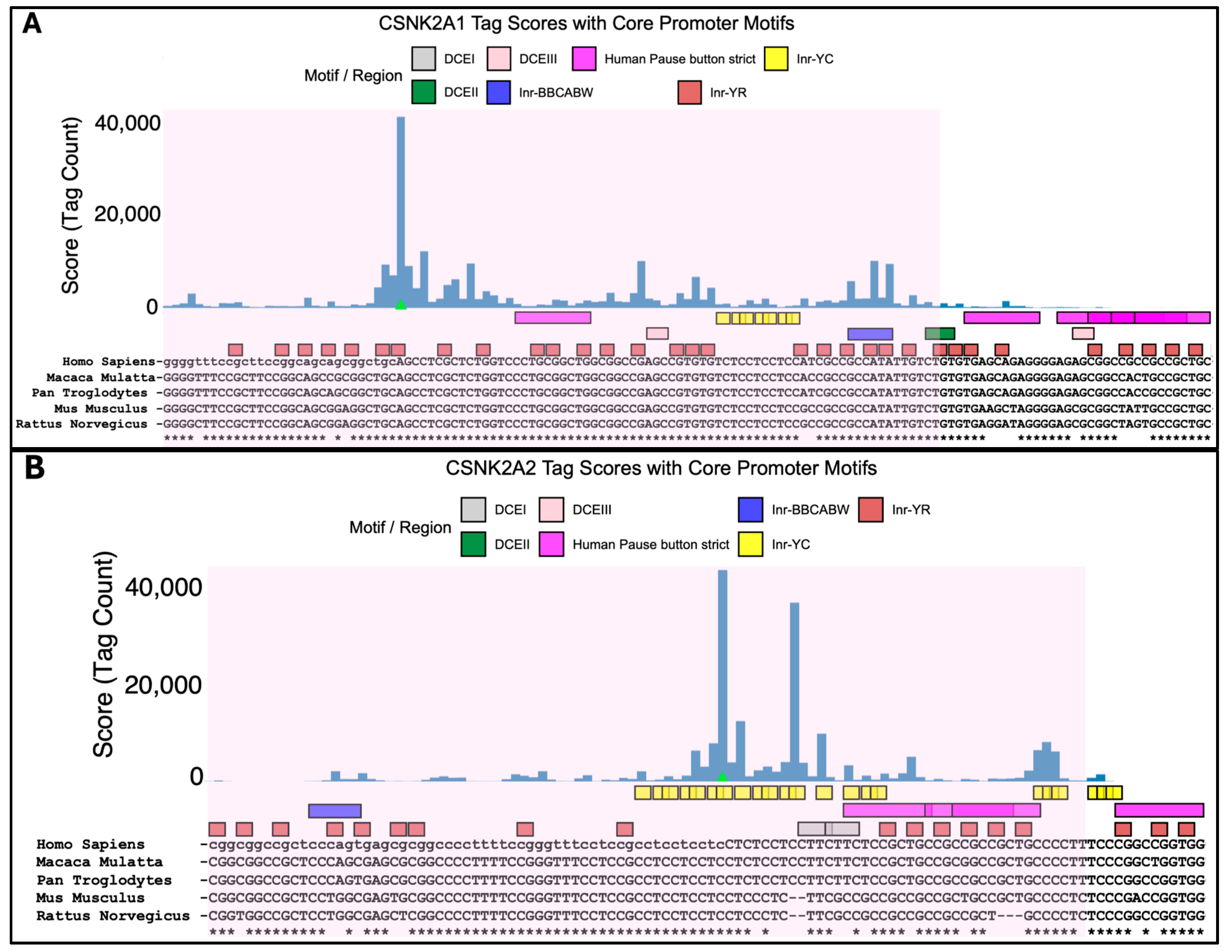
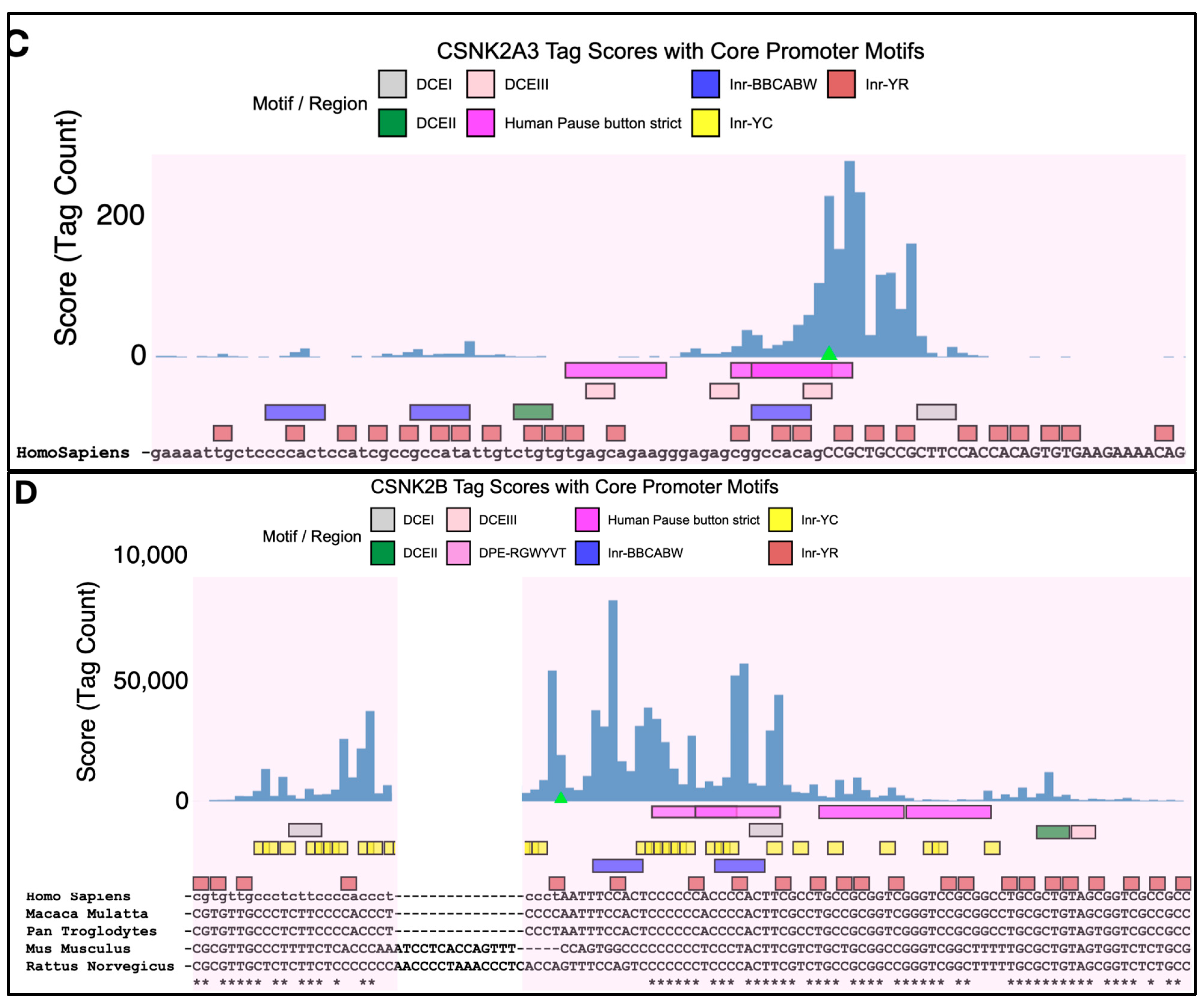
For all CK2 gene core promoters, at least one Inr-BBCABW motif was found. For CSNK2A1, there was a single Inr-BBCABW motif located ~60 nucleotides downstream of the dominant TSS peak (chr20:543,790) (Figure 9A). The TSS adenine of this Inr-BBCABW motif (sequence GCCATA) contained 4.0% of all TSS activity within the 100 bp window of maximal transcription start site activity. For CSNK2A2, there was a single Inr-BBCABW motif located ~50 nucleotides upstream of the two dominant TSS peaks (the tallest peak being chr16:58,198,106, followed by chr16:58,198,098) (Figure 9B). The TSS adenine of this Inr-BBCABW motif (sequence CCCAGT) contained 1.0% of all TSS activity within the 100 bp window. For CSNK2A3, there were three Inr-BBCABW motifs found, the most dominant of which was found immediately upstream of the dominant transcript start site peak region, and the TSS adenine of this Inr-BBCABW motif contained 1.19% of all TSS activity within the 100 bp window (Figure 9C). For CSNK2B, there were two Inr-BBCABW motifs (chr6:31,666,148–31,666,153 and chr6:31,666,084–31,666,089) placed over multiple transcription peaks each, including the top two transcription start site peak regions (Figure 9D). Interestingly, for the Inr-BBCABW motif (sequence TCCACT) over the most dominant peak, it was the second cytosine which represented the maximal TSS activity at 8.6%, whereas the adenine represented 1.7% of all TSS activity within the 100 bp window. For the other Inr-BBCABW motif (consensus CCCACT), the TSS adenine contained the most TSS activity within the motif at 5.9%.
Non-canonical Inr-YC motifs were found in all three CK2 genes. However, only CSNK2A2 has Inr-YC motifs and consistent 5′TOP promoter architecture as follows. We found a 28-nucleotide polypyrimidine region (chr16:58,198,089–58,198,116) which contained 70.8% of all CSNK2A2 TSS activity within the 100-nucleotide region of maximal activity. Within this polypyrimidine region, there were 16 Inr-YC motifs correctly located over each of the two dominant TSS peaks. In total, 13 of these Inr-YC motifs were followed by uninterrupted tracts of 4–15 pyrimidines. Furthermore, this 28-nucleotide polypyrimidine region contained a somewhat balanced number of 17 cytosine and 11 thymine residues. The 76-nucleotide region immediately downstream was CG-rich, containing 28 Gs, 37 Cs, 11 Ts, and 0 As. In combination, all these features are consistent with 5′TOP promoter architecture. For CSNK2A1, CSNK2A3, and CSNK2B, several Inr-YC motifs were found. However, they were associated with small (maximum 11 nucleotides) polypyrimidine regions without the balanced number of cytosine and thymine residues to be consistent with 5′TOP architecture.
The presence of canonical (YR and BBCABW) and non-canonical YC initiator sequences in the three CK2 genes indicates that they can be dual-initiator promoters (i.e., containing canonical and non-canonical initiator sequences). Interestingly, CSNK2A3 was not a dual-initiator promoter, as it lacked YC sequences.

2.3.2. DCE Core Promoter Sequences Are Common in CK2 Genes and Pseudogene

We analyzed additional core promoter elements (e.g., DCEI-III, DPE, and BRE) which provide mechanisms to recruit or stabilize the classical transcription machinery in core promoters.
Several different core promoter motifs were found for each CK2 gene (Table S3, Figure S3 and Figure 9). The CSNK2A1 core promoter contained multiple DCEI-DCEIII motifs throughout the core promoter. One of the DCEIII motifs was appropriately positioned at 33–35 nucleotides downstream from the Inr-YR element at the dominant TSS peak. Another DCEII and a DCEIII motif were correctly positioned downstream from two Inr-YR elements (chr20:543739–543738 and chr20:543736–543735), where there was a small spike in transcription start site activity. Another DCEIII motif was correctly positioned downstream from the only Inr-BBCABW motif. Lastly, one BREd motif was identified; however, it is not appropriately positioned ~60 nucleotides downstream from the dominant TSS peak and is not associated with a TATA box. Therefore, it would likely not be functional.
The CSNK2A2 core promoter contained two overlapping DCEI motifs. One of these was correctly positioned 8–11 nucleotides downstream of the dominant TSS peak, which contains YC initiator elements in a polypyrimidine-rich region. As we discussed above, this may represent a region of YC initiators capable of forming 5′TOP mRNAs.
The CSNK2B core promoter contained multiple DCEI-DCEIII motifs dispersed throughout the core promoter. One DCEI motif was upstream of the consensus start site, but correctly positioned downstream of the Inr-YR at chr6:316,66,055–316,66,056 and chr6:316,66,058–316,66,059, which contained a small amount of TSS activity. Another DCEI motif was appropriately positioned just downstream of the Inr-YR at chr6:31,666,095–31,666,096. A DCEII motif was correctly positioned downstream of the Inr-YR at chr6:316,66,118–316,66,119. A DCEIII motif was correctly positioned downstream of the Inr-YR motif at chr6:31,666,109–31,666,110, which contained a small amount of TSS activity.
The CSNK2A3 core promoter contained one BREd element; however, it was not appropriately positioned too far upstream of nearby Inr elements and not associated with a TATA box. There were also several DCEI-DCEIII elements identified that were upstream of the reference sequence TSS and correctly positioned for Inr-YR elements upstream of the reference start site, which had minimal TSS activity.
We also searched for DNA Replication Element (DRE), X gene core promoter element 1 (XCPE1), and X gene core promoter element 2 (XCPE2) motifs; however, we did not find any within the CK2 gene or pseudogene promoters [60].

2.3.3. DPEs in Wnt/β-Catenin-Signaling Components

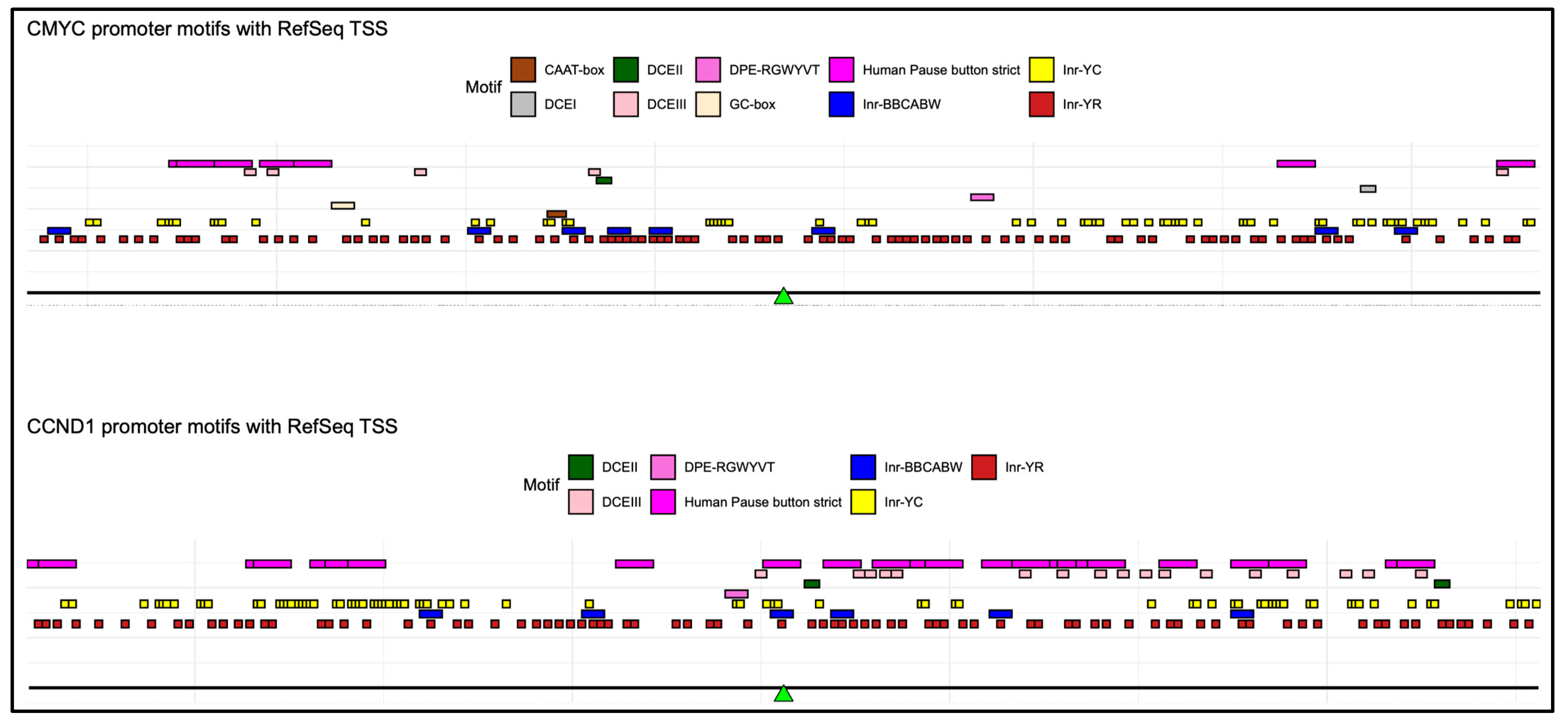
It was intriguing that the CK2 genes and pseudogene do not contain DPEs, which are highly present in TATA box-less promoters. In addition, the DPE is implicated in the control of the evolutionarily conserved developmental gene regulatory networks governing the body plan in both the anterior–posterior and dorsal–ventral axes [61,62], and protein kinase CK2 (α/β) is a key positive component of Wnt/β-catenin-signaling during dorsal development [63]. We had previously shown that CK2 is necessary and sufficient for Wnt/β-catenin-signaling. Therefore, we decided to analyze two well-described mammalian Wnt/β-catenin targets for the presence of the DPEs cyclin D1 and c-myc (Table S3).
Our analysis showed that both c-MYC and CCND1 had DPEs at the appropriate distance (Figure 10). We analyzed −200 to +200 nucleotides in regard to the reference sequence TSS. For c-MYC, there is one DPE: one at +51 bp from reference sequence TSS. There are also two DCEs at +154 and +190 from the reference sequence TSS. For CCND1, there is one DPE 10 nucleotides upstream from the reference sequence TSS. There are also multiple DCEs at +7, +20, +23, +27, +30, +64, +74, +84, +90, +96, +101, +112, +125, +135, +149, +155, +169, and +174 from the reference sequence TSS. This data shows that standard Wnt/β-catenin target genes contain DPEs, even though CK2 genes do not.

2.3.4. Pause Button Core Promoter Sequences Found in CSNK2A1, CSNK2A2, and CSNK2B

To search for pause button motifs within the CK2 gene core promoters, we created a “strict” version of the 9-mer motif produced by Watts et al. by keeping only the central 10 nucleotides (−5 to +5) of the 9-mer motif and requiring the pause site to be a cytosine followed by a purine. This produced our strict motif sequence, “NSNVCRSNNS”. The data is presented in Table S3 and Figure S3 and Figure 9.
For CSNK2A1, we found one strict pause button motif located 15 nucleotides downstream of the dominant TSS peak. The 40-nucleotide region running from 15 nucleotides upstream through 15 nucleotides downstream of this pause button motif was GC-rich (75.0%), with a balanced G:C ratio (15 Gs and 15 Cs). In addition, we found a cluster of five pause buttons, four which were overlapping, positioned ~20–40 nucleotides downstream of the Inr-BBCABW element. The 62-nucleotide region running from 15 nucleotides upstream through 15 nucleotides downstream of this pause button cluster was GC-rich (67.7%), with a slight G:C skew (22 Gs to 20 Cs).
For CSNK2A2, we found a cluster of three of our strict pause button motifs adjacent to one another and located around 15 to 35 nucleotides downstream of the Inr-YC/5′TOP mRNA region dominant TSS peak. The 52-nucleotide region running from 15 nucleotides upstream through 15 nucleotides downstream of this pause button cluster was GC-rich (73.1%), with a C:G skew (28 Cs to 10 Gs).
For CSNK2B, we found a cluster of two of our strict pause button motifs shortly downstream of the reference sequence start site. This pause button cluster was correctly positioned for two Inr-BBCABW elements (one of which was associated with the dominant TSS peak (chr6:31,666,086), representing 8.6% of all TSS activity) and for the Inr-YC/5′TOP mRNA region downstream of the reference sequence TSS. The 45-nucleotide region running from 15 nucleotides upstream through 15 nucleotides downstream of this pause button cluster was GC-rich (68.9%), with a C:G skew (24 Cs to 7 Gs). We found another cluster of two pause button motifs shortly further downstream, which were also correctly positioned for an area of multiple larger TSS peaks. The 50-nucleotide region running from 15 nucleotides upstream through 15 nucleotides downstream of this pause button cluster was GC-rich (76.0%), with a slight C:G skew (21 Cs to 17 Gs).
For CSNK2A3, there were three pause buttons positioned downstream of the first and second Inr-BBCABW elements within the 100 bp window of maximal TSS activity; however, the associated Inr-YR and Inr-BBCABW elements contained minimal TSS activity.
The previous literature suggests that Pol II pausing is enriched at genes where small changes in the expression level are highly relevant to the underlying biology, such as signaling components (e.g., receptors, kinases, and many TFs) [43]. Therefore, the identified pause motifs may play a role in Pol II pausing and fine-tuning the expression of the three CK2 genes.

2.3.5. Presence of Core Promoter Elements Among Mammalian Species

To determine whether the above-mentioned core promoter motifs were present in other species, we examined the homology between human 100-nucleotide regions of maximal promoter activity for human CSNK2A1, CSNK2A2, and CSNK2B and the promoter regions for Macaca mulatta, Pan troglodytes, Mus musculus, and Rattus norvegicus genomes. We used Clustal Omega alignment software version 1.2.4 (https://www.ebi.ac.uk/jdispatcher/msa/clustalo?stype=dna, accessed on 25 July 2025) to align the human 100-nucleotide regions of maximal activity with the sequences of the mammalian CK2 gene promoter regions (Figure 9) [64,65]. For CSNK2A1, CSNK2A2, and CSNK2B, 95, 79, and 64 nucleotides of the 100-nucleotide regions were homologous across all species, respectively. Human and promoter region sequences are depicted on the X-axis of the figure.
For CSNK2A1, the first correctly positioned DCEII and DCEIII motifs mentioned above were present across all the mammals. The second DCEIII motif was present across the primates. The pause button positioned for the dominant TSS peak was present across all the mammals. The other upstream pause button motifs covering areas of relatively less TSS activity were present across the primates. For CSNK2A2, the first DCEI motif, which was correctly positioned for the dominant TSS, was present across all mammals. The second DCEI motif was present across primates. The pause button motifs were present across primates as well as rodents, though the rodents had small differences in the sequences at these motif sites. For CSNK2B, the first DCEI motif was present across the primates and the Norway rat, with a one nucleotide difference in the mouse sequence. The second DCEI mentioned above was present across all the mammals. The DCEIII was present between humans, macaque, and the Norway rat. The pause button was present amongst the primates but not amongst rodents. The DCEII was present across all the mammals, and the DCEIII motif was present across humans, the rhesus macaque, and the Norway rat. The two pause button motifs were present across the primates.
These data suggest that these core promoter elements may be functional in diverse species.

3. Discussion

Here, we analyzed the architecture of the CK2 gene and pseudogene core promoters with modern tools and knowledge. The results obtained showed marked differences and similarities between the core promoter elements and indicated potential regulatory complexity for each gene.

3.1. Broad Promoters

The data from FANTOM5 and DBTSS for the CK2 genes and pseudogene core promoters were consistent with the architecture of “broad” initiation promoters (i.e., having transcriptional start regions (TSRs)) rather than “focused/sharp” initiation promoters [30,52]. The absence of a standard positioned CCAAT motif or TATA box and the presence of adjacent CpG islands is also consistent with broad promoter architecture, since “focused/sharp” promoters are strongly associated with TATA boxes [66]. Genes with a “dispersed/broad” initiation are thought to enable the assembly of multiple preinitiation complex (PICs) at the diverse TSSs, defining these TSRs [29]. Data in this study showed that the shape of the transcriptional start region was distinct between the three CK2 genes. The shapes of TSSs and TSRs have been investigated in large transcriptomic studies [30,52]. Within the broad promoter classification, there are the following subclassifications: broad with a single dominant peak (DP), broad with bi- or multi-peaks (MP), and generally broad peaks (BP) [30]. From studies in HEK293 cells, CSNK2A1 falls in the DP category, CSNK2A2 falls in the MP category, and CSNK2B falls in the BP category [67]. DP promoters, such as CSNK2A1, are often associated with stable housekeeping expression, while retaining the capacity for regulated initiation via the dominant TSS [68]. In contrast, the MP promoter of CSNK2A2 is consistent with a greater developmental plasticity, as MP promoters frequently show shifts in relative TSS usage between fetal and adult tissues and generate transcript isoforms with alternative 5′UTRs that can influence translational control [67,69]. By comparison, the BP promoters of CSNK2B and CSNK2A3 align with classical housekeeping promoter architecture, supporting widespread, stable expression. Thus, the presence of different TSR shapes among CK2 promoters suggests that each subunit may be regulated through distinct transcriptional modes. This divergence in broad promoter subclassification among CK2 subunits may reflect their non-redundant biological roles [70,71], potentially enabling CK2 to maintain a baseline of ubiquitous activity through CSNK2B while allowing the subunit-specific modulation of CSNK2A1 and CSNK2A2 in developmental or stress contexts.
The position of TSS peaks in CK2 core promoters are identified by FANTOM5 and DBTSS around the same genomic coordinates, albeit at times differing substantially in magnitude. These differences could reflect differences in sample type (cell types in FANTOM5 versus tissues in DBTSS) and sample size (851 samples in FANTOM5 vs. 24 samples in DBTSS). In addition, the DBTSS generated notably larger tag counts per sample reads along the TSR. This may be because FANTOM5 used an unamplified, single-molecule CAGE methodology, while DBTSS used PCR amplification, which produced a tag count library over double the size of that of FANTOM5 [50,72]. A limitation to the interpretation of the tissue and biological stage data for FANTOM5 (Figure 3 and Figure 4) and DBTSS (Figure 6) is that a number of tissues were combined, therefore potentially diluting differences in TSS utilization between tissues. In addition, it was interesting that, for the FANTOM5 data, the average number of transcripts per sample was greatest in cancer cell lines and least in fetal cell lines for each CK2 gene (Table S2B). However, a limitation to the interpretation of this data is that the overall cell type (neuron, epithelial, adipose, etc.) distribution was not consistent between cancer, fetal, and adult cells, which would bias the comparison of the average transcript expression between adult, fetal, and cancer cell lines.
The finding that CK2 genes contained multiple TSSs and had unique TSRs differs significantly from the previous literature. Using primer extension, Pyerin’s laboratory identified two TSSs for CSNK2A1 (position 1 and position 50) [24]. TSS1 in position 1 corresponds to the start of the reference sequence mRNA; we could not correlate TSS2 with our work, as the sequence in the publication is difficult to read. Pyerin’s laboratory identified a single TSS for CSNK2A2 using expressed sequence tag (EST) in silico analysis [26]. This TSS is located 228 nucleotides into exon 1 from the reference sequence. We found very little transcriptional start activity around this region. Lastly, using primer extension, Pyerin’s laboratory identified three TSSs for CSNK2B at positions 1, 33, and 113 (minor) [18]. These three TSSs are located at −200, −168, and −88 in the reference sequence upstream from exon 1. We found very little transcriptional start activity around these sequences. There is no published description of the TSS for CSNK2A3. The differences between the published data and the databases are due to the methodology, as primer extension analysis and EST analysis are not designed for the single base-pair resolution analysis of TSSs [53]. Therefore, using high-throughput sequencing approaches, we are deepening our understanding of the complexity of CK2 gene expression regulation.

3.2. Time Course Experiments

Our analysis of TSS usage provided evidence of CK2 gene core promoter usage plasticity, particularly for CSNK2A1. In all three CK2 gene core promoters, one subregion harbored the dominant TSS peak, yet the relative activity of the dominant and alternative subregions changed, sometimes markedly, depending on the cellular context and over time. These findings indicate that, even within a compact core promoter (~100 bp), different “initiation zones” can be preferentially utilized in different biological scenarios. Such intra-promoter switching of TSS usage has also been observed in other systems—for instance, during Zebrafish development, many genes exhibit an alternate TSS selection during the maternal-to-zygotic transition, and in mouse cerebellar development thousands of genes undergo TSS “crossover” events where the dominant TSS shifts over developmental time [34,57]. Zhang et al. found examples of TSS shifts between a TSS1 and a TSS2 from ~30 nucleotides apart to hundreds of nucleotides apart. These data results suggest that these core promoter regions are actively regulated rather than constitutively firing in a fixed pattern.
In particular, for the experiments analyzed, the relatively large shifts in the CSNK2A1 subregion usage suggest that the CSNK2A1 promoter is highly responsive to regulatory signals. In contrast, CSNK2A2 and CSNK2B promoters showed smaller fluctuations in subregion usage, with a single dominant subregion remaining prevalent across conditions. Importantly, all of the CK2 genes demonstrated TSS activity across the 100 bp region. As such, both large and small shifts in core promoter subregion utilization can produce variations in 5′UTR transcript length, which have been shown to alter the stability and translational efficiency of the mRNA [73,74]. One limitation from the interpretation of these experiments is that the standard error for the subregions’ TSS activities differ between experimental timepoints, and in some cases (such as the ARPE-19 EMT, macrophage, and cardiomyocytic induction experiments for CSNK2A1) the standard error bars were large. For CSNK2A2 and CSNK2B, the experimental replicates exhibited consistently smaller standard errors between experiments and over time when compared to CSNK2A1 (except for a few timepoints in the macrophage experiment for CSNK2A2). A second limitation is that the subregions were defined by simply visually determining local areas of TSS peaks and valleys. Another limitation is that we only analyzed six experiments, and that, in other contexts, TSS region utilization and switching could vastly differ for the CK2 genes.

3.3. Initiator Elements

The presence of initiator elements dispersed throughout the core promoter of the CK2 genes and pseudogene is consistent with the broad promoter architecture [30]. Having multiple initiator elements throughout the core promoter may provide multiple sites for TFIID binding and Pol II recruitment [75]. For 90% of the genes with TSRs, transcription initiation happens within a CpG island, while for the single peak class initiation is not associated with CpG islands (with implications in epigenetic control by methylation). Nevertheless, for broad promoters, there is still a preference for specific initiation sites [30]. A potential mechanism is the presence of SP1 transcription factor sites, as SP1 can recruit TBPs in the absence of TATA boxes. Therefore, in broad promoters, multiple SP1 sites are found in relative proximity to TSSs [30]. Indeed, SP1 sites are found in all three CK2 gene promoters [18,20,22,24,26,58].
The presence of both canonical (Inr-YR and Inr-BBCABW) and non-canonical (Inr-YC) initiator elements indicates that the three CK2 genes could be dual-initiator core promoters (i.e., utilization of canonical and non-canonical initiators). This hypothesis is supported by the literature. First, dual-initiator promoters are found in 45% of the promoters for expressed genes, such as the CK2 genes, in three human cell lines, indicating the importance of this promoter type [34]. Second, in HepG2, a model for hepatoblastoma, and GM12878, a lymphoblastoid cell line, CSNK2A1 and CSNK2A2 are shown to have a dual initiation; however, YC is the dominant initiator for CSNK2A2, while YR is dominant for CSNK2A1. In contrast, in a K562 cell line (a model for chronic myeloid leukemia (CML)), YR was dominant for both CK2 genes. Interestingly, the CSNK2A2 core promoter showed a long continuous pyrimidine stretch around YC initiation, which, in Zebrafish embryos, correlates with a high expression level of dominant YC, suggesting a similar role in human CSNK2A2 [34]. In Zebrafish, dual-initiation promoter genes have a shorter 5′UTR length compared to single YR, which the authors suggest may reflect a more efficient translation, as transcripts with longer 5′UTR tend to have a lower translational efficiency [34]. Third, dual-promoter genes are important during embryo development. For example, dual-initiator promoters are used in a different manner during maternal-to-zygotic transcription in the Zebrafish embryo and constitute 99% of genes with YC initiator element [34]. These authors propose that a dual initiation can function coordinately and divergently to diversify RNAs. Therefore, it is plausible that CK2 genes utilize initiators differentially during embryo development.
CSNK2A2 contained many non-canonical Inr-YC motifs and 5′TOP mRNA architecture in the core promoter, supporting its dual promoter identity. Inr-YC motifs were also found in the promoter regions of CSNK2A1, CSNK2A3, and CSNK2B; however, none of these genes were noted to have 5′TOP mRNA architecture as it is defined currently. Based on the data presented on cell lines above, where CSNK2A1 is shown to have a dual initiation, it is highly plausible that the architecture of the YC initiator region will be updated in the future.
The presence of a 5′TOP tract in CSNK2A2 suggests that its protein expression may be particularly sensitive to growth-signaling and metabolic cues via the mTOR pathway [36,37]. 5′TOP promoters are under translational control of the mTORC1 pathway, which modulates protein synthesis in response to nutrient status, growth factor-signaling, and cellular stress [76,77,78]. This regulation allows transcripts with 5′TOP features to be rapidly up- or downregulated at the translational level, coupling protein abundance to proliferative demands. The dysregulation of mTOR-TOP-signaling in cancer could therefore contribute to an inappropriate CSNK2A2 expression, consistent with reports of its upregulation in hepatocellular carcinoma, glioblastoma, colorectal, breast, and ovarian cancers [11,79,80,81]. Dr. Montenarh recently reviewed the differences in function, regulation, and subcellular localizations between CK2α′ and CK2α, and this difference in CSNK2A1 and CSNK2A2 promoter architecture may contribute to their differences in transcriptional and translational regulation [71].
Importantly, CSNK2A1 and CSNK2B transcript levels are also frequently dysregulated in malignancies, including gastric, colorectal, and head and neck cancers, where higher or lower levels correlate with patient survival [11,82]. Notably, CSNK2A1 and CSNK2B have also been shown to activate the PI3K–Akt–mTOR pathway, with CSNK2A1 promoting gastric cancer invasion through PI3K–Akt–mTOR-signaling [83] and CSNK2B enhancing colorectal cancer proliferation via mTOR activation [84]. The core promoter architectures identified here suggest that both common and different mechanisms may underlie CK2 dysregulation in many different cell states.

3.4. Core Promoter Elements

The CK2 genes and pseudogene contain DCE subelements. The DCE motif is one of the less characterized motifs in core promoters. The publication that discovered the DCE motif showed that all three DCE subelements were involved in binding the TAF1 subunit of TFIID. Nevertheless, a recent publication shows that the subelement DCEIII can function independently of the other two subelements to bind TFII. A plausible hypothesis is that the DCE motif subelements present in the CK2 genes and pseudogene may play a role in regulating some of the identified transcription start peaks. Indeed, multiple motifs of DCEI–III were identified in CSNK2A1 and CSNK2B, frequently positioned downstream of Inr elements. This configuration is known to have a role in stabilizing TFIID binding and Pol II recruitment in TATA-less promoters [39,40]. CSNK2A2 also contained overlapping DCEI motifs, though not always paired with canonical Inr elements, suggesting that an alternative initiator usage, such as YC motifs associated with 5′TOP regulation, may compensate for the less conventional DCE positioning [77,78]. By comparison, CSNK2A3 contained several DCE motifs upstream of low-activity Inr elements, suggesting a limited functional contribution. Cross-species analysis revealed the strong presence of CK2 promoter elements. DCE motifs were consistently maintained across human, primate, and rodent promoters, suggesting a role in TATA-less transcription initiation [39,40]. However, more data is needed on TSSs for species other than humans.
CK2 genes did not contain DPEs, while Wnt/β-catenin targets had appropriately spaced DPEs alongside DCEs [39,85,86,87]. Interestingly, protein kinase CK2 is proposed to act as a switch for DPE-containing genes [88]. Thus, investigators identified CK2α’ as a factor present in HeLA nuclear extracts that is necessary for DPE-specific transcription in vitro. Recombinant purified CK2α/CK2β was required for DPE-specific transcription in vitro, and DPE-specific transcription in vitro was inhibited by the immunodepletion of CK2β. Furthermore, CK2α and CK2β are present in chromatin immunoprecipitation assays from DPE-containing promoter constructs (TAF7 and IRF-1 after induction with IFN-γ) but not DCE-containing promoter constructs (cyclin D1). The authors propose that the protein kinase CK2-mediated phosphorylation of TAF1 switches TFIID from a DCE-specific recognition to a DPE-specific recognition [88]. Therefore, protein kinase CK2 could regulate Wnt/β-catenin downstream targets that contain DPEs. Interestingly, a number of human Wnt-signaling components contain DPEs (GSK3B, FZD8, LRP5, LRP6, WNT5a), while others do not (CTNNB1, FZD1, 2, 6, 7, and 8) [89]. These data indicate a high level of complexity in regulating developmental signaling pathways, which is still to be uncovered [14,58]. Since CK2 genes do not have a DPE, they would not self-regulate via the phosphorylation of TAF1; however, the previous literature has shown that CK2α and CK2α’ could work to regulate CSNK2A1 and CSNK2B gene expression via their proximal promoters [86].
With respect to cyclin D1, we found a discrepancy between the Lewis et al. report and the previous literature on Wnt-signaling target genes with respect to CK2 binding to promoters. A subunit of protein kinase CK2 (potentially CK2α) was found in the chromatin immunoprecipitation analysis of endogenous cyclin D1 and c-Myc genes in C2C12 myoblast cells treated with two Wnt-signaling activators, lithium and Wnt3A-conditioned medium [90]. Note that this article utilizes a cyclin D1 endogenous promoter, not a promoter construct, as utilized in Lewis et al. above. These investigators show that CK2 (potentially recombinant CK2α/β) phosphorylates hLEDF1 and stimulates its binding to β-catenin. The authors propose that protein kinase CK2 acts to stimulate Wnt/b-catenin-signaling transcription at the level of transcription factors. However, the data from Lewis et al. suggest an additional/alternative mechanism via TAF1 phosphorylation.
Taken together, these findings support a model in which CK2 genes are expressed through a DCE-anchored, TFIID-linked architecture via their core promoters, while the CK2 enzymes control CSNK2A1 and CSNK2B expression via proximal promoters. CK2 enzymes may also control the developmental and signaling programs of DPE-governed core promoters.
The three CK2 genes contained GC-rich “pause button” motifs near their dominant TSS peaks. These motifs are implicated in the promoter-proximal pausing of Pol II, a regulatory strategy that facilitates rapid and dynamic transcriptional responses [43,45,47]. The presence of pause button motifs in CSNK2A1, CSNK2A2, and CSNK2B suggests that promoter-proximal pausing could provide an additional layer of transcript regulation. Across species, some pause button motifs were present in primates but often absent in rodents. This variable presence suggests that promoter-proximal pausing [43,45,47] may provide lineage-specific flexibility. One limitation that applies to the defined CK2 gene core promoter elements is that these elements are recently discovered; their sequences are being refined, and new elements are being proposed to understand new experimental data.

4. Materials and Methods

4.1. Data Analysis and Figures

All data handling and analysis described below were performed using R 4.4.2 [91]. Plots and figures were made using the ggplot2 package or Microsoft Excel Version 16.102.1 [92]. Exon count information for the human CK2 genes’ Matched Annotation from NCBI and EMBL-EBI (MANE) reference sequences was derived from Ensembl. We accessed the exon sequence information by inputting the MANE reference sequence transcript IDs provided in Table S1 into Ensembl’s search function and selecting the “Exons” tab, which is within the “Sequence” tab.

4.2. FANTOM5

FANTOM5 Cap Analysis of Gene Expression (CAGE) data for their tissue, cell line, and primary cell projects was obtained directly from their data repository (https://fantom.gsc.riken.jp/5/datafiles/latest/; accessed on 6 April 2025) [49,50]. This provided CAGE data from 966 different samples. We then filtered this dataset to remove any samples which were treated, expanded, stimulated, derived, contained disease processes such as infection or asthma, or were non-cancer or indeterminate cell lines (Table S2A). This excluded 115 samples, leaving 851 samples for our analysis. Finally, these 851 CAGE data samples were filtered for the entire genomic region containing each CK2 gene plus 200 bp upstream and downstream (for genomic locations, see CK2 genome assembly in the Supplementary Data below).
To find the top five regions of maximal transcription start site activity per gene, we summed the CAGE score for each 100-nucleotide region, moving one nucleotide at a time over the entire genomic region for each CK2 gene. After the top region was identified, we then identified the next four non-overlapping 100-nucleotide regions to determine the top five regions of maximal transcription start site activity (Table 1). The barplots and heatmaps of CAGE scores for each 100-nucleotide region of maximal transcription start site activity were made using the R package ggplot2 version 4.0.0. The tag counts within the CK2 gene core promoter regions were then determined (Table S2C).

4.3. DBTSS

DBTSS contains 418 million TSS tag sequences from human adult and embryonic tissues. The DBTSS transcription start site data was obtained for 19 human adult and for 5 fetal tissue samples in the database by manually counting transcription start site scores from the DBTSS website for the different tissues (https://dbtss.hgc.jp/; accessed on 27 December 2024) across 250 nucleotide genomic sequences in each CK2 gene promoter region (Table S2D) [51,72,93]. This aggregate data was then plotted in R utilizing the ggplot2 package. The 19 adult tissues are adipose, adrenal, brain1, brain2, brainCl, breast, colon, heart, heartCl, kidney, kidneyCl, liver, lung, lymph, muscle, ovary, prostate, testis, and thyroid. The five fetal tissues are brain, heart, kidney, liver, and thymus. The data are available at ‘ftp://ftp.hgc.jp/pub/hgc/db/dbtss/dbtss_ver8’; accessed on 27 December 2024. For Figure 6, the ratio of adult/fetal percentage use of the individual transcriptional starts was calculated and represented using Excel. Note: The coordinates at DBTSS were adjusted slightly (~10 bp) to match NCBI coordinates.

4.4. Mammalian Core Promoter Sequence Alignments

CK2 gene sequences for humans and non-human mammals were obtained from NCBI [94]. To find the non-human mammalian sequences corresponding to the human CK2 gene 100-nucleotide windows of maximal activity, we first obtained the DNA sequences from 1000 bp upstream to 1000 bp downstream of the human and mammalian CK2 gene exon 1 start sites. We then aligned these human and mammalian CK2 gene 2000 bp sequences with Clustal Omega (https://www.ebi.ac.uk/jdispatcher/msa/clustalo?stype=dna; accessed on 27 December 2024), and from those alignments filtered for our 100-nucleotide windows of maximal activity [64,65].

4.5. Core Promoter Element Identification

Using R 4.4.2, we programmatically surveyed the CK2 gene and pseudogene coding strand sequences associated with the 100-nucleotide regions of maximal activity for each CK2 gene plus 50 nucleotides upstream and downstream [91]. This was performed utilizing a consensus-driven motif scan based off the consensus motifs found in the literature for the core promoters Inr-YR, Inr-BBCABW, Inr-YC, TATA box, CAAT box, DPE-RGWCGTG, DPE-RGWYVT, DRE, TCT, BREu, BREd, DCEI-DCEIII, MTE, XCPE1, and XCPE2 [34,47,60]. The Drosophila pause button and the human pause button motifs were generated as described in Section 2. For each gene, we scanned the coding-strand sequence across the supplied promoter window with a zero-width look-ahead pattern, enabling detection of overlapping motif occurrences at single-nucleotide resolution. For every hit, we recorded the motif identity, matched sequence, and its genomic coordinates on GRCm39. The results in (Table S3) represent all found core promoter element instances, without imposing positional filters. These were then plotted in Figure S3, and we manually reviewed core promoter elements and their respective positions relative to nearby initiators to generate Figure 9, which demonstrates correctly positioned core promoter elements.

5. Conclusions

Our study shows that CK2 gene core promoters contain conserved regulatory elements, which suggests that they could regulate transcription in a context-dependent manner. These results further challenge the classical perception that the CK2 genes and pseudogene are just “housekeeping” genes, defined as those essential for cell function and typically expressed at a constant level across cellular and biological contexts. At the time that CK2 genes were identified, genes that did not contain a TATA box sequence were directly labeled as housekeeping genes. However, we know now that approximately 90% of human genes do not contain a canonical TATA box to nucleate the pre-initiation complex (Pol II plus GTFs). Among the TATA-less genes are proto-oncogenes, growth factors, transcription factors, and so-called housekeeping genes (e.g., β-actin). Recent studies argue against CK2 genes being “just” housekeeping genes, given that changes in CK2 expression levels are associated with specific steps in embryonic development and cell differentiation [6,95,96], CK2 gene expression levels are modulated by specific cellular signaling pathways and during oogenesis [10,27], and CK2 genes are dysregulated in cell states such as cancer, hypoxia, chronic inflammation, neurodegeneration, and viral infection [11,82,97,98]. Here, we provide additional evidence that the transcriptional regulation of the CK2 gene is likely distinct from that of “housekeeping” genes by defining CK2 gene and pseudogene transcriptional start regions and core promoter elements.

Supplementary Materials

The following supporting information can be downloaded at https://www.mdpi.com/article/10.3390/kinasesphosphatases3040022/s1, CK2 genome assembly from NCBI; Table S1. FANTOM5 and DBTSS data; Table S2A–D. Identified core promoter elements; Table S3. FANTOM5 relative tag count for CK2 genes; Figure S1. Transcription start region for CSNK2A1 gene in human adult tissue (partial data); Figure S2. Identification of correctly positioned core promoter elements for human CK2 genes and pseudogene; Figure S3. Identification of correctly positioned core promoter elements for human CK2 genes and pseudogene.

Author Contributions

Conceptualization, I.D.; Methodology, N.G.W. and I.D.; Validation, N.G.W. and I.D.; Formal analysis, N.G.W., J.S.B. and I.D.; Investigation, N.G.W., J.S.B. and I.D.; Data curation, N.G.W. and I.D.; Writing—original draft, N.G.W. and I.D.; Writing—review & editing, N.G.W., J.S.B. and I.D.; Visualization, N.G.W., J.S.B. and I.D.; Supervision, I.D. All authors have read and agreed to the published version of the manuscript.

Funding

This research received no external funding.

Institutional Review Board Statement

Ethical review and approval were waived for this study because it used only publicly available, de-identified genomic sequence data obtained from NCBI, FANTOM5, and DBTSS databases, and therefore did not involve human subjects as defined by federal regulations.

Informed Consent Statement

Not applicable.

Data Availability Statement

The data presented in this study are openly available in FANTOM5 (https://doi.org/10.1186/s13059-014-0560-6, accessed on 6 April 2025), data can be downloaded here (https://fantom.gsc.riken.jp/5/datafiles/reprocessed/hg38_latest/basic/, accessed on 6 April 2025); The data presented in this study are openly available in DBTSS (https://doi.org/10.1093/nar/gkr1005, accessed on 27 December 2024), data can be viewed here https://dbtss.hgc.jp/, accessed on 6 April 2025; [FANTOM5] [https://doi.org/10.1186/s13059-014-0560-6, accessed on 6 April 2025] [https://fantom.gsc.riken.jp/5/datafiles/reprocessed/hg38_latest/basic/, accessed on 6 April 2025].

Acknowledgments

We would like to thank the authors and personnel at FANTOM5 and DBTSS for making their work available to researchers.

Conflicts of Interest

All authors declare that they have no conflicts of interest.

References

  1. St-Denis, N.A.; Litchfield, D.W. Protein kinase CK2 in health and disease: From birth to death: The role of protein kinase CK2 in the regulation of cell proliferation and survival. Cell. Mol. Life Sci. 2009, 66, 1817–1829. [Google Scholar] [CrossRef] [PubMed]
  2. Ruzzene, M.; Pinna, L.A. Addiction to protein kinase CK2: A common denominator of diverse cancer cells? Biochim. Biophys. Acta. 2010, 1804, 499–504. [Google Scholar] [CrossRef] [PubMed]
  3. Glover, C.V. On the physiological role of casein kinase II in Saccharomyces cerevisiae. Prog. Nucleic Acid. Res. Mol. Biol. 1998, 59, 95–133. [Google Scholar] [PubMed]
  4. Buchou, T.; Vernet, M.; Blond, O.; Jensen, H.H.; Pointu, H.; Olsen, B.B.; Cochet, C.; Issinger, O.-G.; Boldyreff, B. Disruption of the Regulatory β Subunit of Protein Kinase CK2 in Mice Leads to a Cell-Autonomous Defect and Early Embryonic Lethality. Mol. Cell. Biol. 2003, 23, 908–915. [Google Scholar] [CrossRef]
  5. Xu, X.; Toselli, P.A.; Russell, L.D.; Seldin, D.C. Globozoospermia in mice lacking the casein kinase II alpha’ catalytic subunit. Nat. Genet. 1999, 23, 118–121. [Google Scholar] [CrossRef]
  6. Dominguez, I.; Mizuno, J.; Wu, H.; Imbrie, G.A.; Symes, K.; Seldin, D.C. A role for CK2alpha/beta in Xenopus early embryonic development. Mol. Cell. Biochem. 2005, 274, 125–131. [Google Scholar] [CrossRef]
  7. Alvarez, L.M.; Revuelta-Cervantes, J.; Dominguez, I. CK2 in Embryonic Development. In Protein Kinase CK2; John Wiley & Sons, Ltd.: Hoboken, NJ, USA, 2013; pp. 129–168. Available online: https://onlinelibrary.wiley.com/doi/abs/10.1002/9781118482490.ch4 (accessed on 7 August 2025).
  8. Trembley, J.H.; Wu, J.; Unger, G.M.; Kren, B.T.; Ahmed, K. CK2 Suppression of Apoptosis and Its Implication in Cancer Biology and Therapy; Wiley-Blackwell: Ames, IA, USA, 2013; pp. 219–343. [Google Scholar]
  9. Seldin, D.C.; Landesman-Bollag, E. The Oncogenic Potential of CK2; Wiley-Blackwell: Ames, IA, USA, 2013. [Google Scholar]
  10. Dominguez, I.; Sonenshein, G.E.; Seldin, D.C. CK2 and its role in Wnt and NF-κB signaling: Linking development and cancer. Cell. Mol. Life Sci. 2009, 66, 1850–1857. [Google Scholar] [CrossRef]
  11. Chua, M.M.J.; Lee, M.; Dominguez, I. Cancer-type dependent expression of CK2 transcripts. PLoS ONE 2017, 12, e0188854. [Google Scholar] [CrossRef]
  12. Pinna, L.A. Protein kinase CK2: A challenge to canons. J. Cell Sci. 2002, 115 Pt 20, 3873–3878. [Google Scholar] [CrossRef]
  13. Chen-Wu, J.L.; Padmanabha, R.; Glover, C.V. Isolation, sequencing, and disruption of the CKA1 gene encoding the alpha subunit of yeast casein kinase II. Mol. Cell. Biol. 1988, 8, 4981–4990. [Google Scholar]
  14. Boldyreff, B.; Issinger, O.G. Structure of the gene encoding the murine protein kinase CK2 beta subunit. Genomics 1995, 29, 253–256. [Google Scholar] [CrossRef] [PubMed]
  15. Hu, E.; Rubin, C.S. Casein kinase II from Caenorhabditis elegans. Cloning, characterization, and developmental regulation of the gene encoding the beta subunit. J. Biol. Chem. 1991, 266, 19796–19802. [Google Scholar] [CrossRef] [PubMed]
  16. ole-MoiYoi, O.K.; Sugimoto, C.; Conrad, P.A.; Macklin, M.D. Cloning and characterization of the casein kinase II alpha subunit gene from the lymphocyte-transforming intracellular protozoan parasite Theileria parva. Biochemistry 1992, 31, 6193–6202. [Google Scholar] [CrossRef] [PubMed]
  17. Padmanabha, R.; Chen-Wu, J.L.; Hanna, D.E.; Glover, C.V. Isolation, sequencing, and disruption of the yeast CKA2 gene: Casein kinase II is essential for viability in Saccharomyces cerevisiae. Mol. Cell. Biol. 1990, 10, 4089–4099. [Google Scholar]
  18. Voss, H.; Wirkner, U.; Jakobi, R.; Hewitt, N.; Schwager, C.; Zimmermann, J.; Ansorge, W.; Pyerin, W. Structure of the gene encoding human casein kinase II subunit beta. J. Biol. Chem. 1991, 266, 13706–13711. [Google Scholar] [CrossRef]
  19. Jakobi, R.; Voss, H.; Pyerin, W. Human phosvitin/casein kinase type II. Molecular cloning and sequencing of full-length cDNA encoding subunit beta. Eur. J. Biochem. 1989, 183, 227–233. [Google Scholar] [CrossRef]
  20. Krehan, A.; Ansuini, H.; Bocher, O.; Grein, S.; Wirkner, U.; Pyerin, W. Transcription factors ets1, NF-kappa B, and Sp1 are major determinants of the promoter activity of the human protein kinase CK2alpha gene. J. Biol. Chem. 2000, 275, 18327–18336. [Google Scholar] [CrossRef]
  21. Krehan, A.; Schmalzbauer, R.; Böcher, O.; Ackermann, K.; Wirkner, U.; Brouwers, S.; Pyerin, W. Ets1 is a common element in directing transcription of the alpha and beta genes of human protein kinase CK2. Eur. J. Biochem. 2001, 268, 3243–3252. [Google Scholar] [CrossRef]
  22. Pyerin, W.; Ackermann, K. Transcriptional coordination of the genes encoding catalytic (CK2alpha) and regulatory (CK2beta) subunits of human protein kinase CK2. Mol. Cell. Biochem. 2001, 227, 45–57. [Google Scholar] [CrossRef]
  23. Wilhelm, V.; Neckelman, G.; Allende, J.E.; Allende, C.C. The genomic structure of two protein kinase CK2alpha genes of Xenopus laevis and features of the putative promoter region. Mol. Cell. Biochem. 2001, 227, 175–183. [Google Scholar] [CrossRef]
  24. Wirkner, U.; Voss, H.; Ansorge, W.; Pyerin, W. Genomic organization and promoter identification of the human protein kinase CK2 catalytic subunit alpha (CSNK2A1). Genomics 1998, 48, 71–78. [Google Scholar] [CrossRef]
  25. Heintzman, N.D.; Ren, B. Finding distal regulatory elements in the human genome. Curr. Opin. Genet. Dev. 2009, 19, 541–549. [Google Scholar] [CrossRef] [PubMed]
  26. Ackermann, K.; Neidhart, T.; Gerber, J.; Waxmann, A.; Pyerin, W. The catalytic subunit alpha’ gene of human protein kinase CK2 (CSNK2A2): Genomic organization, promoter identification and determination of Ets1 as a key regulator. Mol. Cell. Biochem. 2005, 274, 91–101. [Google Scholar] [CrossRef] [PubMed]
  27. Imbrie, G.A.; Wilson, N.G.; Seldin, D.C.; Dominguez, I. Regulation of Mouse CK2α (Csnk2a1) Promoter Expression In Vitro and in Cell Lines. Kinases Phosphatases 2025, 3, 15. [Google Scholar] [CrossRef]
  28. Schier, A.C.; Taatjes, D.J. Structure and mechanism of the RNA polymerase II transcription machinery. Genes Dev. 2020, 34, 465–488. [Google Scholar] [CrossRef]
  29. Archuleta, S.R.; Goodrich, J.A.; Kugel, J.F. Mechanisms and Functions of the RNA Polymerase II General Transcription Machinery during the Transcription Cycle. Biomolecules 2024, 14, 176. [Google Scholar] [CrossRef]
  30. Carninci, P.; Sandelin, A.; Lenhard, B.; Katayama, S.; Shimokawa, K.; Ponjavic, J.; Semple, C.A.M.; Taylor, M.S.; G, P.G.E.; Frith, M.C.; et al. Genome-wide analysis of mammalian promoter architecture and evolution. Nat. Genet. 2006, 38, 626–635, Erratum in Nat. Genet. 2007, 39, 1174. [Google Scholar] [CrossRef]
  31. Louder, R.K.; He, Y.; López-Blanco, J.R.; Fang, J.; Chacón, P.; Nogales, E. Structure of promoter-bound TFIID and model of human pre-initiation complex assembly. Nature 2016, 531, 604–609, Erratum in Nature 2016, 536, 112. [Google Scholar] [CrossRef]
  32. Uemura, K.; Ohyama, T. Physical Peculiarity of Two Sites in Human Promoters: Universality and Diverse Usage in Gene Function. Int. J. Mol. Sci. 2024, 25, 1487. [Google Scholar] [CrossRef]
  33. Vo Ngoc, L.; Cassidy, C.J.; Huang, C.Y.; Duttke, S.H.C.; Kadonaga, J.T. The human initiator is a distinct and abundant element that is precisely positioned in focused core promoters. Genes Dev. 2017, 31, 6–11. [Google Scholar] [CrossRef]
  34. Nepal, C.; Hadzhiev, Y.; Balwierz, P.; Tarifeño-Saldivia, E.; Cardenas, R.; Wragg, J.W.; Suzuki, A.-M.; Carninci, P.; Peers, B.; Lenhard, B.; et al. Dual-initiation promoters with intertwined canonical and TCT/TOP transcription start sites diversify transcript processing. Nat. Commun. 2020, 11, 168. [Google Scholar] [CrossRef]
  35. Meyuhas, O.; Kahan, T. The race to decipher the top secrets of TOP mRNAs. Biochim. Biophys. Acta BBA-Gene Regul. Mech. 2015, 1849, 801–811. [Google Scholar] [CrossRef]
  36. Hsieh, A.C.; Liu, Y.; Edlind, M.P.; Ingolia, N.T.; Janes, M.R.; Sher, A.; Shi, E.Y.; Stumpf, C.R.; Christensen, C.; Bonham, M.J.; et al. The translational landscape of mTOR signalling steers cancer initiation and metastasis. Nature 2012, 485, 55–61. [Google Scholar] [CrossRef] [PubMed]
  37. Thoreen, C.C.; Chantranupong, L.; Keys, H.R.; Wang, T.; Gray, N.S.; Sabatini, D.M. A unifying model for mTORC1-mediated regulation of mRNA translation. Nature 2012, 485, 109–113. [Google Scholar] [CrossRef] [PubMed]
  38. Lewis, B.A.; Kim, T.K.; Orkin, S.H. A downstream element in the human β-globin promoter: Evidence of extended sequence-specific transcription factor IID contacts. Proc. Natl. Acad. Sci. USA 2000, 97, 7172–7177. [Google Scholar] [CrossRef] [PubMed]
  39. Lee, D.H.; Gershenzon, N.; Gupta, M.; Ioshikhes, I.P.; Reinberg, D.; Lewis, B.A. Functional Characterization of Core Promoter Elements: The Downstream Core Element Is Recognized by TAF1. Mol. Cell. Biol. 2005, 25, 9674–9686. [Google Scholar] [CrossRef]
  40. Roy, A.L.; Singer, D.S. Core Promoters in Transcription: Old Problem, New Insights. Trends Biochem. Sci. 2015, 40, 165–171. [Google Scholar] [CrossRef]
  41. Kadonaga, J.T. The DPE, a core promoter element for transcription by RNA polymerase II. Exp. Mol. Med. 2002, 34, 259–264. [Google Scholar] [CrossRef][Green Version]
  42. Juven-Gershon, T.; Kadonaga, J.T. Regulation of Gene Expression via the Core Promoter and the Basal Transcriptional Machinery. Dev. Biol. 2010, 339, 225–229. [Google Scholar] [CrossRef]
  43. Core, L.; Adelman, K. Promoter-proximal pausing of RNA polymerase II: A nexus of gene regulation. Genes Dev. 2019, 33, 960–982. [Google Scholar] [CrossRef]
  44. Gajos, M.; Jasnovidova, O.; van Bömmel, A.; Freier, S.; Vingron, M.; Mayer, A. Conserved DNA sequence features underlie pervasive RNA polymerase pausing. Nucleic Acids Res. 2021, 49, 4402–4420. [Google Scholar] [CrossRef] [PubMed]
  45. Hendrix, D.A.; Hong, J.W.; Zeitlinger, J.; Rokhsar, D.S.; Levine, M.S. Promoter elements associated with RNA Pol II stalling in the Drosophila embryo. Proc. Natl. Acad. Sci. USA 2008, 105, 7762–7767. [Google Scholar] [CrossRef] [PubMed]
  46. Gressel, S.; Schwalb, B.; Decker, T.M.; Qin, W.; Leonhardt, H.; Eick, D.; Cramer, P. CDK9-dependent RNA polymerase II pausing controls transcription initiation. eLife 2017, 6, e29736. [Google Scholar] [CrossRef] [PubMed]
  47. Watts, J.A.; Burdick, J.; Daigneault, J.; Zhu, Z.; Grunseich, C.; Bruzel, A.; Cheung, V.G. cis Elements that Mediate RNA Polymerase II Pausing Regulate Human Gene Expression. Am. J. Hum. Genet. 2019, 105, 677–688. [Google Scholar] [CrossRef]
  48. Wirkner, U.; Voss, H.; Lichter, P.; Pyerin, W. Human protein kinase CK2 genes. Cell. Mol. Biol. Res. 1994, 40, 489–499. [Google Scholar] [CrossRef]
  49. Lizio, M.; Harshbarger, J.; Shimoji, H.; Severin, J.; Kasukawa, T.; Sahin, S.; Abugessaisa, I.; Fukuda, S.; Hori, F.; Ishikawa-Kato, S.; et al. Gateways to the FANTOM5 promoter level mammalian expression atlas. Genome Biol. 2015, 16, 22. [Google Scholar] [CrossRef]
  50. Noguchi, S.; Arakawa, T.; Fukuda, S.; Furuno, M.; Hasegawa, A.; Hori, F.; Ishikawa-Kato, S.; Kaida, K.; Kaiho, A.; Kanamori-Katayama, M.; et al. FANTOM5 CAGE profiles of human and mouse samples. Sci. Data 2017, 4, 170112. [Google Scholar] [CrossRef]
  51. Suzuki, A.; Kawano, S.; Mitsuyama, T.; Suyama, M.; Kanai, Y.; Shirahige, K.; Sasaki, H.; Tokunaga, K.; Tsuchihara, K.; Sugano, S.; et al. DBTSS/DBKERO for integrated analysis of transcriptional regulation. Nucleic Acids Res. 2018, 46, D229–D238. [Google Scholar] [CrossRef]
  52. Forrest, A.R.R.; Kawaji, H.; Rehli, M.; Kenneth Baillie, J.; de Hoon, M.J.L.; Haberle, V.; Lassmann, T.; Kulakovskiy, I.V.; Lizio, M.; Itoh, M.; et al. A promoter-level mammalian expression atlas. Nature 2014, 507, 462–470. [Google Scholar] [CrossRef]
  53. Policastro, R.A.; Zentner, G.E. Global approaches for profiling transcription initiation. Cell Rep. Methods 2021, 1, 100081. [Google Scholar] [CrossRef]
  54. Haberle, V.; Li, N.; Hadzhiev, Y.; Plessy, C.; Previti, C.; Nepal, C.; Gehrig, J.; Dong, X.; Akalin, A.; Suzuki, A.M.; et al. Two independent transcription initiation codes overlap on vertebrate core promoters. Nature 2014, 507, 381–385. [Google Scholar] [CrossRef]
  55. Danks, G.B.; Navratilova, P.; Lenhard, B.; Thompson, E.M. Distinct core promoter codes drive transcription initiation at key developmental transitions in a marine chordate. BMC Genom. 2018, 19, 164. [Google Scholar] [CrossRef]
  56. Trapnell, C.; Williams, B.A.; Pertea, G.; Mortazavi, A.; Kwan, G.; Van Baren, M.J.; Salzberg, S.L.; Wold, B.J.; Pachter, L. Transcript assembly and quantification by RNA-Seq reveals unannotated transcripts and isoform switching during cell differentiation. Nat. Biotechnol. 2010, 28, 511–515. [Google Scholar] [CrossRef] [PubMed]
  57. Zhang, P.; Dimont, E.; Ha, T.; Swanson, D.J.; Consortium, F.; Hide, W.; Goldowitz, D. Relatively frequent switching of transcription start sites during cerebellar development. BMC Genom. 2017, 18, 461, Erratum in BMC Genom. 2018, 19, 39. [Google Scholar] [CrossRef] [PubMed]
  58. Robitzki, A.; Bodenbach, L.; Voss, H.; Pyerin, W. Human casein kinase II. The subunit alpha protein activates transcription of the subunit beta gene. J. Biol. Chem. 1993, 268, 5694–5702. [Google Scholar] [CrossRef] [PubMed]
  59. Yang, C.; Bolotin, E.; Jiang, T.; Sladek, F.M.; Martinez, E. Prevalence of the Initiator over the TATA box in human and yeast genes and identification of DNA motifs enriched in human TATA-less core promoters. Gene 2007, 389, 52–65. [Google Scholar] [CrossRef]
  60. Haberle, V.; Stark, A. Eukaryotic core promoters and the functional basis of transcription initiation. Nat. Rev. Mol. Cell Biol. 2018, 19, 621–637. [Google Scholar] [CrossRef]
  61. Sloutskin, A.; Shir-Shapira, H.; Freiman, R.N.; Juven-Gershon, T. The Core Promoter Is a Regulatory Hub for Developmental Gene Expression. Front. Cell Dev. Biol. 2021, 9, 666508. [Google Scholar] [CrossRef]
  62. Zehavi, Y.; Sloutskin, A.; Kuznetsov, O.; Juven-Gershon, T. The core promoter composition establishes a new dimension in developmental gene networks. Nucleus 2014, 5, 298–303. [Google Scholar] [CrossRef]
  63. Dominguez, I.; Mizuno, J.; Wu, H.; Song, D.H.; Symes, K.; Seldin, D.C. Protein kinase CK2 is required for dorsal axis formation in Xenopus embryos. Dev. Biol. 2004, 274, 110–124. [Google Scholar] [CrossRef]
  64. Madeira, F.; Madhusoodanan, N.; Lee, J.; Eusebi, A.; Niewielska, A.; Tivey, A.R.N.; Lopez, R.; Butcher, S. The EMBL-EBI Job Dispatcher sequence analysis tools framework in 2024. Nucleic Acids Res. 2024, 52, W521–W525. [Google Scholar] [CrossRef]
  65. Sievers, F.; Higgins, D.G. The Clustal Omega Multiple Alignment Package. In Multiple Sequence Alignment; Methods in Molecular Biology; Humana: New York, NY, USA, 2021; Volume 2231, pp. 3–16. [Google Scholar]
  66. Rach, E.A.; Yuan, H.Y.; Majoros, W.H.; Tomancak, P.; Ohler, U. Motif composition, conservation and condition-specificity of single and alternative transcription start sites in the Drosophila genome. Genome Biol. 2009, 10, R73. [Google Scholar] [CrossRef]
  67. Li, H.; Bai, L.; Li, H.; Li, X.; Kang, Y.; Zhang, N.; Sun, J.; Shao, Z. Selective translational usage of TSS and core promoters revealed by translatome sequencing. BMC Genom. 2019, 20, 282. [Google Scholar] [CrossRef]
  68. Einarsson, H.; Salvatore, M.; Vaagensø, C.; Alcaraz, N.; Bornholdt, J.; Rennie, S.; Andersson, R. Promoter sequence and architecture determine expression variability and confer robustness to genetic variants. eLife 2022, 11, e80943. [Google Scholar] [CrossRef] [PubMed]
  69. Zeitz, M.J.; Calhoun, P.J.; James, C.C.; Taetzsch, T.; George, K.K.; Robel, S.; Valdez, G.; Smyth, J.W. Dynamic UTR Usage Regulates Alternative Translation to Modulate Gap Junction Formation during Stress and Aging. Cell Rep. 2019, 27, 2737–2747.e5. [Google Scholar] [CrossRef] [PubMed]
  70. Bibby, A.C.; Litchfield, D.W. The Multiple Personalities of the Regulatory Subunit of Protein Kinase CK2: CK2 Dependent and CK2 Independent Roles Reveal a Secret Identity for CK2β. Int. J. Biol. Sci. 2005, 1, 67–79. [Google Scholar] [CrossRef]
  71. Montenarh, M.; Götz, C. Protein Kinase CK2α’, More than a Backup of CK2α. Cells 2023, 12, 2834. [Google Scholar] [CrossRef]
  72. Yamashita, R.; Wakaguri, H.; Sugano, S.; Suzuki, Y.; Nakai, K. DBTSS provides a tissue specific dynamic view of Transcription Start Sites. Nucleic Acids Res. 2010, 38, D98–D104. [Google Scholar] [CrossRef]
  73. Araujo, P.R.; Yoon, K.; Ko, D.; Smith, A.D.; Qiao, M.; Suresh, U.; Burns, S.C.; Penalva, L.O.F. Before It Gets Started: Regulating Translation at the 5′ UTR. Comp. Funct. Genom. 2012, 2012, 475731. [Google Scholar] [CrossRef]
  74. Rojas-Duran, M.F.; Gilbert, W.V. Alternative transcription start site selection leads to large differences in translation activity in yeast. RNA 2012, 18, 2299–2305. [Google Scholar] [CrossRef]
  75. Chalkley, G.E.; Verrijzer, C.P. DNA binding site selection by RNA polymerase II TAFs: A TAF(II)250-TAF(II)150 complex recognizes the initiator. EMBO J. 1999, 18, 4835–4845. [Google Scholar] [CrossRef]
  76. Hochstoeger, T.; Papasaikas, P.; Piskadlo, E.; Chao, J.A. Distinct roles of LARP1 and 4EBP1/2 in regulating translation and stability of 5′TOP mRNAs. Sci. Adv. 2024, 10, eadi7830. [Google Scholar] [CrossRef]
  77. Jefferies, H.B.; Fumagalli, S.; Dennis, P.B.; Reinhard, C.; Pearson, R.B.; Thomas, G. Rapamycin suppresses 5′TOP mRNA translation through inhibition of p70s6k. EMBO J. 1997, 16, 3693–3704. [Google Scholar] [CrossRef] [PubMed]
  78. Philippe, L.; van den Elzen, A.M.G.; Watson, M.J.; Thoreen, C.C. Global analysis of LARP1 translation targets reveals tunable and dynamic features of 5′ TOP motifs. Proc. Natl. Acad. Sci. USA 2020, 117, 5319–5328. [Google Scholar] [CrossRef] [PubMed]
  79. Abazari, N.; Beghini, A. CSNK2A2 (Casein kinase 2 alpha 2). Atlas Genet. Cytogenet. Oncol. Haematol. 2020. Available online: https://atlasgeneticsoncology.org/gene/40171/csnk2a2-%28casein-kinase-2-alpha-2%29 (accessed on 3 September 2025).
  80. Strum, S.W.; Gyenis, L.; Litchfield, D.W. CSNK2 in cancer: Pathophysiology and translational applications. Br. J. Cancer 2022, 126, 994–1003. [Google Scholar] [CrossRef] [PubMed]
  81. Yang, S.; Peng, L.R.; Yu, A.Q.; Li, J. CSNK2A2 promotes hepatocellular carcinoma progression through activation of NF-κB pathway. Ann. Hepatol. 2023, 28, 101118. [Google Scholar] [CrossRef]
  82. Ortega, C.E.; Seidner, Y.; Dominguez, I. Mining CK2 in cancer. PLoS ONE 2014, 9, e115609, Erratum in PLoS ONE 2015, 10, e0120224. [Google Scholar] [CrossRef]
  83. Jiang, C.; Ma, Z.; Zhang, G.; Yang, X.; Du, Q.; Wang, W. CSNK2A1 Promotes Gastric Cancer Invasion Through the PI3K-Akt-mTOR Signaling Pathway. Cancer Manag. Res. 2019, 11, 10135–10143. [Google Scholar] [CrossRef]
  84. Yu, S.; Hu, Q.; Fan, K.; Yang, C.; Gao, Y. CSNK2B contributes to colorectal cancer cell proliferation by activating the mTOR signaling. J. Cell Commun. Signal. 2021, 15, 383–392. [Google Scholar] [CrossRef]
  85. Anish, R.; Hossain, M.B.; Jacobson, R.H.; Takada, S. Characterization of Transcription from TATA-Less Promoters: Identification of a New Core Promoter Element XCPE2 and Analysis of Factor Requirements. PLoS ONE 2009, 4, e5103. [Google Scholar] [CrossRef]
  86. Lupp, S.; Gumhold, C.; Ampofo, E.; Montenarh, M.; Rother, K. CK2 kinase activity but not its binding to CK2 promoter regions is implicated in the regulation of CK2α and CK2β gene expressions. Mol. Cell. Biochem. 2013, 384, 71–82. [Google Scholar] [CrossRef][Green Version]
  87. Tokusumi, Y.; Ma, Y.; Song, X.; Jacobson, R.H.; Takada, S. The New Core Promoter Element XCPE1 (X Core Promoter Element 1) Directs Activator-, Mediator-, and TATA-Binding Protein-Dependent but TFIID-Independent RNA Polymerase II Transcription from TATA-Less Promoters. Mol. Cell. Biol. 2007, 27, 1844–1858. [Google Scholar] [CrossRef] [PubMed]
  88. Lewis, B.A.; Sims, R.J.; Lane, W.S.; Reinberg, D. Functional characterization of core promoter elements: DPE-specific transcription requires the protein kinase CK2 and the PC4 coactivator. Mol. Cell 2005, 18, 471–481. [Google Scholar] [CrossRef] [PubMed]
  89. Kim, T.H.; Barrera, L.O.; Zheng, M.; Qu, C.; Singer, M.A.; Richmond, T.A.; Wu, Y.; Green, R.D.; Ren, B. A high-resolution map of active promoters in the human genome. Nature 2005, 436, 876–880. [Google Scholar] [CrossRef] [PubMed]
  90. Wang, S.; Jones, K.A. CK2 controls the recruitment of Wnt regulators to target genes in vivo. Curr. Biol. 2006, 16, 2239–2244. [Google Scholar] [CrossRef]
  91. R Core Team. R: A Language and Environment for Statistical Computing; R Foundation for Statistical Computing: Vienna, Austria, 2024; Available online: https://www.R-project.org/ (accessed on 10 April 2025).
  92. Wickham, H. Ggplot2: Elegant Graphics for Data Analysis; Springer: New York, NY, USA, 2016; Available online: https://ggplot2.tidyverse.org (accessed on 10 April 2025).
  93. Yamashita, R.; Sugano, S.; Suzuki, Y.; Nakai, K. DBTSS: DataBase of Transcriptional Start Sites progress report in 2012. Nucleic Acids Res. 2012, 40, D150–D154. [Google Scholar] [CrossRef]
  94. O’leary, N.A.; Cox, E.; Holmes, J.B.; Anderson, W.R.; Falk, R.; Hem, V.; Tsuchiya, M.T.N.; Schuler, G.D.; Zhang, X.; Torcivia, J.; et al. Exploring and retrieving sequence and metadata for species across the tree of life with NCBI Datasets. Sci. Data 2024, 11, 732. [Google Scholar] [CrossRef]
  95. Götz, C.; Montenarh, M. Protein kinase CK2 in development and differentiation. Biomed. Rep. 2017, 6, 127–133. [Google Scholar] [CrossRef]
  96. Halloran, D.; Pandit, V.; Nohe, A. The Role of Protein Kinase CK2 in Development and Disease Progression: A Critical Review. J. Dev. Biol. 2022, 10, 31. [Google Scholar] [CrossRef]
  97. Borgo, C.; D’aMore, C.; Cesaro, L.; Sarno, S.; Pinna, L.A.; Ruzzene, M.; Salvi, M. How can a traffic light properly work if it is always green? The paradox of CK2 signaling. Crit. Rev. Biochem. Mol. Biol. 2021, 56, 321–359. [Google Scholar] [CrossRef]
  98. Chua, M.M.J.; Ortega, C.E.; Sheikh, A.; Lee, M.; Abdul-Rassoul, H.; Hartshorn, K.L.; Dominguez, I. CK2 in Cancer: Cellular and Biochemical Mechanisms and Potential Therapeutic Target. Pharmaceuticals 2017, 10, 18. [Google Scholar] [CrossRef]
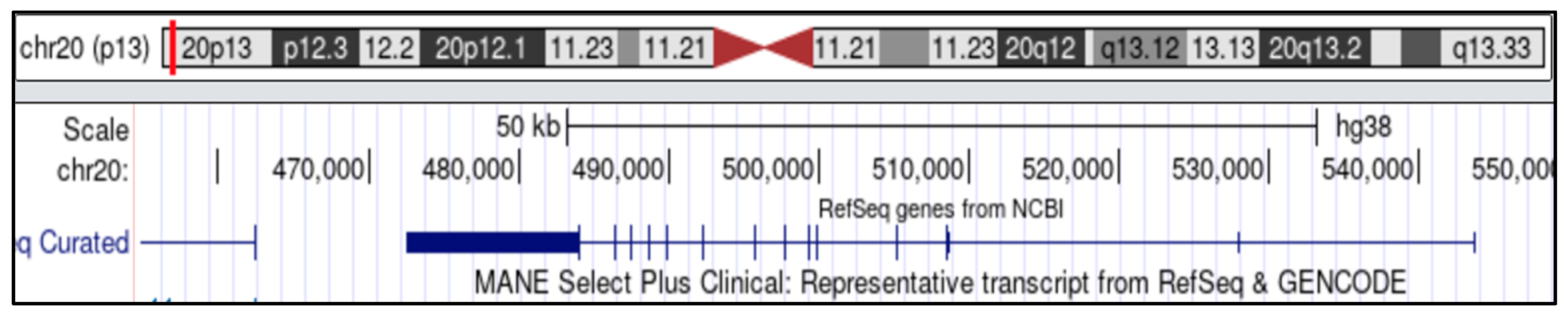
Figure 1. CSNK2A1 gene structure. The figure is a screen shot from the UCSC genome browser depiction of the NCBI reference sequence for CSNK2A1. Note that CSNK2A1 is located in the (-) strand. The 14 exons are represented as 14 vertical bars along the horizontal line depicting the full length of CSNK2A1, with the widest vertical bar corresponding to the approximately 11.5 kb exon 14. The vertical red line in the diagram of chromosome 20 represents the position of the CSNK2A1 gene.
Kinasesphosphatases 03 00022 g001
Figure 2. FANTOM5 relative tag counts for CK2 genes and pseudogene. Histogram representing total CAGE tag counts along the genome in the selected FANTOM5 dataset. The 100-nucleotide regions of maximal transcription start site activity are highlighted in pink. In addition, 50 nucleotides upstream and downstream are shown to view nearby transcription start site activity. Green arrowheads indicate the consensus start sites for each CK2 gene/pseudogene reference sequence.
Kinasesphosphatases 03 00022 g002
Figure 3. Heatmap of FANTOM5 relative tag counts across tissue types for (A) CSNK2A1, (B) CSNK2A2, (C) CSNK2A3, (D) CSNK2B. Heatmaps represent 100 base genomic regions of maximal transcription activity and the corresponding relative abundance (grading color scale is on the right). Each row represents CK2 gene and pseudogene TSS activity from a distinct tissue type. Green arrowheads indicate the consensus start sites for each CK2 gene/pseudogene reference sequence.
Kinasesphosphatases 03 00022 g003aKinasesphosphatases 03 00022 g003bKinasesphosphatases 03 00022 g003c
Figure 4. Heatmap of FANTOM5 relative tag counts for CK2 genes by adult, fetal, and cancer cell types. Heatmaps represent 100-nucleotide genomic regions of maximal transcription activity and the corresponding relative abundance (grading color scale is on the right). Green arrowheads indicate the consensus start sites for each CK2 gene/pseudogene reference sequence.
Kinasesphosphatases 03 00022 g004
Figure 5. DBTSS relative abundance of TSS for CK2 genes. Histograms of the CK2 gene core promoter regions and the corresponding relative abundance for the whole dataset including adult and fetal tissues. The pink regions represent the 100-nucleotide genomic regions of maximal transcription start activity derived from the FANTOM5 data. Green arrowheads indicate the consensus start sites for each CK2 gene/pseudogene reference sequence.
Kinasesphosphatases 03 00022 g005
Figure 6. DBTSS relative tag count for CSNK2A1 and CSNK2B genes in adult and fetal tissues. Graphs represent the transcription start site tag count as a percentage of the total transcription start site activity across the genomic region displayed for CSNK2A1 (upper panel) and CSNK2B (middle and lower panel). Percentage tag count is depicted in blue for adult tissues and orange for fetal tissues.
Kinasesphosphatases 03 00022 g006
Figure 7. Promoter subregions for CK2 gene promoters. Separate regions were based on local peaks (blue columns) and valleys in TSS activity for CSNK2A1, CSNK2A2, and CSNK2B. Green arrowheads indicate the consensus start sites for each CK2 gene/pseudogene reference sequence.
Kinasesphosphatases 03 00022 g007
Figure 8. Utilization of CK2 gene core promoter TSS subregions. Graphs represent changes over time in the core promoter subregions’ activity for (A) CSNK2A1, (B) CSNK2A2, and (C) CSNK2B. Data for six FANTOM5 time course experiments are represented: ARPE-19 EMT induced with TGF-beta and TNF-alpha; H9 Embryoid body cells, melanocytic induction; HES3-GFP Embryonic Stem cells, cardiomyocytic induction; iPS differentiation to neurons, control; lymphatic endothelial cell response to VEGFC; and Monocyte-derived macrophage response to LPS. The Y-axis represents percent (%) utilization of the subregion relative to the entire core promoter region within each experimental set. Error bars represent the standard error for replicates at each timepoint. Most data points had three replicates, except for the 12 h timepoint in the ARPE-19 EMT induced with TGF-beta and TNF-alpha experiment and the 48 h timepoint in the Monocyte-derived macrophage response to LPS, which had two replicates.
Kinasesphosphatases 03 00022 g008aKinasesphosphatases 03 00022 g008b
Figure 9. Potentially functional core promoter elements identified for human CK2 genes and pseudogene. (X-axis) The X-axis depicts the core protomer regions of (A) CSNK2A1, (B) CSNK2A2, (C) CSNK2A3, and (D) CSNK2B for humans and other mammals. For the human sequence, exon 1 is written in uppercase letters, whereas the upstream promoter sequences are written in lowercase. The asterisks (*) indicate nucleotides that are conserved across all five species. Green arrowheads indicate the consensus start sites for each CK2 gene/pseudogene reference sequence (these were not included for the other animal sequences, as their transcription start sites were derived from computational predictions and often differed between sources such as NCBI and Ensembl, making consistent start site annotation less straightforward). The CSNK2A3 pseudogene is poorly described in other species; therefore, only the human sequence is included. (Y-axis) The Y-axis represents the FANTOM5 transcription start site (TSS) scores. (Over the sequences) Rectangles and squares represent the core promoter elements that were correctly positioned.
Kinasesphosphatases 03 00022 g009aKinasesphosphatases 03 00022 g009b
Figure 10. Identified core promoter elements for human CMYC and CTNNB1 genes. (X-axis) The X-axis depicts the core protomer region and the 400 nucleotide region around their respective reference sequence start sites. (Y-axis) The Y-axis represents FANTOM5 transcription start site (TSS) scores. (TOP) At the top, rectangles and squares represent the core promoter elements that were found in the bioinformatic analysis. Green arrowheads indicate the consensus start sites for each CK2 gene/pseudogene reference sequence.
Kinasesphosphatases 03 00022 g010
Table 1. Cap Analysis of Gene Expression (CAGE) counts for each CK2 gene. The top five non-overlapping 100 nucleotide regions with the highest FANTOM5 CAGE tag counts were displayed. The 100-nucleotide regions with the highest transcriptional start activities are bolded. The 100 nucleotide regions of maximal transcription start site activity for each CK2 gene are bolded.
GeneStart PositionEnd PositionCAGE Tag CountNormalized CAGE Tag Count
CSNK2A1543,720543,819258,6741
CSNK2A1543,620543,71964180.02481115
CSNK2A1483,372483,47150760.01962316
CSNK2A1483,678483,77746400.01793764
CSNK2A1483,270483,36914700.00568283
CSNK2A258,163,24858,163,34719,9731
CSNK2A258,162,07358,162,17216190.08105943
CSNK2A258,163,34858,163,44712570.06293496
CSNK2A258,162,58758,162,6868990.04501076
CSNK2A258,163,73158,163,8308120.04065488
CSNK2A311,353,21611,353,31526161
CSNK2A311,352,74911,352,8488130.31077982
CSNK2A311,352,61311,352,7125030.19227829
CSNK2A311,352,96011,353,0594780.18272171
CSNK2A311,352,44311,352,5424450.17010703
CSNK2B31,666,05331,666,152917,3111
CSNK2B31,668,53131,668,63092240.01005548
CSNK2B31,666,78431,666,88372620.00791662
CSNK2B31,669,32431,669,42359560.00649289
CSNK2B31,667,85231,667,95155590.0060601
Table 2. Core promoter element motifs, sequences, positions, and binding general transcription factor protein components.
Core Promoter MotifConsensus SequencePosition Relative to TSSBound By
InrBBCABW−3 to +3TAF1, TAF2
InrYR−1 to +1TAF1, TAF2
Non-canonical InrYC−1 to +1TBP-related factor 2
5′TOPYC plus 4-15 Y’s−1 to +5 to +16
TATA boxTATAWAWR−31 to −24TBP
BREdRTDKKKK−23 to −17TFIIB
BREuSSRCGCC−38 to −32TFIIB
DCEICTTC+6 to +11TAF1
DCEIICTGT+16 to +21TAF1
DCEIIIAGC+30 to +34TAF1
DPERGWCGTG+28 to +34TAF6, TAF9, possibly TAF1
DPERGWYVT+28 to +33TAF6, TAF9, possibly TAF1
DREWATCGATW−100 to −1Dref
Pause buttonKCGRWCG+25 to +35-
Disclaimer/Publisher’s Note: The statements, opinions and data contained in all publications are solely those of the individual author(s) and contributor(s) and not of MDPI and/or the editor(s). MDPI and/or the editor(s) disclaim responsibility for any injury to people or property resulting from any ideas, methods, instructions or products referred to in the content.