Article

Integrative Network Pharmacology and ADMET Modeling Reveal the Multitarget Therapeutic Potential of Geraniol


by
Mateus Henrique de Almeida da Costa
,
Lívia Alves Filgueiras
and
Anderson Nogueira Mendes
*
Laboratory of Science in Innovation and Technology—LACITEC, Department of Biophysics and Physiology, Federal University of Piauí, Teresina 64049-550, Piauí, Brazil
*
Author to whom correspondence should be addressed.
Drugs Drug Candidates 2026, 5(3), 41; https://doi.org/10.3390/ddc5030041
Submission received: 15 May 2026 / Revised: 3 July 2026 / Accepted: 4 July 2026 / Published: 22 July 2026
(This article belongs to the Section In Silico Approaches in Drug Discovery)

Abstract

Background: Geraniol is an acyclic monoterpene widely distributed in the essential oils of aromatic species such as Cymbopogon citratus, Pelargonium graveolens, and Rosa damascena, It is known for its antioxidant, anti-inflammatory, neuroprotective, and antitumor activities. Methods: This study aimed to investigate, through network pharmacology and computational ADMET modeling, the molecular mechanisms and pharmacological potential of geraniol, integrating drug-likeness parameters, toxicity prediction, and multitarget interactions. Results: A total of 25 core targets were identified, mainly involved in inflammation, oxidative stress, apoptosis, and transcriptional regulation. Geraniol exhibited a favorable drug-likeness profile, high predicted intestinal absorption, and low systemic toxicity, supporting its pharmaceutical applicability. Mechanistically, it modulates the Nrf2/HO-1 ↔ NF-κB axis, reducing reactive oxygen species, pro-inflammatory cytokines (TNF-α, IL-1β, IL-6), and apoptotic markers (caspases, Bax), while enhancing antioxidant enzymes (SOD, CAT, GPx) and antiapoptotic proteins (Bcl-2). Conclusions: These findings confirm its multitarget and pleiotropic nature, highlighting its potential as a therapeutic candidate for inflammatory, metabolic, and neurodegenerative disorders. Furthermore, this study provides a robust mechanistic rationale for future in vitro and in vivo validation, as well as for the design of nanostructured formulations to improve geraniol’s bioavailability and therapeutic safety.

1. Introduction

Geraniol (3,7-dimethyl-2,6-octadien-1-ol) is a natural acyclic monoterpene widely distributed in essential oils of several plant species, including geranium, rose, citronella, and palmarosa [1]. This compound is found mainly in the flowers, leaves, bark, and stems of aromatic plants and is responsible for characteristic aromatic notes used in perfumery, cosmetics, and phytotherapy [2]. Plants with the highest concentrations of geraniol belong to families such as Poaceae (lemongrass Cymbopogon citratus, palmarosa Cymbopogon martinii), Rosaceae (Rosa cinnamomea and other rose species), Geraniaceae (Pelargonium graveolens, popularly known as geranium), and Lamiaceae (lavender, mint). In lemongrass, for example, geraniol can make up to 80% of volatile oils [3,4,5].
These plants are native to and cultivated in tropical and temperate regions and are cultivated extensively in Asia (India, China, Indonesia), Africa (Egypt, Madagascar), Central America, and also in Brazil, which has great potential for exploiting native aromatic species cultivated in biomes such as the Cerrado and Atlantic Forest [6]. In Brazil, species such as lemongrass (C. citratus) and citronella (Cymbopogon winterianus) are widely cultivated and stand out for their high yield of geraniol-rich essential oil, representing strategic sources for both the cosmetic and pharmaceutical industries [3,7].
Geraniol plays a prominent role among monoterpenes, functioning as a fundamental bioactive constituent of several aromatic plants used in traditional medicine. The diversity of sources reinforces the importance of understanding its pharmacological actions, since the presence of geraniol in different plant species is directly associated with its therapeutic activities [8]. As a bioactive component, geraniol demonstrates broad pharmacological activities, including antioxidant, anti-inflammatory, antimicrobial, hepatoprotective, and antitumor properties [7,8,9].
According to the literature, geraniol participates in a signaling pathway involving the redox–inflammation–apoptosis coupling [10,11]. By reducing ROS and activating Nrf2/HO-1, the compound simultaneously deactivates NF-κB and lowers cytokines such as TNF-α, IL-1β, and IL-6; this same axis decreases MPO (Myeloperoxidase)/NO, lipid peroxidation (MDA—Malondialdehyde), and caspases, while increasing SOD (Superoxide Dismutase), CAT (Catalase), GPx (Glutathione Peroxidase), and Bcl-2 (with Bax reduction), which explains why the antioxidant, anti-inflammatory, and antiapoptotic effects appear together [12,13,14].
The most consistent evidence for the central role of geraniol in the Nrf2/HO-1—NF-κB axis comes from hepatic and renal models of oxidative damage. In hepatic ischemia–reperfusion, geraniol activates Nrf2 and induces HO-1, reducing histological damage and apoptosis, which is associated with a decrease in MDA (lipid peroxidation) and an increase in SOD, CAT, and GPx activities. Simultaneously, there is attenuation of TNF-α and COX-2 and a reduction in cleaved caspase-3, evidencing the antioxidant–anti-inflammatory–antiapoptotic connection [15,16]. Similar findings were observed in hepatotoxicity by CCl4, in which geraniol reversed the elevation of inflammatory cytokines TNF-α, IL-1β, IL-6, MDA and MPO/NO, restored SOD/CAT/GPx, decreased caspases and normalized Bcl-2/Bax, confirming that the blockade of oxidative stress has repercussions on the inhibition of NF-κB and the containment of apoptosis [7].
The Nrf2–NF-κB crosstalk is well established in the literature and is associated with antioxidant, anti-inflammatory, and antiapoptotic effects [17,18,19]. Nrf2 activation induces phase II genes (HO-1, NQO1, GCLC/GCLM), reducing ROS and, consequently, the pro-inflammatory signal that stabilizes NF-κB. Conversely, HO-1 and its products can directly interfere with inflammatory transduction, while NF-κB knockdown decreases caspases and Bax, preserving Bcl-2 [18,20].
In the central nervous system, the same coupling supports neuroprotection. In models of stress/neural injury, geraniol reduces ROS, decreases IL-6/IL-8/IL-1β, corrects antioxidant imbalance, and attenuates neuroinflammation. This translates into normalization of oxidative and neurochemical markers, improvement in the electroencephalogram and anxiogenic behaviors, and in epilepsy, there is a reduction in oxidative stress/neuroinflammation and activation of the GABAergic pathway. These findings demonstrate that geraniol’s antioxidant effect is the initial event that disarms inflammation and limits cell death, resulting in functional protection [21,22]. Furthermore, recent evidence demonstrates that geraniol exhibits orofacial antinociceptive activity mediated by modulation of TRPV1 channels, reinforcing its role in the ionic mechanisms of pain [23]. These effects reflect a mechanism of suppression of the NF-κB/NLRP3 axis, through which geraniol attenuates neuroglial inflammation and reduces nitric oxide (NO) production. The compound improves synaptic plasticity and memory in experimental models of Alzheimer’s disease, while reducing oxidative and neuroinflammatory markers in the hippocampus, highlighting the translational relevance of its primary antioxidant effect [24].
Geraniol modulates the nitrergic pathway, reducing excessive NO production and attenuating oxidative stress in a pentylenetetrazol-induced seizure model [25]. The study demonstrated increased seizure latency and recovery of behavioral parameters, supporting the compound’s multifactorial role in redox homeostasis and inhibitory neurotransmission. In a D-galactose-induced brain aging model, Rajendran et al. 2024 demonstrated that geraniol restores systemic and cerebral antioxidant parameters, reduces the expression of inflammatory cytokines, and improves cognitive performance, confirming its neuroprotective action in conditions associated with neuronal senescence and chronic oxidative stress [26].
The growing demand for more effective therapeutic approaches with fewer adverse effects has directed pharmacological research toward natural compounds with multitarget potential, such as monoterpenes. The traditional paradigm of one drug, one target has gradually been replaced by the understanding that many complex diseases require multitarget interventions to achieve optimal therapeutic efficacy [27]. Network pharmacology has emerged as a powerful tool for understanding the mechanisms of action of complex bioactive compounds, enabling the systematic identification of molecular targets and modulated signaling pathways [28,29]. This integrative approach combines information from multiple biological databases with advanced computational analyses to map the complex interactions between drugs, proteins, and metabolic pathways [30].
Network pharmacology has elucidated complex molecular mechanisms of several natural compounds, revealing connectivity patterns that explain their pleiotropic effects [31]. For geraniol, preliminary analyses suggested interactions with multiple molecular targets, including metabolic enzymes, nuclear receptors, and cell signaling proteins [11,32]. Among the most recurrent candidates are enzymes such as HMG-CoA reductase (HMGCR), COX-2/PTGS2, iNOS/NOS2, and NOX-2/CYBB oxidase, in addition to the Nrf2 (NFE2L2)–HO-1 (HMOX1) axis and the NF-κB factor, whose redox–inflammatory balance geraniol modulates in multiple tissues [8,12]. As receptors and signaling proteins, CHRM3 (muscarinic M3) and the kinases PRKCA/PRKCD stand out, in addition to JAK1/JAK2 and components of the PI3K/AKT pathway, targets that emerge from network analyses and functional studies with the compound [33].
Drug-likeness assessment is a fundamental aspect of drug development, enabling early prediction of pharmacokinetic and safety properties [32]. The Lipinski, Ghose, and Veber rules, among other pharmacological guidelines, establish physicochemical parameters associated with adequate oral bioavailability and tissue penetration [34,35]. However, these classical rules have limitations, as many natural bioactive compounds violate one or more rules and still exhibit good bioavailability. Therefore, recent efforts propose quantitative methods and hybrid assessment models. For example, DBPP-Predictor is an algorithm that integrates physicochemical property profiles and ADMET (Absorption, Distribution, Metabolism, Excretion, and Toxicity) to calculate the drug-likeness metric with good discriminative capacity [36]. Therefore, the present study aims to perform a comprehensive computational analysis of geraniol, integrating drug-likeness assessment, ADME (absorption, distribution, metabolism and excretion) properties, molecular target identification and protein–protein interaction network analysis, providing a solid scientific basis for understanding its multitarget pharmacological mechanisms.

2. Results

2.1. Analysis of Structure and Physicochemical Properties and Drug-Likeness

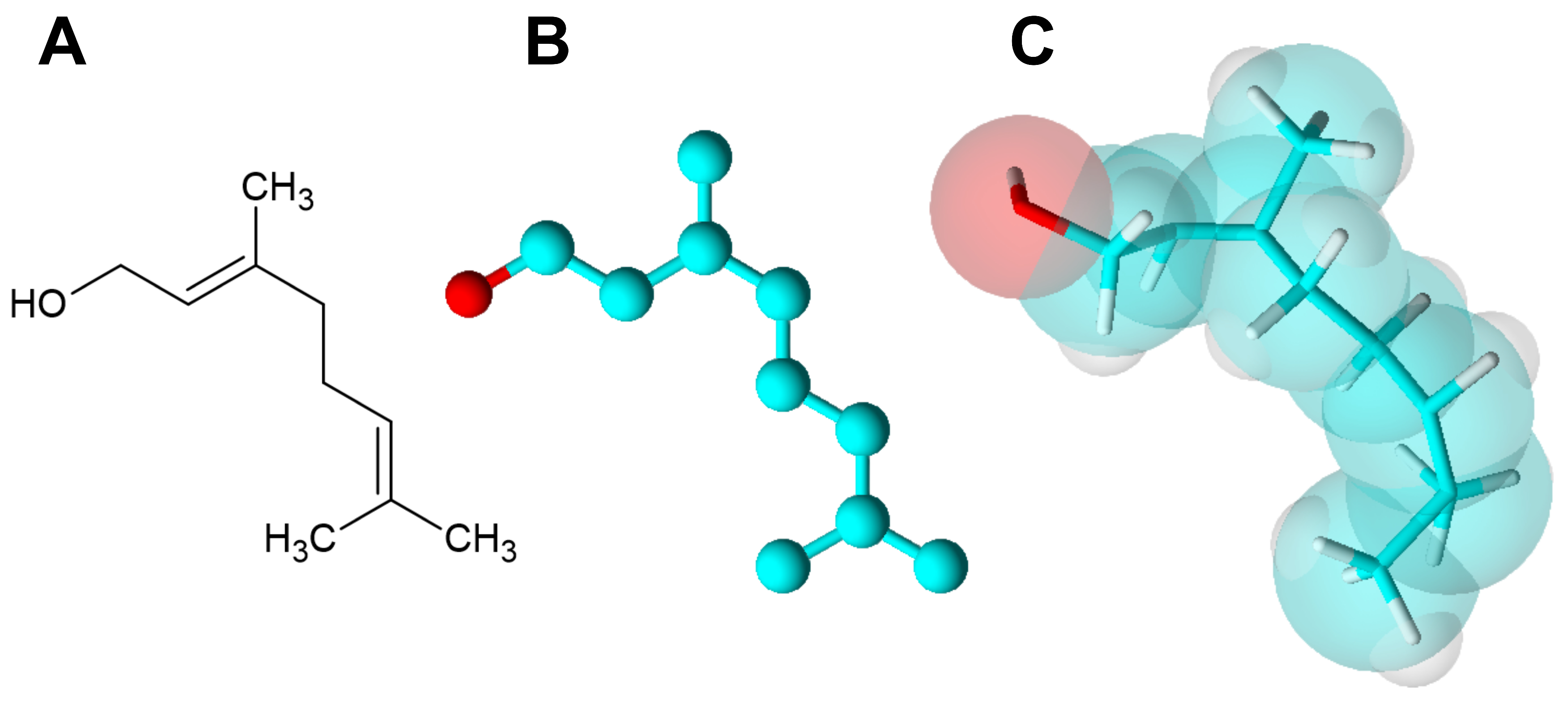
The molecular structure of geraniol was characterized using ChemSketch software (ACD/Labs, Toronto, ON, Canada), generating two-dimensional (2D) and three-dimensional (3D) representations of the molecule, including visualization of the electron cloud to analyze the molecular electron density distribution (Figure 1).
Structural analysis reveals that geraniol has the molecular formula C10H18O, characterizing it as an acyclic monoterpene with a primary alcohol functional group [1]. Figure 1A shows the two-dimensional (2D) representation of geraniol, highlighting its linear monoterpene structure composed of ten carbon atoms, a terminal hydroxyl group, and two conjugated double bonds in the isoprene chain. This configuration gives geraniol amphiphilic characteristics and high chemical reactivity, mainly due to the presence of high electron density sites in the C=C double bonds and the electron donation capacity of the hydroxyl group (–OH). This organization gives geraniol an amphiphilic nature; that is, it simultaneously presents a hydrophobic portion (nonpolar chain) and a polar region (–OH group). This duality is essential for its ability to interact with biological membranes, facilitating both penetration into the lipid bilayer and the establishment of hydrogen bonds at the polar interface [37]. Furthermore, this same configuration is responsible for the compound’s high polarizability and ability to participate in hydrophobic and electrostatic interactions in complex biological systems [38].
The three-dimensional ball-and-stick model (Figure 1B) allows visualization of the molecule’s spatial conformation, revealing the actual molecular geometry and interatomic distances. This representation is fundamental for understanding possible intermolecular interactions and molecular recognition by specific biological targets. The 3D molecular surface representation (Figure 1C) highlights the spatial distribution of the hydrophobic and polar regions of the molecule. The hydrocarbon chain is shown predominantly in cyan, corresponding to the less polar portion of geraniol, whereas the oxygen-containing hydroxyl region is highlighted in pink/red, representing the polar region capable of participating in hydrogen bonding and electrostatic interactions. This distribution is consistent with the amphiphilic nature of geraniol and helps explain its ability to interact with both lipid environments and polar biological interfaces [39].
Studies on antioxidant activity also point to the role of conjugated double bonds as important components in this function. In a simple colorimetric method for evaluating antioxidants, it was demonstrated that blocking conjugated double bonds in monoterpenes reduces their antioxidant capacity [40]. This result suggests that the presence of double bonds contributes to geraniol’s ability to donate electrons or stabilize free radicals. The physicochemical properties and drug-likeness descriptors of geraniol were obtained using the ADMETlab 3.0 platform and are summarized in Table 1.
The molecular weight of 154.14 Da places geraniol in a favorable range according to drug-likeness criteria, in line with the literature that points to smaller compounds as more prone to absorption [1]. The LogP values ≈ 3.4 and moderate LogD (physiological pH) suggest sufficient lipophilicity for cellular permeation without making it excessively hydrophobic, which is compatible with reports of good intestinal transport and bioavailability in animal models [41].
The moderate LogP lipophilicity value is consistent with intermediate cell permeability profiles, although experimental quantitative data for permeation in intestinal epithelia or bioavailability in humans are not evident. However, the modulating effect on the permeability of endothelial cells of the blood–brain barrier (BBB) in an OGD/R model (reduction in permeability via Nrf2/HO-1 activation) suggests that geraniol interacts significantly with endothelial barrier mechanisms [42]. Neuroprotective model studies indicate that geraniol crosses the blood–brain barrier and exerts beneficial effects on the central nervous system, implying significant permeability and modulation of oxidative stress and inflammation [43]. It is worth noting that some studies have shown that high doses of geraniol can directly alter membrane integrity, as evidenced by membrane depolarization and reduced resistance in Caco-2 cells [44].
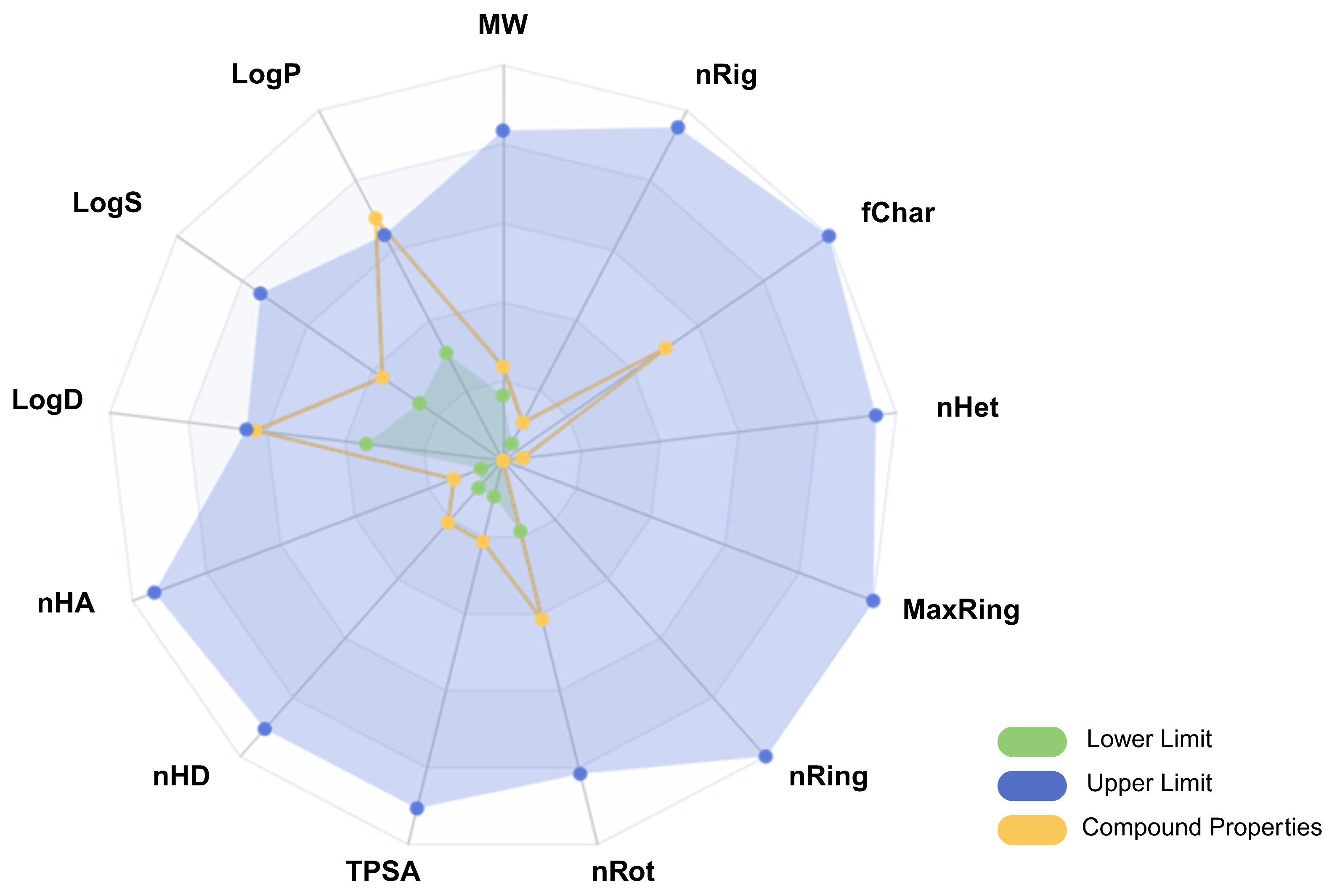
Drug-likeness analysis revealed complete compliance with Lipinski and GSK rules, with only one violation of Pfizer’s rule related to the combination of high LogP and low topological polar surface area (TPSA) [45]. The compound did not present structural warnings for PAINS, ALARM NMR, or other problematic structures. Figure 2 shows the graphical representation of the results.
The radar chart in Figure 2 (ADMET) summarizes that most of the geraniol descriptors fall within the optimal window for oral drugs (blue area), with occasional moderate deviations consistent with lipophilic monoterpenes (yellow line). This visualization format is standard in ADMETlab 2.0, which defines lower/upper limits for key properties (molecular mass, LogP/LogD, TPSA, HBD/HBA, rotatable bonds, etc.) and compares the compound to the “drug-likeness zone” (green/blue) [46]. In the case of geraniol, a molecular weight of ~154 Da and low TPSA (~20 Å2) support high permeability, while LogP ~3.4 maintains the permeability/solubility balance that favors oral absorption, exactly what was observed in experimental pharmacokinetics, with an absolute oral bioavailability of 92% for an emulsified formulation and 16% when adsorbed onto fiber [41]. These experimental data validate the radar reading that the compound is neither excessively polar nor too hydrophobic, remaining in the drug-likeness corridor.
The intermediate lipophilicity highlighted in the radar is consistent with CNS effects reported for geraniol when formulated to cross the blood–brain barrier (e.g., polymeric micelles or intranasal administration), which broaden cerebral distribution and neuroprotective effect in animal models [47,48]. These results suggest that, even with a small and slightly polar molecule, the pharmaceutical form is crucial for optimizing delivery to the brain. In parallel, the radar behavior for risk markers (e.g., alerts related to lipophilicity in “Pfizer/GSK” type filters) is compatible with the need to pay attention to metabolic interactions (CYPs/P-gp) and rational formulation, points already recognized in the compound and investigated in in vitro prediction/assays [41,49]. Thus, integrated radar reading not only confirms ADMET compatibility for oral/topical use, but also offers rationale for advanced (nano/micellar) formulations when the therapeutic target requires targeted tissue delivery (CNS or anti-angiogenesis).

2.2. Pharmacokinetic Profile ADME

2.2.1. Absorption and Permeability

Geraniol demonstrated favorable absorption properties, based on the results of analyses performed on the ADMETlab platform, with predicted human intestinal absorption of 60.9% and adequate permeability through Caco-2 cells (−4.426 log cm/s) (Table 2). The analysis indicated a low probability (0.2%) of being a substrate of P-glycoprotein, a value that, according to Xiong et al. (2021b) in ADMETlab, classifies the compound as “excellent” (category 0–0.3), suggesting the absence of active efflux and consequent better cellular retention [46]. However, the compound showed a high probability (92.7%) of inhibiting P-glycoprotein, a value that, according to the same platform, indicates a strong potential for clinically relevant drug interactions through the blockade of the efflux of other P-gp substrate drugs.
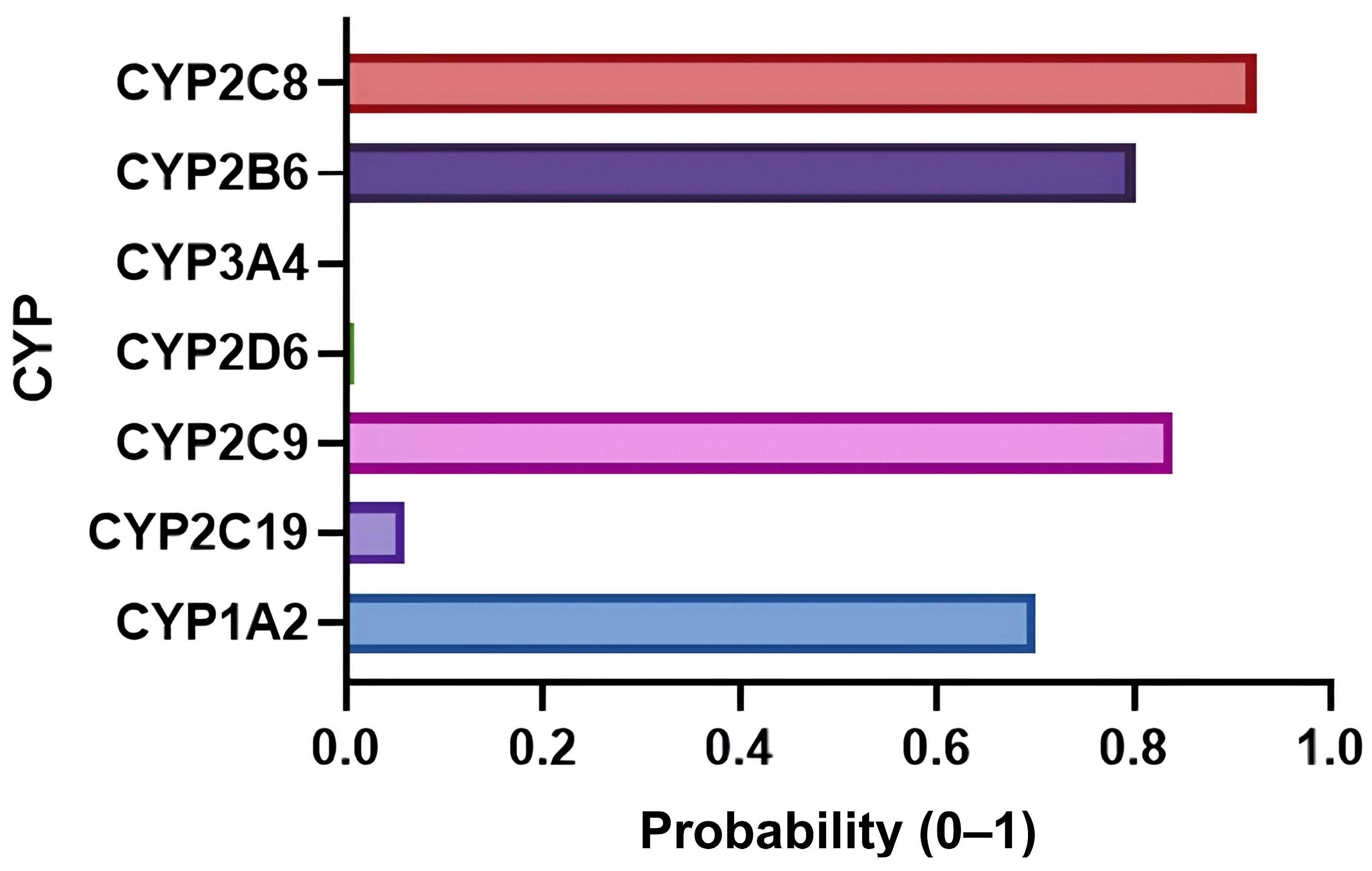
Figure 3 presents the predicted probabilities of inhibition of cytochrome P450 isoenzymes (CYPs) by geraniol, obtained using the ADMETlab 3.0 platform. Higher probabilities of inhibition were observed for CYP2C8 (0.92), CYP2C9 (0.84), and CYP2B6 (0.80), while the CYP1A2 (0.70) and CYP2C19 (0.06) isoforms showed moderate and low values, respectively. CYP2D6 (0.01) and CYP3A4 (0.004) showed virtually no inhibition. These results indicate that geraniol may interact with secondary metabolic pathways of xenobiotic biotransformation, but with low potential for interference with the most clinically relevant enzymes, such as CYP3A4 and CYP2D6, responsible for approximately 70% of human drug metabolism [50].

2.2.2. Distribution and Metabolism

Estimates obtained by ADMETlab (Table 2) indicate that the plasma protein binding (bound fraction) of geraniol is approximately 69.6%, which implies that approximately 30.4% would remain as a potentially active free fraction. This proportion suggests that a significant portion of the molecule may be available to cross membranes and reach biological targets, since only the free fraction is considered pharmacologically active. In general, it is known that plasma protein binding regulates the distribution, clearance, and half-life of compounds, limiting their diffusion into tissues [51].
Regarding the volume of distribution at steady state (VDss), the estimated value of -0.185 log L/kg (≈0.65 L/kg) suggests a predominantly plasma distribution or only modest tissue penetration. Low VDss values indicate that the drug tends to remain in the vascular compartment, which may limit its effectiveness in peripheral tissues. This behavior is consistent with general ADME principles, in which compounds with high protein binding generally exhibit smaller volumes of distribution [52,53]. Finally, the low BBB estimate presented by ADMETlab (3.7%) suggests limited capacity for action in the central nervous system, which may restrict direct effects on the nervous system. However, it should be noted that predictions in tools such as ADMETlab, Protox3.0, and other computational platforms may diverge, as they are based on machine learning models, structural fragments, and training data. In cases of disagreement, such as the divergence observed between ADMETlab and Protox3.0, it is necessary to seek experimental validation (e.g., in vivo brain penetration studies) to confirm or refute these estimates.

2.3. Toxicological Assessment

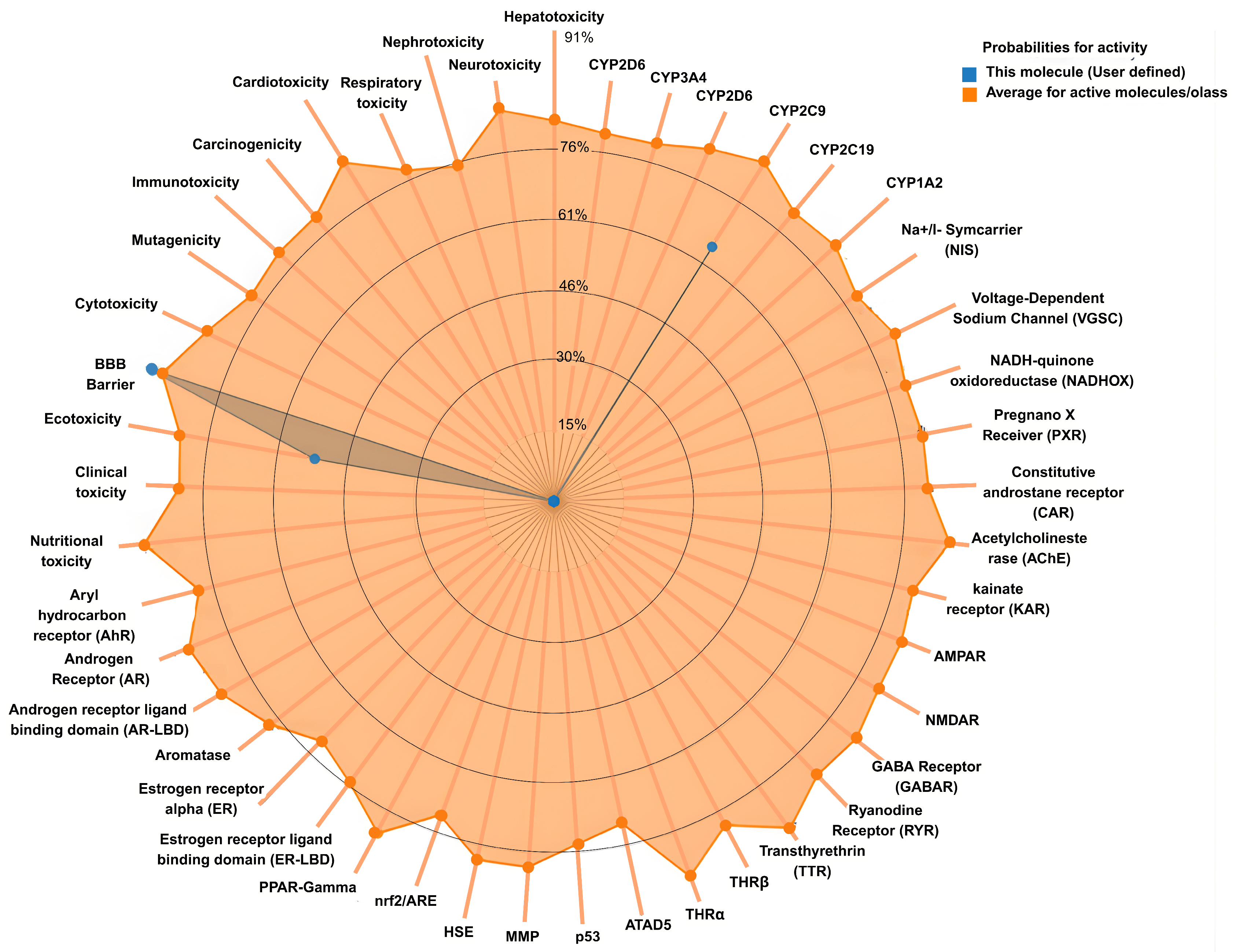
In silico toxicological analysis was performed using two platforms (ADMETlab 3.0 and ProTox-3.0) for cross-validation of safety predictions. The multidimensional toxicological profile of geraniol, visualized through the radar chart (Figure 4), demonstrates a predominantly low risk for most of the endpoints evaluated.
The analysis reveals that geraniol presents consistently low probabilities for most of the toxicological endpoints evaluated, positioning itself near the center of the radar in categories such as hepatotoxicity, neurotoxicity, cardiotoxicity, mutagenicity, and carcinogenicity. The only endpoints that stand out with greater activity are penetration into the BBB, metabolism via CYP2C9, and potential ecotoxicity. It has already been highlighted that monoterpenes like geraniol are generally safe for humans with respect to hepatotoxicity, cardiotoxicity, mutagenicity, carcinogenicity, and even endocrine disruption.
The low probability of hepatotoxicity estimated by ProTox is aligned with in vivo evidence of geraniol’s hepatoprotective effect. In ischemia–reperfusion and chemical assault models, the compound activates the Nrf2/HO-1 axis, reduces oxidative stress and inflammation (decrease in TNF-α/iNOS/COX-2), with improvement in histological and biochemical markers. These experimental findings provide biological support for the benign predictive profile observed in the radar [15].
The BBB-related peak is consistent with the low polarity of geraniol and with studies demonstrating delivery to the CNS when appropriate pharmaceutical forms are used, such as polymeric micelles and intranasal administration, which increase brain penetration and enhance neuroprotective effects in ischemia models [48]. Recent studies have critically reviewed the main QSPR and machine-learning strategies used for BBB permeability prediction [54] and have sought to validate and refine these models by combining in silico approaches and three-dimensional human models [55].
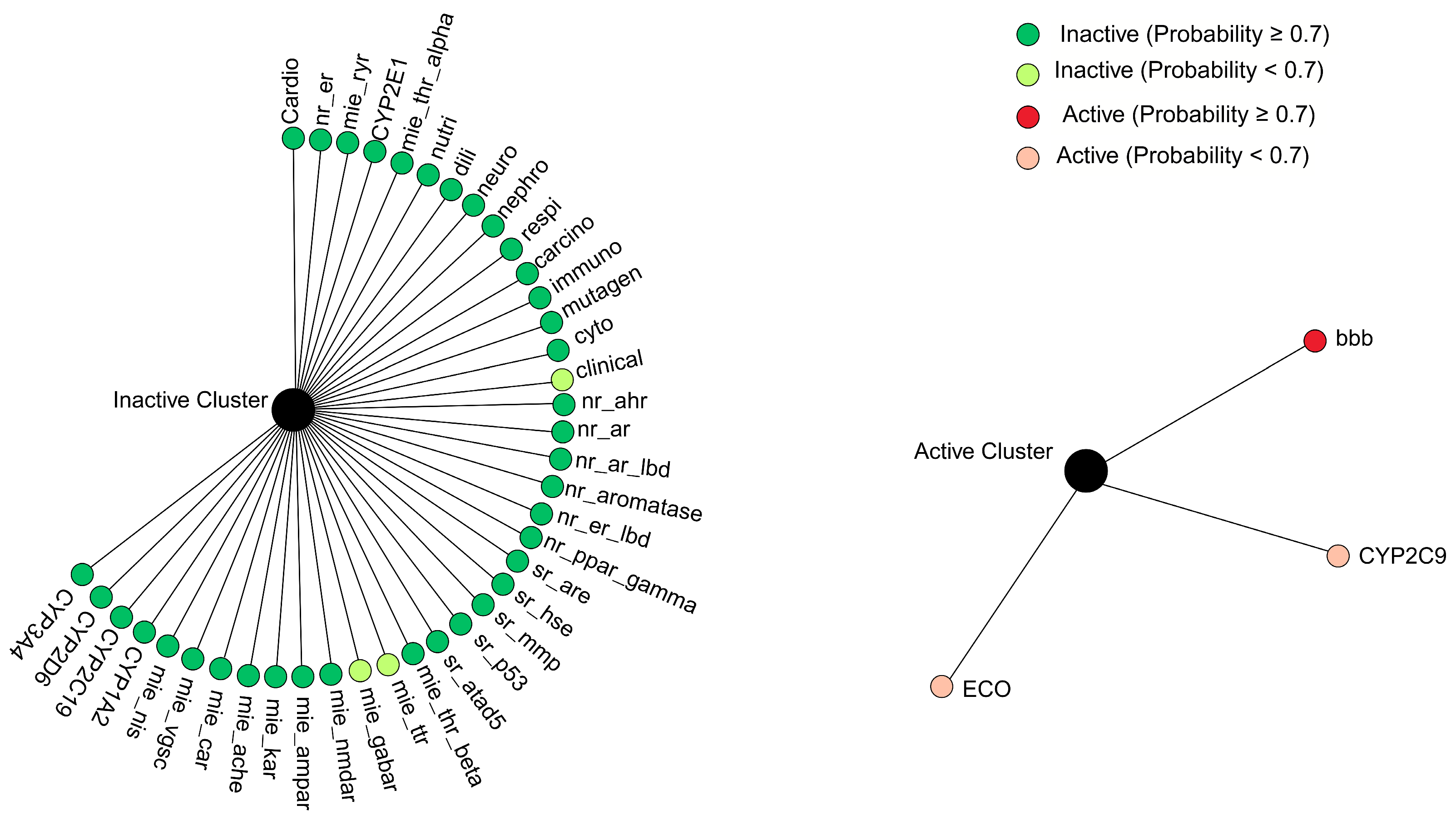
Regarding the signal for CYP2C9/CYP2C, it reinforces the need for experimental validation with in vitro inhibition/induction assays using index substrates, since the CYP1A2, 2C9, 2C19, 2D6, and 3A4 isoenzymes account for most drug metabolism in humans and are central to drug-induced dysplasia (DIDs). The low involvement of CYP3A4 suggested by the radar is favorable from a clinical risk perspective, given the dominant role of this isoform in drug biotransformation [56,57]. Cluster analysis of toxicological endpoints (Figure 5) suggests 47 parameters evaluated in two functionally distinct groups, providing a complementary perspective on the safety profile of geraniol.
These parameters represent the most relevant points of attention in the safety assessment of geraniol, suggesting the need for experimental validation, especially for interaction with CYP2C9 and brain permeability. The colors on the map correspond to the predicted probabilities of activity, according to the scale presented in the platform legend.
The Inactive Cluster (top) groups 44 endpoints with high-confidence predictions of inactivity (probability ≥0.7), including all nuclear receptors (AhR, AR, ER, PPAR-γ), stress response pathways (nrf2/ARE, HSE, p53), neurotransmitter receptors (GABA, NMDA, AMPA), and most cytochrome P450 enzymes (CYP1A2, CYP2C19, CYP2D6, CYP3A4). This clustering confirms the low potential for systemic toxicity of geraniol. This pattern is consistent with the absence of strong mechanistic signals of genotoxicity and cardiotoxicity specifically attributed to geraniol in modern ingredient safety studies and with reports of protective effects in cellular/tissue models when tested within usual experimental ranges [58].
The Active Cluster (bottom) contains only three endpoints: metabolism via CYP2C9 (moderate probability), penetration of the blood–brain barrier (high probability), and ecotoxicity (moderate probability). This segregation indicates that the main safety concerns are concentrated on specific pharmacokinetic aspects and environmental impact.
CYP2C9 is a clinically relevant liver enzyme responsible for metabolizing approximately 15% of drugs and is subject to polymorphisms with a significant impact on drug interactions and interindividual variability [59,60]. Therefore, any inhibition/competition for monoterpenes can have relevant pharmacological consequences. However, specific direct evidence for geraniol and its interaction with CYP2C9 is still limited. Studies suggest that geraniol and other terpenoids inhibit CYP2B6 in human microsomes [61]. These inhibitory interactions may be correlated with CYP2C9 inhibition [62]. Therefore, the prediction for CYP2C9 should be treated as an operational hypothesis to be verified with HLMs/recombinant cells and 2C9 index substrates [63,64,65].
The high probability of penetration into the BBB derived from the ProTox-3.0 model is consistent with the moderate lipophilicity of geraniol, but the recent literature reinforces that predicting BBB requires multiple lines of evidence (in silico + in vitro PAMPA-BBB/endothelial cultures + in vivo), as isolated lipophilicity does not guarantee effective access to the CNS [66,67]. Toxicological analysis using ADMETLab demonstrated a relatively favorable safety profile (Table 3). The risk of drug-induced hepatotoxicity (DILI) was low (20.7%), as was mutagenicity by the Ames test (22.8%). The compound presented a low cardiotoxic risk, with a minimal probability of hERG channel blockade (4.9%).
Significant warnings were identified for topical applications, with a high probability of skin sensitization (98.3%) and eye irritation (99.7%), suggesting the need for precautions for external use formulations. The findings predicted in Table 3 indicate that geraniol toxicity is predominantly associated with topical exposure, with a high likelihood of skin sensitization and eye irritation. This profile is consistent with experimental evidence demonstrating positive response in LLNA assays and classifying geraniol as a dose-dependent skin sensitizer [68].
A fundamental mechanistic aspect to interpret the high probability of sensitization observed in Table 3 is the oxidative instability of the geraniol. Studies have shown that auto-oxidation generates highly reactive hydroperoxides that have greater allergenic potential than the parent compound [69]. The translational relevance of this risk is confirmed by clinical patch test studies that demonstrated a higher frequency of positive reactions to oxidized geraniol in patients with fragrance-associated contact dermatitis [70].
Table 4 compares the critical toxicological endpoints obtained from ADMETlab and ProTox. The acute oral toxicity predicted by ProTox-3.0 (LD50 = 2100 mg/kg) classifies geraniol in Class 5 toxicity according to the Globally Harmonized System (GHS), indicating low acute toxicity.
The comparative analysis between ADMETlab 3.0 and ProTox-3.0 revealed substantial agreement in the safety predictions of geraniol, strengthening the reliability of the conclusions. Both platforms converge in the classification of low risk for hepatotoxicity, nephrotoxicity, cardiotoxicity, and mutagenicity, establishing a robust safety profile [2]. The differences observed between the platforms reflect distinct methodological approaches: ADMETlab uses machine learning algorithms based on experimental data, while ProTox employs QSAR models based on molecular fragments. Experimental validation remains essential, especially for discordant endpoints.

2.4. Identification and Analysis of Molecular Targets

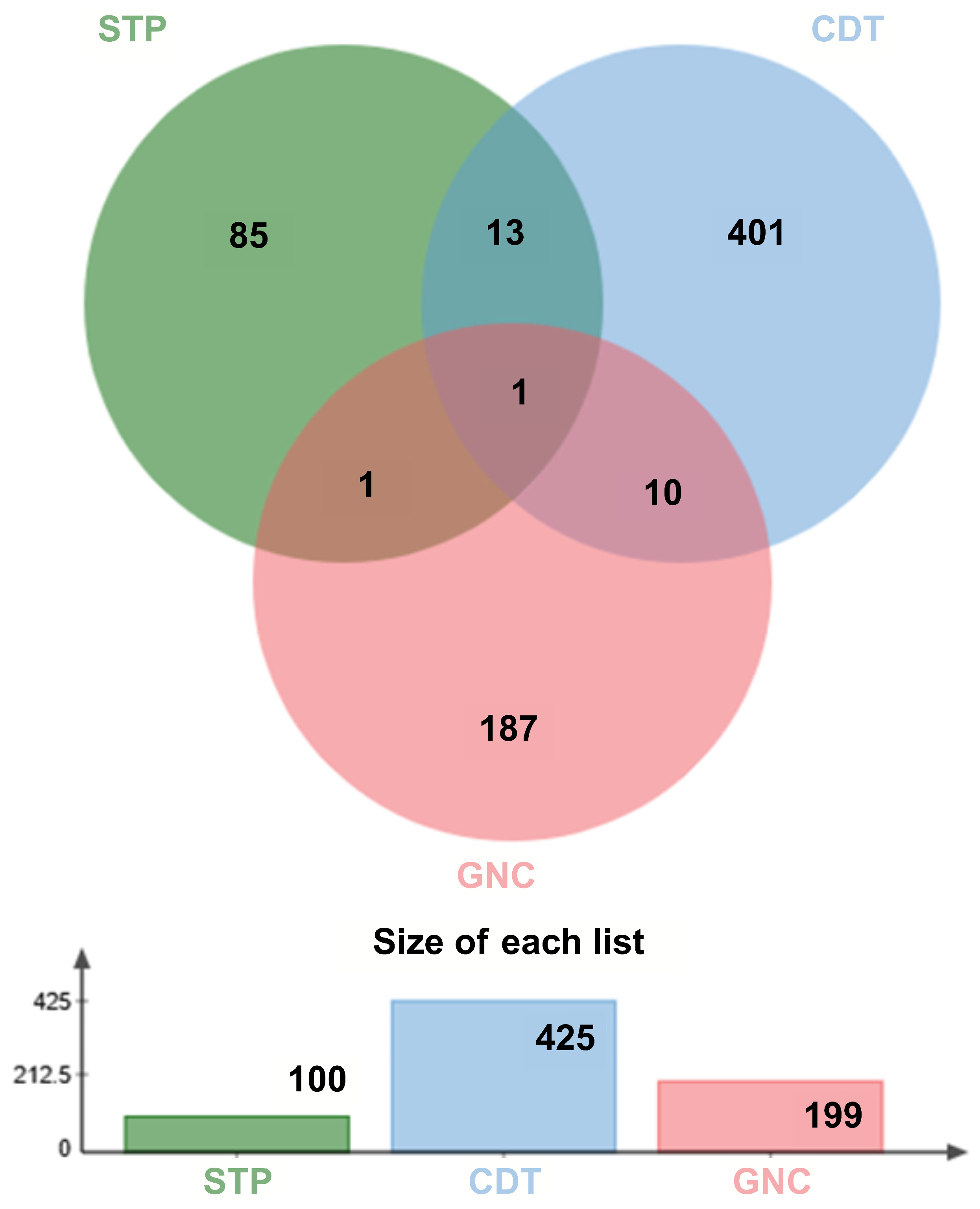
Three complementary databases were used to identify and compare potential molecular targets of geraniol. The Comparative Toxicogenomics Database (CTD) identified 425 possible interacting genes, SwissTargetPrediction identified 100 predicted targets, and GeneCards identified 199 associated genes. After removal of duplicated entries and normalization of gene symbols, the three lists were analyzed using the JVenn tool to visualize overlapping targets among the databases (Figure 6). A pairwise consensus intersection strategy was applied, in which only genes identified in at least two of the three databases were retained for subsequent analyses. This approach resulted in 25 consensus molecular targets. The selection strategy was adopted to reduce false-positive associations derived from individual databases and to prioritize targets supported by complementary evidence sources, including chemical–gene interaction data, ligand-based prediction, and gene-centric biomedical annotation. Figure 6 presents these consensus targets, which were subsequently organized according to their predominant biological functions, including metabolic enzymes, nuclear receptors, protein kinases, transcriptional regulators, and inflammatory mediators.
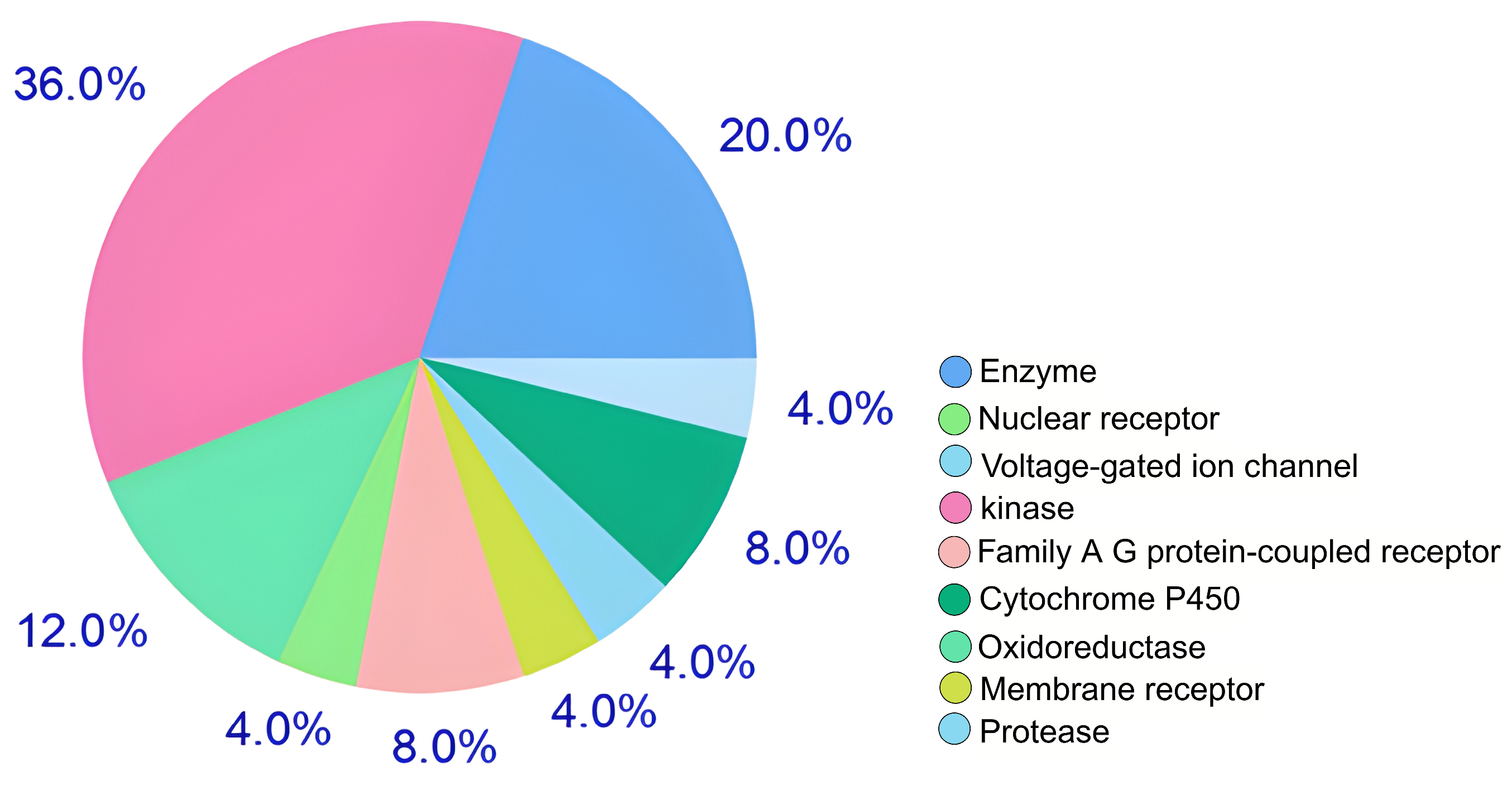
The functional classification of the 25 consolidated targets was performed using ontological analysis based on Gene Ontology (GO) and Enzyme Commission (EC) classification, resulting in the identification of eight distinct functional classes with specific quantitative distribution (Figure 7). Molecular taxonomy demonstrates that the predicted molecular targets for geraniol are mainly distributed among kinases (36%), general-purpose enzymes (20%), and oxidoreductases (12%), followed by smaller proportions of cytochrome P450 (8%), G protein-coupled receptors (GPCRs, 8%), nuclear receptors (4%), proteases (4%), and ion channels (4%). This structural and functional diversity reflects the pleiotropic and multimodal nature of geraniol interaction, typical of low molecular weight bioactive monoterpenes capable of modulating multiple cellular and enzymatic signaling pathways [1,71].
Before functional classification and network construction, the 25 consensus targets were standardized to their corresponding Homo sapiens orthologs. Although some target annotations retrieved from the source databases were originally linked to non-human organisms, all downstream analyses were performed using Homo sapiens as the reference organism. Thus, the targets presented in Table 5 correspond to the human ortholog gene symbols used in GeneMANIA, STRING, MCL clustering, and functional enrichment analyses. This standardization ensured that the network topology, interaction metrics, and functional clusters were generated from a species-consistent human target set.
The predominance of protein kinases is consistent with experimental evidence describing geraniol as a modulator of intracellular phosphorylation pathways, particularly the PI3K/AKT and MAPK/ERK cascades, involved in the regulation of the cell cycle, survival, and inflammatory response. In prostate cancer models, geraniol reduces the expression of oncogenic genes and inhibits the activation of ERK1/2 and AKT, culminating in apoptosis and tumor suppression [72]. Similarly, Cho et al. (2016) showed that the compound interferes with the signaling of multiple kinases, including VEGFR-2, p38 MAPK, and JNK, indicating a broad-spectrum modulation profile on pathways involved in cell proliferation and differentiation [73].
Table 5 consolidates the 25 most trusted molecular targets of geraniol, revealing five main functional clusters. Kinases constitute the dominant group (nine targets, 36%), including critical cell cycle regulators (CHEK1, CDK1), the MAPK pathway (MAPK3, MAP2K1), and GSK3B—a pleiotropic kinase associated with neurodegeneration, diabetes, and cancer. Oxidoreductases (three targets, 12%) include HMGCR (a target of statins), HMOX1 (a cytoprotective enzyme), and PTGS2/COX-2 (a target of nonsteroidal anti-inflammatory drugs). Transcription factors (five targets, 20%) encompass proliferation regulators (KLF5), tumor suppressors (KLF6), and differentiation modulators (TFAP2A, IRF6). Hormone receptors include PGR and NR3C1, suggesting endocrine modulation. Pro-inflammatory cytokines (IL1A, IL1B) and other specialized targets complete the profile.

2.5. Analysis of Protein–Protein Interaction Networks

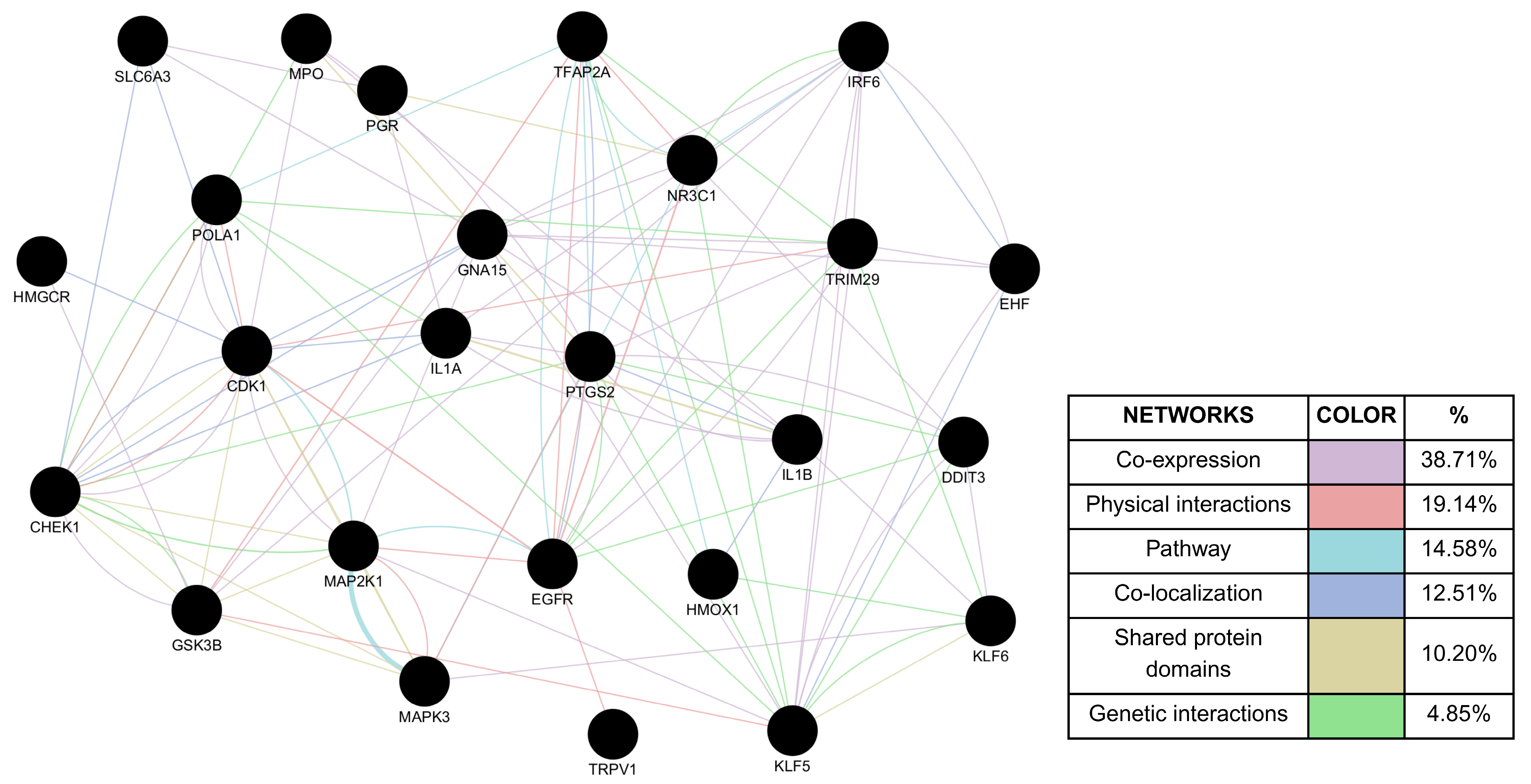
Molecular network analysis of the 25 consolidated targets was conducted using the GeneMANIA platform to elucidate the functional association pattern among the predicted molecular targets of geraniol (Figure 8). To improve visual clarity and biological interpretability, the network representation was reorganized and restricted to the 25 consolidated target genes identified by the integrative database analysis, without displaying the additional secondary genes automatically suggested by GeneMANIA. All GeneMANIA evidence categories were retained in the visualization, including co-expression, physical interactions, pathway associations, colocalization, shared protein domains, and genetic interactions. The revised network uses gene labels and color-coded edges to distinguish the different interaction types, allowing clearer visualization of the relationships among targets involved in inflammation, oxidative stress, cell signaling, cell cycle regulation, and transcriptional control. Gene co-expression networks can be used to associate genes with biological processes and prioritize candidate genes related to disease mechanisms, indicating that many of these targets may be jointly regulated under specific physiological or pathological conditions [74].
According to the legend, the interactions are classified into six main categories, each represented by a distinct color linking one gene to another. Co-expression (38.71%, purple) represents the highest percentage of interactions in the network, indicating that geraniol may exhibit a tendency, in relation to the expression of these genes under certain physiological or pathological conditions [74]. This suggests that geraniol may modulate regulatory pathways that influence the coordinated expression of these genes.
From a methodological standpoint, co-expression networks reflect the correlation between transcript levels across multiple experimental conditions and are widely used to infer functional modules and shared regulatory pathways. In this context, van Dam et al. (2018) demonstrated that co-expressed genes tend to participate in common biological processes, sharing transcriptional regulation, belonging to the same metabolic pathways, or integrating protein complexes [74].
In the pharmacological context of geraniol, the predominance of co-expression is biologically plausible and consistent with experimental findings showing coordinated modulation of inflammatory and signaling pathways. Studies have demonstrated that geraniol reduces the expression of pro-inflammatory mediators (IL-1β, TNF-α, and COX-2) and interferes with regulatory cascades such as NF-κB and MAPK, indicating a direct impact on inflammatory and proliferative transcriptomic programs [75,76].
Physical interactions (19.14%, red) are the second most prevalent category, representing direct protein–protein interactions. This is particularly relevant for understanding how the products of these genes interact functionally in protein complexes and signaling cascades. Interactions via pathways (14.58%, turquoise blue) indicate genes that participate in the same metabolic or signaling pathways, reinforcing the concept that geraniol can affect multiple components of specific pathways simultaneously.
Colocalization interactions (12.51%, blue) suggest genes whose protein products are expressed in the same cellular compartments or tissues, suggesting related functions in specific contexts. Shared protein domain interactions (10.20%, light yellow) show structural similarities between the encoded proteins, indicating possible functional or evolutionary similarities. Genetic interactions (4.85%, green) are those that occur least frequently in the selected genes, referring to functional relationships where a change in one gene affects the phenotype associated with another gene.
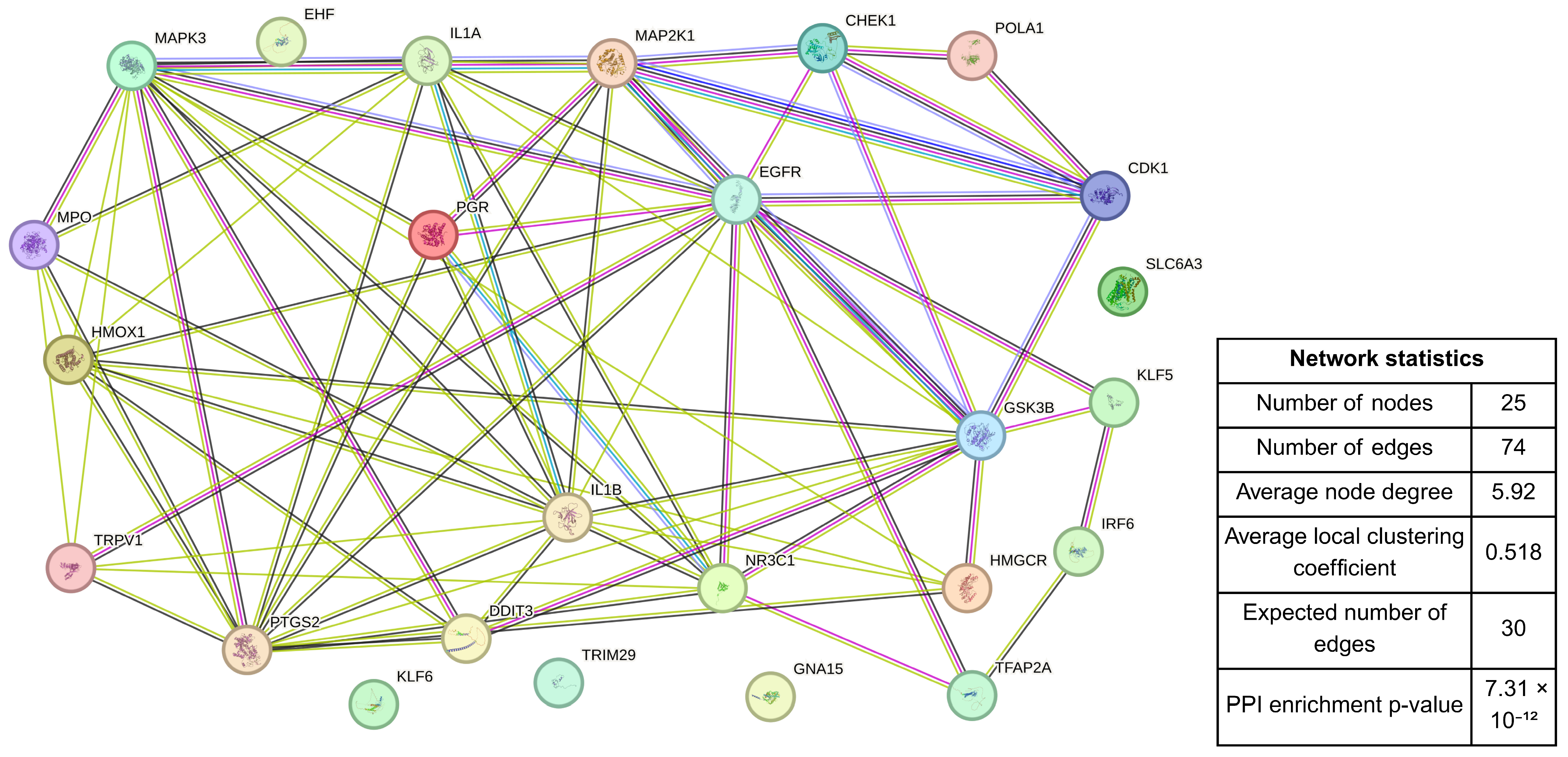
Complementary analysis was conducted using the STRING platform (Search Tool for the Retrieval of Interacting Genes/Proteins) to validate and further explore the molecular interactions identified by GeneMANIA. STRING analysis of the 25 consolidated targets revealed a highly interconnected network with significant enrichment of protein interactions (p = 7.31 × 10⁻¹²), using medium-level confidence parameters (0.4) and multiple sources of evidence including experimental data, curated databases, co-expression, and text mining (Figure 9).
Quantitative analysis of the STRING network confirmed the high molecular connectivity of geraniol targets, with 25 nodes connected by 74 edges, resulting in an average degree of 5.92 connections per protein. The local clustering coefficient of 0.518 indicates a strong tendency for the formation of functional modules, where connected proteins tend to form cohesive clusters. The p-value of 7.31 × 10⁻¹² for interaction enrichment confirms that this network exhibits significantly more connections than would be expected for a random set of proteins of similar size, validating the biological relevance of the identified associations.
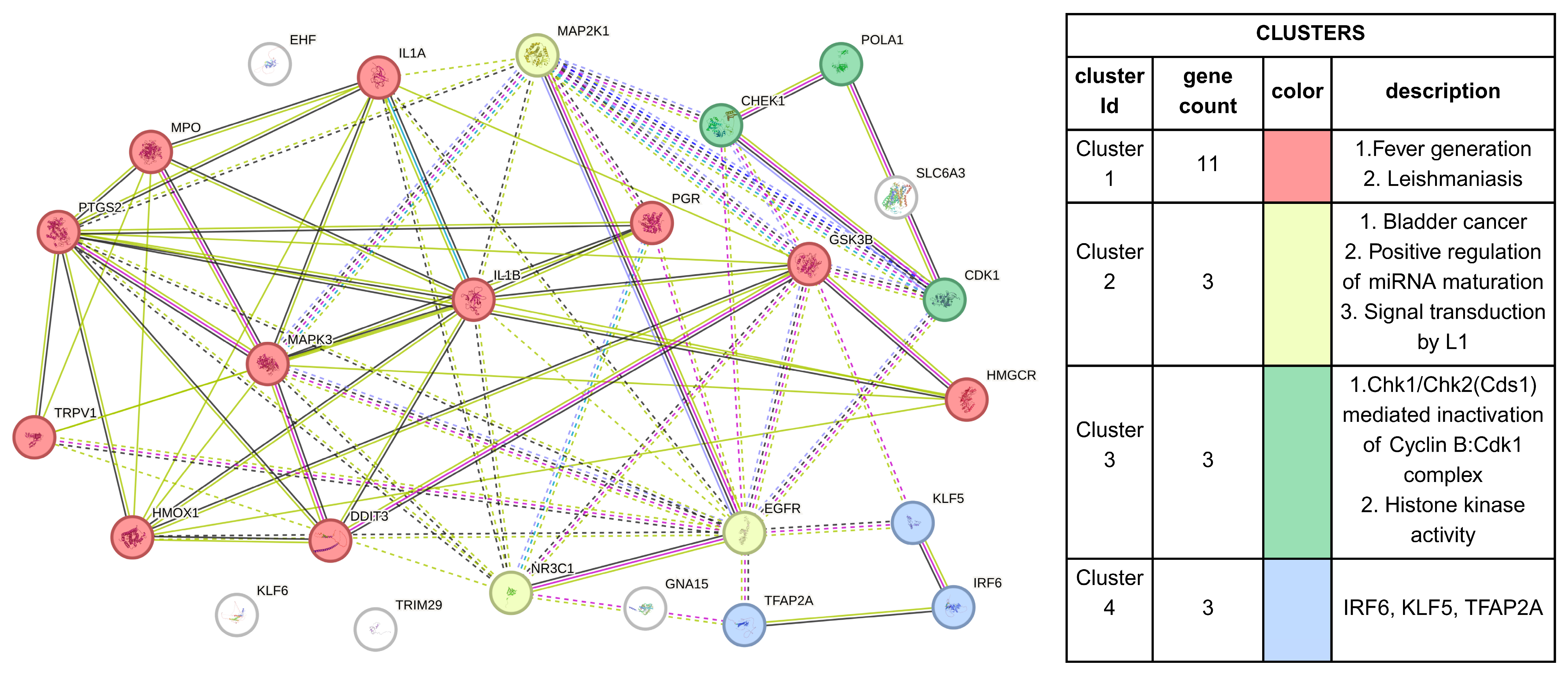
The application of the MCL (Markov Cluster Algorithm) identified four distinct functional clusters that elucidate the molecular mechanisms of geraniol’s pharmacological properties (Figure 10). According to Shih et al. (2012), MCL has emerged as an effective algorithm for clustering biological networks, particularly for clustering protein–protein interaction (PPI) networks, and is widely used for identifying functional modules [77]. The MCL decomposition into four functional modules is methodologically appropriate for PPI, as demonstrated in classic evaluations and reviews that establish MCL as an effective algorithm for detecting modules/complexes in biological networks [78,79].
Cluster 1 (red, 11 proteins)—inflammatory/immune: It includes IL1A, IL1B, PTGS2 (COX-2), and HMOX1, proteins directly related to inflammation, oxidative stress, and the innate immune response. It represents the largest functional module, focused on regulating cell networks and proliferation, including critical kinases and transcriptional regulators. The experimental literature converges with this arrangement, as geraniol suppresses inflammatory mediators (IL-1β, TNF-α, COX-2) and deactivates NF-κB, reducing MMP-1 and pro-inflammatory enzymes in skin and cartilage models [80]. In liver and kidney, it activates the Nrf2/HO-1 axis (HMOX1), reduces lipid peroxidation, and normalizes damage markers, connecting antioxidant and anti-inflammatory effects [15,81]. These findings support the functional cohesion of the IL1A/IL1B/PTGS2/HMOX1 module observed in the network.
Cluster 2 (yellow, nine proteins)—cell signaling: It involves EGFR, MAP2K1, MAPK3, and NR3C1, central components of proliferative pathways and growth receptor-mediated signal transduction. It is associated with bladder cancer and upregulation of miRNA maturation, suggesting epigenetic mechanisms in antitumor action. Evidence shows that geraniol blocks VEGF/VEGFR-2 signaling and suppresses subsequent AKT/ERK pathways, reducing PCNA and increasing caspase-3, with inhibition of angiogenesis [82]. Since EGFR/MEK (MAP2K1)–ERK (MAPK3) governs proliferation and survival, the sensitivity of these pathways to geraniol is consistent with the identified signaling module; furthermore, the literature on tumor models with coordinated EGFR/VEGF inhibition reinforces the decrease in AKT/ERK as a central antiproliferation mechanism [83].
Cluster 3 (green, three proteins)—cell cycle and checkpoint: It brings together CDK1, CHEK1, and GSK3B, key elements in the control of mitotic progression and response to DNA damage. It includes the activation of the cyclin B1-CDK1 complex and regulation of the quiescent barrier, representing specific control of the cell cycle. In prostate carcinoma, geraniol induces cell cycle arrest and apoptosis, modulating cell cycle regulators [84], in line with the prioritization of CDK1/CHEK1 in the network. The observed AKT/ERK suppression affects GSK3β, a node that integrates mitogenic signals and controls cyclin D1, a canonical mechanism associated with G1/S arrest and proliferative reduction (AKT GSK3β cyclin D1 ratio). Although this axis is extensively validated in analogous monoterpenes, such a specific connection with geraniol is mechanistically plausible in light of its AKT/ERK inhibition [85].
Cluster 4 (blue; four proteins)—transcriptional regulation: it is composed of KLF5, KLF6, TFAP2A, and IRF6, nuclear regulators associated with epithelial differentiation and inflammatory response. It groups specialized transcription factors involved in cell differentiation. The enrichment for transcriptional regulation is consistent with the fact that modulation of MAPK/AKT and NF-κB culminates in gene reprogramming. Although direct geraniol-KLFs/TFAP2A/IRF6 linkages remain scarce, these factors are downstream mediators of the ERK, AKT, and NF-κB pathways modulated by the compound in epithelium and inflammation, a biologically consistent hypothesis to be validated in gene expression and reporter assays.
The comparison between GeneMANIA and STRING analyses reveals convergence in key topological characteristics: high connectivity, formation of functional modules, and significant enrichment of interactions. The predominance of co-expression identified by GeneMANIA (38.71%) is corroborated by the identification of cohesive clusters in STRING, validating the hypothesis of coordinated transcriptional regulation. The identification of similar functional modules in both platforms (cell cycle control, inflammatory response, transcriptional regulation) confirms the robustness of the molecular architecture of geraniol targets. According to van Dam et al. (2018), gene co-expression networks can be used to associate genes of unknown function with biological processes and prioritize candidate genes for diseases, being fundamental for validating hypotheses of coordinated regulation [74].

2.6. Functional Enrichment Analysis

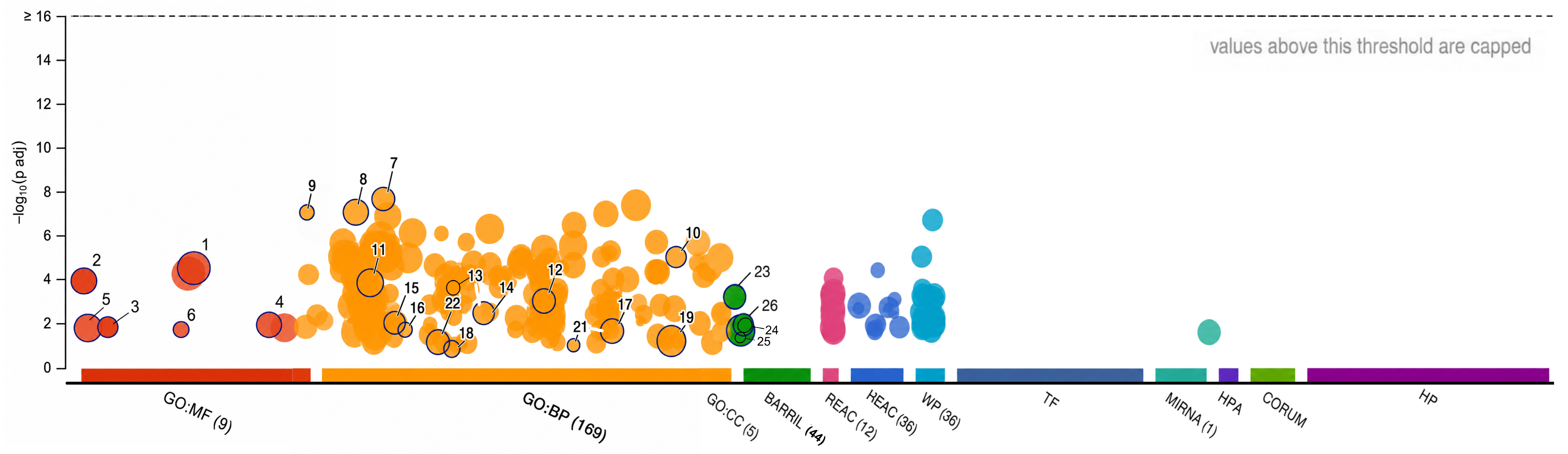
The functional enrichment analysis of the 25 consolidated geraniol targets was conducted using the g:Profiler platform. The analysis was configured for the human organism (Homo sapiens) with a significance threshold of 0.05 and using the g:SCS correction method (g:Limit SCS). Data sources included Gene Ontology ontologies for molecular function, cellular component, and biological process, as well as selected biological pathway databases. The most significantly enriched terms (Figure 11 and Table 6) included “response to oxidative stress” (GO:0006979), “inflammatory response” (GO:0006954), “MAPK cascade” (GO:0000165), and “regulation of transcription, DNA-templated” (GO:0006355), with adjusted p-values less than 0.05 after multiple correction (g:SCS). g:Profiler is a reliable and up-to-date functional enrichment analysis tool that supports various types of evidence, identifier types, and organisms, and is widely recognized in the scientific community with over 924 citations [86].
The results revealed multiple significantly enriched functional terms (Figure 11 and Table 6). Among the molecular functions (GO:MF), ion binding (GO:0043167) showed the lowest adjusted p-value (2.665 × 10⁻⁴), followed by DNA-binding transcription activating activity (GO:0001228, p_adj = 4.312 × 10⁻⁴) and serine/threonine kinase protein activity (GO:0004674, p_adj = 1.564 × 10⁻²). According to Pellarin et al. (2025), cyclin-dependent kinases (CDKs) are closely connected to the regulation of cell cycle progression, with kinases capable of directing cell cycle transitions [87].
In the KEGG pathway set, the “IL-17 signaling pathway”, “TNF signaling pathway”, “PI3K-AKT signaling pathway”, and “MAPK signaling pathway” stood out, all recognized as being involved in inflammation, apoptosis, and cell remodeling processes. The recurrence of these terms reinforces the multitarget and integrative nature of geraniol, capable of simultaneously modulating inflammatory, oxidative, and proliferative axes. The Manhattan plot (Figure 11) shows the distribution of enriched terms by functional category, with different colors representing the analyzed databases. The points with the highest elevation on the y-axis correspond to the terms with the lowest adjusted p-value, indicating greater statistical significance of the enrichment. The functional enrichment analysis demonstrates that the 25 identified targets are functionally organized in related biological processes, including transcriptional regulation, cell signaling, inflammatory response, and cell cycle control. The statistical significance of the enriched terms confirms the biological relevance of the set of targets identified for geraniol.
Topological analysis of the PPI network demonstrated that proteins such as MAPK3, HMOX1, and PTGS2 exhibited high degrees of connectedness and high values of betweenness, characterizing them as hub genes. These results indicate that such targets function as strategic convergence points for the pharmacological effects of geraniol. The combination of functional modularity, GO/KEGG enrichment, and network centrality supports the hypothesis that geraniol acts in a coordinated manner on several interconnected molecular axes, which explains its ability to regulate multiple biological phenotypes, including inflammation, antioxidant response, and cell cycle control.

3. Discussion

Geraniol is an acyclic monoterpene widely distributed in nature, present in high concentrations in the essential oils of aromatic plants such as Cymbopogon martinii (palmarosa), Pelargonium graveolens (geranium), Rosa damascena (rose), Cymbopogon citratus (lemongrass), and Cymbopogon winterianus (citronella), among other tropical and subtropical species [7,8,11]. These plants are cultivated in warm and humid climates, especially in Asia (India, China, Indonesia), Africa, and South America, with particular emphasis on Brazil, where species of the genus Cymbopogon show high yields of essential oil rich in geraniol [88]. This wide botanical and phytochemical abundance makes geraniol easily obtainable from low-cost natural sources, reinforcing its strategic value as a model molecule for pharmacological and biotechnological investigations [38,71].
The diversity of plant matrices containing geraniol allows for the exploration of chemical and biological variations that contribute to its multitarget profile, justifying the growing scientific and industrial interest [89]. This ubiquity and phytochemical richness underpin the integration of in silico approaches, including ADME/predictive toxicity analyses and network pharmacology (PPI, GO, and KEGG), as rational tools to prioritize experimental hypotheses and understand the molecular basis of its biological activities. The safety of geraniol has been extensively evaluated in different in vitro and in vivo models, and in toxicological assessments of fragrance ingredients. A recent report from RIFM (Research Institute for Fragrance Materials) concluded that geraniol is not genotoxic, and based on repeated-dose toxicity and reproductive toxicity data, a Margin of Exposure (MOE) greater than 100 was calculated [68].
This study provides a comprehensive computational analysis of geraniol through network pharmacology approaches, revealing a multitarget pharmacological profile consistent with its diverse biological activities reported in the literature. The results demonstrate that geraniol possesses favorable physicochemical and pharmacokinetic properties, acting through multiple molecular targets organized in integrated functional networks. The molecular characterization of geraniol performed in ChemSketch (ACD/Labs, Toronto, ON, Canada) enabled a detailed analysis of its chemical architecture and structural properties. The two-dimensional (2D) representation highlights its acyclic monoterpene character (C10H18O), with two conjugated double bonds and a terminal hydroxyl group (–OH). This structural combination determines its behavior in biological systems, allowing reversible association with membranes and proteins, who demonstrated how linear monoterpenes, such as geraniol, exhibit conformational mobility and modulable polarity, facilitating coupling to hydrophobic enzymatic sites and bioinspired intermolecular interactions [90].
The amphiphilic properties and low toxicity of geraniol and its esters explain their high penetration capacity in lipid membranes, preserving cellular structural integrity and indicating an ideal balance between lipophilicity and solubility, crucial for passive diffusion and pharmacological bioavailability [91]. Thus, the structural analyses obtained in ChemSketch corroborate the experimental and theoretical findings in the literature, consolidating the importance of the linear and polarized configuration of geraniol for its physicochemical and pharmacokinetic properties. The excellent conformity of geraniol with the drug-likeness rules, particularly Lipinski’s Rule of Five, corroborates previous studies that demonstrated its potential as a drug candidate [45]. The molecular weight of 154.14 Da and the moderate lipophilic properties (LogP = 3.428) position the compound within the ideal range for adequate oral bioavailability, consistent with experimental observations of efficient intestinal absorption [41].
The identification of 25 consolidated molecular targets through integrative analysis of multiple databases provides a solid foundation for understanding the multitarget mechanisms of geraniol. This methodological approach, using intersections between different data sources, increases the reliability of predictions and reduces false positives. The functional diversity of the identified targets, including metabolic enzymes (HMGCR, HMOX1), nuclear receptors (PGR, NR3C1), protein kinases (MAPK3, CHEK1, GSK3B), and inflammatory mediators (IL1A, IL1B, PTGS2), explains the broad spectrum of pharmacological activities of geraniol reported in the experimental literature. Network analysis revealed a highly significant modular organization (p = 7.31 × 10⁻¹²), with four distinct functional clusters representing the main mechanisms of action of geraniol. Among these, the inflammatory/immune and cell signaling clusters were the most relevant to the biological interpretation of the present study and are discussed below:
-
Inflammatory/immune cluster: The presence of IL1A, IL1B, PTGS2 (COX-2), and HMOX1 in this cluster corroborates the well-documented anti-inflammatory effects of geraniol [80]. The functional association with “fever generation” suggests modulation of pyrogenic pathways, consistent with experimentally observed antipyretic properties.
-
Cell signaling cluster: The EGFR-MAP2K1-NR3C1 connection represents a plausible mechanism for the antitumor effects of geraniol, through modulation of the MAPK cascade and growth receptor signaling [1].
The predicted metabolic profile, with predominant metabolism via CYP2C9 and CYP2C19, is consistent with experimental pharmacokinetic studies that have demonstrated the extensive hepatic metabolism of geraniol [41]. The possible inhibition of P-glycoprotein (92.7%) and CYP3A4 (30.2%) suggests potential for drug interactions, an aspect that requires careful consideration in pharmaceutical formulations. The network results highlight IL1A/IL1B and PTGS2 (COX-2) in the inflammatory cluster, with HMOX1 as a redox–cytoprotective node, an arrangement consistent with the literature. In inflammatory models, geraniol reduces IL-1β and TNF-α and attenuates tissue damage, confirming the immunomodulatory effect on the NF-κB/COX-2 axis (in arthritis and skin, respectively) [75]. In parallel, in ischemia/reperfusion liver injury, geraniol activates Nrf2/HO-1 (HMOX1), reduces oxidative stress and inflammation, integrating the antioxidant arm with the anti-inflammatory arm of the compound [15].
The literature suggests that the Nrf2–HO-1 ↔ NF-κB/COX-2 coupling is a common mechanism by which monoterpenes (including geraniol) decrease cytokines and MMPs in inflamed tissues, supporting the coherence between their cluster (IL1A/IL1B/PTGS2/HMOX1) and the described physiology [11]. In the signaling cluster, EGFR–MAP2K1–MAPK3 (ERK1/2) and the nuclear receptor NR3C1 (GR) appear as central axes. Geraniol modulates subsequent growth receptor cascades, including inhibiting AKT/ERK when it blocks VEGF/VEGFR-2. This decrease in PCNA and increase in caspase-3 suggests that ERK/AKT pathways are sensitive targets to the presence of the monoterpene [82]. Since the EGFR → MEK (MAP2K1) → ERK (MAPK3) pathway governs proliferation/survival, and NR3C1 crosses with MAPKs/PI3K in various tissues, its network nodes are biologically plausible to explain the antimitogenic signaling observed with geraniol [92,93].
The cell cycle cluster comprises CDK1, CHEK1, and GSK3B. Experimental studies suggest that geraniol induces cell cycle arrest and apoptosis in prostate cancer in vitro/in vivo, modulating cell cycle regulators such as cyclin D1/CDKs, consistent with the prioritization of these nodes in its network [84]. By suppressing ERK/AKT, geraniol affects GSK3β, a kinase that integrates mitogenic signals and checkpoints, offering a mechanistic pathway for G1/S arrest and proliferative reduction (AKT–GSK3β–cyclin D1 relationship; analogous evidence in monoterpenes) [89,94]. Thus, the presence of CDK1/CHEK1/GSK3B in the analysis is consistent with the antiproliferative phenotype reported in multiple models. The identification of KLF5/KLF6 and TFAP2A/IRF6 suggests transcriptional regulatory points linked to epithelial differentiation and the inflammatory response. Although direct evidence of interaction between geraniol and these factors is still limited, there is a solid biological basis for considering them downstream mediators of the ERK, AKT, and NF-κB pathways modulated by the compound [95,96].
By converging the clusters found, it is assumed that geraniol attenuates oxidative stress by activating Nrf2/HO-1 and reducing lipid peroxidation, as well as reducing pro-inflammatory cytokines (IL-1β, TNF-α) and COX-2, uncoupling NF-κB, in addition to suppressing ERK/AKT, impacting PCNA and the cell cycle, and resulting in immunomodulation with less tissue activation [15,80,97]. From a translational perspective, standardized herbal medicines and oils rich in geraniol can be rationally targeted to conditions with a redox–inflammatory–proliferative nexus, such as arthritis, inflammatory dermatitis, pain syndromes, metabolic disorders, and supportive oncology, provided they are standardized (geraniol content, chemotype) and evaluated for safety/ADME (P-gp/CYP interactions). Experimental evidence of anti-angiogenesis (VEGF/VEGFR-2→AKT/ERK), anti-inflammation (IL-1β/TNF-α/COX-2), and neuroprotection (Nrf2/HO-1) supports the categorization of geraniol as a natural drug with multitarget mechanisms, aligned with pharmacological network trends for complex diseases [15,80,82].
Furthermore, recent evidence in a streptozotocin-induced Alzheimer’s disease model indicates that geraniol, in association with limonene, may exert neuroprotective effects, reinforcing its relevance in neuroinflammatory and neurodegenerative contexts [98]. The computational toxicology profile demonstrates relatively favorable systemic safety, with a low risk of hepatotoxicity (DILI: 20.7%) and mutagenicity (Ames: 22.8%). These findings are consistent with experimental toxicity studies that reported an acceptable safety profile for geraniol at therapeutic doses [1]. The warnings for skin sensitization (98.3%) and eye irritation (99.7%) are relevant for topical applications, corroborating clinical observations of hypersensitivity reactions in some formulations containing geraniol [70]. These limitations can be mitigated through appropriate formulation strategies and optimized concentrations.
Functional enrichment analysis using g:Profiler confirmed the biological relevance of the identified targets, revealing significant enrichment for processes related to the inflammatory response, cell signaling, and transcriptional regulation. The most significant terms include cell–cell signaling (p = 5.541 × 10⁻⁷) and neuroinflammatory response (p = 4.135 × 10⁻⁵), consistent with established pharmacological activities. The identification of “positive regulation of T cell proliferation” (p = 2.918 × 10⁻⁵) suggests immunomodulatory potential [99].
The results of the network pharmacology analysis provide a robust scientific basis for the development of geraniol-based pharmaceutical formulations. The multitarget nature of its action suggests potential for complex therapeutic indications, including inflammatory diseases, metabolic disorders, and neoplasms. The excellent drug-likeness and favorable ADME profile indicate viability for the development of oral formulations, while limitations for topical use require specific formulation strategies [41]. The potential for drug interactions, particularly through inhibition of P-glycoprotein and CYP3A4, should be considered in future clinical studies.
The present study is based on an integrative computational framework combining ADMET prediction, network pharmacology, and bioinformatics analyses using publicly available databases. Although these approaches are valuable for generating mechanistic hypotheses and prioritizing molecular targets, some limitations should be acknowledged. First, the co-expression data retrieved from GeneMANIA are derived from heterogeneous datasets encompassing multiple tissues, developmental stages, physiological conditions, and disease contexts. Therefore, the observed co-expression relationships do not necessarily reflect direct or context-specific biological interactions and should be interpreted as indicators of potential functional association rather than causal evidence.
Furthermore, the molecular targets included in the network were obtained through database integration and computational prediction, which may be influenced by differences in data curation, the literature coverage, and prediction algorithms. The consensus-based strategy adopted in this study was designed to reduce false-positive associations but may also exclude biologically relevant targets identified by only a single source.
Finally, the functional modules and enriched pathways identified through GeneMANIA, STRING, and g:Profiler analyses should be considered hypothesis-generating and require experimental validation through molecular, cellular, and pharmacological studies to confirm the predicted interactions and biological effects of geraniol.

4. Materials and Methods

4.1. Structural Analysis and Physicochemical Properties

The molecular structure of geraniol was characterized using ACD/ChemSketch (Freeware), version 2025.2.5 (Advanced Chemistry Development, Inc., ACD/Labs, Toronto, ON, Canada), generating two-dimensional (2D) and three-dimensional (3D) representations of the molecule, including electron cloud visualization for analysis of the molecular electron density distribution. Physicochemical properties were calculated using the same program, including the octanol/water partition coefficient (LogP), elemental composition, molar refractivity, molar volume, parachor, refractive index, surface tension, density, and polarizability.

4.2. Drug-Likeness

The theoretical oral bioavailability of geraniol was evaluated by applying Lipinski’s Rule of Five, using the ArgusLab software, version 4.0.1 (Planaria Software LLC, Seattle, WA, USA) [100]. The analyzed parameters included molecular mass (MM ≤ 500 Da), water/oil partition coefficient (cLogP ≤ 5), number of hydrogen bond donors (nDLH ≤ 5) and number of hydrogen bond acceptors (nALH ≤ 10). The pharmacological properties ADME (absorption, distribution, metabolism and excretion) were analyzed using the SwissADME online platform (Molecular Modeling Group, SIB Swiss Institute of Bioinformatics, Lausanne, Switzerland; accessed on 4 July 2025; https://www.swissadme.ch), developed by the Molecular Modeling Group of the University of Lausanne and the Swiss Institute of Bioinformatics [101,102]. The analysis included gastrointestinal (GI) absorption, blood–brain barrier (BBB) permeation, skin permeation coefficient (LogKp), and topological polar surface area (TPSA). Additional analyses of ADMET properties were performed using the ADMETlab 3.0 online platform (CBDD Group, Central South University, Changsha, Hunan, China; https://admetlab3.scbdd.com; accessed on 4 July 2025), including assessment of toxicity, metabolic stability, and interactions with cytochrome P450 enzymes [103,104]. For cross-validation of toxicological predictions, the ProTox-3.0 online platform (Charité–Universitätsmedizin Berlin, Berlin, Germany; https://tox.charite.de) accessed on 4 July 2025 was used, developed by Charité–Universitätsmedizin Berlin [105].

4.3. Identification of Molecular Targets

The identification of geraniol molecular targets was performed using three complementary databases: the Comparative Toxicogenomics Database version 2025.1 (CTD; North Carolina State University, Raleigh, NC, USA; http://ctdbase.org/; accessed on 4 July 2025), which provided 425 possible interacting genes; SwissTargetPrediction online platform, accessed on 4 July 2025 (Molecular Modeling Group, University of Lausanne and SIB Swiss Institute of Bioinformatics, Lausanne, Switzerland; https://www.swisstargetprediction.ch), which provided 100 predicted targets; and GeneCards version 5.3 (Weizmann Institute of Science, Rehovot, Israel; https://www.genecards.org), accessed on 4 July 2025, which provided 199 associated genes. Searches were performed using the descriptor “geraniol”. The use of these databases was based on their complementary evidence frameworks: CTD provides curated chemical–gene interaction information mainly derived from toxicogenomic and literature-based evidence; SwissTargetPrediction predicts potential targets using ligand-based chemical similarity; and GeneCards integrates gene-centric biomedical information from multiple biological and clinical sources.
After data retrieval, all gene lists were manually curated to remove duplicated entries, normalize gene symbols, and harmonize target names across databases. This screening strategy is widely used in network pharmacology studies and was adopted according to the methodology described by Noor et al. (2022) [31]. The normalized gene lists were then analyzed using the jVenn online tool (INRAE/GenoToul Bioinfo, Toulouse, France; http://jvenn.toulouse.inra.fr/app/example.html) accessed on 4 July 2025 to visualize overlaps among databases and identify consensus targets [106]. A pairwise consensus intersection criterion was adopted: genes were included in the final target set when they were identified in at least two of the three databases. Thus, genes did not need to be present simultaneously in all three databases, but they needed to be supported by more than one independent source.
Genes identified in only one database were excluded from the main network analysis to reduce false-positive associations and improve reproducibility. This exclusion criterion was selected to prioritize targets supported by complementary prediction or annotation frameworks, while maintaining a conservative and reproducible target selection strategy. Using this approach, 25 consensus molecular targets were selected for subsequent functional classification, protein–protein interaction analysis, and enrichment analysis. This intersection strategy is widely used in network pharmacology to reduce false positives from different prediction approaches (chemical, genomic, and toxicological) [106]. Although this strategy increases confidence in the selected target set, it may exclude biologically relevant genes reported by only one database; therefore, the final target list should be interpreted as a prioritized consensus set rather than an exhaustive catalog of all possible geraniol targets.
Before downstream network analyses, all selected targets were standardized to Homo sapiens orthologs. This step was necessary because some target annotations retrieved from the source databases were originally associated with non-human organisms, whereas GeneMANIA, STRING, MCL clustering, and functional enrichment analyses were performed using Homo sapiens as the reference organism. Therefore, non-human target annotations were mapped to their corresponding human orthologs and harmonized using official human gene symbols. Only targets with unambiguous human ortholog correspondence were retained for downstream analyses. This procedure ensured species consistency across the protein–protein interaction and enrichment analyses and reduced potential bias related to cross-species annotation differences.

4.4. Analysis of Interaction Networks

The 25 selected target genes were subjected to network analysis using the GeneMANIA online platform (University of Toronto, Toronto, ON, Canada; http://www.genemania.org), accessed on 4 July 2025, after selecting the organism Homo sapiens, adopting a minimum confidence level of 0.40 (moderate confidence) and including known physical and functional interactions. The generated network categorized the interactions as: co-expression, physical interactions, pathways, colocalization, shared protein domains, and genetic interactions. The protein–protein interaction network was analyzed using STRING online database, version 12.0 (STRING Consortium; https://string-db.org), accessed on 4 July 2025, with confidence parameters set at a medium level (0.4) [107]. Interactions were determined based on experimental data, curated databases, co-expression, and text mining.

4.5. Network Topological Analysis and Clustering

Topological analysis of the network was conducted using quantitative metrics implemented in the STRING platform, including the number of nodes and edges, average node degree, local clustering coefficient, and statistical significance of interaction enrichment [78]. Functional clusters were identified using the MCL (Markov Cluster Algorithm) implemented in STRING, with an inflation parameter set to 3. This algorithm detects natural clusters based on stochastic flow in the interaction network, identifying protein communities with high internal connectivity. The statistical significance of protein interaction enrichment was assessed using the PPI (protein–protein interaction) enrichment test, comparing the observed number of interactions with the expected number for a random set of proteins of similar size. Network characterization metrics included connectivity density, clustering coefficient, node centrality, and network modularity. All analyses were performed using default parameters of the respective software, except where specifically mentioned. Results were considered statistically significant when p < 0.05.

4.6. Functional Enrichment Analysis Methodology

Functional enrichment analysis of molecular targets was performed using the g:Profiler online platform, version e114_eg62_p19_27110d83, accessed on 10 August 2025 (University of Tartu, Tartu, Estonia; https://biit.cs.ut.ee/gprofiler/gost) which provides statistical enrichment analyses for Gene Ontology (GO), metabolic pathways (KEGG—Kyoto Encyclopedia of Genes and Genomes, Reactome) and other functional annotations. Significance parameters followed the g:SCS (Set Counts and Sizes) multiple correction method, and only terms with adjusted p (FDR) < 0.05 were considered statistically significant [108].

5. Conclusions

This integrative investigation, combining in silico predictions, network pharmacology analysis, and ADMET modeling, shows that geraniol is a bioactive compound with a broad pharmacological spectrum, whose versatility results from its coordinated action on multiple interconnected biological pathways. The identification of 25 central molecular targets, organized into functional modules related to the inflammatory response, oxidative stress, cell cycle control, and transcriptional signaling, demonstrates that the molecule operates as a systemic modulator capable of restoring cellular homeostasis in the face of harmful stimuli.
The drug-likeness parameters and predicted pharmacokinetic properties reinforce its viability for pharmaceutical development, particularly in oral and nanostructured formulations aimed at targeted delivery. In parallel, the computational toxicological profile suggests an acceptable safety margin, compatible with therapeutic and cosmetic applications when associated with rational formulation strategies. From a mechanistic point of view, geraniol stands out for modulating the Nrf2/HO-1 ↔ NF-κB axis, reducing ROS, pro-inflammatory cytokines and caspases, while increasing antioxidant enzymes (SOD, CAT, GPx) and antiapoptotic proteins (Bcl-2). This molecular plasticity explains the multitarget character of the compound, supporting its experimentally reported antioxidant, anti-inflammatory, neuroprotective and antitumor effects.
The results obtained also offer a solid mechanistic rationale for the integration of in vitro and in vivo approaches that validate the computational predictions described here. The association of omics data (transcriptomics, proteomics and metabolomics) and systems biology techniques represents the next step to consolidate geraniol as a promising pharmacological candidate, suitable for clinical and industrial applications. In summary, this work broadens the understanding of the molecular basis of geraniol, reaffirming it as a model molecule in the field of network pharmacology and natural product biotechnology, and outlines a strategic scientific roadmap for its translational advancement.

Author Contributions

Conceptualization, M.H.d.A.d.C., L.A.F. and A.N.M.; methodology, M.H.d.A.d.C., L.A.F. and A.N.M.; software, M.H.d.A.d.C.; validation, M.H.d.A.d.C.; formal analysis, M.H.d.A.d.C., L.A.F. and A.N.M.; investigation, M.H.d.A.d.C., L.A.F. and A.N.M.; resources, A.N.M.; data curation, M.H.d.A.d.C., L.A.F. and A.N.M.; writing—original draft preparation, M.H.d.A.d.C., L.A.F. and A.N.M.; writing—review and editing, M.H.d.A.d.C., L.A.F. and A.N.M.; visualization, M.H.d.A.d.C., L.A.F. and A.N.M.; supervision, A.N.M.; project administration, A.N.M.; funding acquisition, A.N.M. All authors have read and agreed to the published version of the manuscript.

Funding

Anderson Nogueira Mendes (#302704/2023-0) is grateful to the public Brazilian agency “Conselho Nacional de Desenvolvimento Científico e Tecnológico” (CNPq) for their personal scholarships. We also thank the “Coordenação de Aperfeiçoamento de Pessoal de Nível Superior” (CAPES, Finance code 001) and the Postgraduate Program in Biotechnology (RENORBIO, Teresina, Brazil) for structural support.

Data Availability Statement

The original contributions presented in this study are included in the article. Further inquiries can be directed to the corresponding author.

Acknowledgments

Artificial intelligence-assisted and digital tools were used during the preparation of this manuscript. ChatGPT (OpenAI, GPT-5.3 version) was used only for language polishing, grammar correction, readability improvement, and refinement of sentence structure. Canva (latest available version, Canva Visual Suite) was used as a graphic design tool for preparing and formatting the graphical abstract. Mendeley Reference Manager (2.144.0 version, Elsevier) was used as a reference management software for organizing citations and generating the reference list. These tools were not used for data generation, data handling, computational analysis, scientific interpretation, or drawing conclusions. All scientific content, analyses, interpretations, and final decisions were performed and verified by the authors.

Conflicts of Interest

The authors declare no conflicts of interest.

References

  1. Lei, Y.; Fu, P.; Jun, X.; Cheng, P. Pharmacological Properties of Geraniol—A Review. Planta Med. 2019, 85, 48–55. [Google Scholar] [CrossRef] [Scilit] [PubMed]
  2. Dascalu, D.; Isvoran, A.; Ianovici, N. Predictions of the Biological Effects of Several Acyclic Monoterpenes as Chemical Constituents of Essential Oils Extracted from Plants. Molecules 2023, 28, 4640. [Google Scholar] [CrossRef] [Scilit] [PubMed]
  3. Khoshnazar, S.M.; Zeinali, N.; Mohagheghi, M.; Shafieipour, S. Safety and Efficacy of Geraniol in Gastrointestinal System. Rev. Bras. Farmacogn. 2024, 34, 1218–1232. [Google Scholar] [CrossRef] [Scilit]
  4. Androutsopoulou, C.; Christopoulou, S.D.; Hahalis, P.; Kotsalou, C.; Lamari, F.N.; Vantarakis, A. Evaluation of Essential Oils and Extracts of Rose Geranium and Rose Petals as Natural Preservatives in Terms of Toxicity, Antimicrobial, and Antiviral Activity. Pathogens 2021, 10, 494. [Google Scholar] [CrossRef] [Scilit] [PubMed]
  5. Dangol, S.; Poudel, D.K.; Ojha, P.K.; Maharjan, S.; Poudel, A.; Satyal, R.; Rokaya, A.; Timsina, S.; Dosoky, N.S.; Satyal, P.; et al. Essential Oil Composition Analysis of Cymbopogon Species from Eastern Nepal by GC-MS and Chiral GC-MS, and Antimicrobial Activity of Some Major Compounds. Molecules 2023, 28, 543. [Google Scholar] [CrossRef] [Scilit] [PubMed]
  6. de Giffoni de Carvalho, J.T.; da Silva Baldivia, D.; Leite, D.F.; de Araújo, L.C.A.; de Toledo Espindola, P.P.; Antunes, K.A.; Rocha, P.S.; de Picoli Souza, K.; dos Santos, E.L. Medicinal Plants from Brazilian Cerrado: Antioxidant and Anticancer Potential and Protection against Chemotherapy Toxicity. Oxid. Med. Cell. Longev. 2019, 2019, 3685264. [Google Scholar] [CrossRef] [Scilit] [PubMed]
  7. Algefare, A.I.; Alfwuaires, M.; Famurewa, A.C.; Elsawy, H.; Sedky, A. Geraniol prevents CCl4-induced hepatotoxicity via suppression of hepatic oxidative stress, pro-inflammation and apoptosis in rats. Toxicol. Rep. 2024, 12, 128–134. [Google Scholar] [CrossRef] [Scilit] [PubMed]
  8. Singh, S.; Mishra, A.; Alka. Unlocking the therapeutic potential of Geraniol: An alternative perspective for metabolic disease management. Inflammopharmacology 2024, 32, 3653–3668. [Google Scholar] [CrossRef] [Scilit] [PubMed]
  9. Tibenda, J.J.; Yi, Q.; Wang, X.; Zhao, Q. Review of phytomedicine, phytochemistry, ethnopharmacology; toxicology, and pharmacological activities of Cymbopogon genus. Front. Pharmacol. 2022, 13, 997918. [Google Scholar] [CrossRef] [Scilit] [PubMed]
  10. Younis, N.S.; Abduldaium, M.S.; Mohamed, M.E. Protective Effect of Geraniol on Oxidative, Inflammatory and Apoptotic Alterations in Isoproterenol-Induced Cardiotoxicity: Role of the Keap1/Nrf2/HO-1 and PI3K/Akt/mTOR Pathways. Antioxidants 2020, 9, 977. [Google Scholar] [CrossRef] [Scilit] [PubMed]
  11. Ben Ammar, R. Potential Effects of Geraniol on Cancer and Inflammation-Related Diseases: A Review of the Recent Research Findings. Molecules 2023, 28, 3669. [Google Scholar] [CrossRef] [Scilit] [PubMed]
  12. Khoshnazar, S.M.; Mohagheghi, M.; Rahimi, S.; Dabiri, S.; Shahrokhi, N.; Shafieipour, S. Geraniol modulates inflammatory and antioxidant pathways to mitigate intestinal ischemia–reperfusion injury in male rats. Naunyn. Schmiedebergs. Arch. Pharmacol. 2025, 398, 8713–8727. [Google Scholar] [CrossRef] [Scilit] [PubMed]
  13. Wang, J.; Su, B.; Zhu, H.; Chen, C.; Zhao, G. Protective effect of geraniol inhibits inflammatory response, oxidative stress and apoptosis in traumatic injury of the spinal cord through modulation of NF-κb and p38 MAPK. Exp. Ther. Med. 2016, 12, 3607–3613. [Google Scholar] [CrossRef] [Scilit] [PubMed]
  14. Hasan, S.K.; Sultana, S. Geraniol attenuates 2-acetylaminofluorene induced oxidative stress, inflammation and apoptosis in the liver of wistar rats. Toxicol. Mech. Methods 2015, 25, 559–573. [Google Scholar] [CrossRef] [Scilit] [PubMed]
  15. El-Emam, S.Z.; Soubh, A.A.; Al-Mokaddem, A.K.; Abo El-Ella, D.M. Geraniol activates Nrf-2/HO-1 signaling pathway mediating protection against oxidative stress-induced apoptosis in hepatic ischemia-reperfusion injury. Naunyn. Schmiedebergs. Arch. Pharmacol. 2020, 393, 1849–1858. [Google Scholar] [CrossRef] [Scilit] [PubMed]
  16. Tunç, E. The role of geraniol on hepatic ischemia-reperfusion injury model in rats. Turk. J. Trauma Emerg. Surg. 2024, 30, 390–396. [Google Scholar] [CrossRef] [Scilit] [PubMed]
  17. Kuklin, A.; Slabber, C.F.; Tortola, L.; Kwan, C.L.; Liebisch, G.; Kondylis, V.; Mair, F.; Kopf, M.; Weber, A.; Werner, S. An Nrf2-NF-κB Crosstalk Controls Hepatocyte Proliferation in the Normal and Injured Liver. Cell. Mol. Gastroenterol. Hepatol. 2025, 19, 101480. [Google Scholar] [CrossRef] [Scilit] [PubMed]
  18. Gao, W.; Guo, L.; Yang, Y.; Wang, Y.; Xia, S.; Gong, H.; Zhang, B.K.; Yan, M. Dissecting the Crosstalk Between Nrf2 and NF-κB Response Pathways in Drug-Induced Toxicity. Front. Cell Dev. Biol. 2022, 9, 809952. [Google Scholar] [CrossRef] [Scilit] [PubMed]
  19. Wardyn, J.D.; Ponsford, A.H.; Sanderson, C.M. Dissecting molecular cross-talk between Nrf2 and NF-κB response pathways. Biochem. Soc. Trans. 2015, 43, 621–626. [Google Scholar] [CrossRef] [Scilit] [PubMed]
  20. Krajka-Kuźniak, V.; Baer-Dubowska, W. Modulation of Nrf2 and NF-κB Signaling Pathways by Naturally Occurring Compounds in Relation to Cancer Prevention and Therapy. Are Combinations Better Than Single Compounds? Int. J. Mol. Sci. 2021, 22, 8223. [Google Scholar] [CrossRef] [Scilit] [PubMed]
  21. Younis, N.; Almostafa, M.; Mohamed, M. Geraniol Ameliorates Pentylenetetrazol-Induced Epilepsy, Neuroinflammation, and Oxidative Stress via Modulating the GABAergic Tract: In vitro and in vivo studies. Drug Des. Devel. Ther. 2024, 18, 5655–5672. [Google Scholar] [CrossRef] [Scilit] [PubMed]
  22. Nisar, R.; Inamullah, A.; Ghalib, A.U.F.; Nisar, H.; Sarkaki, A.; Afzal, A.; Tariq, M.; Batool, Z.; Haider, S. Geraniol mitigates anxiety-like behaviors in rats by reducing oxidative stress, repairing impaired hippocampal neurotransmission, and normalizing brain cortical-EEG wave patterns after a single electric foot-shock exposure. Biomed. Pharmacother. 2024, 176, 116771. [Google Scholar] [CrossRef] [Scilit] [PubMed]
  23. Nunes, A.P.L.; de Andrade, H.H.N.; da N. Alves, D.; Araújo, G.R.; da S. S. Salvadori, M.G.; de Almeida, R.N.; de Castro, R.D. Orofacial antinociceptive activity of codeine-associated geraniol in mice: A controlled triple-blind study. Braz. Oral Res. 2024, 38, e071. [Google Scholar] [CrossRef] [Scilit] [PubMed]
  24. Bagheri, S.; Rashno, M.; Salehi, I.; Karimi, S.A.; Raoufi, S.; Komaki, A. Protective effects of geraniol in a male rat model of Alzheimer’s disease: A behavioral, biochemical, and histological study. J. Alzheimer’s Dis. 2024, 102, 646–658. [Google Scholar] [CrossRef] [Scilit] [PubMed]
  25. Shahhosseini, B.; Dehkordi, H.T.; Amini-Khoei, H.; Sureda, A.; Shahrani, M.; Lorigooini, Z. The nitrergic mechanism of geraniol in PTZ-induced seizures. IBRO Neurosci. Rep. 2025, 19, 257–263. [Google Scholar] [CrossRef] [Scilit] [PubMed]
  26. Rajendran, P.; Al-Saeedi, F.J.; Ben Ammar, R.; Abdallah, B.M.; Ali, E.M.; Al Abdulsalam, N.K.; Tejavat, S.; Althumairy, D.; Veeraraghavan, V.P.; Alamer, S.A.; et al. Geraniol attenuates oxidative stress and neuroinflammation-mediated cognitive impairment in D galactose-induced mouse aging model. Aging 2024, 16, 5000–5026. [Google Scholar] [CrossRef] [Scilit] [PubMed]
  27. Talevi, A. Multi-target pharmacology: Possibilities and limitations of the “skeleton key approach” from a medicinal chemist perspective. Front. Pharmacol. 2015, 6, 205. [Google Scholar] [CrossRef] [Scilit] [PubMed]
  28. Lazzara, F.; Conti, F.; Giuffrida, E.; Eandi, C.M.; Drago, F.; Platania, C.B.M.; Bucolo, C. Integrating network pharmacology: The next-generation approach in ocular drug discovery. Curr. Opin. Pharmacol. 2024, 74, 102425. [Google Scholar] [CrossRef] [Scilit] [PubMed]
  29. Panossian, A. Trends and Pitfalls in the Progress of Network Pharmacology Research on Natural Products. Pharmaceuticals 2025, 18, 538. [Google Scholar] [CrossRef] [Scilit] [PubMed]
  30. Jiang, W.; Ye, W.; Tan, X.; Bao, Y.-J. Network-based multi-omics integrative analysis methods in drug discovery: A systematic review. BioData Min. 2025, 18, 27. [Google Scholar] [CrossRef] [Scilit] [PubMed]
  31. Noor, F.; Tahir ul Qamar, M.; Ashfaq, U.A.; Albutti, A.; Alwashmi, A.S.S.; Aljasir, M.A. Network Pharmacology Approach for Medicinal Plants: Review and Assessment. Pharmaceuticals 2022, 15, 572. [Google Scholar] [CrossRef] [Scilit] [PubMed]
  32. Zhang, Y.-F.; Huang, Y.; Ni, Y.-H.; Xu, Z.-M. Systematic elucidation of the mechanism of geraniol via network pharmacology. Drug Des. Devel. Ther. 2019, 13, 1069–1075. [Google Scholar] [CrossRef] [Scilit] [PubMed]
  33. Liu, Y.; Zhou, S.; Huang, X.; Rehman, H.M. Mechanistic insight of the potential of geraniol against Alzheimer’s disease. Eur. J. Med. Res. 2022, 27, 93. [Google Scholar] [CrossRef] [Scilit] [PubMed]
  34. Ononamadu, C.J.; Ibrahim, A. Molecular docking and prediction of ADME/drug-likeness properties of potentially active antidiabetic compounds isolated from aqueous-methanol extracts of Gymnema sylvestre and Combretum micranthum. BioTechnologia 2021, 102, 85–99. [Google Scholar] [CrossRef] [Scilit] [PubMed]
  35. Ahmad, I.; Kuznetsov, A.E.; Pirzada, A.S.; Alsharif, K.F.; Daglia, M.; Khan, H. Computational pharmacology and computational chemistry of 4-hydroxyisoleucine: Physicochemical, pharmacokinetic, and DFT-based approaches. Front. Chem. 2023, 11, 1145974. [Google Scholar] [CrossRef] [Scilit] [PubMed]
  36. Gu, Y.; Wang, Y.; Zhu, K.; Li, W.; Liu, G.; Tang, Y. DBPP-Predictor: A novel strategy for prediction of chemical drug-likeness based on property profiles. J. Cheminform. 2024, 16, 4. [Google Scholar] [CrossRef] [Scilit] [PubMed]
  37. del V. Turina, A.; Nolan, M.V.; Zygadlo, J.A.; Perillo, M.A. Natural terpenes: Self-assembly and membrane partitioning. Biophys. Chem. 2006, 122, 101–113. [Google Scholar] [CrossRef] [Scilit] [PubMed]
  38. Chen, W.; Viljoen, A.M. Geraniol—A review update. S. Afr. J. Bot. 2022, 150, 1205–1219. [Google Scholar] [CrossRef] [Scilit]
  39. Iqbal, D.; Khan, M.S.; Waiz, M.; Rehman, M.T.; Alaidarous, M.; Jamal, A.; Alothaim, A.S.; AlAjmi, M.F.; Alshehri, B.M.; Banawas, S.; et al. Exploring the Binding Pattern of Geraniol with Acetylcholinesterase through In Silico Docking, Molecular Dynamics Simulation, and In Vitro Enzyme Inhibition Kinetics Studies. Cells 2021, 10, 3533. [Google Scholar] [CrossRef] [Scilit] [PubMed]
  40. Noacco, N.; Rodenak-Kladniew, B.; de Bravo, M.G.; Castro, G.R.; Islan, G.A. Simple colorimetric method to determine the in vitro antioxidant activity of different monoterpenes. Anal. Biochem. 2018, 555, 59–66. [Google Scholar] [CrossRef] [Scilit] [PubMed]
  41. Pavan, B.; Dalpiaz, A.; Marani, L.; Beggiato, S.; Ferraro, L.; Canistro, D.; Paolini, M.; Vivarelli, F.; Valerii, M.C.; Comparone, A.; et al. Bioavailability and Its Multiple Effects on the Liver Antioxidant and Xenobiotic-Metabolizing Enzymes. Front. Pharmacol. 2018, 9, 18. [Google Scholar] [CrossRef] [Scilit] [PubMed]
  42. Yang, R.; Yan, F.; Shen, J.; Wang, T.; Li, M.; Ni, H. Geraniol attenuates oxygen-glucose deprivation/reoxygenation-induced ROS-dependent apoptosis and permeability of human brain microvascular endothelial cells by activating the Nrf-2/HO-1 pathway. J. Bioenerg. Biomembr. 2024, 56, 193–204. [Google Scholar] [CrossRef] [Scilit] [PubMed]
  43. Bagheri, S.; Salehi, I.; Ramezani-Aliakbari, F.; Kourosh-Arami, M.; Komaki, A. Neuroprotective effect of geraniol on neurological disorders: A review article. Mol. Biol. Rep. 2022, 49, 10865–10874. [Google Scholar] [CrossRef] [Scilit] [PubMed]
  44. Carnesecchi, S.; Bradaia, A.; Fischer, B.; Coelho, D.; Schöller-Guinard, M.; Gosse, F.; Raul, F. Perturbation by Geraniol of Cell Membrane Permeability and Signal Transduction Pathways in Human Colon Cancer Cells. J. Pharmacol. Exp. Ther. 2002, 303, 711–715. [Google Scholar] [CrossRef] [Scilit] [PubMed]
  45. Gomes Pereira Junior, O.; da Silva Lima, E.; Saraiva Silva, B.; Brunno Morais Rocha, P.; Cristina Gomes Tigre, E.; Andrade dos Santos, K.; José Dourado de Sousa, T.; Brito de Sá, M.; Paulo de Sousa Silveira, P.; Silva Oliveira, K.; et al. The study of the pharmacokinetic predisposition and insilico metabolism of geraniol. Int. J. Dev. Res. 2022, 12, 24159. [Google Scholar] [CrossRef]
  46. Xiong, G.; Wu, Z.; Yi, J.; Fu, L.; Yang, Z.; Hsieh, C.; Yin, M.; Zeng, X.; Wu, C.; Lu, A.; et al. ADMETlab 2.0: An integrated online platform for accurate and comprehensive predictions of ADMET properties. Nucleic Acids Res. 2021, 49, W5–W14. [Google Scholar] [CrossRef] [Scilit] [PubMed]
  47. Rekha, K.R.; Selvakumar, G.P.; Sethupathy, S.; Santha, K.; Sivakamasundari, R.I. Geraniol Ameliorates the Motor Behavior and Neurotrophic Factors Inadequacy in MPTP-Induced Mice Model of Parkinson’s Disease. J. Mol. Neurosci. 2013, 51, 851–862. [Google Scholar] [CrossRef] [Scilit] [PubMed]
  48. Soliman, S.M.; Sheta, N.M.; Ibrahim, B.M.M.; El-Shawwa, M.M.; Abd El-Halim, S.M. Novel Intranasal Drug Delivery: Geraniol Charged Polymeric Mixed Micelles for Targeting Cerebral Insult as a Result of Ischaemia/Reperfusion. Pharmaceutics 2020, 12, 76. [Google Scholar] [CrossRef] [Scilit] [PubMed]
  49. Moriki, Y.; Mitsugi, R.; Kayou, T.; Horikoshi, J.; Yamaguchi, Y.; Shibuya, S.; Shimizu, T. Pharmacokinetics of Geraniol and Its Metabolites in Mice After Oral Administration. Food Sci. Nutr. 2025, 13, e4653. [Google Scholar] [CrossRef] [Scilit] [PubMed]
  50. Rendic, S.; Guengerich, F.P. Survey of Human Oxidoreductases and Cytochrome P450 Enzymes Involved in the Metabolism of Xenobiotic and Natural Chemicals. Chem. Res. Toxicol. 2015, 28, 38–42. [Google Scholar] [CrossRef] [Scilit] [PubMed]
  51. Liu, X.; Wright, M.; Hop, C.E.C.A. Rational Use of Plasma Protein and Tissue Binding Data in Drug Design. J. Med. Chem. 2014, 57, 8238–8248. [Google Scholar] [CrossRef] [Scilit] [PubMed]
  52. Smith, D.A.; Beaumont, K.; Maurer, T.S.; Di, L. Volume of Distribution in Drug Design. J. Med. Chem. 2015, 58, 5691–5698. [Google Scholar] [CrossRef] [Scilit] [PubMed]
  53. Coutinho, A.L.; Cristofoletti, R.; Wu, F.; Al Shoyaib, A.; Dressman, J.; Polli, J.E. Relative Performance of Volume of Distribution Prediction Methods for Lipophilic Drugs with Uncertainty in LogP Value. Pharm. Res. 2024, 41, 1121–1138. [Google Scholar] [CrossRef] [Scilit] [PubMed]
  54. Nabi, A.E.; Pouladvand, P.; Liu, L.; Hua, Y.; Ayubcha, C. Machine Learning in Drug Development for Neurological Diseases: A Review of Blood Brain Barrier Permeability Prediction Models. Mol. Inform. 2025, 44, e202400325. [Google Scholar] [CrossRef] [Scilit] [PubMed]
  55. Huang, E.T.C.; Yang, J.S.; Liao, K.Y.K.; Tseng, W.C.W.; Lee, C.K.; Gill, M.; Compas, C.; See, S.; Tsai, F.J. Predicting blood–brain barrier permeability of molecules with a large language model and machine learning. Sci. Rep. 2024, 14, 15844. [Google Scholar] [CrossRef] [Scilit] [PubMed]
  56. Daina, A.; Michielin, O.; Zoete, V. SwissTargetPrediction: Updated data and new features for efficient prediction of protein targets of small molecules. Nucleic Acids Res. 2019, 47, W357–W364. [Google Scholar] [CrossRef] [Scilit] [PubMed]
  57. Zhao, M.; Ma, J.; Li, M.; Zhang, Y.; Jiang, B.; Zhao, X.; Huai, C.; Shen, L.; Zhang, N.; He, L.; et al. Cytochrome P450 Enzymes and Drug Metabolism in Humans. Int. J. Mol. Sci. 2021, 22, 12808. [Google Scholar] [CrossRef] [Scilit] [PubMed]
  58. Crespo, R.; Wei, K.; Rodenak-Kladniew, B.; Mercola, M.; Ruiz-Lozano, P.; Hurtado, C. Effect of geraniol on rat cardiomyocytes and its potential use as a cardioprotective natural compound. Life Sci. 2017, 172, 8–12. [Google Scholar] [CrossRef] [Scilit] [PubMed]
  59. Wang, B.; Wang, J.; Huang, S.-Q.; Su, H.-H.; Zhou, S.-F. Genetic polymorphism of the human cytochrome P450 2C9 gene and its clinical significance. Curr. Drug Metab. 2009, 10, 781–834. [Google Scholar] [CrossRef] [Scilit] [PubMed]
  60. Zhou, S.F.; Zhou, Z.W.; Huang, M. Polymorphisms of human cytochrome P450 2C9 and the functional relevance. Toxicology 2010, 278, 165–188. [Google Scholar] [CrossRef] [Scilit] [PubMed]
  61. Kirchheiner, J.; Tsahuridu, M.; Jabrane, W.; Roots, I.; Brockmöller, J. The CYP2C9 polymorphism: From enzyme kinetics to clinical dose recommendations. Pers. Med. 2004, 1, 63–84. [Google Scholar] [CrossRef] [Scilit] [PubMed]
  62. Niinuma, Y.; Saito, T.; Takahashi, M.; Tsukada, C.; Ito, M.; Hirasawa, N.; Hiratsuka, M. Functional characterization of 32 CYP2C9 allelic variants. Pharmacogenom. J. 2014, 14, 107–114. [Google Scholar] [CrossRef] [Scilit] [PubMed]
  63. Zehetner, P.; Höferl, M.; Buchbauer, G. Essential oil components and cytochrome P450 enzymes: A review. Flavour Fragr. J. 2019, 34, 223–240. [Google Scholar] [CrossRef] [Scilit]
  64. Zhou, Y.; Nevosadová, L.; Eliasson, E.; Lauschke, V.M. Global distribution of functionally important CYP2C9 alleles and their inferred metabolic consequences. Hum. Genom. 2023, 17, 15. [Google Scholar] [CrossRef] [Scilit] [PubMed]
  65. Zhao, F.-L.; Zhang, Q.; Wang, S.-H.; Hong, Y.; Zhou, S.; Zhou, Q.; Geng, P.-W.; Luo, Q.-F.; Yang, J.-F.; Chen, H.; et al. Identification and drug metabolic characterization of four new CYP2C9 variants CYP2C9*72-*75 in the Chinese Han population. Front. Pharmacol. 2022, 13, 1007268. [Google Scholar] [CrossRef] [Scilit] [PubMed]
  66. Isabel, U.-V.; de la Riera, A.; Belén, M.; Dolores, R.S.; Elena, G.-B. A new frontier in neuropharmacology: Recent progress in natural products research for blood–brain barrier crossing. Curr. Res. Biotechnol. 2024, 8, 100235. [Google Scholar] [CrossRef] [Scilit]
  67. Sánchez-Martínez, J.D.; Valdés, A.; Gallego, R.; Suárez-Montenegro, Z.J.; Alarcón, M.; Ibañez, E.; Alvarez-Rivera, G.; Cifuentes, A. Blood–Brain Barrier Permeability Study of Potential Neuroprotective Compounds Recovered From Plants and Agri-Food by-Products. Front. Nutr. 2022, 9, 924596. [Google Scholar] [CrossRef] [Scilit] [PubMed]
  68. Api, A.M.; Belsito, D.; Botelho, D.; Bruze, M.; Burton, G.A.; Cancellieri, M.A.; Chon, H.; Dagli, M.L.; Date, M.; Dekant, W.; et al. RIFM fragrance ingredient safety assessment, geraniol, CAS registry number 106-24-1. Food Chem. Toxicol. 2022, 167, 113341. [Google Scholar] [CrossRef] [Scilit] [PubMed]
  69. Hagvall, L.; Bäcktorp, C.; Svensson, S.; Nyman, G.; Börje, A.; Karlberg, A.T. Fragrance compound geraniol forms contact allergens on air exposure. Identification and quantification of oxidation products and effect on skin sensitization. Chem. Res. Toxicol. 2007, 20, 807–814. [Google Scholar] [CrossRef] [Scilit] [PubMed]
  70. Hagvall, L.; Karlberg, A.; Bråred Christensson, J. Contact allergy to air-exposed geraniol: Clinical observations and report of 14 cases. Contact Dermat. 2012, 67, 20–27. [Google Scholar] [CrossRef] [Scilit] [PubMed]
  71. Chen, W.; Viljoen, A.M. Geraniol—A review of a commercially important fragrance material. S. Afr. J. Bot. 2010, 76, 643–651. [Google Scholar] [CrossRef] [Scilit]
  72. Lee, S.; Park, Y.R.; Kim, S.-H.; Park, E.-J.; Kang, M.J.; So, I.; Chun, J.N.; Jeon, J.-H. Geraniol suppresses prostate cancer growth through down-regulation of E2F8. Cancer Med. 2016, 5, 2899–2908. [Google Scholar] [CrossRef] [Scilit] [PubMed]
  73. Cho, M.; So, I.; Chun, J.N.; Jeon, J.H. The antitumor effects of geraniol: Modulation of cancer hallmark pathways (Review). Int. J. Oncol. 2016, 48, 1772–1782. [Google Scholar] [CrossRef] [Scilit] [PubMed]
  74. van Dam, S.; Võsa, U.; van der Graaf, A.; Franke, L.; de Magalhães, J.P. Gene co-expression analysis for functional classification and gene–disease predictions. Brief. Bioinform. 2018, 19, 575–592. [Google Scholar] [CrossRef] [Scilit] [PubMed]
  75. Ben Ammar, R.; Mohamed, M.E.; Alfwuaires, M.; Abdulaziz Alamer, S.; Bani Ismail, M.; Veeraraghavan, V.P.; Sekar, A.K.; Ksouri, R.; Rajendran, P. Anti-Inflammatory Activity of Geraniol Isolated from Lemon Grass on Ox-LDL-Stimulated Endothelial Cells by Upregulation of Heme Oxygenase-1 via PI3K/Akt and Nrf-2 Signaling Pathways. Nutrients 2022, 14, 4817. [Google Scholar] [CrossRef] [Scilit] [PubMed]
  76. Huang, Y.; Yang, X.L.; Ni, Y.H.; Xu, Z.M. Geraniol suppresses proinflammatory mediators in phorbol 12-myristate 13-acetate with A23187-induced HMC-1 cells. Drug Des. Devel. Ther. 2018, 12, 2897–2903. [Google Scholar] [CrossRef] [Scilit] [PubMed]
  77. Shih, Y.-K.; Parthasarathy, S. Identifying functional modules in interaction networks through overlapping Markov clustering. Bioinformatics 2012, 28, i473–i479. [Google Scholar] [CrossRef] [Scilit] [PubMed]
  78. Brohée, S.; van Helden, J. Evaluation of clustering algorithms for protein-protein interaction networks. BMC Bioinform. 2006, 7, 488. [Google Scholar] [CrossRef] [Scilit] [PubMed]
  79. Enright, A.J. An efficient algorithm for large-scale detection of protein families. Nucleic Acids Res. 2002, 30, 1575–1584. [Google Scholar] [CrossRef] [Scilit] [PubMed]
  80. Malik, M.N.H.; Tahir, M.N.; Alsahli, T.G.; Tusher, M.M.H.; Alzarea, S.I.; Alsuwayt, B.; Jahan, S.; Gomaa, H.A.M.; Shaker, M.E.; Ali, M.; et al. Geraniol Suppresses Oxidative Stress, Inflammation, and Interstitial Collagenase to Protect against Inflammatory Arthritis. ACS Omega 2023, 8, 37128–37139. [Google Scholar] [CrossRef] [Scilit] [PubMed]
  81. Younis, N.S.; Elsewedy, H.S.; Shehata, T.M.; Mohamed, M.E. Geraniol Averts Methotrexate-Induced Acute Kidney Injury via Keap1/Nrf2/HO-1 and MAPK/NF-κB Pathways. Curr. Issues Mol. Biol. 2021, 43, 1741–1755. [Google Scholar] [CrossRef] [Scilit] [PubMed]
  82. Wittig, C.; Scheuer, C.; Parakenings, J.; Menger, M.D.; Laschke, M.W. Geraniol Suppresses Angiogenesis by Downregulating Vascular Endothelial Growth Factor (VEGF)/VEGFR-2 Signaling. PLoS ONE 2015, 10, e0131946. [Google Scholar] [CrossRef] [Scilit] [PubMed]
  83. Ding, C.; Li, L.; Yang, T.; Fan, X.; Wu, G. Combined application of anti-VEGF and anti-EGFR attenuates the growth and angiogenesis of colorectal cancer mainly through suppressing AKT and ERK signaling in mice model. BMC Cancer 2016, 16, 791. [Google Scholar] [CrossRef] [Scilit] [PubMed]
  84. Kim, S.-H.; Bae, H.C.; Park, E.-J.; Lee, C.R.; Kim, B.-J.; Lee, S.; Park, H.H.; Kim, S.-J.; So, I.; Kim, T.W.; et al. Geraniol inhibits prostate cancer growth by targeting cell cycle and apoptosis pathways. Biochem. Biophys. Res. Commun. 2011, 407, 129–134. [Google Scholar] [CrossRef] [Scilit] [PubMed]
  85. Visconti, R.; Della Monica, R.; Grieco, D. Cell cycle checkpoint in cancer: A therapeutically targetable double-edged sword. J. Exp. Clin. Cancer Res. 2016, 35, 153. [Google Scholar] [CrossRef] [Scilit] [PubMed]
  86. Kolberg, L.; Raudvere, U.; Kuzmin, I.; Adler, P.; Vilo, J.; Peterson, H. g:Profiler—Interoperable web service for functional enrichment analysis and gene identifier mapping (2023 update). Nucleic Acids Res. 2023, 51, W207–W212. [Google Scholar] [CrossRef] [Scilit] [PubMed]
  87. Pellarin, I.; Dall’Acqua, A.; Favero, A.; Segatto, I.; Rossi, V.; Crestan, N.; Karimbayli, J.; Belletti, B.; Baldassarre, G. Cyclin-dependent protein kinases and cell cycle regulation in biology and disease. Signal Transduct. Target. Ther. 2025, 10, 11. [Google Scholar] [CrossRef] [Scilit] [PubMed]
  88. Padalia, R.C.; Upadhyay, R.K.; Chauhan, A.; Singh, V.R.; Verma, R.S.; Chanotiya, C.S. Influence of Harvesting Frequency on Essential Oil Yield and Composition of Geraniol-Rich Cultivar of Cymbopogon flexuosus L. Natl. Acad. Sci. Lett. 2021, 44, 383–388. [Google Scholar] [CrossRef] [Scilit]
  89. Mączka, W.; Wińska, K.; Grabarczyk, M. One Hundred Faces of Geraniol. Molecules 2020, 25, 3303. [Google Scholar] [CrossRef] [Scilit] [PubMed]
  90. Sumida, R.; Catti, L.; Yoshizawa, M. Bioinspired Binding and Conversion of Linear Monoterpenes by Polyaromatic Coordination Capsules. ACS Org. Inorg. Au 2024, 4, 410–417. [Google Scholar] [CrossRef] [Scilit] [PubMed]
  91. Kopečná, M.; Macháček, M.; Nováčková, A.; Paraskevopoulos, G.; Roh, J.; Vávrová, K. Esters of terpene alcohols as highly potent, reversible, and low toxic skin penetration enhancers. Sci. Rep. 2019, 9, 14617. [Google Scholar] [CrossRef] [Scilit] [PubMed]
  92. Buscà, R.; Pouysségur, J.; Lenormand, P. ERK1 and ERK2 Map Kinases: Specific Roles or Functional Redundancy? Front. Cell Dev. Biol. 2016, 4, 53. [Google Scholar] [CrossRef] [Scilit] [PubMed]
  93. Wee, P.; Wang, Z. Epidermal Growth Factor Receptor Cell Proliferation Signaling Pathways. Cancers 2017, 9, 52. [Google Scholar] [CrossRef] [Scilit] [PubMed]
  94. Roy, S.K.; Srivastava, R.K.; Shankar, S. Inhibition of PI3K/AKT and MAPK/ERK pathways causes activation of FOXO transcription factor, leading to cell cycle arrest and apoptosis in pancreatic cancer. J. Mol. Signal. 2010, 5, 10. [Google Scholar] [CrossRef] [Scilit] [PubMed]
  95. Shi, J.; Song, T.; Jiao, X.; Qin, C.; Zhou, J. Single-nucleotide polymorphisms (SNPs) of the IRF6 and TFAP2A in non-syndromic cleft lip with or without cleft palate (NSCLP) in a northern Chinese population. Biochem. Biophys. Res. Commun. 2011, 410, 732–736. [Google Scholar] [CrossRef] [Scilit] [PubMed]
  96. Kousa, Y.A.; Zhu, H.; Fakhouri, W.D.; Lei, Y.; Kinoshita, A.; Roushangar, R.R.; Patel, N.K.; Agopian, A.J.; Yang, W.; Leslie, E.J.; et al. The TFAP2A–IRF6–GRHL3 genetic pathway is conserved in neurulation. Hum. Mol. Genet. 2019, 28, 1726–1737. [Google Scholar] [CrossRef] [Scilit]
  97. Khan, A.Q.; Khan, R.; Qamar, W.; Lateef, A.; Rehman, M.U.; Tahir, M.; Ali, F.; Hamiza, O.O.; Hasan, S.K.; Sultana, S. Geraniol attenuates 12-O-tetradecanoylphorbol-13-acetate (TPA)-induced oxidative stress and inflammation in mouse skin: Possible role of p38 MAP Kinase and NF-κB. Exp. Mol. Pathol. 2013, 94, 419–429. [Google Scholar] [CrossRef] [Scilit]
  98. Dudharejiya, H.B. Neuroprotective Effects of Geraniol and Limonene on Streptozotocin-Induced Alzheimer’s Disease Model in Wistar Rats. Afr. J. Biomed. Res. 2025, 28, 1882–1889. [Google Scholar] [CrossRef] [Scilit]
  99. Andrade, B.F.M.T.; Conti, B.J.; Santiago, K.B.; Fernandes, A.; Sforcin, J.M. Cymbopogon martinii essential oil and geraniol at noncytotoxic concentrations exerted immunomodulatory/anti-inflammatory effects in human monocytes. J. Pharm. Pharmacol. 2014, 66, 1491–1496. [Google Scholar] [CrossRef] [Scilit] [PubMed]
  100. Lipinski, C.A.; Lombardo, F.; Dominy, B.W.; Feeney, P.J. Experimental and computational approaches to estimate solubility and permeability in drug discovery and development settings. Adv. Drug Deliv. Rev. 2001, 46, 3–26. [Google Scholar] [CrossRef] [Scilit] [PubMed]
  101. Daina, A.; Michielin, O.; Zoete, V. SwissADME: A free web tool to evaluate pharmacokinetics, drug-likeness and medicinal chemistry friendliness of small molecules. Sci. Rep. 2017, 7, 42717. [Google Scholar] [CrossRef] [Scilit] [PubMed]
  102. Das Chagas Pereira de Andrade, F.; Mendes, A.N. Computational analysis of eugenol inhibitory activity in lipoxygenase and cyclooxygenase pathways. Sci. Rep. 2020, 10, 16204. [Google Scholar] [CrossRef] [Scilit] [PubMed]
  103. Viana Nunes, A.M.; das Chagas Pereira de Andrade, F.; Filgueiras, L.A.; de Carvalho Maia, O.A.; Cunha, R.L.O.R.; Rodezno, S.V.A.; Maia Filho, A.L.M.; de Amorim Carvalho, F.A.; Braz, D.C.; Mendes, A.N. PreADMET analysis and clinical aspects of dogs treated with the Organotellurium compound RF07: A possible control for canine visceral leishmaniasis? Environ. Toxicol. Pharmacol. 2020, 80, 103470. [Google Scholar] [CrossRef] [Scilit] [PubMed]
  104. Filgueiras, L.A.; das C. P. de Andrade, F.; Iwao Horita, S.; Shirsat, S.D.; Achal, V.; Rai, M.; Henriques-Pons, A.; Mendes, A.N. Analysis of SIKVAV’s receptor affinity, pharmacokinetics, and pharmacological characteristics: A matrikine with potent bio-logical function. J. Biomol. Struct. Dyn. 2025, 43, 9879–9901. [Google Scholar] [CrossRef] [Scilit] [PubMed]
  105. Banerjee, P.; Eckert, A.O.; Schrey, A.K.; Preissner, R. ProTox-II: A webserver for the prediction of toxicity of chemicals. Nucleic Acids Res. 2018, 46, W257–W263. [Google Scholar] [CrossRef] [Scilit] [PubMed]
  106. Bardou, P.; Mariette, J.; Escudié, F.; Djemiel, C.; Klopp, C. jvenn: An interactive Venn diagram viewer. BMC Bioinform. 2014, 15, 293. [Google Scholar] [CrossRef] [Scilit] [PubMed]
  107. Szklarczyk, D.; Kirsch, R.; Koutrouli, M.; Nastou, K.; Mehryary, F.; Hachilif, R.; Gable, A.L.; Fang, T.; Doncheva, N.T.; Pyysalo, S.; et al. The STRING database in 2023: Protein–protein association networks and functional enrichment analyses for any sequenced genome of interest. Nucleic Acids Res. 2023, 51, D638–D646. [Google Scholar] [CrossRef] [Scilit] [PubMed]
  108. Raudvere, U.; Kolberg, L.; Kuzmin, I.; Arak, T.; Adler, P.; Peterson, H.; Vilo, J. G:Profiler: A web server for functional enrichment analysis and conversions of gene lists (2019 update). Nucleic Acids Res. 2019, 47, W191–W198. [Google Scholar] [CrossRef] [Scilit] [PubMed]
Figure 1. Structural representations of geraniol. (A) Two-dimensional (2D) chemical structure showing the concise acyclic skeletal formula of geraniol (C10H18O). (B) Three-dimensional (3D) ball-and-stick model highlighting the spatial geometry of the molecule, with carbon atoms in cyan and oxygen in red. (C) Three-dimensional molecular surface representation of geraniol, showing the hydrocarbon region predominantly in cyan and the oxygen-containing polar hydroxyl region highlighted in pink/red.
Ddc 05 00041 g001
Figure 2. Drug-likeness profile of geraniol: comparative analysis of physicochemical properties with established pharmacological limits. The radar chart represents the physicochemical properties of geraniol compared to the reference limits for compounds of its class. The blue region indicates the upper limit and the green region the lower limit of the acceptability ranges. The yellow line corresponds to the experimental values observed for geraniol. It is observed that most of the compound’s properties are within the expected range, indicating compliance with the characteristic standards of terpene compounds used in the fragrance, flavoring, and pharmaceutical industries.
Ddc 05 00041 g002
Figure 3. Probability of CYP Inhibition (ADMETLab 3.0). The graph presents the predicted probabilities of inhibition of the main cytochrome P450 isoenzymes by geraniol, calculated using the ADMETLab 3.0 platform. Distinct bar colors were assigned to each CYP isoenzyme to facilitate isoform-specific visualization and comparison of the predicted inhibition profile; the colors do not indicate independent risk categories or mechanistic classifications. The highest probabilities of inhibition were observed for CYP2C8 (0.92), CYP2C9 (0.84), and CYP2B6 (0.80), indicating potential interaction with secondary metabolic pathways. Moderate and low values were identified for CYP1A2 (0.70) and CYP2C19 (0.06), while CYP2D6 (0.01) and CYP3A4 (0.004) showed virtually no inhibition. The profile suggests a reduced risk of interference with the most clinically relevant enzymes—especially CYP3A4 and CYP2D6, responsible for most drug metabolism—although it highlights the need for attention to CYP2C family isoforms, which may contribute to specific pharmacokinetic interactions.
Ddc 05 00041 g003
Figure 4. Multidimensional toxicological profile of geraniol obtained via the ProTox-3.0 platform. The radar chart presents the predicted probabilities of toxic activity for different endpoints, including hepatotoxicity, neurotoxicity, cardiotoxicity, mutagenicity, carcinogenicity, and interactions with CYPs. The blue line represents the estimated values specifically for geraniol, while the shaded area indicates the reference average of bioactive compounds of the same class. Points closer to the center reflect a lower probability of toxicity. The profile reveals that geraniol has a low risk for most of the parameters evaluated, with a notable increase in relative probability only in the endpoints associated with blood–brain barrier permeability (BBB), metabolism via CYP2C9, and ecotoxicity, which require further investigation. Abbreviations: BBB—blood–brain barrier; CYP—cytochrome P450; VGSC—voltage-gated sodium channel.
Ddc 05 00041 g004
Figure 5. Clustering analysis of geraniol toxicological endpoints (ProTox-3.0). The figure shows the distribution of the 47 predicted toxicological endpoints for geraniol into two main clusters, obtained by hierarchical clustering analysis on the ProTox-3.0 platform. The Inactive Cluster (top) brings together 44 endpoints with a high probability of inactivity (≥0.7), including nuclear receptors (AhR, AR, ER, PPAR-γ), stress response pathways (nrf2/ARE, HSE, p53), neurotransmitter receptors (GABA, NMDA, AMPA) and most cytochrome P450 enzymes (CYP1A2, CYP2C19, CYP2D6, CYP3A4). This clustering reinforces the low potential for systemic toxicity associated with the compound. The Active Cluster (bottom) contains only three endpoints: metabolism via CYP2C9, penetration of the blood–brain barrier (BBB), and ecotoxicity.
Ddc 05 00041 g005
Figure 6. Venn plot with overlay of geraniol molecular targets identified by Swis Target Predictor (STP), Comparative Toxicogenomics Database (CTD) and GeneCards (GNC). The Venn diagram shows the overlap among potential molecular targets retrieved from three complementary databases. STP identified 100 predicted targets, CTD listed 425 possible interacting genes, and GeneCards identified 199 associated genes. After duplicate removal and gene symbol normalization, a pairwise consensus intersection criterion was applied. Genes were retained for subsequent analyses when they were identified in at least two of the three databases. This strategy resulted in 25 consensus molecular targets, which were selected to reduce false-positive associations and improve reproducibility by prioritizing targets supported by more than one independent evidence framework. Targets identified in only one database were excluded from the main network analysis and are therefore not represented in the final consensus set.
Ddc 05 00041 g006
Figure 7. Functional distribution of consolidated molecular targets of geraniol. The figure presents the functional classification of the 25 consolidated molecular targets of geraniol, obtained by ontological analysis integrating Gene Ontology (GO) and Enzyme Commission (EC). The taxonomic profile reveals eight main functional classes, heterogeneously distributed: kinases (36%), general-purpose enzymes (20%), oxidoreductases (12%), cytochrome P450 (8%), G protein-coupled receptors (GPCRs, 8%), nuclear receptors (4%), proteases (4%), and ion channels (4%). This diversity highlights the multitarget character of geraniol, typical of low molecular weight bioactive monoterpenes capable of modulating multiple signaling pathways. The predominance of protein kinases aligns with experimental evidence describing geraniol as a modulator of PI3K/AKT and MAPK/ERK cascades, while oxidoreductases and inflammatory mediators reflect its involvement in oxidative stress, inflammation, and cell cycle regulation.
Ddc 05 00041 g007
Figure 8. Molecular interaction network of geraniol targets (GeneMANIA). The network was generated using GeneMANIA for Homo sapiens after standardization of all selected targets to their corresponding human ortholog gene symbols. To improve interpretability, the displayed network was restricted to the 25 consensus geraniol targets, without showing the additional secondary genes automatically suggested by the platform. Node labels indicate gene symbols, and edge colors represent the GeneMANIA evidence categories, including co-expression, physical interactions, pathway associations, colocalization, shared protein domains, and genetic interactions. The reorganized visualization reduces node and edge overlap and allows clearer interpretation of functional associations among targets involved in inflammation, oxidative stress, cell signaling, cell cycle regulation, and transcriptional control.
Ddc 05 00041 g008
Figure 9. Protein–protein interaction network of geraniol targets (STRING). The figure presents the protein–protein interaction (PPI) network obtained by the STRING platform for the 25 consolidated molecular targets of geraniol. The analysis reveals a highly interconnected network composed of 25 nodes and 74 edges, resulting in an average degree of 5.92 connections per protein. The local clustering coefficient of 0.518 indicates a strong tendency towards the formation of cohesive functional modules. The statistical enrichment value (p = 7.31 × 10⁻¹²) confirms that the number of interactions observed is significantly higher than expected for a random set of proteins of similar size, validating the biological relevance of the identified connections. The network shows four main modules related to the inflammatory response, oxidative stress, cell signaling, and transcriptional regulation, reflecting the multitarget nature of geraniol and its potential to modulate integrated biological pathways. Node colors are used for visual differentiation of the proteins in the STRING network, whereas edge colors represent different sources of interaction evidence integrated by STRING; therefore, the biological interpretation is based on network topology and enrichment metrics rather than on node color categories.
Ddc 05 00041 g009
Figure 10. Identification of functional clusters in the STRING network. The figure shows the four functional modules identified by the Markov Cluster Algorithm (MCL) applied to the protein–protein interaction (PPI) network of the 25 molecular targets of geraniol in the STRING platform. The modular decomposition reveals biologically coherent clusters: (1) inflammatory/immune cluster—formed by IL1A, IL1B, PTGS2 (COX-2) and HMOX1, associated with inflammatory responses, oxidative stress and immune mediation; (2) cell signaling cluster—including EGFR, MAPK3, MAP2K1 and NR3C1, central components of proliferative and signal transduction pathways (MAPK/ERK and hormone receptors); (3) cell cycle and proliferative control cluster—composed of regulatory kinases such as CHEK1, CDK1 and GSK3B, responsible for checkpoints and G2/M transition; and (4) transcriptional regulation cluster—containing nuclear factors such as KLF5, KLF6, TFAP2A and IRF6, involved in epithelial differentiation and gene control. The different colored lines represent distinct STRING evidence channels supporting protein–protein associations, such as experimental evidence, database-curated interactions, co-expression, text mining, and other predicted/known interaction sources; they do not indicate cluster membership or interaction strength.
Ddc 05 00041 g010
Figure 11. Manhattan chart of functional enrichment results. Manhattan chart of functional enrichment results, showing the statistical significance (−log10 p-value) of the enriched terms as a function of the different biological categories/pathways analyzed. Each point represents a functional term, and those above the significance threshold indicate biological processes, molecular functions, or metabolic pathways significantly associated with the set of genes/proteins evaluated.
Ddc 05 00041 g011
Table 1. Physical–chemical properties and drug-likeness of geraniol.
ParameterValueReference Range *Compliance
Molecular properties
Molecular Weight (MW)154.14100–600Compliant
LogP3.428≤5.0Compliant
LogD (pH 7.4)2.853−2.0 to 5.0Compliant
TPSA (Ų)20.23≤140Compliant
Donors of H1≤5Compliant
Acceptors H1≤10Compliant
Rotatable connections4≤10Compliant
Quality scores
QED †0.6170–1Moderate
Fsp3 ‡0.60≥0.42Compliant
Pharmacological rules
Lipinski0 Violations0Compliant
GSK0 Violations0Compliant
Pfizer1 Violation0Non-compliant
* Established ranges for oral drugs; † quantitative estimate of drug-likeness; ‡ carbon fraction sp3.
Table 2. Pharmacokinetic properties of geraniol.
ParameterValueInterpretation
Absorption
HIA (%)60.9Good intestinal absorption
Caco-2 permeability (log cm/s)–4.426Adequate permeability
P-gp substrate (%)0.2Non-substrate
P-gp inhibitor (%)92.7Probable inhibitor
Distribution
Plasma protein binding (%)69.6Moderate binding
VDss (log L/kg)–0.185Limited distribution
BBB penetration (%)3.7Low brain penetration
Metabolism
CYP2C9 substrate (%)75.0Probable substrate
CYP2C19 substrate (%)97.5Probable substrate
CYP3A4 inhibitor (%)30.2Possible inhibitor
Microsomal stability (%)92.0Stable
Excretion
Clearance (mL/min/kg)10.99Moderate clearance
Half-life (h)1.497Speedy deletion
Table 3. Predicted toxicological profile of geraniol.
Toxicology EndpointProbability (%)Risk Rating
Systemic toxicity
DILI20.7Low
Hepatotoxicity68.1Moderate
Nephrotoxicity29.3Low
Mutagenicity (Ames)22.8Low
Genotoxicity1.4Very low
Cardiotoxicity
hERG Lock4.9Low
hERG (10 μM)30.4Moderate
Topical toxicity
Skin sensitization98.3High
Eye irritation99.7High
Table 4. Comparison of critical toxicological endpoints between ADMETlab and ProTox-3.0.
EndpointADMETlab 3.0ProTox-3.0AgreementInterpretation
Systemic Toxicity
Hepatotoxicity (DILI)20.7% (low)Inactive (79%)HighLow liver risk
Nephrotoxicity29.3% (low)Inactive (74%)HighLow renal risk
Cardiotoxicity (hERG)4.9% (very low)Inactive (84%)HighLow cardiac risk
Neurotoxicity-Inactive (78%)-Low neurological risk
Genotoxicity
Mutagenicity (Ames)22.8% (low)Inactive (97%)HighNon-mutagenic
Genotoxicity1.4% (very low)--Low genetic risk
Carcinogenicity-Inactive (76%)-Non-carcinogenic
Special Properties
BBB Penetration3.7% (low)Active (91%)DiscordantRequires validation
Immunotoxicity-Inactive (99%)-Non-immunotoxic
Acute Toxicity
Oral LD50-2100 mg/kg-Class 5 (Low Toxicity)
Table 5. Systematic molecular characterization of the 25 consensus molecular targets of geraniol standardized as Homo sapiens orthologs for network analysis.
IDSymbolSystematic NamingOrganismOntological ClassMain Molecular Function
1PGRNuclear progesterone receptorH. sapiensHormone receptorLigand-dependent transactivation
2HMGCR3-hydroxy-3-methylglutaryl-CoA reductaseH. sapiensOxidoreductaseCatalysis of mevalonate biosynthesis
3HMOX1Heme oxygenase (decycling) 1H. sapiensOxidoreductaseCatalysis of heme group degradation
4NR3C1Nuclear glucocorticoid receptorH. sapiensHormonal receptorSteroid-dependent transcriptional regulation
5SLC6A3Na+/Cl dependent dopamine transporterH. sapiensTransporterSynaptic dopamine reuptake
6MAPK3Mitogen-activated protein kinase 3 (ERK1)H. sapiensSerine/threonine kinasePhosphorylation of cytoplasmic substrates
7CHEK1Checkpoint kinase 1H. sapiensSerine/threonine kinaseActivation of G1/S and G2/M checkpoints
8GSK3BGlycogen synthase kinase 3 betaH. sapiensSerine/threonine kinaseInhibitory phosphorylation of multiple substrates
9CDK1Cyclin-dependent kinase 1H. sapiensSerine/threonine kinaseG2/M cell cycle progression
10MPOMyeloperoxidaseH. sapiensPeroxidaseFormation of reactive oxygen species
11TRPV1TRPV1 thermosensitive cation channelH. sapiensIon channelTransduction of nociceptive stimuli
12POLA1DNA polymerase alpha 1, catalytic subunitH. sapiensDNA polymeraseDNA synthesis during replication
13MAP2K1MAP kinase kinase 1 (MEK1)H. sapiensTyrosine/threonine kinaseActivation of MAPK3/1 via dual phosphorylation
14PTGS2Prostaglandin G/H synthase 2 (COX-2)H. sapiensCyclooxygenaseProstaglandin biosynthesis
15IL1BInterleukin 1 betaH. sapiensPro-inflammatory cytokineActivation of acute inflammatory response
16DDIT3CHOP transcription factor (C/EBP homologous protein)H. sapiensTranscription factorRegulation of stress-induced apoptosis
17GNA15Guanine nucleotide-binding protein G(q) subunit alpha-15H. sapiensSignal transducerActivation of phospholipase C beta
18EHFETS homologous factorH. sapiensTranscription factorTissue-specific regulation of gene expression
19IL1AInterleukin 1 alphaH. sapiensPro-inflammatory cytokineInitiation of the inflammatory cascade
20IRF6Interferon regulatory factor 6H. sapiensTranscription factorRegulation of epithelial differentiation
21KLF5Kruppel-like factor 5H. sapiensTranscription factorRegulation of cell proliferation
22KLF6Kruppel-like factor 6H. sapiensTranscription factorTumor suppression and cell cycle regulation
23TFAP2ATranscription factor AP-2 alphaH. sapiensTranscription factorControl of cell differentiation
24TRIM29Tripartite motif-containing protein 29 (E3 ubiquitin ligase)H. sapiensUbiquitin ligasePost-translational regulation via ubiquitination
25EGFREpidermal growth factor receptorH. sapiensReceptor tyrosine kinaseMitogenic signal transduction
Note: All targets are presented as Homo sapiens orthologs because GeneMANIA, STRING, MCL clustering, and functional enrichment analyses were performed using Homo sapiens as the reference organism. Target entries retrieved from non-human annotations in the source databases were standardized to their corresponding human orthologs using official human gene symbols before downstream analyses.
Table 6. Functional enrichment results showing the top 26 most significant entries.
SourceTerm IDName of the Termp_adj (Query_1)
1GO:MFGO:0043167Ionic binding2.665 × 10−4
2GO:MFGO:0001228DNA-binding transcription activator activity4.312 × 10−4
3GO:MFGO:0004674Serine/threonine protein kinase activity1.564 × 10−2
4GO:MFGO:0106310Serine protein kinase activity2.239 × 10−2
5GO:MFGO:0003690Double-stranded DNA binding3.024 × 10−2
6GO:MFGO:0034056Estrogen response element binding2.613 × 10−2
7GO:BPGO:0009891Positive regulation of biosynthetic process1.444 × 10−7
8GO:BPGO:0007267Cell–cell signaling5.541 × 10−7
9GO:BPGO:0001660Fever generation6.694 × 10−7
10GO:BPGO:0150076Neuroinflammatory response4.135 × 10−5
11GO:BPGO:0009612Response to mechanical stimulus2.323 × 10−4
12GO:BPGO:0048313Golgi inheritance1.132 × 10−3
13GO:BPGO:0032310Prostaglandin secretion1.955 × 10−3
14GO:BPGO:0038128ERBB2 signaling pathway3.562 × 10−3
15GO:BPGO:0010575Positive regulation of growth factor production4.135 × 10−3
16GO:BPGO:0014805Smooth muscle adaptation1.169 × 10−2
17GO:BPGO:0071216Cellular response to biotic stimulus2.017 × 10−2
18GO:BPGO:0033092Positive regulation of immature T cell proliferation2.918 × 10−2
19GO:BPGO:0044187Nucleic acid biosynthetic process3.531 × 10−2
20GO:BPGO:0001394Positive regulation of protein biosynthetic process4.083 × 10−2
21GO:BPGO:0060440Trachea formation4.083 × 10−2
22GO:BPGO:0030335Positive regulation of cell migration4.806 × 10−2
23GO:CCGO:0000785Chromatin2.560 × 10−3
24GO:CCGO:0005901Caveola2.164 × 10−2
25GO:CCGO:0005654Nucleoplasm2.748 × 10−2
26GO:CCGO:0005737Cytoplasm2.502 × 10−2
Legend: GO:MF = Gene Ontology: Molecular Function; GO:BP = Gene Ontology: Biological Process; GO:CC = Gene Ontology: Cellular Component; p_adj = p-value adjusted for multiple comparisons.
Disclaimer/Publisher’s Note: The statements, opinions and data contained in all publications are solely those of the individual author(s) and contributor(s) and not of MDPI and/or the editor(s). MDPI and/or the editor(s) disclaim responsibility for any injury to people or property resulting from any ideas, methods, instructions or products referred to in the content.