Systematic Review

From Pre-Rendered to Autonomous: A Systematic Review of AI-Driven Character Animation and Embodiment in Virtual Reality


by
Anastasios Theodoropoulos
Department of Performing and Digital Arts, University of the Peloponnese, 21100 Nafplio, Greece
Virtual Worlds 2026, 5(2), 20; https://doi.org/10.3390/virtualworlds5020020
Submission received: 31 March 2026 / Revised: 23 April 2026 / Accepted: 27 April 2026 / Published: 29 April 2026

Abstract

In recent years, the generation and animation of avatars in virtual reality (VR) have undergone a definitive paradigm shift, transitioning from pre-rendered, manually rigged meshes to autonomous, AI-driven digital entities. While individual algorithms have been extensively studied, there is a critical lack of comprehensive synthesis regarding how these generative models impact the broader sociotechnical ecosystem of Spatial Computing. To address this gap, this systematic literature review, conducted in accordance with PRISMA guidelines, analyzed 48 primary studies to evaluate the intersection of Generative AI, hardware architecture, human psychology, and digital ethics. The synthesis reveals a deeply interdependent ecosystem. While advanced neural rendering and diffusion models (RQ1) successfully bypass traditional 3D authoring bottlenecks, their pursuit of absolute visual fidelity severely antagonizes the thermal and latency constraints of standalone mobile hardware (RQ2). The literature demonstrates that failing to mitigate these bottlenecks through hardware–software co-design (e.g., specialized ASICs, gaze-contingent foveation) inevitably shatters the user’s sensorimotor loop, collapsing the sense of agency and triggering the Kinematic Uncanny Valley (RQ3). Furthermore, as these hyper-realistic avatars achieve kinematic autonomy, they introduce unprecedented sociotechnical vulnerabilities regarding spatial privacy, dataset bias, and post-mortem digital identity (RQ4). Ultimately, this review concludes that realizing a compelling and inclusive AI-driven Metaverse is no longer an isolated computer graphics challenge; it demands a rigorous, interdisciplinary paradigm shift where algorithms, silicon architectures, and cognitive psychology are inextricably co-designed under a foundational framework of digital ethics.

1. Introduction

Recent advancements in virtual reality (VR) have significantly transformed animation techniques, opening new possibilities for immersive storytelling and character creation. Historically, animation in VR relied on traditional motion capture (MoCap) and manual 3D puppeteering [1,2] to drive realism, embodiment, and interaction within virtual spaces, foundational technologies that established dynamic animation in virtual humans as essential for enhancing emotional responses and co-presence compared to static representations [3,4]. As the VR landscape rapidly evolves toward Spatial Computing and standalone head-mounted displays (HMDs), however, traditional animation pipelines face a fundamental paradigm shift. Generative Artificial Intelligence (GenAI), large language models (LLMs), and neural rendering are actively reshaping real-time character animation, moving the industry from pre-scripted motions toward autonomous, responsive digital humans [5].
This shift is driven by core technological pillars such as the transition from traditional polygon meshes to real-time volumetric rendering being redefined by Neural Radiance Fields (NeRFs) and 3D Gaussian Splatting (3DGS), enabling unprecedented photorealism in immersive environments [6,7]. Moreover, motion synthesis and 4D asset generation are increasingly powered by diffusion models, which displace manual rigging and keyframing with text-to-motion and audio-to-motion architectures [8]. Then, complex environmental interactions are now managed through Physics-Informed Neural Networks (PINNs) and hybrid dynamics, blending deep learning with traditional kinematics to reduce computational costs while maintaining physical plausibility [9]. Of course, character behavior, no longer hard-coded, is guided by LLMs and Vision–Language–Action (VLA) agents that enable open-ended, context-aware interaction [10]. While the umbrella term extended reality (XR) encompasses the full spectrum of immersive technologies, and mixed reality (MR) seamlessly blends physical and digital environments, this review deliberately narrows its primary focus to virtual reality (VR) ecosystems [11]. In VR, the user’s visual field is entirely occluded and replaced by a digitally generated environment, making the autonomous behavior and visual fidelity of AI-driven avatars critically important for maintaining the illusion of presence. Finally, deploying these computationally demanding models on standalone VR headsets has pushed the industry toward hardware–software co-design, leveraging specialized edge accelerators, ASICs, and Computing-in-Memory (CIM) architectures to resolve severe latency constraints [12].
The impact of these advances on user experience is considerable. Realistic avatar animations and precise lip synchronization demonstrably improve presence in educational and social settings [13], personalized avatars deepen body ownership and emotional connection [14], and higher animation fidelity enhances user control and the Sense of Agency [15,16]. The debate between realistic and stylized animation, however, remains unresolved. Photorealistic characters can evoke stronger emotional responses [17,18], yet risk falling into the uncanny valley when their behavioral realism, spatial awareness, and reactive motion fail to match their visual fidelity [19,20]. AI-driven embodied conversational agents (ECAs) are beginning to bridge this gap by integrating LLM-driven dialogue with real-time, context-aware gestures, fundamentally altering how users perceive social immersion and place illusion [21]. These breakthroughs nonetheless introduce severe technical bottlenecks. Adapting computationally heavy processes, physics-based simulations, diffusion-based text-to-motion generation, and 3D Gaussian Splatting to the strict hardware and latency constraints of modern standalone VR devices remains a significant hurdle. While existing reviews have explored animation technology in VR at a general level [22], no comprehensive treatment has yet synthesized how these disruptive GenAI paradigms interact with established techniques to jointly influence computational efficiency and user perception. The collective impact of these cutting-edge models on interactive realism, hardware optimization, and user embodiment in modern Virtual Worlds remains critically underexamined.
To address this gap, this systematic literature review maps the current state-of-the-art in AI-driven VR character animation through four Research Questions (RQs):
  • RQ1: How are traditional animation pipelines being replaced or augmented by Generative AI, diffusion models, and neural rendering (e.g., NeRFs, 3DGS) to create autonomous, real-time avatars in immersive VR?
  • RQ2: What are the primary computational bottlenecks of high-fidelity AI animation in standalone VR, and how are emerging hardware–software co-designs (e.g., ASICs, edge accelerators, foveated rendering) resolving these latency constraints?
  • RQ3: How do AI-driven behavioral realism, physics-aware kinematics, and multisensory interactions influence user embodiment, agency, and social immersion in Virtual Worlds?
  • RQ4: What are the emerging ethical considerations, inclusivity challenges (e.g., accessibility, diverse representation), and societal impacts of deploying autonomous GenAI avatars and “digital afterlives” in the Metaverse?
The remainder of this paper is structured as follows. Section 2 provides the theoretical background on the intersection of animation and virtual reality. Section 3 details the compliant methodology, covering the search strategy, quality assessment, and data extraction processes. Section 4 presents the systematic synthesis of results across four core domains: algorithmic generation pipelines (RQ1), hardware and performance optimization (RQ2), psychological embodiment and user experience (RQ3), and sociotechnical implications regarding ethics and inclusion (RQ4). Section 5 discusses these findings, offering an interpretation of the state of the art, actionable design guidelines for XR developers, and directions for future research. Section 6 concludes by summarizing the overarching interdisciplinary paradigm shift required for the future of the AI-driven Metaverse.

2. Theoretical Background: Animation and VR

This section maps the theoretical and technological landscape of character animation in VR, tracing the transition from traditional methods to modern GenAI techniques and establishing the foundational concepts that guide this review (Figure 1).

2.1. From Pre-Rendered to Autonomous: The Evolution of VR Animation

The evolution of animation has been shaped by continuous technological advancement, progressing from pre-rendered, linear sequences to dynamic, interactive Virtual Worlds [5]. Character creation and interaction historically relied on manual keyframing and motion capture, with non-playable characters (NPCs) constrained by pre-scripted dialogues and rigidly defined rules [1,2]. Visually compelling as these approaches were, they lack the immediacy that Spatial Computing demands. Modern VR introduces a qualitatively different requirement: instant responsiveness to user agency. AI now makes it possible to create autonomous, responsive digital humans that adapt on the fly to generate realistic interactions in real time [5].

2.2. The Pillars of VR-Specific Animation Technologies

Immersive character interaction in modern VR depends on a convergence of established techniques and disruptive AI models.
MoCap, IK, and Parametric Models (3DMMs)
  • Motion capture (MoCap) remains the historical baseline for high-fidelity motion [1,2]. Inverse Kinematics (IK) complements it by calculating full-body poses from sparse input data [15]. Bridging raw tracking data with neural generation, modern pipelines draw on 3D Morphable Models (3DMMs), parametric mathematical representations of human geometry such as SMPL and FLAME, which serve as geometric priors that guide AI models toward anatomically correct expressions and poses.
Physics-Based Animation
  • Where IK is fast, it is often physically implausible, while physics-based animation addresses artifacts such as foot sliding by imposing physical constraints, gravity, collisions, and contact forces [3]. Rigorous physical simulation, however, is computationally expensive, and this cost constitutes a critical processing bottleneck for standalone VR headsets [9].
AI-Driven Motion and Explicit Neural Rendering
  • To circumvent the bottlenecks inherent in traditional physics and rendering pipelines, the industry has turned to GenAI. Diffusion models and Vision–Language–Action (VLA) agents now synthesize complex motion directly from text or audio [8,10]. The rendering paradigm is shifting in tandem, moving from implicit to explicit representations. Early Neural Radiance Fields (NeRFs) relied on implicit Multi-Layer Perceptrons (MLPs), which are computationally heavy and difficult to animate. The field has consequently pivoted toward 3D Gaussian Splatting (3DGS), an explicit volumetric representation that permits direct physics-based deformation and real-time rendering of 4D avatars without the substantial overhead of MLP queries [6,7].

2.3. Computational Paradigms and Rendering Constraints in VR

Deploying advanced GenAI models on standalone VR headsets introduces severe latency, bandwidth, and memory constraints, collectively captured by the term “Memory Wall.” Current research addresses this through two optimization frontiers:
  • Software-level optimization (foveated rendering): to preserve compute resources, systems increasingly rely on gaze-tracked foveated rendering. Exploiting the spatial selectivity of human visual perception, this technique renders ultra-high-resolution graphics only at the center of the user’s gaze (the fovea) while dynamically reducing resolution in the periphery.
  • Hardware–software co-design: since software optimization alone is insufficient; mitigating latency requires hardware-level intervention. Explicit representations such as 3DGS eliminate MLP computational overhead but introduce a different bottleneck: severe memory bandwidth pressure from the large volumes of splat data that must be sorted and rasterized per frame. The literature therefore emphasizes edge AI approaches, in which processing is offloaded to ASICs (Application-Specific Integrated Circuits) purpose-built for generative workloads [8,11]. Complementing this, Computing-in-Memory (CIM) architectures perform calculations directly at the memory site, drastically curtailing the energy-intensive transfer of splat data between memory and the GPU.

2.4. User Experience, Embodiment, and Perception in VR

The practical value of these technologies is ultimately determined by their psychological impact. Embodiment, comprising body ownership and the sense of agency, forms the cornerstone of the VR experience [4,14], and precise motion synchronization has been shown to substantially enhance presence [13,15,16]. Physics-aware avatars likewise improve embodiment during object interaction, even when slight kinematic offsets from the user’s actual movements are present.
The assumption that photorealism universally improves user experience does not survive empirical scrutiny. Personalization frequently supersedes graphical fidelity since users can exhibit higher body ownership with a stylized avatar tailored to their appearance than with a generic photorealistic model [14,17]. When extreme photorealism is combined with precise personalization, producing photorealistic “Virtual Twins,” users display a marked self-identification bias and heightened body ownership mid-immersion. The effect of animation fidelity is also task-dependent: while it strengthens the sense of agency in kinetic tasks, its contribution to social conversational quality is marginal, as users prioritize dialogue over fine kinematic detail.
A mismatch between photorealistic appearance and intelligent behavior, spatial awareness, and reactive motion triggers the uncanny valley effect, shattering immersion [18,19,20]. This psychological threshold has a useful computational corollary: a moderate Level of Detail (LOD) routinely yields perceptual outcomes indistinguishable from ultra-high fidelity [21]. Absolute photorealism is therefore not only psychologically risky but also often computationally redundant, affording developers a principled basis for resource allocation without compromising social presence.
The intersection of GenAI, physical simulation, and hardware co-design is reshaping what is possible for digital humans, while simultaneously generating a complex landscape of novel methodologies and psychological effects. Although prior literature reviews on animation exist [22], the pace and character of these disruptions require a fresh, systematic investigation. The following section details the methodology employed to conduct that analysis.

3. Methodology

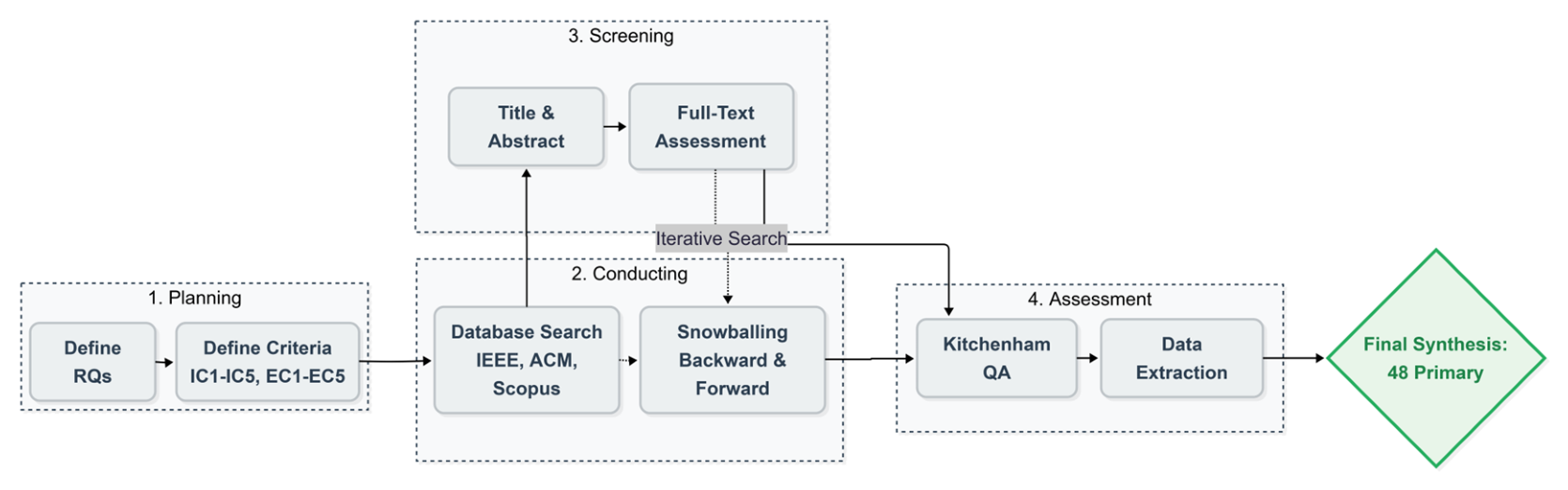
To ensure a comprehensive, transparent, and reproducible review of the relevant literature, this study was conducted (Figure 2) in accordance with the Preferred Reporting Items for Systematic Reviews and Meta-Analyses (PRISMA) guidelines [23]. The completed PRISMA 2020 checklist detailing adherence to these guidelines is provided as Supplementary Material and the systematic review was not registered in a public database, and post hoc registration was not pursued. Furthermore, the overall research protocol, including the quality assessment and data extraction phases, was adapted from the established guidelines for systematic reviews in software engineering and computer science proposed by Kitchenham et al. [24]. Finally, to guarantee exhaustiveness in this rapidly evolving field, backward and forward snowballing techniques were integrated into the search strategy, following the guidelines proposed by Wohlin [25].

3.1. Literature Seach

The selection criteria focused on identifying publications that discuss advanced character animation in virtual reality environments, with particular emphasis on generative artificial intelligence, computational constraints, and user embodiment. To address the most relevant research, a structured 5-step process was followed to formulate the search queries:
  • Discovered main terms by identifying core concepts from the Research Questions (RQs).
  • Identified alternative synonyms (e.g., “Spatial Computing” for VR, “neural rendering” or “diffusion” for animation techniques).
  • Checked the keywords in prominent state-of-the-art studies.
  • Added alternative spellings and synonyms using the Boolean operator OR.
  • Linked the main thematic categories using the Boolean operator AND.
The literature search was executed in February–March 2026 across major digital libraries and AI-powered research assistants, as detailed in Table 1. Special attention was also paid to prominent academic conferences, such as IEEE VR, ACM SIGGRAPH, and ACM CHI.

3.2. Inclusion and Exclusion Criteria

The retrieved papers were systematically screened using the Rayyan collaborative web application for systematic reviews. Eligibility was determined based on the predefined inclusion and exclusion criteria, as detailed in Table 2:
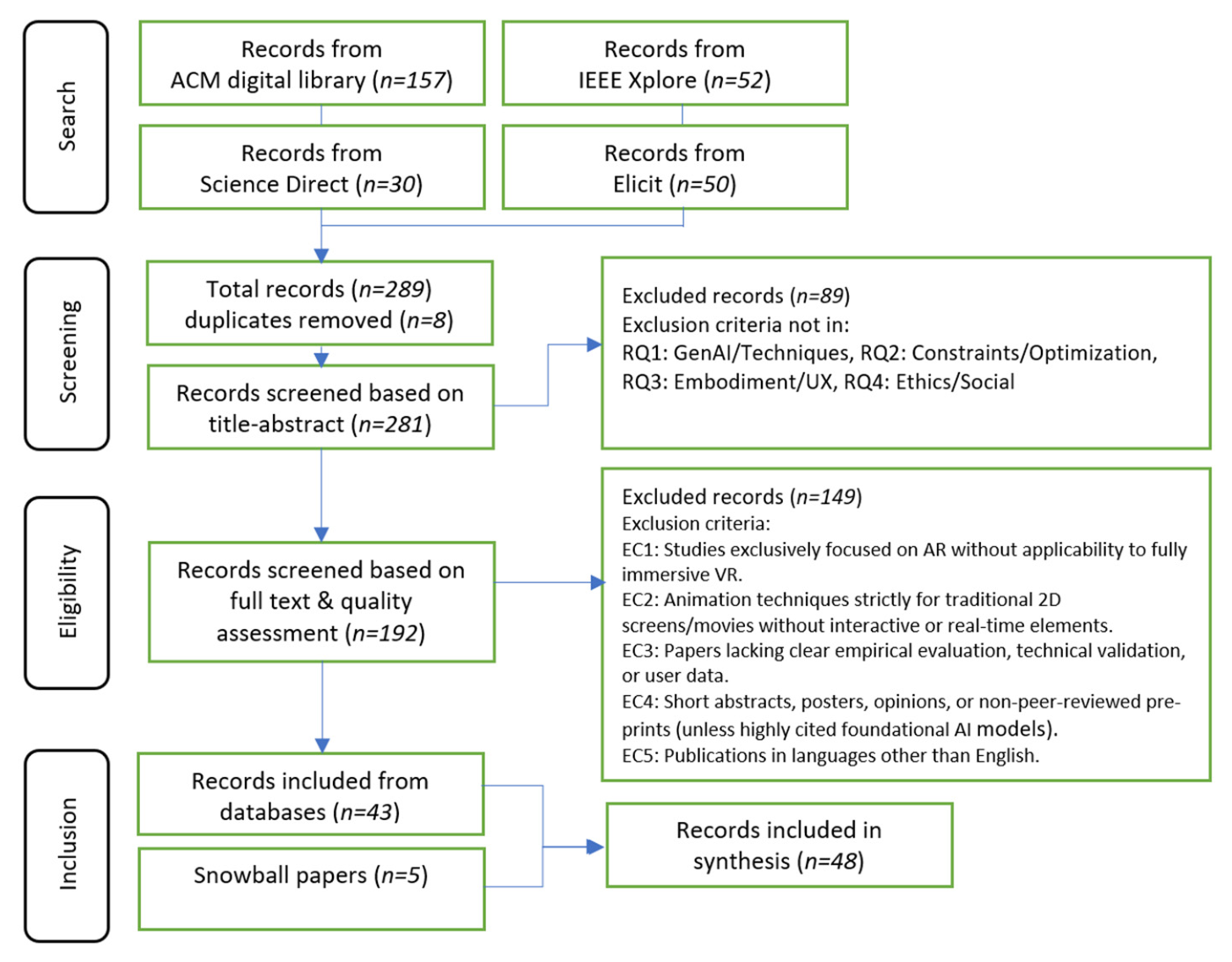
To guarantee exhaustiveness in this rapidly evolving field, we supplemented our database search with backward and forward snowballing, following the guidelines proposed by Wohlin [25]. The complete screening progression is visualized in the PRISMA Flow Diagram (Figure 3), detailing the three distinct rounds:
  • Round 1 (Initial Screening): The initial database search yielded a total of 289 records. After removing 8 duplicates, a pool of 281 unique records was established. Titles and abstracts were screened against the criteria, resulting in the exclusion of 89 out-of-scope articles.
  • Round 2 (Thorough Assessment): The remaining 192 publications underwent a detailed full-text assessment and quality evaluation. During this phase, 149 articles were excluded based on the predefined exclusion criteria (EC1–EC5), yielding 43 highly relevant studies from the databases.
  • Round 3 (Snowballing and Final Selection): The snowballing procedure identified 5 additional critical papers. This resulted in a final corpus of 48 primary studies included in the synthesis, which directly answer the four RQs.

3.3. Quality Assessment

To ensure the reliability of the findings, a rigorous quality assessment process was conducted following the Kitchenham framework [24]. Each selected paper was evaluated based on five variables: (1) Design of the study and technical validity, (2) methodology (participants, rendering tools, data measurement), (3) consistency between analysis and conclusions, (4) applicability to industry stakeholders, and (5) direct relevance to the RQs.
Each variable was graded on a scale of 1 to 3 (Low = 1, Moderate = 2, High = 3) by two independent researchers. The initial inter-rater agreement was high (Cohen’s Kappa, κ = 0.84). In cases of score discrepancies greater than one point, per individual variable, a third researcher moderated the evaluation through a synchronous consensus meeting, where the differing rationales were reviewed and a final binding score was agreed upon. The cumulative Weight of Evidence (WoE) for each publication ranged from 5 to 15. Ultimately, only studies achieving a total WoE score of ≥10 were included in the final synthesis, ensuring that the 48 selected papers maintain robust methodological rigor.

3.4. Data Extraction and Coding Scheme

Following the quality assessment, data were systematically extracted to answer the RQs. The coding scheme was designed to categorize papers based on technological and psychological metrics, as shown in Table 3.

3.5. Research Assistance Tools and Data Management

To ensure comprehensive and systematic screening of the literature, the authors utilized specialized AI-assisted research platforms. Elicit was employed during the initial exploratory phase to identify relevant semantic clusters in the literature, while Rayyan was used to manage the screening process and facilitate the blinded inclusion/exclusion phase. Specifically, the obtained results were evaluated purely by the human authors, who manually screened the titles and abstracts against the predefined criteria (IC and EC) without utilizing Rayyan’s automated relevance-ranking algorithms. These tools were used strictly for organizational and data management purposes, ensuring methodological rigor and transparency in accordance with PRISMA standards.

4. Results and State-of-the-Art Synthesis

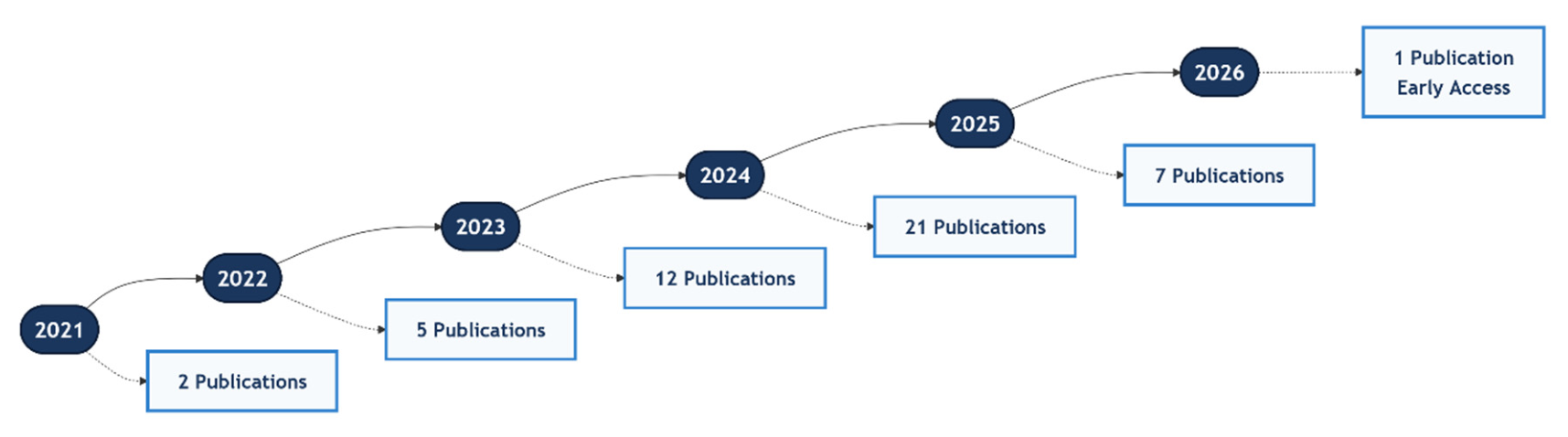
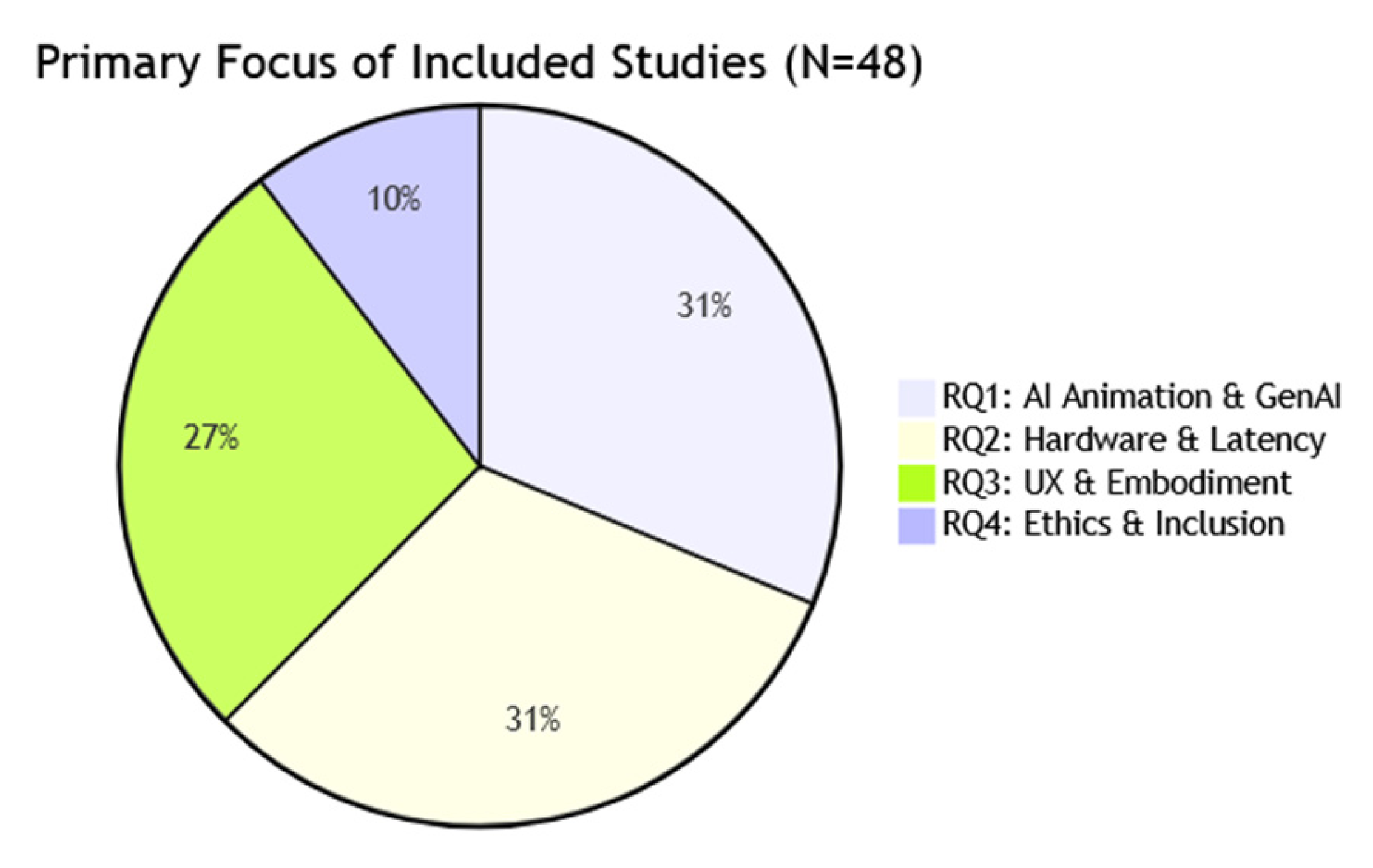
Following the systematic screening process, a final corpus of 48 primary studies was selected for full-text synthesis. The temporal distribution of the included literature, illustrated in Figure 4, reveals a rapid acceleration and notable upward trend in academic interest: while studies from 2021 to 2022 laid the foundational groundwork, the integration of Generative AI into Spatial Computing accelerated sharply from 2023 onwards, coinciding directly with the public release of advanced Diffusion Models and LLMs. Figure 5 maps the distribution of these studies across the four RQs guiding this review. It should be noted that while many studies relate to multiple RQs (as detailed in the “Primary Focus” column of Table 4), Figure 5 classifies each paper based strictly on its single most dominant thematic contribution to avoid double-counting in the percentage distribution. The corpus is broadly balanced between technological and human-centric concerns, with 30 studies addressing core computational challenges (RQ1, RQ2) and 18 focusing on user experience and ethics (RQ3, RQ4). To support a structured analysis, the extracted data were organized into a Synthesis Matrix (Table 4), categorizing the literature by primary technological focus, target platform, and core contribution.
The subsections that follow present a thematic synthesis of these findings, proceeding from the evolution of AI-driven avatar generation (Section 4.1, RQ1) through hardware and performance constraints (Section 4.2, RQ2), the impact of these technologies on user embodiment (Section 4.3, RQ3), and finally the sociotechnical and ethical implications of deploying AI avatars in Virtual Worlds (Section 4.4, RQ4).

4.1. The Evolution of Avatar Generation: Generative AI and Neural Rendering (RQ1)

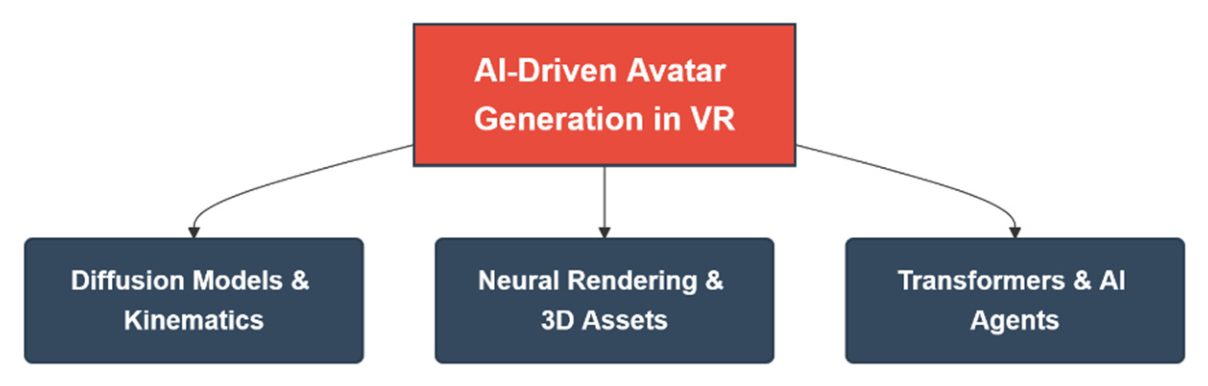
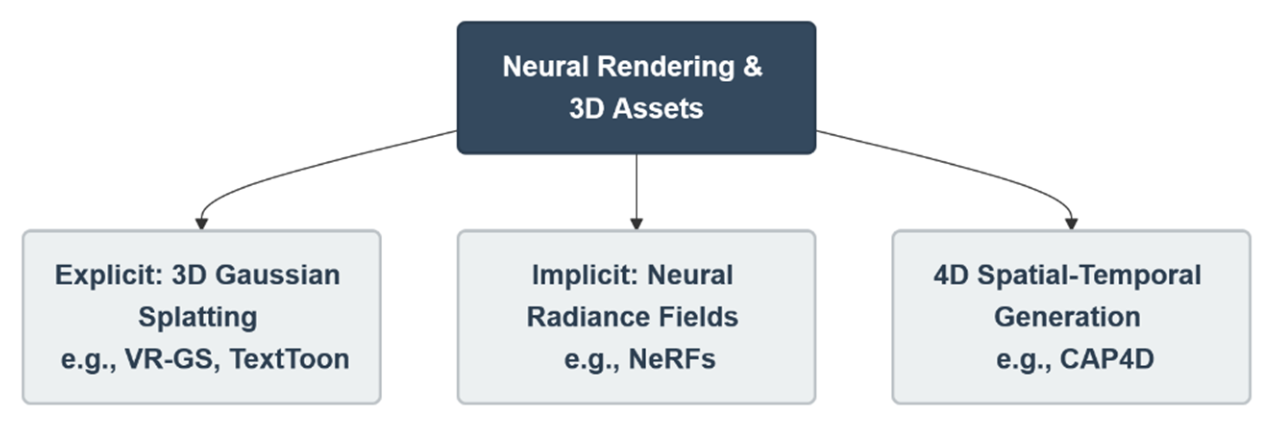
The synthesis of the included literature reveals a definitive paradigm shift in how avatars are generated, rigged, and animated. GenAI and advanced neural rendering have largely bypassed the traditional bottlenecks of manual keyframing and complex MoCap pipelines. As illustrated in Figure 6, three dominant technological taxonomies shape the current state of the art in this domain.

4.1.1. Diffusion Models and Masked Motion Synthesis

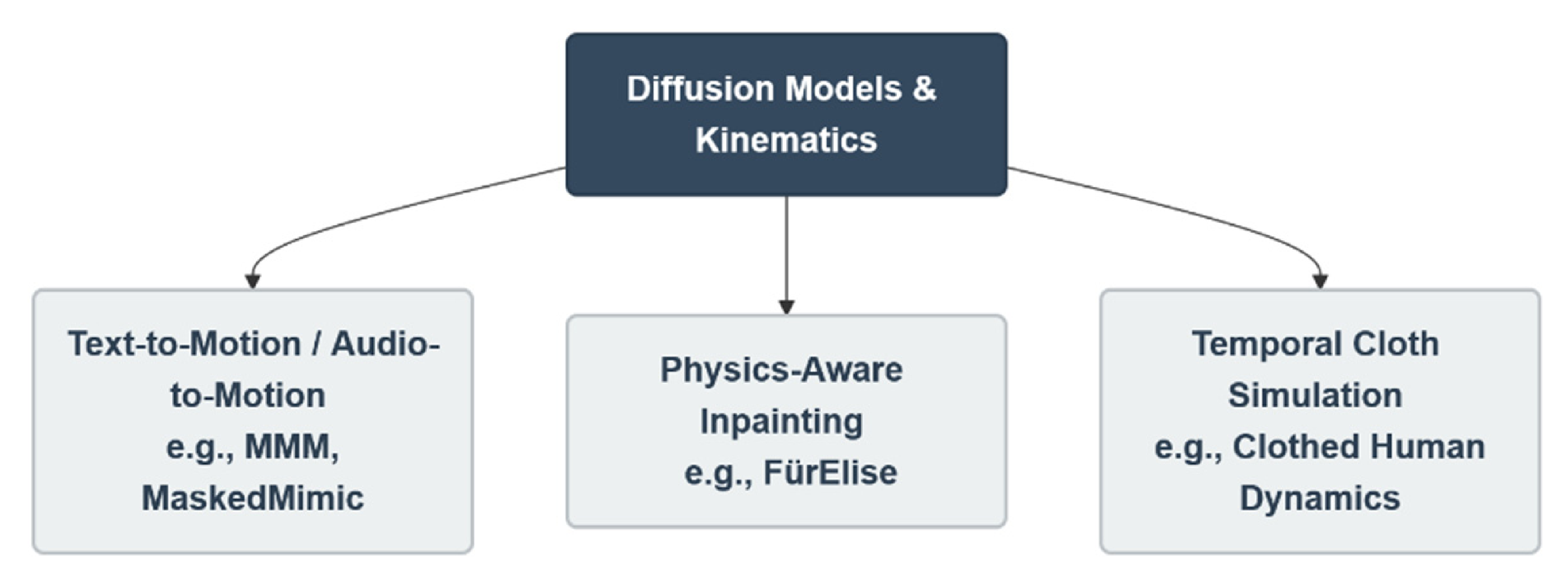
A significant portion of the literature addresses the generation of continuous, high-fidelity motion from sparse inputs or textual prompts (Figure 7). Standard diffusion is notoriously slow; however, its iterative denoising process is structurally at odds with the low-latency requirements of VR, which optimally demands animation rendering within 20 ms. The Masked Motion Model (MMM) responds to this constraint by introducing text-to-motion architectures that substantially outpace standard diffusion while achieving inference speeds sufficient for real-time spatial applications [37]. Kinematic accuracy and physical plausibility impose their own demands: MaskedMimic addresses these through masked motion inpainting, implementing a unified physics-based character controller that reliably prevents visual artifacts such as foot sliding [9]. Inverse interaction synthesis has been achieved through a complementary approach in OMOMO, which computes full-body manipulation directly from object trajectories via object motion-guided diffusion [32]. For highly constrained kinematic tasks, hybrid methods combining diffusion with reinforcement learning, exemplified by the FürElise framework, enable physically plausible dexterous hand motion synthesis for complex activities such as piano performance [29].

4.1.2. Neural Rendering and Volumetric Avatars

The visual fidelity of avatars is transitioning rapidly from traditional polygon meshes to neural representations (Figure 8). Where early implicit Neural Radiance Fields (NeRFs) relied on computationally heavy Multi-Layer Perceptrons (MLPs), the current state of the art favors explicit representations such as 3D Gaussian Splatting (3DGS), which optimizes explicit 3D Gaussian kernels to bypass neural network querying during the rendering phase. TextToon, for instance, leverages 3DGS combined with neural rendering to achieve real-time, text-driven stylization of 3D head avatars from a single monocular video [7]. For full 4D generation (3D space + time), CAP4D employs morphable multi-view diffusion to produce dynamically animatable portrait avatars under few-shot conditioning [36]. Minimal-data approaches are gaining traction in parallel: CVTHead drives one-shot controllable neural head avatars via a Vertex-Feature Transformer [35], while information bottleneck techniques successfully synthesize high-fidelity, lip-synchronized speaking avatars directly from audio [30].

4.1.3. Automation of Rigging and Dynamic Cloth Simulation

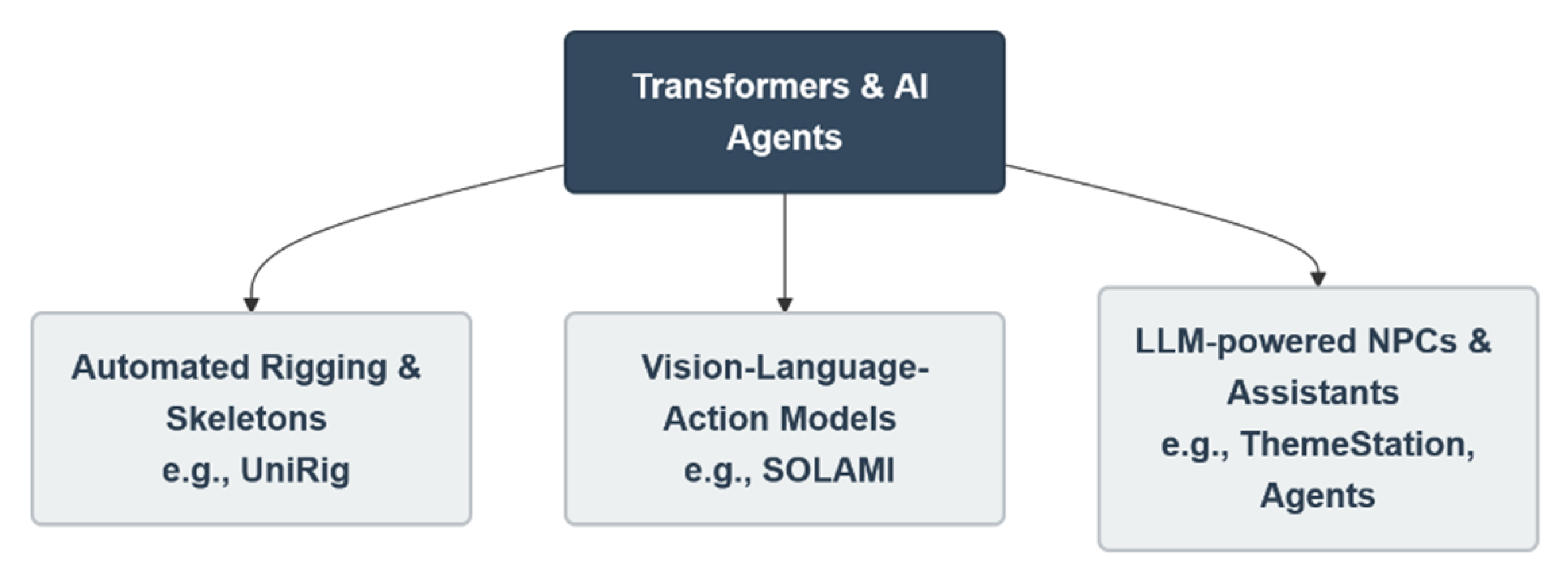
Integrating avatars into VR engines has traditionally required extensive manual rigging and deterministic physics solvers for clothing—processes that GenAI is now automating (represented as specialized sub-domains under Transformers and Diffusion Models in Figure 9). Autoregressive transformers, as implemented in UniRig, predict diverse skeleton rigging and skinning weights without manual modeling [34]. Once rigged, realistic deformation is handled by temporal diffusion and unsupervised deep learning: both clothed human dynamics [27] and neural cloth simulation [33] manage complex cloth dynamics in real time, bypassing heavy deterministic solvers entirely and allowing physically simulated clothing to be integrated seamlessly with deeply photorealistic models [28].

4.1.4. Transformers and End-to-End Generation Frameworks

Holistic frameworks utilizing transformers and large language models (Figure 9) further enable real-time performance. Transformers are well suited to this task: given sparse, noisy inputs such as head and hand coordinates from an HMD, they capture spatial context to autoregressively predict full-body kinematics. MOGO exploits this capacity through a hierarchical causal transformer for one-pass, continuous motion generation suited to live VR streaming [38]. An alternative end-to-end approach, Categorical Codebook Matching combined with RL synthesizes full-body motion from sparse headset sensors without requiring iterative refinement [26]. Extending the scope beyond the avatar itself, ThemeStation employs dual score distillation for theme-aware 3D asset generation, maintaining stylistic consistency across the broader virtual environment [31].

4.1.5. Methodological Limitations and Gap Analysis

Despite the kinematic accuracy these Generative AI models demonstrate in controlled settings, a critical reading of the corpus reveals persistent methodological limitations. Many state-of-the-art XR algorithms suffer from data leakage, meaning that models are sometimes fine-tuned and evaluated on overlapping kinematic datasets (e.g., subsets of AMASS), leading to inflated performance metrics that may degrade when tested on novel, real-world user movements. The autoregressive models that perform well on text-to-motion tasks are also prone to long-term temporal inconsistency, with motion quality degrading over extended VR sessions. More broadly, the current reliance on constrained, non-diverse datasets limits the generalized deployment of these models across varied Spatial Computing scenarios.
These limitations aside, even well-functioning generative models face a deeper barrier to practical deployment. Autoregressive transformers and standard diffusion architectures introduce prohibitive inference latency through complex feature computation and iterative denoising. Explicit representations such as 3DGS, while bypassing the heavy MLP queries of traditional NeRFs, demand massive memory bandwidth that exacerbates the “Memory Wall” on mobile Systems-on-Chip (SoCs). Both constraints clash directly with the operational realities of standalone VR headsets, which must sustain frame rates of 90–120 Hz under rigid power budgets of less than 30 W to prevent cybersickness. Achieving real-time, untethered immersion therefore requires more than algorithmic advancement. As Section 4.2 details, the field is increasingly turning to hardware–software co-design, leveraging ASICs, Computing-in-Memory (CIM) architectures, and gaze-contingent foveated rendering to resolve these bottlenecks at the silicon level.

4.2. Overcoming Computational Constraints: Hardware and Performance Optimization (RQ2)

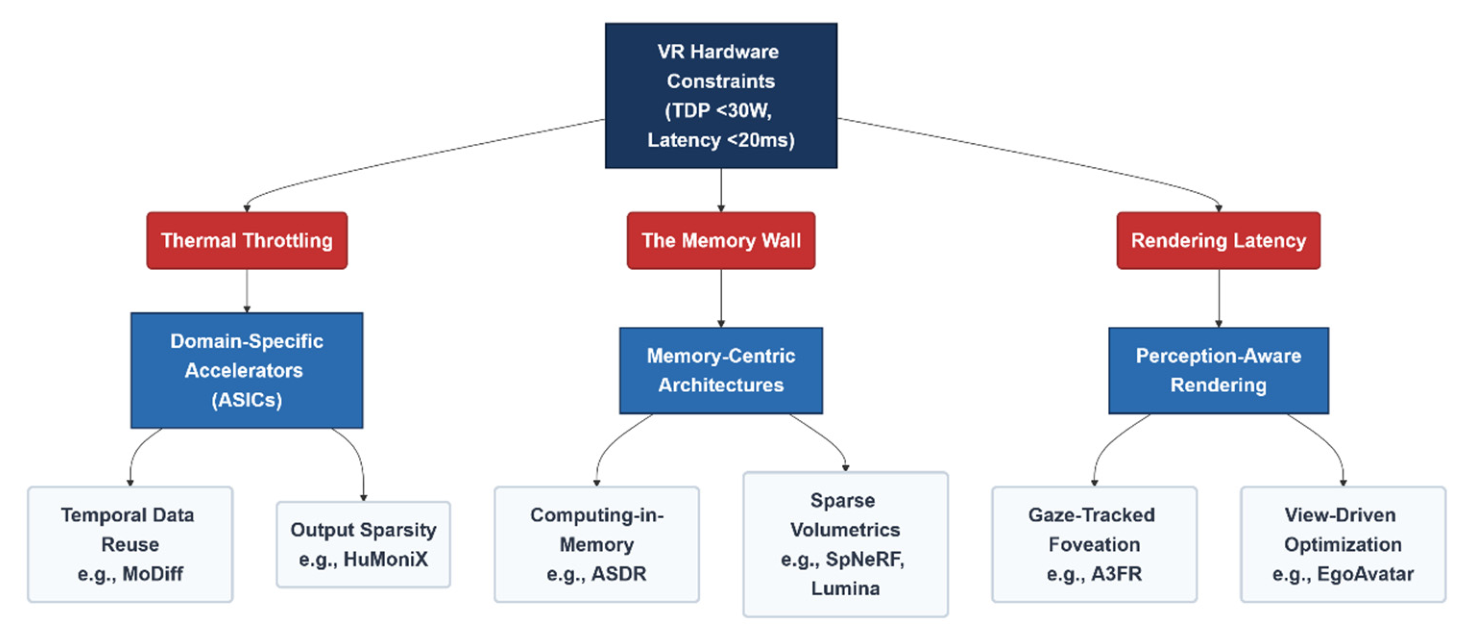
The transition from tethered PC-VR to standalone Spatial Computing has made extreme hardware–software co-design a research priority. GenAI models provide unprecedented autonomy but are fundamentally constrained by the “Memory Wall” and the strict thermal design powers (TDP < 30 W) of mobile SoCs. Unlike standard polygonal rendering, architectures such as NeRF and 3DGS demand massive, irregular memory accesses—hash-table lookups and primitive sorting—that destroy cache locality and saturate off-chip memory bandwidth. The optimizations identified in the literature fall into three categories: specialized AI accelerators, memory-centric architectures, and perception-aware rendering techniques (Figure 10).

4.2.1. Domain-Specific Accelerators and ASICs

The literature increasingly proposes Application-Specific Integrated Circuits (ASICs) as the primary mitigation for these bottlenecks. MoDiff [8] addresses the energy overhead of diffusion models by achieving 11.0 TOPS/W through temporal data reuse, a level of efficiency critical for preventing the thermal throttling that inevitably results from running iterative denoising on mobile SoCs, and for sustaining operation within strict power budgets without GPU downclocking. HuMoniX [12] achieves a complementary goal, delivering 57.3 FPS text-to-motion generation by exploiting inter-iteration output sparsity. Although 57.3 FPS falls below the standard 90 Hz display threshold, the kinematic output is fast enough to be seamlessly interpolated by the headset’s compositor, preserving real-time responsiveness. Other specialized architectures, including Cambricon-R [42] and ICARUS [50], focus on fusing neural scene representation tasks to eliminate pipeline stalls during volumetric rendering.

4.2.2. Computing-in-Memory (CIM) Architectures and Bandwidth Reduction

CIM has emerged as a definitive architectural response to the Memory Wall. ASDR [41] performs Matrix-Vector Multiplications directly within ReRAM crossbars, eliminating the need to move dense weight tensors across the bus and achieving a 9.55× speedup over existing neural accelerators and a 69.7× speedup over traditional edge GPUs, gains sufficient to push volumetric rendering into viable real-time frame rates. Lumina [40] pursues a complementary strategy, achieving a 5.3× energy reduction by pruning computational redundancy, while SpNeRF [43] and NeRVo [49] apply sparse volumetric representations and implicit neural compression to enable high-quality video streaming on mobile VR under minimal bandwidth.

4.2.3. Perception-Aware and Foveated Optimization

Exploiting human visual perception offers a third avenue for reducing computational load. A3FR [39] introduces a 3DGS pipeline with incremental gaze-tracked foveated rendering that halves rendering latency by parallelizing gaze-tracking on the CPU while 3DGS rasterization executes on the GPU, effectively hiding latency for standalone HMDs. TimeNeRF [46] complements this by building dynamic scenes from few-shot input views across time, while VR-GS [6,38] embeds physical dynamics within Gaussian Splatting, allowing avatars to respond to user collisions in real time. EgoAvatar [44] addresses the distinct problem of self-occlusion in egocentric views, optimizing photorealistic full-body models directly from HMD-mounted cameras to maintain stable performance across complex movements.

4.2.4. The Integration Gap: Interfacing Custom Silicon with XR Ecosystems

The remarkable theoretical efficiency of specialized ASICs is offset by a practical “integration gap” that threatens their real-world deployment. The XR industry is built on standardized game engines (Unity, Unreal Engine) and graphics APIs (Vulkan, WebGPU). Bespoke neural accelerators such as MoDiff currently lack the middleware necessary to interface with these pipelines. Although frameworks like Unity Sentis have enabled real-time AI inference within engine runtimes, routing tasks to isolated hardware requires exposing low-level silicon instructions through unified SDKs. Without robust middleware connecting custom AI silicon to the existing XR authoring ecosystem, these hardware advances risk remaining isolated academic demonstrations.

4.2.5. Transition to User Centricity

The hardware–software co-designs and rendering optimizations discussed above are not merely engineering achievements measured in watts and milliseconds; they are the prerequisite for human-centric Spatial Computing. Unmitigated rendering latency and sensorimotor desynchronization break the user’s sensorimotor loop regardless of visual quality. As Section 4.3 explores, maintaining ultra-low latency and physical responsiveness is the non-negotiable foundation for a compelling sense of agency, psychological immersion, and embodiment within virtual environments.

4.3. User Experience, Embodiment, and Interaction (RQ3)

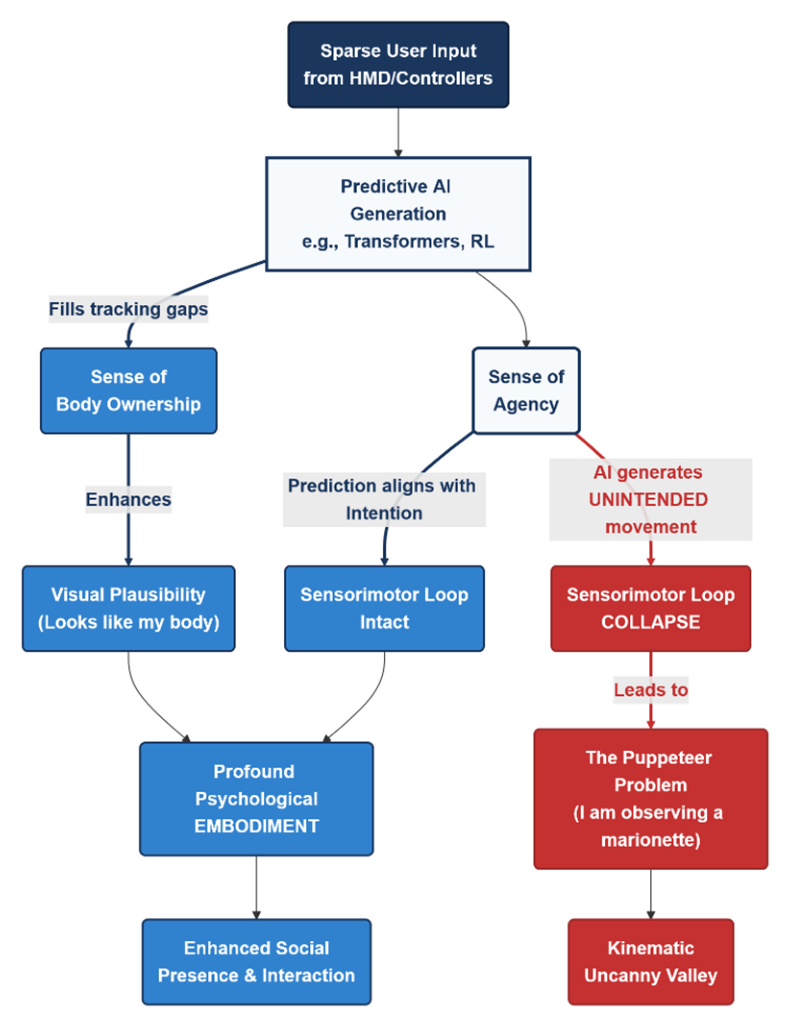
While Section 4.1 and Section 4.2 addressed the computational generation and hardware execution of AI avatars, RQ3 turns to human-centric outcomes. The synthesis reveals that Generative AI profoundly disrupts traditional paradigms of the sense of embodiment (SoE). Three distinct themes organize these psychological and interactive findings, conceptualized in Figure 11: the AI–Agency Paradox, the Dynamic Uncanny Valley, and affective social presence.

4.3.1. The AI–Agency Paradox and Body Ownership

In traditional VR, the sense of embodiment rests on strict sensorimotor contingency, a 1:1 mapping between the user’s physical movement and the avatar’s visual response. GenAI introduces what can be termed the “AI–Agency Paradox.” AI models that synthesize full-body kinematics from sparse tracking data (head and hand controller positions) substantially improve the visual plausibility of the virtual body and, with it, the illusion of body ownership [14,15]. Physics-aware AI further reinforces this by producing biomechanically realistic environment interactions [57] that mask minor system latencies.
The same predictive generation, however, poses a structural risk to the sense of agency (SoA), the user’s feeling of authorship over the avatar’s actions. As Yun et al. [16] demonstrate, when animation fidelity is driven by autonomous prediction rather than direct input, any divergence between the user’s intended motor action and the AI-generated movement ruptures the sensorimotor loop. If an autoregressive transformer incorrectly predicts a gesture, the user transitions abruptly from embodying the avatar to feeling like a passive observer operating a disconnected entity, a “Puppeteer Problem” that collapses immersion immediately.

4.3.2. Kinematic Realism and the Dynamic Uncanny Valley

The literature documents a critical evolution in how realism is perceived within AI-driven VR. While a collapse in visual plausibility (e.g., unrealistic skin textures or dead eyes) is a well-established trigger for the uncanny valley, recent evidence establishes that photorealism cannot be evaluated independently of kinematic behavior. Zibrek et al. [17,21] and Kokkinara & McDonnell [19] demonstrate empirically that highly photorealistic avatars—produced via 3DGS or Neural Radiance Fields—create strong subconscious expectations for biological movement fidelity.
When such an avatar exhibits stiff, robotic, or slightly phase-shifted AI-generated animation, the resulting sense of eeriness is markedly stronger than the same animation flaws produce in a stylized avatar. This “Kinematic Uncanny Valley” has a direct design implication: as AI continues to push the boundaries of visual fidelity [20], the underlying motion pipelines, including diffusion-based synthesis, must achieve flawless, jitter-free temporal consistency. Failing this, enhanced graphics actively harm the user experience rather than improve it.

4.3.3. Social Presence, Affect, and Multimodal Interaction

Beyond self-embodiment, AI animation reshapes interpersonal dynamics and social presence in multi-user virtual environments. The automation of non-verbal cues is central to this effect: AI-driven conversational animations [18] and accurate deep-learning-based lip synchronization [13] measurably improve visual attention and engagement during social simulations. Genuine social immersion, however, depends on affective and multimodal interaction. Dynamic, AI-triggered emotional expressions coupled with multisensory feedback substantially heighten emotional engagement and the perceived realism of the virtual narrative [46,47,49].
The significance of these effects extends beyond subjective self-report. When users interact with physics-aware avatars and highly responsive digital agents [52,58], the sensory feedback is sufficient to elicit genuine physiological responses, measurable changes in motor cortical excitability and autonomic nervous system arousal, grounding the psychological illusion of social presence in neurobiological evidence and blurring the boundary between human and AI-driven interaction.

4.3.4. Transitioning to Sociotechnical Implications

The findings above confirm that when AI-driven avatars achieve an appropriate balance of visual photorealism, kinematic accuracy, and ultra-low latency, they can induce compelling illusions of virtual body ownership and emotional attachment. This psychological influence is precisely what generates the critical vulnerabilities examined next. The capacity to clone a user’s appearance, predict their movements, and autonomously generate hyper-realistic emotional responses fundamentally challenges the boundaries of identity, consent, and safety in digital spaces. Section 4.4 examines these sociotechnical and ethical implications directly.

4.4. Sociotechnical and Ethical Implications: Identity, Privacy, and Inclusion (RQ4)

The psychological efficacy of AI-driven embodiment established in Section 4.3 links technical capability directly to sociotechnical risk. As Spatial Computing integrates with Generative AI, the literature is unambiguous on one point: ethical considerations can no longer be treated as post hoc evaluations but must be foundational to system architecture. These implications are organized here across three vectors: identity preservation, spatial privacy, and algorithmic accessibility.

4.4.1. Identity, Consent, and “Generative Ghosts”

The ability of AI to synthesize photorealistic avatars and clone kinematic behavioral patterns introduces unprecedented threats to digital identity and consent. The morphable diffusion models that enable highly personalized self-avatars are the same architectures that can be exploited to produce hyper-realistic deepfakes within 3D environments. The problem extends beyond living users. Morris and Brubaker [63] identify the emerging phenomenon of “Generative Ghosts,” AI afterlives in which LLMs and neural rendering are used to construct agentic, embodied representations of deceased individuals. Autonomous avatars that replicate the voice, likeness, and behavioral patterns of real people raise acute ethical questions around post-mortem consent, the psychological impact on bereaved users, and the legal ownership of biometric and behavioral data after death.

4.4.2. Spatial Privacy and Context-Aware Agents

The shift toward environment-aware AI agents fundamentally alters the privacy landscape of VR. Where traditional applications processed spatial data locally for basic collision detection, modern multimodal agents, such as the SARAH framework (Spatially Aware Real-time Agentic Humans) [60], require continuous semantic understanding of the user’s physical surroundings to enable intelligent, context-aware interaction. The HMD’s external cameras and depth sensors effectively become persistent visual inputs for large vision–language models, transforming standalone headsets into devices with continuous spatial data-harvesting capability. The literature warns that routing intimate spatial data—bedroom layouts, personal objects, bystander presence—through cloud-based neural networks for NPC inference generates serious vulnerabilities regarding data sovereignty and continuous sensor-based surveillance.

4.4.3. Accessibility, Inclusion, and Kinematic Bias

The same training data composition that raises spatial privacy concerns introduces a parallel vulnerability around inclusion. A pervasive gap identified across the corpus is the inherent bias within standard motion-capture databases, which are overwhelmingly drawn from able-bodied individuals. Autoregressive transformers trained on such data frequently fail to predict or render the movements of users with physical disabilities, producing what might be termed “kinematic marginalization”.
The same generative tools are not, however, intrinsically exclusionary. When developers deliberately reject one-size-fits-all datasets, AI can function as an engine for accessibility rather than a barrier. WheelPoser [64] demonstrates this by combining sparse-IMU inputs with specialized body pose estimation networks to accurately track and represent wheelchair users in VR, bypassing the limitations of standard full-body kinematics. AI-driven virtual performance augmentation has similarly been shown to enhance XR usability for senior users [65] by filtering motor tremors and adapting interface ergonomics dynamically. These cases make a consistent argument: algorithmic inclusion demands deliberately diverse training data and kinematic controllers designed for the full range of human movement.

4.5. Summary of Key Findings

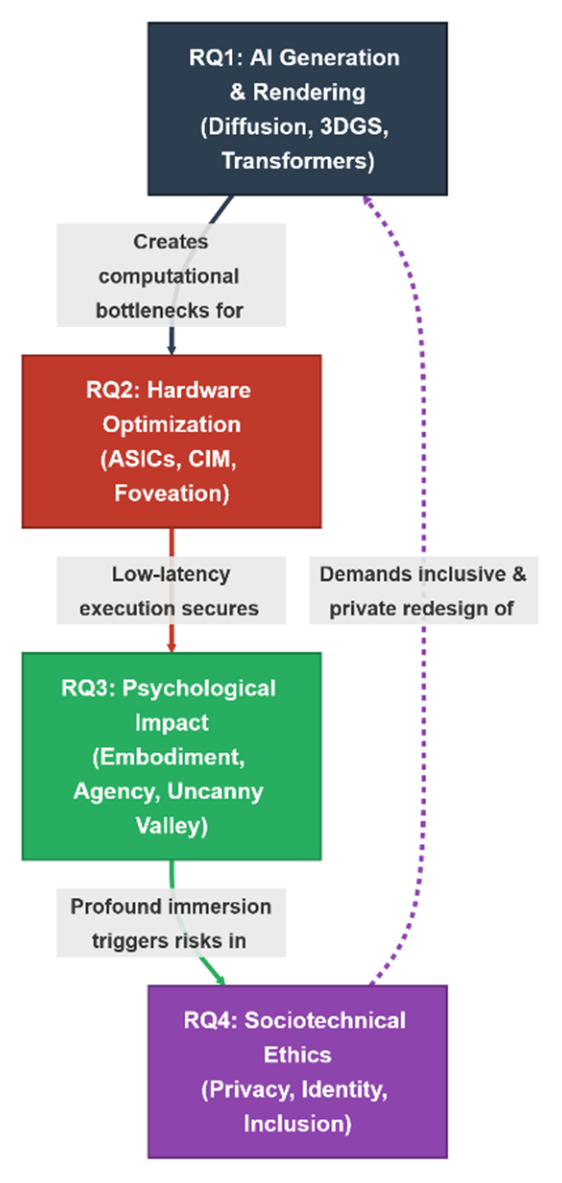
The literature reveals a highly interdependent ecosystem, visualized in Figure 12. Generative AI has successfully automated the visual and kinematic pipelines of VR avatars (RQ1), but the computational demands of these algorithms are structurally at odds with the latency and thermal constraints of mobile hardware (RQ2). Hardware–software co-design, specialized ASICs, gaze-contingent foveation, and CIM architectures can resolve these bottlenecks, and doing so matters not only for performance metrics but also for preserving the user’s fragile sense of agency and avoiding the Kinematic Uncanny Valley (RQ3). As optimized, hyper-realistic AI avatars become increasingly autonomous, and in turn compel a re-evaluation of digital ethics, demanding robust frameworks for spatial privacy and inclusive design (RQ4). Section 5 interprets these findings to identify critical research gaps and propose actionable design guidelines for the future of the AI-driven Metaverse.

5. Discussion

The trajectory of avatar generation in virtual reality has shifted decisively from explicit, manual control to predictive, AI-driven generation. Generative AI and neural rendering have successfully bypassed the traditional bottlenecks of 3D authoring, yet this algorithmic progress has catalyzed a cascade of new challenges spanning hardware architecture, cognitive psychology, and digital ethics.

5.1. Interpreting the State of the Art

What the current literature reveals, above all, is a state of deep systemic tension. The pursuit of visual fidelity through heavy neural networks directly antagonizes the thermal and latency constraints of standalone VR headsets. Modern AI pipelines can render visually convincing avatars, but any hardware-induced latency immediately ruptures the sensorimotor loop, collapsing the sense of agency and drawing the user into the Kinematic Uncanny Valley. The implication is significant: true spatial immersion is no longer a graphics problem amenable to purely algorithmic solutions. It is an interdisciplinary challenge that demands aggressive hardware–software co-design as a first-order concern.

5.2. The Causal Chain of Interdisciplinary Interaction

To fully substantiate the necessity of interdisciplinary collaborative design, it is crucial to move beyond a parallel analysis of these four domains and trace their causal interdependencies. The literature synthesized in this review reveals a distinct sequential chain:
  • How algorithmic technology (RQ1) drives hardware demands (RQ2): The transition to autonomous avatars relies heavily on explicit neural rendering (e.g., 3DGS) and continuous diffusion pipelines. However, these algorithms dictate massive memory bandwidth and continuous tensor operations that directly saturate the strict thermal and latency limits of standalone mobile SoCs. Thus, the specific algorithmic choices of RQ1 inherently force the hardware crises of RQ2, necessitating bespoke collaborative solutions like edge ASICs and CIM architectures.
  • How the hardware solution (RQ2) becomes the premise of user experience (RQ3): Without the edge-level hardware acceleration and foveated rendering identified in RQ2, the system inevitably suffers from rendering lag and temporal jitter. As established, even milliseconds of latency between a user’s physical movement and the AI’s predicted kinematic response will rupture the sensorimotor loop. Therefore, the hardware–software co-design (RQ2) is not merely a technical optimization; it is the absolute prerequisite for maintaining the sense of agency and preventing the Kinematic Uncanny Valley (RQ3).
  • How deep immersion (RQ3) gives rise to sociotechnical risks (RQ4): When RQ1 and RQ2 successfully align, the result is profound psychological embodiment and high social presence (RQ3). However, it is precisely this deep psychological immersion, facilitated by hyper-realistic, context-aware avatars that clone human kinematics and appearance, that triggers the ethical vulnerabilities of RQ4. The psychological power of a personalized “Virtual Twin” or an affective AI agent is precisely what makes the threats of “Generative Ghosts,” deepfakes, and spatial privacy violations so severe.
Consequently, isolated innovations in one domain often create cascading failures in another. A true interdisciplinary interaction requires hardware engineers, AI researchers, and ethicists to co-design the pipeline collaboratively from its inception, as a decision in rendering geometry will ultimately impact human psychological embodiment and privacy.

5.3. Summary of Key Findings—Future Research Directions

Based on the identified gaps in the current literature, we propose three critical vectors for future research:
  • Standardizing Embodiment Metrics for Autonomous Agents: Current evaluations of the sense of embodiment (SoE) rely heavily on subjective self-reporting instruments, such as the Virtual Embodiment Questionnaire, designed for traditional 1:1 tracked avatars. These instruments are poorly suited to AI-driven systems, where the avatar’s behavior is partially autonomous. Future work must develop standardized, multimodal evaluation frameworks that correlate subjective psychological reporting with real-time physiological signals (e.g., EEG, Galvanic Skin Response), enabling objective measurement of the cognitive dissonance that arises when a generative model mispredicts a user’s intended movement, the “Puppeteer Problem.”
  • Edge AI and On-Device Neural Rendering: The reliance on cloud computing for generative motion synthesis introduces latency and privacy risks that are structurally incompatible with immersive VR. Architectural research must prioritize TinyML and edge-computing paradigms, focusing specifically on Computing-in-Memory (CIM) designs and dynamic sparsity algorithms capable of executing complex 4D neural rendering entirely on mobile Systems-on-Chip (SoCs) within a sub-30 W power envelope.
  • Ethical Frameworks and “Privacy-by-Design”: The emergence of context-aware agents and “Generative Ghosts” requires regulatory and design intervention that goes beyond risk identification. Future studies must focus on engineering Privacy-by-Design solutions: localized, zero-knowledge processing for spatial data that ensures headset camera feeds never reach the cloud, and cryptographic watermarking for 3D assets that allows human and AI-generated kinematic behaviors to be distinguished and verified.

5.4. Design Guidelines for XR Developers

The following actionable guidelines are distilled from the synthesis for developers building the next generation of VR environments:
  • Balance visual fidelity with kinematic latency bounds: When hardware constraints force a compromise, visual fidelity (e.g., texture resolution, ray-traced lighting) should not exceed the system’s capacity to maintain real-time kinematics. The penalty of sensorimotor collapse is more detrimental to the sense of agency than a slight reduction in visual realism.
  • Implement IK as a deterministic fallback: Systems using predictive AI for full-body tracking from sparse inputs must include a deterministic Inverse Kinematics (IK) layer as a seamless fallback. When the AI model’s confidence drops below threshold, the system should smoothly interpolate back to standard IK, preventing the unintended, agency-breaking movements that collapse immersion.
  • Mandate inclusive training data: Generative models must be audited for kinematic bias before deployment. Underlying datasets should explicitly include diverse body types, motor abilities, and assistive devices—including wheelchairs—moving away from the “one-size-fits-all” default rig that many current systems assume.
  • Adopt gaze-contingent generative inference: Foveation should not be confined to the graphics rasterization pipeline. On standalone HMDs operating under strict thermal and computational budgets, eye-tracking hardware should govern the AI generation threshold directly. Compute-heavy generative models, such as high-density 3D Gaussian Splatting, should be reserved for the foveal region, with the periphery handled by lightweight, pre-scripted animations. This principle of “semantic foveation” ensures that the system’s most expensive inference is expended only where the user’s visual acuity can resolve the kinematic detail it produces.

5.5. Limitations of This Review

Several methodological limitations warrant acknowledgment. The rapid pace of Generative AI development means that recent pre-prints and proprietary industry models, including closed-source architectures from Meta and Apple, may not be fully represented in the peer-reviewed databases at the time of extraction. The use of predefined search queries introduces keyword selection bias, a particular concern in an interdisciplinary field that lacks standardized taxonomy. The deliberate exclusion of grey literature, including industry white papers and technical reports, means that significant commercial advances may have been systematically missed. The search strategy was also restricted to English-language publications, which risks excluding relevant contributions from non-English research communities. Finally, the review’s emphasis on standalone VR headsets limits the direct applicability of its findings to augmented and mixed-reality environments, where optical see-through displays introduce fundamentally different rendering and embodiment paradigms.

6. Conclusions

This systematic review has traced the evolution of virtual reality avatars from pre-rendered, manually animated meshes to autonomous, AI-driven digital entities. The synthesis demonstrates that Generative AI and neural rendering have effectively resolved the traditional bottlenecks of 3D authoring, enabling the real-time generation of photorealistic, physics-aware virtual bodies. The progress, however, carries a central paradox: the very pursuit of visual fidelity that these methods make possible is structurally at odds with the thermal and latency constraints of mobile, standalone hardware. As the review establishes, unmitigated hardware bottlenecks rupture the sensorimotor loop, collapsing the sense of agency and triggering the Kinematic Uncanny Valley, regardless of graphical quality. Simultaneously, as avatars approach hyper-realistic autonomy, they introduce sociotechnical risks that existing frameworks are ill-equipped to address, such as spatial privacy violations, kinematic bias in training data, and the unresolved ethics of post-mortem digital identity.
The future of Spatial Computing is therefore no longer a challenge that computer graphics can meet alone. The primary contribution of this systematic review lies in its holistic synthesis of previously siloed domains. By mapping the transition from pre-rendered animations to AI-driven autonomous models, this paper provides researchers and developers with a comprehensive panorama of the current sociotechnical ecosystem. We demonstrate that the success of next-generation Spatial Computing does not depend solely on achieving higher graphical fidelity or faster edge-AI processing. Rather, it requires a fundamental paradigm shift toward interdisciplinary co-design, where silicon architectures, predictive AI models, and human cognitive psychology are integrated under a robust framework of digital ethics.

Supplementary Materials

The following supporting information can be downloaded at: https://www.mdpi.com/article/10.3390/virtualworlds5020020/s1, Table S1: PRISMA 2020 Checklist [23].

Funding

This research received no external funding.

Institutional Review Board Statement

Not applicable.

Informed Consent Statement

Not applicable.

Data Availability Statement

No new data were created or analyzed in this study.

Acknowledgments

During the preparation of this work, the authors used Google Gemini large language models to enhance linguistic flow, grammar, and overall readability. Following the use of this tool, the authors reviewed, critically analyzed, and manually edited the generated content to ensure technical accuracy and academic rigor and take full responsibility for the entire content of this publication, including the final interpretation of the synthesized literature and the validity of the research findings.

Conflicts of Interest

The authors declare no conflicts of interest.

References

  1. Vogel, D.; Lubos, P.; Steinicke, F. Animationvr-interactive controller-based animating in virtual reality. In Proceedings of the 2018 IEEE 1st Workshop on Animation in Virtual and Augmented Environments (ANIVAE), Reutlingen, Germany, 19 March 2018; IEEE: New York, NY, USA, 2018; pp. 1–6. [Google Scholar]
  2. Berford, B.; Diaz-Padron, C.; Kaleas, T.; Oz, I.; Penney, D. Building an animation pipeline for VR stories. In ACM SIGGRAPH 2017 Talks; Association for Computing Machinery: New York, NY, USA, 2017; pp. 1–2. [Google Scholar]
  3. Wu, J.; Lu, E.; Kohli, P.; Freeman, B.; Tenenbaum, J. Learning to see physics via visual de-animation. Adv. Neural Inf. Process. Syst. 2017, 30. [Google Scholar]
  4. Chirico, A.; Gaggioli, A. When virtual feels real: Comparing emotional responses and presence in virtual and natural environments. Cyberpsychol. Behav. Soc. Netw. 2019, 22, 220–226. [Google Scholar] [CrossRef] [Scilit]
  5. Wang, X.; Zhong, W. Evolution and innovations in animation: A comprehensive review and future directions. Concurr. Comput. Pract. Exp. 2024, 36, e7904. [Google Scholar] [CrossRef] [Scilit]
  6. Jiang, Y.; Yu, C.; Xie, T.; Li, X.; Feng, Y.; Wang, H.; Li, M.; Lau, H.; Gao, F.; Yang, Y.; et al. Vr-gs: A physical dynamics-aware interactive gaussian splatting system in virtual reality. In Proceedings of the ACM SIGGRAPH 2024 Conference Papers, Denver, CO, USA, 27 July–1 August 2024; p. 1. [Google Scholar]
  7. Song, L.; Chen, L.; Liu, C.; Liu, P.; Xu, C. Texttoon: Real-time text toonify head avatar from single video. In Proceedings of the SIGGRAPH Asia 2024 Conference Papers, Tokyo Japan, 3–6 December 2024; pp. 1–11. [Google Scholar]
  8. Yoon, J.; Yune, S.; Lee, H.; Putra, A.; Heo, J.; Kim, J.-Y. MoDiff: A 11.0 TOPS/W Diffusion Accelerator with Temporal Data Reuse for Real-Time Text-to-Motion Generation. In Proceedings of the 2025 IEEE Asian Solid-State Circuits Conference (A-SSCC), Daejeon, Republic of Korea, 2–5 November 2025; IEEE: New York, NY, USA, 2025; pp. 88–90. [Google Scholar]
  9. Tessler, C.; Guo, Y.; Nabati, O.; Chechik, G.; Peng, X.B. Maskedmimic: Unified physics-based character control through masked motion inpainting. ACM Trans. Graph. (TOG) 2024, 43, 209. [Google Scholar] [CrossRef] [Scilit]
  10. Jiang, J.; Xiao, W.; Lin, Z.; Zhang, H.; Ren, T.; Gao, Y.; Lin, Z.; Cai, Z.; Yang, L.; Liu, Z. Solami: Social vision-language-action modeling for immersive interaction with 3d autonomous characters. In Proceedings of the Computer Vision and Pattern Recognition Conference, Nashville, TN, USA, 11–15 June 2025; pp. 26887–26898. [Google Scholar]
  11. Hirzle, T.; Müller, F.; Draxler, F.; Schmitz, M.; Knierim, P.; Hornbæk, K. When XR and AI Meet—A Scoping Review on Extended Reality and Artificial Intelligence—Proceedings of the 2023 CHI Conference on Human Factors in Computing Systems; Association for Computing Machinery: New York, NY, USA, 2023. [Google Scholar] [CrossRef] [Scilit]
  12. Heo, J.; Putra, A.; Yune, S.; Yoon, J.; Lee, H.; Kim, J.; Kim, J.-Y. 23.10 HuMoniX: A 57.3 fps 12.8 TFLOPS/W Text-to-Motion Processor with Inter-Iteration Output Sparsity and Inter-Frame Joint Similarity. In Proceedings of the 2025 IEEE International Solid-State Circuits Conference (ISSCC), San Francisco, CA, USA, 15–19 February 2025; IEEE: New York, NY, USA, 2025; pp. 424–426. [Google Scholar]
  13. Peixoto, B.; Melo, M.; Cabral, L.; Bessa, M. Evaluation of animation and lip-sync of avatars, and user interaction in immersive virtual reality learning environments. In Proceedings of the 2021 International Conference on Graphics and Interaction (ICGI), Porto, Portugal, 4–5 November 2021; IEEE: New York, NY, USA, 2021; pp. 1–7. [Google Scholar]
  14. Waltemate, T.; Gall, D.; Roth, D.; Botsch, M.; Latoschik, M.E. The impact of avatar personalization and immersion on virtual body ownership, presence, and emotional response. IEEE Trans. Vis. Comput. Graph. 2018, 24, 1643–1652. [Google Scholar] [CrossRef] [Scilit]
  15. Debarba, H.G.; Chague, S.; Charbonnier, C. On the plausibility of virtual body animation features in virtual reality. IEEE Trans. Vis. Comput. Graph. 2020, 28, 1880–1893. [Google Scholar] [CrossRef] [Scilit]
  16. Yun, H.; Ponton, J.L.; Andujar, C.; Pelechano, N. Animation fidelity in self-avatars: Impact on user performance and sense of agency. In Proceedings of the 2023 IEEE Conference Virtual Reality and 3D User Interfaces (VR), Shanghai, China, 25–29 March 2023; IEEE: New York, NY, USA, 2023; pp. 286–296. [Google Scholar]
  17. Zibrek, K.; Martin, S.; McDonnell, R. Is photorealism important for perception of expressive virtual humans in virtual reality? ACM Trans. Appl. Percept. (TAP) 2019, 16, 14. [Google Scholar] [CrossRef] [Scilit]
  18. Volonte, M.; Robb, A.; Duchowski, A.T.; Babu, S.V. Empirical evaluation of virtual human conversational and affective animations on visual attention in inter-personal simulations. In Proceedings of the 2018 IEEE Conference on Virtual Reality and 3D User Interfaces (VR), Reutlingen, Germany, 18–22 March 2018; IEEE: New York, NY, USA, 2018; pp. 25–32. [Google Scholar]
  19. Kokkinara, E.; McDonnell, R. The Effect of Animation Realism on Face Ownership and Engagement. In Proceedings of the Facial Analysis and Animation, Vienna, Austria, 11 September 2015; pp. 1–2. [Google Scholar]
  20. Zibrek, K.; Kokkinara, E.; Mcdonnell, R. The effect of realistic appearance of virtual characters in immersive environments-does the character’s personality play a role? IEEE Trans. Vis. Comput. Graph. 2018, 24, 1681–1690. [Google Scholar] [CrossRef] [Scilit] [PubMed]
  21. Zibrek, K.; McDonnell, R. Social presence and place illusion are affected by photorealism in embodied VR. In Proceedings of the 12th ACM SIGGRAPH Conference on Motion, Interaction and Games, Newcastle upon Tyne, UK, 28–30 October 2019; pp. 1–7. [Google Scholar]
  22. Hashim, M.E.A.; Albakry, N.S.; Mustafa, W.A.; Grahita, B.; Ghani, M.M.; Hanafi, H.F.; Nasir, S.M.; Ugap, C.A. Understanding the impact of animation technology in virtual reality: A systematic literature review. Int. J. Comput. Think. Data Sci. 2024, 1, 53–65. [Google Scholar] [CrossRef] [Scilit]
  23. Page, M.J.; McKenzie, J.E.; Bossuyt, P.M.; Boutron, I.; Hoffmann, T.C.; Mulrow, C.D.; Shamseer, L.; Tetzlaff, J.M.; Akl, E.A.; Brennan, S.E.; et al. The PRISMA 2020 statement: An updated guideline for reporting systematic reviews. BMJ 2021, 372, 71. [Google Scholar] [CrossRef] [Scilit] [PubMed]
  24. Kitchenham, B.A.; Budgen, D.; Brereton, P. Evidence-Based Software Engineering and Systematic Reviews; CRC Press: Boca Raton, FL, USA, 2015; Volume 4. [Google Scholar]
  25. Wohlin, C. Guidelines for snowballing in systematic literature studies and a replication in software engineering. In Proceedings of the 18th International Conference on Evaluation and Assessment in Software Engineering, London, UK, 13–14 May 2014; pp. 1–10. [Google Scholar]
  26. Starke, S.; Starke, P.; He, N.; Komura, T.; Ye, Y. Categorical Codebook Matching for Embodied Character Controllers. ACM Trans. Graph. 2024, 43, 142. [Google Scholar] [CrossRef] [Scilit]
  27. Zou, S.; Xu, Y.; Sarafianos, N.; Bogo, F.; Tung, T.; Si, W.; Cheng, L. Generating high-fidelity clothed human dynamics with temporal diffusion. ACM Trans. Multimed. Comput. Commun. Appl. 2025, 21, 88. [Google Scholar] [CrossRef] [Scilit]
  28. Xiang, D.; Bagautdinov, T.; Stuyck, T.; Prada, F.; Romero, J.; Xu, W.; Saito, S.; Guo, J.; Smith, B.; Shiratori, T.; et al. Dressing Avatars: Deep Photorealistic Appearance for Physically Simulated Clothing. ACM Trans. Graph. 2022, 41, 222. [Google Scholar] [CrossRef] [Scilit]
  29. Wang, R.; Xu, P.; Shi, H.; Schumann, E.; Liu, C.K. Fürelise: Capturing and physically synthesizing hand motion of piano performance. In Proceedings of the SIGGRAPH Asia 2024 Conference Papers, Tokyo, Japan, 3–6 December 2024; pp. 1–11. [Google Scholar]
  30. Tang, J.; Wu, Y.; Li, M.; Wang, Z. Talking Face Generation Based on Information Bottleneck and Complementary Representations. In Proceedings of the 30th ACM International Conference on Information & Knowledge Management, Queensland, Austral, 1–5 November 2021; Association for Computing Machinery: New York, NY, USA, 2021; pp. 3443–3447. [Google Scholar] [CrossRef] [Scilit]
  31. Wang, Z.; Wang, T.; Hancke, G.; Liu, Z.; Lau, R.W. ThemeStation: Generating Theme-Aware 3D Assets from Few Exemplars—ACM SIGGRAPH 2024 Conference Papers; Association for Computing Machinery: New York, NY, USA, 2024. [Google Scholar] [CrossRef] [Scilit]
  32. Li, J.; Wu, J.; Liu, C.K. Object Motion Guided Human Motion Synthesis. ACM Trans. Graph. 2023, 42, 197. [Google Scholar] [CrossRef] [Scilit]
  33. Bertiche, H.; Madadi, M.; Escalera, S. Neural Cloth Simulation. ACM Trans. Graph. 2022, 41, 220. [Google Scholar] [CrossRef] [Scilit]
  34. Zhang, J.-P.; Pu, C.-F.; Guo, M.-H.; Cao, Y.-P.; Hu, S.-M. One Model to Rig Them All: Diverse Skeleton Rigging with UniRig. ACM Trans. Graph. 2025, 44, 123. [Google Scholar] [CrossRef] [Scilit]
  35. Ma, H.; Zhang, T.; Sun, S.; Yan, X.; Han, K.; Xie, X. CVTHead: One-shot Controllable Head Avatar with Vertex-feature Transformer. In Proceedings of the 2024 IEEE/CVF Winter Conference on Applications of Computer Vision (WACV), Waikoloa, HI, USA, 3–8 January 2024; pp. 6119–6129. [Google Scholar]
  36. Taubner, F.; Zhang, R.; Tuli, M.; Lindell, D.B. CAP4D: Creating Animatable 4D Portrait Avatars with Morphable Multi-View Diffusion Models. In Proceedings of the 2025 IEEE/CVF Conference on Computer Vision and Pattern Recognition (CVPR), Nashville, TN, USA, 11–15 June 2025; pp. 5318–5330. [Google Scholar]
  37. Pinyoanuntapong, E.; Wang, P.; Lee, M.; Chen, C. MMM: Generative Masked Motion Model; IEEE: New York, NY, USA, 2024; pp. 1546–1555. [Google Scholar] [CrossRef] [Scilit]
  38. Fu, D.; Sun, T.; Fang, P.; Cai, X.; Kim, H. MOGO: Residual Quantized Hierarchical Causal Transformer for High-Quality and Real-Time 3D Human Motion Generation. arXiv 2025. [Google Scholar] [CrossRef] [Scilit]
  39. Xin, S.; Wang, H.; Zhang, S.Q. A3FR: Agile 3D Gaussian Splatting with Incremental Gaze Tracked Foveated Rendering in Virtual Reality—Proceedings of the 39th ACM International Conference on Supercomputing; Association for Computing Machinery: New York, NY, USA, 2025; pp. 279–292. [Google Scholar] [CrossRef] [Scilit]
  40. Feng, Y.; Lin, W.; Cheng, Y.; Liu, Z.; Leng, J.; Guo, M.; Chen, C.; Sun, S.; Zhu, Y. Lumina: Real-Time Neural Rendering by Exploiting Computational Redundancy—Proceedings of the 52nd Annual International Symposium on Computer Architecture; Association for Computing Machinery: New York, NY, USA, 2025; pp. 1925–1939. [Google Scholar] [CrossRef] [Scilit]
  41. Liu, F.; Li, H.; Zhu, B.; Wang, Z.; Song, Z.; Guan, H.; Jiang, L. ASDR: Exploiting Adaptive Sampling and Data Reuse for CIM-based Instant Neural Rendering—Proceedings of the 30th ACM International Conference on Architectural Support for Programming Languages and Operating Systems, Volume 3; Association for Computing Machinery: New York, NY, USA, 2025; pp. 18–33. [Google Scholar] [CrossRef] [Scilit]
  42. Song, X.; Wen, Y.; Hu, X.; Liu, T.; Zhou, H.; Han, H.; Zhi, T.; Du, Z.; Li, W.; Zhang, R.; et al. Cambricon-R: A Fully Fused Accelerator for Real-Time Learning of Neural Scene Representation—Proceedings of the 56th Annual IEEE/ACM International Symposium on Microarchitecture; Association for Computing Machinery: New York, NY, USA, 2023; pp. 1305–1318. [Google Scholar] [CrossRef] [Scilit]
  43. Zhang, Y.; Liang, J.; Peng, J.; Xu, J.; Zhang, W. SpNeRF: Memory Efficient Sparse Volumetric Neural Rendering Accelerator for Edge Devices. In Proceedings of the 2025 Design, Automation & Test in Europe Conference (DATE), Lyon, France, 31 March–2 April 2025; pp. 1–7. [Google Scholar]
  44. Chen, J.; Wang, J.; Zhang, Y.; Pandey, R.; Beeler, T.; Habermann, M.; Theobalt, C. EgoAvatar: Egocentric View-Driven and Photorealistic Full-body Avatars—SIGGRAPH Asia 2024 Conference Papers; Association for Computing Machinery: New York, NY, USA, 2024. [Google Scholar] [CrossRef] [Scilit]
  45. Medin, S.C.; Li, G.; Du, R.; Garbin, S.; Davidson, P.; Wornell, G.W.; Beeler, T.; Meka, A. FaceFolds: Meshed Radiance Manifolds for Efficient Volumetric Rendering of Dynamic Faces. Proc. ACM Comput. Graph. Interact. Tech. 2024, 7, 23. [Google Scholar] [CrossRef] [Scilit]
  46. Hung, H.-H.; Do, H.-P.; Li, Y.-H.; Huang, C.-C. TimeNeRF: Building Generalizable Neural Radiance Fields across Time from Few-Shot Input Views—Proceedings of the 32nd ACM International Conference on Multimedia; Association for Computing Machinery: New York, NY, USA, 2024; pp. 253–262. [Google Scholar] [CrossRef] [Scilit]
  47. Yu, A.; Li, R.; Tancik, M.; Li, H.; Ng, R.; Kanazawa, A. PlenOctrees for Real-time Rendering of Neural Radiance Fields. In Proceedings of the 2021 IEEE/CVF International Conference on Computer Vision (ICCV), Montreal, Canada, 10–17 October 2021; pp. 5732–5741. [Google Scholar]
  48. Qin, D.; Lin, H.; Zhang, Q.; Qiao, K.; Zhang, L.; Saito, J.; Zhao, Z.; Yu, J.; Xu, L.; Komura, T. Instant Gaussian Splatting Generation for High-Quality and Real-Time Facial Asset Rendering. IEEE Trans. Pattern Anal. Mach. Intell. 2025, 1–15. [Google Scholar] [CrossRef] [Scilit] [PubMed]
  49. Liu, J.; Wang, Y.; Wang, Y.; Wang, Y.; Cui, S.; Wang, F. Mobile Volumetric Video Streaming System through Implicit Neural Representation—Proceedings of the 2023 Workshop on Emerging Multimedia Systems; Association for Computing Machinery: New York, NY, USA, 2023; pp. 1–7. [Google Scholar] [CrossRef] [Scilit]
  50. Rao, C.; Yu, H.; Wan, H.; Zhou, J.; Zheng, Y.; Wu, M.; Ma, Y.; Chen, A.; Yuan, B.; Zhou, P.; et al. ICARUS: A Specialized Architecture for Neural Radiance Fields Rendering. ACM Trans. Graph. 2022, 41, 234. [Google Scholar] [CrossRef] [Scilit]
  51. Edwards, D.; Rawat, D.B. SleepWalker: Constrastive Fine-tuning Technique for Text to Kinematics Models for Human Computer Interaction. In Proceedings of the 2024 33rd International Conference on Computer Communications and Networks (ICCCN), Kailua-Kona, HI, USA, 29–31 July 2024; pp. 1–7. [Google Scholar]
  52. Klar, M.; Fischer, F.; Fleig, A.; Bachinski, M.; Müller, J. Simulating interaction movements via model predictive control. ACM Trans. Comput.-Hum. Interact. 2023, 30, 44. [Google Scholar] [CrossRef] [Scilit]
  53. Xu, Y.; Wang, S.; Hasegawa, S. Realistic Dexterous Manipulation of Virtual Objects with Physics-Based Haptic Rendering—ACM SIGGRAPH 2023 Emerging Technologies; Association for Computing Machinery: New York, NY, USA, 2023. [Google Scholar] [CrossRef] [Scilit]
  54. Zhang, S.; Jones, B.; Rintel, S.; Neustaedter, C. XRmas: Extended Reality Multi-Agency Spaces for a Magical Remote Christmas—Companion Publication of the 2021 Conference on Computer Supported Cooperative Work and Social Computing; Association for Computing Machinery: New York, NY, USA, 2021; pp. 203–207. [Google Scholar] [CrossRef] [Scilit]
  55. Jiao, C.; Wang, Y.; Zhang, G.; Bâce, M.; Hu, Z.; Bulling, A. DiffGaze: A Diffusion Model for Modelling Fine-grained Human Gaze Behaviour on 360° Images. ACM Trans. Interact. Intell. Syst. 2026, 16, 5. [Google Scholar] [CrossRef] [Scilit]
  56. Yang, S.; Tsui, Y.H.; Wang, X.; Alhilal, A.; Mogavi, R.H.; Wang, X.; Hui, P. From Prompt to Metaverse: User Perceptions of Personalized Spaces Crafted by Generative AI—Companion Publication of the 2024 Conference on Computer-Supported Cooperative Work and Social Computing; Association for Computing Machinery: New York, NY, USA, 2024; pp. 497–504. [Google Scholar] [CrossRef] [Scilit]
  57. Tao, Y.; Wang, C.Y.; Wilson, A.D.; Ofek, E.; Gonzalez-Franco, M. Embodying Physics-Aware Avatars in Virtual Reality. Int. Conf. Hum. Factors Comput. Syst. 2023. [Google Scholar] [CrossRef] [Scilit]
  58. Boucaud, F.; Pelachaud, C.; Thouvenin, I. “‘\’It patted my arm\”: Investigating Social Touch from a Virtual Agent—Proceedings of the 11th International Conference on Human-Agent Interaction; Association for Computing Machinery: New York, NY, USA, 2023; pp. 72–80. [Google Scholar] [CrossRef] [Scilit]
  59. Atkare, A.; Bhoyar, A.; Akre, O.; Bhosle, O.; Tembhurne, T.; Bhanuse, S. Development of an Interactive AI Mentor: A Full-Body Digital Human for Real-Time Conversational Learning. In Proceedings of the 2025 IEEE Pune Section International Conference (PuneCon), Pune, India, 12–15 December 2025. [Google Scholar]
  60. Ng, E.; Zhang, S.; Chen, Z.; Zollhoefer, M.; Richard, A. SARAH: Spatially Aware Real-time Agentic Humans. arXiv 2026, arXiv:2602.18432. [Google Scholar] [CrossRef] [Scilit]
  61. Guzov, V.; Jiang, Y.; Hong, F.; Pons-Moll, G.; Newcombe, R.; Liu, C.K.; Ye, Y.; Ma, L. Hmd 2: Environment-aware motion generation from single egocentric head-mounted device. In Proceedings of the 2025 International Conference on 3D Vision (3DV), Singapore, 25–28 March 2025; IEEE: New York, NY, USA, 2025; pp. 1394–1405. [Google Scholar]
  62. Choi, B.; Jang, D.-K.; Yang, D.; Jang, D.-Y. MOVIN TRACIN’: Move Outside the Box—ACM SIGGRAPH 2024 Real-Time Live! Association for Computing Machinery: New York, NY, USA, 2024. [Google Scholar] [CrossRef] [Scilit]
  63. Morris, M.R.; Brubaker, J.R. Generative Ghosts: Anticipating Benefits and Risks of AI Afterlives—Proceedings of the 2025 CHI Conference on Human Factors in Computing Systems; Association for Computing Machinery: New York, NY, USA, 2025. [Google Scholar] [CrossRef] [Scilit]
  64. Li, Y.; Mollyn, V.; Yuan, K.; Carrington, P. WheelPoser: Sparse-IMU Based Body Pose Estimation for Wheelchair Users—Proceedings of the 26th International ACM SIGACCESS Conference on Computers and Accessibility; Association for Computing Machinery: New York, NY, USA, 2024. [Google Scholar] [CrossRef] [Scilit]
  65. Kim, J.-S. Virtual Performance Augmentation for Senior Users on Universal XR Metaverses. In Proceedings of the 2024 15th International Conference on Information and Communication Technology Convergence (ICTC), Jeju Island, Republic of Korea, 16–18 October 2024; pp. 1334–1337. [Google Scholar]
  66. Mengoni, P.; Jiandong, D.S.; Zixin, L.; Yun, P.W.P. GenAI avatars in VR: Role of presence, health, and technological factors. Comput. Educ. X Real. 2026, 8, 100141. [Google Scholar] [CrossRef] [Scilit]
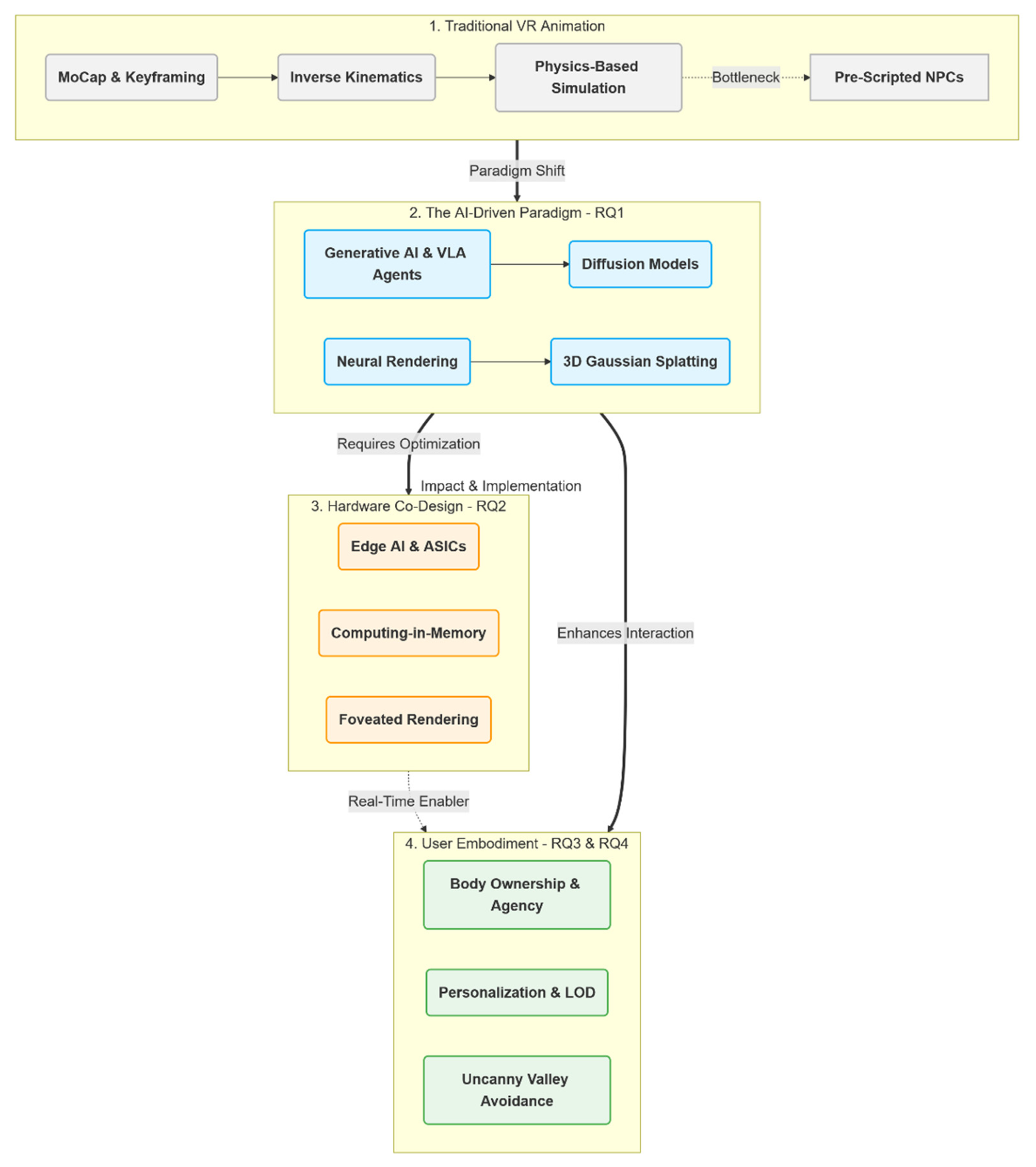
Figure 1. Conceptual mapping of the theoretical background, illustrating the paradigm shift from traditional animation to AI-driven paradigms (RQ1), the necessity of hardware co-design for real-time enabling (RQ2), and their ultimate impact on user embodiment (RQ3/RQ4).
Virtualworlds 05 00020 g001
Figure 2. Overview of the systematic literature review methodology.
Virtualworlds 05 00020 g002
Figure 3. PRISMA flow diagram detailing the literature search, screening, and eligibility assessment process that yielded the final corpus of 48 primary studies for synthesis.
Virtualworlds 05 00020 g003
Figure 4. Temporal distribution of the 48 included studies, illustrating the rapid acceleration of AI-driven VR research from 2023 to 2026.
Virtualworlds 05 00020 g004
Figure 5. Distribution of the 48 primary studies across the four Research Questions.
Virtualworlds 05 00020 g005
Figure 6. High-level taxonomy of Generative AI and neural rendering techniques for VR avatars identified in the primary studies.
Virtualworlds 05 00020 g006
Figure 7. Breakdown of diffusion models and kinematic applications for motion synthesis in VR.
Virtualworlds 05 00020 g007
Figure 8. Classification of neural rendering and 3D asset generation approaches.
Virtualworlds 05 00020 g008
Figure 9. Applications of transformers and AI agents for automated rigging and autonomous interactive behaviors.
Virtualworlds 05 00020 g009
Figure 10. Taxonomy of hardware and performance optimization strategies identified in the literature, mapping specific VR bottlenecks (red) to their architectural solutions.
Virtualworlds 05 00020 g010
Figure 11. Conceptual model of the AI–-Agency Paradox. The diagram illustrates how generative AI prediction enhances the illusion of body ownership but simultaneously creates a tension with the sense of agency, potentially leading to the “Puppeteer Problem” when unintended movements are generated.
Virtualworlds 05 00020 g011
Figure 12. The holistic AI-VR ecosystem. A synthesis of the interdependencies between generative algorithms (RQ1), hardware constraints (RQ2), psychological embodiment (RQ3), and sociotechnical ethics (RQ4).
Virtualworlds 05 00020 g012
Table 1. Databases and search processes followed in this study.
DatabaseSearch TermsSearch Criteria
IEEE Xplore(“Virtual Reality” OR “VR” OR “Spatial Computing” OR “Metaverse”) AND (“character animation” OR “procedural animation” OR “physics-based” OR “generative AI” OR “text-to-motion” OR “neural rendering”) AND (“embodiment” OR “immersion” OR “latency” OR “performance” OR “agency”)Field: abstract;
dates: 2021–2026;
52 initial results
Scopus/ScienceDirectTITLE-ABS-KEY ((“Virtual Reality” OR “VR” OR “Spatial Computing” OR “Virtual Worlds”) AND (“animation” OR “procedural” OR “physics-based” OR “generative AI” OR “text-to-motion” OR “avatar”) AND (“embodiment” OR “immersion” OR “presence” OR “real-time performance” OR “latency”))Fields: title, abstract or author-specified keywords;
dates: 2021–2026;
30 initial results
ACM DL[[Abstract: “Virtual Reality”] OR [Abstract: “Spatial Computing”]] AND [[Abstract: “animation”] OR [Abstract: “physics-based”] OR [Abstract: “generative AI”] OR [Abstract: “text-to-motion”]] AND [[Abstract: “embodiment”] OR [Abstract: “immersion”] OR [Abstract: “performance”]]All fields;
search for articles,
books, chapters, conference papers;
dates: 2021–2026;
157 initial results
Elicit
(AI Search)
Query A: “How do generative AI and text-to-motion impact real-time character animation and latency in virtual reality and spatial computing?”
Query B: “What is the effect of physics-based animation and AI-driven realistic avatars on user embodiment and immersion in VR?”
AI Semantic Search;
dates: 2021–2026;
50 initial results
Table 2. Primary works—inclusion and exclusion criteria.
TypeCriteria
Basic aspectsTitle, authors, publication year, article type, database source, number of citations.
Inclusion and exclusion
criteria
IC1: Studies focusing on immersive virtual reality (VR), Spatial Computing, or Metaverse environments.
IC2: Research proposing or evaluating character animation techniques (e.g., Generative AI, physics-based, procedural, text-to-motion).
IC3: Empirical studies assessing user experience (embodiment, immersion, agency) OR technical performance (latency, frame rates).
IC4: Peer-reviewed journal articles and full conference papers.
IC5: Published within the last 5 years (2021–2026).
IC6: Written in English.
EC1: Studies exclusively focused on augmented reality (AR) without applicability to fully immersive VR.
EC2: Animation techniques strictly for traditional 2D screens/movies without interactive or real-time elements.
EC3: Papers lacking clear empirical evaluation, technical validation, or user data.
EC4: Short abstracts, posters, opinions, or non-peer-reviewed pre-prints (unless highly cited foundational AI models).
EC5: Publications in languages other than English.
Review questionsExtent to which the study addresses RQ1, RQ2, RQ3, or RQ4.
Table 3. Data extraction coding scheme.
FeatureExplanation/Extracted Variables
Basic MetadataTitle, authors, year, publisher, article type (journal/conference).
Animation Technology
(RQ1)
Primary AI model (e.g., Diffusion, NeRF, 3DGS, LLM), representation type (implicit vs. explicit), avatar scope (full-body, face, cloth, hands), input modality (text-to-motion, audio-driven, sparse tracking).
Hardware and Performance
(RQ2)
Target platform (standalone HMD vs. PC/Cloud), optimization techniques (ASICs, CIM, foveated rendering), latency/FPS, memory footprint and bandwidth reduction (MB/GB), energy/power efficiency (TOPS/W, mW).
UX and Embodiment
(RQ3)
Psychological metrics (body ownership, agency, social presence, uncanny valley), study design and sample size (user study N = X, method), task/interaction type (object manipulation, social touch, locomotion).
Ethics and Inclusion
(RQ4)
Mentions of accessibility, racial representation, data privacy, digital afterlife risks, and proposed design guidelines/frameworks.
Table 4. Synthesis matrix of included studies.
Id
Ref
Primary Focus (RQs)Keywords
Thematic Labels
Key Technology
AI Model
Target
Platform
Main
Contribution
1—[9]RQ1, RQ3Animation_tech, Procedural_Techniques, Scene_AwarenessMasked Motion InpaintingVR/3D EnginesUnified physics-based character controller allowing for dynamic adaptation.
2—[26]RQ1, RQ2AI_or_Generative, Animation_tech, Embodiment_InteractionCodebook Matching/RLImmersive VREnd-to-end full-body motion synthesis from sparse sensors.
3—[27]RQ1, RQ2AI_or_Generative, Animation_tech, Procedural_TechniquesTemporal DiffusionVR/GamingGenerates humans with high-fidelity realistic clothing details.
4—[28]RQ1, RQ3Animation_tech, AI_or_Generative, Embodiment_InteractionDeep Photorealistic AppearanceVRPhysically simulated clothing integrated with photorealistic rendering.
5—[29]RQ1, RQ3AI_or_Generative, Animation_tech, VR_CoreDiffusion + RL HybridVR/ARPhysically plausible, highly dexterous hand motion synthesis.
6—[30]RQ1, RQ3AI_or_Generative, Animation_tech, VR_CoreInformation BottleneckVRSynthesizes high-fidelity, lip-synchronized avatars from audio.
7—[31]RQ1, RQ2AI_or_Generative, Procedural_TechniquesDual Score DistillationSpatial ComputingTheme-aware 3D asset generation from few exemplars.
8—[32]RQ1, RQ3AI_or_Generative, Animation_tech, Scene_AwarenessDiffusion ModelsVR/ARInverse interaction synthesis for human–object manipulation.
9—[33]RQ1, RQ2AI_or_Generative, Animation_tech, Procedural_TechniquesUnsupervised Deep LearningVRReal-time cloth dynamics avoiding heavy deterministic solvers.
10—[34]RQ1, RQ2AI_or_Generative, Animation_tech, Technical_PerformanceAutoregressive Transformers3D PlatformsAutomated diverse skeleton rigging bypassing manual modeling.
11—[35]RQ1, RQ2AI_or_Generative, Animation_tech, Technical_PerformanceVertex-Feature TransformerVROne-shot controllable neural head avatars driven by minimal data.
12—[36]RQ1, RQ3AI_or_Generative, Animation_tech, Embodiment_InteractionMulti-View DiffusionVRCreates animatable 4D portrait avatars utilizing multi-view diffusion.
13—[37]RQ1, RQ2AI_or_Generative, Animation_tech, Technical_PerformanceMasked ModelingVR/ARHigh-speed text-to-motion generation faster than standard diffusion.
14—[38]RQ1, RQ2AI_or_Generative, Animation_tech, Technical_PerformanceHierarchical Causal TransformerVR/AROne-pass, real-time continuous motion generation.
15—[7]RQ1, RQ2AI_or_Generative, Animation_tech, Technical_PerformanceNeural RenderingMobile VRReal-time text-driven stylization of 3D head avatars.
16—[6]RQ1, RQ2AI_or_Generative, Procedural_Techniques, Technical_Performance3D Gaussian Splatting + PhysicsVRReal-time physical dynamics-aware interactive Gaussian Splatting.
17—[39]RQ2, RQ3Technical_Performance, Eye_Tracking_Gaze, VR_Core3DGS + Foveated RenderingStandalone VR2x rendering latency reduction exploiting user gaze tracking.
18—[40]RQ1, RQ2Technical_Performance, AI_or_Generative, VR_Core3DGS/Neural RenderingMobile SoCs/GPU4.5x speedup and energy reduction by pruning redundancy.
19—[41]RQ2Technical_Performance, AI_or_Generative, VR_CoreComputing-in-Memory (CIM)Edge VR9.55x speedup via adaptive sampling and memory data reuse.
20—[42]RQ1, RQ2Technical_Performance, AI_or_Generative, VR_CoreNeural Scene AcceleratorEdge DevicesFully fused ASIC accelerator enabling real-time neural scene learning.
21—[43]RQ1, RQ2Technical_Performance, AI_or_Generative, VR_CoreSparse Volumetric RenderingEdge DevicesMemory efficient architecture cutting memory size for edge NeRFs.
22—[8]RQ1, RQ2Technical_Performance, AI_or_Generative, Animation_techDiffusion Accelerator (ASIC)Standalone VRAchieves 11.0 TOPS/W energy efficiency for text-to-motion.
23—[44]RQ1, RQ2, RQ3AI_or_Generative, VR_Core, Embodiment_InteractionEgocentric View-Driven ModelStandalone VRGenerates photorealistic full-body avatars using only HMD cameras.
24—[45]RQ1, RQ2AI_or_Generative, Technical_Performance, Animation_techMeshed Radiance ManifoldsVR/AREfficient volumetric rendering optimized for real-time dynamic faces.
25—[46]RQ1, RQ2AI_or_Generative, Scene_Awareness, Technical_PerformanceFew-Shot Temporal NeRFVRGeneralizable neural rendering across arbitrary times from sparse inputs.
26—[47]RQ1, RQ2Technical_Performance, AI_or_Generative, Procedural_TechniquesSpherical Harmonics + OctreesVRDelivers over 150 FPS real-time rendering speed for NeRFs.
27—[48]RQ1, RQ2AI_or_Generative, Technical_Performance, VR_Core3DGSMobile/VRHigh-quality architecture for scalable facial asset rendering.
28—[12]RQ2Technical_Performance, AI_or_Generative, VR_Core14 nm ASICEdge/VROperates at 57.3 fps as a low-power text-to-motion processor.
29—[49]RQ1, RQ2AI_or_Generative, Technical_Performance, VR_CoreImplicit Neural RepresentationsMobile VRSevere bandwidth reduction enabling volumetric video streaming.
30—[50]RQ2Technical_Performance, AI_or_Generative, VR_CoreSpecialized NeRF ArchitectureEdge/VRHardware–software co-designed pipeline accelerating NeRF inferences.
31—[51]RQ1, RQ3AI_or_Generative, Animation_tech, Embodiment_InteractionContrastive Fine-TuningAR/VRAccessible few-shot fine-tuning for personalized human motion.
32—[52]RQ1, RQ2, RQ3Procedural_Techniques, VR_Core, User_StudyModel Predictive Control (MPC)AR/VRComputes biologically realistic mid-air pointing mimicking constraints.
33—[53]RQ1, RQ3Haptics_Interaction, Procedural_Techniques, Embodiment_InteractionPhysics-Based Haptic RenderingVRPrecise virtual object manipulation through physics-driven haptics.
34—[54]RQ1, RQ3Embodiment_Interaction, VR_Core, Animation_techExtended Reality Multi-AgencySocial VRFacilitates asymmetric remote communication preserving social presence.
35—[55]RQ1, RQ3AI_or_Generative, Eye_Tracking_Gaze, Scene_AwarenessDiffusion Model360/VRPredicts natural, fine-grained saccadic human gaze behavior.
36—[10]RQ1, RQ3AI_or_Generative, Embodiment_Interaction, VR_CoreVision–Language–Action (VLA)VRSocial VLA modeling for immersive multi-modal interaction.
37—[56]RQ1, RQ2, RQ3AI_or_Generative, User_Study, Technical_PerformanceAIGC/Generative AIVR/MetaverseEvaluates user immersion in personalized spaces crafted by AI.
38—[57]RQ2, RQ3Embodiment_Interaction, Technical_Performance, VR_CorePhysics-Aware TrackingVRDemonstrates physically plausible reactions enhance body ownership.
39—[58]RQ3, RQ4Embodiment_Interaction, User_Study, Haptics_InteractionVirtual Agents + HapticsVRInvestigates how social touch from virtual agents improves bonding.
40—[59]RQ1, RQ3AI_or_Generative, User_Behavior_Analysis, VR_CoreLLM + Speech TechnologiesVRImplements a full-body digital human reducing cognitive load.
41—[60]RQ1, RQ2, RQ3AI_or_Generative, Technical_Performance, Animation_techSpatially Aware Agentic HumansVRProvides agents with spatial context to deliver real-time interactive behaviors.
42—[61]RQ1, RQ2AI_or_Generative, VR_Core, Technical_PerformanceDiffusion + SLAMVREnvironment-aware motion generation ensuring accurate foot placement.
43—[62]RQ1, RQ2AI_or_Generative, Animation_tech, Technical_PerformanceDeep Learning/GenAIVRMarkerless self-occlusion solving for full-body avatar reconstruction.
44—[63]RQ3, RQ4Framework_Paper, VR_Core, User_Behavior_AnalysisPersonalized Generative AgentsSpatial ComputingAnticipates risks and benefits surrounding AI models mimicking personas.
45—[64]RQ2, RQ3, RQ4Technical_Performance, Embodiment_Interaction, VR_CoreSparse-IMU Pose TrackingInclusive VRProvides robust and accessible body tracking for wheelchair users.
46—[65]RQ1, RQ3, RQ4Embodiment_Interaction, Animation_tech, User_Behavior_AnalysisIK + TransformersInclusive VRTranslates limited physical movements into full avatar actions for seniors.
47—[66]RQ3, RQ4AI_or_Generative, User_Behavior_Analysis, Technical_PerformanceGPT-based AvatarsVREvaluates functional usability versus realism on reducing motion sickness.
48—[11]RQ1, RQ2, RQ3, RQ4Survey_Paper, VR_Core, Framework_PaperScoping ReviewXREstablishes the foundational baseline for the convergence of AI and XR.
Disclaimer/Publisher’s Note: The statements, opinions and data contained in all publications are solely those of the individual author(s) and contributor(s) and not of MDPI and/or the editor(s). MDPI and/or the editor(s) disclaim responsibility for any injury to people or property resulting from any ideas, methods, instructions or products referred to in the content.