Article

Modulation of Pro- and Anti-Inflammatory Cytokines by Melaleuca cajuputi subsp. cajuputi Powell Ethanolic Leaf Extract (MC-ELE) in BALB/c Mice


by
Agustyas Tjiptaningrum
1,2,*,
Yusra Yusra
3,
Kusmardi Kusmardi
4,
Ade Arsianti
1,5,
Sjahjenny Mustokoweni
6 and
Fadilah Fadilah
1,5,7,*
1
Doctoral Program in Biomedical Science, Faculty of Medicine, University Indonesia, Jakarta 10430, Indonesia
2
Department of Clinical Pathology, Faculty of Medicine, University Lampung, Lampung 35145, Indonesia
3
Department of Clinical Pathology, Faculty of Medicine, University Indonesia, Jakarta 10430, Indonesia
4
Department of Anatomical Pathology, Faculty of Medicine, University Indonesia, Jakarta 10430, Indonesia
5
Department of Medical Chemistry, Faculty of Medicine, University Indonesia, Jakarta 10430, Indonesia
6
Department of Anatomical Pathology, Faculty of Medicine, University Airlangga, Surabaya 60131, Indonesia
7
Bioinformatics Core Facilities IMERI, Faculty of Medicine, University Indonesia, Jakarta 10430, Indonesia
*
Authors to whom correspondence should be addressed.
Appl. Biosci. 2026, 5(2), 41; https://doi.org/10.3390/applbiosci5020041
Submission received: 9 January 2026 / Revised: 14 April 2026 / Accepted: 2 May 2026 / Published: 16 May 2026
(This article belongs to the Special Issue Plant Natural Compounds: From Discovery to Application (2nd Edition))

Abstract

Background: Cytokine storm-like inflammation includes an imbalanced immune response, where excessive interleukin-6 (IL-6) and inadequate IL-10 play a central role in increasing tissue injury. Melaleuca cajuputi leaves are known to contain anti-inflammatory bioactive compounds. However, the potential to modulate the dysregulated cytokine response remains underexplored. Objective: This study aimed to evaluate the immunomodulatory effects of Melaleuca cajuputi subsp. cajuputi Powell Ethanolic Leaf Extract (MC-ELE) on IL-6, IL-6R, and IL-10 levels in a BALB/c mouse model of lung inflammation induced by lipopolysaccharide (LPS). Methods: Phytochemical screening was performed to identify active constituents in MC-ELE. Male BALB/c mice were intratracheally challenged with LPS (mg·kg−1 BW) to induce cytokine storm-like inflammation. After 24 h, mice received oral MC-ELE at doses of 750, 1500, 3000 mg·kg−1 BW, or dexamethasone (10 mg·kg−1 BW), for seven consecutive days. On day eight, serum and bronchoalveolar lavage fluid (BALF) were collected for IL-6, IL-6R, and IL-10 assessment using ELISA. Furthermore, body weight changes and clinical symptoms were monitored throughout the study. Results: MC-ELE was confirmed to contain anti-inflammatory compounds. Across all groups, IL-6 concentrations in BALF were consistently higher than in serum, with the LPS-only group showing the greatest elevation. Serum IL-6R levels exceeded BALF IL-6R levels in most groups, except at 1500 mg·kg−1 BW MC-ELE dose. BALF IL-10 was higher compared with serum in all MC-ELE-treated groups. Therefore, MC-ELE might preferentially enhance anti-inflammatory responses within the pulmonary microenvironment. There was no observed toxicity or weight loss at doses up to 3000 mg·kg−1 BW. Conclusions: MC-ELE reported promising immunomodulatory activity by lowering IL-6 and IL-6R levels while enhancing IL-10 responses in lung inflammation induced by LPS within lung tissue. These results suggested its potential as a natural therapeutic candidate for managing severe inflammatory conditions.

1. Introduction

Cytokine storm or release syndrome refers to a maladaptive and hyperactive immune response characterized by excessive production of pro-inflammatory cytokines such as interleukin-6 (IL-6), tumor necrosis factor-α (TNF-α), interleukin-1β (IL-1β), and interferons. This runaway inflammatory cascade can lead to acute tissue damage, organ failure, and death in conditions such as severe viral infections, acute respiratory distress syndrome (ARDS), and systemic inflammatory disorders [1,2,3]. Central to cytokine storm pathology are several important signaling pathways, including NF-κB, MAPK, JAK-STAT, and inflammasome complexes such as NLRP3, which drive the amplification and persistence of inflammation when dysregulated [4,5].
Cytokine storm-like inflammation is different from storm inflammation. This hyper-inflammatory state is characterized by elevated cytokine production but can be controlled. The immune response features in CS-like inflammation are similar to a cytokine storm. However, the severity of the disease and dysregulation of the immune response are milder than a true cytokine storm. IL-6 has an important role in the acute-phase response, dysregulation of immune response, and systemic inflammation. This is because the levels can increase to 100 pg/mL. Causes of CS-like inflammation are infectious disease, malignancy, autoimmune disease, and CAR-T cell therapy. CS-like inflammation may develop into cytokine storm syndrome depending on severity, triggers, regulation failure, and host immune status. Therefore, therapy in CS-like inflammation should be provided to avoid cytokine storm syndrome [2,6,7].
Even though pro-inflammatory cytokines drive tissue damage in the early phase, the anti-inflammatory cytokines, particularly IL-10, are produced to limit collateral injury. IL-10 is a pleiotropic immunoregulatory cytokine produced by multiple cell types, such as B cells, regulatory T cells, macrophages, and dendritic cells. The signaling suppresses the production of pro-inflammatory cytokines, attenuates immune responses, limits neutrophil recruitment, and inhibits antigen presentation, macrophage activation, and T helper 1 (Th1) cell activation. However, IL-10 has a potential deleterious effect after causing excessive immunosuppression [8,9,10].
The preferred drug used to treat CS-like inflammation is dexamethasone. This drug lowers mortality in severe conditions by broadly suppressing inflammatory signaling and immune cell activation [11,12]. However, there are serious side effects connected to corticosteroid therapy, such as secondary infections caused by immunosuppression, hyperglycemia, and muscular atrophy [13]. In this context, supplementary or alternative therapy drugs should be studied to reduce hyper-inflammatory conditions with minimal side effects.
Traditional medicinal herbs were widely reported as alternative therapy drugs to reduce hyper-inflammatory conditions. These herbs contain bioactive substances with multi-target anti-inflammatory activities. Melaleuca cajuputi is an important traditional medicinal herb with promising sources of compounds capable of modulating immune responses and inflammation. The herb is commonly known as cajuput and has been used in folk medicine across Southeast Asia and Australia to alleviate respiratory symptoms and treat coughs, sinusitis, rhinitis, and other inflammatory ailments [14,15,16,17]. Recent phytochemical profiling of Melaleuca cajuputi shows a rich composition of terpenoids (monoterpenes and sesquiterpenes), phenolic compounds, flavonoids, and other bioactives with antioxidant, antimicrobial, and anti-inflammatory properties [16,18,19]. Mazura et al. showed that Melaleuca cajuputi subsp. cajuputi Powell Ethanolic Leaf Extract (MC-ELE) inhibited the lipoxygenase enzyme (LOX), xanthine oxidase (XO), and protein denaturation [17].
In silico and molecular interaction studies suggest that MC-ELE contains compounds binding to signaling molecules, such as IL-6, suggesting potential inhibitory effects on cytokine-storm-related conditions. LC/MS and GC/MS analyses identified active compounds (pinostrobin chalcone) that showed favorable binding energetics with IL-6 and protein–protein interaction network nodes relevant to inflammatory response. The binding energetics from pinostrobin chalcone of MC-ELE with IL-6 were better than those of dexamethasone. These results support the hypothesis that MC-ELE may downregulate pro-inflammatory cytokine production by targeting upstream signaling machinery [20].
The essential oil extract of Melaleuca cajuputi has been analyzed, with antimicrobial, antioxidant, and some anti-inflammatory effects. Some studies focus on non-volatile extracts and the capacity to inhibit intracellular signaling in cellular or animal models of hyper-inflammation [16,18]. Tjiptaningrum et al. (2024) provided molecular simulation evidence for extract constituents interacting with IL-6, but functional assays remained underexplored [20].
Based on the description above, this study aims to assess the potential effects of MC-ELE on cytokine modulators in cytokine storm-like inflammation. Specifically, the effects on IL-6, IL-6R, and IL-10 protein expression are examined in in vivo models. These effects can validate MC-ELE as a candidate for combating hyper-inflammatory syndromes by targeting molecular mechanisms that drive excessive immune activation.

2. Materials and Methods

2.1. Plant Material Authentication and Preparation of MC-ELE

Fresh leaves of Melaleuca cajuputi subsp. cajuputi Powell were obtained from Lampung Tengah, Lampung, Indonesia. Plant material was authenticated by a botanist, and a voucher specimen was deposited for reference. Subsequently, the leaves were washed, air-dried at room temperature, and ground into a fine powder. The powdered material was macerated in 70% ethanol for 72 h with periodic stirring. The extract was filtered and concentrated using a rotary evaporator merk EYELA A-10005 under reduced pressure, followed by drying to obtain MC-ELE.

2.2. Preliminary Phytochemical Screening of MC-ELE

MC-ELE was subjected to phytochemical screening using standard colorimetric methods to identify and quantify major classes of bioactive compounds. For analysis, MC-ELE was dissolved in methanol (Merck, Darmstadt, Germany) to obtain a stock solution of 10 mg/mL, and the measurements were performed in triplicate.
Total phenolic content was determined using the Folin–Ciocalteu method. Furthermore, the MC-ELE solution was mixed with 10% Folin–Ciocalteu phenol reagent from Sigma-Aldrich, Saint Louis, MO, USA and incubated at room temperature, followed by the addition of sodium carbonate solution. Absorbance was also measured at 765 nm using a UV–visible spectrophotometer model UV721N. The concentration of total phenolics was calculated based on a calibration curve and expressed as milligrams of gallic acid equivalent per gram of extract (mg GAE/g extract) [21].
Total flavonoid content was quantified using the aluminum chloride colorimetric assay. MC-ELE was reacted sequentially with sodium nitrite (Merck, Darmstadt, Germany), aluminum chloride (Sigma-Aldrich, Saint Louis, MO, USA), and sodium hydroxide, and the absorbance was measured at 510 nm. The flavonoid content was expressed as milligrams of quercetin equivalent per gram of extract (mg QE/g extract) [22].
Total terpenoid content was determined using the vanillin–sulfuric acid method. MC-ELE was mixed with vanillin reagent (Sigma-Aldrich, Saint Louis, MO, USA) and concentrated sulfuric acid (Sigma-Aldrich, Saint Louis, MO, USA). After incubation, absorbance was recorded at 548 nm. Ursolic acid (Merck, Darmstadt, Germany) was used as the reference standard to generate the calibration curve, and the results were expressed as milligrams of ursolic acid equivalent per gram of extract [23,24].
Qualitative detection of alkaloids was performed using Mayer’s and Dragendorff’s reagents (Merck, Darmstadt, Germany) after acidification of the extract. The formation of a cream-colored precipitate with Mayer’s reagent or an orange–reddish precipitate with Dragendorff’s reagent showed the presence of alkaloids. Saponins were qualitatively identified using the froth test, in which persistent foam formation after vigorous shaking with distilled water was considered a positive result [24]. Calibration curves for all quantitative assays were accepted when the coefficient of determination (R2) was ≥0.99, and blank samples were included to ensure analytical accuracy.

2.3. Antioxidant Activity Assay

The antioxidant activity of MC-ELE was evaluated using 2,2-diphenyl-1-picrylhydrazyl (DPPH) from Merck Sigma-Aldrich, Darmstadt, Germany and 2,2′-azino-bis(3-ethylbenzothiazoline-6-sulfonic acid) (ABTS) from Sigma-Aldrich, Saint Louis, MO, US radical scavenging assays to assess the free radical neutralizing capacity.

DPPH Radical Scavenging Assay

The DPPH radical scavenging activity was determined according to a previously established method with minor modifications. The absorbance was measured at 517 nm using a microplate reader. Ascorbic acid was used as a positive control, while methanol served as a blank. The percentage was calculated using the following equation:
Radical scavenging activity (%) = ((A control − A sample)/A control) × 100
The half-maximal inhibitory concentration (IC50) value was determined by nonlinear regression analysis.

2.4. Toxicity Test

The toxicity test was conducted based on OECD guideline no. 423. Mice were divided into 2 groups, namely female and male. Each group consists of 5 mice. Each mouse received 3000 mg·kg−1 BW of MC-ELE single dose orally using sonde. After receiving MC-ELE, mice were observed at 30 min, 1 h, 4 h and 24 h, and every single day until 14 days. Parameters that were observed were body weight, behavior, and clinical signs such as lethargy, vomiting, and appetite. The mice were were terminated on the 15th day. After necropsy, we conducted gross pathology observation.

2.5. Study Design and Ethical Approval

This experimental investigation adopted a randomized controlled trial (RCT) design conducted from May 2025 to December 2025. Each animal subject was designated as an independent experimental unit. BALB/c mice were obtained from Kemuning CV Dunia Kaca-Solo Central of Java, Indonesia. The study inclusion was restricted to animals meeting all pre-established criteria, namely male sex, BALB/c strain, 8 weeks of age, and a body weight of 25–30 g. Acclimatization was conducted for 14 days after the mice arrived at the animal house. Subsequently, a simple randomization modification was performed to divide the mice into 6 groups. The animals were randomly allocated to each of the six experimental groups. The study protocol proceeded with a complete cohort, and no exclusions were made. A total of 36 male BALB/c mice were used. The sample size was determined a priori based on established LPS-induced systemic inflammation models and the principles of 3Rs (replacement, reduction, refinement) to ensure statistical power while minimizing animal use. Mice were housed in the Animal House of the Chemistry Department, Faculty of Medicine, University of Indonesia, according to the standards for care, which were strictly monitored. Allocation concealment was also rigorously maintained for the duration of the study. To mitigate assessment bias, investigators responsible for outcome evaluation and statistical analysis were blinded to the group assignments. The study was performed at Department of Chemistry of the Faculty of Medicine, University of Indonesia.
Ethical Approval. The study obtained ethics clearance from the Health Research Ethics Committee, Dr Cipto Mangunkusumo National Hospital—Faculty of Medicine, Universitas Indonesia (KET.460/UN2.F1/ETIK/PPM.00.02/2025—date 28 April 2025).

2.6. Model of Lung Inflammation Induced by LPS

The mice received a single intra-tracheal dose of 10 mg·kg−1 BW of LPS to induce a systemic inflammatory response [25]. LPS was obtained from Solarbio-Escherichia coli 055:B5, CAS no. 12650-88-3, 10 mg/vial, and was dissolved in sterile saline [26]. After 24 h, the animal model received MC-ELE and dexamethasone orally.
A total of 36 male BALB/c mice were randomized into six groups (n = 6/group), namely K-1 (normal control), K-2 (group that received only LPS (negative control)), K-3 (group that received LPS + dexamethasone 10 mg·kg−1 BW (positive control)), K-4 (group that received LPS + MC-ELE 750 mg·kg−1 BW), K-5 (group that received LPS + MC-ELE 1500 mg·kg−1 BW) and K-6 (group that received LPS + MC-ELE 3000 mg·kg−1 BW). Extract or dexamethasone was administered orally for 7 days after LPS challenge. On day 8, mice were euthanized for blood and BALF collection. The euthanasia was conducted in accordance with the required standard [27]. The doses of MC-ELE and dexamethasone were obtained from a preliminary analysis and based on Son J study, respectively [28].

2.7. Body Weight Analysis

Changes in body weight were measured by calculating the difference in weight before and after treatment and expressed as a percentage (%).

2.8. Sample Collection and Analysis

Euthanasia. The animals were terminated by intraperitoneal injection of Ketamine (Ket-A 100 from Agrovet Market Animal Health, lot. 2115203) 300–360 mg/kg·BW, and xylazine, 30–40 mg·kg−1 BW. Subsequently, a surgical procedure was performed on the mice [27].
Sample collection. After an anesthetic injection, blood was collected from the cardiac and centrifuged to obtain serum for IL-6 and IL-6R examination using ELISA methods.
Bronchialveolar lavage fluid (BALF) collection. The trachea was exposed and cannulated using a 20–24 G catheter secured with a suture. Lungs were lavaged three times with 0.5 mL ice-cold sterile phosphate-buffered saline (PBS) before collecting the fluid. BALF was centrifuged at 400 g for 8 min, and the supernatant was collected for cytokine examination using ELISA methods [29,30].
ELISA methods. IL-6 and IL-6R protein expression was examined using ELISA kits from Wuhan Elabscience Biotechnology Co., Ltd., Wuhan, China. ELISA Kit Mouse IL-6, catalog no. E-EL-M0044, lot no.WX05H4HH09727; Elabscience ELISA kit Mouse IL-6R, catalog no. E-EL-M2453, lot. no. WX046P6P4893; and Elabscience ELISA kit Mouse IL-10, catalog no. E-EL-M0046. The examination was performed using the protocol from the reagents through ELISA sandwich methods [31,32,33]. ELISA reader that was used for ELISA examination was the Microplate Reader-JH-M3000, serial number 280043007.

2.9. Statistical Analysis

All randomized animals were included in the final analysis. Results were reported as measures of central tendency (mean or median) accompanied by corresponding measures of variability (standard deviation or interquartile range). Individual data points were presented in scatter plots or relevant figures to show distribution. In this context, GraphPad Prism 10.4.0 version was used for statistical analysis. One-way analysis of variance (ANOVA) followed by Tukey’s post hoc test was performed when the data had a normal distribution. Meanwhile, Kruskal–Wallis analysis followed by Fisher’s least significant difference (LSD) post hoc test was used when data were not normally distributed. A value of p < 0.05 was considered statistically significant with a confidence interval.

3. Results

3.1. Plant Material Authentication and Extraction of M. cajuputi leaves

Fresh leaves of Melaleuca cajuputi subsp. cajuputi Powell used were successfully authenticated by a botanist from the Department of Biology, Faculty of Science and Math, University of Indonesia, no. 564/UN2.F3.11/PDP.02.00/2025, and a voucher specimen was deposited for reference. The leaves were clean, intact, and free from visible contamination or fungal growth before processing. After air-drying at room temperature, the leaves were ground into a fine, homogeneous powder as reported in Table 1.
Maceration using 70% ethanol for 72 h obtained a dark green–brown extract. Following filtration and solvent evaporation under reduced pressure, a viscous concentrated extract was obtained, which was dried to produce the final MC-ELE. The extraction process led to a stable extract with uniform color and consistency, suitable for oral administration in the animal experiments.

3.2. Preliminary Phytochemical Screening and Chemical Constituent Profiling

Qualitative phytochemical screening of MC-ELE reported the presence of several major classes of bioactive compounds. The extract tested positive for phenolic compounds and flavonoids, as shown by the characteristic color changes in the respective assays. Terpenoids were also detected, while alkaloids and saponins were present in lower intensity reactions, as shown in Table 2.
Quantitative phytochemical analysis based on standard calibration curves showed that MC-ELE contained a high level of total phenolic compounds, followed by flavonoids and terpenoids. All standard curves reported excellent linearity (R2 > 0.99). Qualitative assays confirmed the presence of alkaloids and saponins (Table 2). Total flavonoid content analysis using the aluminum chloride colorimetric method also showed measurable levels of flavonoids in MC-ELE. Quantification based on the quercetin standard curve suggested consistent absorbance responses, showing the presence of flavonoid compounds commonly associated with antioxidant and anti-inflammatory activities.
Table 3 shows the antioxidant activity of MC-ELE. Data are expressed as mean ± SD from three independent experiments. The IC50 value represents the concentration required to achieve 50% radical scavenging activity.

3.3. Toxicity Test Result

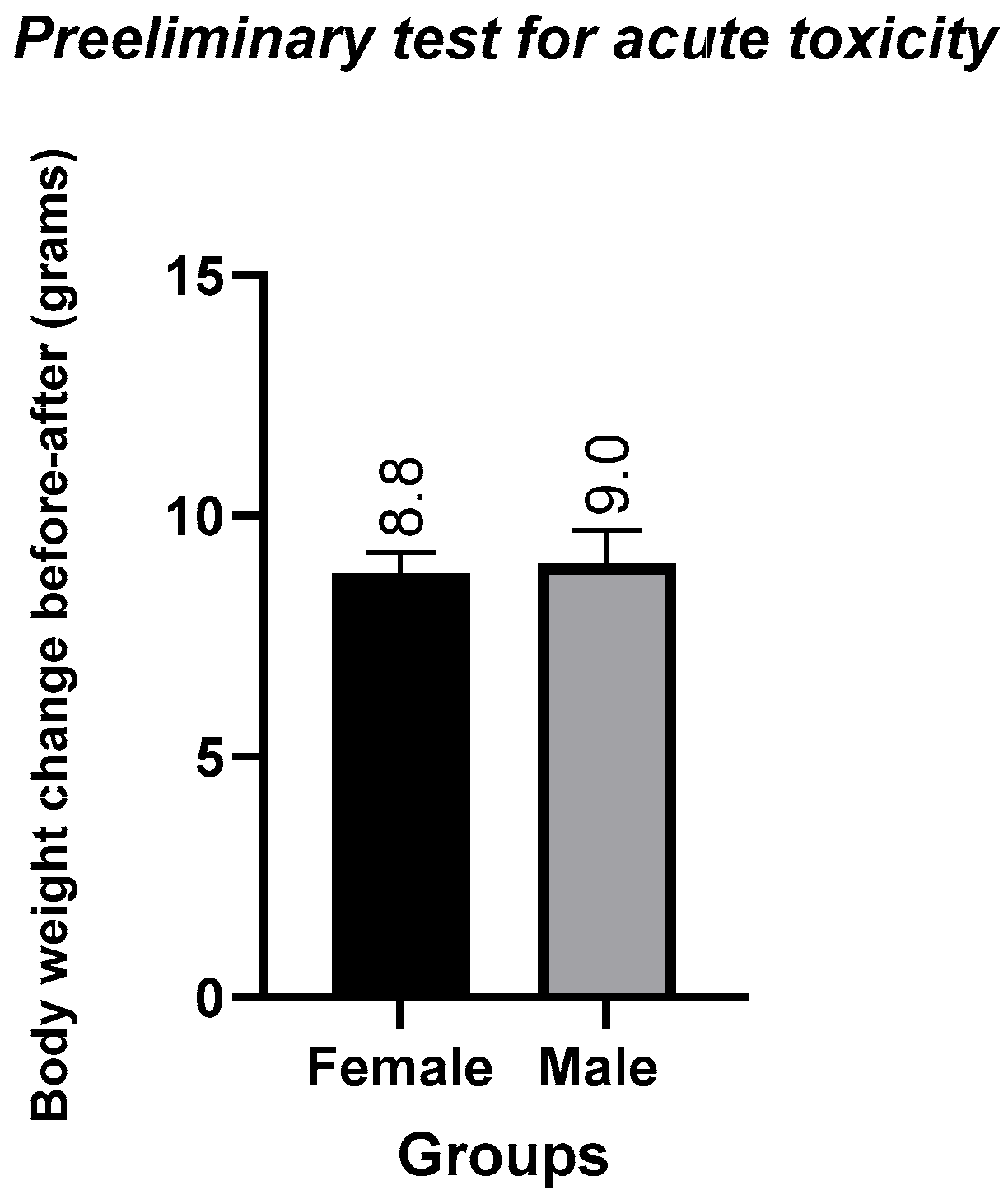
The toxicity test revealed that there were no dead animals, the body weight of all mice increased, and there was no appetite loss, no abnormal behavior, no vomiting, and no lethargy. The result of gross pathology observation of internal organs was normal. The body weight change can be seen in Figure 1.

3.4. The Effects Observed Across All Treatment MC-ELE

This study evaluated the immunomodulatory effects of MC-ELE in a BALB/c mouse model of lung inflammation induced by LPS. A series of physiological and immunological parameters was assessed to determine the extract’s impact on systemic and local inflammatory responses. Body weight changes were monitored throughout the experimental period as an indicator of health status and treatment tolerance. Cytokine levels (IL-6, IL-6R, and IL-10) in serum and bronchoalveolar lavage fluid (BALF) were quantified to evaluate the modulatory effect of MC-ELE on pro- and anti-inflammatory pathways. Table 3 summarizes the effects observed across all treatment groups.

3.5. Body Weight Change

The body weight of the control group increases by 18.5%; however, in the group that received LPS intratracheally, body weight decreased. The highest percentage of body weight decrease was in the LPS-only group. The percentage of body weight decrease in the dexamethasone group was not much different from that of the MC-ELE 750 mg·kg−1 BW and MC-ELE 1500 mg·kg−1 BW doses. The body weight change can be seen in Table 4.

3.6. Modulation of Serum IL-6 Levels by MC-ELE in BALB/c Mice

The administration of MC-ELE reported a clear modulatory effect on the inflammatory response in BALB/c mice, as reflected by changes in serum and BALF IL-6 concentrations.
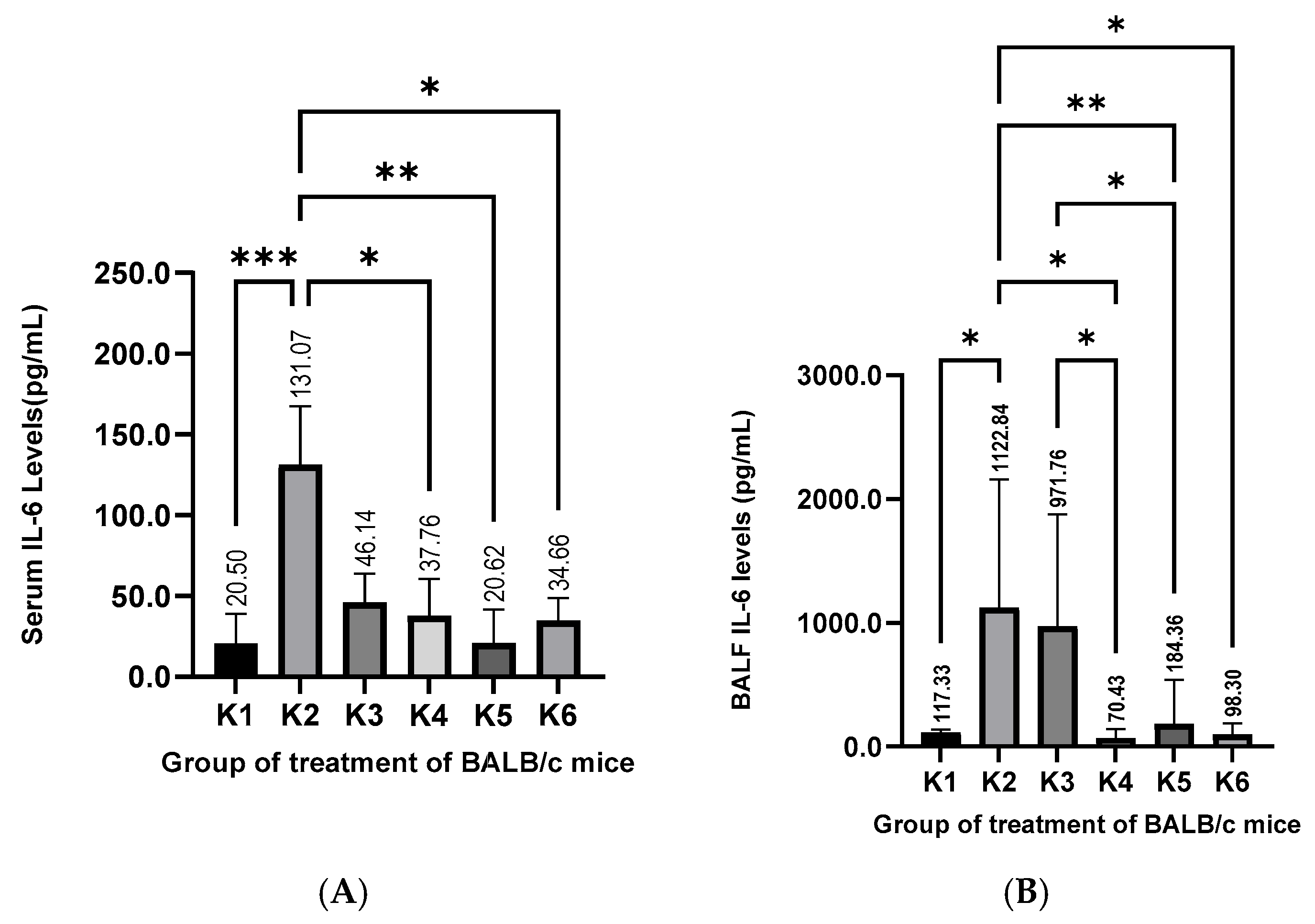
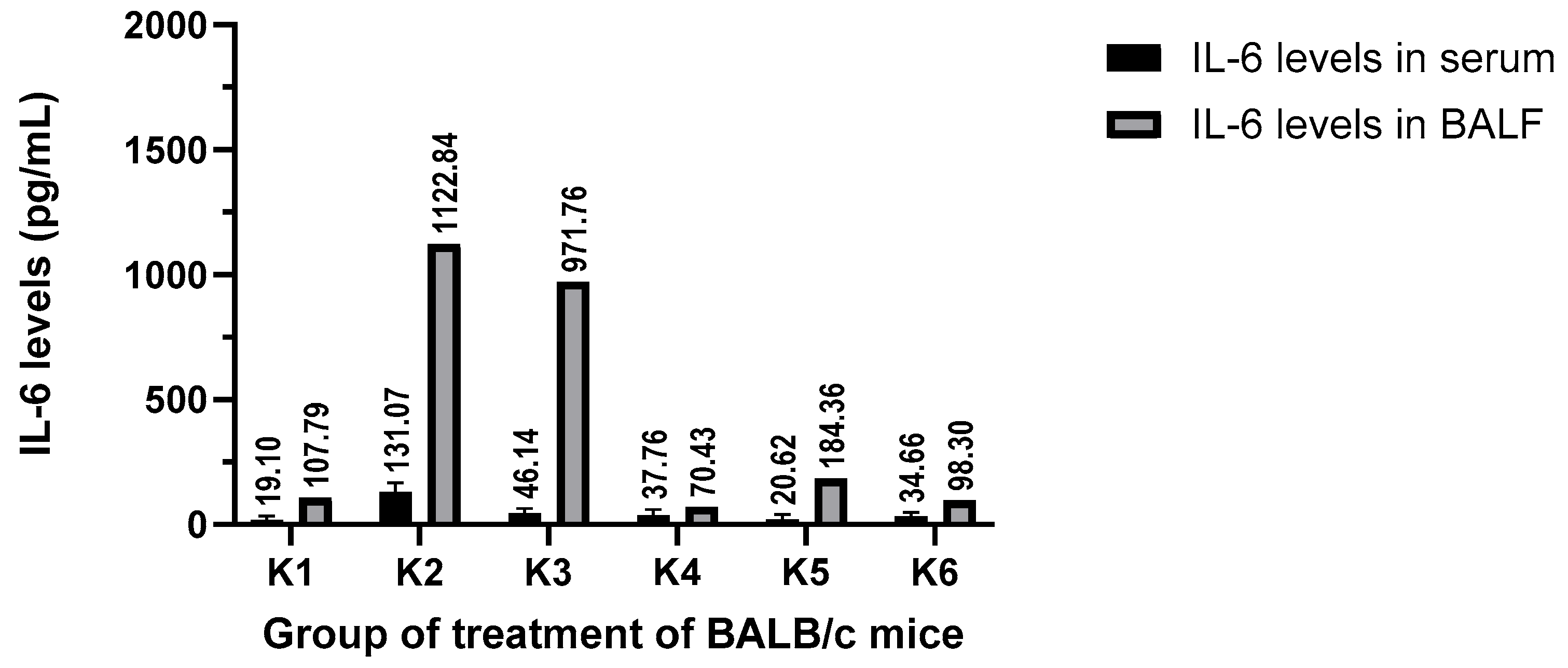
Based on Figure 2, the IL-6 levels in the LPS-only group (K-2) were higher than in the treatment groups. From Figure 3, the IL-6 levels in BALF were higher than serum IL-6 levels. MC-ELE suppressed IL-6 levels better in BALF than in serum compared with the LPS-only group.

3.7. Modulation of IL-6R Levels in Serum and BALF of BALB/c Mice Following MC-ELE Treatment

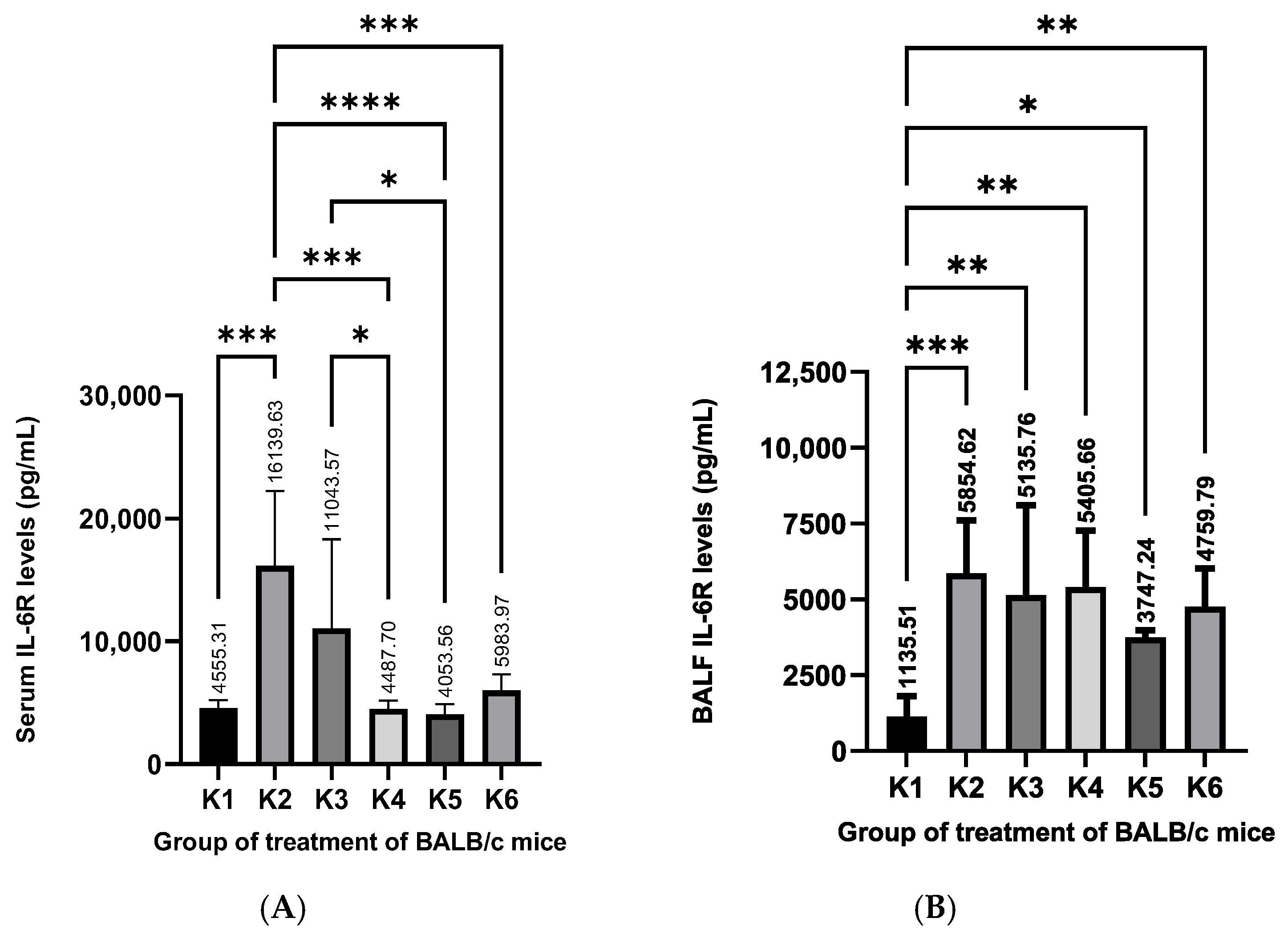
The expression of IL-6R was evaluated to determine the modulating effect of MC-ELE on receptor-level responses associated with cytokine-storm-like inflammation. Figure 4A and 4B show that the inflammatory groups exhibited high IL-6R levels in both serum and BALF compared with normal controls, confirming enhanced IL-6 signaling activation. Administration of MC-ELE at different doses led to a reduction in cytokine concentrations. Therefore, the extract may attenuate cytokine sensitivity by downregulating IL-6 receptor expression (Figure 4).
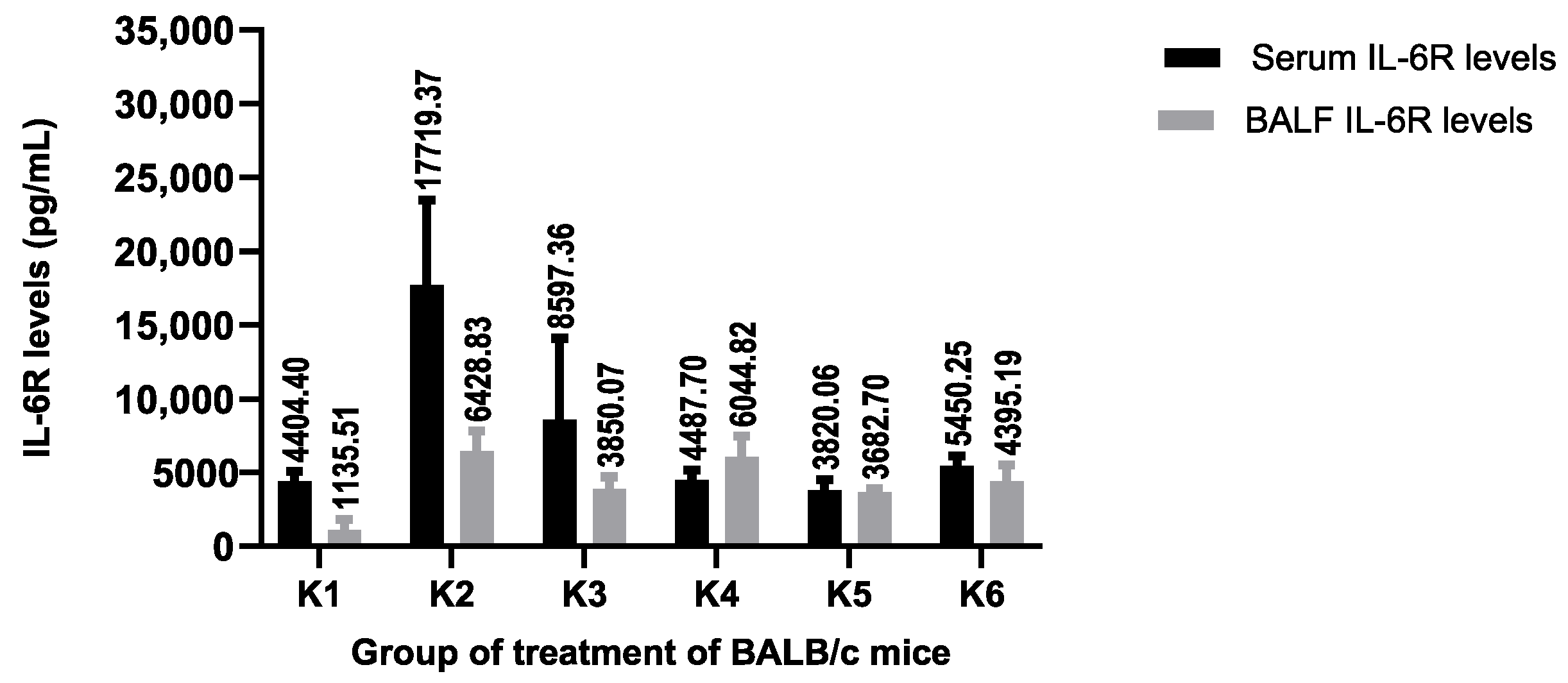
Figure 5 shows that the IL-6R levels in serum and BALF were significantly elevated in the mice model of inflammation induced by LPS (K-2–K-6) compared with the normal group (K-1), while serum MC-ELE treatment (K-4 to K-6) reduced the levels, showing suppression of systemic IL-6-receptor-mediated signaling. However, BALF of IL-6 levels in the MC-ELE doses of 1500 mg·kg−1 BW and 3000 mg·kg−1 BW reduced the IL-6R levels. Suppression of IL-6R locally was effective in the MC-ELE doses of 1500 mg·kg−1 BW and 3000 mg·kg−1 BW.

3.8. Analysis of IL-10 Levels in Serum and BALF Following MC-ELE Treatment

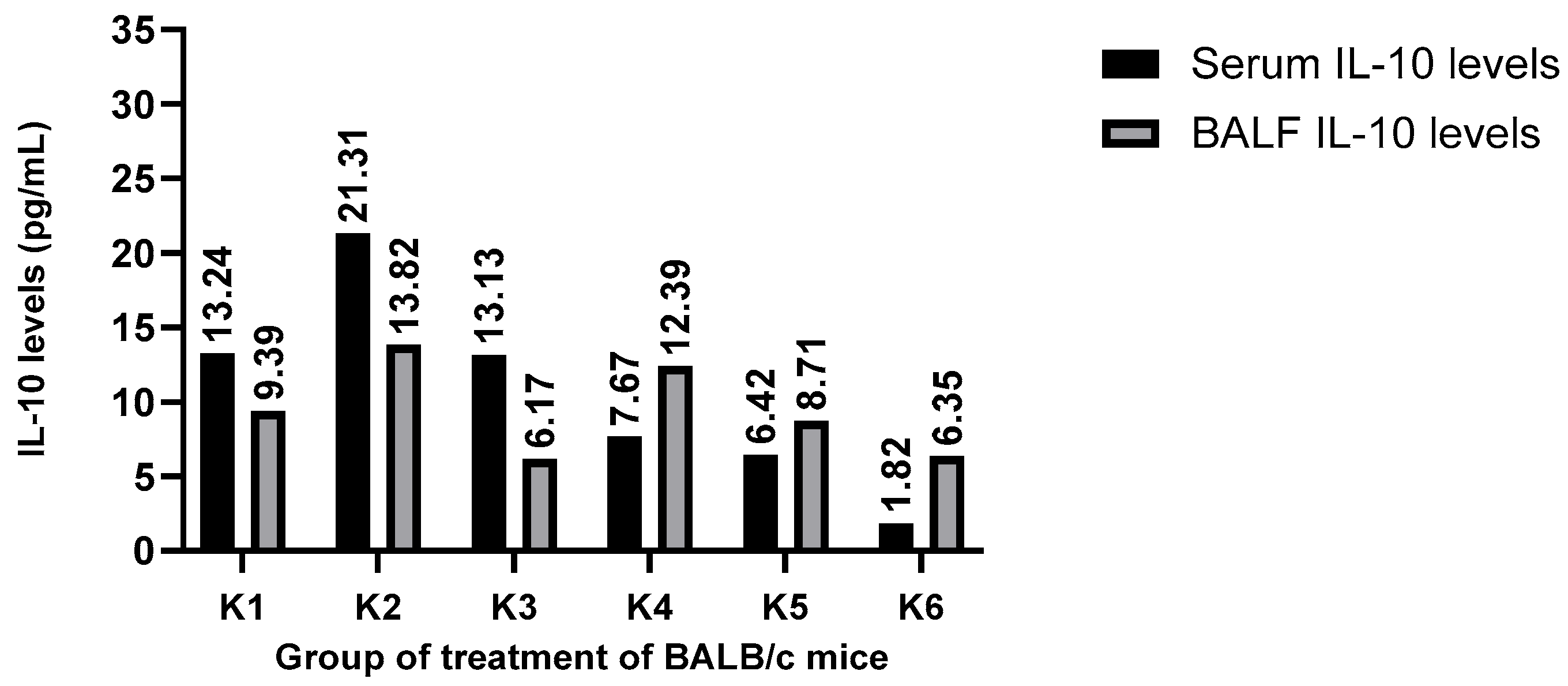
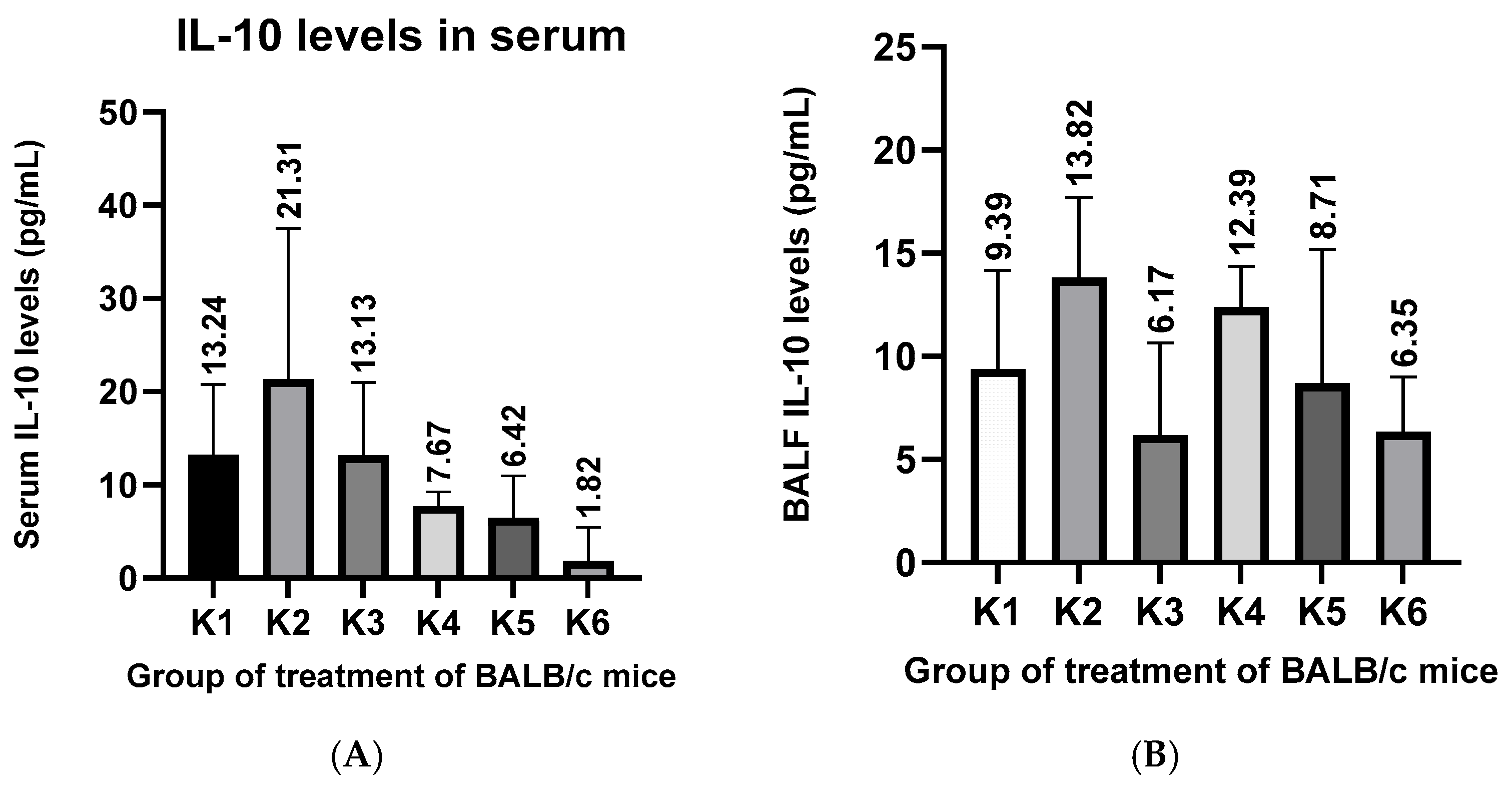
IL-10 levels were evaluated to assess the anti-inflammatory response elicited by MC-ELE in the model of lung inflammation induced by LPS. As shown in Figure 6, IL-10 concentrations in serum and BALF exhibited variable changes across treatment groups. The inflammatory groups (K-2 and K-3) showed slightly elevated IL-10 levels compared with the normal control, suggesting an endogenous compensatory anti-inflammatory response. Treatment with MC-ELE (K-4 to K-6) led to a gradual reduction in IL-10 levels in serum and BALF, showing potential normalization of immune regulation as the inflammatory burden decreased.
Figure 7 shows that the highest IL-10 levels were in the LPS-only group (K-2) in serum and BALF. The IL-10 levels were reduced following the treatment of MC-ELE.

3.9. Dual Modulation of Pro- and Anti-Inflammatory Cytokines

The dual modulation of pro- and anti-inflammatory cytokines was evaluated to determine the immunoregulatory potential of MC-ELE in a model of lung inflammation induced by LPS. Table 4 summarizes the changes in IL-6, IL-6R, and IL-10 levels in serum and BALF across treatment groups. The inflammatory control groups showed elevations in IL-6 and IL-6R, showing strong activation of pro-inflammatory pathways, accompanied by a compensatory increase in IL-10. Treatment with MC-ELE progressively reduced IL-6 and IL-6R while normalizing IL-10, showing coordinated suppression of hyper-inflammation and restoration of immune balance.
Table 5 shows that MC-ELE exhibited a dual modulatory effect on inflammatory signaling by simultaneously reducing pro-inflammatory cytokines (IL-6 and IL-6R) and normalizing the anti-inflammatory cytokine IL-10. The inflammatory groups (K-2) showed sharp increases in serum and BALF IL-6 and IL-6R levels, indicating an inflammatory response after LPS induction. MC-ELE treatment (K-4 to K-6) progressively decreased IL-6 and IL-6R concentrations in serum and BALF, with the strongest effects observed at higher doses. IL-10 levels increased as a compensatory response to inflammation but declined toward baseline following MC-ELE administration, reflecting the restoration of immune homeostasis. These results suggested that MC-ELE modulated pro- and anti-inflammatory pathways, supporting its potential as a natural immunoregulatory agent.

3.10. Evaluate the IL-6/IL-10 Balance Ratio

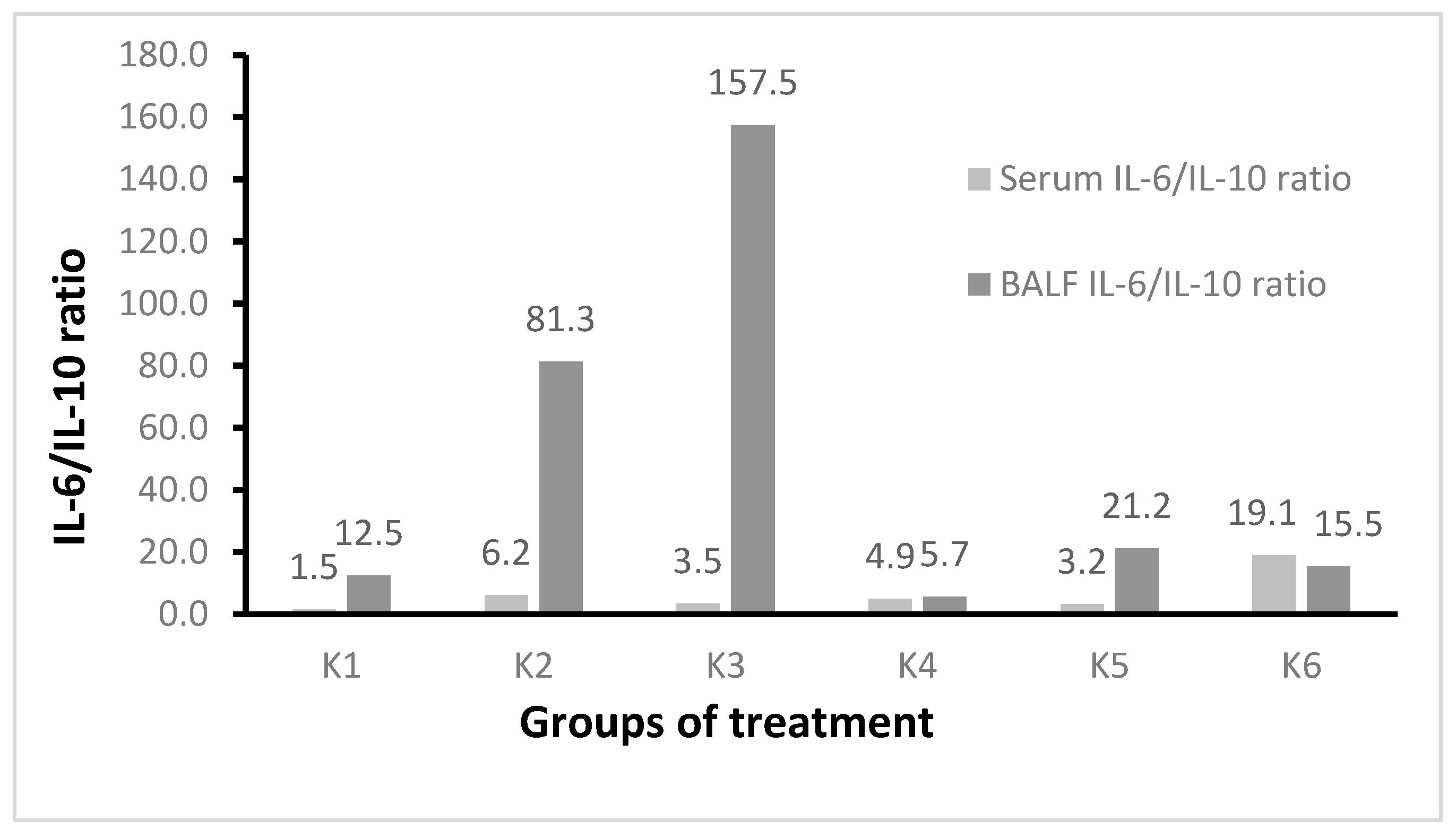
The immunomodulatory profile of MC-ELE, the IL-6/IL-10 ratio, was assessed as an indicator of pro- versus anti-inflammatory balance. The ratio was calculated by dividing the IL-6 level mean of each group by IL-10 level mean of each group. The IL-6/IL-10 ratio in BALF was higher than in serum.
In the LPS-only group, the ratio increased sharply, reflecting a dominant pro-inflammatory state of hyper-inflammatory response. For MC-ELE treatment, the BALF ratio was lower than the LPS-only group. This showed a shift toward restored immune homeostasis. The highest and lowest serum ratios were reported in the MC-ELE doses of 3000 and 500 mg·kg−1 BW, respectively. Therefore, MC-ELE treatment (K-4 to K-6) progressively lowered the IL-6/IL-10 ratio in serum and BALF, showing a shift toward restored immune homeostasis. The lowest serum ratios were observed in the 1500 mg·kg−1 BWdose of MC-ELE. The higher-dose treatment groups reported that MC-ELE suppressed excessive IL-6-mediated signaling and normalized compensatory IL-10 levels (Figure 8). These results reported the extract’s capacity to rebalance inflammatory responses through coordinated cytokine regulation.
The serum IL-6/IL-10 ratio increased in inflammatory groups and decreased following 750 mg·kg−1 BWand 1500 mg·kg−1 BW doses of MC-ELE treatment. BALF IL-6/IL-10 ratio showed an increase in K-2 and K-3 and a decrease in MC-ELE treatment groups.
The IL-6/IL-10 ratio showed an increase in the inflammatory groups (K-2) in serum and BALF compared with the normal control (K-1), showing a strong shift toward a pro-inflammatory state. In serum, the ratio increased in K-6, while BALF showed the highest ratios in K-3 (dexamethasone treatment). MC-ELE treatment (K-4 to K-6) produced a consistent reduction in IL-6/IL-10 ratio in the compartments, with the lowest values observed in K-4 and K-1 for BALF and serum, respectively (Figure 8). These results reported a dose-related decrease in IL-6/IL-10 imbalance following MC-ELE administration across treatment groups.

3.11. Integrated Phytochemical–Immunological Response Profile of MC-ELE

Integrative analysis combining phytochemical profiling and in vivo immunological outcomes suggested a coherent relationship between the chemical composition of MC-ELE and the biological effects in the cytokine-storm-like inflammation model. The extract was characterized by a high content of phenolic compounds, followed by flavonoids and terpenoids, with excellent linearity of all standard calibration curves (R2 > 0.99). These phytochemical classes possessed antioxidant, anti-inflammatory, and immunoregulatory activities, providing a plausible biochemical basis for the observed cytokine modulation as reported in Table 6.

4. Discussion

The present study reports that MC-ELE exerts significant immunomodulatory effects in a BALB/c mouse model of LPS-induced cytokine-storm-like inflammation. Preliminary phytochemical screening and quantitative profiling show that MC-ELE is rich in phenolic compounds, followed by flavonoids and terpenoids, with excellent linearity of standard calibration curves (R2 > 0.99). These classes of secondary metabolites are recognized for the antioxidant, anti-inflammatory, and immune-regulatory activities in inflammation driven by excessive cytokine signaling [34].
Phenolic compounds and flavonoids are known to directly modulate inflammatory signaling pathways, including TLR4-dependent NF-κB and JAK/STAT pathways, which are central to IL-6 production during storm conditions [34,35]. Therefore, the high total phenolic content in MC-ELE may possibly contribute to the suppression of IL-6 levels in serum and BALF across treatment groups. Similar phenolic-rich plant extract can attenuate LPS-induced hyper-inflammation by inhibiting NF-κB nuclear translocation and reducing downstream cytokine amplification [35].
MC-ELE exhibits a very strong antioxidant activity based on antioxidant activity classification (IC50 values <50 µg/mL are categorized as very strong antioxidants). The antioxidant activity is slightly lower when compared with vitamin C as a pharmacological reference antioxidant. Antioxidants have a role as immunomodulatory agents by recovering redox balance and regulating inflammatory signaling pathways. The property of MC-ELE may possibly suppress the activation of transcription factors, such as NF-κβ, MAPK, and JAK/STAT, reducing the production of pro-inflammatory cytokines [36,37]. The result shows that IL-6 protein expression of the MC-ELE groups is lower than the LPS-only group.
In this study, LPS administration induces a robust hyper-inflammatory response, as evidenced by significant body weight loss and marked elevation in IL-6 and IL-6R levels in systemic and pulmonary compartments. Body weight loss is a well-recognized indicator of systemic inflammatory burden and metabolic stress in the murine endotoxemia model [38]. The MC-ELE dose of 1500 mg·kg−1 BW and dexamethasone treatment have the lowest weight loss compared with the LPS-only group. This shows that the treatments may reduce systemic stress and improve weight loss [39].
IL-6 plays an important role in cytokine storm syndromes by increasing inflammatory cascades and promoting acute-phase responses [40,41]. The significant reduction in serum and BALF IL-6 levels following MC-ELE administration suggests effective suppression of pro-inflammatory signaling. This effect is observed in compartments, showing that MC-ELE modulates systemic inflammation and local pulmonary immune responses relevant to LPS-induced lung injury models.
Beyond cytokine suppression at the ligand level, MC-ELE significantly reduces IL-6 receptor (IL-6R) expression in serum and BALF. In several studies of sIL-6R serum levels in mice, the reference value of serum sIL-6R was about 10,000 pg/mL [42,43]. This study shows that serum sIL-6R in normal control and in MC-ELE treatment groups is lower than 10,000 pg/mL. Therefore, MC-ELE can significantly reduce sIL-6R protein expression in serum. Elevated IL-6R levels enhance cellular sensitivity to IL-6 and perpetuate inflammatory signaling through classical and trans-signaling pathways [40,44]. The concurrent reduction in IL-6 and IL-6R suggests that MC-ELE may possibly attenuate cytokine storm progression by limiting the availability and receptor-mediated signal amplification. This dual modulation is recognized as a desirable therapeutic strategy in hyper-inflammatory conditions [45].
IL-10 is elevated in inflammatory control groups, reflecting an endogenous compensatory response to excessive inflammation. This phenomenon has been described in severe inflammatory states, where the production increases but is insufficient to counterbalance pro-inflammatory signaling [46,47]. MC-ELE treatment may lead to a gradual normalization of IL-10 levels rather than sustained elevation due to the decrease in IL-6. The decrease may possibly lead to a reduction in IL-6/JAK/STAT3 signaling pathway and activation of NF-κβ [45]. This pattern contrasts with pharmacological immunosuppressants, which suppress pro- and anti-inflammatory mediators indiscriminately [48].
The IL-6/IL-10 ratio provides an integrated measure of pro- versus anti-inflammatory balance and has been proposed as a reliable indicator of cytokine storm severity [49]. In the present study, this ratio increases sharply in LPS-induced groups, confirming a dominant pro-inflammatory state. MC-ELE administration progressively reduces the IL-6/IL-10 ratio in serum and BALF, showing rebalancing of immune responses toward homeostasis. Higher doses of MC-ELE produce more pronounced normalization, supporting a dose-responsive immunomodulatory effect.
The proposed mechanism of the modulating effects of MC-ELE on cytokine expression is conducted in inflammatory conditions. A previous in silico study reported that pinostrobin chalcone (the active compound of MC-ELE) had a good interaction with IL-6 [20]. This may possibly disrupt the recognition of IL-6 by IL-6R as well as reduce the activation of IL-6/JAK/STAT3 pathways and NF-κβ activation. The anti-inflammatory feedback becomes blunted, reducing IL-10 protein expression [45]. The other hypothesis for the proposed mechanism is that phenolic and flavonoid compounds in MC-ELE, and the strong antioxidant property of the MC-ELE, can possibly suppress the activation of the transcription factor NF-κβ [36,37].
The integrated analysis connecting phytochemical composition with immunological outcomes strengthens the biological plausibility of MC-ELE’s effects. Phenolics and flavonoids have been shown to scavenge reactive oxygen species, inhibit inflammatory transcription factors, and modulate cytokine–receptor interactions, reducing inflammatory intensity and duration [34,35]. The convergence of phytochemical richness, cytokine suppression, receptor downregulation, and normalization of balance supports the classification of MC-ELE as an immunoregulatory rather than purely immunosuppressive agent.
The results show that MC-ELE exerts compartment-specific and pathway-level immunomodulatory effects in hyper-inflammation. MC-ELE may have potential as a natural therapeutic candidate for conditions characterized by excessive inflammatory cytokine activation by reducing IL-6 and IL-6R while restoring IL-10-mediated immune balance.
Protein expression data of pro- and anti-inflammatory cytokines are obtained in an animal model of hyper-inflammation induced by LPS. The weakness of this study is that there is no genomic data to support the proposed mechanism. Future studies should conduct an analysis of the genomic event, HE, and immunohistochemistry to complete the data on pro- and anti-inflammatory cytokine modulation. Based on this, we will continue our study by observing and analyzing the genomic event, HE, and immunohistochemistry.

5. Conclusions

In conclusion, MC-ELE may effectively diminish IL-6 and IL-6R protein expression in BALF. Low levels of IL-6 in BALF may reduce the IL-10 protein expression in BALF as well. The reduction of IL-10 protein expression may be caused by the blunting of an anti-inflammatory feedback mechanism. The results suggest that MC-ELE may effectively attenuate acute lung inflammation through compartment-specific regulation of IL-6, IL-6R, and IL-10 signaling pathways; therefore, MC-ELE may have a potential effect as a lung-targeting immunomodulatory agent for cytokine-storm-related inflammatory conditions.

Author Contributions

Conceptualization: A.T., F.F., K.K. and Y.Y.; methodology: A.T., F.F., Y.Y. and K.K.; software: A.T. and F.F.; validation: A.T., F.F., Y.Y. and K.K.; formal analysis: A.T., F.F. and Y.Y.; investigation: A.T., F.F., Y.Y. and K.K.; writing—original draft preparation: A.T. and F.F.; writing—review and editing: A.T., F.F., K.K., Y.Y., A.A. and S.M.; visualization: A.T. and F.F.; and supervision: F.F., Y.Y., K.K., A.A. and S.M. All authors have read and agreed to the published version of the manuscript.

Funding

This research received no external funding.

Institutional Review Board Statement

The animal study protocol was approved by the Institutional Review Board (Health Research Ethics Committee, Dr Cipto Mangunkusumo National Hospital—Faculty of Medicine, Universitas Indonesia (KET.460/UN2.F1/ETIK/PPM.00.02/2025—date of approval was 28 April 2025).

Informed Consent Statement

Not applicable.

Data Availability Statement

All data were available in this manuscript.

Acknowledgments

The authors are grateful to the Head of the Department of Medical Chemistry, Faculty of Medicine, University of Indonesia, and colleagues from the Faculty of Medicine, University of Lampung, who helped conduct the study. Furthermore, the authors thank the Doctoral Program of Biomedical Science, Faculty of Medicine, University of Indonesia, which provided an opportunity to conduct this study. Thanks to all colleagues from the Department of Medical Chemistry-FKUI, and the veterinarian who helped us to conduct an animal handling on LPS induction.

Conflicts of Interest

The authors declare no conflicts of interest in this study.

Abbreviations

The following abbreviations are used in this manuscript:
MC-ELEMelaleuca cajuputi subsp. cajuputi Powell Ethanolic Leaf Extract
BALFBronchoalveolar Lavage Fluid
IL-6Interleukin-6
IL-6RInterleukin-6 Receptor
IL-10Interleukin-10
LPSLipopolysaccharide
TLR4Toll-Like Receptor 4
NF-κBNuclear Factor Kappa-B
MAPKMitogen-Activated Protein Kinase
AP-1Activator Protein-1
DexDexamethasone
GRGlucocorticoid Receptor
BWBody Weight
ELISAEnzyme-Linked Immunosorbent Assay
ANOVAAnalysis of Variance
SDStandard Deviation
PBSPhosphate-Buffered Saline

References

  1. Nie, J.; Zhou, L.; Tian, W.; Liu, X.; Yang, L.; Yang, X.; Zhang, Y.; Wei, S.; Wang, D.W.; Wei, J. Deep insight into cytokine storm: From pathogenesis to treatment. Signal Transduct. Target. Ther. 2025, 10, 112. [Google Scholar] [CrossRef] [PubMed]
  2. Fajgenbaum, D.C.; June, C.H. Cytokine Storm. N. Engl. J. Med. 2020, 383, 2255–2273. [Google Scholar] [CrossRef] [PubMed]
  3. Shimabukuro-Vornhagen, A.; Gödel, P.; Subklewe, M.; Stemmler, H.J.; Schlößer, H.A.; Schlaak, M.; Kochanek, M.; Böll, B.; von Bergwelt-Baildon, M.S. Cytokine release syndrome. J. Immunother. Cancer 2018, 6, 56. [Google Scholar] [CrossRef] [PubMed]
  4. Hiti, L.; Markovič, T.; Lainscak, M.; Farkaš Lainščak, J.; Pal, E.; Mlinarič-Raščan, I. The immunopathogenesis of a cytokine storm: The key mechanisms underlying severe COVID-19. Cytokine Growth Factor Rev. 2025, 82, 1–17. [Google Scholar] [CrossRef] [PubMed]
  5. Guo, Q.; Jin, Y.; Chen, X.; Ye, X.; Shen, X.; Lin, M.; Zeng, C.; Zhou, T.; Zhang, J. NF-κB in biology and targeted therapy: New insights and translational implications. Signal Transduct. Target. Ther. 2024, 9, 53. [Google Scholar] [CrossRef] [PubMed]
  6. Cron, R.Q.; Goyal, G.; Chatham, W.W. Cytokine Storm Syndrome. Annu. Rev. Med. 2025, 74, 321–337. [Google Scholar] [CrossRef]
  7. Karki, R.; Kanneganti, T.D. The ‘cytokine storm’: Molecular mechanisms and therapeutic prospects. Trends Immunol. 2021, 42, 681–705. [Google Scholar] [CrossRef] [PubMed]
  8. Peñaloza, H.F.; Schultz, B.M.; Nieto, P.A.; Salazar, G.A.; Suazo, I.; Gonzalez, P.A.; Riedel, C.A.; Alvarez-Lobos, M.M.; Kalergis, A.M.; Bueno, S.M. Opposing roles of IL-10 in acute bacterial infection. Cytokine Growth Factor Rev. 2016, 32, 17–30. [Google Scholar] [CrossRef] [PubMed]
  9. Carlini, V.; Noonan, D.M.; Abdalalem, E.; Goletti, D.; Sansone, C.; Calabrone, L.; Albini, A. The multifaceted nature of IL-10: Regulation, role in immunological homeostasis and its relevance to cancer, COVID-19 and post-COVID conditions. Front. Immunol. 2023, 14, 1161067. [Google Scholar] [CrossRef] [PubMed]
  10. Nagata, K.; Nishiyama, C. IL-10 in mast cell-mediated immune responses: Anti-inflammatory and proinflammatory roles. Int. J. Mol. Sci. 2021, 22, 4972. [Google Scholar] [CrossRef] [PubMed]
  11. Rajan, A.K.; Rashid, M.; Chandran, V.P.; Hafis, A.; Kaur, H.; Poojari, P.G.; Shanbhag, V.; Chaudhuri, S.; Nair, S.; Thunga, G. Efficacy of corticosteroids in COVID-19: An evidence-based approach from the published randomized controlled trials. Clin. Epidemiol. Glob. Health 2025, 33, 101867. [Google Scholar] [CrossRef]
  12. The Recovery Collaborative Group. Dexamethasone in Hospitalized Patients with Covid-19. N. Engl. J. Med. 2021, 384, 693–704. [Google Scholar] [CrossRef] [PubMed]
  13. Yasir, M.; Goyal, A.; Sonthalia, S. Corticosteroid Adverse Effects; StatPearls Publishing LLC: Treasure Island, FL, USA, 2025; pp. 1–13. [Google Scholar]
  14. El-Baz, F.; Mahmoud, K.; El-Senousy, W.; Darwesh, O.M.; El-Gohary, A.E. Antiviral—Antimicrobial and Schistosomicidal Activities of Eucalyptus camaldulensis Essential Oils. Int. J. Pharm. Sci. Rev. Res. 2015, 31, 262–268. [Google Scholar]
  15. Septiana, S.; Yuliana, N.D.; Bachtiar, B.M.; Wijaya, C.H. Aroma-active compounds of Melaleuca cajuputi essential oil, a potent flavor on Cajuputs Candy. AIMS Agric. Food 2020, 5, 292–306. [Google Scholar] [CrossRef]
  16. Farizan, A.F.; Sukrri, N.N.A.N.M.; Ramzi, M.M.; Rawi, N.N.; Rahman, N.I.A.; Bakar, K.; Siong, J.Y.F.; Muhammad, T.S.T.; Azemi, A.K.; Ismail, N. Melaleuca cajuputi: Metabolites profiling and its potential against biofouling. Egypt. J. Aquat. Res. 2024, 50, 342–347. [Google Scholar] [CrossRef]
  17. Mazura, M.P.; Nor Azah, M.A.; Siti Nur Aisyah, M.H.; Mailina, J.; Abdul Majid, J.; Mohd Ghazali, H.; Mohammad Faridz, Z.; Nurul Haslinda, M. In Vitro Evaluation of Anti-Inflammatory Activity of Melaleuca cajuputi Powell. In Bridging Traditional Knowledge & Natural Products Innovations Towards Wellness and Shared Prosperity; OPAC Perpustakaan: Negara, Malaysia, 2001. Available online: https://www.google.com/url?sa=t&source=web&rct=j&opi=89978449&url=https://info.frim.gov.my/infocenter_applications/pdf/BridgingTraditionalKnowledge_ver2.pdf&ved=2ahUKEwiQpsbHp7aUAxXgSfEDHRvyGlgQFnoECB0QAQ&usg=AOvVaw0hAbZ4Jqjzzr4Il4kIkwsK (accessed on 14 April 2026).
  18. Isah, M.; Rosdi, R.A.; Wahab, W.N.A.W.A.; Abdullah, H.; Sul’ain, M.D.; Ishak, W.R.W. Phytoconstituents and biological activities of Melaleuca cajuputi Powell: A scoping review. J. Appl. Pharm. Sci. 2023, 13, 10–23. [Google Scholar] [CrossRef]
  19. Tran, P.H.; Vu, T.T.T.; Phan, T.D.T.; Nguyen, V.M.; Ngo, T.N.M.; Le, C.V.C.; Ton, T.H.D. Chemical compositions and biological properties of the leaf essential oil of three Melaleuca species. World Acad. Sci. J. 2024, 6, 67. [Google Scholar] [CrossRef]
  20. Tjiptaningrum, A.; Kurniati, I.; Fadilah, F.; Susantiningsih, T.; Prawiningrum, A.F.; Utari, W.D.; Erlina, L. Protein Interaction Analysis and Molecular Simulation of the Anti-Inflammatory Activities in Melaleuca cajuputi Extract Against COVID-19. Int. J. Inflamm. 2024, 2024, 5568294. [Google Scholar] [CrossRef]
  21. Singleton, V.L.; Orthofer, R.; Lamuela-Raventós, R.M. Analysis of Total Phenols and Other Oxidation Substrates and Antioxidants by Means of Folin-Ciocalteu Reagent. Methods Enzymol. 1999, 299, 152–178. [Google Scholar] [CrossRef]
  22. Chang, C.C.; Yang, M.H.; Wen, H.M.; Chern, J.C. Estimation of total flavonoid content in propolis by two complementary colometric methods. J. Food Drug Anal. 2002, 10, 3. [Google Scholar] [CrossRef]
  23. Edeoga, H.O.; Okwu, D.E.; Mbaebie, B.O. Phytochemical constituents of some Nigerian medicinal plants. Afr. J. Biotechnol. 2005, 4, 685–688. [Google Scholar] [CrossRef]
  24. Harborne, J. Phytochemical Methods: A Guide to Modern Techniques of Plant Analysis, 3rd ed; Chapman and Hall: London, UK, 1998; pp. 107–129 + 203-213. [Google Scholar]
  25. Li, N.; Liu, X.-X.; Hong, M.; Huang, X.-Z.; Chen, H.; Xu, J.-H.; Wang, C.; Zhang, Y.-X.; Zhong, J.-X.; Nie, H.; et al. Sodium butyrate alleviates LPS-induced acute lung injury in mice via inhibiting HMGB1 release. Int. Immunopharmacol. 2018, 56, 242–248. [Google Scholar] [CrossRef] [PubMed]
  26. SolarBio Life Science. Lipopolysaccharides, LPS; SolarBio Life Science: Beijing, China, 2004. [Google Scholar]
  27. Leary, S.L. AVMA Guidelines for the Euthanasia of Animals: 2020 Edition; American Veterinary Medical Association: Schaumburg, IL, USA, 2020; 121p. [Google Scholar]
  28. Son, J.Y.; Kwack, W.G.; Chung, E.K.; Shin, S.; Choi, Y.J. Effects of Early Initiation of High-Dose Dexamethasone Therapy on Pro-Inflammatory Cytokines and Mortality in LPS-Challenged Mice. Healthcare 2022, 10, 1247. [Google Scholar] [CrossRef]
  29. Luckow, B.; Lehmann, M.H. A simplified method for bronchoalveolar lavage in mice by orotracheal intubation avoiding tracheotomy. Biotechniques 2021, 71, 535–538. [Google Scholar] [CrossRef] [PubMed]
  30. Sun, F.; Xiao, G.; Qu, Z. Murine Bronchoalveolar Lavage. Bio-Protocol 2017, 7, e2287. [Google Scholar] [CrossRef] [PubMed]
  31. Elabscience. Elabscience ® Mouse IL-6(Interleukin 6) ELISA Kit. Report. 2024. Available online: https://789.bio/ea/P4CybD (accessed on 29 August 2025).
  32. Elabscience. Elabscience ® Mouse IL-6R(Interleukin 6 Receptor) ELISA Kit. Report. 2024. Available online: https://789.bio/ea/Pmznb5 (accessed on 29 August 2025).
  33. Thermo-Fisher Scientific. Mouse IL-10 Uncoated ELISA Standard Curve of Mouse IL-10. Report. 2018. Available online: www.thermofisher.com/us/en/home/global/ (accessed on 29 August 2025).
  34. Alarabei, A.A.; Aziz, N.A.L.A.; AB Razak, N.I.; Abas, R.; Bahari, H.; Abdullah, M.A.; Hussain, M.K.; Majid, A.M.S.A.; Basir, R. Immunomodulating Phytochemicals: An Insight into Their Potential Use in Cytokine Storm Situations. Adv. Pharm. Bull. 2024, 141, 105–119. [Google Scholar] [CrossRef] [PubMed]
  35. Shahidi, F.; Yeo, J. Bioactivities of Phenolics by Focusing on Suppression of Chronic Diseases: A Review. Int. J. Mol. Sci. 2018, 19, 1573. [Google Scholar] [CrossRef] [PubMed]
  36. Bhol, N.K.; Bhanjadeo, M.M.; Singh, A.K.; Dash, U.C.; Ojha, R.R.; Majhi, S.; Duttaroy, A.K.; Jena, A.B. The interplay between cytokines, inflammation, and antioxidants: Mechanistic insights and therapeutic potentials of various antioxidants and anti-cytokine compounds. Biomed. Pharmacother. 2024, 178, 117177. [Google Scholar] [CrossRef] [PubMed]
  37. Kozlov, A.V.; Javadov, S.; Sommer, N. Cellular ROS and Antioxidants: Physiological and Pathological Role. Antioxidants 2024, 13, 602. [Google Scholar] [CrossRef]
  38. Yang, Y.; Zhong, W.; Zhang, Y.; Cheng, Y.; Lai, H.; Yu, H.; Feng, N.; Han, Y.; Huang, R.; Zhai, Q. Sustained Inflammation Induced by LPS Leads to Tolerable Anorexia and Fat Loss via Tlr4 in Mice. J. Inflamm. Res. 2022, 15, 5635–5648. [Google Scholar] [CrossRef] [PubMed]
  39. da Cruz Nascimento, S.S.; de Queiroz, J.L.C.; de Medeiros, A.F.; de França Nunes, A.C.; Piuvezam, G.; Lima Maciel, B.L.; Souza Passos, T.; Morais, A.H.D.A. Anti-inflammatory agents as modulators of the inflammation in adipose tissue: A systematic review. PLoS ONE 2022, 17, e0273942. [Google Scholar] [CrossRef] [PubMed]
  40. Baran, P.; Hansen, S.; Waetzig, G.H.; Akbarzadeh, M.; Lamertz, L.; Huber, H.J.; Ahmadian, M.R.; Moll, J.M.; Scheller, J. The balance of interleukin (IL)-6, IL-6soluble IL-6 receptor (sIL-6R), and IL-6sIL-6Rsgp130 complexes allows simultaneous classic and trans-signaling. J. Biol. Chem. 2018, 293, 6762–6775. [Google Scholar] [CrossRef] [PubMed]
  41. Speake, C.; Habib, T.; Lambert, K.; Hundhausen, C.; Lord, S.; Dufort, M.J.; Skinner, S.O.; Hu, A.; Kinsman, M.; Jones, B.E.; et al. IL-6-targeted therapies to block the cytokine or its receptor drive distinct alterations in T-cell function. J. Clin. Investig. 2022, 7, e159436. [Google Scholar] [CrossRef]
  42. Sommer, J.; Engelowski, E.; Baran, P.; Garbers, C.; Floss, D.M.; Scheller, J. Interleukin-6, but not the interleukin-6 receptor plays a role in recovery from dextran sodium sulfate-induced colitis. Int. J. Mol. Med. 2014, 34, 651–660. [Google Scholar] [CrossRef] [PubMed]
  43. Coles, B.; Fielding, C.A.; Rose-John, S.; Scheller, J.; Jones, S.A.; O’Donnell, V.B. Classic interleukin-6 receptor signaling and interleukin-6 trans-signaling differentially control angiotensin II-dependent hypertension, cardiac signal transducer and activator of transcription-3 activation, and vascular hypertrophy in vivo. Am. J. Pathol. 2007, 171, 315–325. [Google Scholar] [CrossRef] [PubMed]
  44. Rose-John, S.; Jenkins, B.J.; Garbers, C.; Moll, J.M.; Scheller, J. Targeting IL-6 trans-signaling: Past, present and future prospects. Nat. Rev. Immunol. 2023, 23, 666–681. [Google Scholar] [CrossRef] [PubMed]
  45. Garbers, C.; Heink, S.; Korn, T.; Rose-John, S. Interleukin-6: Designing specific therapeutics for a complex cytokine. Nat. Rev. Drug Discov. 2018, 17, 395–412. [Google Scholar] [CrossRef] [PubMed]
  46. Saraiva, M.; Vieira, P.; O’Garra, A. Biology and therapeutic potential of interleukin-10. J. Exp. Med. 2019, 217, e20190418. [Google Scholar] [CrossRef] [PubMed]
  47. Poole, J.A.; Gaurav, R.; Schwab, A.; Nelson, A.J.; Gleason, A.; Romberger, D.J.; Wyatt, T.A. Post-endotoxin exposure-induced lung inflammation and resolution consequences beneficially impacted by lung-delivered IL-10 therapy. Sci. Rep. 2022, 12, 17338. [Google Scholar] [CrossRef] [PubMed]
  48. Cain, D.W.; Cidlowski, J.A. Immune regulation by glucocorticoids. Nat. Rev. Immunol. 2017, 17, 233–247. [Google Scholar] [CrossRef] [PubMed]
  49. Han, H.; Ma, Q.; Li, C.; Liu, R.; Zhao, L.; Wang, W.; Zhang, P.; Liu, X.; Gao, G.; Liu, F.; et al. Profiling serum cytokines in COVID-19 patients reveals IL-6 and IL-10 are disease severity predictors. Emerg. Microbes Infect. 2020, 9, 1123–1130. [Google Scholar] [CrossRef] [PubMed]
Figure 1. Body weight change in acute toxicity test.
Applbiosci 05 00041 g001
Figure 2. IL-6 Levels in BALB/c mice. (A) Serum IL-6 levels. The LPS-only group (K-2) showed a marked increase compared with normal control (K-1), while dexamethasone and MC-ELE treatment (K-3 to K-6) reduced IL-6 levels. (B) BALF IL-6 levels. IL-6 was highest in the LPS-only groups, and MC-ELE administration lowered the cytokine, showing attenuation of lung inflammation. Data shown as mean ± SD. * p < 0.05, ** p < 0.01, *** p < 0.001. The LPS-only group (K-2) exhibited a marked elevation in IL-6 levels compared with the normal control (K-1), confirming successful induction of systemic inflammation. Treatment with MC-ELE at various doses (K-4 to K-6) led to a dose-dependent reduction in serum IL-6 levels, with all treatment groups showing significantly lower concentrations compared with the untreated inflammatory group (LPS-only). A similar pattern was observed in BALF IL-6 levels, where MC-ELE administration effectively suppressed the exaggerated pulmonary cytokine response. These results showed that MC-ELE possessed immunomodulatory properties capable of attenuating IL-6-mediated inflammatory activity in the model of lung inflammation induced by LPS.
Applbiosci 05 00041 g002
Figure 3. Comparison of serum and BALF IL-6 levels.
Applbiosci 05 00041 g003
Figure 4. IL-6R levels in serum and BALF of BALB/c mice. (A) Serum IL-6R increased in inflammatory groups and decreased after MC-ELE treatment. (B) BALF IL-6R showed the same pattern, with elevated levels during inflammation and reduction following MC-ELE administration. Data are presented as mean, with significance levels of * p < 0.05, ** p < 0.01, *** p < 0.001, and **** p < 0.0001.
Applbiosci 05 00041 g004
Figure 5. Comparison of serum and BALF IL-6R.
Applbiosci 05 00041 g005
Figure 6. IL-10 levels in serum and BALF of BALB/c mice. (A) Serum IL-10 levels reported a slight increase in inflammatory groups (K-2, K-3) and decreased following MC-ELE treatment (K-4 to K-6). (B) BALF IL-10 reported a similar trend, with higher levels during inflammation and lower levels after MC-ELE administration.
Applbiosci 05 00041 g006
Figure 7. Comparison of IL-10 in serum and BALF.
Applbiosci 05 00041 g007
Figure 8. IL-6/IL-10 ratio in serum and BALF of BALB/c mice.
Applbiosci 05 00041 g008
Table 1. Extraction of MC-ELE.
ParameterResult
Plant authenticationAuthenticated by botanist (Department of Biology Science and Math); voucher specimen deposited.
Leaf conditionClean, intact, and free from visible contamination
Extraction methodMaceration with 70% ethanol (72 h)
Extract appearanceDark green–brown
Yield8.6% (w/w)
Final extract formDried viscous ethanolic extract
Table 2. Phytochemical content of MC-ELE Based on standard curves.
Phytochemical ClassMethodStandardStandard Curve (y = ax + b)R2Predicted Result (Mean ± SD)Unit
Total phenolicsFolin–CiocalteuGallic acidy = 0.0062x + 0.0310.99892.4 ± 6.8mg GAE/g extract
Total flavonoidsAlCl3 colorimetricQuercetiny = 0.0048x + 0.0270.99741.7 ± 4.2mg QE/g extract
Total terpenoidsVanillin–H2SO4Ursolic acidy = 0.0039x + 0.0220.99628.9 ± 3.5mg UAE/g extract
Table 3. Radical scavenging activity and IC50 value of MC-ELE.
Concentration (µg/mL)Radical Scavenging Activity (%)IC50 (µg/mL)
112.4 ± 1.810.55
2.524.6 ± 2.1
538.9 ± 2.7
7.546.8 ± 3.0
1049.6 ± 2.4
12.557.3 ± 2.9
2574.8 ± 3.5
5089.6 ± 2.8
Table 4. Body weight changes.
GroupTreatment DescriptionBody Weight Change (Gram)Body Weight Change (%)Significance Compared to K-1Notes
K-1Control+5.8+18.5Baseline reference
K-2LPS-only−10.4–29.5*** (p < 0.001)Significant weight loss
K-3LPS + Dexamethasone 10 mg·kg−1 BW−6.2–15.4** (p < 0.01)Partial improvement
K-4LPS + MC-ELE
750 mg·kg−1 BW
−13.8–16.5**** (p < 0.0001)Highly significant vs. control
K-5LPS + MC-ELE
1500 mg·kg−1 BW
−7.2–16.5** (p < 0.01)Comparable to mid dose
K-6LPS + MC-ELE
3000 mg·kg−1 BW
−11–27.6*** (p < 0.001)Marked weight decrease
p < 0.01 → **; p < 0.001 → ***; p < 0.0001 → ****.
Table 5. Dual modulation of pro- and anti-inflammatory cytokines by MC-ELE in BALB/c mice.
GroupSerum IL-6 (pg/mL)BALF IL-6 (pg/mL)Serum IL-6R (pg/mL)BALF IL-6R (pg/mL)Serum IL-10 (pg/mL)BALF IL-10 (pg/mL)Overall Inflammatory Trend
K-1 (Normal)20.50117.34555113613.249.39Baseline
K-2 (LPS-only)131.1112316,140585521.3113.82Strong pro-inflammatory surge
K-3 (LPS + dexamethasone 10 mg·kg−1 BW)46.14971.811,044513613.136.17Highest pro-inflammatory escalation
K-4 + MC-ELE 750 mg·kg−1 BW37.7670.43448854067.6712.39Moderate reduction in IL-6/IL-6R
K-5 + MC-ELE 1500 mg·kg−1 BW20.62184.4405437476.428.71Significant improvement; IL-6 suppression
K-6 + MC-ELE 3000 mg·kg−1 BW34.6698.30598447601.826.35Strongest normalization of IL-6 and IL-10
Table 6. Integrated phytochemical–immunological response of MC-ELE in BALB/c mice.
ParameterIndicatorK-1
(Control)
K-2 (LPS)K-4
(MC-ELE 750 mg/kg)
K-5
(MC-ELE 1500 mg/kg)
K-6
(MC-ELE 3000 mg/kg)
Phytochemical ProfileTotal phenolics (mg GAE/g)92.4 ± 6.892.4 ± 6.892.4 ± 6.8
Total flavonoids (mg QE/g)41.7 ± 4.241.7 ± 4.241.7 ± 4.2
Total terpenoids (mg UAE/g)28.9 ± 3.528.9 ± 3.528.9 ± 3.5
Antioxidant ActivityIC50 (µg/mL)10.5510.5510.55
Systemic InflammationSerum IL-6 (pg/mL)20.5146.1 37.834.7
Pulmonary InflammationBALF IL-6 (pg/mL)11735546 1844398
Receptor ActivationSerum IL-6R (pg/mL)4555>15,000 403615,984
Anti-inflammatory ResponseSerum IL-10 (pg/mL)10.714.6 5.11.45
Immune BalanceSerum IL-6/IL-10 ratio1.556.15 3.2119.06
Physiological ImpactBody weight change (%)+18.5–29.5 –16.5–16.5
Disclaimer/Publisher’s Note: The statements, opinions and data contained in all publications are solely those of the individual author(s) and contributor(s) and not of MDPI and/or the editor(s). MDPI and/or the editor(s) disclaim responsibility for any injury to people or property resulting from any ideas, methods, instructions or products referred to in the content.