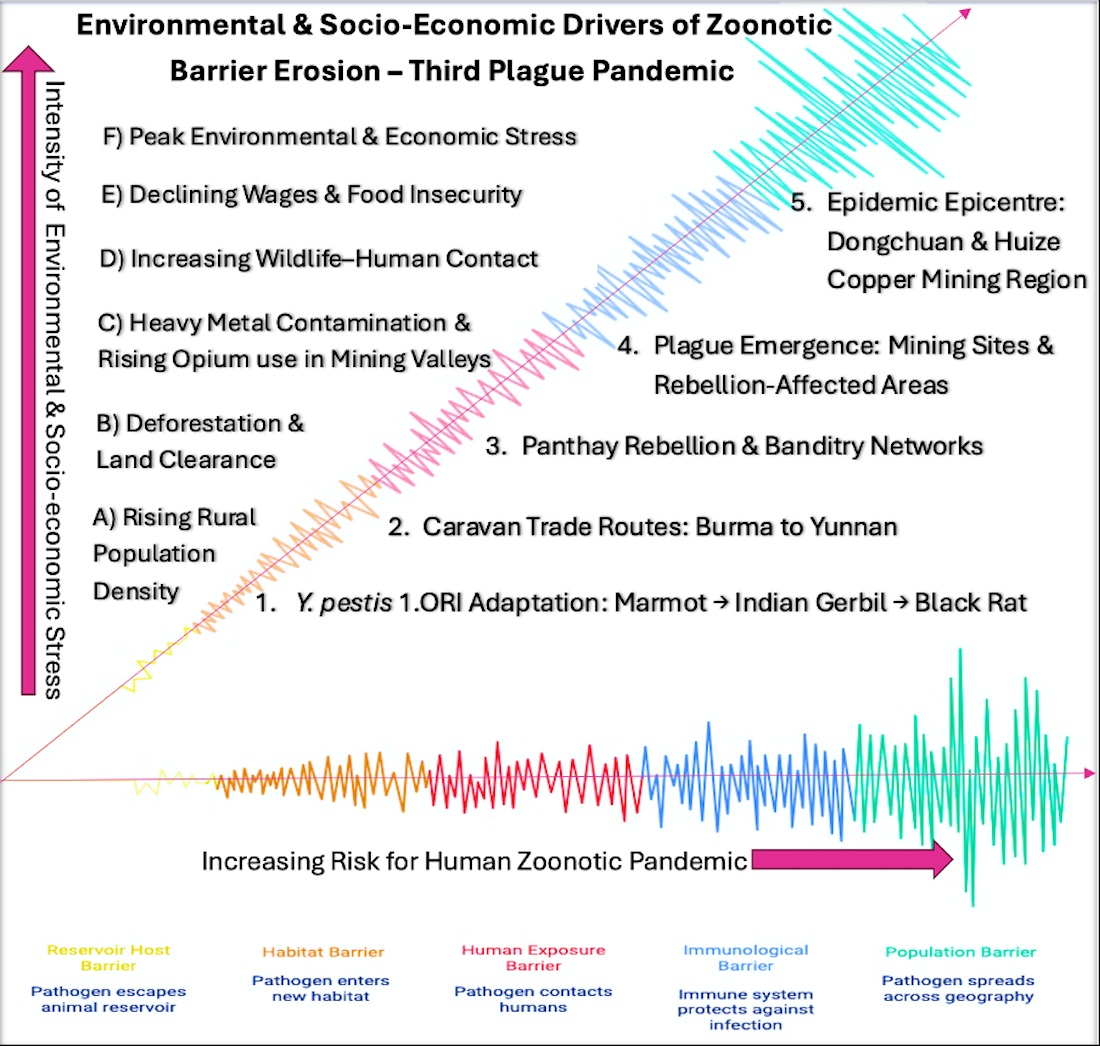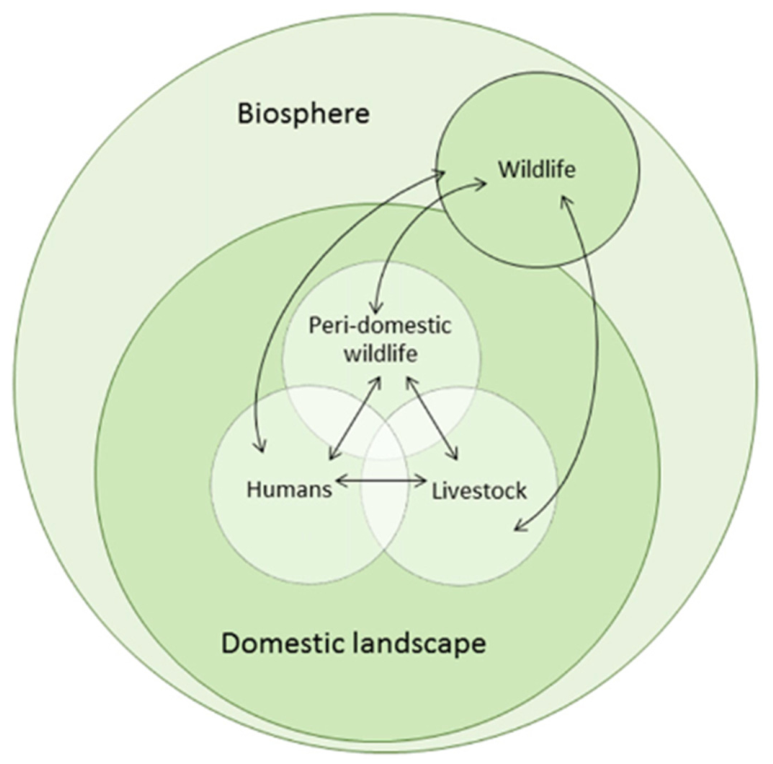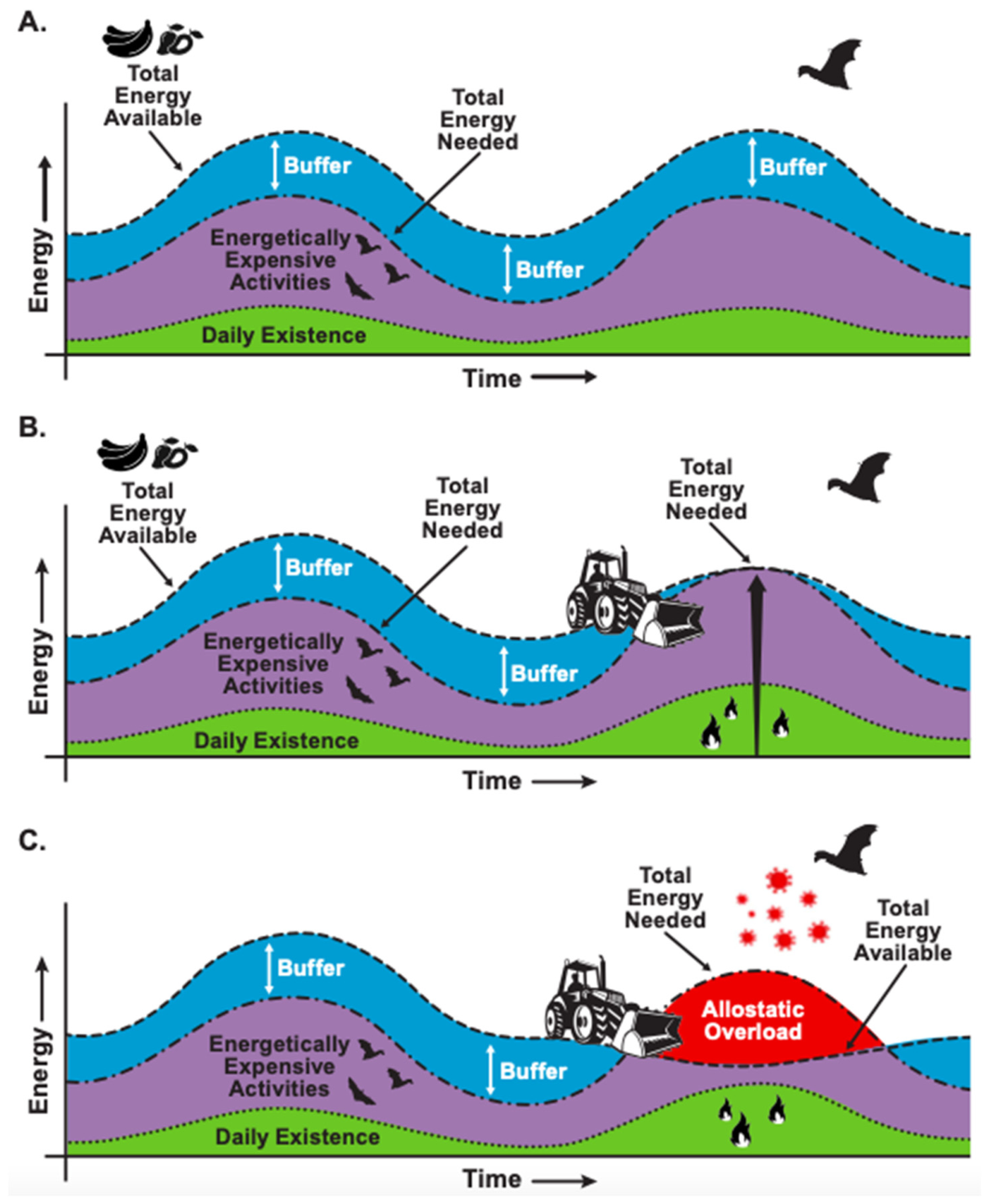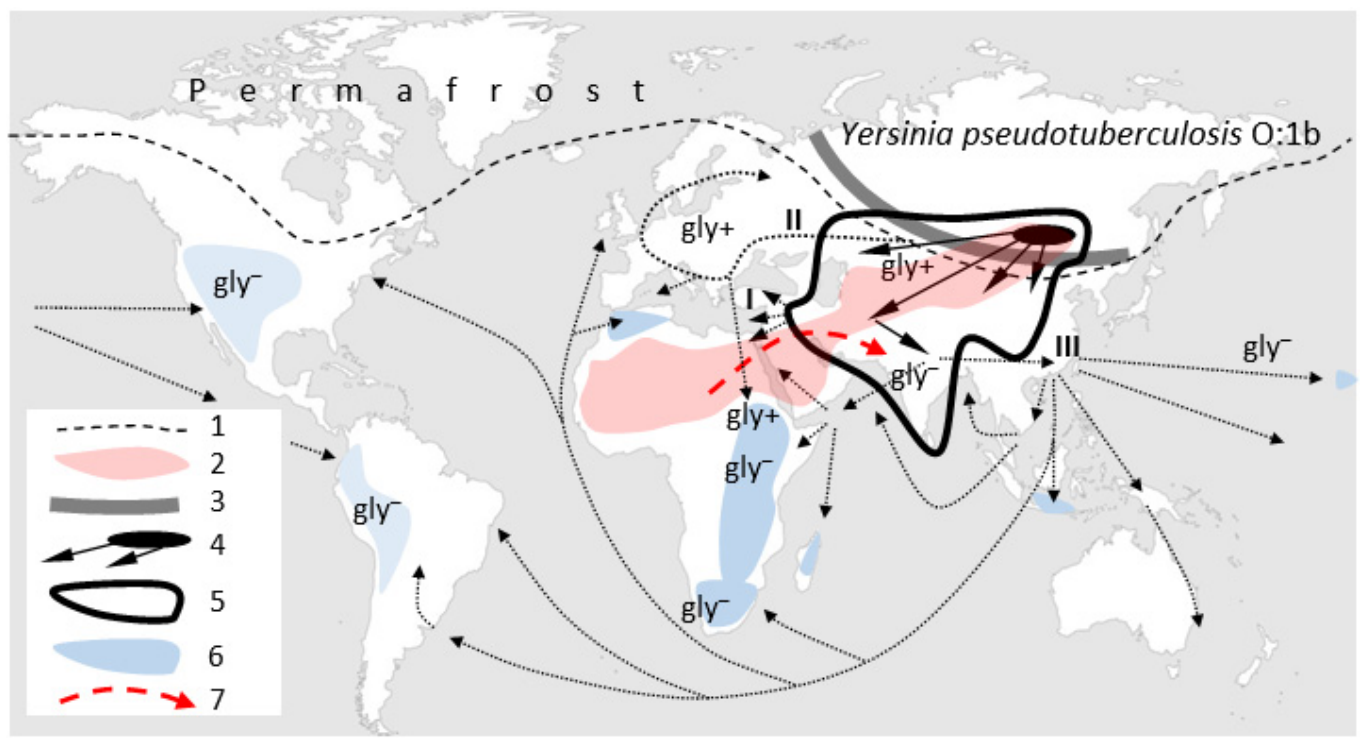

Zoonotic Barrier Disruption and the Rise of the Third Plague Pandemic: A One Health Analysis of 19th-Century Yunnan and the Emergence of Yersinia pestis Strain 1.ORI


Simple Summary
Abstract
1. Introduction
1.1. Zoonotic Barrier Disruption and the Rise of the Third Plague Pandemic—A One Health Analysis
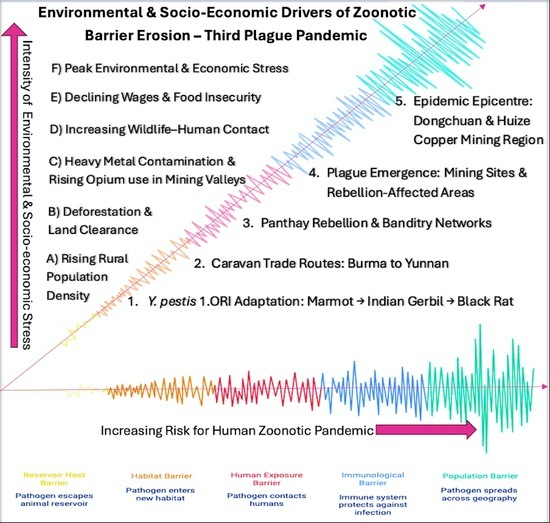
1.2. Anthropogenic Environmental Change, Zoonotic Barrier (ZB) Erosion and the Opportunity for Zoonoses
1.3. The Third Plague Pandemic: A One Health Case Study of Zoonotic Barrier Integrity
1.4. Hypothesis and Approach
1.5. Paper Structure & Outcome Summary
2. Materials and Methods: An Integrated Historical Case Study
2.1. Criteria for Selection and Analysis of Palaeoecological Records
2.1.1. Geographic Provenance
2.1.2. Proxy Evidence
2.1.3. Chronological Control
2.2. Criteria for Selection and Analysis of Historical-Demographic Data
2.2.1. Source Acknowledgment
2.2.2. Awareness of Limitations
2.2.3. Triangulation to Mitigate Bias
2.3. Criteria for Primary Historical Document Analysis
2.3.1. Sourcing and Selection
2.3.2. Analysis and Categorization
2.4. Logic of Interdisciplinary Integration and Causal Modelling
2.4.1. Temporal and Spatial Alignment
2.4.2. Role of Modern Biomedical Literature: Contemporary Phylogenetic and Clinical Studies Served Two Functions

| Data Category | Primary Sources | Inclusion Criteria | Exclusion Criteria | Key Variables Extracted |
|---|---|---|---|---|
| Palaeoecological Records | Lake sediment cores (e.g., Braun et al., 2015 [23]; Li et al., 2022) [24]. | 1. Geographic origin within Yunnan or directly adjacent plague-relevant regions. 2. Time coverage includes 1700–1900 CE. 3. Analysis includes proxies for deforestation (pollen, charcoal) and/or heavy metal contamination (XRF, ICP-MS). 4. Published in peer-reviewed journals with clear dating methods (210Pb, 14C). | Records lacking robust chronology, from irrelevant ecological zones, or with no direct proxy link to anthropogenic change (mining, agriculture). | Deforestation rate estimates, heavy metal (Pb, Cu, Zn, Fe) concentration timelines, sedimentation rates. |
| Historical Demographic Data | Qing dynasty registers, secondary syntheses (e.g., Lee, 1982) [25]. | 1. Quantitative population or land-use data for Yunnan. 2. Time-series spanning at least 1700–1850. 3. Derived from recognized scholarly reconstructions 4. Provides prefectural-level or finer spatial resolution. 5. Is corroborated by palaeoecological evidence (indicating resource use relevant for population) | Isolated, uncorroborated figures; data without discussion of source limitations; national aggregates lacking regional specificity. | Population estimates, cultivated land (mu) area, population density calculations. |
| Historical Documentation | Local gazetteers (difangzhi), customs reports, travel logs (e.g., Yunnan Tongzhi) [26]. | 1. Primary source from the period 1750–1900. 2. Contains direct references to: plague symptoms/outbreaks (shuyi), rodent anomalies, mining or agricultural activity, deforestation, opium cultivation/use, famine, social unrest, & environmental/climate change. 3. Sourced from authoritative digital collections (Erudition Database, CNKI) or critical printed editions. | Vague or allegorical references; sources from unrelated geographic regions; tertiary interpretations without primary text. | Qualitative descriptions of events, economic conditions, and ecological changes. Keyword frequencies. |
| Phylogenetic & Biomedical Literature | Peer-reviewed journals | 1. Studies elucidating Y. pestis 1.ORI lineage evolution, transmission dynamics, or metal acquisition systems. 2. Experimental or review articles detailing the immunosuppressive effects of heavy metals (Pb, Cd) or opioids. 3. Publications from the last 20 years, prioritizing high-impact or frequently cited works. | Purely descriptive phylogenies without ecological context; mechanistic studies on irrelevant pathogens or stressors. | Genetic markers (e.g., gly+/gly−), R. rattus & R. flavipectus Y. pestis hosts (R. rattus (RrC)), virulence factors, mechanisms of immune impairment. |
3. Results
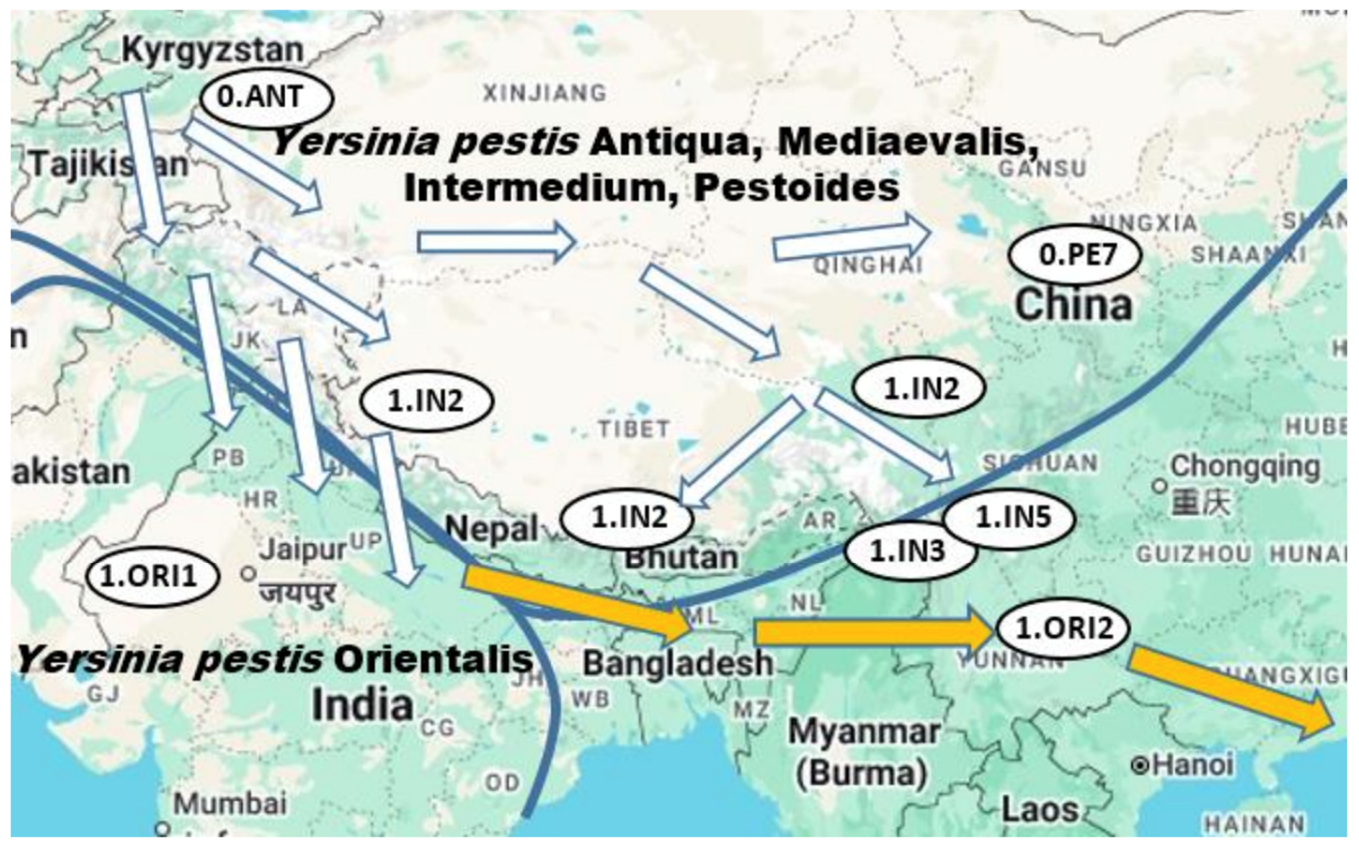
3.1. Evolutionary Trajectory of Yersinia pestis: Environmental Adaptation and the Emergence of Strain 1.ORI
3.1.1. A One Health Approach to Pathogen Evolution: Contextualizing Genetic Change
3.1.2. Environmental Niche Specialization and the Genesis of the 1.ORI Lineage
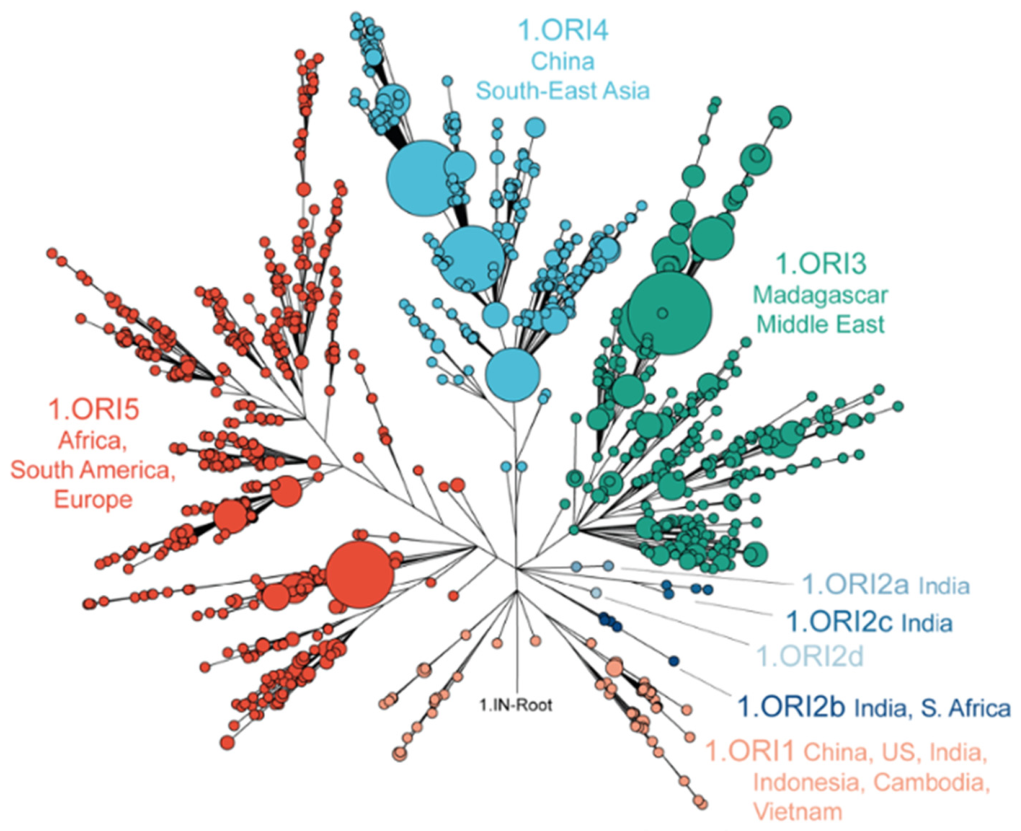
3.1.3. 1.ORI Geographic Dispersal Through Rattus Hosts & the X. cheopis Flea Vector
3.1.4. Integrating Molecular Genetic and Ecological Approaches: A One Health Framework for Reconstructing Pathogen Evolution
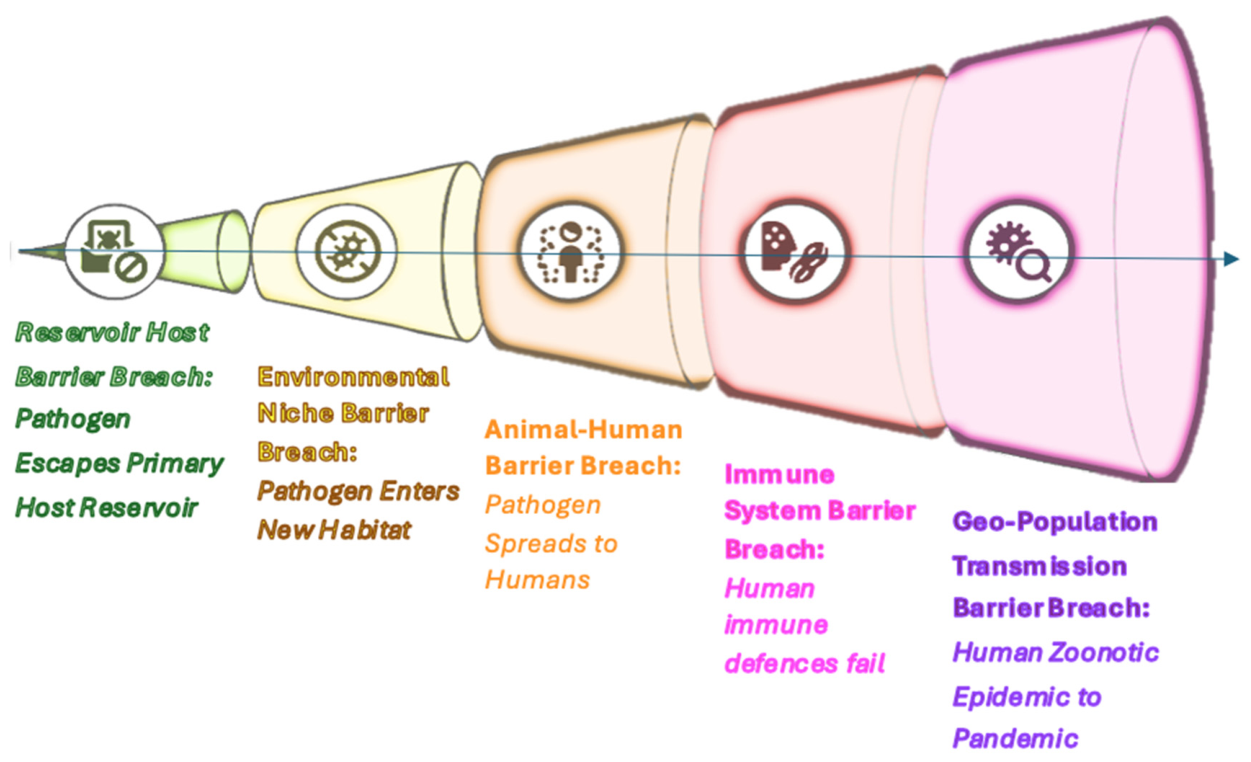
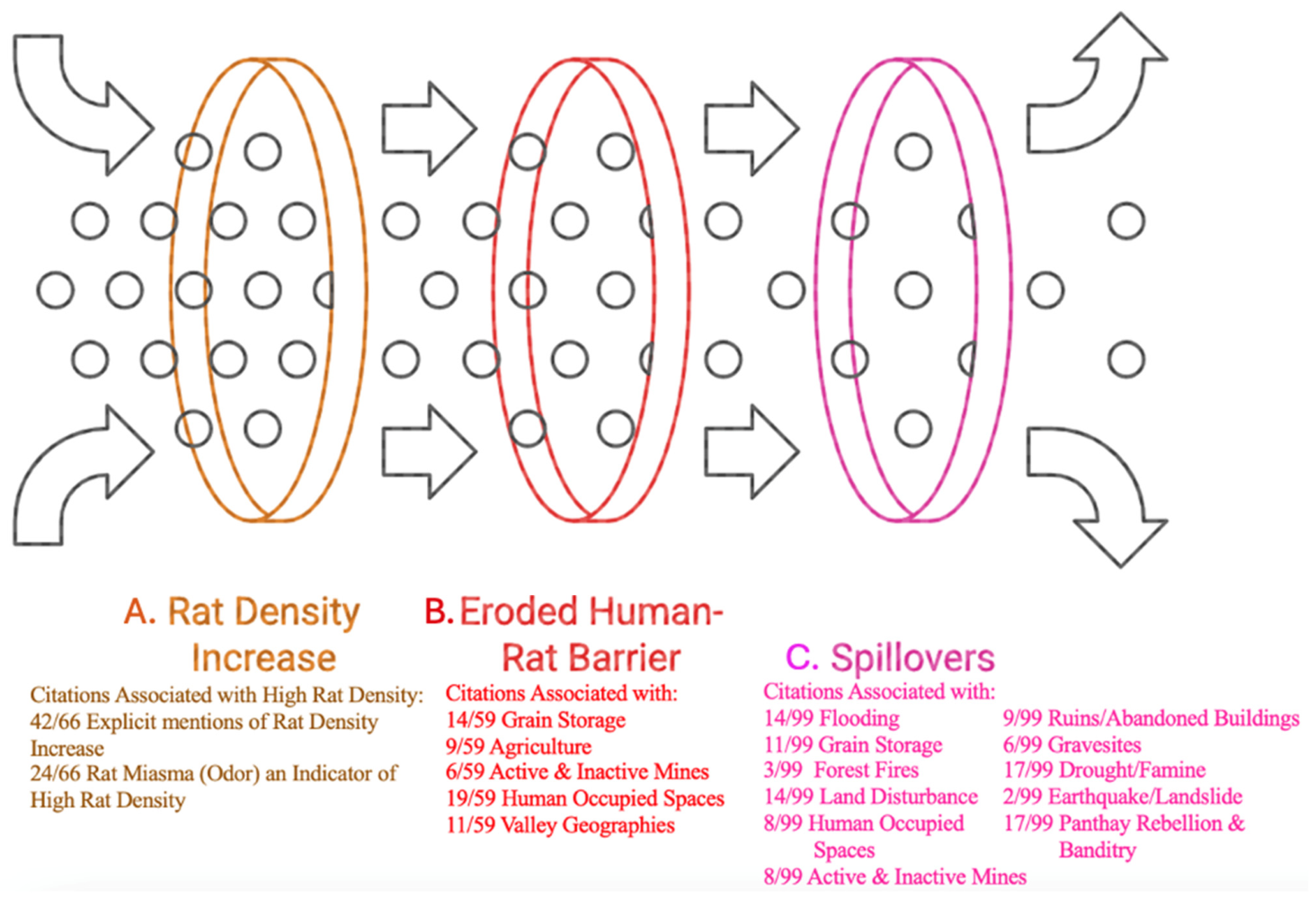
3.1.5. Zoonotic Barrier Erosion Diminishes Control of Pathogen Transmission
3.2. Three Interrelated Processes Driving the Emergence of the 3rd Plague Pandemic in Yunnan
- (1)
- the socio-economic shifts, including monetary depreciation and labour exploitation, which eroded human population resilience and drove landscape change,
- (2)
- the environmental and biological breakdown of zoonotic barriers and the synanthropic rat amplification, instigating host switching to human hosts, which led to:
- (3)
- the pandemic triggering event, the Panthay Rebellion, which exacerbated and accelerated the erosion of the final protective barriers, leading to widespread spillover and dissemination.
3.2.1. Socio-Economic Shifts That Compromised Host Resilience and Altered Landscapes
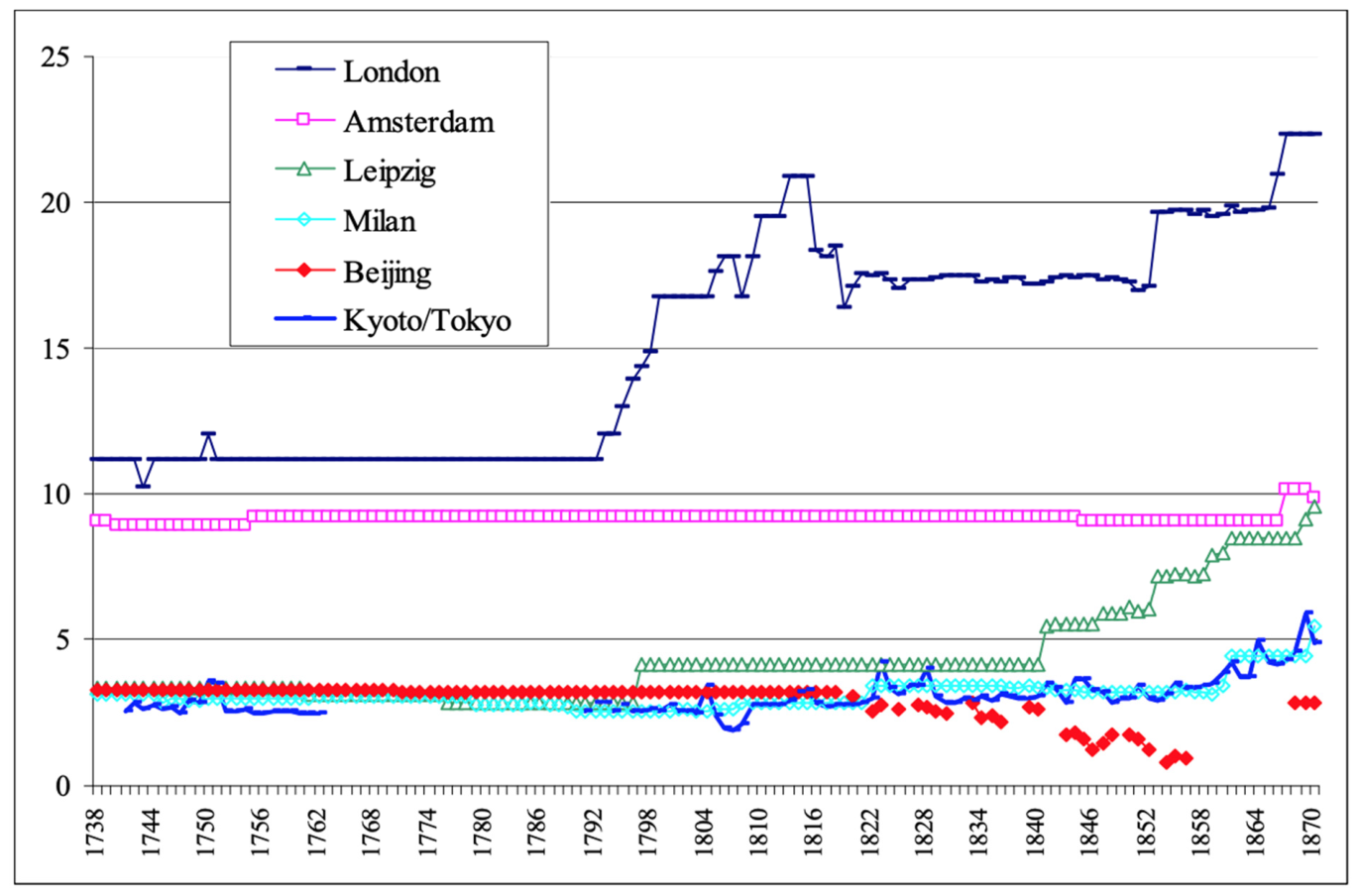
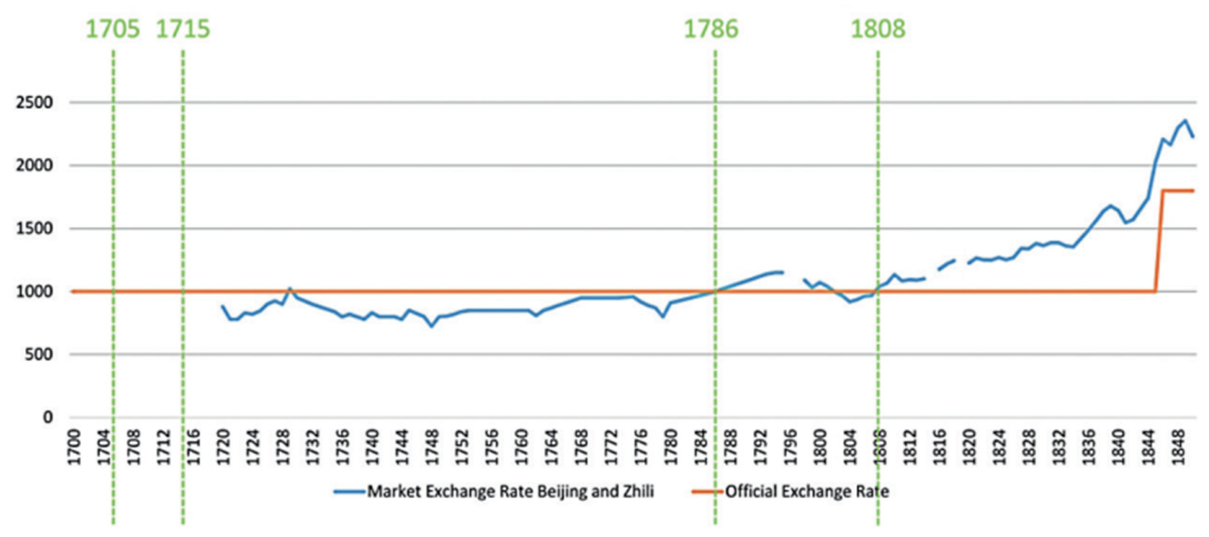
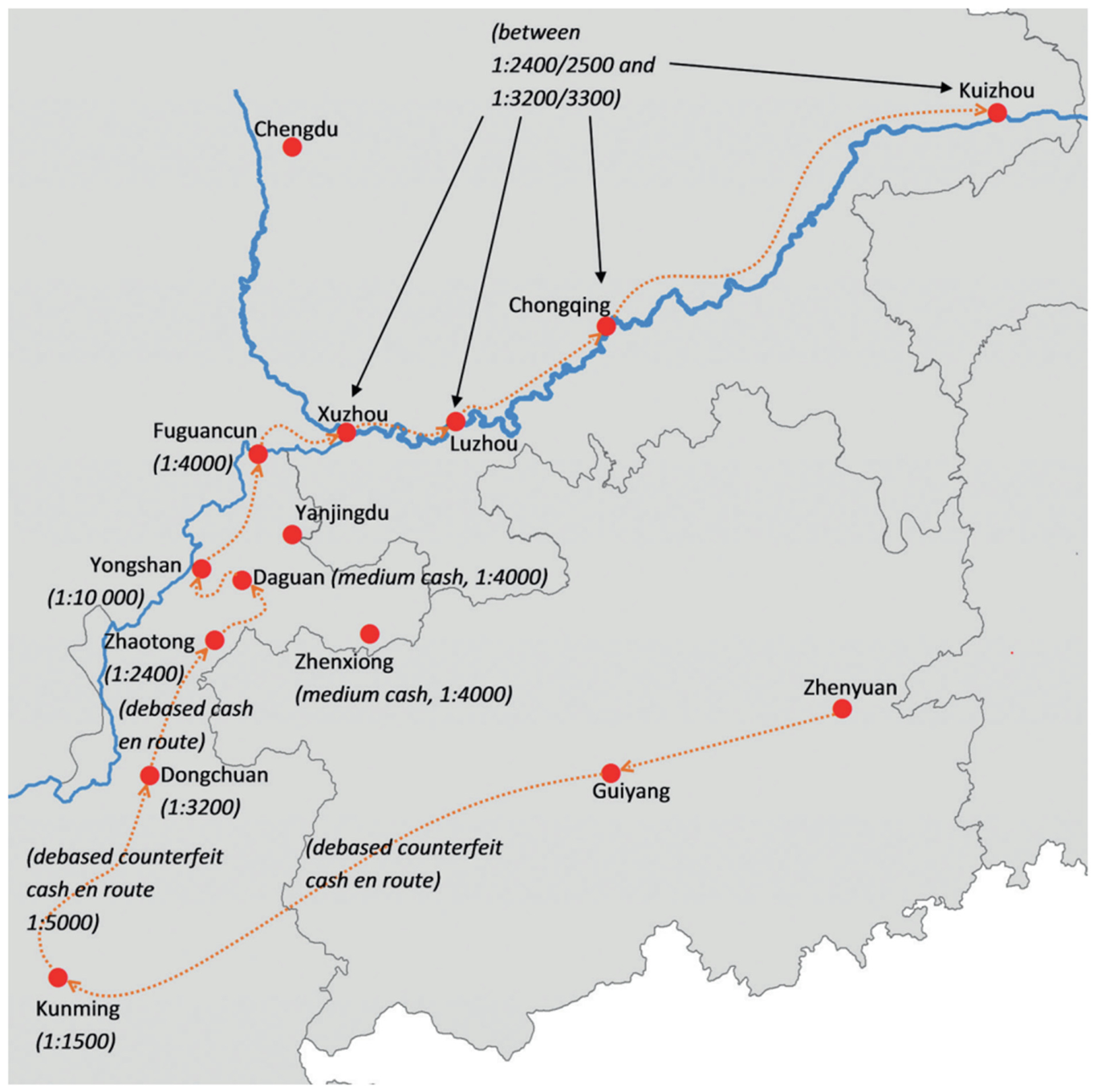
Real Wage Decline & the Devaluation of Coin Currencies: A Monetary Driver of Poverty and Ecological Disruption
- The Bimetallic System and Its Breakdown:
- The Mechanism of Impoverishment
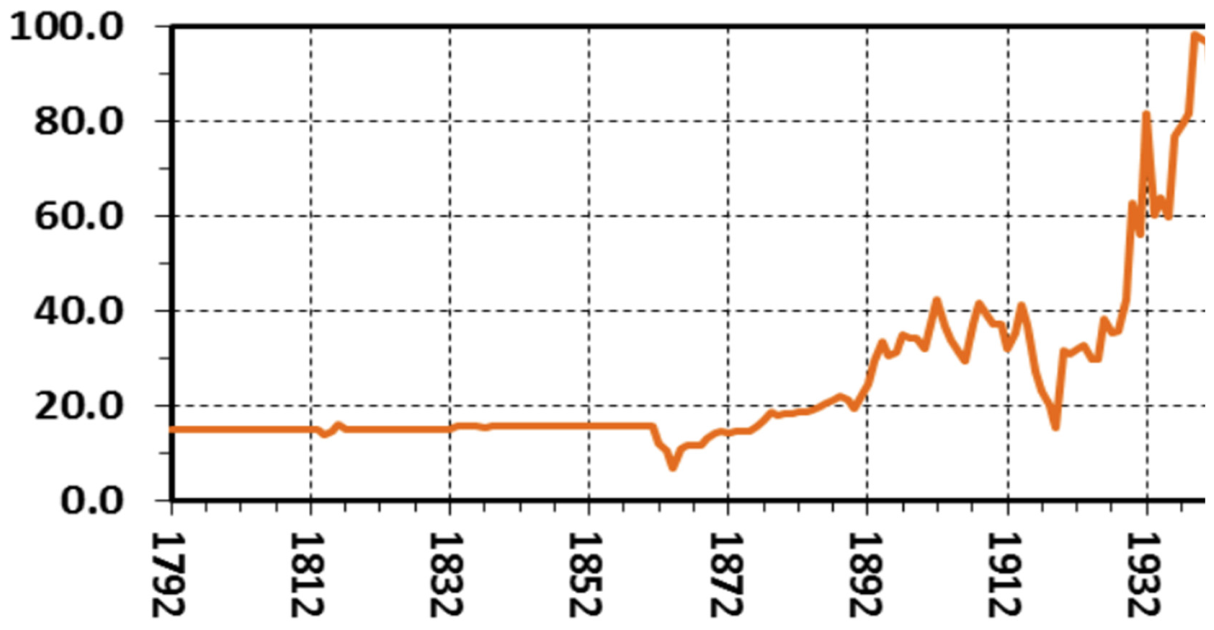
- Global Silver Devaluation
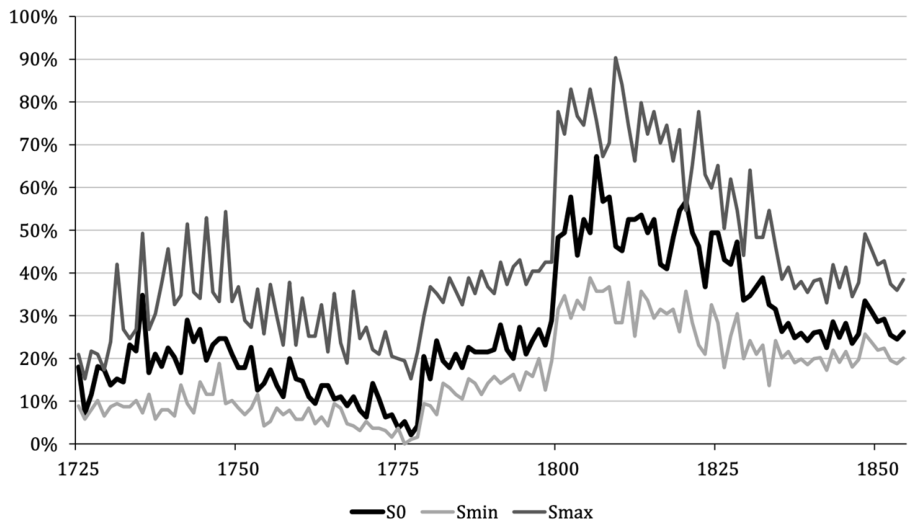
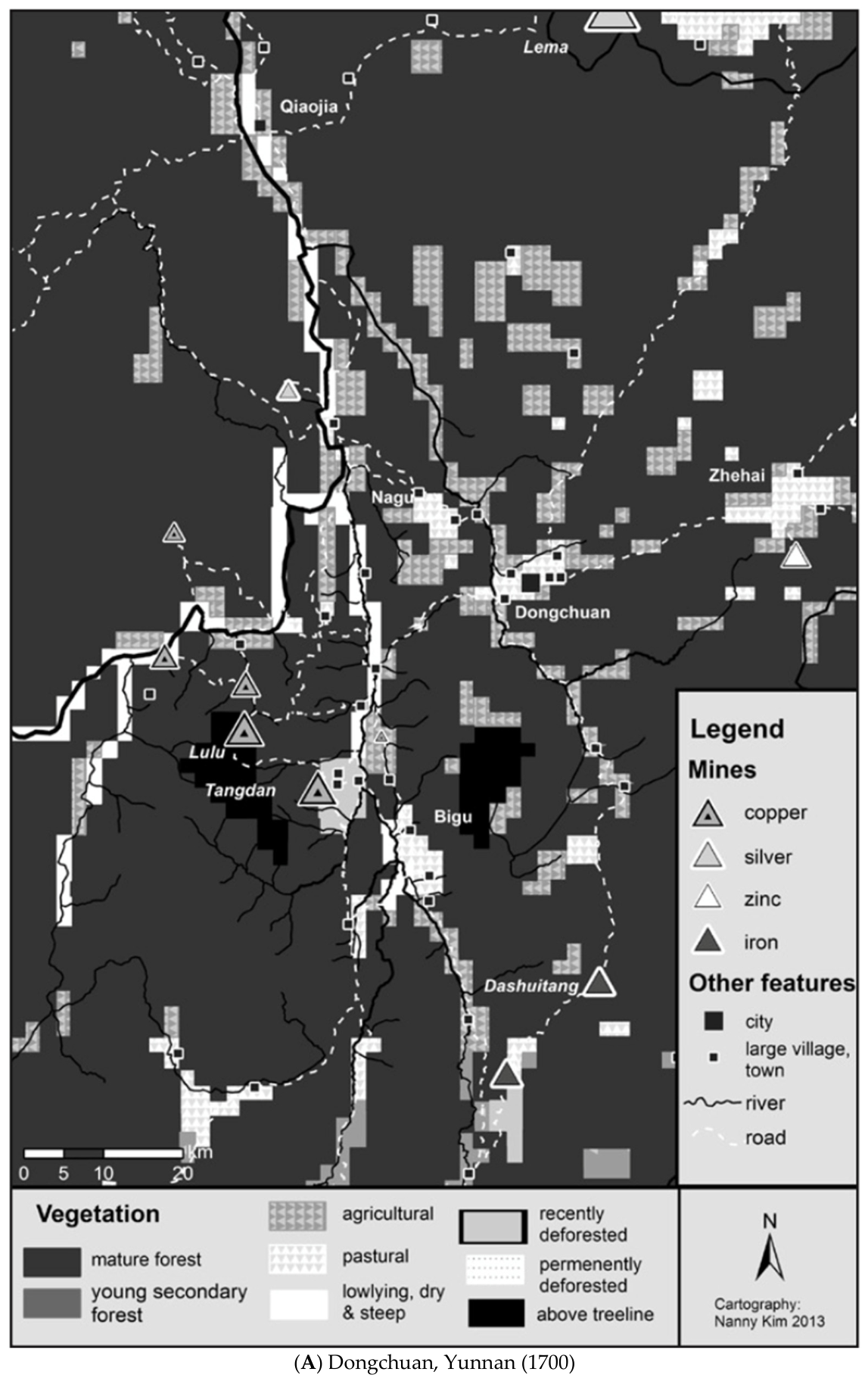
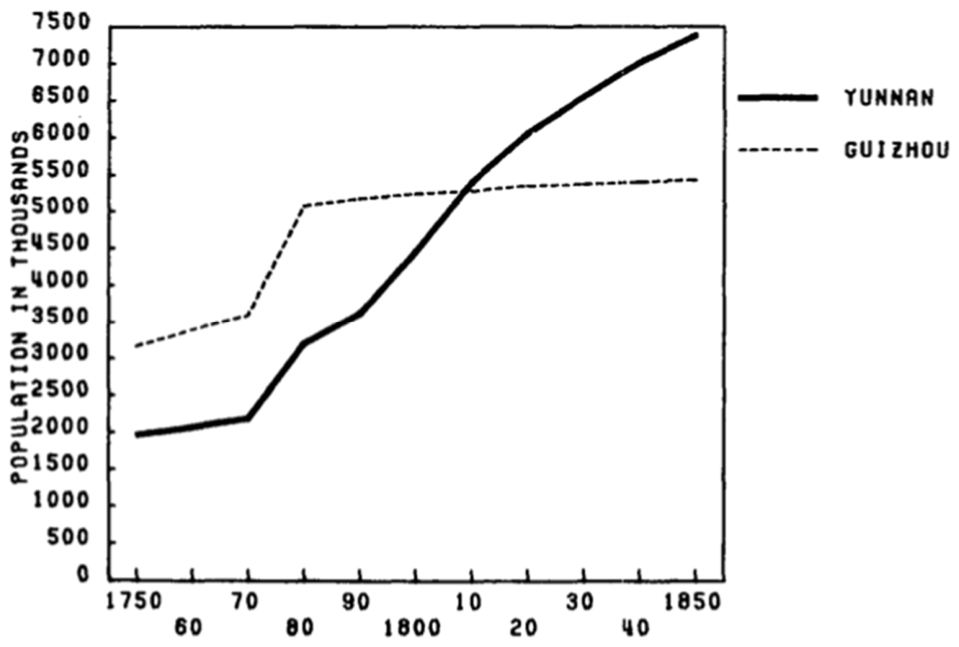
Rapid Population Growth and Deforestation in Late 18th and 19th Century
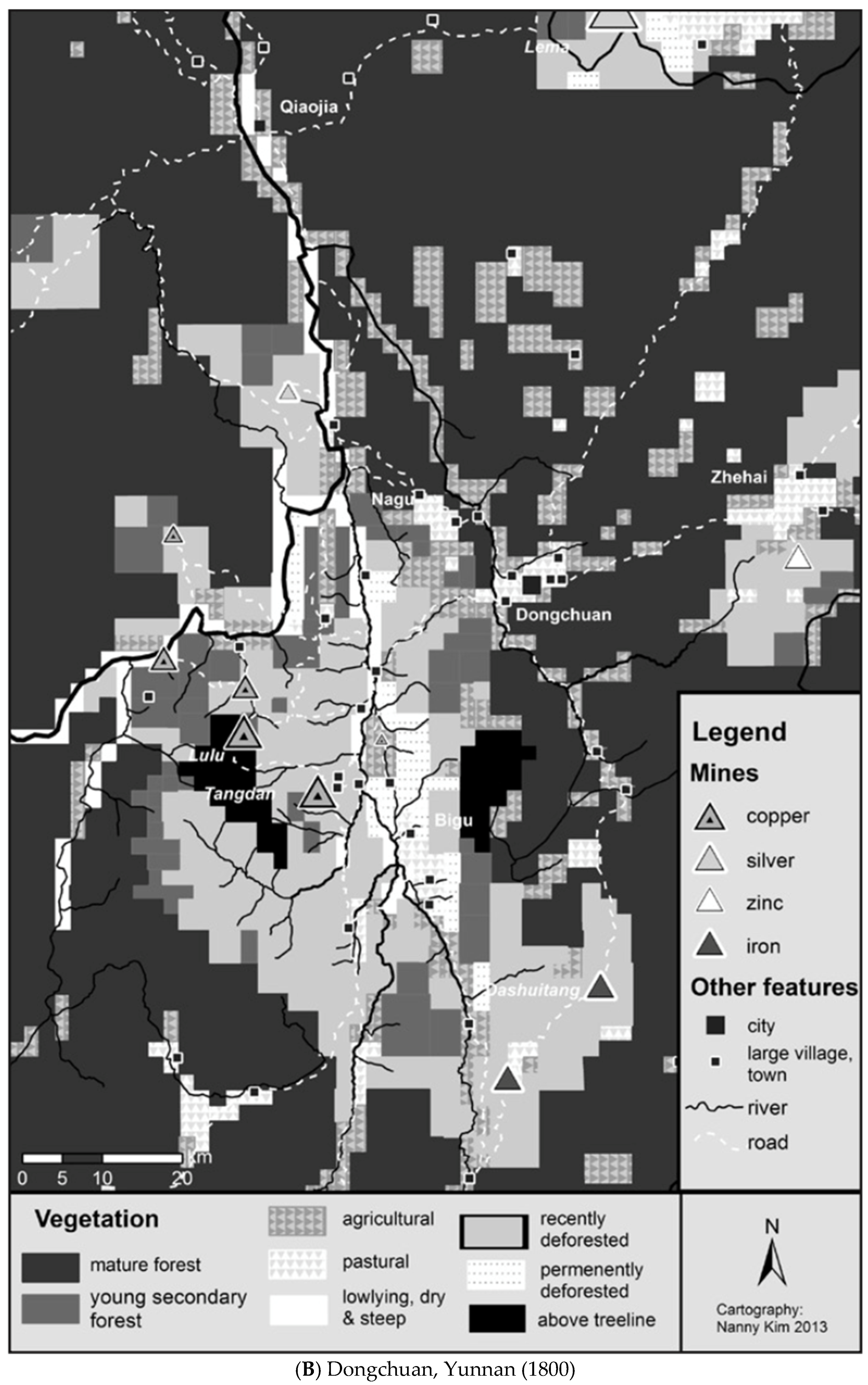
“In contrast to Ming population growth, the expansion of population during the Qing dynasty was inversely correlated to the availability of land. Indeed, in Yunnan the population increased fastest where land was least available. In 1775 Kunming and Chengjiang, the two inner core prefectures, had 863,000 people and over 2 million registered mu of cultivated land, that is, approximately one-quarter of the population and one-quarter the provincial acreage. By 1825 their share of the provincial population had increased to well over 2 million, almost one-third of the registered population. Their proportion of the cultivated acreage, however, had shrunk to 1.6 million mu, less than one-sixth of the provincial acreage. By the early nineteenth century, in other words, each acre of cultivated land in the core on the average supported twice as many people as an acre of cultivated land in the periphery”[21] (p. 40).
“In the mountainous areas of China, the cropland cover expanded with the increase of people and immigration when the land use policy changed after the mid-18th century. According to agricultural historians, for example, the cropland area from 1724 to 1812 had increased by 32.6% in Sichuan (including Chongqing), by 250.6% in Guizhou, by 33.1% in Yunnan, by 63.8% in Hunan, and by 36.4% in Guangxi”[24] (p. 12).


“On reaching the bottom we found ourselves upon the edge of paddy fields, the rice being grown right up to the limestone rock; across these our way led to the city, where we were to repose a couple days before going further…Tung-chuan is a poor mountain city with not half of the population of Chao-tung [Zhaotong] and, notwithstanding the rich valley in which it stands, the population has a poverty-stricken aspect, especially in the surrounding villages, while in the city itself we did not notice any good shops, and were told there was not for the sale of silk, whereas in Szechuan silk is an article of dress common to all but the very poorest. Our missionary friends informed us that all the good land was owned by a few rich gentry, ex-officials, who reside within the city walls and extort half the crop from the wretched farmers for rent. There were one very productive copper mines in the neighbourhood, but these, being under official management, were no longer flourishing…”[46]
Erosion from Mining Areas Leading to Heavy Metal Contamination in Lakes and Rivers
- The Role of Erosion and Hydrology
- Long-Term and Contemporary Impacts
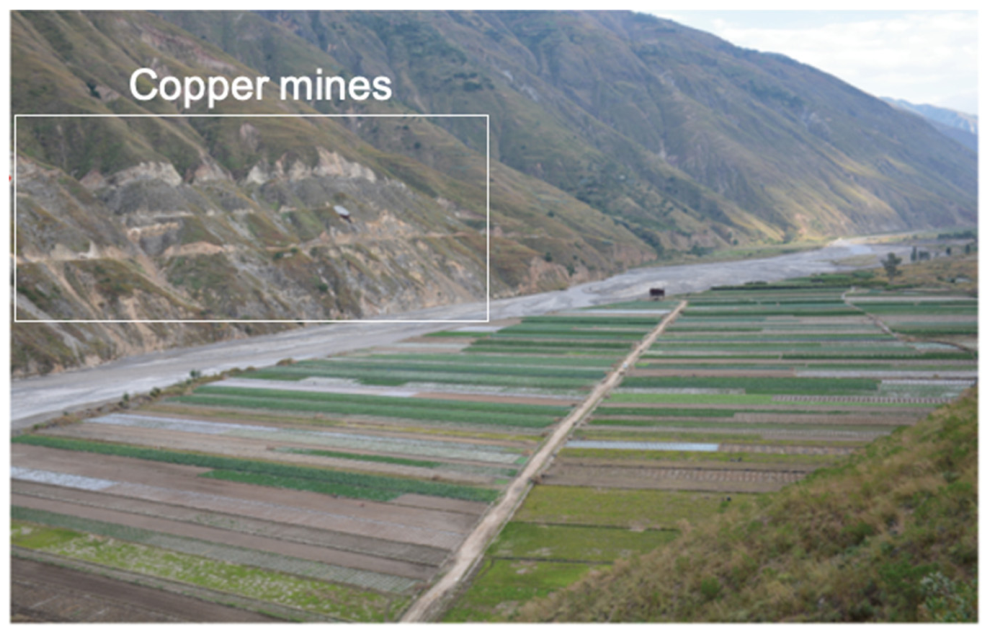
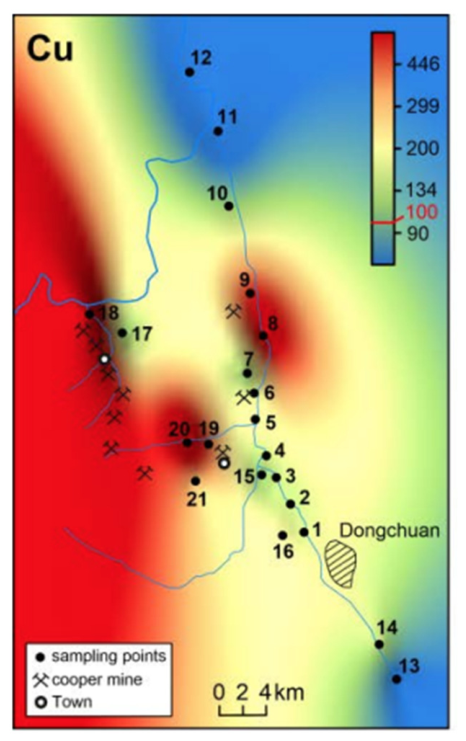
“These findings suggest that after Cu was extracted from the primary ore via flotation, residual elements accumulated on the surface along with Cu tailings. During ore cracking, these elements are activated and released in ionic or molecular forms into the soil, leading to complex metal pollution. Cu is expected to be the dominant pollutant in Dongchuan, accompanied by Cd, Pb, and Zn contamination”[64] (p. 13).
3.2.2. Environmental and Biological Breakdown of Zoonotic Barriers and the Synanthropic Rat Amplification
Mining, Environmental Toxins, and Host-Pathogen Dysregulation: A Context for Yersinia pestis Emergence
- The Broad Ecological Impact: Habitat Degradation and Pollution
- From Environmental Stress to Host Vulnerability: The Heavy Metal Hypothesis
- The Microbiological Interface: A Potential “Metal Tug-of-War”
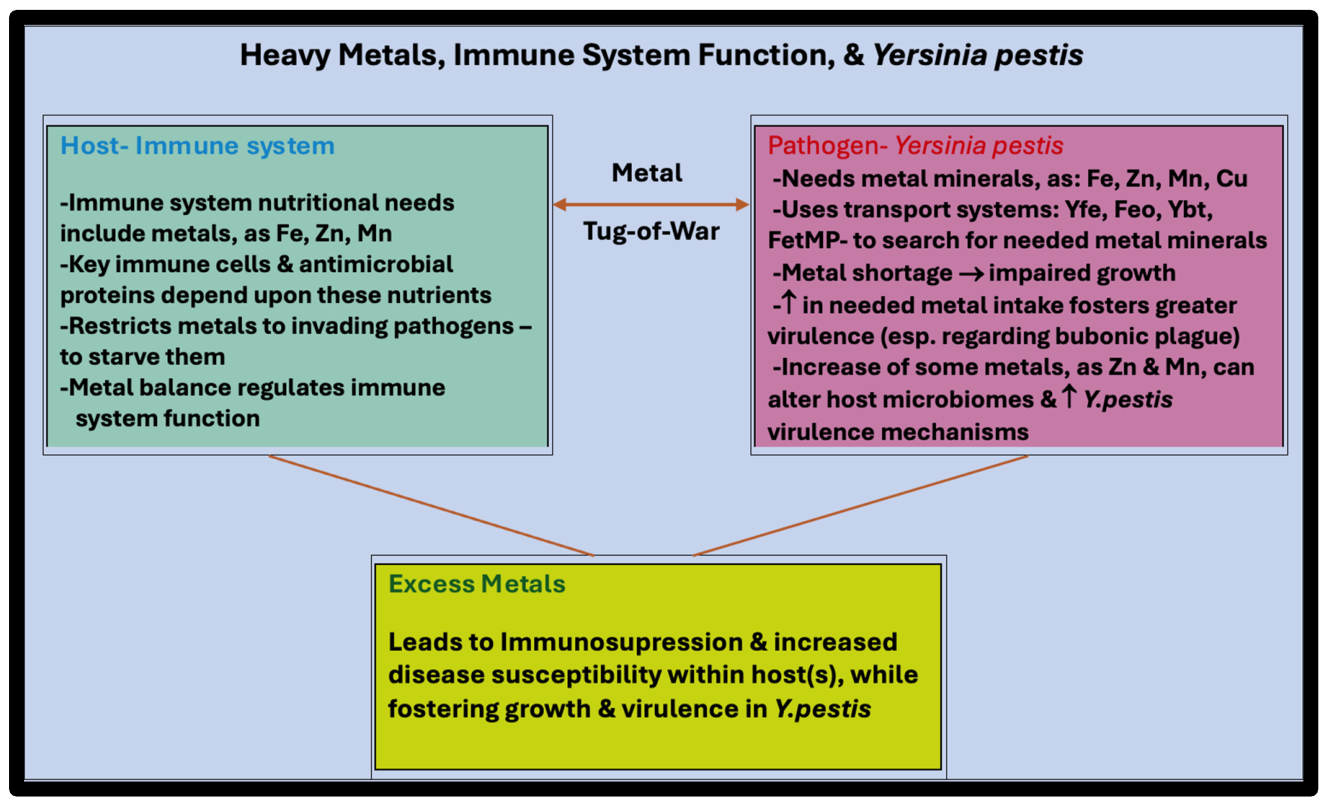
“Nutritional immunity is a process by which a host organism sequesters trace minerals to limit pathogenicity during infection. Circulating concentrations of minerals, such as iron and zinc, decline rapidly and dramatically with the inflammation associated with infection. The decline in iron and zinc is thought to starve invading pathogens of these essential elements, limiting disease progression and severity…”[77].
- Synthesis: A Confluence of Stresses in a High-Risk Landscape
Opium, Immunosuppression, and the Fuelling of a Pandemic in 19th-Century Yunnan
- The Socio-Economic Trap: Opium over Sustenance
“Officials had identified locations where poppies were cultivated and opium was processed and sold, as well as key entry points through which foreign merchants trafficked opium into the interior and the main routes by which opium was transported from Yunnan into Sichuan (据该御史指出栽种罂粟熬烟售卖处所,并由外夷贩烟入内要口,及由滇省贩烟入川要路, In Chinese)”[79]
- The Medical and Cultural Rationale: Opium as Panacea
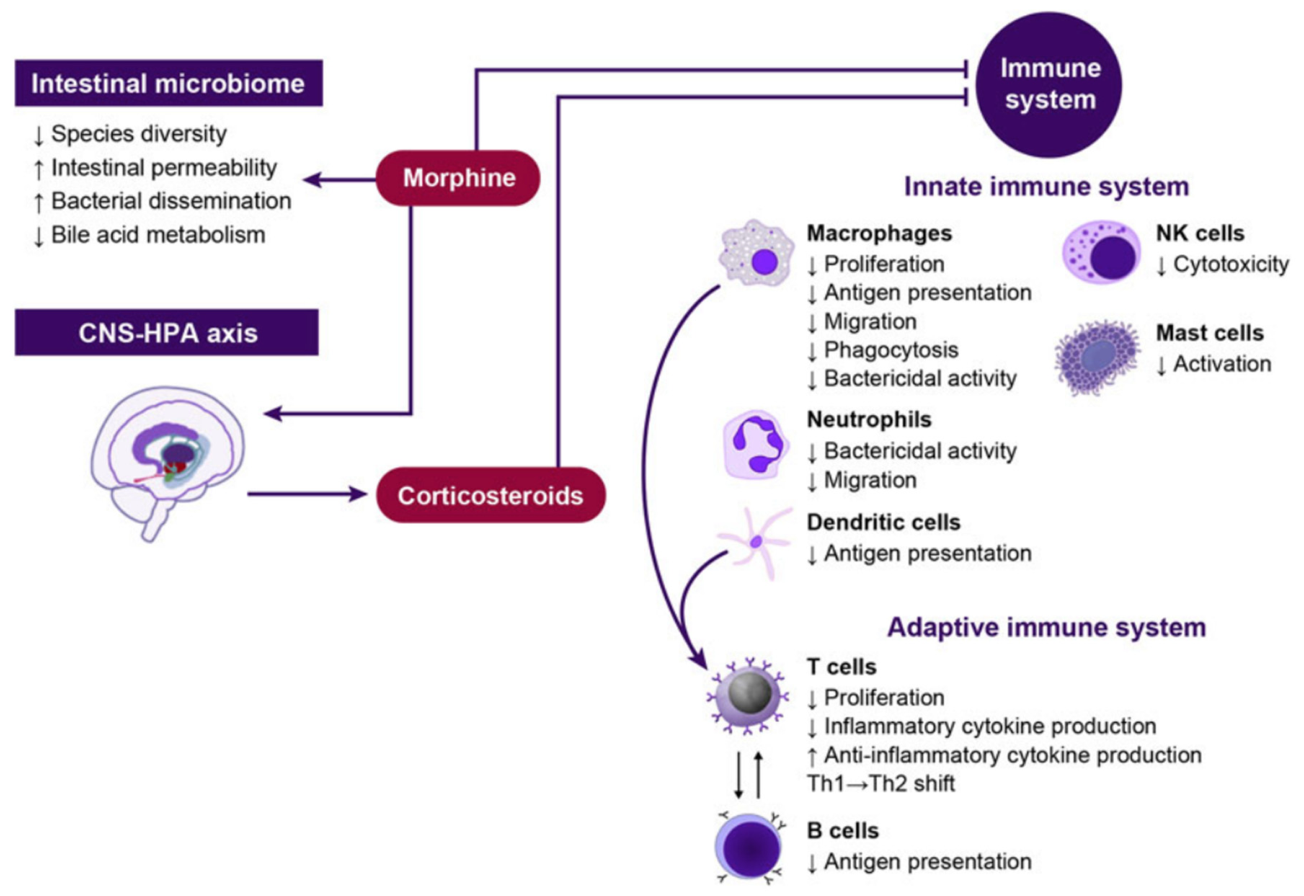
- The Biological Trap: Opium as an Immunosuppressant
- Synthesis: Opium interwoven within the Context for the 3rd Pandemic
3.2.3. The Incubation Phase (1840s–1850s): Localized Barrier Breaches and the Genesis of Systemic Crisis
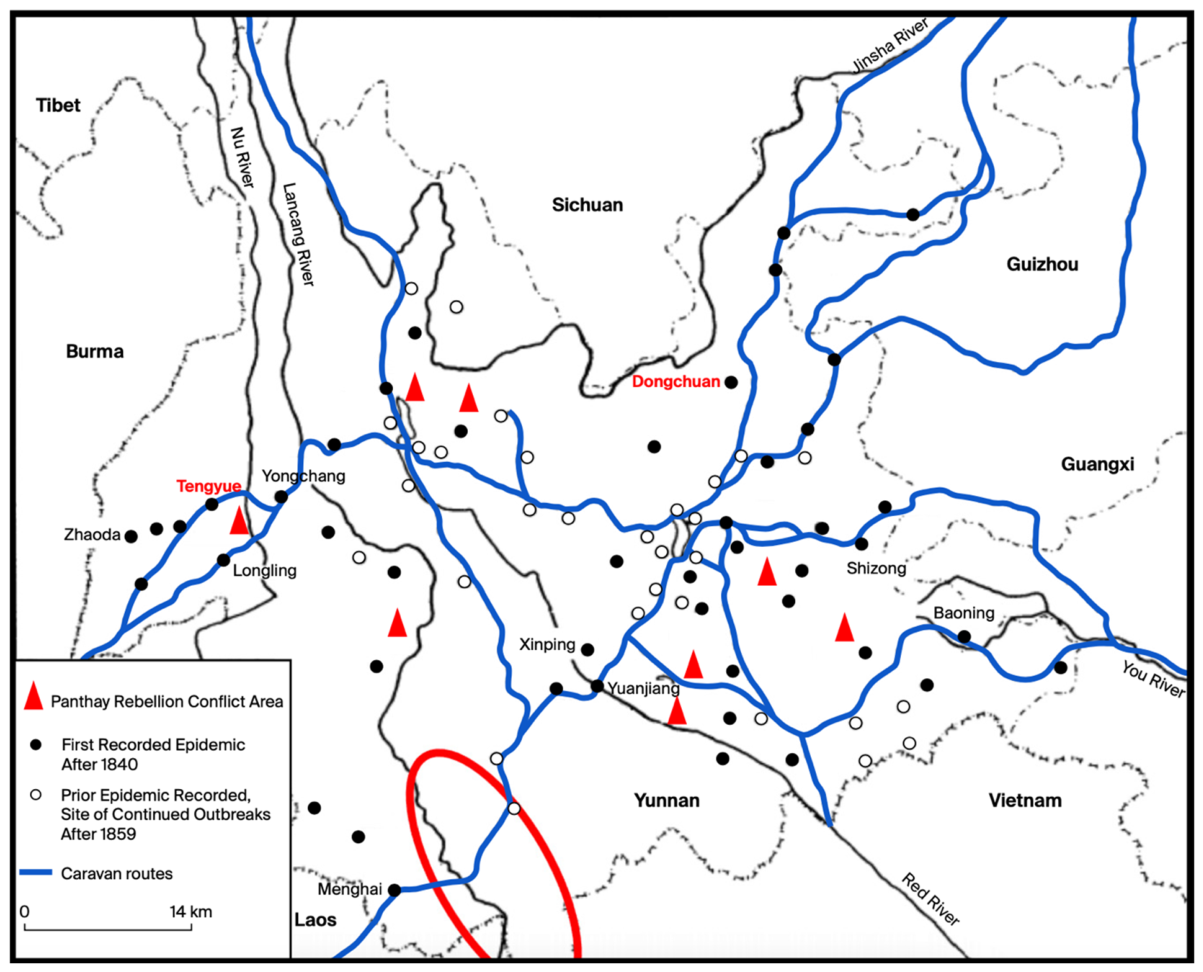
The Tengyue-Baoshan Corridor: A Conduit for Strain 1.ORI?
Social Fracture as an Epidemiological Determinant: The Path to the Panthay Rebellion
Converging Pathways in the Northeast
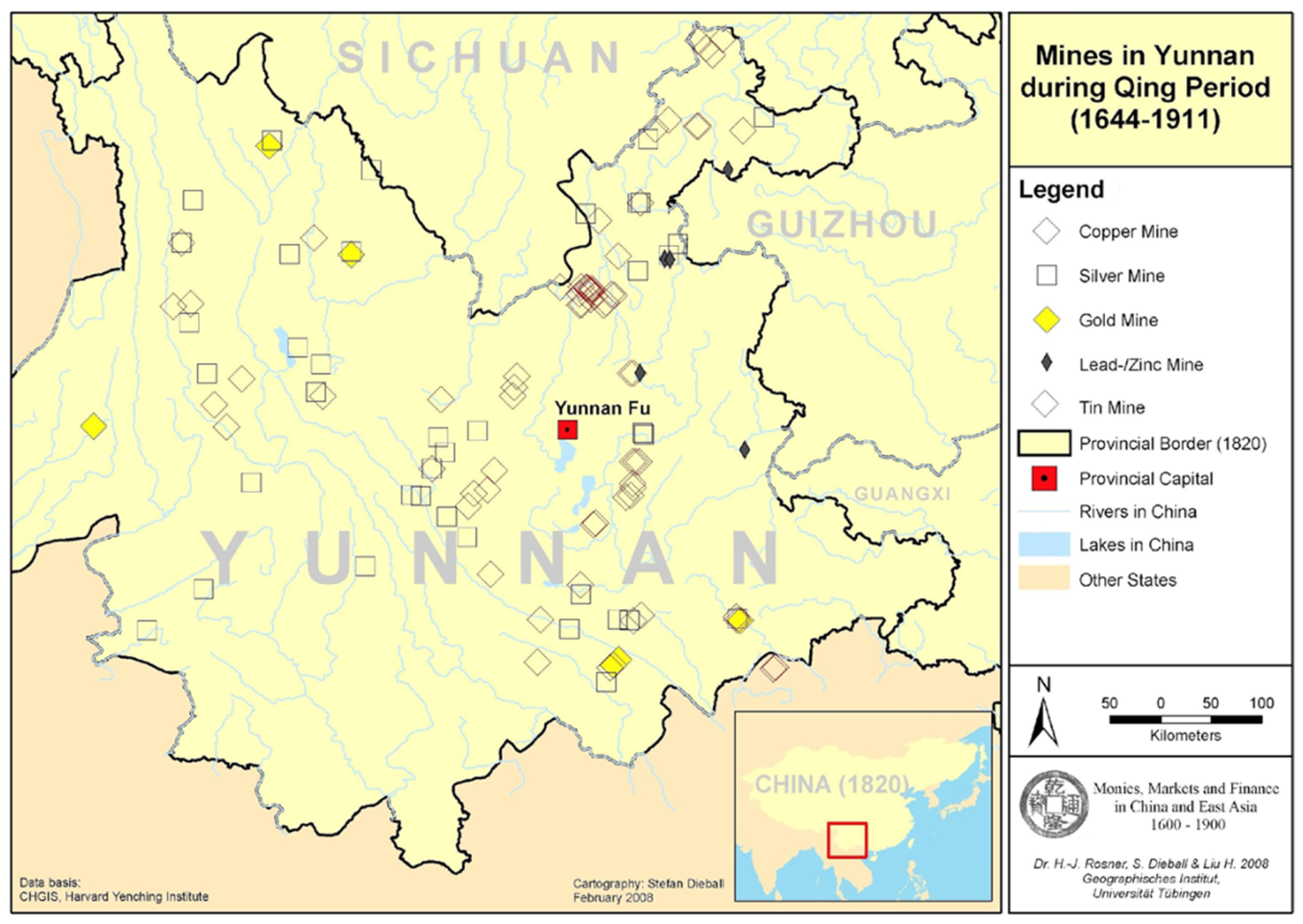
Ecological Epicentre: The Copper Mining Valleys of Dongchuan and Huize County
3.3. The Rodent-Host Health Threshold: From Density to Disease
3.3.1. The Pandemic “Critical Mass”: Amplification by the Panthay Rebellion
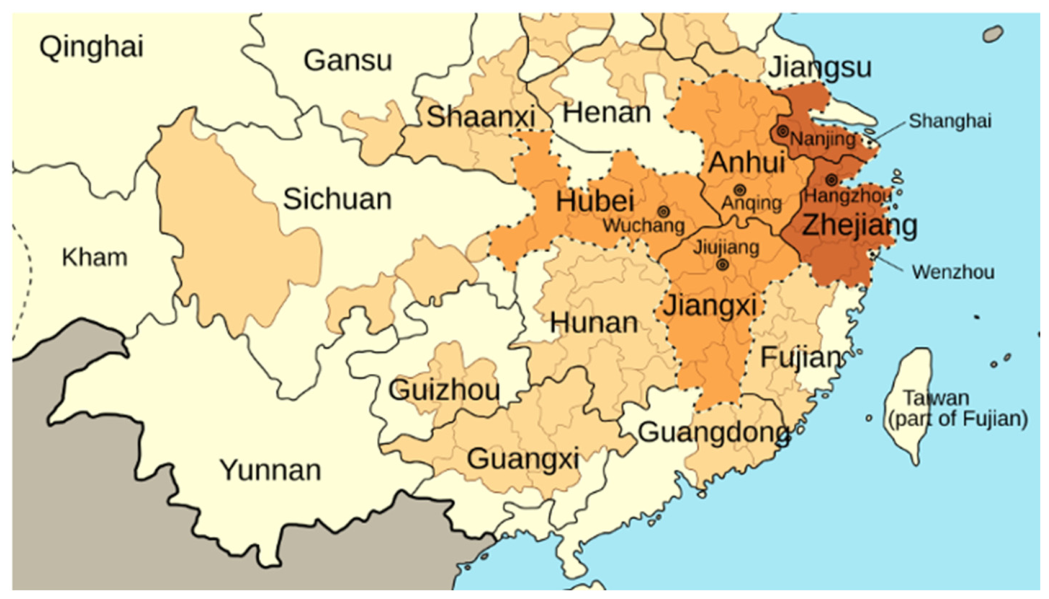
3.3.2. National Context: Systemic Unsustainability in the Late Qing

4. Discussion: Triangulating Pandemic Origins—A Dynamic One Health Synthesis
4.1. The Interdisciplinary Imperative: Building a Case from Convergent Evidence
4.2. The Epicentre Revealed: Dongchuan-Huize as the Probable Crucible of Emergence
4.3. The Provincial Amplifier: The Panthay Rebellion’s Systemic Shock
4.4. Linkages, Limitations, and Future Directions
5. Conclusions: Towards a Model for Pandemic Reconstruction
Supplementary Materials
Author Contributions
Funding
Institutional Review Board Statement
Informed Consent Statement
Data Availability Statement
Acknowledgments
Conflicts of Interest
References
- McMichael, A.J. Environmental and social influences on emerging infectious diseases: Past, present and future. Philos. Trans. R. Soc. Lond. B Biol. Sci. 2004, 359, 1049–1058. [Google Scholar] [CrossRef]
- Jones, K.E.; Patel, N.G.; Levy, M.A.; Storeygard, A.; Balk, D.; Gittleman, J.L.; Daszak, P. Global trends in emerging infectious diseases. Nature 2008, 451, 990–993. [Google Scholar] [CrossRef]
- Rajeev, R.; Prathiviraj, R.; Kiran, G.S.; Selvin, J. Zoonotic evolution and implications of microbiome in viral transmission and infection. Virus Res. 2020, 290, 198175. [Google Scholar] [CrossRef]
- Bendrey, R.; Cassidy, J.P.; Fournié, G.; Merrett, D.C.; Oakes, R.H.; Taylor, G.M. Approaching ancient disease from a One Health perspective: Interdisciplinary review for the investigation of zoonotic brucellosis. Int. J. Osteoarchaeol. 2020, 30, 99–108. [Google Scholar] [CrossRef]
- Rayfield, K.M.; Mychajliw, A.M.; Singleton, R.R.; Sholts, S.B.; Hofman, C.A. Uncovering the Holocene roots of contemporary disease-scapes: Bringing archaeology into One Health. Proc. R. Soc. B 2023, 290, 20230525. [Google Scholar] [CrossRef]
- Demeure, C.E.; Dussurget, O.; Mas Fiol, G.; Le Guern, A.-S.; Savin, C.; Pizarro-Cerdá, J. Yersinia pestis and plague: An updated view on evolution, virulence determinants, immune subversion, vaccination and diagnostics. Microbes Infect. 2019, 21, 202–212. [Google Scholar] [CrossRef] [PubMed]
- Destoumieux-Garzón, D.; Mavingui, P.; Boetsch, G.; Boissier, J.; Darriet, F.; Duboz, P.; Fritsch, C.; Giraudoux, P.; Le Roux, F.; Morand, S.; et al. The One Health concept: 10 years old and a long road ahead. Front. Vet. Sci. 2018, 5, 14. [Google Scholar] [CrossRef] [PubMed]
- Cunningham, A.A.; Daszak, P.; Wood, J.L.N. One Health, emerging infectious diseases and wildlife: Two decades of progress? Philos. Trans. R. Soc. Lond. B Biol. Sci. 2017, 372, 20160167. [Google Scholar] [CrossRef] [PubMed]
- Carvalho, R.L.; Anjos, D.; Harmange, C.; Pinter, A.; Faust, C.; Streicker, D.; Lorenz, C.; Prist, P.R.; Metzger, J.P. Unpacking the risks of zoonotic and vector-borne pathogen transmission to humans in the context of environmental change. One Earth 2025, 8, 101348. [Google Scholar] [CrossRef]
- Giacomini, A.; Waret-Szkuta, A.; Sieng, T.; Raboisson, D.; Lhermie, G.; Peyre, M.; Guis, H. Integrating socio-ecosystemic factors in One Health approaches: A scoping review in zoonotic disease research. One Health 2025, 20, 101086. [Google Scholar] [CrossRef]
- Bradford, S.A.; Morales, V.L.; Zhang, W.; Harvey, R.W.; Packman, A.I.; Mohanram, A.; Welty, C. Transport and fate of microbial pathogens in agricultural settings. Crit. Rev. Environ. Sci. Technol. 2013, 43, 775–893. [Google Scholar] [CrossRef]
- Plowright, R.K.; Ahmed, A.N.; Coulson, T.; Crowther, T.W.; Ejotre, I.; Faust, C.L.; Frick, W.F.; Hudson, P.J.; Kingston, T.; Nameer, P.O.; et al. Ecological countermeasures to prevent pathogen spillover and subsequent pandemics. Nat. Commun. 2024, 15, 2577. [Google Scholar] [CrossRef]
- Jones, B.A.; Grace, D.; Kock, R.; Alonso, S.; Rushton, J.; Said, M.Y.; McKeever, D.; Mutua, F.; Young, J.; McDermott, J.; et al. Zoonosis emergence linked to agricultural intensification and environmental change. Proc. Natl. Acad. Sci. USA 2013, 110, 8399–8404. [Google Scholar] [CrossRef]
- Xu, L.; Stige, L.C.; Leirs, H.; Neerinckx, S.; Gage, K.L.; Yang, R.; Liu, Q.; Bramanti, B.; Dean, K.R.; Tang, H.; et al. Historical and genomic data reveal the influencing factors on global transmission velocity of plague during the Third Pandemic. Proc. Natl. Acad. Sci. USA 2019, 116, 11833–11838. [Google Scholar] [CrossRef] [PubMed]
- Shi, L.; Yang, G.; Zhang, Z.; Xia, L.; Liang, Y.; Tan, H.; He, J.; Xu, J.; Song, Z.; Li, W.; et al. Reemergence of Human Plague in Yunnan, China in 2016. PLoS ONE 2018, 13, e0198067. [Google Scholar] [CrossRef]
- Suntsov, V.V. Host Aspect of Territorial Expansion of the Plague Microbe Yersinia pestis from the Populations of the Tarbagan Marmot (Marmota sibirica). Biol. Bull. 2021, 48, 1367–1379. [Google Scholar] [CrossRef]
- Suntsov, V.V. Molecular Phylogenies of the Plague Microbe Yersinia pestis: An Environmental Assessment. AIMS Microbiol. 2023, 9, 712–723. [Google Scholar] [CrossRef]
- Suntsov, V.V. Conflict of Molecular and Ecological Phylogenies of the Plague Microbe Yersinia pestis: A Search for Consensus. Biol. Bull. 2025, 52, 192–201. [Google Scholar] [CrossRef]
- Suntsov, V.V. Intraspecific Typing and Phylogeny of the Causative Agent of the Plague—The Microbe Yersinia pestis: Problems and Perspectives. Biol. Bull. Rev. 2024, 14, 60–72. [Google Scholar] [CrossRef]
- Reynolds, A.; Kutz, S.; Baker, T. A Holistic Approach to One Health in the Arctic. In Arctic One Health: Challenges for Northern Animals and People; Tryland, M., Ed.; Springer International Publishing: Cham, Switzerland, 2022; pp. 21–45. [Google Scholar] [CrossRef]
- Lee, J. Food supply and population growth in southwest China, 1250–1850. J. Asian Stud. 1982, 41, 711–746. [Google Scholar] [CrossRef]
- Zhonghua Shuju Editorial Committee (中华书局编辑部, In Chinese) (Ed.) Qing Shilu (清实录, In Chinese) [Veritable Records of the Qing Dynasty]; Zhonghua Shuju: Beijing, China, 1986; Volume 60. [Google Scholar]
- Braun, A.; Rosner, M.; Hagensieker, R.; Dieball, A. Multi-method dynamical reconstruction of the ecological impact of copper mining on Chinese historical landscapes. Ecol. Model. 2015, 303, 42–54. [Google Scholar] [CrossRef]
- Li, Y.; Ye, Y.; Fang, X.; Liu, Y. Reconstruction of Agriculture-Driven Deforestation in Western Hunan Province of China during the 18th Century. Land 2022, 11, 181. [Google Scholar] [CrossRef]
- Lee, J. The Legacy of Opium Cultivation in China: Ecological and Agricultural Impacts. Environ. Hist. 2010, 15, 682–705. [Google Scholar]
- Long, Y.; Lu, H.; Zhou, Z. (Eds.) New Compilation of the General Gazetteer of Yunnan (Xin Zuan Yunnan Tong Zhi; 新纂云南通志, In Chinese), 1949th ed.; Yunnan Tongzhi Guan: Kunming, China, 1949; Available online: https://upload.wikimedia.org/wikipedia/commons/d/de/SSID-12476409_%E6%96%B0%E7%BA%82%E9%9B%B2%E5%8D%97%E9%80%9A%E5%BF%97_1.pdf (accessed on 4 March 2026).
- Skurnik, M.; Peippo, A.; Ervelä, E. Characterization of the O-antigen gene clusters of Yersinia pseudotuberculosis and the cryptic O-antigen gene cluster of Yersinia pestis shows that the plague bacillus is most closely related to and has evolved from Y. pseudotuberculosis serotype O:1b. Mol. Microbiol. 2000, 37, 316–330. [Google Scholar] [CrossRef] [PubMed]
- Achtman, M.; Morelli, G.; Zhu, P.; Wirth, T.; Diehl, I.; Kusecek, B.; Vogler, A.J.; Wagner, D.M.; Allender, C.J.; Easterday, W.R.; et al. Microevolution and history of the plague bacillus, Yersinia pestis. Proc. Natl. Acad. Sci. USA 2004, 101, 17837–17842. [Google Scholar] [CrossRef] [PubMed]
- Morelli, G.; Song, Y.; Mazzoni, C.J.; Eppinger, M.; Roumagnac, P.; Wagner, D.M.; Feldkamp, M.; Kusecek, B.; Vogler, A.J.; Li, Y.; et al. Yersinia pestis genome sequencing identifies patterns of global phylogenetic diversity. Nat. Genet. 2010, 42, 1140–1143. [Google Scholar] [CrossRef]
- Suntsov, V.V. The origin and worldwide expansion of the plague agent Yersinia pestis: The isolation factor. Biol. Bull. Rev. 2015, 5, 166–178. [Google Scholar] [CrossRef]
- Mas Fiol, G.; Lemoine, F.; Mornico, D.; Bouvier, G.; Andrades Valtuena, A.; Duchene, S.; Savin, C.; Pizarro-Cerda, J. Global Evolutionary Patterns of Yersinia pestis and Its Spread into Africa. bioRxiv 2024. [Google Scholar] [CrossRef]
- Aplin, K.P.; Suzuki, H.; Chinen, A.A.; Chesser, R.T.; Ten Have, J.; Donnellan, S.C.; Austin, J.; Frost, A.; Gonzalez, J.P.; Herbreteau, V.; et al. Multiple Geographic Origins of Commensalism and Complex Dispersal History of Black Rats. PLoS ONE 2011, 6, e26357. [Google Scholar] [CrossRef]
- Cui, Y.; Yu, C.; Yan, Y.; Li, D.; Li, Y.; Jombart, T.; Weinert, L.A.; Wang, Z.; Guo, Z.; Xu, L.; et al. Historical Variations in Mutation Rate in an Epidemic Pathogen, Yersinia pestis. Proc. Natl. Acad. Sci. USA 2013, 110, 577–582. [Google Scholar] [CrossRef]
- Allen, R.C.; Bassino, J.-P.; Ma, D.; Moll-Murata, C.; Van Zanden, J.L. Wages, prices, and living standards in China, 1738–1925: In comparison with Europe, Japan, and India. Econ. Hist. Rev. 2011, 64, 8–38. [Google Scholar] [CrossRef]
- Cao, J. The Last Copper Century: Southwest China and the Coin Economy (1705–1808). Asian Rev. World Hist. 2019, 7, 126–146. [Google Scholar] [CrossRef]
- Kuroda, A. Concurrent but non-integrable currency circuits: Complementary relationships among monies in modern China and other regions. Financ. Hist. Rev. 2008, 15, 17–36. [Google Scholar] [CrossRef]
- von Glahn, R. The Economic History of China: From Antiquity to the Nineteenth Century; Cambridge University Press: Cambridge, UK, 2016. [Google Scholar]
- Peng, X. A Monetary History of China (Zhongguo Huobi Shi; 中国货币史, In Chinese); Shanghai People’s Publishing House: Shanghai, China, 2007; Available online: https://books.google.com/books/about/%E4%B8%AD%E5%9B%BD%E8%B4%A7%E5%B8%81%E5%8F%B2.html?id=9yk4AQAAIAAJ (accessed on 4 March 2026).
- Hu, Y. A Study on the Fluctuation of Silver–Copper Currency Exchange Rates in the Qing Dynasty (1644–1911) (Qingdai Yinqian Bijia Bodong Yanjiu (1644–1911); 清代银钱比价波动研究 (1644–1911), In Chinese). Doctoral Dissertation, East China Normal University, Shanghai, China, 2021. [Google Scholar] [CrossRef]
- Bello, D. The venomous course of southwestern opium: Qing prohibition in Yunnan, Sichuan, and Guizhou in the early nineteenth century. J. Asian Stud. 2003, 62, 1109–1142. [Google Scholar] [CrossRef]
- Yang, Y.; Kim, N. Overlooked Silver: Reassessing Ming–Qing Silver Supplies. Harv. J. Asiat. Stud. 2023, 83, 1–76. [Google Scholar] [CrossRef]
- Cooper, R.N.; Dornbusch, R.; Hall, R.E. The gold standard: Historical facts and prospects. Brook. Pap. Econ. Act. 1982, 1982, 1–56. [Google Scholar] [CrossRef]
- Fulp, M. Gold, Silver, and the US Dollar: 1792–1971. Gold Geologist. 25 April 2016. Available online: https://www.goldgeologist.com/mercenary_musings/musing-160425-Gold-Silver-and-the-US-Dollar-1792-1971.pdf (accessed on 26 February 2026).
- El-Shagi, M.; Zhang, L. Trade effects of silver price fluctuations in 19th-century China: A macro approach. China Econ. Rev. 2020, 63, 101522. [Google Scholar] [CrossRef]
- Kim, N. Fuel for the Smelters: Copper Mining and Deforestation in Northeastern Yunnan during the High Qing, 1700 to 1850. In Southwest China in a Regional and Global Perspective (c. 1600–1911); Brill: Leiden, The Netherlands, 2018; pp. 87–123. [Google Scholar] [CrossRef]
- Little, A. Across Yunnan: A Journey of Surprises; Sampson Low, Marston: London, UK, 1910; pp. 45–46. [Google Scholar]
- Safe Drinking Water Foundation. Mining and Water Pollution—Fact Sheet. Available online: https://www.safewater.org/fact-sheets-1/2017/1/23/miningandwaterpollution (accessed on 20 February 2026).
- Vogel, H.U. Copper smelting and fuel consumption in Yunnan, eighteenth to nineteenth centuries. In Metals, Monies, and Markets in Early Modern Societies: East Asian and Global Perspectives; Hirzel, T., Kim, N., Eds.; LIT Verlag: Berlin, Germany, 2008; pp. 171–189. [Google Scholar]
- Coggin Brown, J. The Mines and Mineral Resources of Yunnan, with Short Accounts of Its Agricultural Products and Trade. Mem. Geol. Surv. India 1920, 47, 1–201. [Google Scholar]
- NSW Planning Portal (Major Projects). Document/Attachment Page. Available online: https://majorprojects.planningportal.nsw.gov.au/prweb/PRRestService/mp/01/getContent?AttachRef=SUB-40472721%2120220407T011033.541%20GMT#:~:text=‘Acid%20mine%20drainage%20(AMD),high%20levels%20of%20heavy%20metals (accessed on 20 February 2026).
- Liu, P.; Liu, F.; Li, G.; Li, Y.; Cao, H.; Li, X. Anthropogenic Impact on the Terrestrial Environment in the Lake Dian Basin, Southwestern China during the Bronze Age and Ming–Qing Period. Land 2024, 13, 228. [Google Scholar] [CrossRef]
- Hillman, A.L.; Yu, J.; Abbott, M.B.; Cooke, C.A.; Bain, D.J.; Steinman, B.A. Rapid Environmental Change during Dynastic Transitions in Yunnan Province, China. Quat. Sci. Rev. 2014, 98, 24–32. [Google Scholar] [CrossRef]
- Li, K.; Liu, E.; Zhang, E.; Li, Y.; Shen, J.; Liu, X. Historical Variations of Atmospheric Trace Metal Pollution in Southwest China: Reconstruction from a 150-Year Lacustrine Sediment Record in the Erhai Lake. J. Geochem. Explor. 2017, 172, 62–70. [Google Scholar] [CrossRef]
- Dearing, J.A.; Jones, R.T.; Shen, J.; Yang, X.; Boyle, J.F.; Foster, G.C.; Crook, D.S.; Elvin, M.J.D. Using Multiple Archives to Understand Past and Present Climate–Human–Environment Interactions: The Lake Erhai Catchment, Yunnan Province, China. J. Paleolimnol. 2008, 40, 3–31. [Google Scholar] [CrossRef]
- Zhang, X.; Hu, M.; Guo, X.; Yang, H.; Zhang, Z.; Zhang, K. Effects of Topographic Factors on Runoff and Soil Loss in Southwest China. Catena 2018, 160, 394–402. [Google Scholar] [CrossRef]
- Li, B.; Deng, J.; Li, Z.; Chen, J.; Zhan, F.; He, Y.; Li, Y. Contamination and Health Risk Assessment of Heavy Metals in Soil and Ditch Sediments in Long-Term Mine Wastes Area. Toxics 2022, 10, 607. [Google Scholar] [CrossRef] [PubMed]
- Pu, W.; Sun, J.; Zhang, F.; Wen, X.; Liu, W.; Huang, C. Effects of copper mining on heavy metal contamination in a rice agrosystem in the Xiaojiang River Basin, southwest China. Acta Geochim. 2019, 38, 753–773. [Google Scholar] [CrossRef]
- Baba, A.A.; Dabai, S.K.; Abdullahi, A. Legacy of Extraction: Unraveling Heavy Metal Contamination in Water and Soil at Abandoned Mine Sites. Sci. World J. 2025, 20, 175–180. [Google Scholar] [CrossRef]
- Mun, S.; Lee, Y.-R.; Lee, J.; Lee, S.; Yun, Y.; Kim, J.; Kwon, J.-Y.; Kim, W.J.; Cho, Y.M.; Hong, Y.-S.; et al. Uncovering the Health Implications of Abandoned Mines Through Protein Profiling of Local Residents. Environ. Res. 2024, 252, 118869. [Google Scholar] [CrossRef]
- Zhang, Q.; Zhang, F.; Huang, C. Heavy Metal Distribution in Particle Size Fractions of Floodplain Soils at Abandoned Mine Sites in Dongchuan, Yunnan, SW China. Environ. Monit. Assess. 2021, 193, 54. [Google Scholar] [CrossRef]
- Zhang, X.; Yang, L.; Li, Y.; Li, H.; Wang, W.; Ye, B. Impacts of Lead/Zinc Mining and Smelting on the Environment and Human Health in China. Environ. Monit. Assess. 2012, 184, 2261–2273. [Google Scholar] [CrossRef]
- Lai, L.; Li, B.; Li, Z.R.; He, Y.M.; Hu, W.Y.; Zu, Y.Q.; Zhan, F.D. Pollution and Health Risk Assessment of Heavy Metals in Farmlands and Vegetables Surrounding a Lead-Zinc Mine in Yunnan Province, China. Soil Sediment Contam. 2022, 31, 483–497. [Google Scholar] [CrossRef]
- Yang, Y.; Pan, M.; Lin, Y.; Xu, H.; Wei, S.; Zhang, C.; Niu, B. Assessing Heavy Metal Risks in Liquid Milk: Dietary Exposure and Carcinogenicity in China. J. Dairy Sci. 2025, 108, 6838–6851. [Google Scholar] [CrossRef]
- Cheng, X.; Drozdova, J.; Danek, T.; Huang, Q.; Qi, W.; Yang, S.; Zou, L.; Xiang, Y.; Zhao, X. Pollution assessment of trace elements in agricultural soils around copper mining area. Sustainability 2018, 10, 4533. [Google Scholar] [CrossRef]
- Khan, S.; Naushad, M.; Lima, E.C.; Zhang, S.; Shaheen, S.M.; Rinklebe, J. Global soil pollution by toxic elements: Current status and future perspectives on the risk assessment and remediation strategies—A review. J. Hazard. Mater. 2021, 417, 126039. [Google Scholar] [CrossRef]
- Li, Y.; Wang, S.; Shang, X.; Zhou, H.; He, J.; Chen, W.; Wang, L.; Zhao, X.; Bao, L.; Zhang, N. Characterization and source apportionment of heavy metal contamination in agricultural soils in the complex genesis region of western Yunnan. Sci. Rep. 2025, 15, 32213. [Google Scholar] [CrossRef] [PubMed]
- Ellwanger, J.H.; Ziliotto, M.; Chies, J.A.B. Impacts of Metals on Infectious Diseases in Wildlife and Zoonotic Spillover. J. Xenobiot. 2025, 15, 105. [Google Scholar] [CrossRef]
- Yang, R.; Wu, D.; Li, Z.; Yuan, Z.; Niu, L.; Zhang, H.; Zhou, A. Holocene–Anthropocene Transition in North-Western Yunnan Revealed by Records of Soil Erosion and Trace Metal Pollution from the Sediments of Lake Jian, South-Western China. J. Paleolimnol. 2022, 68, 95–112. [Google Scholar] [CrossRef]
- Alengebawy, A.; Abdelkhalek, S.T.; Qureshi, S.R.; Wang, M.Q. Heavy Metals and Pesticides Toxicity in Agricultural Soil and Plants: Ecological Risks and Human Health Implications. Toxics 2021, 9, 42. [Google Scholar] [CrossRef]
- Deng, L.; Yin, M.; Yang, S.; Wang, X.; Chen, J.; Miao, D.; Ren, Z. Assessment of Metal Residues in Soil and Evaluate the Plant Accumulation in Copper Mine Tailings of Dongchuan, Southwest China. Front. Plant Sci. 2025, 16, 1528723. [Google Scholar] [CrossRef]
- Roba, C.; Roşu, C.; Piştea, I.; Ozunu, A.; Baciu, C. Heavy metal content in vegetables and fruits cultivated in Baia Mare mining area (Romania) and health risk assessment. Environ. Sci. Pollut. Res. 2016, 23, 6062–6073. [Google Scholar] [CrossRef]
- Zhang, H.; Wang, J.; Zhang, K.; Shi, J.; Gao, Y.; Zheng, J.; Li, H. Association between Heavy Metals Exposure and Persistent Infections: The Mediating Role of Immune Function. Front. Public Health 2024, 12, 1367644. [Google Scholar] [CrossRef]
- Tong, S.; Li, H.; Wang, L.; Tudi, M.; Yang, L. Concentration, Spatial Distribution, Contamination Degree and Human Health Risk Assessment of Heavy Metals in Urban Soils across China between 2003 and 2019—A Systematic Review. Int. J. Environ. Res. Public Health 2020, 17, 3099. [Google Scholar] [CrossRef] [PubMed]
- Kosoy, M.; Biggins, D. Plague and trace metals in natural systems. Int. J. Environ. Res. Public Health 2022, 19, 9979. [Google Scholar] [CrossRef]
- Wei, Y.W.; Chen, H.J.; Meng, X.Y.; Wang, X.; La, C.L.; Zhou, K.Z.; Mi, B.Y.; Li, Q.; Ma, Y. Contents of 12 soil metal elements in the plague high incidence area and resting area in the plague natural foci of Qingnan region of Qinghai Province. Chin. J. Endemiol. 2021, 40, 947–952. (In Chinese) [Google Scholar] [CrossRef]
- Murdoch, C.C.; Skaar, E.P. Nutritional Immunity: The Battle for Nutrient Metals at the Host–Pathogen Interface. Nat. Rev. Microbiol. 2022, 20, 659–670. [Google Scholar] [CrossRef]
- Hennigar, S.R.; McClung, J.P. Nutritional immunity: Starving pathogens of trace minerals. Am. J. Lifestyle Med. 2016, 10, 170–173. [Google Scholar] [CrossRef]
- Benedict, C. The Social Environment of Tobacco. In Golden-Silk Smoke: A History of Tobacco in China, 1550–2010; University of California Press: Berkeley, CA, USA, 2011; pp. 73–106. [Google Scholar] [CrossRef]
- Imperial Maritime Customs. Medical Reports for the Half-Year Ended 30th September 1889; Customs Gazette No. 31; Statistical Department of the Inspectorate General of Customs: Shanghai, China, 1890; pp. 40–42. [Google Scholar]
- Moula, M.S.; Hossain, M.S.; Farazi, M.M.; Ali, M.H.; Mamun, M.A.A. Effects of Consecutive Two Years Tobacco Cultivation on Soil Fertility Status at Bheramara Upazilla in Kushtia District. J. Rice Res. 2018, 6, 1–4. [Google Scholar]
- Gejiu Subprefecture Local History Office (个旧厅地方志办公室, In Chinese) (Ed.) Gazetteer of Gejiu Subprefecture (Gejiu Ting Zhi; 个旧厅志, In Chinese); “Shihuo zhi” (食货志, In Chinese); Yunnan University Press: Kunming, China, 1993; Vol. 3, p. 105, Available via Erudition (Airusheng) Chinese Local Gazetteers Database (中国方志库, In Chinese); Available online: https://dh.ersjk.com/ (accessed on 4 March 2026).
- Chuxiong Prefecture Cultural Bureau (楚雄州文化局, In Chinese) (Ed.) Kangxi Gazetteer of Guangtong Department (Kangxi Guangtong Zhou Zhi; 康熙广通州志, In Chinese); “Fuyi zhi” (赋役志, In Chinese); Chuxiong Yi Autonomous Prefecture Cultural Bureau: Chuxiong, China, 1996; Vol. 4, p. 59, Available via Erudition (Airusheng) Chinese Local Gazetteers Database (中国方志库, In Chinese). Available online: https://dh.ersjk.com/ (accessed on 4 March 2026).
- Laamann, L.P. Pain and pleasure: Opium as medicine in Late Imperial China. Twentieth.-Century China 2002, 28, 1–20. [Google Scholar] [CrossRef] [PubMed]
- National Library of Medicine. Opioid Therapy and Immunosuppression (Book/Chapter Entry). Available online: https://www.ncbi.nlm.nih.gov/books/NBK586388/ (accessed on 20 February 2026).
- Vallejo, R.; de Leon-Casasola, O.; Benyamin, R. Opioid therapy and immunosuppression: A review. Am. J. Ther. 2004, 11, 354–365. [Google Scholar] [CrossRef]
- Risdahl, J.M.; Khanna, K.V.; Peterson, P.K.; Molitor, T.W. Opiates and infection. J. Neuroimmunol. 1998, 83, 4–18. [Google Scholar] [CrossRef]
- Bettinger, J.; Friedman, R. Opioids and immunosuppression: Clinical evidence, mechanisms of action, and potential therapies. Palliat. Med. Rep. 2024, 5, 70–80. [Google Scholar] [CrossRef] [PubMed]
- Møller, H. Spectral Jade: Materiality, Conceptualisation, and Value in the Myanmar–China Jadeite Trade; Lund University, Media-Tryck: Lund, Sweden, 2019; p. 382. Available online: https://lup.lub.lu.se/record/53faa757-999d-4424-949d-eed1b089a653 (accessed on 24 March 2026).
- Kraminskii, V.A. History and Geography of Plague in China; Report TRANS-1257; Army Biological Defense Research Center: Frederick, MD, USA, 1964; pp. 1–28. [Google Scholar]
- Chang, W.C. Beyond Borders: Stories of Yunnanese Chinese Migrants of Burma; Cornell University Press: New York, NY, USA, 2014; p. 298. [Google Scholar] [CrossRef]
- Yule, H. A Narrative of the Mission Sent by the Governor-General of India to the Court of Ava in 1855: With Notices of the Country, Government, and People; Smith, Elder and Company: London, UK, 1858; pp. 142–150. [Google Scholar]
- King, H.H.; Iyer, P.S. The Seasonal Prevalence of Rats and Rat-Fleas in Parts of South India. Indian J. Med. Res. 1933, 20, 1067–1100. [Google Scholar]
- Atwill, D.G. Blinkered Visions: Islamic Identity, Hui Ethnicity, and the Panthay Rebellion in Southwest China, 1856–1873. J. Asian Stud. 2003, 62, 1079–1108. [Google Scholar] [CrossRef]
- Marsland, A.L.; Bachen, E.A.; Cohen, S.; Rabin, B.; Manuck, S.B. Stress, immune reactivity and susceptibility to infectious disease. Physiol. Behav. 2002, 77, 711–716. [Google Scholar] [CrossRef]
- Connolly, M.A.; Heymann, D.L. Deadly comrades: War and infectious diseases. Lancet 2002, 360, S23–S24. [Google Scholar] [CrossRef]
- Ben-Ari, T.; Neerinckx, S.; Agier, L.; Cazelles, B.; Xu, L.; Zhang, Z.; Stenseth, N.C. Identification of Chinese Plague Foci from Long-Term Epidemiological Data. Proc. Natl. Acad. Sci. USA 2012, 109, 8196–8201. [Google Scholar] [CrossRef]
- Dongchuan Prefecture Magistrate’s Office. Dongchuan Fuxuzhi (东川府续志, In Chinese) [Continuation Gazetteer of Dongchuan Prefecture]; Guangxu 23 (1897) ed. Available online: https://upload.wikimedia.org/wikipedia/commons/f/f5/NLC403-312001089701-112101_%E6%9D%B1%E5%B7%9D%E5%BA%9C%E7%BA%8C%E5%BF%97_%E6%B8%85%E5%85%89%E7%B7%9223%E5%B9%B4%281897%29_%E5%8D%B7%E4%B8%80.pdf (accessed on 17 March 2026).
- Imperial Maritime Customs. Medical Report for the Half-Year Ended 30th June 1888; Yunnan Station; Imperial Maritime Customs: Shanghai, China, 1888. [Google Scholar]
- Google Earth. Yunnan–Myanmar Border Region, Southwest China. Google.Com, 2026. Available online: https://earth.google.com/web/@26.01056892,102.13058213,2352.82342232a,2387929.14569199d,35y,-0h,0t,0r/data=CgRCAggBQgIIAEoNCP___________wEQAA (accessed on 4 March 2026).
- Yin, J.; Li, Q.; Fang, X.; Sun, Y.; Li, D.; Cao, Y. Effects of Surrounding Vegetable Fields on the Indoor Capture of Rattus flavipectus in Rural Households of Yunnan Province. Chin. J. Vector Biol. Control 2008, 19, 463. [Google Scholar]
- Rosner, H.-J.; Dieball, S.; Specht, R. Reconstruction of Copper Transportation Routes in Qing China—A Multi-Source Approach. In Metals, Monies, and Marks in Early Modern Societies: East Asian and Global Perspectives; Hirzel, T., Kimm, N., Eds.; LIT Verlag: Berlin, Germany, 2008; pp. 237–254. [Google Scholar]
- Benedict, C. Bubonic Plague in Nineteenth-Century China. Doctoral Dissertation, Stanford University, Stanford, CA, USA, 1992; p. 256. [Google Scholar]
- Liang, Y.; Zhao, X.; Chen, F.; Yang, Y.; Ljungqvist, F.C. Winter-Spring Drought in Yunnan since the Early 19th Century and Its Impact on Social Governance in China’s Southwestern Border Regions. Humanit. Soc. Sci. Commun. 2025, 12, 3. [Google Scholar] [CrossRef]
- Huang, F. Settlement and Ethnic Interaction in the Southwestern Bazi Basins. In China’s March Toward the Tropics: A Study of Southward Expansion; Hammond, K., Ed.; White Lotus Press: Bangkok, Thailand, 2012; pp. 67–89. [Google Scholar]
- Dai, J. Kunming County Gazetteer (Kunming Xianzhi; 昆明縣志, In Chinese); Guangxu 27 (1901) Woodblock Edition, Juan 3, “Wuchan Zhi” (物產志, In Chinese); National Library of China: Beijing, China, 1901; Available online: https://upload.wikimedia.org/wikipedia/commons/0/01/NLC403-312001086725-82770_%E6%98%86%E6%98%8E%E7%B8%A3%E8%AA%8C_%E6%B8%85%E5%85%89%E7%B7%9227%E5%B9%B4%281901%29_%E5%8D%B7%E4%B8%89.pdf (accessed on 26 February 2026).
- Begon, M.; Davis, S.; Laudisoit, A.; Leirs, H.; Reijniers, J. Sylvatic Plague in Central Asia: A Case Study of Abundance Thresholds. In Wildlife Disease Ecology: Linking Theory to Data and Application; Cambridge University Press: Cambridge, UK, 2019; pp. 623–643. [Google Scholar] [CrossRef]
- Chuxiong Prefecture Magistrate’s Office. Gazetteer of Chuxiong Prefecture (Chuxiong Fu Zhi; 楚雄府志, In Chinese); Guangxu 17 (1891) ed.; “Phenology” (Wuhou zhi; 物候志, In Chinese); Vol. 13. Available via Erudition (Airusheng) Chinese Local Gazetteers Database (中国方志库, In Chinese). Available online: https://dh.ersjk.com/ (accessed on 4 March 2026).
- Horizon Pest Control. Recognizing the Odors of a Rodent Infestation. Available online: https://horizonpestcontrol.com/recognizing-the-odors-of-a-rodent-infestation/ (accessed on 26 February 2026).
- Arakawa, H.; Arakawa, K.; Deak, T. Sickness-Related Odor Communication Signals as Determinants of Social Behavior in Rats: A Role for Inflammatory Processes. Horm. Behav. 2010, 57, 330–341. [Google Scholar] [CrossRef] [PubMed]
- Shiping Prefecture Magistrate’s Office. Gazetteer of Shiping Prefecture (Shiping Zhou Zhi; 石屏州志, In Chinese); “Zaiyi” (灾异, In Chinese); National Library of China: Beijing, China, 1880; Available online: https://upload.wikimedia.org/wikipedia/commons/c/cf/SSID-10116787_%E7%9F%B3%E5%B1%8F%E5%B7%9E%E5%BF%97_%E5%85%A8.pdf (accessed on 4 March 2026).
- Fu, T.Q.; Yang, L.Q. Draft Gazetteer of Zhaotong County (Zhaotong Xian Zhigao; 昭通縣志稿, In Chinese); Republican Year 13 (1924) ed.; juan 12, “Xiangyi zhi” (祥異志, In Chinese). Available online: https://upload.wikimedia.org/wikipedia/commons/f/f8/NLC403-312001089633-159450_%E6%98%AD%E9%80%9A%E5%BF%97%E7%A8%BF_%E6%B0%91%E5%9C%8B13%E5%B9%B4%281924%29_%E5%8D%B7%E4%B8%80%E5%8D%81%E4%B8%89.pdf (accessed on 4 March 2026).
- Huize Prefecture Magistrate’s Office. Gazetteer of Huize Prefecture (Huize Zhou Zhi; 会泽州志, In Chinese); juan 12, “Zaiyi” (灾异, In Chinese). Available via Erudition (Airusheng) Chinese Local Gazetteers Database (中国方志库, In Chinese; institutional access may be required). Available online: https://dh.ersjk.com/ (accessed on 4 March 2026).
- Tengyue Subprefecture Magistrate’s Office. Gazetteer of Tengyue Subprefecture (Tengyue Zhou Zhi; 腾越州志, In Chinese); Juan 6; National Library of China: Beijing, China, 1845–1850; Available online: https://upload.wikimedia.org/wikipedia/commons/9/94/SSID-10116055_%E9%A8%B0%E8%B6%8A%E5%B7%9E%E5%BF%97_%E5%85%A8.pdf (accessed on 4 March 2026).
- Andrianaivoarimanana, V.; Kreppel, K.; Elissa, N.; Duplantier, J.M.; Carniel, E.; Rajerison, M.; Jambou, R. Understanding the Persistence of Plague Foci in Madagascar. PLoS Negl. Trop. Dis. 2013, 7, e2382. [Google Scholar] [CrossRef]
- Tollenaere, C.; Rahalison, L.; Ranjalahy, M.; Duplantier, J.M.; Rahelinirina, S.; Telfer, S.; Brouat, C. Susceptibility to Yersinia pestis Experimental Infection in Wild Rattus rattus, Reservoir of Plague in Madagascar. EcoHealth 2010, 7, 242–247. [Google Scholar] [CrossRef] [PubMed]
- Andrianaivoarimanana, V.; Rajerison, M.; Jambou, R. Exposure to Yersinia pestis Increases Resistance to Plague in Black Rats and Modulates Transmission in Madagascar. BMC Res. Notes 2018, 11, 898. [Google Scholar] [CrossRef] [PubMed]
- Andrianaivoarimanana, V.; Telfer, S.; Rajerison, M.; Ranjalahy, M.A.; Andriamiarimanana, F.; Rahaingosoamamitiana, C.; Jambou, R. Immune Responses to Plague Infection in Wild Rattus rattus, in Madagascar: A Role in Foci Persistence? PLoS ONE 2012, 7, e38630. [Google Scholar] [CrossRef]
- Hagai, T.; Chen, X.; Miragaia, R.J.; Rostom, R.; Gomes, T.; Kunowska, N.; Teichmann, S.A. Gene Expression Variability across Cells and Species Shapes Innate Immunity. Nature 2018, 563, 197–202. [Google Scholar] [CrossRef] [PubMed]
- Zhaotong Prefecture Magistrate’s Office. Gazetteer of Zhaotong Prefecture (Zhaotong Fu Zhi; 昭通府志, In Chinese); “Disasters and Anomalies” (Zaiyi; 灾异, In Chinese); Vol. 14. Available via Erudition (Airusheng) Chinese Local Gazetteers Database (中国方志库, In Chinese). Available online: https://dh.ersjk.com/ (accessed on 4 March 2026).
- Luoping County Magistrate’s Office. Gazetteer of Luoping County (Luoping Xian Zhi; 罗平县志, In Chinese); “Disasters and Anomalies” (Zaiyi; 灾异, In Chinese); Vol. 7. Available via Erudition (Airusheng) Chinese Local Gazetteers Database (中国方志库, In Chinese). Available online: https://dh.ersjk.com/ (accessed on 4 March 2026).
- Rocher, É. La Province Chinoise du Yunnan; Librairie de la Société Asiatique de l’École des Langues Orientales Vivantes: Paris, France, 1879–1880; Volume 1, p. 221. [Google Scholar]
- Li, Y.S. Response Mechanisms to Plague in Modern China: The Cases of Yunnan, Guangdong, and Fujian. Hist. Res. (Lishi Yanjiu) 2002, 114–127. (In Chinese) [Google Scholar] [CrossRef]
- Li, Y.S.; Cao, S.J. Xiantong Nianjian de Shuyi Liuxing yu Yunnan Renkou de Siwang (咸同年间的鼠疫流行与云南人口的死亡, In Chinese) [The Spread of Plague and Mortality in Yunnan during the Xiantong Hui Rebellion]. Qing Shi Yan Jiu Qing Hist. J. 2001, 19–32. Available online: https://qsyj.ruc.edu.cn/CN/abstract/abstract1577.shtml (accessed on 4 March 2026).
- Xu, X.M. A Study of Plague Epidemics in Modern Yunnan (近代云南瘟疫流行考述, In Chinese). J. Southwest Jiaotong Univ. Soc. Sci. 2010, 11, 121–126. Available online: https://ehc.muc.edu.cn/info/1025/1590.htm (accessed on 4 March 2026).
- Hu, D. Research on the Geographical Laws and Environmental Mechanisms of Epidemics in Yunnan Province During the Qing Dynasty (Qingdai Yunnan Sheng Yizai Dili Guilü Yu Huanjing Jili Yanjiu; 清代云南省疫灾地理规律与环境机理研究, In Chinese). Master’s Thesis, Central China Normal University, Wuhan, China, 2014. Available online: https://cdmd.cnki.com.cn/article/cdmd-10511-1014238827.htm (accessed on 4 March 2026).
- Dai, G. Kunming County Gazetteer (Kunming Xianzhi; 昆明縣志, In Chinese); Guangxu 27 edition, juan 10, “Zazhi” (雜志); Local Government of Kunming County: Kunming, China, 1967. Available online: https://commons.wikimedia.org/wiki/File:SSID-10116063_%E6%98%86%E6%98%8E%E7%B8%A3%E8%AA%8C_%E5%85%A8.pdf (accessed on 23 March 2026).
- Xuanwei County Gazetteer Editorial Office. Xuanwei Xian Zhi Gao (宣威县志稿, In Chinese) [Draft Gazetteer of Xuanwei County], Republican-era ed.; National Library of China: Beijing, China, 1934; Available online: https://upload.wikimedia.org/wikipedia/commons/e/e4/NLC403-312001089672-47693_%E5%AE%A3%E5%A8%81%E7%B8%A3%E8%AA%8C%E7%A8%BF_%E6%B0%91%E5%9C%8B23%E5%B9%B4%281934%29_%E5%8D%B7%E4%B8%80.pdf (accessed on 17 March 2026).
- Songming Department Gazetteer Editorial Office. Xuxiu Songming Zhou Zhi (续修嵩明州志, In Chinese) [Continued Gazetteer of Songming Department], Guangxu 13 (1887) ed.; National Library of China: Beijing, China, 1887; Available online: https://upload.wikimedia.org/wikipedia/commons/3/34/SSID-10116831_%E7%BA%8C%E4%BF%AE%E5%B5%A9%E6%98%8E%E5%B7%9E%E5%BF%97_1-2.pdf (accessed on 17 March 2026).
- Davis, B.C. Opium and Rebellion at High Altitudes. In Imperial Bandits: Outlaws and Rebels in the China-Vietnam Borderlands; University of Washington Press: Seattle, WA, USA, 2017; pp. 22–49. [Google Scholar]
- Yongshan County Magistrate’s Office. Gazetteer of Yongshan County (Yongshan Xian Zhi; 永善县志, In Chinese); “Customs and Medicine” (Fengsu Yiyao; 风俗医药, In Chinese); Guangxu period, c. 1885; Vol. 6. Available via Erudition (Airusheng) Chinese Local Gazetteers Database (中国方志库, In Chinese; institutional access may be required). Available online: https://dh.ersjk.com/ (accessed on 4 March 2026).
- Platt, S.R. Autumn in the Heavenly Kingdom: China, the West, and the Epic Story of the Taiping Civil War; Knopf: New York, NY, USA, 2012. [Google Scholar]
- Lee, H.F.; Zhang, D.D. A Tale of Two Population Crises in Recent Chinese History. Clim. Change 2013, 116, 285–308. [Google Scholar] [CrossRef]
- Laybourn-Langton, L.; Hill, T. Facing the Crisis: Rethinking Economics for the Age of Environmental Breakdown; Institute for Public Policy Research (IPPR): London, UK, 2019; pp. 1–20. [Google Scholar]
- McMahon, B.J.; Morand, S.; Gray, J.S. Ecosystem Change and Zoonoses in the Anthropocene. Zoonoses Public Health 2018, 65, 755–765. [Google Scholar] [CrossRef]
- Orlandi, G.; Hoyer, D.; Zhao, H.; Bennett, J.S.; Benam, M.; Kohn, K.; Turchin, P. Structural-Demographic Analysis of the Qing Dynasty (1644–1912) Collapse in China. PLoS ONE 2023, 18, e0289748. [Google Scholar] [CrossRef]
- Maddison, A. The World Economy: Historical Statistics; OECD Publishing: Paris, France, 2003. [Google Scholar] [CrossRef]
- Benedict, C. Bubonic Plague in Nineteenth-Century China. Mod. China 1988, 14, 107–155. [Google Scholar] [CrossRef]
- Bitton, M. Taiping Heavenly Kingdom Map [Map]. Wikimedia Commons. Available online: https://upload.wikimedia.org/wikipedia/commons/2/23/Taiping_Heavenly_Kingdom_map.svg (accessed on 26 February 2026).








| Region of Yunnan | Phase 1 (1840s–1850s) | Phase 2 (1860s–1870s) | Phase 3 (1880s–1900s) |
|---|---|---|---|
| Northeast (Dongchuan, Huize) | Local Breach: Mine collapses, valley floods, rats in homes, human disease epidemic | Compounded Shock: Warfare effects add to existing pressures | Integrated Crisis: Continued local triggers within continual high-risk ecology |
| Central/East (Kunming) | NA | Systemic Shock: Warfare & Major Drought (1877–1878) cause first widespread agricultural/famine-driven crises | Dominant Pattern Emerges: Drought/Famine leading to rats in Granary, then granary Spillover to local people becomes a common, repeated narrative |
| South (Gejiu) | NA | Warfare disruption | Industrial Epidemic Peak: Intensive mining leads to major attributed outbreaks (c. 1890) |
| Northwest (Dali, Dayao Co.)/West (Tengchong) | report of environmental destruction, rats enter homes | Report of famine, granaries re-opened & rats poured out, human disease followed | Widespread Narrative: Rampant rat commensalism and recurrent human epidemics. |
| Summary of Provincial trend | Localized, sporadic events in most ecologically pressured zones | Converging Crises: Warfare & flooding/droughts synchronize and amplify across regions | Pandemic Ecology Established: All regional narratives merge into a consistent provincial picture of rampant rat commensalism and spillover |
Disclaimer/Publisher’s Note: The statements, opinions and data contained in all publications are solely those of the individual author(s) and contributor(s) and not of MDPI and/or the editor(s). MDPI and/or the editor(s) disclaim responsibility for any injury to people or property resulting from any ideas, methods, instructions or products referred to in the content. |
© 2026 by the authors. Licensee MDPI, Basel, Switzerland. This article is an open access article distributed under the terms and conditions of the Creative Commons Attribution (CC BY) license.
Share and Cite
Ruhaak, R.E.; Suntsov, V.V.; Yang, L. Zoonotic Barrier Disruption and the Rise of the Third Plague Pandemic: A One Health Analysis of 19th-Century Yunnan and the Emergence of Yersinia pestis Strain 1.ORI. Zoonotic Dis. 2026, 6, 14. https://doi.org/10.3390/zoonoticdis6020014
Ruhaak RE, Suntsov VV, Yang L. Zoonotic Barrier Disruption and the Rise of the Third Plague Pandemic: A One Health Analysis of 19th-Century Yunnan and the Emergence of Yersinia pestis Strain 1.ORI. Zoonotic Diseases. 2026; 6(2):14. https://doi.org/10.3390/zoonoticdis6020014
Chicago/Turabian StyleRuhaak, Raymond Edward, Victor Vasilyevich Suntsov, and Li Yang. 2026. "Zoonotic Barrier Disruption and the Rise of the Third Plague Pandemic: A One Health Analysis of 19th-Century Yunnan and the Emergence of Yersinia pestis Strain 1.ORI" Zoonotic Diseases 6, no. 2: 14. https://doi.org/10.3390/zoonoticdis6020014
APA StyleRuhaak, R. E., Suntsov, V. V., & Yang, L. (2026). Zoonotic Barrier Disruption and the Rise of the Third Plague Pandemic: A One Health Analysis of 19th-Century Yunnan and the Emergence of Yersinia pestis Strain 1.ORI. Zoonotic Diseases, 6(2), 14. https://doi.org/10.3390/zoonoticdis6020014