Systematic Review

Knowledge, Attitudes, and Practices on Mpox: A Systematic Review of Systematic Reviews

by
Young-Mi Cho
1,
Ntala Laurantine Sunjo
2,
Divine Atem Nkengasong
3 and
Chiara Achangwa
4,*
1
Department of Public Health, The Graduate School, Konyang University, Daejeon 35365, Republic of Korea
2
Department of Health Sciences-Public Health Specialization, University of Lethbridge, Lethbridge, AB T1K3M4, Canada
3
Department of Microbiology and Parasitology, University of Buea, Buea P.O. Box 63, Cameroon
4
Department of Preventive Medicine, The Catholic University of Korea, Seoul 06591, Republic of Korea
*
Author to whom correspondence should be addressed.
Zoonotic Dis. 2026, 6(2), 12; https://doi.org/10.3390/zoonoticdis6020012
Submission received: 22 December 2025 / Revised: 16 March 2026 / Accepted: 27 March 2026 / Published: 7 April 2026

Simple Summary

Mpox re-emerged globally in 2022, raising concerns about public awareness and outbreak preparedness. Although scientific knowledge about the virus has improved, understanding how people perceive and respond to Mpox remains critical for effective prevention. This study reviewed existing systematic reviews to examine global knowledge, attitudes, and practices toward Mpox among healthcare workers and the general population. Findings show that while awareness has increased since the outbreak, knowledge levels remain moderate and preventive behaviors are inconsistent. Healthcare workers, despite greater access to information, do not always demonstrate better preventive practices than the general population. Addressing these gaps requires structured professional training, improved risk communication, and community-based messaging to strengthen outbreak preparedness and reduce misinformation.

Abstract

Background: The resurgence of Mpox (formerly known as monkeypox) since the 2022 global outbreak has exposed weaknesses in surveillance, diagnosis, and public risk communication systems. Despite increased clinical understanding, limitations in knowledge, attitudes, and practices (KAP) among both healthcare workers (HCWs) and the general population continue to challenge prevention and control measures. Numerous systematic reviews have been published on KAP toward Mpox, yet their findings remain fragmented. This review aimed to consolidate the existing evidence from published systematic reviews to provide a unified understanding of global KAP levels related to Mpox. Methods: We followed the PRISMA guidelines for this systematic review of systematic reviews. The article search was conducted in PubMed, Embase, and the Cochrane Library for systematic reviews published between January 2010 and October 2025. Data was extracted on study design, population, and reported quantitative outcomes. Results: Five studies met the inclusion criteria: three focused on HCWs, while two focused on the general population. Among HCWs, knowledge ranged from 26.0% to 46.7%, and attitudes from 28.2% to 62.2%. In the general population, knowledge ranged from 33.0% to 46.6%, attitudes from 40.0% to 71.9%, and perceptions averaged around 40.0%. Across both groups, Mpox knowledge was limited, attitudes were moderately positive, and preventive behaviors remained consistently low, revealing a persistent gap between awareness and practice. Conclusions: This review highlights persistent gaps in knowledge, attitudes, and practices among HCWs and the general population. Although global attention increased substantially following the 2022 outbreak, important weaknesses remain in translating knowledge into consistent preventive behaviors. Addressing these gaps requires structured and context-specific interventions. Integrating Mpox-focused modules into mandatory Continuing Medical Education credits for HCWs could ensure sustained competency in diagnosis, infection prevention, and outbreak response beyond peak epidemic periods. For the general population, strategic risk communication campaigns should leverage trusted community leaders and social media influencers in high-risk regions to counter misinformation, reduce stigma, and promote evidence-based preventive behaviors. Embedding these targeted strategies within broader pandemic preparedness and global health security frameworks will be essential to strengthening early detection, public trust, and coordinated outbreak response in future Mpox or other emerging infectious disease events.

1. Introduction

Over the past decade, the public health sector has been threatened by the emergence and re-emergence of Mpox (formerly called monkeypox) [1], particularly since the 2022 outbreak that rapidly spread across continents previously unaffected by the virus [2,3,4]. Compared to the previous decade, the outbreak of Mpox has been reported across non-endemic countries in America [5], Asia [6] and Europe [7] with reports of sustained human-to-human transmission, primarily through close physical or sexual contact. This shift exposed potential weaknesses in disease surveillance, diagnostic capacity and risk communication systems.
In addition, the 2022 outbreak also tested global health security systems established under frameworks such as the International Health Regulations (IHR 2005), which aim to strengthen countries’ capacities to detect, assess, report, and respond to public health threats of international concern. Despite lessons learned from the COVID-19 pandemic, the continuous international spread of Mpox revealed persistent gaps in preparedness planning, coordinated international response, and community engagement. Although scientific and clinical understanding of Mpox has advanced rapidly, public knowledge, attitudes, and practices (KAP) are crucial for its prevention and control [8]. The KAP approach has been widely adopted in public health research [9] to assess what individuals know about a disease, how they perceive it, and the various means of its prevention and control, as misconceptions can result in delayed diagnosis, fear and inadequate preventive measures. Conversely, strong awareness and positive attitudes can promote early detection and control [10]. Therefore, understanding the levels of knowledge, attitudes, and practices is important for the management of Mpox.
Several studies have evaluated KAP among different populations, including healthcare workers (HCWs) [11], medical students [12], the general population [13] and high-risk groups such as men who have sex with men [14] across endemic and non-endemic countries. These studies demonstrated wide variation in knowledge and perceptions of Mpox [15,16].
Due to the importance of KAP towards Mpox in recent years, many systematic reviews with varied scopes and methodologies have been conducted [17,18]. With sporadic outbreaks occurring in different areas around the world [19,20,21], consolidated evidence from KAP studies is therefore critical for outbreak preparedness and designing appropriate measures to combat misinformation.
However, existing systematic reviews differ substantially in scope, inclusion criteria, population focus, and methodological rigor, resulting in fragmented conclusions. While individual reviews provide valuable insights within specific populations or regions, there is currently no comprehensive synthesis that integrates findings across all available review-level evidence.
We conducted a systematic review of systematic reviews to consolidate the evidence of global knowledge, attitudes, and practices related to Mpox.

2. Methods

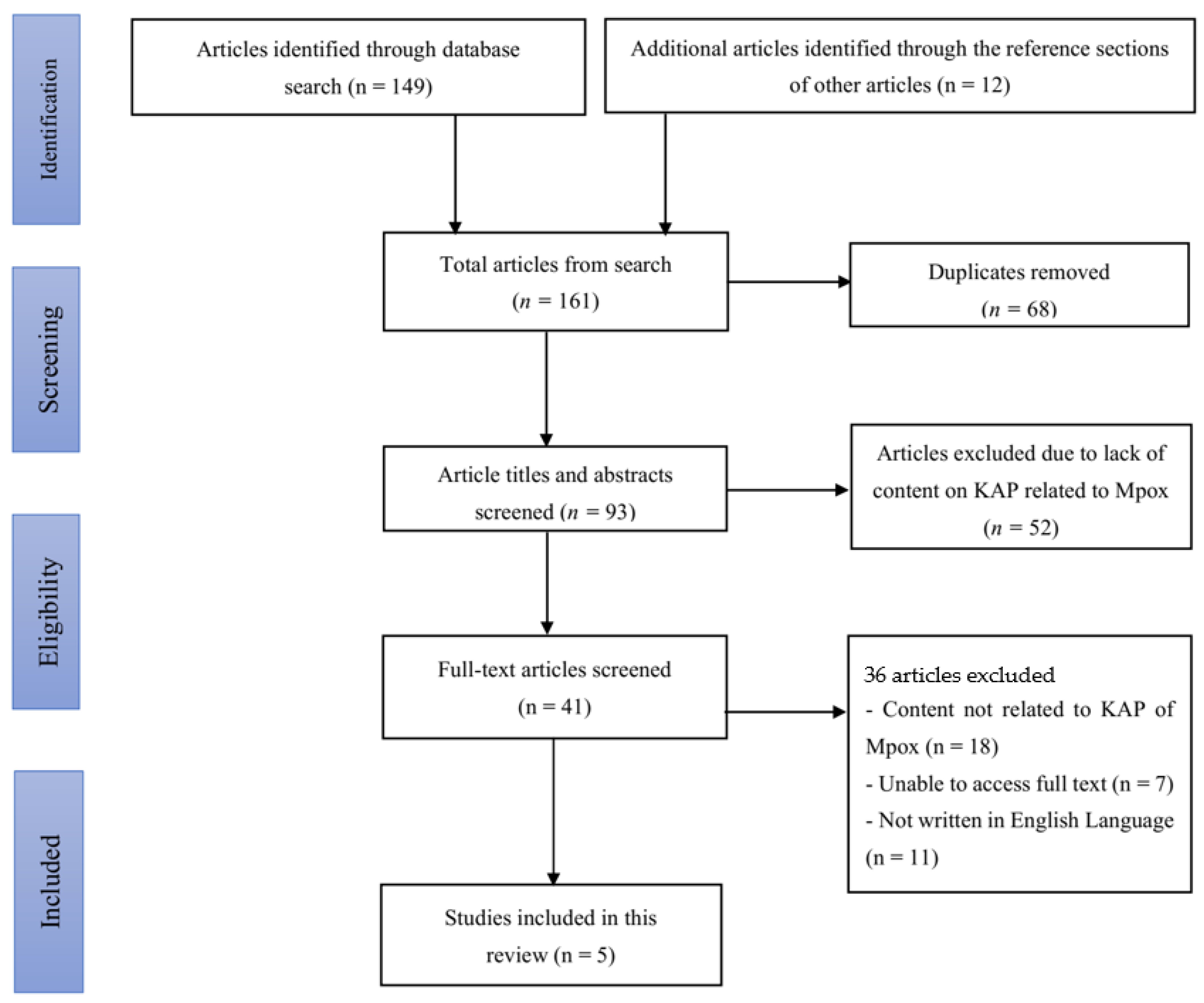
For this review, we used the Preferred Reporting Items for Systematic Reviews and Meta-Analyses (PRISMA) guidelines (Figure 1) [22]. A review protocol was developed before implementation to describe the objectives, eligibility criteria, search strategy, article selection, data extraction, and synthesis. A comprehensive literature search was performed in PubMed, Embase, and the Cochrane Library databases. Additional records were identified by manually screening the reference lists of included studies and relevant publications. Only peer-reviewed systematic reviews or meta-analyses published in English between 1 January 2010 and 30 October 2025 were included. The 2010 start date was chosen to ensure inclusion of pre-2022 baseline evidence, as most global outbreaks and substantial growth in the Mpox-related literature occurred following the 2022 multi-country outbreak.
The search terms used in this study were developed from Medical Subject Headings (MeSH) [23,24] and keywords extracted from the relevant Mpox and KAP literature. The search combined terms from four conceptual groups using Boolean operators (“AND” and “OR”). The search terms included a combination of Term 1, Term 2, Term 3, and Term 4 as shown in Table 1.
This approach ensured inclusion of studies focusing on how individuals or groups understand Mpox, perceive its risks, and adopt preventive or control measures. We therefore included articles that reported systematic reviews or meta-analyses evaluating KAP toward Mpox, contained a full introduction, methods, results, and discussion structure, were published in peer-reviewed journals and were also written in the English language.
We excluded studies that were narrative reviews, commentaries, or editorials; not peer-reviewed; or did not assess knowledge, attitudes, or practices towards Mpox. Two independent reviewers (NLS and DAN) screened all titles and abstracts, followed by full-text assessments to confirm eligibility. Discrepancies were resolved by discussion with two senior reviewers (YC and CA). Duplicate records were identified and removed using EndNote v.21 reference management software. Given this review design, particular attention was paid to potential overlap of primary studies across included reviews to minimize double counting. Potential overlap of primary studies across included reviews was considered during synthesis to minimize double counting.
From each included review, data were extracted into a standardized form capturing the following variables: bibliographic information (author, year, country/region), study scope and population (general population, and HCWs), methodological approach (databases searched, inclusion criteria, synthesis methods), and key findings (levels of knowledge, attitude trends, common practices, barriers, and determinants).
The initial search identified 161 records. After screening titles and abstracts, 41 articles were retained for full-text review. Following detailed eligibility assessment and removal of duplicates, 4 systematic reviews met the inclusion criteria. An additional 1 review was identified through manual search of the reference list. Data synthesis was conducted using a structured narrative and thematic approach. Findings were grouped according to population type and geographic scope, and recurring themes were identified across reviews, including knowledge levels, risk perception, preventive behaviors, determinants, and misinformation patterns. In cases of conflicting findings across reviews, differences were examined in relation to study population characteristics, outbreak period (pre- versus post-2022), and methodological quality.

3. Results

After a thorough search and screening, a total of five systematic reviews [25,26,27,28,29] were eligible and included in this study. All focused on varying aspects of knowledge, attitudes, perceptions, or practices toward Mpox among different population groups. Of the included studies, two specifically assessed knowledge and attitude [25,28], three explored knowledge, attitude, and practice/perception (KAP) [26,29], while one study focused solely on knowledge [27].
Across all studies, methodological approaches were consistent with the Preferred Reporting Items for Systematic Reviews and Meta-Analyses (PRISMA) guidelines, and each study provided measurable indicators of awareness, perception, and preventive practices.

3.1. Healthcare Workers

A total of three systematic reviews reported exclusively on HCWs [25,26,27], examining their knowledge, attitudes, and perceptions/practices toward Mpox prevention and control. Across all HCW-focused studies, mean knowledge was 39.9%, attitude was 44.8%, and practice/perception was 40.0% (Table 2). Knowledge and attitude were generally average, but were not reflected in practice or preventive measures. Training exposure and previous experience with outbreaks were consistent predictors of better scores. Studies emphasized the need for targeted educational interventions and capacity-building programs to enhance preparedness among frontline health personnel and other stakeholders.

3.2. General Population

A total of two [28,29] studies focused on the general population (Table 3). For the general population, the mean knowledge and attitude were 39.8%, and 55.9%, respectively. Just one of the reviews assessed practice/perception on Mpox and reported that just 47.5% of respondents had a good perception of the disease. Knowledge was generally limited, though attitudes were cautiously positive, with poor translation into preventive behavior. Social media misinformation, educational level, and outbreak proximity were the main determinants of KAP performance. These findings suggest that public health communication strategies remain uneven across populations and regions, underscoring the necessity for evidence-based awareness programs to promote accurate knowledge and preventive behaviors.
Results from the reviewed articles show that both HCWs and the general population demonstrated relatively low knowledge on Mpox, although the general population exhibited slightly better attitude and practice levels compared to HCWs.

4. Discussion

This systematic review of systematic reviews synthesized evidence from five previously published reviews assessing KAP regarding Mpox across various population groups. The findings from these reviews demonstrate consistent patterns of KAP gaps [25]. Despite widespread global attention following the 2022 Mpox outbreak, the overall levels of knowledge, attitudes and preventive practice remain suboptimal in both groups, with HCWs scoring moderately higher across most dimensions.
The evidence from the reviewed studies revealed that knowledge about Mpox ranged between 26.0% and 46.7% among HCWs. This low level of awareness, even among health professionals [25,26,27], highlights an important gap in outbreak preparedness and risk communication.
Most of the reviews conducted in high-income countries such as the United States of America, Saudi Arabia, and parts of Europe [25,28,29] reported slightly higher awareness levels compared to those in middle-income countries as Jahromi et al. [25] stated that Africa recorded the lowest level of awareness (17.1%) compared to the United States of America (46.7%) and Europe (32.5%). This is likely due to differences in the surveillance systems, training programs, and early access to outbreak-related information. Differences by years of professional experience, age and sex were also reported. Knowledge levels were higher among individuals with ≥5 years of professional background and among older participants (>30 years), while younger personnel and those with less work experience demonstrated comparatively lower knowledge scores. Older and more experienced HCWs may have previously encountered emerging infectious diseases, increasing their familiarity with infection prevention protocols and public health guidance.
Misconceptions about the transmission routes of Mpox [28,29], its vaccination [27], and clinical manifestations were also noted. The rapid spread of misinformation through social media was also identified as a key challenge, consistent with experiences from previous outbreaks such as COVID-19 [30] and Ebola [31]. The findings, therefore, emphasize that while awareness campaigns have reached many professionals and the general population, knowledge depth remains inadequate. Importantly, stigma emerged as a cross-cutting theme in these reviews, which could potentially affect Mpox testing uptake, contact tracing, and outbreak containment.
Attitude scores ranged between 28.2% among HCWs and 71.9% among the general population. While the overall perception of Mpox as a serious public health threat was relatively moderate, most especially among the general population, there was hesitancy regarding vaccination, although Han et al. [27] reported that 54.0% of HCWs were willing to be vaccinated against Mpox before any further outbreaks. Attitudes toward Mpox showed similar heterogeneity by years of professional experience, age and sex. Reports showed that positive attitudes were strongly associated with prior exposure to outbreak information and training. Only two studies reported on Mpox perceptions. More studies are warranted to better understand the perceptions and practices of HCWs and the general population towards Mpox. Although these studies reported that participants expressed positive intentions, consistent behavioral change, including regular hand hygiene, avoiding risky contacts, avoiding social places, traveling or seeking early diagnosis, was infrequently reported [29]. Limited training opportunities, inadequate infection prevention resources, and misconceptions about case fatality contributed to poor compliance among HCWs. Some reviews identified critical gaps in personal protective equipment use [26] and isolation protocol adherence [28].
This review also highlights that perceived susceptibility varies widely across populations. In endemic African regions, residents were more likely to perceive Mpox as a routine, controllable illness and thus recorded low levels of attitude in some of the reviews [32] whereas in newly affected countries like China in a review by Tanashat et al. [29] 56.7% of respondents were worried about Mpox and perceived it as highly dangerous due to media amplification. Also, according to Ozih et al. [25], only 10% of HCWs in Southern Italy believed that Mpox could be prevented.
Such perception heterogeneity has critical implications for designing risk communication tailored to the cultural context. Furthermore, most reviews agree that effective attitude change is linked to trust in government health systems and previous experiences with other epidemics, such as COVID-19 [33] and smallpox [32]. Therefore, building community trust and transparent information sharing should remain a cornerstone of future outbreak response.
This synthesis underscores a global need for structured, context-sensitive health education interventions targeting both healthcare providers and communities [34]. Integrating Mpox content into medical and public health curricula could enhance long-term capacity. Public health authorities should prioritize evidence-based risk communication using trusted channels, periodic knowledge, attitudes, and practice assessments to monitor progress, and cross-regional collaboration to harmonize educational messaging.
This systematic review of systematic reviews provides a comprehensive synthesis of global evidence and highlights the persistent gaps in Mpox-related KAP. However, this study has the following limitations. First, there is a risk of publication bias, as systematic reviews reporting significant KAP gaps may be more likely to be published than those reporting neutral findings. Second, substantial heterogeneity exists in how the data was synthesized. Third, temporal bias may influence findings, as most included reviews were conducted after the 2022 outbreak; awareness and attitudes during this period may be inflated compared to true baseline pre-outbreak levels. Fourth, there is a lack of stratification by professional categories among healthcare workers (physicians, nurses, pharmacists, laboratory staff, and other professionals) in all the included reviews. KAPs may differ by HCW category. Despite these limitations, the triangulated evidence provides strong support for reinforcing public health education and integrating outbreak literacy into existing preparedness frameworks.
In conclusion, although global awareness of Mpox has improved since the 2022 outbreak, studies indicate that significant deficiencies persist in both depth of knowledge and preventive practices among the general population and HCWs. HCWs exhibit relatively low awareness and behavioral gaps that could undermine outbreak containment. Addressing the knowledge–attitude–practice gap requires not only information dissemination but also structural support, stigma reduction strategies, and integration of behavioral theory into outbreak preparedness planning. Thus, improving educational programs, structured evaluation frameworks and awareness about Mpox among HCWs is critical to ensure effective diagnosis, management, and mitigating future outbreaks.

Author Contributions

Conceptualization, C.A. and Y.-M.C.; methodology, D.A.N. and N.L.S.; formal analysis, C.A., D.A.N., N.L.S. and Y.-M.C.; data curation, C.A., D.A.N., N.L.S. and Y.-M.C.; writing—original draft preparation, C.A.; writing—review and editing, C.A., D.A.N., N.L.S. and Y.-M.C.; supervision, C.A.; project administration, N.L.S. All authors have read and agreed to the published version of the manuscript.

Funding

This research received no external funding.

Institutional Review Board Statement

Not applicable.

Informed Consent Statement

Not applicable.

Data Availability Statement

The original data presented in this study are openly available online.

Acknowledgments

We are grateful to Lindu Benard, Tafon Princewill Sa’am and Abinwi Sirri Iisey Chifen for their input during this work.

Conflicts of Interest

The authors declare no conflict of interest.

References

  1. Zinnah, M.A.; Uddin, M.B.; Hasan, T.; Das, S.; Khatun, F.; Hasan, M.H.; Udonsom, R.; Rahman, M.M.; Ashour, H.M. The Re-Emergence of Mpox: Old Illness, Modern Challenges. Biomedicines 2024, 12, 1457. [Google Scholar] [CrossRef]
  2. Isidro, J.; Borges, V.; Pinto, M.; Sobral, D.; Santos, J.D.; Nunes, A.; Mixão, V.; Ferreira, R.; Santos, D.; Duarte, S.; et al. Phylogenomic characterization and signs of microevolution in the 2022 multi-country outbreak of monkeypox virus. Nat. Med. 2022, 28, 1569–1572. [Google Scholar] [CrossRef] [PubMed]
  3. Rasizadeh, R.; Shamekh, A.; Shiri Aghbash, P.; Bannazadeh Baghi, H. Comparison of human monkeypox, chickenpox and smallpox: A comprehensive review of pathology and dermatological manifestations. Curr. Med. Res. Opin. 2023, 39, 751–760. [Google Scholar] [CrossRef]
  4. Olawade, D.B.; Wada, O.Z.; Fidelis, S.C.; Oluwole, O.S.; Alisi, C.S.; Orimabuyaku, N.F.; Clement David-Olawade, A. Strengthening Africa’s response to Mpox (monkeypox): Insights from historical outbreaks and the present global spread. Sci. One Health 2024, 3, 100085. [Google Scholar] [CrossRef]
  5. Ramírez-Soto, M.C. Monkeypox Outbreak in Peru. Medicina 2023, 59, 1096. [Google Scholar] [CrossRef]
  6. Wickramasinghe, M.; Weerasekera, M.; Perera, N. Mpox outbreak in previously non-endemic countries: A review on impact on Asia. Clin. Pathol. 2024, 17, 2632010X241300679. [Google Scholar] [CrossRef]
  7. Orviz, E.; Negredo, A.; Ayerdi, O.; Vázquez, A.; Muñoz-Gomez, A.; Monzón, S.; Clavo, P.; Zaballos, A.; Vera, M.; Sánchez, P.; et al. Monkeypox outbreak in Madrid (Spain): Clinical and virological aspects. J. Infect. 2022, 85, 412–417. [Google Scholar] [CrossRef] [PubMed]
  8. Chisompola, D.; Nzobokela, J.; Chinyante, E.; Chidima, N.; Chipipa, A.; Nyirenda, C.; Phiri, E.; Kalyapu, L.; Masenga, S.K. Knowledge, attitudes, and practices toward Mpox among laboratory professionals in Zambia: A cross-sectional study. PLoS ONE 2025, 20, e0335365. [Google Scholar] [CrossRef]
  9. Sumo, L.; Ntonifor, N.H.; Lenou-Nanga, C.G.; Chenkumo-Kengmoni, N.; Amana-Bokagne, V.T.; Awah, C.G.; Niamsi-Emalio, Y.; Nana-Djeunga, H.C. An integrated approach to assess knowledge/perceptions and attitudes/practices (KAP) regarding major neglected tropical diseases endemic in the Mbengwi Health District, North West Region, Cameroon. J. Epidemiol. Glob. Health 2021, 11, 426–434. [Google Scholar] [CrossRef] [PubMed]
  10. Pal, M.; Mahal, A.; Mohapatra, R.K.; Obaidullah, A.J.; Sahoo, R.N.; Pattnaik, G.; Pattanaik, S.; Mishra, S.; Aljeldah, M.; Alissa, M.; et al. Deep and transfer learning approaches for automated early detection of monkeypox (Mpox) alongside other similar skin lesions and their classification. ACS Omega 2023, 8, 31747–31757. [Google Scholar] [CrossRef]
  11. Temsah, M.H.; Aljamaan, F.; Alenezi, S.; Abouammoh, N.; Alhasan, K.; Dasuqi, S.A.; Alhaboob, A.; Hamad, M.A.; Halwani, R.; Alrabiaah, A.; et al. Monkeypox disease (Mpox) perceptions among HCWs versus general population during the first month of the WHO alert: Cross-sectional survey in Saudi Arabia. Vaccines 2022, 10, 2071. [Google Scholar] [CrossRef] [PubMed]
  12. Abd ElHafeez, S.; Gebreal, A.; Khalil, M.A.; Youssef, N.; Sallam, M.; Elshabrawy, A.; Abdel-Rahman, S.; Mahboob, A.S.; Yazbek, S.; Elbanna, E.H.; et al. Assessing disparities in medical students’ knowledge and attitude about monkeypox: A cross-sectional study of 27 countries across three continents. Front. Public Health 2023, 11, 1192542. [Google Scholar] [CrossRef]
  13. Islam, M.A.; Sathi, N.J.; Setu, S.P.; Nahar, M.T.; Khan, M.N.A.; Hasan, M.; Khan, A.; Hossen, M.M.; Nibir, M.M.; Khan, B.; et al. Knowledge, attitude, and practice of university students towards monkeypox in Bangladesh. PLoS ONE 2023, 18, e0287407. [Google Scholar] [CrossRef] [PubMed]
  14. Zheng, M.; Chen, W.; Qian, X.; Tao, R.; Ma, L.; Zhou, F.; Zhu, Z.; Yao, Y.; Yang, G. Awareness of mpox-related knowledge among men who have sex with men in China. BMC Public Health 2023, 23, 600. [Google Scholar] [CrossRef] [PubMed]
  15. Amer, F.A.; Nofal, H.A.; Gebriel, M.G.; Bedawy, A.M.; Allam, A.A.; Khalil, H.E.S.; Elahmady, M.; Nofal, H.; Saeed, M.A.; Shaltout, S.W.; et al. Grasping knowledge, attitude, and perception towards monkeypox among HCWs and medical students: An Egyptian cross-sectional study. Front. Cell. Infect. Microbiol. 2024, 14, 1339352. [Google Scholar] [CrossRef]
  16. Jamil, H.; Idrees, M.; Idrees, K.; Tariq, W.; Sayyeda, Q.; Asghar, M.S.; Tahir, M.J.; Akram, S.; Ullah, K.; Ahmed, A.; et al. Socio-demographic determinants of monkeypox virus preventive behavior: A cross-sectional study in Pakistan. PLoS ONE 2023, 18, e0279952. [Google Scholar] [CrossRef]
  17. Banna, M.H.A.; Seidu, A.A.; Mallick, T.; Rahman, N.; Sultana, M.S.; Mouly, H.A.; Alshahrani, N.Z.; Akter, N.; Mahmud, T.; Hossain, S.; et al. Knowledge regarding human monkeypox among undergraduate and postgraduate students in Bangladesh: An online-based cross-sectional study. PLoS ONE 2024, 19, e0315677. [Google Scholar] [CrossRef]
  18. Ayele, H.S.; Mengesha, A.K.; Geremew, G.W.; Lakew, A.A.; Alemayehu, T.T.; Getachew, D.; Beyna, A.T. Assessment of knowledge, attitude, and associated factors towards monkeypox infection among residents at Bahir Dar city, Northwest Ethiopia: A community-based cross-sectional study. SAGE Open Nurs. 2025, 11, 23779608251352392. [Google Scholar] [CrossRef]
  19. Pamukçu, E.; Bayir, T.; Uysal, S. Global spatial clustering of mpox outbreaks: A geospatial analysis from 2022 to 2024. Int. J. Environ. Health Res. 2025, 1–10. [Google Scholar] [CrossRef]
  20. Parums, D.V. Editorial: Reasons for increasing global concerns for the spread of Mpox. Med. Sci. Monit. 2024, 30, e946343. [Google Scholar] [CrossRef]
  21. Mercy, K.; Tibebu, B.; Fallah, M.; Faria, N.R.; Ndembi, N.; Tebeje, Y.K. Mpox continues to spread in Africa and threatens global health security. Nat. Med. 2024, 30, 1225–1226. [Google Scholar] [CrossRef]
  22. Parums, D.V. Editorial: Review articles, systematic reviews, meta-analysis, and the updated Preferred Reporting Items for Systematic Reviews and Meta-Analyses (PRISMA) 2020 guidelines. Med. Sci. Monit. 2021, 27, e934475. [Google Scholar] [CrossRef]
  23. Baumann, N. How to use the medical subject headings (MeSH). Int. J. Clin. Pract. 2016, 70, 171–174. [Google Scholar] [CrossRef]
  24. Liu, Y.-H.; Nina, W. Evaluating the impact of MeSH (Medical Subject Headings) terms on different types of searchers. Inf. Process. Manag. 2017, 53, 851–870. [Google Scholar] [CrossRef]
  25. Sotoodeh Jahromi, A.; Jokar, M.; Sharifi, N.; Kashkooli, S.; Rahmanian, K.; Rahmanian, V. Global knowledge and attitudes towards mpox (monkeypox) among HCWs: A systematic review and meta-analysis. Int. Health 2024, 16, 487–498. [Google Scholar] [CrossRef] [PubMed]
  26. Qzih, E.S.; Alhusamiah, B.K.; Haddad, R.H.; Mohammad, I.B.; Horany, L.; Al-ja’freh, S.; Hani, S.B. Evaluation of knowledge, attitude, and perception among HCWs towards monkeypox and its vaccines: A systematic review. Microbes Infect. Dis. 2025, 6, 2. [Google Scholar]
  27. Han, Y.; Wang, X.; Li, X.; Zhong, Z. The willingness of HCWs to be vaccinated against monkeypox and their knowledge about monkeypox: A systematic review and meta-analysis. Heliyon 2024, 10, e15. [Google Scholar]
  28. León-Figueroa, D.A.; Barboza, J.J.; Siddiq, A.; Sah, R.; Valladares-Garrido, M.J.; Rodriguez-Morales, A.J. Knowledge and attitude towards mpox: Systematic review and meta-analysis. PLoS ONE 2024, 19, e0308478. [Google Scholar] [CrossRef]
  29. Tanashat, M.; Altobaishat, O.; Sharaf, A.; Moawad, M.H.E.D.; Al-Jafari, M.; Nashwan, A.J. Assessment of the knowledge, attitude, and perception of the world’s population towards monkeypox and its vaccines: A systematic review and descriptive analysis of cross-sectional studies. Vaccine X 2024, 20, 100527. [Google Scholar] [CrossRef] [PubMed]
  30. Bin Naeem, S.; Kamel Boulos, M.N. COVID-19 misinformation online and health literacy: A brief overview. Int. J. Environ. Res. Public Health 2021, 18, 8091. [Google Scholar] [CrossRef]
  31. Wang, Y.; McKee, M.; Torbica, A.; Stuckler, D. Systematic literature review on the spread of health-related misinformation on social media. Soc. Sci. Med. 2019, 240, 112552. [Google Scholar] [CrossRef] [PubMed]
  32. Kiang, K.M.; Krathwohl, M.D. Rates and risks of transmission of smallpox and mechanisms of prevention. J. Lab. Clin. Med. 2003, 142, 229–238. [Google Scholar] [CrossRef]
  33. Loss, J.; Boklage, E.; Jordan, S.; Jenny, M.A.; Weishaar, H.; El Bcheraoui, C. Risk communication in containing the COVID-19 pandemic: Challenges and promising approaches. Bundesgesundheitsblatt Gesundheitsforschung Gesundheitsschutz 2021, 64, 294–303. [Google Scholar] [CrossRef] [PubMed]
  34. Timm, A.; Maindal, H.T.; Hillersdal, L. Co-creating with families and healthcare professionals: Shaping a context-sensitive health promotion intervention ‘Face-it’. Health Promot. Int. 2022, 37, ii60–ii72. [Google Scholar] [CrossRef] [PubMed]
Figure 1. PRISMA flowchart of the search strategy, inclusion and exclusion screening, and accepted studies.
Zoonoticdis 06 00012 g001
Table 1. Search terms used for the study.
Term NumberTerm and Boolean Operator
Term 1 (Disease/Condition)Monkeypox OR Mpox OR Human monkeypox virus OR Orthopxvirus infections
AND
Term 2 (Knowledge, Attitude and Practice)Knowledge OR Awareness OR Perception OR Attitudes, OR Beliefs
AND
Term 3 (Behavioral Aspect)Practices OR Behavior OR Prevention OR Health education OR Risk communication
AND
Term 4 (Methodology)Review OR Systematic review OR Meta-analysis.
Table 2. Summary of knowledge, attitude, and practice/perception toward Mpox among healthcare workers.
Author and YearPublication Period for Articles UsedFindings
KnowledgeAttitudePractice/Perception
Jahromi et al., 2024
[25]
Between May 2022 and August 2023.The overall pooled estimate for good knowledge of Mpox among HCWs was 26.0% (95% CI 17.8 to 34.2). Stratifying by years of experience, knowledge was 34.8% (95% CI 24.1 to 45.6) among HCWs with <5 years of work experience and 41.6% (95% CI 33.1 to 50.0) among individuals possessing > 5 years of professional background. Also, knowledge was 27.8% (95% CI 22.0 to 35.5) in personnel < 30 years of age and 44.4% (95% CI 32.4 to 56.4) in individuals > 30 years of age. By sex, the estimate for good knowledge for men was 34.5% [95% CI 26.1 to 42.8] and for women was 35.8% [95% CI 28.8 to 42.9]. In addition, the level of knowledge regarding Mpox among healthcare personnel in different continents was as follows: 46.7% (95% CI 42.1 to 51.2) in the USA, 32.5% (95% CI 27.0 to 38.0) in Europe, 26.1% (95% CI 18.1 to 34) in Asia and 17.1% (95% CI 9.0 to 25.1) in AfricaThe overall pooled estimate for a positive attitude towards Mpox was 34.6% (95% CI 19.0 to 50.2). The attitude estimate among personnel with <5 years of work experience was 57.4% (95% CI 27.4 to 87.7), while it was 62.2% (95% CI 33.2 to 91.1) in those with ≥5 years of experience. The positive attitude estimates among personnel < 30 years of age was 45.5% (95% CI 14.0 to 76.9), while it was 54.2% (95% CI 22.5 to 85.8) in those ≥ 30 years of age. By sex, the positive attitude for men was 48.6% (95% CI 12.0 to 85.1) and for women, 50.6% (95% CI 17.4 to 83.9). A good attitude towards Mpox among healthcare personnel in Europe was reported at 41.7% (95% CI 36.0 to 47.4), while in Asia it was 28.2% (95% CI 18.0 to 38.5)The article does not report on estimates of practice or perception.
Qzih et al., 2025
[26]
Between 2020 and 2024.The levels of knowledge among the HCWs were analyzed thematically, focusing on whether the participants demonstrated good, fair, or poor knowledge levels regarding. Overall, no consistent level of knowledge was reported; however, HCW showed adequate knowledge levels about MpoxA positive attitude was expressed by a comparatively higher proportion of participants. HCWs with postgraduate education expressed more confidence in monkeypox management than those with bachelor’s degrees. Similarly, physicians had considerably more positive attitudes towards monkeypox compared to other HCWs, like nurses.The study noted a mix of positive and negative perceptions towards Mpox.
Han et al., 2024
[27]
All articles published before 25 May 2024The results showed only 40.0% (95% CI: 29.0–50.0) of the HCWs had good knowledge of Mpox.The article does not report on estimates of attitudeThe article does not report on estimates of practice or perception.
Nota Bene: Values reflect estimates reported in included systematic reviews and were not pooled in this study.
Table 3. Summary of knowledge, attitude, and practice/perception toward Mpox among the general population.
Author and YearPublication Period for Articles UsedMain Findings
Knowledge
(%)
Attitude
(%)
Practices/Perception (%)
León-Figueroa et al., 2024
[28]
Between 2022 and 2023The study showed an overall good knowledge about Mpox of 33.0% (95% CI: 22.0–45.0%).The estimated overall positive attitude towards Mpox was 40.0% (95% CI: 19.0–62.0%).The article does not report on estimates of practice or perception.
Tanashat et al., 2024
[29]
Between 2022 and 2023Among the studies included, 46.6% were reported to have good knowledge, while 53.4% were reported to have poor knowledge about Mpox.Overall, 71.9% reported a good attitude, while 28.1% had a bad attitude towards Mpox.Perception of risk towards Mpox was and 40.0% reported to have a perception of risk towards Mpox.
Nota Bene: Values reflect estimates reported in included systematic reviews and were not pooled in this study.
Disclaimer/Publisher’s Note: The statements, opinions and data contained in all publications are solely those of the individual author(s) and contributor(s) and not of MDPI and/or the editor(s). MDPI and/or the editor(s) disclaim responsibility for any injury to people or property resulting from any ideas, methods, instructions or products referred to in the content.