Article

Chemical Composition, Antibacterial, and Antioxidant Activities of L. angustifolia Essential Oil Against Human Pathogenic Clinical Bacterial Isolates


1
Department of Biological Sciences, Beirut Arab University, Beirut P.O. Box 11-5020, Lebanon
2
Department of Biological Sciences, Beirut Arab University, Tripoli P.O. Box 11-5020, Lebanon
3
Physical Sciences Department, Lebanese American University, Beirut P.O. Box 13-5053, Lebanon
4
Department of Biochemistry & Molecular Genetics, American University of Beirut, Beirut P.O. Box 11-0236, Lebanon
*
Author to whom correspondence should be addressed.
Bacteria 2026, 5(2), 33; https://doi.org/10.3390/bacteria5020033 (registering DOI)
Submission received: 23 March 2026 / Revised: 4 June 2026 / Accepted: 5 June 2026 / Published: 10 June 2026

Abstract

L. angustifolia is a perennial shrub native to the Mediterranean region with multiple medicinal properties. In this study, we report on the chemical composition of L. angustifolia essential oil (LEO), its antibacterial, antibiofilm, and antioxidant activities against ten clinical isolates. Chemical constituents of LEO were identified using Gas Chromatography-Mass Spectrometry (GC–MS). Its antibacterial activity was evaluated in vitro against Gram-positive and Gram-negative bacteria using disk diffusion and broth microdilution methods. A growth inhibition assay was performed to determine the bacterial growth spectrophotometrically. The antibiofilm activity was assessed using a Crystal Violet assay. Finally, the activities of oxidative stress indicators, including Superoxide dismutase (SOD) and Catalase (CAT), were evaluated. GC–MS findings of the essential oil revealed the predominance of Linalool as the major compound. Antimicrobial tests demonstrated activity against Acetobacter aceti, Acinetobacter baumannii, Enterococcus faecium, Escherichia coli, Methicillin-resistant Staphylococcus aureus, Proteus vulgaris, Klebsiella pneumonia, Staphylococcus aureus, Staphylococcus haemolyticus and Stenotrophomonas maltophilia. Furthermore, LEO modulated bacterial growth over time, inhibited biofilm formation and eradicated pre-formed ones. Additionally, LEO significantly decreased the activities of the antioxidant enzymes SOD and CAT. Our findings demonstrated the therapeutic potential of LEO against pathogenic strains and broad antibacterial efficacy.

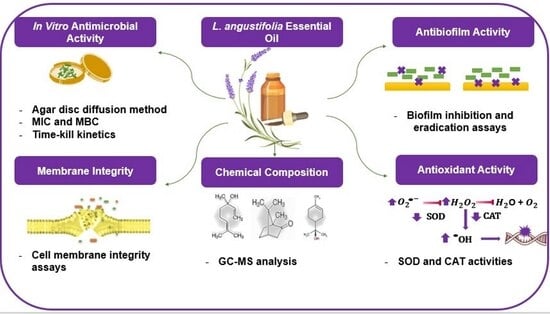
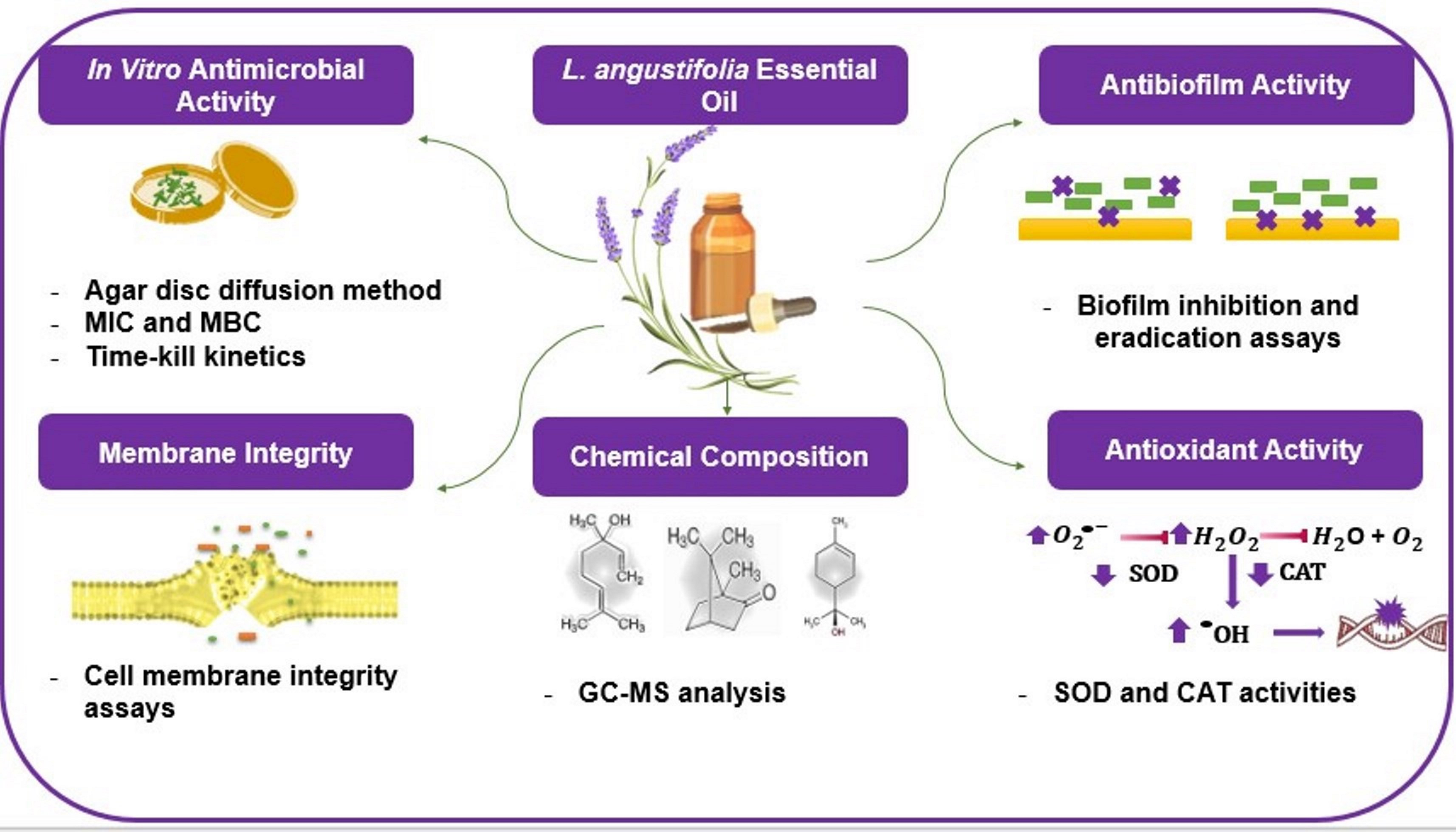
Graphical Abstract

1. Introduction

Although the discovery of antibiotics, “the magic bullet”, saved millions of lives from bacterial infections, their misuse has led to the emergence of antimicrobial resistance. The World Health Organization (WHO) has classified antimicrobial resistance as one of the three major public health threats [1]. The urgent need to address resistant bacteria has encouraged scientists to search for new antimicrobial agents with potent activity and minimal side effects [2].
In traditional medicine, plants have been used to treat serious diseases. Today, the increased interest in herbal medicine is attributed to its availability, efficiency, and low cost [3]. According to the WHO, approximately 80% of the world’s population relies on herbal remedies for medical care [4]. Their therapeutic efficacy is due to the presence of primary metabolites (PMs) involved in growth and cellular functions and secondary metabolites (SMs), including tannins, terpenoids, alkaloids, and flavonoids that protect the plant against pathogenic infections [4,5,6]. SMs are responsible for antimicrobial, antioxidative, anti-inflammatory, and antiviral activities [5].
The Lavandula genus, comprising 39 species, is a well-known medicinal plant belonging to the plant family Lamiaceae that is rich in essential oils [6]. Different extracts of Lavandula species were used worldwide in traditional medicine for treating common ailments [7]. L. angustifolia exhibits several biological activities, including antifungal, antibacterial, anti-inflammatory, antiseptic, analgesic and cytotoxic properties [8,9].
The biological activities of L. angustifolia are attributed to its chemical profile. Recent studies have expanded the antibacterial activity of its extracts and essential oils. Several bacteria (E. coli, Klebsiella oxytoca, Pseudomonas aeruginosa, Salmonella enteritidis, Yersinia enterocolitica) and fungi (Candida albicans, Candida glabrata, Candida tropicalis, Cryptococcus neoformans, Saprochaete capitate) were inhibited by LEO cultivated in Croatia [10]. The antibacterial potential of LEO against Staphylococcus species in a hospital environment was also investigated [11]. In combination with conventional antibiotics, LEO demonstrated synergistic activity against multidrug-resistant E. coli [9]. Another study highlighted the potential of LEO combined with meropenem to reduce the growth of carbapenemase-producing K. pneumoniae [12]. The antibacterial activity of LEO is driven by its ability to destabilize bacterial cell membranes, increase reactive oxygen species (ROS), elevate lipid peroxidation, and alter protein expression [13,14].
In this context, this study aims to investigate the chemical composition of LEO harvested in Lebanon and to evaluate its antibacterial and antioxidant activities against pathogenic bacteria.

2. Materials and Methods

2.1. Chemicals

The following chemicals and reagents were purchased as indicated: (a) Sigma-Aldrich (St. Louis, MO, USA): bovine serum albumin, phosphoric acid (85%), anhydrous sodium phosphate dibasic (Na2HPO4), and sodium phosphate monobasic (NaH2PO4); (b) Fisher Scientific (Ottawa, ON, Canada): Coomassie brilliant blueG-250, dimethyl sulfoxide (DMSO), hydrogen peroxide (H2O2), potassium iodide, and Tris base; (c) HiMedia (Mumbai, India): Mueller-Hinton agar and tryptic soy agar (TSA); (d) Super Chem (Kishangarh, India): crystal violet; (e) Oxoid (Basingstoke, UK): nutrient broth; (f) Amresco (Solon, OH, USA): riboflavin; and (g) Roche Diagnostics (Rotkreuz, Switzerland): phenylmethylsulfonyl fluoride (PMSF).

2.2. Essential Oil

LEO extracted by hydro-distillation of lavender buds and stems was purchased from Lavender Mine, located in Al-Shouf Biosphere Reserve in the Barouk Mountain, Lebanon (longitude 33.7430° N East, and latitude 35.7269° North).

2.3. Essential Oil Analysis

The chemical analysis of LEO was conducted using GC-MS equipped with an Agilent DB-5MS column (30 m × 0.25 mm, film thickness of 0.2 μm). Helium was used as carrier gas at a flow rate of 1 mL/min. Samples were run in dichloromethane with a dilution ratio of 1:100. A 1 µL sample was injected in split mode (split ratio: 1/50). Oven temperature was programmed as follows: 40 °C (held for 3 min), increased at a rate of 5 °C/min to 100 °C, then increased to 200 °C at 8 °C/min. MS scan conditions were a transfer line interface temperature of 270 °C and an ion source temperature of 230 °C. Analytes were identified using the LabSolutions library (GCMS solution Version 4.50 SP1) with a similarity index greater than 90%. In the absence of experimental reference standards and n-alkane series for retention index (RI) calculations, component identities were further validated by cross-referencing their mass spectra and relative elution sequences with published Kovats indices from the NIST Chemistry WebBook and established phytochemical profiles for Lavandula angustifolia (ISO 3515) [15]. This dual-verification approach ensured the biological and chemical plausibility of the identified volatile constituents.

2.4. Antibacterial Activity

2.4.1. Target Organisms

The antibacterial effect of LEO was tested against the following Gram-positive bacterial strains: Enterococcus faecium, Methicillin-resistant Staphylococcus aureus, Staphylococcus aureus, Staphylococcus haemolyticus; and the Gram-negative bacteria: Acetobacter aceti, Acinetobacter baumannii, Escherichia coli, Klebsiella pneumoniae, Proteus vulgaris and Stenotrophomonas maltophilia. These clinical bacterial isolates were obtained from Mount Lebanon Hospital, Lebanon. All tested bacterial strains were maintained on agar Petri dishes at 4 °C and sub-cultured monthly. Inoculates were prepared with fresh cultures by suspending the bacteria in a suitable medium and adjusting the density to 0.5 McFarland standard (1.5 × 10⁸ CFU/mL).

2.4.2. Agar Disk Diffusion Test

A standard agar disk diffusion method was performed for the antibacterial testing. The methodology was based on EUCAST with minor modifications [16].
Fresh bacterial suspensions were prepared and standardized to 0.5 McFarland turbidity. The essential oil was diluted with 1% DMSO to achieve final concentrations of 12.5%, 25% and 50%.
100 μL of the standardized inoculum was pipetted onto Petri dishes containing Mueller-Hinton agar spread evenly using a sterile swab. A sterile filter paper disk (6 mm diameter) was filled with 20 μL of LEO component solution at the specified concentration and applied to the plates (6 mm) that were incubated at 37 °C for 24 h. Finally, the diameters of the zones of inhibition were measured. The tests were performed in triplicate and included a growth, vehicle, and positive control.
Commercial antibiotic disks were used as positive controls: ciprofloxacin (5 µg) for the evaluation of antibacterial activity of Escherichia coli, doxycycline (30 µg) for Klebsiella pneumoniae and Acinetobacter baumannii, Tigecycline (15 µg) for Enterococcus faecium, Stenotrophomonas maltophilia and Proteus vulgaris, vancomycin (30 µg) for Staphylococcus aureus, Methicillin-resistant Staphylococcus aureus, and Staphylococcus haemolyticus.

2.4.3. Determination of Minimum Inhibitory Concentration

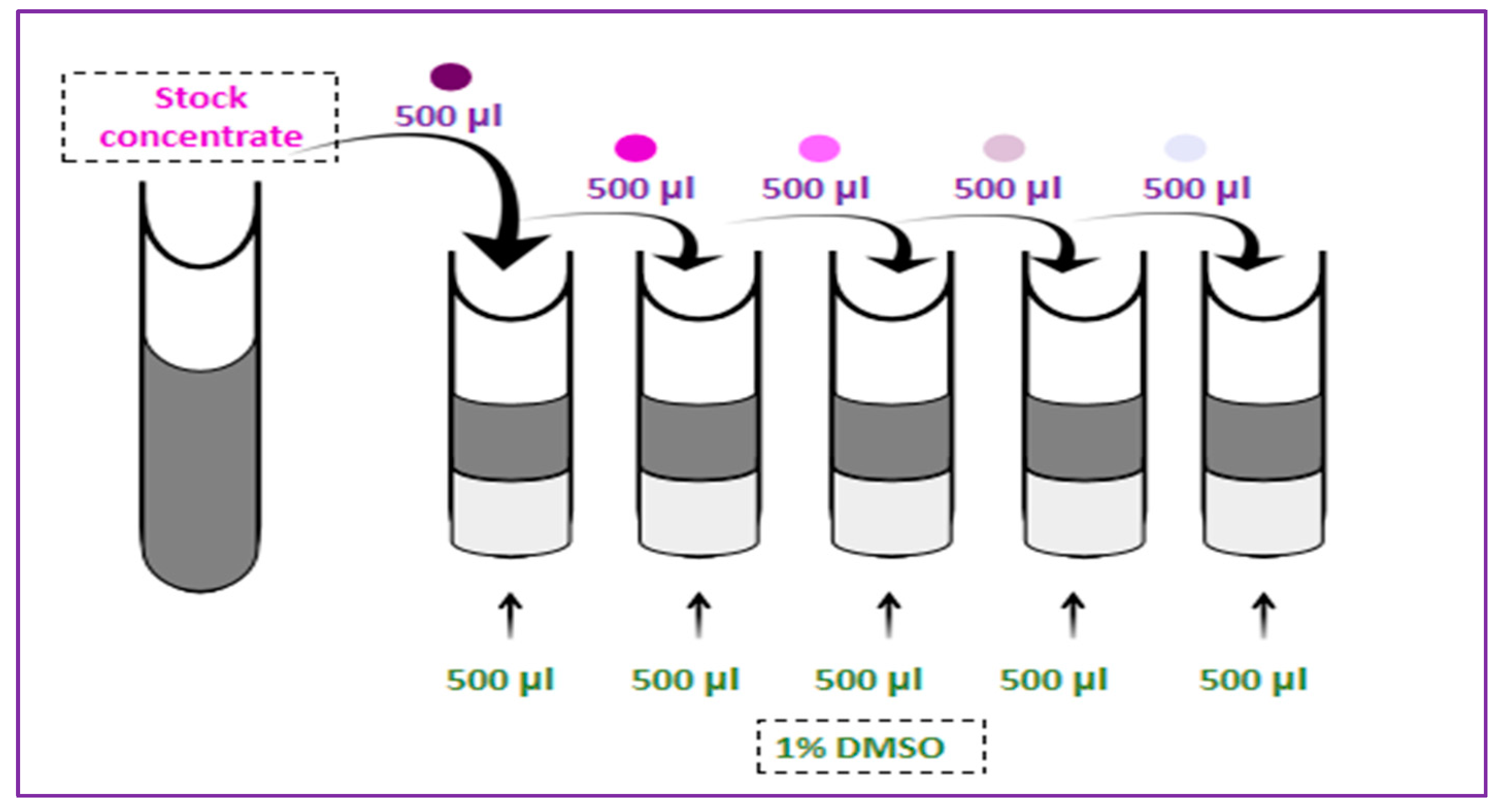
The minimum inhibitory concentration (MIC) of LEO was determined using the micro broth dilution method in accordance with Clinical and Laboratory Standards Institute (CLSI) guidelines with minor modifications [17]. The assay was performed in sterile, untreated, round-bottom 96-well microtiter plates (Corning, NY, USA) to follow consistent experimental conditions. To ensure a standardized inoculum, bacterial suspensions were prepared by suspending fresh colonies in nutrient broth, and the turbidity was adjusted spectrophotometrically to match a 0.5 McFarland standard (~1.5 × 10⁸ CFU/mL). Then, a plate of 5 µL of bacterial suspension was added to 95 µL of nutrient broth in a 96-well microtiter, resulting in an intermediate concentration of 7.5 × 10⁶ CFU/mL. Subsequently, 100 µL of LEO, serially diluted in 1% DMSO as schematically illustrated in Figure 1, was added to reach a final bacterial concentration of 3.75 × 10⁶ CFU/mL. This specific concentration, while higher than the standard CLSI recommendation, was utilized to ensure a robust and reproducible response against the volatile and hydrophobic nature of LEO components, ensuring that the reported MIC values reflect a high degree of potency against a dense bacterial population.
Plates were incubated at 37 °C for 24 h, and MIC was defined as the lowest concentration of LEO that showed no visible bacterial growth, evidenced by an OD value significantly lower than the positive control (endpoint criterion). Wells containing only nutrient broth served as a negative control, while wells containing 1% DMSO without LEO served as a vehicle control.
To determine the minimum bactericidal concentration (MBC), 10 µL from each well of the MIC assay was transferred onto Tryptic Soy Agar (TSA) plates and incubated at 37 °C for 24 h. MBC is defined as the lowest concentration of LEO that resulted in a reduction of bacterial growth by ≥99.9%. All assays were performed in technical triplicate and repeated across three independent biological replicates to ensure reproducibility.

2.5. Growth Inhibition Assay

Bacterial proliferation was monitored with the treatment of LEO at different concentrations (0.5× MIC, 1× MIC, and 2× MIC) for 24 h with respect to control groups, as previously described [18]. In each well of a 96-well plate, 90 µL of nutrient broth, 10 µL of bacterial suspension (adjusted to 0.5 McFarland standard), and 100 µL of LEO were added. The plate was then incubated at 37 °C, and bacterial growth was monitored by measuring the optical density at 600 nm using a microplate reader at designated time points: 0, 1, 3, 6, 18, and 24 h. To eliminate background interference from LEO turbidity, blank controls containing nutrient broth and LEO were used. Additionally, a negative control comprising the bacterial inoculum for every strain was included. The OD600 values of these blanks were subtracted from the experimental readings at each time point. All assays were performed in triplicate across three independent replicates.

2.6. Determination of Antibiofilm Activity

2.6.1. Inhibition of Biofilm Formation

Inhibition of biofilm formation was assessed in 96-well microtiter plates, following a previously described method by Ben Abdallah et al., with minor modifications [19]. Briefly, 100 μL of LEO at different concentrations (0.5× MIC, 1× MIC, and 2× MIC) was mixed with bacterial suspension (100 μL) in nutrient broth (adjusted to 0.5 McFarland standard) in each well. Plates were incubated at 37 °C for 24 h. Following incubation, wells were rinsed several times with distilled water to ensure the removal of planktonic cells, air-dried for 10 min, and incubated at 60 °C for 45 min. A 1% (w/v) aqueous solution of crystal violet (100 μL) was added to each well and incubated for another 15 min at room temperature. After staining, the wells were rinsed thoroughly to remove unbound dye. To solubilize the bound dye, 100 μL of 95% ethanol was added to each well. The absorbance was measured at 600 nm using a microplate reader.
The percentage of biofilm inhibition was calculated using the following equation:
% Inhibition = [(OD control − OD treated)/OD control] × 100

2.6.2. Eradication of Pre-Formed Biofilms

To evaluate the ability of LEO to eradicate pre-formed biofilms, the method described by Ben Abdallah et al. was followed, with minor modifications [19]. 100 μL of bacterial suspension (adjusted to 0.5 McFarland standard) in nutrient broth was added to each well of a 96-well round-bottom microtiter plate. Plates were incubated at 37 °C for 24 h to allow biofilm formation. After incubation, planktonic cells were gently removed, and 100 μL of LEO (at 0.5× MIC, 1× MIC, and 2× MIC concentrations) was added to each well, followed by another incubation at 37 °C for 24 h. Biofilm was quantified using the crystal violet staining method as described previously. This assay was carried out in three independent experiments.

2.7. Determination of Antioxidant Activities

Following tissue homogenization, the total protein concentration was quantified using the Bradford assay [20]. The cellular levels of SOD and CAT were determined according to the method described by Buege & Aust [21]. This test was carried out in three independent experiments.

2.8. Membrane Integrity

Bacterial membrane integrity was assessed spectrophotometrically, as previously described, with some modifications [22]. Bacterial cultures (adjusted to 0.5 McFarland standard) were treated with LEO at their corresponding MIC for 24 h at 37 °C. After incubation, treated bacterial cultures were pelleted by centrifugation (6000 rpm, for 10 min), and the supernatant was filtered through a 0.22 μm filter. Membrane leakage was quantified by measuring the optical density at 260 and 280 nm. This test was carried out in three independent experiments.

2.9. Statistical Analysis

To ensure reproducibility, all assays were conducted as three independent biological replicates, with each measurement performed in technical triplicates. Statistical analyses were carried out using SPSS version 25. All data were presented as mean ± standard deviation (SD). In addition, one-way Analysis of Variance (ANOVA) was performed to determine the significant difference between treatment groups and the control group; p < 0.05 was considered statistically significant.

3. Results

3.1. GC-MS Analysis

GC-MS analysis of LEO identified 46 different compounds listed in Table 1. Our results showed the predominance of Linalool (50.79%) as the main compound, followed by Camphor (11.59%), Terpineol (9.9%), Borneol (4.64%), linalyl acetate (4.3%), and eucalyptol (3.63%).

3.2. Antibacterial Activity of L. angustifolia Essential Oil

The antibacterial activity of LEO against both Gram-positive and Gram-negative bacterial strains was evaluated by determining the zones of inhibition and minimum inhibitory and minimum bactericidal concentrations. LEO at varying concentrations demonstrated potent antibacterial effects against all tested strains in a dose-dependent manner. Inhibition zones in Gram-positive strains ranged from 13 ± 3.61 mm to 32.5 ± 3.54 mm, indicating a high sensitivity to LEO as shown in Table 2(a). Similarly, LEO exhibited antibacterial activity against Gram-negative strains, with inhibition zones ranging from 13.02 ± 1.41 mm to 32.5 ± 3.54 mm, which are presented in Table 2(b).
MIC and MBC values of LEO were determined using the broth dilution method for each of the 10 bacterial strains. As shown in Table 3, LEO demonstrated significant bacteriostatic and bactericidal effects. MIC values ranged from 0.78% to 6.25%, while MBC values ranged from 3.12% to 25%. The MBC/MIC ratio was used to determine the mode of antibacterial action, where a ratio ≤ 4 indicates bactericidal activity and a ratio > 4 suggests bacteriostatic activity.

3.3. Growth Inhibition Assay of L. angustifolia Essential Oil

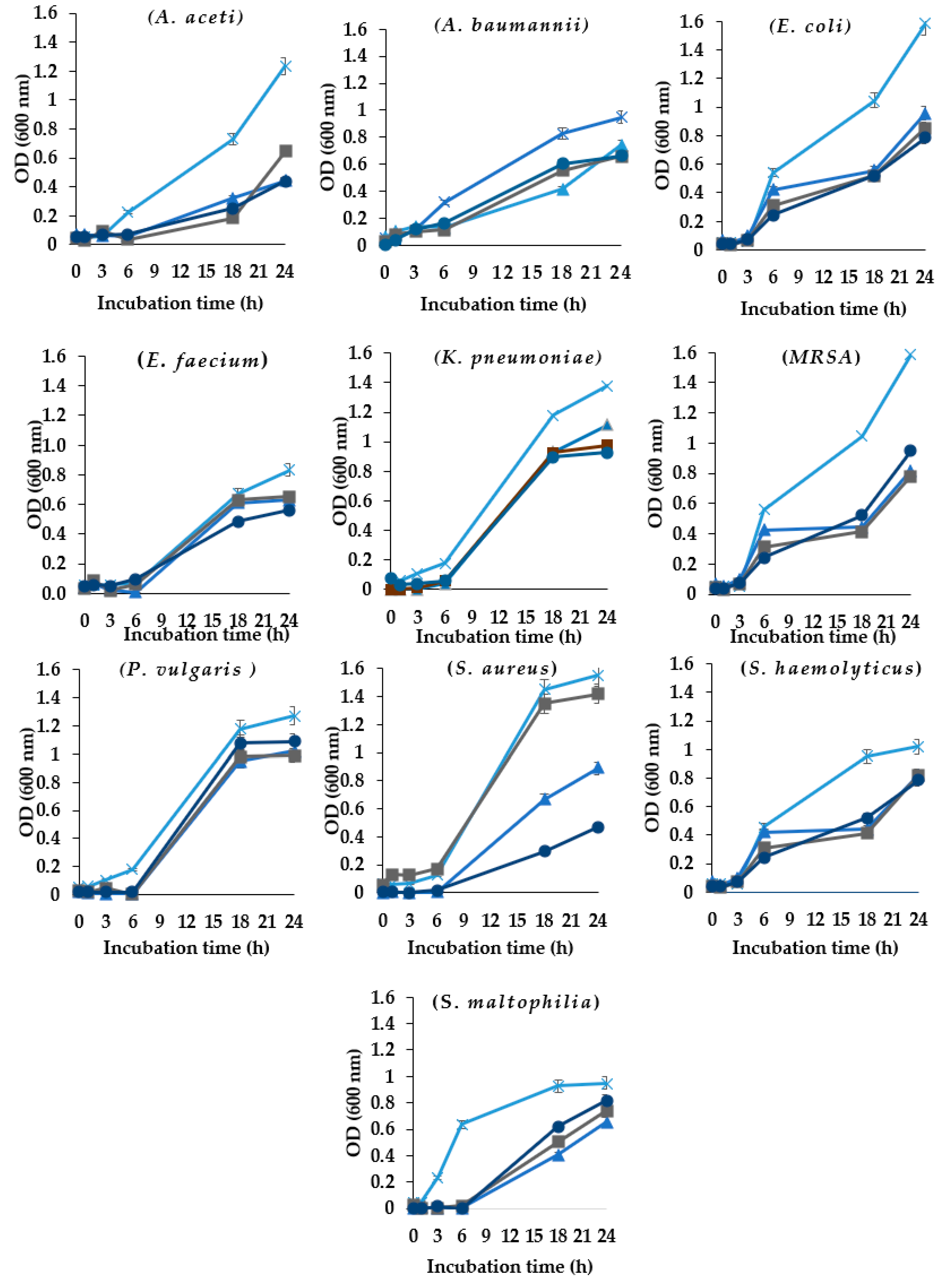
Figure 2 demonstrates the growth curves for all bacterial species. The lag phase was extended across the investigated bacteria within 3 to 6 h. Between 6 and 24 h, the rate of increase in absorbance increased in the control groups and at a lower concentration (0.5 MIC) of LEO. However, bacteria treated with higher concentrations (MIC, 2 MIC) exhibited a significant decrease in growth, suggesting the potential of LEO to inhibit bacterial growth.

3.4. Biofilm Inhibition and Eradication Activity

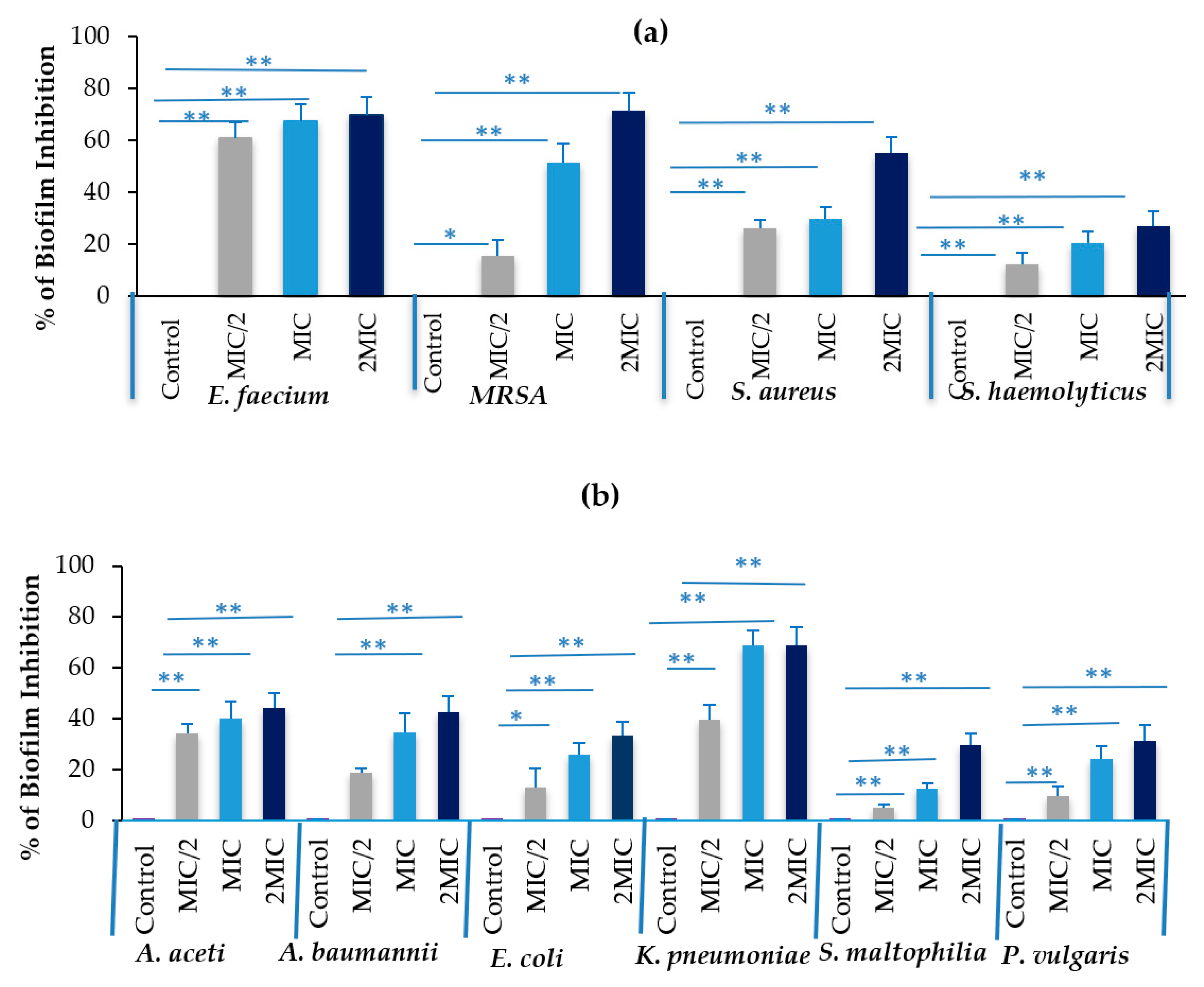
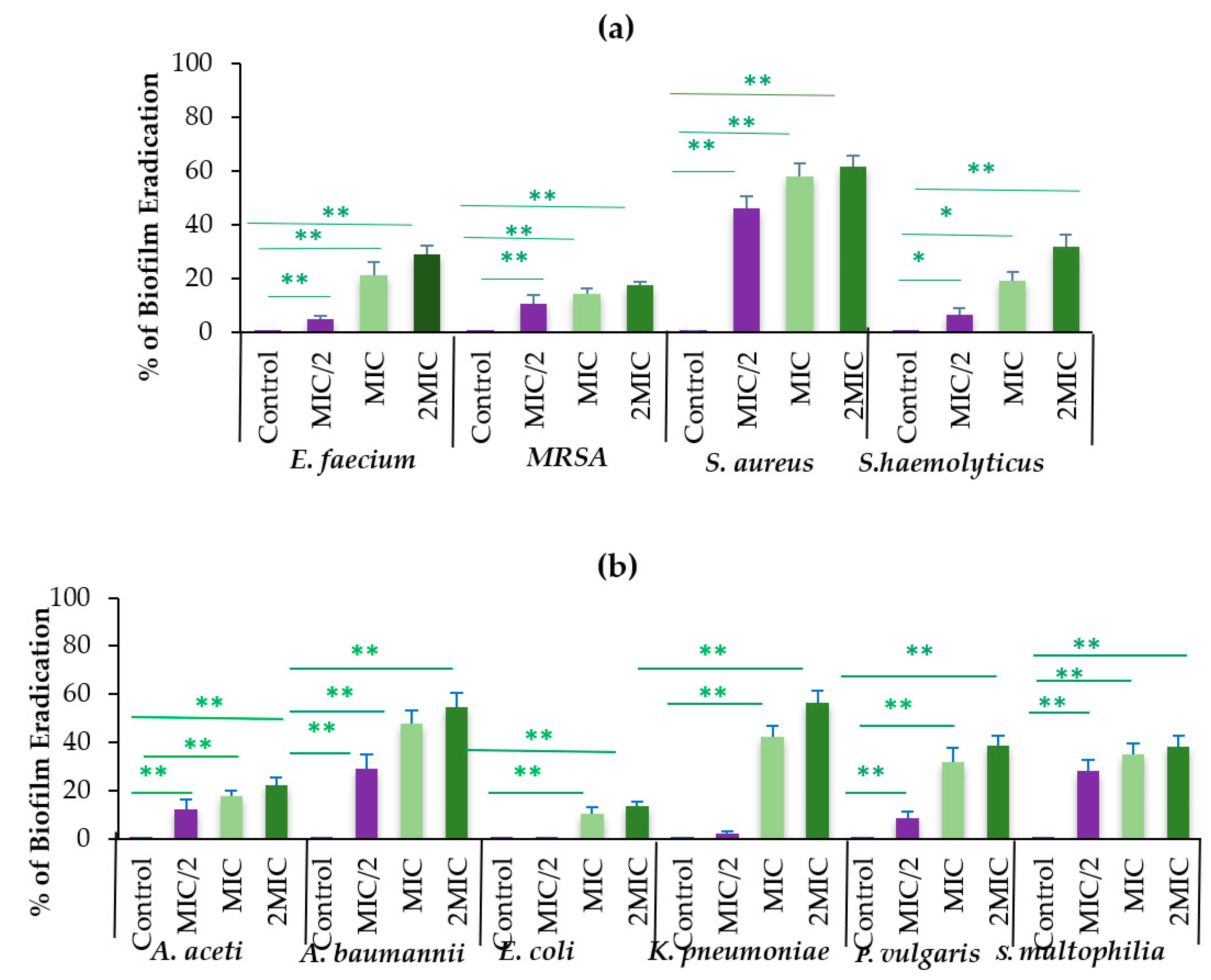
The ability of LEO to inhibit biofilm formation and to eradicate the preformed ones is shown in Figure 3 and Figure 4, respectively. The greatest inhibition of biofilm formation was observed against MRSA (71.3%) and K. pneumoniae (68.6%), and the lowest inhibition was observed on biofilm formation of S. haemolyticus (27.0%). For the dissolution of mature biofilms, S. aureus was the most sensitive (61.7%), and biofilms of E. coli recorded the lowest sensitivity (13.7%).

3.5. Effect of L. angustifolia on Bacterial Antioxidant Enzymes

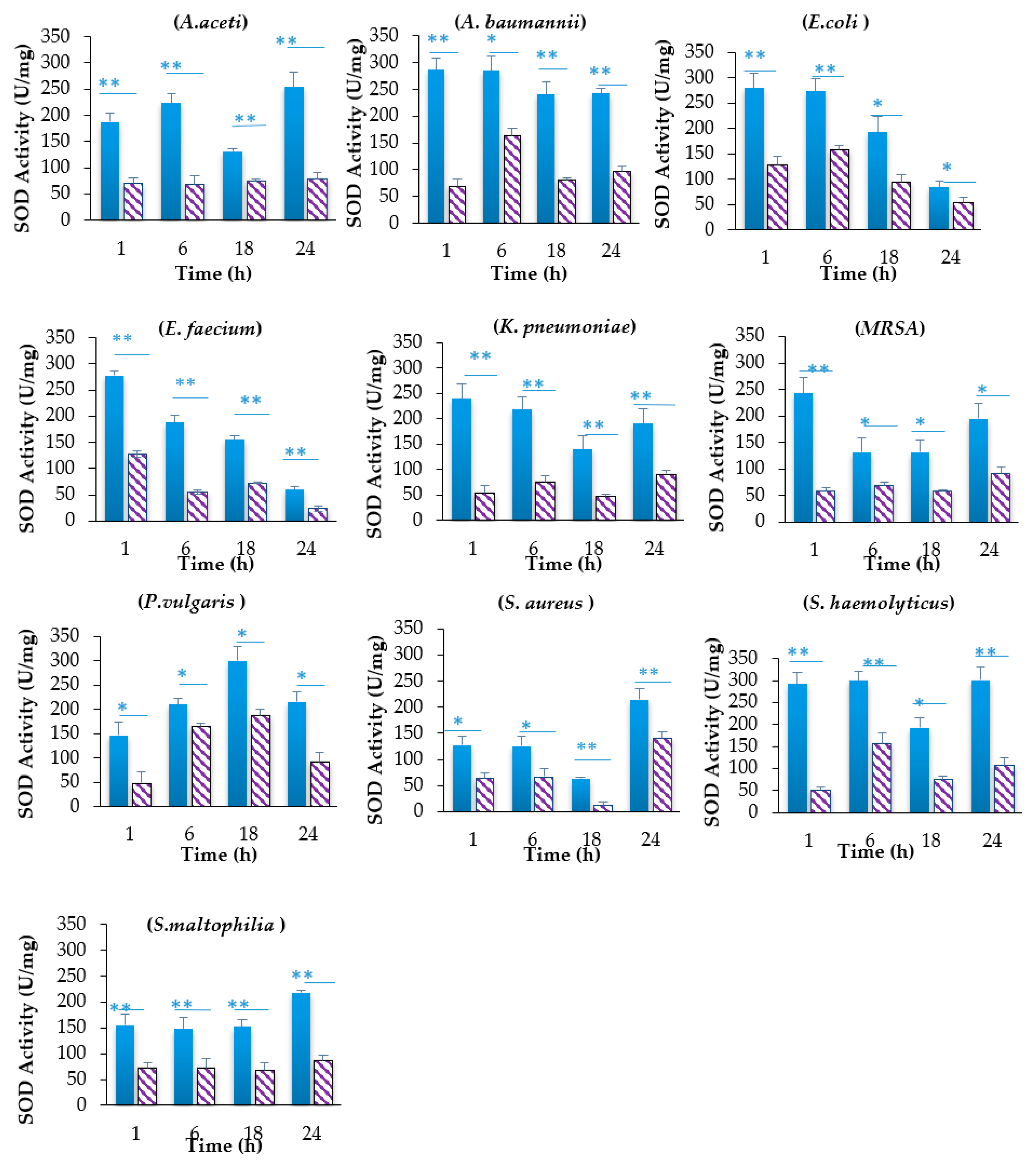
To evaluate the effect of LEO on oxidative stress, the activities of SOD and CAT were determined. As illustrated in Figure 5, a decrease in SOD activity was observed across the tested strains. S. aureus was the most sensitive, exhibiting a decrease of 4.1-fold. Among Gram-negative bacteria, S. maltophilia showed the highest sensitivity, with a 3.8-fold reduction in SOD activity.
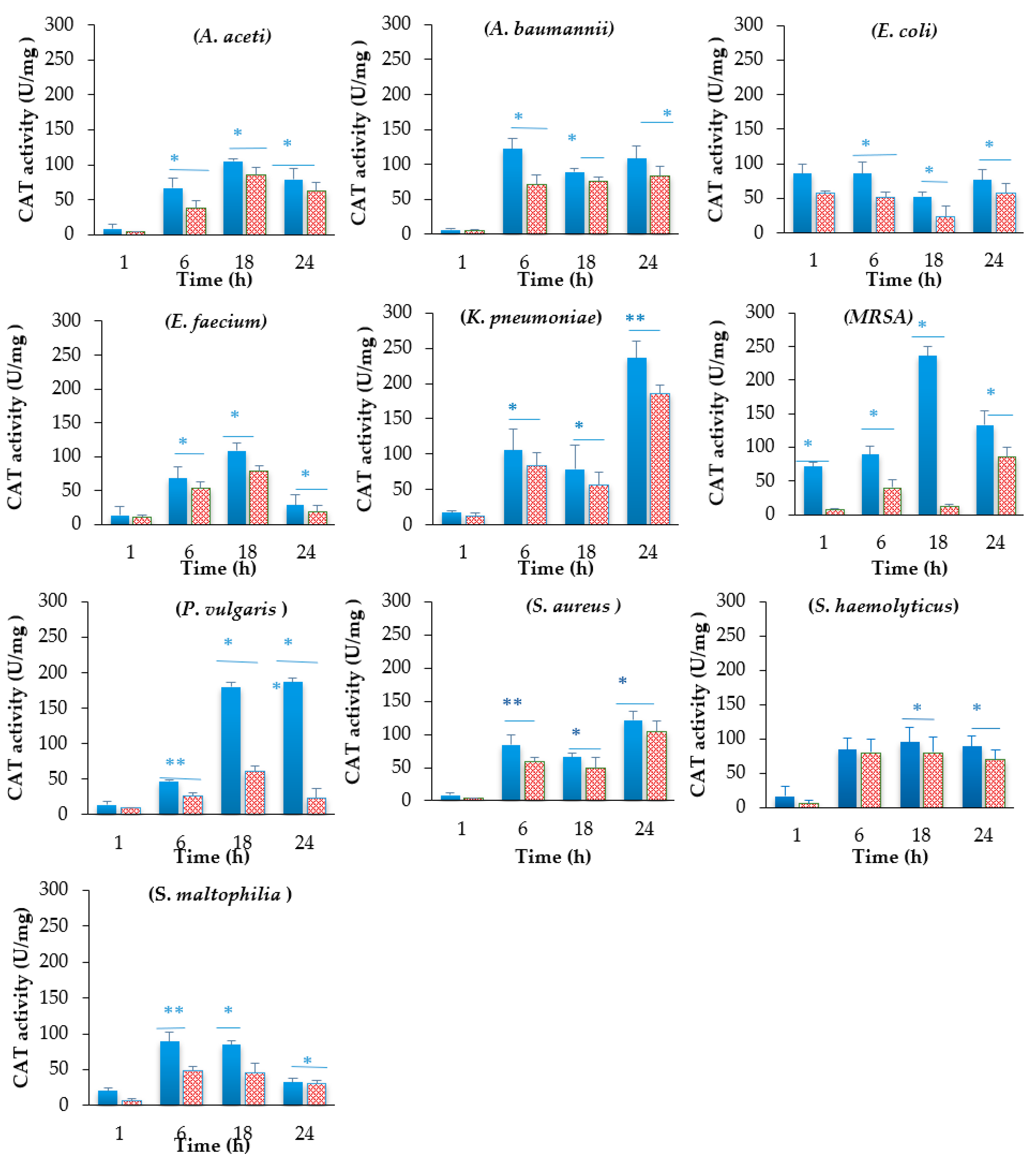
Figure 6 presents the decrease in CAT activity of all the tested bacteria except for K. pneumoniae. The most sensitive Gram-positive bacteria were S. aureus and MRSA, showing a 4.2-fold decrease in enzyme activity. Similarly, P. vulgaris and S. maltophilia were the most sensitive in Gram-negative strains, exhibiting a decrease of 2.95- fold.

3.6. Effect of LEO on Membrane Integrity

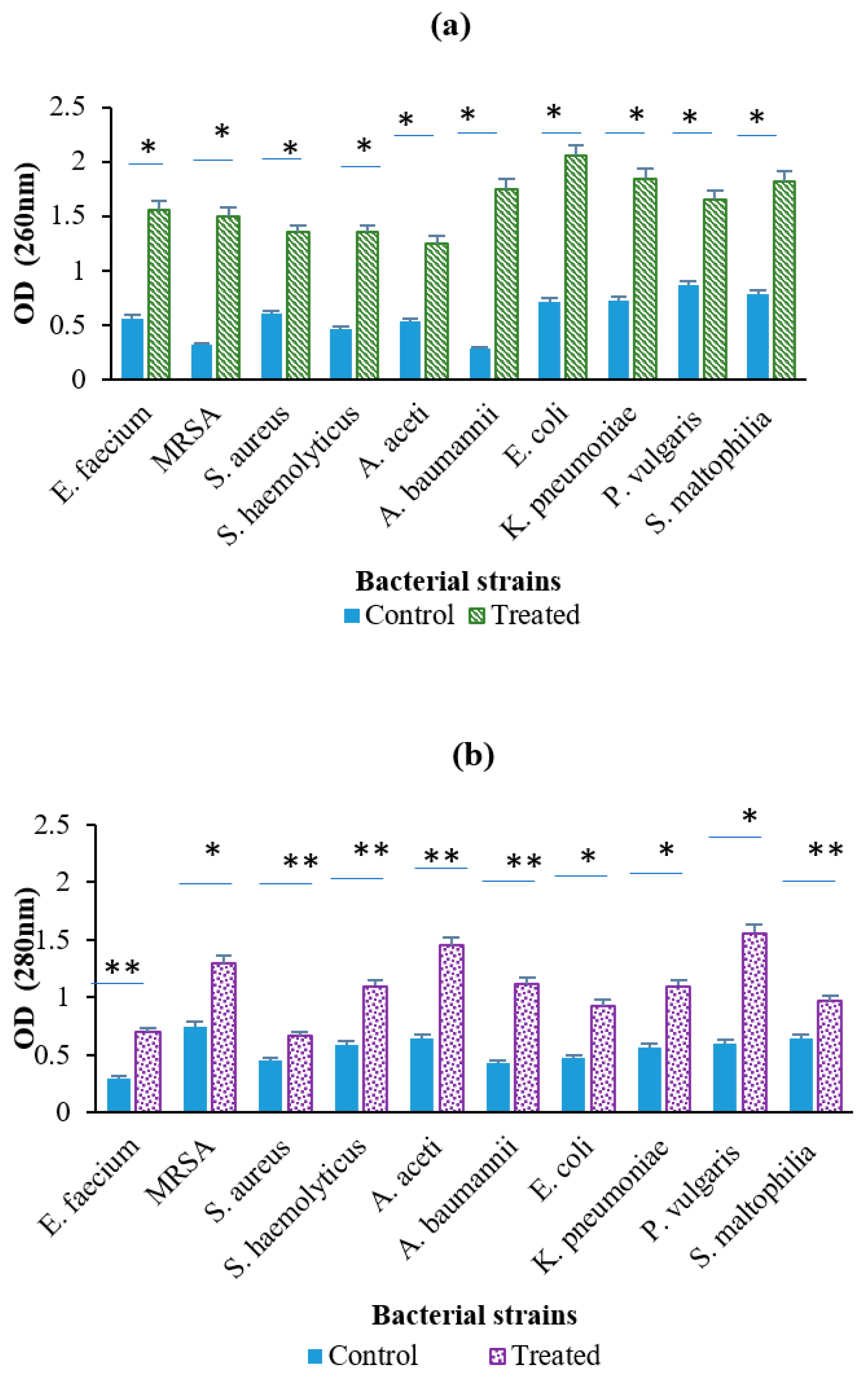
Figure 7 represents the leakage of nucleic acid and protein determined by OD260 and OD280, respectively. Following LEO treatment, the absorbance values of all treated groups were significantly higher than those of the control groups. The most substantial increase in OD260 was recorded for S. haemolyticus (2.9-fold), A. baumannii, and E. coli (both 2.8-fold). Similarly, the increase in OD280 was the highest among E. faecium (2.3-fold) and A. aceti (2.2-fold).

4. Discussion

Natural remedies have been used from ancient times to cure severe illnesses and relieve physical symptoms. Plants have been widely used and investigated for their anti-pathogenic activities against a wide variety of bacteria [23]. In the present study, we investigated the chemical composition of Lebanese LEO. The bioactivity of this essential oil was examined through antibacterial screening, growth inhibition, antibiofilm, and antioxidant enzyme activities.
Results of LEO chemical composition revealed a similar composition to other Mediterranean L. angustifolia species. GC-MS analysis of Lebanese Lavender essential oil species grown at different geographic regions revealed the dominance of acyclic monoterpene linalool [24]. Terpenoids show anti-virulence strategies, which include activity against toxin production, bacterial surfactants, biofilm formation, and quorum sensing [25]. In particular, linalool exhibited antibacterial activity against various pathogens, including Staphylococcus, Salmonella, Pseudomonas, Campylobacter, Porphyromonas, and Fusobacterium [26]. Additionally, linalool disrupts bacterial energy pathways and induces metabolic dysfunction. By inhibiting essential enzymes including succinate dehydrogenase, pyruvate kinase, ATPase, and respiratory change dehydrogenases, the membrane integrity of Shewanella putrefaciens was permeabilized, resulting in growth inhibition [27].
Interestingly, our results show that LEO exhibited antibacterial activity based on strain specificity rather than Gram classification. Although Gram-negative strains exhibit higher resistance due to the presence of the outer membrane, our results indicate that these strains were highly susceptible to LEO, with MIC values of 1.5 and 3.12%. The presence of a wide variety of molecules in LEO explains that its antibacterial activity cannot be attributed to a single mechanism. Instead, essential oils exert their activity through distinct biochemical and structural pathways. Substantial chemical alterations of the plasma membrane, cytoplasm, and essential macromolecules can induce a total loss in cellular integrity. Additionally, exposure to EO triggers a sustained ion loss, which alters microbial metabolism and leads to cell death [14]. Our findings are in agreement with a previous study that demonstrated the activity of LEO against novel pathogenic bacteria, including E. coli, K. pneumoniae and S. aureus [10]. Another in vitro study proved that LEO exhibited antibacterial activity against Shigella flexneri, S. aureus, and E. coli with zones of inhibition ranging from 10.06 ± 0.16 to 20.35 ± 0.20 [28]. LEO also showed protective results against antibiotic misuse and the development of bacterial resistance. MRSA is an organism of concern that usually leads to serious clinical infections [29]. Aligned with our findings, the essential oil and hydrosol of L. angustifolia significantly recorded antibacterial activity against MRSA [30]. Similarly, it was reported that LEO had antibacterial activity against S. aureus, S. epidermidis, Enterococcus faecalis, E. coli, and Serratia marcescens [24]. Moreover, LEO exhibited antibacterial activity against E. coli, S. aureus, P. aeruginosa, and B. cereus, along with antifungal activity against C. albicans.” [31].
Biofilm is a natural strategy adopted by bacteria to provide protection against various stressors. Currently, the increase in the misuse of antibiotics leads to drug resistance and tolerance against various biofilm communities [32]. Therefore, the formation of biofilm in organ systems or on medical devices represents a serious health threat [33]. K. pneumoniae is a Gram-negative pathogen that is able to form biofilms on medical devices and on host tissues, leading to a variety of infections, including pneumonia, urinary tract infections and other health issues [34]. In the present study, LEO inhibited biofilm formation of all the tested bacteria, including K. pneumoniae. To our knowledge, this is the first study that demonstrates the antibiofilm activity of the examined essential oil against K. pneumoniae.
Additionally, we observed alterations in SOD and CAT activities coupled with a significant increase in membrane leakage, suggesting that LEO may disrupt bacterial homeostasis. It was found that LEO increased oxidative stress in K. pneumoniae, leading to outer membrane oxidation and ROS efflux, causing cellular damage and death [23]. Another study revealed that LEO reversed E. coli resistance to piperacillin by altering outer membrane integrity and inhibiting quorum sensing [24]. Taken together, these results suggest that LEO induces membrane disruption associated with a decline in the bacterial antioxidant defense system.
While the results of this study provide significant insights into the antibacterial potential of LEO, certain limitations must be acknowledged. First, the current study relies on clinical isolates without the inclusion of ATCC reference strains. Although ATCC strains provide an authenticated and fully characterized baseline that ensures reproducibility, they may not represent the phenotypic profiles and real clinical challenges. Future research should include both ATCC and clinical strains to further validate these findings against globally recognized benchmarks and to explore the efficacy of LEO across broader genetic and resistant pathogens. Second, this study focused on the enzymatic activities of SOD and CAT rather than their quantification. Further investigations employing quantitative techniques would be beneficial to determine whether the observed changes in activity correlate with altered protein levels.

5. Conclusions

In summary, the chemical profile of Lebanese L. angustifolia is defined by high concentrations of Linalool, Camphor, and Terpineol. This study confirms the antibacterial activity of LEO against a diverse range of clinical isolates, supported by the obtained results of antibacterial screening, growth inhibition assay, antibiofilm assays, and antioxidant enzyme activities. Such findings contribute to the development of natural therapeutic alternatives, serving as a foundation for future studies against antibiotic resistance.

Author Contributions

Conceptualization, R.J. and J.B.; methodology, R.J. and N.H.; validation, R.J., N.A.H., J.B., and J.U.; formal analysis, R.J. and N.H.; investigation, R.J. and N.H.; resources, R.J., J.B. and N.H.; writing—original draft preparation, R.J.; writing—review and editing, N.A.H., R.J., J.U., and J.B.; supervision, J.B. and J.U.; project administration, J.B.; funding acquisition, R.J. All authors have read and agreed to the published version of the manuscript.

Funding

This research received no external funding.

Institutional Review Board Statement

Not applicable.

Informed Consent Statement

Not applicable.

Data Availability Statement

The data presented in this study are available on reasonable request from the corresponding author.

Conflicts of Interest

The authors declare no conflicts of interest.

Abbreviations

The following abbreviations are used in this manuscript:
LEOL. angustifolia essential oil
GC-MSGas chromatography-mass spectrometry
SODSuperoxide dismutase
CATCatalase
WHOWorld Health Organization
PMsPrimary metabolites
SMsSecondary metabolites
ROSReactive oxygen species
EosEssential oils
NONitric oxide
NMDAN-methyl-d-aspartate
Na2HPO4Sodium phosphate dibasic anhydrous
NaH2PO4Sodium phosphate monobasic
H2O2Hydrogen peroxide
TSATryptic soy agar
PMSFPhenylmethylsulfonyl fluoride
EOEssential oil
MICMinimum inhibitory concentration
CLSIClinical and laboratory standards institute
MBCMinimum bactericidal concentration
SDStandard deviation

References

  1. Tufa, T.B.; Regassa, F.; Amenu, K.; Stegeman, J.A.; Hogeveen, H. Livestock Producers’ Knowledge, Attitude, and Behavior (KAB) Regarding sub Use in Ethiopia. Front. Vet. Sci. 2023, 10, 1167847. [Google Scholar] [CrossRef]
  2. Goss, M.J.; Tubeileh, A.; Goorahoo, D. A Review of the Use of Organic Amendments and the Risk to Human. Adv. Agron. 2013, 120, 275–379. [Google Scholar] [CrossRef]
  3. Ibtissem, S.; Feriel, R.; Assia, B.; Fatiha, C.; Naziha, A.; Saloua, N. Importance of Natural Plants in Human Health. Ecol. Environ. Conserv. 2022, 28, 86. [Google Scholar] [CrossRef]
  4. Ahmad Khan, M.S.; Ahmad, I. Herbal Medicine: Current Trends and Future Prospects; Elsevier Inc.: Amsterdam, The Netherlands, 2018. [Google Scholar] [CrossRef]
  5. Arip, M.; Selvaraja, M.; Mogana, R.; Tan, L.F.; Leong, M.Y.; Tan, P.L.; Yap, V.L.; Chinnapan, S.; Tat, N.C.; Abdullah, M.; et al. Review on Plant-Based Management in Combating Antimicrobial Resistance—Mechanistic Perspective. Front. Pharmacol. 2022, 13, 879495. [Google Scholar] [CrossRef]
  6. Dobros, N.; Zawada, K.D.; Paradowska, K. Phytochemical Profiling, Antioxidant and Anti-Inflammatory Activity of Plants Belonging to the Lavandula Genus. Molecules 2023, 28, 256. [Google Scholar] [CrossRef]
  7. Salehi, B.; Mnayer, D.; Özçelik, B.; Altin, G.; Kasapoǧlu, K.N.; Daskaya-Dikmen, C.; Sharifi-Rad, M.; Selamoglu, Z.; Acharya, K.; Sen, S.; et al. Plants of the Genus Lavandula: From Farm to Pharmacy. Nat. Prod. Commun. 2018, 13, 1385–1402. [Google Scholar] [CrossRef]
  8. Batiha, G.E.S.; Teibo, J.O.; Wasef, L.; Shaheen, H.M.; Akomolafe, A.P.; Teibo, T.K.A.; Al-kuraishy, H.M.; Al-Garbeeb, A.I.; Alexiou, A.; Papadakis, M. A Review of the Bioactive Components and Pharmacological Properties of Lavandula Species. Naunyn-Schmiedeberg’s Arch. Pharmacol. 2023, 396, 877–900. [Google Scholar] [CrossRef] [PubMed]
  9. Yap, P.S.X.; Krishnan, T.; Yiap, B.C.; Hu, C.P.; Chan, K.G.; Lim, S.H.E. Membrane Disruption and Anti-Quorum Sensing Effects of Synergistic Interaction between Lavandula angustifolia (Lavender Oil) in Combination with Antibiotic against Plasmid-Conferred Multi-Drug-Resistant Escherichia coli. J. Appl. Microbiol. 2014, 116, 1119–1128. [Google Scholar] [CrossRef]
  10. Blažeković, B.; Yang, W.; Wang, Y.; Li, C.; Kindl, M.; Pepeljnjak, S.; Vladimir-Knežević, S. Chemical Composition, Antimicrobial and Antioxidant Activities of Essential Oils of Lavandula × intermedia ‘Budrovka’ and L. angustifolia Cultivated in Croatia. Ind. Crops Prod. 2018, 123, 173–182. [Google Scholar] [CrossRef]
  11. Gismondi, A.; Di, G.; Luigi, E.; Ferrucci, L.; Cantonetti, M.; Canini, A. The Antimicrobial Activity of Lavandula angustifolia Mill. Essential Oil against Staphylococcus Species in a Hospital Environment. J. Herb. Med. 2021, 26, 100426. [Google Scholar] [CrossRef]
  12. Stamova, S.; Ermenlieva, N.; Tsankova, G.; Georgieva, E. Antimicrobial Activity of Lavender Essential Oil from Lavandula angustifolia Mill.: In Vitro and In Silico Evaluation. Antibiotics 2025, 14, 656. [Google Scholar] [CrossRef]
  13. Nazzaro, F.; Fratianni, F.; De Martino, L.; Coppola, R.; De Feo, V. Effect of Essential Oils on Pathogenic Bacteria. Pharmaceuticals 2013, 6, 1451–1474. [Google Scholar] [CrossRef] [PubMed]
  14. Marc, M.; Mincea, M.; Ostafe, V. Comparison of Different Extraction Methods of Essential Oils from Lavandula angustifolia and Detection of Target Compoundswith UPLC-MS/MS. New Front. Chem. 2016, 25, 83–94. [Google Scholar]
  15. ISO 3515:2002; Oil of Lavender (Lavandula angustifolia Mill.). International Organization for Standardization: Geneva, Switzerland, 2002.
  16. European Committe on Antimicrobial Susceptibility Testing (EUCAST). Antimicrobial Susceptibility Testing EUCAST Disk Diffusion Method, Version 9.0; European Society of Clinical Microbiology and Infectious Diseases: Basel, Switzerland, 2021; pp. 1–21. [Google Scholar]
  17. Clinical and Laboratory Standards Institute (CLSI). Performance Standards for Antimicrobial Susceptibility Testing, 29th ed.; CLSI Supplement M100; Clinical and Laboratory Standards Institute: Wayne, PA, USA, 2019. [Google Scholar]
  18. Ike, K.A.; Omaliko, P.C.; Fernander, M.C.; Sanders, B.M.; Enikuomehin, J.M.; Alabi, J.O.; Adelusi, O.O.; Kholif, A.E.; Thomas, M.D.; Anele, U.Y. Evaluating the Effect of an Essential Oil Blend on the Growth and Fitness of Gram-Positive and Gram-Negative Bacteria. Biology 2025, 14, 437. [Google Scholar] [CrossRef]
  19. Ben Abdallah, F.; Lagha, R.; Gaber, A. Biofilm Inhibition and Eradication Properties of Medicinal Plant Essential Oils against Methicillin-Resistant Staphylococcus aureus Clinical Isolates. Pharmaceuticals 2020, 13, 369. [Google Scholar] [CrossRef] [PubMed]
  20. Bio-Rad Laboratories. Quick Start Bradford Protein Assay Instruction Manual; Bio-Rad Laboratories: Hercules, CA, USA, 2011. [Google Scholar]
  21. Buege, J.A.; Aust, S.D. Biomembranes—Part C: Biological Oxidations. Methods Enzymol. 1978, 52, 302–310. [Google Scholar] [PubMed]
  22. Hyun, J.; Ho, K.; Seul, Y.; In, H.; Jo, C. Synergistic Bactericidal Effect of Clove Oil and Encapsulated Atmospheric Pressure Plasma against Escherichia coli O157: H7 and Staphylococcus aureus and Its Mechanism of Action. Food Microbiol. 2021, 93, 103611. [Google Scholar] [CrossRef]
  23. Bolouri, P.; Salami, R.; Kouhi, S.; Kordi, M.; Asgari Lajayer, B.; Hadian, J.; Astatkie, T. Applications of Essential Oils and Plant Extracts in Different Industries. Molecules 2022, 27, 8999. [Google Scholar] [CrossRef]
  24. Massoud, R.I.; Bouaziz, M.; Abdallah, H.; Zeiz, A.; Flamini, G.; El-Dakdouki, M.H. Comparative Study on the Chemical Composition and Biological Activities of the Essential Oils of Lavandula angustifolia and Lavandula × Intermedia Cultivated in Lebanon. ACS Omega 2024, 9, 30244–30255. [Google Scholar] [CrossRef]
  25. Silva, L.N.; Zimmer, K.R.; Macedo, A.J.; Trentin, D.S. Plant Natural Products Targeting Bacterial Virulence Factors. Chem. Rev. 2016, 116, 9162–9236. [Google Scholar] [CrossRef]
  26. Mączka, W.; Duda-Madej, A.; Grabarczyk, M.; Wińska, K. Natural Compounds in the Battle against Microorganisms—Linalool. Molecules 2022, 27, 6928. [Google Scholar] [CrossRef]
  27. Zhong, Q.; Chen, W. Antibacterial Activity and Mechanism of Linalool against Shewanella putrefaciens. Molecules 2021, 26, 245. [Google Scholar] [CrossRef]
  28. Jianu, C.; Pop, G.; Gruia, A.T.; Horhat, F.G. Chemical Composition and Antimicrobial Activity of Essential Oils of Lavender (Lavandula angustifolia) and Lavandin (Lavandula × intermedia) Grown in Western Romania. Int. J. Agric. Biol. 2013, 15, 772–776. [Google Scholar]
  29. Truong, S.; Mudgil, P. The Antibacterial Effectiveness of Lavender Essential Oil against Methicillin-Resistant Staphylococcus aureus: A Systematic Review. Front. Pharmacol. 2023, 14, 1306003. [Google Scholar] [CrossRef]
  30. Di Vito, M.; Smolka, A.; Proto, M.R.; Barbanti, L.; Gelmini, F.; Napoli, E.; Bellardi, M.G.; Mattarelli, P.; Beretta, G.; Sanguinetti, M.; et al. Is the Antimicrobial Activity of Hydrolates Lower than That of Essential Oils? Antibiotics 2021, 10, 88. [Google Scholar] [CrossRef] [PubMed]
  31. Barut Gök, S.; Erdoğdu, Y. Chemical Composition and Antimicrobial Activity of Essential Oils from Six Lavender (Lavandula angustifolia Mill.) Cultivars. Plant Soil Environ. 2024, 70, 111–123. [Google Scholar] [CrossRef]
  32. Garzoli, S.; Masci, V.L.; Franceschi, S.; Tiezzi, A.; Giacomello, P.; Ovidi, E. Headspace/Gc–Ms Analysis and Investigation of Antibacterial, Antioxidant and Cytotoxic Activity of Essential Oils and Hydrolates from Rosmarinus officinalis and Lavandula angustifolia Miller. Foods 2021, 10, 1768. [Google Scholar] [CrossRef] [PubMed]
  33. Perry, E.K.; Tan, M.W. Bacterial Biofilms in the Human Body: Prevalence and Impacts on Health and Disease. Front. Cell. Infect. Microbiol. 2023, 13, 1237164. [Google Scholar] [CrossRef]
  34. Guerra, M.E.S.; Destro, G.; Vieira, B.; Lima, A.S.; Ferraz, L.F.C.; Hakansson, A.P.; Darrieux, M.; Converso, T.R. Klebsiella pneumoniae Biofilms and Their Role in Disease Pathogenesis. Front. Cell. Infect. Microbiol. 2022, 12, 877995. [Google Scholar] [CrossRef]
Figure 1. Schematic sketch presenting the serial dilution process.
Bacteria 05 00033 g001
Figure 2. Growth inhibition assay of the tested bacteria at different concentrations of L. angustifolia essential oil (LEO). (Bacteria 05 00033 i001) Growth Control; (Bacteria 05 00033 i002) 0.5 MIC; (Bacteria 05 00033 i003) MIC; (Bacteria 05 00033 i004) 2 MIC. Each point represents the mean of three determinations ± SD.
Bacteria 05 00033 g002
Figure 3. Effect of L. angustifolia essential oil (LEO) on Biofilm formation against (a) Gram-positive and (b) Gram- negative bacteria. The four experimental groups are color-coded as follows: Bacteria 05 00033 i005 white bars represent the control; Bacteria 05 00033 i006 gray bars represent the sub-inhibitory concentration (MIC/2); Bacteria 05 00033 i007 light blue bars represent the minimum inhibitory concentration (1× MIC); and Bacteria 05 00033 i008 dark blue bars represent the supra-inhibitory concentration (2× MIC). Values are the average of three independent determinations ± SD. The asterisks (*) and (**) correspond to p-value < 0.05 and 0.01, respectively.
Bacteria 05 00033 g003
Figure 4. Ability of L. angustifolia essential oil (LEO) to eradicate pre-formed biofilms against (a) Gram-positive and (b) Gram-negative bacteria. The four experimental groups are color-coded as follows: white bars represent the control; Bacteria 05 00033 i009 purple bars represent the sub-inhibitory concentration (MIC/2); Bacteria 05 00033 i010 light green bars represent the minimum inhibitory concentration (1× MIC); and Bacteria 05 00033 i011 dark green bars represent the supra-inhibitory concentration (2× MIC). Values are the average of at least three independent determinations ± SD. The asterisks (*) and (**) correspond to p-value < 0.05 and 0.01, respectively.
Bacteria 05 00033 g004
Figure 5. Effect of L. angustifolia essential oil (LEO) on superoxide dismutase (SOD) activity (U/mg) of the tested bacteria following treatment at their respective MIC for 1, 6, 18, and 24 h. Control (Bacteria 05 00033 i012 blue bars) and experimental (Bacteria 05 00033 i013 dashed bars). Data are represented as mean ± SD. The asterisks (*) and (**) correspond to p-value < 0.05 and 0.01, respectively.
Bacteria 05 00033 g005
Figure 6. Effect of L. angustifolia essential oil (LEO) on catalase (CAT) activity (U/mg) of the tested bacteria following treatment at their respective MIC for 1, 6, 18, and 24 h. Control (Bacteria 05 00033 i014 blue bars) and experimental (Bacteria 05 00033 i015 dashed bars). Data are represented as mean ± SD. The asterisks (*) and (**) correspond to p-value < 0.05 and 0.01, respectively.

Bacteria 05 00033 g006
Figure 7. Effect of L. angustifolia essential oil (LEO) on membrane leakage of (a) Gram-positive bacteria and (b) Gram-negative bacteria at a concentration of 1× MIC. Data are represented as mean ± SD. The asterisks (*) and (**) correspond to p-value < 0.05 and 0.01, respectively.
Bacteria 05 00033 g007
Table 1. Chemical composition (%) of Lavandula angustifolia essential oil.
No.Compound NameRT%No.Compound NameRT%
1α-cis-bergamotene23.360.0624Juniene11.180.06
2(E)-α-Bergamotene22.990.0425(R)-Lavandulol20.260.8
3Borneol17.654.6426(S)-Lavandulol17.391.23
4Bornyl formate19.080.0527D-Limonene13.150.96
5Butanoic acid19.190.5328Linalool15.650.79
6Butyric acid120.0729Linalyl acetate19.524.3
7Camphene10.370.2830β-myrcene7.690.24
8Camphor16.9511.531(Z)-β-ocimene13.740.16
93-Carene12.420.06323-Octanol12.030.42
10Caryophyllene oxide26.060.06333-Octanone11.630.16
11Cuminaldehyde19.330.2341-octen-3-ol11.460.17
12m-Cymene12.80.007351-Octen-3-yl-acetate15.660.24
13o-Cymene12.980.53361,2-Oxolinalool14.550.49
14Episesquithujene22.480.2337α-pinene9.80.9
15Eucalyptol13.243.6338β-Pinene13.390.14
16(E)-β-Farnesene23.812.1139α -Pinene dimer13.390.9
17Furanoid15.080.3940α-Phellandrene12.340.01
18Germacrene D24.360.1841α-Santalene23.110.1
191-Hexanol7.690.0642γ-Terpinene14.140.1
20Hexyl acetate12.560.25434-Terpineol17.889.9
21n-Hexyl butyrate18.111.9644α-Terpinolene12.720.02
22Hexyl hexanoate22.370.2345α-Terpinyl propionate12.030.27
23Isocaryophyllene23.190.3546α-Thujene9.570.11
RT: Retention time in minutes.
Table 2. Inhibition zones diameters (mm) by different concentrations of LEO against (a) Gram-positive bacteria and (b) Gram-negative bacteria. Each value is the average of three trials ± standard deviation.
(a)
Gram-positive bacteriaZone of inhibition (mm)
25%50%100%Positive control
E. faecium13 ± 3.6129.33 ± 5.5133.33 ± 3.1535.54 ± 3.41
MRSA17.5 ± 3.5425.42 ± 4.25-21.00 ± 1.73
S. aureus10 ± 1.1523.33 ± 2.8928.33 ± 2.8921.67 ± 2.89
S. haemolyticus15 ± 1.2322.33 ± 2.52-12.00 ± 2.02
(b)
Gram-negative bacteriaZone of inhibition (mm)
25%50%100%Positive control
A. aceti14 ± 1.4522.67 ± 2.5232.5 ± 3.54Resistant to antibiotics
A. baumannii13.02 ± 1.4118.33 ± 1.52-10.03 ± 1.05
E. coliNANANA37.667 ± 3.21
P. vulgarisNANANA37.67 ± 2.08
K. pneumoniaeNA15.67 ± 1.1521.67 ± 0.5818 ± 1.73
S. maltophilia24.67 ± 1.5329 ± 3.61NA12.33 ± 0.58
NA: No activity; (-): Large zones to be measured
Table 3. MIC and MBC for antibacterial activities of LEO against (a) Gram-positive strains and (b) Gram-negative strains. Values represent the specific concentration (% v/v) at which visible growth was completely inhibited. All experiments were performed in triplicate; the values shown represent the consistent endpoint reached across all three independent replicates. MIC: minimum inhibitory concentration; MBC: minimum bactericidal concentration.
(a)
Gram-positive bacteriaMIC % (v/v)MBC % (v/v)MBC/MIC
E. faecium3.12 6.25 2
MRSA1.56 12.5 8
S. aureus1.56 3.12 2
S. haemolyticus3.12 3.12 1
(b)
Gram-negative bacteriaMIC % (v/v)MBC % (v/v)MBC/MIC
A. aceti3.12 3.12 1
A. baumannii3.12 3.12 1
E. coli3.12 25 8
P. vulgaris1.56 3.12 2
K. pneumoniae3.12 3.12 1
S. maltophilia3.12 3.12 1
Disclaimer/Publisher’s Note: The statements, opinions and data contained in all publications are solely those of the individual author(s) and contributor(s) and not of MDPI and/or the editor(s). MDPI and/or the editor(s) disclaim responsibility for any injury to people or property resulting from any ideas, methods, instructions or products referred to in the content.