Article

Unveiling the Diversity and Biotechnological Potential of Halophilic Actinobacteria from the Sebkha of Lake Naïla, Morocco


1
Microbiology and Antimicrobial Agents Team, Laboratory of Plant Biotechnology, Ecology and Valorization of Ecosystems (LB2VE), Faculty of Sciences, Chouaïb Doukkali University, El Jadida 24000, Morocco
2
International Centre for Genetic Engineering and Biotechnology, 34149 Trieste, Italy
3
Laboratory of Water Sciences, Microbial Biotechnologies, and Natural Resources Sustainability (AQUABIOTECH), Faculty of Sciences Semlalia Marrakech, Cadi Ayyad University, Marrakech 40000, Morocco
4
Department of Molecular Biology and Genetics, Faculty of Sciences, Ondokuz Mayis University, 55139 Samsun, Turkey
5
Interdisciplinary Laboratory of Fundamental and Applied Sciences, Higher Normal School, Hassan II University, Casablanca 20000, Morocco
*
Author to whom correspondence should be addressed.
Bacteria 2026, 5(2), 32; https://doi.org/10.3390/bacteria5020032
Submission received: 24 March 2026 / Revised: 8 May 2026 / Accepted: 27 May 2026 / Published: 4 June 2026

Abstract

Saline ecosystems, including saline lakes, are indeed major hotbeds of microbial novelty, harboring diverse and largely unexplored microbes. The sebkha of Lake Naïla (Morocco), an ecologically protected area registered under the Ramsar Convention in 1998, remains largely unexplored. Isolation using three different selective media enabled seven phenotypically distinct actinobacterial isolates to be obtained. Molecular characterization, based on 16S RNA gene sequencing, was used to identify strains as members of the genera Streptomyces, Nocardiopsis, and Prauserella. Three strains showed antimicrobial potential against pathogenic microorganisms, with Streptomyces sp. strain 43 exhibiting the most potent effects. Additionally, all isolates displayed plant-growth-promoting (PGP) traits, including phosphate solubilization, auxin (IAA) synthesis, siderophore secretion, and ammonia production. Notably, Nocardiopsis sp. strain 42 produced the highest IAA levels (282 μg/mL), while Streptomyces sp. strain 39, Streptomyces sp. strain 43, and Streptomyces sp. strain 48 excelled in phosphate solubilization. GC-MS profiling of Streptomyces sp. strain 43 revealed a complex metabolite repertoire, including 1,2-propanediol and nonanal, highlighting the strain’s versatile secondary metabolism. These findings highlight that the sebkha of Lake Naïla represents a rich source of halophilic actinobacteria with promising dual potential for antimicrobial and biofertilizer applications. The findings provide a solid basis for new perspectives on biotechnology applications and sustainable agriculture.

1. Introduction

Extreme environments represent a valuable source of novel microbial species due to the unique conditions that shape their evolutionary adaptations [1,2]. In these habitats, microorganisms are exposed to harsh conditions—such as extreme temperatures, high salinity, extreme pH, or radiation—that require specialized survival mechanisms [2,3]. To survive and thrive under such stressors, these microbes have naturally evolved unique metabolic pathways, enhanced stress tolerance, and efficient resource utilization strategies, which may offer significant biotechnological and environmental applications. The high mutation rates driven by environmental stress have been identified as a potential key mechanism underlying evolutionary change [1]. Exploring these extreme environments may provide fertile ground for isolating previously undiscovered microbial species with plant-growth-promoting traits and novel bioactive compound production, offering biotechnological and industrial applications [4]. The actinobacteria inhabiting extreme environments exemplify not only considerable taxonomic diversity but also substantial genetic heterogeneity in their biosynthetic pathways, which are responsible for the production of novel biological compounds [5].
Among these extreme environments, Khenifiss lagoon, also known as Dayet Naïla or Lac Naïla, is a saline coastal lake located in the Khenifiss National Park in southern Morocco [6]. Lake Naïla forms part of an extensive wetland system that includes sand dunes, mudflats, and a lagoon system along the Atlantic coast [6]. The lagoon is particularly important for biodiversity as it serves as a critical stopover and wintering site for migratory birds, including flamingos, herons, and various shorebirds. The lake and its surrounding area are recognized for their high ecological value, hosting rich flora and fauna that are adapted to the unique coastal desert environment [6]. As a Ramsar wetland of international importance, Lake Naïla is protected to ensure the conservation of its biodiversity, particularly given the challenges of arid conditions and human pressures on local ecosystems. The lake is also a site of interest for researchers studying wetland and saline ecosystems and migratory patterns in North Africa.
Saline, moderately saline, and hypersaline environments are recognized for their remarkable microbial diversity, where selective pressures such as salinity, extreme temperatures, and nutrient limitations drive the evolution of microorganisms with specialized metabolic capabilities [7]. These microorganisms, particularly actinobacteria, are considered promising candidates for the discovery of novel bioactive compounds because of their ability to produce a wide array of secondary metabolites, including antibiotics, antifungals, and anticancer agents [8]. Actinobacteria are widely distributed in saline lakes and marine environments, particularly in sediments, and have also been reported in association with various marine organisms, including fish, sponges, and macroalgae [9,10]. Isolates obtained from saline sediments have been shown to produce a broad spectrum of bioactive metabolites, including antibiotics, antitumor compounds, and anti-inflammatory agents [11,12]. Despite the significant potential of such environments, the microbial diversity of Lake Naïla has remained largely uncharacterized. To fill this gap, the present study investigates the actinobacterial diversity of the sebkha of Lake Naïla and assesses their biotechnological potential.

2. Materials and Methods

2.1. Study Site Characterization and Sample Collection

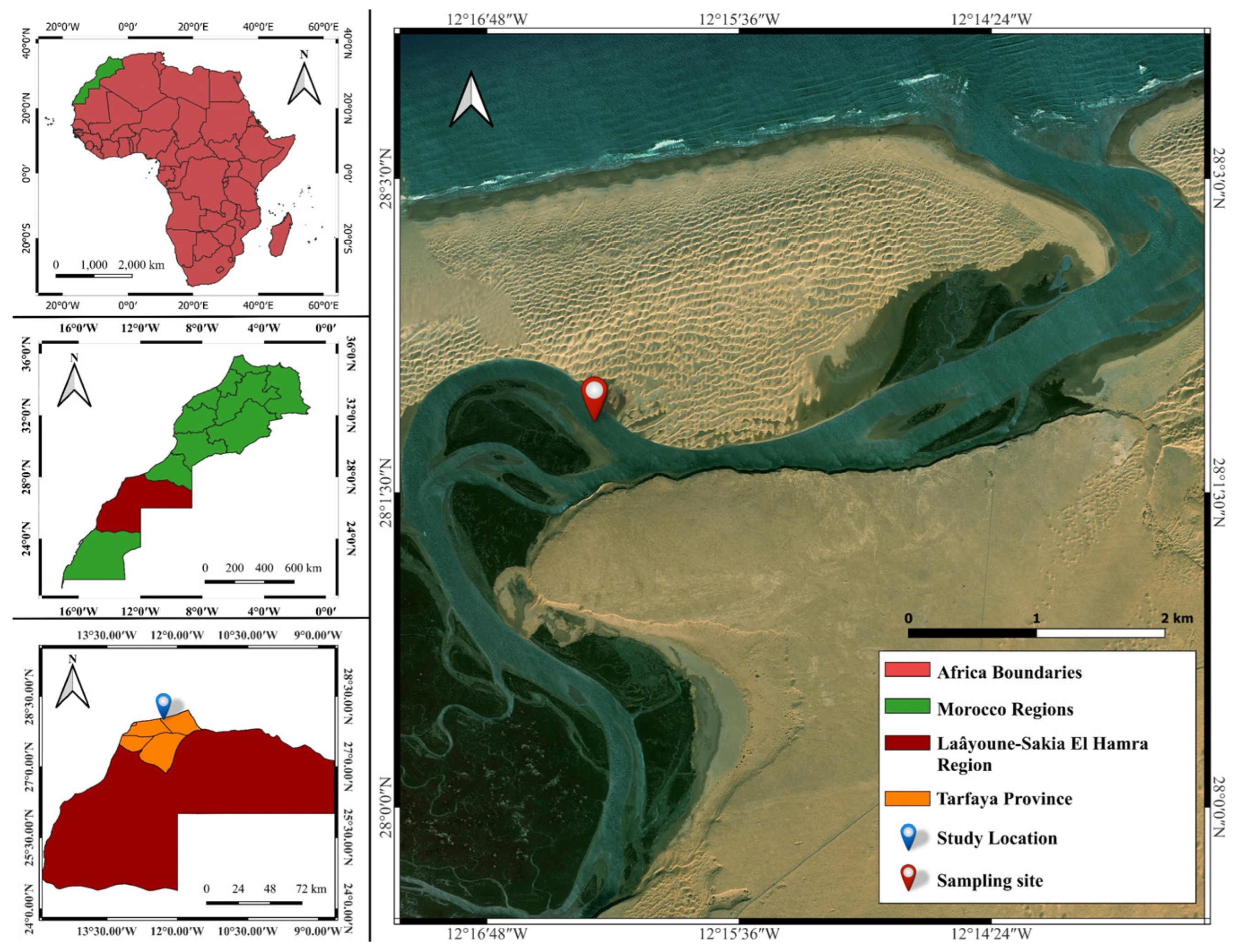
The Khenifiss lagoon, extending over 20 km in length and covering an area of 65 km2, is situated along the southern Atlantic coast of Morocco, approximately 170 km north of Laayoune, within the boundaries of Khenifiss National Park [6] (Figure 1). The lagoon is connected to the Atlantic Ocean through a narrow inlet known as “Foum Agouitir”, which measures approximately 100 m in width. The lagoon’s climate falls within the Saharan bioclimatic stage, characterized by a prevailing trade wind blowing from the north–west to north–east, which drives the region’s upwelling phenomenon. Due to the region’s arid conditions, annual precipitation averages only 41 mm, and freshwater inflows are virtually absent, with the only inputs into the lagoon being oceanic. The lagoon’s water is saline, with salinity levels ranging from 35 to 41 g L−1, and exhibits low phosphorus and nitrate concentrations.
Sediment samples were collected from the study site using a multibeam echosounder. Three samples were collected at a depth of 2.78 m and mixed to form one composite sample. These samples were subsequently stored at 4 °C for microbiological use.
Water and sediment physicochemical parameters, including pH, temperature, electrical conductivity (EC), dissolved oxygen (DO), turbidity, and organic matter content, were measured either in situ or under laboratory conditions using calibrated multiparameter probes and standardized analytical protocols. Electrical conductivity was recorded using a field-calibrated conductivity meter (Hanna Instruments, Woonsocket, RI, USA) and served as a proxy for ionic strength. Salinity was subsequently estimated from EC values using widely accepted empirical conversion models applicable to saline aquatic systems [13]. Dissolved oxygen was measured using electrochemical sensors following standard in situ protocols [14], while turbidity was determined using nephelometric methods. Organic matter content in sediments was quantified in the laboratory using standard loss-on-ignition procedures [15].

2.2. Isolation of Halophilic Actinobacteria

Actinobacteria were isolated from sediment samples following the method described by Ribeiro et al. [16]. Briefly, ten grams of sediment were homogenized in 90 mL of sterile saline solution (0.9% NaCl, w/v). Serial 10-fold dilutions were prepared, and 0.1 mL from each dilution was subsequently spread onto selective media, including modified Bennett agar, chitin–vitamin B agar supplemented with 30 g L−1 of NaCl, and marine coral agar prepared using seawater. Nalidixic acid (100 μg/mL) and cycloheximide (50 μg/mL) were incorporated into the media to selectively inhibit the growth of Gram-negative bacteria and fungi, respectively. The inoculated plates were incubated at 28 °C for three weeks. Emergent colonies were examined under light microscopy, and selected actinobacterial isolates were purified and stored in 25% (w/v) glycerol stocks at −20 °C for further analysis.

2.3. Molecular Identification of Actinobacteria

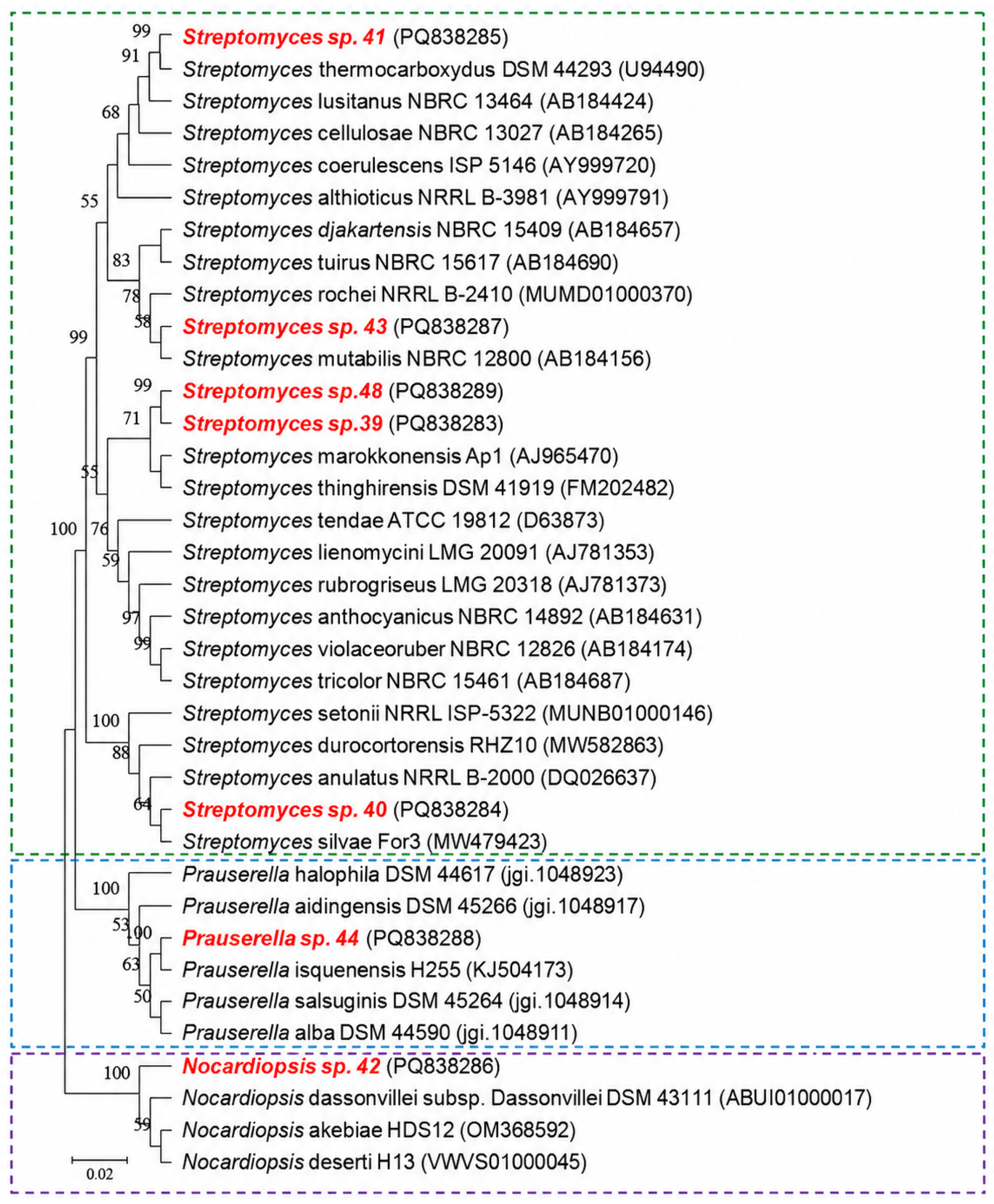
Genomic DNA was extracted from fresh single colonies using an Invitrogen PureLink™ Genomic DNA Isolation Kit (Waltham, MA, USA) according to the manufacturer’s instructions. DNA purity and concentration were checked and quantified using a NanoDrop 2000 spectrophotometer (Thermo Fisher Scientific, Waltham, MA, USA) following standard procedures. Then, 16S rDNA gene amplification was performed by polymerase chain reaction (PCR) using two universal primers: 27F and 1525R. PCR amplification was conducted in a thermocycler programmed as follows: an initial denaturation at 95 °C for 2 min, followed by 30 cycles of amplification at 95 °C for 1 min, annealing at 55 °C for 1.5 min, extension at 72 °C for 3 min, and final extension at 72 °C for 10 min. The amplified product was detected by 1% (w/v) agarose gel electrophoresis and purified using a QIAquick Gel Extraction Kit (QIAGEN, Hilden, Germany). The same primers were used for 16s rRNA sequencing (about 1.5 kb) at Macrogen Inc. (Amsterdam, The Netherlands), and the obtained sequences were searched against the EzBioCloud genomic database to assess the similarity percentage with known strains. MEGA11 software (Version 11.0.13) was used to construct the phylogenetic relationship of the seven isolated actinobacteria using the neighbor-joining method and the Kimura 2-parameter model with 1500 bootstrap replications.

2.4. Antimicrobial Activity

The antimicrobial activity of the isolated actinobacterial strains was assessed using the agar diffusion method [17]. The strains were first cultured on ISP2 agar plates for 7 days at 28 °C to promote metabolite production. Then, a calibrated agar cylinder (6 mm in diameter) was cut out and placed onto Mueller–Hinton agar plates (for bacteria) and Sabouraud agar plates (for fungi), previously seeded with the tested human and pathogenic strains: Enterococcus faecalis ATCC 29212, Bacillus subtilis ATCC 6633, Escherichia coli ATCC 25922, Klebsiella quasipneumoniae ATCC 700603, Pseudomonas aeruginosa ATCC 27853, Staphylococcus aureus ATCC 25923, Klebsiella aerogenes ATCC 13048, Aspergillus brasiliensis ATCC 16404 and Candida albicans ATCC 10231. Antimicrobial activity was determined by measuring the diameter of the inhibition zones around the agar plugs after 48 h of incubation at 37 °C and categorized as weak, moderate, or strong. Discs of ciprofloxacin (5 μg) and amphotericin B (10 μg) were used as positive controls against bacteria and fungi–yeasts, respectively.

2.5. Plant-Growth-Promoting Potential

2.5.1. Phosphate Solubilization

The phosphate solubilization potential of the isolated actinobacterial strains was tested using modified NBRIP broth supplemented with 5 g L−1 tricalcium phosphate (Ca3(PO4)2) as the inorganic phosphate source. Briefly, 250 mL flasks containing 100 mL of NBRIP were incubated with 1 mL of bacterial seed culture to achieve 108 CFU/mL. The flasks were incubated on a rotary shaker at 140 rpm for 96 h. The content of solubilized P was quantified using the colorimetric methods as described by Olsen and Sommers [18]. Uninoculated culture media served as a control.

2.5.2. Auxin Production

Bacterial isolates were cultured at 28 °C for 96 h in a shaking incubator using Luria–Bertani (LB) broth supplemented with 1.02 g L−1 of L-tryptophan. Indole-3-acetic acid (IAA) production was measured by mixing the culture supernatant of actinobacterial isolates with Salkowski reagent. Salkowski reagent was prepared as follows: 15 mL of H2SO4, 25 mL of distilled water, and 0.75 mL of FeCl3∙6H2O (0.5 M). In a microplate, 100 µL of cell-free supernatant was mixed with 100 µL of Salkowski reagent and incubated in the dark for 30 min. The absorbance was measured at 530 nm. The IAA concentration was calculated using a calibration curve, as described by Oubaha et al. [19].

2.5.3. Siderophore Production

The isolates were tested for their siderophore production capacity following the methodology described by [20]. Actinobacterial isolates were grown in Bennett broth for 10 days under continuous shaking at 140 rpm. After incubation, the cultures were centrifuged, and 100 µL of the supernatant was mixed with chrome azurol S (CAS)-Fe colorimetric solution. A control was prepared using the medium without inoculation. The production of siderophores was evidenced by a color transition from blue to orange. Quantification was performed by measuring the optical density (OD) at 630 nm and determining the degree of color reduction compared to the control [21].

2.5.4. Ammonia Production

Ammonia production by the isolates was assessed according to the method described by Cappuccino and Sherman [22]. One milliliter of actinobacteria culture from TSB liquid medium was inoculated into 10 mL of a peptone–water mixture (4%) and then incubated at 28 °C for 7 to 14 days. After incubation, Nessler’s reagent was added to the samples, and the formation of a yellow to brownish color was considered a positive result for ammonia production.

2.6. Fermentation, Extraction and GC-MS Analysis of Crude Extract

Based on the obtained results, isolate 43 was selected for secondary metabolite characterization by gas chromatography–mass spectrometry (GC–MS).
For metabolite production, fresh colonies were inoculated into 100 mL of liquid Bennett medium in sterile Erlenmeyer flasks and incubated at 28 °C for 10 days under continuous agitation at 120 rpm. After incubation, the cultures were centrifuged to separate the biomass from the culture supernatant. The supernatant was extracted with an equal volume of ethyl acetate. The organic phase was collected, dried over anhydrous sodium sulfate, and concentrated under reduced pressure using a rotary evaporator to obtain the crude extract.
GC–MS analysis was carried out using a Thermo Scientific Trace 1300 gas chromatograph (Thermo Fisher Scientific, Waltham, MA, USA) equipped with a TR-5MS capillary column (30 m × 0.25 mm internal diameter, 0.25 µm film thickness) coupled to an ISQ single quadrupole mass spectrometer operating at 70 eV in electron ionization mode. Helium was used as the carrier gas at a constant flow rate of 1 mL/min. The injector and transfer line temperatures were maintained at 250 °C. The samples were injected in split mode. The oven temperature was initially set to 50 °C (held for a few minutes), increased to 150 °C at a rate of 8 °C/min, and then ramped to 300 °C at 15 °C/min with a final hold of 5 min.
Compound identification was performed by comparing the obtained mass spectra with those in the National Institute of Standards and Technology (NIST) mass spectral library.

2.7. Statistical Analysis

The 16S rRNA gene sequences were analyzed using EzBioCloud, and similarity scores were used to identify the closest known type strains. Antimicrobial activity was determined based on the size of inhibition zones, and PGP traits were quantitatively compared using descriptive statistics. Experiments were conducted in triplicate, and quantitative data were subjected to statistical analysis via analysis of variance (ANOVA). Statistical significance was assigned at p ≤ 0.05.

3. Results

3.1. Site Characterization and Molecular Identification of Actinobacteria

The physicochemical parameter analysis revealed an aquatic environment with a neutral to slightly alkaline pH (7.80 ± 0.07) and moderate temperature (21.50 ± 0.33 °C). The high electrical conductivity (42.83 ± 0.38 mS/cm) was associated with elevated salinity (36.37 ± 0.78 g/L). The dissolved oxygen value was 7.03 ± 0.16 mg/L, while turbidity was around 9.67 ± 0.44 NTU. For the sediments, salinity was 30.43 ± 0.96 g/kg, with an electrical conductivity of 39.3 ± 0.85 mS/cm and a 1.13 ± 0.15% organic matter content (Table 1).
Seven isolates were successfully recovered from composite sediment samples (n = 3) of the saline sebkha lagoon using three different selective media, revealing diverse colony morphologies and suggesting the presence of diverse actinobacterial species. Sequencing of the 16S rRNA gene revealed that the isolates belonged to known actinobacterial species, particularly within the genera Streptomyces, Nocardiopsis and Prauserella. As shown in Table 2 and Figure 2, the 16S rRNA genetic similarity of the isolates to reference strains ranged from 99.65% to 100%. Strains 39 and 48 exhibited 99.65% similarity to Streptomyces marokkonensis, while strains 43 and 44 exhibited 99.73% similarity to Streptomyces mutabilis and Prauserella isguenensis, respectively. Strain 41 displayed 99.93% similarity to Streptomyces thermocarboxydus, whereas strains 40 and 42 were identical to Streptomyces silvae and Nocardiopsis dassonvillei subsp. dassonvillei (100% similarity), respectively. These high similarity values suggest that the isolated strains are closely related to previously characterized species.

3.2. Antimicrobial Activity of Actinobacterial Isolates

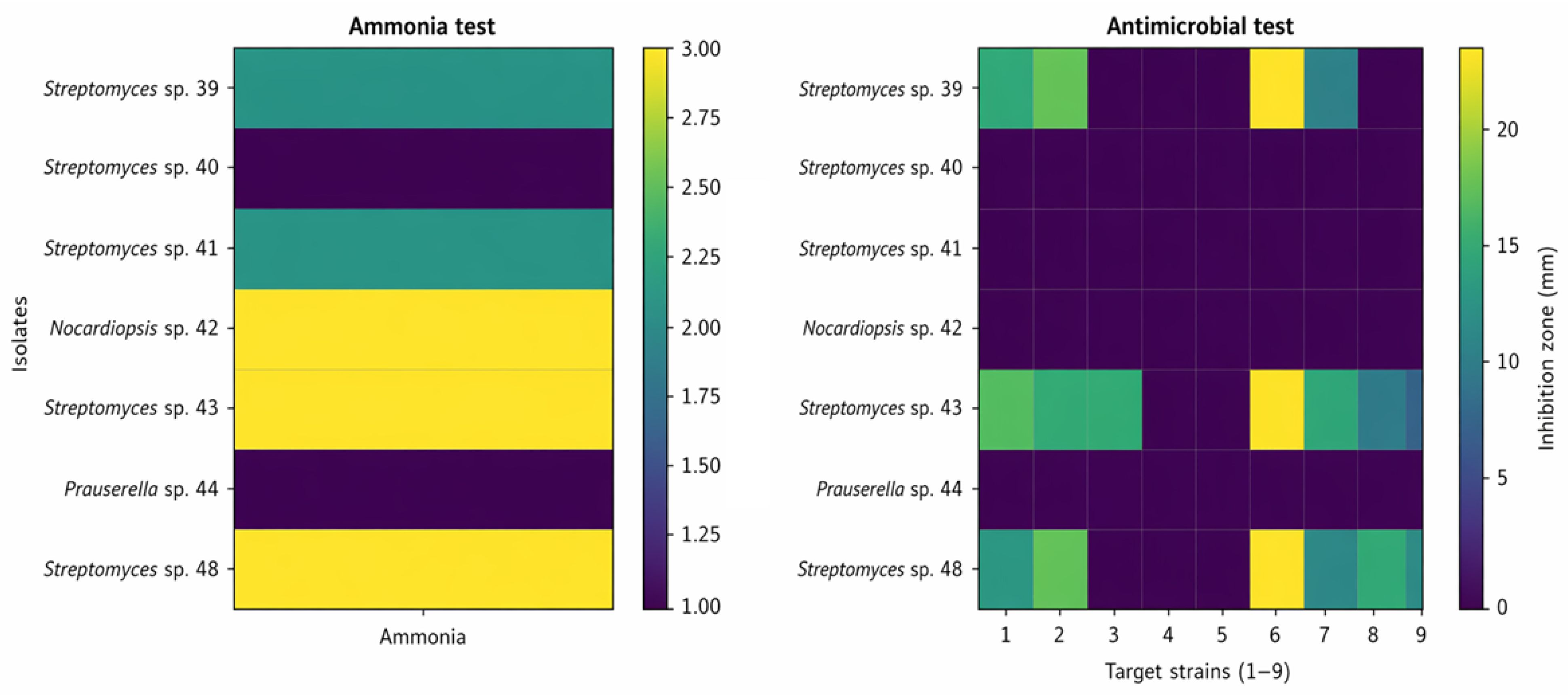
The results showed significant variation in the antimicrobial activities among the different strains. Streptomyces sp. strain 43 exhibited the broadest spectrum of activity, effectively inhibiting both Gram-positive and Gram-negative bacteria. This strain showed potent antimicrobial effects, with inhibition zones reaching up to 20 mm in diameter against E. faecalis ATCC 29212, B. subtilis ATCC 6633, S. aureus ATCC 25923, and E. aerogenes. This finding suggests that Streptomyces sp. strain 43 produces highly effective antimicrobial compounds capable of targeting a diverse range of bacterial species. Similarly, Streptomyces sp. strain 39 and Streptomyces sp. strain 48 also demonstrated significant antimicrobial activity, particularly against Gram-positive pathogens such as B. subtilis, S. aureus, and E. faecalis. Both strains displayed inhibition zones with a maximum size of 20 mm, indicating strong bacteriostatic effects; however, these did not exhibit activity against Gram-negative pathogens like K. pneumoniae and P. aeruginosa.
In contrast, other strains, such as Streptomyces spp. strains 40 and 41, Prauserella sp. strain 44, and Nocardiopsis sp. strain 42 exhibited little to no detectable antimicrobial activity against the tested pathogens, as indicated by the absence of significant bacteriostatic rings in Figure 3. This may suggest that these strains either do not produce antimicrobial compounds or their activity is limited to specific conditions not reproduced in the assay to exhibit activity.
The antimicrobial activity results revealed a clear contrast among the isolates, highlighting the particularly promising bioactive potential of some strains (Figure 3). Of all the isolates evaluated, only isolates 39, 43, and 48 showed inhibitory activity, whereas isolates 40, 41, 42, and 44 were completely inactive against the test microorganisms. Isolate 39 exhibited activity mainly against Gram-positive bacteria, with marked inhibition of S. aureus (23 mm), whereas isolates 43 and 48 were distinguished by a broader and more attractive spectrum of activity compared with standard antibiotics. Indeed, isolate 43 inhibited both Gram-positive bacteria, namely, E. coli and K. aerogenes, and the fungus A. brasiliensis, while isolate 48 showed the strongest antibacterial activity against S. aureus (24 mm) and simultaneous antifungal activity against A. brasiliensis and C. albicans. Taken together, these results highlight the promising potential of isolates 39, 43, and 48 as producers of broad-spectrum antimicrobial metabolites, fully justifying their selection for further investigations aimed at identifying the bioactive compounds they produce. The phylogenetic tree (Figure 2) reveals that isolates 39 and 48 were closely related, supported by high bootstrap values, whereas isolate 43 was positioned in a distinct lineage, indicating that antimicrobial activity is not strictly associated with close phylogenetic relatedness among the strains.

3.3. Phosphate Solubilization

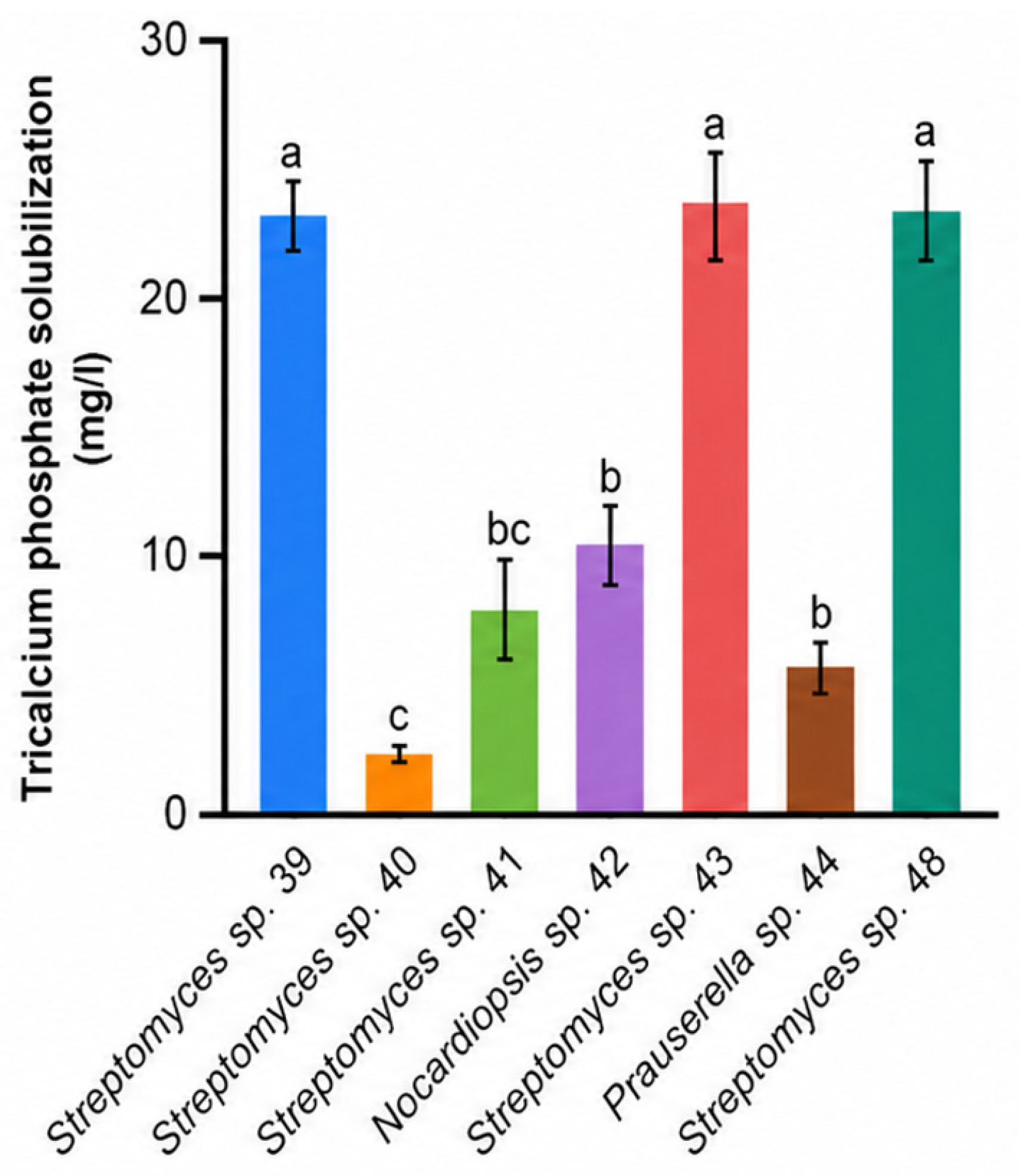
The phosphate solubilization capacity of the seven isolated actinobacterial strains (39, 40, 41, 42, 43, 44, and 48) was evaluated by measuring their ability to dissolve tricalcium phosphates. The solubilization capacity varied significantly among the strains, with values ranging from approximately 2 mg/L to 23 mg/L (Figure 4). Streptomyces sp. strains 39, 43, and 48 exhibited the highest phosphate solubilization activity, with values exceeding 20 mg/L, with no statistically significant differences among these three strains. In contrast, strain 40 demonstrated the lowest solubilization capacity, with values below 3 mg/L. Intermediate phosphate solubilization was observed for Streptomyces sp. strain 41, Prauserella sp. strain 44 and Nocardiopsis sp. strain 42.

3.4. IAA Production

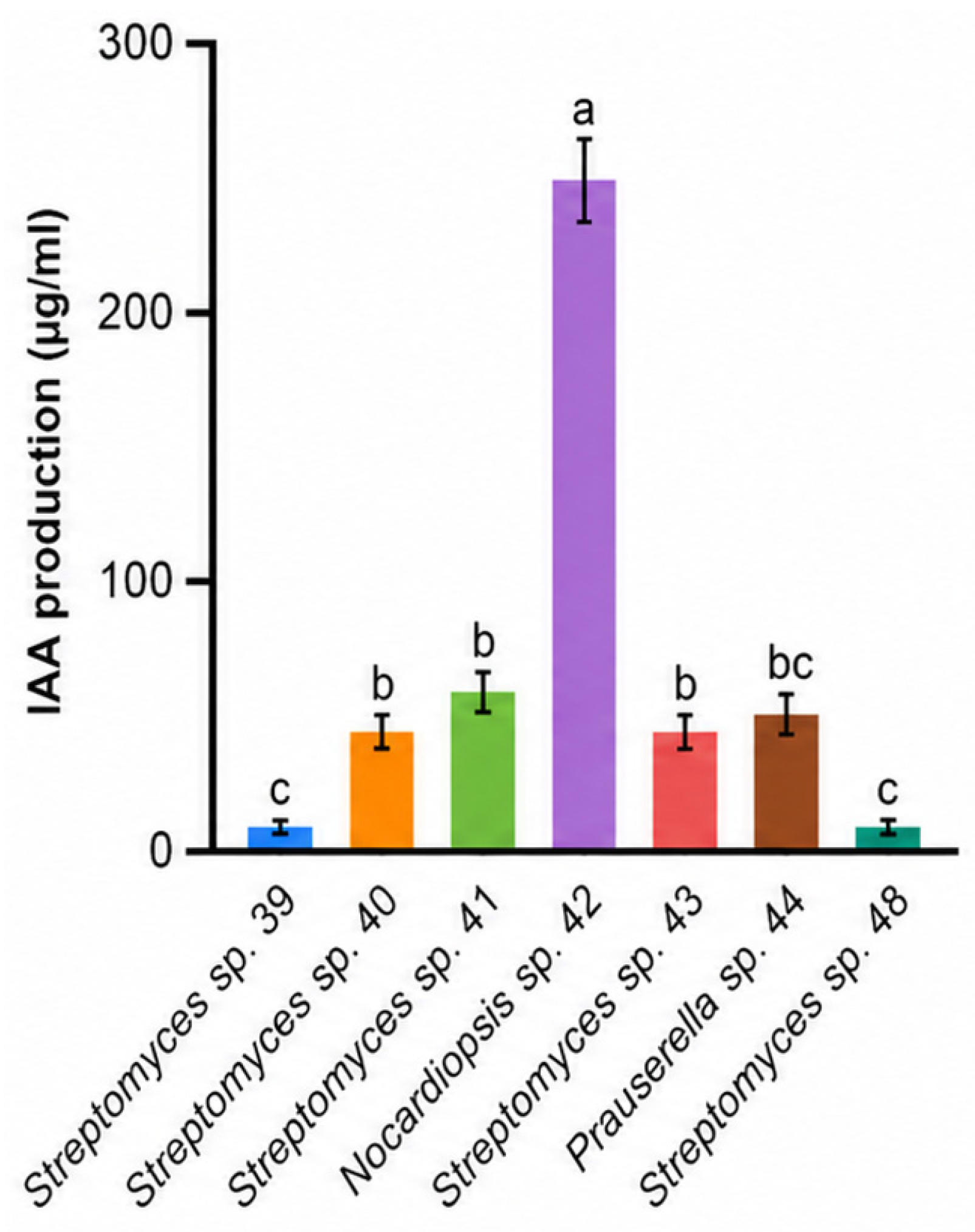
The quantification of IAA production by the different bacterial strains, as presented in Figure 5, demonstrated significant variation in auxin production among the tested strains. Nocardiopsis sp. strain 42 produced the highest amount of IAA (282 ± 20.5 μg/mL), which was significantly greater (p < 0.05) than the other strains. This level of production was nearly threefold higher than that of the next highest producers, Streptomyces sp. strain 41 (78 ± 10.3 μg/mL) and Streptomyces sp. strain 40 (69 ± 9.8 μg/mL). In contrast, strain 39 (14 ± 3.2 μg/mL) and Streptomyces sp. strain 48 (8 ± 2.1 μg/mL) produced the lowest levels of IAA. Intermediate IAA production was observed in Streptomyces sp. strain 43 and Prauserella sp. strain 44, with values of approximately 62 and 55 μg/mL, respectively. The significant variation in IAA production among the strains suggests differences in auxin biosynthesis capabilities, which may contribute to distinct plant-growth-promoting effects.

3.5. Siderophore Production

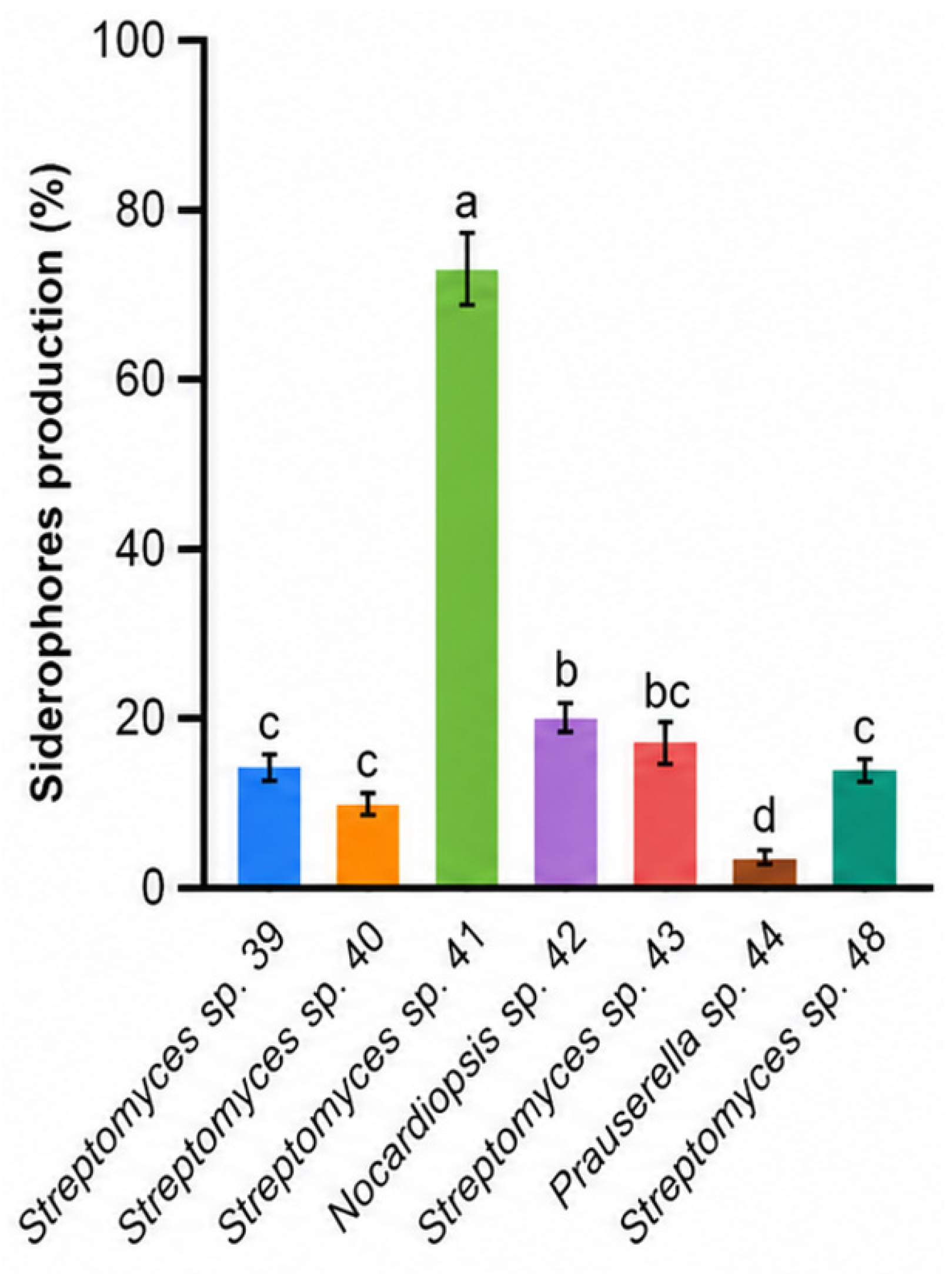
A significant difference in siderophore production was observed among the strains (Figure 6). Streptomyces sp. strain 41 showed the highest production recorded (83 ± 5.2%). This strain produced approximately twice the amount of siderophore compared to the next-highest producer, Nocardiopsis sp. strain 42 (45 ± 4.7%). In contrast, Prauserella sp. strain 44 exhibited the lowest siderophore production (6 ± 1.9%), significantly lower than all other strains. Streptomyces sp. strain 43 (36 ± 3.8%) and Streptomyces sp. strain 40 (25 ± 4.1%) showed moderate siderophore production. This variation suggests differences in the iron-chelating abilities of the bacterial strains, which may influence their potential for enhancing plant growth under iron-limited conditions.

3.6. Ammonia Production

The results revealed significant variability in ammonia production capacity among the studied isolates. Isolates 40 and 44 exhibited low production (+), suggesting limited metabolic activity, while isolates 39 and 41 showed moderate production (++). In contrast, isolates 42, 43, and 48 were characterized by high production (+++), indicating a strong capacity for ammonia generation, which could guide their selection based on nitrogen enrichment objectives (Figure 3).

3.7. Chemical Composition of Crude Extract

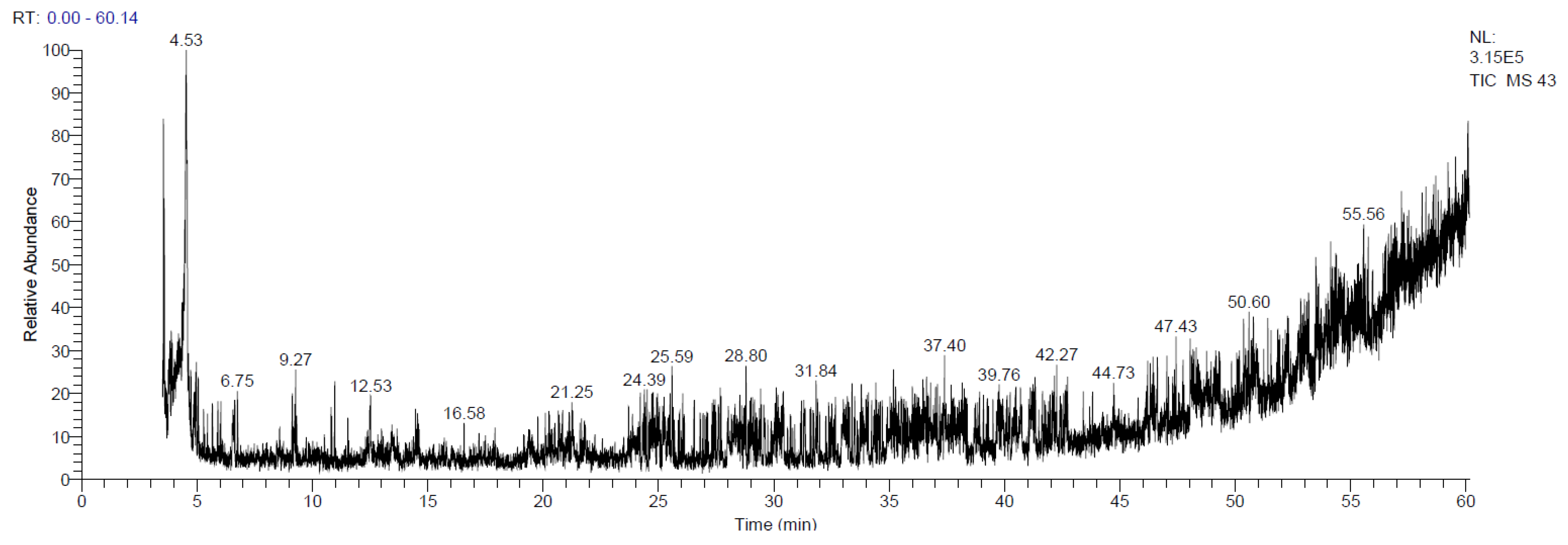
The analysis of the chromatogram obtained by GC-MS of the crude extract of strain 43 revealed the presence of more than one hundred compounds. Comparison of the different peaks with the NIST and WILEY databases allowed the identification of two major compounds, namely, 1,2-propanediol and nonanal, exhibiting retention times of 27.45 min and 27.68 min, respectively (Figure 7).

4. Discussion

The successful isolation and identification of actinobacteria from the sebkha lagoon underscore the potential of saline environments as reservoirs of microbial diversity. The genetic identification of isolates closely related to Streptomyces, Prauserella, and Nocardiopsis species suggests that these bacteria are well adapted to the extreme conditions of the sebkha, where salinity and nutrient limitations create a strong selective pressure for microbial survival. Several previous studies [23,24] have reported the presence of actinobacteria affiliated with these rare genera in hypersaline environments, such as marine salterns, suggesting the tolerance of these taxa to high-salinity conditions similar to those observed in the sebkha lagoon. For example, the genus Prauserella comprises 14 species, including six newly identified strains isolated from hypersaline habitats such as soil and marine sediments. Among them are Prauserella halophila and Prauserella marina, respectively [25,26]. In addition, four other novel Prauserella strains were isolated from a saline lake in China and named Prauserella salsuginis, Prauserella flava, Prauserella aidingensis and Prauserella sediminis [27]. The first report on the genus Prauserella in Morocco was published by Nafis et al. [4]. In their study, they isolated rare actinomycetes from mining soils.
Furthermore, 23 halophilic species among the 45 currently valid species of the genus Nocardiopsis have been isolated from saline ecosystems [28], including Nocardiopsis mwathae, which was recovered from the haloalkaline Lake Elmenteita in the African Rift Valley, Kenya [29]. Zhang et al. [30] described two additional species, Nocardiopsis ganjiahuensis and Nocardiopsis fragmentaris, isolated from the alkaline soils of a Ganjia Lake in Xinjiang Province, China. To date, this study represents the first report of the genus Nocardiopsis in Morocco.
Concerning the genus Streptomyces, one of the most abundant bacterial genera in nature, approximately ten studies have investigated actinobacteria in hypersaline niches. Akhwale et al. [31] identified a novel strain, named Streptomyces alkaliphilus, from sediments of an alkaline saline lake in Kenya. In addition, Turkish saline sediments have revealed several Streptomyces species, including Streptomyces iconiensis, Streptomyces seymenliensis, and Streptomyces smyrnaeus [32,33].
The antimicrobial activity exhibited by several isolates, particularly against S. aureus, underscores their biotechnological potential. For instance, strain 43, affiliated with Streptomyces mutabilis, demonstrated significant inhibitory activity, suggesting the production of potent antimicrobial compounds with potential applications against antibiotic-resistant pathogens. These results are consistent with previous studies reporting the antagonistic ability of actinobacterial strains isolated from hypersaline environments [34,35,36]. Hamed et al. [31] extracted a novel bioactive compound, N-Acetylborrelidin B (among seven more metabolites), from Streptomyces mutabilis collected from Red Sea sediments in Egypt, which showed antimicrobial activity against similar pathogens. These findings are particularly relevant in the context of increasing global antibiotic resistance.
The absence of activity against Gram-negative bacteria such as K. pneumoniae and P. aeruginosa suggests that the antimicrobial compounds produced are more effective against Gram-positive bacteria, a pattern commonly observed in actinobacterial secondary metabolites [37,38,39].
In addition to their antimicrobial activity, the actinobacterial isolates demonstrated promising PGP traits. Inorganic phosphate solubilization is a key mechanism by which microorganisms enhance plant growth [40,41]. In our study, all seven actinobacterial isolates exhibited phosphate solubilization activity, with strains 39 and 43 belonging to S. marokkonensis and strain 48 belonging to S. mutabilis, showing the highest levels of tricalcium phosphate solubilization. These findings are consistent with previous reports highlighting the phosphate solubilization potential of Streptomyces mutabilis isolated from various environments [42]. Notably, this study presents the first evidence of phosphate solubilization by Streptomyces marokkonensis, which may act as a valuable tool for enhancing plant growth.
IAA, a key plant growth regulator, plays a major role in nutrient uptake and plant stress tolerance [43,44]. Actinobacteria-derived auxins are well known for their plant-growth-promoting effects [45,46]. However, salinity stress may inhibit IAA synthesis in some cases [47,48]. In this study, all actinobacterial strains produced IAA when supplemented with the precursor molecule L-tryptophane. Among them, strain 42 (Nocardiopsis dassonvillei) exhibited the highest IAA production (246.48 µg ml−1), significantly surpassing the other isolates. This result is consistent with previous studies, where Nocardiopsis was reported to produce IAA in the range of 62.23–222.75 µg ml−1 [49,50]. Furthermore, other genera of actinobacteria, such as Streptomyces, Prauserella, and Nocardiopsis, have been shown to produce IAA in vitro and in silico when supplemented with L-tryptophan [50,51].
Iron acquisition is essential for plant growth but is limited due to the low solubility of Fe3+ in soils. Siderophores produced by microorganisms enhance iron availability to plants [52,53]. Plant-associated bacteria, including actinobacteria, are known to produce siderophores that enhance iron availability for plant uptake. In this study, all isolates belonging to three genera—Streptomyces, Prauserella, and Nocardiopsis—produced siderophores, with strain 41 (Streptomyces thermocarboxydus) exhibiting the highest production. This finding aligns with the literature, which describes siderophore production in actinobacteria, particularly in Streptomyces and Amycolatopsis species, isolated from hypersaline environments [54,55].
Ammonia production constitutes an alternative strategy for plant growth promotion, involving the conversion of atmospheric nitrogen (N2) into ammonia (NH3). Numerous actinobacteria are known to possess diverse plant-beneficial properties, notably nitrogen fixation. In particular, species of Frankia and Streptomyces have been widely investigated for their capacity to fix atmospheric nitrogen and enhance its availability to host plants [56]. Beyond these well-characterized genera, other actinobacteria have also demonstrated a strong potential for nitrogen-related plant growth promotion through ammonia release. For instance, Nocardiopsis dassonvillei strain YM12, isolated from coastal agricultural land of Khambhat, India, exhibited a relatively high ammonia production level of 7.2 µmol ml−1, highlighting its effective nitrogen-assimilating metabolism [50]. Such ammonia production can directly contribute to plant nitrogen nutrition, particularly in nutrient-poor or saline environments, thereby reinforcing the role of diverse actinobacterial taxa as key contributors to sustainable plant growth promotion.
These results further emphasize the potential of these actinobacterial isolates in enhancing plant growth, particularly under iron-limited conditions. Until now, no study has been conducted to evaluate the antimicrobial activity and PGP potential of halophilic species of the genus Prauserella, except our study, for Prauserella isguenensis strain 44. In this study, Nafis et al. [4] found that Prauserella NDS-4 exhibited very notable PGP activity.
Nocardiopsis species have an incredible ability to adapt to diverse environments. This resilience is explained by their flexible genome, ability to produce specific enzymes, and capacity to synthesize compatible solutes and surfactants [57]. The literature reports that many molecules have been characterized from extracts of halophilic Nocardiopsis strains. Chemical analysis of molecules purified from extracts of the haloalkaliphilic strain Nocardiopsis sp. AJ1, isolated from the saline soil of the Kovalam salt marshes in India, showed the existence of pyrrolo(1,2-A)(pyrazine-1,4-dione, hexahydro-3-[2-methylpropyl]-) and actinomycin C2 [58]. In addition, angucyclines and angucyclinones produced by Nocardiopsis sp. HR-4, isolated from the soil of a salt lake in the Algerian Sahara, were effective against methicillin-resistant Staphylococcus aureus (MRSA) ATCC 43300 [59]. Another study characterized two isomers, borrelidines C and D, produced by Nocardiopsis sp. HYJ128, which was isolated from a topsoil saltern in the Republic of Korea. Both molecules showed antimicrobial activity against Salmonella enterica ATCC 14028 [59]. Moreover, Nocardiopsis is one of the main genera of actinobacteria whose in vitro antifungal activity has been investigated to control plant pest fungi [60]. For example, Nocardiopsis dassonvillei MB22 and Nocardiopsis sp., isolated from soil, were used to control Bipolaris sorokiniana in wheat and Fusarium sp., respectively [58,61], and Nocardiopsis alba, isolated from the air, was used to control Ganoderma boninense [62]. Likewise, Nocardiopsis baichengensis was able to produce new siderophores, nobachelins, which protect Caenorhabditis elegans from Pseudomonas aeruginosa infection [63]. Moreover, new Nocobactin derivatives, Terpenibactins A–C, with antimuscarinic activity were detected through genome mining analysis for Nocardia terpenica IFM 0406 [64].
GC-MS analysis of the crude extract of our isolate Streptomyces mutabilis 43 revealed a complex metabolic profile, with approximately one hundred compounds detected. This finding is consistent with the extensive metabolic potential of the genus Streptomyces, recognized as one of the richest bacterial producers of secondary metabolites, including antibiotics, antifungals, antitumor compounds, and other bioactive small molecules; over two-thirds of known naturally derived antibiotics originate from this genus [65].
Among these compounds, two metabolites were reliably identified: 1,2-propanediol (RT = 27.45 min) and nonanal (RT = 27.68 min). 1,2-propanediol, also known as propylene glycol, is a three-carbon diol produced by various microorganisms, often via alternative fermentation pathways or through the reduction of glycolytic derivatives such as methylglyoxal [66]. Although this molecule is more commonly studied in species such as Lactobacillus and Clostridium and metabolically engineered strains (E. coli, Corynebacterium glutamicum), these studies demonstrate that natural or artificial microbial pathways can synthesize this diol from sugars or lactate through specific enzymatic steps [67]. Its presence in S. mutabilis may therefore indicate the activation, possibly at a low level, of a flexible metabolic pathway linked to pyruvate or methylglyoxal metabolism, known in other bacteria as a precursor of this diol [66].
Nonanal is a nine-carbon volatile aldehyde frequently detected in bacterial and fungal extracts, contributing to biological volatile profiles. Although it is not commonly reported as a major bioactive metabolite in the classical Streptomyces literature, it has been identified in various microbial and plant extracts and can contribute to aromatic properties as well as exhibit mild antimicrobial or antifungal effects depending on the context [68]. Its detection in S. mutabilis NBRC 12800T illustrates this strain’s ability to produce volatile secondary metabolites potentially involved in microbial communication or defense [69]. Overall, these results highlight the potential of S. mutabilis NBRC 12800T to produce bioactive small molecules, suggesting possible applications in biotechnology or biocontrol.
Concerning the metabolites produced by members of the genus Streptomyces, although only a limited number of strains have been isolated from hypersaline environments, research on the bioactive molecules produced by these microorganisms remains relatively scarce. Among the molecules identified, a quinone-related antibiotic was produced by Streptomyces chibaensis AUBN1/7, isolated from marine sediments collected from the Bay of Bengal, India [70]. Furthermore, the strain Streptomyces sp. B692, from sandy sediments of a coastal site in Mauritius (Indian Ocean), was identified as a producer of two new anthracycline antibiotics, himalomycin A and B [71]. Likewise, Chen et al. [72] report that genome analysis of S. marokkonensis M10, isolated from marine sediments collected in Dalian, China, revealed that more than 26 gene clusters are putatively associated with the biosynthesis of multiple secondary metabolites, including antibiotics and siderophores.
Overall, these findings highlight the strong potential of actinobacteria from sebkha environments for applications in sustainable agriculture and biocontrol. Future studies should focus on purification of bioactive compounds, genome mining for biosynthetic gene clusters, and evaluation of their agricultural and pharmaceutical applications.

5. Conclusions

The sebkha of Lake Naïla harbors an unexplored diversity of halophilic actinobacteria, mainly from the genera Streptomyces, Nocardiopsis, and Prauserella. Some strains, notably Streptomyces mutabilis 43, exhibit strong antimicrobial potential and produce diverse secondary metabolites, while others display plant-growth-promoting traits, including phosphate solubilization, auxin, siderophore, and ammonia production. The findings presented here provide important insights into the untapped microbial biodiversity of Moroccan saline ecosystems and underscore the potential of Lake Naïla as a saline environment reservoir for the discovery of new bioactive compounds. The biological and habitat diversity of Lake Naïla, combined with its status as a largely unexplored site in terms of actinobacteria diversity and associated biotechnological potential, makes this North African sebkha a promising location for bioprospecting studies.

Author Contributions

Conceptualization, A.N., A.R. and H.S.; methodology, B.O. and E.K.; software, A.R., E.O. and L.E.F.; validation, A.N., A.R. and H.S.; formal analysis, A.N., A.R. and H.S.; resources, A.N. and H.S.; data curation A.R., A.S., H.S. and A.N.; writing—original draft preparation, B.O. and E.K.; writing—review and editing, A.N., A.R. and H.S.; supervision, A.N. and H.S.; project administration, A.N. and H.S. All authors have read and agreed to the published version of the manuscript.

Funding

The authors gratefully acknowledge the Ministry of Higher Education, Scientific Research and Innovation of the Kingdom of Morocco (MESRSI) and the “Haute école spécialisée de Suisse occidentale”—Leading House MENA (LHMENA) for funding this research through the project entitled “ActinoBioFongicide-1”. This work was also supported by project Number L22N299 under the framework of the Protocol on Cooperation in Science and Technology between TÜBİTAK (Turkey) and CNRST (Morocco).

Institutional Review Board Statement

Not applicable.

Informed Consent Statement

Not applicable.

Data Availability Statement

All datasets generated and/or analyzed in this study were deposited in the NCBI database repository and are publicly accessible [(https://www.ncbi.nlm.nih.gov/gene/) (accessed on 2 March 2026); accession number PQ838283 for strain N39; accession number PQ838284 for strain N40; accession number PQ838285 for strain N41; accession number PQ838286 for strain N42; accession number PQ838287 for strain N43; accession number PQ838288 for strain N44; accession number PQ838289 for strain N48]. Sample collection in Khenifiss National Park was conducted ensuring compliance with all local regulations.

Conflicts of Interest

The authors declare no conflicts of interest.

References

  1. Li, S.-J.; Hua, Z.-S.; Huang, L.-N.; Li, J.; Shi, S.-H.; Chen, L.-X.; Kuang, J.-L.; Liu, J.; Hu, M.; Shu, W.-S. Microbial communities evolve faster in extreme environments. Sci. Rep. 2014, 4, 6205. [Google Scholar] [CrossRef] [PubMed]
  2. He, Z.; Wang, Y.; Bai, X.; Chu, M.; Yi, Y.; Zhu, J.; Gu, M.; Jiang, L.; Zhang, Z. Bacterial Community Composition and Isolation of Actinobacteria from the Soil of Flaming Mountain in Xinjiang, China. Microorganisms 2023, 11, 489. [Google Scholar] [CrossRef] [PubMed]
  3. Sayed, A.M.; Hassan, M.H.A.; Alhadrami, H.A.; Hassan, H.M.; Goodfellow, M.; Rateb, M.E. Extreme environments: Microbiology leading to specialized metabolites. J. Appl. Microbiol. 2020, 128, 630–657. [Google Scholar] [CrossRef]
  4. Nafis, A.; Raklami, A.; Bechtaoui, N.; El Khalloufi, F.; El Alaoui, A.; Glick, B.R.; Hafidi, M.; Kouisni, L.; Ouhdouch, Y.; Hassani, L. Actinobacteria from Extreme Niches in Morocco and Their Plant Growth-Promoting Potentials. Diversity 2019, 11, 139. [Google Scholar] [CrossRef]
  5. Sottorff, I.; Wiese, J.; Imhoff, J.F. High diversity and novelty of Actinobacteria isolated from the coastal zone of the geographically remote young volcanic Easter Island, Chile. Int. Microbiol. 2019, 22, 377–390. [Google Scholar] [CrossRef]
  6. Lakhdar Idrissi, J.; Orbi, A.; Zidane, F.; Hilmi, K.; Sarf, F.; Massik, Z.; Makaoui, A. Organisation et fonctionnement d’un écosystème côtier du Maroc: La lagune de Khnifiss. Rev. Sci. L’eau 2005, 17, 447–462. [Google Scholar] [CrossRef]
  7. Naghoni, A.; Emtiazi, G.; Amoozegar, M.A.; Cretoiu, M.S.; Stal, L.J.; Etemadifar, Z.; Shahzadeh Fazeli, S.A.; Bolhuis, H. Microbial diversity in the hypersaline Lake Meyghan, Iran. Sci. Rep. 2017, 7, 11522. [Google Scholar] [CrossRef] [PubMed]
  8. Buchmann, A.; Cano-Prieto, C.; Nafis, A.; Barakate, M.; Baz, M.; Hassani, L.; Ortlieb, N.; Niedermeyer, T.H.J.; Gross, H. Draft Genome Sequence of the Novonestmycin-Producing Strain Streptomyces sp. Z26, Isolated from Potato Rhizosphere in Morocco. Microbiol. Resour. Announc. 2019, 8, e01514-18. [Google Scholar] [CrossRef]
  9. Girão, M.; Ribeiro, I.; Ribeiro, T.; Azevedo, I.C.; Pereira, F.; Urbatzka, R.; Leão, P.N.; Carvalho, M.F. Actinobacteria Isolated From Laminaria ochroleuca: A Source of New Bioactive Compounds. Front. Microbiol. 2019, 10, 683. [Google Scholar] [CrossRef]
  10. Abdelmohsen, U.R.; Bayer, K.; Hentschel, U. Diversity, abundance and natural products of marine sponge-associated actinomycetes. Nat. Prod. Rep. 2014, 31, 381–399. [Google Scholar] [CrossRef] [PubMed]
  11. Uzair, B.; Menaa, F.; Khan, B.A.; Mohammad, F.V.; Ahmad, V.U.; Djeribi, R.; Menaa, B. Isolation, purification, structural elucidation and antimicrobial activities of kocumarin, a novel antibiotic isolated from actinobacterium Kocuria marina CMG S2 associated with the brown seaweed Pelvetia canaliculata. Microbiol. Res. 2018, 206, 186–197. [Google Scholar] [CrossRef] [PubMed]
  12. Bister, B.; Bischoff, D.; Ströbele, M.; Riedlinger, J.; Reicke, A.; Wolter, F.; Bull, A.T.; Zähner, H.; Fiedler, H.; Süssmuth, R.D. Abyssomicin C—A Polycyclic Antibiotic from a Marine Verrucosispora Strain as an Inhibitor of the p-Aminobenzoic Acid/Tetrahydrofolate Biosynthesis Pathway. Angew. Chem. Int. Ed. 2004, 43, 2574–2576. [Google Scholar] [CrossRef] [PubMed]
  13. Elabor, R.; Herbert, K.A.; Tolulope, F.E.; Mwashote, B.; Badisa, V.L.D.; Ibeanusi, V. Seasonal variations in physicochemical and nutrient parameters of Apalachicola Bay, Florida, and their implications to estuarine water quality and ecosystem health. Discov. Water 2026, 6, 60. [Google Scholar] [CrossRef]
  14. Siriwardana, H.; Samarasekara, R.S.M.; Anthony, D.; Vithanage, M. Measurements and analysis of nitrogen and phosphorus in oceans: Practice, frontiers, and insights. Heliyon 2024, 10, e28182. [Google Scholar] [CrossRef]
  15. Priyanshi; Phiri, T.A.; Prachi; Chhaya; Tomar, S.; Sagar, S.; Awasthi, A.; Sharma, S. Assessment of Physicochemical Properties of Water Samples. J. Res. Appl. Sci. Biotechnol. 2023, 2, 118–123. [Google Scholar] [CrossRef]
  16. Ribeiro, I.; Girão, M.; Alexandrino, D.A.M.; Ribeiro, T.; Santos, C.; Pereira, F.; Mucha, A.P.; Urbatzka, R.; Leão, P.N.; Carvalho, M.F. Diversity and Bioactive Potential of Actinobacteria Isolated from a Coastal Marine Sediment in Northern Portugal. Microorganisms 2020, 8, 1691. [Google Scholar] [CrossRef]
  17. Hossain, L.; Lim, L.Y.; Hammer, K.; Hettiarachchi, D.; Locher, C. A Review of Commonly Used Methodologies for Assessing the Antibacterial Activity of Honey and Honey Products. Antibiotics 2022, 11, 975. [Google Scholar] [CrossRef] [PubMed]
  18. Page, A.L. Methods of Soil Analysis; Page, A.L., Ed.; Agronomy Monographs; Wiley: Hoboken, NJ, USA, 1982; Volume 9, ISBN 9780891180722. [Google Scholar]
  19. Oubaha, B.; Rathore, R.S.; Bagri, J.; Singhal, N.K.; Mazumdar, K.; Rishi, V.; Pareek, A.; Singla-Pareek, S.L. Bacillus siamensis strain BW enhances rice growth and salinity tolerance through redox equilibrium and hormone modulation. Curr. Plant Biol. 2024, 37, 100321. [Google Scholar] [CrossRef]
  20. Virpiranta, H.; Banasik, M.; Taskila, S.; Leiviskä, T.; Halttu, M.; Sotaniemi, V.-H.; Tanskanen, J. Isolation of Efficient Metal-Binding Bacteria from Boreal Peat Soils and Development of Microbial Biosorbents for Improved Nickel Scavenging. Water 2020, 12, 2000. [Google Scholar] [CrossRef]
  21. Chowdappa, S.; Jagannath, S.; Konappa, N.; Udayashankar, A.C.; Jogaiah, S. Detection and Characterization of Antibacterial Siderophores Secreted by Endophytic Fungi from Cymbidium aloifolium. Biomolecules 2020, 10, 1412. [Google Scholar] [CrossRef]
  22. Cappuccino, J.G.; Sherman, N. Microbiology: A Laboratory Manual, 6th ed.; State University of New York, Rock Land Community College: New York, NY, USA, 2002. [Google Scholar]
  23. Wu, J.; Guan, T.; Jiang, H.; Zhi, X.; Tang, S.; Dong, H.; Zhang, L.; Li, W. Diversity of Actinobacterial community in saline sediments from Yunnan and Xinjiang, China. Extremophiles 2009, 13, 623–632. [Google Scholar] [CrossRef] [PubMed]
  24. Ballav, S.; Kerkar, S.; Thomas, S.; Augustine, N. Halophilic and halotolerant actinomycetes from a marine saltern of Goa, India producing anti-bacterial metabolites. J. Biosci. Bioeng. 2015, 119, 323–330. [Google Scholar] [CrossRef]
  25. Li, W.-J.; Xu, P.; Tang, S.-K.; Xu, L.-H.; Kroppenstedt, R.M.; Stackebrandt, E.; Jiang, C.-L. Prauserella halophila sp. nov. and Prauserella alba sp. nov., moderately halophilic actinomycetes from saline soil. Int. J. Syst. Evol. Microbiol. 2003, 53, 1545–1549. [Google Scholar] [CrossRef] [PubMed][Green Version]
  26. Wang, J.; Li, Y.; Bian, J.; Tang, S.-K.; Ren, B.; Chen, M.; Li, W.-J.; Zhang, L.-X. Prauserella marina sp. nov., isolated from ocean sediment of the South China Sea. Int. J. Syst. Evol. Microbiol. 2010, 60, 985–989. [Google Scholar] [CrossRef][Green Version]
  27. Li, Y.; Tang, S.-K.; Chen, Y.-G.; Wu, J.-Y.; Zhi, X.-Y.; Zhang, Y.-Q.; Li, W.-J. Prauserella salsuginis sp. nov., Prauserella flava sp. nov., Prauserella aidingensis sp. nov. and Prauserella sediminis sp. nov., isolated from a salt lake. Int. J. Syst. Evol. Microbiol. 2009, 59, 2923–2928. [Google Scholar] [CrossRef]
  28. Boudjelal, F.; Zitouni, A.; Bouras, N.; Spröer, C.; Klenk, H.-P.; Smaoui, S.; Mathieu, F. Rare Halophilic Nocardiopsis from Algerian Saharan Soils as Tools for Biotechnological Processes in Pharmaceutical Industry. BioMed Res. Int. 2023, 2023, 1061176. [Google Scholar] [CrossRef]
  29. Akhwale, J.K.; Göker, M.; Rohde, M.; Schumann, P.; Boga, H.I.; Klenk, H.-P. Nocardiopsis mwathae sp. nov., isolated from the haloalkaline Lake Elmenteita in the African Rift Valley. Antonie Leeuwenhoek 2016, 109, 421–430. [Google Scholar] [CrossRef]
  30. Zhang, X.; Zhang, L.-P.; Yang, R.; Shi, N.; Lu, Z.; Chen, W.X.; Jiang, C.-L.; Xu, L.-H. Nocardiopsis ganjiahuensis sp. nov., isolated from a soil from Ganjiahu, China. Int. J. Syst. Evol. Microbiol. 2008, 58, 195–199. [Google Scholar] [CrossRef][Green Version]
  31. Akhwale, J.K.; Göker, M.; Rohde, M.; Spröer, C.; Schumann, P.; Klenk, H.-P.; Boga, H.I. Streptomyces alkaliphilus sp. nov., isolated from sediments of Lake Elmenteita in the Kenyan Rift Valley. Antonie Leeuwenhoek 2015, 107, 1249–1259. [Google Scholar] [CrossRef]
  32. Tatar, D.; Guven, K.; Spröer, C.; Klenk, H.-P.; Sahin, N. Streptomyces iconiensis sp. nov. and Streptomyces smyrnaeus sp. nov., two halotolerant actinomycetes isolated from a salt lake and saltern. Int. J. Syst. Evol. Microbiol. 2014, 64, 3126–3133. [Google Scholar] [CrossRef] [PubMed]
  33. Tatar, D.; Sahin, N. Streptomyces seymenliensis sp. nov., isolated from soil. Antonie Leeuwenhoek 2015, 107, 411–418. [Google Scholar] [CrossRef] [PubMed]
  34. Hamed, A.; Abdel-Razek, A.S.; Frese, M.; Wibberg, D.; El-Haddad, A.F.; Ibrahim, T.M.A.; Kalinowski, J.; Sewald, N.; Shaaban, M. N-Acetylborrelidin B: A new bioactive metabolite from Streptomyces mutabilis sp. MII. Z. Für Naturforschung C 2018, 73, 49–57. [Google Scholar] [CrossRef]
  35. Odumosu, B.T.; Buraimoh, O.M.; Okeke, C.J.; Ogah, J.O.; Michel, F.C. Antimicrobial activities of the Streptomyces ceolicolor strain AOB KF977550 isolated from a tropical estuary. J. Taibah Univ. Sci. 2017, 11, 836–841. [Google Scholar] [CrossRef]
  36. Osman, M.E.; Abo-Elnasr, A.A.; Mohamed, E.T. Exploring Bioactive Potential of Streptomyces thinghirensis WAE1 from Wadi El-Natron, Egypt. Indian J. Microbiol. 2024, 64, 1685–1696. [Google Scholar] [CrossRef]
  37. Ait Assou, S.; Anissi, J.; Sendide, K.; El Hassouni, M. Diversity and Antimicrobial Activities of Actinobacteria Isolated from Mining Soils in Midelt Region, Morocco. Sci. World J. 2023, 2023, 6106673. [Google Scholar] [CrossRef] [PubMed]
  38. Maiti, P.K.; Mandal, S. Majority of Actinobacterial Strains Isolated from Kashmir Himalaya Soil Are Rich Source of Antimicrobials and Industrially Important Biomolecules. Adv. Microbiol. 2019, 9, 220–238. [Google Scholar] [CrossRef]
  39. Passari, A.K.; Leo, V.V.; Chandra, P.; Kumar, B.; Nayak, C.; Hashem, A.; Allah, E.F.A.; A Alqarawi, A.; Singh, B.P. Bioprospection of actinobacteria derived from freshwater sediments for their potential to produce antimicrobial compounds. Microb. Cell Fact. 2018, 17, 68. [Google Scholar] [CrossRef]
  40. Raklami, A.; Quintas-Nunes, F.; Nascimento, F.X.; Jemo, M.; Oufdou, K.; Syed, A.; Bahkali, A.H.; Verma, M.; Nafis, A. Assessing the growth-promoting traits of Actinobacteria spp. isolated from Cleome africana: Implications on growth and root enhancement of Medicago sativa. J. King Saud Univ.-Sci. 2023, 35, 102722. [Google Scholar] [CrossRef]
  41. Raklami, A.; Babalola, O.O.; Jemo, M.; Nafis, A. Unlocking the plant growth-promoting potential of yeast spp.: Exploring species from the Moroccan extremophilic environment for enhanced plant growth and sustainable farming. FEMS Microbiol. Lett. 2024, 371, fnae015. [Google Scholar] [CrossRef] [PubMed]
  42. Goudjal, Y.; Zamoum, M.; Sabaou, N.; Mathieu, F.; Zitouni, A. Potential of endophytic Streptomyces spp. for biocontrol of Fusarium root rot disease and growth promotion of tomato seedlings. Biocontrol Sci. Technol. 2016, 26, 1691–1705. [Google Scholar] [CrossRef]
  43. Bhise, K.K.; Dandge, P.B. Mitigation of salinity stress in plants using plant growth promoting bacteria. Symbiosis 2019, 79, 191–204. [Google Scholar] [CrossRef]
  44. Egamberdieva, D.; Kucharova, Z. Selection for root colonising bacteria stimulating wheat growth in saline soils. Biol. Fertil. Soils 2009, 45, 563–571. [Google Scholar] [CrossRef]
  45. Delvasto, P.; Valverde, A.; Ballester, A.; Igual, J.; Munoz, J.; Gonzalez, F.; Blazquez, M.; Garcia, C. Characterization of brushite as a re-crystallization product formed during bacterial solubilization of hydroxyapatite in batch cultures. Soil Biol. Biochem. 2006, 38, 2645–2654. [Google Scholar] [CrossRef]
  46. George, P.; Gupta, A.; Gopal, M.; Thomas, L.; Thomas, G.V. Multifarious beneficial traits and plant growth promoting potential of Serratia marcescens KiSII and Enterobacter sp. RNF 267 isolated from the rhizosphere of coconut palms (Cocos nucifera L.). World J. Microbiol. Biotechnol. 2013, 29, 109–117. [Google Scholar] [CrossRef]
  47. Dodd, I.C.; Perez-Alfocea, F. Microbial amelioration of crop salinity stress. J. Exp. Bot. 2012, 63, 3415–3428. [Google Scholar] [CrossRef]
  48. Soleimani, R.; Alikhani, H.A.; Towfighi, H.; Khavazi, K.; Pourbabaee, A.A. Isolated bacteria from saline–sodic soils alter the response of wheat under high adsorbed sodium and salt stress. Int. J. Environ. Sci. Technol. 2017, 14, 143–150. [Google Scholar] [CrossRef]
  49. Shutsrirung, A.; Chromkaew, Y.; Pathom-Aree, W.; Choonluchanon, S.; Boonkerd, N. Diversity of endophytic actinomycetes in mandarin grown in northern Thailand, their phytohormone production potential and plant growth promoting activity. Soil Sci. Plant Nutr. 2013, 59, 322–330. [Google Scholar] [CrossRef]
  50. Patel, K.B.; Thakker, J.N. Growth promotion and biocontrol activity of Nocardiopsis dassonvillei strain YM12: An isolate from coastal agricultural land of Khambhat. Vegetos 2019, 32, 571–582. [Google Scholar] [CrossRef]
  51. Boukhatem, Z.F.; Merabet, C.; Tsaki, H. Plant Growth Promoting Actinobacteria, the Most Promising Candidates as Bioinoculants? Front. Agron. 2022, 4, 849911. [Google Scholar] [CrossRef]
  52. Ahmed, E.; Holmström, S.J.M. Siderophores in environmental research: Roles and applications. Microb. Biotechnol. 2014, 7, 196–208. [Google Scholar] [CrossRef]
  53. Timofeeva, A.M.; Galyamova, M.R.; Sedykh, S.E. Bacterial Siderophores: Classification, Biosynthesis, Perspectives of Use in Agriculture. Plants 2022, 11, 3065. [Google Scholar] [CrossRef] [PubMed]
  54. Alvarez-Sastre, C.; Carro, L. Desert Actinobacterial Strains Increase Salt Stress Resilience in Crops. Environ. Sci. Proc. 2022, 16, 17. [Google Scholar]
  55. Boubekri, K.; Soumare, A.; Mardad, I.; Lyamlouli, K.; Hafidi, M.; Ouhdouch, Y.; Kouisni, L. The Screening of Potassium- and Phosphate-Solubilizing Actinobacteria and the Assessment of Their Ability to Promote Wheat Growth Parameters. Microorganisms 2021, 9, 470. [Google Scholar] [CrossRef]
  56. Sadeghi, A.; Karimi, E.; Javid, M.G. Plant growth promoting activity of an auxin and siderophore producing isolate of Streptomyces under saline soil condition Plant growth promoting activity of an auxin and siderophore producing isolate of Streptomyces under saline soil conditions. World J. Microbiol. Biotechnol. 2012, 28, 1503–1509. [Google Scholar] [CrossRef]
  57. Bennur, T.; Kumar, A.R.; Zinjarde, S.; Javdekar, V. Nocardiopsis species: Incidence, ecological roles and adaptations. Microbiol. Res. 2015, 174, 33–47. [Google Scholar] [CrossRef] [PubMed]
  58. Adlin Jenifer, J.S.C.; Michaelbabu, M.; Eswaramoorthy Thirumalaikumar, C.L.; Jeraldin Nisha, S.R.; Uma, G.; Citarasu, T. Antimicrobial potential of haloalkaliphilic Nocardiopsis sp. AJ1 isolated from solar salterns in India. J. Basic Microbiol. 2019, 59, 288–301. [Google Scholar] [CrossRef]
  59. Hadj Rabia-Boukhalfa, Y.; Eveno, Y.; Karama, S.; Selama, O.; Lauga, B.; Duran, R.; Hacène, H.; Eparvier, V. Isolation, purification and chemical characterization of a new angucyclinone compound produced by a new halotolerant Nocardiopsis sp. HR-4 strain. World J. Microbiol. Biotechnol. 2017, 33, 126. [Google Scholar] [CrossRef]
  60. Torres-Rodriguez, J.A.; Reyes-Pérez, J.J.; Quiñones-Aguilar, E.E.; Hernandez-Montiel, L.G. Actinomycete Potential as Biocontrol Agent of Phytopathogenic Fungi: Mechanisms, Source, and Applications. Plants 2022, 11, 3201. [Google Scholar] [CrossRef]
  61. Allali, K.; Goudjal, Y.; Zamoum, M.; Bouznada, K.; Sabaou, N.; Zitouni, A. Nocardiopsis dassonvillei strain MB22 from the Algerian Sahara promotes wheat seedlings growth and potentially controls the common root rot pathogen Bipolaris sorokiniana. J. Plant Pathol. 2019, 101, 1115–1125. [Google Scholar] [CrossRef]
  62. Widada, J.; Damayanti, E.; Alhakim, M.R.; Yuwono, T.; Mustofa, M. Two strains of airborne Nocardiopsis alba producing different volatile organic compounds (VOCs) as biofungicide for Ganoderma boninense. FEMS Microbiol. Lett. 2021, 368, fnab138. [Google Scholar] [CrossRef]
  63. Zhao, H.; Ren, Y.; Xie, F.; Dai, H.; Liu, H.; Fu, C.; Müller, R. Nobachelins, new siderophores from Nocardiopsis baichengensis protecting Caenorhabditis elegans from Pseudomonas aeruginosa infection. Synth. Syst. Biotechnol. 2023, 8, 640–646. [Google Scholar] [CrossRef]
  64. Chen, J.; Frediansyah, A.; Männle, D.; Straetener, J.; Brötz-Oesterhelt, H.; Ziemert, N.; Kaysser, L.; Gross, H. New Nocobactin Derivatives with Antimuscarinic Activity, Terpenibactins A–C, Revealed by Genome Mining of Nocardia terpenica IFM 0406. ChemBioChem 2020, 21, 2205–2213. [Google Scholar] [CrossRef]
  65. Alam, K.; Mazumder, A.; Sikdar, S.; Zhao, Y.; Hao, J.; Song, C.; Wang, Y. Streptomyces: The biofactory of secondary metabolites. Front. Microbiol. 2022, 13, 968053. [Google Scholar] [CrossRef] [PubMed]
  66. Tao, Y.; Bu, C.; Zou, L.; Hu, Y.; Zheng, Z.J.; Ouyang, J. Biotechnology for Biofuels A comprehensive review on microbial production of 1, 2-propanediol: Micro-organisms, metabolic pathways, and metabolic engineering. Biotechnol. Biofuels 2026, 14, 216. [Google Scholar] [CrossRef] [PubMed]
  67. Sato, R.; Ikeda, M.; Tanaka, T.; Ohara, H.; Aso, Y. Production of R-and S-1, 2-propanediol in engineered Lactococcus lactis. AMB Express 2021, 11, 117. [Google Scholar] [CrossRef]
  68. Sholkamy, E.N.; Palsamy, S.; Raja, S.S.S.; Alarjani, K.M.; Habila, M.A. GC-MS Analysis and Bioactivity of Streptomyces sp. Volatile Metabolites against some Phytopathogenic Fungi. Braz. Arch. Biol. Technol. 2023, 66, e23220626. [Google Scholar] [CrossRef]
  69. Chandrasekaran, M.; Paramasivan, M.; Sahayarayan, J.J. Microbial Volatile Organic Compounds: An Alternative for Chemical Fertilizers in Sustainable Agriculture Development. Microorganisms 2022, 11, 42. [Google Scholar] [CrossRef]
  70. Gorajana, A.; Kurada, B.V.V.S.N.; Peela, S.; Jangam, P.; Vinjamuri, S.; Poluri, E.; Zeeck, A. 1-Hydroxy-1-norresistomycin, a New Cytotoxic Compound from a Marine Actinomycete, Streptomyces chibaensis AUBN1/7. J. Antibiot. 2005, 58, 526–529. [Google Scholar] [CrossRef]
  71. Maskey, R.P.; Helmke, E.; Laatsch, H. Himalomycin A and B: Isolation and structure elucidation of new fridamycin type antibiotics from a marine Streptomyces isolate. J. Antibiot. 2003, 56, 942–949. [Google Scholar] [CrossRef]
  72. Chen, L.; Lai, Y.-M.; Yang, Y.-L.; Zhao, X. Genome mining reveals the biosynthetic potential of the marine-derived strain Streptomyces marokkonensis M10. Synth. Syst. Biotechnol. 2016, 1, 56–65. [Google Scholar] [CrossRef] [PubMed]
Figure 1. Geospatial localization of the study area highlighting the sebkha of Lake Naïla through site-specific imagery.
Bacteria 05 00032 g001
Figure 2. Neighbor-joining phylogenetic tree based on 16S rDNA sequences illustrating the relationships between the isolated strains and related bacterial sequences retrieved from the GenBank database. Numbers in parentheses indicate GenBank accession numbers. The scale bar represents 0.002 substitutions per nucleotide position.
Bacteria 05 00032 g002
Figure 3. Antimicrobial activities and ammonia test production of isolated actinobacteria. 1, Enterococcus faecalis ATCC 29212; 2, Bacillus subtilis ATCC 6633; 3, Escherichia coli ATCC 25922; 4, Klebsiella quasipneumoniae ATCC 700603; 5, Pseudomonas aeruginosa ATCC 27853; 6, Staphylococcus aureus ATCC 25923; 7, Klebsiella aerogenes ATCC 13048; 8, Aspergillus brasiliensis ATCC 16404; 9, Candida albicans ATCC 10231.
Bacteria 05 00032 g003
Figure 4. Phosphate solubilization by actinobacterial isolates. The experiment was repeated thrice, and the result is shown as a representative of three experiments. Data presented are means ± SDs. Bars sharing the same letters are not significantly different (p < 0.05) based on the Tukey test.
Bacteria 05 00032 g004
Figure 5. Assessment of actinobacterial isolates for auxin production. The experiment was repeated thrice, and the result is shown as representative of three experiments. Data presented are means ± SDs. Bars sharing the same letters are not significantly different (p < 0.05) based on the Tukey test.
Bacteria 05 00032 g005
Figure 6. Evaluation of siderophore production by actinobacterial isolates. The experiments were repeated thrice, and the result is shown as a representative of three experiments. Data presented are means ± SDs. Bars sharing the same letters are not significantly different (p < 0.05) based on the Tukey test.
Bacteria 05 00032 g006
Figure 7. GC-MS chromatogram of crude extract of isolate Streptomyces sp. strain 43.
Bacteria 05 00032 g007
Table 1. Physicochemical characteristics of sediments and water collected from the studied site.
Water SampleSediment Sample
MeanSDMeanSD
pH7.80.07--
Salinity g/L36.370.7830.430.96
T °C21.50.33--
Electrical conductivity (mS/cm)42.830.3839.30.85
Dissolved oxygen (DO) (mg/L)7.030.16--
Turbidity (NTU)9.670.44--
Organic matter content (%)--1.130.15
SD: Standard Deviation.
Table 2. The 16S rDNA sequence similarity of bacterial strains to closest type strains.
Molecular Characteristics
Site of
Isolation
Isolate CodeMedium of IsolationAccession NumberNumber of bpSimilarity %Closest Type Strain
Lac Naïla39Marine coral agarPQ838283146099.65Streptomyces marokkonensis Ap1(T)
40Marine coral agarPQ8382841482100.00Streptomyces silvae For3(T)
41Modified Bennett agarPQ838285148199.93Streptomyces thermocarboxydus DSM 44293(T)
42Chitin–vitamin B agarPQ8382861418100.00Nocardiopsis dassonvillei DSM 43111(T)
43Chitin–vitamin B agarPQ838287147199.79Streptomyces mutabilis NBRC 12800(T)
44Modified Bennett agarPQ838288149799.79Prauserella isguenensis H255(T)
48Modified Bennett agarPQ838289147099.65Streptomyces marokkonensis Ap1(T)
Disclaimer/Publisher’s Note: The statements, opinions and data contained in all publications are solely those of the individual author(s) and contributor(s) and not of MDPI and/or the editor(s). MDPI and/or the editor(s) disclaim responsibility for any injury to people or property resulting from any ideas, methods, instructions or products referred to in the content.