Article

Optimizing Material Ratios and Moisture Content for Potassium-Solubilizing Purple Nonsulfur Bacteria-Inoculated Compost Production


1
Faculty of Crop Science, College of Agriculture, Can Tho University, Can Tho 94000, Vietnam
2
Experimental—Practical Area, An Giang University, Vietnam National University Ho Chi Minh City, An Giang 90000, Vietnam
*
Author to whom correspondence should be addressed.
Bacteria 2026, 5(1), 15; https://doi.org/10.3390/bacteria5010015
Submission received: 6 November 2025 / Revised: 31 January 2026 / Accepted: 22 February 2026 / Published: 6 March 2026

Abstract

The increasing reliance on chemical fertilizers has raised environmental concerns and highlighted the need for sustainable alternatives. This study aimed to (i) optimize the carrier-to-substrate ratios and moisture content during composting with potassium-solubilizing purple nonsulfur bacteria (K-PNSB) and (ii) evaluate the growth-promoting effect of the optimized biofertilizer on maize seedlings. Three K-PNSB strains (Cereibacter sphaeroides M-Sl-09, Rhodopseudomonas thermotolerans M-So-11, and Rhodopseudomonas palustris M-So-14) were used. Composting experiments were conducted using different carrier-to-substrate ratios and moisture levels with K-PNSB inoculation. Compost quality was assessed through nutrient dynamics, bacterial density, and physicochemical properties over four weeks. The results showed that the 1:1:3 substrate ratio combined with 50–60% moisture content consistently enhanced K solubilization, bacterial survival, and compost maturity indicators. Application of the optimized biofertilizer improved maize growth traits compared with the non-inoculated control. These findings demonstrate that controlling material ratios and moisture content improves compost quality and plant growth performance, providing a sustainable alternative to chemical fertilizers. This study provides a practical framework for developing sustainable K-solubilizing biofertilizers from agricultural residues.

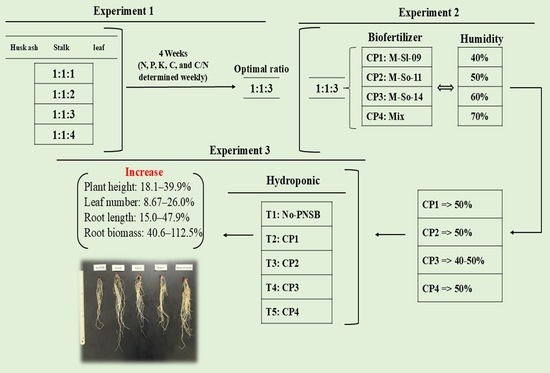
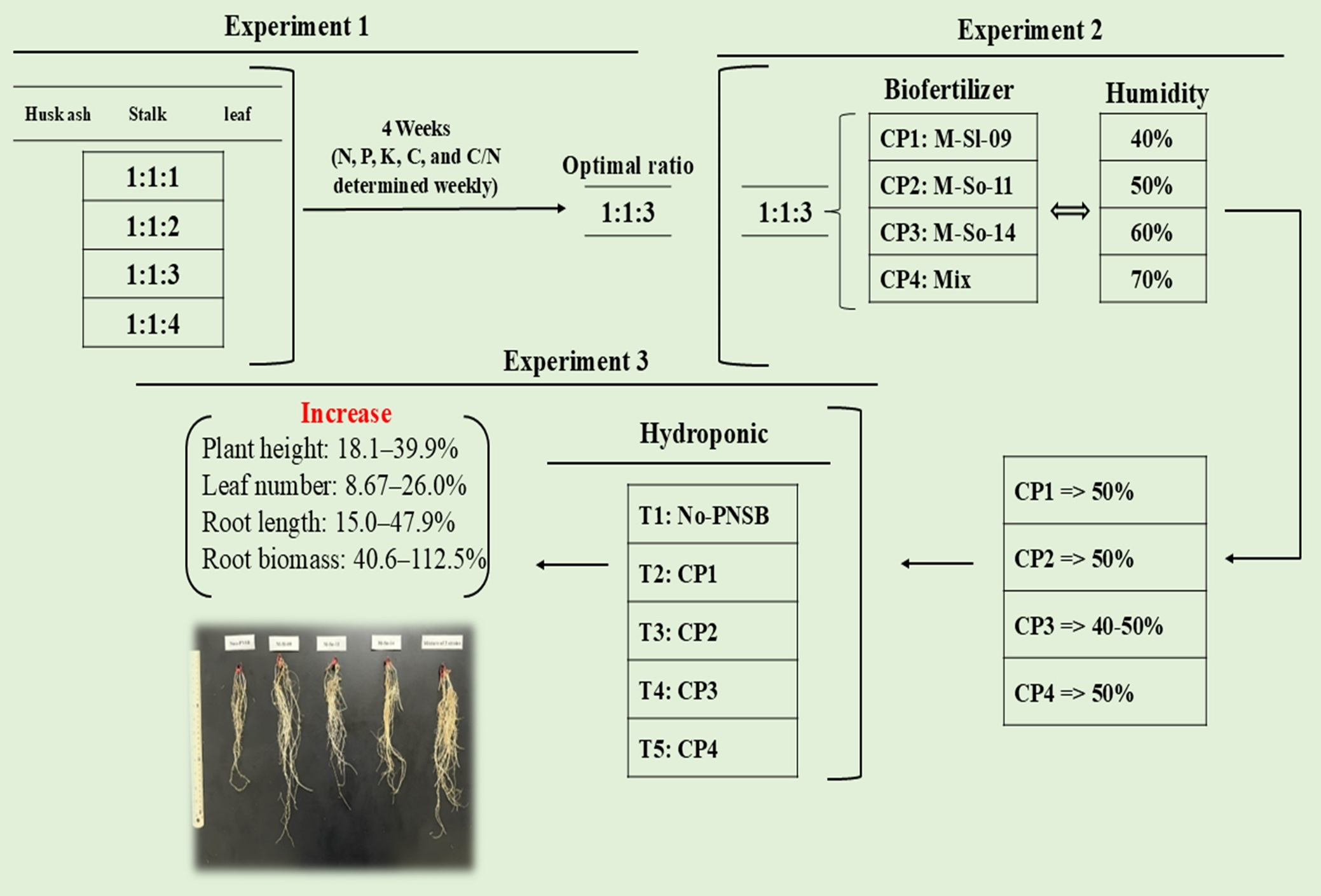
Graphical Abstract

1. Introduction

Agricultural production faces growing pressure to increase yields and productivity to meet global food demands of population growth [1,2]. This growing demand for food has directly increased the use of inorganic fertilizers [3], with a global consumption reaching approximately 185 million tons in 2022 [4]. Recent studies have highlighted the low efficiency of chemical fertilizer use, resulting in serious environmental problems, soil nutrient imbalances, and suboptimal food production [5,6]. Ren et al. [7] reported that fertilizer overuse is particularly prevalent among smallholder farmers, who cultivate 40% of the world’s agricultural land [8]. Between 50 and 70% of applied fertilizer is lost through leaching, volatilization, or runoff, contributing not only to greenhouse gas emissions [9] and water pollution [10], but also to inefficient resource use [11].
In the face of material shortages, rising production costs, and limited natural gas supplies, fertilizer prices have become a major challenge for agriculture [12]. According to Martin et al. [13], fertilizers are a non-renewable resource, and the reuse of agricultural by-products to produce organic fertilizers is both essential and aligned with sustainable agriculture. Organic wastes and agricultural residues are biodegradable materials [14] that can cause serious environmental pollution and pose health risks due to the presence of heavy metals and pesticide residues [15,16]. It is estimated that agriculture produces 7.37 billion tons of biomass annually, including approximately 4 billion tons of residues such as husks, shells, straw, and bagasse, mainly from cereals, sugarcane, and oilseed crops [17,18].
Composting is an effective method to convert agricultural wastes into stable organic fertilizers. Composting transforms organic materials into nutrient-rich organic fertilizers [19], enhances soil organic matter [20], promotes microbial diversity [21], and provides a safe, low-cost, and environmentally friendly fertilizer for agriculture [22]. Utilizing agricultural residues for organic fertilizer production reduces dependence on chemical fertilizers and mitigates environmental pollution [23]. This process also contributes to reducing greenhouse gas emissions and supports biodiversity conservation [24,25]. However, the efficiency of composting depends strongly on the composition of raw materials and moisture content, which influence microbial activity, nutrient transformation, and organic matter decomposition [26]. Moreover, the reuse of waste materials as a source of fertilizer applying back to the plants can be considered as a sign of sustainable agriculture [27]. Rice husk in paddy cultivation and maize stem-leaves after harvest are left behind as by-products [28] which can be a source of contaminations if not being properly disposed of [29]. In contrast, the amount of carbon within such materials is relatively high can be recycled to be available organic matter for plant growth [30,31,32]. Thus, it is important to determine microorganisms that are suitable for decomposing rice husk and maize by-products and promoting crop production [33].
Harnessing cellulolytic bacteria in composting agricultural waste promotes microbial organic fertilizer production, offering a sustainable alternative to manage biomass while enhancing nutrient availability [34]. Recent efforts have focused on applying fungi and bacteria, especially purple nonsulfur bacteria (PNSB), in combination with organic materials to advance sustainable agriculture and reduce agrochemical dependency [35]. PNSB are known for nitrogen fixation [36,37], phosphate solubilization [38,39], and production of plant growth-promoting substances such as IAA, ALA, and siderophores [40,41,42]. They also help plants tolerate stress from heavy metals, acidity, and salinity [43,44]. Khuong et al. [45] demonstrated that rice straw and rice husk ash used as carriers for Rhodopseudomonas spp. enhanced soil fertility and crop yield in acidic and alluvial soils.
Despite these advances, little is known about the optimal composting conditions, specifically, carrier-to-substrate ratios and moisture levels that support the growth and persistence of potassium-solubilizing PNSB (K-PNSB). The quality of biofertilizers is influenced by these two factors which are two key determinants of compost efficiency [26,46]. Identifying these parameters is crucial to ensure both microbial survival and nutrient enrichment in the final product. Furthermore, the effectiveness of such biofertilizers in enhancing crop performance, particularly maize, remains underexplored.
Therefore, this study aimed to:
(i)
Determine the optimal combination rate of rice husk ash, maize stalk, and leaf residues for composting with K-PNSB;
(ii)
Identify the most suitable moisture content for maintaining compost quality and bacterial viability;
(iii)
Evaluate the effects of the resulting biofertilizer formulations on the growth and biomass of hybrid maize under hydroponic conditions.
We hypothesized that specific material ratios and moisture levels would optimize nutrient transformation and bacterial viability during composting, thereby improving maize growth compared with uninoculated controls.

2. Materials and Methods

2.1. Preparation of Composting Materials and Bacterial Strains

Preparation of composting materials: Maize stalks and leaves were collected after harvest, air-dried, and ground to pass through a 2 mm sieve. Rice husk ash was obtained from local rice mills. Rice husk ash acted as a carrier [47], while maize stalks and leaves were substrates [48], so the rate of the ash remained. Therefore, the materials were mixed in different proportions of rice husk ash:maize stalk:maize leaf (1:1:1, 1:1:2, 1:1:3, and 1:1:4) according to the experimental design. All carrier-to-substrate ratios were calculated on a dry weight basis. Each 100 g batch of dry material was packed into a 20 × 30 cm polyethylene bag, sterilized at 121 °C for 30 min, and cooled to room temperature before inoculation.
Bacterial strains: Three potassium-solubilizing purple nonsulfur bacterial (K-PNSB) strains, Cereibacter sphaeroides M-Sl-09 (PP814768.1), Rhodopseudomonas thermotolerans M-So-11 (PP814769.1), and Rhodopseudomonas palustris M-So-14 (PP814770.1), were used. These isolates originated from alluvial soils at Can Tho University and were previously characterized based on colony morphology, physiological properties, and partial 16S rRNA gene sequences showing 99% similarity to the corresponding type strains. Their potassium-solubilizing capacity had been suggested in a previous study of ours [49]. To avoid taxonomic over-interpretation, they are referred to in this study by strain codes (M-Sl-09, M-So-11, and M-So-14). Pure cultures were stored at −80 °C in 20% glycerol [49].
Nutrient solution: The hydroponic nutrient solution consisted of NH4NO3 (40 ppm N), NaNO3 (20 ppm N), MgSO4 (40 ppm Mg), CaCl2 (8f0 ppm Ca), K2SO4 (60 ppm K), and Na2HPO4 (24 ppm P), following the method of Wagatsuma and Ezoe [50]. All nutrient solutions and moisture adjustments were prepared using sterile distilled water. Pots were supplied with sterilized nutrient solution, and nutrient broth was periodically replenished throughout the observation period. Environmental conditions were maintained at a temperature of 28 °C, relative humidity of 70%, and a photoperiod of 16 h light and 8 h dark under fluorescent illumination of approximately 3000 lux.
Bacterial propagation: The bacterial strains were revived in BIM medium (pH 6.5–7.2) under aerobic conditions for 72 h at 30 °C on a rotary shaker at 120 rpm. The BIM medium was composed of the following constituents (g L−1): (NH4)2SO4 1.0, K2HPO4 0.5, MgSO4·7H2O 0.2, NaCl 2.0, NaHCO3 5.0, yeast extract 1.5, glycerol 1.5, and L-cysteine 0.03 [51]. The medium pH was adjusted to 7.0 ± 0.2 prior to sterilization. Cell density was measured and adjusted to 106 CFU mL−1 (corresponding to OD660 nm = 2.0), a level commonly reported to ensure microbial establishment without excessive competition or nutrient depletion [52], using a Shimadzu 1900 spectrophotometer (Shimadzu, Kyoto, Japan) to prepare the bacterial suspension.

2.2. Experiments

All composting and hydroponic experiments were conducted at the Faculty of Crop Science, College of Agriculture, Can Tho University, Vietnam.
Composting procedure: The materials were sterilized at 121 °C for 30 min and dried at 65 °C. Moisture content was determined by oven-drying. Composting was performed at different moisture levels (40–70%). Each bag received 50 mL of bacterial suspension (equivalent to 0.33 × 10⁶ CFU g−1 material) and sufficient sterile distilled water to achieve the target moisture content. Moisture content was adjusted gravimetrically by adding sterile distilled water to achieve target levels of 40, 50, 60, and 70%. Moisture was monitored by weighing subsamples and was adjusted as necessary to maintain uniform conditions throughout the 4-week composting period. Composting was conducted in perforated plastic bags to allow limited gas exchange while preventing excessive moisture loss and minimizing contamination prior to bacterial inoculation. The amount of BIM medium introduced with inoculation (50 mL per 100 g compost) contributed less than 0.02% of total N, P, or K to the compost.
Experiment 1: This experiment evaluated the most suitable combination of rice husk ash, maize stalk, and leaf residues for composting with K-PNSB. A completely randomized design (CRD) with four treatments (ratios 1:1:1, 1:1:2, 1:1:3, and 1:1:4) and four replicates per treatment was used. After sterilization and cooling, each composting bag was inoculated with 50 mL of mixed K-PNSB suspension (≈0.33 × 10⁶ CFU g−1 material) by syringe and moistened to 60% with sterile water. Composting was carried out for 4 weeks under microaerobic light conditions (28 ± 2 °C, 70% relative humidity), with light intensity maintained at approximately 3000 lux to support photoheterotrophic growth of PNSB [53]. Oxygen availability was limited by the use of partially sealed bags, creating conditions favorable for PNSB survival [54]. Samples were collected weekly to determine total carbon (C), nitrogen (N), phosphorus (P), potassium (K), and the C/N ratio. Initial (week 0) nutrient contents were also recorded to evaluate nutrient enrichment during composting.
Experiment 2: Based on Experiment 1, the best carrier-to-substrate ratio was selected for the moisture optimization trial. Four inoculation treatments were tested: CP1 = C. sphaeroides M-Sl-09; CP2 = R. thermotolerans M-So-11; CP3 = R. palustris M-So-14; and CP4 = mixture of all three strains. Each bacterial treatment inoculated by syringe was incubated at four moisture levels (40%, 50%, 60%, 70%) in a CRD with four replicates (4 bacterial × 4 moisture × 4 replicates = 64 bags). Composting lasted 4 weeks at 28 ± 2 °C. Samples were analyzed weekly for total C, N, P, K, C/N ratio, and viable bacterial counts (CFU g−1).
Experiment 3: The optimal compost formulation (1:1:3 ratio; 50% moisture) obtained from Experiments 1 and 2 was used to prepare solid biofertilizer for growth testing. A hydroponic experiment was conducted using a CRD with five treatments and four replicates: (i) Control—no bacteria, (ii) M-Sl-09, (iii) M-So-11, (iv) M-So-14, and (v) Mixed culture (M-Sl-09 + M-So-11 + M-So-14). The solid biofertilizer was added to the nutrient solution of the hydroponic pots. Hybrid maize seeds (DK6919S) were surface-sterilized with 1% NaOCl for 3 min, rinsed, and pre-germinated for 24 h in the dark. Seeds were soaked for 1 h in bacterial suspensions (1 × 10⁹ CFU mL−1) corresponding to each treatment before sowing (three seeds per pot). Each pot (8.5 × 11.5 × 15 cm) contained sterile nutrient solution. The hydroponic system was maintained at 28 °C, 70% RH, with a 16 h light / 8 h dark photoperiod. Moisture of the compost substrate was kept near 50% by periodic weighing and water addition.

2.3. Analytical Methods

Measured parameters: Growth and biomass parameters of maize were measured 15 days after sowing using three plants per pot. Plant height (cm) was measured from the stem base to the tip of the tallest leaf. Stem diameter (cm) was measured at three positions (base, middle, and upper stem) using a digital caliper, and the mean value was recorded. The number of leaves per plant was counted manually. Leaf length (cm) was measured from the leaf base to the tip of the uppermost fully expanded leaf, and leaf width (cm) was measured at the widest point of the same leaf. Root length (cm) was determined from the stem base to the longest root tip. The number of primary roots was counted for each plant. Roots and shoots were separated, oven-dried at 65 °C to constant weight, and weighed to determine dry root biomass and dry shoot biomass (g).
Plant nutrient analysis: Compost and plant samples were air-dried, ground, and passed through a 0.5 mm sieve. A subsample (0.3 g) was digested using concentrated H2SO4 with salicylic acid and incubated for 8 h at room temperature. The digest was then heated to 180 °C with the gradual addition of 30% H2O2 until a clear solution was obtained and subsequently diluted to 50 mL with distilled water [55]. This digest was used for determination of total nitrogen (N), phosphorus (P), and potassium (K).
Total nitrogen was determined by the Kjeldahl distillation method followed by titration with 0.01 N H2SO4 [55]. Total phosphorus was measured colorimetrically using the phosphomolybdate blue method, with absorbance read at 880 nm using a UV–Vis spectrophotometer [55]. Total potassium was quantified by flame photometry at a wavelength of 766.5 nm [55]. Total carbon (C) content of compost samples was determined using the dry combustion method [56].
Bacterial density: Viable bacterial populations in compost samples were quantified using the colony-forming unit (CFU) method. Serial dilutions were prepared in sterile saline solution, and aliquots were plated on BIM. Plates were incubated under microaerobic light conditions at 28 ± 2 °C for 3–5 days, and colonies were counted to calculate bacterial density (CFU g−1 dry compost).

2.4. Statistical Analysis

Data were compiled using Microsoft Excel 2016 and analyzed for variance using SPSS 13.0. The data were checked to pass the normal distribution by Shapiro–Wilk method before running. ANOVA analysis was used to determine significant differences between treatments at the 5% significance level according to Duncan’s test.

3. Results

3.1. Effect of Material Ratios on Nutrient Dynamics During Composting

The compost nutrient composition was significantly affected by the ratio of rice husk ash, stalk, and leaf materials (Table 1 and Table 2). Across all treatments, total N and P increased over the 4-week composting period, while the C/N ratio decreased. Among the tested ratios, the 1:1:3 (ash:stalk:leaf) treatment consistently showed the highest overall nutrient levels and the lowest final C/N ratio, indicating more advanced compost maturity by week 4. In contrast, the 1:1:1 ratio exhibited slower changes in nutrient composition and maintained higher C/N values throughout the composting period. The 1:1:4 ratio showed reduced N and P levels relative to 1:1:3, whereas the 1:1:2 ratio resulted in lower K content. Overall, the progressive decline in the C/N ratio across treatments reflects ongoing organic matter decomposition and compost stabilization during the incubation period.

3.2. Effect of Moisture Content on Nutrient Dynamics During Composting

The effect of moisture level on nutrient dynamics was assessed in four inoculation treatments (CP1–CP4): CP1 = Cereibacter sphaeroides M-Sl-09, CP2 = Rhodopseudomonas thermotolerans M-So-11, CP3 = Rhodopseudomonas palustris M-So-14, and CP4 = Mixed culture of all three strains.

3.2.1. Total Nitrogen

Moisture effects on total N content varied among compost formulations (Table 3). In CP1, moderate moisture levels (50–60%) generally resulted in higher total N during the early composting stage, whereas by week 4, total N values converged across treatments, with slightly higher levels at 50% and 70% moisture. In CP2 and CP3, total N content was not significantly affected by moisture level throughout the composting period. In contrast, CP4 showed clearer moisture-dependent differences, with composts maintained at 40–50% moisture sustaining higher total N levels across weeks 1–3, and 50% moisture producing the highest total N by week 4 compared with higher moisture treatments.

3.2.2. Total Phosphorus

Total P content responded differently to moisture levels among compost formulations (Table 4). In CP1, lower moisture levels (40–50%) generally resulted in higher P content during the early composting stages, whereas by week 4, p values were comparable across moderate and high moisture treatments, with slightly lower levels at 40% moisture. In CP2 and CP3, total P was initially higher at lower moisture levels during the first two weeks, but differences among moisture treatments diminished by week 4, when P content was not significantly affected by moisture. In contrast, CP4 exhibited clearer moisture-dependent differences at the end of composting, with higher total P maintained at 40–50% moisture and reduced levels observed at higher moisture contents.

3.2.3. Total Potassium

Total K content showed variable responses to moisture levels among compost formulations (Table 5). In CP1, K content was similar across moisture treatments during the early composting period, whereas by week 4, moderate moisture (50%) resulted in higher K levels compared with higher moisture contents. In CP2, total K remained largely unaffected by moisture throughout the composting period. In CP3, higher K levels were observed at lower to moderate moisture levels during the early and mid-composting stages, while moisture-related differences were not significant at the end of composting. In CP4, total K was comparable among treatments during the first two weeks, but by week 4, higher moisture (70%) resulted in reduced K content, whereas composts maintained at 40–60% moisture retained higher K levels.

3.2.4. Total Carbon

Total C content showed limited sensitivity to moisture level across most compost formulations (Table 6). In CP1, total C did not differ significantly among moisture treatments during the first three weeks, although higher moisture resulted in increased C content by week 4. In CP2, total C varied over time but showed no consistent moisture-related pattern, despite slightly higher values at lower moisture levels during the early composting stages. In CP3, moisture had no significant effect on total C at any sampling time. In contrast, CP4 exhibited clearer moisture-dependent differences at the end of composting, with composts maintained at lower moisture retaining higher total C than those at higher moisture levels.

3.2.5. C/N Ratio

The C/N ratio responded to moisture level in a formulation-dependent manner (Table 7). In CP1, compost maintained at 50% moisture showed the lowest C/N ratio by week 4, whereas higher ratios were observed at lower and higher moisture levels. In CP2, C/N ratios declined over time across all treatments, with lower final values generally observed at moderate to high moisture levels. In CP3, moisture had no significant effect on C/N ratio at the beginning or end of composting, although transient differences were observed at week 3. In CP4, higher moisture levels initially resulted in elevated C/N ratios, whereas by week 4, compost maintained at 50% moisture exhibited the lowest C/N ratio compared with other moisture treatments.

3.3. Effect of Moisture Content on Bacterial Density During Composting

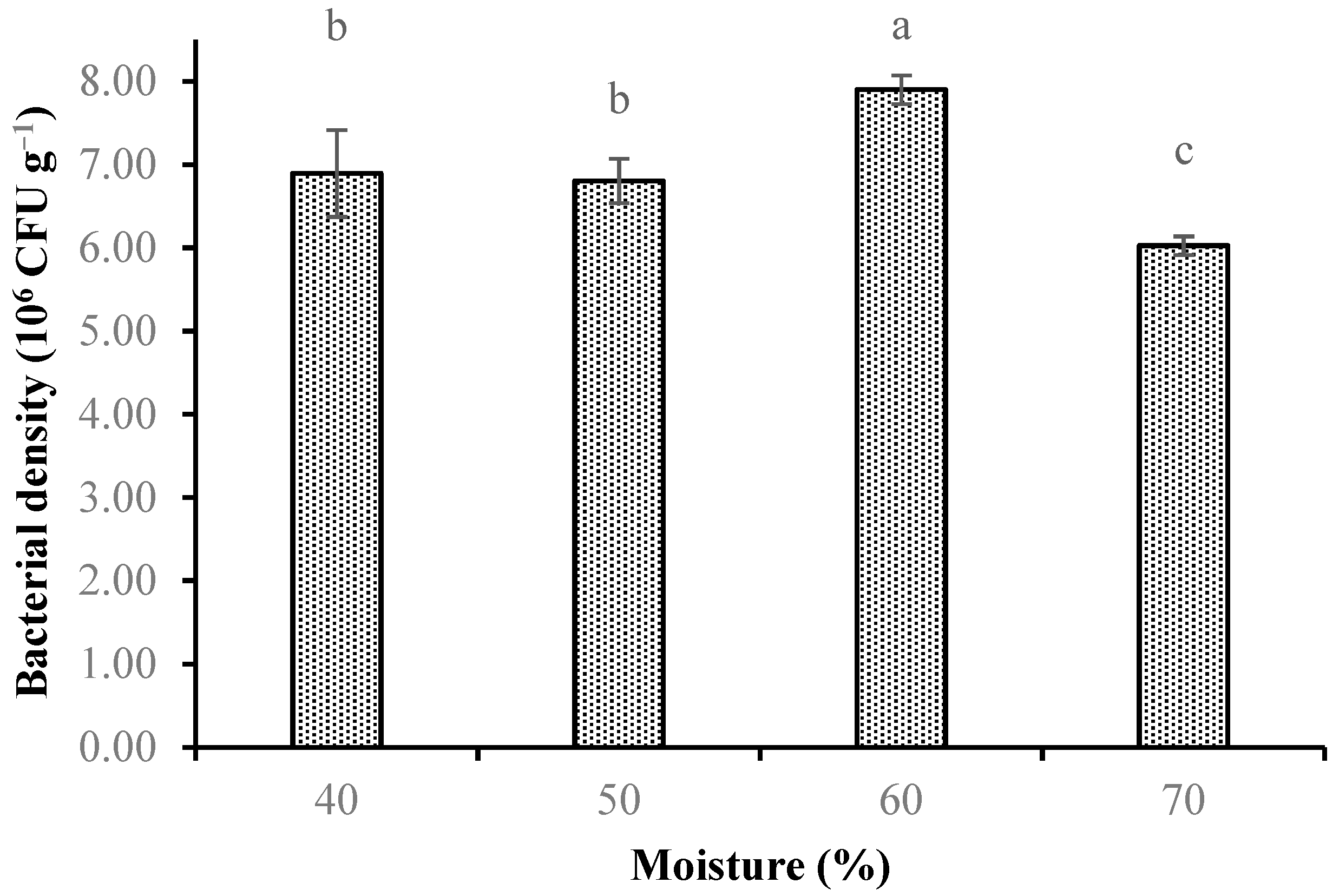
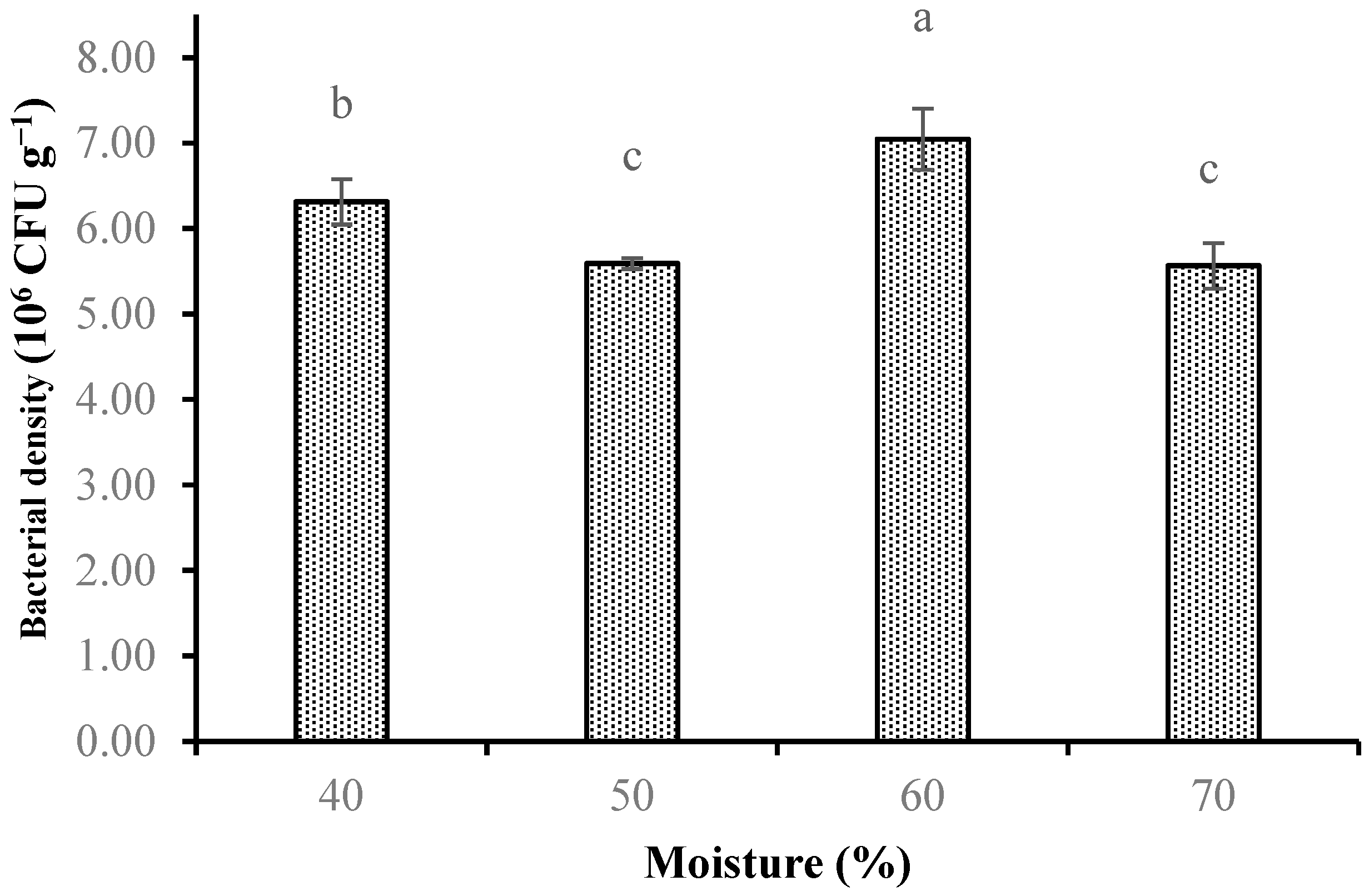
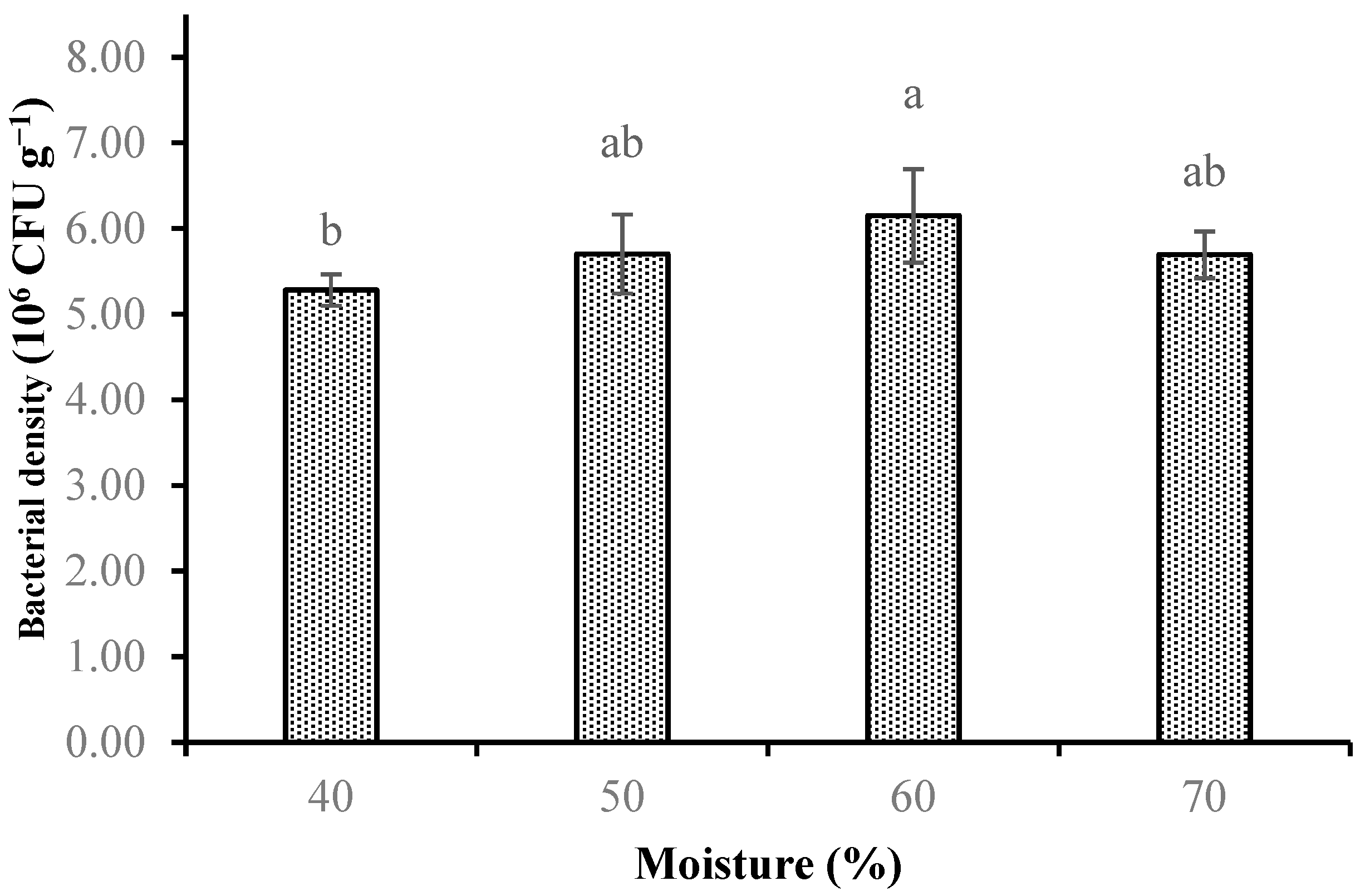
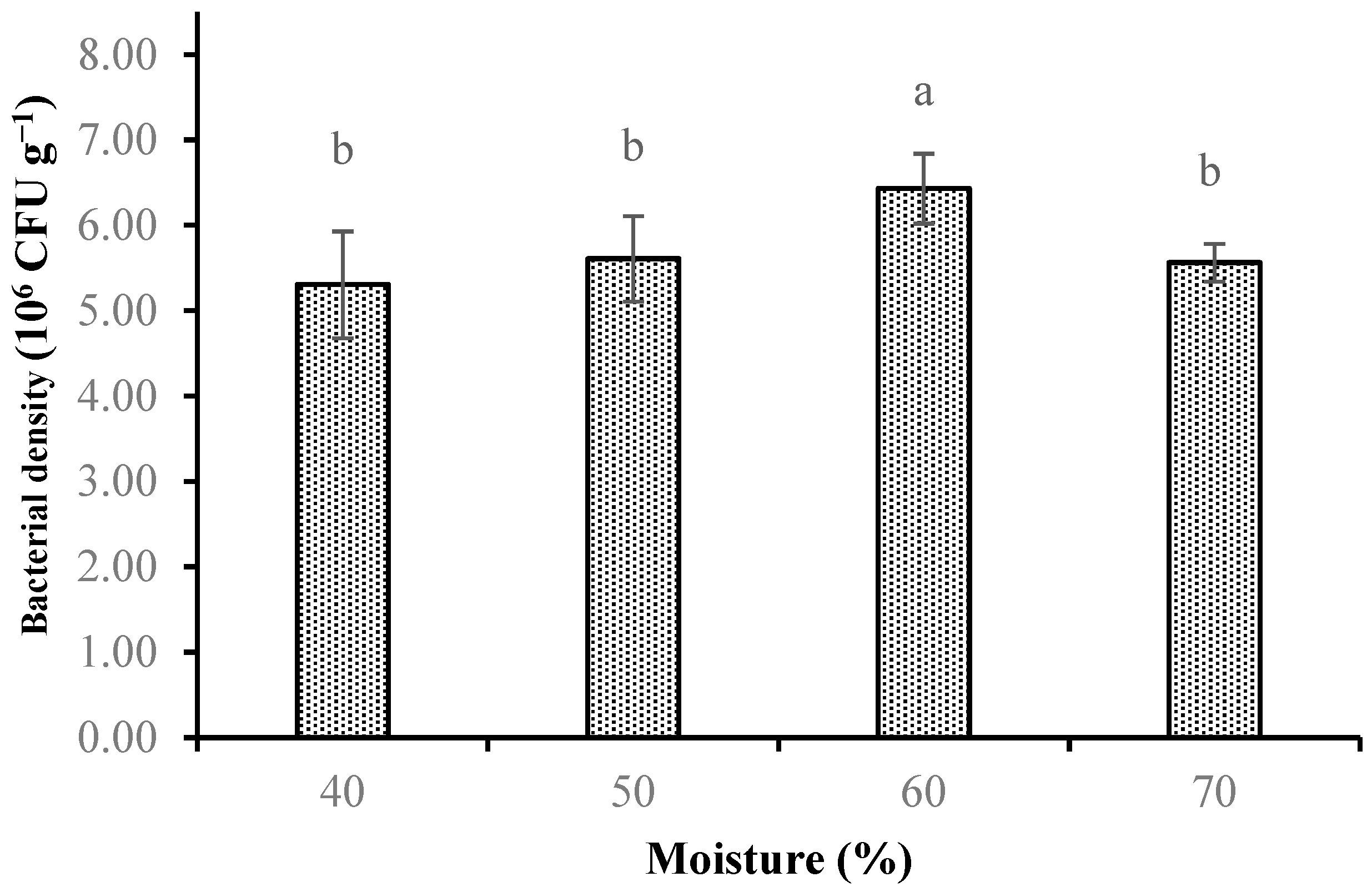
Bacterial density in the biofertilizer was significantly influenced by moisture content for all K-PNSB strains and their mixed culture (Figure 1, Figure 2, Figure 3 and Figure 4). For each strain, bacterial populations generally increased with rising moisture from 40% to 60% and declined at 70% moisture. Across treatments, the highest viable counts were consistently observed at 60% moisture, whereas lower or excessively high moisture levels resulted in reduced bacterial densities. Moderate populations were maintained at 40% and 50% moisture, while 70% moisture did not further enhance bacterial proliferation. The mixed K-PNSB culture exhibited a similar moisture response pattern, with peak bacterial density at 60% moisture and lower counts at other moisture levels.

3.4. Effect of Biofertilizer Containing Potassium-Solubilizing Purple Nonsulfur Bacteria on Growth and Biomass of Maize in Hydroponic Culture

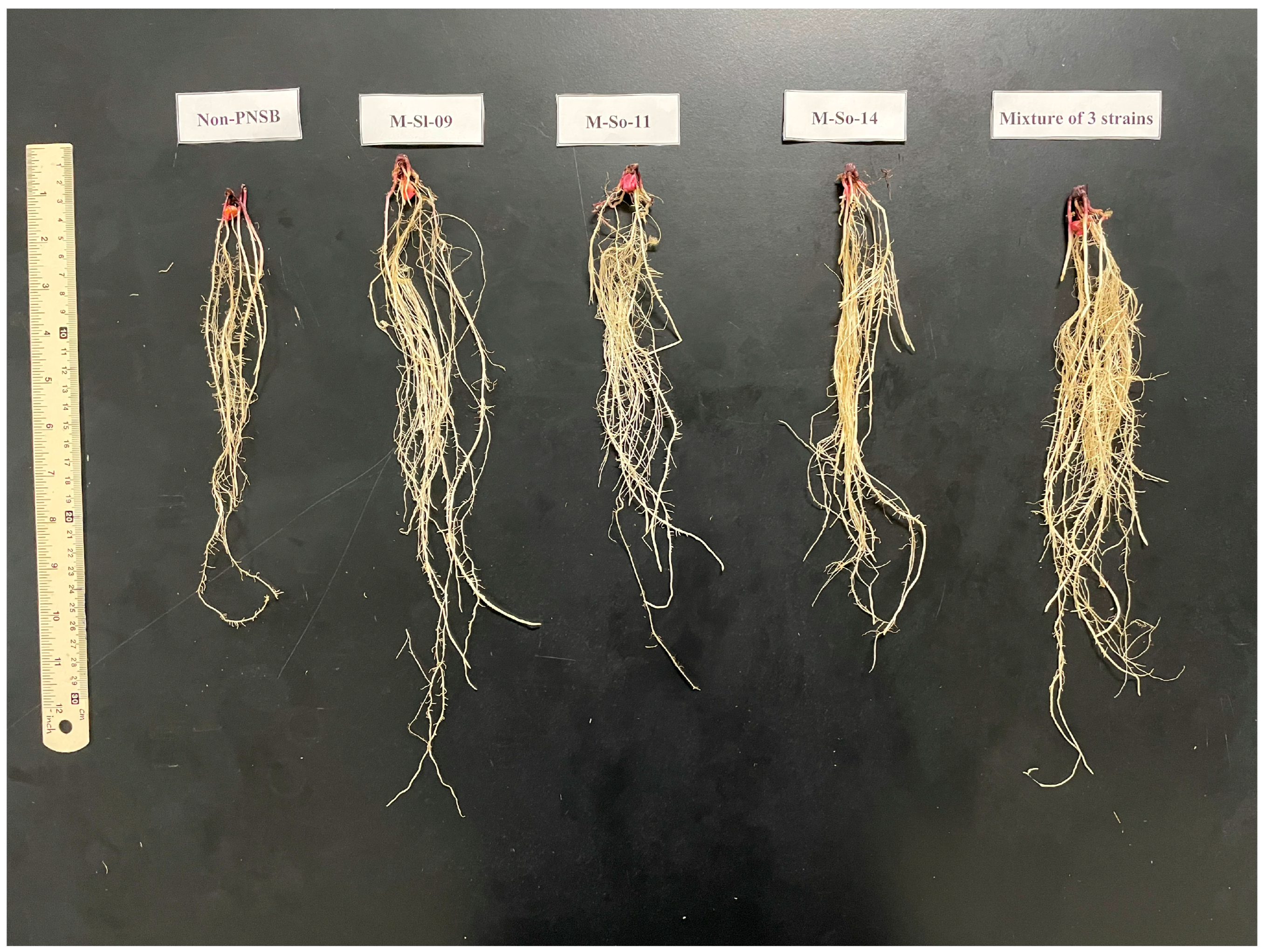
Table 8 demonstrates that the application of K-PNSB significantly enhanced the growth and biomass accumulation of maize cultivated in hydroponic nutrient solution. Specifically, plant height, number of leaves, stem diameter, leaf length, leaf width, root length, number of roots, dry root biomass, and dry shoot biomass increased by an average of 28.5%, 18.5%, 34.0%, 51.1%, 14.1%, 30.1%, 119%, 63.0%, and 41.9%, respectively, in treatments with PNSB inoculation compared to the uninoculated control. Root system and shoot development were particularly stimulated, with greater root and shoot biomass in the mixed treatment compared with the control. Among the treatments, the combination of all three strains M-Sl-09, M-So-11, and M-So-14 showed the most pronounced effects. The longest root length was also recorded in this mixed-strain treatment (Figure 5).

4. Discussion

The present study integrated three complementary experiments to optimize and evaluate a biofertilizer composted with potassium-solubilizing purple nonsulfur bacteria (K-PNSB). Experiments 1 and 2 focused on identifying the best carrier-to-substrate ratio and moisture content for maintaining high nutrient quality and bacterial viability, while Experiment 3 assessed the plant growth-promoting potential of the resulting product. Together, these findings clarify how composting conditions and bacterial inoculation interact to produce an effective K-PNSB biofertilizer. The 1:1:3 ratio of rice husk ash, maize stalk, and maize leaf residues at 50% moisture produced compost with improved N, P, K, and a lower C/N ratio over time, indicating enhanced decomposition and nutrient stabilization. This supports our hypothesis that specific substrate combinations can improve compost nutrient balance and microbial activity. The optimized performance of the 1:1:3 substrate ratio can be attributed to improved balance between nutrient availability, aeration, and microbial accessibility. Adequate organic matter likely enhanced microbial metabolism while preventing compaction that could limit oxygen diffusion [57]. Moisture levels of 50–60% provided sufficient water for microbial activity without creating anaerobic conditions unfavorable for decomposition [58,59].

4.1. Effect of Material Ratios on the Quality of Biofertilizer

Over the four-week composting period, total N and P increased, while the C/N ratio decreased, demonstrating progressive decomposition and nutrient enrichment. These results suggest that increasing the proportion of easily degradable materials (stalk and leaf) relative to inert ash improved microbial decomposition and nutrient stabilization. The increase in total N and P during composting reflects the mineralization of organic matter and microbial biomass accumulation, consistent with earlier reports that microbial proliferation enhances nutrient retention in biofertilizers [60,61]. The increase in total N and P during composting indicates microbial assimilation and biomass synthesis. PNSB are known to enhance nutrient retention by converting organic nitrogen into microbial protein and soluble inorganic forms [62]. Phosphorus solubilization through organic acid secretion (e.g., gluconic and citric acids) also contributes to the observed P enrichment [63]. These findings suggest that balanced compost composition is essential for maintaining nutrient availability and bacterial viability throughout the composting period.
The carrier-to-substrate ratio of 1:1:3 (rice husk ash: stalk: leaf) yielded the highest levels of total C, N, P, K, and the most favorable C/N ratio at week 4 (Table 1 and Table 2). The material ratio plays a crucial role in compost quality. The substrate provides nutrients and a conducive environment for microbial growth, whereas the carrier ensures long-term stability and efficiency of the composting process [64]. Sakpirom et al. [54] reported that low-cost agricultural by-product, such as rubber wood ash, palm oil cake, rice husk ash, and coffee grounds in a 3:4:2:1 ratio, were effective carriers for biofertilizers containing Rhodopseudomonas palustris and Rubrivivax gelatinosus, maintaining microbial density and enhancing nitrogen fixation and phytohormone (ALA and IAA) production. Moreover, the availability of nutrients in organic fertilizers depends not only on the composition of raw materials but also on the biochemical transformations during composting [26]. Organic fertilizers made from cow manure, poultry manure, and crop residues in a 2:1:1 ratio improved N, P, and K content and reduced the C/N ratio while enhancing the performance of decomposer organisms like Eisenia foetida [65,66]. Ren et al. [60] emphasized that deficiencies in total C or N, often due to poor raw material quality or non-optimized mixing ratios, can limit microbial growth and enzyme activity during composting. Therefore, excessive leaf material (1:1:4) may have introduced too much organic carbon, leading to suboptimal nitrogen retention. Conversely, equal ratios (1:1:1) decomposed more slowly, maintaining higher C/N ratios. These results highlight the importance of balancing lignin-rich and easily degradable substrates to support microbial growth and nutrient release.

4.2. Effect of Moisture Content on Nutrient Composition in Biofertilizer

At week 4, CP1 and CP4 composts maintained at 50% moisture showed high total N content and low C/N ratios (Table 4 and Table 7). According to Li et al. [67], an initial moisture level of 53% is optimal for composting and microbial inoculation improves compost quality. The strong performance of the mixed culture (CP4) under moderate moisture suggests synergistic interactions among the strains. The presence of both Cereibacter and Rhodopseudomonas species likely ensured metabolic complementarity, where one strain decomposes complex carbon sources while others solubilize minerals and fix nitrogen [68,69]. Such cooperation stabilizes nutrient cycling and enhances compost bioactivity. Moreover, purple nonsulfur bacteria possess unique physiological traits that explain their survival and activity during composting, including photoheterotrophic metabolism, tolerance to low oxygen, and adaptability to fluctuating environmental conditions [70]. These characteristics likely contributed to sustained K solubilization and bacterial persistence under the tested conditions.
During composting, total organic carbon tends to decline due to microbial metabolism, while total nitrogen increases, resulting in a lower C/N ratio. Moisture content is a critical factor in composting, affecting microbial diversity and activity, decomposition rate, and the transport of nutrients and energy across microbial membranes [67,71]. Misra et al. [72] reported that when compost moisture exceeds 60%, air circulation is restricted, creating anaerobic zones that slow down decomposition. Conversely, moisture below 45% halts microbial activity due to the essential role of water in metabolism and nutrient transport. Microorganisms contribute to composting by secreting extracellular hydrolases that decompose organic matter and produce humus precursors, transforming biomass into plant-available nutrients [61]. Meena et al. [73] suggested that optimal moisture levels for composting should be around 55–60%, as they vary depending on particle size, physical properties, and composting method. Zhan et al. [62] also found that maintaining compost moisture at 60% improved compost maturity, fertilizer efficacy, and the growth of beneficial microorganisms. Zhang et al. [63] noted that C/N ratios are positively correlated with moisture levels—higher moisture enhances carbon decomposition but may reduce microbial population density. According to Xie et al. [74], a C/N ratio of 30:1 is ideal for decomposing cellulose, hemicellulose, and lignin, while promoting beneficial microbes and suppressing pathogens. Moisture strongly affected composting outcomes. At 40–50%, nitrogen and phosphorus retention was maximized, and the C/N ratio declined rapidly, indicating efficient decomposition. In contrast, 70% moisture reduced nutrient concentrations, likely due to leaching and anaerobiosis that inhibited microbial activity. These findings support our hypothesis that moderate moisture levels are optimal for nutrient preservation and microbial viability in K-PNSB-enriched compost.
Across all four bacterial treatments (Figure 1, Figure 2, Figure 3 and Figure 4), microbial density followed a consistent trend: populations increased with moisture up to 60% and declined at 70%. The highest bacterial counts were observed at 60% moisture for all strains, suggesting that this level provided optimal aeration and substrate accessibility for K-PNSB activity. These results indicate that moderate moisture supports balanced oxygen diffusion and nutrient solubilization, which are essential for sustaining both metabolism and bacterial viability during composting [75].

4.3. Effect of Biofertilizer on Growth of Hybrid Maize

Inoculation with C. sphaeroides M-Sl-09, R. thermotolerans M-So-11, and R. palustris M-So-14 improved plant height, leaf number, leaf length and width, root length, and root biomass compared to the control (Table 8). Similar findings were reported by Putra et al. [76], who showed that Pseudomonas lundensis UB 53 and Pseudomonas migulae UB 54 enhanced lettuce growth in an NFT hydroponic system. These bacterial strains exhibit potassium-solubilizing capabilities and additional functions such as nitrogen fixation, phosphate solubilization, and phytohormone (IAA) production [49]. Microbial inoculation stimulates biological activity, accelerates decomposition of organic matter, and enhances N, P, and K levels in the final compost [77]. In addition to nutrients derived from composted material, biofertilizers benefit from microbial metabolites produced by PNSB that fix N and solubilize P and K [49,68,78]. This is attributed to bacterial possession of N fixation genes such as nifH, vnfG, and anfG, as well as enzymes like acid phosphatase and phytase, and growth-promoting compounds such as IAA, ALA, and siderophores, all of which aid in nutrient mobilization [39,79]. As previously reported by Thu et al. [49], Cereibacter sphaeroides M-Sl-09 possesses capabilities of nitrogen fixation, IAA biosynthesis, and phosphate solubilization, allowing it to promote plant growth both directly and indirectly. Rhodopseudomonas palustris exhibit complementary functions, including potassium solubilization and production of δ-aminolevulinic acid (ALA) and gibberellic acid (GA), which enhance chlorophyll synthesis and root elongation [79,80,81]. For Rhodopseudomonas thermotolerans, there has not been many studies investigating the benefits of this particular species. The nitrogenase enzyme enables conversion of atmospheric nitrogen into ammonia, which is incorporated into bacterial biomass. Under anaerobic light conditions, nitrogenase also facilitates electron and proton reactions to form hydrogen ions. In such environments, PNSB utilize ATP and electrons and metabolize carbon from organic substrates [82,83]. Likewise, Khuong et al. [45] demonstrated that spent mushroom compost enriched with R. palustris strains (VNW02, TLS06, VNW64, and VNS89) enhanced sesame growth and yield by improving soil N and P availability, reducing inorganic fertilizer requirements by 25%. This aligns with Nookongbut et al. [84], who reported that R. palustris C1 and Rubrivivax benzoatilyticus C31 improved rice growth and biomass in hydroponic conditions. Moreover, PNSB release extracellular polysaccharides and organic acids that improve soil aggregation, enhance water retention, and chelate nutrient cations, thereby facilitating nutrient uptake by plants [68,78,79]. Thus, the supplementation of the biofertilizer applied with these K-PNSB successfully improved plant growth.

4.4. Limitations and Future Potential

Although maize growth was enhanced by the optimized compost, the hydroponic system contained a complete nutrient solution, which may have masked the direct nutritional contribution of the biofertilizer. Furthermore, all materials were autoclaved, which did not reflect the conventional composting processes of farmers. Therefore, a field trial should be made. Moreover, our study did not directly analyze these pathways, future work should incorporate metabolomic and genomic approaches to clarify how K-PNSB regulate nutrient cycling and promote plant growth under varying composting conditions. However, our results provide practical guidance for producing biofertilizers from locally available agricultural residues to reduce the potential contaminations and enhance the crop production. Optimizing substrate ratios and maintaining moisture at 50–60% not only improved compost quality but also enhanced crop growth, suggesting that K-PNSB-based biofertilizers can reduce reliance on chemical fertilizers. These findings align with the broader goal of developing environmentally friendly nutrient management strategies. However, scaling up production will require validation under field conditions and analysis of long-term soil fertility impacts.

5. Conclusions

This study demonstrates that substrate composition and moisture content strongly influence compost quality and K-PNSB performance. A carrier-to-substrate ratio of 1:1:3 (rice husk ash:maize stalk:maize leaves) combined with 50–60% moisture provided optimal conditions for nutrient dynamics and bacterial survival. Application of the solid biofertilizer containing the mixed strains M-Sl-09, M-So-11, and M-So-14 enhanced maize growth, compared to the uninoculated control. These findings support our hypothesis that specific substrate and moisture combinations improve both compost quality and plant performance. Optimizing material ratios and moisture content not only improved compost maturity and nutrient dynamics but also ensured high bacterial viability and plant growth promotion. The findings provide a scalable framework for producing microbially enriched composts from agricultural residues, contributing to sustainable nutrient management and reduced reliance on chemical potassium fertilizers. Such approaches have potential to reduce input costs, recycle agricultural waste, and improve nutrient efficiency in maize and other crops. However, this study was conducted under controlled composting and hydroponic conditions. Future research should evaluate the optimized formulations under field conditions, examine their long-term effects on soil fertility, and investigate microbial metabolites and genetic pathways.

Author Contributions

Conceptualization, T.T.K.N. and N.Q.K.; methodology, T.T.K.N., L.T.M.T., N.D.T. and N.Q.K.; formal analysis, T.T.K.N., L.T.M.T., V.Y.N., N.D.T., L.T.Q., T.L.T., L.N.T.X. and. T.C.N.; investigation, T.T.K.N., L.T.M.T., V.Y.N., N.D.T., L.T.Q., T.L.T., L.N.T.X. and. T.C.N.; writing—original draft preparation, T.T.K.N.; writing—review and editing, L.T.Q. and N.Q.K. All authors have read and agreed to the published version of the manuscript.

Funding

This research received no external funding. This work was supported by Can Tho University [Grant number CTCS2024-14].

Institutional Review Board Statement

Not applicable.

Informed Consent Statement

Not applicable.

Data Availability Statement

The original contributions presented in this study are included in the article. Further inquiries can be directed to the corresponding author.

Conflicts of Interest

The authors declare no conflicts of interest.

Abbreviations

The following abbreviations are used in this manuscript:
BIMBasic isolation medium
CCarbon
CFUColony-forming unit
KPotassium
K-PNSBPotassium-solubilizing purple nonsulfur bacteria
MPNMost probable number
NNitrogen
PPhosphorus

References

  1. Pandey, P.C.; Pandey, M. Highlighting the Role of Agriculture and Geospatial Technology in Food Security and Sustainable Development Goals. Sustain. Dev. 2023, 31, 3175–3195. [Google Scholar] [CrossRef] [Scilit]
  2. Vinitha, N.; Hemalatha, M.; Joseph, M.; Prabina, B.J.; Raja, D.L.; Srinivasan, S. Revolutionizing Agriculture through Sustainable Soil Health by Nano Nourishment. Commun. Soil Sci. Plant Anal. 2024, 56, 494–516. [Google Scholar] [CrossRef] [Scilit]
  3. Vejan, P.; Khadiran, T.; Abdullah, R.; Ahmad, N. Controlled Release Fertilizer: A Review on Developments, Applications and Potential in Agriculture. J. Control. Release 2021, 339, 321–334. [Google Scholar] [CrossRef] [Scilit]
  4. FAO. FAO Statistical Yearbook 2024 Reveals Critical Insights on the Sustainability of Global Agriculture, Food Security, and the Importance of Agrifood Systems in Employment. Available online: https://www.fao.org/newsroom/detail/fao-statistical-yearbook-2024-reveals-critical-insights-on-the-sustainability-of-agriculture-food-security-and-the-importance-of-agrifood-in-employment/en (accessed on 13 December 2024).
  5. Jiaying, M.; Tingting, C.; Jie, L.; Weimeng, F.; Baohua, F.; Guangyan, L.; Hubo, L.; Juncai, L.; Zhihai, W.; Longxing, T.; et al. Functions of nitrogen, phosphorus and potassium in energy status and their influences on rice growth and development. Rice Sci. 2022, 29, 166–178. [Google Scholar] [CrossRef] [Scilit]
  6. Penuelas, J.; Coello, F.; Sardans, J. A Better Use of Fertilizers Is Needed for Global Food Security and Environmental Sustainability. Agric. Food Secur. 2023, 12, 5. [Google Scholar] [CrossRef] [Scilit]
  7. Ren, C.; Jin, S.; Wu, Y.; Zhang, B.; Kanter, D.; Wu, B.; Xi, X.; Zhang, X.; Chen, D.; Xu, J.; et al. Fertilizer Overuse in Chinese Smallholders Due to Lack of Fixed Inputs. J. Environ. Manage. 2021, 293, 112913. [Google Scholar] [CrossRef] [Scilit]
  8. Lesiv, M.; Laso Bayas, J.C.; See, L.; Duerauer, M.; Dahlia, D.; Durando, N.; Hazarika, R.; Sahariah, P.K.; Vakolyuk, M.; Blyshchyk, V.; et al. Estimating the Global Distribution of Field Size Using Crowdsourcing. Glob. Change Biol. 2019, 25, 174–186. [Google Scholar] [CrossRef] [Scilit]
  9. Walling, E.; Vaneeckhaute, C. Greenhouse Gas Emissions from Inorganic and Organic Fertilizer Production and Use: A Review of Emission Factors and Their Variability. J. Environ. Manage. 2020, 276, 111211. [Google Scholar] [CrossRef] [Scilit]
  10. Srivastav, A.L.; Patel, N.; Rani, L.; Kumar, P.; Dutt, I.; Maddodi, B.S.; Chaudhary, V.K. Sustainable Options for Fertilizer Management in Agriculture to Prevent Water Contamination: A Review. Environ. Dev. Sustain. 2024, 26, 8303–8327. [Google Scholar] [CrossRef] [Scilit]
  11. Krasilnikov, P.; Taboada, M.A.; Amanullah. Fertilizer use, soil health and agricultural sustainability. Agriculture 2022, 12, 462. [Google Scholar] [CrossRef] [Scilit]
  12. Chojnacka, K.; Skrzypczak, D.; Szopa, D.; Izydorczyk, G.; Moustakas, K.; Witek-Krowiak, A. Management of Biological Sewage Sludge: Fertilizer Nitrogen Recovery as the Solution to Fertilizer Crisis. J. Environ. Manag. 2023, 326, 116602. [Google Scholar] [CrossRef] [Scilit]
  13. Martin, T.M.; Aubin, J.; Gilles, E.; Auberger, J.; Esculier, F.; Levavasseur, F.; McConvikke, J.; Houot, S. Comparative Study of Environmental Impacts Related to Wheat Production with Human-Urine Based Fertilizers versus Mineral Fertilizers. J. Clean. Prod. 2023, 382, 135123. [Google Scholar] [CrossRef] [Scilit]
  14. Misslin, R.; Clivot, H.; Levavasseur, F.; Villerd, J.; Soulié, J.C.; Houot, S.; Therond, O. Integrated Assessment and Modeling of Regional Recycling of Organic Waste. J. Clean. Prod. 2022, 379, 134725. [Google Scholar] [CrossRef] [Scilit]
  15. Gujre, N.; Mitra, S.; Soni, A.; Agnihotri, R.; Rangan, L.; Rene, E.R.; Sharma, M.P. Speciation, Contamination, Ecological and Human Health Risks Assessment of Heavy Metals in Soils Dumped with Municipal Solid Wastes. Chemosphere 2021, 262, 128013. [Google Scholar] [CrossRef] [Scilit] [PubMed]
  16. Li, M.; Li, S.; Meng, Q.; Chen, S.; Wang, J.; Guo, X.; Ding, F.; Shi, L. Feedstock Optimization with Rice Husk Chicken Manure and Mature Compost during Chicken Manure Composting: Quality and Gaseous Emissions. Bioresour. Technol. 2023, 387, 129694. [Google Scholar] [CrossRef] [Scilit] [PubMed]
  17. FAO. Inorganic Fertilizers—2002–2022; FAOSTAT Analytical Briefs, No. 90; Food and Agriculture Organization of the United Nations: Rome, Italy, 2024. [Google Scholar]
  18. Lefebvre, D.; Fawzy, S.; Aquije, C.A.; Osman, A.I.; Draper, K.T.; Trabold, T.A. Biomass Residue to Carbon Dioxide Removal: Quantifying the Global Impact of Biochar. Biochar 2023, 5, 65. [Google Scholar] [CrossRef] [Scilit]
  19. Li, H.; Zhang, T.; Tsang, D.C.W.; Li, G. Effects of External Additives: Biochar, Bentonite, Phosphate, on Co-Composting for Swine Manure and Corn Straw. Chemosphere 2020, 248, 125927. [Google Scholar] [CrossRef] [Scilit]
  20. Sharma, B.; Vaish, B.; Monika; Singh, U.K.; Singh, P.; Singh, R.P. Recycling of Organic Wastes in Agriculture: An Environmental Perspective. Int. J. Environ. Res. 2019, 13, 409–429. [Google Scholar] [CrossRef] [Scilit]
  21. D’Hose, T.; Molendijk, L.; Van Vooren, L.; van den Berg, W.; Hoek, H.; Runia, W.; van Evert, F.; ten Berge, H.; Spiegel, H.; Sandèn, T.; et al. Responses of Soil Biota to Non-Inversion Tillage and Organic Amendments: An Analysis on European Multiyear Field Experiments. Pedobiologia 2018, 66, 18–28. [Google Scholar] [CrossRef] [Scilit]
  22. Awasthi, S.K.; Kumar, M.; Sarsaiya, S.; Ahluwalia, V.; Chen, H.; Kaur, G.; Sirohi, R.; Sindhu, R.; Binod, P.; Pandey, A.; et al. Multi-Criteria Research Lines on Livestock Manure Biorefinery Development towards a Circular Economy: From the Perspective of a Life Cycle Assessment and Business Models Strategies. J. Clean. Prod. 2022, 341, 130862. [Google Scholar] [CrossRef] [Scilit]
  23. Badagliacca, G.; Testa, G.; La Malfa, S.G.; Cafaro, V.; Lo Presti, E.; Monti, M. Organic Fertilizers and Bio-Waste for Sustainable Soil Management to Support Crops and Control Greenhouse Gas Emissions in Mediterranean Agroecosystems: A Review. Horticulturae 2024, 10, 427. [Google Scholar] [CrossRef] [Scilit]
  24. Harindintwali, J.D.; Zhou, J.; Muhoza, B.; Wang, F.; Herzberger, A.; Yu, X. Integrated eco-strategies towards sustainable carbon and nitrogen cycling in agriculture. J. Environ. Manage. 2021, 293, 112856. [Google Scholar] [CrossRef] [Scilit]
  25. Rashwan, A.K.; Bai, H.; Osman, A.I.; Eltohamy, K.M.; Chen, Z.; Younis, H.A.; Al-Fatesh, A.; Rooney, D.W.; Yap, P.-S. Recycling Food and Agriculture By-Products to Mitigate Climate Change: A Review. Environ. Chem. Lett. 2023, 21, 3351–3375. [Google Scholar] [CrossRef] [Scilit]
  26. Azim, K.; Soudi, B.; Boukhari, S.; Perissol, C.; Roussos, S.; Thami Alami, I. Composting Parameters and Compost Quality: A Literature Review. Org. Agric. 2018, 8, 141–158. [Google Scholar] [CrossRef] [Scilit]
  27. Paradelo, R.; Navarro-Pedreño, J.; Glaser, B.; Grobelak, A.; Kowalska, A.; Singh, B.R. Potential and constraints of use of organic amendments from agricultural residues for improvement of soil properties. Sustainability 2024, 16, 158. [Google Scholar] [CrossRef] [Scilit]
  28. Singh, M.; Kumar, N.; Gupta, A.; Palai, I.; Kumari, A.; Arshi, A.M. A comprehensive review on utilization of agricultural waste for reinforced structural products: A sustainable perspective. Bulg. Chem. Commun. 2025, 57, 5–16. [Google Scholar] [CrossRef] [Scilit]
  29. Gupta, A.P.; Upadhyay, P.; Sen, T.; Dutta, J. Agricultural waste as a resource: The lesser travelled road to sustainability. In Agricultural Waste Management and Bioresource: The Circular Economy Perspective; Wiley: Hoboken, NJ, USA, 2023; pp. 1–20. [Google Scholar] [CrossRef] [Scilit]
  30. Brichi, L.; Fernandes, J.V.; Silva, B.M.; Vizú, J.D.; Junior, J.N.; Cherubin, M.R. Organic residues and their impact on soil health, crop production and sustainable agriculture: A review including bibliographic analysis. Soil Use Manag. 2023, 39, 686–706. [Google Scholar] [CrossRef] [Scilit]
  31. Sun, Q.; Lin, Y.; Ping, Q.; Lu, Q.; Wang, L.; Liu, M.; Li, Y. Exploring recycled agricultural wastes for high-rate removal of nitrogen in wastewater: Emphasizing on the investigation of the inner driving force and comparison with conventional liquid carbon sources. Water Res. 2022, 226, 119292. [Google Scholar] [CrossRef] [Scilit] [PubMed]
  32. Shah, A.M.; Zhang, H.; Shahid, M.; Ghazal, H.; Shah, A.R.; Niaz, M.; Naz, T.; Ghimire, K.; Goswami, N.; Shi, W.; et al. The vital roles of agricultural crop residues and agro-industrial by-products to support sustainable livestock productivity in subtropical regions. Animals 2025, 15, 1184. [Google Scholar] [CrossRef] [Scilit] [PubMed]
  33. Dinh, V.P.; Tran-Vu, H.A.; Tran, T.; Duong, B.N.; Dang-Thi, N.M.; Phan-Van, H.L.; Tran, T.K.; Huynh, V.H.; Nguyen, T.P.; Nguyen, T.Q. Improving soil quality and crop yields using enhancing sustainable rice straw management through microbial enzyme treatments. Environ. Health Insights 2024, 18, 11786302241283001. [Google Scholar] [CrossRef] [Scilit]
  34. Sharma, P.; Bano, A.; Singh, S.P.; Varjani, S.; Tong, Y.W. Sustainable Organic Waste Management and Future Directions for Environmental Protection and Techno-Economic Perspectives. Curr. Pollut. Rep. 2024, 10, 459–477. [Google Scholar] [CrossRef] [Scilit]
  35. Joshi, S.K.; Gauraha, A.K. Global biofertilizer market: Emerging trends and opportunities. In Trends of Applied Microbiology for Sustainable Economy; Soni, R., Suyal, D.C., Yadav, A.N., Goel, R., Eds.; Academic Press: Cambridge, MA, USA, 2022; pp. 689–697. [Google Scholar] [CrossRef] [Scilit]
  36. Sundar, L.S.; Chang, Y.T.; Chao, Y.Y. Investigating the Efficacy of Purple Non-Sulfur Bacteria (PNSB) Inoculation on Djulis (Chenopodium formosanum Koidz.) Growth, Yield, and Maturity Period Modulation. Plant Soil 2024, 496, 289–317. [Google Scholar] [CrossRef] [Scilit]
  37. Anh, N.H.; Hau, T.T.; Duc, N.V.; Xuan, D.T.; Quang, L.T.; Khuong, N.Q. Use of Nitrogen Fixing Purple Nonsulfur Bacteria to Produce Available Nitrogen for Rice (Oryza sativa L.) Cultivated in Saline Acidic Soil. Geomicrobiol. J. 2025, 42, 64–72. [Google Scholar] [CrossRef] [Scilit]
  38. Lee, S.K.; Lur, H.S.; Liu, C.T. From lab to farm: Elucidating the beneficial roles of photosynthetic bacteria in sustainable agriculture. Microorganisms 2021, 9, 2453. [Google Scholar] [CrossRef] [Scilit] [PubMed]
  39. Lo, S.C.; Tsai, S.Y.; Chang, W.H.; Wu, I.C.; Sou, N.L.; Hung, S.H.W.; Chiang, E.P.I.; Huang, C.C. Characterization of the Pyrroloquinoline Quinone Producing Rhodopseudomonas palustris as a Plant Growth-Promoting Bacterium under Photoautotrophic and Photoheterotrophic Culture Conditions. Int. J. Mol. Sci. 2023, 24, 14080. [Google Scholar] [CrossRef] [Scilit]
  40. Wu, J.Y.; Chen, H.W.; Sundar, L.S.; Tu, Y.K.; Chao, Y.Y. Exploring the potential of purple non-sulfur bacteria strains A3-5 and F3-3 in sustainable agriculture: A study on nutrient solubilization, plant growth promotion, and acidic stress tolerance. J. Soil Sci. Plant Nutr. 2025, 25, 2294–2313. [Google Scholar] [CrossRef] [Scilit]
  41. Hayashi, S.; Iwamoto, Y.; Hirakawa, Y.; Mori, K.; Yamada, N.; Maki, T.; Yamamoto, S.; Miyasaka, H. Plant-Growth-Promoting Effect by Cell Components of Purple Non-Sulfur Photosynthetic Bacteria. Microorganisms 2022, 10, 771. [Google Scholar] [CrossRef] [Scilit]
  42. Vidya, P.; Balakumaran, M.D.; Ramya, G.K.; Nithya, K. Plant Growth-Promoting Bacteria: A Catalyst for Advancing Horticulture Applications. Biosci. Biotechnol. Res. Asia 2024, 21, 947–966. [Google Scholar] [CrossRef] [Scilit]
  43. Surachat, K.; Kantachote, D.; Deachamag, P.; Wonglapsuwan, M. In silico Genomic Analysis of Rhodopseudomonas palustris Strains Revealed Potential Biocontrol Agents and Crop Yield Enhancers. Biol. Control 2022, 176, 105085. [Google Scholar] [CrossRef] [Scilit]
  44. Dhar, K.; Venkateswarlu, K.; Megharaj, M. Anoxygenic Phototrophic Purple Non-Sulfur Bacteria: Tool for Bioremediation of Hazardous Environmental Pollutants. World J. Microbiol. Biotechnol. 2023, 39, 283. [Google Scholar] [CrossRef] [Scilit]
  45. Khuong, N.Q.; Thuc, L.V.; Giang, C.T.; Xuan, L.N.T.; Thu, L.T.M.; Isao, A.; Jun-Ichi, S. Improvement of nutrient uptake, yield of black sesame (Sesamum indicum L.), and alluvial soil fertility in dyke by spent rice straw from mushroom cultivation as biofertilizer containing potent strains of Rhodopseudomonas palustris. Sci. World J. 2023, 2023, 1954632. [Google Scholar] [CrossRef] [Scilit] [PubMed]
  46. Núñez, F.; Pérez, M.; Leon-Fernández, L.F.; García-Morales, J.L.; Fernández-Morales, F.J. Effect of the Mixing Ratio on the Composting of OFMSW Digestate: Assessment of Compost Quality. J. Mater. Cycles Waste Manag. 2022, 24, 1818–1831. [Google Scholar] [CrossRef] [Scilit]
  47. Bamdad, H.; Papari, S.; Lazarovits, G.; Berruti, F. Soil amendments for sustainable agriculture: Microbial organic fertilizers. Soil Use Manag. 2022, 38, 94–120. [Google Scholar] [CrossRef] [Scilit]
  48. Khalid, A.A.; Hassan, A.A.; Alkurtany, A.E. Evaluation of compost prepared from various weeds and agricultural residues on the productive and morphological characteristics of Agaricus bisporus. IOP Conf. Ser. Earth Environ. Sci. 2025, 1538, 012071. [Google Scholar] [CrossRef] [Scilit]
  49. Thu, L.T.M.; Xuan, L.N.T.; Nhan, T.C.; Quang, L.T.; Trong, N.D.; Thuan, V.M.; Nguyen, T.T.K.; Nguyen, P.C.; Thuc, L.V.; Khuong, N.Q. Characterization of Novel Species of Potassium-Dissolving Purple Nonsulfur Bacteria Isolated from In-Dyked Alluvial Upland Soil for Maize Cultivation. Life 2024, 14, 1461. [Google Scholar] [CrossRef] [Scilit]
  50. Wagatsuma, T.; Ezoe, Y. Effect of pH on Ionic Species of Aluminum in Medium and on Aluminum Toxicity under Solution Culture. Soil Sci. Plant Nutr. 1985, 31, 547–556. [Google Scholar] [CrossRef] [Scilit]
  51. Brown, J.W. Enrichment and Isolation of Purple Non-Sulfur Bacteria; Department of Biological Sciences, College of Sciences, North Carolina State University: Raleigh, NC, USA, 2013. [Google Scholar]
  52. Kantachote, D.; Torpee, S.; Umsakul, K. The potential use of anoxygenic phototrophic bacteria for treating latex rubber sheet wastewater. Electron. J. Biotechnol. 2005, 8, 256–264. [Google Scholar] [CrossRef] [Scilit]
  53. Siddique, A. Culture Conditions of an Anoxygenic Photosynthetic Mixed Culture for Production of Polyhydroxyalkanoates (PHAs) from Industrial Wastewaters. Master’s Thesis, Hamad Bin Khalifa University, Doha, Qatar, 2021. [Google Scholar]
  54. Sakpirom, J.; Nunkaew, T.; Khan, E.; Kantachote, D. Optimization of carriers and packaging for effective biofertilizers to enhance Oryza sativa L. growth in paddy soil. Rhizosphere 2021, 19, 100383. [Google Scholar] [CrossRef] [Scilit]
  55. Houba, V.J.G.; van der Lee, J.J.; Novozamski, I. Soil Analysis Procedures; Department of Soil Science and Plant Nutrition, Wageningen Agricultural University: Wageningen, The Netherlands, 1997. [Google Scholar]
  56. TCVN 6634:2000; Water Quality—Guidelines for the Determination of Total Organic Carbon (TOC) and Dissolved Organic Carbon (DOC) (ISO 8245:1999). Ministry of Science, Technology and Environment: Hanoi, Vietnam, 2000.
  57. Smagin, A.V.; Smagina, M.V.; Sadovnikova, N.B. Biological oxygen demand in soils and litters. Eurasian Soil Sci. 2018, 51, 296–308. [Google Scholar] [CrossRef] [Scilit]
  58. Zhang, S.; Zhong, B.; An, X.; Han, Y.; Xiao, X.; Zhang, Q. Effect of moisture content on the evolution of bacterial communities and organic matter degradation during bioaugmented biogas residues composting. World J. Microbiol. Biotechnol. 2022, 39, 1. [Google Scholar] [CrossRef] [Scilit] [PubMed]
  59. Anayet, A.H.; Hamzah, M.M.; Najib, M.Z. Optimizing food waste decomposition through pH, moisture content, and temperature control: A comprehensive study. Civ. Sustain. Urban Eng. 2024, 4, 42–54. [Google Scholar] [CrossRef] [Scilit]
  60. Ren, L.; Schuchardt, F.; Shen, Y.; Li, G.; Li, C. Impact of Struvite Crystallization on Nitrogen Losses during Composting of Pig Manure and Cornstalk. Waste Manag. 2010, 30, 885–892. [Google Scholar] [CrossRef] [Scilit]
  61. Chen, W.; Liao, X.; Wu, Y.; Liang, J.B.; Mi, J.; Huang, J.; Zhang, H.; Wu, Y.; Qiao, Z.; Li, X.; et al. Effects of Different Types of Biochar on Methane and Ammonia Mitigation during Layer Manure Composting. Waste Manag. 2017, 61, 506–515. [Google Scholar] [CrossRef] [Scilit]
  62. Zhan, Y.; Wei, Y.; Zhang, Z.; Zhang, A.K.; Li, Y.; Li, J. Effects of Different C/N Ratios on the Maturity and Microbial Quantity of Composting with Sesame Meal and Rice Straw Biochar. Biochar 2021, 3, 557–564. [Google Scholar] [CrossRef] [Scilit]
  63. de Almeida Leite, R.; Martins da Costa, E.; Cabral Michel, D.; do Amaral Leite, A.; de Oliveira-Longatti, S.M.; de Lima, W.; de Souza Moreira, F.M. Genomic insights into organic acid production and plant growth promotion by different species of phosphate-solubilizing bacteria. World J. Microbiol. Biotechnol. 2024, 40, 311. [Google Scholar] [CrossRef] [Scilit] [PubMed]
  64. Asemaninejad, A.; Langley, S.; Mackinnon, T.; Spiers, G.; Beckett, P.; Mykytczuk, N.; Basiliko, N. Blended Municipal Compost and Biosolids Materials for Mine Reclamation: Long-Term Field Studies to Explore Metal Mobility, Soil Fertility and Microbial Communities. Sci. Total Environ. 2021, 760, 143393. [Google Scholar] [CrossRef] [Scilit]
  65. Yadav, A.; Garg, V.K. Recycling of Organic Wastes by Employing Eisenia fetida. Bioresour. Technol. 2011, 102, 2874–2880. [Google Scholar] [CrossRef] [Scilit]
  66. Rahman, M.; Hajam, Y.A. Selection and Evaluation of Optimal Medium for Eisenia fetida in Sustainable Waste Recycling. Discov. Anim. 2024, 1, 20. [Google Scholar] [CrossRef] [Scilit]
  67. Li, M.X.; He, X.S.; Tang, J.; Li, X.; Zhao, R.; Tao, Y.Q.; Wang, C.; Qiu, Z.P. Influence of Moisture Content on Chicken Manure Stabilization during Microbial Agent-Enhanced Composting. Chemosphere 2021, 264, 128549. [Google Scholar] [CrossRef] [Scilit]
  68. Dat, L.T.; Xuan, L.N.T.; Nhan, T.C.; Quang, L.T.; Khuong, N.Q. Isolating, Selecting, and Identifying Na+, H+, Al3+, Fe2+, Mn2+-Resistant Purple Non-Sulfur Bacteria Solubilizing Insoluble Phosphorus Compounds from Salt-Contaminated Acid Sulfate Soil Derived from Rice-Shrimp System. Aust. J. Crop Sci. 2024, 18, 192–199. [Google Scholar] [CrossRef] [Scilit]
  69. Li, M.; Ning, P.; Sun, Y.; Luo, J.; Yang, J. Characteristics and application of Rhodopseudomonas palustris as a microbial cell factory. Front. Bioeng. Biotechnol. 2022, 10, 897003. [Google Scholar] [CrossRef] [Scilit]
  70. Morrison, H.M.; Bose, A. Purple non-sulfur bacteria for biotechnological applications. J. Ind. Microbiol. Biotechnol. 2025, 52, kuae052. [Google Scholar] [CrossRef] [Scilit]
  71. Wang, S.P.; Wang, L.; Sun, Z.Y.; Wang, S.T.; Yuan, H.W.; An, M.Z.; Tang, Y.Q.; Shen, C.H.; Kida, K. Effect of Distillery Sewage Sludge Addition on Performance and Bacterial Community Dynamics during Distilled Grain Waste Composting. Bioresour. Technol. 2022, 345, 126486. [Google Scholar] [CrossRef] [Scilit]
  72. Misra, R.V.; Roy, R.N.; Hiraoka, H. On-Farm Composting Methods; FAO: Rome, Italy, 2003. [Google Scholar]
  73. Meena, A.L.; Karwal, M.; Dutta, D.; Mishra, R.P. Composting: Phases and Factors Responsible for Efficient and Improved Composting. Agric. Food E-Newsl. 2021, 1, 85–90. [Google Scholar]
  74. Xie, Y.; Zhou, L.; Dai, J.; Chen, J.; Yang, X.; Wang, X.; Wang, Z.; Feng, L. Effects of the C/N Ratio on the Microbial Community and Lignocellulose Degradation during Branch Waste Composting. Bioprocess Biosyst. Eng. 2022, 45, 1163–1174. [Google Scholar] [CrossRef] [Scilit] [PubMed]
  75. Nguyen, T.P.; Koyama, M.; Nakasaki, K. Effect of oxygen deficiency on organic matter decomposition during the early stage of composting. Waste Manag. 2023, 160, 43–50. [Google Scholar] [CrossRef] [Scilit]
  76. Putra, A.M.; Anastasya, N.A.; Rachmawati, S.W.; Yusnawan, E.; Syibli, M.A.; Trianti, I.; Setiawan, A.; Aini, L.Q. Growth Performance and Metabolic Changes in Lettuce Inoculated with Plant Growth Promoting Bacteria in a Hydroponic System. Sci. Hortic. 2024, 327, 112868. [Google Scholar] [CrossRef] [Scilit]
  77. Wakase, S.; Sasaki, H.; Itoh, K.; Otawa, K.; Kitazume, O.; Nonaka, J.; Satoh, M.; Sasaki, T.; Nakai, Y. Investigation of the Microbial Community in a Microbiological Additive Used in a Manure Composting Process. Bioresour. Technol. 2008, 99, 2687–2693. [Google Scholar] [CrossRef] [Scilit]
  78. Huu, T.N.; Vinh, B.T.; Tu, L.; Xuan, D.T.; Khuong, N.Q. Potential of nitrogen-fixing purple non-sulfur bacteria isolated from acid sulfate soil in improvements of soil property, nutrient uptake, and yield of pineapple (Ananas comosus L. Merrill) under acidic stress. Bulg. J. Agric. Sci. 2024, 30, 234–246. [Google Scholar]
  79. Sundar, L.S.; Yen, K.S.; Chang, Y.T.; Chao, Y.Y. Utilization of Rhodopseudomonas palustris in Crop Rotation Practice Boosts Rice Productivity and Soil Nutrient Dynamics. Agriculture 2024, 14, 758. [Google Scholar] [CrossRef] [Scilit]
  80. Sabki, M.H.; Ong, P.Y.; Lee, C.T.; Ibrahim, N.; Van Fan, Y.; Klemeš, J.J. The potential of Rhodopseudomonas palustris as a bio-fertiliser for sustainable agriculture. Chem. Eng. Trans. 2021, 88, 457–462. [Google Scholar] [CrossRef]
  81. Gui, Y.; Gu, C.; Xiao, X.; Gao, Y.; Zhao, Y. Microbial inoculations promoted rice plant growth by regulating the root-zone bacterial community composition and potential function. J. Soil Sci. Plant Nutr. 2023, 23, 5222–5232. [Google Scholar] [CrossRef] [Scilit]
  82. Rey, F.E.; Heiniger, E.K.; Harwood, C.S. Redirection of Metabolism for Biological Hydrogen Production. Appl. Environ. Microbiol. 2007, 73, 1665–1671. [Google Scholar] [CrossRef] [Scilit] [PubMed]
  83. Chowdhury, N.B.; Alsiyabi, A.; Saha, R. Characterizing the Interplay of Rubisco and Nitrogenase Enzymes in Anaerobic-Photoheterotrophically Grown Rhodopseudomonas palustris CGA009 through a Genome-Scale Metabolic and Expression Model. Microbiol. Spectr. 2022, 10, e01463-22. [Google Scholar] [CrossRef] [Scilit]
  84. Nookongbut, P.; Kantachote, D.; Megharaj, M.; Naidu, R. Reduction in Arsenic Toxicity and Uptake in Rice (Oryza sativa L.) by As-Resistant Purple Nonsulfur Bacteria. Environ. Sci. Pollut. Res. 2018, 25, 36530–36544. [Google Scholar] [CrossRef] [Scilit]
Figure 1. Effect of moisture content on bacterial density in biofertilizer containing Cereibacter sphaeroides M-Sl-09 during composting (week 4). Bars represent mean bacterial density ± standard deviation (SD) from three replicates. Different lowercase letters above the bars indicate significant differences among moisture treatments according to one-way ANOVA followed by Duncan’s multiple range test (p < 0.05).
Bacteria 05 00015 g001
Figure 2. Effect of moisture content on bacterial density in biofertilizer containing Rhodopseudomonas thermotolerans M-So-11 during composting (week 4). Bars represent mean bacterial density ± standard deviation (SD) from three replicates. Different lowercase letters above the bars indicate significant differences among moisture treatments according to one-way ANOVA followed by Duncan’s multiple range test (p < 0.05).
Bacteria 05 00015 g002
Figure 3. Effect of moisture content on bacterial density in biofertilizer containing Rhodopseudomonas palustris M-So-14 during composting (week 4). Bars represent mean bacterial density ± standard deviation (SD) from three replicates. Different lowercase letters above the bars indicate significant differences among moisture treatments according to one-way ANOVA followed by Duncan’s multiple range test (p < 0.05).
Bacteria 05 00015 g003
Figure 4. Effect of moisture content on bacterial density in biofertilizer containing mixed culture of Cereibacter sphaeroides M-Sl-09, Rhodopseudomonas thermotolerans M-So-11, and Rhodopseudomonas palustris M-So-14 during composting (week 4). Bars represent mean bacterial density ± standard deviation (SD) from three replicates. Different lowercase letters above the bars indicate significant differences among moisture treatments according to one-way ANOVA followed by Duncan’s multiple range test (p < 0.05).
Bacteria 05 00015 g004
Figure 5. Effect of biofertilizer containing potassium-solubilizing purple nonsulfur bacteria on root number and root length of maize grown in hydroponic culture.
Bacteria 05 00015 g005
Table 1. Effects of composting material ratio on total N, P, and K content.
Ratio
(Ash:Stalk:Leaf)
Total N (%)Total P (%)Total K (%)
012340123401234
Week(s) After Composting
1:1:10.485 d0.532 c1.00 c1.20 b1.11 b0.108 d0.123 d0.286 b0.467 b0.519 a0.366 a0.3670.3690.386 ab0.392 bc
1:1:20.517 c0.560 c1.14 b1.41 a1.32 a0.171 a0.334 a0.273 b0.512 a0.430 b0.337 b0.3400.3540.376 b0.379 c
1:1:30.584 b0.678 b1.24 a1.50 a1.33 a0.116 c0.142 c0.336 a0.468 b0.450 b0.338 b0.3430.3690.397 a0.418 a
1:1:40.688 a0.795 a1.16 b1.46 a1.25 a0.156 b0.221 b0.352 a0.495 ab0.430 b0.360 a0.3680.3780.373 b0.411 ab
Significance***********nsns**
CV (%)1.096.484.014.264.292.853.146.173.232.952.295.554.422.223.14
Note: Means followed by the same letter within a column are not significantly different according to Duncan’s test. *: Significant difference at 5%; ns: Not significant; CV: Coefficients of variation.
Table 2. Effects of composting material ratio on total carbon content and C/N ratio.
Ratio
(Ash:Stalk:Leaf)
Total C (%)Ratio C/N (%)
0123401234
Week(s) After Composting
1:1:137.7 b37.1 b36.1 c35.7 c35.0 b77.8 a70.0 a36.2 a29.7 a31.6 a
1:1:239.5 a38.9 a38.7 a36.3 b36.3 a76.4 b69.4 a34.0 ab25.7 b27.6 b
1:1:339.3 a38.5 a37.9 b37.7 a35.9 a67.2 c57.0 b30.5 c25.2 b27.0 b
1:1:439.4 a38.8 a38.2 ab37.5 a36.2 a57.3 d48.9 c33.0 b25.6 b28.9 b
Significance**********
CV (%)0.501.390.920.651.110.926.623.534.193.90
Note: Means followed by the same letter within a column are not significantly different according to Duncan’s test. *: Significant difference at 5%; CV: Coefficients of variation. Absence of superscript letters indicates non-significant differences (p > 0.05).
Table 3. Effect of moisture content on total nitrogen.
TreatmentMoisture (%)Total N (%)
01234
Week(s) After Composting
CP1401.17 a1.31 ab1.42 a1.641.40 bc
501.20 a1.48 a1.21 b1.521.52 ab
601.14 ab1.38 a1.10 c1.541.37 c
701.05 b1.12 b1.05 c1.561.58 a
CP2401.17 a1.42 a1.381.551.52
501.20 a1.18 b1.081.471.54
601.14 ab0.93 c1.201.391.65
701.05 b1.24 b1.201.431.52
CP3401.17 a1.301.37 ab1.35 a1.72
501.20 a1.321.26 b1.29 ab1.63
601.14 ab1.241.45 a1.07 c1.63
701.05 b1.381.13 c1.16 bc1.70
CP4401.17 a1.46 a1.32 a1.54 a1.48 ab
501.20 a1.31 ab1.28 a1.47 a1.62 a
601.14 ab1.1 bc1.11 b1.38 a1.37 b
701.05 b1.22 c1.17 ab1.18 b1.37 b
Significance CP1***ns*
Significance CP2**nsnsns
Significance CP3*ns**ns
Significance CP4*****
CV1 % CP15.529.484.917.556.30
CV2 % CP25.529.6415.06.308.13
CV3 % CP35.526.028.407.927.68
CV4 % CP45.529.128.097.437.10
Note: CP1: Supplemented with C. sphaeroides M-Sl-09; CP2: Supplemented with R. thermotolerans M-So-11; CP3: Supplemented with R. palustris M-So-14; CP4: Supplemented with C. sphaeroides M-Sl-09, R. thermotolerans M-So-11, and R. palustris M-So-14. Means followed by the same letter within a column are not significantly different according to Duncan’s test. *: Significant at 5%; ns: Not significant; CV: Coefficients of variation. Absence of superscript letters indicates non-significant differences (p > 0.05).
Table 4. Effect of moisture content on total phosphorus.
TreatmentMoisture (%)Total P (%)
01234
Week(s) After Composting
CP1400.177 a0.184 a0.224 a0.2300.185 b
500.174 ab0.183 a0.243 a0.2250.210 a
600.167 b0.170 b0.151 b0.1970.212 a
700.107 c0.112 c0.156 b0.2010.197 ab
CP2400.177 a0.212 a0.237 a0.300 a0.251
500.174 ab0.182 b0.164 b0.283 a0.212
600.167 b0.181 b0.164 b0.285 a0.215
700.107 c0.179 b0.173 b0.224 b0.265
CP3400.177 a0.228 a0.230 a0.289 a0.236
500.174 ab0.161 b0.177 b0.302 a0.230
600.167 b0.134 bc0.181 b0.289 a0.188
700.107 c0.128 c0.185 b0.249 b0.206
CP4400.177 a0.216 a0.237 a0.298 a0.263 a
500.174 ab0.175 b0.210 ab0.257 b0.270 a
600.167 b0.172 b0.186 bc0.231 b0.208 b
700.107 c0.151 b0.156 c0.187 c0.161 b
Significance CP1***ns*
Significance CP2****ns
Significance CP3****ns
Significance CP4*****
CV1 % CP13.533.686.429.405.98
CV2 % CP23.537.009.008.1920.9
CV3 % CP33.5311.611.46.5219.9
CV4 % CP43.5310.413.97.9014.5
Note: CP1: Supplemented with C. sphaeroides M-Sl-09; CP2: Supplemented with R. thermotolerans M-So-11; CP3: Supplemented with R. palustris M-So-14; CP4: Supplemented with C. sphaeroides M-Sl-09, R. thermotolerans M-So-11, and R. palustris M-So-14. Means followed by the same letter within a column are not significantly different according to Duncan’s test. *: Significant at 5%; ns: Not significant; CV: Coefficients of variation. Absence of superscript letters indicates non-significant differences (p > 0.05).
Table 5. Effect of moisture content on total potassium.
TreatmentMoisture (%)Total K (%)
01234
Week(s) After Composting
CP1401.521.771.661.83 a0.93 ab
501.541.771.511.92 a0.98 a
601.571.691.801.70 ab0.87 bc
701.551.731.601.54 b0.80 c
CP2401.521.932.38 a1.90 a0.95
501.541.872.13 a1.83 a0.99
601.571.931.92 ab1.56 b1.06
701.551.791.46 b2.03 a0.96
CP3401.522.17 a1.802.01 ab1.13
501.542.17 a1.762.18 a1.05
601.571.79 b1.371.73 b1.14
701.551.31 c1.621.69 b0.96
CP4401.522.131.672.76 a1.45 a
501.541.741.641.53 b1.35 a
601.571.691.241.53 b1.38 a
701.551.651.491.44 b1.07 b
Significance CP1nsnsns**
Significance CP2nsns**ns
Significance CP3ns*ns*ns
Significance CP4nsnsns**
CV1 % CP14.3515.716.88.547.06
CV2 % CP24.3513.318.78.1912.1
CV3 % CP34.3510.815.512.114.3
CV4 % CP44.3514.715.315.58.46
Note: CP1: Supplemented with C. sphaeroides M-Sl-09; CP2: Supplemented with R. thermotolerans M-So-11; CP3: Supplemented with R. palustris M-So-14; CP4: Supplemented with C. sphaeroides M-Sl-09, R. thermotolerans M-So-11, and R. palustris M-So-14. Means followed by the same letter within a column are not significantly different according to Duncan’s test. *: Significant at 5%; ns: Not significant; CV: Coefficients of variation.
Table 6. Effect of moisture content on total carbon.
TreatmentMoisture (%)Total C (%)
01234
Week(s) After Composting
CP14037.236.239.139.735.7 b
5036.939.640.341.333.1 b
6037.135.241.741.933.7 b
7036.135.140.841.539.1 a
CP24037.235.039.641.4 a37.4 a
5036.933.841.133.7 c33.4 b
6037.137.043.039.8 b35.0 b
7036.134.540.740.0 b33.6 b
CP34037.236.140.040.136.9
5036.938.641.739.634.7
6037.137.240.639.135.1
7036.142.740.739.836.6
CP44037.237.139.232.3 b35.4 a
5036.939.238.638.8 a33.4 ab
6037.139.838.338.9 a31.2 c
7036.140.438.239.2 a32.0 bc
Significance CP1nsnsnsns*
Significance CP2nsnsns**
Significance CP3nsnsnsnsns
Significance CP4nsnsns**
CV1 % CP11.8310.23.533.374.94
CV2 % CP21.839.724.981.382.87
CV3 % CP31.8310.63.001.6310.8
CV4 % CP41.839.641.697.244.12
Note: CP1: Supplemented with C. sphaeroides M-Sl-09; CP2: Supplemented with R. thermotolerans M-So-11; CP3: Supplemented with R. palustris M-So-14; CP4: Supplemented with C. sphaeroides M-Sl-09, R. thermotolerans M-So-11, and R. palustris M-So-14. Means followed by the same letter within a column are not significantly different according to Duncan’s test. *: Significant at 5%; ns: Not significant; CV: Coefficients of variation. Absence of superscript letters indicates non-significant differences (p > 0.05).
Table 7. Effect of moisture content on C/N ratio.
TreatmentMoisture (%)C/N Ratio (%)
01234
Week(s) After Composting
CP14031.8 ab27.727.8 c24.325.6 a
5030.9 b26.933.3 b27.521.8 b
6032.7 ab25.537.8 a27.424.7 a
7034.4 a31.938.9 a26.725.0 a
CP24031.8 ab24.7 b29.326.7 a24.6 a
5030.9 b28.6 b38.622.9 b21.9 b
6032.7 ab40.1 a36.528.7 a21.4 b
7034.4 a27.9 b34.628.2 a22.2 b
CP34031.8 ab27.829.4 b29.8 c21.6
5030.9 b29.333.4 a30.7 bc21.3
6032.7 ab30.128.3 b37.1 a21.7
7034.4 a30.936.0 a34.8 ab21.7
CP44031.8 ab26.0 b29.721.0 c24.0 a
5030.9 b29.9 ab30.526.6 b20.8 b
6032.7 ab35.5 a34.828.2 b22.8 ab
7034.4 a33.1 a32.933.7 a23.4 a
Significance CP1*ns*ns*
Significance CP2**ns**
Significance CP3*ns**ns
Significance CP4**ns**
CV1 % CP15.4111.25.667.817.38
CV2 % CP25.419.6816.06.266.80
CV3 % CP35.417.677.508.9911.1
CV4 % CP45.4111.69.1811.16.52
Note: CP1: Supplemented with C. sphaeroides M-Sl-09; CP2: Supplemented with R. thermotolerans M-So-11; CP3: Supplemented with R. palustris M-So-14; CP4: Supplemented with C. sphaeroides M-Sl-09, R. thermotolerans M-So-11, and R. palustris M-So-14. Means followed by the same letter within a column are not significantly different according to Duncan’s test. *: Significant at 5%; ns: Not significant; CV: Coefficients of variation. Absence of superscript letters indicates non-significant differences (p > 0.05).
Table 8. Effect of biofertilizer containing potassium-solubilizing purple nonsulfur bacteria on growth and biomass of maize under hydroponic conditions.
TreatmentPlant Height
(cm)
Leaf Number
(leaves)
Stem Diameter
(cm)
Leaf Length
(cm)
Leaf Width
(cm)
Root Length
(cm)
Root Number
(roots)
Root Biomass
(g)
Shoot Biomass (g pot−1)
Control27.1 d4.50 d0.333 d17.0 d1.60 b16.7 d2.68 d0.064 c0.099 c
M-Sl-0935.8 ab5.67 a0.455 b25.8 b1.92 a21.8 b4.90 b0.099 b0.130 b
M-So-1133.8 bc5.22 b0.455 b26.2 ab1.88 a21.1 bc4.88 b0.090 b0.131 b
M-So-1432.0 c4.89 c0.365 c23.1 c1.70 b19.2 c3.58 c0.091 b0.133 b
Mixed37.9 a5.56 a0.508 a27.5 a1.82 a24.7 a10.2 a0.136 a0.168 a
Significance*********
CV (%)5.451.603.793.933.826.4910.413.03.62
Note: M-Sl-09: C. sphaeroides M-Sl-09; M-So-11: R. thermotolerans M-So-11; M-So-14: R. palustris M-So-14; Mixed: Combination of C. sphaeroides M-Sl-09, R. thermotolerans M-So-11, and R. palustris M-So-14; Means followed by the same letter within a column are not significantly different according to Duncan’s test. *: Significant at 5%; CV: Coefficients of variation.
Disclaimer/Publisher’s Note: The statements, opinions and data contained in all publications are solely those of the individual author(s) and contributor(s) and not of MDPI and/or the editor(s). MDPI and/or the editor(s) disclaim responsibility for any injury to people or property resulting from any ideas, methods, instructions or products referred to in the content.