1. Introduction
In today’s digitally driven economy, artificial intelligence (AI) has generated profound transformations across economic, social, and industrial domains [
1]. At the macroeconomic level, AI has played a significant role in advancing economic growth, shaping labor markets, and improving overall living standards. At the microeconomic level, however, AI enhances firms’ output and improves information transparency, thereby reducing decision-making risk and improving the quality of managerial decisions [
2]. Despite its growing diffusion, there is limited empirical evidence on AI implementation and the extent to which it generates value. Clarifying the value created through AI deployment, particularly in the financial domain, is therefore essential [
3]. In this regard, ref. [
4] argue that intelligent transformation encompassing the adoption and integration of AI within firms fundamentally reshapes business models and necessitates a comprehensive understanding of the challenges associated with AI implementation.
The introduction of new technologies within organizations has been shown to stimulate business growth [
5,
6,
7]. Consequently, ongoing technological advancements, including AI, influence corporate strategies and policies and enable firms to deploy AI as a strategic instrument for achieving competitive advantage [
8]. Ref. [
9] further note that AI encompasses a broad spectrum of cognitive technologies. Similarly, Ref. [
10] conceptualize AI as the effective utilization of resources to streamline production processes and organizational transformation and orientation that ultimately enhances decision-making quality and improves firm performance [
11,
12].
Numerous international studies have demonstrated that financial technologies (FinTech) and artificial intelligence (AI) algorithms enhance financial decision-making, promote the efficient allocation of financial resources, reduce risk, and facilitate improved access to capital. As a result, publicly listed firms that adopt FinTech and AI experience stronger corporate performance and contribute more substantially to aggregate economic growth compared to firms that do not utilize these technologies; consequently, their financial performance improves significantly [
13,
14]. The implementation and application of AI have brought about fundamental transformations in business operations, substantially reducing errors while increasing organizational autonomy [
4]. AI-based systems decrease corporate risk and simultaneously enhance operational activities and overall firm performance [
15]. Given the current global movement toward digitalization, the adoption of FinTech within firms particularly in accounting systems has been increasingly prevalent [
13].
The rapid advancement of emerging technologies, especially FinTech, has created significant opportunities for revenue growth. Moreover, FinTech provides tools that enable more effective management of financial transactions, sales processes, and corporate expansion [
16]. In recent years, substantial progress has been achieved in accounting systems [
17]. These technological advancements have significantly improved the real-time utilization of corporate financial data for managerial decision-making, thereby facilitating more timely and efficient access to financial information [
18,
19]. Furthermore, AI technologies, through their advanced analytical capabilities, enhance stakeholders’ access to information and thereby increase market efficiency from an informational perspective [
20]. This improvement in informational transparency strengthens corporate operations and enables firms to secure the capital required for long-term investment more effectively.
Accordingly, the research gap within the Iranian context can be articulated as follows. Although extensive empirical evidence from developed markets documents the effects of FinTech and artificial intelligence (AI) on firms’ financial performance, the magnitude and underlying mechanisms of these effects in emerging markets such as the Tehran Stock Exchange are not necessarily comparable. Differences in institutional frameworks, levels of information transparency, technological infrastructure, and the degrees of digital maturity may substantially reshape the value-creation channels associated with FinTech and AI adoption. From this perspective, focusing on firms listed on the Tehran Stock Exchange provides an opportunity to assess whether the value-generation patterns documented in advanced economies are generalizable to a context characterized by distinct institutional and technological conditions.
Despite the breadth of evidence drawn from developed markets, considerable ambiguity remains regarding how FinTech infrastructure and AI capabilities affect financial performance in emerging markets, which are often marked by data constraints, lower transparency, higher volatility, and a stronger presence of non-institutional investors. These structural features make the Iranian capital market a particularly suitable context for reassessing key assumptions of the digital transformation literature. This gap in the literature constitutes the central motivation of the present study. In response, we develop an integrative framework linking technological innovation specifically FinTech and AI to firm-level financial performance and, using data from firms listed on the Tehran Stock Exchange, contribute to the international literature by offering new insights into how institutional context conditions the realization of the economic value of digital technologies. Within this framework, FinTech and AI identified over the past decade as major drivers of transformation in the global financial system are subjected to empirical examination in a distinct institutional environment.
Management in the age of AI presents unique challenges and opportunities, particularly in institutionally heterogeneous settings. Innovation and decision-making are central to modern business [
21,
22], while technologies continue to evolve rapidly [
23]. Managers must therefore adapt to this evolving landscape, both by anticipating associated risks and by exploiting emerging strategic opportunities. Financial technologies, by automating specific tasks and decision-making processes, have the capacity to disrupt traditional managerial models [
24,
25]. However, most of this evidence has been derived from developed markets with advanced technological infrastructures. In emerging markets such as the Tehran Stock Exchange, factors including limited information transparency, restricted access to advanced analytical tools, and heightened behavioral volatility may alter the direction and magnitude of these technological effects. Consequently, a significant theoretical gap persists in understanding how and to what extent FinTech and AI influence financial performance across different institutional contexts.
By concentrating on the Tehran Stock Exchange, the present study proposes a composite model that integrates technological and financial determinants to evaluate the role of technological capacity and digital innovation in enhancing firm-level financial performance. Employing a quantitative research design and utilizing firm-level data from the Iranian capital market, this study provides a novel contribution to the literature by deepening understanding of the interaction between digital technologies and financial performance in emerging economies.
In recent years, FinTech and artificial intelligence (AI) have emerged as two fundamental drivers of digital transformation in the financial industry. FinTech reshapes financial business models, reduces operational costs, and enhances transparency, while AI, through big data analytics, machine learning, and intelligent decision-making plays a pivotal role in improving operational efficiency and strengthening organizational innovation [
26]. However, recent empirical evidence indicates that the synergy between FinTech and AI does not materialize automatically or uniformly across organizations; rather, its outcomes depend critically on firms’ internal capabilities [
27].
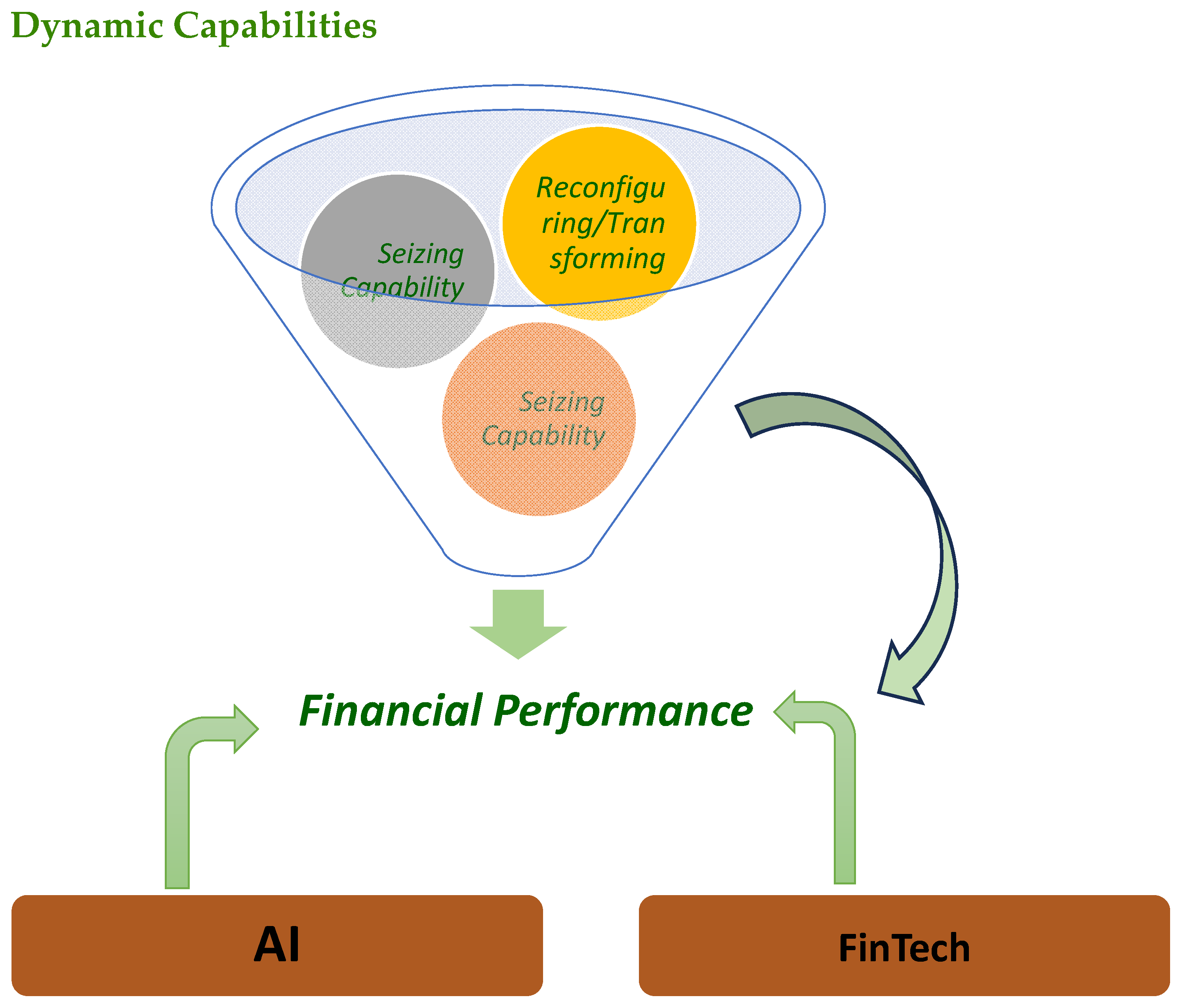
Within this context, the dynamic capabilities perspective, one of the dominant theoretical frameworks in strategic management, explains why certain organizations are able to generate sustainable economic value from advanced digital technologies such as FinTech and AI, whereas others, despite making comparable investments, fail to achieve significant performance gains [
28]. Dynamic capabilities encompass three core dimensions: sensing, seizing, and reconfiguring (transforming). These capabilities enable firms to identify technological opportunities, select appropriate strategic responses, and effectively embed these technologies within their structures, processes, and strategies. Recent studies suggest that in the absence of well-developed dynamic capabilities, AI often becomes a passive technological asset, lacking the capacity to contribute meaningfully to FinTech service development or to enhance financial performance [
29,
30]. From this standpoint, dynamic capabilities can operate as a critical moderating mechanism in the interaction between FinTech and AI. At higher levels of these capabilities, the impact of AI on FinTech development is amplified, ultimately leading to superior performance outcomes and greater financial value creation.
The present study examines the effect of AI maturity within the infrastructure of Iran’s capital market on firms’ financial performance and introduces its primary innovation through the definition of novel constructs and the rigorous modeling of underlying impact mechanisms, an approach that directly addresses a significant theoretical gap in the existing literature. In contrast to the majority of prior research, which has focused primarily on broad indicators of technology adoption, this study is the first within the Iranian context to conceptualize and measure AI maturity as a distinct analytical construct. This approach provides a deeper understanding of how AI-related technological capacities are translated into tangible financial outcomes.
Moreover, the study demonstrates that the relationship between FinTech and financial performance is neither simple nor direct; rather, it is significantly conditioned by the presence and strength of dynamic capabilities. Indeed, examining the moderating role of dynamic capabilities in the linkage between FinTech and financial performance constitutes the study’s principal theoretical contribution. By emphasizing the contingent nature of dynamic capabilities, the findings indicate that the economic benefits of FinTech materialize only in organizations that possess the necessary capabilities to sense opportunities, seize them effectively, and reconfigure technological resources accordingly.
Despite the rapid expansion of the digitalization literature, a substantial research gap persists. Many prior studies have investigated the direct effects of FinTech or AI on financial performance, while comparatively little attention has been devoted to the moderating role of the distinct dimensions of dynamic capabilities in linking these technologies particularly through disaggregated empirical analysis. This gap is especially salient in developing economies and diverse institutional contexts. By addressing this shortcoming, the present study demonstrate how dynamic capabilities may either strengthen or weaken the relationship between AI and the development of FinTech services, thereby facilitating sustainable value creation. Empirical testing of these hypotheses within the context of the Tehran Stock Exchange provides a clearer explanation of why and how emerging technologies influence firms’ financial performance and, by clarifying the moderating role of dynamic capabilities, establishes a theoretical foundation for the design and advancement of digital financial policies in Iran.
3. Research Methodology
3.1. Research Design
In terms of purpose, this study is applied; in terms of methodological orientation, it adopts a descriptive–correlational design. The primary focus of the research is to examine the impact of emerging financial technologies, namely FinTech and artificial intelligence on firms’ financial performance. Because the objective is to examine relationships and patterns of associations among variables within real organizational settings, rather than to establish causal relationships or implement experimental interventions, the descriptive–correlational approach was selected as the most appropriate methodological framework. Accordingly, this research falls within the category of applied studies whose findings can inform managerial decision-making and financial policy formulation.
With respect to data collection, the study relies on a structured survey instrument. The required data were gathered through a structured questionnaire administered to senior executives, chief financial officers, financial support managers, and board members of companies listed on the Tehran Stock Exchange. These respondents were selected because, as key organizational decision-makers, they possess direct and operational knowledge of internal policies and decisions, particularly those related to the adoption and implementation of FinTech and artificial intelligence, and are therefore capable of providing informed and analytically grounded assessments of the financial implications of these technologies.
The study adopts a cross-sectional design. Data were collected during a specific time frame, corresponding to the fiscal year 2025. Consequently, the analysis focuses on the current state of the variables and their interrelationships at that point in time, without examining longitudinal trends or dynamic changes over extended periods.
Regarding the statistical population and sampling procedure, the geographic dispersion of listed companies across the country made comprehensive access to the entire population both difficult and costly. Given that the headquarters of a substantial proportion of listed firms are located in Tehran, sampling was conducted with a focus on these central offices. Due to the inability to determine the exact size of the target population, a convenience sampling method was employed. In total, 384 valid questionnaires were collected. Based on established methodological criteria, this sample size provides an acceptable basis for generalizing the findings to the broader population of listed companies in Iran. Questionnaires were distributed and collected through multiple channels, including in-person visits, email communication, and other available communication tools.
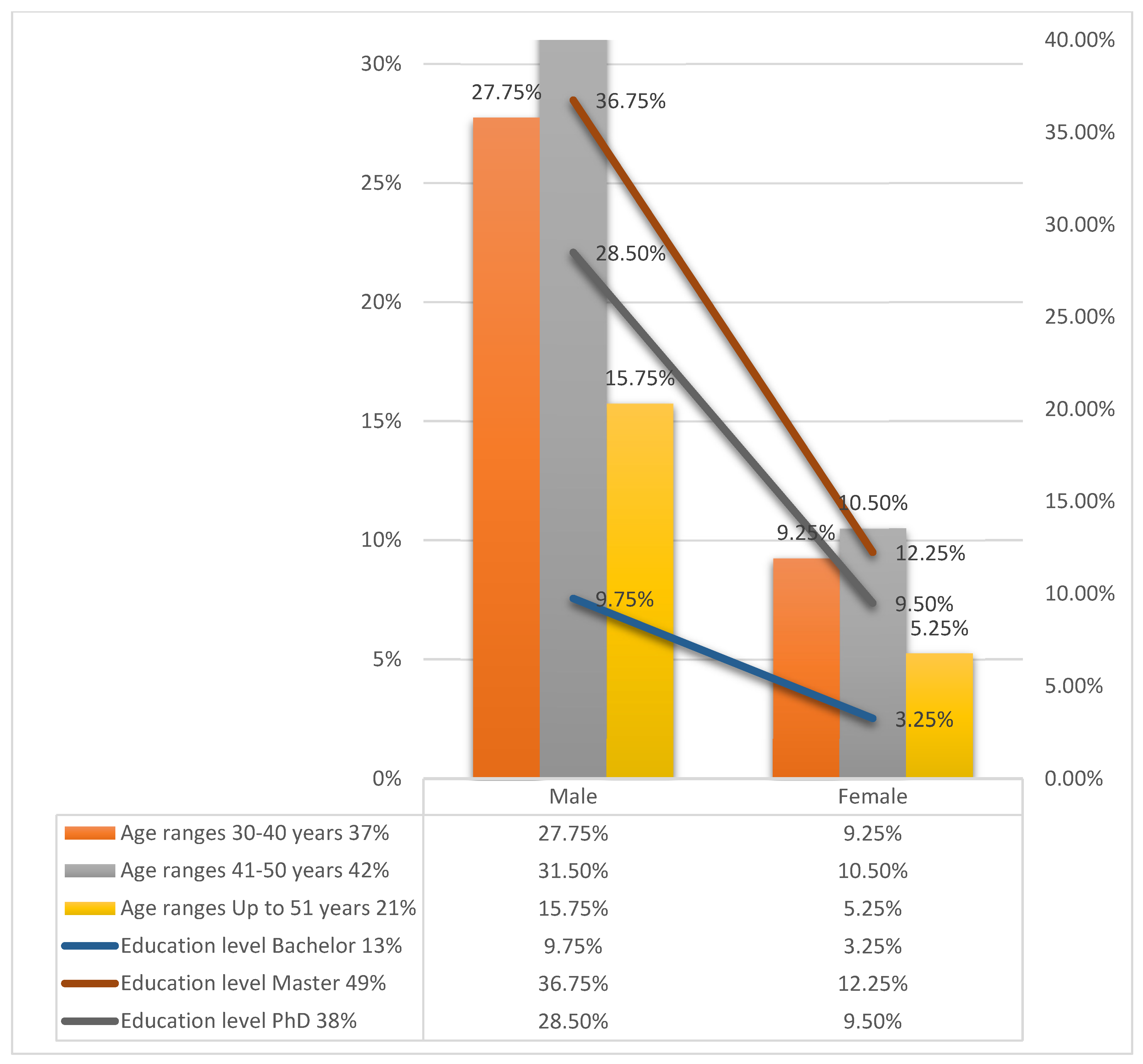
Data collection was conducted using field-based survey methods. The survey instrument comprised 52 items covering all research variables, and responses were collected from qualified respondents (The measurement items used for each construct are presented in
Appendix A). Data collection was conducted from August to November 2025. The demographic characteristics of respondents are presented in
Figure 2.
Firms were categorized into four groups based on market capitalization: very small, small, medium-sized, and large firms. The sample distribution indicates that 40% of respondents (n = 153) were drawn from large firms, 30% (n = 115) from medium-sized firms, 20% (n = 77) from small firms, and the remaining 10% (n = 39) from very small firms. To ensure adequate representation across different firm sizes, a stratified random sampling technique was employed. The population was first divided into homogeneous strata according to firm size, and respondents were then randomly selected from each stratum. A total of 430 questionnaires were distributed among the selected participants. Of these, 384 usable responses were received, yielding a response rate of approximately 89%, which is considered satisfactory for survey-based research.
3.2. Distribution of Sample Firms Across Industries
Given that the statistical population consists of firms listed on the Tehran Stock Exchange, the distribution of respondents across different industries is presented as follows:
The largest proportion of respondents was drawn from the petrochemical industry (n = 73), followed by basic metals (n = 71), pharmaceuticals (n = 60), food industry (n = 50), and automotive industry (n = 50). Smaller proportions were associated with the information technology sector (n = 42) and the cement industry (n = 38). In total, the sample comprises 384 responds.
3.3. Research Topic and Scope
The scope of this study focuses on firms listed on the Tehran Stock Exchange (TSE). Concentrating on this population enables a systematic examination of the relationships among FinTech adoption, artificial intelligence deployment, and corporate financial performance within the institutional context of Iran’s capital market. As an emerging economy, this market exhibits distinctive institutional and structural characteristics that may influence technology adoption and performance outcomes, making it a particularly relevant context for empirical investigation.
3.4. Subject of the Study
The central theme of this research is to investigate the relationship between FinTech adoption and the application of artificial intelligence and firms’ financial performance, as well as to analyze the moderating role of dynamic capabilities in shaping the impact of FinTech on financial performance. The core premise of the study is that emerging financial technologies do not generate performance improvements solely through technical deployment. Rather, the manner in which these technologies are integrated and leveraged within the firm’s organizational capabilities plays a critical and strategic role in achieving financial outcomes. Accordingly, this research aims to explain how FinTech and artificial intelligence, through their interaction with dynamic capabilities, can contribute to the enhancement of firms’ financial performance.
3.5. Research Objective
The overall objective of this study is to analyze and explain the effects of FinTech and artificial intelligence on corporate financial performance in Iran’s capital market. In doing so, the study contributes to the literature on financial innovation, digital transformation, and capability-based perspectives of the firm. Beyond its theoretical contribution, the study provides practical implications for corporate executives, financial regulators, and policymakers by identifying the conditions under which technological investments translate into measurable financial returns. To achieve this overarching objective, specific goals and research tasks have been defined. These objectives guide the analytical framework, inform variable measurement, and structure the empirical testing of the proposed relationships.
3.6. Conceptual Development
3.6.1. Corporate Financial Performance
Financial performance is a multidimensional construct reflecting the extent to which a firm efficiently utilizes its resources through its core operational processes to generate profit [
69]. In this sense, financial performance refers to the financial consequences of managerial decisions, operational efficiency, and strategic investments [
70]. It therefore represents a monetary indicator of organizational operations, policies, and value creation [
71]. From another perspective, financial performance emerges from the coordinated interaction of financial processes, governance mechanisms, analytical tools, and information systems that collectively support planning, control, and resource allocation. Firm performance broadly refers to the extent to which a company achieves its market and financial objectives [
72]. In this study, financial performance denotes outcomes that materialize in the form of revenue streams and cash inflows entering the organization, thereby reflecting the firm’s ability to convert strategic and technological investments into measurable financial value.
3.6.2. Artificial Intelligence
The concept of incorporating intelligence into computers was first articulated by Alan Turing in 1950. John McCarthy subsequently introduced the term “artificial intelligence” at a scientific conference in 1956. According to [
69], the primary objective of artificial intelligence is to emulate human intelligence in machines, enabling them to perform complex tasks and even predict outcomes [
70]. Although multiple definitions of artificial intelligence exist, one of the most prominent conceptualizations frames it as the theory and development of computer systems capable of performing tasks that ordinarily require human cognitive capabilities [
71]. The literature commonly distinguishes between two principal categories of AI [
72]. The first is narrow (or weak) AI, which consists of computer programs specifically designed and trained to perform particular tasks efficiently or to address defined problems [
73]. The second is artificial general intelligence (AGI), which refers to systems possessing intelligence comparable to humans and capable of performing any intellectual task [
74]. Such systems exhibit broad and versatile cognitive capacities, allowing them to transfer knowledge and skills across domains [
75].
With the advent of more powerful computational systems and the availability of vast volumes of data in the twenty-first century, the development and real-world deployment of artificial intelligence (AI) have accelerated substantially, largely due to AI’s capacity to process large-scale datasets efficiently [
75,
76,
77]. Consequently, AI is increasingly reshaping the global economic and organizational landscape, with nearly every business operation incorporating AI-driven solutions [
72]. This transformation has redefined organizational processes, shifting firms away from traditional approaches toward technology-based practices [
76]. Moreover, AI is increasingly transitioning from operational domains into strategic decision-making processes and long-term value creation frameworks [
78].
3.6.3. FinTech (Financial Technology)
FinTech refers to the application of digital technologies to financial services. It encompasses innovations in the design, delivery, and governance of financial services, ranging from enterprise-level infrastructure solutions to consumer-facing platforms. At its core, FinTech includes firms that deliver financial services through software-based or technologically mediated platforms, including mobile payment applications and cryptocurrencies. More broadly, any firm that utilizes the internet, mobile devices, software technologies, or cloud-based services to deliver or connect to financial services falls within this domain. By reducing transaction costs, enhancing accessibility, and automating financial processes, FinTech innovations fundamentally reshape the structure of financial intermediation and competitive dynamics within financial markets [
79].
3.6.4. Dynamic Capabilities
Dynamic capabilities refer to higher-order organizational competencies through which firms are able to identify environmental changes in a timely manner, mobilize their resources and competences to exploit emerging opportunities, and continuously reconfigure their structures, processes, and resource configurations. These capabilities are particularly critical in volatile, technology-intensive environments, where competitive advantage depends not only on resource ownership but also on adaptive capacity [
28,
63].
Unlike operational resources and capabilities, which are largely static in nature, dynamic capabilities play a strategic, value-creating role in the effective deployment of technologies and digital resources. In other words, they determine whether investments in technologies such as artificial intelligence, big data analytics, and FinTech translate into meaningful improvements in organizational performance or merely remain underutilized technological assets [
80]. Accordingly, dynamic capabilities function as the organizational mechanism through which technological resources are converted into sustained financial performance outcomes.
Dimensions of Dynamic Capabilities
In this study, dynamic capabilities are conceptualized as a multidimensional construct comprising three primary dimensions: sensing, seizing, and reconfiguring/transforming. Each dimension plays a distinct role in generating technological value.
Sensing capability refers to the organization’s ability to identify, interpret, and anticipate technological shifts, market developments, and evolving customer needs. In a digital context, this capability involves the continuous monitoring of advances in artificial intelligence, FinTech innovations, and regulatory changes within financial markets. Organizations with a higher level of sensing capability can detect technological opportunities earlier than competitors and incorporate them into their strategic decision-making processes [
63,
64].
- 2.
Seizing Capability
Seizing capability denotes the organization’s ability to optimally allocate resources, make strategic investment decisions, and design or redesign business models in order to effectively exploit identified opportunities. This dimension plays a pivotal role in converting the latent potential of artificial intelligence and FinTech into innovative, efficient, and value-creating financial services. It therefore establishes the critical link between opportunity recognition and realized economic value creation [
3].
- 3.
Reconfiguring/Transforming Capability
Reconfiguring capability refers to the organization’s capacity to redesign processes, realign resources, and modify organizational structures in order to continuously adapt to dynamic and uncertain environments. Empirical evidence suggests that in the absence of this capability, advanced digital technologies often generate only short-term and unsustainable gains, failing to produce enduring improvements in organizational performance [
81].
4. Results and Findings
4.1. Hypothesis Testing
The formulation and empirical testing of the study’s hypotheses are based on questionnaire data collected from firms listed on the Tehran Stock Exchange. The hypotheses are designed to examine the direct effects of FinTech adoption and artificial intelligence (AI) implementation on corporate financial performance. In addition, the moderating role dynamic capabilities in the relationship between FinTech and firm-level financial outcomes.
4.2. Interpretation of Results
The data are analyzed with particular emphasis on the structural relationships among FinTech, artificial intelligence, and corporate financial performance. Based on the empirical findings, practical recommendations are proposed to enhance corporate performance.
4.3. Structural Equation Modeling
4.3.1. Internal Reliability
As presented in
Table 1,the internal reliability of the constructs was assessed using Cronbach’s Alpha, rho_A, and Composite Reliability (CR) to evaluate the consistency of the measurement items associated with each latent construct. Values exceeding established thresholds indicate satisfactory reliability and support the adequacy of the measurement model for subsequent structural analysis.
According to [
82], in PLS-SEM models the primary criterion for assessing internal consistency reliability is the use of a Composite Reliability (CR) value greater than 0.70. Accordingly, all constructs exceed this threshold, indicating satisfactory internal consistency and supporting the reliability of the measurement model.
4.3.2. Convergent Validity
Convergent validity was assessed using the Average Variance Extracted (AVE), which measures the proportion of variance in the indicators captured by the latent construct as shown in
Table 2.
Although the AVE values for some constructs were slightly below the recommended threshold of 0.50, all factor loadings exceeded 0.60 and composite reliability (CR) values were above 0.70. According to established methodological guidelines [
82,
83], this pattern indicates an acceptable level of convergent validity. A detailed examination of the indicator loadings confirmed that none of the items exhibited critically low loadings (i.e., below 0.50), and thus item removal was not considered statistically necessary. Moreover, several indicators captured theoretically important dimensions of artificial intelligence and FinTech, and their removal would have reduced the conceptual coverage of the constructs. Accordingly, all items were retained based on both statistical adequacy and theoretical considerations. It is also important to note that in emerging and rapidly evolving domains such as artificial intelligence and FinTech, measurement items often reflect complex and multidimensional phenomena, which may lead to relatively dispersed loadings and, consequently, slightly lower AVE values [
84]. Therefore, marginally low AVE values in some constructs are not unexpected, particularly when overall construct reliability is satisfactory and other validity criteria are fulfilled.
4.3.3. Discriminant Validity
Discriminant validity was assessed using the Fornell–Larcker criterion and the Het-erotrait–Monotrait (HTMT) ratio. In line with methodological recommendations, the selection of the HTMT threshold depends on the conceptual relationship between constructs. As suggested by Ref. [
82], a threshold of 0.90 is appropriate when constructs are conceptually related yet distinct. In the present study, constructs such as artificial intelligence and FinTech are theoretically linked within a broader technological and value-creation framework; therefore, moderate to relatively high correlations among them are expected.
The results indicate that all HTMT values are below the 0.90 threshold, supporting the establishment of discriminant validity. This finding suggests that the constructs are empirically distinct, despite their conceptual proximity. The observed inter-construct correlations are consistent with theoretically expected relationships rather than indicative of measurement overlap.
In addition, the results of the Fornell–Larcker criterion and cross-loadings further support the establishment of discriminant validity across all constructs. The explanatory power of the structural model was evaluated using the coefficient of determination (R
2) and adjusted R
2 values. The results demonstrated substantial explanatory capability for the dependent construct, indicating a strong model fit, as presented in
Table 3.
The research model is capable of explaining 66.6% of the variance in financial performance, which is considered a substantial level of explanatory power in management research.
4.3.4. Confirmatory Factor Analysis (CFA)
The overall model fit was assessed using several goodness-of-fit indices, including SRMR, GFI, and NFI, as presented in
Table 4.
The SRMR value obtained in this study indicates that the conceptual model is capable of reproducing the relationships among artificial intelligence, FinTech service development, dynamic capabilities, and financial performance with a low level of error. This index is particularly important for models incorporating moderating effects, as such models typically involve greater structural complexity.
The reported GFI value suggests that the model structure including the direct effects of artificial intelligence and FinTech, as well as the moderating effects of the dimensions of dynamic capabilities accounts for a substantial proportion of the variation in financial performance. This result is consistent with the reported R2 value of 0.666 for financial performance and indicates strong explanatory power.
The acceptable NFI value demonstrates that the proposed model performs significantly better than a null (independence) model. It further indicates that the proposed causal structure (AI → FinTech → Financial Performance, moderated by dynamic capabilities) possesses strong empirical support.
Overall, the model fit indices confirm that the research model demonstrates an adequate fit. The SRMR value, together with the acceptable GFI and NFI values, indicates that the structural model appropriately explains the relationships among artificial intelligence, FinTech service development, dynamic capabilities, and financial performance. These findings support the validity of the proposed causal structure and the results of the hypothesis testing.
4.3.5. Structural Model Assessment
To assess the effect size of the constructs within the structural model, the f2 index is employed. This index evaluates the extent to which the explanatory power (R2) of an endogenous construct decreases when a specific exogenous construct is removed from the model. According to established guidelines, f2 values of 0.02, 0.15, and 0.35 indicate small, medium, and large effect sizes, respectively.
To control for common method bias (CMB), the full collinearity assessment approach using the variance inflation factor (VIF) was utilized. A VIF value below 3.3 suggests that common method bias is not a serious concern. The results of this study indicate that all VIF values are below the threshold of 3.3, confirming that common method bias does not threaten the validity of the findings.
In this study, two key indicators, namely the coefficient of determination (R
2) and the predictive relevance coefficient (Q
2), were employed to evaluate the structural model. The R
2 value reflects the extent to which exogenous variables explain the variance of endogenous constructs. As illustrated in the corresponding
Table 5, the calculated R
2 values for the endogenous constructs indicate an acceptable level of explanatory power. Furthermore, the predictive relevance of the model was assessed using the Q
2 statistic, which provides an indication of the model’s out-of-sample predictive relevance. The obtained Q
2 values confirm that the model has adequate predictive relevance.
Table 6 presents the VIF and Q
2 values applied to assess collinearity and predictive relevance in the structural model.
The effect size (f
2) of the structural model variables on financial performance was evaluated, as reported in
Table 7.
4.4. Correlation Matrix
Prior to estimating the structural model, a correlation analysis was conducted to ensure data adequacy and to examine the preliminary pattern of relationships among the study items.
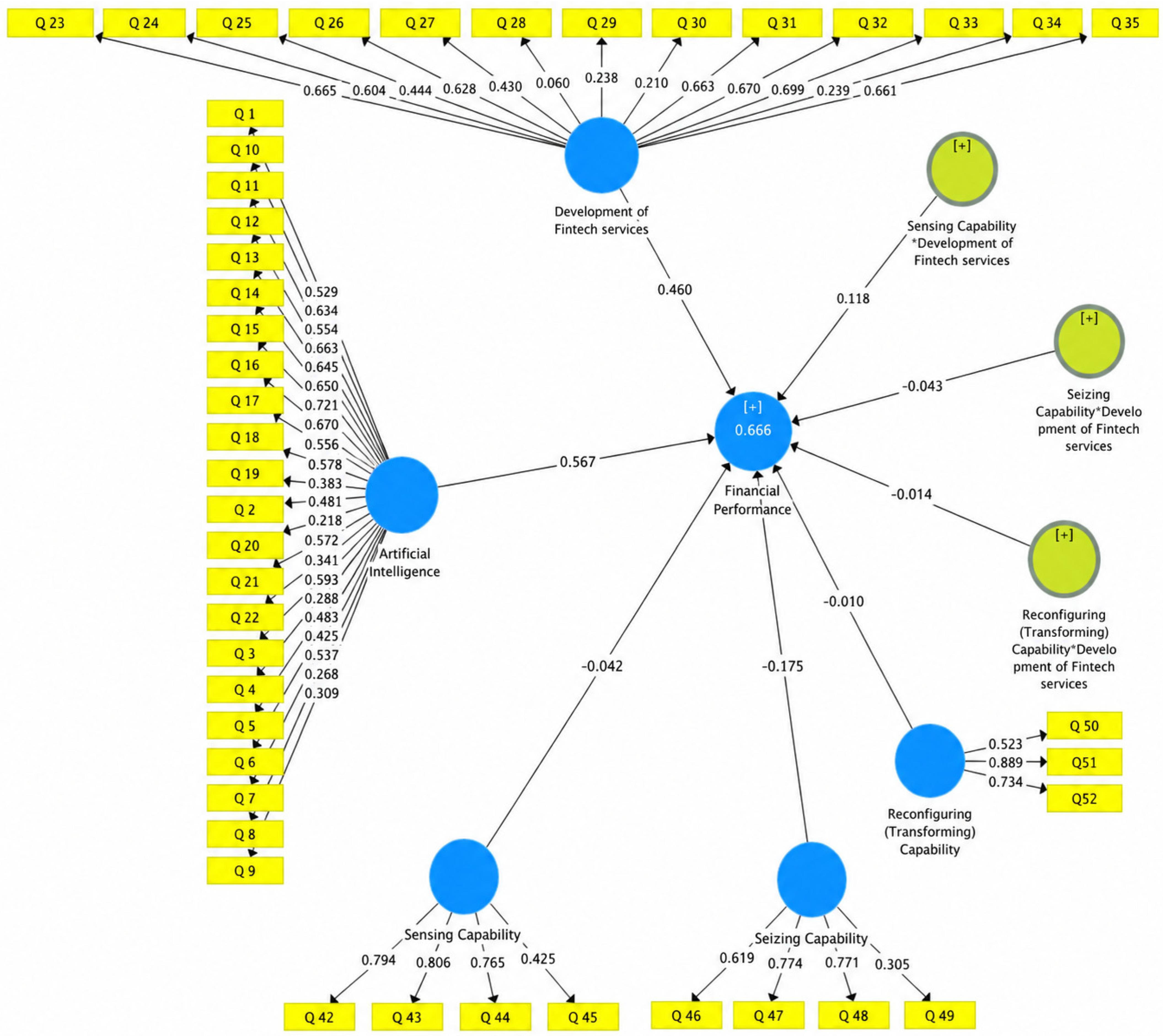
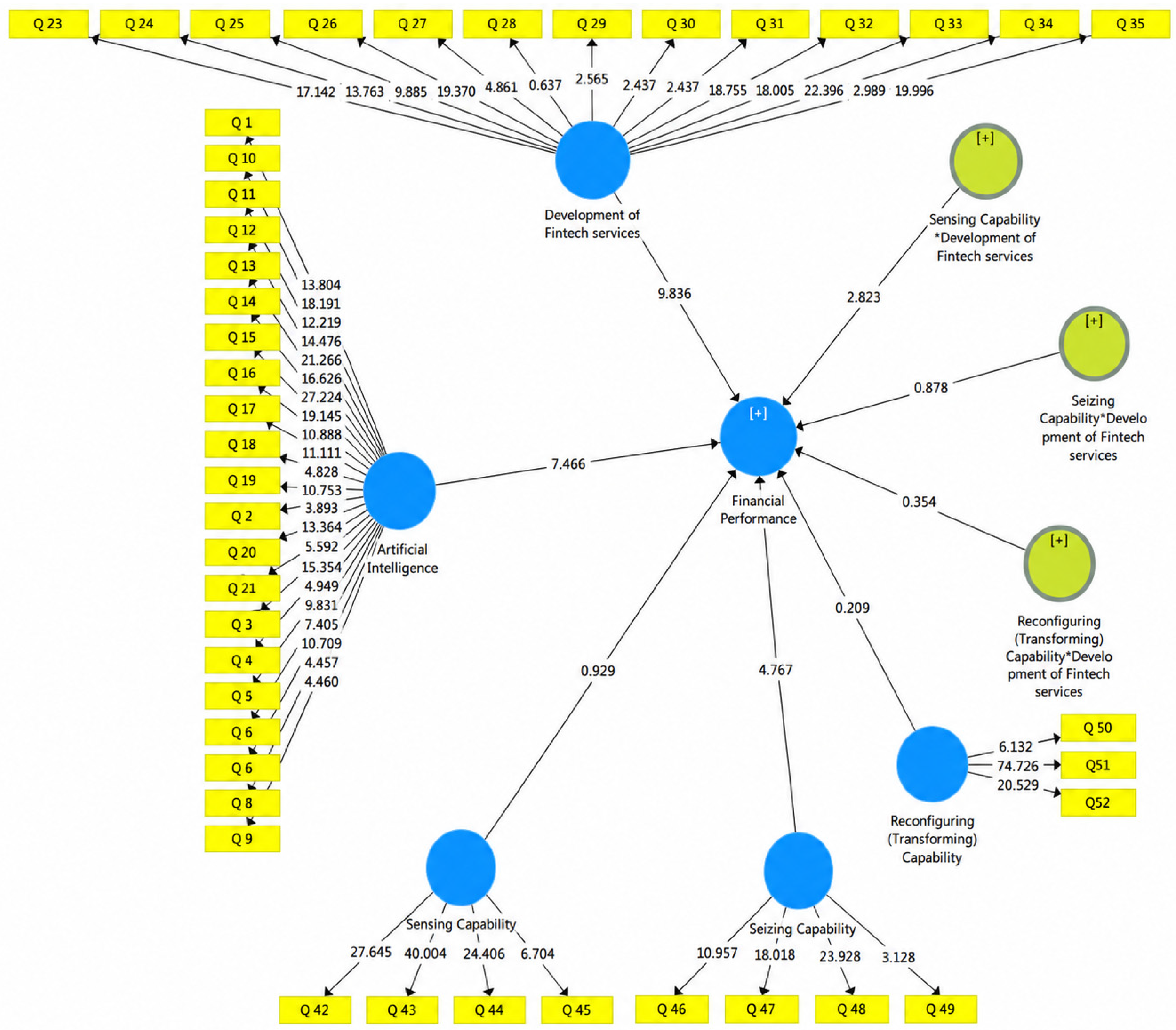
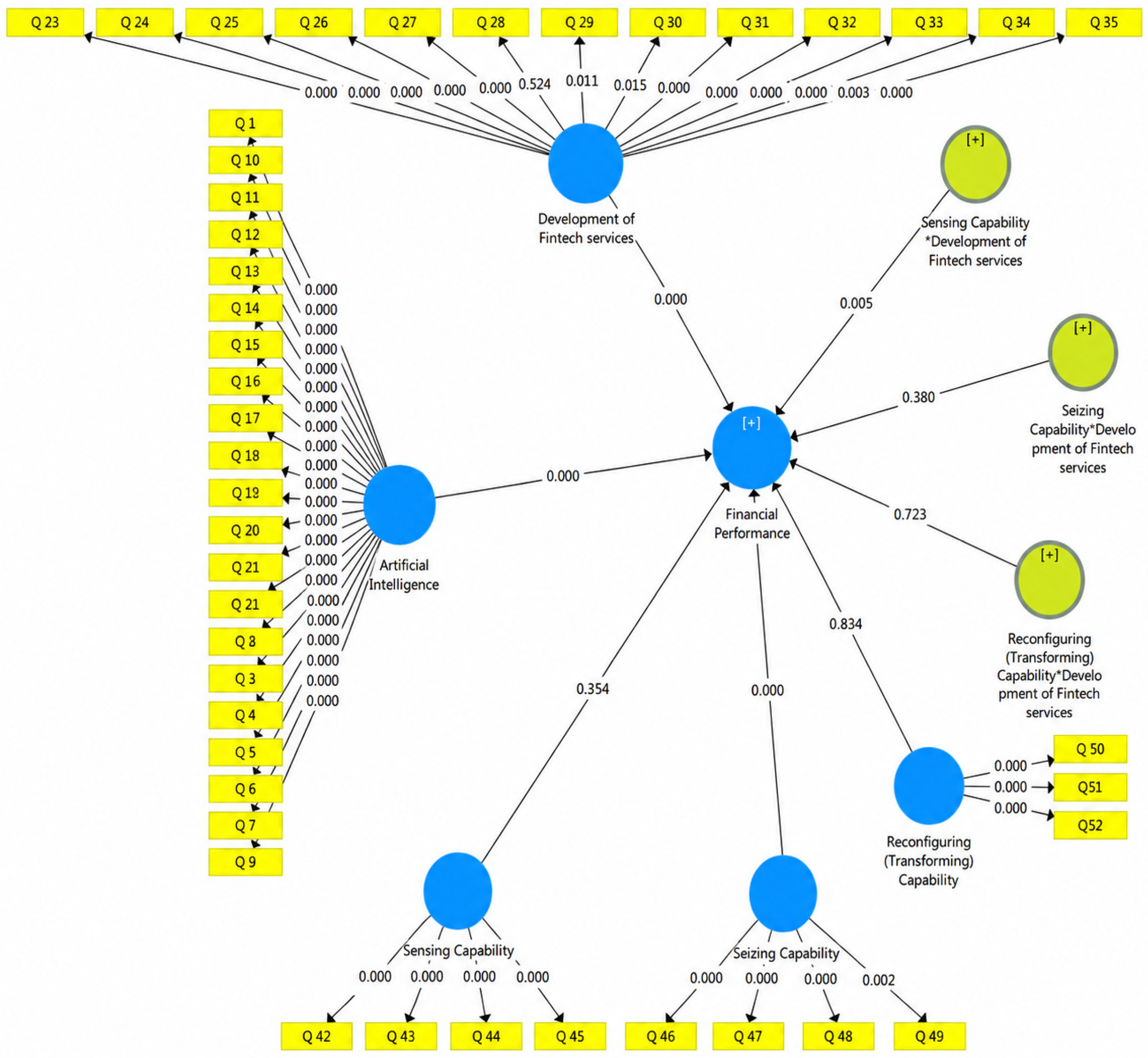
The results indicate that most correlation coefficients fall within an acceptable range in terms of both direction and magnitude and are predominantly positive. This pattern reflects meaningful and theoretically consistent associations among the research constructs. Moreover, the absence of excessively high correlation coefficients suggests that severe multicollinearity is not present and that discriminant validity at the measurement level is maintained. Overall, these findings indicate that the dataset is suitable for proceeding to Partial Least Squares Structural Equation Modeling (PLS-SEM). The results of the structural model assessment based on factor loadings are presented in
Figure 3, demonstrating the strength of the relationships among the research constructs and confirming the adequacy of the measurement model. Furthermore, the statistical significance of the proposed relationships for the first main hypothesis was evaluated using t-values, and the corresponding results are illustrated in
Figure 4. In addition, the significance levels associated with the first main hypothesis were examined using
p-values, and the detailed results of this analysis are presented in
Figure 5.
The correlations among the study variables were examined using a correlation matrix, as presented in
Table 8.
4.5. Structural Model Evaluation
The results presented in
Table 9 indicate that artificial intelligence and FinTech have a positive and statistically significant impact on financial performance. In contrast, dynamic capabilities do not exhibit a statistically significant direct effect on financial performance. As further demonstrated in
Table 10, dynamic capabilities primarily function as a moderating mechanism rather than exerting an independent direct influence.
The findings of this study indicate that dynamic capabilities play a critical moderating role in amplifying the impact of FinTech on corporate financial performance. Although these capabilities do not exert a statistically significant direct effect on financial performance, their interaction with FinTech development is positive and statistically significant. This result underscores that dynamic capabilities function as enabling mechanisms through which technological investments are translated into financial value. It suggests that FinTech alone does not guarantee improved performance; rather, the manner in which it is integrated and leveraged within the firm’s organizational capabilities ultimately determines its financial outcomes.
A disaggregated analysis of the dimensions of dynamic capabilities reveals that only the sensing dimension significantly strengthens the relationship between FinTech and financial performance. This finding implies that firms with a superior ability to identify technological opportunities in a timely manner, interpret environmental changes, and anticipate evolving market needs are better positioned to extract value from their FinTech investments. In contrast, the seizing and reconfiguring dimensions do not exhibit significant moderating effects. This may reflect contextual constraints such as institutional rigidities, resource limitations, or managerial frictions that impede effective opportunity exploitation and organizational transformation within the sampled firms.
Another noteworthy finding is the negative and statistically significant direct effect of the seizing capability on financial performance. This result suggests that excessive emphasis on investment decisions, rapid expansion of FinTech services, or premature exploitation of technologies without sufficient environmental analysis and organizational readiness may lead to increased costs, heightened decision-making risks, and reduced financial efficiency. This observation aligns with the dynamic capabilities literature, which emphasizes that effective opportunity exploitation requires a strong sensing capability and an accurate understanding of environmental conditions.
Furthermore, the results demonstrate that both artificial intelligence and FinTech service development exert positive and statistically significant effects on corporate financial performance. This finding supports the view that digital technologies, by enhancing decision-making quality, improving operational efficiency, and reducing uncertainty, can contribute meaningfully to financial performance enhancement. Nevertheless, dynamic capabilities function as facilitating and amplifying mechanisms that condition the magnitude and sustainability of these gains. Organizations can extract maximum financial benefits from FinTech and artificial intelligence only when they possess higher levels of dynamic capabilities particularly sensing capability.
Overall, the findings suggest that dynamic capabilities should not be viewed as independent value-generating resources. Rather, they operate as mechanisms that convert technological investments into financial performance outcomes. This perspective helps explain why some firms are able to generate sustainable economic value from FinTech and artificial intelligence, whereas others despite making comparable technological investments fail to achieve desirable financial results.
5. Discussion
The findings of this study indicate that emerging digital technologies, particularly artificial intelligence and the development of FinTech services, have a statistically significant positive direct effect on firms’ financial performance. This result is consistent with the dominant strand of the digital transformation literature, which argues that data-driven technologies generate economic value and competitive advantage by enhancing operational efficiency, improving decision-making quality, and reducing informational frictions.
However, a central and theoretically important finding of this study is that dynamic capabilities do not exert a statistically significant direct effect on financial performance. Instead, they positively and significantly strengthen the relationship between FinTech development and financial performance through their moderating role. This finding is consistent with [
63] theoretical framework, which conceptualizes dynamic capabilities not as direct sources of performance, but as higher-order mechanisms that enable firms to align, reconfigure, and leverage technological resources in uncertain and rapidly evolving environments. In other words, investment in FinTech alone is insufficient to ensure superior financial outcomes. Rather, the organization’s ability to understand, absorb, and intelligently adapt these technologies determines their financial impact.
The structural and institutional characteristics of Iran’s economy including severe exchange rate volatility, persistent inflation, and recurrent macroeconomic shocks have created an environment in which technological advantages can erode rapidly. Under such conditions, dynamic capabilities generate value only when they enable firms to activate technological investments at the right time and with a high degree of organizational flexibility.
Moreover, the relatively conservative regulatory environment, particularly in areas such as payments, digital banking, and data governance means that many FinTech initiatives encounter institutional frictions during implementation. This context can render seizing and reconfiguring capabilities costly, time-consuming, and risk-laden processes.
In line with this argument, the disaggregated analysis of dynamic capability dimensions reveals that only the sensing dimension significantly strengthens the relationship between FinTech and financial performance. This innovative finding suggests that in a transitioning digital ecosystem such as Iran’s, cognitive and interpretive capacities namely the ability to anticipate technological shifts, decode regulatory signals, and diagnose environmental change are more consequential than execution-focused capabilities. Firms that can identify technological shifts, market signals, and regulatory developments earlier and more accurately are better positioned to direct their FinTech investments strategically and to avoid costly, low-return projects.
Overall, the findings suggest that financial value creation from FinTech and artificial intelligence in Iran’s capital market depends less on the extent of technological investment and more on the manner in which these technologies are perceived, interpreted, and strategically timed. Within the dynamic capabilities framework, this pivotal function is primarily fulfilled by sensing capability, which conditions the effectiveness and financial returns of digital transformation initiatives.
6. Conclusions
The findings indicate that Fintech exerts a significant impact on financial performance. According to the Technology Acceptance Model proposed by Davis, individuals adopt new technologies with a specific purpose in mind, and perceived usefulness and perceived ease of use constitute the primary determinants of technology acceptance among users [
85]. Moreover, the manner of use and the extent to which technology enhances user performance represent critical mechanisms through which adoption translates into measurable outcomes [
86]. In this regard, Ref. [
87] demonstrates that larger Fintech firms are better positioned to improve their performance, likely due to superior resource endowments and scalability advantages. Similarly, Ref. [
88], examining the impact of FinTech on the financial performance of Jordanian small and medium-sized enterprises, found that FinTech adoption has a positive and economically meaningful effect on financial performance. These findings are consistent with, and provide external validity for, the results of the present study.
The results further reveal that artificial intelligence exerts a statistically significant positive influence on financial performance. Artificial intelligence is not merely a trend; rather, it is a transformative reality that fundamentally reshapes how businesses manage money and assets. Its adoption is expected to bring about substantial changes in financial decision-making processes and overall firm performance [
89]. In this context, Ref. [
90] showed that artificial intelligence alongside online technologies, cloud computing, process automation, big data analytics, computer simulations, and the Internet of Things affects financial performance. Ref. [
72] examined how AI dimensions such as computer vision, machine learning, natural language processing, and expert systems influence financial decisions in pharmaceutical businesses, concluding that both financial decision-making and firm financial performance are positively affected by AI capabilities, a conclusion consistent with the empirical evidence presented herein. Furthermore, Ref. [
89] illustrate how artificial intelligence has evolved into a valuable tool for financial management processes and decision optimization, generating added value through the analysis of more complex datasets and the provision of flexible solutions.
The study also demonstrates that among the three principal dimensions of dynamic capabilities, only the “sensing” dimension plays a positive and significant moderating role in the relationship between Fintech and financial performance. This finding suggests that FinTech-driven value creation depends primarily on an organization’s capacity to continuously monitor technological developments, identify digital opportunities in a timely manner, and accurately interpret market and regulatory changes. In other words, organizations that “see earlier and understand better” are more capable of translating FinTech initiatives into enhanced financial performance.
The significance of this result becomes even more pronounced within Iran’s institutional and economic context. In an environment characterized by regulatory instability in FinTech frameworks, rapid technological restrictions or localization requirements, and recurrent unpredictable economic shocks, the ability to “anticipate” and “accurately interpret” developments is considerably more critical than merely “acting quickly.” Under such conditions, hasty decisions to implement digital technologies without a sound understanding of the surrounding environment may lead to resource misallocation and weakened financial performance. This finding aligns with recent studies [
36,
64] that emphasize the foundational and decisive role of the sensing dimension in the success of digital transformation initiatives within emerging economies. Thus, the institutional environment amplifies the economic value of sensing capabilities by increasing the costs of strategic misalignment.
Another noteworthy finding of the study is the direct negative and significant effect of exploitation capability on financial performance. Although this result may initially appear counterintuitive, it is fully explicable within the context of Iran’s capital market. Exploitation capability typically entails substantial investments, rapid decision-making, and considerable resource commitment to technological projects. In an environment marked by regulatory uncertainty, high return-on-investment risk, and financial constraints, such commitments may generate sunk costs, inefficient capital allocation, and short-term financial pressures, ultimately undermining firm financial performance. Accordingly, the findings suggest that in Iran’s capital market, accelerated digital exploitation without adequate environmental understanding is not only non-advantageous but may also produce detrimental financial consequences. From this perspective, sensing capability emerges as a fundamental prerequisite for the successful exploitation of Fintech. It clarifies why some firms are able to create economic value from digital technologies, while others, despite similar levels of investment, fail to achieve desirable financial outcomes.
6.1. Practical Implications
In addition to advancing theoretical discussions, this study offers substantive and policy-relevant practical guidance for corporate managers. One of its central messages is that dynamic capabilities do not constitute a unified and homogeneous construct; rather, their distinct dimensions may exert different and even contradictory effects on organizational performance. The findings clearly demonstrate that the role and function of dynamic capabilities are highly contingent upon the institutional context and prevailing economic conditions. Accordingly, these capabilities cannot be expected to operate uniformly across different environments, particularly in transitional and institutionally volatile capital markets.
From a theoretical standpoint, by focusing on emerging economies and transitional capital markets, this study enriches the literature on FinTech and dynamic capabilities. It illustrates how institutional characteristics and the level of environmental uncertainty can reshape the value-creation trajectory of digital technologies. These insights help explain why empirical regularities documented in developed economies may not be directly generalizable to contexts such as Iran, where institutional frictions and macroeconomic instability materially affect strategic outcomes.
From a managerial perspective, the results suggest that managers of publicly listed Iranian firms should prioritize investment in strengthening the “sensing” dimension. This includes developing capabilities such as environmental intelligence, data analytics, continuous regulatory monitoring, and systematic tracking of technological developments, competencies that enable informed decision-making and the appropriate timing of digital initiatives. Conversely, the findings caution against hasty Fintech exploitation and the rapid implementation of digital projects without sufficient environmental understanding. An overemphasis on exploitation capability in isolation may lead to capital misallocation, sunk costs, and deterioration in short-term financial performance.
Overall, the study underscores that digital transformation in Iran’s capital market should be designed and implemented in a phased, flexible, and learning-oriented manner. Only through such an adaptive and sequenced approach can investment in Fintech and related digital technologies translate into sustained value creation and durable improvements in financial performance.
6.2. Research Recommendations
This article deepens our understanding of how publicly listed Iranian firms can effectively leverage Fintech and artificial intelligence to enhance financial performance. It demonstrates that the value creation of these technologies extends beyond mere adoption levels and depends critically on their alignment with organizational capabilities and environmental conditions. The findings indicate that in a capital market characterized by institutional uncertainty and economic volatility, the intelligent and context-sensitive deployment of Fintech and artificial intelligence can lead to sustainable financial outcomes.
Looking ahead, the study proposes several important avenues for future research. First, subsequent investigations could examine firms’ digital transformation strategies more comprehensively to achieve a clearer understanding of how financial performance evolves within the rapidly changing landscape of Fintech and artificial intelligence. Such research may reveal how firms can balance digital innovation, risk management, and financial value creation.
Second, exploring the moderating role of organizational, technological, and environmental factors in the relationship between Fintech, artificial intelligence, and financial performance could generate valuable insights. Variables such as digital maturity, data governance quality, decision-making structures, and the intensity of institutional uncertainty may significantly alter the pathways through which digital technologies influence financial performance and therefore merit closer examination in future studies.
Finally, this research recommends conducting longitudinal studies to examine the optimal sequencing of investments in digital and Fintech infrastructure. Such studies could clarify how various components of digital infrastructure from data systems and advanced analytics to intelligent platforms affect Fintech development over time and ultimately influence firms’ financial performance. A temporal perspective of this nature would facilitate a more precise understanding of digital transformation dynamics and their financial implications in transitional capital markets, particularly in Iran.
To strengthen the effectiveness of the sensing dimension, firms are advised to establish a specialized regulatory and technology monitoring committee at the board level or under a digital transformation committee. By utilizing intelligent analytical dashboards, this committee could continuously monitor regulatory changes introduced by institutions such as the Securities and Exchange Organization and the Central Bank, shifts in investor behavior, and emerging Fintech trends at national and regional levels. Crucially, the outputs of these monitoring and analytical processes should be directly linked to strategic investment and resource allocation decisions, rather than remaining confined to descriptive reports. In the context of Iran’s capital market marked by institutional uncertainty and structural volatility, the ability to interpret, accurately and in a timely manner, the direction and logic of environmental change holds substantially greater value than execution speed alone. Such capability reduces the likelihood of impulsive, high-risk technological commitments and enhances the probability that digital investments generate risk-adjusted financial returns.
6.3. Limitations and Directions for Future Research
The data were collected at a single point in time; therefore, the dynamic evolution and path dependence of firm capabilities could not be empirically assessed. The cross-sectional design limits causal inference and precludes an analysis of adjustment processes or lagged performance effects. Future studies are encouraged to employ longitudinal data to address this limitation.
Financial performance was measured based on managerial perceptions, which introduces the possibility of response bias. Managers’ assessments may be influenced by managerial optimism, organizational interests, or information constraints and may not fully reflect objective firm performance. Accordingly, future research should combine perceptual indicators with objective financial data (such as audited financial statements or capital market indicators) to enhance the validity and generalizability of findings.
The study focuses exclusively on Iran’s capital market; comparative analyses with other developing countries could provide valuable additional insights.
Finally, future research may examine the moderating role of higher-level institutional variables (e.g., regulatory quality) in shaping the relationships identified in this study.




 ,
,