Article

Mechanisms and Inheritance of Dormancy in Sunflower (Helianthus annuus L.) Achenes

by
Gonzalo Joaquín Arata
1,2,*,
Mailén Riveira-Rubin
1,
Diego Batlla
1,2 and
María Verónica Rodríguez
1,3,*
1
Instituto de Investigaciones Fisiológicas y Ecológicas Vinculadas a la Agricultura (IFEVA), Facultad de Agronomía de la Universidad de Buenos Aires–CONICET, Av. San Martín 4453, Autonomous City of Buenos Aires (CABA) C1417DSE, Argentina
2
Cátedra de Cultivos Industriales, Departamento de Producción Vegetal, Facultad de Agronomía de la Universidad de Buenos Aires, Av. San Martín 4453, Autonomous City of Buenos Aires (CABA) C1417DSE, Argentina
3
Cátedra de Fisiología Vegetal, Departamento de Biología Aplicada y Alimentos, Facultad de Agronomía de la Universidad de Buenos Aires, Av. San Martín 4453, Autonomous City of Buenos Aires (CABA) C1417DSE, Argentina
*
Authors to whom correspondence should be addressed.
Seeds 2026, 5(4), 38; https://doi.org/10.3390/seeds5040038
Submission received: 4 May 2026 / Revised: 1 July 2026 / Accepted: 2 July 2026 / Published: 8 July 2026

Abstract

In dormant sunflower achenes, several structures—the pericarp, seed coat and embryo—contribute to the repression of germination. Achene dormancy varies widely among cultivated sunflower genotypes, and understanding its transmission to hybrid progeny is important both for hybrid seed production and for clarifying the role of these structures. This study examined the inheritance of dormancy in the F1 progeny, with particular emphasis on thermo-inhibition (inhibition of germination at warm temperatures). Reciprocal crosses were performed using three oilseed inbred lines with contrasting dormancy phenotypes. Germination of achenes, seeds, and embryos was tested at 10 and 30 °C at harvest and during postharvest, together with hormonal responses (abscisic acid, ethylene and gibberellins) and measurements of endogenous ABA levels. Results show that maternally inherited, pericarp-imposed thermo-inhibition depends on the dormancy level of the hybrid embryo, which follows a zygotic pattern with incomplete dominance. While embryo sensitivity to ABA related positively with thermo-inhibition, surprisingly, embryonic ABA content was inversely related to dormancy level across genotypes. These findings provide new insight into physiological control of achene dormancy in sunflower and contribute to improved breeding strategies for high-quality hybrid seed.

1. Introduction

Germination is a critical event in the plant life cycle. Seed dormancy is defined as an internal block to germination in a viable seed (or other unit) imbibed under otherwise favorable conditions [1]. Dormancy mechanisms enable seeds to integrate spatial and temporal environmental cues, thereby preventing germination until conditions that maximize population survival are met (reviewed in [2]). Among the dormancy classes defined by Baskin and Baskin [3], non-deep physiological dormancy is the most prevalent in temperate species, including both wild and cultivated sunflowers. Physiological dormancy is imposed during seed development and is regulated primarily by the balance between the antagonistic hormones abscisic acid (ABA), which promotes dormancy, and gibberellins (GA), which promote germination. Other hormones, such as ethylene, can modulate this ABA–GA balance and participate in the developmental and environmental regulation of dormancy depth [2,4]. Although the central role of the ABA–GA balance in dormancy control is well established, the underlying mechanisms—specifically where and how hormonal regulation operates and which seed structures are involved—vary substantially among species.
The sunflower dispersal unit is a dry, one-seeded fruit derived from an inferior ovary [5]; although it is strictly a cypsela, it is commonly referred to as “achene” as in the present text. At maturity, the dry, quiescent embryo is surrounded by a thin layer of endosperm adhered to the multilayered testa, forming the “true” seed which is further enclosed within a hard pericarp. In sunflower, as in many species producing orthodox seeds, dormancy levels gradually decline during dry after-ripening. This process results in faster and more complete germination at a given imbibition temperature and broadens the temperature range permissive for germination [4,6]. Once rendered non-dormant, sunflower achenes can germinate across a wide thermal range (approximately 5 to 40 °C; [7]), a trait that is highly desirable for commercial seed quality. Although domestication and breeding have generally reduced dormancy levels in crop species, strong dormancy phenotypes remain problematic in cultivated sunflower [6].
In cultivated sunflower, dormancy expression has been reported at cool imbibition temperatures (e.g., 10 °C; [8]), at warm temperatures (above 20–25 °C; [9,10]), or at both extremes of the thermal range [6,7]. These contrasting responses generate positive, negative, or bimodal germination patterns along the temperature gradient. Dormancy expressed at low temperatures is associated with embryo dormancy [6,7] and is typically alleviated after several weeks of dry storage. In contrast, dormancy expressed at high temperatures (25–30 °C) is imposed by the pericarp, as isolated (naked) embryos readily germinate under these conditions [6,7]. This pericarp-mediated inhibition can persist indefinitely in some genotypes [9,10] and meets the definition of thermo-inhibition (TI) as defined previously [11].
Variability in dormancy mechanisms was investigated by our group in 22 sunflower genotypes representing oilseed, edible, and ruderal types [6]. Low-temperature-expressed dormancy (LTED), characterized by increased germination at warmer incubation temperatures, was observed in all genotypes examined and was closely associated with changes in embryo dormancy and/or sensitivity to ABA. Thermo-inhibition, while most pronounced in ruderal types, was also present to varying degrees in cultivated material and established an upper thermal limit for germination, typically between 25 and 30 °C. Notably, embryo responsiveness to ABA at 30 °C was also associated with TI, indicating that TI cannot be attributed solely to constraints imposed by the pericarp [6].
Argentina is one of the leading sunflower producers worldwide. The crop occupies over 2 million hectares and relies on hybrid seed produced locally by a highly developed seed industry that includes both multinational and domestic companies. Residual seed dormancy (LTED) and TI can negatively affect crop emergence with great economic losses for farmers and remain an important challenge for the seed industry. In the context of hybrid seed production, understanding how parental genotypes influence the dormancy phenotype of F1 progeny is of particular importance. Seed dormancy inheritance is inherently complex because it involves multiple tissues with distinct genetic origins [1,12]. In sunflower, the achene is composed of structurally and genetically distinct components: the embryo is diploid and biparental (1♀:1♂), the endosperm is triploid (2♀:1♂), and both the testa and the pericarp are diploid and maternally derived (2♀), originating from the ovary and the floral receptacle, respectively [12]. The relative contribution of these tissues to dormancy determines whether inheritance is predominantly maternal or nuclear (zygotic).
Maternal inheritance may arise from the predominance of maternally derived tissues, such as the seed and fruit coats, or from cytoplasmic inheritance via organellar genomes, which are also maternally transmitted and may influence embryo phenotype [13,14,15]. In addition, maternal effects on endosperm-associated traits may result not only from the chromosomal imbalance favoring the maternal parent (2♀:1♂) but also from epigenetic regulation. Genomic imprinting occurs in the Arabidopsis endosperm, resulting in exclusive expression of maternal alleles and a dormancy phenotype resembling that of the maternal parent [16]. These genetic mechanisms must be clearly distinguished from maternal environmental effects, which arise from environmental conditions experienced by the mother plant during seed development and can also modify progeny traits [17,18,19]. Conversely, embryo-associated dormancy may depend primarily on the zygotic genotype (nuclear inheritance), with equal genetic contributions from both parents. In such cases, dormancy expression may follow complete dominance (progeny resembles one parent), incomplete dominance (intermediate phenotype), or codominance (simultaneous expression of both parental phenotypes; [20]).
Several studies have documented maternal inheritance of seed dormancy in species where dormancy is imposed by seed or fruit coverings, including Arabidopsis [16,21,22], and wild sunflower [23,24,25,26]. By contrast, embryo-associated dormancy governed by the zygotic genotype has been reported in several crop species, including wheat [27], rice [28], and lettuce [29], where dormancy generally exhibits a pattern of incomplete dominance.
The present work aimed to investigate how LTED and TI relate to specific achene components and how these mechanisms are inherited in F1 progeny. To achieve this, reciprocal crosses were performed using three sunflower lines exhibiting contrasting dormancy phenotypes as reported in a previous study [6]. Parents and hybrids were characterized using a combination of physiological approaches—germination of intact achenes, seeds, and isolated embryos under different media and incubation temperatures—and morphological analyses, including measurements of achene size and pericarp anatomy. This integrative approach enabled us to associate embryo- and pericarp-related traits with whole-achene dormancy phenotypes and their patterns of inheritance. In parallel, analysis of physiological traits, such as embryo ABA content and sensitivity to hypoxia, provided further insight into the mechanisms underlying dormancy variation and thermo-inhibition.

2. Materials and Methods

2.1. Plant Materials

Three sunflower oil-type inbred lines (609, 1579, and HA342) were used in this study. Line 609 was developed by the National Institute for Agronomic Technology of Argentina (INTA), and lines 1579 and HA342 are public lines from the U.S. Department of Agriculture (USDA). These were selected from a diverse panel of breeding materials characterized by their dormancy phenotypes as described in a previous study [6]. In that study, genotypes were classified into five dormancy groups based on their level of low-temperature-expressed dormancy (LTED; lowest in Group 1 and highest in Group 5) and the presence or absence of thermo-inhibition (TI; present only in Groups 4 and 5 [6]). Inbred line 609 was assigned to Group 2 (moderate LTED and absence of TI), whereas lines 1579 and HA342 belonged to Groups 4 and 5, respectively, both characterized by stronger LTED and the presence of TI. These genotypes were cultivated and used as parent lines to perform reciprocal crosses involving 609 and each of both dormant lines, 1579 and HA342. Thus, two “crossing systems” were obtained: “609:HA342” (consisting in parents 609 and HA342, and hybrids 609 × HA342 and HA342 × 609), and “609:1579” (consisting in parents 609 and 1579, and hybrids 609 × 1579 and 1579 × 609). In the hybrid notation, the female parent is mentioned first and the pollen donor second (♀ × ♂).
Two field trials were conducted at the experimental field of the Faculty of Agronomy, University of Buenos Aires (Autonomus City of Buenos Aires, Argentina; 3°25′ S, 58°25′ W), during the 2017–2018 and 2018–2019 growing seasons. Sowing date in the second experimental year was severely delayed by excessive rainfall and poor drainage at the site. Meteorological data (hourly temperature, radiation) recorded during field trials (Davis Vantage Pro2, CA, USA) is summarized in Table S1 together with phenological information.
Each parent was cultivated in a single plot (randomly assigned within the field) comprising eight rows of 10–12 m (0.7 m between rows, and 0.25 m between plants). Sowing dates were staggered to synchronize flowering time (R5.1) among genotypes (Table S1). Phenology of individual plants was recorded according to Schneiter and Miller scale [30]. At stage R4, each capitulum was covered with a semi-heavy polyamide bag to prevent cross-pollination. For each parent line, between 10 and 12 plants with similar phenology (R5.1 within a 4 d window) were assigned to a Control group (plants to be self-pollinated), or to perform as maternal parent in a particular cross (plants to be emasculated). Emasculation of mother plants began at R5.1 and was performed daily. Anthers were removed at dawn using tweezers as they emerged from the florets (images for this procedure are shown in Figure S1). Any residual pollen was removed with a fine water spray. Given that stigma receptivity is low on the first day of exposure, contamination by self-pollen was considered negligible. After approximately 60% of the capitulum was emasculated, the central florets were removed to prevent contaminating previously emasculated florets. Central florets removal was also performed in Control parent plants (self-pollinated) to ensure comparable source–sink dynamics that might otherwise influence seed dormancy levels. Pollen was manually collected from the corresponding male parent and used immediately if females were synchronized, or stored in plastic bags at 4 °C until the female plants were ready. Manual pollination of each female capitulum was conducted twice: after 30% emasculation and again at 60% emasculation. For each cross, a soft paint brush was used to spread the pollen over the receptive stigma (Figure S1).
After fruit set, capitula from pure (self-pollinated) parent plants were monitored to determine physiological maturity and harvest time (Figure S2). For this, achene moisture content was measured periodically since ca. 15 d after flowering. For each genotype and sampling date, five achenes from three plants were sampled from the middle third of the capitulum. Moisture content was determined gravimetrically, and dry weight was obtained after drying for 90 min at 130 °C. Harvest maturity was considered when moisture content reached 11–12% (fresh weight basis).
At harvest maturity, and for each genotype (parent or hybrid) between 8 and 10 mature capitula were harvested, manually threshed, and achenes from the middle third were retained and pooled together. Each batch of achenes was placed in a polyamide bag in an experimental seed dryer during 6–8 h (forced air flow at 35 °C) until reaching 6–7% moisture content on a fresh weight basis. Dried achenes were stored in sealed plastic bags at 25 °C in a temperature-controlled chamber.

2.2. Germination Assays

Germination assays were performed at 10 °C and 30 °C to follow variations in low-temperature-expressed dormancy (LTED) and the presence/absence of thermo-inhibition. Both temperatures arise from previous work by our group [6] where several imbibition temperatures were used to characterize and discriminate among genotypes based on their dormancy phenotypes. According to this previous study incubation temperatures of 10 and 30 °C are appropriate to diagnose differences in low-temperature-expressed dormancy and thermo-inhibition, respectively. Assays were conducted at harvest (after drying), and during storage at 30, 75 and 150 days after harvest (DAH).
For each experimental condition (genotype × storage time × incubation temperature), 25 achenes/seeds or 20 embryos were incubated in three replicates Petri dishes, on top of two layers of filter paper with 6 mL distilled water. For embryo dissection, pericarp was removed first and seeds imbibed for 30–60 min before seed coat removal. For this, a small cut was done with a scalpel following the separation line between cotyledons. Plates were sealed with plastic wrap and incubated for up to 15 days in growth chambers set constant at 10 °C and 30 °C, in the dark (although light was not avoided during germination counts). Plates were re-opened every 2–3 days to score germination. Achenes were considered germinated when the radicle protruded and curved slightly, and embryos/seeds when the radicle elongated 4–5 mm and curved. Germinated units were removed, and water was replenished as needed.
Following a similar methodology as described above, germination assays were also conducted with growth regulators at both 10 °C and 30 °C. Achenes were incubated in solutions containing germination promoters gibberellic acid (10 and 100 µM GA3) and an ethylene donor (50 µM ethephon). Embryo sensitivity to ABA was tested by incubating embryos at various concentrations of ABA (1–50 µM ABA) depending on the incubation temperature (1 and 5 µM ABA at 10 °C, or 5 and 50 µM ABA at 30 °C). These concentrations are based on a previous study [6] where we observed that sensitivity to ABA is higher at 10 °C as compared to 30 °C. Hormones ABA and GA3 were purchased from SIGMA ALDRICH, Buenos Aires, Argentina, and ethephon (Pestanal®) from Merck, Buenos Aires, Argentina.
Germination assays with GA3 and ethephon were performed at 0, 30 and 75 DAH, while sensitivity to ABA was tested after 75 DAH, when embryo germination in water was high enough to assess inhibition. All germination data belongs to experiment 1 (2017–2018).

2.3. Determination of Endogenous ABA by Radioimmunoassay

Achenes were sampled at harvest, and after storage (150 days after conditioning, DAH) to quantify endogenous ABA levels in dry or imbibed achenes (in distilled water, 24 h at 30 °C). Each treatment was assessed in 3 biological replicates of 25 embryos, with 2 technical duplicates. Coverings were removed, embryo axes were dissected with scalpel and immediately frozen in liquid nitrogen and stored at −80 °C until processing. Samples were subsequently lyophilized (vacuum cryodesiccation), weighed, and ground to powder. Aqueous ABA extraction and ABA quantification by radioimmunoassay were performed according to methodology described in a previous study [31]. Results are expressed as picograms (pg) ABA per gram of dry weight of the original sample.

2.4. Evaluation of Embryo Sensitivity to ABA Under Hypoxia

These determinations were performed with achenes from parent lines grown in the 2018–2019 field trial, after a 100 d period of dry storage. The germination capacity of naked embryos was evaluated under hypoxic and normoxic conditions (3% and 21% O2, respectively) to simulate the gas-exchange restriction imposed by the pericarp and seed coat. Incubations were carried out inside a semi-hermetic plastic chamber (Model C-274, BioSpherix, New York, NY, USA) placed within a temperature-controlled incubator and connected to an O2 controller (PRO-OX Model 110, BioSpherix, New York, NY, USA). The controller was supplied with N2 gas, which was injected into the chamber to maintain a stable O2 concentration of 3%. Use of this O2 concentration was based on previous results by our group [10]. An incubation temperature of 30 °C was selected because thermo-inhibition (TI) is enhanced under these conditions in cultivated sunflower varieties [6]. Embryo sensitivity to ABA was also evaluated at 30 °C by incubating embryos in water and ABA solutions (0.5, 5 and 25 μM) at both 3 and 21% oxygen. In this case, embryos were placed on filter paper layered over approximately 2 cm of cotton inside plastic trays (9 cm wide × 6 cm deep × 4 cm high). Cotton and filter paper were moistened with 55 mL of either distilled water or ABA solutions (0.5, 1, 5, and 25 μM). Each tray contained 20 units (fruits or embryos), with three replicates per treatment (n = 3). High relative humidity was maintained inside the chamber to reduce evaporation from the trays with embryos, which were not sealed, to allow contact with modified (hypoxic) air. After a 7-day incubation period, germination was recorded.

2.5. Anatomical Characterization and Morphological Assessment of Achene Components

Histological preparations were performed to identify and describe structural differences in the fruit pericarp in parental lines (609, 1579, HA342) and their reciprocal hybrids at harvest. The parameters investigated included pericarp thickness, number of cell layers, presence of sclerenchymatic tissues, following criteria established in [32]. Samples were fixed in FAA for 48 h, dehydrated through an ascending alcohol series, cleared with xylene, and embedded in pure paraffin. Serial sections of 10–15 μm were obtained using a Minot rotary microtome. Sections were stained with safranin–fast green, which differentiates primary and secondary cell walls, and permanently mounted using Canada balsam. Histological preparations were examined and photographed using a fluorescence microscope (Zeiss Axioplan, Munich, Germany). The number of pericarp cell layers, including sclerenchymatic cells within the median parenchyma, was recorded. Pericarp thickness was measured from digital micrographs using Image Tool software version 3.0 [33]. Tissue characterization protocols were based on studies of Asteraceae fruit anatomy [32,34,35,36]. Additionally, the morphological structure of achene components in each genotype (parental lines and their hybrids) was described. Achene dimensions at harvest (length, width, and thickness) were measured using a caliper on a subsample of 10 achenes. The weight of 100 achenes was determined in triplicate, followed by separation of seed and pericarp to calculate the pericarp-to-seed ratio. Achenes used for anatomical analysis belong to experiment 1 (2017–2018).

2.6. Use of Material from Field Trials

Reciprocal crosses and germination assays were performed in both experimental seasons (2017–2018 and 2018–2019). Nevertheless, in the second experimental season, sowing was severely delayed by bad weather. This impacted on environmental conditions, particularly during seed development (Table S1), and resulted in lower dormancy levels in parent lines and hybrids. This is consistent with a previous study by our group [18], reporting that late sowings significantly reduced dormancy levels in a diverse set of sunflower genotypes including the ones used here. Consequently, differences in dormancy among genotypes became less evident and TI was also attenuated. Therefore, all germination data presented here belongs to experiment 1 (which is also representative of production conditions in Argentina), as well as material used for ABA quantitation and pericarp anatomy and achene morphology measurements. Material obtained from experiment 2 was used to explore the effect of hypoxia on embryo sensitivity to ABA in the parent lines.

2.7. Statistical Analysis

Germination data and other variables (including endogenous ABA levels and anatomical measurements) were subject to one- or two-way analysis of variance (ANOVA) and Tukey tests (p ≤ 0.05) or Kruskal–Wallis followed by multiple comparisons when assumptions for ANOVA were not met. All analyses were conducted using InfoStat 2018 [37], supported by R Studio Statistics (Central Core R, 2017). Figures were produced using GraphPad Prism 7.0 [38].

3. Results

3.1. Dormancy Release Dynamics and Structural Components in Parent Lines

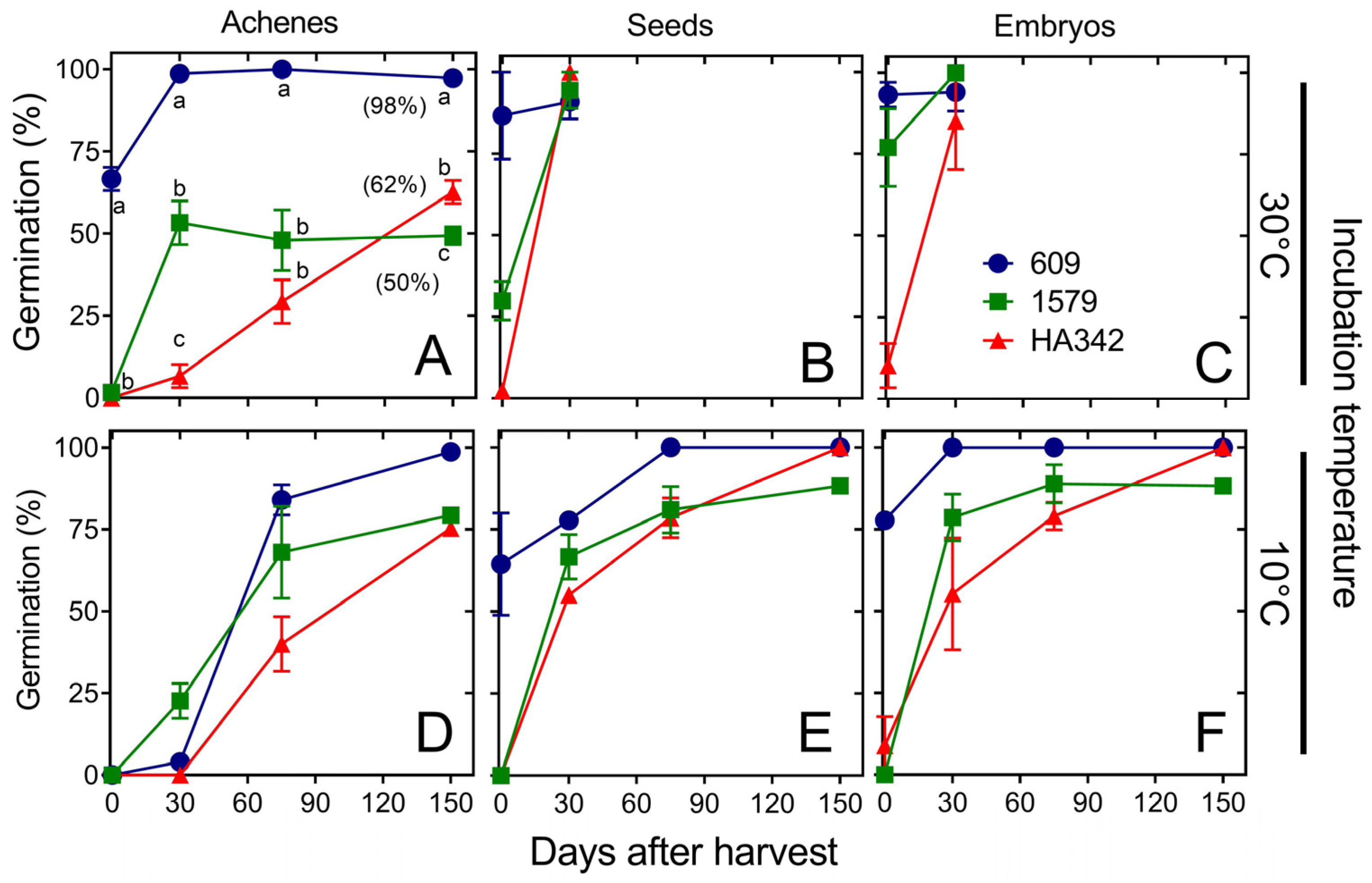
Dormancy release dynamics for sunflower lines 609, 1579 and HA342 obtained in the first experimental year (2017–2018) are shown in Figure 1. Final germination percentage values obtained at harvest and different postharvest times are shown for achenes, seeds, and embryos tested at two incubation temperatures (30 and 10 °C). The temporal changes in achene germination percent at 30 °C indicate that dormancy release occurred rapidly in line 609 as compared to 1579 and HA342; this is reflected in the storage period (T50, in days) required to reach 50% germination, which was 0, 31 and 122, for 609, 1579 and HA342, respectively; Table S2). Lines 1579 and HA342 also displayed thermo-inhibition (TI) at 30 °C, otherwise absent in 609. TI was imposed by the pericarp at 30 °C and limited achene germination to 50–60% (Figure 1A and Figure S3). This maximum was reached earlier in 1579 as compared to HA342 (i.e., 30 and 150 DAH, respectively) because of faster dormancy release rate in 1579.
Initial germination at 30 °C of isolated embryos and seeds was high in 609, intermediate in 1579 and very low in HA342 (Figure 1B,C), indicating different levels of embryo and seed coat-imposed dormancy (Figure S3). Nevertheless, by 30 DAH, seed and embryo germination values at 30 °C were similar and close to maximum in all genotypes, indicating that embryo and seed coat-imposed dormancy decayed rapidly between 0 and 30 DAH (Figure 1B,C and Figure S3). Therefore, differences in achene germination at 30 DAH (100, 50 and 5% for 609, 1579 and HA342, respectively) were related to differences in the restrictive effect of the pericarp. None of the genotypes showed a meaningful seed-coat effect during the postharvest period; seed and embryo germination were generally similar (Figure 1B,C and Figure S3A,C,E).
At 10 °C incubation, dormancy release dynamics of achenes were more similar among parents, and 609 displayed null germination at 0–30 DAH. By 30 DAH, inhibition of achene germination in 609 at 10 °C was imposed mostly by the pericarp (and, to a lesser extent, by the seed coat; Figure 1 and Figure S3B). Instead, achene germination in 1579 and HA342 closely followed changes in embryo germination, with a minor contribution of the pericarp at 30 DAH (Figure S3D,F).

3.2. Dormancy Release Dynamics in the HA342:609 Crossing System

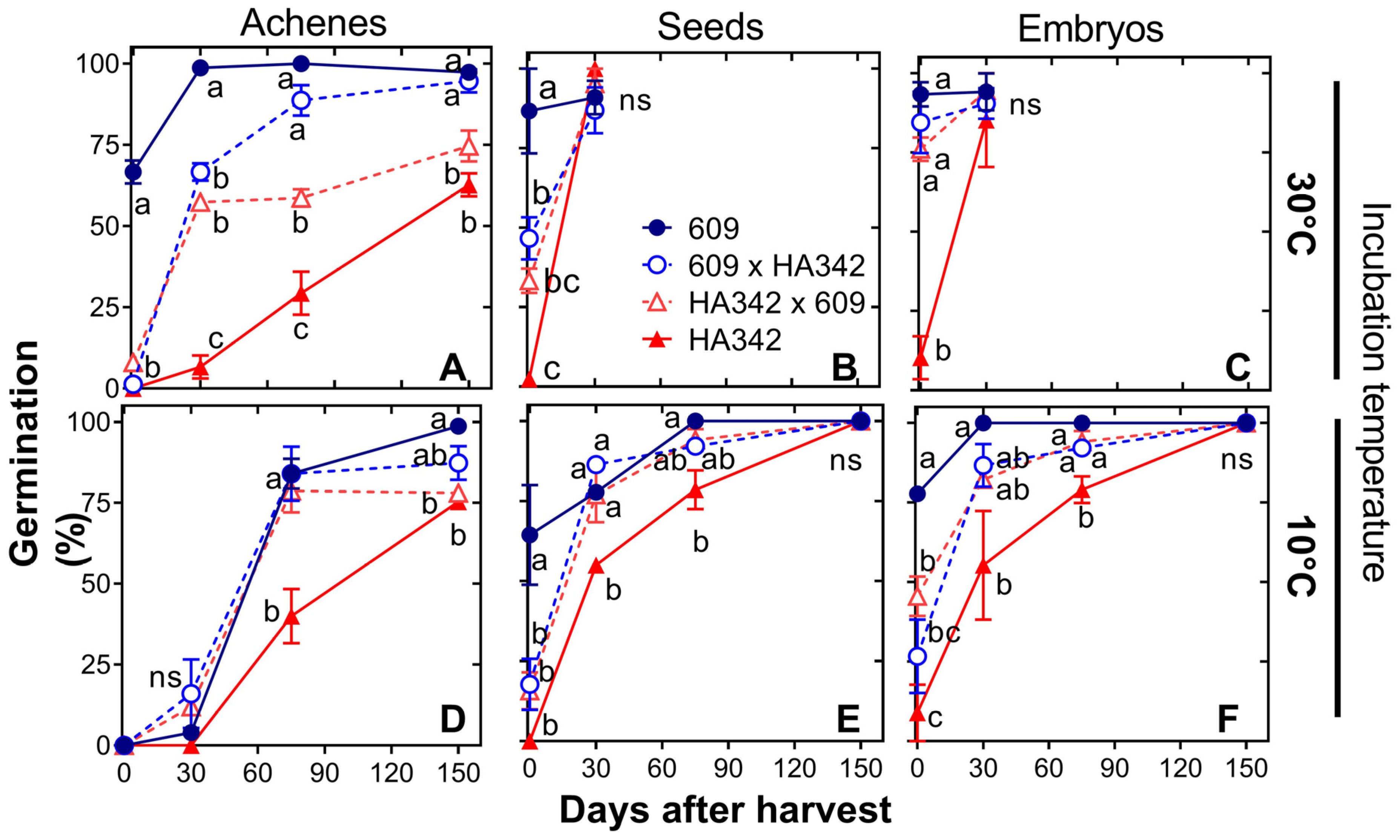
In the 609:HA342 crossing system (Figure 2), during early dormancy release (0–30 DAH), both reciprocal hybrids (609 × HA342 and HA342 × 609) behaved similarly and differed from their parents displaying an intermediate behavior. This applied to both seeds and embryos, and for achenes until 30 DAH. Nevertheless, as storage progressed to 70 DAH, achene germination increased only for the 609 × HA342 hybrid, reaching values like its female parent, 609. This was different for the HA342 × 609 hybrid, where germination stabilized at ca 65% and was gradually approached by its corresponding female parent, HA342 (Figure 2A). In the case of HA342 × 609 and its maternal parent HA342, TI imposed by the pericarp was evident as a 30–35% inhibition of achene germination at 30 °C which persisted beyond the 5-month storage period. Seeds and embryos germinated fully at 30 °C after 30 d of storage, regardless of their genotype.

3.3. Dormancy Release Dynamics in the 1579:609 Crossing System

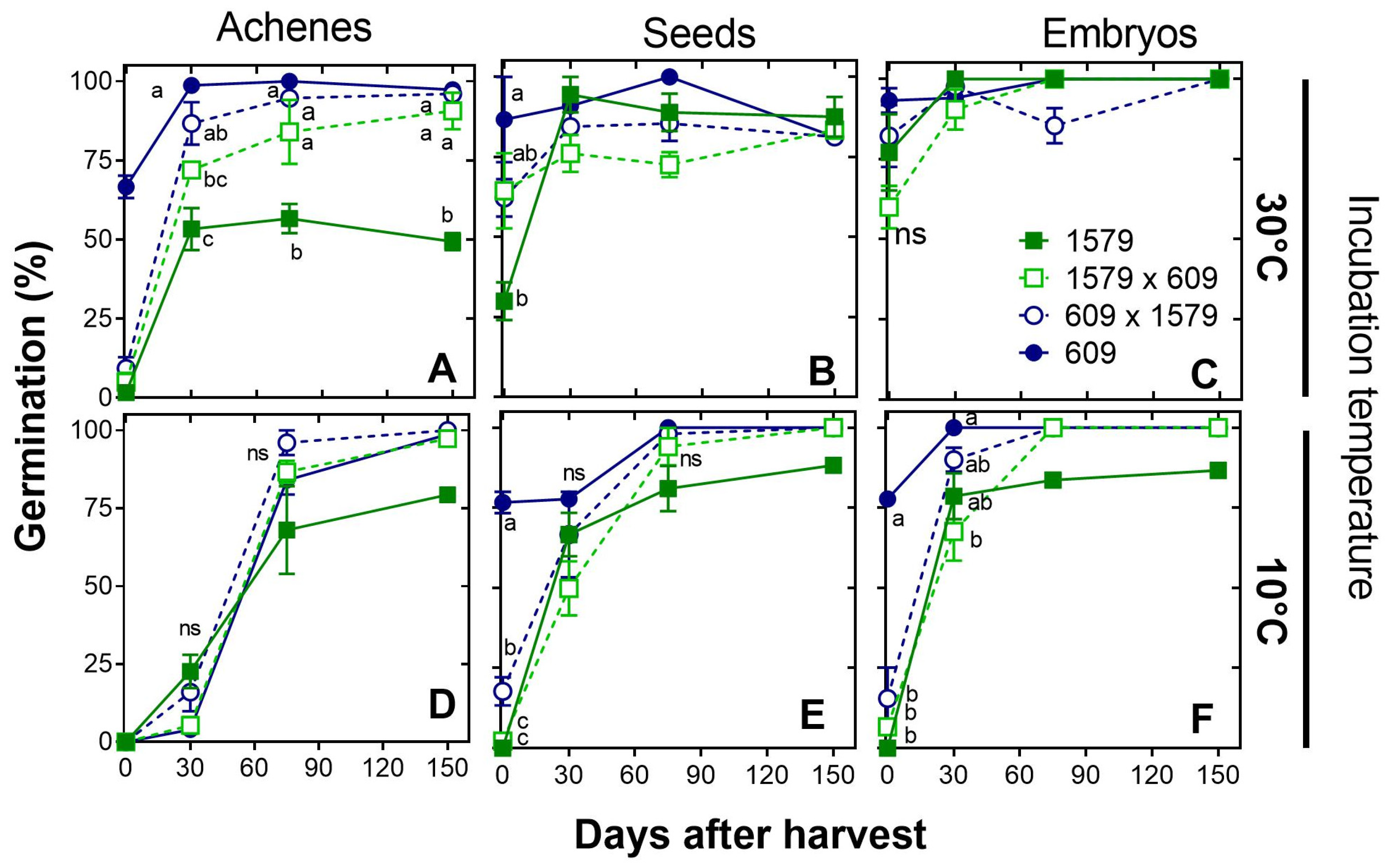
In the 609:1579 crossing system (Figure 3) achenes from both reciprocal hybrids behaved similarly along the entire storage period. Different from the previous crosses (involving HA342), no maternal effects were observed; achenes from 1579 × 609 did not display TI and eventually reached maximum germination values like 609 and 609 × 1579, significantly higher than 1579 (Figure 3A). Achene dormancy release dynamics of hybrids were intermediate as compared to their parents (Figure 3A; Table S2). This was also true for seed germination dynamics. Embryo germination in water at 30 °C (Figure 3C) was high and similar for both parents and hybrids since harvest. By 30 DAH, seed and embryo germination had reached values above 90% in both parents and hybrids indicating a restrictive effect of the pericarp on achene germination. Thermo-inhibition was observed in 1579 since 30 DAH and throughout the entire storage period.
At 10 °C imbibition, achene germination increase was delayed as compared to 30 °C, and all four genotypes displayed similar dynamics (Figure 3D). Notably, seed/embryo dormancy was significantly lower in 609 as compared to reciprocal hybrids and 1579, but this lower embryo dormancy was compensated with a stronger inhibition by the pericarp (Figure 3E,F and Figure S3B). Seeds/embryos in both hybrids behaved like dormant parent 1579.

3.4. Embryo Sensitivity to Exogenous ABA

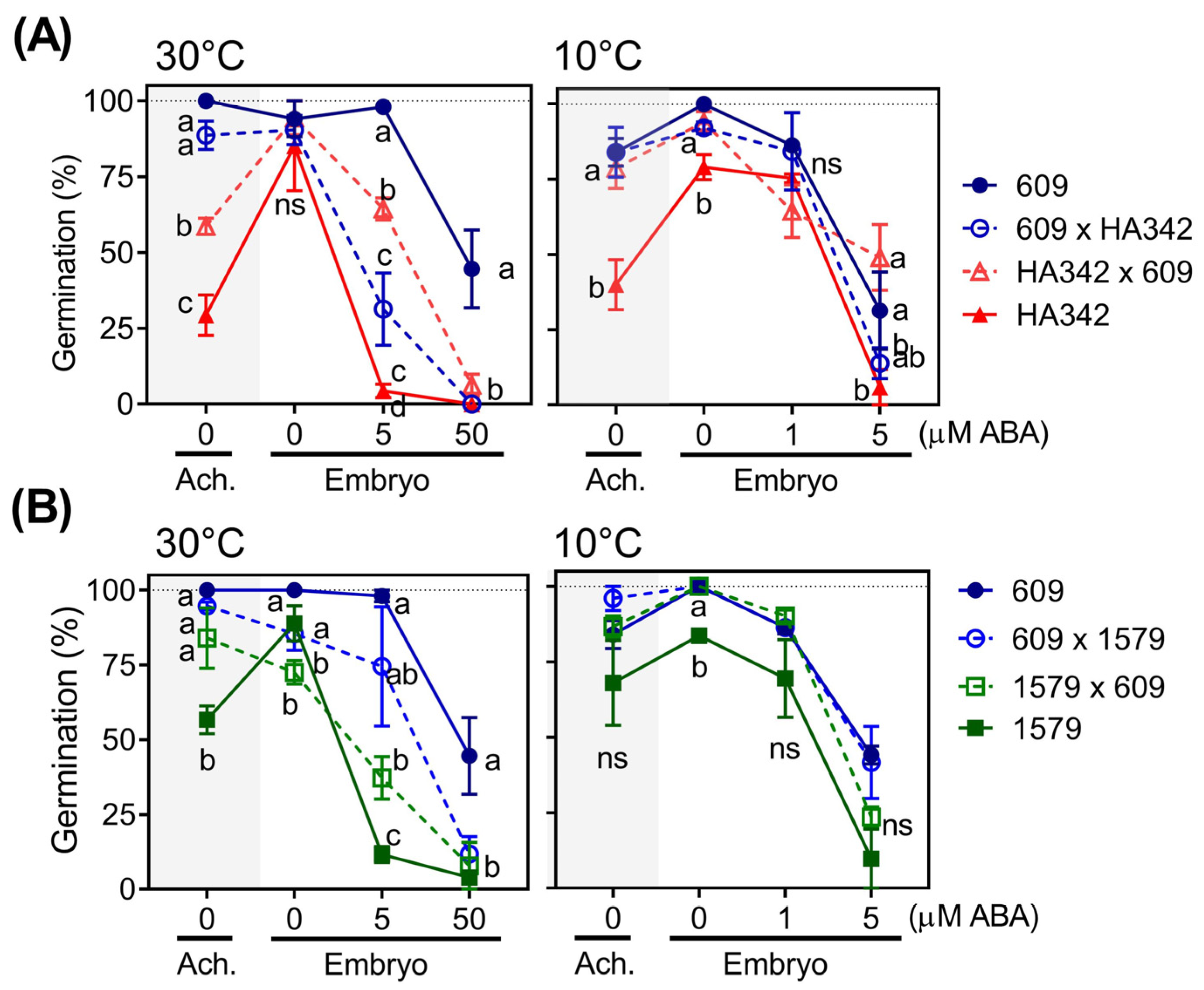
To further characterize physiological responses in embryos from reciprocal crosses and parents, embryos were incubated in ABA solutions at both 30 °C and 10 °C (Figure 4). Sensitivity to ABA is assessed as the inhibition of germination in presence of exogenous ABA. Results for HA342:609 crossing system (Figure 4A) at 30 °C show that both hybrids had a similar sensitivity to ABA which was intermediate to their parents. At 10 °C, sensitivity to ABA was similar among parents and hybrids. Similarly, in the 1579:609 crossing system (Figure 4B), at 30 °C, hybrids showed an intermediate behavior to their parents, while differences were negligible when incubated at 10 °C.

3.5. Achene Response to Germination Promoters GA3 and Ethephon

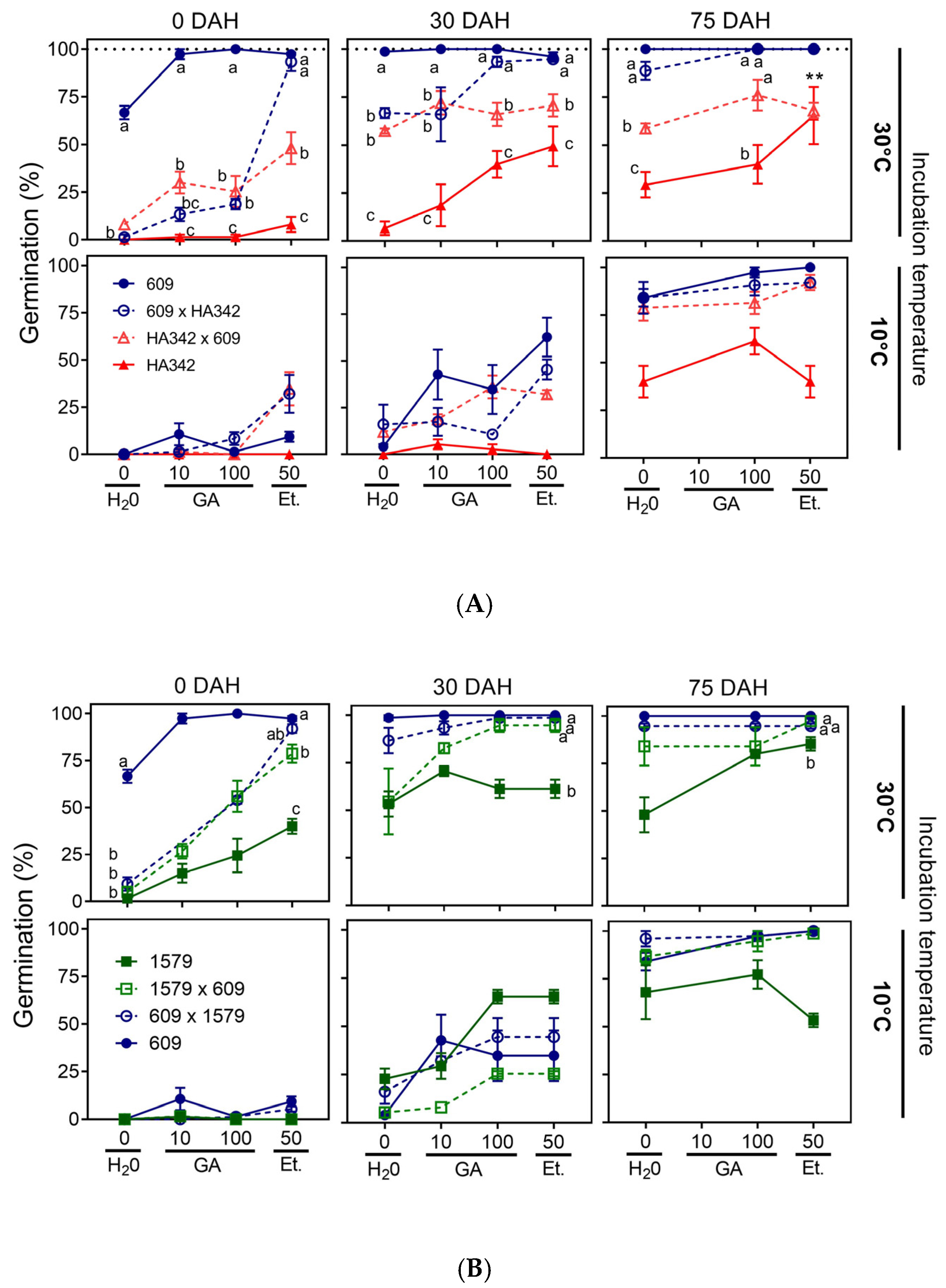
Achene germination was also assessed at 0, 30 and 75 DAH in presence of gibberellic acid (GA) and etephon (Et, an ethylene donor). Hybrids from the HA342:609 system (Figure 5A) responded differently and resembled their maternal parent when exposed to most effective germination promoting doses at 30 °C (e.g., 50 µM Et at 0 DAH, or 100 µM GA and 50 µM Et at 30 DAH). Treatment with Et at harvest anticipated the pattern otherwise observed after 75 DAH under control conditions (water). Notably, even after 75 DAH, Et could not overcome TI and promote full germination of HA342 and HA342 × 609 achenes (germination values with 50 µM Et were 65.3 ± 14.8 and 68 ± 4 for HA342 and HA342 × 609, respectively, and 100% for both 609 and 609 × HA342; Kruskal–Wallis test p = 0.0058 **).
In the 1579:609 crossing system (Figure 5B) GA and Et effectively promoted achene germination at 30 °C since 0 DAH in 609 parent and in both hybrids, 609 × 1579 and 1579 × 609 (50 µM Et increased germination from 0 to over 75%). In this case, both hybrids behaved similarly and intermediate to their parents. Incubation in 100 µM GA or 50 µM Et at 30 °C was able to partially revert TI in 1579 at 75 DAH (from 48% in water to 85% in Et).
Consistent with stronger expression of embryo (and achene) dormancy at low incubation temperature, achene responses to GA and Et were attenuated as compared to 30 °C. When imbibed at 10 °C, and for both crossing systems (Figure 5A,B), responses to GA and Et were absent at harvest or moderate at 30 DAH (as dormancy had decreased). Reciprocal hybrids in both crosses behaved similarly to parent 609. While 1579 responded partially to GA and Et (at 30 DAH), HA342 was unresponsive to GA and Et even after 75 DAH, in agreement with deeper embryo dormancy in the latter.

3.6. Endogenous ABA Content in Parents and Hybrids

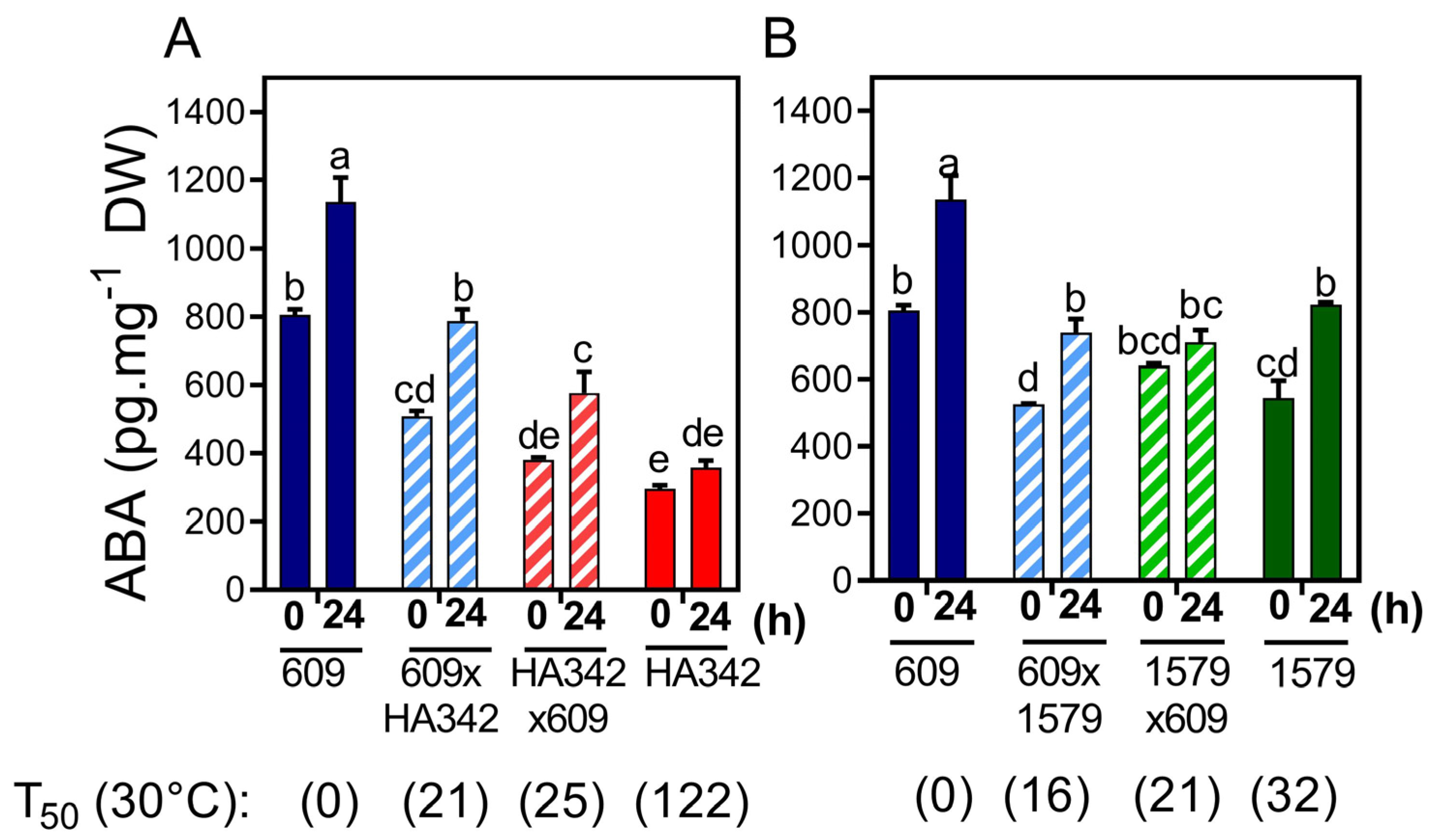
ABA content in embryo axes from dry and imbibed achenes (for 24 h, 30 °C; 0 DAH) in both crossing systems is shown in Figure 6A (609:HA342) and Figure 6B (609:1579). Strikingly, ABA values were highest in 609, followed by 1579 and HA342, and inversely related to their dormancy depth (reflected by T50 values, Figure 6 and Table S2). Within each crossing system, ABA levels in both hybrids were similar and intermediate to their parents’. This pattern was observed in both dry (800, 500 and 300 pg ABA.mg−1 DW) and imbibed achenes (1100, 800 and 400 pg ABA.mg−1 DW). Increases in ABA levels upon 24 h imbibition ranged between 10 and 50%, as compared to the dry state (Table S3). These measurements, performed with freshly harvested achenes (Figure 6), were repeated after 150 DAH (Table S3). No relevant changes in ABA content occurred between 0 and 150 DAH, either when comparing dry or imbibed achenes (Figure 6, Table S3).

3.7. TI Is Related to Increased Embryo Sensitivity to ABA Under Hypoxia

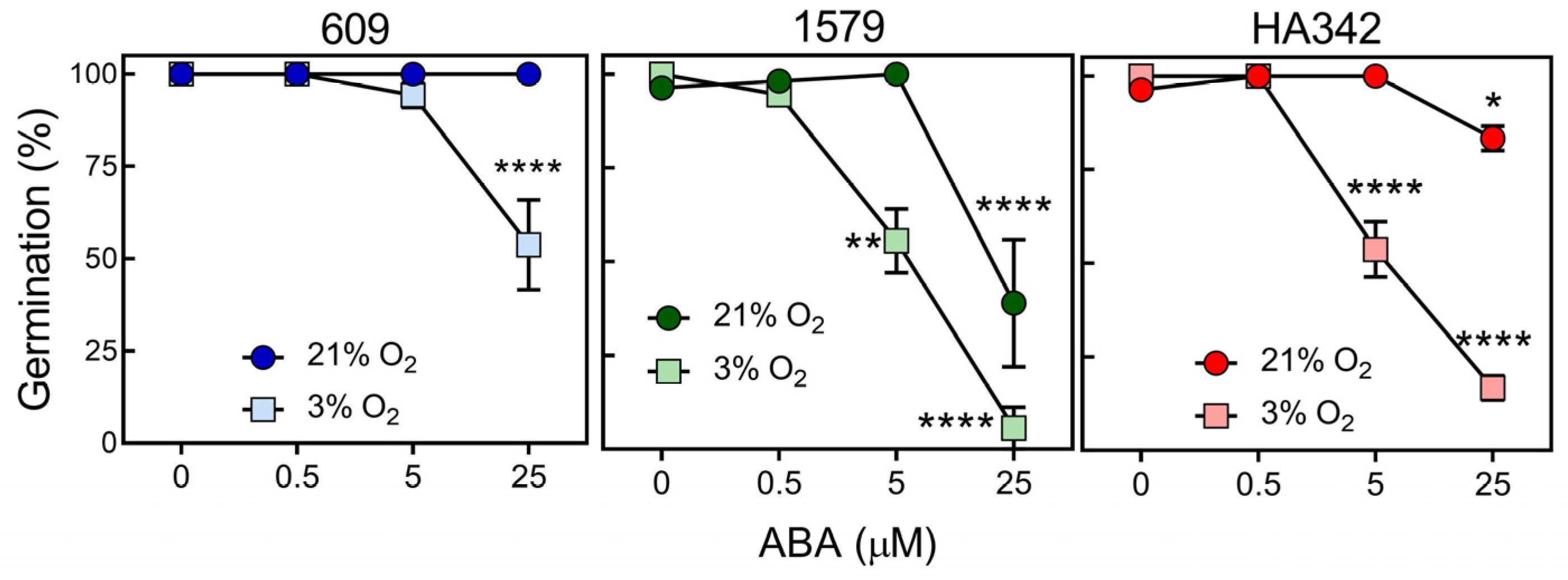
A possible, differential reinforcement of embryo sensitivity to ABA by hypoxia was explored in the parent lines. In this case, achenes belonged to the second experimental year (2018–2019) and stored dry for 100 DAH. After pericarp and seed coat removal, embryos were incubated in water or 5, 25 and 50 µM ABA, under normal air (21% O2) or hypoxia (3% O2) at 30 °C (Figure 7). In agreement with data in Figure 3, line 609 was less sensitive to 25 µM ABA than 1579 and HA342 when incubated at 21% oxygen. In all cases, incubation at 3% O2 enhanced inhibition by ABA, but this effect was stronger in both 1579 and HA342 as compared to 609 (which required 25 µM ABA to achieve similar inhibition by 5 µM ABA in 1579 and HA342).

3.8. Differences in Pericarp Structure Are Related to TI in Parent Lines and Crosses

Measurements of pericarp cross sections were performed in the parent lines and hybrids. Total pericarp thickness, mid-parenchyma thickness (µm), and number of mid-parenchyma cell layers are shown in Table 1. Lines 609 and 1579 showed thinner pericarp and mid-parenchyma than HA342. As expected, hybrids resembled their maternal parent. In the HA342:609 system, HA342 and HA342 × 609 displayed greater total and mid-parenchyma thickness, and a slightly higher number of parenchyma cells compared to 609 and 609 × HA342. The most pronounced differences were observed in mid-parenchyma, with visibly thicker, more sclerified cell walls. No differences in the density of the phytomelanin layer were found. Mid-parenchyma in HA342 (and HA342 × 609) was ≈80% thicker than 609 and 609 × HA342. Although HA342 had a slightly higher cell number than 609, no significant differences were found between parents and their hybrids. This suggests that differences in mid-parenchyma thickness may be attributed to larger cell size. In the 1579:609 system, there were no differences between parent lines in pericarp thickness, mid-parenchyma thickness, or cell layer number. No differences were observed in cell wall thickening, degree of sclerification, or phytomelanin layer density. Altogether, these results point to a more restrictive pericarp in HA342, as compared to 1579 and 609.
The maternal parent not only defined pericarp characteristics but overall achene dimensions (length, width, thickness; Table S3, Figure S4). For example, HA342 and HA342 × 609 had similar, larger achene length and thickness than 609 and 609 × HA342; this trend was consistent in 1579:609 system. Thousand-achene weight and the pericarp/kernel ratio of hybrids also resembled the maternal parent. The 609-parent line and its hybrids 609 × HA342 and 609 × 1579 had smaller size, lower thousand-achene weight, and pericarp/kernel ratio, followed by 1579, and finally HA342.

4. Discussion

The aim of this study was to elucidate how achene structures contribute to dormancy and thermo-inhibition (TI) in cultivated sunflower, and to examine the inheritance of these traits. By integrating data across three inbred lines and their reciprocal crosses, we demonstrate how interactions between the maternally inherited pericarp and the zygotic embryo regulate low-temperature-expressed dormancy (LTED) during early after-ripening and culminate in TI at later stages.
Germination temporal profiles show that dormancy release immediately after harvest is primarily driven by a reduction in embryo dormancy. This response follows a strict zygotic pattern controlled by the embryo nuclear genotype, as evidenced by consistent behavior in both crossing systems (609:HA342 and 609:1579; Figure 2 and Figure 3). Dormancy alleles from both parents exhibited incomplete dominance; reciprocal hybrids displayed identical, intermediate phenotypes for achenes, seeds, and embryos, completely independent of maternal pericarp morphology (Table 1; Figure S4). When examining the underlying hormonal mechanism, we observed an unexpected inverse relationship between embryo axis ABA content and dormancy levels (summarized by T50 values) across all genotypes. Furthermore, while absolute ABA content increased during achene imbibition at 30 °C, these changes also failed to correlate with TI expression. This paradox aligns with previous findings in sunflower [9,10,39] indicating that bulk ABA accumulation in the embryo axis does not dictate germination behavior under thermal or hypoxic stress. While a positive correlation between ABA levels and dormancy has been reported [40], that study evaluated only two contrasting lines. By expanding the genetic matrix to three lines and their hybrids, our work highlights intermediate phenotypes that challenge a simple linear model of higher ABA content and dormancy.
Instead, our data clearly identify embryo sensitivity to ABA, rather than absolute ABA content, as the primary physiological driver of post-harvest dormancy (LTED) and TI. This aligns with physiological models in wheat and sorghum [41,42,43,44]. In sunflower, while de novo ABA synthesis is critical during seed development [45,46], final dormancy levels and post-harvest dynamics are governed by shifts in embryo sensitivity [6,39,46,47]. This sensitivity model also explains the divergence from Arabidopsis, where maternal dormancy control is mediated by endosperm-derived ABA transport [48,49], and TI is driven by upregulated ABA synthesis [50]. In contrast, isolated sunflower embryos retain dormancy autonomously. The living endosperm layer within the seed coat exerted a minor, localized effect exclusively in line 1579 at harvest (Figure 1 and Figure S3).
In contrast to the zygotic control of early dormancy release, TI displayed a distinctly maternal inheritance pattern in the F1 progeny, mirroring trends observed in wild-cultivated sunflower crosses [23,24,25,26]. Crucially, however, our reciprocal crosses demonstrate that the phenotypic expression of TI requires a strict dual-concurrence between maternal structural traits and zygotic embryo sensitivity. This requirement is clearly illustrated by the HA342 and 609 reciprocal hybrids. These hybrids share identical embryo genotypes and physiological responses (Figure 2, Figure 4 and Figure 6) but diverge structurally in their maternal coverings (Table 1; Figure S4). The thick, highly sclerified mesocarp inherited from the HA342 maternal parent successfully imposed TI, whereas the thin pericarp from the 609 parent did not. Conversely, the absence of TI transmission in the 1579 × 609 hybrid occurs because the 1579 pericarp is structurally thin and similar to 609. In backgrounds with these less restrictive pericarps, TI can only manifest if paired with a highly sensitive embryo genotype (such as the 1579 parent), but fails to express in less sensitive hybrid embryos.
Mechanistically, the mature pericarp restricts oxygen diffusion to the embryo [10]. Structural traits—including mesocarp sclerification, phytomelanin density, cuticular waxes, and absolute thickness—induce internal hypoxia. This physical barrier becomes a limiting factor at high incubation temperatures (30 °C), where embryo oxygen demand naturally escalates alongside a simultaneous decline in oxygen solubility [51,52]. Our results confirm that while a highly sclerified maternal pericarp is necessary to drive TI [23,24,25,26], it acts as a physiological modifier rather than an absolute switch. Direct measurements of pericarp oxygen permeability remain a critical next step to establish a definitive causal link.
The combined evidence indicates that dormancy and TI arise from distinct but interacting mechanisms. Low-temperature-expressed dormancy (LTED) is largely controlled by the zygotic genotype, through variation in embryo sensitivity to ABA. On the other hand, TI depends on the interaction between embryo physiology and maternal coverings. As suggested by earlier work comparing different sunflower genotypes [6], our results with reciprocal crosses confirm that the zygote also contributes to the expression of TI. While all genotypes in the present study eventually reached a similar sensitivity to ABA at low incubation temperature (10 °C), TI was related to higher (and persistent) embryo sensitivity to ABA at 30 °C and to increased embryo responsiveness to ABA under hypoxia (Figure 7). This dual-control model explains why certain high-dormancy parents (like 1579) fail to transmit TI maternally, and why TI becomes more visually pronounced after prolonged storage. Notably, evaluating achene response to an ethylene donor (Et) at 30 °C immediately at harvest accurately predicted water-imbibed germination behavior at 75 days after harvest (Figure 5). Consequently, early incubation in ethylene under thermal stress represents a viable, high-throughput predictive assay for long-term TI behavior. Not surprisingly, achene response to ethylene was inversely related to achene dormancy and embryo sensitivity to ABA. This is consistent with known interactions among ABA, GA and ethylene as reviewed recently by [53,54]. While ethylene down-regulates ABA content and ABA signaling and promotes GA levels and GA signaling, strong ABA signaling inhibits both ethylene synthesis and signaling. In addition, ethylene, oxygen levels and ABA signaling are also interconnected by the N-degron pathway, as reviewed by [54]. A role for this highly conserved pathway linking embryo sensitivity to ABA, hypoxia and thermo-inhibition remains to be explored in sunflower achenes and may offer potential molecular targets for breeding to improve germination at high temperatures.

5. Conclusions

Despite domestication and breeding efforts, cultivated sunflower germplasm maintains high phenotypic plasticity and variable dormancy across both maternal [8,18,19] and post-dispersal (or storage) environments [39]. This study refines our mechanistic understanding of how maternal and zygotic genetic components interact to shape the F1 progeny phenotype, offering direct applications for hybrid seed production.
Thermo-inhibition represents a severe challenge for the seed industry because, unlike LTED, it does not reliably decay during dry after-ripening. Mitigating TI requires screening parental lines not just in isolation, but for structural–physiological compatibility. Maternal pericarps can only trigger TI when paired with an embryo genotype genetically predisposed to high-temperature ABA sensitivity. Furthermore, our findings suggest that commercial downstream processes (such as seed-coating treatments) may unintentionally exacerbate TI by further reducing oxygen diffusion to the embryo.
Future breeding and research efforts should prioritize: (i) quantifying physical oxygen diffusion coefficients across structurally diverse pericarps; (ii) identifying the specific genetic loci governing high-temperature embryo sensitivity to ABA. Ultimately, decoding this embryo-pericarp dialog will allow breeding programs to select strategic parental combinations that minimize TI expression.

Supplementary Materials

The following supporting information can be downloaded at https://www.mdpi.com/article/10.3390/seeds5040038/s1, Table S1. Meteorological and phenological data of field trials. Table S2. Dormancy release rates in parents and hybrids. Table S3. ABA content in embryos. Table S4: Achene morphological measurements. Figure S1. Images for cross-pollination method. Figure S2. Grain-filling and moisture content dynamics. Figure S3. Evolution of pericarp, seed coat and embryo dormancy. Figure S4. Pericarp histological preparations.

Author Contributions

Study design: M.V.R., G.J.A. and D.B.; experiments: G.J.A., M.R.-R., M.V.R. and D.B.; data collection: G.J.A., M.V.R. and M.R.-R.; analysis and interpretation: G.J.A. and M.V.R., with contributions from D.B.; discussion of results: M.R.-R., M.V.R. and D.B.; figures/visualization: G.J.A. and M.V.R.; writing—original draft: G.J.A. and M.V.R.; writing—review and editing: M.V.R. and G.J.A.; funding acquisition: M.V.R. and D.B. All authors have read and agreed to the published version of the manuscript.

Funding

This research was funded by Universidad de Buenos Aires, Argentina (grants UBACYT 2014-2017 Nº 20020130100653 BA, and UBACYT 2018-2021 Nº 20020170100599BA), and by the Consejo Nacional de Investigaciones Científicas y Tecnológicas (CONICET) of Argentina (PIP 2015-2018, N° 11220130100669). G.J. Arata and M. Riveira-Rubin were supported by doctoral scholarships from the Consejo Nacional de Investigaciones Científicas y Técnicas (CONICET), Argentina This work is part of the doctoral thesis of G.J.A. at the University of Buenos Aires, supervised by M.V.R.

Institutional Review Board Statement

Not applicable.

Informed Consent Statement

Not applicable.

Data Availability Statement

The original contributions presented in this study are included in the article. Further inquiries can be directed to the corresponding authors.

Acknowledgments

We would like to thank technical staff (Mirta Tinaro, Maximiliano Rodríguez and Cristian Escudero) and María Victoria Rambaud for their valuable support during the field and laboratory experiments.

Conflicts of Interest

The authors declare no conflicts of interest. The funders had no role in the design of the study; in the collection, analyses, or interpretation of data; in the writing of the manuscript; or in the decision to publish the results.

Abbreviations

The following abbreviations are used in this manuscript:
LTEDLow-Temperature-Expressed Dormancy
TIThermo-Inhibition
ABAAbscisic Acid
EtEtephon
GAGibberellic Acid

References

  1. Hilhorst, H.W.M. A critical update on seed dormancy. I. Primary dormancy. Seed Sci. Res. 1995, 5, 61–73. [Google Scholar] [CrossRef]
  2. Finch-Savage, W.E.; Leubner-Metzger, G. Seed dormancy and the control of germination. New Phytol. 2006, 171, 501–523. [Google Scholar] [CrossRef] [PubMed]
  3. Baskin, J.M.; Baskin, C.C. A classification system for seed dormancy. Seed Sci. Res. 2004, 14, 1–16. [Google Scholar] [CrossRef]
  4. Bewley, J.D.; Bradford, K.J.; Hilhorst, H.W.M.; Nonogaki, H. Seeds: Physiology of Development, Germination and Dormancy, 3rd ed.; Springer: New York, NY, USA, 2013. [Google Scholar]
  5. Marzinek, J.; De-Paula, O.C.; Oliveira, D.M.T. Cypsela or achene? Refining terminology by considering anatomical and historical factors. Rev. Bras. Bot. 2008, 31, 549–553. [Google Scholar] [CrossRef]
  6. Arata, G.J.; Riveira-Rubin, M.A.; Batlla, D.; Rodríguez, M.V. Dormancy attributes in Sunflower achenes (Helianthus annuus L.): I. Intraspecific variability. Crop Sci. 2021, 61, 4293–4308. [Google Scholar] [CrossRef]
  7. Corbineau, F.; Bagniol, S.; Côme, D. Sunflower (Helianthus annuus L.) seed dormancy and its regulation by ethylene. Isr. J. Bot. 1990, 39, 313–325. [Google Scholar] [CrossRef]
  8. Bodrone, M.P.; Rodríguez, M.V.; Arisnabarreta, S.; Batlla, D. Maternal environment and dormancy in sunflower: The effect of temperature during fruit development. Eur. J. Agron. 2017, 82, 93–103. [Google Scholar] [CrossRef]
  9. Dominguez, C.; Batlla, D.; Rodríguez, M.V.; Windauer, L.B.; Gerbaldo, M.; Benech-Arnold, R.L. Pericarp-Imposed Dormancy in Sunflower: Physiological Basis, Impact on Crop Emergence, and Removal at an Industrial Scale. Crop Sci. 2016, 56, 716–726. [Google Scholar] [CrossRef]
  10. Dominguez, C.P.; Rodríguez, M.V.; Batlla, D.; García de Salamone, I.; Andreani, A.; Benech-Arnold, R.L. Sensitivity to hypoxia and microbial activity are instrumental for pericarp-imposed dormancy expression in sunflower (Helianthus annuus L.). Seed Sci. Res. 2019, 29, 85–96. [Google Scholar] [CrossRef]
  11. Hills, P.N.; Van Staden, J. Thermoinhibition of seed germination. S. Afr. J. Bot. 2003, 69, 455–461. [Google Scholar] [CrossRef]
  12. Boesewinkel, F.D.; Bouman, F. The Seed: Structure and Function. In Seed Development and Germination; Kigel, J., Galili, G., Eds.; Marcel Dekker, Inc.: New York, NY, USA, 1995; pp. 1–24. [Google Scholar]
  13. Foley, M.E.; Fennimore, S.A. Genetic basis for seed dormancy. Seed Sci. Res. 2008, 8, 173–182. [Google Scholar] [CrossRef]
  14. Roach, D.A.; Wulff, R.D. Maternal effects in plants. Annu. Rev. Ecol. Syst. 1987, 18, 209–235. [Google Scholar] [CrossRef]
  15. Wolf, J.B.; Wade, M.J. What are maternal effects (and what are they not)? Philos. Trans. R. Soc. B Biol. Sci. 2009, 364, 1107–1115. [Google Scholar] [CrossRef] [PubMed]
  16. Piskurewicz, U.; Iwasaki, M.; Susaki, D.; Megies, C.; Kinoshita, T.; Lopez-Molina, L. Dormancy-specific imprinting underlies maternal inheritance of seed dormancy in Arabidopsis thaliana. eLife 2016, 5, e19573. [Google Scholar] [CrossRef] [PubMed]
  17. Penfield, S.; MacGregor, D.R. Effects of environmental variation during seed production on seed dormancy and germination. J. Exp. Bot. 2017, 68, 819–825. [Google Scholar] [CrossRef] [PubMed]
  18. Riveira-Rubin, M.; Arata, G.J.; López, E.D.; Rodriguez, M.V.; Batlla, D. Dormancy attributes in sunflower achenes (Helianthus annuus L.): II. Sowing date effects. Crop Sci. 2021, 61, 4309–4324. [Google Scholar] [CrossRef]
  19. Lachabrouilli, A.S.; Rigal, K.; Corbineau, F.; Bailly, C. Effects of agroclimatic conditions on sunflower seed dormancy at harvest. Eur. J. Agron. 2021, 124, 126209. [Google Scholar] [CrossRef]
  20. Miko, I. Genetic dominance: Genotype-phenotype relationships. Nat. Educ. 2008, 1, 140. [Google Scholar]
  21. Fedi, F.; O’Neill, C.M.; Menard, G.; Trick, M.; Dechirico, S.; Corbineau, F.; Bailly, C.; Eastmond, P.J.; Penfield, S. Awake1, an ABC-Type Transporter, Reveals an Essential Role for Suberin in the Control of Seed Dormancy. Plant Physiol. 2017, 174, 276–283. [Google Scholar] [CrossRef] [PubMed]
  22. Tamura, N.; Yoshida, T.; Tanaka, A.; Sasaki, R.; Bando, A.; Toh, S.; Lepiniec, L.; Kawakami, N. Isolation and characterization of high temperature-resistant germination mutants of Arabidopsis thaliana. Plant Cell Physiol. 2006, 47, 1081–1094. [Google Scholar] [CrossRef] [PubMed]
  23. Presotto, A.; Poverene, M.; Cantamutto, M. Seed dormancy and hybridization effect of the invasive species, Helianthus annuus. Ann. Appl. Biol. 2014, 164, 373–383. [Google Scholar] [CrossRef]
  24. Hernández, F.; Lindström, L.I.; Parodi, E.; Poverene, M.; Presotto, A. The role of domestication and maternal effects on seed traits of crop–wild sunflower hybrids (Helianthus annuus). Ann. Appl. Biol. 2017, 171, 237–251. [Google Scholar] [CrossRef]
  25. Pace, B.A.; Alexander, H.M.; Emry, J.D.; Mercer, K.L. Seed fates in crop-wild hybrid sunflower: Crop allele and maternal effects. Evol. Appl. 2015, 8, 121–132. [Google Scholar] [CrossRef] [PubMed]
  26. Weiss, A.N.; Primer, S.B.; Pace, B.A.; Mercer, K.L. Maternal effects and embryo genetics: Germination and dormancy of crop–wild sunflower hybrids. Seed Sci. Res. 2013, 23, 241–255. [Google Scholar] [CrossRef]
  27. Lan, X.J.; Wei, Y.M.; Liu, D.C.; Yan, Z.H.; Zheng, Y.L. Inheritance of seed dormancy in Tibetan semi-wild wheat accession Q1028. J. Appl. Genet. 2005, 46, 133–138. [Google Scholar] [PubMed]
  28. Gu, X.Y.; Chen, Z.X.; Foley, M.E. Inheritance of seed dormancy in weedy rice. Crop Sci. 2003, 43, 835–843. [Google Scholar] [CrossRef]
  29. Eenink, A.H. Seed dormancy in lettuce: Influence of temperature on induction and expression of seed dormancy and studies on the inheritance. Acta Hortic. 1981, 111, 41–46. [Google Scholar] [CrossRef]
  30. Schneiter, A.A.; Miller, J.F. Description of Sunflower Growth Stages. Crop Sci. 1981, 21, 901–903. [Google Scholar] [CrossRef]
  31. Steinbach, H.S.; Benech-Arnold, R.L.; Kristof, G.; Sanchez, R.A.; Marcucci-Poltri, S. Physiological basis of pre-harvest sprouting resistance in Sorghum bicolor (L.) Moench. ABA levels and sensitivity in developing embryos of sprouting-resistant and -susceptible varieties. J. Exp. Bot. 1995, 46, 701–709. [Google Scholar] [CrossRef]
  32. Lindström, L.I.; Pellegrini, C.N.; Hernández, L.F. Histological development of the sunflower fruit pericarp as affected by pre- and early post-anthesis canopy shading. Field Crops Res. 2007, 103, 229–238. [Google Scholar] [CrossRef]
  33. Wilcox, D.; Done, A.; McDavid, P.; Greer, P. Image Tool, version 3.0; University of Texas Health Science Center: San Antonio, TX, USA, 2002.
  34. Lindström, L.I.; Hernández, L.F. Developmental morphology and anatomy of the reproductive structures in sunflower (Helianthus annuus): A unified temporal scale. Botany 2015, 93, 307–316. [Google Scholar] [CrossRef]
  35. Mantese, A.I.; Medan, D.; Hall, A.J. Achene structure, development and lipid accumulation in sunflower cultivars differing in oil content at maturity. Ann. Bot. 2006, 97, 999–1010. [Google Scholar] [CrossRef] [PubMed]
  36. Pandey, A.K.; Dhakal, M.R. Phytomelanin in Compositae. Curr. Sci. 2001, 80, 933–940. [Google Scholar]
  37. Di Rienzo, J.A.; Casanoves, F.; Balzarini, M.G.; Gonzalez, L.; Tablada, M.; Robledo, C.W. InfoStat, version 2018; Grupo InfoStat, FCA, Universidad Nacional de Córdoba: Córdoba, Argentina, 2018. Available online: http://www.infostat.com.ar (accessed on 15 July 2018).
  38. Motulsky, H.J. GraphPad Prism Statistics Guide-Statistical Analyses for Laboratory and Clinical Researchers; GraphPad Software Inc.: San Diego, CA, USA, 2003; Available online: https://www.graphpad.com (accessed on 1 May 2020).
  39. Arata, G.J.; Batlla, D.; Riveira-Rubin, M.; Demkura, P.V.; Mazzobre, F.; Rolandelli, G.; Buera, P.; Rodríguez, M.V. Biophysical boundaries for dormancy release in sunflower achenes. J. Exp. Bot. 2025, 76, 7105–7122. [Google Scholar] [CrossRef] [PubMed]
  40. Bel, Z.D.; Andrade, A.; Maddalena, M.D.; Vigliocco, A.; Alemano, S. The interplay of specific hormonal profile in fruit parts of sunflower inbred lines with contrasting dormancy levels during germination and dormancy breaking by exogenous application of plant growth regulators. Crop Sci. 2023, 63, 852–866. [Google Scholar] [CrossRef]
  41. Walker-Simmons, M. ABA Levels and Sensitivity in Developing Wheat Embryos of Sprouting Resistant and Susceptible Cultivars. Plant Physiol. 1987, 84, 61–66. [Google Scholar] [CrossRef] [PubMed]
  42. Walker-Simmons, M. Enhancement of ABA responsiveness in wheat embryos by high temperature. Plant Cell Environ. 1988, 11, 769–775. [Google Scholar] [CrossRef]
  43. Gualano, N.; Carrari, F.; Rodríguez, M.V.; Pérez-Flores, L.; Sánchez, R.A.; Iusem, N.D.; Benech-Arnold, R.L. Reduced embryo sensitivity to ABA in sprouting susceptible sorghum (Sorghum bicolor) variety is associated with an altered ABA signalling. Seed Sci. Res. 2007, 17, 81–90. [Google Scholar] [CrossRef]
  44. Rodríguez, M.V.; Mendiondo, G.M.; Maskin, L.; Gudesblat, G.E.; Iusem, N.D.; Benech-Arnold, R.L. Expression of ABA signalling genes and ABI5 protein levels in imbibed Sorghum bicolor caryopses with contrasting dormancy and at different developmental stages. Ann. Bot. 2009, 104, 975–985. [Google Scholar] [CrossRef] [PubMed]
  45. Le Page-Degivry, M.T.; Garello, G. In situ abscisic acid synthesis. A requirement for induction of embryo dormancy in Helianthus annuus. Plant Physiol. 1992, 98, 1386–1390. [Google Scholar] [CrossRef] [PubMed]
  46. Le Page-Degivry, M.T.; Barthe, P.; Garello, G. Involvement of endogenous abscisic acid in onset and release of Helianthus annuus. Plant Physiol. 1990, 92, 1164–1168. [Google Scholar] [CrossRef] [PubMed]
  47. Xia, Q.; Ponnaiah, M.; Thanikathansubramanian, K.; Corbineau, F.; Bailly, C.; Nambara, E.; Meimoun, P.; ElMaarouf-Bouteau, H. Re-localization of hormone effectors is associated with dormancy alleviation by temperature and after-ripening in sunflower seeds. Sci. Rep. 2019, 9, 4861. [Google Scholar] [CrossRef] [PubMed]
  48. Kang, J.; Yim, S.; Choi, H.; Kim, A.; Lee, K.P.; Lopez-Molina, L.; Martinois, E.; Lee, Y. Abscisic acid transporters cooperate to control seed germination. Nat. Commun. 2015, 6, 8113. [Google Scholar] [CrossRef] [PubMed]
  49. Lee, K.P.; Piskurewicz, U.; Turecková, V.; Strnad, M.; Lopez-Molina, L. A seed coat bedding assay shows that RGL2-dependent release of abscisic acid by the endosperm controls embryo growth in Arabidopsis dormant seeds. Proc. Natl. Acad. Sci. USA 2010, 107, 19108–19113. [Google Scholar] [CrossRef] [PubMed]
  50. Piskurewicz, U.; Sentandreu, M.; Iwasaki, M.; Glauser, G.; Lopez-Molina, L. The Arabidopsis endosperm is a temperature-sensing tissue that implements seed thermoinhibition through phyB. Nat. Commun. 2023, 14, 1202. [Google Scholar] [CrossRef] [PubMed]
  51. Rolletschek, H.; Stangelmayer, A.; Borisjuk, L. Methodology and Significance of Microsensor-based Oxygen Mapping in Plant Seeds—An Overview. Sensors 2009, 9, 3218–3227. [Google Scholar] [CrossRef] [PubMed]
  52. Rolletschek, H.; Borisjuk, L.; Sánchez-García, A.; Gotor, C.; Romero, L.C.; Martínez-Rivas, J.M.; Mancha, M. Temperature-dependent endogenous oxygen concentration regulates microsomal oleate desaturase in developing sunflower seeds. J. Exp. Bot. 2007, 58, 3171–3181. [Google Scholar] [CrossRef] [PubMed]
  53. Corbineau, F. Ethylene, a Signaling Compound Involved in Seed Germination and Dormancy. Plants 2024, 13, 2674. [Google Scholar] [CrossRef] [PubMed]
  54. González-Guzmán, M.; Gómez-Cadenas, A.; Arbona, V. Abscisic Acid as an Emerging Modulator of the Responses of Plants to Low Oxygen Conditions. Front. Plant Sci. 2021, 12, 661789. [Google Scholar] [CrossRef] [PubMed]
Figure 1. Dormancy release dynamics for different achene parts in parent lines. Final germination (%) of achenes (A,D), seeds (without pericarp; (B,E)), and naked embryos (C,F) tested at different times after harvest (0–150 DAH), for parent lines “609” (blue circles), “1579” (green squares) and “HA342” (red triangles) in experiment 1. Germination tests were conducted at 30 °C (AC) and at 10 °C (DF). Final achene germination percentage is also shown in parentheses in (A). Each data point is the mean of three replicate Petri dishes (n = 3) and bars are S.E.M. For data in panel (A), different letters besides data points indicate significant differences (p < 0.05) after ANOVA and multiple comparisons (Tukey´s test) within each sampling time.
Seeds 05 00038 g001
Figure 2. Dormancy release during post-harvest in parent lines 609 and HA342 and reciprocal F1 progenies. Final germination (%) of achenes (A,D), seeds (B,E), and embryos (C,F) tested at different times after harvest (0–150 DAH), for parent lines and F1 hybrids obtained from reciprocal crosses between less-dormant line “609” and more dormant line “HA342”. Germination tests were conducted at 30 °C (AC) and 10 °C (DF). Each data point is the mean of 3 replicate Petri dishes (n = 3) ± S.E.M. On each sampling time (0, 30, 75 or 150 DAH), ANOVA was performed, followed by multiple comparisons (Tukey’s test). Different letters besides data points indicate significant differences (p < 0.05), and ns when not significant.
Seeds 05 00038 g002
Figure 3. Dormancy release during post-harvest in parent lines and reciprocal F1 progenies. Final germination (%) of achenes (A,D), seeds (B,E), and embryos (C,F) tested at different times after harvest (0–150 DAH), for parent lines and F1 hybrids obtained from reciprocal crosses between less-dormant line “609” and more dormant line “1579”. Germination tests were conducted at 30 °C (AC) and 10 °C (DF). Each data point is the mean of 3 replicate Petri dishes (n = 3) ± S.E.M. On each sampling time (0, 30, 75 or 150 DAH), ANOVA was performed, followed by multiple comparisons (Tukey´s test). Different letters besides data points indicate significant differences (p < 0.05), and ns when not significant.
Seeds 05 00038 g003
Figure 4. Embryo sensitivity to ABA. Germination data for parent lines and reciprocal crosses is shown for 609 vs. HA342 (A) and for 609 vs. 1579 (B) after incubation at 30 °C (left) and 10 °C (right). Each panel shows the final germination of achenes in water (shaded area) and embryos in different ABA solutions (0–50 µM ABA at 30 °C, and 0–5 µM ABA at 10 °C). Achenes had been after-ripened for 75 d (75 DAH). Each data point is the mean of 3 replicate Petri dishes (n = 3) ± S.E.M. ANOVA was performed for each incubation medium and significant differences are shown in different letters (Tukey’s multiple comparisons test). Different letters besides data points indicate significant differences (p < 0.05) within each experimental condition (achenes or embryos at different ABA concentrations). Absence of significant differences is indicated with ns.
Seeds 05 00038 g004
Figure 5. Achene sensitivity to GA3 and ethephon in the parent lines and their reciprocal crosses. Final germination (%) of achenes incubated in distilled water, GA3 (10 and 100 µM) and ethephon (50 µM) at 30 and 10 °C, at three different times (0, 30 and 75 DAH) for crossing systems HA342:609 (A) and 1579:609 (B). Parent lines are shown in solid symbols and lines (609, blue circles and lines; HA342, red triangles and lines; 1579, green squares and lines), and their respective hybrids are shown in open symbols and dotted lines of the same shape and color as the mother. Each data point is the mean of 3 replicate Petri dishes (n = 3) ± S.E.M. Significant differences within an incubation medium are shown in letters (ANOVA and multiple comparisons). Asterisks in ((A), 75 DAH) indicate significant genotype effect by ANOVA (Kruskal-Wallis), but not after multiple comparisons (Dunn’s).
Seeds 05 00038 g005
Figure 6. Endogenous ABA content in embryonic axes of dry and imbibed achenes. (A) Crossing system HA342:609 and (B) 1579:609. Parent lines are shown in solid colors (609, HA342 and 1579 in blue, red and green, respectively), and hybrids are shown in striped bars, with each color related to the maternal parent in the cross. For each condition, ABA (in mg ABA. g−1 DW) was measured in axes of dry achenes (0 h) and after 24 h imbibition in water at 30 °C, using freshly harvested (dormant) achenes. Data points are the mean of 3 replicate samples or Petri dishes (n = 3) ± S.E.M. Different letters represent significant differences (p < 0.05) within each data set (2-way ANOVA followed by Šídák’s multiple comparisons test, n = 3). Genotype × imbibition time (0, 24 h) was significant (p < 0.05). Storage time to reach 50% achene germination at 30 °C (T50) is shown for each genotype between parentheses (data from Table S1).
Seeds 05 00038 g006
Figure 7. Effect of hypoxia on embryo sensitivity to ABA at 30 °C. Different panels show final germination (%) of embryos incubated at 30 °C under ambient air (21% O2, circles) or hypoxia (3% O2, squares) obtained for inbred lines 609, 1579 and HA342. Embryos were isolated from achenes after-ripened for 100 d, obtained in experiment 2 (2018–2019 season). Each data point n = 3 replicates germination trays with 25 embryos. Data was analyzed by 2-way ANOVA followed by Dunnett’s multiple comparisons test. Within each Oxygen level (21 or 3%), significant differences for each ABA concentration (0–25 µM), as compared to the control (0 µM), are shown with asterisks (*, **, **** indicating p < 0.05, p < 0.01, p < 0.0001, respectively).
Seeds 05 00038 g007
Table 1. Anatomical measurements of the pericarp in parents and hybrids. Samples belong to experiment 1 (field trial in 2017–2018 season). Measurements of pericarp cross sections performed in the parent lines (HA342, 1579, 609) and reciprocal crosses with 609. Total pericarp thickness, mid-parenchyma thickness (µm), and number of mid-parenchyma cell layers are shown. Values are means ± SE (n = 3). Different letters indicate statistically significant differences (p < 0.05).
GenotypePericarp Width (µm)Mid-Parenchyma Width (µm)N° Cell Layers Mid-Parenchyma
609175.2 ± 12.3 A135.4 ± 14.5 A7 ± 0.5 A
609 × HA342179.4 ± 18.3 A140.3 ± 19.0 A6 ± 0.4 A
HA342 × 609315.9 ± 19.6 B270.2 ± 14.8 B9 ± 0.5 A
HA342287.0 ± 28.8 B245.8 ± 26.5 B8 ± 0.5 A
609 × 1579185.0 ± 5.9 A154.6 ± 6.3 A6 ± 0.4 A
1579 × 609166.8 ± 5.8 A139.9 ± 3.5 A6 ± 0.4 A
1579176.8 ± 5.7 A145.1 ± 5.7 A6 ± 0.6 A
Disclaimer/Publisher’s Note: The statements, opinions and data contained in all publications are solely those of the individual author(s) and contributor(s) and not of MDPI and/or the editor(s). MDPI and/or the editor(s) disclaim responsibility for any injury to people or property resulting from any ideas, methods, instructions or products referred to in the content.