Article

Double-Seeded Fruits in Date Palm (Phoenix dactylifera L.): Morphological Variation and Germination

1
Laboratory for In Vitro Tissue Culture, Regional Centre for Research in Oasis Agriculture, Tozeur Km1, Degueche 2260, Tunisia
2
LR21AGR03-Production and Protection for Sustainable Horticulture (2-PHD), Regional Research Centre on Horticulture and Organic Agriculture Chott Mariem, University of Sousse, Sousse 4042, Tunisia
3
Biotechnology and Genetic Resources Laboratory, Regional Centre for Research in Oasis Agriculture, BO 62, Degueche 2260, Tunisia
4
Laboratory of Biotechnology Applied to Agriculture, National Institute for Agronomic Research of Tunis, University of Carthage Tunis, Ariana 2049, Tunisia
5
Higher School of Agriculture of El Kef, Boulifa Campus, El Kef 7119, Tunisia
6
Department of Plant & Crops, Faculty of Bioscience Engineering, Ghent University, Valentin Vaerwyckweg 1, 9000 Ghent, Belgium
*
Author to whom correspondence should be addressed.
Seeds 2026, 5(4), 37; https://doi.org/10.3390/seeds5040037
Submission received: 17 April 2026 / Revised: 5 June 2026 / Accepted: 9 June 2026 / Published: 26 June 2026

Abstract

This study reports the first documented occurrence of double-seeded fruits (DSF) in date palm (Phoenix dactylifera L.), a phenomenon distinct from previously described polyembryony. DSF were observed only in the cultivars ‘Kentichi’ and ‘Deglet nour’, where they occurred at very low frequencies (2.8 × 10⁻³% and 1.6 × 10⁻⁴%, respectively). Morphological observations indicate that DSF arise through partial or complete fusion of two carpels, resulting in syncarpic fruits that are significantly heavier and wider than single-seeded fruits, while fruit length remains unchanged. Germination rates were high and similar in both groups, but seeds from DSF germinated 8 days earlier than those from single-seeded fruits. In contrast, seedlings derived from DSF showed slower early growth. These findings identify DSF as a rare, genotype-dependent developmental variant in date palm and suggest that syncarpy influences fruit morphology, seed allocation, and germination behaviour.

1. Introduction

The date palm (Phoenix dactylifera L.) is a dioecious species of economic importance in North Africa and the Middle East, where it is crucial for the social, environmental, and economic sustainability of oasis zones. Male flowers possess three sepals, three petals, six stamens, and three carpels that rarely develop into parthenocarpic fruit. Female flowers consist of three sepals, three petals, six staminodes, and a tricarpellary ovary with one ovule per carpel. Previous studies have provided important information on floral organogenesis and gynoecium development in date palm. De Mason et al. [1] showed that staminate and pistillate flowers are initially similar during early development and pass through an apparently bisexual stage after the initiation of sepals, petals, stamens, and three separate carpels. Daher et al. [2] later confirmed that date palm floral development involves a transition from a bisexual floral bud to a unisexual flower, in which sterile sex organs undergo developmental arrest associated with cessation of cell division and precocious differentiation rather than cell death. In pistillate flowers, the gynoecium is tricarpellate and apocarpous; each carpel contains one ovule, but normally only one carpel develops into a fruit after fertilization, whereas the other two carpels remain rudimentary or degenerate [3,4,5], persisting as brown spots on the fruit calyx at the kimri stage.
Abnormal reproductive phenotypes have also been reported, particularly in tissue-culture-derived date palms, where parthenocarpic fruitlets with three carpels, supernumerary carpels, distorted carpels and stigmas, and impaired pollen tube growth were observed [6]. However, these studies did not report the formation of double-seeded fruits resulting from the partial or complete fusion of two carpels. Therefore, the present study addresses a distinct developmental question: whether double-seeded fruits in date palm represent a rare syncarpic deviation from the normally apocarpous gynoecium, and how this phenomenon affects fruit morphology, seed allocation, germination behaviour, and early seedling growth.
Polyembryony, the formation of multiple embryos within a single seed, has previously been reported in date palm [7]; however, the occurrence of double-seeded fruits (DSF) as a distinct phenomenon has not been documented in Phoenix dactylifera. Polyembryony involves multiple embryos within a single seed and can arise from either sexual or asexual reproduction. In sexual polyembryony, extra embryos may develop through the division of a fertilized zygote or the fertilization of multiple gametes within the embryo sac [8]. Asexual polyembryony often involves the development of embryos from sporophytic tissue, such as cells in the nucellus or integuments [9,10]. This phenomenon has been observed in other palms, such as coconut [11].
The objectives of this study were therefore to: (i) document the occurrence of double-seeded fruits in date palm; (ii) determine whether DSF formation is associated with partial or complete fusion of two carpels; (iii) compare fruit and seed morphometric traits between single-seeded and double-seeded fruits; (iv) evaluate the germination behaviour and early seedling growth of seeds derived from DSF; and (v) discuss the developmental and agronomic significance of this rare syncarpic phenotype in relation to the normally apocarpous gynoecium of date palm.
This study provides the first description of syncarpic fruit development in date palm. The objectives were to characterise the developmental mechanism underlying DSF formation, assess germination behaviour, and examine the morphological relationships between single- and double-seeded fruit types. The study also considers the evolutionary implications of this phenomenon by using date palm as a model to discuss the comparative advantages of syncarpy (fused carpels) versus apocarpy (separate carpels) in angiosperm evolution.

2. Materials and Methods

2.1. Identification of Double-Seeded Fruits (DSF)

Date palm fruits were sampled 6–7 months post-pollination from three 20-year-old trees (‘Deglet nour’, ‘Alligue’, and ‘Kentichi’) in the Kriz oasis, southwestern Tunisia, over three years (2021–2023). In ‘Deglet nour’ and ‘Kentichi’, DSF were first selected based on their visually larger width compared with typical single-seeded fruits (SSF). The presence of two seeds was confirmed by dissection of these fruits. The seeds were cleaned of any remaining pulp. Fruit length (FL), fruit diameter (FD), and fruit weight (FW), together with seed length (SL), seed diameter (SD), and seed weight (SW), were determined for 30 SSF and, if available, 30 DSF and their seeds using a digital caliper and a precision balance. Because only two DSF were recovered from ‘Deglet nour’, this cultivar was described qualitatively only and was excluded from statistical analyses.

2.2. Seed Germination Assay

For the germination assay, only ‘Kentichi’ was used because this was the only cultivar that provided enough DSF-derived seeds for replication. The assay consisted of three replicates of 30 seeds per fruit type. Seeds from DSF and SSF were sterilized using 90% ethanol and rinsed with tap water. The seeds were then placed on moistened filter paper in glass Petri dishes measuring 150 mm in diameter and 20 mm in height, sealed, and kept in the dark at 26 ± 2 °C. Germination, indicated by cotyledonary petiole emergence, was tracked daily by recording the time to first germination and the final germination percentage. Approximately one month later, the seedlings were transplanted into pots containing a 1:1 sand:peat moss mixture and transferred to a greenhouse under natural light at 28 ± 2 °C and 60–70% relative humidity.

2.3. Data Analysis

Data were analysed using SPSS 29. Inferential statistics were performed only for ‘Kentichi’, which was the only cultivar with sufficient DSF material for quantitative comparison. ‘Deglet nour’ was described qualitatively because only two DSF were observed. Normality was assessed using the Shapiro–Wilk test. Because several variables, including seed length and fruit diameter, deviated significantly from a normal distribution (p < 0.05), the non-parametric Mann-Whitney U test was used to compare morphometric traits between SSF and DSF. For each trait, the null hypothesis was that the distributions of SSF and DSF did not differ, whereas the alternative hypothesis was that the two fruit types differed significantly. Statistical significance was defined as p < 0.05. Pearson correlation analysis was performed on the ‘Kentichi’ dataset to evaluate relationships among fruit and seed parameters.

3. Results

3.1. Morphological Characteristics of Fruits and Seeds

The occurrence of fruits containing two seeds was observed exclusively in ‘Kentichi’ and ‘Deglet nour’. Across the three-year observation period from 2021 to 2023, a total of 275 double-seeded fruits were recorded. This total was used to calculate the annual and mean frequencies. The phenomenon was rare: 2.8 × 10⁻³% in ‘Kentichi’, whereas in ‘Deglet nour’ it was observed only in two fruits from three plants (1.6 × 10⁻⁴%) over the three-year study period (Table 1), which made seed-parameter statistics irrelevant for ‘Deglet nour’. DSF were readily distinguishable from SSF because they were significantly heavier (mean 153% of SSF weight) and wider in diameter (143%), whereas fruit length was unaffected by seed number. The ‘Deglet nour’ observations were therefore treated as qualitative evidence of occurrence only, not as a basis for quantitative comparison.
At the individual seed level, no statistically significant differences were observed in physical dimensions. Seed length and seed diameter did not differ significantly between solitary seeds and paired seeds. Seeds developing alone tended to be slightly heavier (0.98 ± 0.16 g) than those in pairs (0.87 ± 0.15 g), although this difference was marginally non-significant (p = 0.060). Total seed weight per fruit was significantly higher in DSF than in SSF, increasing from 0.98 ± 0.16 g to 1.73 ± 0.22 g. Pulp weight was also significantly greater in DSF, increasing from 3.32 ± 0.47 g in SSF to 4.86 ± 0.69 g in DSF. In contrast, pulp proportion was significantly lower in DSF than in SSF, decreasing from 77.18 ± 2.14% to 73.72 ± 2.58% (Table 2).

3.2. Carpel Evolution in ‘Kentichi’

3.2.1. Normal Carpel Evolution

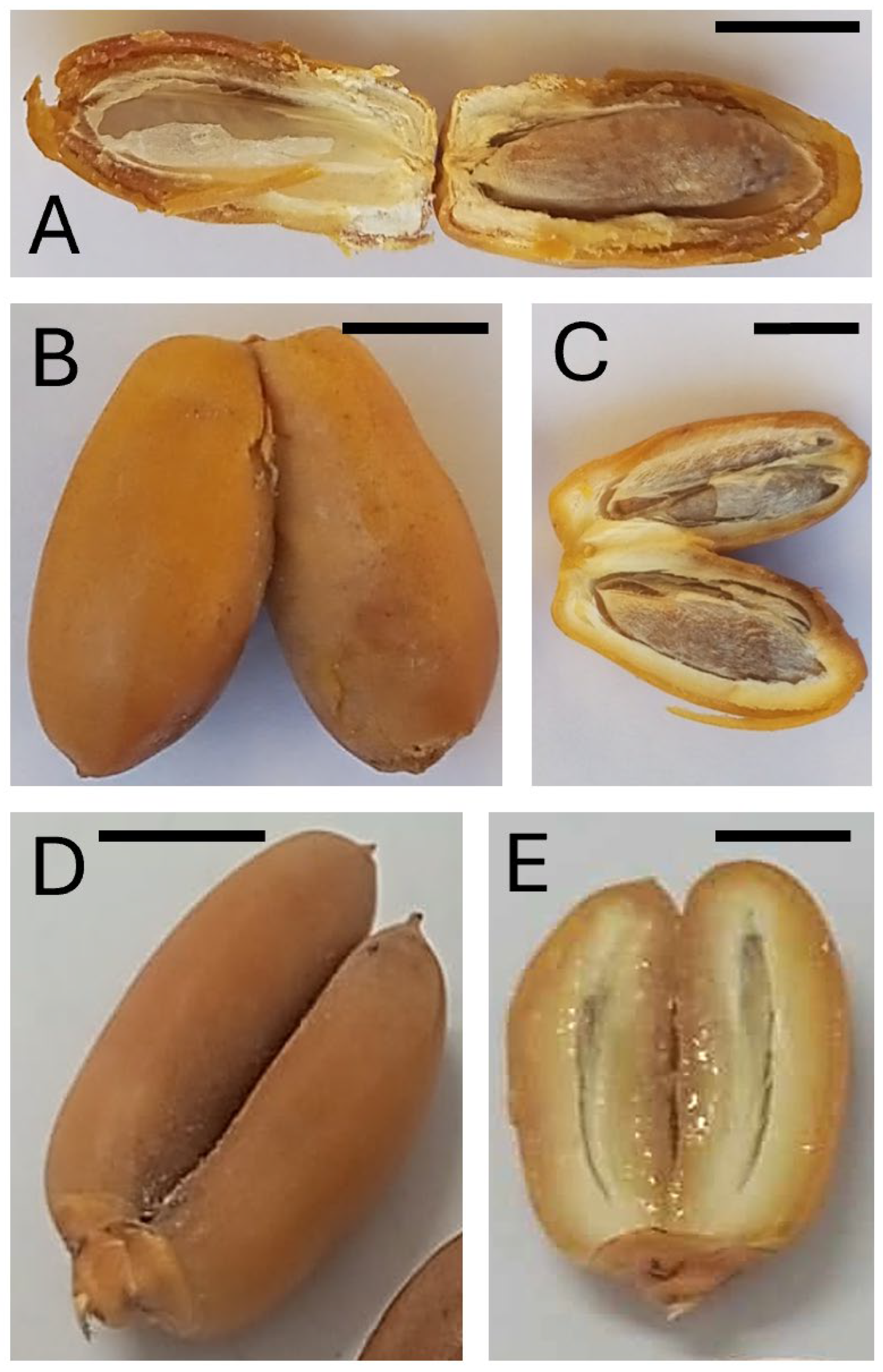
In date palm, only one ovule per flower usually develops after fertilization, leading to the development of a single carpel that forms a date fruit. In rare cases, however, two carpels develop simultaneously after ovule fertilisation, giving rise to two partially fused edible fruits (Figure 1 and Figure 2). Carpels can also develop without fertilization and produce two interconnected inedible parthenocarpic fruits through their combined perianths (Figure 2D,E).

3.2.2. Fused Carpels Evolution

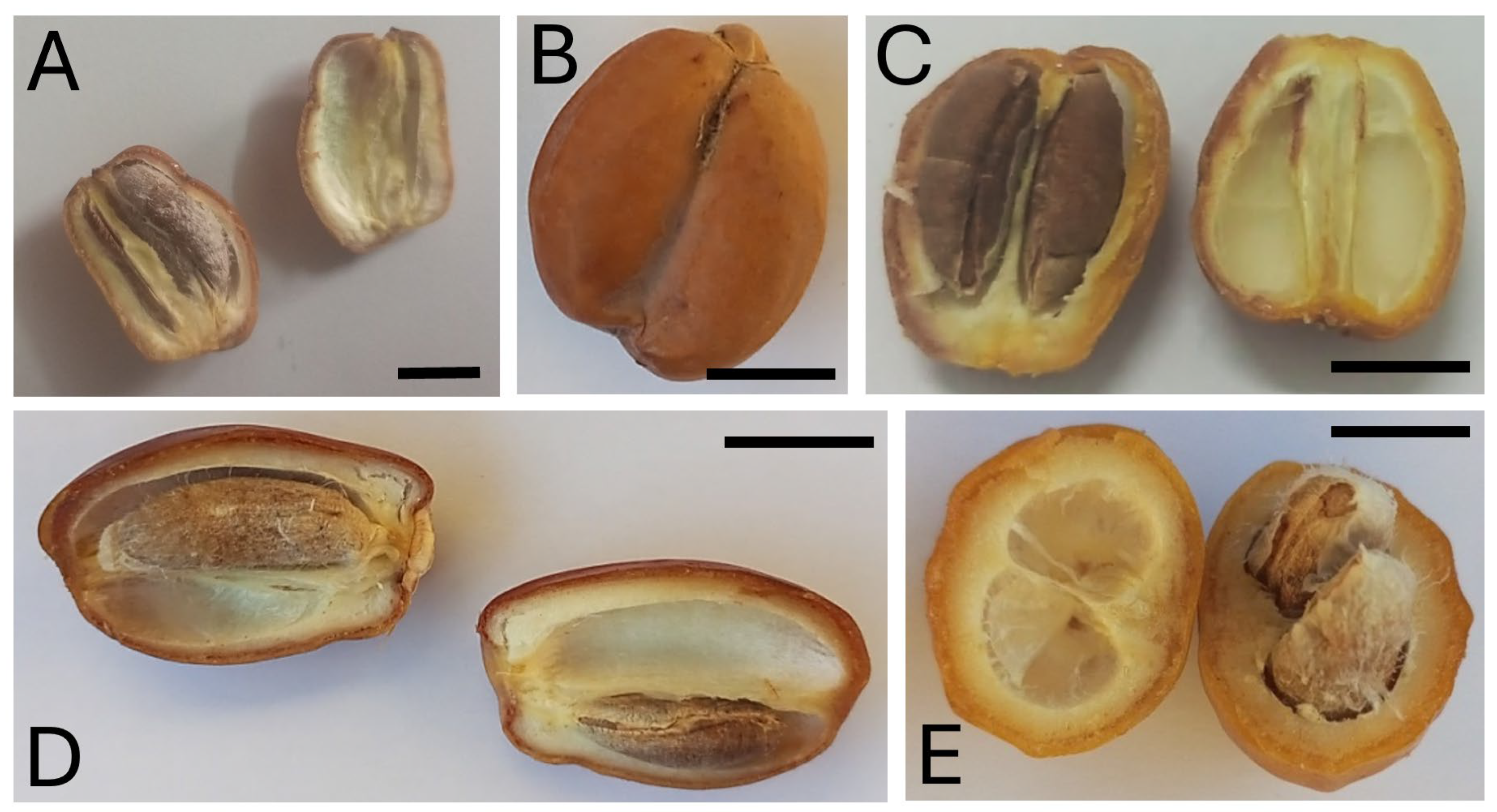
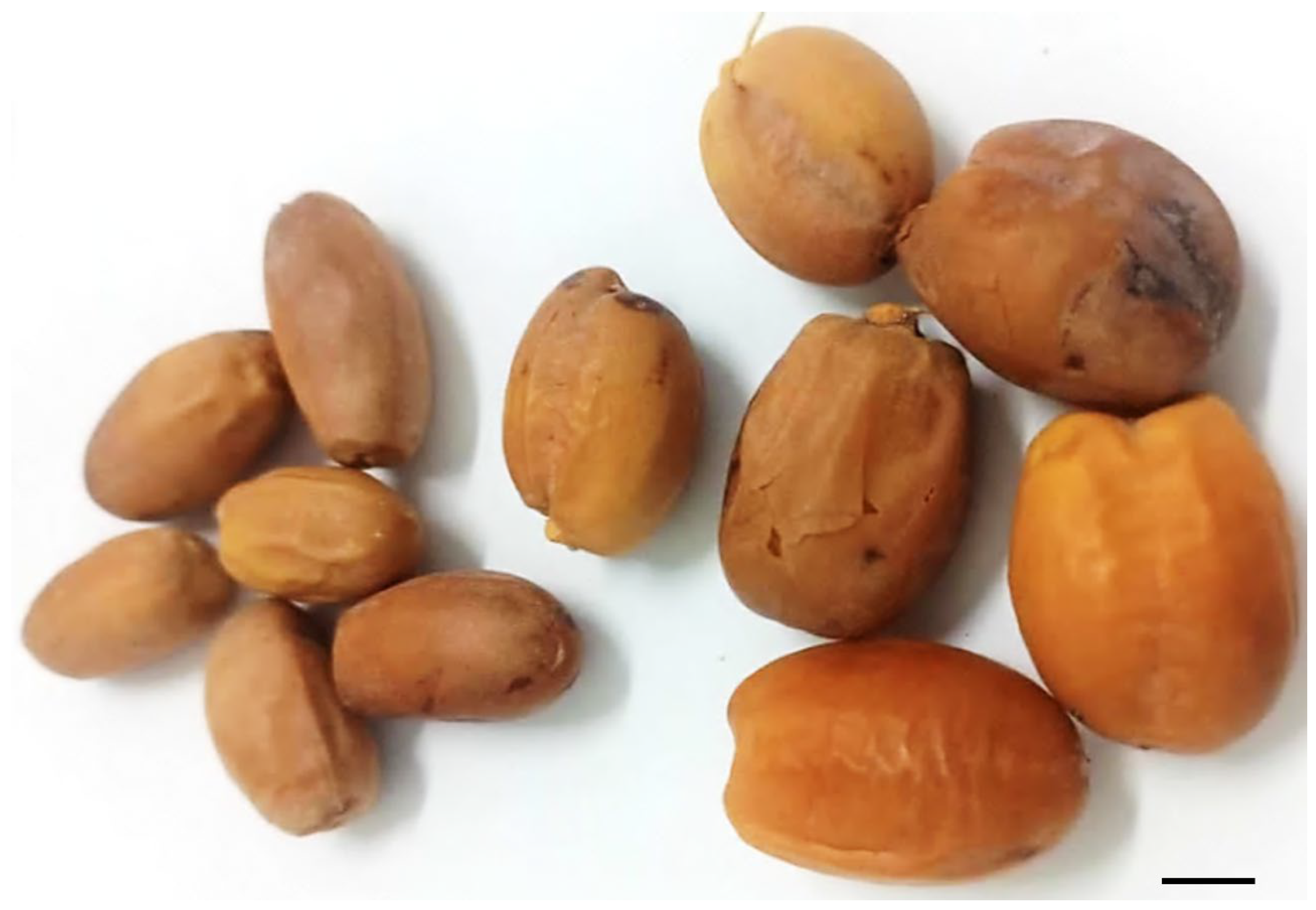
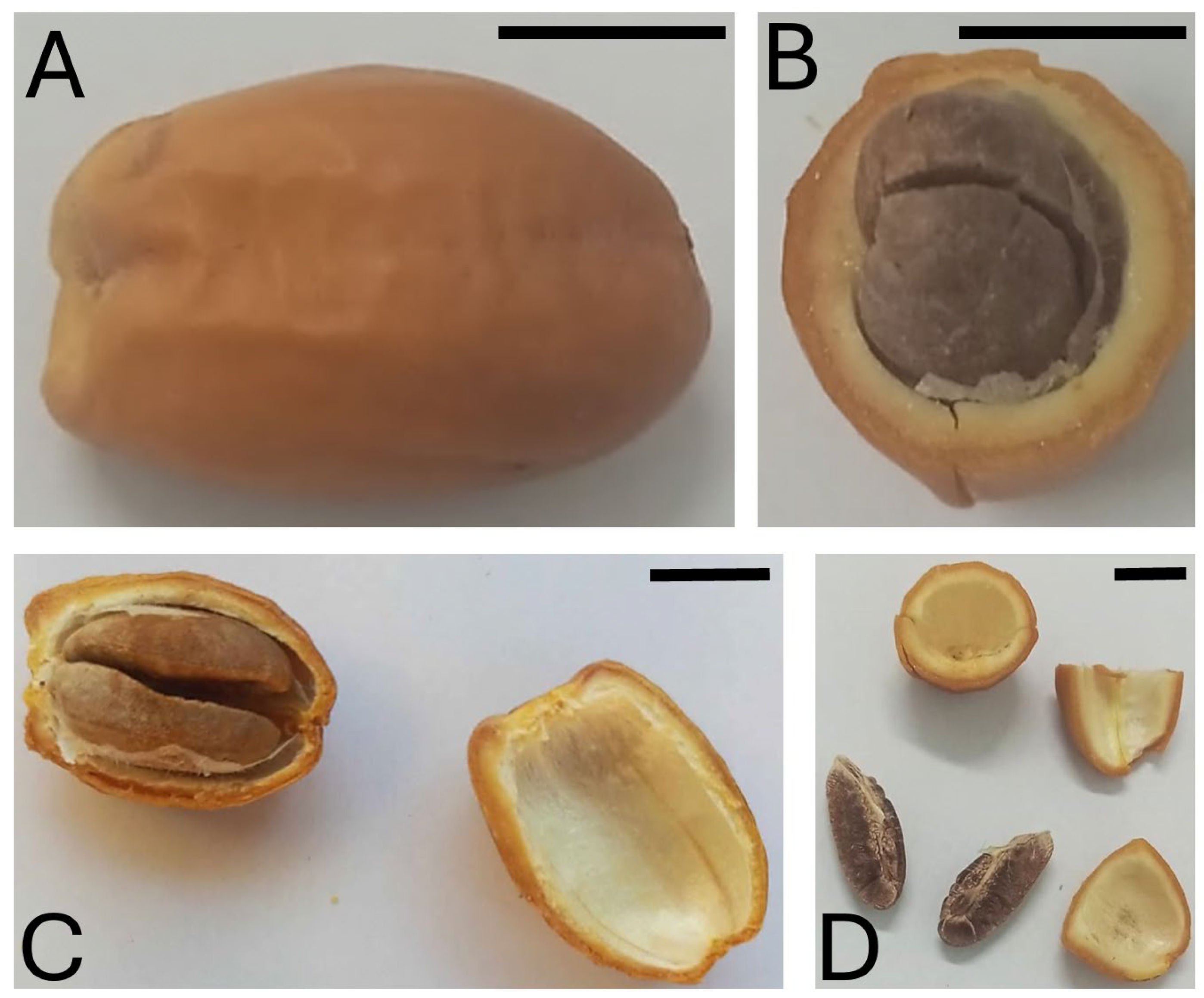
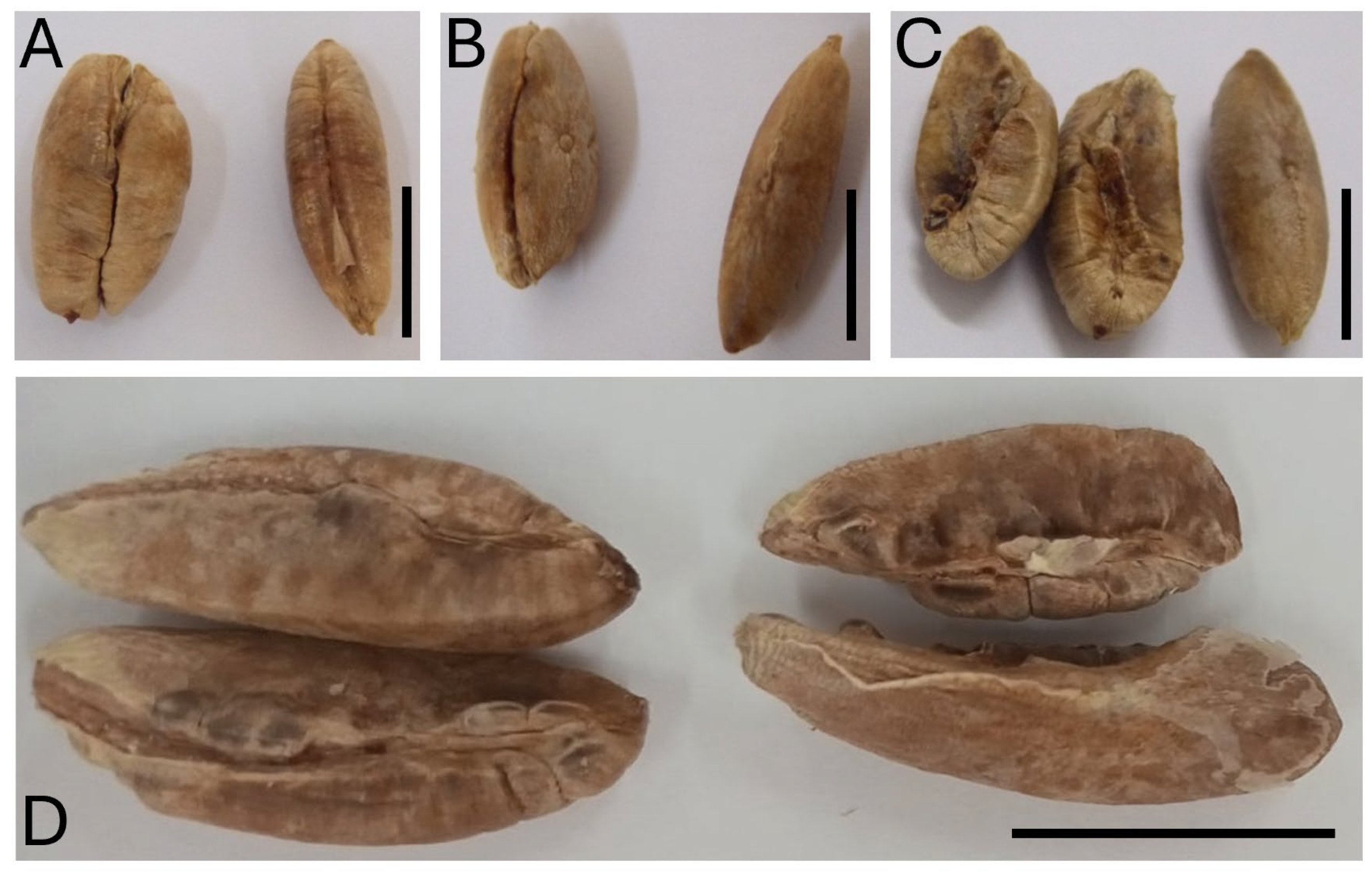
As shown in Figure 3, Figure 4 and Figure 5, DSF in date palm result from either complete or partial carpel fusion. In rare cases (1%), two carpels enclosing one fertilised ovule and one unfertilised ovule fuse to produce a single compound fruit containing two seeds, of which only one bears a viable embryo. In most cases, DSF arise from the partial fusion of two carpels that each enclose equal-sized seeds containing embryos (86%). DSF with unequal seeds also occur, although less frequently (14%). Total fusion of two carpels can also occur after fertilization of two ovules, leading to a giant fruit containing two contiguous and complementary seeds nested in each other. Partial or total fusion of three carpels was not observed.

3.3. Evaluation of Germination Rate and Time

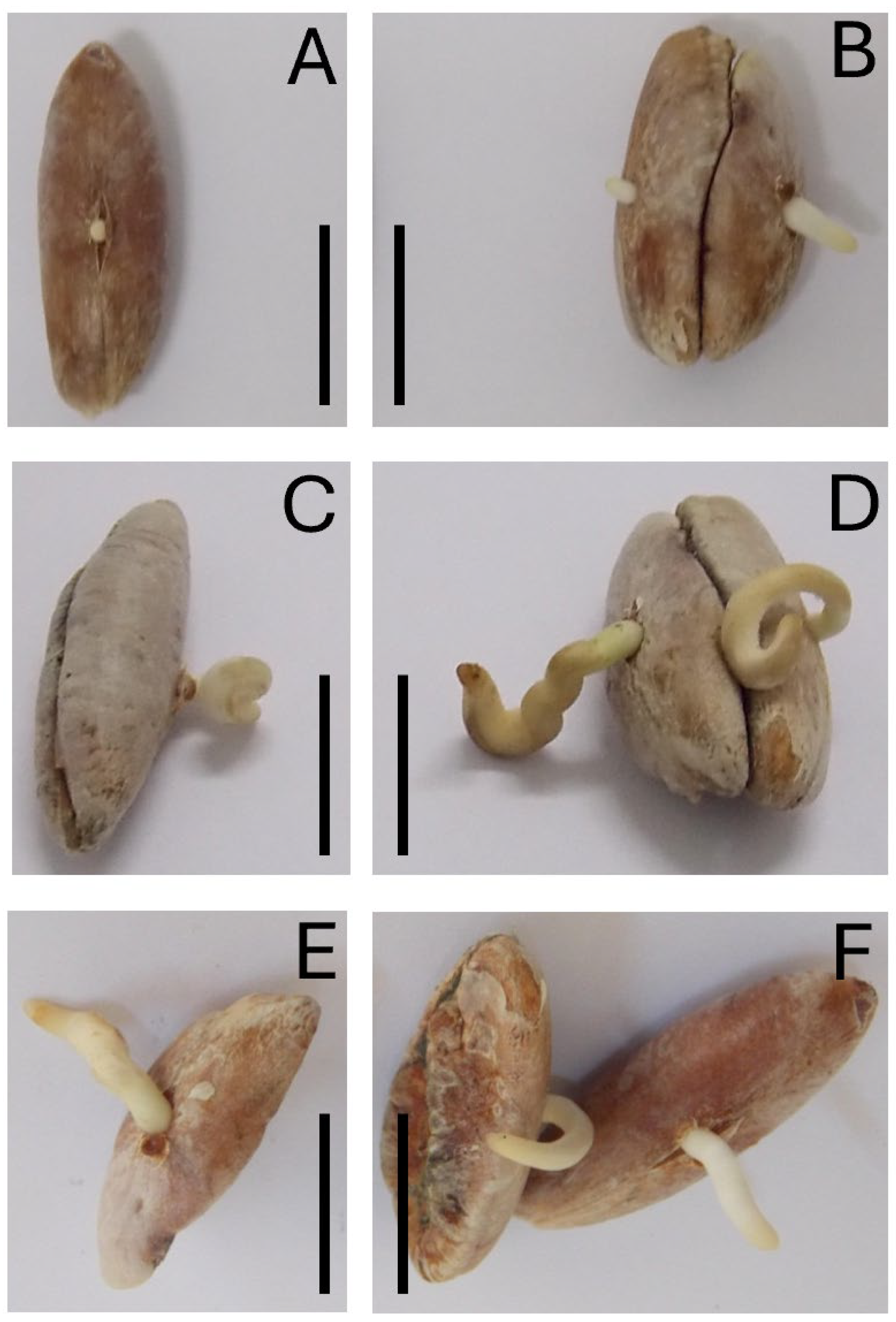
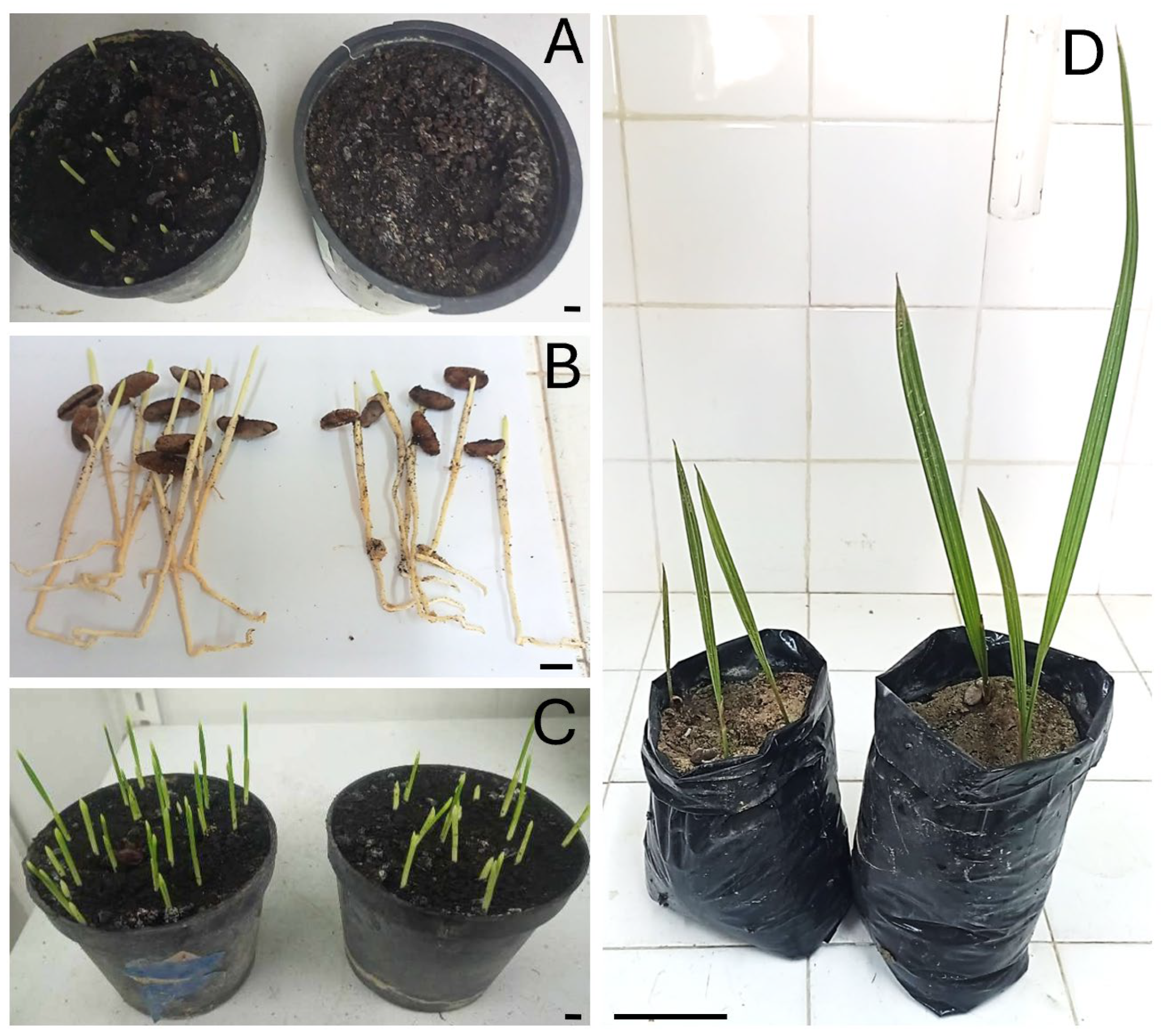
Figure 6 illustrates cotyledonary petiole from the seed coat, demonstrating the presence of an embryo in each seed. Germination rates were high and comparable for seeds from SSF and DSF, reaching 88% and 85%, respectively. Seeds from DSF germinated 8 days earlier than those from SSF, but their seedlings grew relatively more slowly (Figure 7).

3.4. Correlation Analysis

Fruit weight was strongly positively correlated with total seed weight per fruit (r = 0.93, p < 0.001), indicating that variation in fruit biomass is largely driven by total seed mass. Fruit weight was also strongly positively correlated with fruit diameter (r = 0.90, p < 0.001), but only weakly and non-significantly correlated with fruit length (r = 0.33). A very strong positive correlation was found between fruit length and mean seed length (r = 0.95, p < 0.001).
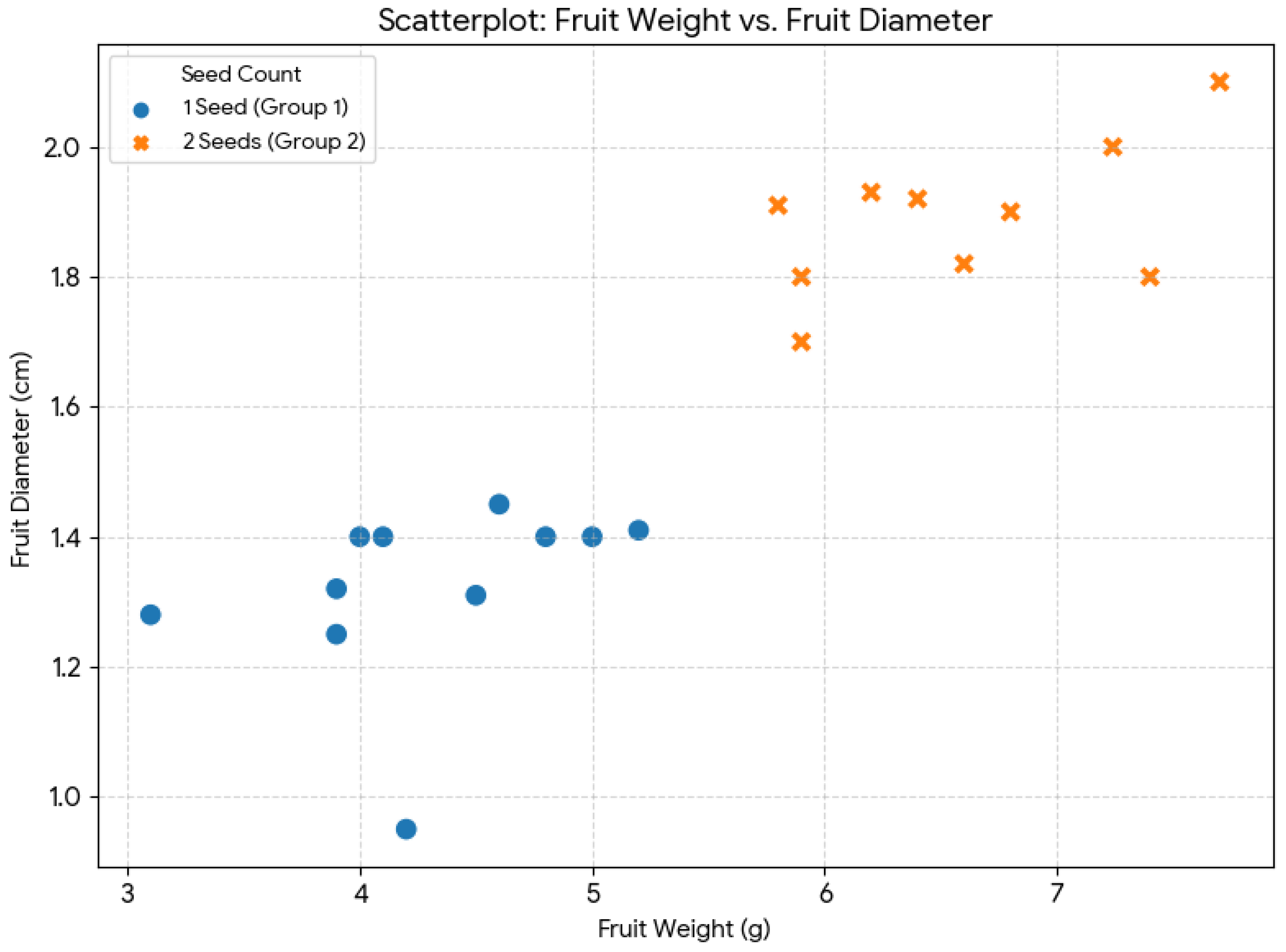
Seed weight showed a strong, significant positive correlation with both seed length (r = 0.71, p < 0.001) and seed diameter (r = 0.72, p < 0.001). A moderate positive correlation was also observed between seed length and seed diameter (r = 0.46, p = 0.009). Figure 8 shows a clear segregation between the two fruit morphotypes, with no overlap. SSF formed a compact cluster characterised by lower mass (<5.5 g) and smaller diameter (<1.5 cm), whereas DSF occupied a distinct region defined by significantly higher mass (>5.5 g) and larger diameter (>1.6 cm).

4. Discussion

The principal finding of this study is the first documented occurrence in date palm of carpel fusion resulting in a compound syncarpic gynoecium that subsequently develops into double-seeded fruits. This phenomenon is rare and was observed only in some cultivars. Its occurrence in ‘Kentichi’ and ‘Deglet nour’, but not in ‘Alligue’, is consistent with a cultivar-associated or putatively genotype-dependent tendency; however, controlled inheritance studies were not performed, and the genetic basis therefore remains to be demonstrated. DSF are distinct from polyembryony, because a unique embryo emerges from each seed of a DSF, unlike the earlier case reported in date palm by Rao [7].
Fruit weight was strongly positively correlated with total seed weight per fruit and reflected radial expansion rather than elongation. Fruit length was coupled with the longitudinal growth of the enclosed seed(s), regardless of seed number. Active fruit growth is driven by pericarp cell division, which depends on auxin synthesised in the developing seed and gibberellins produced in the pericarp [12]. The associated increase in fruit biomass likely reflects enhanced nutrient allocation to developing seeds, as observed in other fruiting species [13]. Since seed number influenced fruit width but not fruit length, the longitudinal growth of date fruits appears to be biologically constrained by seed elongation.
The transition from apocarpy to syncarpy is widely considered a key innovation in angiosperms. According to Armbruster et al. [14], the advantage of syncarpy is twofold: it can increase offspring quantity by allowing pollen tubes to cross between carpels through a compitum and fertilize ovules that would otherwise remain unfertilized, and it can enhance offspring quality by intensifying pollen competition within a unified transmission tract [15,16,17,18]. This mechanism may favour double-seeded fruits by natural selection [19]. Endress [20] emphasized that pollen-tube redistribution allows a more economical reproductive investment, whereas Stebbins [21] proposed that carpel fusion evolved primarily to enhance structural defence of developing seeds against predation. The present results align more closely with reproductive drivers.
In date palm, the emergence of DSF may reflect a partial breakdown in the mechanisms that normally ensure that only one of the three carpels develops. Meliani et al. [22] reported that the date palm ovary encloses three carpels: two twin carpels, white in colour and of the same size, borne by the same petal (P2), and a third distinct carpel borne by petal P3. Typically, only the isolated carpel develops, while the twin carpels degenerate through programmed cell death. The formation of DSF may result from a fusion event between adjacent carpels that could partially override this degeneration process. This developmental process could involve epidermal fusion or congenital union, mechanisms described by Raven and Weyers [23] as relevant to the evolution of syncarpy. The cultivar-associated distribution observed here also suggests that variation in genes regulating floral organ boundaries and carpel development may be involved. In other angiosperms, altered expression of boundary-specifying genes, including NAM/CUC-related transcription factors, has been associated with congenital floral organ fusion [24,25]. These molecular mechanisms were not tested in the present study and should therefore be considered hypotheses for future investigation in date palm.
The scatter plot confirmed that single-seeded fruits form a compact cluster characterised by lower mass and smaller diameter, whereas double-seeded fruits occupy a distinct region defined by higher mass and larger diameter. This separation indicates that the presence of a second seed produces a discrete shift in fruit morphology rather than a continuous gradient. Comparable relationships between seed characteristics and fruit morphology have been reported in other fruit crops [26,27,28].
Although seed dimensions were stable, a trade-off was evident in biomass allocation. Seeds from DSF germinated 8 days earlier than those from SSF, but the resulting seedlings grew more slowly. This pattern may reflect faster dormancy release or germination initiation in DSF-derived seeds, followed by reduced early seedling vigour because reserve availability per embryo is slightly lower. Hormonal regulation, particularly the balance between abscisic acid and gibberellins, may contribute to differences in germination timing [29], but hormone concentrations were not measured in this study. Thus, while syncarpy in date palm may accelerate germination timing, the reduced reserves available per embryo likely limit early seedling vigour compared with the standard apocarpous pathway. This interpretation is consistent with observations that rapid germination can be a competitive advantage for smaller seeds [30], whereas larger seeds with greater reserves can produce more vigorous seedlings, as shown in Mirabilis hirsuta and Pastinaca sativa [31,32].
Morphometric traits such as fruit weight, length, and diameter may serve as practical discriminatory markers for identifying fruits with multiple seeds, especially in DSF-producing varieties such as ‘Kentichi’. From an industrial perspective, the very low frequency of DSF makes an immediate effect on fruit production, grading, or market value unlikely. Nevertheless, DSF may influence fruit uniformity and seed-to-pulp allocation. Although mesocarp and epicarp were not measured separately, the approximate non-seed fraction estimated as fruit weight minus total seed weight was 3.32 g in SSF and 4.86 g in DSF, while the estimated non-seed proportion was 77.2% in SSF and 73.7% in DSF. Future studies should directly quantify mesocarp mass, pulp percentage, texture, sugar content, and market-quality parameters, as well as explore controlled crosses between DSF-producing female genotypes and suitable male progenitors to assess the heritability of syncarpic fruit development and its potential as a selectable trait in date palm breeding.

5. Conclusions

Double-seeded fruits in date palm are a rare, genotype-dependent syncarpic developmental variant associated with increased fruit width and mass, earlier germination, and slower early seedling growth. The phenomenon is distinct from polyembryony and may have value as a selectable trait in future date palm breeding programmes.

Author Contributions

Conceptualization, A.O. and A.S.; methodology, A.O. and A.S.; investigation, A.O. and A.S.; data curation, K.K., S.M. and A.S.; validation, S.P.O.W.; visualization, A.O., A.S. and S.P.O.W.; writing—original draft preparation, A.O. and A.S.; writing—review and editing, S.P.O.W. All authors have read and agreed to the published version of the manuscript.

Funding

This research received no external funding.

Institutional Review Board Statement

Not applicable.

Informed Consent Statement

Not applicable.

Data Availability Statement

The data that support the findings of this study are available from Ahmed Othmani upon reasonable request.

Conflicts of Interest

The authors declare no conflicts of interest.

Abbreviations

DSF, double-seeded fruits; FD, fruit diameter; FL, fruit length; FW, fruit weight; SD, seed diameter; SL, seed length; SSF, single-seeded fruits; SW, seed weight.

References

  1. De Mason, D.A.; Stolte, K.W.; Tisserat, B. Floral development in Phoenix dactylifera. Can. J. Bot. 1982, 60, 1437–1446. [Google Scholar] [CrossRef]
  2. Daher, A.; Adam, H.; Chabrillange, N.; Collin, M.; Mohamed, N.; Tregear, J.W.; Aberlenc-Bertossi, F. Cell cycle arrest characterizes the transition from a bisexual floral bud to a unisexual flower in Phoenix dactylifera. Ann. Bot. 2010, 106, 255–266. [Google Scholar] [CrossRef] [PubMed]
  3. Rezanejad, F.; Ghalekhani, H. The studies of generative structures and their idioblasts in Mazafati cultivar of Phoenix dactylifera L. (Arecaceae). Iran. J. Plant Biol. 2018, 10, 1–16. [Google Scholar]
  4. Alnajjar, M.A.H.; Alpresem, W.F.F.; Ibrahim, M.A. Study of embryogenic development in soft, dry and semi-dry cultivars of date palm (Phoenix dactylifera L.). Plant Cell Biotechnol. Mol. Biol. 2020, 21, 90–100. [Google Scholar]
  5. Cohen, Y.; Slavkovic, F.; Birger, D.; Greenberg, A.; Sadowsky, A.; Ish-Shalom, M.; Benita, M.; Ticuchinski, T.; Avnat, Y.; Kamenetsky, R. Fertilization and fruit setting in date palm: Biological and technological challenges. Acta Hortic. 2016, 1130, 351–358. [Google Scholar] [CrossRef]
  6. Cohen, Y.; Korchinsky, R.; Tripler, E. Flower abnormalities cause abnormal fruit setting in tissue culture-propagated date palm (Phoenix dactylifera L.). J. Hortic. Sci. Biotechnol. 2004, 79, 1007–1013. [Google Scholar] [CrossRef]
  7. Rao, J.S. Polyembryony in Phoenix dactylifera L. Sci. Cult. 1957, 22, 686–687. [Google Scholar]
  8. Lakshmanan, K.K.; Ambegaokar, K.K. Polyembryony. In Embryology in Angiosperms; Johri, B.M., Ed.; Springer: Berlin, Germany, 1984; pp. 445–474. [Google Scholar] [CrossRef]
  9. Naumova, T.N. Apomixis in Angiosperms: Nucellar and Integumentary Embryony; CRC Press: Boca Raton, FL, USA, 1993. [Google Scholar] [CrossRef]
  10. Firetti-Leggieri, F.; Lohmann, L.G.; Alcantara, S.; Costa, I.R.; Semir, J. Polyploidy and polyembryony in Anemopaegma (Bignonieae, Bignoniaceae). Plant Reprod. 2013, 26, 43–53. [Google Scholar] [CrossRef]
  11. Arunachalam, V. Phenotypic traits of genetic twins in coconut palm (Cocos nucifera L.) and their utility in seed production. Seed Technol. 2005, 27, 104–107. [Google Scholar]
  12. Obroucheva, N.V. Hormonal regulation during plant fruit development. Russ. J. Dev. Biol. 2014, 45, 11–21. [Google Scholar] [CrossRef]
  13. Idohou, R.; Assogbadjo, A.E.; Houehanou, T.; Kakaï, R.G.; Agbangla, C. Variation in Hyphaene thebaica Mart. fruit: Physical characteristics and factors affecting seed germination and seedling growth in Benin (West Africa). J. Hortic. Sci. Biotechnol. 2015, 90, 291–296. [Google Scholar] [CrossRef]
  14. Armbruster, W.S.; Debevec, E.M.; Willson, M.F. Evolution of syncarpy in angiosperms: Theoretical and phylogenetic analyses of the effects of carpel fusion on offspring quantity and quality. J. Evol. Biol. 2002, 15, 657–672. [Google Scholar] [CrossRef]
  15. Mulcahy, D.L. The rise of the angiosperms—A genecological factor. Science 1979, 206, 20–23. [Google Scholar] [CrossRef] [PubMed]
  16. Ottaviano, E.; Sari-Gorla, M.; Mulcahy, D.L. Pollen tube growth rates in Zea mays: Implications for genetic improvement of crops. Science 1980, 210, 437–438. [Google Scholar] [CrossRef] [PubMed]
  17. Mulcahy, D.L. Models of pollen tube competition in Geranium maculatum. In Pollination Biology; Real, L., Ed.; Academic Press: New York, NY, USA, 1983; pp. 151–161. [Google Scholar]
  18. Windsor, J.A.; Davis, L.E.; Stephenson, A.G. The relationship between pollen load and fruit maturation and the effect of pollen load on offspring vigor in Cucurbita pepo. Am. Nat. 1987, 129, 643–656. [Google Scholar] [CrossRef]
  19. Willson, M.F. Sexual selection, sexual dimorphism and plant phylogeny. Evol. Ecol. 1991, 5, 69–87. [Google Scholar] [CrossRef]
  20. Endress, P.K. Syncarpy and alternative modes of escaping disadvantages of apocarpy in primitive angiosperms. Taxon 1982, 31, 48–52. [Google Scholar] [CrossRef]
  21. Stebbins, G.L. Flowering Plants: Evolution Above the Species Level; Arnold: London, UK, 1974. [Google Scholar] [CrossRef]
  22. Meliani, S.; Bouguedoura, N.; Bennaceur, M. Morphological and histological studies of the development of the ovary in the date palm (Phoenix dactylifera L.). Int. J. Innov. Appl. Stud. 2016, 18, 682–694. [Google Scholar]
  23. Raven, J.A.; Weyers, J.D.B. Significance of epidermal fusion and intercalary growth for angiosperm evolution. Trends Plant Sci. 2001, 6, 111–113. [Google Scholar] [CrossRef] [PubMed]
  24. Phillips, H.R.; Landis, J.B.; Specht, C.D. Revisiting floral fusion: The evolution and molecular basis of a developmental innovation. J. Exp. Bot. 2020, 71, 3390–3404. [Google Scholar] [CrossRef] [PubMed]
  25. Abiri, N.; Sinjushin, A.; Tekdal, D.; Cetiner, S. Evaluation of the possible contribution of various regulatory genes to determination of carpel number as a potential mechanism for optimal agricultural yield. Int. J. Mol. Sci. 2022, 23, 9723. [Google Scholar] [CrossRef] [PubMed]
  26. Balaguera-López, H.E.; Fischer, G.; Magnitskiy, S. Seed-fruit relationships in fleshy fruit: Role of hormones. A review. Rev. Colomb. Cienc. Hortíc. 2020, 14, 90–103. [Google Scholar] [CrossRef]
  27. Al-Khayri, J.M.; Jain, S.M.; Johnson, D.V. Date Palm Genetic Resources and Utilization; Springer: Dordrecht, The Netherlands, 2015. [Google Scholar] [CrossRef]
  28. Chao, C.C.T.; Krueger, R.R. The date palm (Phoenix dactylifera L.): Overview of biology, uses, and cultivation. HortScience 2007, 42, 1077–1082. [Google Scholar] [CrossRef]
  29. Bewley, J.D.; Bradford, K.J.; Hilhorst, H.W.M.; Nonogaki, H. Seeds: Physiology of Development, Germination and Dormancy, 3rd ed.; Springer: New York, NY, USA, 2013. [Google Scholar] [CrossRef]
  30. Howell, N. The effect of seed size and relative emergence time on fitness in a natural population of Impatiens capensis Meerb. (Balsaminaceae). Am. Midl. Nat. 1981, 105, 312–320. [Google Scholar] [CrossRef]
  31. Weis, M.I. The effects of propagule size on germination and seedling growth in Mirabilis hirsuta. Can. J. Bot. 1982, 60, 1868–1874. [Google Scholar] [CrossRef]
  32. Hendrix, S.D. Variation in seed weight and its effects on germination in Pastinaca sativa L. (Umbelliferae). Am. J. Bot. 1984, 71, 795–802. [Google Scholar] [CrossRef]
Figure 1. Single-seeded fruit (SSF) (left) versus double-seeded fruit (DSF) (right) in ‘Kentichi’ date palm. Scale bar: 1 cm.
Seeds 05 00037 g001
Figure 2. Attached fruit development in date palm ‘Kentichi’ comparing pollinated and unpollinated status. (A) Single, normal fruit (pollinated). (B,C) Two attached, edible fruits (pollinated), shown in external (B) and internal (C) views. (D,E) Two attached, parthenocarpic fruits (unpollinated), shown in external (D) and internal (E) views. All scale bars: 1 cm.
Seeds 05 00037 g002
Figure 3. Structural features of fruit development from partially fused carpels in ‘Kentichi’ date palm. (A) Fruit with one viable and one aborted seed. (B) External view of a double-seeded fruit. (C,D) Longitudinal sections. (E) Cross-section. Scale bar: 1 cm.
Seeds 05 00037 g003
Figure 4. Double-seeded fruit resulting from two totally fused carpels in ‘Kentichi’ date palm. (A) External view. (B) Cross-section. (C) Longitudinal section. (D) Cut fruit showing intermingled seeds and inner fruit wall. Scale bar: 1 cm.
Seeds 05 00037 g004
Figure 5. Seed morphology from totally fused, pollinated double-seeded fruits. (A,B) Ventral and dorsal views comparing coupled complementary seeds (left) with a regular seed (right). (C) Separated complementary seeds (left) and a regular seed (right). (D) Ventral and dorsal views comparing equal (left) and unequal (right) coupled complementary seeds. Scale bar: 1 cm.
Seeds 05 00037 g005
Figure 6. Comparative cotyledonary petiole emergence in seeds from SSF (A,C,E) and DSF (B,D,F) fruits. (A,B) Initial germination. (CF) Post-germination after 5–7 days. (D) Coupled DSF seeds. (F) Separated DSF seeds. Scale bar: 1 cm.
Seeds 05 00037 g006
Figure 7. Comparative seedling development of ‘Kentichi’ date palm from SSF and DSF seeds. (A) Differential emergence of DSF (left) and SSF (right) seedlings. (B) Seedlings two weeks post-germination. (C) Developing seedlings from SSF (left) and DSF (right) seeds. (D) Two-month-old seedlings from DSF (left) and SSF (right) seeds. Scale bars: 1 cm (AC); 10 cm (D).
Seeds 05 00037 g007
Figure 8. Relationship between fruit weight and fruit diameter relative to seed count (n = 30). The scatterplot demonstrates distinct clustering, with single-seeded fruits consistently exhibiting lower weight and diameter than double-seeded fruits, indicating a clear morphological separation between the two groups.
Seeds 05 00037 g008
Table 1. Percentage of double-seeded fruits in ‘Kentichi’, ‘Deglet nour’, and ‘Alligue’ (2021–2023).
Variety% of Double-Seeded FruitsType of Double-Seeded Fruits
202120222023AverageEntirely Separated Seeds (%)Seeds Nested in Each Other (%)
Kentichi2.5 × 10−32.5 × 10−33.0 × 10−32.8 × 10−3955
Deglet nour2.5 × 10−402.5 × 10−41.6 × 10−41000
Alligue000000
Table 2. Morphological characteristics of single-seeded and double-seeded fruits of ‘Kentichi’. Data are presented as mean ± standard deviation. The same lowercase letters within a row indicate no statistically significant difference between the groups.
VariableSingle-SeededDouble-Seeded
Fruit weight (g)4.30 ± 0.58 a6.59 ± 0.66 b
Fruit length (cm)2.75 ± 0.26 a2.68 ± 0.15 a
Fruit diameter (cm)1.32 ± 0.14 a1.89 ± 0.11 b
Individual seed weight (g)0.98 ± 0.16 a0.87 ± 0.15 a
Seed length (cm)1.84 ± 0.20 a1.75 ± 0.09 a
Seed diameter (cm)0.54 ± 0.05 a0.53 ± 0.05 a
Total seed weight per fruit (g)0.98 ± 0.16 a1.73 ± 0.22 b
Pulp weight (g)3.32 ± 0.47 a4.86 ± 0.69 b
Pulp proportion (%)77.18 ± 2.14 a73.72 ± 2.58 b
Disclaimer/Publisher’s Note: The statements, opinions and data contained in all publications are solely those of the individual author(s) and contributor(s) and not of MDPI and/or the editor(s). MDPI and/or the editor(s) disclaim responsibility for any injury to people or property resulting from any ideas, methods, instructions or products referred to in the content.