Proceeding Paper

Targeting Neurotrophin Regulation by Polyphenols: Mechanistic Basis for Cognitive Resilience †

1
Nutrition and Food Group (NuFoG), Instituto de Agroecoloxía e Alimentación (IAA), Universidade de Vigo, Campus Auga, 32004 Ourense, Spain
2
Nutrition and Food Group (NuFoG), Galicia Sur Health Research Institute (IIS Galicia Sur), SERGAS-UVIGO, 36213 Vigo, Spain
*
Author to whom correspondence should be addressed.
Presented at the 5th International Electronic Conference on Brain Sciences & 1st International Electronic Conference on Neurosciences, 9–11 March 2026; Available online: https://sciforum.net/event/IECBS-IECNS2026.
Med. Sci. Forum 2026, 46(1), 3; https://doi.org/10.3390/msf2026046003 (registering DOI)
Published: 15 June 2026

Abstract

Background: Synaptic plasticity in neurodegenerative disorders (NDs), cognitive impairment, and mental health conditions is regulated by brain-derived neurotrophic factor (BDNF). Even healthy individuals have different levels, which are affected by complex epigenetic, inflammatory, and metabolic regulation. BDNF expression changes are associated with both typical and abnormal aging, as well as mental health conditions. These changes affect brain areas that are crucial for memory, such as the hippocampus and the parahippocampal cortex. Neurotrophins (NTs), including nerve growth factor (NGF) and BDNF, are essential for neuronal differentiation via tropomyosin receptor kinase B (TrkB) and the p75 neurotrophin receptor (p75NTR). Dysregulated NTs signaling contributes to synaptic dysfunction and neuroinflammation. Objective: This systematic review synthesizes preclinical evidence of the potential of naturally derived compounds to modulate NTs for neuroprotection and their incorporation into novel foods. Methodology: A review of major databases found studies that examined the impact of dietary polyphenols and other bioactive substances on NT signaling oxidative stress, inflammation, and neuronal plasticity. Results: Compounds such as epigallocatechin gallate, resveratrol, curcumin, quercetin, and flavanols, can positively impact NTs, reducing reactive oxygen species/reactive nitrogen species, enhancing cell survival, and increasing the expression of trophic factors such as nuclear factor erythroid 2-related factor 2 (Nrf2), NGF, and vascular endothelial growth factor in neural stem cells. However, their bioavailability, optimal dosage, and dietary interactions require further research. Conclusions: The consumption of BDNF-promoting foods can potentially stimulate BDNF synthesis, support optimal neurotransmission, and fortify neural plasticity. Evidence supports a polyphenol-rich diet for preventing NDs and promoting brain health. Observational studies consistently support the protective effects of polyphenols on brain health through their impact on the gut–brain axis.

1. Introduction: Neurotrophin Signaling Pathways

Neurodegeneration is driven primarily by brain aging [1]. Neurotrophins (NTs), including brain-derived neurotrophic factor (BDNF), neurotrophin-3 (NT-3), neurotrophin-4/5 (NT-4/5), and nerve growth factor (NGF), regulate the regeneration, survival, and maintenance of specialized neuronal populations. These processes represent key targets of polyphenol-mediated neuroprotection [2]. BDNF dynamically regulates long-term potentiation (LTP), dendritic spine growth, and receptor trafficking, particularly that of N-methyl-D-aspartate (NMDA) receptors [3]. Moreover, BDNF influences adult hippocampal and parahippocampal neurogenesis, a core mechanism underlying memory encoding and storage performance [4].
BDNF binding to high-affinity receptor tyrosine kinase B (TrkB) is a central hub for regulating synaptic and structural plasticity within the central nervous system (CNS) and is strongly associated with broader cognitive function (CF) [5]. Polyphenols are expected to potentiate endogenous BDNF/TrkB signaling by acting as Trk receptor antagonists or by enhancing BDNF/NGF expression via the gut–brain axis [6]. This process activates TrkB and downstream phosphatidylinositol 3-kinase (PI3K)/serine/threonine protein kinase Akt, phospholipase Cγ (PLCγ), and mitogen-activated protein kinase (MAPK)/extracellular signal-regulated kinase (ERK) pathways, which support neurite outgrowth [7].
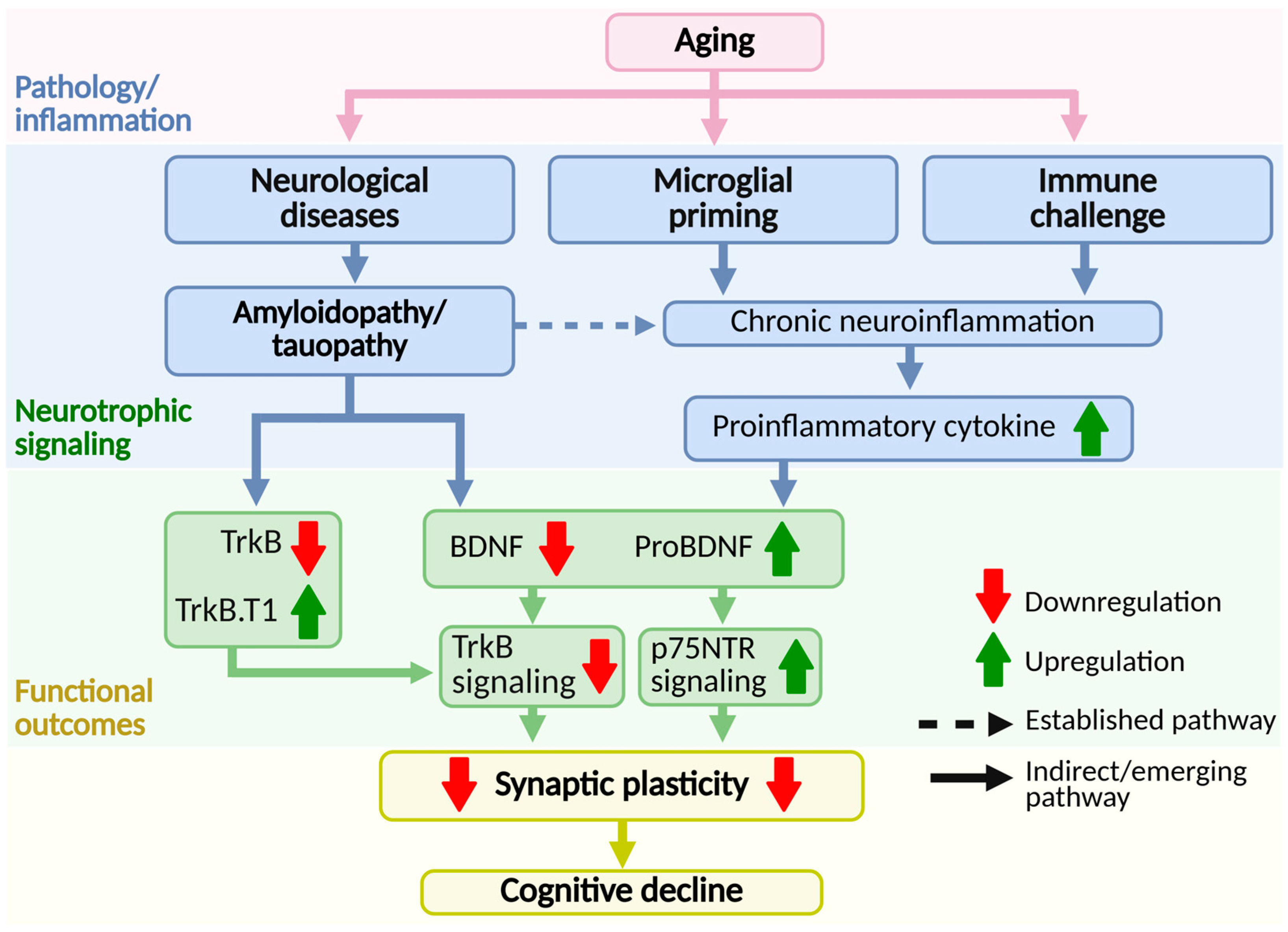
Weakened BDNF/TrkB signaling is a common abnormality associated with cognitive decline/dementia onset in normal aging and age-related diseases (Figure 1). Consequently, enhancing the BDNF/TrkB axis is considered a potential approach to treating cognitive dysfunction. However, the blood–brain barrier (BBB) hinders BDNF from passing through, it does not persist for long and excessive BDNF can render the TrkB receptor less sensitive, all of which complicates the use of BDNF as a treatment [6]. Flavonoids and other mimetics strive to activate TrkB while bypassing BBB issues and desensitization, though some effects may be TrkB-independent (e.g., antioxidant and anti-inflammatory activity) [8].
Therefore, this study takes a mechanistic approach examining the role of NTs and their regulation by dietary polyphenols as a strategy for preventing age-related disease.

2. Polyphenols as Modulators of Cognitive Function

Research indicated a positive association between polyphenol-related cognitive performance enhancements and increased BDNF expression and/or protein levels, though causality and mechanistic details remain to be fully elucidated [9]. In this context, some polyphenols (i.e., flavones, flavonols, isoflavones, flavanones, flavanonols, flavanols, and anthocyanidins) and/or their metabolites can cross the BBB and may accumulate to low levels in neural tissue, interacting with cellular signaling pathways within the CNS and improving brain function [10,11,12]. These naturally occurring phytonutrients impact on cerebral flow by (1) improving cerebrovascular function; (2) modulating multidrug-resistant protein-dependent influx and efflux mechanisms, and (3) affecting neuronal and glial activities directly [13,14].
Moreover, polyphenols support neurocognitive health by upregulating NTs (BDNF and NGF) and stabilizing the inflammatory-redox milieu indispensable for neuroplasticity [15]. Mechanisms include cyclic adenosine monophosphate (cAMP) response element-binding protein (CREB) and Trk signaling, nuclear factor erythroid 2-related factor 2 (Nrf2)-driven antioxidant defenses, nuclear factor kappa-B (NF-κB) inhibition, and epigenetic modulation [10]. Animal models and observational human studies suggest significant, though variable, neurocognitive benefits, especially when synergized with exercise and diet patterns [4,16]. Optimal doses, lengths of administration, metabolism, and targeted polyphenol subclasses for cognitive benefits remain unspecified, with suboptimal bioavailability being a critical limiting factor [11,17].

2.1. Mechanism of Action

Although the mechanism of action of polyphenols is not yet fully understood, some examples appear in the literature. For example, resveratrol (Res) supplementation improved CF in obese adults. Following daily intake of 200 mg/day of Res, word-recall improved at 30 min compared with the placebo. Res also led to increased hippocampal functional connectivity and leptin levels, reduced levels of glycated hemoglobin (HbA1c) and body fat. However, researchers noted limitations, namely the size of the sample, inability to conduct blood tests, or lack of molecular pathway assessment [18]. Disruption of hippocampal synaptic function, necessary for explicit memory and learning under healthy conditions, is associated with cognitive impairment. Stress also decreases spine density and weakens synapses by suppressing LTP and increasing long-term depression in the hippocampal circuit [19].
Res partially mimics the effects of caloric restriction (CR) by activating specific signaling pathway, explaining its beneficial effects [20]. These CR-like metabolic mechanisms involve the competitive inhibition of cAMP phosphodiesterase (especially phosphodiesterase-4 (PDE4)), thereby increasing cAMP. Activation occurs through exchange protein directly activated by cAMP 1 (Epac1), Ca2+/calmodulin-dependent protein kinase kinase β (CaMKKβ)-AMP-activated protein kinase (AMPK), and elevated nicotinamide adenine dinucleotide (NAD+). This secondary activation results in sirtuin 1 (Sirt1) activation [21,22]. Furthermore, Res inhibited microglial activation, thereby reducing the production and release of pro-inflammatory factors phosphodiesterase such as tumor necrosis factor α (TNF-α) (−38%), nitric oxide (NO) (−50%), and IL-1β (−36–48%) [23].
Beyond Res, other polyphenols have been demonstrated to act as modulators of cognitive function through different mechanisms. In a trial with schizophrenia patients, curcumin supplementation performed as a biomarker for BDNF. Although the mechanism remained unclear, increased expression of the BDNF gene was likely enhanced by curcumin through the increase in phosphorylated CREB; see Table 1 [24].
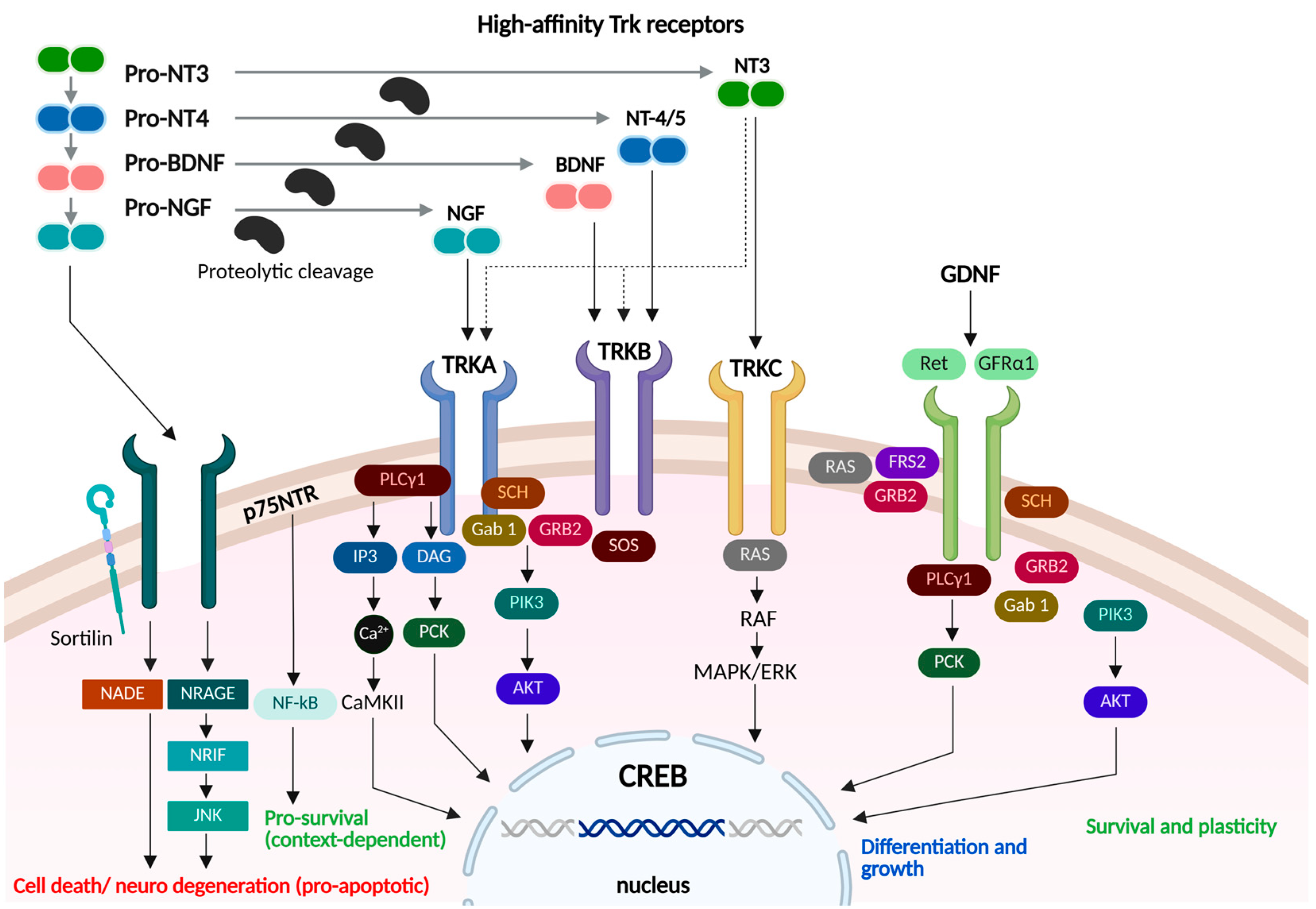
Another study used a green tea extract processed at high temperatures (HTP-GTE), rich in (-)-gallocatechin gallate, which demonstrated the reversal of BDNF expression suppression in the hippocampus of rats. HTP-GTE also restored silent synapse formation by reactivating BDNF-TrkB signaling. Overall, cognitive deficits and LTP-dependent synaptic plasticity were normalized [19] (Table 1). The specific mechanisms underlying the NT-regulating effects of polyphenols depend on the specific class of polyphenol (Figure 2). For example, flavonoids, phenolic acids, and stilbenes activate different signaling pathways, including CREB, Sirt1, and extracellular signal-regulated kinase/PI3K; see Table 1 [17].
Figure 2. Simplified neurotrophin signaling pathways. Abbreviations: NT-3, Neurotrophin-3; NT-4/5, Neurotrophin-4/5; BDNF, Brain-derived neurotrophic factor; NGF, Nerve growth factor; TrkA, Tropomyosin receptor kinase A; TrkB, Tropomyosin receptor kinase B; TrkC, Tropomyosin receptor kinase C; p75NTR, p75 Neurotrophin receptor; GDNF, Glial cell line-derived neurotrophic factor; GFRα1, GDNF family receptor α-1; RET, Rearranged during transfection receptor tyrosine kinase; PLCγ1, Phospholipase Cγ 1; IP3, Inositol 1,4,5-trisphosphate; DAG, Diacylglycerol; PKC, Protein Kinase C; CaMKII, Calcium/Calmodulin-dependent protein kinase II; Shc, Src homology 2 Domain-containing transforming protein; Gab1, GRB2-associated binding protein 1; GRB2, Growth factor receptor-bound protein 2; SOS, Son of sevenless homolog; PI3K, Phosphoinositide 3-kinase; AKT, Protein kinase B; RAS, Rat sarcoma small GTPase; RAF, Rapidly accelerated fibrosarcoma kinase; MAPK, Mitogen-activated protein kinase; ERK, Extracellular signal-regulated kinase; CREB, cAMP Response element-binding protein; NADE, p75NTR-Associated cell death executor; NRAGE, Neurotrophin receptor-interacting MAGE homolog; NRIF, Neurotrophin receptor-interacting factor; JNK, c-Jun N-terminal kinase; NF-κB, Nuclear factor kappa B. Adapted from Ref. [25]. Arrows indicate signaling interactions and pathway directionality. Colors are used solely to distinguish the different neurotrophins, receptors, and signaling components. Created with https://BioRender.com.
Msf 46 00003 g002
Table 1. Compilation of trials using polyphenols to enhance cognitive function.
Food/
Bioactive
Neurotrophic FactorEvidence LevelDosage
(mg/day)
Time (wk)Effect SizeQuantitative OutcomeTest MethodsRef.
Clinical studies
Calanus oil (n-3 PUFA)Serum BDN
modulation
N = 55 healthy women, RDBPC trial~105–125 EPA + DHA16Small/
null
↑ short-term visual-episodic memory not linked to blood BDNFELISA, Pojmenování obrázků a jejich vybavení test, maximal-graded exercise test[16]
Resveratrol + quercetinHippocampal functional connectivity (proxy of BDNF signaling)N = 36 obese males,
RDBPC trial
200 + 32026Medium↑ AVLT retention scores, hippocampal rs-fMRI connectivityAVLT, 3T resting-state fMRI[26]
Melissa officinalis (rosmarinic acid-rich)Indirect synaptic protectionN = 23 mild dementia patients,
RDBPC trial
50024Small↑ NPI-Q by 0.5 compared with a 0.7-point decline in placeboNPI-Q, clinical and neurological assessment[8]
CurcuminSerum BDNF/CREB signalingN = 8 schizophrenia patients, RDBPC trial360 (split dose)8Small↑ BDNF gene expression via CREB pathwayMATRICS consensus cognitive battery, human BDNF quantikine ELISA[24]
Green tea catechinsSerum BDNF
modulation
N = 52,
RDBPC trial
336.412Small (domain-specific)↓ commission errors in continuous performance testingMMSE-J, Cognitrax, finger-tapping test, Continuous performance test[27]
Polyphenol-rich nutraceuticalPlasma BDNF and CREB activationN = 92 healthy adults,
RDBPC trial
~60016Medium–strong↑ Stroop test, ↑ Reynolds intellectual screening test scores, ↑ BDNF, ↑ CREBStroop test, Reynolds intellectual screening test, ELISA, Trail making test[15]
Flavonoid-rich orange juiceVascular/neural functional supportN = 24 healthy males,
RDBPC trial
~272Acute (2–6 h)Small↑ cognitive function, ↑ subjective alertnessCognitive battery, Continuous performance test, mood scales[28]
Preclinical studies
CurcuminHippocampal BDNF, Wnt/β-catenin
singaling
Alzheimer’s disease mouse model~100
mg/kg
2Strong↑ neurogenesis markers (BrdU+/DCX+, BrdU+/NeuN+), ↑ hippocampal BDNFImmunofluorescence, Aβ (1–42) mouse model[29]
Gallocatechin gallateHippocampal BDNF–TrkB signalingFemale rat model (6 weeks old, 140–160 g)200–400
mg/kg
4Strong↑ silent synapses (~30% vs. ~4%), ↑ spatial memoryWestern blot, qPCR, electrophysiology, Morris water maze, ELISA[19]
Abbreviations: PUFA, Polyunsaturated fatty acids; BDNF, Brain-derived neurotrophic factor; EPA, Eicosatetraenoic acid; DHA, Docosahexaenoic acid; ELISA, Enzyme-linked immunosorbent assay; RDBPC, Randomized double-blind placebo-controlled; AVLT, Auditory verbal learning test; rs-fMRI, Resting-state functional magnetic resonance imaging; NPI-Q, Neuropsychiatric inventory questionnaire; CREB, cAMP response element-binding protein; MMSE-J, Japanese version of the mini-mental state examination; BrdU, Bromodeoxyuridine; DCX, Doublecortin; NeuN, Neuronal nuclear protein; TrkB, Tropomyosin receptor kinase B; qPCR, Quantitative polymerase chain reaction. Symbols: ↑, increase; ↓, decrease.

2.2. Antioxidant and Anti-Inflammatory Effects

The antioxidant properties of polyphenols prevent the intracellular oxidation of molecules, thereby mitigating oxidative stress (OS) and the resulting damage to cells by directly scavenging R•/Reactive oxygen species (ROS) [30,31]. They can upregulate antioxidant enzyme levels, such as superoxide dismutase 2 (SOD2) and glutathione peroxidase (GPx), while downregulating pro-apoptotic proteins, thereby supporting neuron survival [31]. ROS and the effects of OS in the CNS can lead to neuroinflammation, neurodegeneration, and cognitive decline, features that are hallmarks of neurodegenerative disorders (NDs) [30,32]. Moreover, exposure to ROS leads to gene methylation, disrupting the genetic and epigenetic landscapes. Many NDs stem from environmental exposures, which trigger changes in the epigenome and remodel DNA methylation [30]. In fact, the decreased expression of antioxidants, such as SOD2, caused by aging or epigenetic alterations, may explain the increased OS in NDs [33]. In this context, polyphenols exert neuroprotective action by neutralizing ROS, thereby reducing OS in the brain [17].
The limited availability of side-effect-free anti-neuroinflammatory activity treatments has driven the search for new bioactive substances. The CNS positively responds to dietary interventions, especially when antioxidants are used alongside other treatments to prevent signs of aging, such as cognitive decline and neurodegenerative diseases like Alzheimer’s disease, Parkinson’s disease, dementia, multiple sclerosis, stroke, and Huntington’s disease [31,34,35].
The activation of p38 mitogen-activated protein kinase (MAPK) and nuclear factor kappa-light-chain-enhancer of activated b cells (NF-kB) enzymes, for example, may be blocked by anthocyanins, as well as the production of pro-inflammatory mediators such as prostaglandin E2 (PGE2), inducible nitric oxide synthase (iNOS), cyclooxygenase 2 (COX-2), interleukin 1 (IL-1) and TNF-α. Anthocyanins may also activate the MAPK pathway (mitogen-activated protein kinase kinase 1 (MAP2K1) and mitogen-activated protein kinase kinase (MEK2)) [36]. Consequently, OS and neuroinflammation-induced apoptosis are counteracted, while Aβ aggregation and its effects on proteolysis are inhibited. This can be achieved by regulating β-secretase inhibition and/or α-secretase activation [32,37,38].
A meta-analysis of aging adults revealed small-to-moderate benefits to executive function, pooled effects on BDNF and inflammatory markers, however, were trivial. Magnitude depended on dosing regimen and bioavailability; a moderate dose (≥ 500 mg) coupled with an intermediate (9%) to high (43%) bioavailability rate is optimal for crossing the BBB and significantly impacting cognitive health [1]. The influence of rosmarinic acid-rich Melissa officinalis extract was tested in a study, which found a significant interaction between timing and treatment group in the Neuropsychiatric Inventory Questionnaire (NPI-Q) score for “Irritability/Lability,” suggesting the benefits of the extract by suppressing β-amyloid oligomer and fibril aggregation, lowering Aβ-induced synaptic toxicity, and preserving LTP, possibly through its antioxidant and anti-inflammatory properties [8] (see Table 1).

3. Limitations of Dietary Polyphenols in Preventing Cognitive Decline

Clinical trials of polyphenols have been hampered by poor absorption and low oral bioavailability, gastrointestinal instability, and fast metabolism by the liver and intestine, all of which minimize their therapeutic effectiveness [24,31]. Due to their distinct pharmacokinetics, using polyphenols as an add-on therapy requires careful dose selection and interaction monitoring [11]. Little is known regarding the uptake and transport of dietary polyphenols across the BBB, although explanatory mechanisms may include passive diffusion and carrier-mediated transport [14]. BBB permeability is heterogeneous and is subject to stereochemistry, lipophilicity, transporter interactions, and extensive phase II and colonic metabolism [39].
Consequently, BDNF-based treatments are particularly challenging to bring to clinical practice because of the difficulty in delivering the compounds to the brain and sustaining their expression over time, given that the recombinant protein has transient signaling and many interventions are short-term [1,4]. Moreover, due to the limited availability of human brain samples, many neuroprotective claims hinge on preclinical or postmortem studies, and fluid and imaging biomarkers are underutilized but emerging [6,40]. Robust anti-neuroinflammatory research is still in the preclinical stage; therefore, well-controlled patient trials with CNS endpoint biomarkers are essential [31]. On the other hand, investigating intermediate points, such as phase II conjugates and microbiota-derived colonic metabolites, would provide insight into actual exposure and contribute to the current understanding of the direct and indirect role of polyphenols in brain function [38].

4. Conclusions

NDs increase in prevalent with advancing age and remain largely incurable. Intervening in the development of these etiologically complex disorders through dietary means is a promising strategy. NTs, such as BDNF and NGF, act on Trk receptors to regulate the survival, growth, and differentiation of neurons in the CNS and peripheral nervous system. Metabolites that target these receptors are currently being tested in clinical trials as potential therapy for NDs. Certain polyphenols, such as resveratrol, curcumin, and quercetin, can enhance CF, improve mood, enhance visual acuity, and boost linguistic performance and verbal memory. Observational studies and randomized clinical trials indicate that polyphenols modulate epigenetic regulation and neurotrophism, thereby strengthening cognitive resilience. Their neuroprotective effects are not solely due to BDNF upregulation but rather to a multifactorial model of brain functioning, which involves decreased levels of ROS, neuroinflammation biomarkers (e.g., NF-κB), mitochondrial function, neurotransmitters, and synaptic plasticity, as well as the microbiota–gut–brain axis. A hypothesis garnering attention between 2024 and 2026 relates neuroprotective effects to gut microbiota, microbiota-derived polyphenol metabolites, and their BBB permeability. Additionally, certain polyphenols have been found to restore neuronal protein translation processes. The synergy between physical activity and polyphenol-rich diets, which boost BDNF levels and stimulate neurogenesis, has also been highlighted in recent studies.
Overall, it can be inferred that a grater dietary intake of plant polyphenols through diet positively modulates neuroplasticity and improves cognition. Nevertheless, many uncertainties remain regarding potential interactions, the optimal polyphenol blend composition, dosage, and limited cerebral bioavailability. Furthermore, the mechanism by which polyphenols act is yet to be fully understood. Future interventional studies require well-characterized materials, appropriate controls, and rigorous clinical outcome measures. Quantitative in vivo structural and dynamic assessments could unequivocally demonstrate effects on the brain. These assessments should link behavioral responses to alternations in hippocampus volume and microstructural integrity, shifts in neuronal stem and progenitor cell populations (NSPCs), and molecular signatures related to synaptic plasticity. Additionally, larger randomized clinical trials are needed to evaluate the potential adverse effects of polyphenols and assess their safety, toxicological profiles, and pharmacokinetics in human blood and brain tissue.

Author Contributions

Conceptualization, P.B.; methodology, P.B., A.P.-V. and M.C.; validation, P.B., A.P.-V., M.C. and M.A.P.; formal analysis, P.B. and M.C.; investigation, P.B., A.P.-V., M.C. and M.A.P.; resources, P.B.; data curation, P.B.; writing—original draft preparation, P.B. and A.P.-V.; writing—review and editing, P.B. and M.C.; visualization, P.B. and M.C.; supervision, M.A.P. and M.C.; project administration, M.A.P.; funding acquisition, M.A.P. All authors have read and agreed to the published version of the manuscript.

Funding

The research leading to these results was supported by Xunta de Galicia for supporting the predoctoral grant of P. Barciela (ED481A-2024-230), by Proyectos de Generación de Conocimiento 2023 (PID2023-148814OA-C22), and the MICIU/AEI/10.13039/501100011033, which supported the predoctoral industrial grant for A. Perez-Vazquez (DIN2024-013416), in collaboration with Mercantia Desarrollos Alimentarios, S.L.

Institutional Review Board Statement

Not applicable.

Informed Consent Statement

Not applicable.

Data Availability Statement

No new datasets were generated or analyzed during the current study. All data supporting the findings of this work are available in the cited references.

Conflicts of Interest

The authors declare no conflicts of interest.

Abbreviations

The following abbreviations are used in this manuscript:
AKTProtein kinase B
AMPKAMP-activated protein kinase
AVLTAuditory verbal learning test
BBBBlood–brain barrier
BDNFBrain-derived neurotrophic factor
BrdUBromodeoxyuridine
cAMPCyclic adenosine monophosphate
CaMKIICalcium/calmodulin-dependent protein kinase II
CaMKKβCalmodulin-dependent protein kinase kinase β
CFCognitive function
CNSCentral nervous system
COX 2Cyclooxygenase 2
CRCaloric restriction
CREBCyclic AMP response element-binding protein
DAGDiacylglycerol
DCXBoublecortin
DHADocosahexaenoic acid
ELISAEnzyme-linked immunosorbent assay
EPAEicosapentaenoic acid
Epac1Exchange protein directly activated by cAMP 1
ERKExtracellular signal-regulated kinase
Gab1GRB2-associated binding protein 1
GDNFGlial cell line-derived neurotrophic factor
GFRα1GDNF family receptor α-1
GPxGlutathione peroxidase
GRB2Growth factor receptor-bound protein 2
HbA1cGlycated hemoglobin
HTP-GTEGreen tea extract processed at high temperature
IL-1Interleukin 1
iNOSInducible nitric oxide synthase
IP3Inositol 1,4,5-trisphosphate
JNKc-Jun N-terminal kinase
LTP Long-term potentiation
MAP2K1Mitogen-activated protein kinase kinase 1
MAPKMitogen-activated protein kinase
MEK2mitogen-activated protein kinase kinase
MMSE-JJapanese version of the mini-mental state examination
NADEp75NTR-associated cell death executor
NAD+Nicotinamide adenine dinucleotide
NDsNeurodegenerative disorders
NeuNNeuronal nuclear protein
NF-κBNuclear Kactor kappa B.
NGFNerve growth factor
NMDAN-methyl-D-aspartate
NONitric oxide
NPI-QNeuropsychiatric Inventory questionnaire
NSPCsNeuronal stem and progenitor cell populations
NRAGENeurotrophin receptor-interacting MAGE homolog
NRIFNeurotrophin receptor-interacting factor
Nrf2Nuclear Factor Erythroid 2-Related Factor 2
NT-3Neurotrophin-3
NT-4/5neurotrophin-4/5
NTsNeurotrophins
OSOxidative stress
PDE4phosphodiesterase-4
PGE2Prostaglandin E2
PI3KPhosphatidylinositol 3-kinase
PKCProtein kinase C
PLCγPhospholipase Cγ
PLCγ1Phospholipase Cγ 1
ProBDNFPrecursor form of BDNF
PUFAPolyunsaturated fatty acids
qPCRQuantitative polymerase chain reaction.
RAFRapidly accelerated fibrosarcoma kinase
RASSarcoma small GTPase
RDBPCRandomized double-blind placebo-controlled
ResResveratrol
RETRearranged during transfection receptor tyrosine kinase
ROSReactive oxygen species
rs-fMRIResting-state functional magnetic resonance imaging
ShcSrc homology 2 domain-containing transforming protein
Sirt1Sirtuin 1
SOD2Superoxide dismutase 2
SOSSon of sevenless homolog
TNF-αTumor necrosis factor α
TrkATropomyosin receptor kinase A
TrkBTropomyosin receptor kinase B
TrkB.T1Truncated isoform T1
TrkCTropomyosin receptor kinase C

References

  1. Ammar, A.; Trabelsi, K.; Müller, P.; Bouaziz, B.; Boukhris, O.; Glenn, J.M.; Bott, N.; Driss, T.; Chtourou, H.; Müller, N.; et al. The Effect of (Poly)Phenol-Rich Interventions on Cognitive Functions and Neuroprotective Measures in Healthy Aging Adults: A Systematic Review and Meta-Analysis. J. Clin. Med. 2020, 9, 835. [Google Scholar] [CrossRef] [PubMed]
  2. Tavan, M.; Hanachi, P.; de la Luz Cádiz-Gurrea, M.; Segura Carretero, A.; Mirjalili, M.H. Natural Phenolic Compounds with Neuroprotective Effects. Neurochem. Res. 2024, 49, 306–326. [Google Scholar] [CrossRef]
  3. Kowiański, P.; Lietzau, G.; Czuba, E.; Waśkow, M.; Steliga, A.; Moryś, J. BDNF: A Key Factor with Multipotent Impact on Brain Signaling and Synaptic Plasticity. Cell. Mol. Neurobiol. 2018, 38, 579–593. [Google Scholar] [CrossRef]
  4. Miranda, M.; Morici, J.F.; Zanoni, M.B.; Bekinschtein, P. Brain-Derived Neurotrophic Factor: A Key Molecule for Memory in the Healthy and the Pathological Brain. Front. Cell. Neurosci. 2019, 13, 363. [Google Scholar] [CrossRef]
  5. Gupta, A.K.; Gupta, S.; Mehan, S.; Khan, Z.; Das Gupta, G.; Narula, A.S. Exploring the Connection Between BDNF/TrkB and AC/CAMP/PKA/CREB Signaling Pathways: Potential for Neuroprotection and Therapeutic Targets for Neurological Disorders. Mol. Neurobiol. 2025, 62, 14627–14659. [Google Scholar] [CrossRef]
  6. Numakawa, T.; Odaka, H. The Role of Neurotrophin Signaling in Age-Related Cognitive Decline and Cognitive Diseases. Int. J. Mol. Sci. 2022, 23, 7726. [Google Scholar] [CrossRef]
  7. Arias-Sánchez, R.A.; Torner, L.; Fenton Navarro, B. Polyphenols and Neurodegenerative Diseases: Potential Effects and Mechanisms of Neuroprotection. Molecules 2023, 28, 5415. [Google Scholar] [CrossRef] [PubMed]
  8. Noguchi-Shinohara, M.; Ono, K.; Hamaguchi, T.; Nagai, T.; Kobayashi, S.; Komatsu, J.; Samuraki-Yokohama, M.; Iwasa, K.; Yokoyama, K.; Nakamura, H.; et al. Safety and Efficacy of Melissa officinalis Extract Containing Rosmarinic Acid in the Prevention of Alzheimer’s Disease Progression. Sci. Rep. 2020, 10, 18627. [Google Scholar] [CrossRef]
  9. Gardener, S.L.; Rainey-Smith, S.R.; Weinborn, M.; Bondonno, C.P.; Martins, R.N. Intake of Products Containing Anthocyanins, Flavanols, and Flavanones, and Cognitive Function: A Narrative Review. Front. Aging Neurosci. 2021, 13, 640381. [Google Scholar] [CrossRef] [PubMed]
  10. Al Mamun, A.; Shao, C.; Geng, P.; Wang, S.; Xiao, J. Polyphenols Targeting NF-ΚB Pathway in Neurological Disorders: What We Know So Far? Int. J. Biol. Sci. 2024, 20, 1332–1355. [Google Scholar] [CrossRef]
  11. Grabska-Kobyłecka, I.; Szpakowski, P.; Król, A.; Książek-Winiarek, D.; Kobyłecki, A.; Głąbiński, A.; Nowak, D. Polyphenols and Their Impact on the Prevention of Neurodegenerative Diseases and Development. Nutrients 2023, 15, 3454. [Google Scholar] [CrossRef]
  12. de Vries, K.; Medawar, E.; Korosi, A.; Witte, A.V. The Effect of Polyphenols on Working and Episodic Memory in Non-Pathological and Pathological Aging: A Systematic Review and Meta-Analysis. Front. Nutr. 2022, 8, 720756. [Google Scholar] [CrossRef] [PubMed]
  13. Joris, P.J.; Mensink, R.P.; Adam, T.C.; Liu, T.T. Cerebral Blood Flow Measurements in Adults: A Review on the Effects of Dietary Factors and Exercise. Nutrients 2018, 10, 530. [Google Scholar] [CrossRef] [PubMed]
  14. Wang, X.; Zhao, H.; Yang, J.; Zhang, J.; Zhang, Y.; Zhu, J.; Mei, M.; Yu, G.; Xian, G.; Zhao, R.; et al. Polyphenols and Neurodegenerative Diseases: Knowledge-Mining Insights, Mechanistic Evidence, and Emerging Nutritional Applications. Nutrients 2026, 18, 602. [Google Scholar] [CrossRef]
  15. Carrillo, J.Á.; Arcusa, R.; Xandri-Martínez, R.; Cerdá, B.; Zafrilla, P.; Marhuenda, J. Impact of Polyphenol-Rich Nutraceuticals on Cognitive Function and Neuroprotective Biomarkers: A Randomized, Double-Blind, Placebo-Controlled Clinical Trial. Nutrients 2025, 17, 601. [Google Scholar] [CrossRef]
  16. Daďová, K.; Petr, M.; Tufano, J.J.; Sontáková, L.; Krauzová, E.; Štěpán, M.; Šiklová, M.; Šteffl, M. Calanus Oil Supplementation Does Not Further Improve Short-Term Memory or Brain-Derived Neurotrophic Factor in Older Women Who Underwent Exercise Training. Clin. Interv. Aging 2022, 17, 1227–1236. [Google Scholar] [CrossRef]
  17. Godos, J.; Carota, G.; Caruso, G.; Micek, A.; Frias-Toral, E.; Giampieri, F.; Ballester, J.B.; Velasco, C.L.R.; Quiles, J.L.; Battino, M.; et al. Molecular Mechanisms Underlying the Neuroprotective Effects of Polyphenols: Implications for Cognitive Function. EXCLI J. 2025, 24, 1262–1294. [Google Scholar] [CrossRef]
  18. Köbe, T.; Witte, A.V.; Schnelle, A.; Lesemann, A.; Fabian, S.; Tesky, V.A.; Pantel, J.; Schuchardt, J.P.; Hahn, A.; Flöel, A. Impact of Resveratrol on Glucose Control, Hippocampal Structure and Connectivity, and Memory Performance in Patients with Mild Cognitive Impairment. Front. Neurosci. 2017, 11, 105. [Google Scholar] [CrossRef]
  19. Ko, S.; Jang, W.S.; Jeong, J.H.; Ahn, J.W.; Kim, Y.H.; Kim, S.; Chae, H.K.; Chung, S. (−)-Gallocatechin Gallate from Green Tea Rescues Cognitive Impairment through Restoring Hippocampal Silent Synapses in Post-Menopausal Depression. Sci. Rep. 2021, 11, 910. [Google Scholar] [CrossRef]
  20. Timmers, S.; Konings, E.; Bilet, L.; Houtkooper, R.H.; Van De Weijer, T.; Goossens, G.H.; Hoeks, J.; Van Der Krieken, S.; Ryu, D.; Kersten, S.; et al. Calorie Restriction-like Effects of 30 Days of Resveratrol Supplementation on Energy Metabolism and Metabolic Profile in Obese Humans. Cell Metab. 2011, 14, 612–622. [Google Scholar] [CrossRef] [PubMed]
  21. Chung, J.H.; Manganiello, V.; Dyck, J.R.B. Resveratrol as a Calorie Restriction Mimetic: Therapeutic Implications. Trends Cell Biol. 2012, 22, 546–554. [Google Scholar] [CrossRef]
  22. Park, S.J.; Ahmad, F.; Philp, A.; Baar, K.; Williams, T.; Luo, H.; Ke, H.; Rehmann, H.; Taussig, R.; Brown, A.L.; et al. Resveratrol Ameliorates Aging-Related Metabolic Phenotypes by Inhibiting CAMP Phosphodiesterases. Cell 2012, 148, 421–433. [Google Scholar] [CrossRef]
  23. Zhang, F.; Wang, H.; Wu, Q.; Lu, Y.; Nie, J.; Xie, X.; Shi, J. Resveratrol Protects Cortical Neurons against Microglia-Mediated Neuroinflammation. Phytother. Res. 2013, 27, 344–349. [Google Scholar] [CrossRef]
  24. Wynn, J.K.; Green, M.F.; Hellemann, G.; Karunaratne, K.; Davis, M.C.; Marder, S.R. The Effects of Curcumin on Brain-Derived Neurotrophic Factor and Cognition in Schizophrenia: A Randomized Controlled Study. Schizophr. Res. 2018, 195, 572–573. [Google Scholar] [CrossRef]
  25. Kashyap, M.P.; Roberts, C.; Waseem, M.; Tyagi, P. Drug Targets in Neurotrophin Signaling in the Central and Peripheral Nervous System. Mol. Neurobiol. 2018, 55, 6939–6955. [Google Scholar] [CrossRef] [PubMed]
  26. Veronica Witte, A.; Kerti, L.; Margulies, D.S.; Flöel, A. Effects of Resveratrol on Memory Performance, Hippocampal Functional Connectivity, and Glucose Metabolism in Healthy Older Adults. J. Neurosci. 2014, 34, 7862–7870. [Google Scholar] [CrossRef]
  27. Baba, Y.; Inagaki, S.; Nakagawa, S.; Kaneko, T.; Kobayashi, M.; Takihara, T. Effect of Daily Intake of Green Tea Catechins on Cognitive Function in Middle-Aged and Older Subjects: A Randomized, Placebo-Controlled Study. Molecules 2020, 25, 4265. [Google Scholar] [CrossRef] [PubMed]
  28. Alharbi, M.H.; Lamport, D.J.; Dodd, G.F.; Saunders, C.; Harkness, L.; Butler, L.T.; Spencer, J.P.E. Flavonoid-Rich Orange Juice Is Associated with Acute Improvements in Cognitive Function in Healthy Middle-Aged Males. Eur. J. Nutr. 2016, 55, 2021–2029. [Google Scholar] [CrossRef]
  29. Lou, S.; Gong, D.; Yang, M.; Qiu, Q.; Luo, J.; Chen, T. Curcumin Improves Neurogenesis in Alzheimer’s Disease Mice via the Upregulation of Wnt/β-Catenin and BDNF. Int. J. Mol. Sci. 2024, 25, 5123. [Google Scholar] [CrossRef]
  30. Houldsworth, A. Role of Oxidative Stress in Neurodegenerative Disorders: A Review of Reactive Oxygen Species and Prevention by Antioxidants. Brain Commun. 2024, 6, fcad356. [Google Scholar] [CrossRef]
  31. Jalouli, M.; Rahman, M.A.; Biswas, P.; Rahman, H.; Harrath, A.H.; Lee, I.S.; Kang, S.; Choi, J.; Park, M.N.; Kim, B. Targeting Natural Antioxidant Polyphenols to Protect Neuroinflammation and Neurodegenerative Diseases: A Comprehensive Review. Front. Pharmacol. 2025, 16, 1492517. [Google Scholar] [CrossRef]
  32. Williams, R.J.; Spencer, J.P.E. Flavonoids, Cognition, and Dementia: Actions, Mechanisms, and Potential Therapeutic Utility for Alzheimer Disease. Free Radic. Biol. Med. 2012, 52, 35–45. [Google Scholar] [CrossRef]
  33. Butterfield, D.A.; Mattson, M.P. Apolipoprotein E and Oxidative Stress in Brain with Relevance to Alzheimer’s Disease. Neurobiol. Dis. 2020, 138, 104795. [Google Scholar] [CrossRef] [PubMed]
  34. Dash, U.C.; Bhol, N.K.; Swain, S.K.; Samal, R.R.; Nayak, P.K.; Raina, V.; Panda, S.K.; Kerry, R.G.; Duttaroy, A.K.; Jena, A.B. Oxidative Stress and Inflammation in the Pathogenesis of Neurological Disorders: Mechanisms and Implications. Acta Pharm. Sin. B 2025, 15, 15–34. [Google Scholar] [CrossRef]
  35. Terracina, S.; Petrella, C.; Francati, S.; Lucarelli, M.; Barbato, C.; Minni, A.; Ralli, M.; Greco, A.; Tarani, L.; Fiore, M.; et al. Antioxidant Intervention to Improve Cognition in the Aging Brain: The Example of Hydroxytyrosol and Resveratrol. Int. J. Mol. Sci. 2022, 23, 15674. [Google Scholar] [CrossRef]
  36. Gardener, S.L.; Rainey-Smith, S.R.; Barnes, M.B.; Sohrabi, H.R.; Weinborn, M.; Lim, Y.Y.; Harrington, K.; Taddei, K.; Gu, Y.; Rembach, A.; et al. Dietary Patterns and Cognitive Decline in an Australian Study of Ageing. Mol. Psychiatry 2015, 20, 860–866. [Google Scholar] [CrossRef] [PubMed]
  37. Ghosh, A.K.; Tang, J. Prospects of β-Secretase Inhibitors for the Treatment of Alzheimer’s Disease. ChemMedChem 2015, 10, 1463–1466. [Google Scholar] [CrossRef]
  38. Godos, J.; Micek, A.; Mena, P.; Del Rio, D.; Galvano, F.; Castellano, S.; Grosso, G. Dietary (Poly)Phenols and Cognitive Decline: A Systematic Review and Meta-Analysis of Observational Studies. Mol. Nutr. Food Res. 2024, 68, 2300472. [Google Scholar] [CrossRef]
  39. Wu, D.; Chen, Q.; Chen, X.; Han, F.; Chen, Z.; Wang, Y. The Blood–Brain Barrier: Structure, Regulation and Drug Delivery. Signal Transduct. Target. Ther. 2023, 8, 217. [Google Scholar] [CrossRef]
  40. Lista, S.; Imbimbo, B.P.; Grasso, M.; Fidilio, A.; Emanuele, E.; Minoretti, P.; López-Ortiz, S.; Martín-Hernández, J.; Gabelle, A.; Caruso, G.; et al. Tracking Neuroinflammatory Biomarkers in Alzheimer’s Disease: A Strategy for Individualized Therapeutic Approaches? J. Neuroinflamm. 2024, 21, 187. [Google Scholar] [CrossRef] [PubMed]
Figure 1. Diagram of the effects on cognitive dysfunction of BDNF signaling disturbance. Abbreviations: TrkB, tropomyosin receptor kinase B; TrkB.T1, TrkB truncated isoform T1; BDNF, brain-derived neurotrophic factor; ProBDNF, precursor form of BDNF; p75NTR, p75 neurotrophin receptor. Created in https://BioRender.com.
Msf 46 00003 g001
Disclaimer/Publisher’s Note: The statements, opinions and data contained in all publications are solely those of the individual author(s) and contributor(s) and not of MDPI and/or the editor(s). MDPI and/or the editor(s) disclaim responsibility for any injury to people or property resulting from any ideas, methods, instructions or products referred to in the content.