1. Background
Black girls in the United States face significant racial and gender disparities in school discipline outcomes (
Annamma et al., 2019;
GAO, 2024;
OCR, 2019). They are the only group of girls nationwide who are disproportionately suspended relative to their enrollment (
GAO, 2024;
OCR, 2019). While Black girls make up only 15% of the female student population, they represented nearly 45% of all suspensions and expulsions among girls during the 2017–2018 academic year (
GAO, 2024). National research has previously documented that Black girls are four times more likely to be suspended, four times more likely to be expelled, and five times more likely to be transferred for disciplinary reasons than White girls (
G. Epstein et al., 2020). These stark disparities remain even when controlling for the severity of student behavior and are not accounted for by higher rates of misconduct (
GAO, 2024;
Wallace et al., 2008). Further, Black girls often experience these disproportionate school discipline responses for minor or subjective infractions such as dress code violations, perceived disrespect, or hairstyle-related policies (
R. Epstein et al., 2017;
M. Morris, 2016).
Scholars have linked these disparate outcomes to intersecting racial and gender biases, such as colorism, and pervasive stereotypes such as adultification bias, which influence how educators interpret and respond to Black girls’ behaviors (
Blake et al., 2011;
R. Epstein et al., 2017). For example,
R. Epstein et al. (
2017) offer that the disparities experienced by Black girls are informed by the tendency of adults to perceive and treat Black girls as older, more knowledgeable, and less innocent than their actual age, viewing them as more responsible for their actions, less in need of nurturing or protection, and therefore more deserving of punishment (
R. Epstein et al., 2017). This can leave Black girls disproportionately subjected to punitive discipline inclusive of restraints and arrests (
Farinde-Wu et al., 2022;
Simonpillai, 2021;
Turner & Beneke, 2020). While this research is an important foundation to understanding discipline disparities among girls, further research is needed to understand how adverse childhood experiences (ACEs) such as neglect, abuse, and violence etc., may be informing discipline disparities among girls (
Joseph-McCatty et al., 2024).
ACEs, as first identified by
Felitti et al. (
1998), refer to potentially traumatic events occurring before age 18, such as physical, emotional, or sexual abuse; neglect; and household dysfunction like parental incarceration, substance abuse, or domestic violence. The expanded ACEs framework from the Philadelphia ACE Study (
Cronholm et al., 2015) broadens this definition to include experiences more prevalent in urban communities, such as witnessing violence, experiencing racism or bullying, and living in unsafe neighborhoods or foster care.
Unfortunately, Black girls face higher exposure to ACEs, including racial discrimination, community violence, and parental incarceration (
Joseph-McCatty et al., 2024). In a national study examining ACE differences among girls, findings revealed that Black girls had the most significant risk for 6 out of 9 adversities compared to other girls of color and 7 out of 9 adversities compared to White girls (
Joseph-McCatty et al., 2024). In other work, we document that while all girls were more likely to experience the adversity of neighborhood violence compared to boys, Black girls held the greatest risk of experiencing this ACE (
Joseph-McCatty et al., 2025b).
Studies also demonstrate that exposure to ACEs disrupts cognitive functions, including working memory, attention, and emotional regulation (
Hampton-Anderson et al., 2021). This can lead to poor mental health, low academic achievement, and long-term deficits in well-being for Black youth (
Cronholm et al., 2015;
Hicks et al., 2021;
Bernard et al., 2022;
Hampton-Anderson et al., 2021;
Boyd et al., 2025). While there is little research on the connection between ACE exposure and its associated consequences for Black girls, specifically, it is assumed that their disproportionate exposure to ACEs puts them at increased risk for these negative outcomes (
Leary, 2019). Unfortunately, Black girls are often not provided with adequate care to combat the negative consequences of ACE exposure. For example, compared with White adolescents, Black adolescents were less likely to receive mental health services, particularly in specialty settings and in treatment for depression among adolescents with past major depressive episode (
CBHSQ, 2021).
There are several systemic and individual barriers that perpetuate these treatment usage disparities, including a lack of available mental healthcare providers in schools and communities where Black youth live and learn. In addition, Black girls uniquely endure the consequences of the strong Black woman trope, which pressures Black girls to exhibit resilience despite adversity and a lack of support. This not only adultifies Black Girls but discourage them from seeking mental health support, which can lead to undiagnosed and untreated mental health conditions (
Leath et al., 2022).
Black girls have been shown to have higher rates of mental health service use than Black boys (
Williams-Butler et al., 2023). However, Black girls still have high rates of unmet mental health needs, including higher rates of suicidal ideation, attempts, and completions than Black boys (
Price & Khubchandani, 2019). This unmet need for mental health support for Black girls can spill over into their educational spaces where their expressions of unresolved trauma and unrecognized symptomatology of mental illness can be seen as disruptive and punishable, which perpetuates the cycle of exclusion and criminalization that defines the abuse-to-prison pipeline (
Mayor, 2023;
M. Morris, 2016;
National Women’s Law Center [NWLC] & Southern Poverty Law Center [SPLC], 2024;
Onyeka-Crawford et al., 2017).
The abuse-to-prison pipeline describes how trauma and abuse, whether experienced at home, in the community, or within institutions, become pathways into punishment rather than protection for Black girls (
M. Morris, 2016). Drawing on
Pushout: The Criminalization of Black Girls in Schools (
M. Morris, 2016), this framework exposes how the dominant “school-to-prison pipeline” narrative fails to account for the gendered and racialized experiences of Black girls. Morris also introduces the concept of school-to-confinement pathways, which capture the broader mechanisms through which Black girls are pushed from educational spaces into various forms of confinement, including juvenile justice systems, group homes, and residential placements, through cumulative exposure to trauma and systemic neglect (
M. Morris, 2016). The abuse-to-prison pipeline and school-to-confinement pathways are not simply about behavior but about how intersecting systems of racism, sexism, and trauma conspire to criminalize Black girls’ pain. Dismantling these pathways demands trauma-informed, culturally responsive, and gender specific interventions that affirm Black girls’ humanity and transform schools from sites of punishment into spaces of healing and belonging.
In 2019, the state of Tennessee established Tennessee Code Annotated, Title 49, which mandates that all educators receive trauma-informed education (
Tennessee Code Annotated, Title 49, 2019). Such commitments parallel with a growing body of literature calling for an interdisciplinary response to school discipline disparities and youth mental health outcomes (
Huguley et al., 2020,
2022). Further, research documents the need for community-centered, intersectional, strengths-based, and holistic approaches to challenge punitive discipline models and advocate for trauma-informed and culturally responsive interventions that support the resilience and well-being of Black girls (
Joseph-McCatty et al., 2024;
Mayes et al., 2022;
M. W. Morris, 2022).
Despite the calls from scholars and other stakeholders to address school discipline disparities that negatively impact Black girls, state and federal policies like Tennessee Code Annotated, Title 49 and the Every Student Succeeds Act of 2015, which encourage trauma-informed practices, often fail to account for how inequitable practices shape the conditions of trauma (
Prewitt, 2016). As such, guided by Intersectionality, Critical Trauma Theory, and Quantitative Critical Race Theory, the current study examines racialized and gendered disparities in school suspensions, adverse childhood experiences (ACEs), and access to school-based support professionals among girls in Tennessee, with particular attention to Black girls and the implications for trauma-informed practice. Specifically, this study aims to:
Assess the extent of racial and gender disparities in school discipline, particularly suspensions, expulsions, and school-based arrests for Black girls in Tennessee.
Examine ACE prevalence among Black girls compared to other female student populations.
Analyze the availability of school-based mental health professionals, including counselors, psychologists, and social workers.
2. Strengths-Based Approaches with Black Girls and Families
Unlike other fields that often rely on deficit-based models, focusing on problems rather than the assets of individuals and communities, social work emphasizes strengths-based approaches, highlighting the role of one’s own power, skills, and self-concept to thrive (
Stevens, 2002;
Sanders et al., 2022;
Williams-Butler et al., 2025). Within this framework, resilience and grit, defined as sustained perseverance in the face of barriers and adversity (
Buenconsejo et al., 2024), are often celebrated, particularly in children from marginalized backgrounds, as indicators of strength. While scholars have shown how Black girls cultivate self-efficacy, assertiveness, and recognition as protective strategies to mediate risk and navigate harmful environments (
Stevens, 2002), framing survival alone as strength has limitations and can even perpetuate harm. Terms like resilience, though often well-intentioned, can be problematic when invoked without efforts to provide meaningful support, which ultimately rationalizes systemic neglect. As
Love (
2019) argues, romanticizing survival can obscure systemic violence, or what she terms “spirit murder,” where Black children are expected to endure harm rather than be protected from it. Thus, calls for grit and resilience, without corresponding structural support, can reinforce deficit thinking under the guise of empowerment.
In contrast, frameworks grounded in West African traditions emphasize collectivism, restraint, and spirituality (
Belgrave et al., 2000;
Williams-Butler et al., 2025;
Logan, 2018), shaping familial and community dynamics among people of African-descended populations in the U.S. through values of adaptability and resourcefulness. Further, in response to critiques of resilience, scholars and practitioners have moved toward more holistic and asset-based models that honor the cultural, relational, and spiritual dimensions of Black girlhood.
Sanders et al. (
2022) offer that asset-based work with Black girls must consider their embeddedness within histories, systems, policies, and relationships and not just individual traits. A core component of this shift is the integration of African-centered frameworks into practice. Afrocentric approaches affirm the value, dignity, and heritage of Black families, and challenge Eurocentric norms embedded in service delivery (
Belgrave et al., 2000;
Crawley, 2018;
Whaley et al., 2017). For instance, programming that centers cultural pride, community connection, and ancestral knowledge aligns with the relational worldview many Black families hold. Further,
Butler-Barnes et al. (
2013) found that racial pride, self-acceptance, and self-efficacy served as protective factors that improved academic persistence and buffered the effects of racial and gender bias among Black girls.
Importantly, understanding strengths also means seeing Black girls beyond their trauma. The emerging PACEs (Protective and Compensatory Experiences) framework invites researchers and practitioners to explore the environments, relationships, and identities that foster positive development (
A. S. Morris et al., 2021). When used in tandem with, or even in contrast to, ACEs, PACEs help dispel the narrative that Black girls must be understood solely through their pain.
Finally, Black girls’ strengths are often expressed through counter-storytelling or what
Solórzano et al. (
2019) call racial microaffirmations: small, intentional acts that affirm their worth and humanity. Social media movements like #BlackGirlMagic and #BlackGirlsRock exemplify these affirmations as collective expressions of joy and resistance. This trend may be reflected in schools when Black girls espouse Afrocentric values and expression, community connectedness, and liberatory reframing to identify and express themselves. This movement of strength has fueled efforts to center Black girls’ joy, aspirations, and future orientation to remind us that thriving must go beyond survival to include living fully in one’s hopes and dreams.
2.1. School Social Workers and School-Based Helping Professionals
School social workers and other school-based helping professionals address the intertwined academic, behavioral, and mental health challenges that shape students’ educational trajectories (
Ding et al., 2023). These professionals provide direct socio-emotional and behavioral support while also equipping educators with the tools to recognize trauma for early intervention (
Ding et al., 2023;
Joseph et al., 2020). School social workers fostering meaningful links between schools, families, and communities to build the kind of support needed to enhance holistic student well-being (
Tan & SSWAA, 2024). Increasingly, school-based mental health professionals such as social workers, counselors, and psychologists are being trained in trauma-informed practices that recognize the complex interplay between trauma exposure, behavior, and learning (
Brewer, 2024;
Dombo & Sabatino, 2019).
Despite their transformative potential, school social workers and related helping professionals often face institutional barriers that limit their reach. Overextended caseloads, insufficient staffing, and a lack of administrative support hinder their ability to provide sustained intervention and follow-up care (
Binks et al., 2024). Additionally, resource allocation in many districts continues to favor law enforcement presence over school social workers. In approximately 77% of U.S. states, high school students are more likely to attend schools with police officers than with school social workers (
Ampie, 2016). This imbalance is especially pronounced in Southern states such as Tennessee, which ranks among the top four states with the highest percentage of high school students in schools staffed with police (
Ampie, 2016). The result is a system that prioritizes surveillance over support, thus reinforcing the very carceral logics that contribute to the criminalization of Black girls’ behaviors.
However, investing in school-based mental health professionals yields more positive educational and behavioral outcomes than expanding school policing (
DiGirolamo et al., 2020). School social work services are associated with improvements in school climate, reductions in disciplinary incidents, and gains in students’ socioemotional and academic skills, including higher high school graduation rates (
DiGirolamo et al., 2020). Further, the latest National School Social Work Practice Model 2.0 (
Tan & SSWAA, 2024) reflects this evidence, positioning school social workers as critical connectors among students, educators, families, and community resources. Their roles, ranging from behavioral intervention and crisis response to professional development and systemic advocacy, are integral to dismantling trauma-blind discipline systems and fostering environments where all students, particularly Black girls, can experience safety, joy, and belonging.
2.2. Theoretical Framework: Intersectionality and Critical Trauma Theory
This study draws on intersectionality and critical trauma theory (CTT) to examine how structural racism, sexism, and neglect shape the educational and disciplinary experiences of Black girls. These frameworks provide complementary lenses for understanding how systems of oppression converge to marginalize Black girls within school settings that often punish rather than support them. Intersectionality is a theoretical framework developed by
K. Crenshaw (
1991) to explain how individuals who occupy multiple marginalized identities experience unique and compounded forms of oppression that cannot be understood by examining each identity in isolation. It asserts that social categories such as race, gender, and class interact to produce specific experiences of privilege and disadvantage. Within schools, intersectionality reveals how Black girls are doubly marginalized: they are often excluded from gender-based initiatives that center White girls and from racial equity efforts that prioritize Black boys (
K. W. Crenshaw et al., 2015). This framework highlights the need to disaggregate discipline data by both race and gender to reveal disparities that are otherwise obscured. For instance, a recent study demonstrated that Black girls were 1.24 times more likely to be suspended than all other students and 2.07 times more likely to be suspended than other girls (
Joseph-McCatty et al., 2025a).
The case of Shakara, a Black high school student in South Carolina who was violently arrested by a school resource officer for a minor classroom infraction, exemplifies how race, gender, and foster care status intersect to shape punitive treatment (
Simonpillai, 2021). As
M. W. Morris (
2022) observes, schools often adopt behavioral protocols that mirror carceral systems and pedagogical practices that validate only Eurocentric norms. Such structures can alienate culturally and linguistically diverse students, particularly Black girls, and perpetuate invisibility within seemingly inclusive practices like restorative justice.
Critical Trauma Theory (CTT) extends this intersectional analysis by redefining trauma as a socially and structurally produced condition rather than solely an individual psychological response. According to
Nelson and Kew (
2023), CTT challenges traditional trauma frameworks that focus on individual pathology while ignoring the systemic forces that generate cumulative harm. Within education, this theory exposes how trauma among Black girls is frequently misunderstood or dismissed due to racialized and gendered biases. Educators who lack training in trauma-informed and culturally responsive practices may interpret trauma responses such as withdrawal, irritability, or hypervigilance as behavioral defiance (
Joseph et al., 2020;
Mance-Early et al., 2024).
National research has shown that Black girls are more likely than White girls to experience seven of nine measured adverse childhood experiences (ACEs) and have a greater risk in 6 of 9 ACEs compared to other girls of color (
Joseph-McCatty et al., 2024). In another study, Black girls had 110 times the odds of receiving a disciplinary call home related to the ACE of neighborhood violence, even after accounting for behavior, anxiety, and ADHD (
Joseph-McCatty et al., 2025a).
Together, intersectionality and CTT provide a critical foundation for this study. Intersectionality explains how overlapping systems of oppression produce distinct disciplinary risks for Black girls, while CTT reveals how those same systems sustain cycles of trauma and punishment. This dual framework guides this project to consider trauma-informed, culturally responsive, and equity-centered analyses and frameworks that can transform schools from carceral spaces into environments of healing, belonging, and joy.
3. Methods
This descriptive study is the product of a university-community research partnership that aimed to enhance state-wide understanding of the discipline outcomes for Black girls in the state of Tennessee. From this partnership came a co-produced report outlining girls’ experiences with school discipline, ACEs, and support staff access while also highlighting their strengths (
Joseph-McCatty et al., 2023). This study is informed by Quantitative Critical Race Theory (QuantCrit) which serves as a critical lens that interrogates traditional assumptions of neutrality in quantitative research, acknowledging the systemic inequities embedded in educational and health data (
Gillborn et al., 2018). QuantCrit also provides a critical lens that challenges traditional assumptions of objectivity in quantitative research by recognizing the structural inequities embedded in school discipline and mental health access (
Gillborn et al., 2018). By employing this framework, this descriptive study examines ACEs and racialized and gendered systems of exclusion that shape Black girls’ school-based experiences.
3.1. Data Sources
This study draws upon two publicly available datasets to assess disparities in school discipline, ACE prevalence, and access to mental health professionals among Black girls. The first data source is state-level data collected by the U.S. Office of Civil Rights (OCR) for the 2017–2018 academic year. It provides school discipline data, including rates of out-of-school suspensions, expulsions, school-based arrests, and disciplinary transfers. This dataset also includes information on the presence of school-based helping professionals, such as counselors, social workers, and psychologists, enabling an examination of disparities in non-disabled female students’ access to mental health support.
Second, we use parent-reported data from the National Survey of Children’s Health (NSCH) from 2016 to 2019 which is a nationally representative survey of non-institutionalized children aged 0 to 17 years living in U.S. households, with data weighted accordingly to represent state levels. This dataset offers insight into the prevalence of ACEs among girls and were collected from parents through yes/no response questions to each of the following: “Parent or guardian divorced or separated,” “Parent or guardian died,” “Parent or guardian served time in jail,” “Saw or heard parents or adults slap, hit, kick, punch one another in the home,” “Was a victim of violence or witnessed violence in his or her neighborhood,” “Lived with anyone who was mentally ill, suicidal, or severely depressed,” “Lived with anyone who had a problem with alcohol or drugs,” “Treated or judged unfairly because of his or her race or ethnic group.” Additionally, among resilience indicators, parents’ response options were “always”, “mostly, “sometimes”, “never” when asked if their daughters “show interest and curiosity”, “work to finish tasks started”, and if they cared about “doing well in school”. Parents were also asked the general health status of their child, to which they could respond “excellent”, “very good”, “good”, “fair”, or “poor”. Resilience indicators were used to move and contextualize the lived experiences of Black girls beyond a deficit-based perspective. In all, these datasets were analyzed separately.
3.2. Sample
The Office of Civil Rights Data is drawn from the 2017–2018 academic year. We focus on 481,250 girls without disabilities who were enrolled in K-12 schools in the state of Tennessee. Students with disabilities were excluded because disciplinary processes for this group are governed by distinct legal and educational frameworks that require separate analytic treatment beyond the scope of this study. White girls in this sample made up the majority of girls enrolled, accounting for 63% (n = 299,328) in Tennessee schools. Black girls represented 21% of the enrolled population (n = 103,052), while Hispanic girls comprised 10% (n = 47,512). Asian girls accounted for 2% of total enrollment (n = 9502), and Indigenous/Alaska Native girls made up 1.7% (n = 8077). Girls identified as belonging to two or more races represented 2.8% of enrollment (n = 13,475), while Native Hawaiian or Pacific Islander girls had the smallest enrollment percentage, making up less than 1% (n = 475). Specific variables drawn from the OCR dataset include: Enrollment, Grade Retention, School Discipline Outcomes, full-time equivalent (FTE) School Support Staff, and school-based FTE Law Enforcement Officers and security guards. Given our specific focus on Black Girls’ experiences in Tennessee schools, all outcome data were aggregated into two groups: Black girls versus all other girls.
The NSCH is a nationally representative, cross-sectional survey sponsored by the U.S. Maternal and Child Health Bureau and administered by the U.S. Census Bureau. Households were randomly selected and stratified by state, and a parent or guardian provided information on the child’s health and experiences. Deidentified data release was approved by the U.S. Census Disclosure Review Board, and use of the dataset for this study was approved by the PI’s institutional review board.
To examine disparities in adverse childhood experiences (ACEs) among girls in Tennessee, we pooled data from the 2016–2017 and 2017–2018 administrations of the National Survey of Children’s Health (NSCH), a recommended approach for improving estimate stability in state-level subgroup analyses. The Tennessee analytic sample included 454 girls aged 6–17 (unweighted), including 49 Black girls and 405 girls from other racial and ethnic backgrounds. After applying survey weights, this subsample represented approximately 717,663 girls statewide, including an estimated 136,057 Black girls and 581,605 girls from other racial and ethnic groups. Since NSCH uses a survey design with stratification, clustering, and population weights, all analyses incorporated survey weights to produce population-representative estimates. Given the relatively small number of Black girls in the Tennessee subsample, findings are interpreted with greater emphasis on the direction and magnitude of estimates than on statistical significance alone.
3.3. Analytic Approach
Informed by Quantitative Critical Race Theory (QuantCrit), this study challenges assumptions of objectivity and neutrality that have historically characterized quantitative research on school discipline outcomes (
Gillborn et al., 2018). QuantCrit guided both the design and analytic decisions of this study by centering Black girls as the focal population and interpreting observed disparities as indicators of structural inequities embedded within educational and social systems. Thus, to assess racialized disparities in school discipline among girls in Tennessee, we calculated risk ratios for each form of exclusionary discipline using publicly available data from the U.S. Department of Education’s Office for Civil Rights (OCR) for the 2017–2018 academic year. Following procedures outlined by the Office of Juvenile Justice and Delinquency Prevention (
Tobin & Vincent, 2011), we calculated the proportion of Black girls and all other girls receiving each disciplinary action relative to their enrollment and computed risk ratios by dividing these proportions (
Bollmer et al., 2011). Since the OCR dataset represents statewide administrative records rather than a sampled population, these ratios are interpreted as descriptive equity metrics documenting the magnitude of racialized and gendered discipline disparities for Tennessee. Additionally, descriptive statistics were calculated to examine girls’ access to school-based non-educator professionals, including counselors, nurses, psychologists, school social workers, and school resource officers. This provides contextual insight into the distribution of personnel resources alongside disciplinary infrastructure within school environments. Overall, these analytic procedures align with QuantCrit’s emphasis on identifying patterned inequities in population-level data and cautioning against overreliance on statistical significance tests that may obscure structural processes shaping educational outcomes (
Gillborn et al., 2018).
To examine adverse childhood experiences among girls in Tennessee, we analyzed pooled National Survey of Children’s Health (NSCH) data using survey-weighted Poisson regression with robust standard errors to estimate incidence rate ratios, interpreted as relative risk estimates (
Zou, 2004). For each ACE category, weighted proportions were calculated for Black girls and compared with those for all other girls. Because Black girls were underrepresented in the Tennessee subsample, results were interpreted cautiously; consistent with QuantCrit principles, emphasis was placed on the direction and magnitude of disparities reflected in weighted percentages and risk ratios rather than statistical significance alone (
Gillborn et al., 2018). Survey-weighted resilience indicators were also calculated for Black girls and all other girls, incorporating unweighted counts, weighted population estimates, standard errors, and 95% confidence intervals to contextualize estimate precision. Consistent with the descriptive aims of this study, these results are presented as population estimates of protective functioning rather than causal inferences. Consistent with QuantCrit, the analytic strategy integrates measures of adversity with indicators of resilience and well-being, foregrounding strengths and adaptive capacities that are often excluded from quantitative equity research.
4. Results
Grade Retention and Suspensions: Among students without disabilities, 4068 Black girls and 4643 non-Black girls were retained. Despite representing only 21% of the overall female student population, Black girls accounted for nearly half of all female grade retentions. Black girls had 3.22 times the risk of being retained in their grade compared to all other girls. Suspensions: Among girls receiving In-School-Suspension (ISS), 4935 were Black, and 11,846 were non-Black. Black girls represented 29.4% of ISS, while all other girls represented 70.6% of recipients. However, Black girls still had 2.90 times the risk for in-school suspensions. Among students without disabilities, 4931 Black girls and 4090 non-Black girls received a single out-of-school suspension (OSS). Despite comprising only 21% of the female student population, Black girls represented over half (54.7%) of all single OSS recipients and had a 4.42 times higher risk of receiving an OSS. Black girls accounted for 80.5% (n = 6861), while all other girls accounted for 19.5% (n = 1669) of the girls receiving multiple out-of-school suspensions. As such, Black girls have 15.09 times the risk of multiple OSS than all other girls.
Expulsions: Among students expelled while still receiving educational services (n = 1296), 710 were Black girls, and 586 were non-Black girls. Black girls accounted for 54% of all such expulsions statewide and had 4.45 times the risk of experiencing expulsions with educational supports compared to all other girls. Among the 442 girls expelled without access to educational services, 310 were Black girls, and 132 were all other girls. Black girls comprised 70.1% of all girls expelled without educational supports. The calculated risk ratio was 8.62, meaning Black girls were over eight times more likely than non-Black girls to experience this exclusion. Of the 321 zero-tolerance expulsions, Black girls comprised 151, while all other girls comprised 171. Thus, Black girls represented 47% of all expulsions under zero-tolerance policies, giving them 3.26 times the risk of receiving expulsions under zero-tolerance policies.
Referrals to Law Enforcement: Of the girls referred to law enforcement, Black girls accounted for 224, and all other girls accounted for 600. While Black girls only made up 27% of girls who received referrals to law enforcement, they had 1.37 times the risk of being referred to law enforcement. Finally, a total of 350 girls experienced school-based arrests. Black girls made up 134 of these arrests, while all other girls accounted for 216 arrests. While Black girls only made up 38% of statewide arrests among girls, they had 2.28 times the risk of experiencing school-based arrests (
Table 1).
4.1. Non-Educator School-Based Professionals
Among full-time equivalent (FTE) counselors, 92.89% (
n = 95,725) of all Black girls attended a school with an FTE counselor, and 89.86% (
n = 339,837) attended a school with an FTE counselor. Among FTE psychologists, 9.46% (
n = 9747) of Black girls and 18.71% (
n = 70,777) of all other girls have access to a school psychologist. Among FTE School Social Workers, Black girls made up 8.67% (
n = 8932) who attended a school with a school social worker, while 8.51% (
n = 32,178) of all other girls attended a school with a school social worker. For nurses, 38.22% (
n = 39,434) of Black girls attended a school with a nurse, compared to 72.81% (
n = 275,251) of all other girls. Among law enforcement, 41.11% (
n = 42,361) of Black girls and 57.88% (
n = 218,891) of all other girls attended a school with a law enforcement officer. For security guards, 24.78% (
n = 25,539) Black girls and 12.94% (
n = 48,934) attended a school with a security guard (
Table 2).
4.2. ACEs for Girls in Tennessee
Drawing on National Survey of Children’s Health (NSCH) data, parents of girls residing in Tennessee (unweighted n = 454; weighted population ≈ 717,663) reported on their child’s exposure to adverse childhood experiences (ACEs). Nine ACE indicators were examined, including household income difficulties, parental divorce, death of a parent or close family member, parental incarceration, exposure to domestic violence, neighborhood violence, household mental health challenges, parental substance use, and discrimination. Among these, parental divorce was the only ACE that differed significantly between Black girls and other girls in Tennessee. Although the remaining ACEs were not statistically significant, several demonstrated meaningful directional differences and magnitude. Consistent with QuantCrit’s rejection of statistical neutrality and its emphasis on contextual interpretation of inequities, these patterns were treated as descriptively informative even in the absence of statistical significance.
For parental divorce, Black girls were more likely to experience this ACE than other girls. Nearly half of Black girls (46.7%) had experienced parental divorce compared with 26.6% of other girls. Survey-weighted regression indicated that Black girls had substantially higher exposure (IRR = 1.75, 95% CI [1.14, 2.69], p = 0.010), suggesting a pronounced disparity within the Tennessee sample.
All other ACEs were not statistically significant but are reported here to illustrate the direction and magnitude of differences. Basic needs hardship was reported by 29.9% of Black girls compared with 19.7% of other girls (IRR = 1.52, 95% CI [0.81, 2.85],
p = 0.192). Exposure to the death of a household member was less common among Black girls (2.2%) than among other girls (3.7%) (IRR = 0.58, 95% CI [0.13, 2.70],
p = 0.491). Household incarceration was reported by 15.8% of Black girls compared with 11.6% of other girls (IRR = 1.36, 95% CI [0.59, 3.17],
p = 0.472). Domestic violence exposure was reported by 11.9% of Black girls and 6.6% of other girls (IRR = 1.79, 95% CI [0.50, 6.41],
p = 0.371). Neighborhood violence exposure was reported by 3.9% of Black girls and 3.1% of other girls (IRR = 1.28, 95% CI [0.27, 6.00],
p = 0.754). Household mental illness exposure was less common among Black girls (3.0%) than among other girls (9.0%) (IRR = 0.33, 95% CI [0.06, 1.80],
p = 0.202). Household substance use exposure was reported by 16.6% of Black girls compared with 8.1% of other girls (IRR = 2.06, 95% CI [0.79, 5.38],
p = 0.138). Finally, discrimination was reported by 4.0% of Black girls and 4.9% of other girls (IRR = 0.81, 95% CI [0.25, 2.60],
p = 0.726) (
Table 3).
Resilience and Well-Being Indicators
Overall, descriptive comparisons of resilience indicators revealed largely similar patterns between Black girls and all other girls in Tennessee. The Tennessee analytic subsample included 454 girls, of whom 49 were Black girls and 405 were girls from other racial and ethnic groups. After applying survey weights, Black girls represented approximately 19% of the Tennessee female child population, while girls from all other racial and ethnic groups represented approximately 81%. Given the smaller subsample for Black girls, findings should be interpreted descriptively and with caution.
Thus, using survey-weighted estimates, approximately 91% of Black girls showed interest and curiosity (95% CI = 0.81–1.00), a proportion nearly identical among all other girls (91%, 95% CI = 0.89–0.93). Likewise, roughly 93% (95% CI = 0.83–1.0) of Black girls were reported to finish tasks they started, compared with about 91% of all other girls (95% CI = 0.88–0.93). Nearly all girls in Tennessee were described as caring about doing well in school. All observed Black girls endorsed this item, yielding a weighted estimate approaching 100%. No Black girl in the analytic sample reported not caring about school, thus the resulting standard errors and confidence intervals should be interpreted with caution. Finally, approximately 95% of Black girls were reported to be in overall good health (95% CI = 0.86–1.00), compared with about 98% of all other girls (95% CI = 0.97–0.99) (
Table 4).
4.3. Practice Recommendations & Implications
The FIND Joy Incubator: Recommendations for Supporting Black Girls’ Wellness, Liberation, and Joy
This study is the result of a University-Community partnership between the lead author and a Nashville, TN, non-profit organization, the F.L.Y Girl Institute (formerly F.I.N.D Design). The mission of the organization states, “At F.L.Y. Girl Institute, we create safe spaces, foster long-term mentorship, and provide mental health programming to address systemic and personal trauma.” (
FLY Girl Institute, 2026). F.L.Y Girl Institute programming is a direct response to the lack of culturally affirming, trauma-informed spaces for Black girls. This programming has helped to counter existing initiatives based on Eurocentric solutions that pathologize rather than honors one’s strengths. In line with this pursuit, in 2022, the F.L.Y Girl Institute and this research team sought to examine inequities, identify service gaps, and co-construct a wellness-centered model to support Black girls’ development and leadership. From this, the report, Acknowledging the inequities and Supporting Black Girls’ Wellness in Tennessee Schools, was co-constructed, and the term Joy Incubation was coined by the lead author (
Joseph-McCatty et al., 2023). Joy incubation is defined as the purposeful and intentional effort to center the joy, hopes, and dreams of Black girls by affirming their voices, expression, and agency (
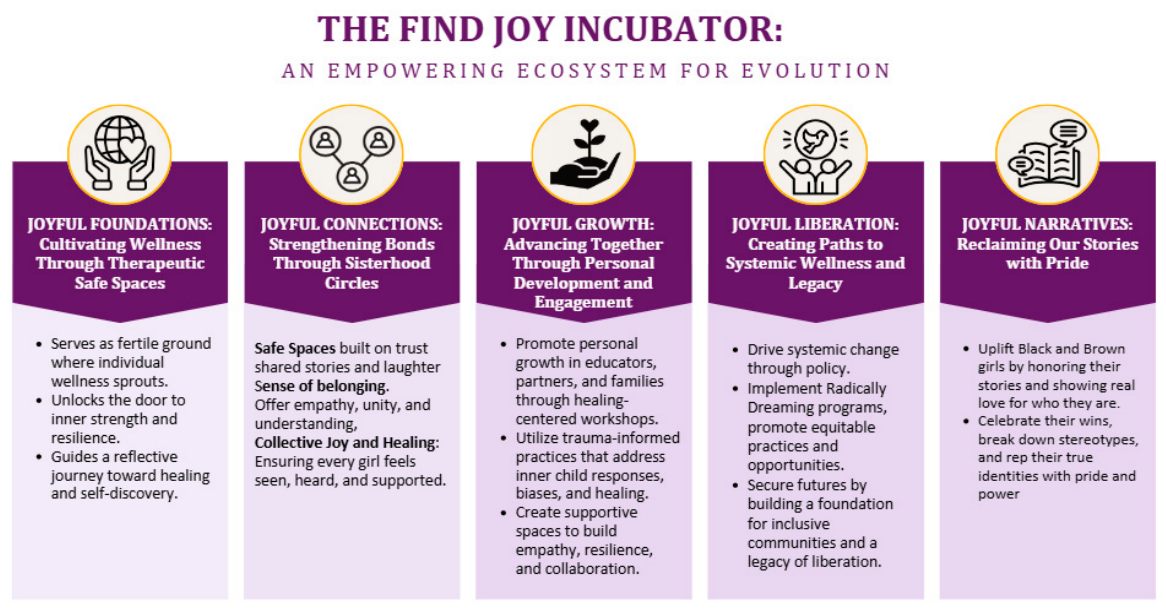
Joseph-McCatty et al., 2023, p. 2). Co-Author and F.L.Y Girl Institute CEO Kara James advanced a vision for this definition that evolved into the FIND Joy Incubator: An Empowering Ecosystem for Evolution (
Figure 1). As described below, this framework centers on five interconnected pillars, each drawing on theoretical perspectives that affirm Black girls’ strengths and developmental needs while equipping the adults who serve them with healing and strengths-based tools.
Joyful Foundations: Therapeutic Safe Spaces: Guided by Critical Trauma Theory, which recognizes how historical, systemic, and interpersonal traumas intersect to shape marginalized youth’s experiences, this pillar centers therapy as a tool for healing and empowerment. To sustain this mission, The F.L.Y Girl Institute integrates therapeutic services into its fundraising initiatives, ensuring that the creation of healing spaces remains central to its work. The clinicians are intentionally selected to offer school-based services that uplift Black girls’ emotional wellness, self-reflection, and resilience.
Joyful Connections: Sisterhood Healing Circles: Rooted in the Afrocentric, gender-responsive framework of the Sisters of Nia curriculum (
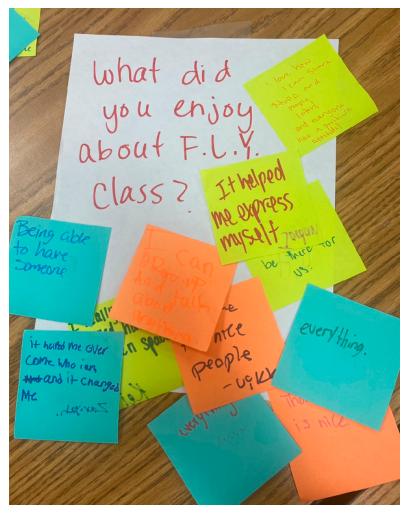
Belgrave et al., 2000), the Joyful Connections pillar centers sisterhood healing circles as a core strategy to promote identity development, cultural pride, and social-emotional healing. These circles are facilitated as part of the F.L.Y. Girl Program—Forever Loving Yourself Girl—a school-based initiative designed for girls identified as at risk for school discipline outcomes. Through these weekly gatherings, girls engage in guided conversations that foster emotional expression, peer support, and authentic relationships. The healing circles serve as spaces for storytelling, collective vulnerability, and trust-building—where girls can share their lived experiences, celebrate each other’s growth, and cultivate a strong sense of belonging. By affirming the value of each girl’s voice and honoring their cultural strengths, these sisterhood circles become powerful tools for relational healing (
Figure 2), resilience, and joyful resistance within systems that often pathologize their behavior or silence their experiences.
Joyful Growth: Personal Development for Systems Change: Centered on community prosperity, this component adopts a healing-centered approach to personal development, nurturing the growth and awareness of educators, community partners, and families. Thus far, training for educators has included concepts such as self-understanding/reflexivity, student connection strategies, safe space creation, societal awareness, and wellness strategies such as sound baths and cathartic testimonials. This educator training initiative corresponds with the call from Dr. Bettina Love that “to deal with trauma, we must recognize the trauma of our teachers” (
Love, 2019, Chapter 4). Thus, by addressing personal struggles, biases, and embracing healing opportunities for educators, this initiative endeavors to support the creation of safe spaces and comprehensive support for black and brown girls. The initiative aims to cultivate internal growth, and fostering a community culture that can increase empathy, resilience, and collaboration.
Joyful Liberation: Dismantling Barriers, Advancing Legacy: Rooted in Black Feminist Theory, this component engages girls and communities in systemic change work. Girls are taught lessons on self-advocacy skills, forgiveness, addressing conflict, setting boundaries, and creating artistic expressive pieces through recorded music, poetry, and cosmetic entrepreneurship endeavors (i.e., creating lotions and hair products). As girls learn about liberation and articulate the concept for themselves, the ultimate aim is to dismantle institutional and cultural barriers to joy and well-being while amplifying Black girls’ agency to create and lead.
Joyful Narratives: Reclaiming Identity Through Storytelling: This final pillar draws on the Critical Race Theory tenet of counter-storytelling. This is the intentional practice of elevating the lived experiences and strengths of marginalized groups to challenge negative dominant narratives that seek to pathologize them (
Solórzano & Yosso, 2002). Supporting girls to engage in this practice supports their authentic voices, encouraging them to challenge stereotypes and systemic harm, to reclaim their identities, and ultimately affirm their sense of self. Together, these components are intended to teach girls resistance and liberatory practices to navigate society and thrive in their lives. Thus, the FIND Joy Incubator is a toolbox to strengthen the psychological safety, self-concept, socio-emotional wellbeing of Black girls.
4.4. Practice Implications
To disrupt the abuse-to-prison pipeline and reduce the disproportionate discipline of Black girls, schools must adopt a holistic approach to safety that prioritizes physical, emotional, and psychological well-being. These findings carry important implications for social work practice. Trained in ecological systems theory, strengths-based practice, and micro-to-macro intervention, school social workers are well positioned to collaborate with educators, girls, families, and administrators to better understand the needs of Black girls and support the implementation of initiatives such as the FIND Joy Incubator. School social workers can also serve as school leaders by helping staff move from punitive responses to culturally affirming, strengths-based, and trauma-informed practices with Black girls. At the schoolwide level, this includes training educators, administrators, school security guards, and school resource officers to recognize bias, respond with de-escalation, and maintain clearer boundaries with youth so that routine interactions do not escalate into disproportionate discipline or carceral contact. School social workers can further help schools incorporate Afrocentric principles into programming (
Belgrave et al., 2000) and apply racial socialization practices that affirm Black girls’ racial and gendered identities and support their development and well-being (
Anderson et al., 2019). Schools should also create environments that reflect Black girls’ identities, experiences, and aspirations. This may include displaying images of Black women across professions and introducing girls to Black women whose interests and career paths mirror their own. School social workers can work with families to understand how they want their daughters to experience accountability and support, rather than defaulting to traditional punishment that may contribute to exclusion and criminalization. In doing so, social workers can help schools and families develop shared responses to harm that preserve dignity while still addressing behavior. Given the profession’s ethical commitment to social justice, more research is needed to identify, assess, and strengthen culturally responsive and equity-oriented social work practices with Black youth, and especially with Black girls. At the same time, carrying out these implications remains challenging in Tennessee schools, where DEI-related practices face heightened political and policy scrutiny and shortages of school social workers limit the capacity to provide preventive, relational, and trauma-informed support; thus, school leaders and school social workers must also advocate with legislators for greater investment in school social work by demonstrating the daily impact of these roles and the need to fund more positions across schools.
5. Discussion
The findings from this study highlight the importance of contextualizing school discipline outcomes for Black girls alongside adversity and resilience. Grounded in intersectionality, Critical Trauma Theory (CTT), and QuantCrit, our analyses suggest that patterns of school discipline outcomes and adversity cannot be understood apart from the broader social, economic, raced, gendered, and institutional conditions that shape girls’ lives. For example, among the ACE indicators examined, Black girls were substantially more likely to have experienced parental divorce, with nearly half of Black girls represented in this category compared with just over one quarter of other girls. Consistent with the tenets of Critical Trauma Theory, this finding should not be interpreted through a deficit-oriented frame that individualizes or pathologizes Black families. Rather, we describe it as one possible manifestation of broader structural strain shaped by material hardship, incarceration, and other conditions produced and maintained by systemic inequity. Although the remaining ACE indicators did not meet conventional thresholds for statistical significance, several showed descriptively higher prevalence among Black girls. Black girls had higher weighted estimates of unmet basic needs, household incarceration, domestic violence exposure, and household substance use exposure. In particular, the magnitude of difference for household substance use and domestic violence was notable, even though the estimates were imprecise. Given small subsample sizes for Black girls, findings did not permit strong inferential claims, but they do mirror the national literature and suggest that adversity may cluster in ways that are consistent with broader patterns of racialized and gendered vulnerability (
Joseph-McCatty et al., 2024).
Disparities were far more pronounced in school discipline outcomes than in the Tennessee ACE estimates. Black girls faced substantially elevated risks across nearly every form of exclusionary discipline examined, including grade retention, in-school suspension, out-of-school suspension, expulsion, referral to law enforcement, and school-based arrest. Particularly striking was the concentration of disparity in the most severe and repeated forms of exclusion. Specifically, Black girls faced more than fifteen times the risk of multiple out-of-school suspensions, more than eight times the risk of expulsion without educational services, and more than two times the risk for school-based arrests. When considered alongside limited access to school social workers and psychologists, a school counselor-to-student ratio of 429:1 (
Burris, 2025), and greater exposure to officers and security guards, these findings suggest that Black girls are more likely to be punished than supported. Together, the results indicate that Black girls are not simply disciplined at higher rates; they are disproportionately pushed-out through the most severe forms of educational exclusion while also encountering limited access to supportive school-based resources. Read together, our findings raise concern that Black girls may be experiencing adversity in contexts where schools respond not with trauma-responsive or relational support, but with punishment, surveillance, and removal. This is consistent with literature documenting that Black girls experience school-to-confinement pathways or an adversity-to-prison pipeline, in which structural inequity, socio-historical inequity, and institutional control converge to heighten Black girls’ vulnerability within schools and lead to educational exclusion (
M. Morris, 2016).
Despite exposure to multiple structural stressors, Black girls in the NSCH Tennessee sample were described by parents as highly engaged, curious, persistent, and strongly invested in school. Nearly all were reported to care about doing well academically, and the majority were described as showing interest and curiosity in finishing the tasks they started. These findings offer an important counter-narrative to research traditions that overemphasize harm while overlooking strengths. Thus, we frame our work in Critical Trauma Theory which duly contextualizes the role of systemic harm in disproportional adversity while also naming the importance of understanding the assets among populations exposed to adversity (
Joseph-McCatty et al., 2026;
Nelson & Kew, 2023).
While we do not demonstrate causality, descriptively, we note that Black girls appeared to bring curiosity, persistence, and educational commitment into school spaces at rates similar to their female peers. However, Black girls experience disproportional discipline and school-to-confinement exposure suggesting that resilience alone is insufficient protection in systems that remain trauma-evasive, racially inequitable, and insufficiently responsive to lived experiences of Black girls. Thus, resilience and grit should not be romanticized as evidence that Black girls can simply overcome harmful conditions. Rather, these findings underscore the need for schools and child-serving systems to recognize Black girls’ strengths while also transforming the conditions that make such resilience necessary.
Taken together, this study reinforces the importance of resisting interpretations that locate adversity primarily within Black girls and families and instead calls for the reimagining of schools homeplace—a site of restoration, affirmation, and collective healing (
Hooks, 1990;
Mayes et al., 2022). Reimagining schools as homeplaces means centering Black girls’ wellness in policy, practice, and institutional design. It means shifting from carceral logics toward environments where identity, belonging, and agency are cultivated rather than policed. Frameworks such as the FIND Joy Incubator embody this vision by centering culturally grounded, trauma-informed, and gender-responsive practices that cultivate joy, self-worth, and collective well-being. As
Love (
2019, Chapter 5) asserts, “Black joy is knowing that you are more than your trauma while understanding that healing is a process”. Thus, for schools to become sites of restoration and joy rather than regulation, they must move beyond behavior management and toward the cultivation of belonging, care, and a healing-centered community.




 ,
,