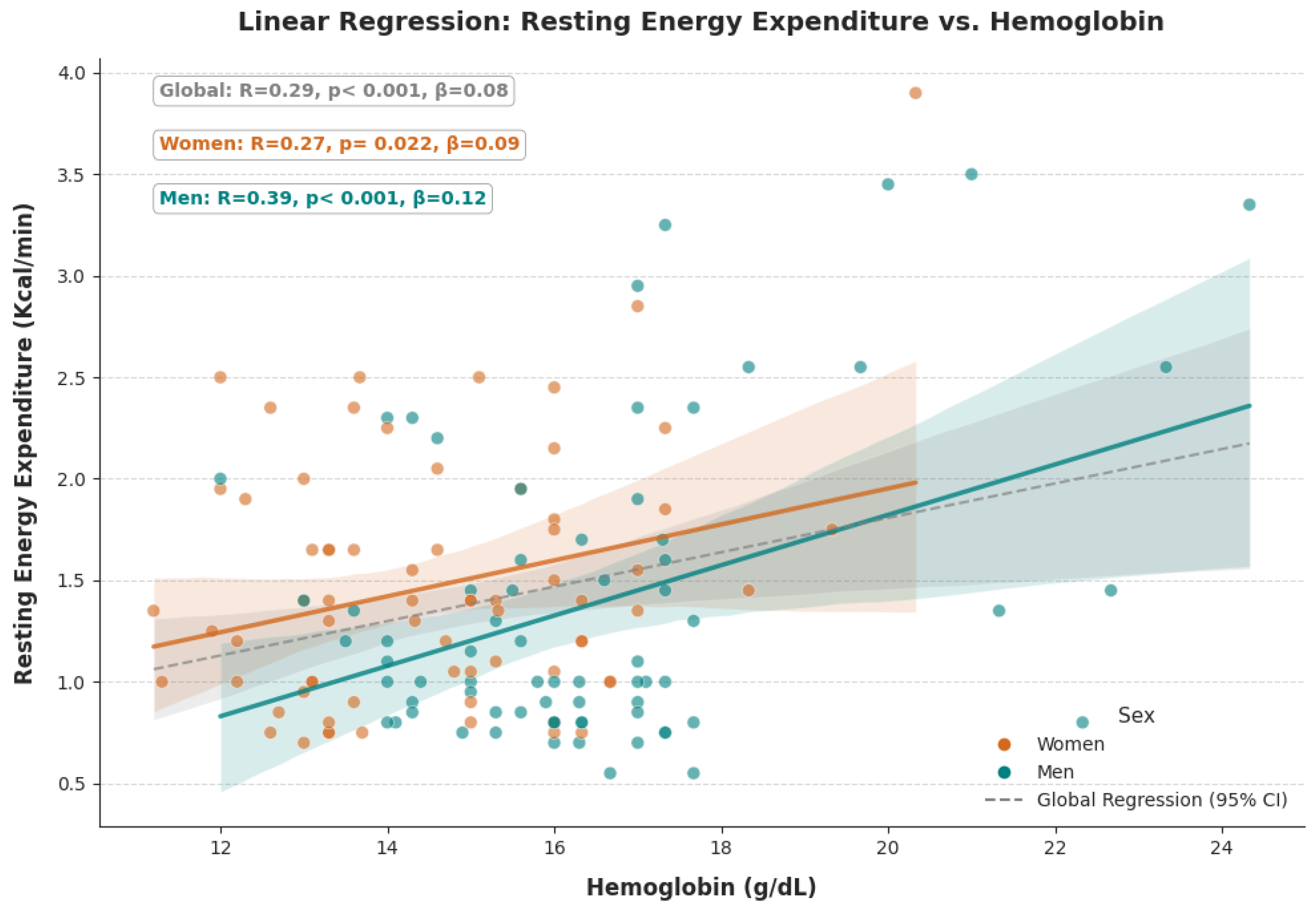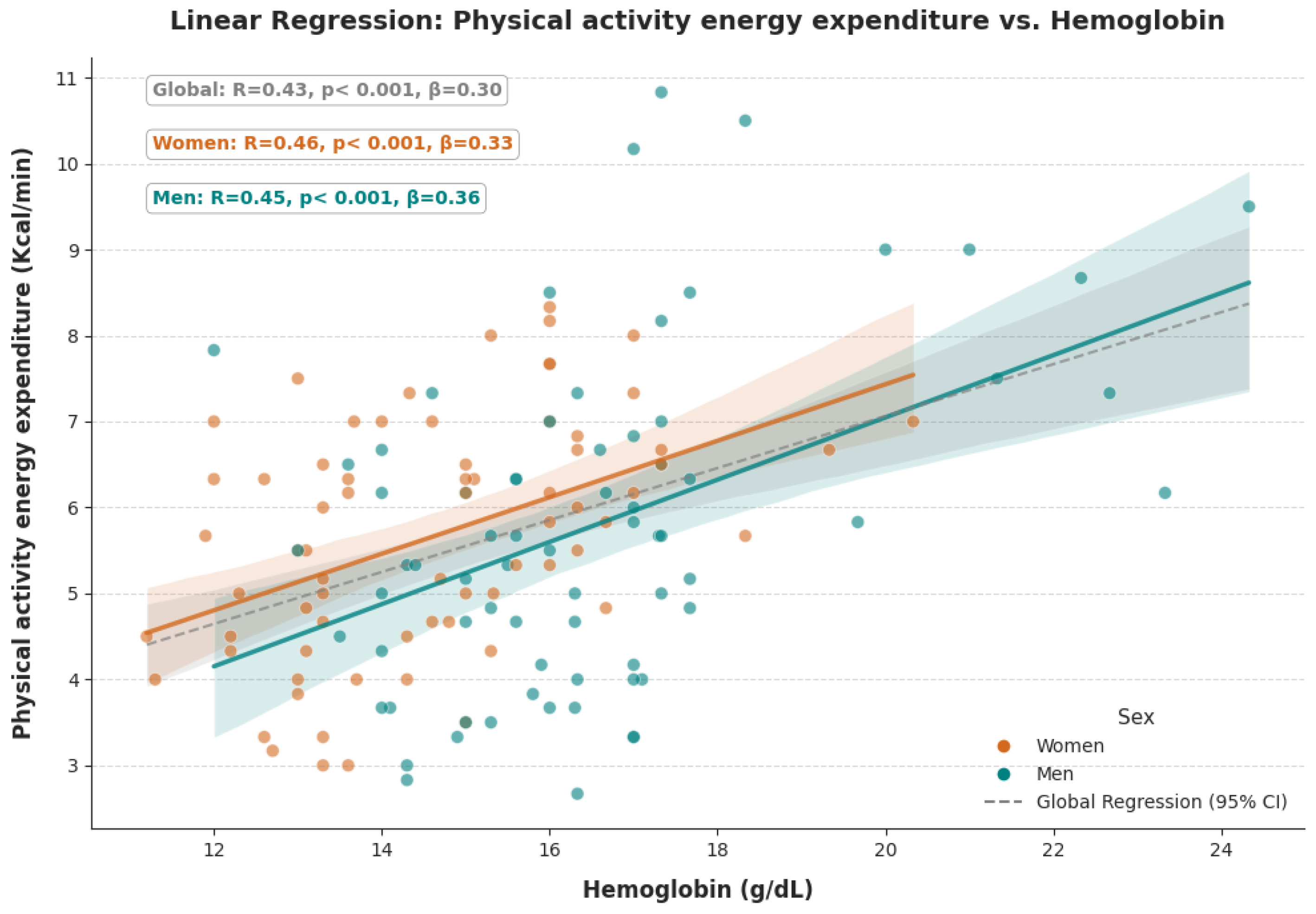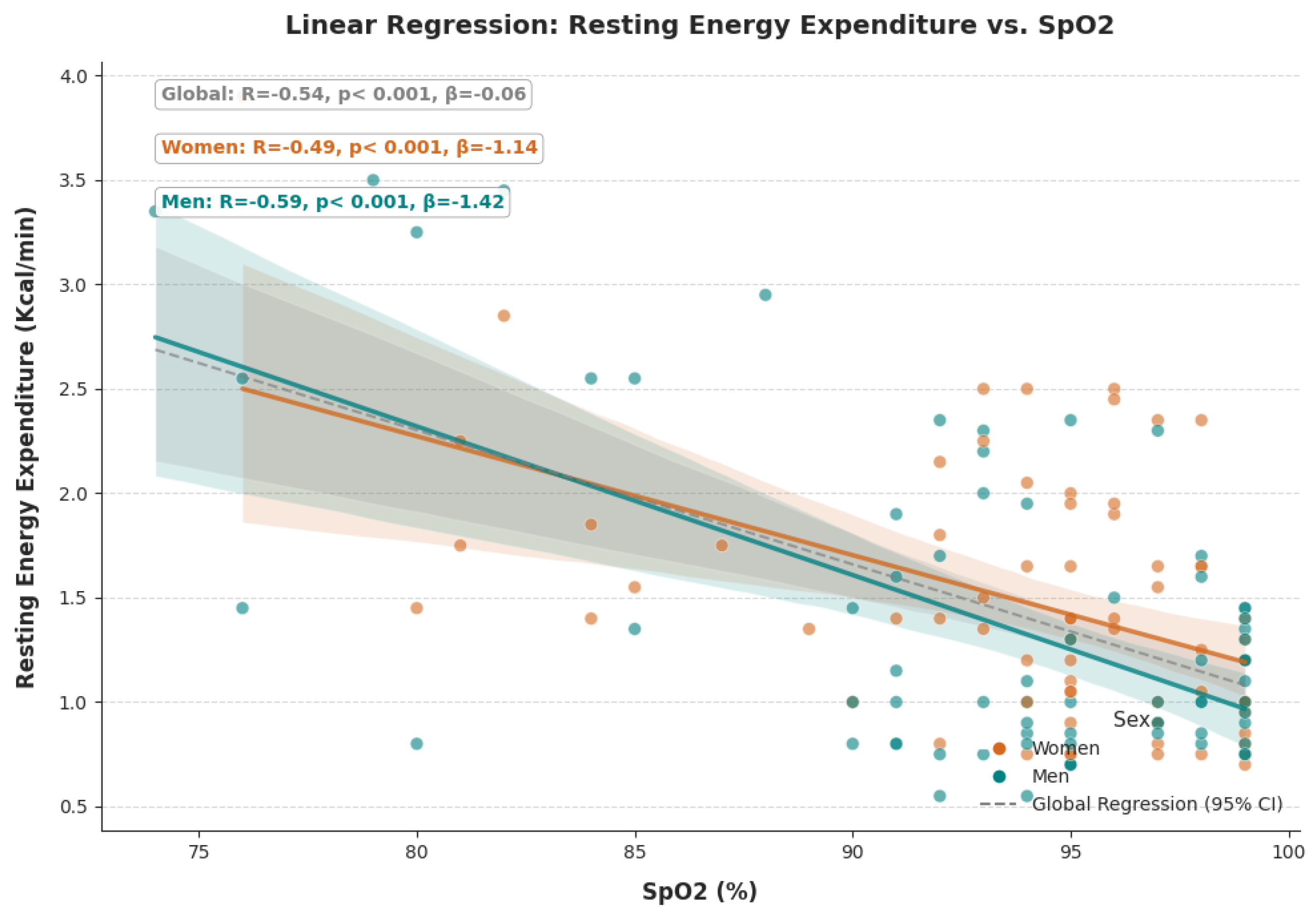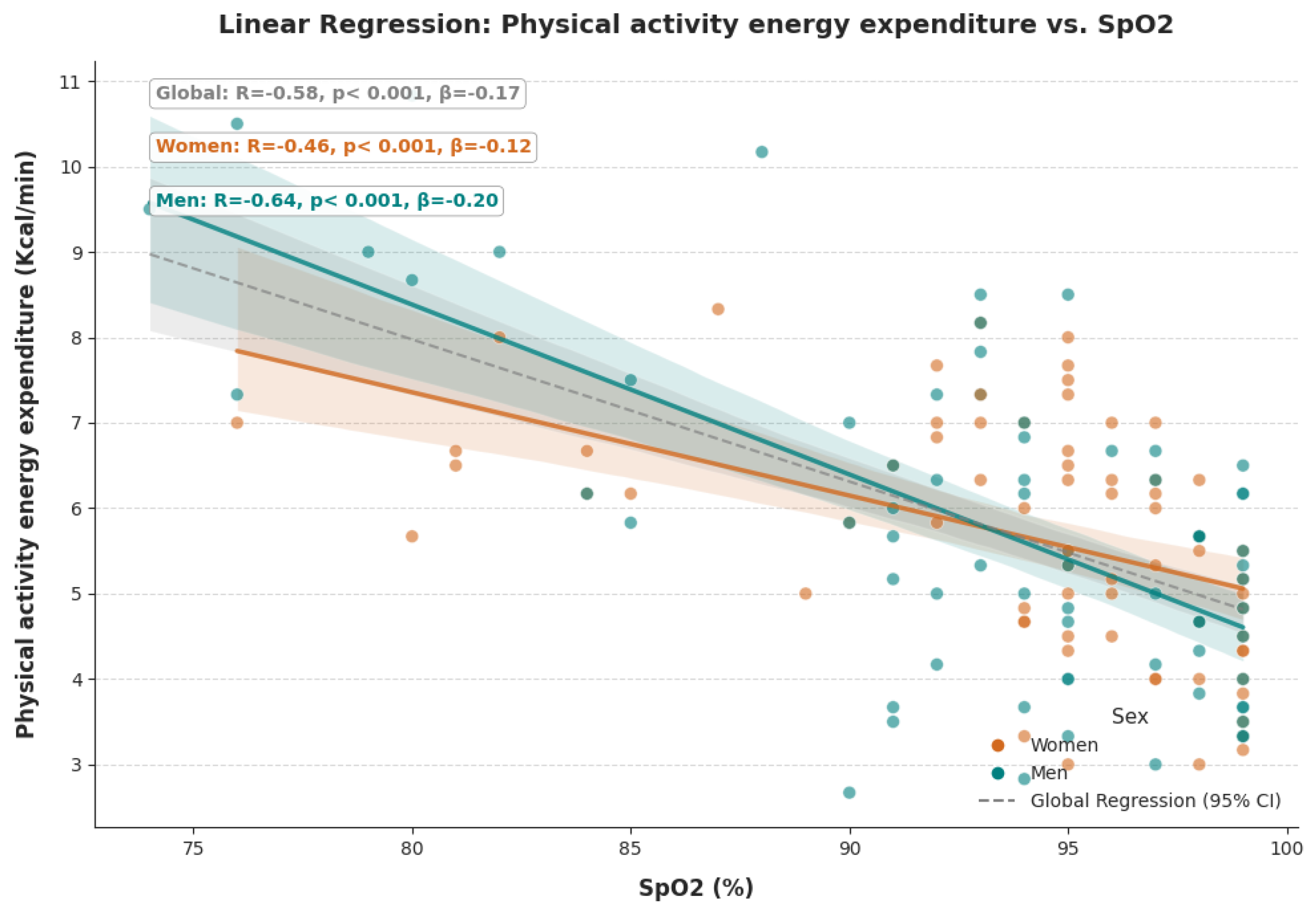

Resting and Physical Activity Energy Expenditure Across an Altitudinal Gradient: An Adjusted Analysis

 , , , , , ,
  ,
,  ,
,  and
and
Abstract
1. Introduction
2. Materials and Methods
- -
- Ethical aspects: Participants voluntarily agreed to take part in the study after each procedure and the potential usefulness of the results had been thoroughly explained, and they subsequently signed an informed consent authorizing the corresponding measurements.This study followed the guidelines of the Declaration of Helsinki on research involving human subjects and was approved by the USMP Ethics Committee with the International Registry Federalwide Assurance (FWA) for the Protection of Human Subjects for International No. 00015320. U.S. Department of Health and Human Services (HHS) Registration of an Institutional Review Board (IRB) IRB No. 00003251.
- -
- Study Population: The study population consisted of 141 healthy subjects: 70 women and 71 men. 40 subjects (20 women and 20 men) were residing in Lima, 40 (20 women and 20 men) in Arequipa, 42 (21 women and 21 men) in Puno, and 19 (9 women and 10 men) in La Rinconada. The age range of participants was between 18 and 38 years old. They were selected according to predefined inclusion criteria: individuals in apparent good health who had resided in their respective localities for at least one year, thereby ensuring chronic exposure to local environmental and hypoxic conditions. To estimate the level of habitual physical activity (sedentary, light, moderate, or intense), the Spanish short version of the International Physical Activity Questionnaire (IPAQ-SF) was administered, selecting for the study those classified as having moderate physical activity [18,19,20]. Thus, all participants were able to complete the six-minute walk test (6MWT), undergo basal metabolic and vital sign measurements, and supply the required demographic information. Exclusion criteria included refusal to participate; any limitation preventing engagement in light-to-moderate physical activity; the onset of discomfort leading to withdrawal during assessments; or inability to complete the full set of required measurements.Procedure: The assessments were conducted in a controlled environment between 8:00 and 10:00 a.m. [21]. Similar environmental conditions were maintained in all the study cities, and participants wore light clothing. Specifically, the ambient temperature was kept between 10 and 20 °C, and the terrain was completely flat.Before the assessment, subjects were required to: refrain from vigorous exercise for 24 h and moderate exercise for at least 2 h prior to the evaluation; observe a 5- to 6-h fast to minimize the thermic effect of food; and completely abstain from stimulants (caffeine, nicotine) and alcohol for 12 to 24 h [22,23]. Finally, a 10-min period of absolute rest was mandated in a quiet environment before measurement to ensure stability in oxygen consumption (VO2) and reduce emotional stress [24].Body weight was recorded using a Tanita BC 545N segmental body analysis scale (Tanita, Tokyo, Japan), which employs the bioelectrical impedance method [25]. Height was measured with a DETECTO 2391 stadiometer (Cardinal/Detecto Scale, Webb City, MO, USA) [26].To determine Hb and hematocrit (Hct) levels, blood samples were obtained from the middle fingertip. A capillary puncture was performed using a sterile lancet, the first two drops were discarded, and the third drop was then collected to fill the microcuvette. Hb levels were assessed using a portable Hb 201+ hemoglobinometer (HemoCue AB, Ängelholm, Sweden) employing the azidimethemoglobin method within a measurement range of 0 to 25.60 g/dL. Hct measurements were performed using a Hemata Stat II microcentrifuge (EKF Diagnostics, Boerne, TX, USA).The Kalenji HR500 smartwatch (Decathlon, Villeneuve-d’Ascq, France), worn on the right wrist in contact with the skin, was employed to measure chronotropic response (CR) and EE. To determine REE, a continuous 5-min period of physiological stability, or steady state, was first identified after acclimatization. This steady state was confirmed if the heart rate’s (HR) coefficient of variation (CV) was ≤10%, calculated using the formula presented in Equation (1).where represents the standard deviation and the mean HR within that interval. The mean heart rate obtained during this steady-state period was subsequently used as the reference value for analysis.REE was assessed over a 20-min period after participants reached a physiological steady-state while resting, with no physical exertion. Caloric expenditure was calculated in Kcal/min. For the measure of physical exertion, the 6MWT was administered following the American Thoracic Society (ATS) protocol. Participants were instructed to cover the greatest possible distance on a 60-m, obstacle-free course [27]. Continuous HR monitoring at the wrist was performed using the watch’s PPG sensor, allowing for REE immediate estimation upon completion of this test.For kilocalorie consumption calculation, the device’s algorithm combines the chronotropic response with the subject’s anthropometric variables (age, sex, weight, and height) to estimate basal metabolic rate and EE from physical activity [28].Vital signs were measured before and after REE and PAEE measurements. Systolic and diastolic blood pressure (SBP and DBP) and HR were measured using a Riester Ri-Champion adult digital upper arm sphygmomanometer (Rudolf Riester GmbH, Jungingen, Germany), with a measurement range of 30 to 280 mm Hg and an HR range of 40 to 200 beats per minute. SpO2 was measured using a Nellcor® Oximax® N-65 portable pulse oximeter (DigiCare Biomedical, Boynton Beach, FL, USA) with a saturation resolution of 1% and an HR range of 30 to 235 beats per minute.EE = gender × (−55.0969 + 0.6309 × heart rate + 0.1988 × weight + 0.2017 × age) + (1 − gender) × (−20.4022 + 0.4472 × heart rate − 0.1263 × weight + 0.074 × age)
- -
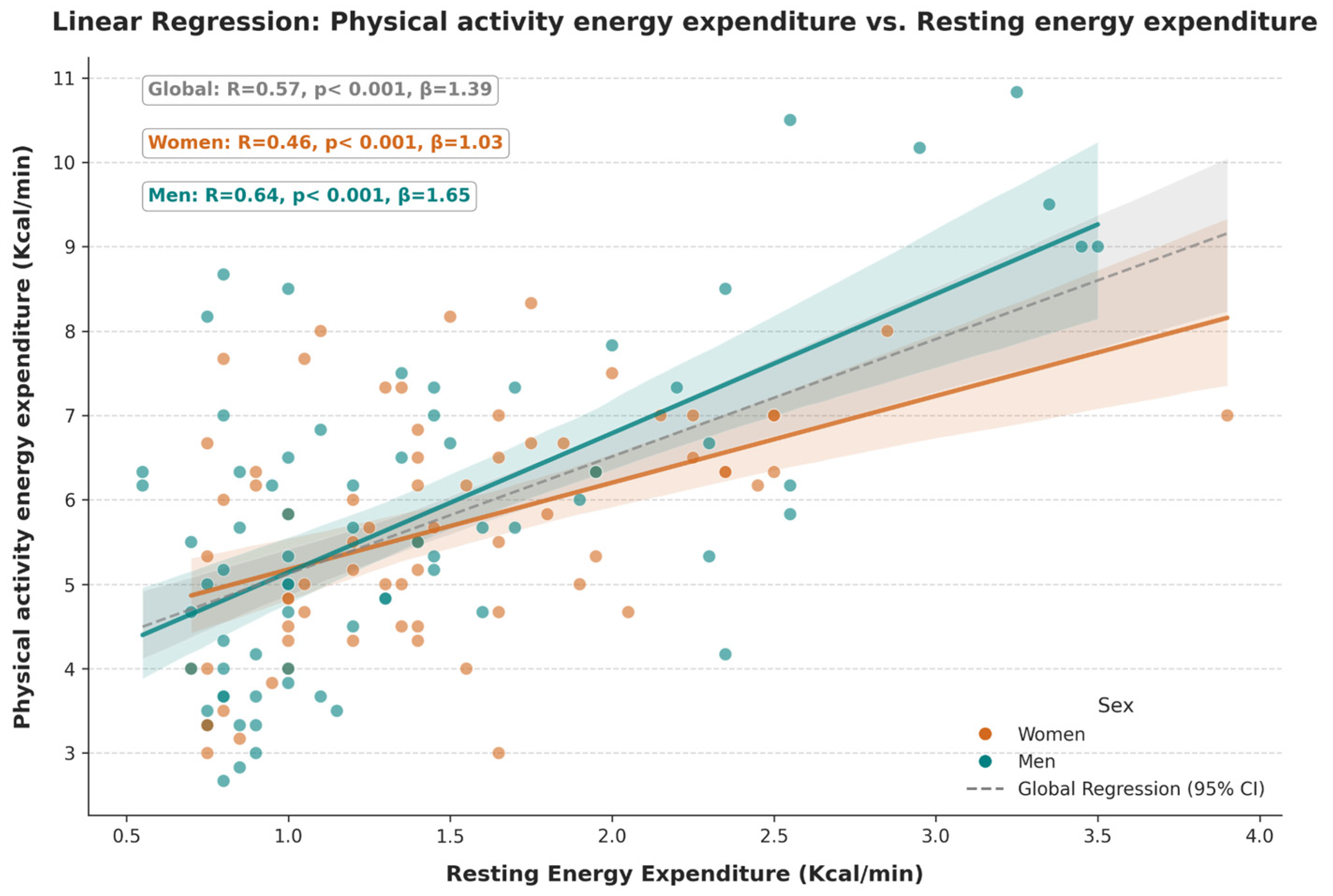
- Statistical Analysis: Data normality was verified using the Kolmogorov–Smirnov test. Descriptive statistics were expressed using measures of central tendency and dispersion. Bivariate comparisons across altitude groups were performed using Student’s t-test, one-way ANOVA, and Kruskal–Wallis tests, with Tukey’s Honestly Significant Difference (HSD) applied for post-hoc analyses. Associations between physiological variables were assessed using Pearson correlation coefficients and simple linear regression models. To account for potential confounders and isolate the independent effect of altitude on EE, an analysis of covariance (ANCOVA) was employed, adjusting for age, sex, and body mass index (BMI) as covariates. All statistical analyses were performed using Python version 3.0 and the threshold for statistical significance was set at p < 0.05.
3. Results
4. Discussion
Limitations
5. Conclusions
Author Contributions
Funding
Institutional Review Board Statement
Informed Consent Statement
Data Availability Statement
Acknowledgments
Conflicts of Interest
References
- Aj, M. Energy Metabolism and the High-Altitude Environment. Exp. Physiol. 2016, 101, 23–27. [Google Scholar] [CrossRef] [Scilit]
- Pa, M. Impact of Energy Intake and Exercise on Resting Metabolic Rate. Sports Med. 1990, 10, 72–87. [Google Scholar] [CrossRef] [Scilit] [PubMed]
- Pontzer, H. Energy Expenditure in Humans and Other Primates: A New Synthesis. Annu. Rev. Anthropol. 2015, 44, 169–187. [Google Scholar] [CrossRef] [Scilit]
- Katsoulakos, N.M.; Kaliampakos, D.C. What Is the Impact of Altitude on Energy Demand? A Step towards Developing Specialized Energy Policy for Mountainous Areas. Energy Policy 2014, 71, 130–138. [Google Scholar] [CrossRef] [Scilit]
- Gao, S.; Yang, L.; Li, Y.; Liu, S.; Zhang, H.; Arens, E.; Zhai, Y. Metabolic Rate in Children and Adolescents: Tabulate Values for Common Activities and Comparisons with Standards and Adult Values. Build. Environ. 2023, 244, 110804. [Google Scholar] [CrossRef] [Scilit]
- Nemkov, T.; Sun, K.; Reisz, J.A.; Yoshida, T.; Dunham, A.; Wen, E.Y.; Wen, A.Q.; Roach, R.C.; Hansen, K.C.; Xia, Y.; et al. Metabolism of Citrate and Other Carboxylic Acids in Erythrocytes As a Function of Oxygen Saturation and Refrigerated Storage. Front. Med. 2017, 4, 175. [Google Scholar] [CrossRef] [Scilit] [PubMed]
- Sánchez, C.A.R.; Pardo-Rodriguez, D.; Mancera-Soto, E.; León, L.; Paulucio, D.; D’Alessandro, A.; Santos, C.G.M.; Cristancho, E.; Monnerat, G.; Ramos-Caballero, D.M.; et al. Metabolic Insights into Hypoxia Adaptation in Adolescent Athletes at Different Altitudes: A Cross-Sectional Study. Front. Mol. Biosci. 2025, 12, 1571103. [Google Scholar] [CrossRef] [Scilit] [PubMed]
- Sander, M. Does the Sympathetic Nervous System Adapt to Chronic Altitude Exposure? Adv. Exp. Med. Biol. 2016, 903, 375–393. [Google Scholar] [CrossRef] [Scilit] [PubMed]
- Swenson, E.R. Sympathetic Nervous System Activation and Vascular Endothelial Function with Chronic Hypoxia. Circ. Res. 2020, 127, 247–248. [Google Scholar] [CrossRef] [Scilit] [PubMed]
- Dünnwald, T.; Gatterer, H.; Faulhaber, M.; Arvandi, M.; Schobersberger, W. Body Composition and Body Weight Changes at Different Altitude Levels: A Systematic Review and Meta-Analysis. Front. Physiol. 2019, 10, 430. [Google Scholar] [CrossRef] [Scilit] [PubMed]
- Allen, P.E.; Akinwumi, A.D.; Kroeze, E.G.; Leigh, P.Y.; Ramirez, S.N.; Smart, G.L.; Thomas, T.M.; Paris, H.L. Going High to Keep Body Mass Low: How Post-Exercise Exposure to a Simulated High Altitude Influences Energy Balance—A Proof-of-Concept Pilot Study. Obesities 2024, 4, 169–182. [Google Scholar] [CrossRef] [Scilit]
- Viscor, G.; Corominas, J.; Carceller, A. Nutrition and Hydration for High-Altitude Alpinism: A Narrative Review. Int. J. Environ. Res. Public Health 2023, 20, 3186. [Google Scholar] [CrossRef] [Scilit] [PubMed]
- Yu, T.; Tan, C.; Zhou, C.; Hu, L.; Wang, X.; Ran, Q.; Xiao, Y.; Xiang, L.; Jiang, Y.; Li, X.; et al. Metabolic Alterations in Erythrocytes Associated with Long-Term Hypoxia at High Altitude. BMC Genom. 2025, 26, 940. [Google Scholar] [CrossRef] [Scilit] [PubMed]
- Beall, C.M. Two Routes to Functional Adaptation: Tibetan and Andean High-Altitude Natives. Proc. Natl. Acad. Sci. USA 2007, 104, 8655–8660. [Google Scholar] [CrossRef] [Scilit] [PubMed]
- West, J.; Schoene, R.; Luks, A.; Milledge, J. High Altitude Medicine and Physiology 5E, 5th ed.; CRC Press: London, UK, 2012. [Google Scholar]
- Champigneulle, B.; Brugniaux, J.V.; Stauffer, E.; Doutreleau, S.; Furian, M.; Perger, E.; Pina, A.; Baillieul, S.; Deschamps, B.; Hancco, I.; et al. Expedition 5300: Limits of Human Adaptations in the Highest City in the World. J. Physiol. 2024, 602, 5449–5462. [Google Scholar] [CrossRef] [Scilit] [PubMed]
- Caffrey, D.; Miranda, J.J.; Gilman, R.H.; Davila-Roman, V.G.; Cabrera, L.; Dowling, R.; Stewart, T.; Bernabe-Ortiz, A.; Wise, R.; Leon-Velarde, F.; et al. A Cross-Sectional Study of Differences in 6-Min Walk Distance in Healthy Adults Residing at High Altitude versus Sea Level. Extrem. Physiol. Med. 2014, 3, 3. [Google Scholar] [CrossRef] [Scilit] [PubMed]
- Cortés, O.L.; Moreno, K.; Alvarado, P.; Povea, C.; Lloyd, M.; Dennis, R. Inactivity and Its Associated Factors in Adults Scheduled for Noncardiac Surgery: The PAMP Phase I Study. Rehabil. Nurs. 2018, 43, 81–87. [Google Scholar] [CrossRef]
- Craig, C.L.; Marshall, A.L.; Sjöström, M.; Bauman, A.E.; Booth, M.L.; Ainsworth, B.E.; Pratt, M.; Ekelund, U.; Yngve, A.; Sallis, J.F.; et al. International Physical Activity Questionnaire: 12-Country Reliability and Validity. Med. Sci. Sports Exerc. 2003, 35, 1381–1395. [Google Scholar] [CrossRef] [Scilit] [PubMed]
- Medina, C.; Barquera, S.; Janssen, I. Validity and Reliability of the International Physical Activity Questionnaire among Adults in Mexico. Rev. Panam. Salud Publica Pan Am. J. Public Health 2013, 34, 21–28. [Google Scholar]
- Lloyd, M.; Prakash, B.A.; Zhao, L.; Ni, G.; Ru, Y.; Vasudevan, S.R. Circadian Rhythms in Metabolism and Mental Health: A Reciprocal Regulatory Network with Implications for Metabolic and Neuropsychiatric Disorders. Curr. Opin. Physiol. 2025, 45, 100836. [Google Scholar] [CrossRef] [Scilit] [PubMed]
- Compher, C.; Frankenfield, D.; Keim, N.; Roth-Yousey, L. Evidence Analysis Working Group Best Practice Methods to Apply to Measurement of Resting Metabolic Rate in Adults: A Systematic Review. J. Am. Diet. Assoc. 2006, 106, 881–903. [Google Scholar] [CrossRef] [Scilit] [PubMed]
- Miles-Chan, J.L.; Dulloo, A.G.; Schutz, Y. Fasting Substrate Oxidation at Rest Assessed by Indirect Calorimetry: Is Prior Dietary Macronutrient Level and Composition a Confounder? Int. J. Obes. 2015, 39, 1114–1117. [Google Scholar] [CrossRef] [Scilit] [PubMed]
- Redondo, R.B. Gasto energético en reposo. Métodos de evaluación y aplicaciones. Rev. Esp. Nutr. Comunitaria 2015, 21, 243–251. [Google Scholar] [CrossRef] [Scilit]
- BC-545N. Available online: https://tanita.es/bc-545n (accessed on 24 March 2026).
- Auromed. Balanza Digital Adulto. Available online: https://auromed.pe/producto/balanza-mecanica-adulto-2391-detecto/ (accessed on 24 March 2026).
- ATS Committee on Proficiency Standards for Clinical Pulmonary Function Laboratories. ATS Statement: Guidelines for the Six-Minute Walk Test. Am. J. Respir. Crit. Care Med. 2002, 166, 111–117. [Google Scholar] [CrossRef] [Scilit] [PubMed]
- Keytel, L.; Goedecke, J.; Noakes, T.; Hiiloskorpi, H.; Laukkanen, R.; van der Merwe, L.; Lambert, E. Prediction of Energy Expenditure from Heart Rate Monitoring during Submaximal Exercise. J. Sports Sci. 2005, 23, 289–297. [Google Scholar] [CrossRef] [Scilit] [PubMed]
- Bosy-Westphal, A.; Eichhorn, C.; Kutzner, D.; Illner, K.; Heller, M.; Müller, M.J. The Age-Related Decline in Resting Energy Expenditure in Humans Is Due to the Loss of Fat-Free Mass and to Alterations in Its Metabolically Active Components. J. Nutr. 2003, 133, 2356–2362. [Google Scholar] [CrossRef] [Scilit] [PubMed]
- De Sio, S.; Nieto, H.; Gogia, C.; Sanità, D.; Balladore, F.; Mandolesi, D. Working over 5,000 m: Medical Check-Up. Ann. Ig. Med. Prev. E Comunita 2016, 28, 233–242. [Google Scholar] [CrossRef] [Scilit] [PubMed]
- Merz, T.M.; Pichler Hefti, J. Humans at Extreme Altitudes. BJA Educ. 2021, 21, 455–461. [Google Scholar] [CrossRef] [Scilit] [PubMed]
- Savioli, G.; Ceresa, I.F.; Gori, G.; Fumoso, F.; Gri, N.; Floris, V.; Varesi, A.; Martuscelli, E.; Marchisio, S.; Longhitano, Y.; et al. Pathophysiology and Therapy of High-Altitude Sickness: Practical Approach in Emergency and Critical Care. J. Clin. Med. 2022, 11, 3937. [Google Scholar] [CrossRef] [Scilit] [PubMed]
- Mairbäurl, H.; Kilian, S.; Seide, S.; Muckenthaler, M.U.; Gassmann, M.; Benedict, R.K. The Increase in Hemoglobin Concentration with Altitude Differs Between World Regions and Is Less in Children Than in Adults. HemaSphere 2023, 7, e854. [Google Scholar] [CrossRef] [Scilit] [PubMed]
- Mathew, T.M.; Sharma, S. High-Altitude Oxygenation. In StatPearls; StatPearls Publishing: Treasure Island, FL, USA, 2026. [Google Scholar]
- Hancco, I.; Bailly, S.; Baillieul, S.; Doutreleau, S.; Germain, M.; Pépin, J.-L.; Verges, S. Excessive Erythrocytosis and Chronic Mountain Sickness in Dwellers of the Highest City in the World. Front. Physiol. 2020, 11, 773. [Google Scholar] [CrossRef] [Scilit] [PubMed]
- Podgorski, T. Hemodynamics and Hemorheology. In Biological Flow in Large Vessels; Deplano, V., Fullana, J.-M., Verdier, C., Eds.; ISTE: Arlington, VA, USA, 2022; pp. 1–41. [Google Scholar]
- Li, Z.; Xiao, J.; Li, C.; Li, X.; Ren, D. Correlation between Hematological Indicators in Acclimatized High-Altitude Individuals and Acute Mountain Sickness. PeerJ 2024, 12, e18738. [Google Scholar] [CrossRef] [Scilit] [PubMed]
- Yu, B.H.; Mills, P.J.; Ziegler, M.G.; Dimsdale, J.E. Sympathetic and Respiratory Responses to Hypoxia in Essential Hypertension. Clin. Exp. Hypertens. 1999, 21, 249–262. [Google Scholar] [CrossRef] [Scilit] [PubMed]
- Yang, B.; Cao, M.; Zhang, C.; Wang, X. The Effects and Post-Exercise Energy Metabolism Characteristics of Different High-Intensity Interval Training in Obese Adults. Sci. Rep. 2025, 15, 13770. [Google Scholar] [CrossRef] [Scilit] [PubMed]
- Levine, B.D.; Stray-Gundersen, J. “Living High-Training Low”: Effect of Moderate-Altitude Acclimatization with Low-Altitude Training on Performance. J. Appl. Physiol. 1997, 83, 102–112. [Google Scholar] [CrossRef] [Scilit] [PubMed]
- Raberin, A.; Burtscher, J.; Citherlet, T.; Manferdelli, G.; Krumm, B.; Bourdillon, N.; Antero, J.; Rasica, L.; Malatesta, D.; Brocherie, F.; et al. Women at Altitude: Sex-Related Physiological Responses to Exercise in Hypoxia. Sports Med. 2024, 54, 271–287. [Google Scholar] [CrossRef] [Scilit] [PubMed]
- Hoher, J.A.; Zimermann Teixeira, P.J.; Hertz, F.; da S Moreira, J. A Comparison between Ventilation Modes: How Does Activity Level Affect Energy Expenditure Estimates? JPEN J. Parenter. Enter. Nutr. 2008, 32, 176–183. [Google Scholar] [CrossRef] [Scilit] [PubMed]
- Murray, A.J.; Montgomery, H.E.; Feelisch, M.; Grocott, M.P.W.; Martin, D.S. Metabolic Adjustment to High-Altitude Hypoxia: From Genetic Signals to Physiological Implications. Biochem. Soc. Trans. 2018, 46, 599–607. [Google Scholar] [CrossRef] [Scilit] [PubMed]
- Koufakis, T.; Karras, S.N.; Mustafa, O.G.; Zebekakis, P.; Kotsa, K. The Effects of High Altitude on Glucose Homeostasis, Metabolic Control, and Other Diabetes-Related Parameters: From Animal Studies to Real Life. High Alt. Med. Biol. 2019, 20, 1–11. [Google Scholar] [CrossRef] [Scilit] [PubMed]
- Zila-Velasque, J.P.; Grados-Espinoza, P.; Challapa-Mamani, M.R.; Sánchez-Alcántara, F.; Cedillo-Balcázar, J.; Cs, A.D.; Hernandez-Bustamante, E.A.; Tejada-Flores, J.; Piano Suárez, A.; Pacheco-Mendoza, J.; et al. Prevalence of Metabolic Syndrome and Its Components According to Altitude Levels: A Systematic Review and Meta-Analysis. Sci. Rep. 2024, 14, 27581. [Google Scholar] [CrossRef] [Scilit] [PubMed]
- Cheng, J.; Luo, Y.; Yang, L.; Li, Y.; Zhang, F.; Zhang, X.; Zhou, X.; Ji, L. The Association between Living Altitude and Serum Leptin Concentrations in Native Women. Front. Endocrinol. 2023, 14, 1107932. [Google Scholar] [CrossRef] [Scilit] [PubMed]
- Miron, N.; Tirosh, O. Cholesterol Prevents Hypoxia-Induced Hypoglycemia by Regulation of a Metabolic Ketogenic Shift. Oxid. Med. Cell. Longev. 2019, 2019, 5829357. [Google Scholar] [CrossRef] [Scilit] [PubMed]
- Vilca Coaquira, K.M.; Rojas Chambilla, R.A.; Tejada Flores, J.; Tintaya Ramos, H.O.; Quispe Trujillo, M.M.; Quispe Humpiri, S.A.; Calisaya Huacasi, Á.G.; Pino Vanegas, Y.M.; Peña Vicuña, G.F.; Salazar Granara, A.A.; et al. Lower Glycemia Levels in Subjects with Excessive Erythrocytosis during the Oral Glucose Tolerance Test Living in Conditions of Severe Hypoxia. Front. Physiol. 2024, 15, 1387132. [Google Scholar] [CrossRef] [Scilit] [PubMed]
- Wang, J.; Liu, S.; Sun, L.; Kong, Z.; Chai, J.; Wen, J.; Tian, X.; Chen, N.; Xu, C. Association of Attenuated Leptin Signaling Pathways with Impaired Cardiac Function under Prolonged High-Altitude Hypoxia. Sci. Rep. 2024, 14, 10206. [Google Scholar] [CrossRef] [Scilit] [PubMed]
- Bärtsch, P.; Gibbs, J.S.R. Effect of Altitude on the Heart and the Lungs. Circulation 2007, 116, 2191–2202. [Google Scholar] [CrossRef] [Scilit] [PubMed]
- Hill, N.E.; Stacey, M.J.; Woods, D. Energy at High Altitude. BMJ Mil. Health 2011, 157, 43–48. [Google Scholar] [CrossRef] [Scilit] [PubMed]
- Flood, D.; Lee, E.S.; Taylor, C.T. Intracellular Energy Production and Distribution in Hypoxia. J. Biol. Chem. 2023, 299, 105103. [Google Scholar] [CrossRef] [Scilit] [PubMed]
- Bernedo-Itusaca, M.E.; Vilca-Coaquira, K.M.; Calisaya-Huacasi, Á.G.; Cosi-Cupi, M.R.; Leqque-Santi, S.R.; Cutipa-Tinta, S.; Salazar-Granara, A.; Vanegas, Y.M.-P.; Flores-Paredes, A.; Guo, S.; et al. Physical Activity and Pain Perception in Residents Under Conditions of Chronic Hypoxia. Oxygen 2025, 5, 11. [Google Scholar] [CrossRef] [Scilit] [PubMed]
- Cabre, H.E.; Marlatt, K.L.; Fernández-Verdejo, R.; Beyl, R.; Redman, L.M.; Ainslie, P.N.; Alemán-Mateo, H.; Andersen, L.F.; Anderson, L.J.; Arab, L.; et al. Sex Differences in Measures of Energy Expenditure and Body Composition in Young, Middle-Aged, and Older Adults. Curr. Dev. Nutr. 2026, 10, 107614. [Google Scholar] [CrossRef] [Scilit] [PubMed]
- Wheatley, C.M.; Snyder, E.M.; Johnson, B.D.; Olson, T.P. Sex Differences in Cardiovascular Function during Submaximal Exercise in Humans. SpringerPlus 2014, 3, 445. [Google Scholar] [CrossRef] [Scilit] [PubMed]
- Grift, G.O.; Dunsford, J.R.; Dhaliwal, J.K.; Dominelli, P.B.; Molgat-Seon, Y. Sex Differences in the Work of Breathing during Exercise Are Independent of Forced Vital Capacity in Healthy Adults. Exp. Physiol. 2025, 110, 2036–2048. [Google Scholar] [CrossRef] [Scilit] [PubMed]
- Oliveira, A.L.M.B.; Rodrigues, G.D.; Silva, B.M.; Rohan, P.d.A.; Soares, P.P.d.S. Sex Differences in Cardiorespiratory Control under Hypoxia: The Roles of Oxygen Desaturation and Hypoxic Exposure Time. Front. Cardiovasc. Med. 2025, 12, 1473910. [Google Scholar] [CrossRef] [Scilit] [PubMed]
- Abe, T.; Fujita, S.; Nakajima, T.; Sakamaki, M.; Ozaki, H.; Ogasawara, R.; Sugaya, M.; Kudo, M.; Kurano, M.; Yasuda, T.; et al. Effects of Low-Intensity Cycle Training with Restricted Leg Blood Flow on Thigh Muscle Volume and VO2MAX in Young Men. J. Sports Sci. Med. 2010, 9, 452–458. [Google Scholar] [PubMed]
- Horiuchi, M.; Kirihara, Y.; Fukuoka, Y.; Pontzer, H. Sex Differences in Respiratory and Circulatory Cost during Hypoxic Walking: Potential Impact on Oxygen Saturation. Sci. Rep. 2019, 9, 9550. [Google Scholar] [CrossRef] [Scilit] [PubMed]
- Tarnopolsky, M.A. Sex Differences in Exercise Metabolism and the Role of 17-Beta Estradiol. Med. Sci. Sports Exerc. 2008, 40, 648–654. [Google Scholar] [CrossRef] [Scilit] [PubMed]
- Edmunds, J.S.; Ivie, C.L.; Ott, E.P.; Jacob, D.W.; Baker, S.E.; Harper, J.L.; Manrique-Acevedo, C.M.; Limberg, J.K. Sex differences in the effect of acute intermittent hypoxia on respiratory modulation of sympathetic activity. Am. J. Physiol.-Regul. Integr. Comp. Physiol. 2021, 321, R903. [Google Scholar] [CrossRef] [Scilit] [PubMed]
- Luzier, A.B.; Nawarskas, J.J.; Añonuevo, J.; Wilson, M.F.; Kazierad, D.J. The Effects of Gender on Adrenergic Receptor Responsiveness. J. Clin. Pharmacol. 1998, 38, 618–624. [Google Scholar] [CrossRef] [Scilit] [PubMed]
- Onslev, J.; Jacobson, G.; Narkowicz, C.; Backer, V.; Kalsen, A.; Kreiberg, M.; Jessen, S.; Bangsbo, J.; Hostrup, M. Beta2-Adrenergic Stimulation Increases Energy Expenditure at Rest, but Not during Submaximal Exercise in Active Overweight Men. Eur. J. Appl. Physiol. 2017, 117, 1907–1915. [Google Scholar] [CrossRef] [Scilit] [PubMed]
- Sloop, G.D.; Pop, G.; Weidman, J.J.; St. Cyr, J.A. Hormonal Control of Blood Viscosity. Cureus 2024, 16, e55237. [Google Scholar] [CrossRef] [Scilit] [PubMed]
- Haas, J.D.; Brownlie, T. Iron Deficiency and Reduced Work Capacity: A Critical Review of the Research to Determine a Causal Relationship. J. Nutr. 2001, 131, 676S–690S. [Google Scholar] [CrossRef] [Scilit] [PubMed]
- Johnstone, A.M.; Murison, S.D.; Duncan, J.S.; Rance, K.A.; Speakman, J.R. Factors Influencing Variation in Basal Metabolic Rate Include Fat-Free Mass, Fat Mass, Age, and Circulating Thyroxine but Not Sex, Circulating Leptin, or Triiodothyronine. Am. J. Clin. Nutr. 2005, 82, 941–948. [Google Scholar] [CrossRef] [Scilit] [PubMed]
- Santosa, S.; Khosla, S.; McCready, L.K.; Jensen, M.D. Effects of Estrogen and Testosterone on Resting Energy Expenditure in Older Men. Obesity 2010, 18, 2392–2394. [Google Scholar] [CrossRef] [Scilit] [PubMed]
- Korivi, M.; Ghanta, M.K.; Nuthalapati, P.; Natesh, N.S.; Tang, J.; Bhaskar, L. Influence of Exercise on Oxygen Consumption, Pulmonary Ventilation, and Blood Gas Analyses in Individuals with Chronic Diseases. Life 2025, 15, 1255. [Google Scholar] [CrossRef] [Scilit] [PubMed]
- Suppan, E.; Pichler, G.; Binder-Heschl, C.; Schwaberger, B.; Urlesberger, B. Three Physiological Components That Influence Regional Cerebral Tissue Oxygen Saturation. Front. Pediatr. 2022, 10, 913223. [Google Scholar] [CrossRef] [Scilit] [PubMed]
- Eldeeb, R.; Khalil, M.; Jallo, M.; Ellao, J.A.; Kamal, T.F. Association Between Hemoglobin Levels, Anemia, and Blood Pressure in Hypertensive Adults: A Retrospective Study. Biomed. Pharmacol. J. 2025, 18, 3234–3242. [Google Scholar] [CrossRef] [Scilit]
- Scott, C. Misconceptions about Aerobic and Anaerobic Energy Expenditure. J. Int. Soc. Sports Nutr. 2005, 2, 32–37. [Google Scholar] [CrossRef] [Scilit] [PubMed]
- Kang, G.-S.; Kim, Y.-E.; Oh, H.R.; Jo, H.-J.; Bok, S.; Jeon, Y.K.; Cheon, G.J.; Roh, T.-Y.; Chang, Y.-T.; Park, D.J.; et al. Hypoxia-Inducible Factor-1α-Deficient Adipose-Tissue Macrophages Produce the Heat to Mediate Lipolysis of White Adipose Tissue through Uncoupling Protein-1. Lab. Anim. Res. 2024, 40, 37. [Google Scholar] [CrossRef] [Scilit] [PubMed]
- Mazzeo, R.S. Physiological Responses to Exercise at Altitude: An Update. Sports Med. 2008, 38, 1–8. [Google Scholar] [CrossRef] [Scilit] [PubMed]
- León-Velarde, F.; Richalet, J.-P.; Chavez, J.-C.; Kacimi, R.; Rivera-Chira, M.; Palacios, J.-A.; Clark, D. Hypoxia- and Normoxia-Induced Reversibility of Autonomic Control in Andean Guinea Pig Heart. J. Appl. Physiol. 1996, 81, 2229–2234. [Google Scholar] [CrossRef] [Scilit] [PubMed]
- Zoccal, D.B.; Vieira, B.N.; Mendes, L.R.; Evangelista, A.B.; Leirão, I.P. Hypoxia Sensing in the Body: An Update on the Peripheral and Central Mechanisms. Exp. Physiol. 2023, 109, 461–469. [Google Scholar] [CrossRef] [Scilit] [PubMed]
- Kallet, R.H.; Branson, R.D.; Lipnick, M.S. Respiratory Drive, Dyspnea, and Silent Hypoxemia: A Physiological Review in the Context of COVID-19. Respir. Care 2022, 67, 1343–1360. [Google Scholar] [CrossRef] [Scilit] [PubMed]
- Schrack, J.A.; Zipunnikov, V.; Goldsmith, J.; Bandeen-Roche, K.; Crainiceanu, C.M.; Ferrucci, L. Estimating Energy Expenditure from Heart Rate in Older Adults: A Case for Calibration. PLoS ONE 2014, 9, e93520. [Google Scholar] [CrossRef] [Scilit] [PubMed]
- Murphy, B.T.; O’Halloran, K.D. Champions of the Mountains: Superior Aerobic Performance in Tibetans Is Not Due to Enhanced Cardiopulmonary Traits. J. Physiol. 2024, 602, 3865–3866. [Google Scholar] [CrossRef] [Scilit] [PubMed]
- De Waele, E.; Honore, P.M.; Spapen, H.D. New Generation Indirect Calorimeters for Measuring Energy Expenditure in the Critically Ill: A Rampant or Reticent Revolution? Crit. Care 2016, 20, 138. [Google Scholar] [CrossRef] [Scilit] [PubMed]
- Fuller, D.; Colwell, E.; Low, J.; Orychock, K.; Tobin, M.A.; Simango, B.; Buote, R.; Van Heerden, D.; Luan, H.; Cullen, K.; et al. Reliability and Validity of Commercially Available Wearable Devices for Measuring Steps, Energy Expenditure, and Heart Rate: Systematic Review. JMIR mHealth uHealth 2020, 8, e18694. [Google Scholar] [CrossRef] [Scilit] [PubMed]



| Women | Men | |||||||||
|---|---|---|---|---|---|---|---|---|---|---|
| Lima N = 40 | Arequipa N = 20 | Puno N = 21 | La Rinconada N = 09 | p Value | Lima N = 20 | Arequipa N = 20 | Puno N = 21 | La Rinconada N = 10 | p Value | |
| Age (years) | 21.9 ± 1.6 | 22.3 ± 2.5 | 23.6 ± 1.9 | 27.6 ± 5.3 | 0.000 * | 20.9 ± 2.4 | 22.8 ± 2.1 | 24.1 ± 2.6 | 34.2 ± 2.6 | 0.000 * |
| BMI (kg/m2) | 24.7 ± 2.8 | 24.8 ± 2.1 | 24.1 ± 3.1 | 25.9 ± 5.8 | 0.523 | 24.4 ± 2.9 | 25.6 ± 2.8 | 24.7 ± 3.9 | 28.0 ± 4.2 | 0.043 * |
| Women | Men | |||||||||
|---|---|---|---|---|---|---|---|---|---|---|
| Lima | Arequipa | Puno | La Rinconada | p Value | Lima | Arequipa | Puno | La Rinconada | p Value | |
| SpO2 (%) | 98.6 ± 0.4 | 95.6 ± 0.4 | 93.0 ± 0.4 | 81.9 ± 0.6 | <0.001 * | 98.0 ± 0.4 | 95.0 ± 0.4 | 92.4 ± 0.4 | 81.3 ± 0.7 | <0.001 * |
| HR (bpm) | 72.2 ± 1.6 | 80.1 ± 1.5 | 77.0 ± 1.5 | 83.3 ± 2.7 | <0.001 * | 69.1 ± 1.5 | 77.0 ± 1.5 | 73.9 ± 1.4 | 80.2 ± 2.8 | 0.350 * |
| Hb (g/dL) | 13.2 ± 0.3 | 13.7 ± 0.2 | 15.4 ± 0.2 | 18.3 ± 0.4 | <0.001 * | 15.0 ± 0.2 | 15.5 ± 0.2 | 17.2 ± 0.2 | 20.1 ± 0.4 | <0.001 * |
| Hct (%) | 39.4 ± 0.7 | 41.3 ± 0.7 | 46.0 ± 0.7 | 55.1 ± 1.2 | <0.001 * | 45.0 ± 0.7 | 46.8 ± 0.7 | 51.6 ± 0.7 | 60.7 ± 1.3 | <0.001 * |
| SBP (mmHg) | 103.3 ± 2.2 | 99.2 ± 2.0 | 102.2 ± 1.9 | 104.9 ± 3.6 | 0.096 | 114.7 ± 2.1 | 110.6 ± 2.0 | 113.6 ± 1.9 | 116.4 ± 3.8 | 0.970 |
| DBP (mmHg) | 71.6 ± 2.0 | 64.8 ± 1.9 | 65.9 ± 1.8 | 71.8 ± 3.3 | 0.003 * | 77.7 ± 1.9 | 70.9 ± 1.8 | 72.0 ± 1.8 | 77.9 ± 3.4 | 0.688 |
| MAP (mmHg) | 82.2 ± 1.9 | 76.3 ± 1.7 | 78.0 ± 1.7 | 82.9 ± 3.0 | 0.006 * | 90.0 ± 1.8 | 84.1 ± 1.7 | 85.9 ± 1.6 | 90.7 ± 3.2 | 0.786 |
| Sex | Lima Median (IR) | Arequipa Median (IR) | Puno Median (IR) | La Rinconada Median (IR) | p-Value |
|---|---|---|---|---|---|
| Men | 1040 (850–1250) | 1060 (870–1230) | 1050 (840–1260) | 1030 (860–1240) | 0.997 |
| Women | 940 (750–1100) | 950 (760–1120) | 930 (740–1130) | 960 (770–1100) |
| City | Women (Mean ± SD) | Men (Mean ± SD) | p Value (t-Test) |
|---|---|---|---|
| Lima | 1.04 ± 0.26 | 1.11 ± 0.27 | 0.393 |
| Arequipa | 1.65 ± 0.50 | 1.27 ± 0.58 | 0.029 * |
| Puno | 1.46 ± 0.58 | 1.25 ± 0.66 | 0.278 |
| La Rinconada | 2.08 ± 0.82 | 2.48 ± 0.97 | 0.348 |
| Source of Variation | df | F | p-Value |
|---|---|---|---|
| Adjusted Model | 15 | 4.966 | <0.001 |
| City | 3 | 0.400 | 0.753 |
| Age | 1 | 0.483 | 0.488 |
| Sex | 1 | 0.059 | 0.808 |
| BMI | 1 | 0.200 | 0.656 |
| Source of Variation | df | F | p-Value |
|---|---|---|---|
| Overall Model | 15 | 8.050 | <0.001 |
| City | 3 | 2.403 | 0.071 |
| Age | 1 | 1.509 | 0.222 |
| Sex | 1 | 0.124 | 0.726 |
| BMI | 1 | 0.097 | 0.756 |
| City | 6MWT | HR After Physical Activity | Energy Expenditure During Physical Activity | ||||
|---|---|---|---|---|---|---|---|
| Distance (m) | p | HR (beats/min) | p | Women (kcal/min) | Men (kcal/min) | p Value | |
| Lima | 339.8 ± 20.1 | 0.830 | 92.1 ± 9.3 | 0.001 * | 4.44 ± 0.86 | 4.70 ± 1.02 | 0.391 |
| Arequipa | 342.1 ± 14.8 | 97.7 ± 13.6 | 5.54 ± 1.35 | 5.13 ± 1.45 | 0.363 | ||
| Puno | 338.5 ± 18.2 | 102.4 ± 12.0 | 6.46 ± 0.97 | 6.17 ± 1.82 | 0.520 | ||
| La Rinconada | 340.2 ± 15.5 | 107.6 ± 9.8 | 6.80 ± 0.87 | 8.43 ± 1.69 | 0.018 * | ||
Disclaimer/Publisher’s Note: The statements, opinions and data contained in all publications are solely those of the individual author(s) and contributor(s) and not of MDPI and/or the editor(s). MDPI and/or the editor(s) disclaim responsibility for any injury to people or property resulting from any ideas, methods, instructions or products referred to in the content. |
© 2026 by the authors. Licensee MDPI, Basel, Switzerland. This article is an open access article distributed under the terms and conditions of the Creative Commons Attribution (CC BY) license.
Share and Cite
Bernedo-Itusaca, M.E.; Cutipa-Tinta, S.; Merma-Valero, J.M.; Cruz-Riquelme, T.M.; Flores-Coila, S.T.; Coa-Coila, M.A.; Coriman-Cuentas, C.A.; Condori-Apaza, M.A.; Pérez-Flores, R.K.; Ramos Allazo, R.d.R.; et al. Resting and Physical Activity Energy Expenditure Across an Altitudinal Gradient: An Adjusted Analysis. Oxygen 2026, 6, 19. https://doi.org/10.3390/oxygen6030019
Bernedo-Itusaca ME, Cutipa-Tinta S, Merma-Valero JM, Cruz-Riquelme TM, Flores-Coila ST, Coa-Coila MA, Coriman-Cuentas CA, Condori-Apaza MA, Pérez-Flores RK, Ramos Allazo RdR, et al. Resting and Physical Activity Energy Expenditure Across an Altitudinal Gradient: An Adjusted Analysis. Oxygen. 2026; 6(3):19. https://doi.org/10.3390/oxygen6030019
Chicago/Turabian StyleBernedo-Itusaca, Margot Evelin, Shantal Cutipa-Tinta, Judith Marie Merma-Valero, Tatiana Milagros Cruz-Riquelme, Sintia Tatiana Flores-Coila, Mahely Adriana Coa-Coila, Claudia Alejandra Coriman-Cuentas, Mayra Anay Condori-Apaza, Ruth Karina Pérez-Flores, Rocío del Rosario Ramos Allazo, and et al. 2026. "Resting and Physical Activity Energy Expenditure Across an Altitudinal Gradient: An Adjusted Analysis" Oxygen 6, no. 3: 19. https://doi.org/10.3390/oxygen6030019
APA StyleBernedo-Itusaca, M. E., Cutipa-Tinta, S., Merma-Valero, J. M., Cruz-Riquelme, T. M., Flores-Coila, S. T., Coa-Coila, M. A., Coriman-Cuentas, C. A., Condori-Apaza, M. A., Pérez-Flores, R. K., Ramos Allazo, R. d. R., Abollaneda Amao, M. S., Salazar Granara, A. A., Pacheco-Barrios, K., Yang, M., Viscor, G., & Hancco Zirena, I. (2026). Resting and Physical Activity Energy Expenditure Across an Altitudinal Gradient: An Adjusted Analysis. Oxygen, 6(3), 19. https://doi.org/10.3390/oxygen6030019